
January 22 – 28, 2026
We had a fine revisit to the jungle city of Palenque, and now it’s time to board the new Tren Maya to see what all the hype and the fuss are about. Traveling by train is comfortable and safe and more energy efficient than almost anything else, except walking or riding a bike. And it just seems like a more responsible choice of transport.
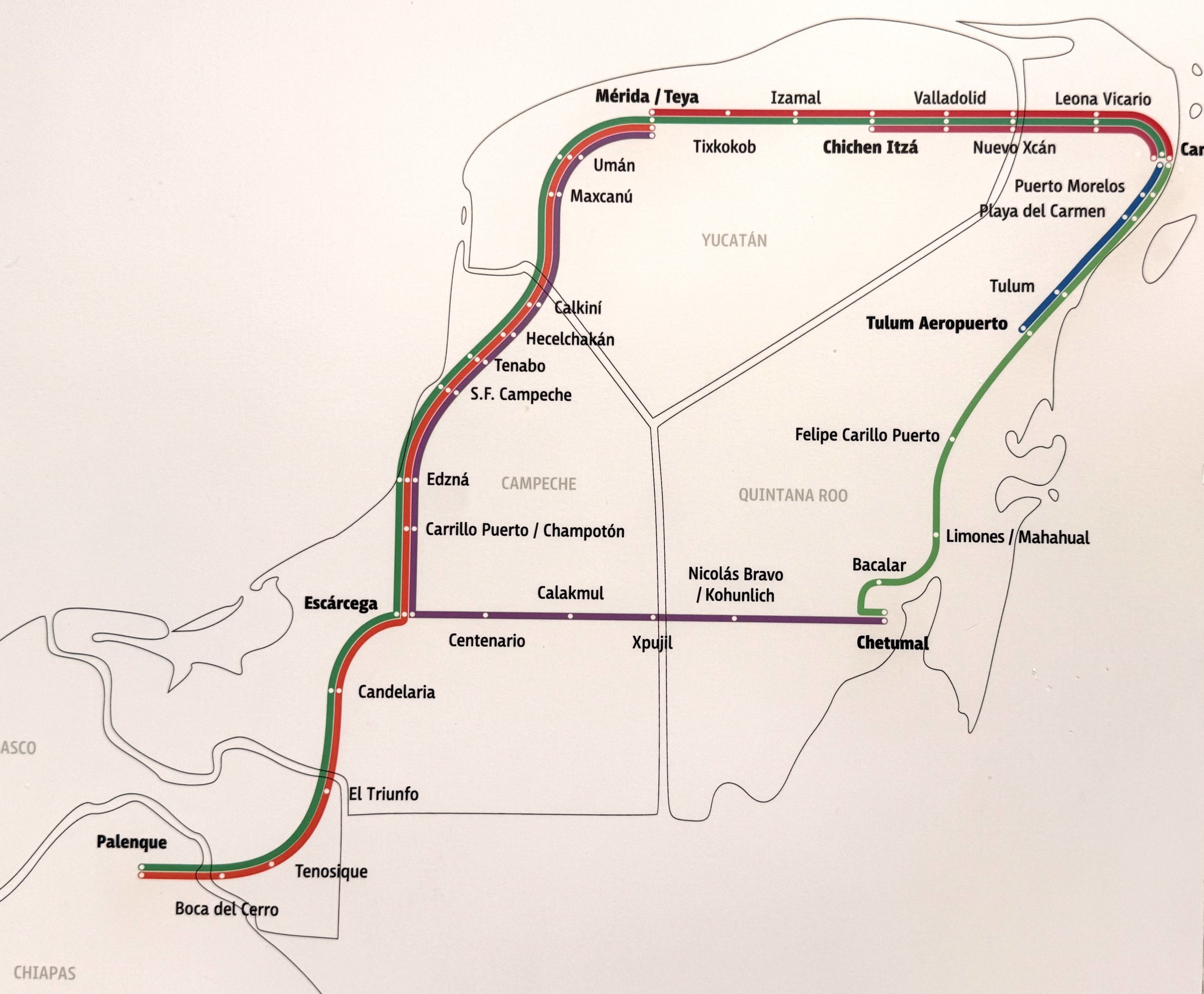
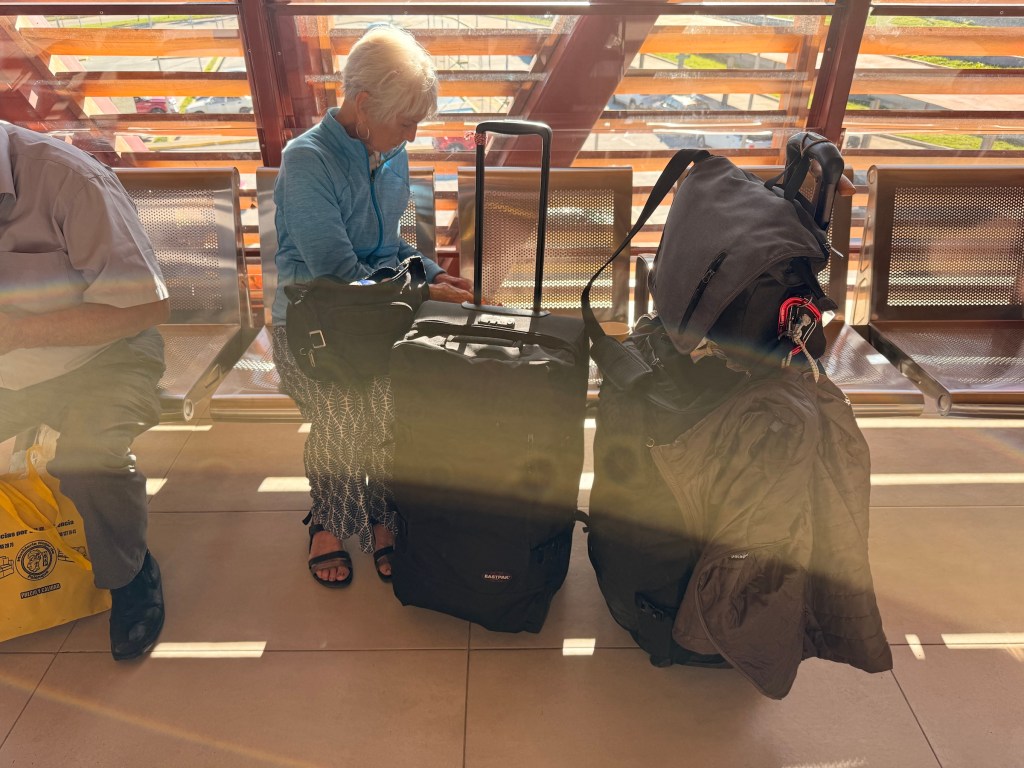
Our well-traveled rolling bags are zipped and ready, as we’re waiting for the next train to leave the station. The Palenque Estación is where the Tren Maya begins before it makes a broad loop around the entire Yucatán Peninsula. And maybe someday they’ll connect this spot to a larger train system throughout the country. But we’ll travel most of the current route before departing from the Chetumal airport on the border with Belize. And in the process we’ll experience most of the geography that the Yucatán has to offer.
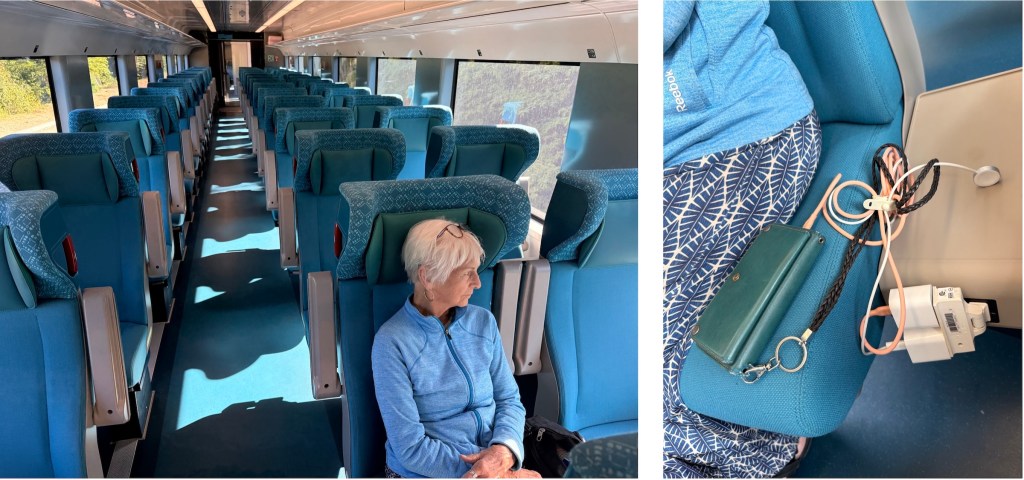
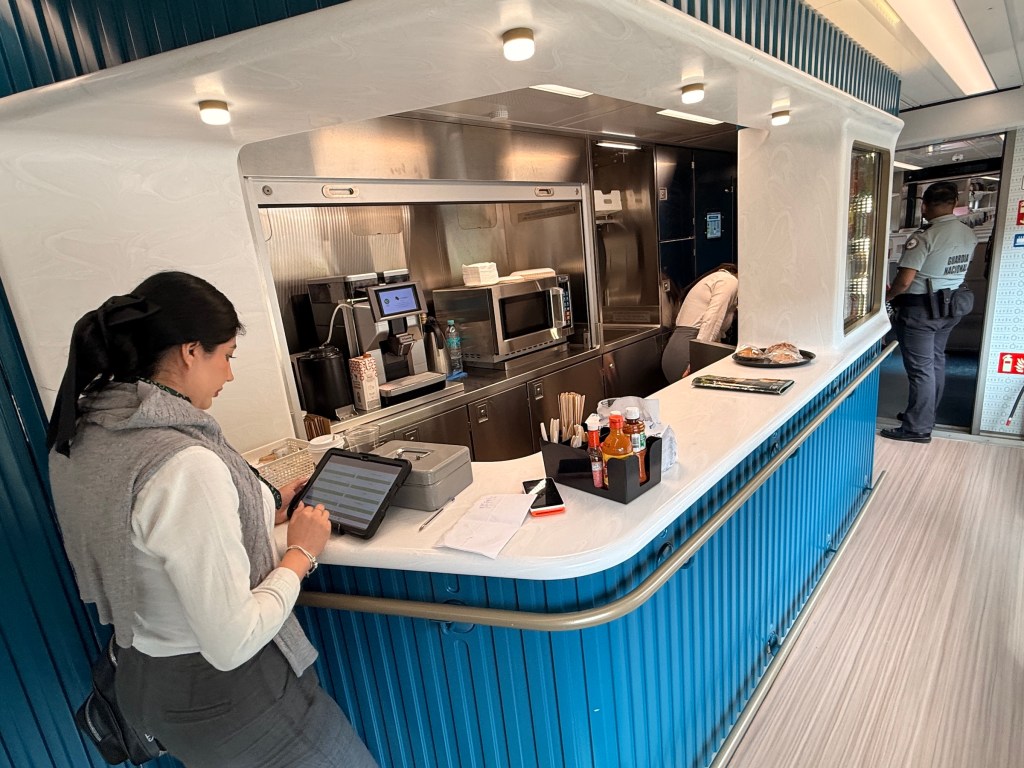
Once aboard, there are plenty of seats available, as we had expected in mid-January after the big tourist season. It’s a well-appointed train, with wide and comfortable seating, ample plugs for recharging our devices, clean restrooms, and a snack bar with delivery service bringing hot meals directly to your seat.
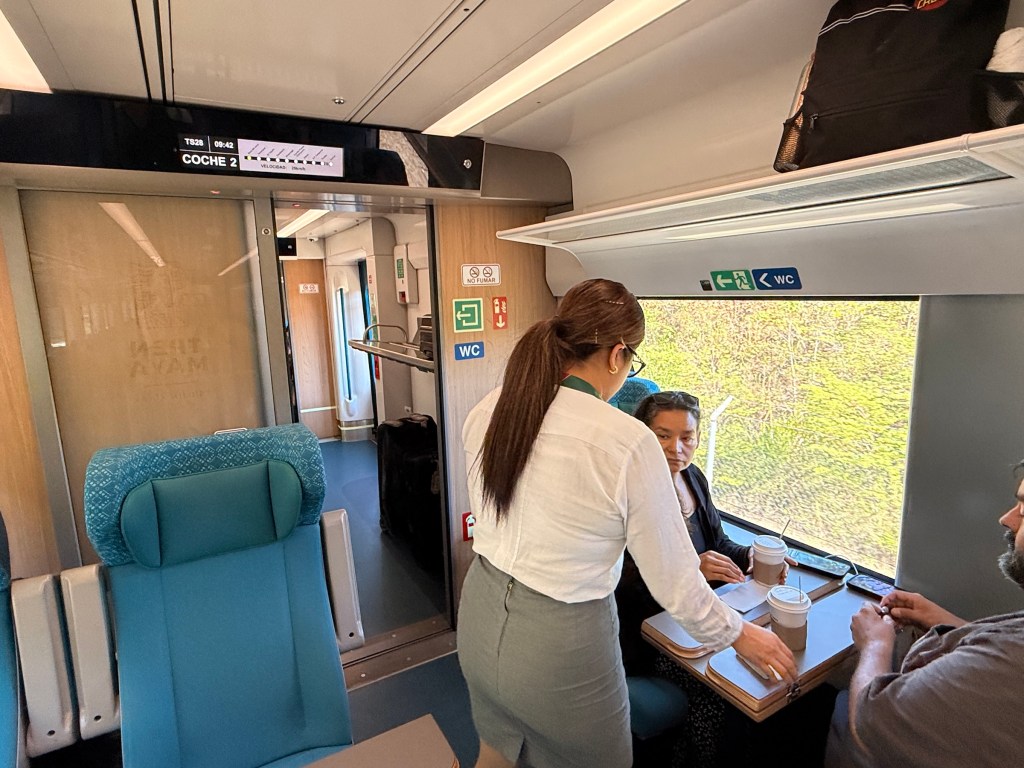
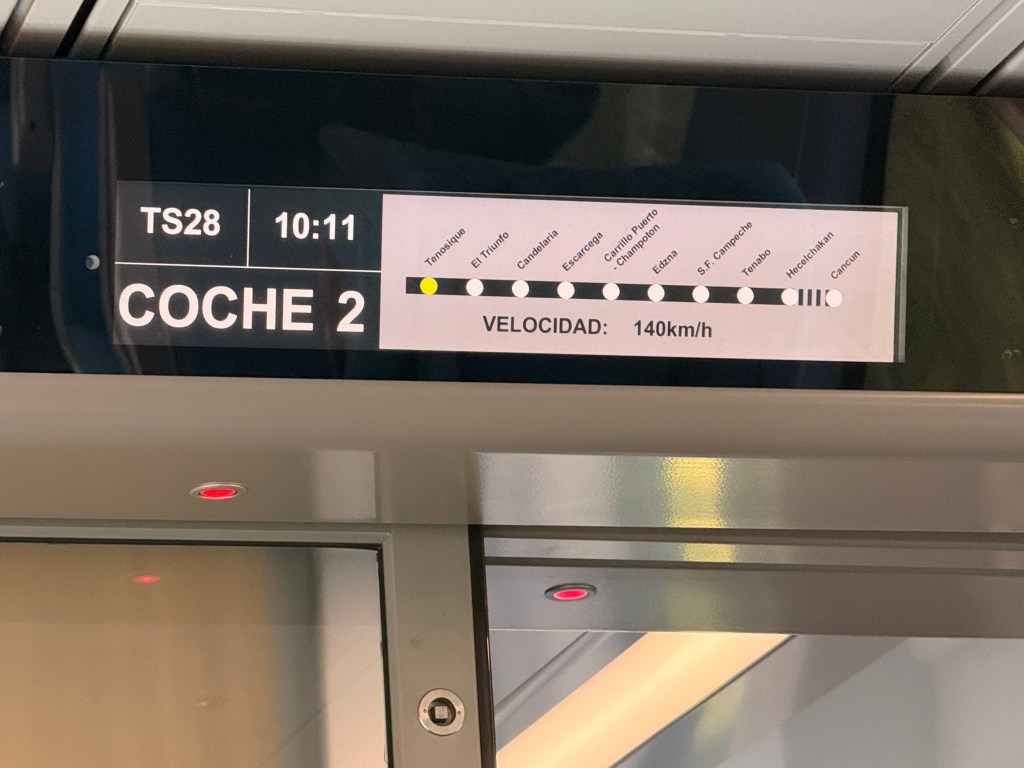
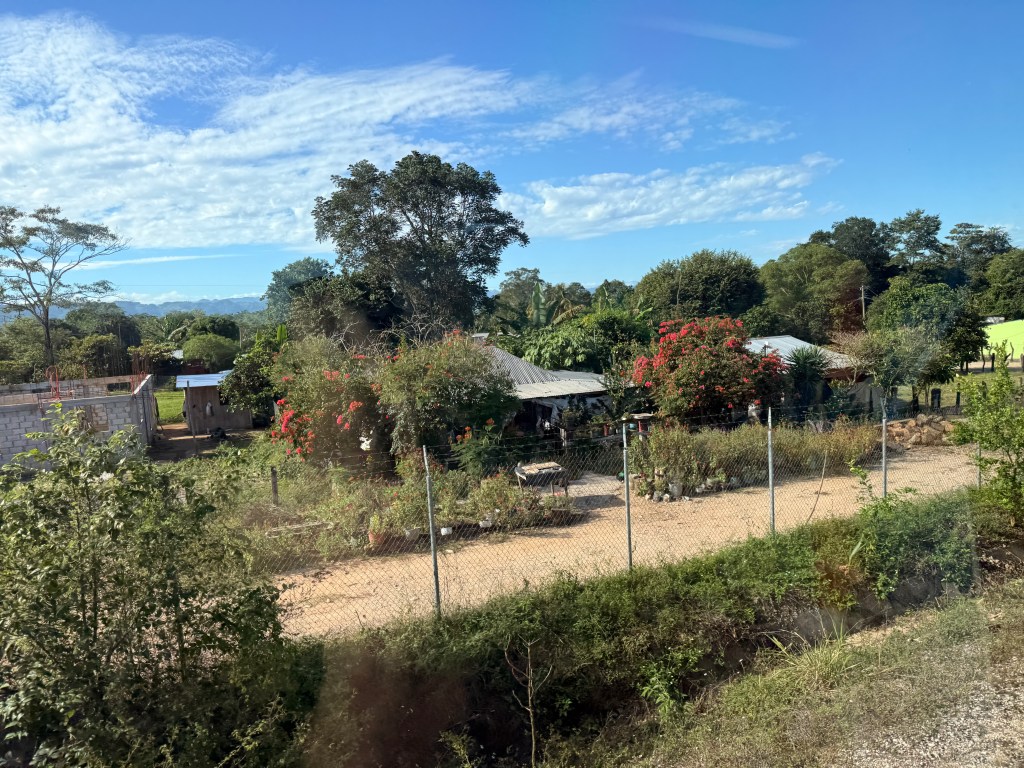
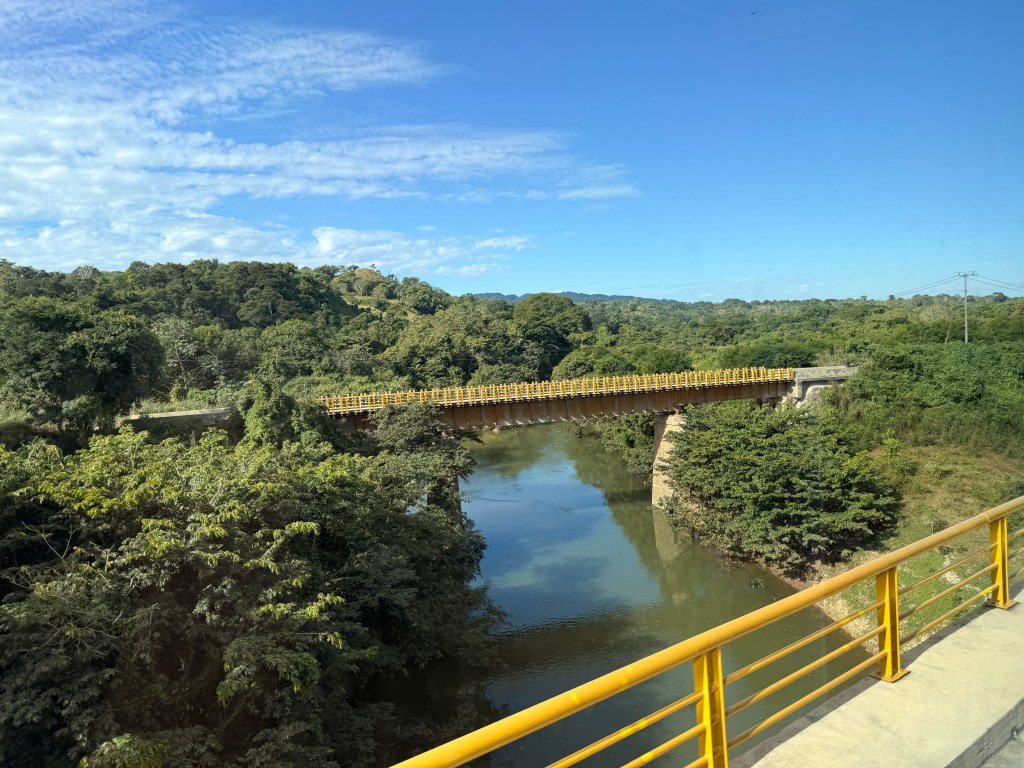
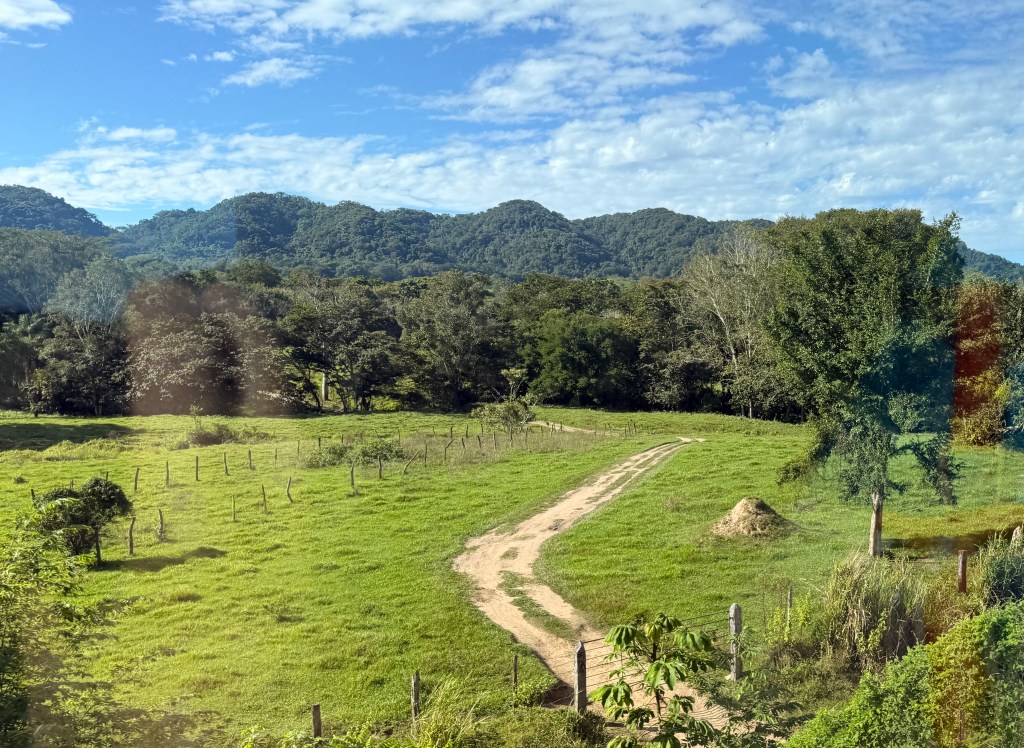
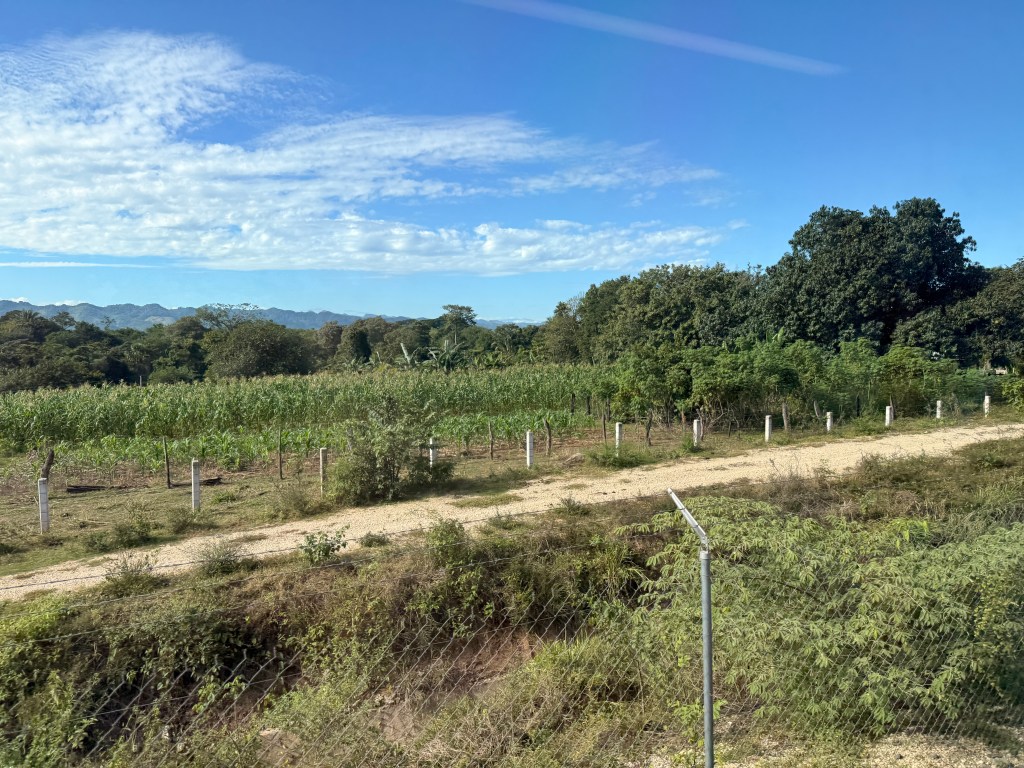
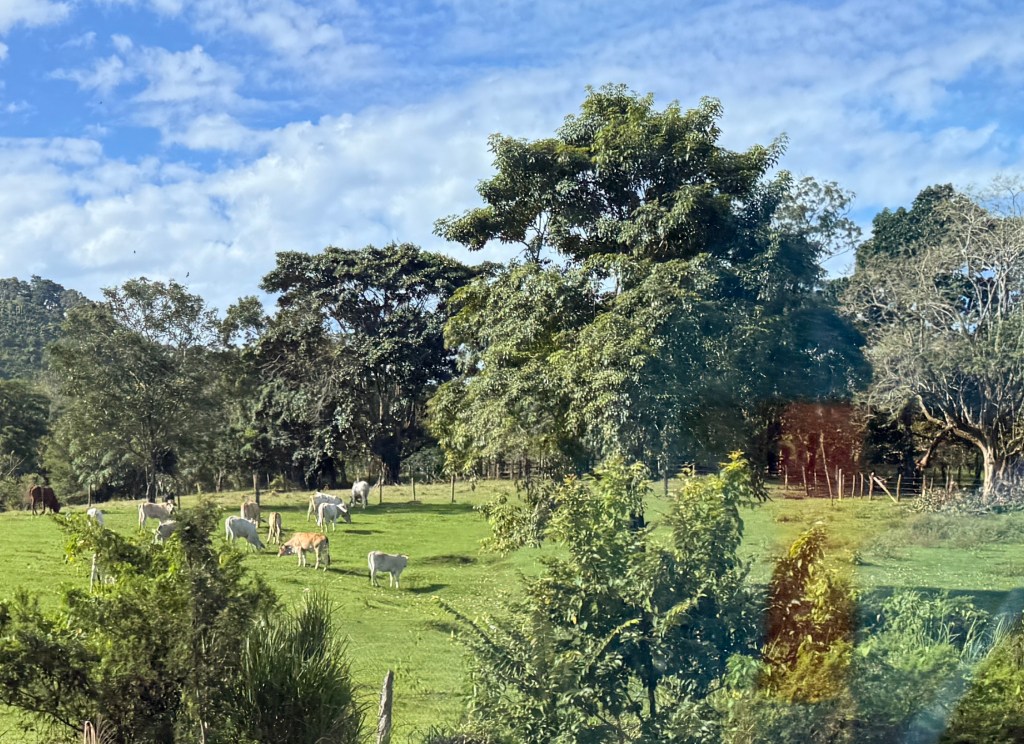
We’re heading to Mérida, at the NW corner of the Yucatán Peninsula. This will be the longest leg of our trip, and the stations we pass along the way are impressively clean and modern. We settle in for a relaxing trip, at speeds up to 140km/h (87 mph) through vast jungle scenery, while passing farms and villages and towns, with no concerns about traffic.
………………………………………………………………………….
About train travel:
Trains leave only a light energy footprint upon the ground, surpassed only by walking and bicycles. And once the tracks have been laid there’s little deviation from the pathway, unlike roads that open untouched wilderness areas to random and damaging car travel. So we prefer traveling by train whenever possible and want to support this effort by Mexico to invest in clean transportation for future generations.
Yet the Tren Maya has been a controversial project, and we hope to get a better understanding of those issues. Among many concerns have been the destruction of priceless ancient Mayan sites, and the damage to fragile cenotes and habitats along the way. Yet as we’re riding along in comfort there seems to be no end of roads that have already been plowed through this jungle over the past centuries. Farm houses and large fields and entire towns have been built here. I realize this is a place where it’s nigh on impossible to turn a stone without disrupting an ancient artifact, and I believe it’s important not to destroy ancient heritage sites. But there’s already so much prior damage visible just outside my window that it seems maybe the problem has been overblown a bit?
Later, we’ll also see reports of subsidence and structural issues that have occurred along some elevated stretches of the tracks. And so, like most human endeavors, the Tren Maya will likely be an ongoing project.
………………………………………………………………………….
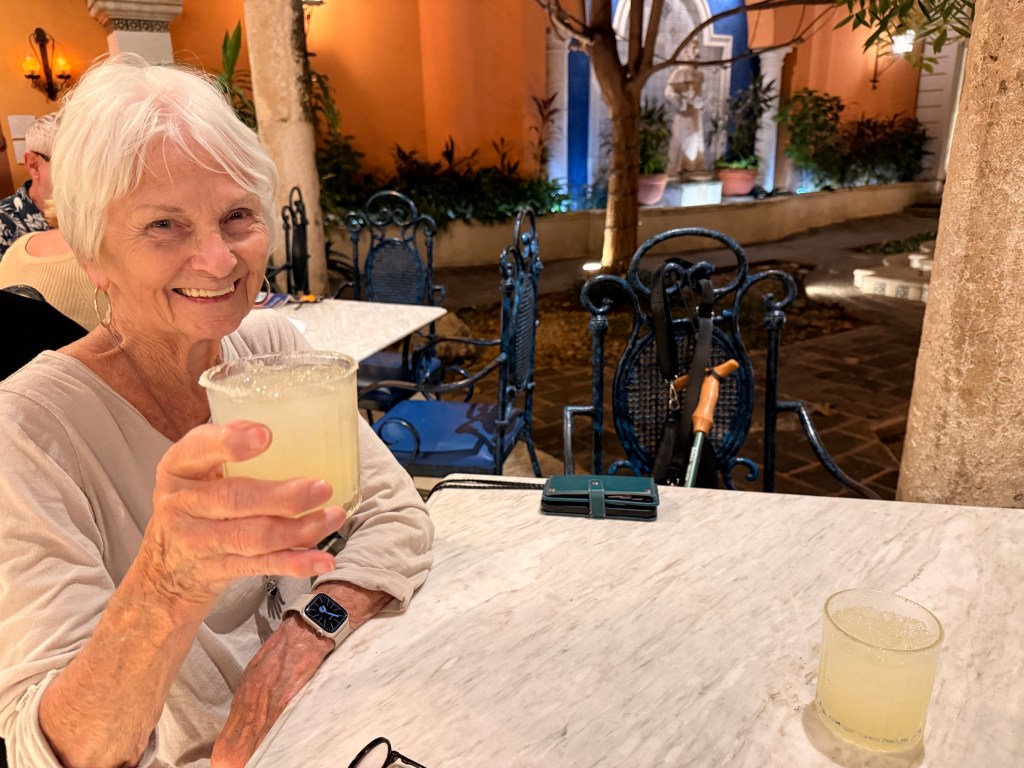
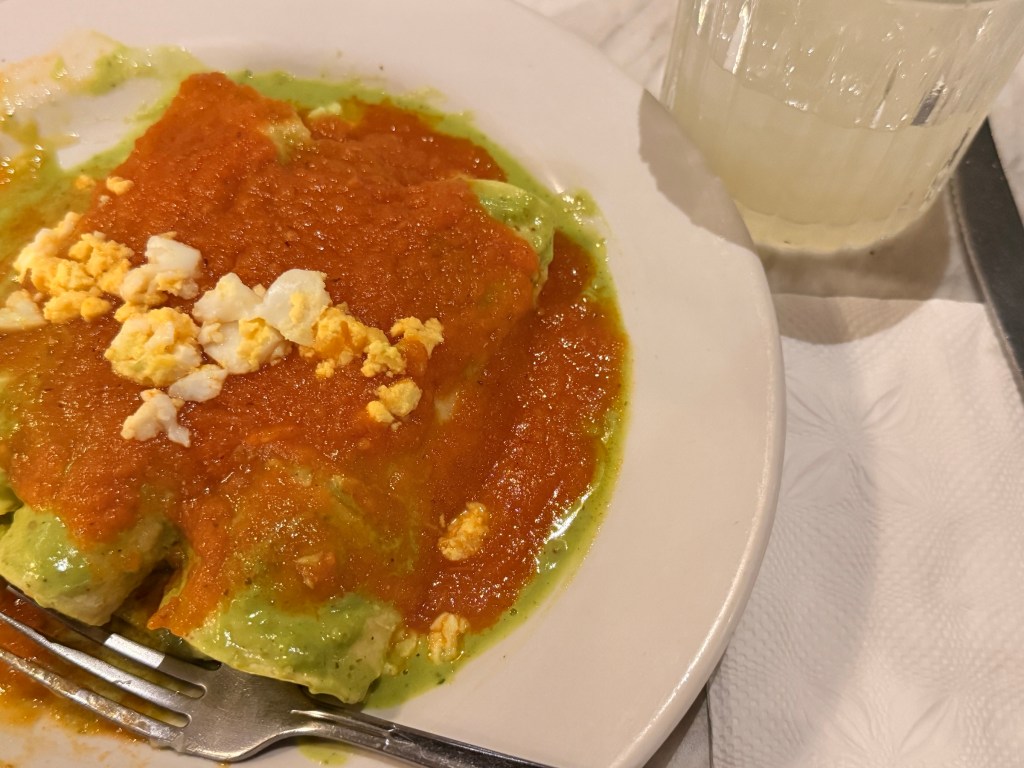
Our train ride began at Palenque in the state of Chiapas, then passed through the state of Campeche, and into the state of Yucatán to the old colonial town of Mérida. It’s another place we haven’t visited in about a decade, and where we had other fond memories. Carolyn found us a good place to stay called El Misión de Fray Diego, that’s only a couple of blocks from the Plaza Grande. Soon we’re there, and enjoying cold margaritas over a good dinner.
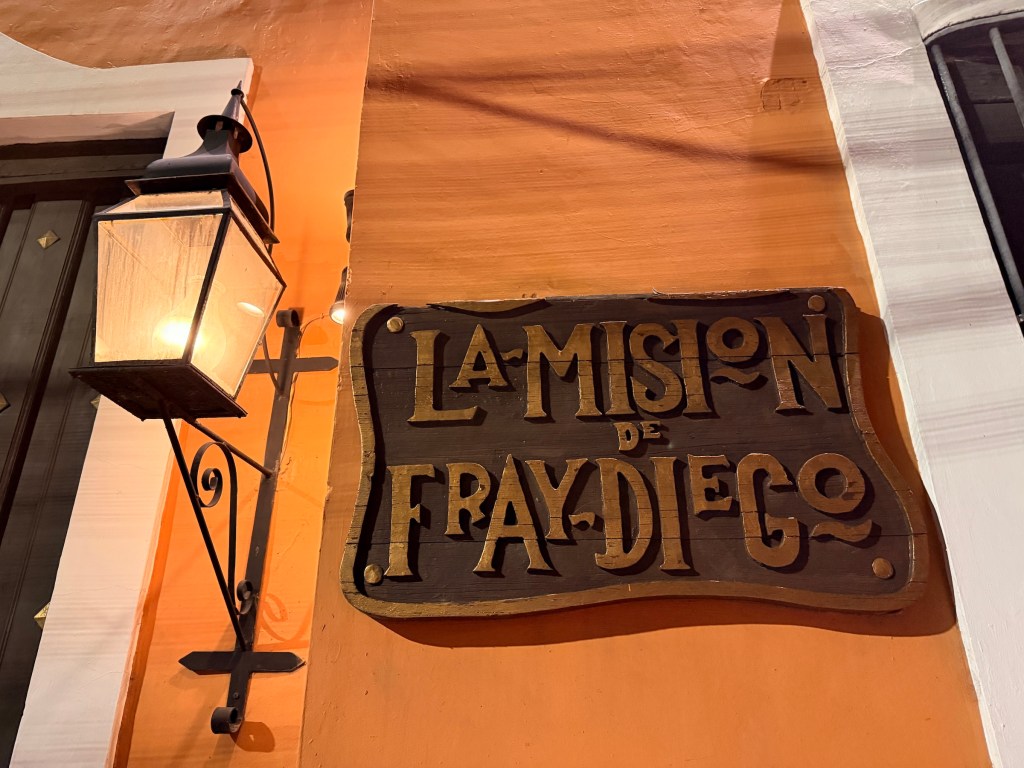
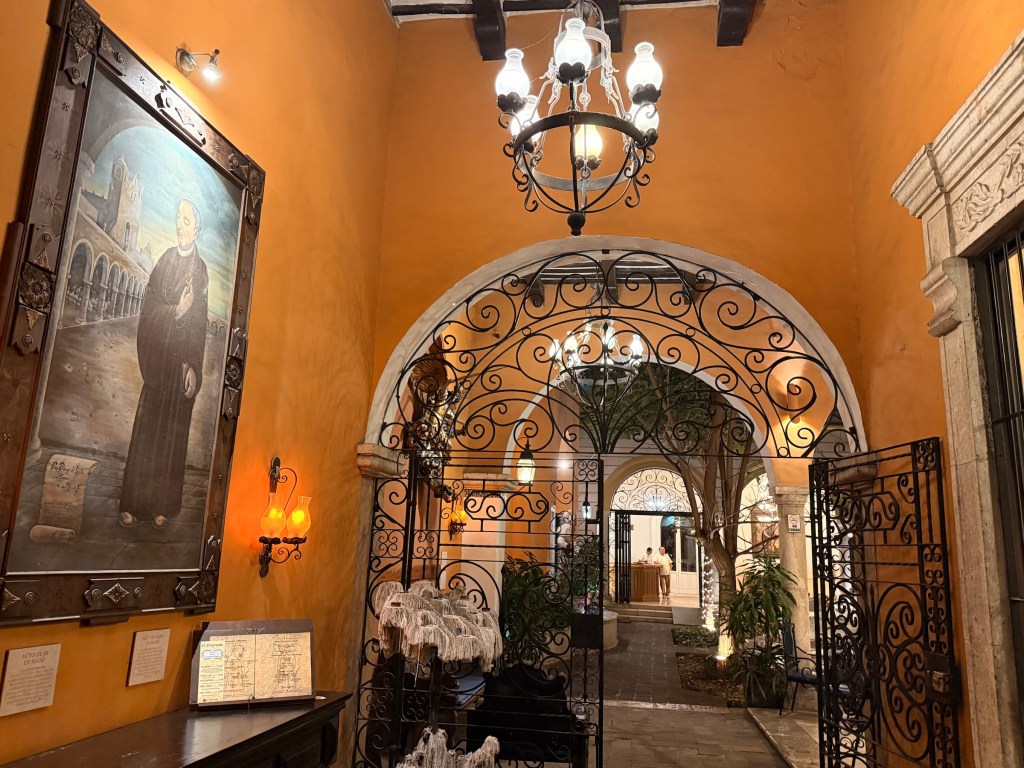
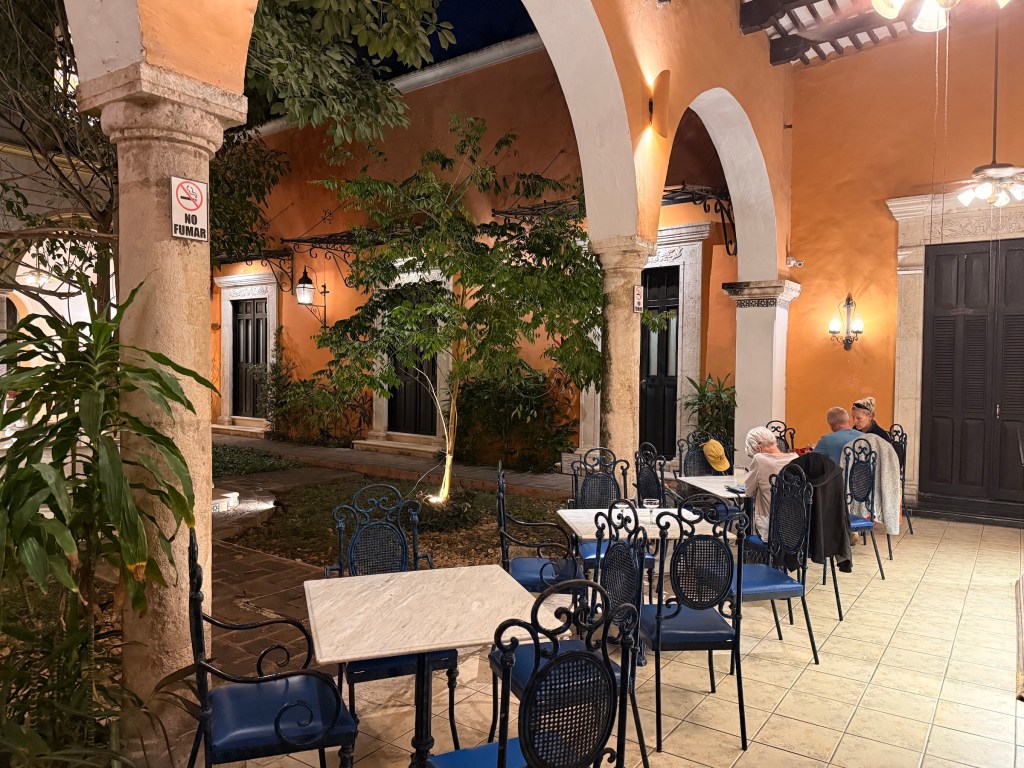
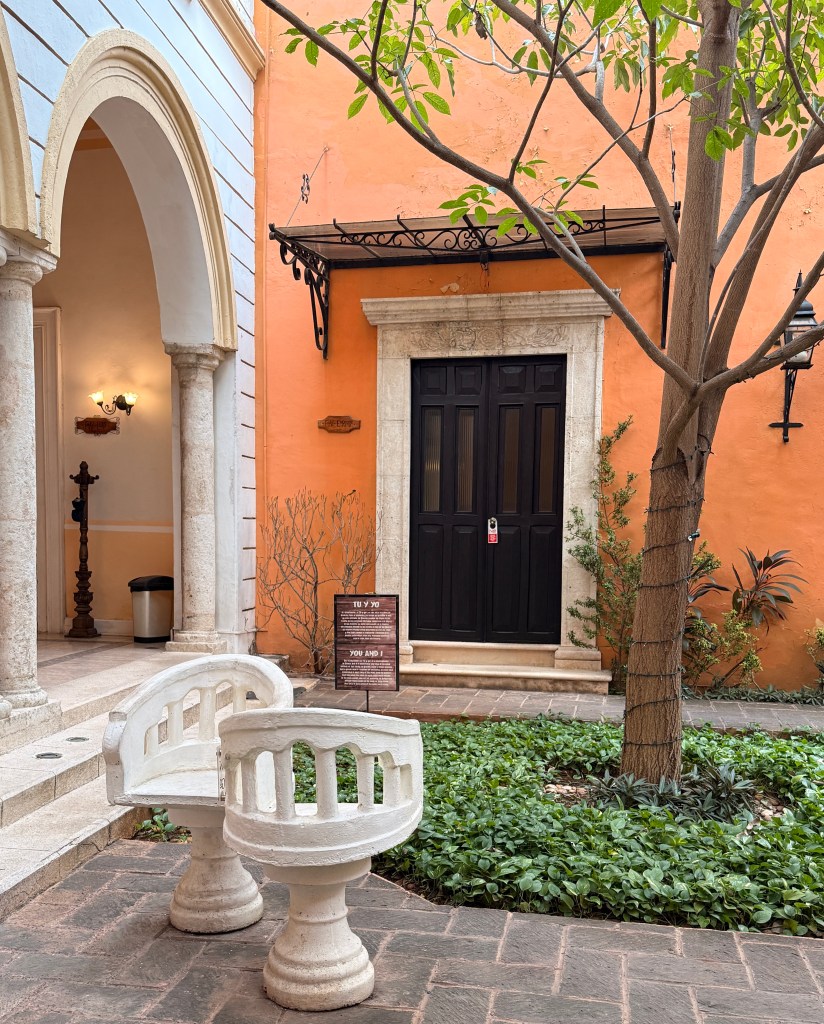
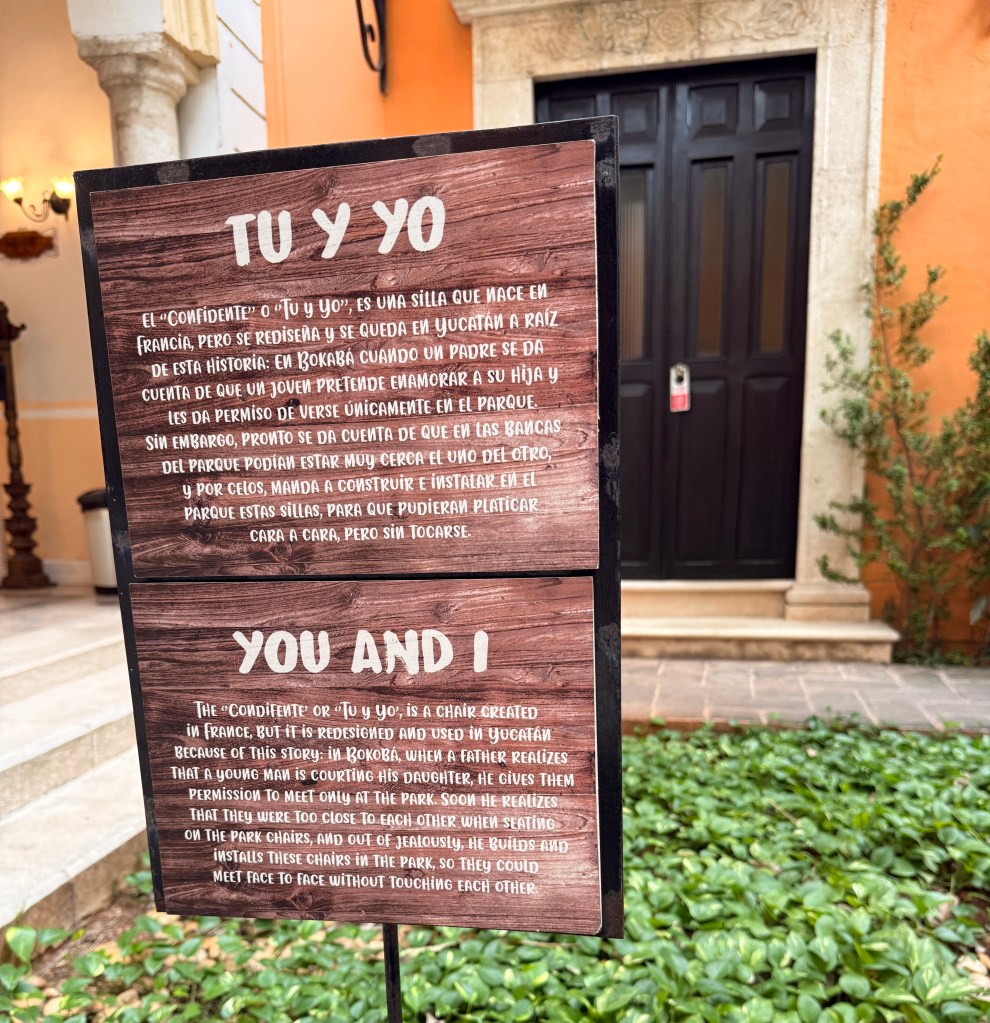
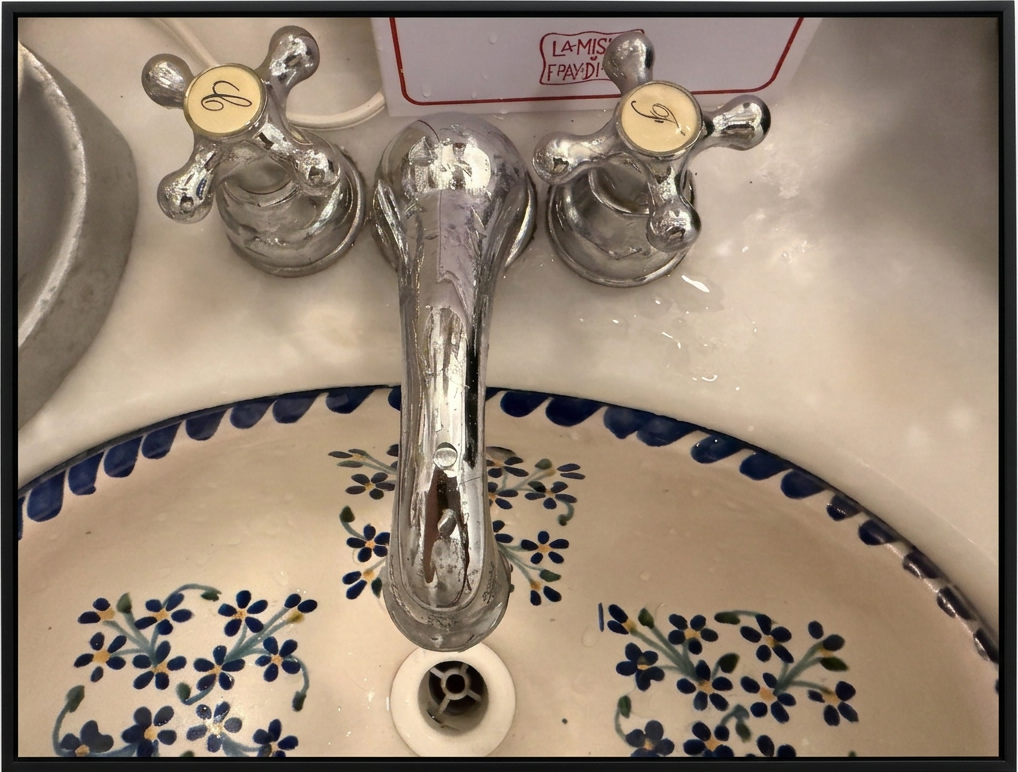
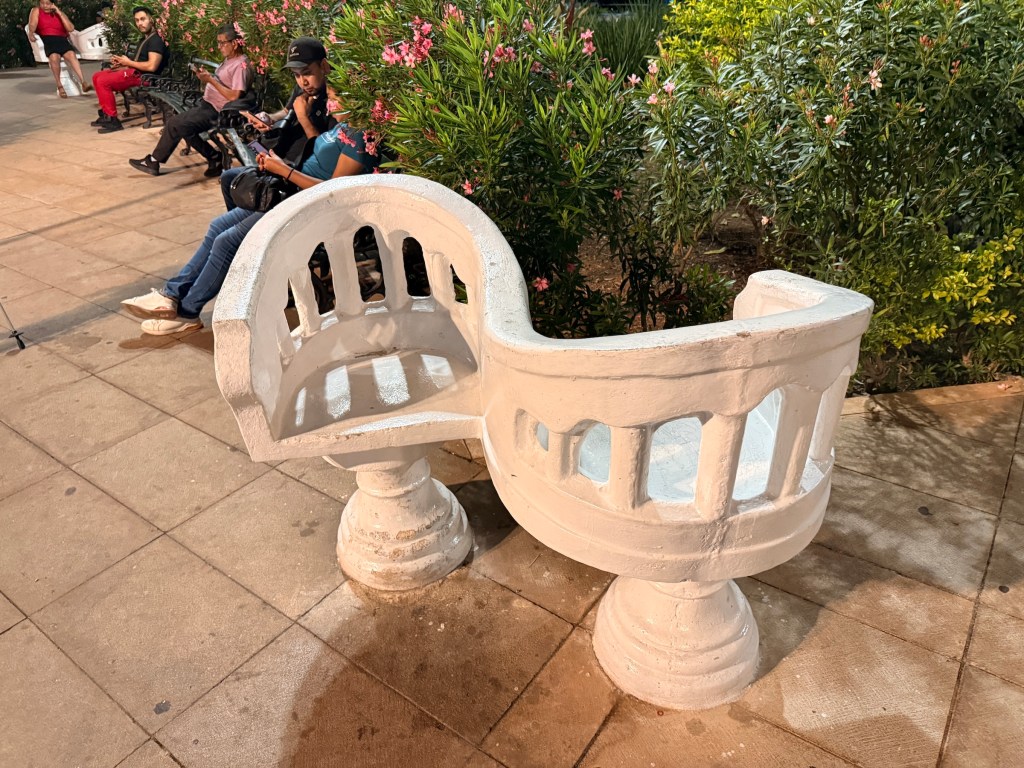
It’s a nice classical hotel, arrayed around a central court and with little noise from the street outside. There’s a ‘Tú y Yo’ seat in the courtyard, complete with explanation, and the bathroom faucet has ceramic handles indicating C for caliente, and F for frio. It’s a nice visit to Old México.
After a restful night, our first morning back in Mérida begins at a cheerful coffee shop named Meriland, and we’ll return here often over the next few days. And Carolyn finds a colorful stairway to pose wearing a hat that goes well with a beautiful top she bought in Palenque.
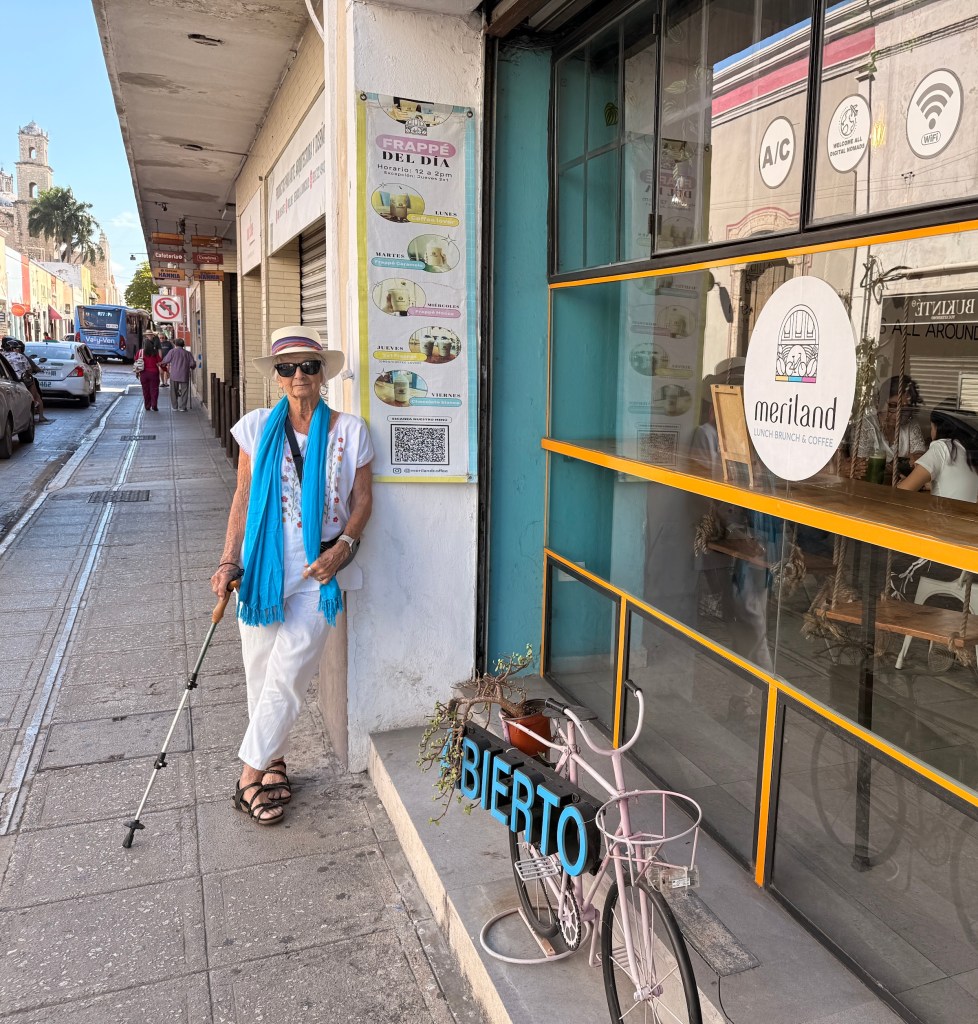
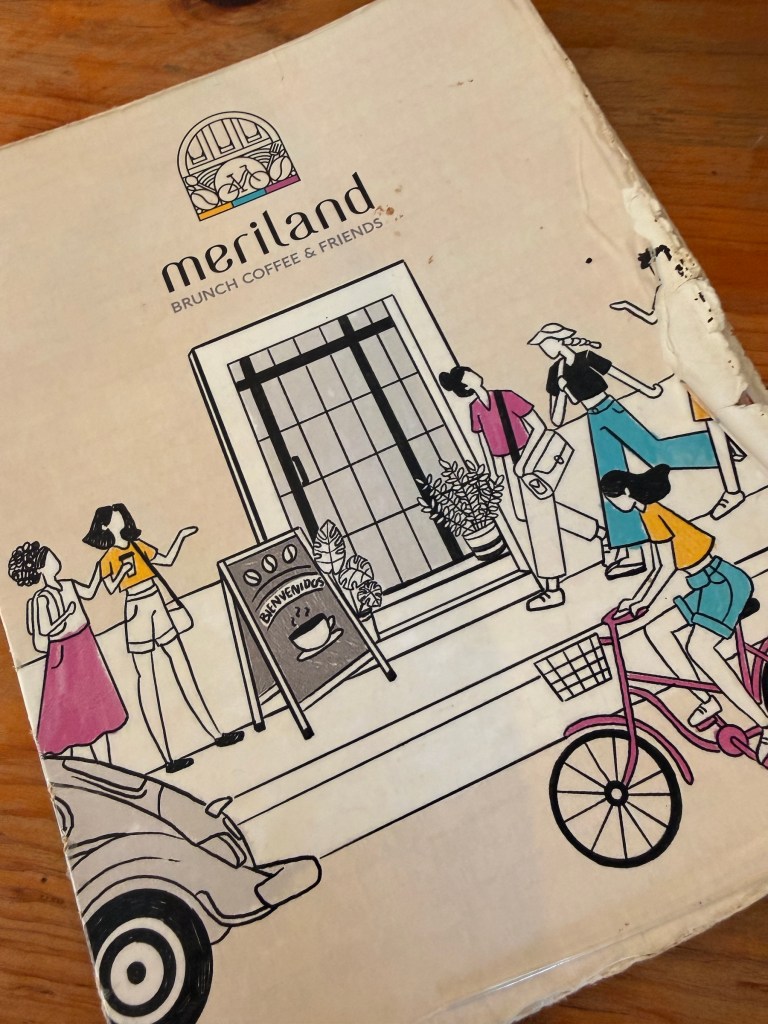
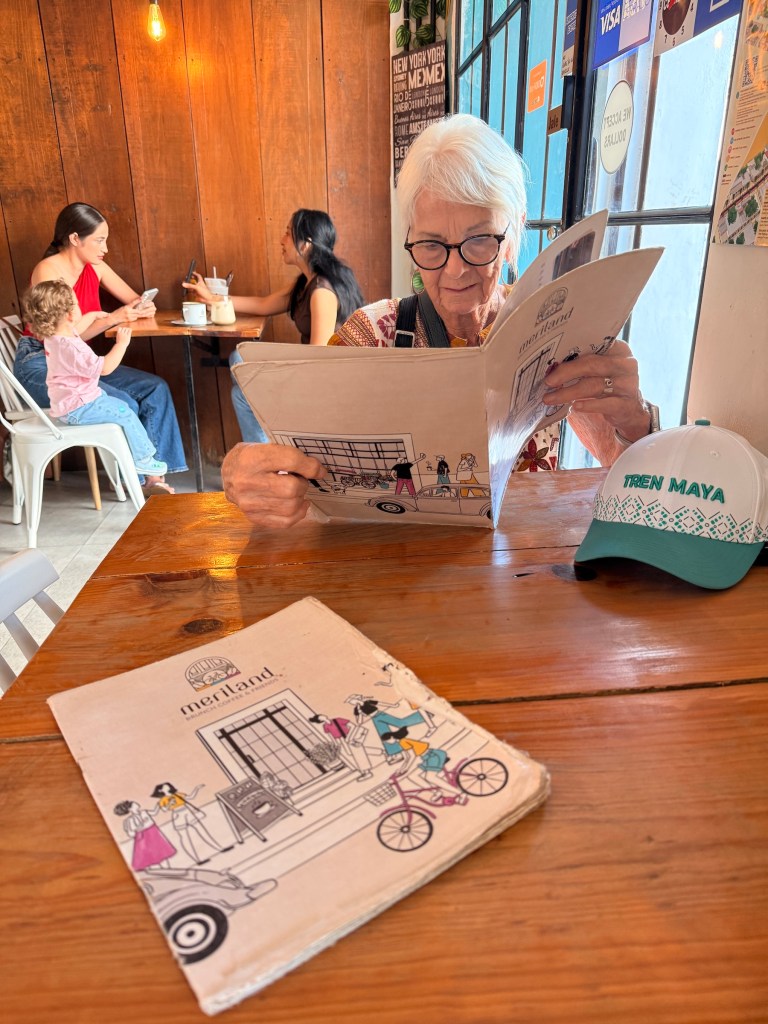
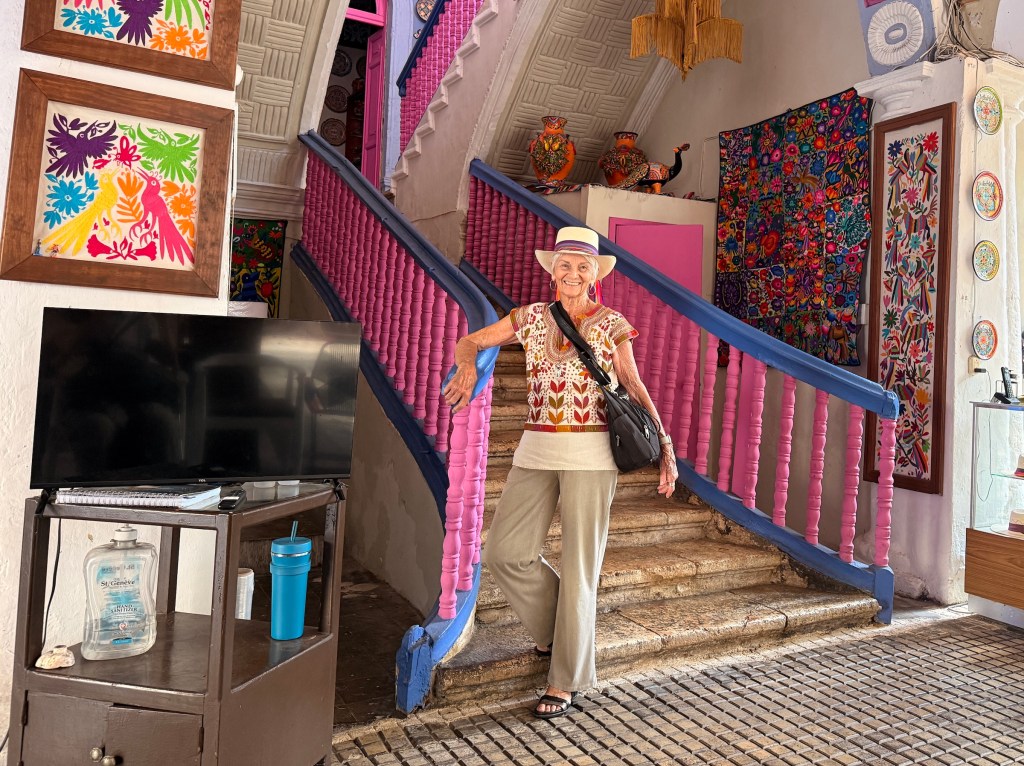
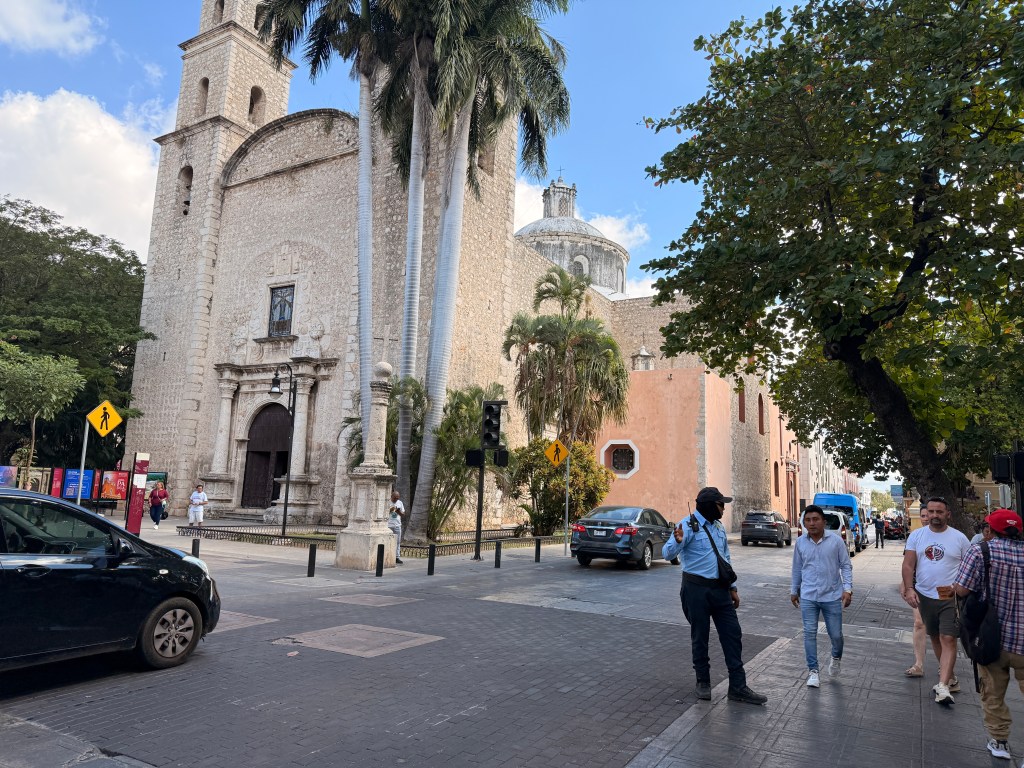
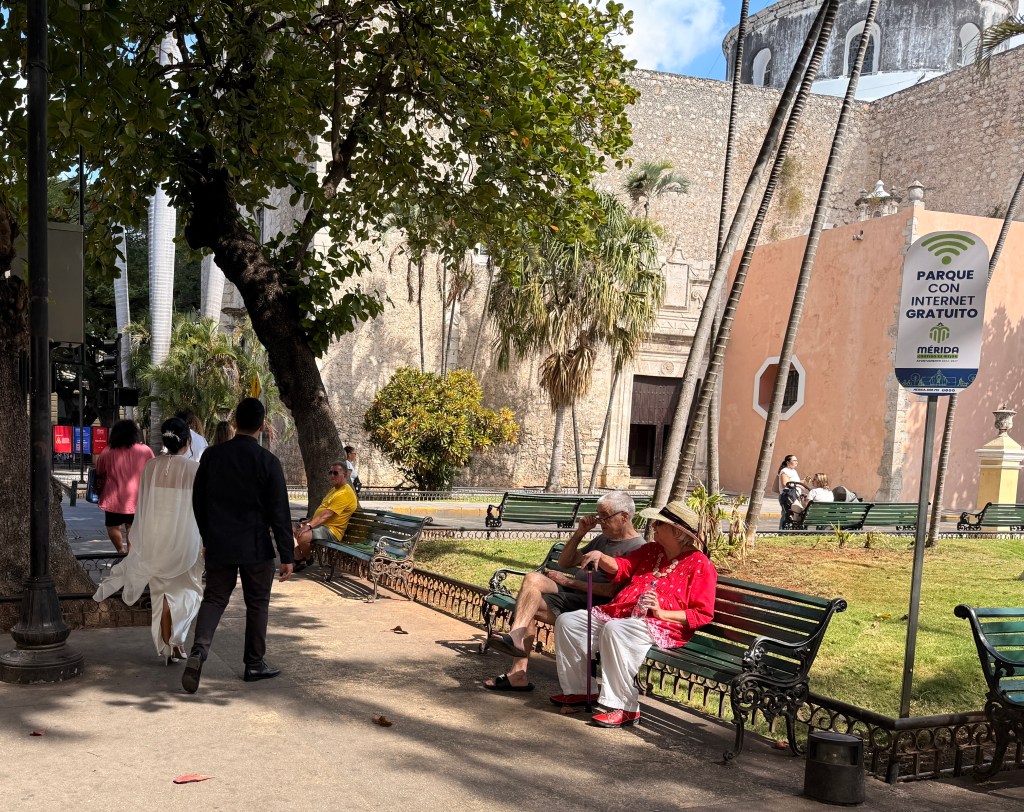
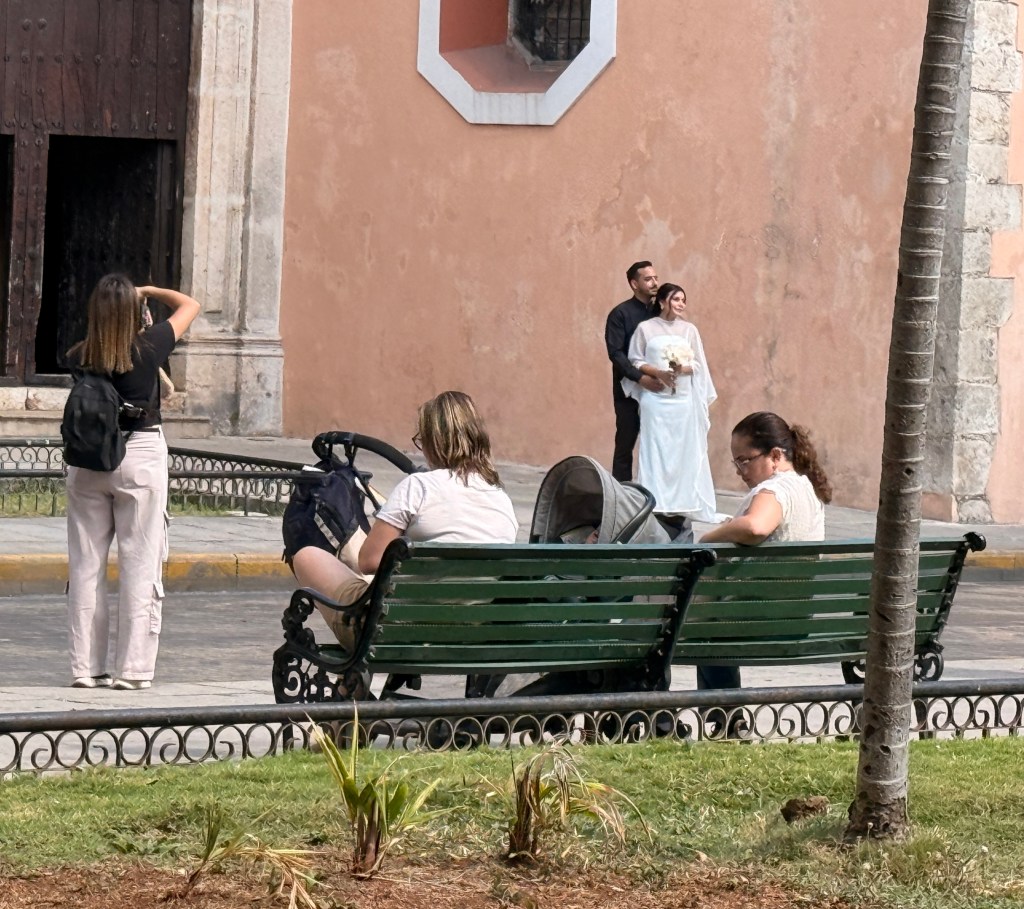
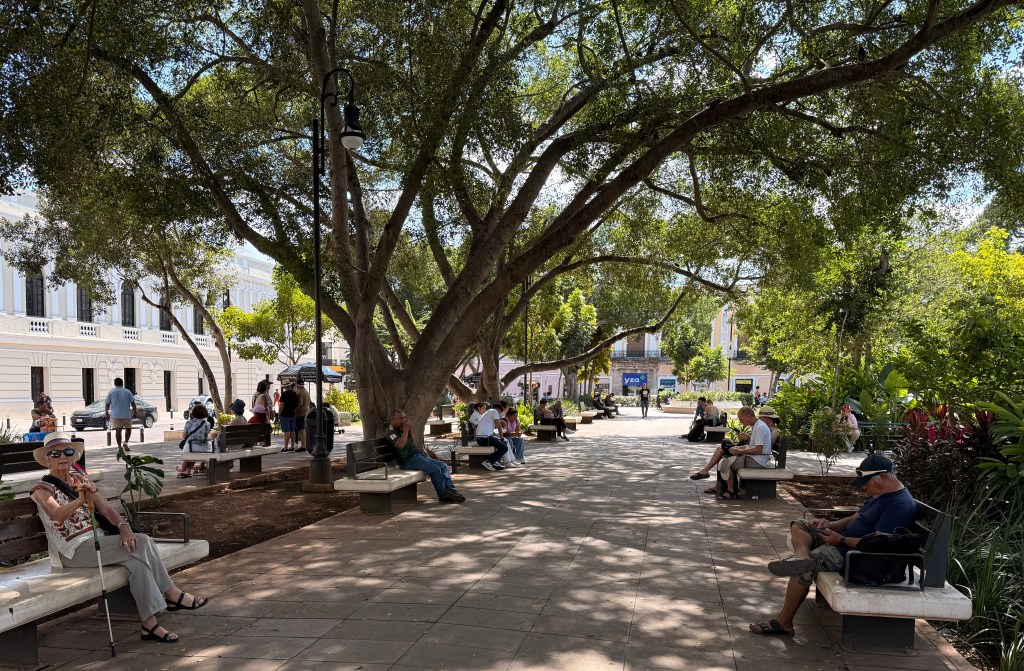
It’s a bright morning for a good walk-around, to a restful small park near a church where people are enjoying the day, and a young couple is having wedding photos taken.
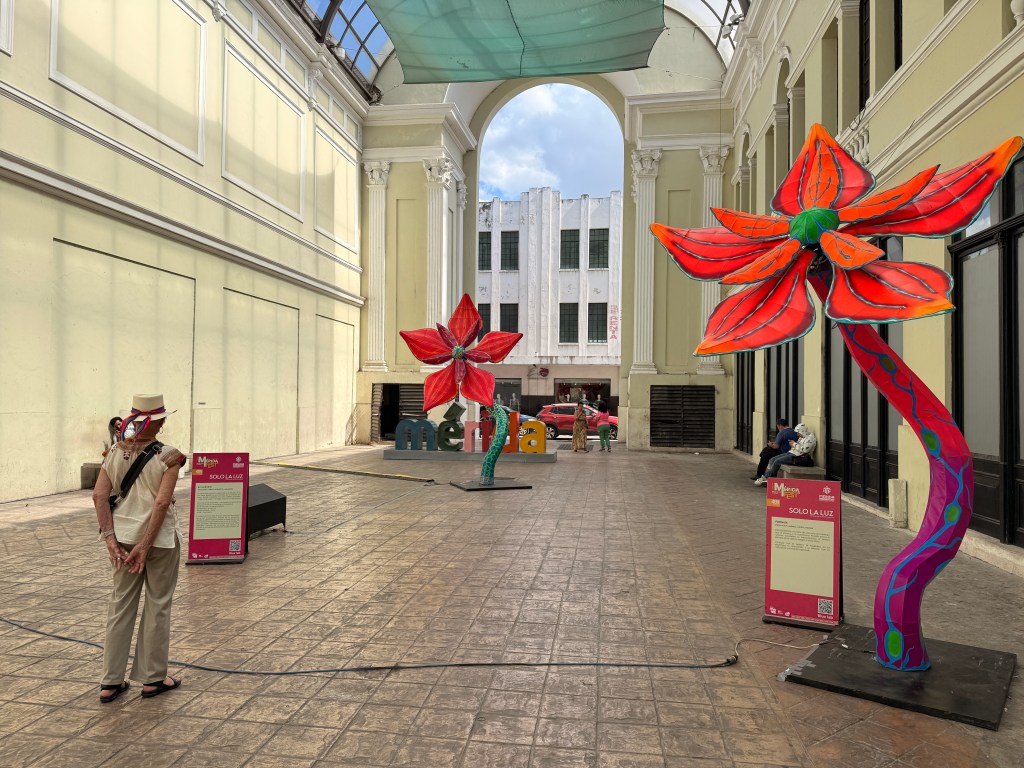
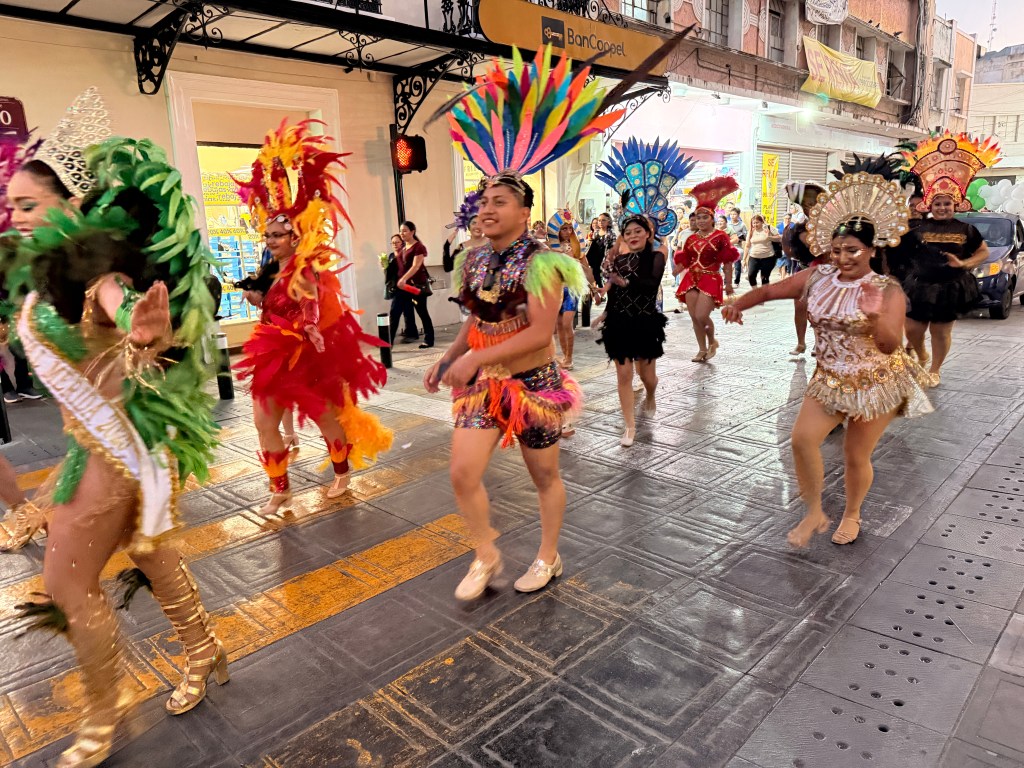
There are metal-art floral displays in a walkway near the tree-shaded Plaza, and then a colorful parade passes by.
………………………………………………………………………….
The henequen boom:
Mérida (pop: 900,000) has been wealthy in the past. Old classical mansions along the Paseo de Montejo and smaller ones in central colonial Mérida show the influence of money from the vast henequen farms that used to surround the city, a wealth that was often derived from the indebted labor of the native population. Henequen and sisal are fibers from the long leaves of the agave plant and were produced by ancient Mayan cultures for making twine, rope, and fabrics, and later there was a great demand for items from packaging twine and coffee bags to heavy ship hawsers. The industry expanded rapidly in the 19th century and produced a class of rich plantation owners, which led to the Caste War (1847-1915), a revolt by the indigenous people of the Yucatán. After reaching its peak in 1916 the henequen industry collapsed, when faced with the invention of nylon rope and other synthetic fibers. In recent years Forbes Magazine has ranked Mérida as one of the best Mexican cities to live in, and today these old homes are sought after by retirees willing to invest in their renovation.
………………………………………………………………………….
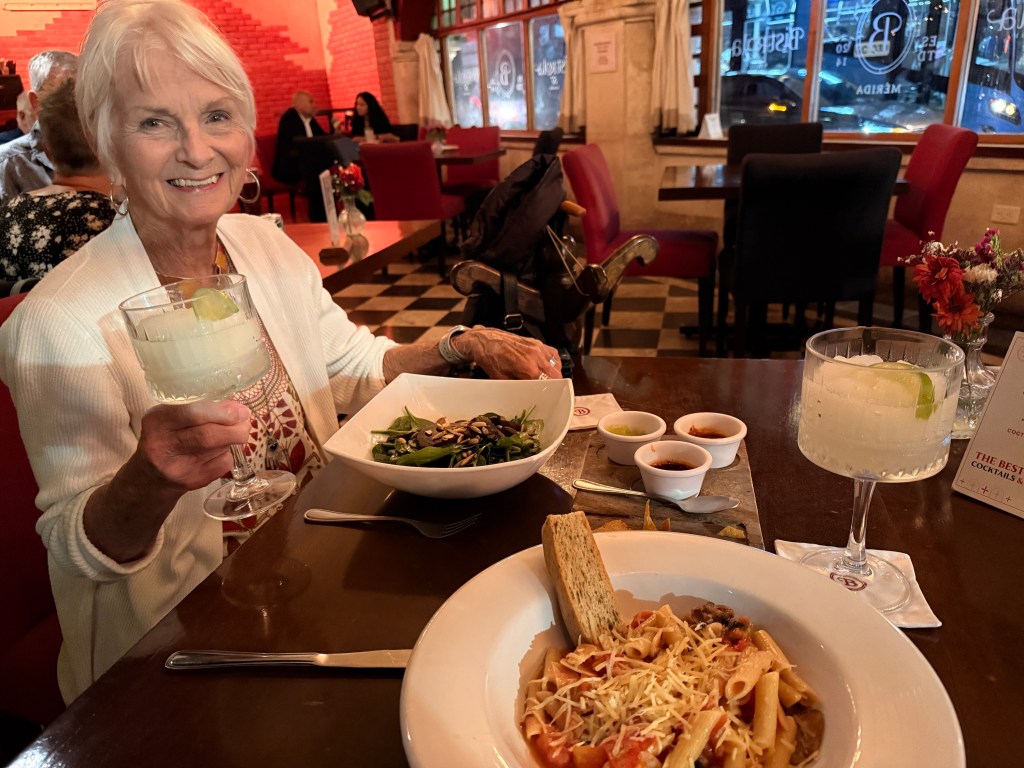
After the tropical luxury of a good afternoon nap, we emerge from our hotel room into a balmy evening in search of fine food. And Mérida abounds in such delights.
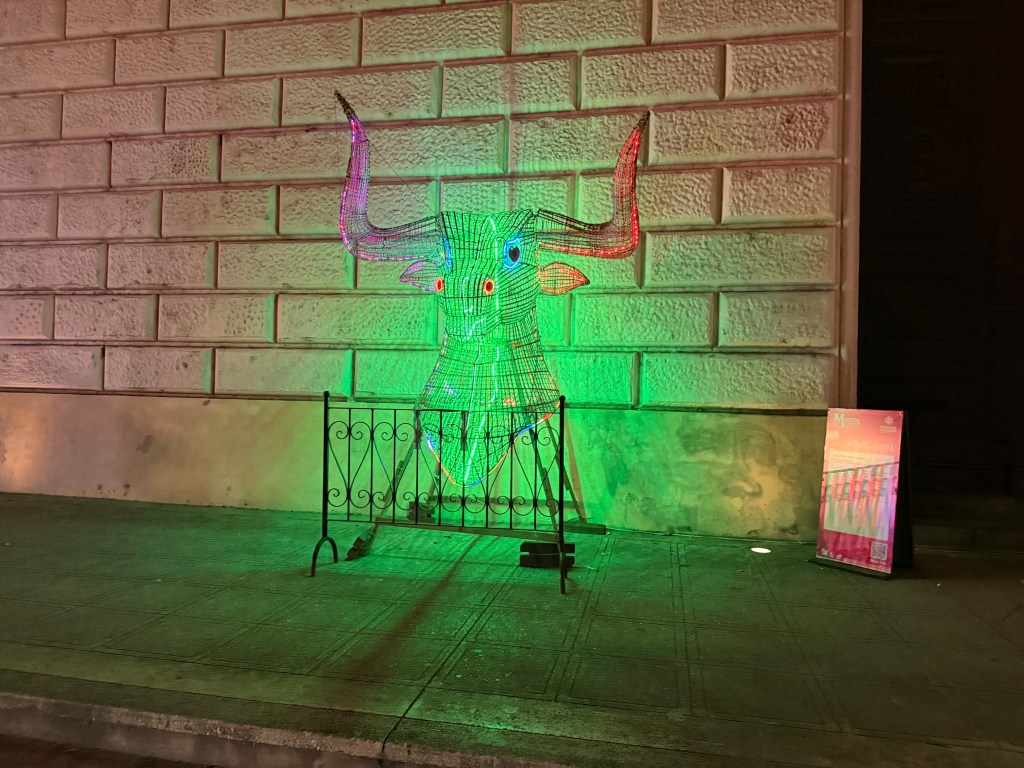
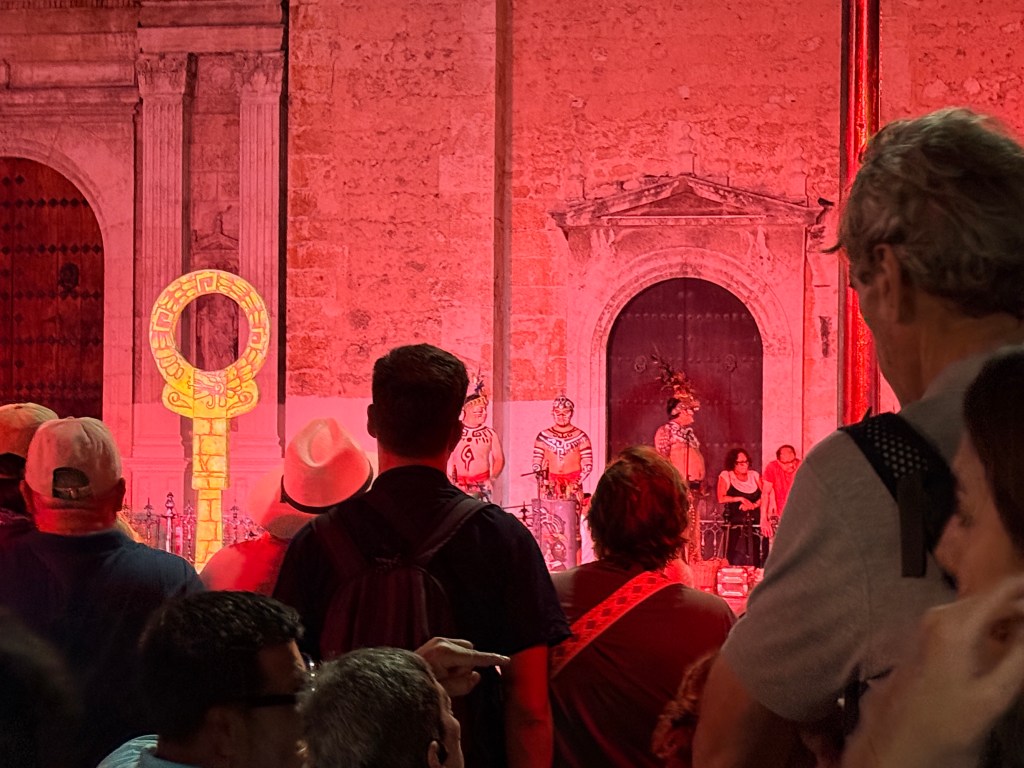
The evening beckons us onward to explore more of what the city offers after the heat of the day. It’s an artistic place, where random art pops up in odd places, and people show up in their most colorful Caribbean evening wear. There’s a grand drumming performance underway at the Plaza Grande, and people get their pictures taken at the big MERIDA sign on the plaza. These large signs are found in towns all over the country and, and they´re popular among visitors.
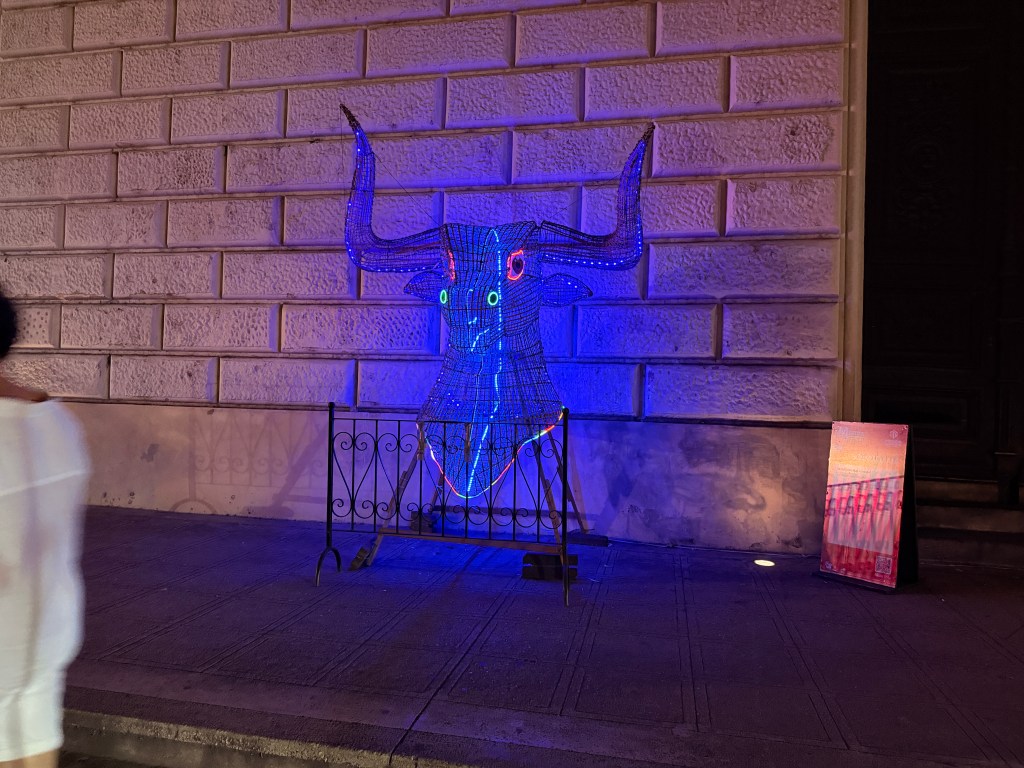
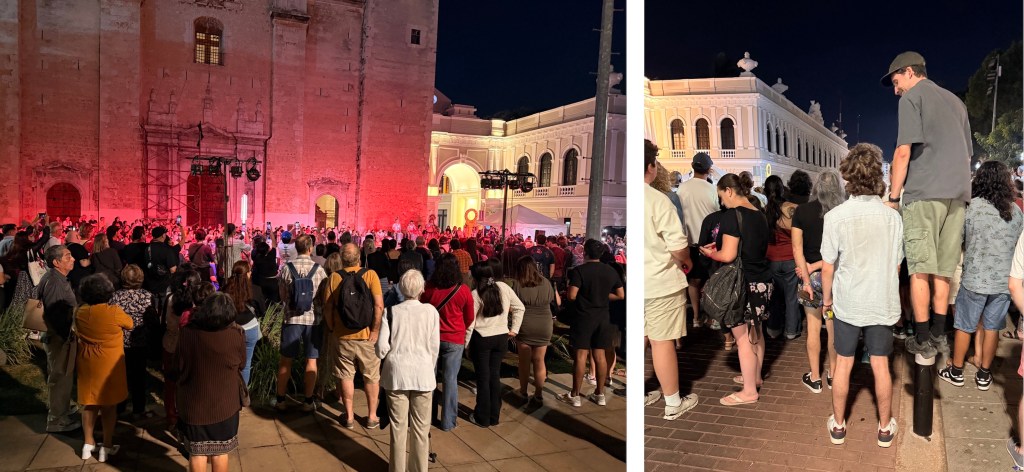
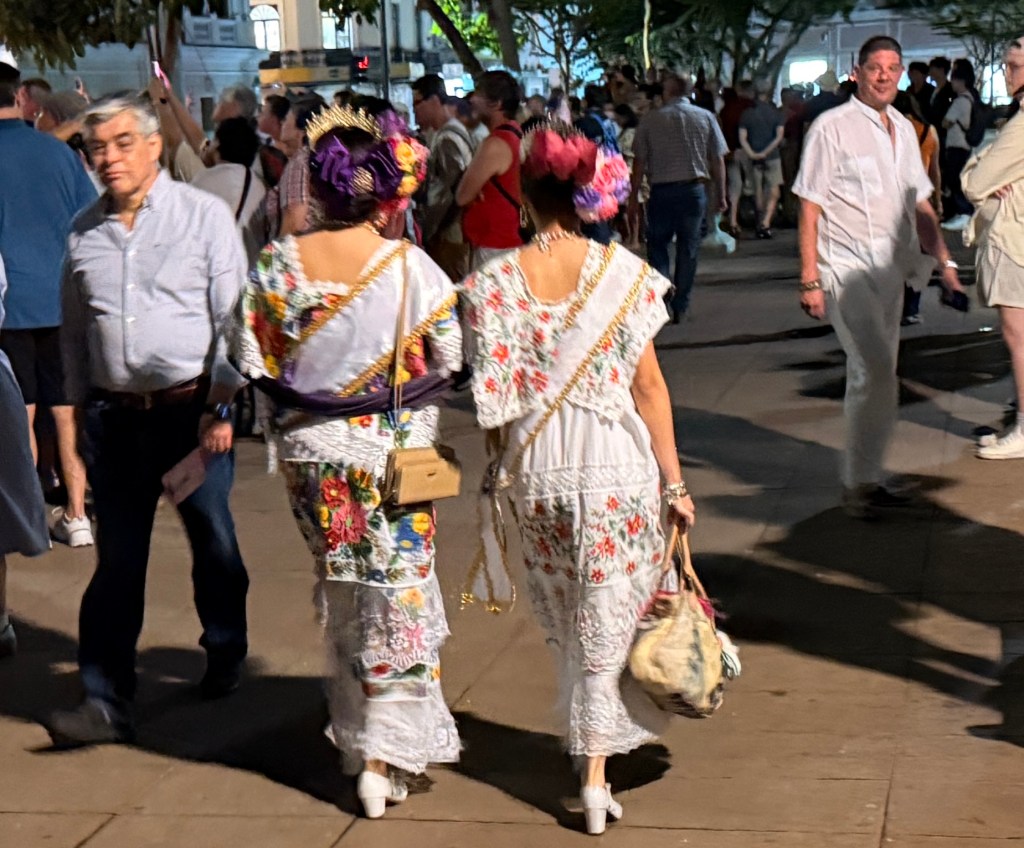
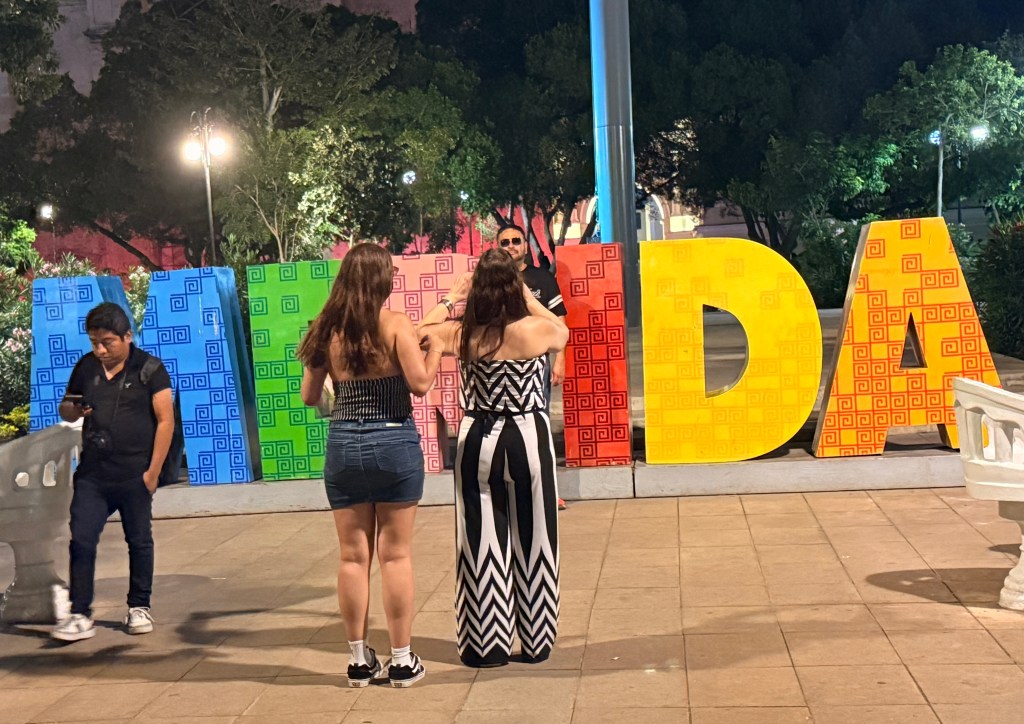
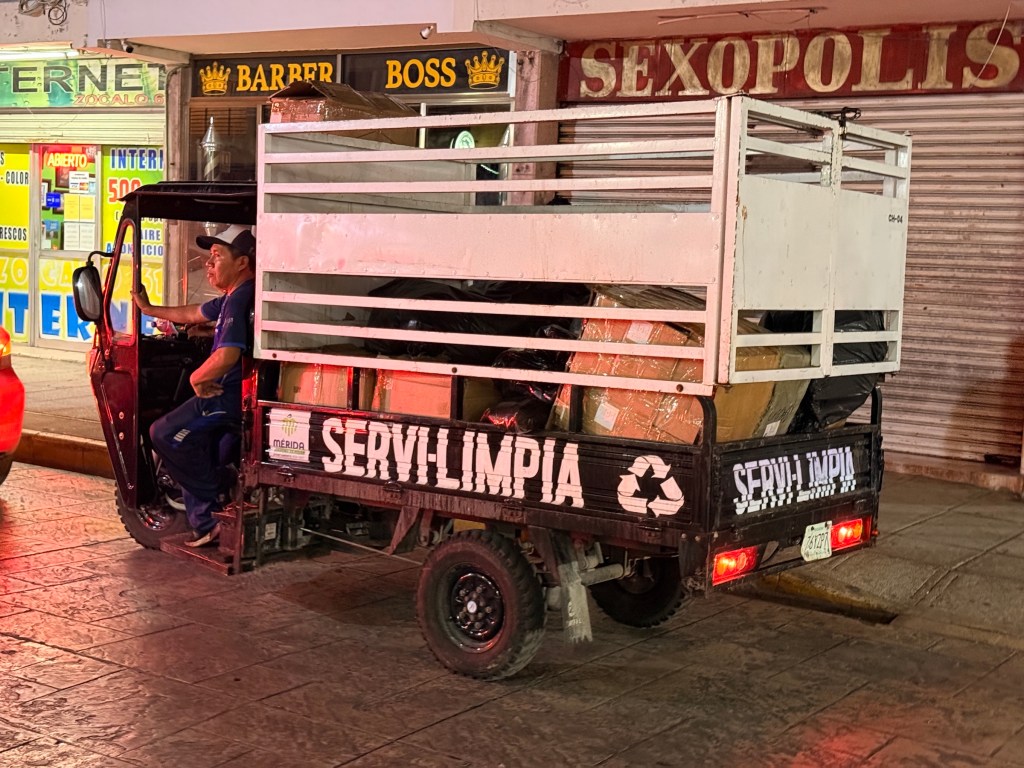
And a small trash truck is making the rounds to keep everything tidy as the evening progresses. We might like to ignore such aspects of reality, but maintenance really is important.
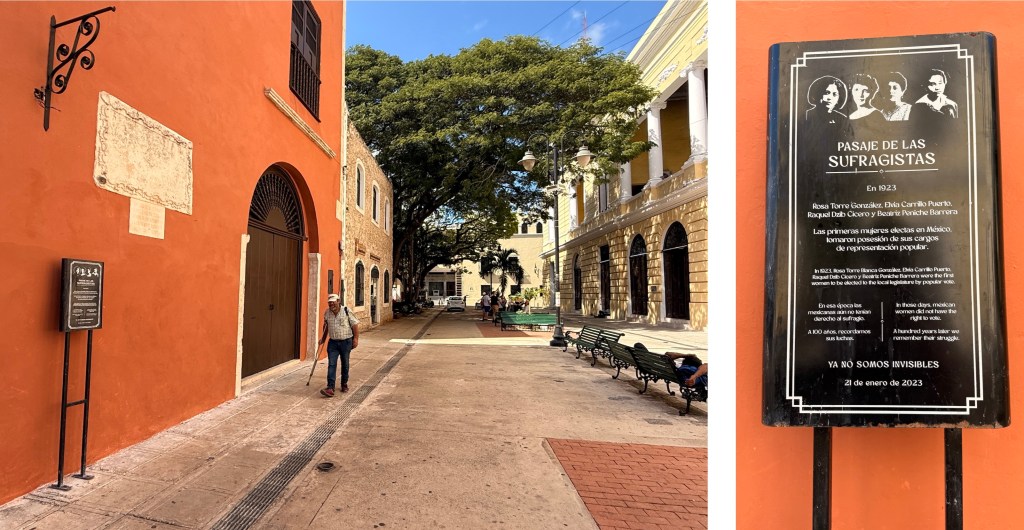
Music is an important part of life when you’re this close to the rhythms of the Gulf of Mexico and the Caribbean, and the following day we search out the city’s big Palacio de la Música. It’s nearby down a walkway that’s now called the Pasaje de las Sufragistas in honor of four women who were elected to the local legislature in 1923, before Mexican women had the right to vote. The slogan near the bottom reads, “Now we are not invisible.”
The Palacio de la Música, the National Center of Mexican Music, is an impressive place with the latest tech to make sure the history of the music is well-remembered.
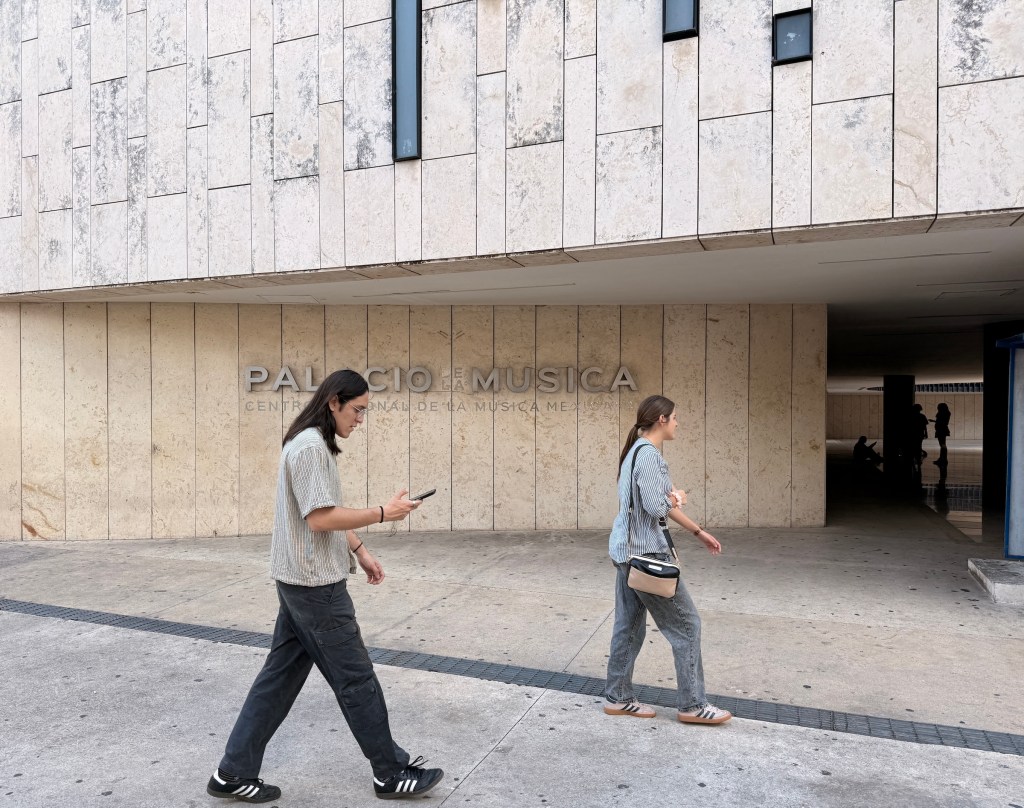
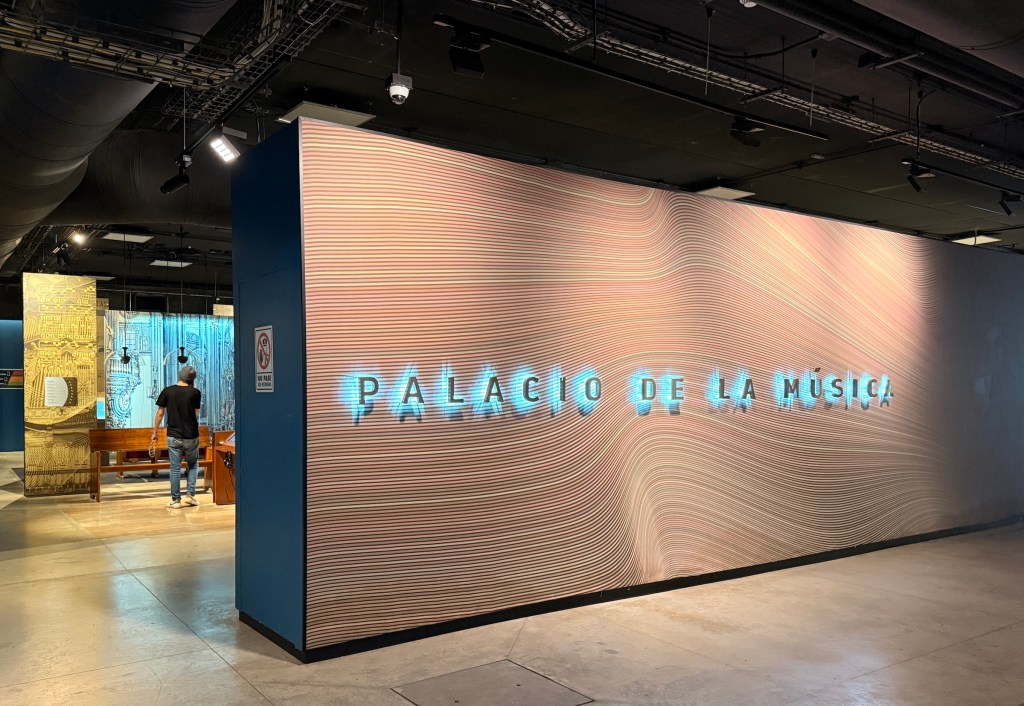
We’re just in time to enjoy a talented local group in concert, and these concerts are scheduled regularly by the museum.
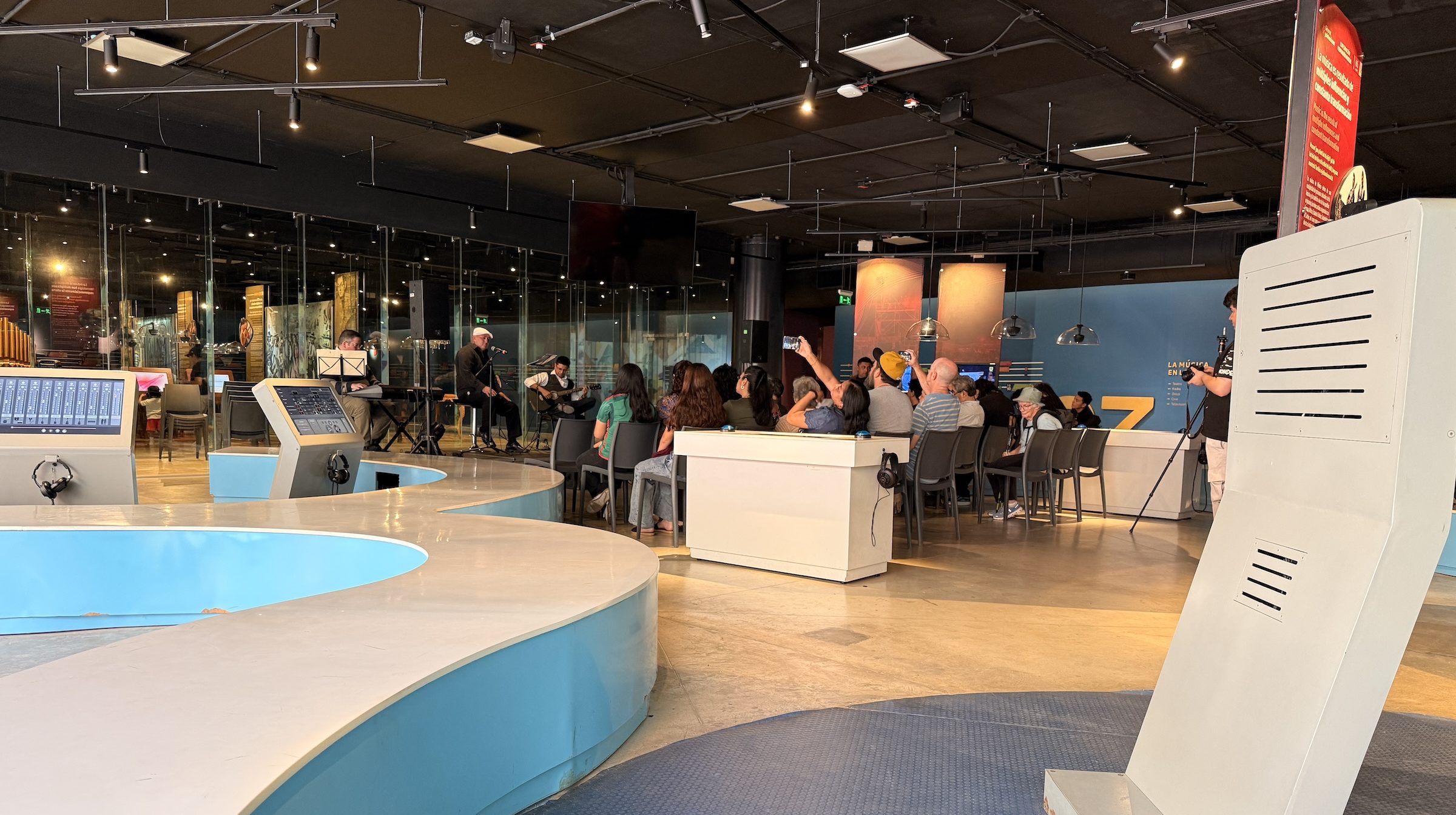
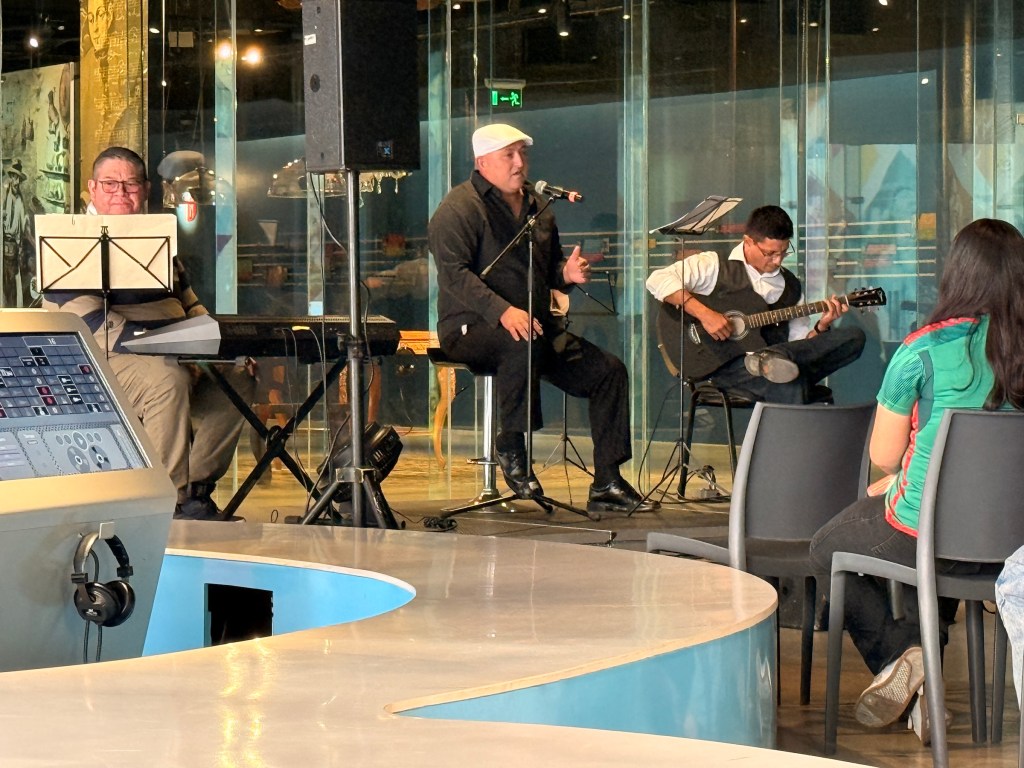
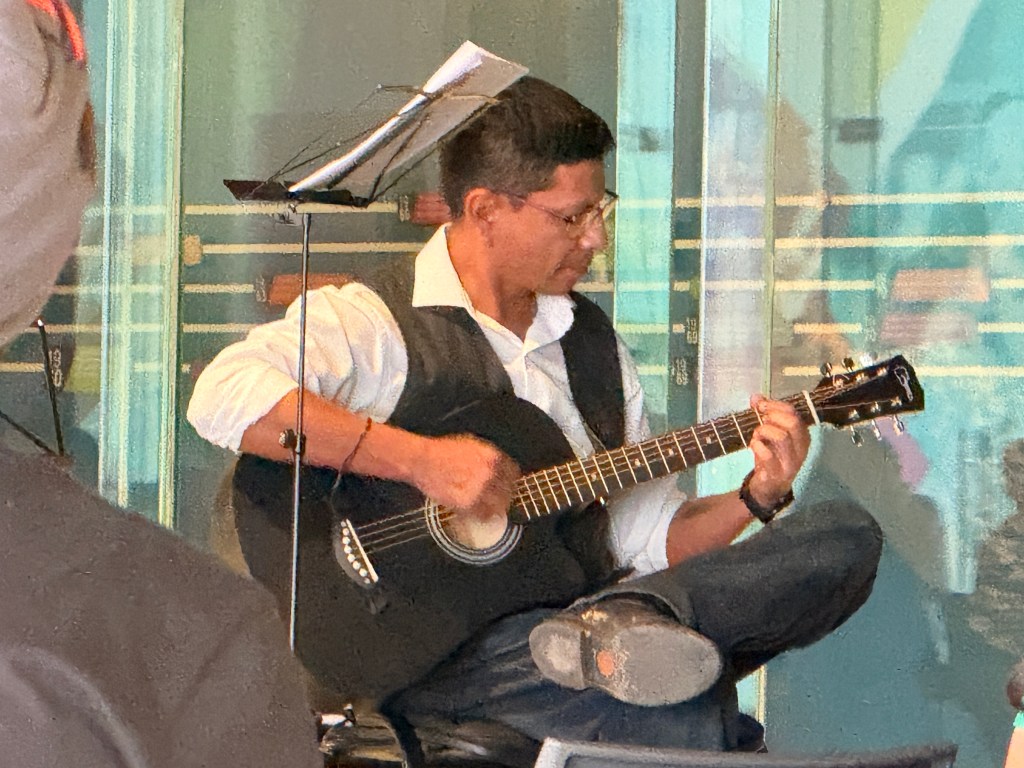
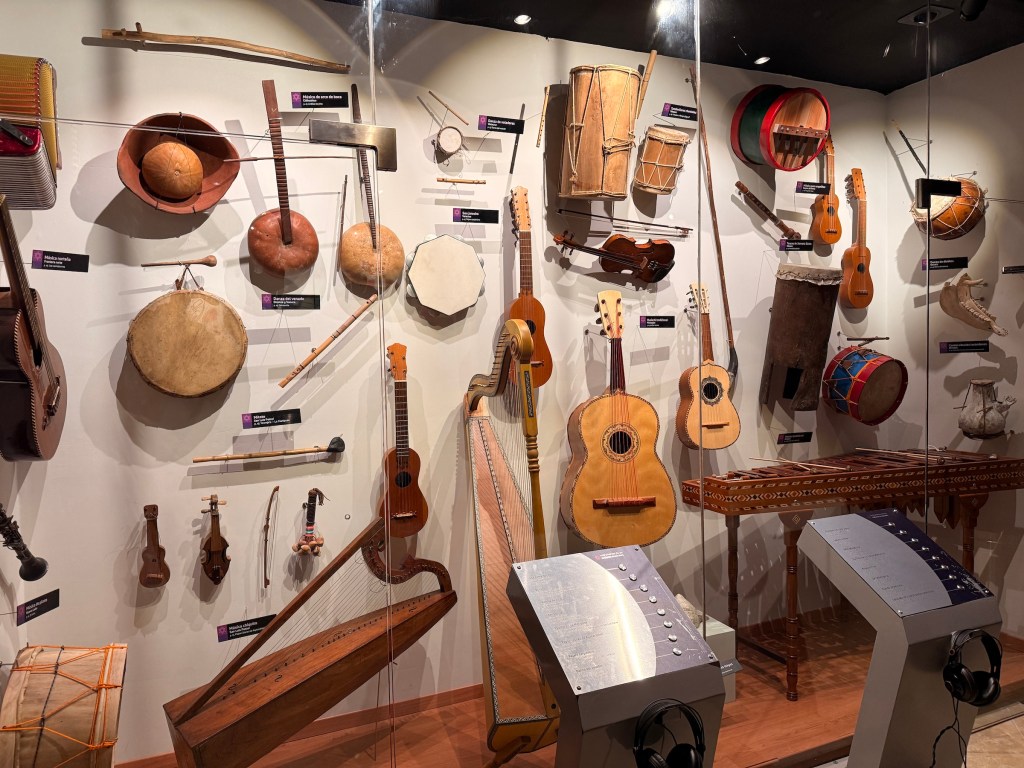
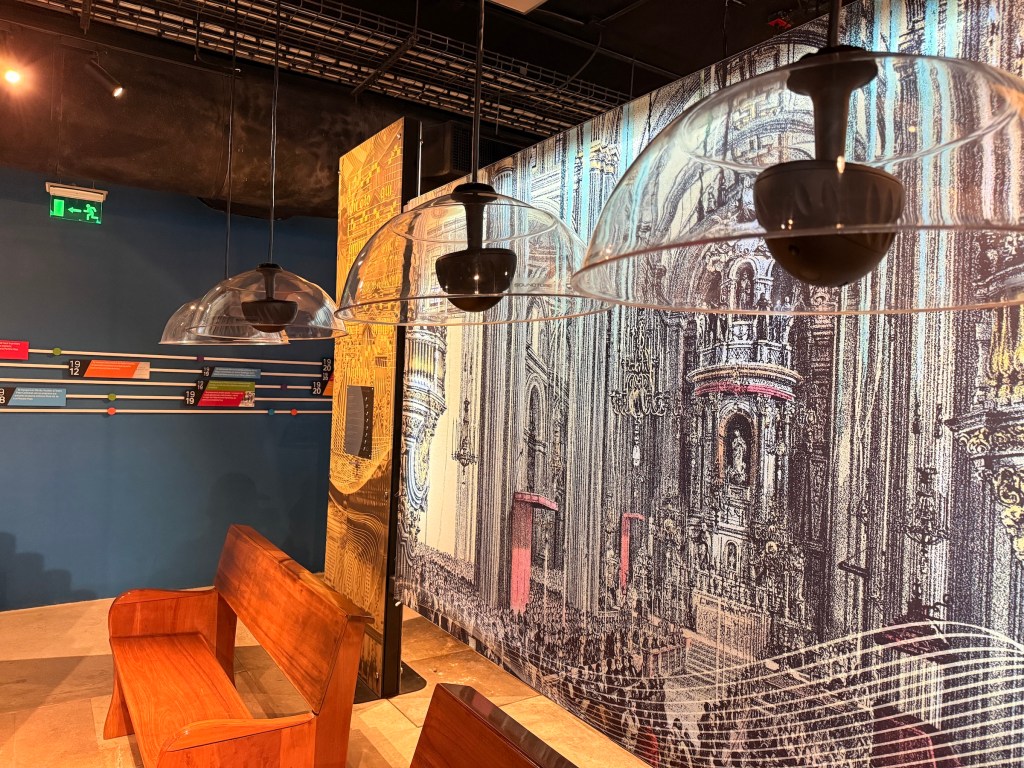
This is the kind of place where it’s easy to get lost in the music and dig into the deep history of it. There are so many different threads and connections to follow. The old handmade instruments on display capture the eternal human need to create some sort of camaraderie around a campfire, or in the village square. And you can sit beneath a kind of ‘music halo’ that surrounds you as if you’re actually in a concert hall.
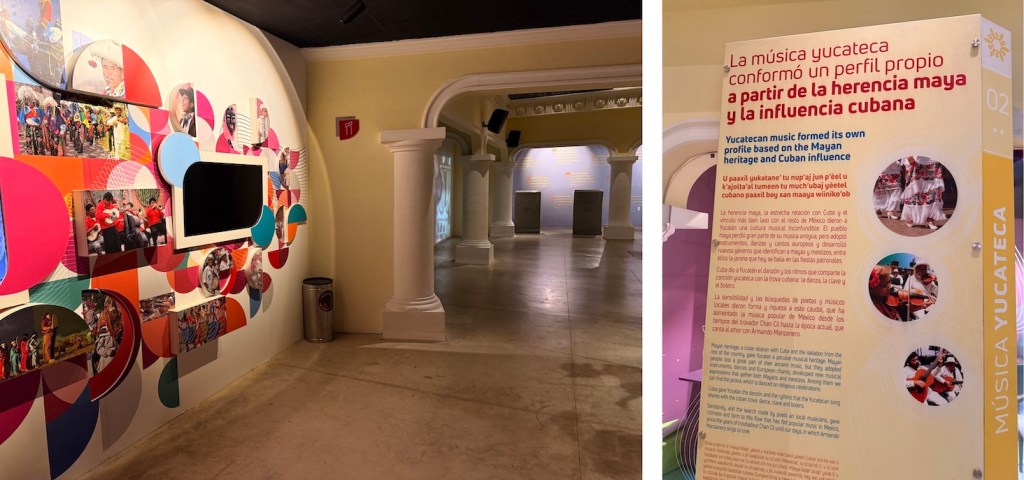
There’s a wall-sized timeline of Mexican music that includes the very first mariachi music ever recorded, in 1905 by El Mariachi Coculense and sponsored by General Porfirio Díaz.
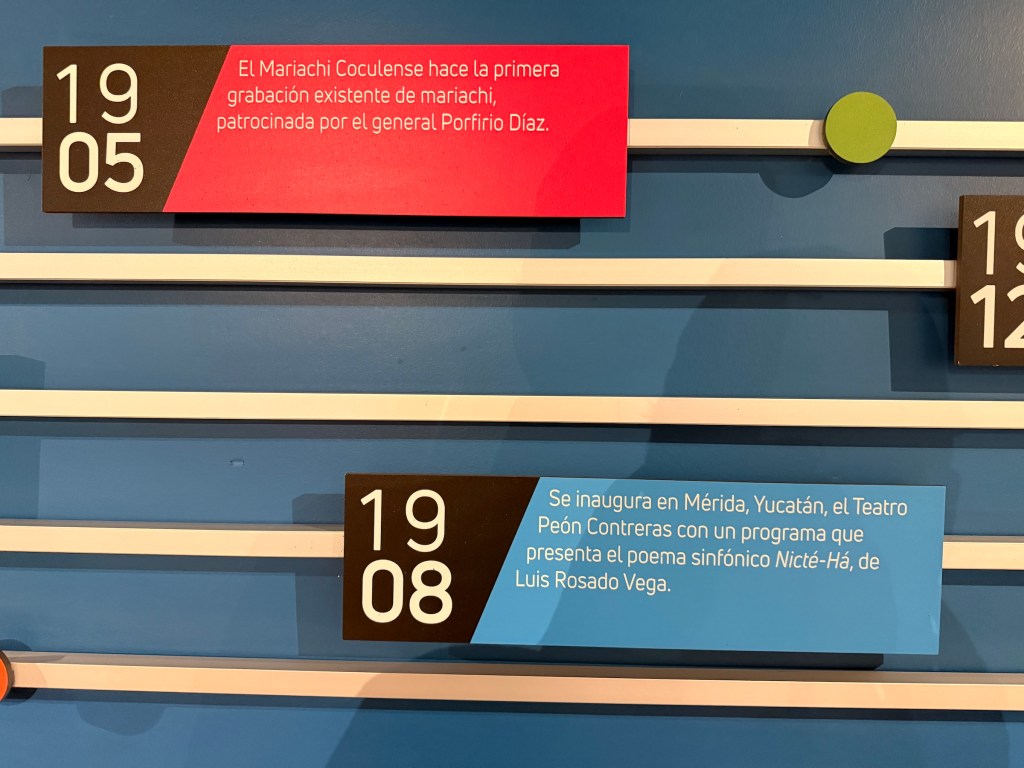
According to Latino Music Café,
“The Coculense Quartet was composed of four musicians from the town of Cocula in Jalisco, Mexico. There were two violins, a base guitar called a guitarrón, and a small guitar called a vihuela that was smaller than a normal guitar. The vihuela sounds like a tenor guitar. Three of the five strings are tuned higher than a guitar to give a sharper tone. Note that they had no trumpets, which today we associate with the sound of mariachis”
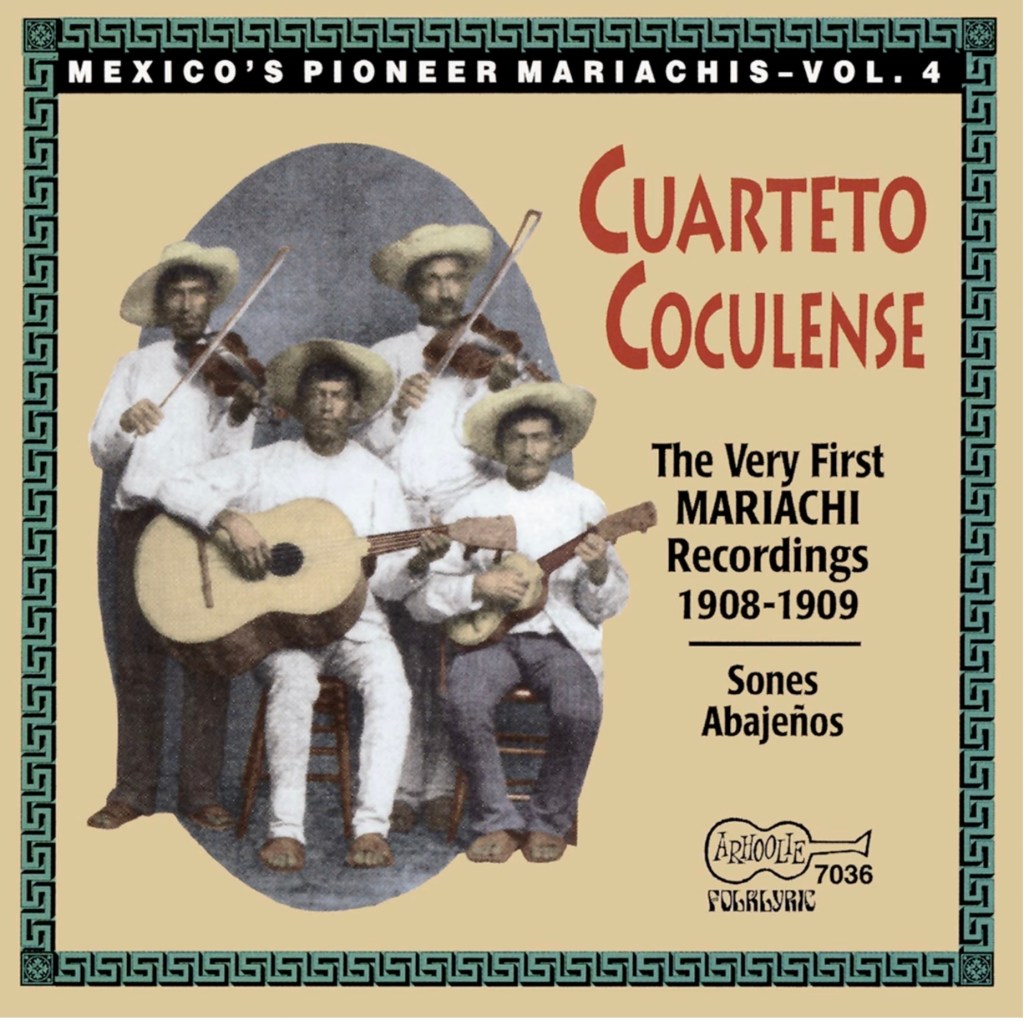
The 1908 version of that recording is available on Smithsonian Folkways, and it’s a much simpler version than the rich mariachi music we hear these days.
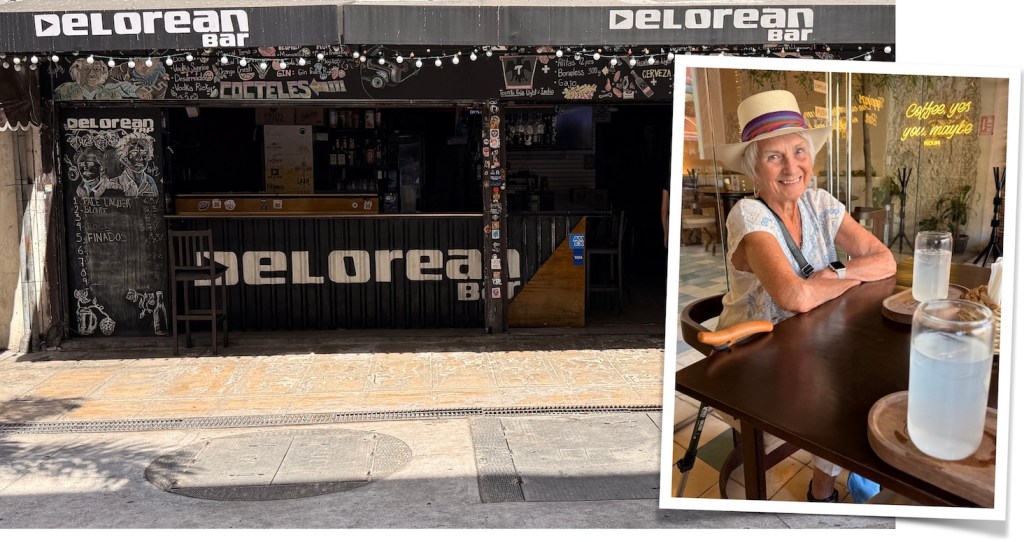
After several hours in the Palacio de la Música, it’s time for a cold refresher. It’s mid-afternoon and probably a bit early to go haunt the DeLorean Bar, that’s just across the alleyway. We opt instead for a pair of frosty limonadas at the Café Nidum, with their fetching slogan reading, “Coffee, yes. You, maybe.” And then it’s time again for another quiet afternoon siesta during the heat of the day.
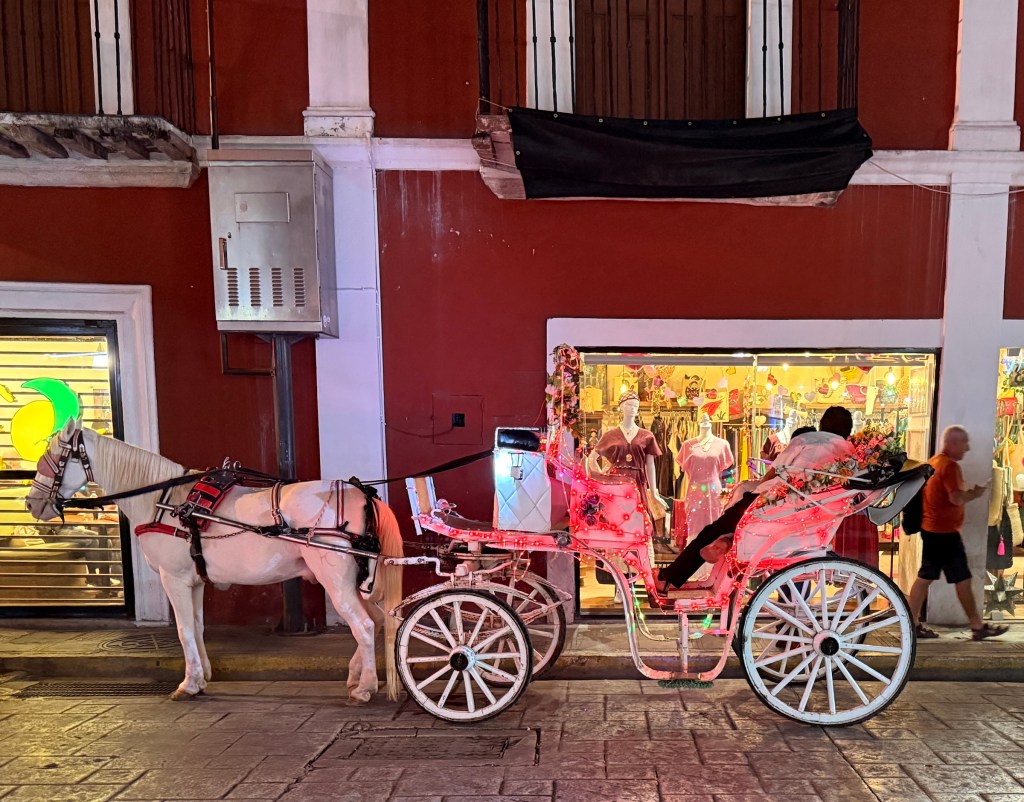
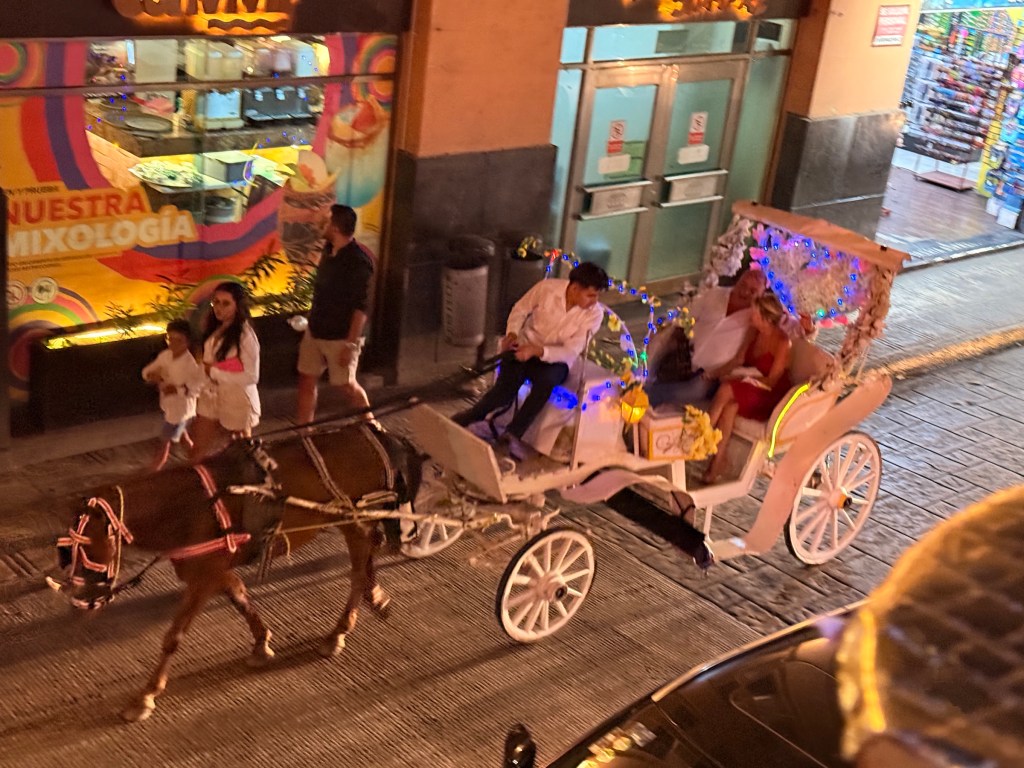
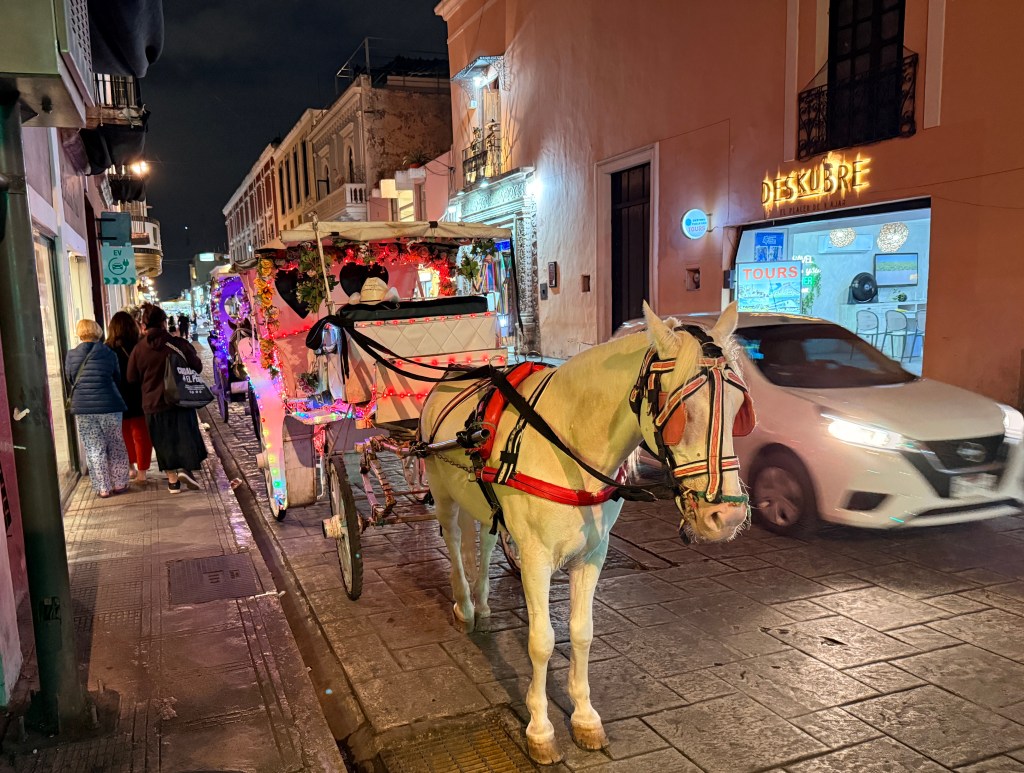
We awaken into a fine and balmy tropical evening, and take to the colorful streets of Mérida once again, passing a beautiful horse-drawn carriage that sparkles in the evening. And there’s an enticing balcony that’s awaiting us at a restaurant named Le Makech – perched right over the local Burger King.
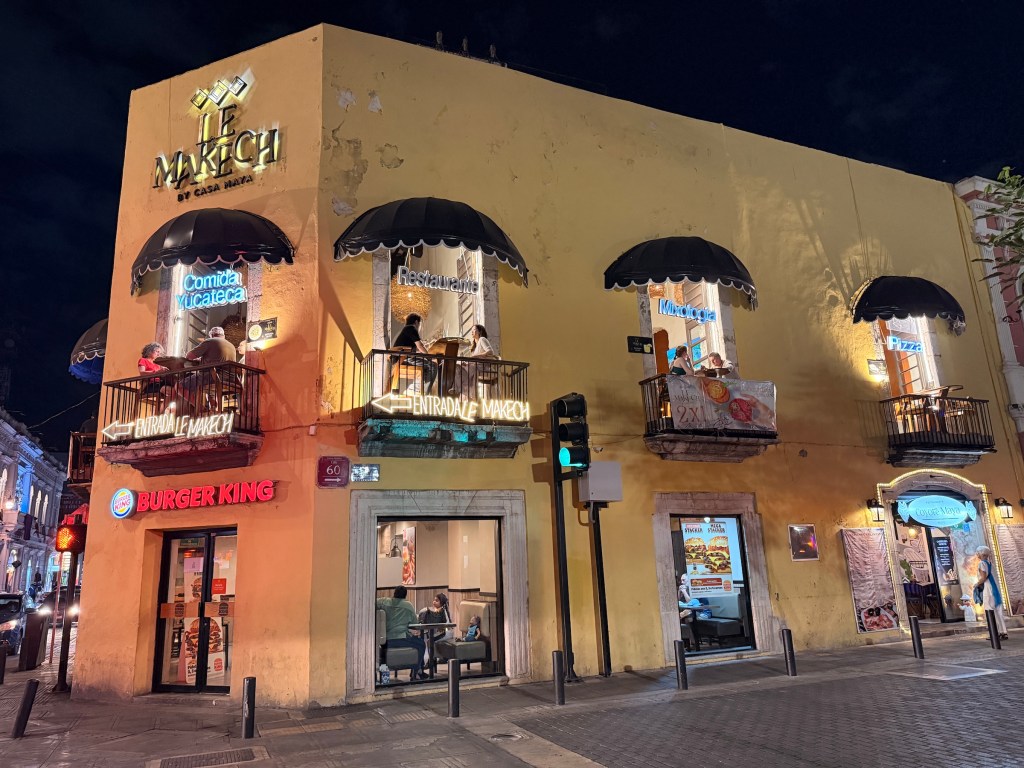
And it’s a fine perch indeed, a place where we can relax to enjoy plenty of good food and icy drinks as the world passes by just below us.
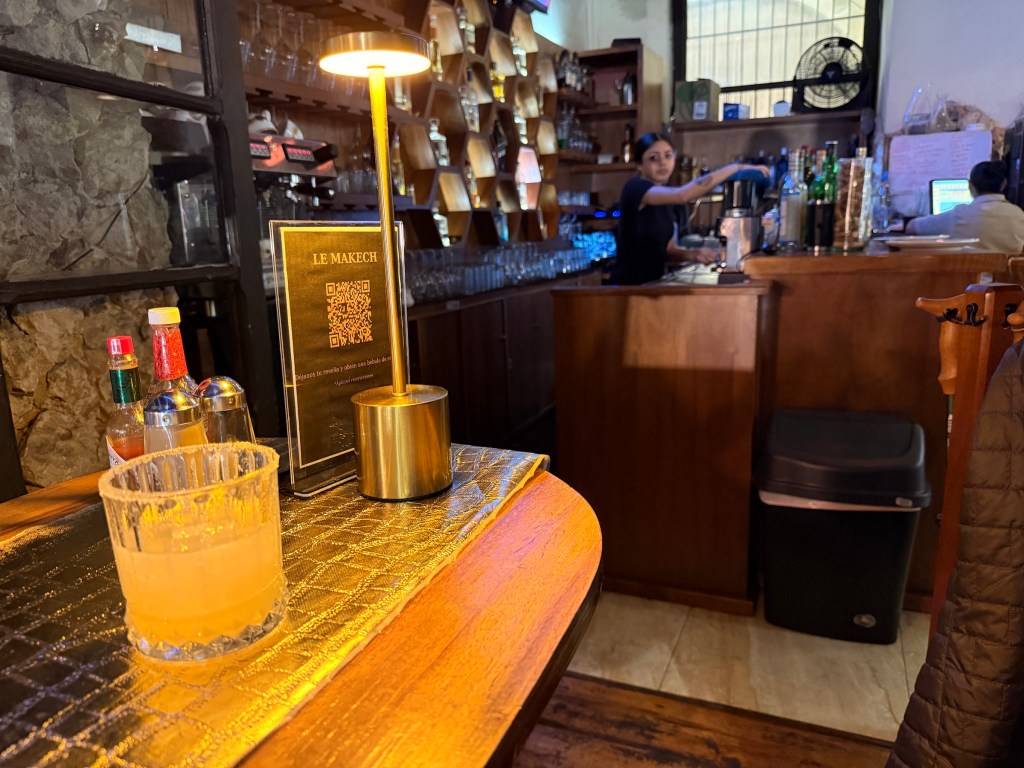
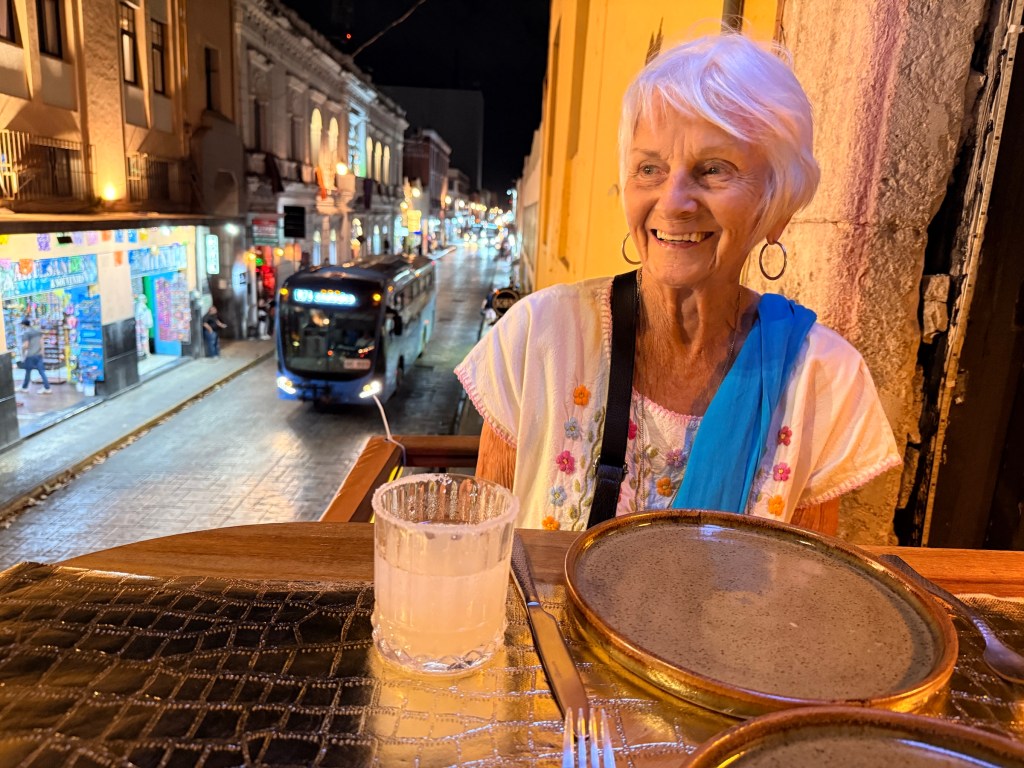
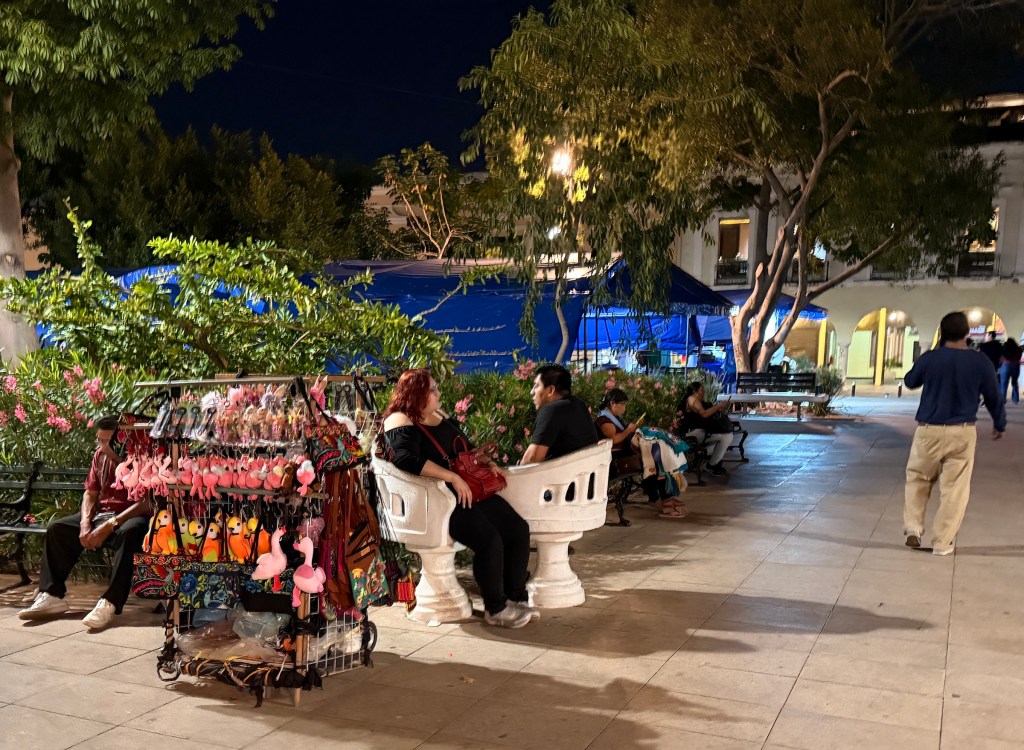
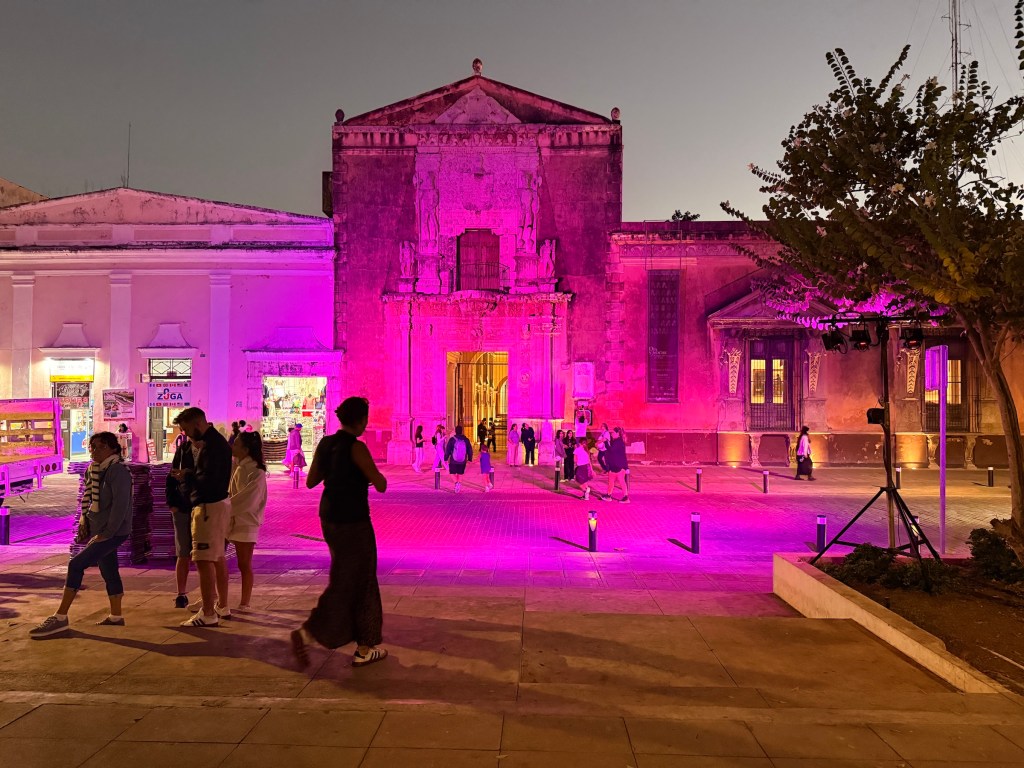
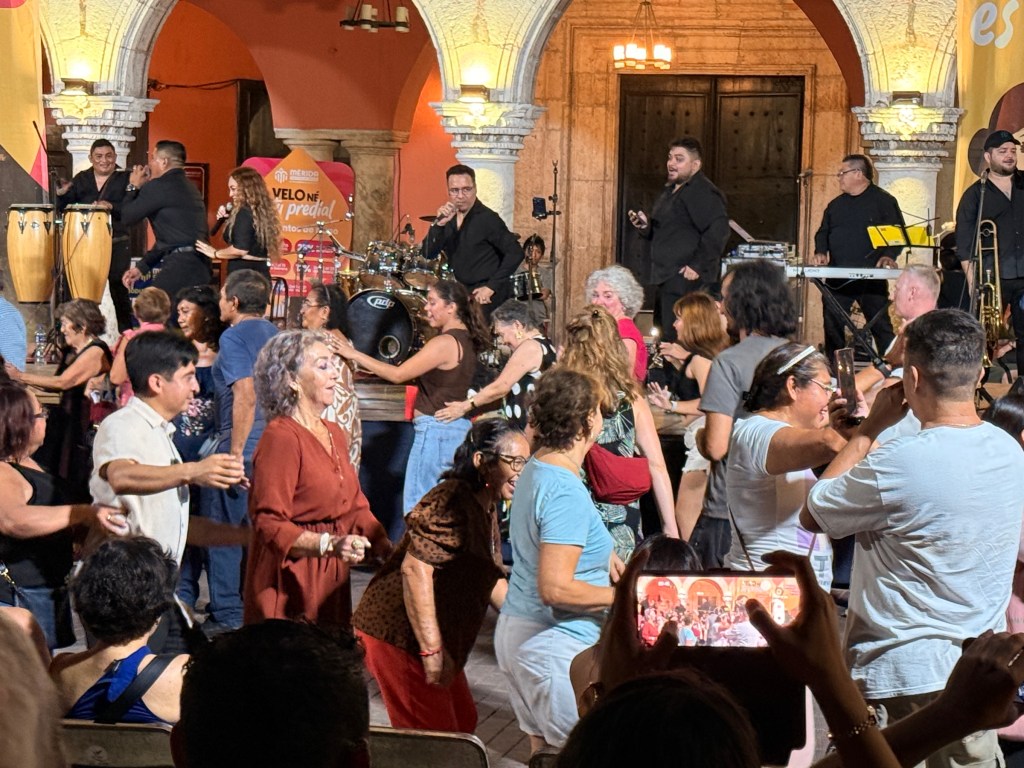
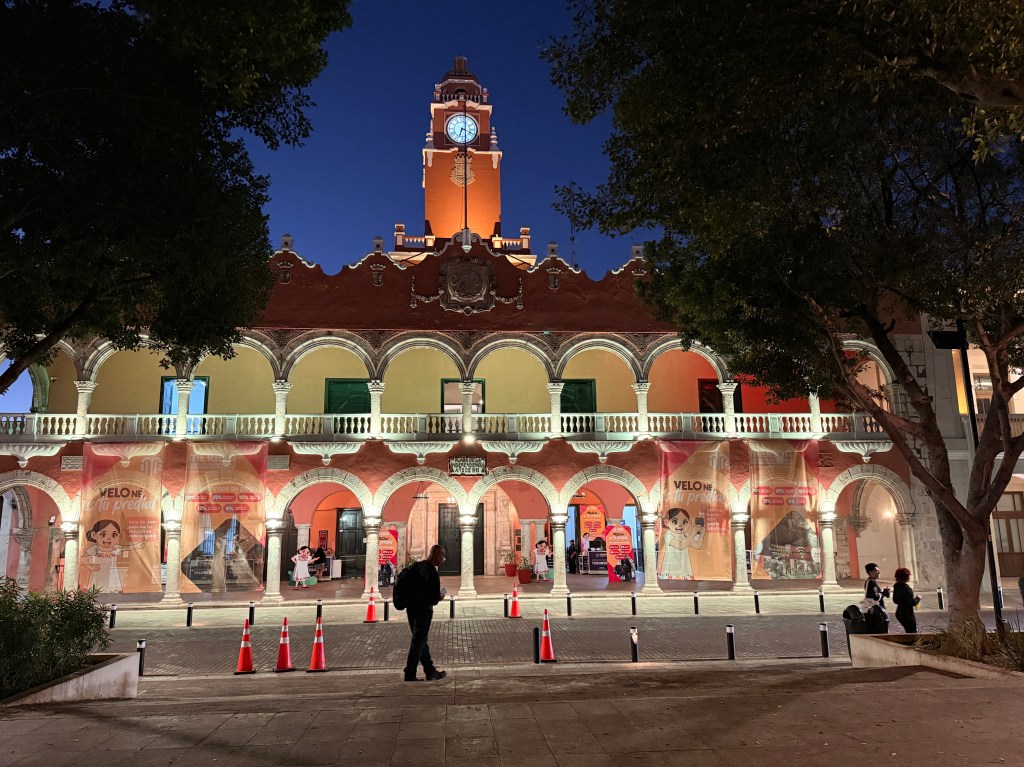
After a fine dinner we head back to the Plaza Grande, where there’s often something good about to happen. Couples enjoy the ’Tu y Yo’ chairs, which are something of a local icon. A facade is brilliantly lit. And the music of a big band beckons us to the foot of the Palacio Municipal, where crowds of revelers are dancing the night away. This is one of the events that we both recall fondly from a decade ago, when we were some of the few gringos in town and we joined in the revelry.
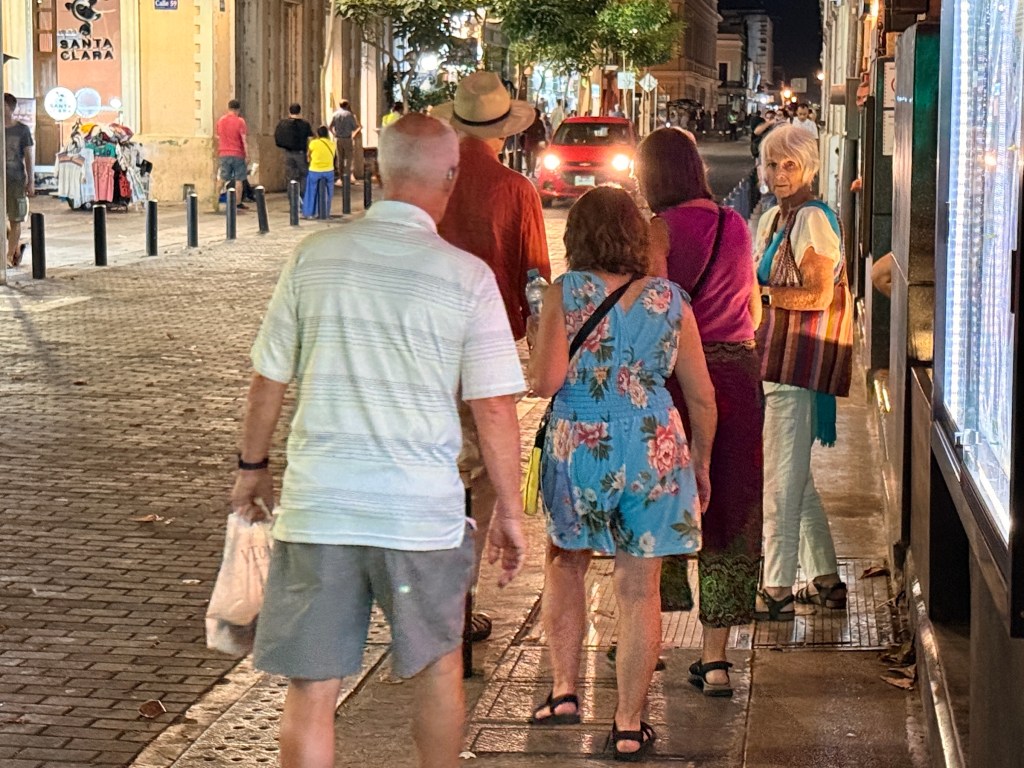
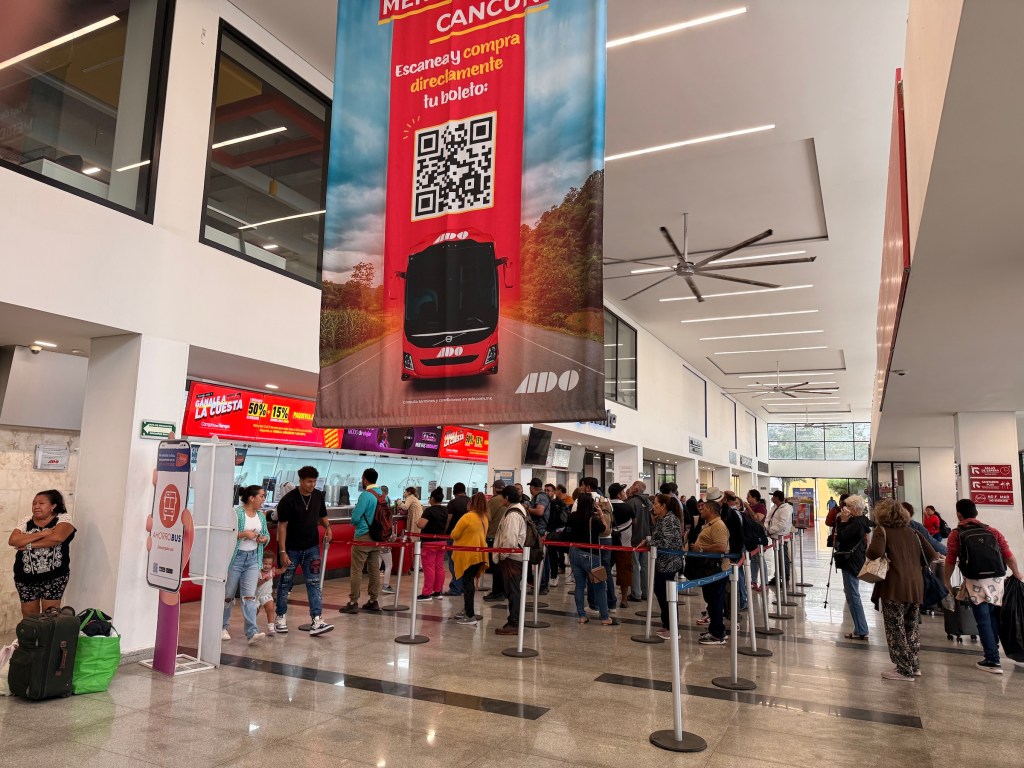
Time passes so quickly, as we awaken on our last full day in town and go first to the local ADO bus station for tickets to nearby Valladolid. The bus station is only a few blocks away and easy to roll our bags to, while the train station is out at the edge of town. Also, it’s been a while since we’ve been on those good ADO buses, and we opt for an another bit of nostalgia.
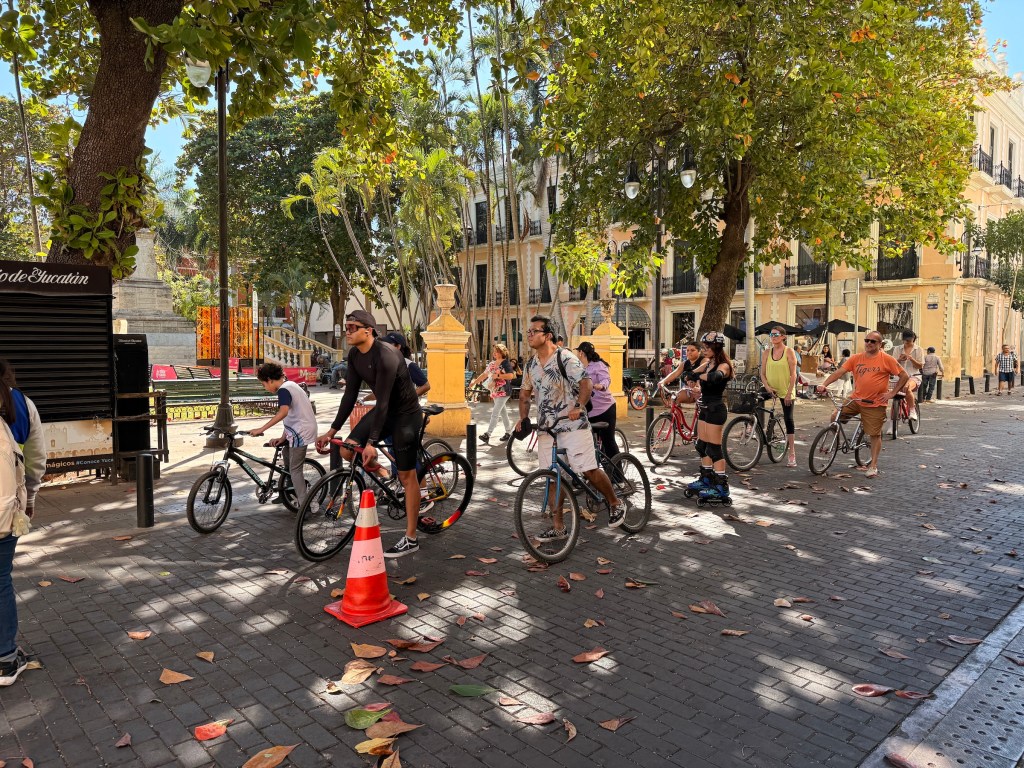
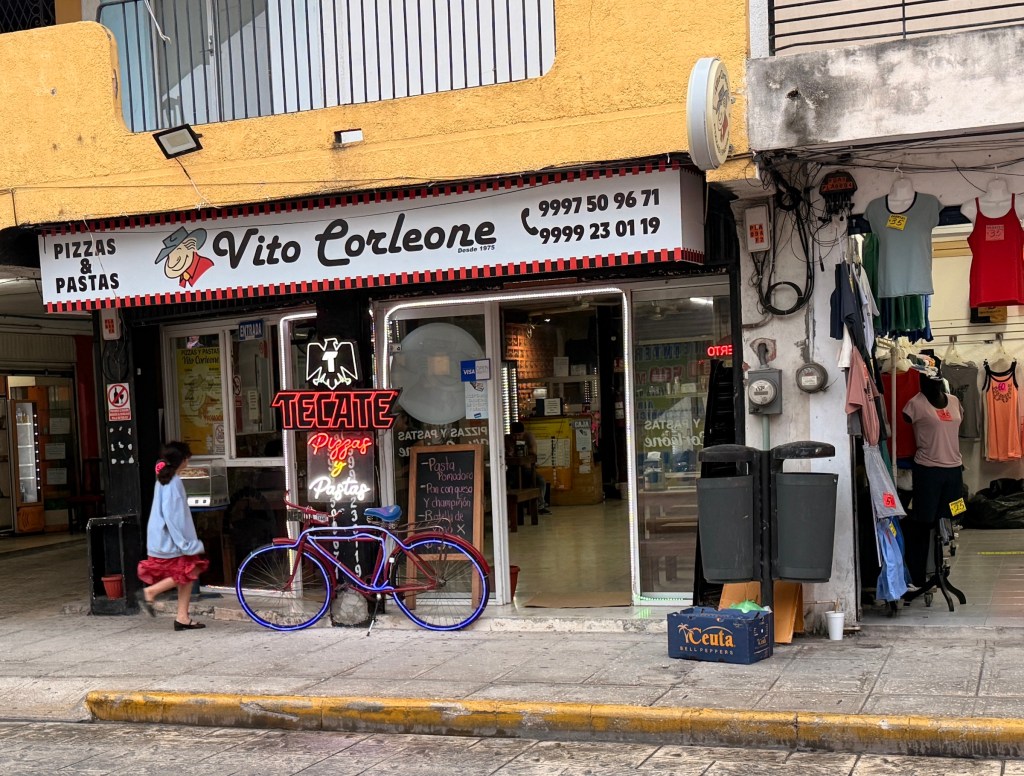
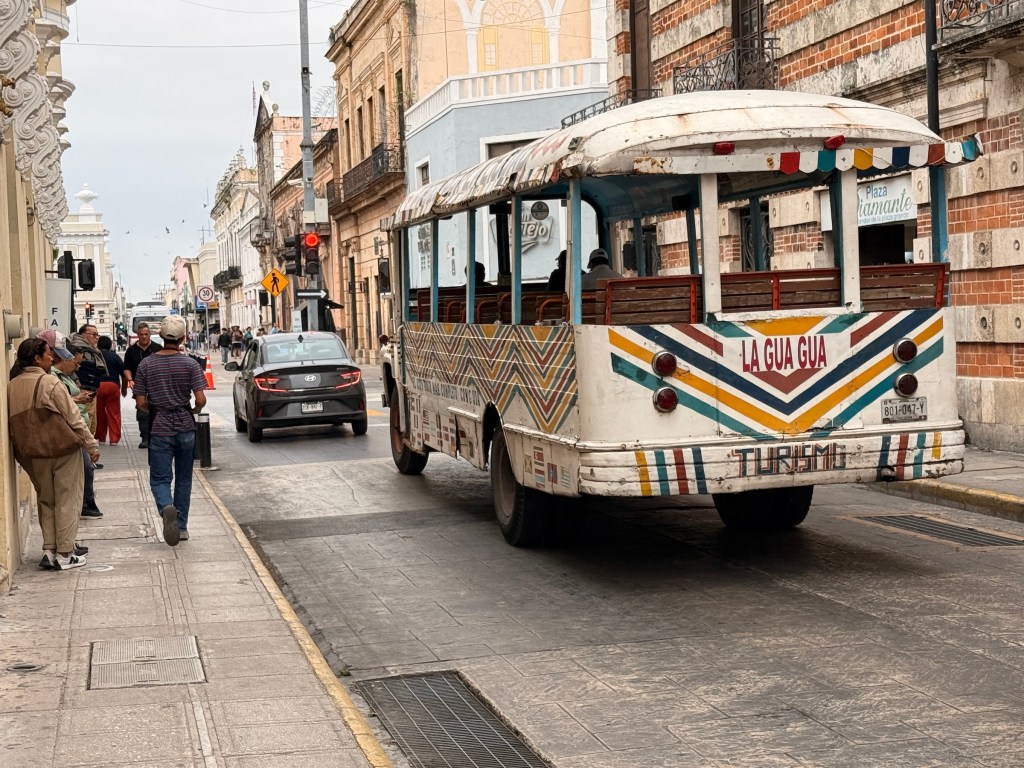
With our ADO bus tickets taken care of, we pass the Vito Corleone restaurant on our way to the Plaza, where a group of bicyclists have gathered to enjoy the morning, and an old ‘Gua Gua’ bus passes us by. Carolyn recalls the colorful Gua Guas (named for the ‘gua gua’ sound of their horns) in Puerto Rico when she lived there in the 1960s. Sadly they’re gone now, but at least there’s a guy in Mérida who saved one for the nostalgia buffs among us.
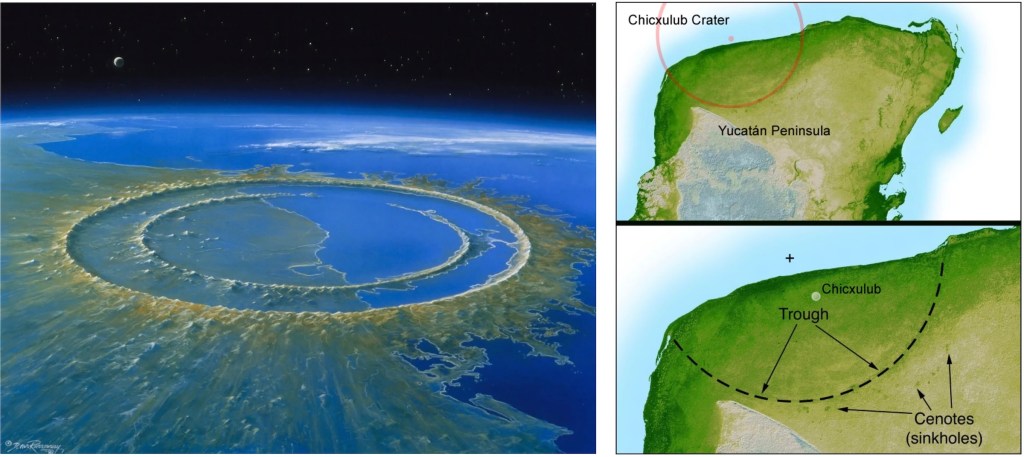
And for those with an intense interest in the huge asteroid that struck the Yucatan 66 million years ago and killed all the dinosaurs, it left a crater here that’s about 120 miles in diameter. And today, Mérida sits almost in the middle of the Chicxulub crater. Yet a few million years after the event, it’s hard to see the evidence.
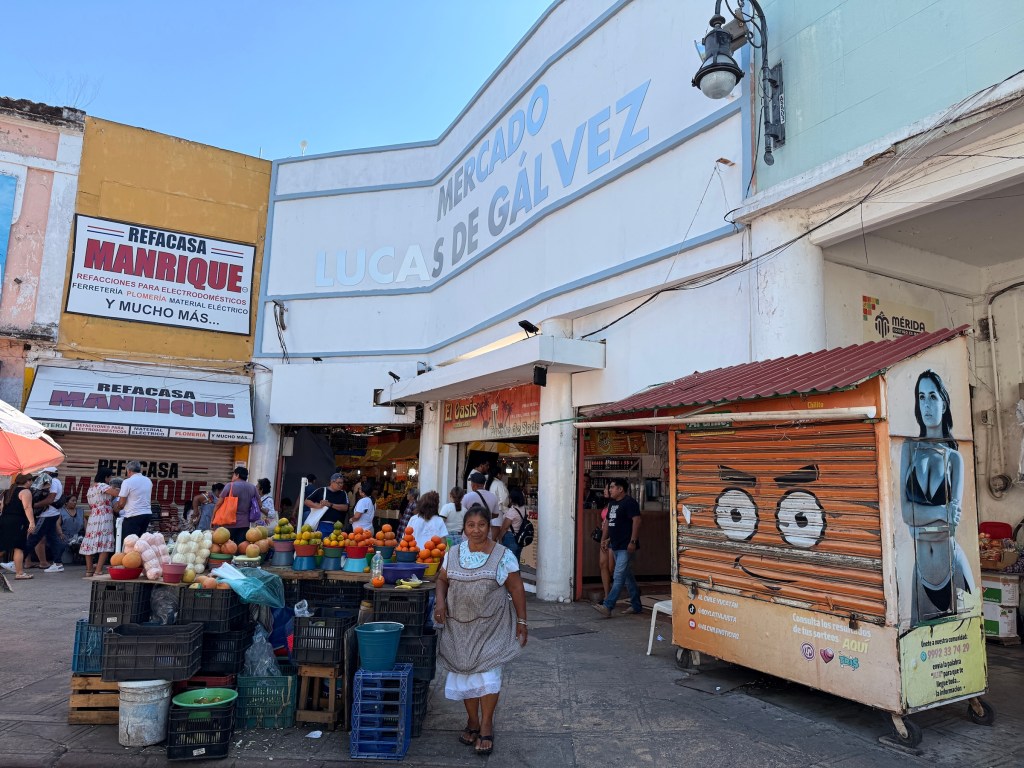
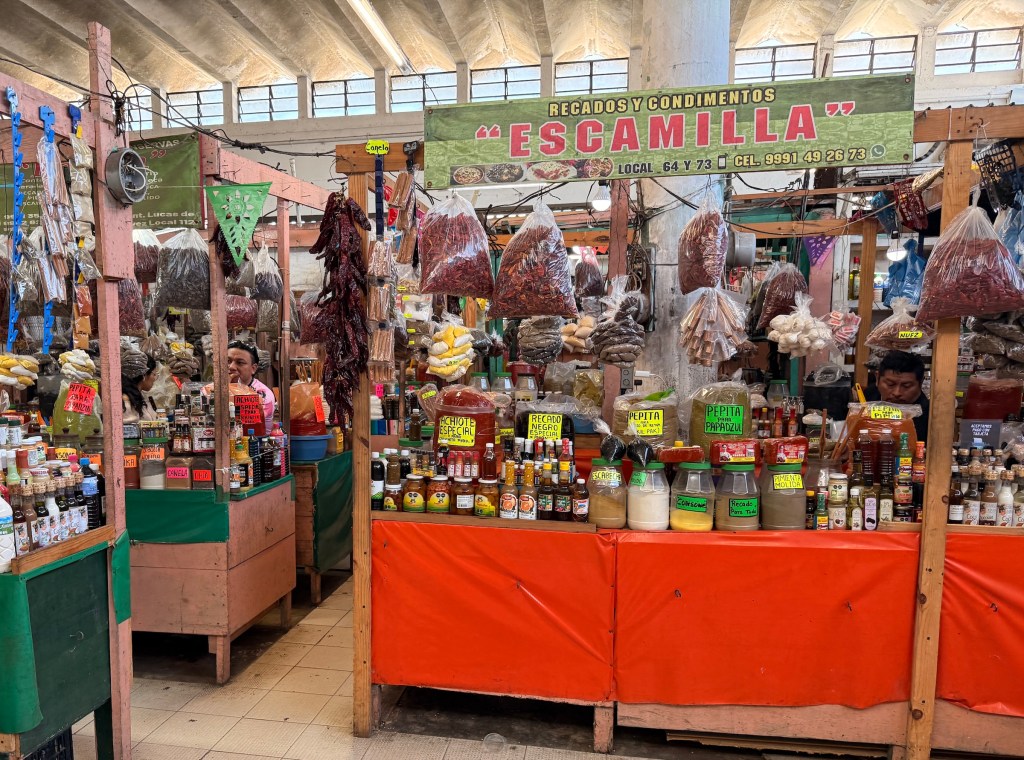
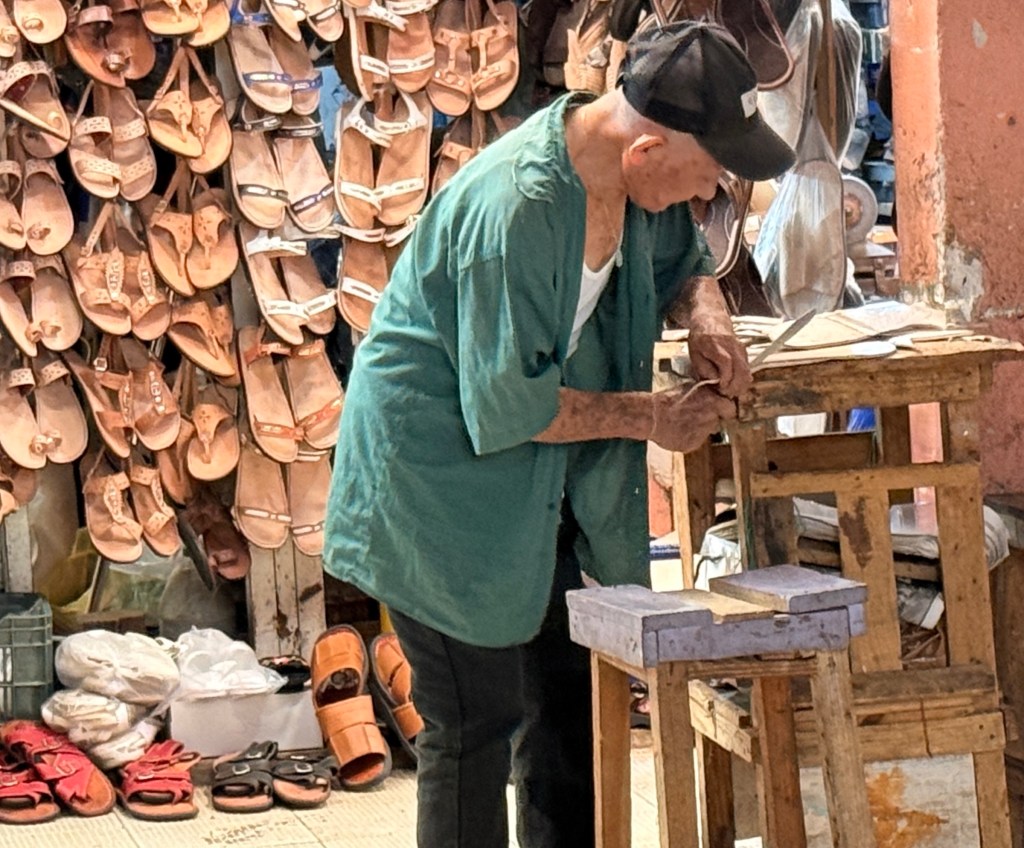
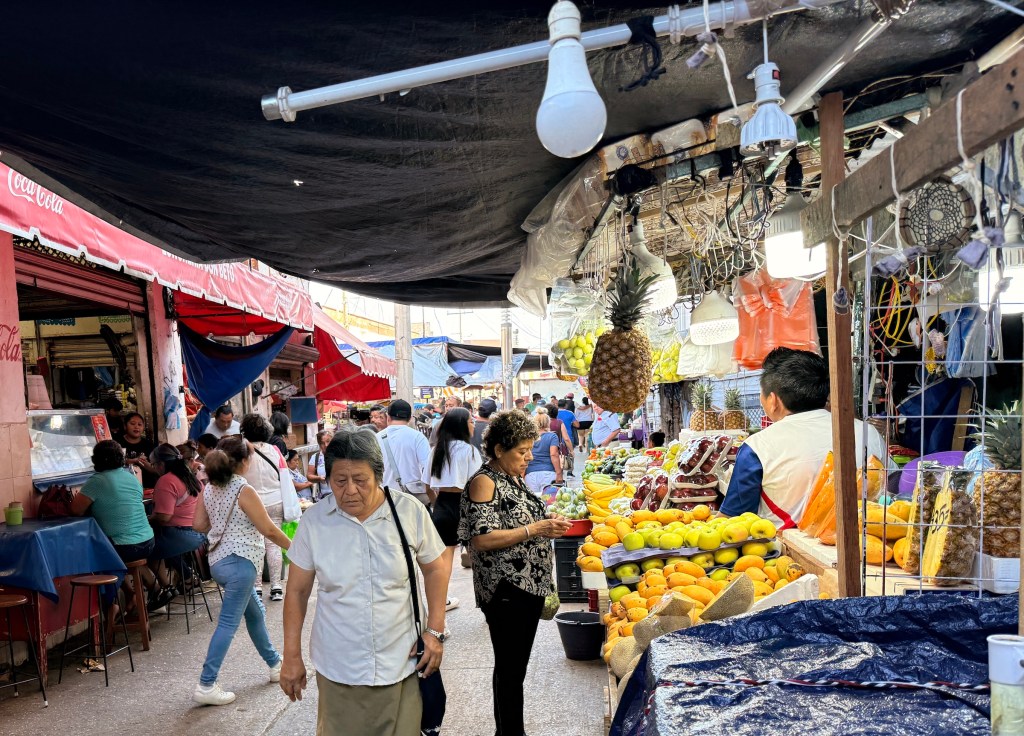
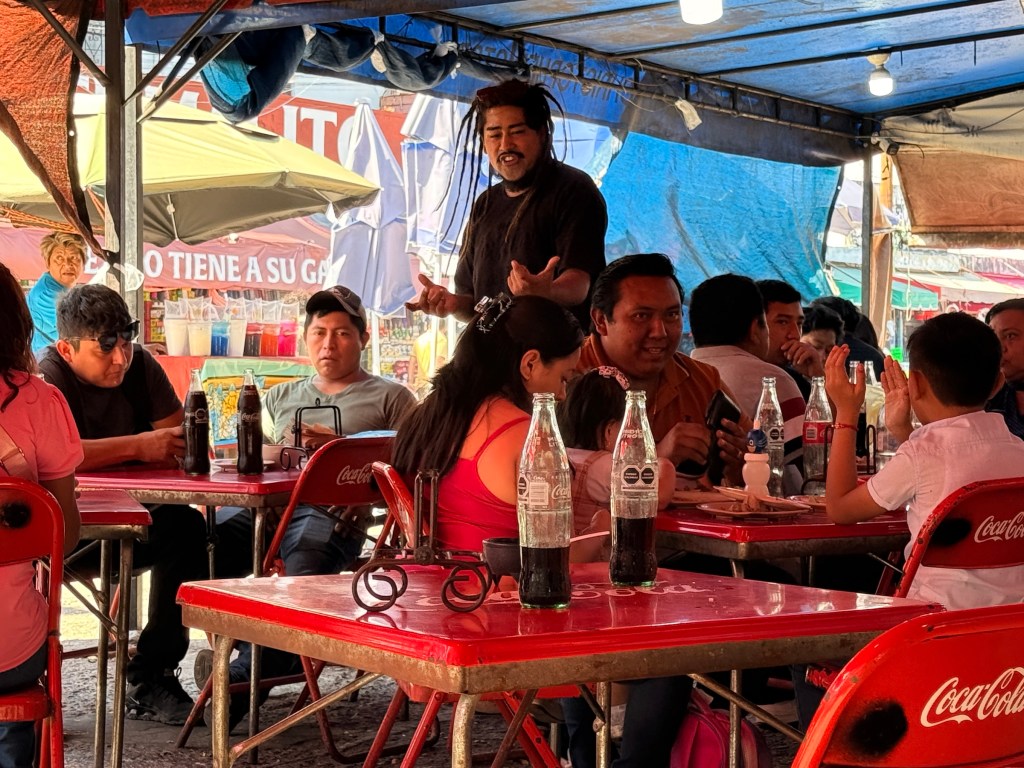
We’re off to the Mercado Lucas de Galvez to put a splash of color into the morning. We can always count on a good Mexican market, filled with fruit and vegetables and chiles, to be a colorful encounter. I pause to watch a skillful cobbler making another pair of sandals to add to his already-ample collection. And we take a break from the heat with a cold drink under a shade structure, as a young jokester attempts to entertain the crowd. He’s mostly ignored, but he entertains us and we hand him a ten peso coin. At least he’s out working to make a buck, and he adds some local spirit to a hot day.
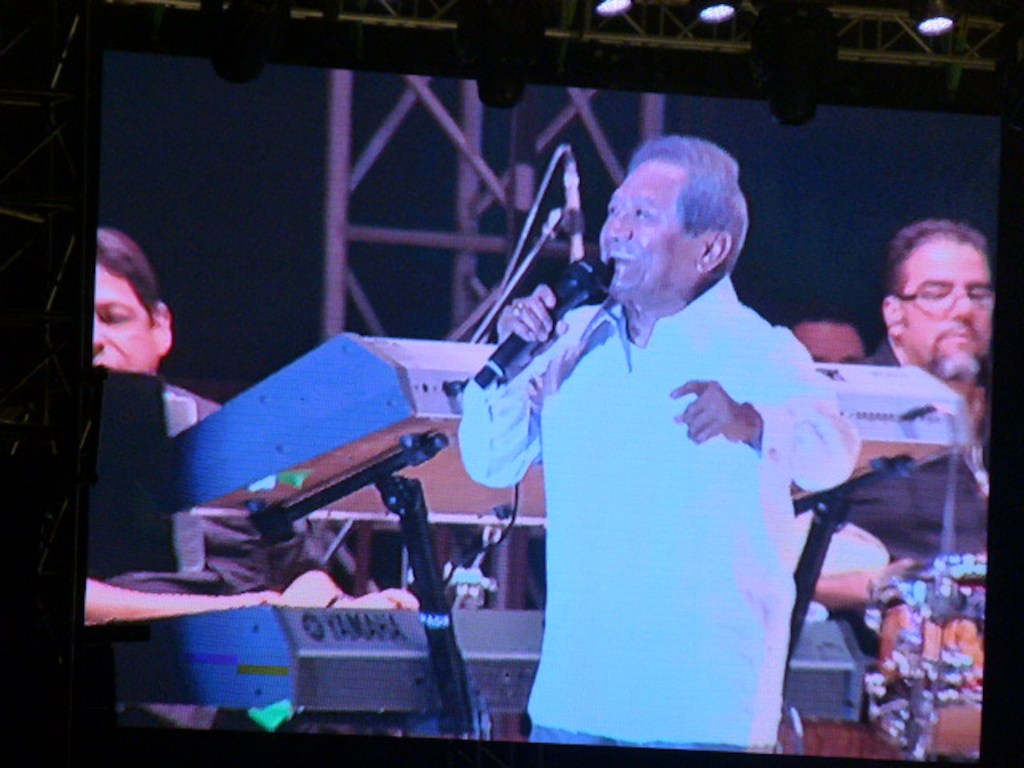
The Teatro Armando Manzanero is only half a block from the Plaza, and we recall him performing at Fiestas de Pitíc in Hermosillo. He was born near Mérida and became a prolific song writer and performer. He was a kind of a beloved Mexican Tony Bennett, and the audience sang along with him. His songs have been performed by Frank Sinatra, Elvis Presley, Dionne Warwick, Andrea Bocelli, Christina Aguilera and others. He was best known for songs like “Somos Novios,” which became a hit in English in 1970 as, “It’s Impossible.”
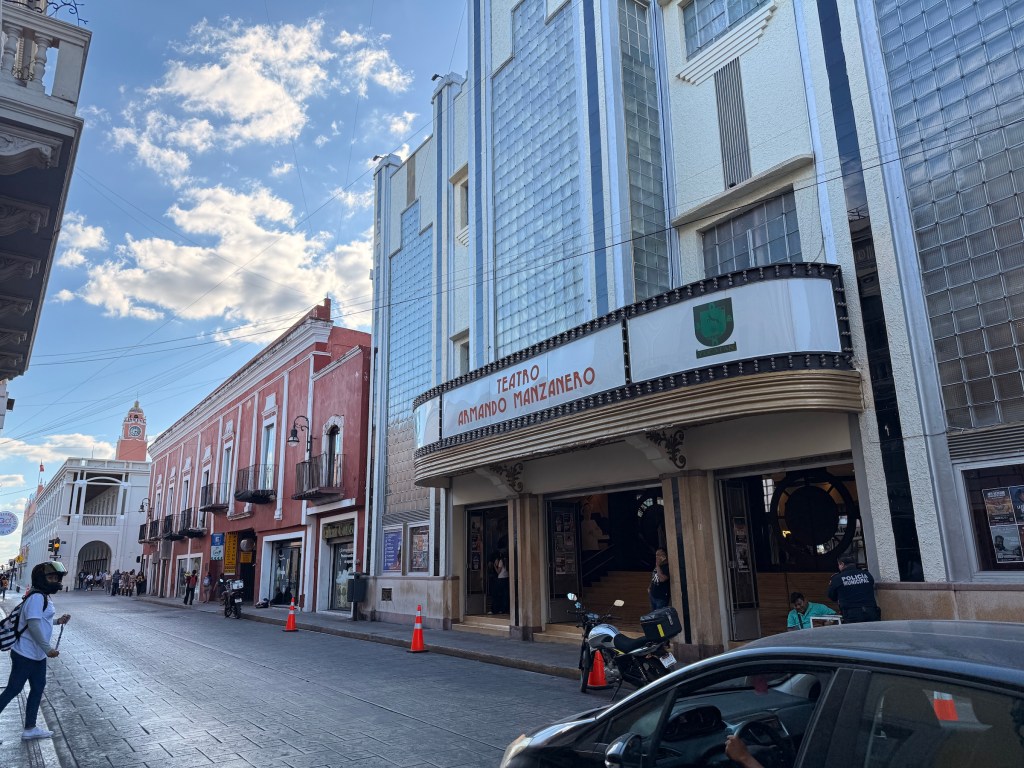
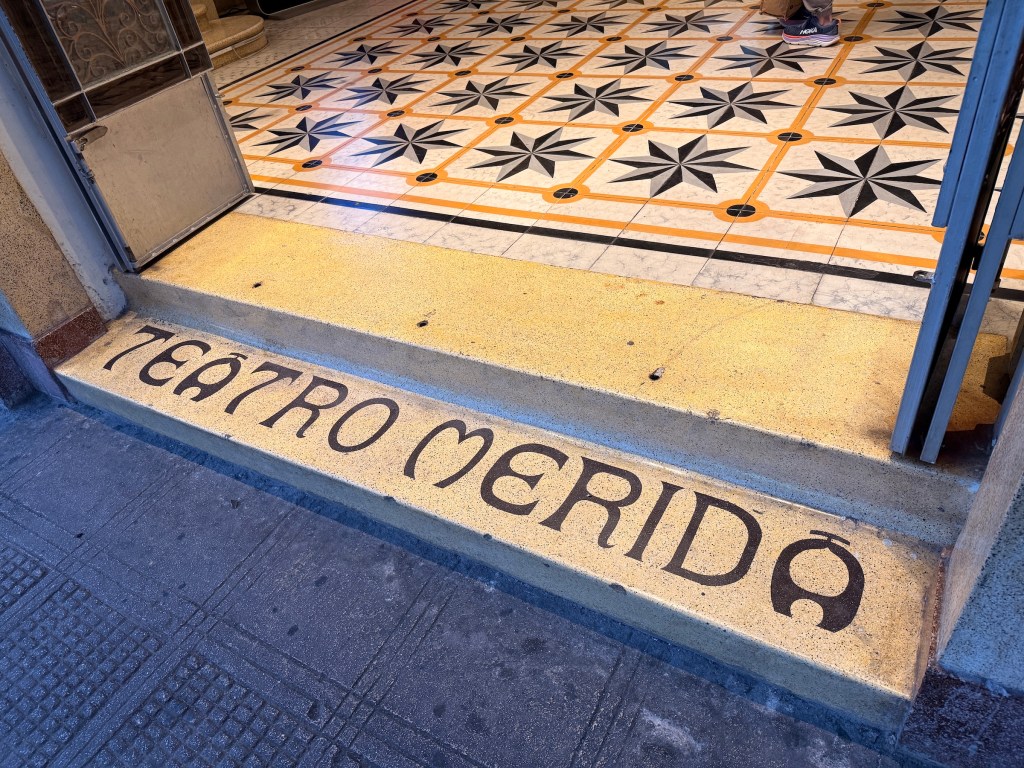
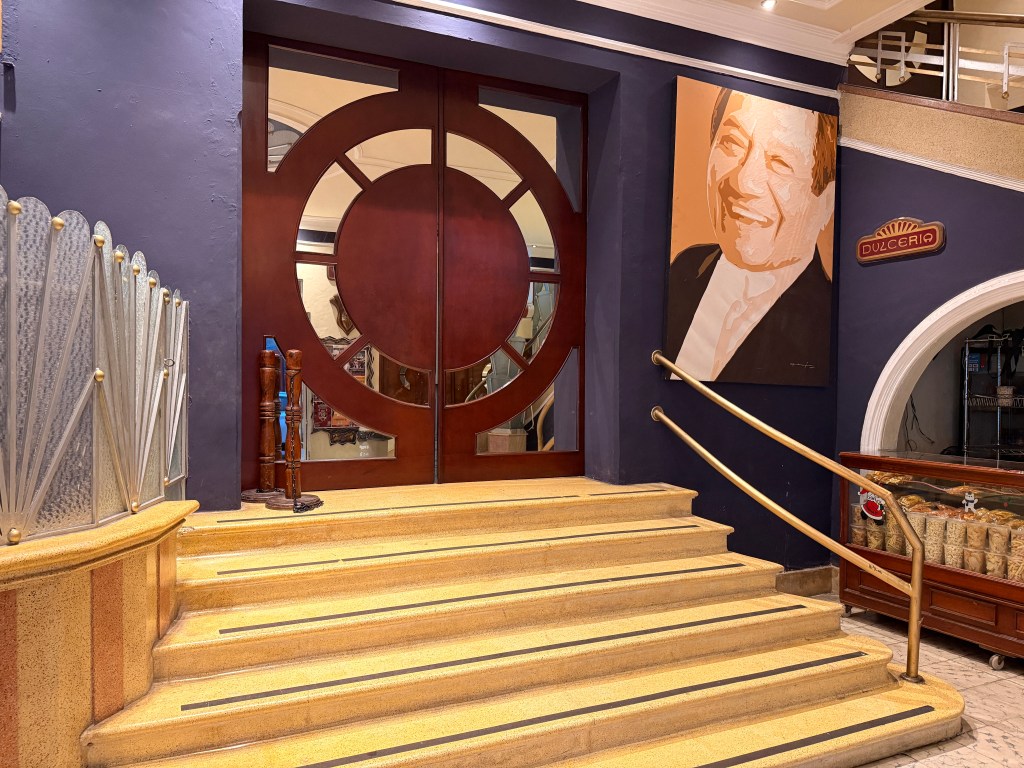
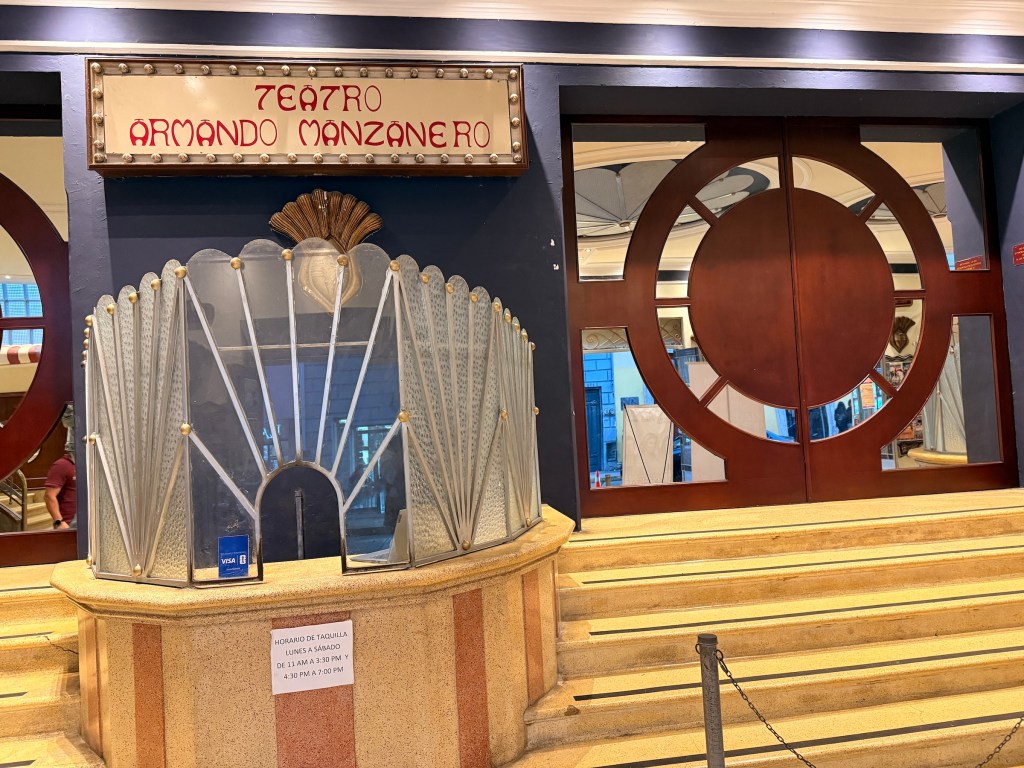

Sadly, he passed away in 2020 from the COVID virus at the age of 85, and his ashes were returned to Mérida. It would have been wonderful to see him performing here at the Teatro Armando Manzanero and that won’t happen now. (We’ll also miss a performance of “Por que los Hombres Aman a las Cabronas,” but we probably wouldn’t have gotten all the slang and inside jokes!) I’m glad I got a few pictures of Manzanero when I could, at the Fiestas de Pitíc.

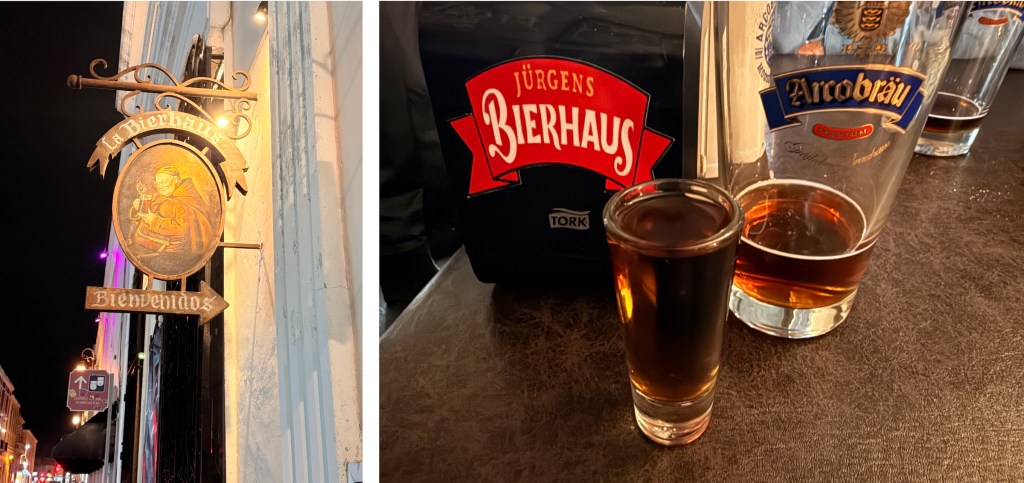
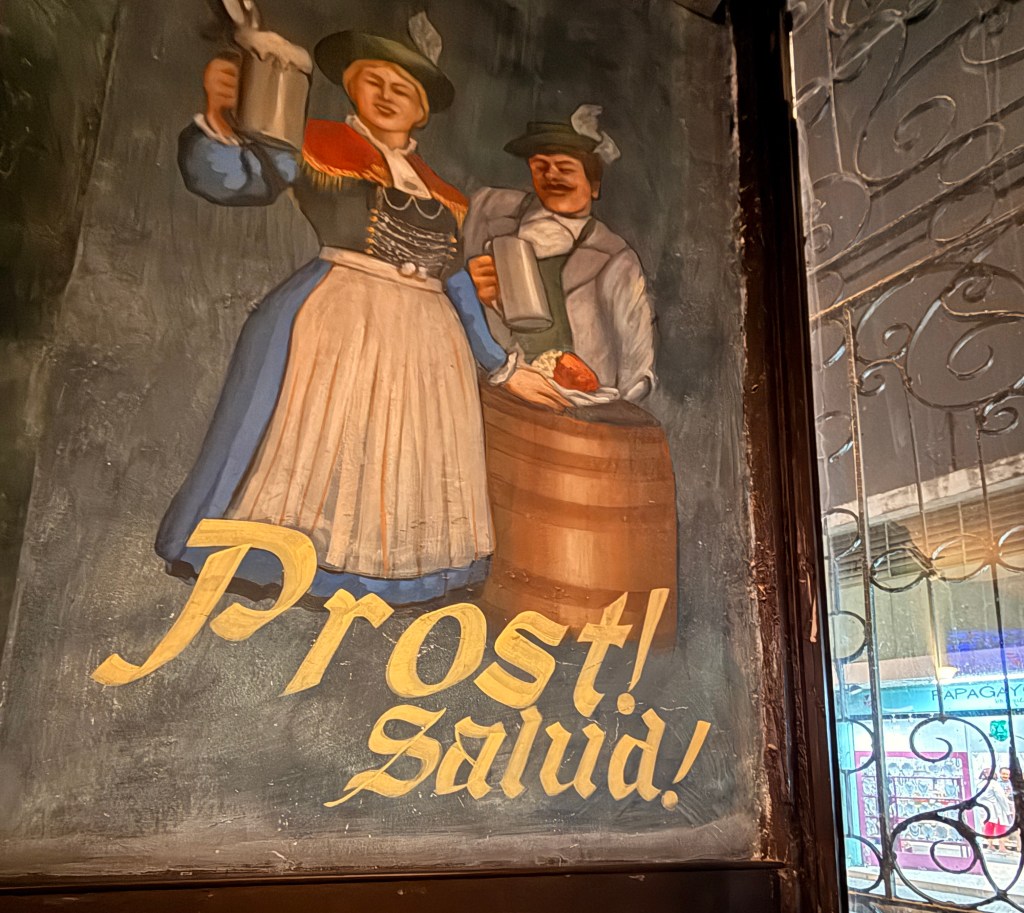
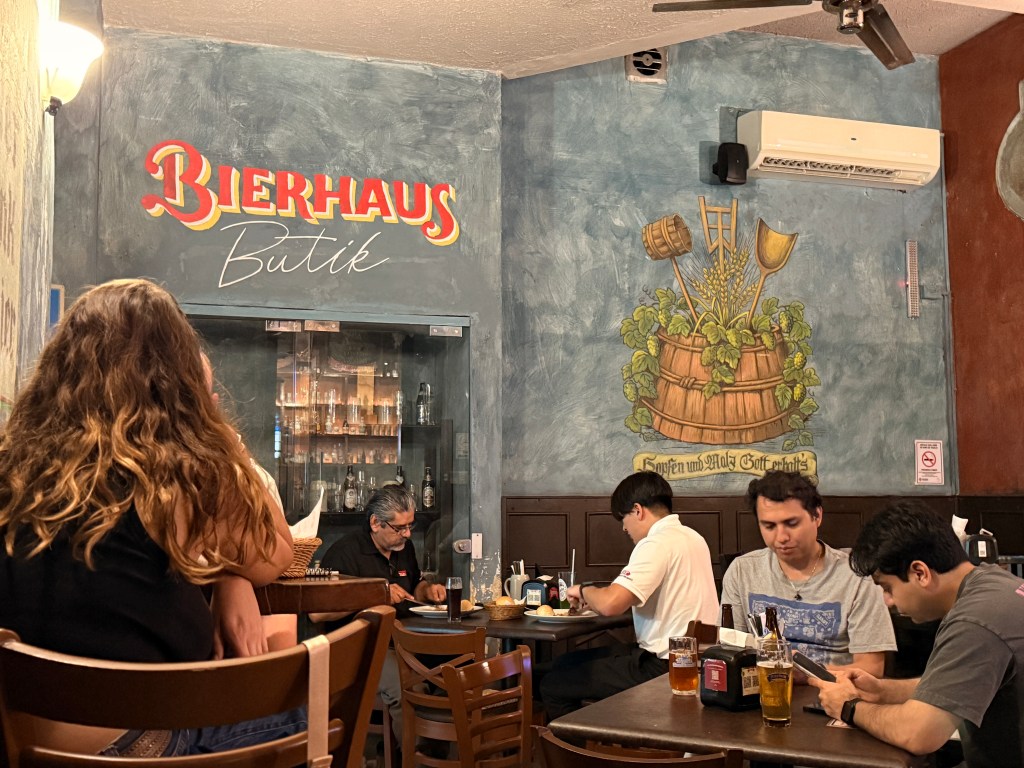
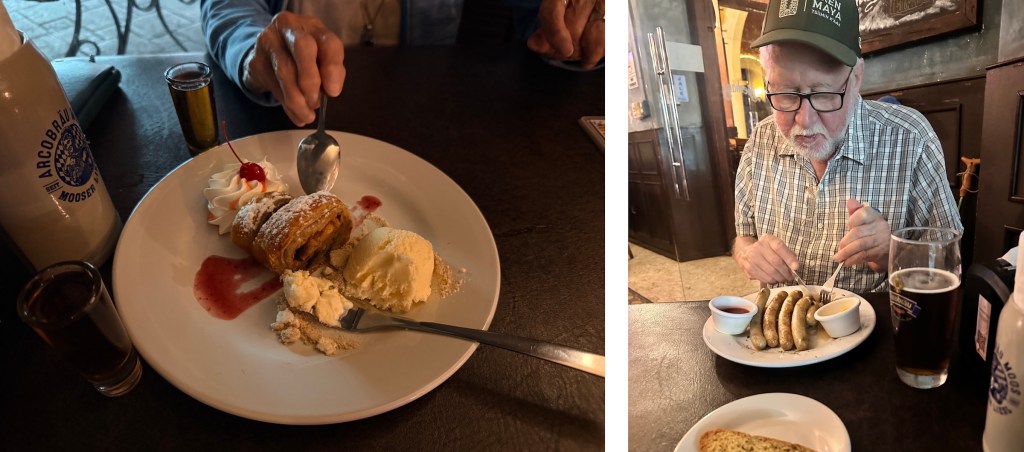
As evening draws nigh, we find a sort of refuge at Jurgen’s La Bierhaus. It may be an odd place to find here in the Yucatán, but a tall frosty bier and a platter of brats on sauerkraut and potatoes just seems like a really good idea on a warm tropical night. And the desserts are another pleasant surprise.
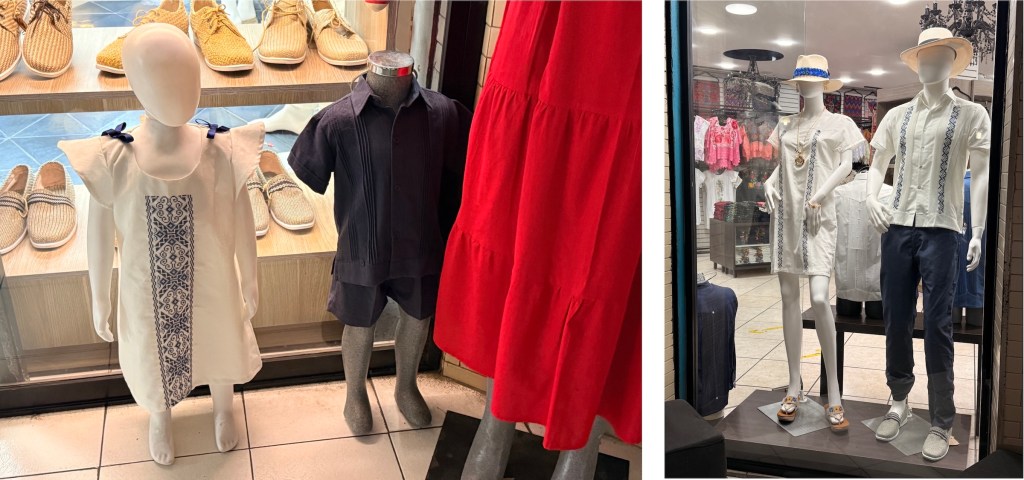
Later, the shop windows beckon in the nighttime with fine clothing that’s well-suited for a hot tropical evening, if I didn’t already have a rack of guayaberas in the closet. A horse stands patiently waiting for the next carriage-load of tourists. And we pass the well-lit Palacio Municipal on our way back to the hotel for a final night of rest before heading onward in the morning.
We’ll be catching an ADO bus to Valladolid next, a place we’ve missed seeing until now. So be sure to join us there next!— PRW


Really beautiful photos!
LikeLike
The photography depicted the mundane to the magnificant with the skill of an artist. The text was equally engaging and colorful. Many thanks. Cleo
LikeLike