January 29 – February 4, 2026
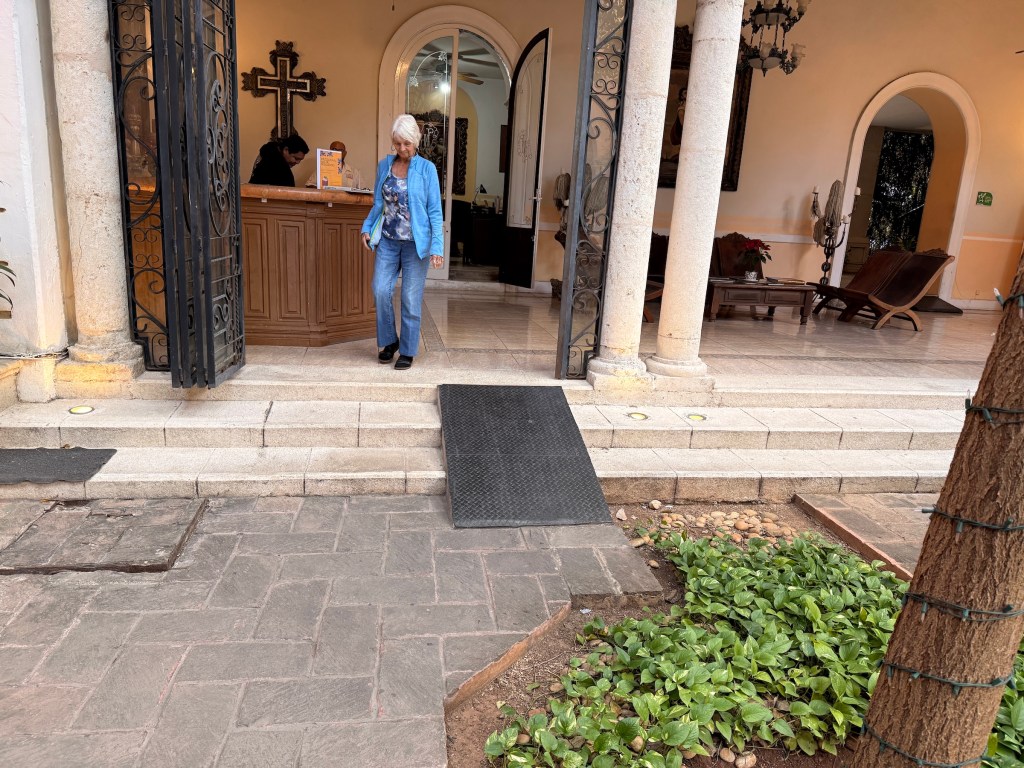
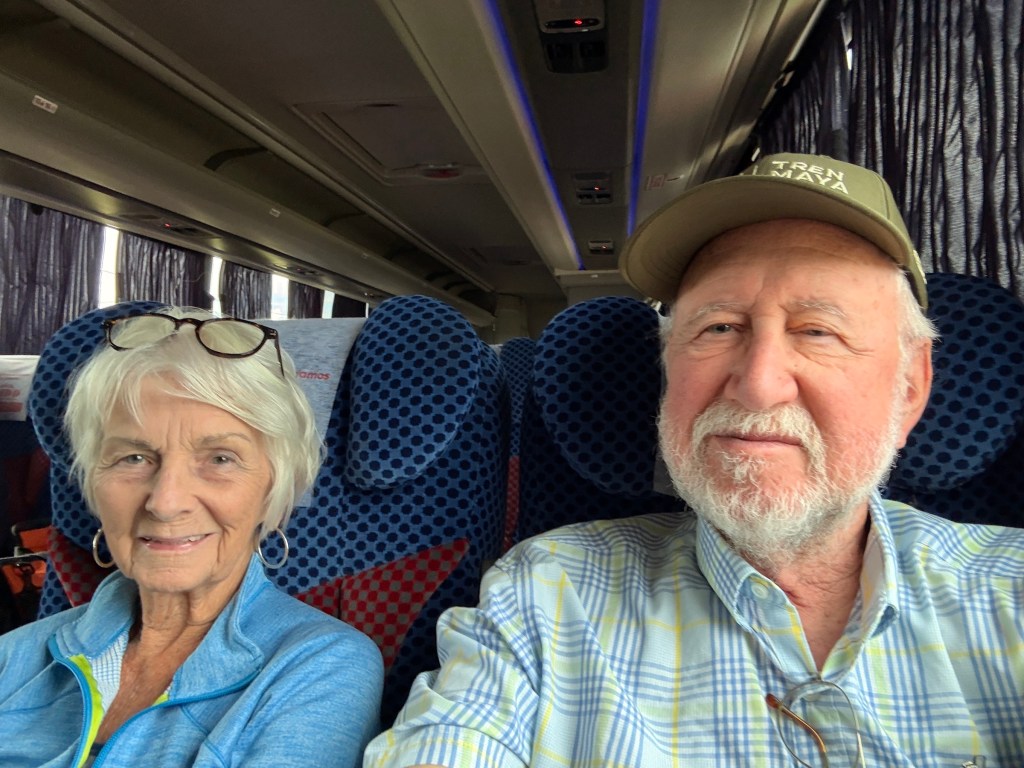
It was good to enjoy Mérida again after a decade away, yet now it’s time to move on. And from here it’s only a three-hour bus trip to Valladolid. Along the way we pass the turnoff to Chichén Itzá, but we’ve been there before and don’t want to deal with the crowds again this time.
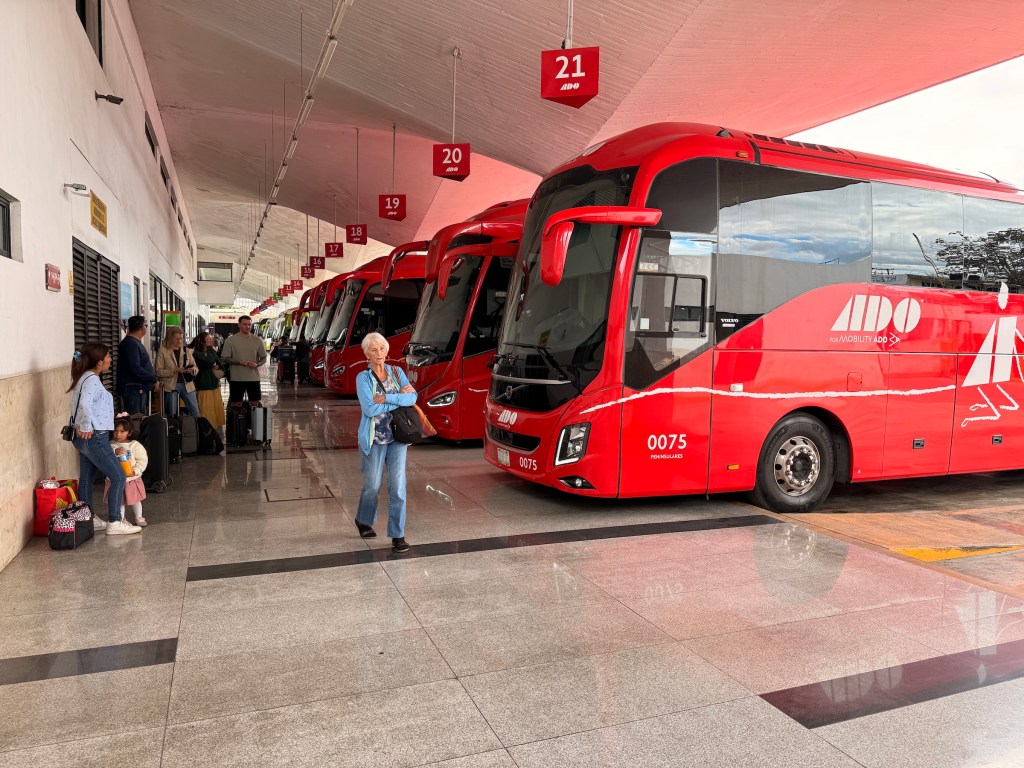
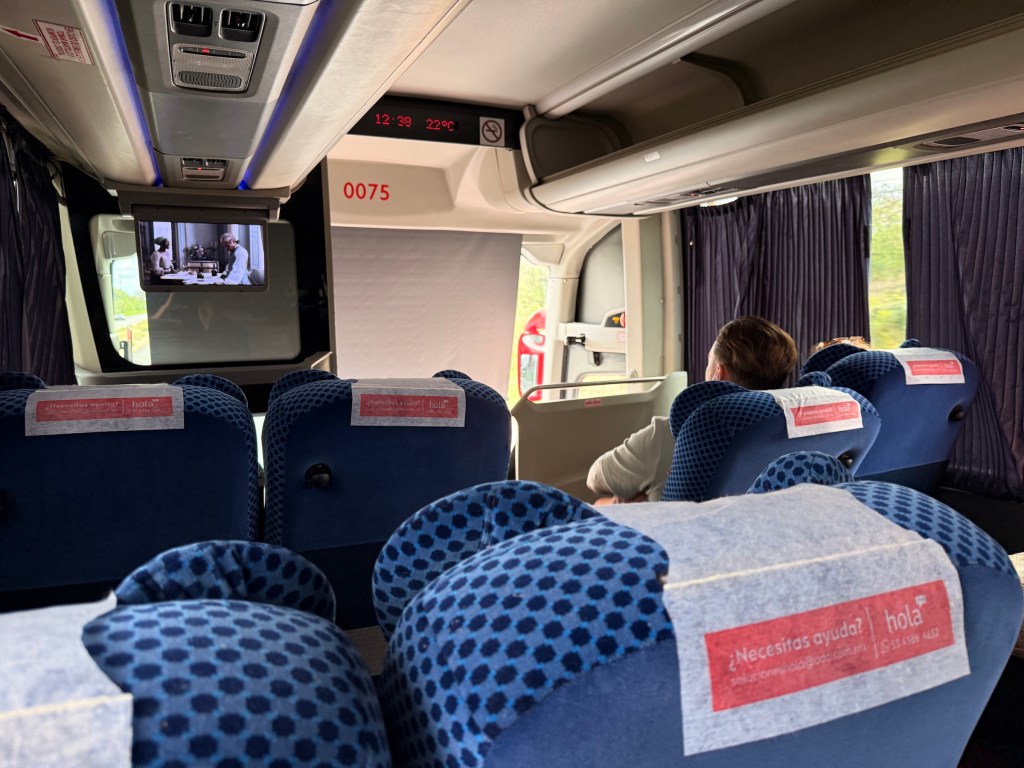
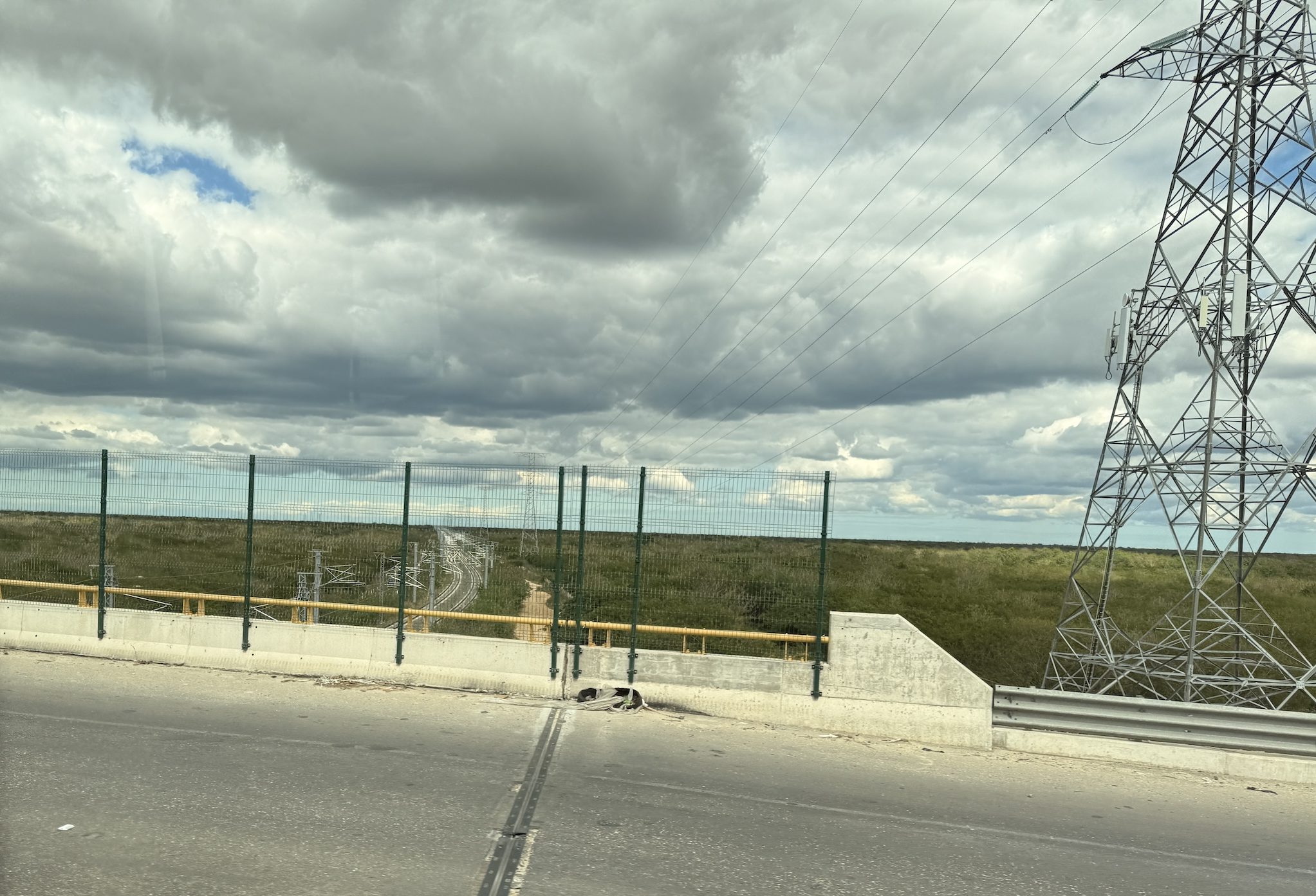
As day folds into the afternoon we ride along through the flat landscape and dry woodlands of the Yucatán, At one point the highway crosses over the Tren Maya tracks below, and in a few days time we’ll be on that train again.
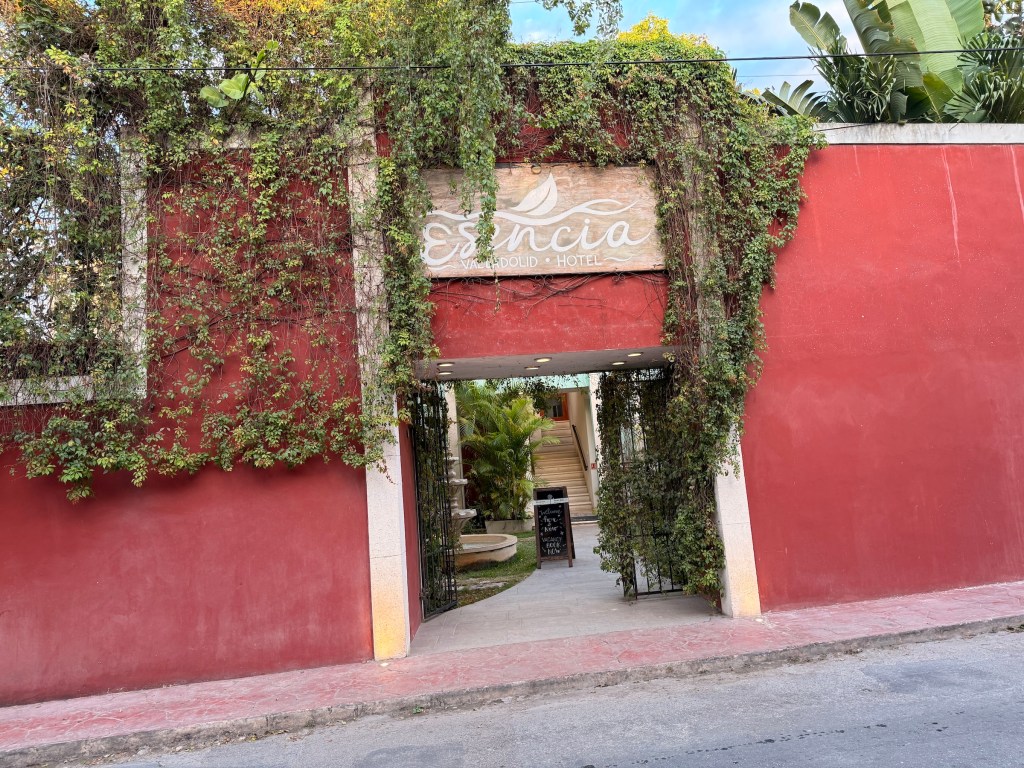
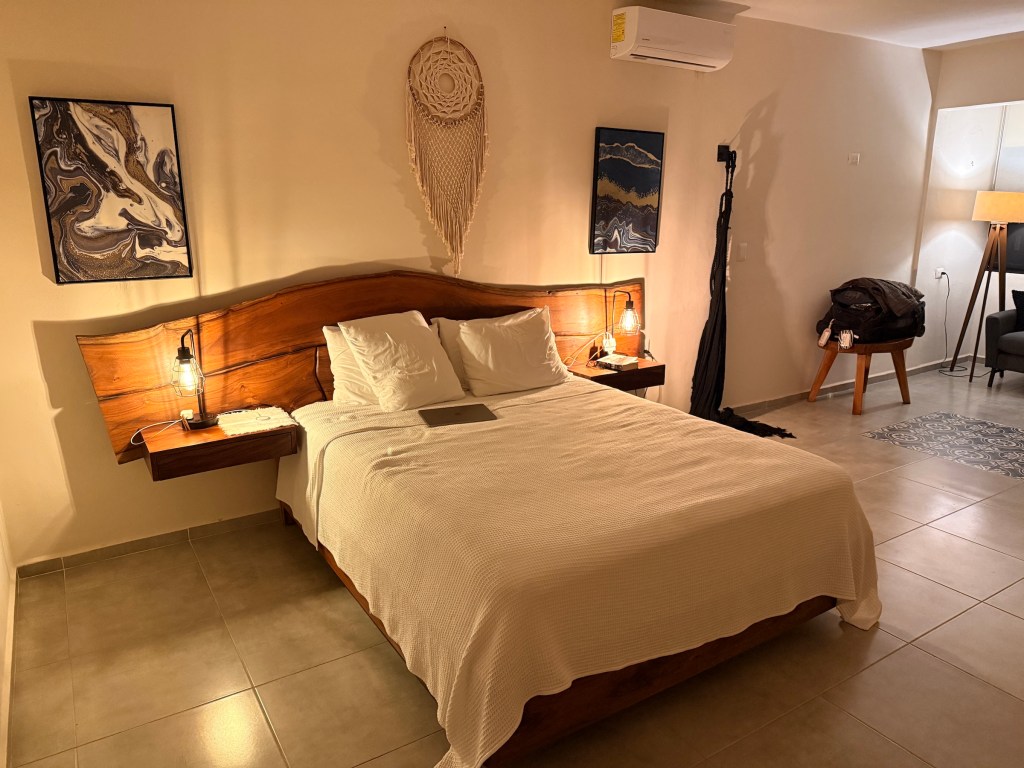
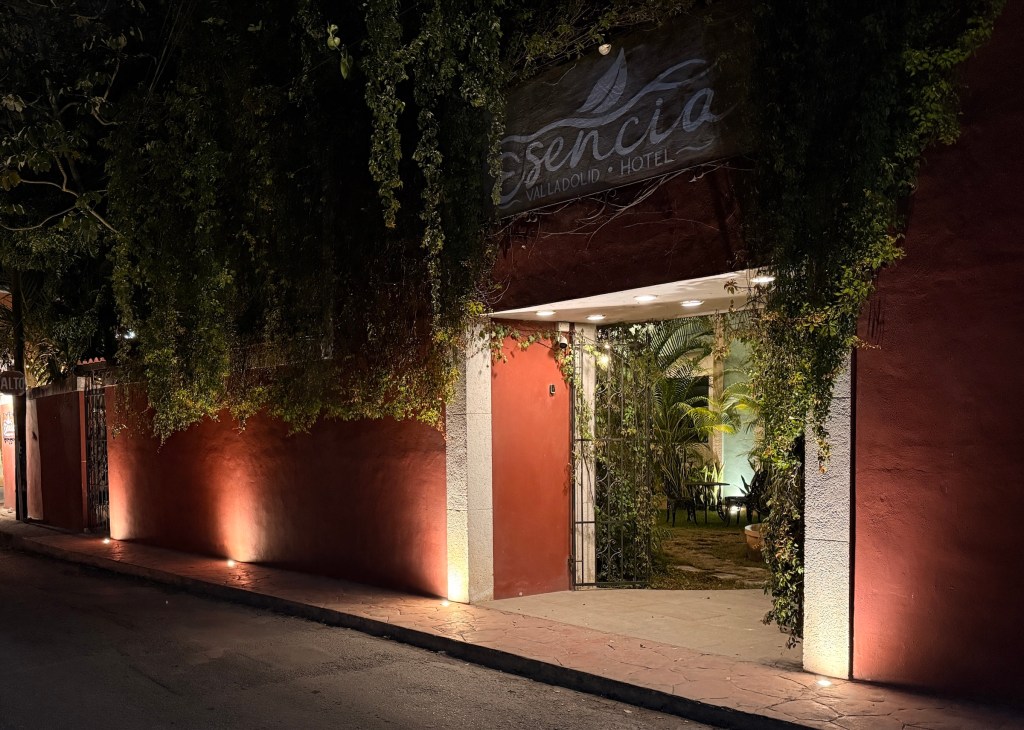
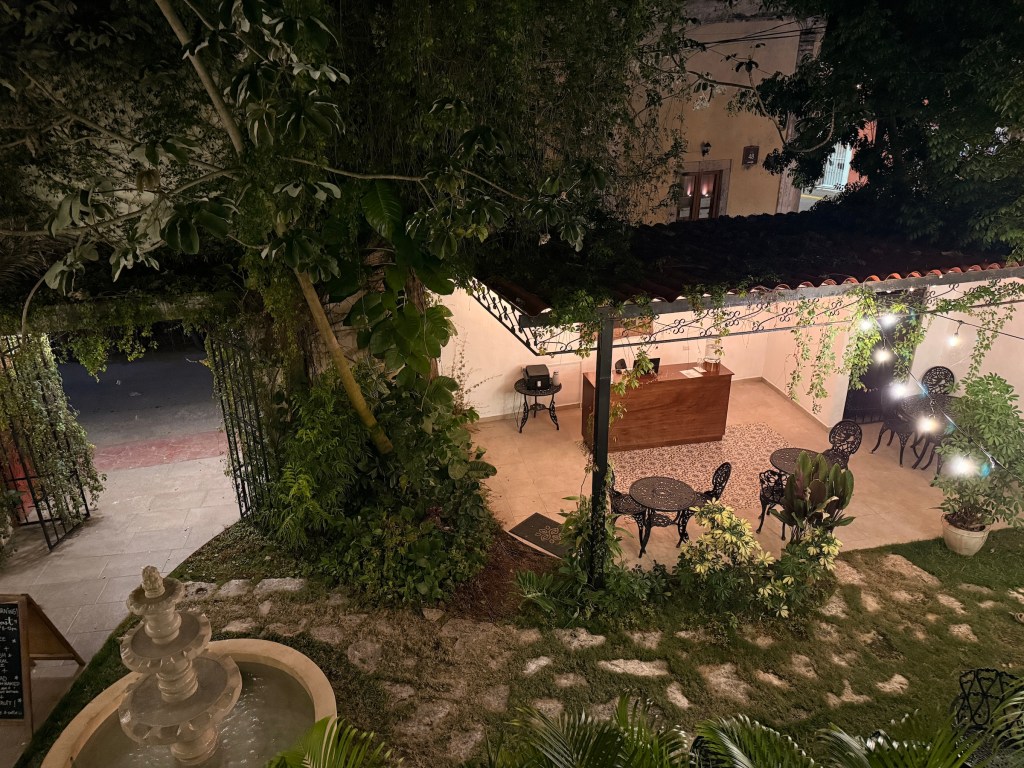
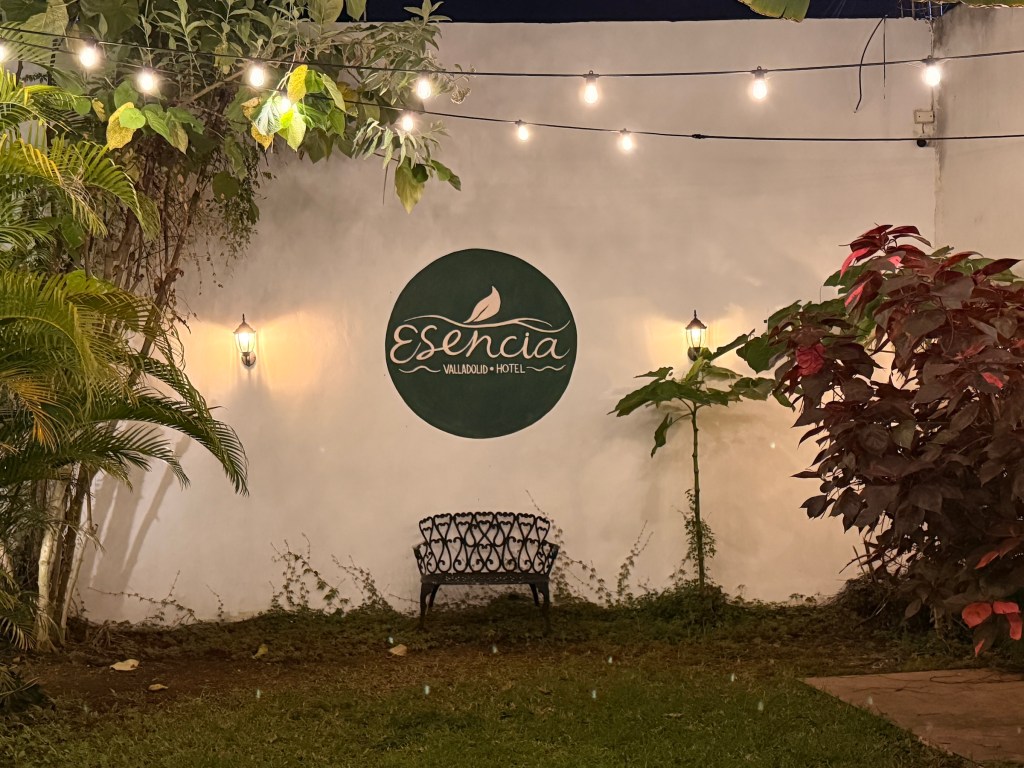
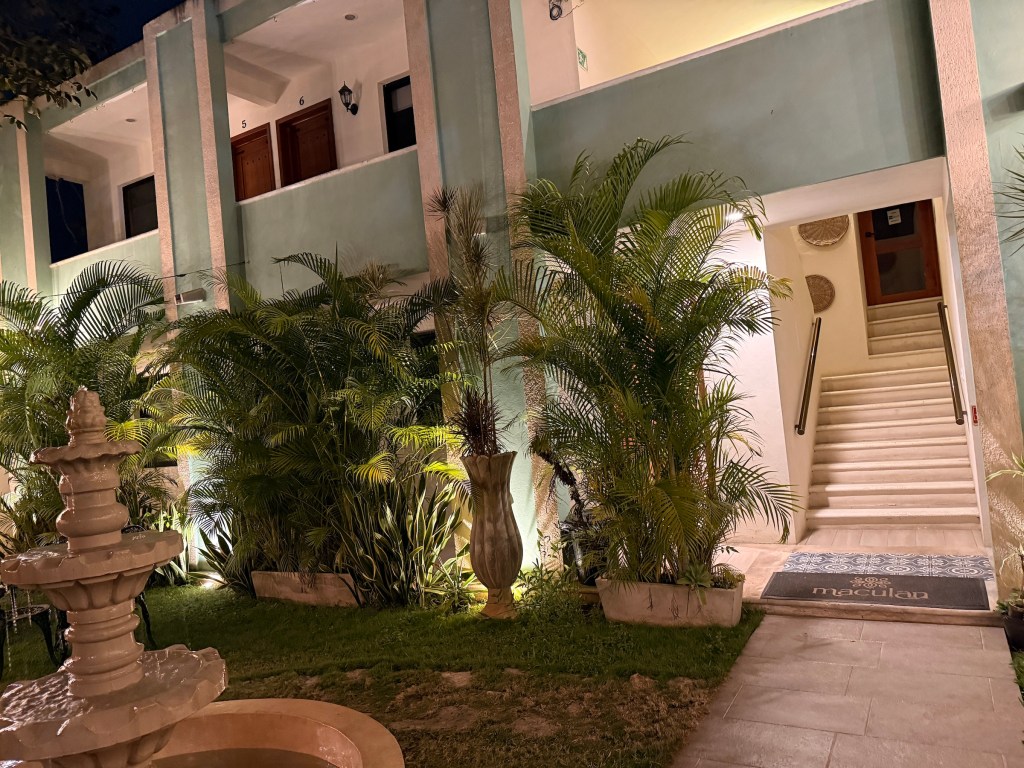
Valladolid was founded here in 1545 and named for the city that was Spain’s capital at one time. We arrive at a very nice place named Esencia that’s right on La Calzada de los Frailes, which is the main tourist street of the town. There’s more to this small city than just the Calzada, but this is the area where we’ll find most of the good coffee shops and restaurants.
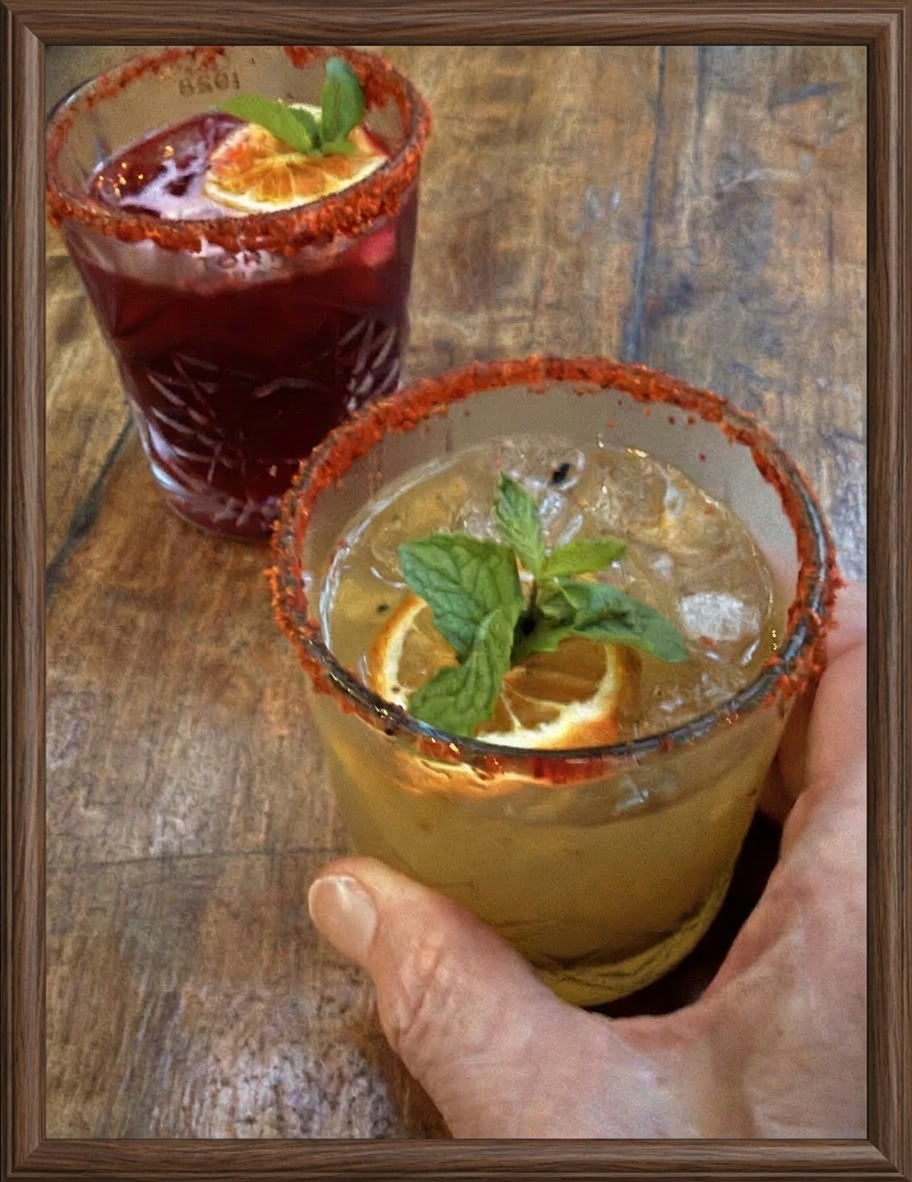
Just across the alley from Esencia there’s La Mezcaleria Don Trejo, a relaxed open-air place that appears to be awaiting our visit, with cold margaritas de mezcal. That pleasant intro is followed by abundant helpings of good food. And what better way to welcome travelers to your fine city?
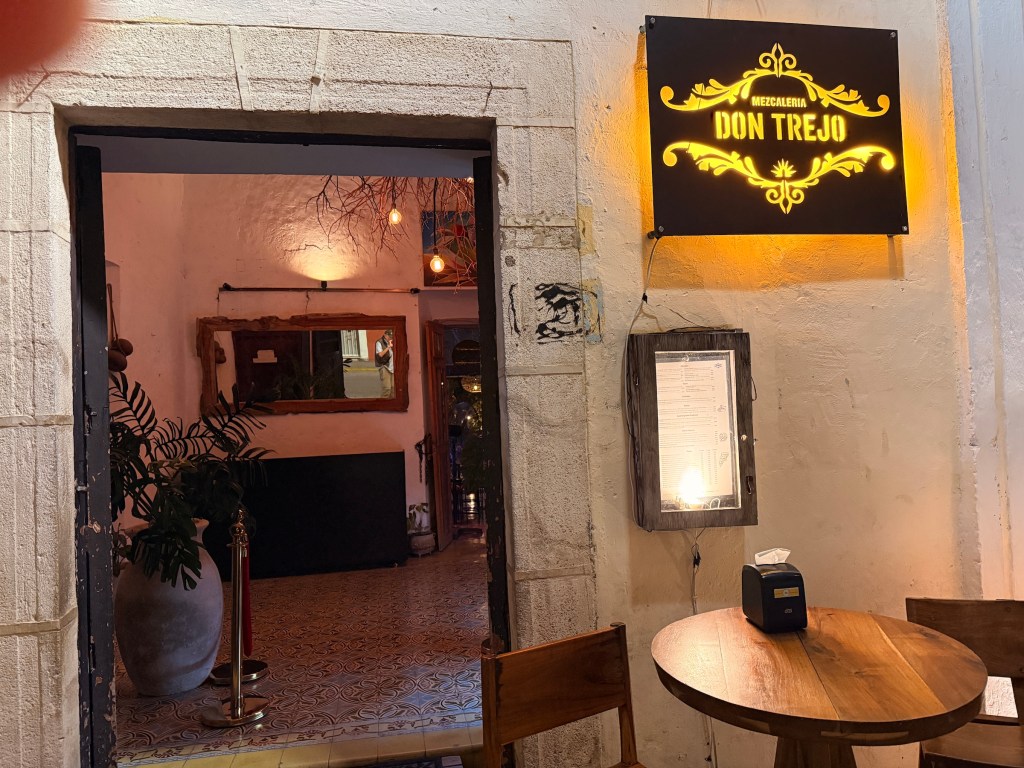
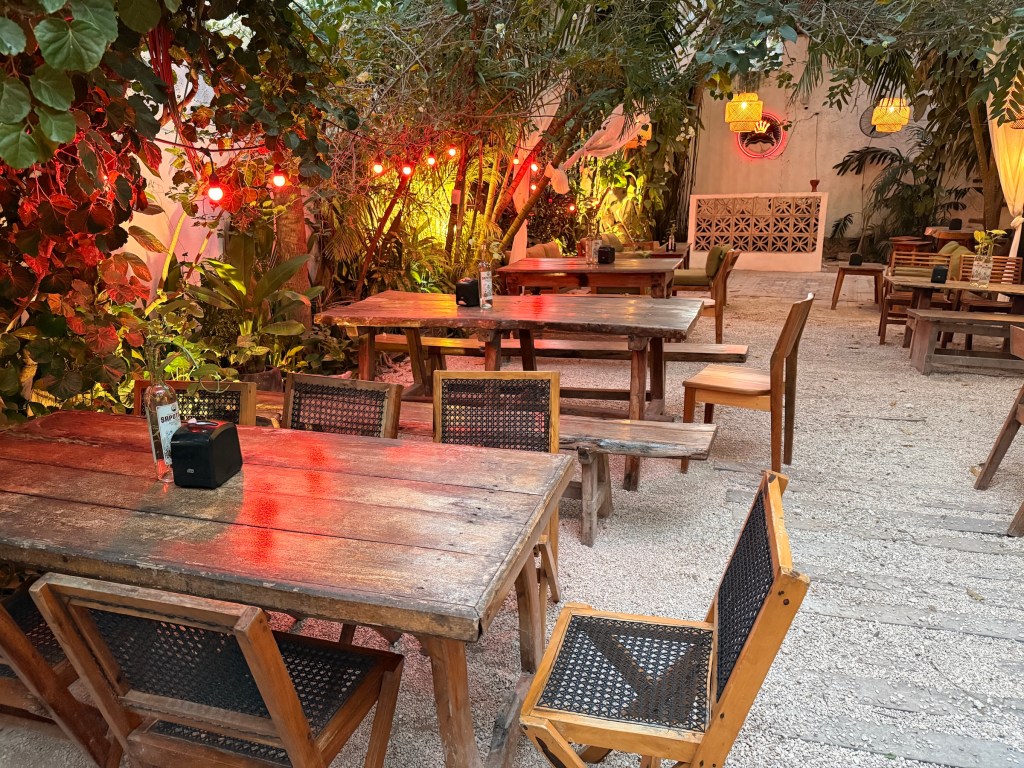
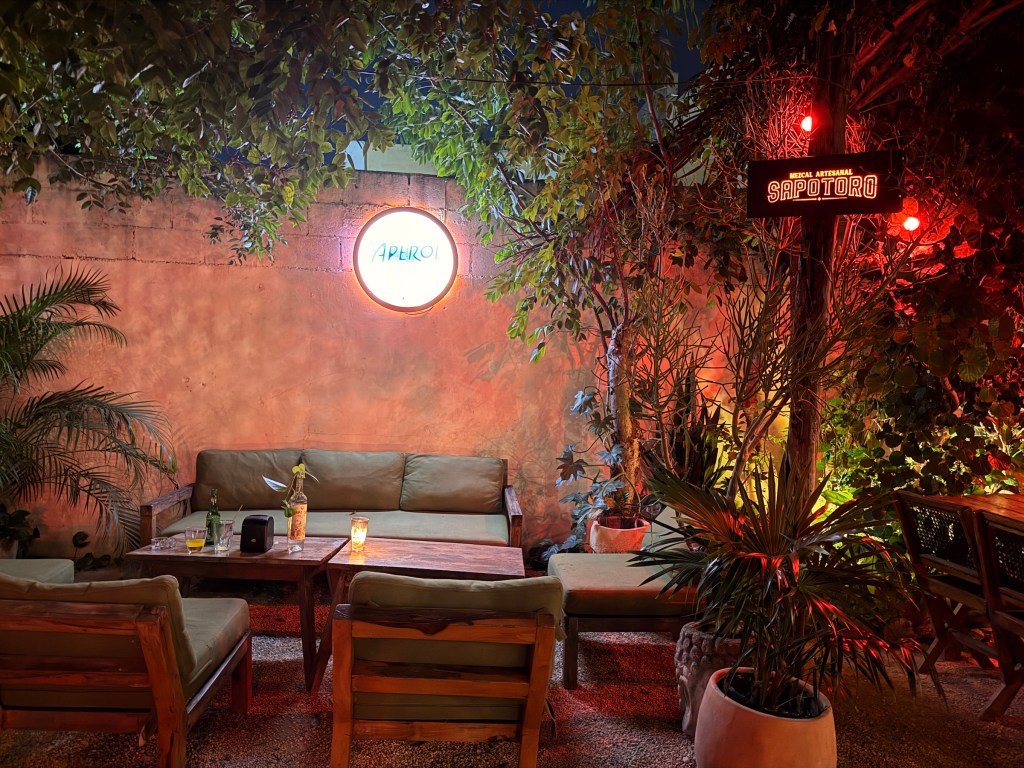
We emerge from a fine first dinner in town to enjoy a short evening’s walk down the Calzada, which goes to the old Convent ruins. And we’ll look forward to more exploration in the days to come.
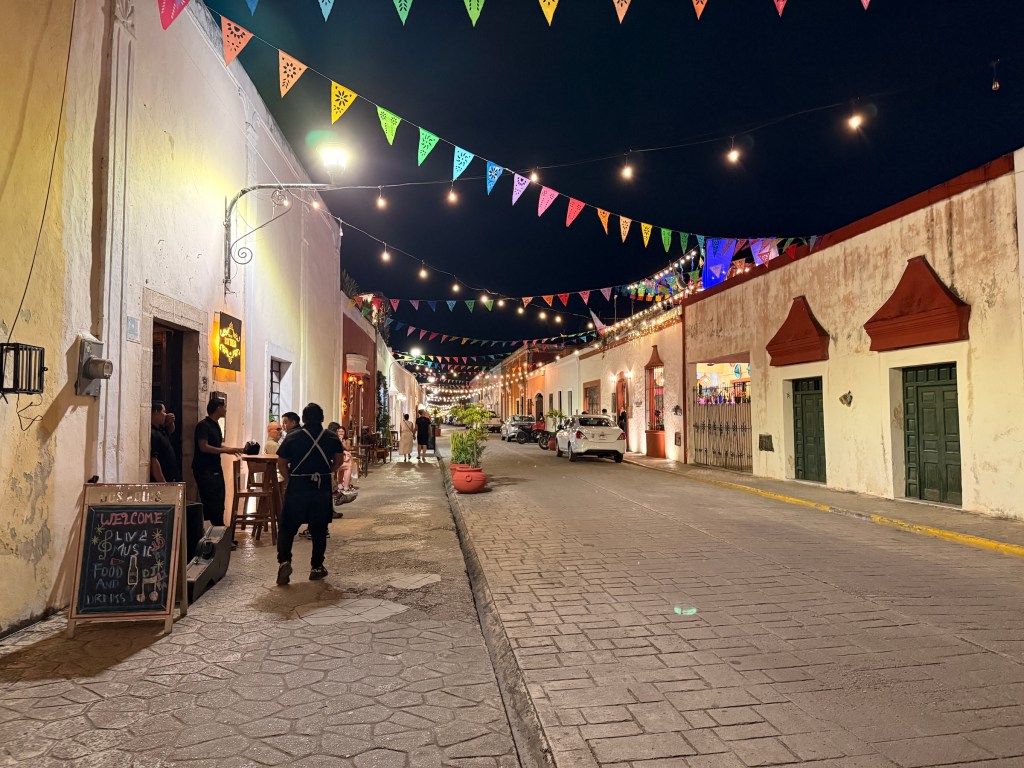
We head back to our room at Esencia for a good night’s rest and a bright new day tomorrow.
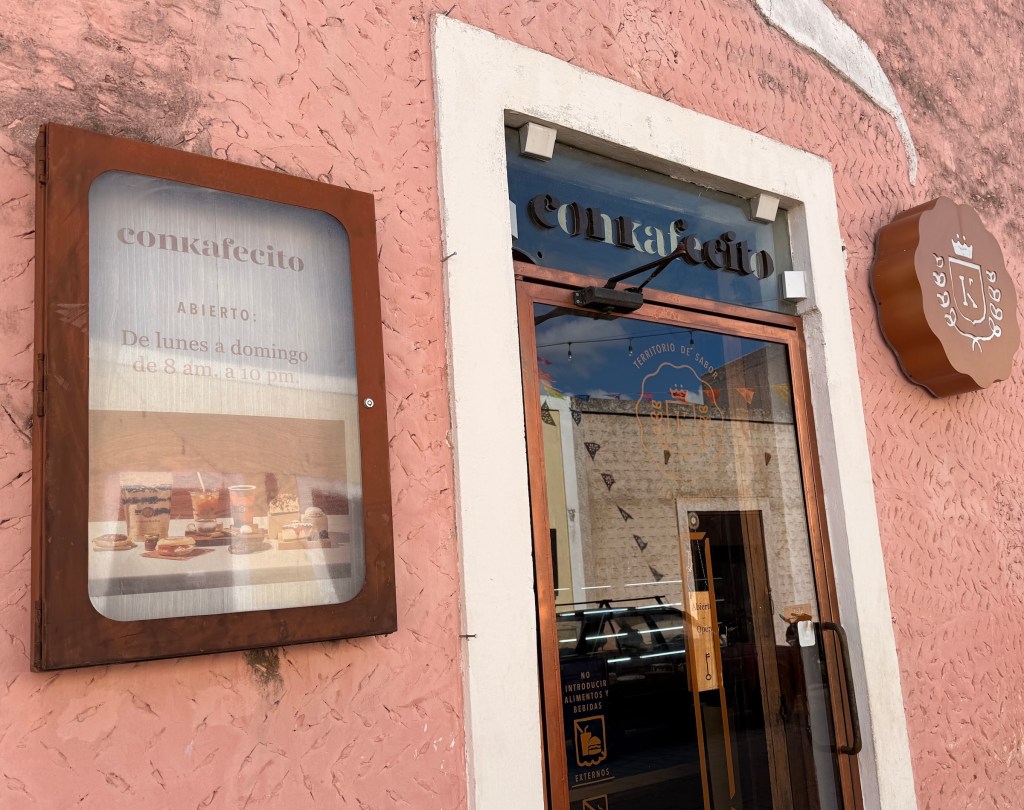
The morning breaks bright and warm, and we stop at Conkafecito on La Calzada for a cup of Joe, along with something creative and delicious to eat. This cafe is committed to an organic approach, and will even share their used coffee grounds to help improve the soil in your garden.
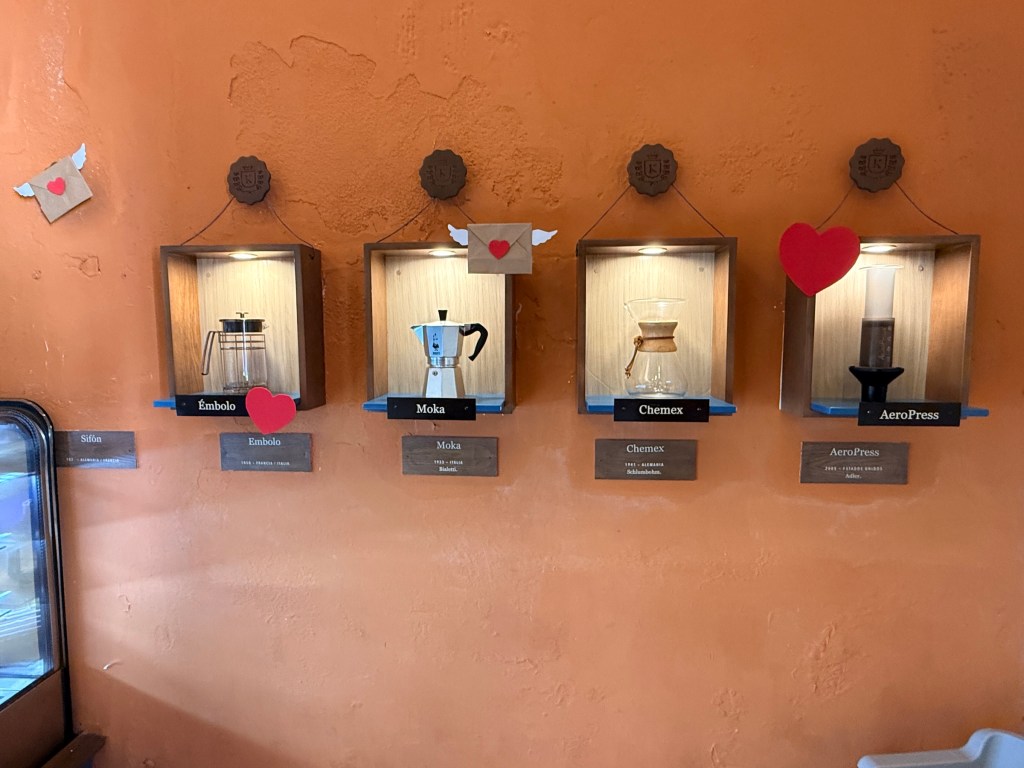
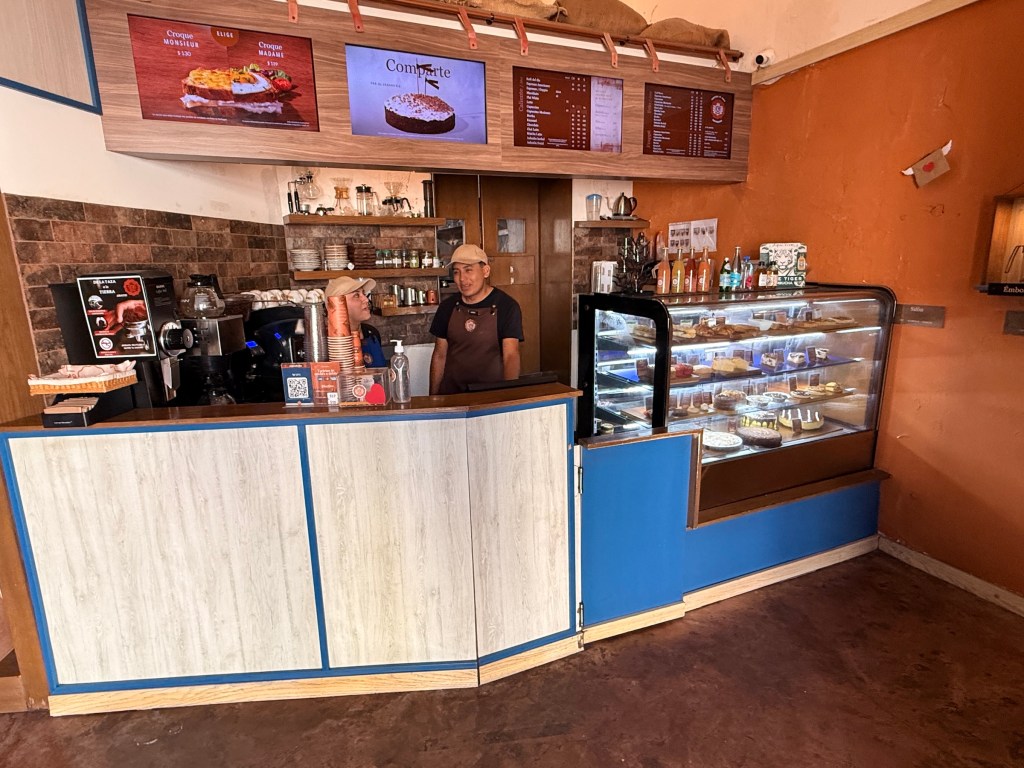
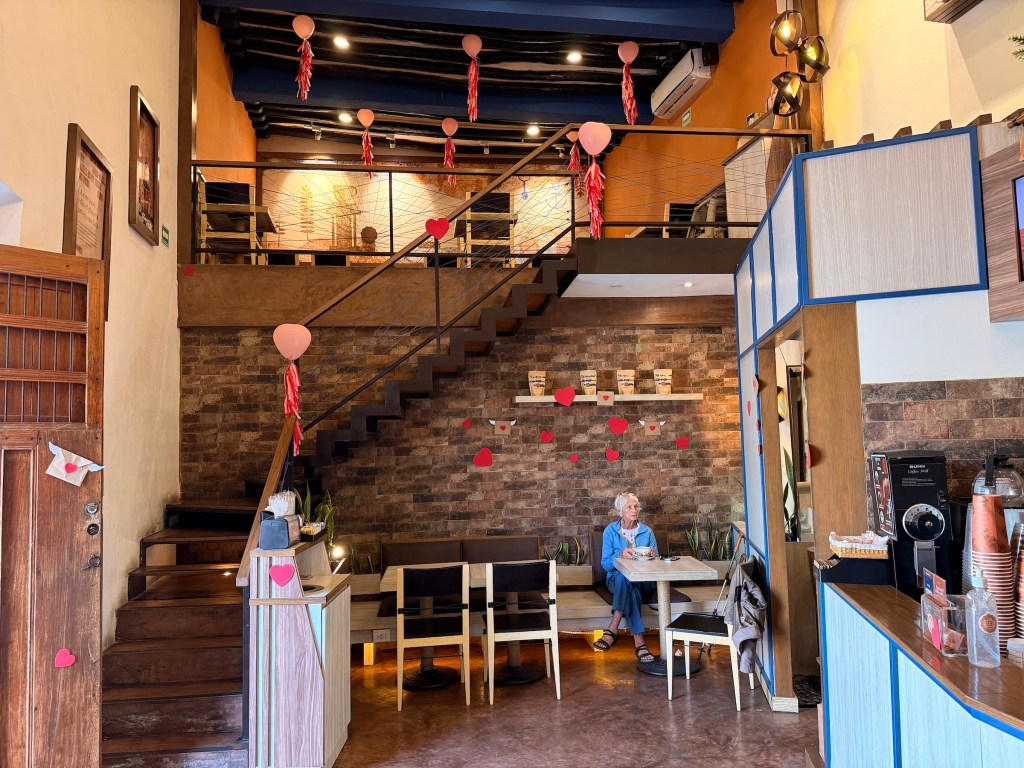
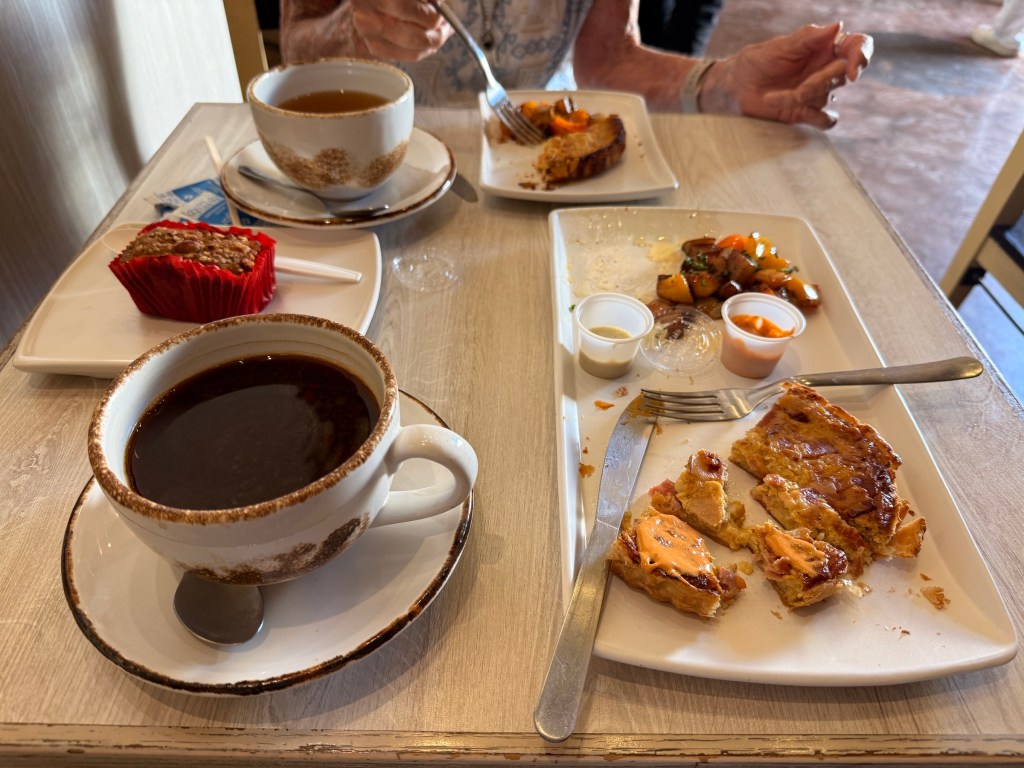
The world has gotten on the coffeehouse bandwagon ever since the Ottomans introduced the idea to Europe while losing the Battle of Vienna in 1683. In the aftermath of the Battle, coffeehouse culture became one of the defining features of life in Vienna.
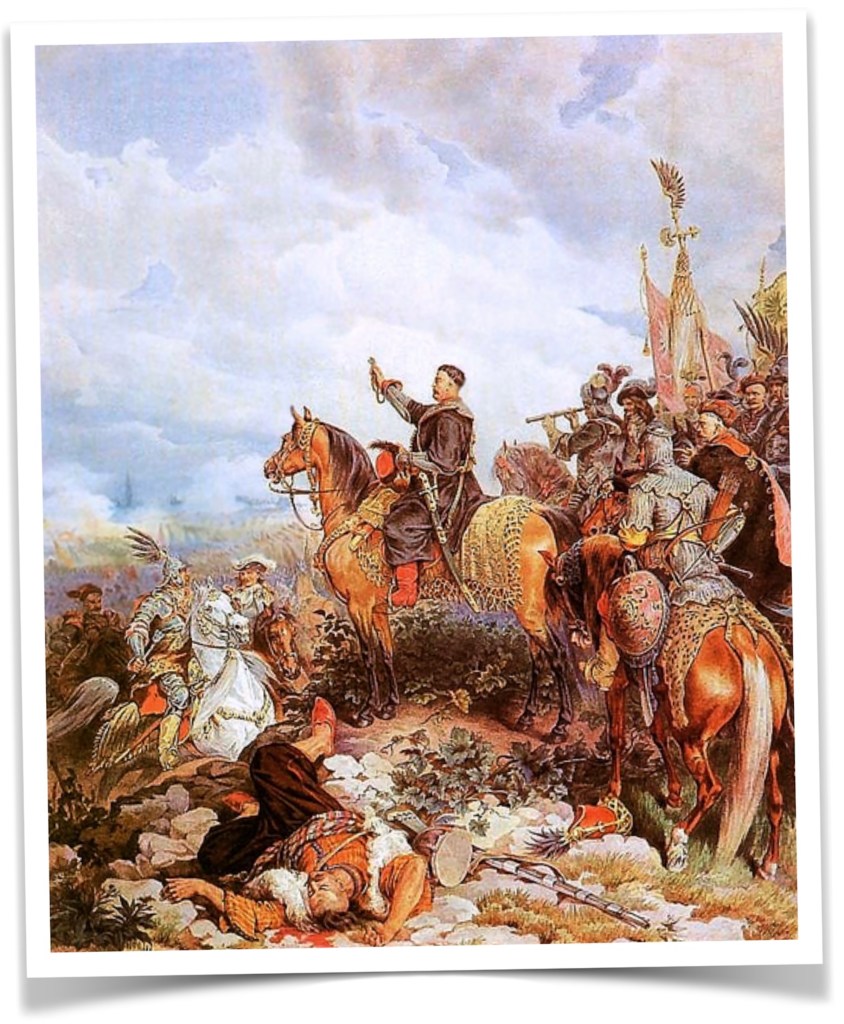
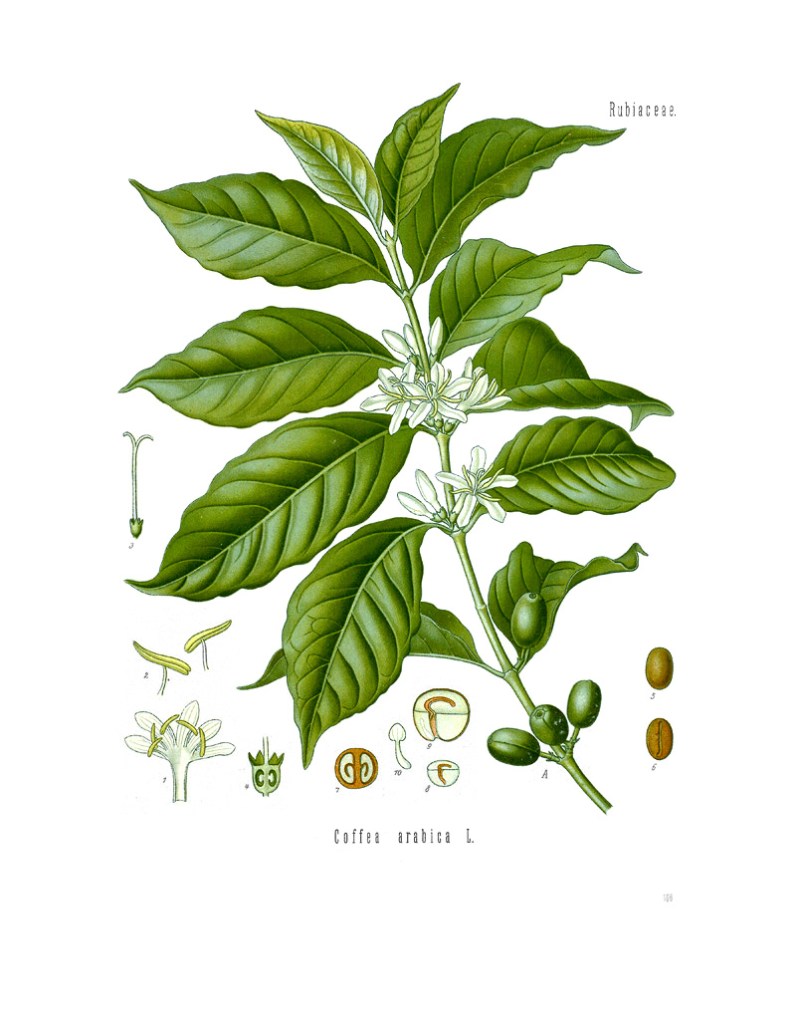
That humble bean has come a long way from its probable origins in the Abyssinian highlands of Ethiopia and Eritrea, to its first reported use in the 15th century by Sufis in Yemen along the Red Sea. The word for coffee dates from 1582 with the Dutch version, koffie. They got it from the Ottoman word kahve, and the Turks cribbed it from the Arabic word qahwah, which meant ‘wine.’
Mexico currently ranks in the world’s top ten exporters of coffee, produced in the states of Chiapas, Oaxaca, and Veracruz. We’ve traveled in Chiapas and Oaxaca, but never been to those coffee regions. Yet we have fond memories from Xalapa in Veracruz, where the rich scent from large rough bags of freshly-roasted coffee drifts through the streets. And it left an indelible impression on us both.
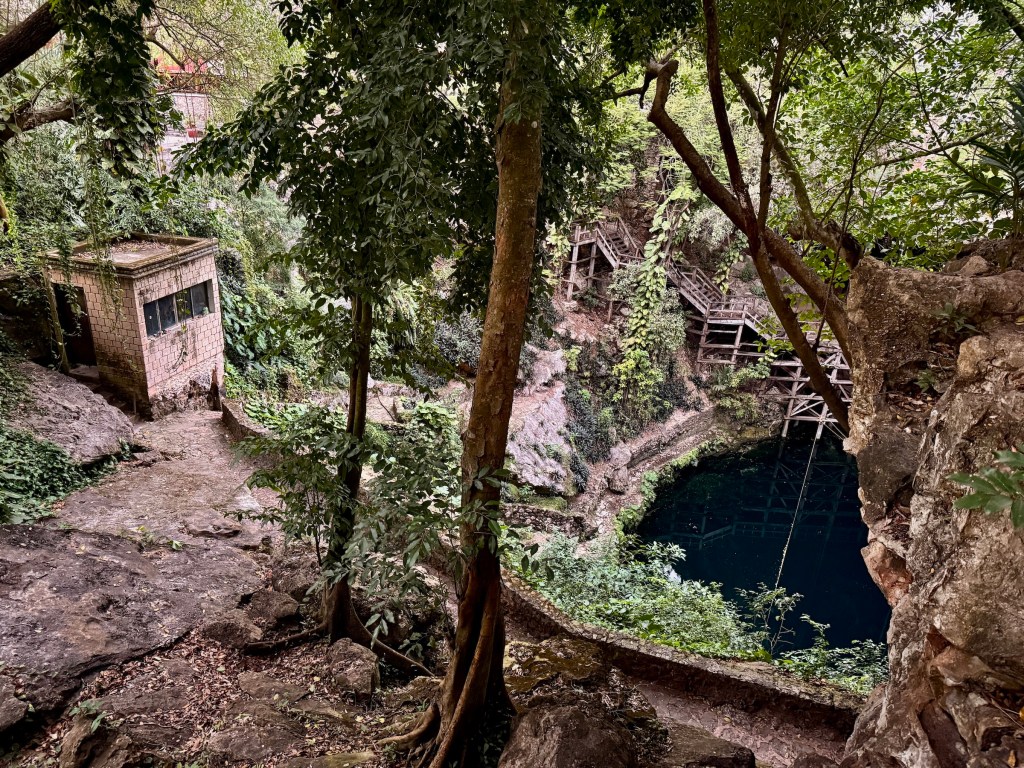
Cenotes are common in this part of the Yucatán and there are several ancient sinkholes right here in Valladolid. The most well-known is the Cenote Zací, which derives its name from the original Mayan name for the town, and it is only a few blocks off the Plaza. It’s an eerie place, of overgrown retaining walls and narrow walkways under towering trees.
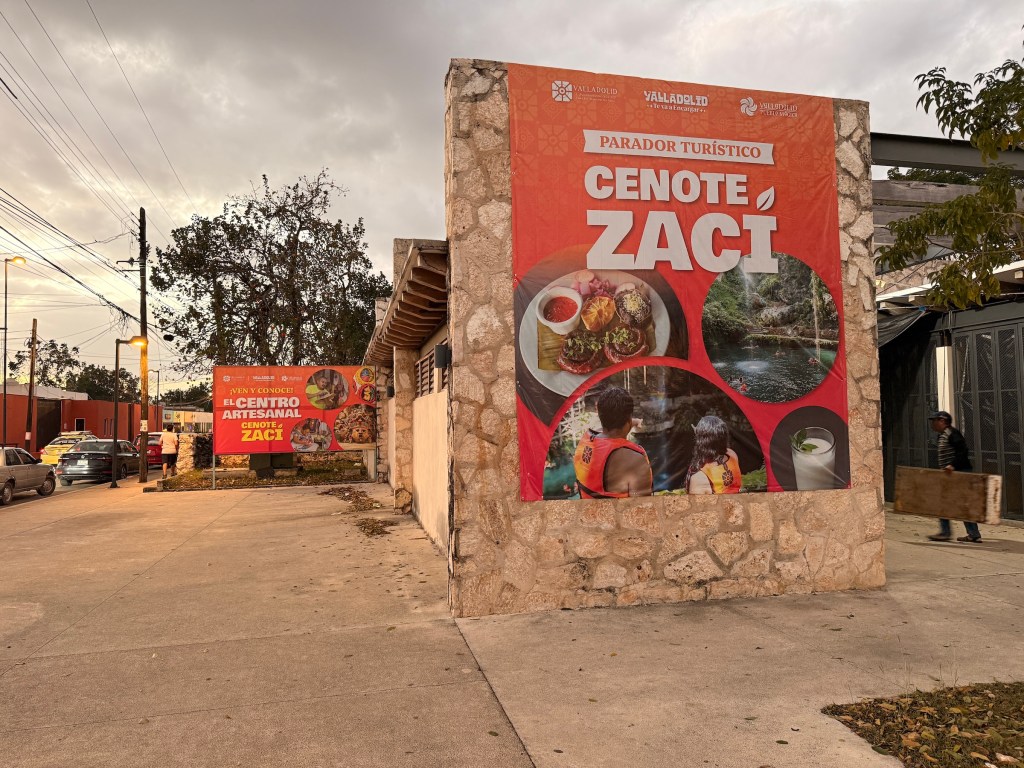
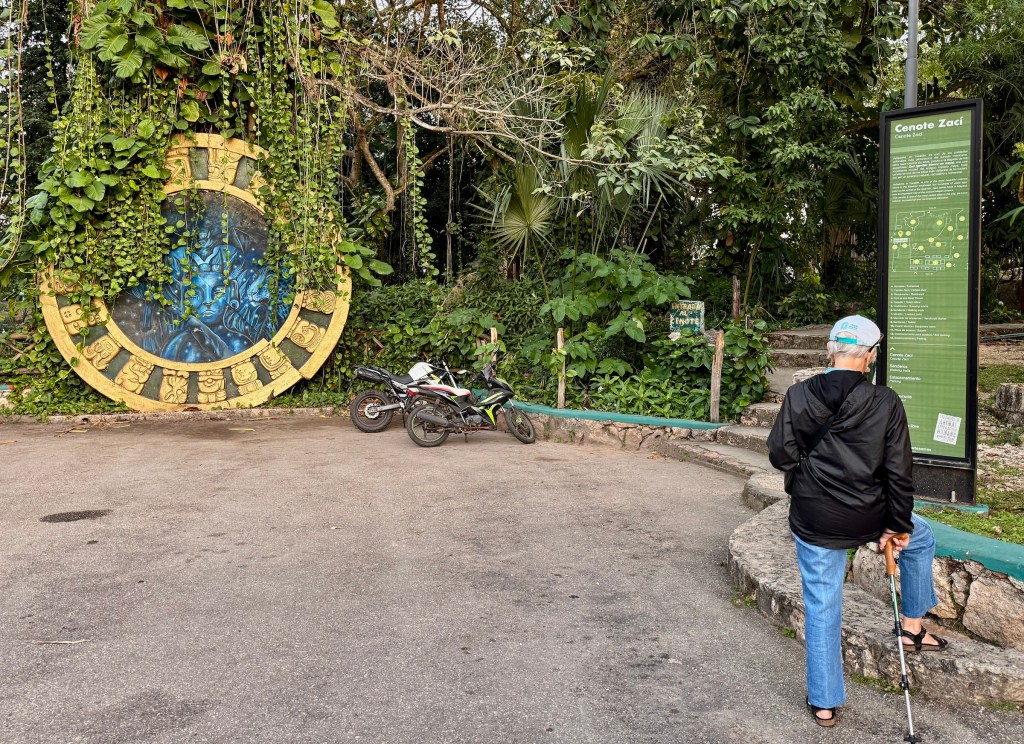
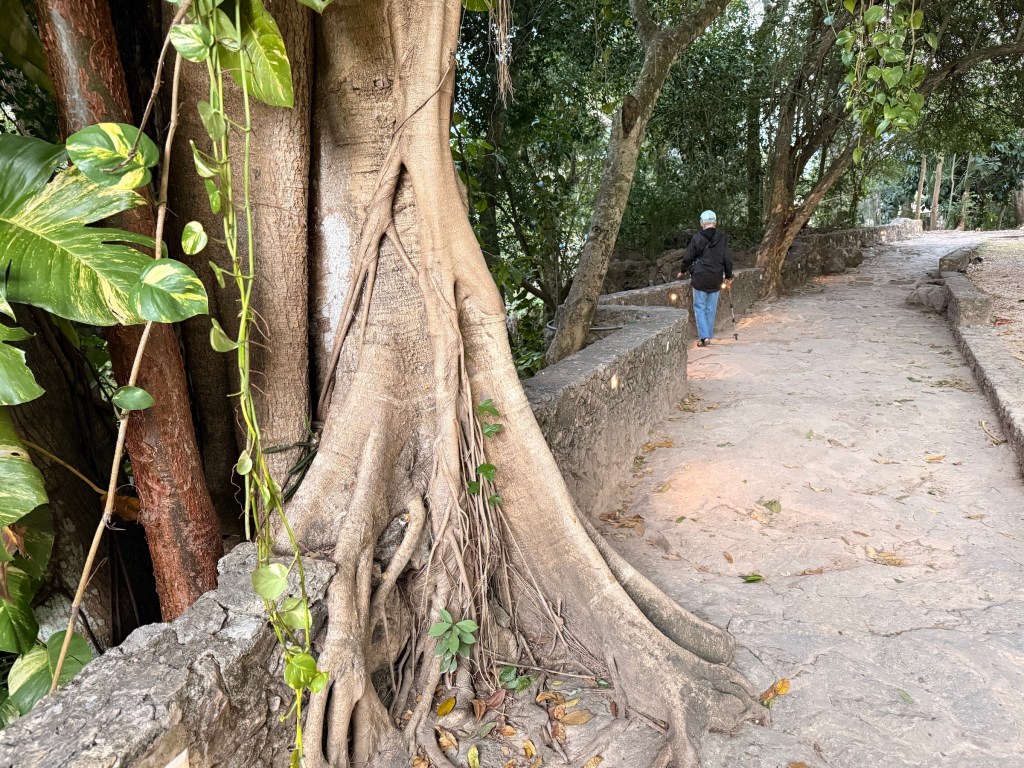
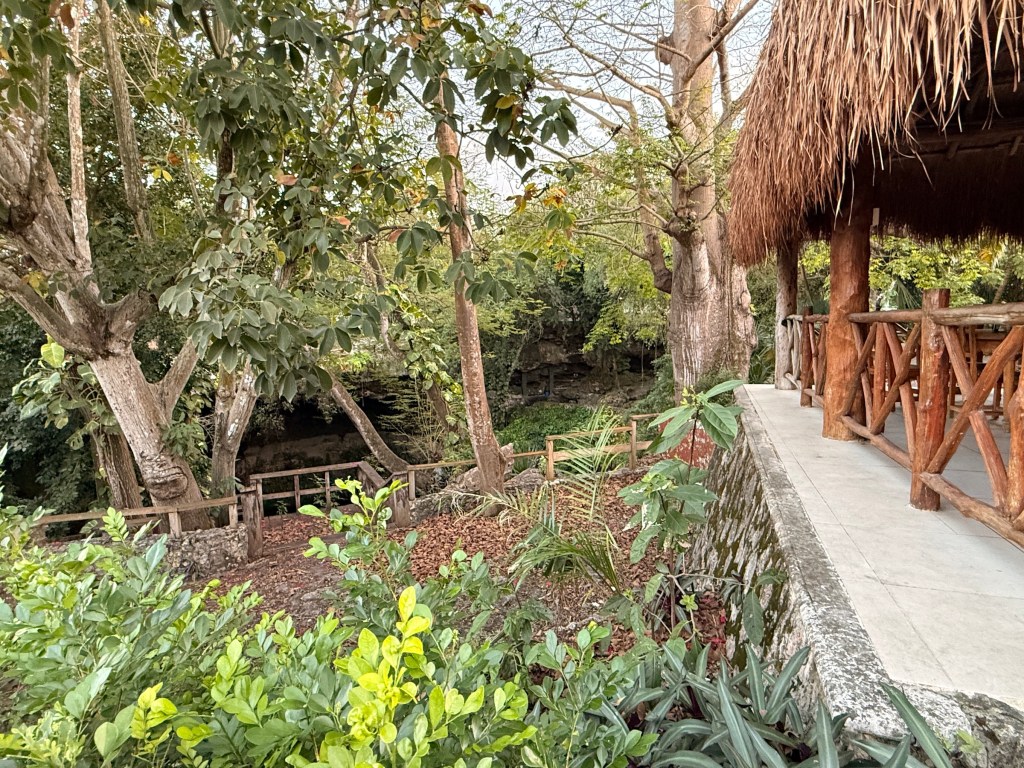
The Yucatán Peninsula is composed largely of porous limestone. There are few rivers or lakes as the abundant rainwater mostly travels through an extensive eroded cave system lying well below the surface. Sinkholes emerge when a cave roof collapses to expose the water flowing deep beneath, and there are more than 6,000 of these cenotes in the Peninsula.
Swimming in cenotes is a popular activity, but this one looks less inviting than others. And that combined with the task of climbing all those steps with my new knee put the experience out of reach.
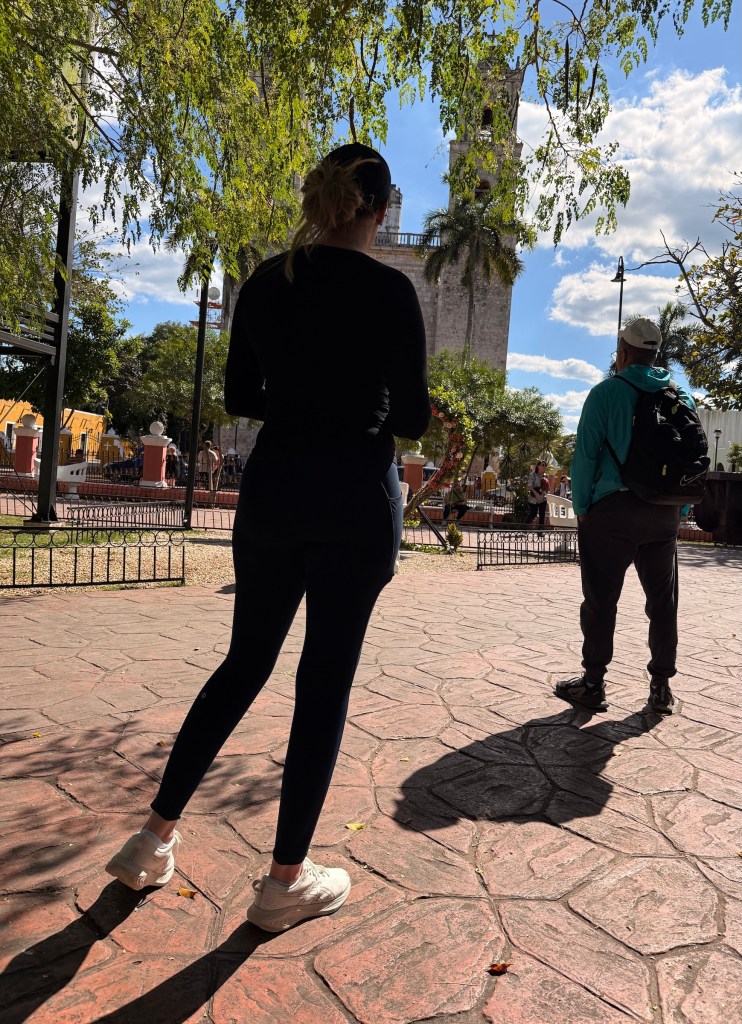
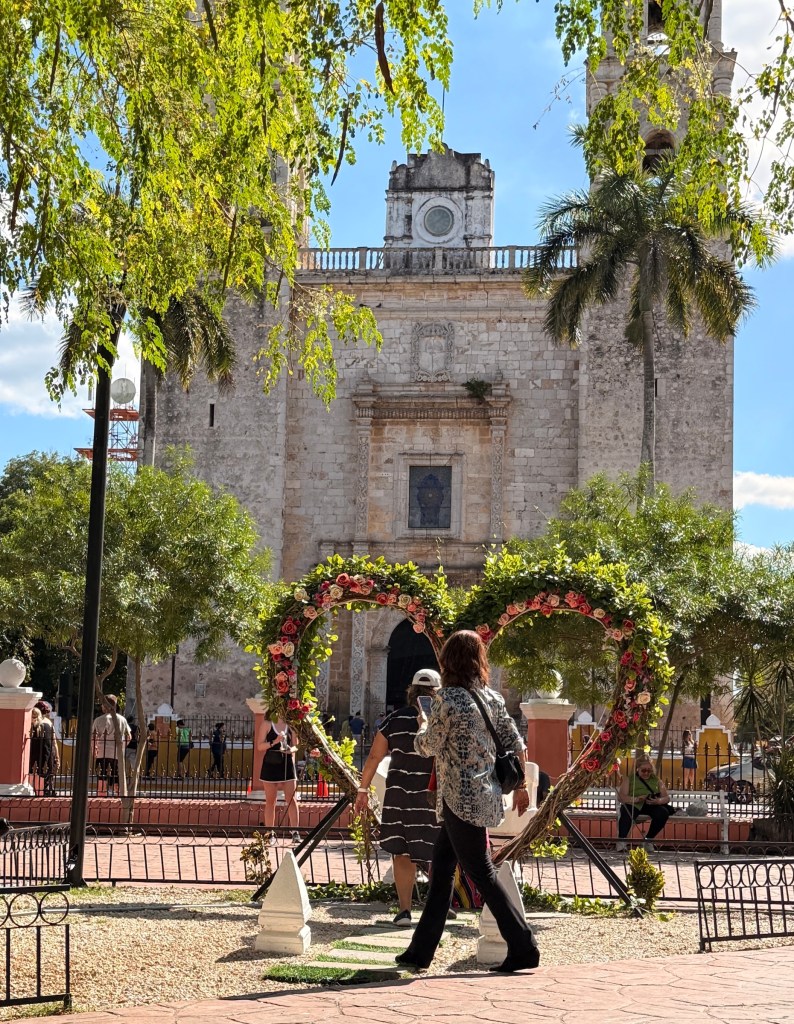
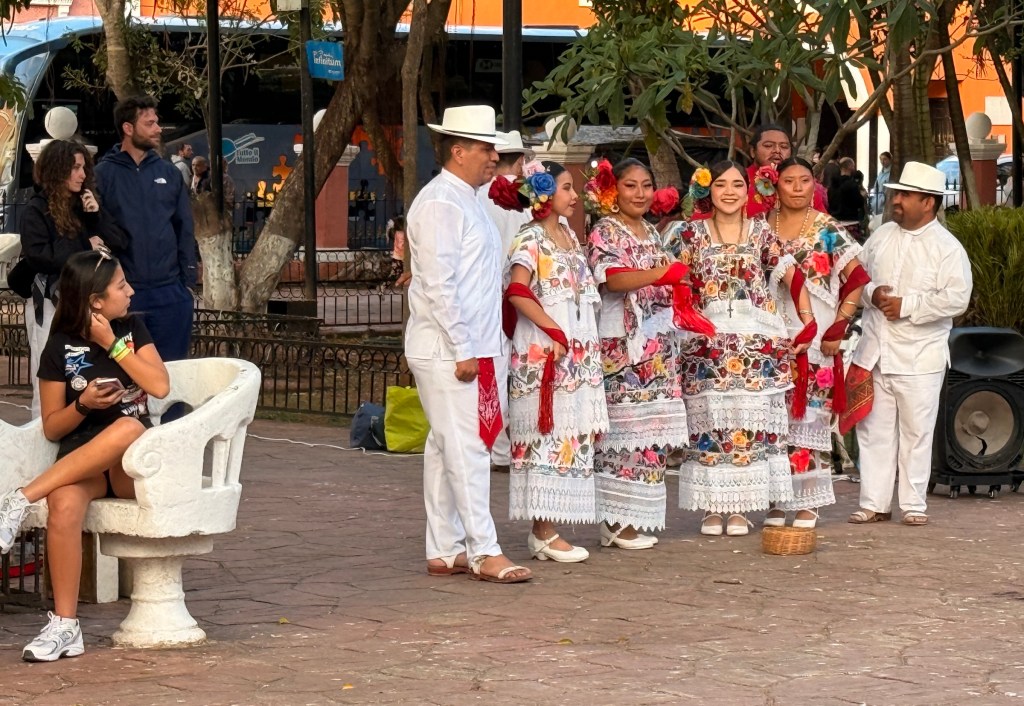
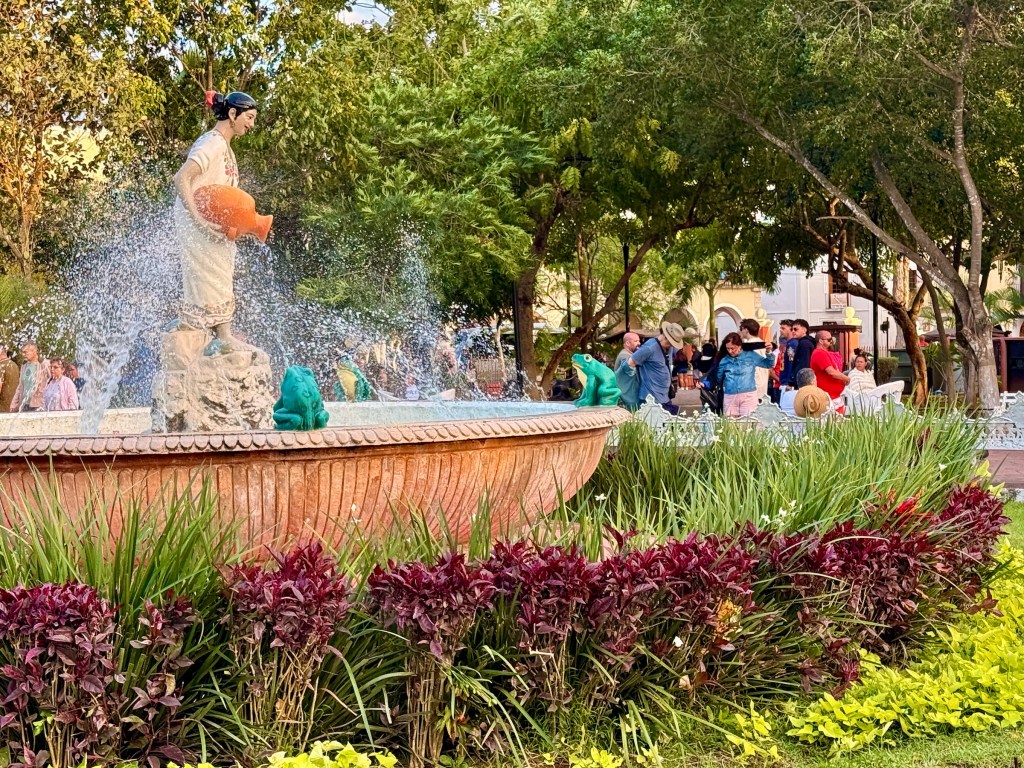
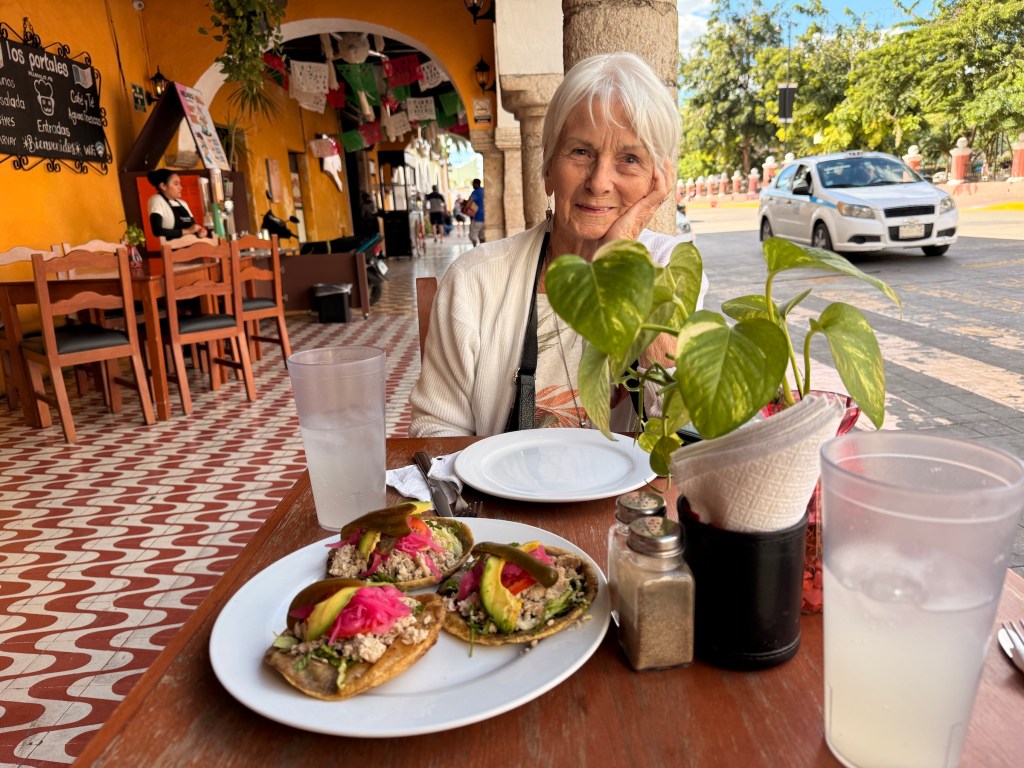
The Plaza is always the center of things in a Mexican town and we spent time there simply absorbing the energy of the community. And absorbing a good lunch.
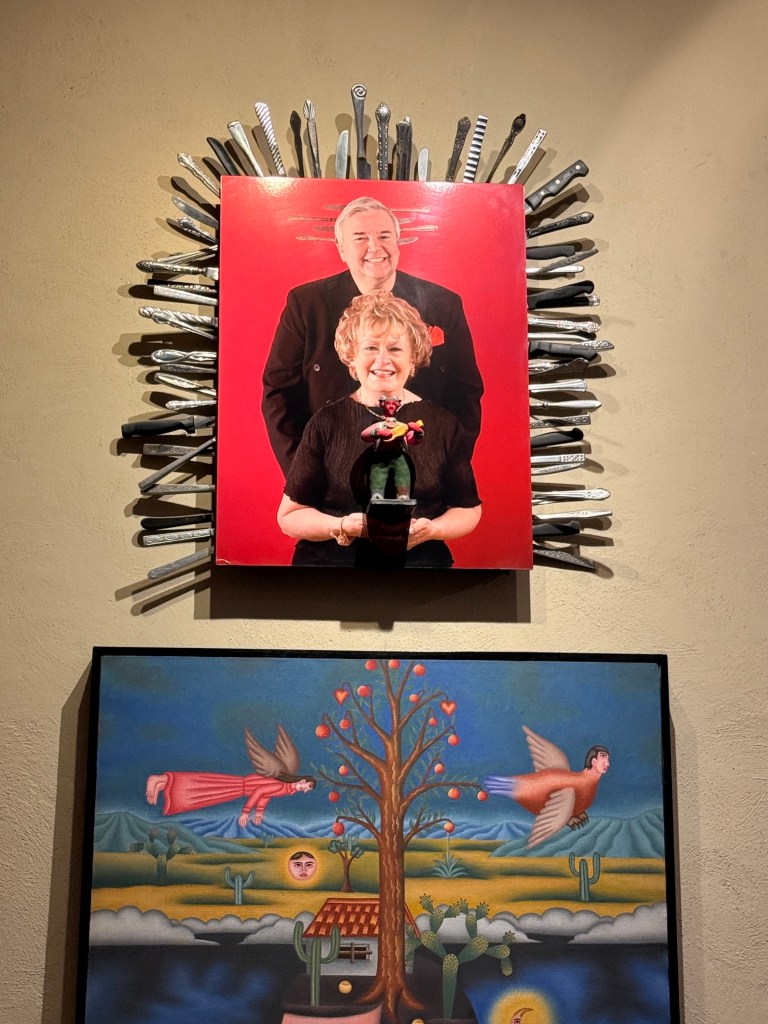
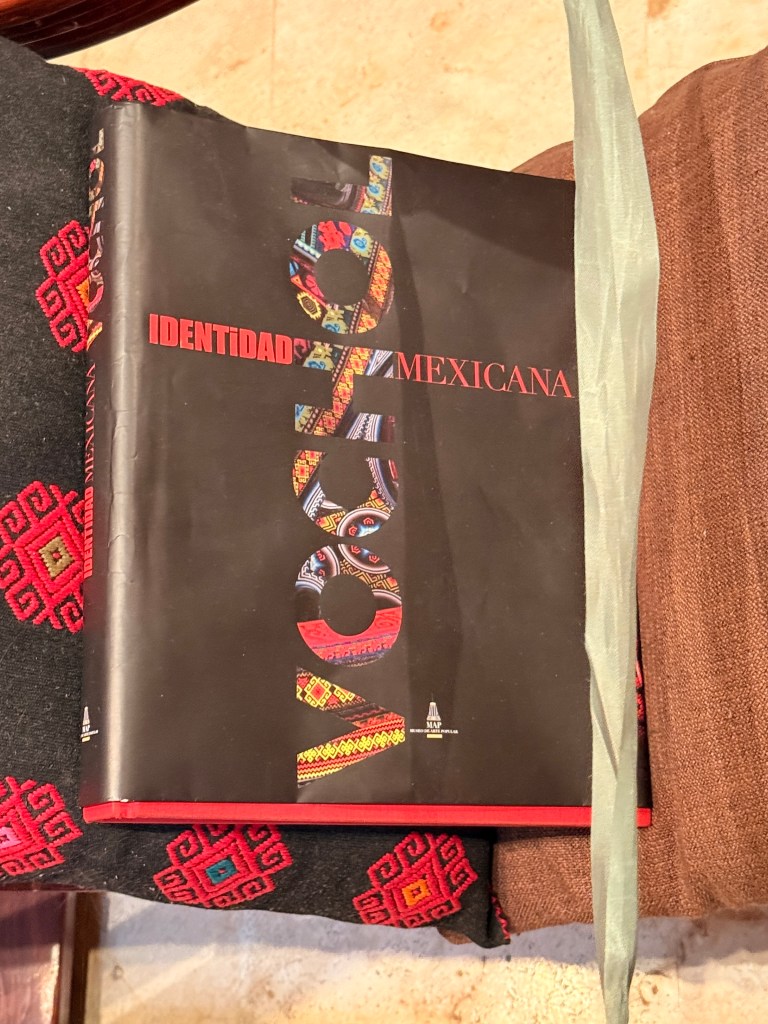
The Casa de los Venados is an important site just off the Plaza. It’s a renovated mansion that contains a vast private collection of native art objects, presented as you might hope for in a sensitively restored private home.
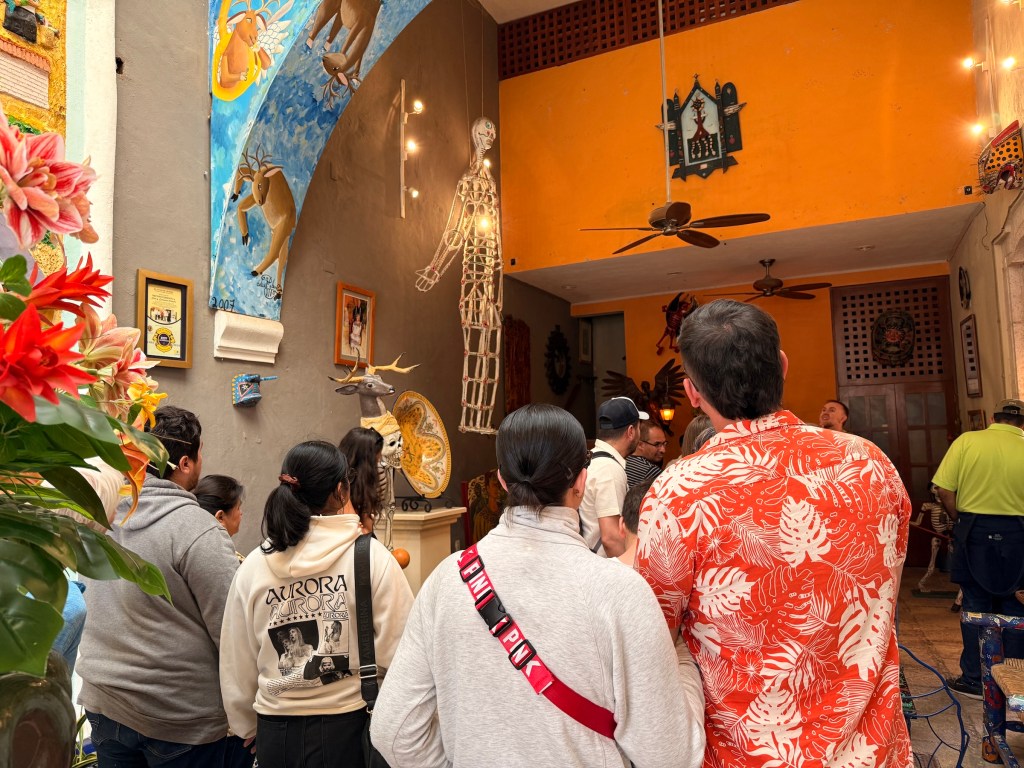
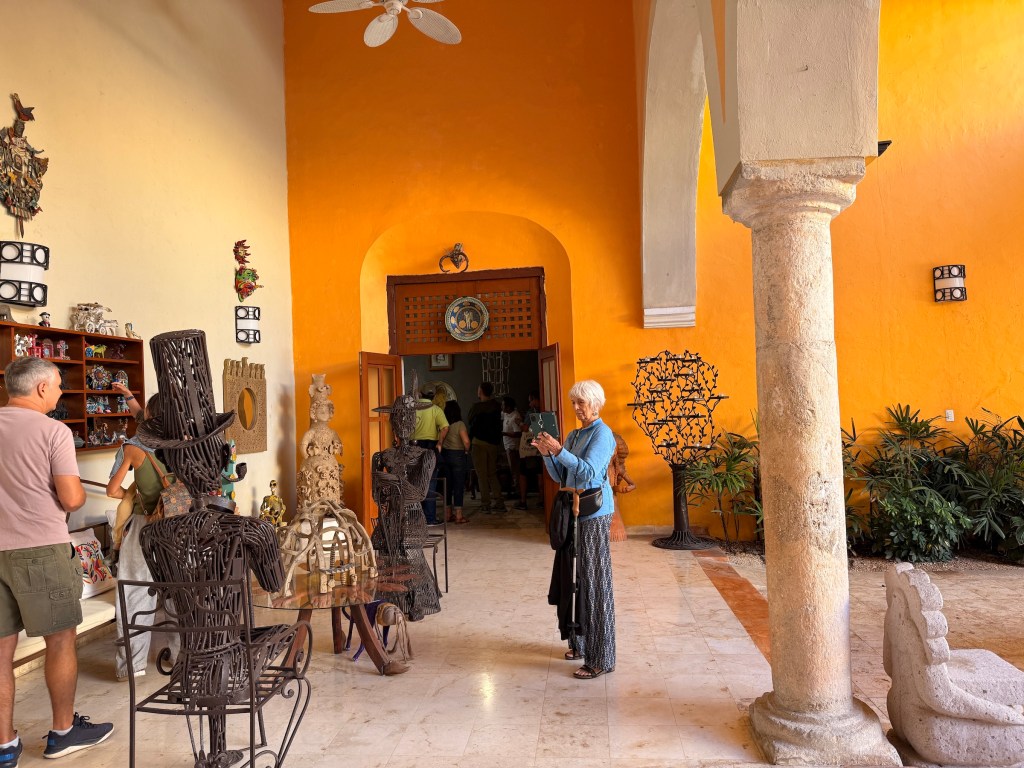
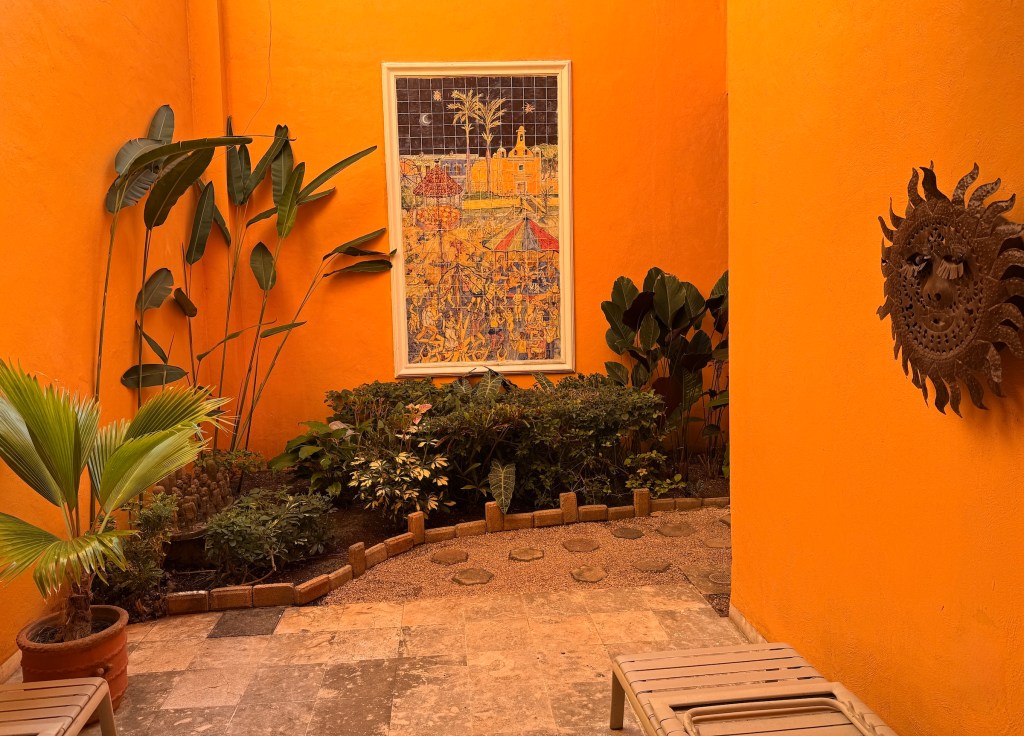
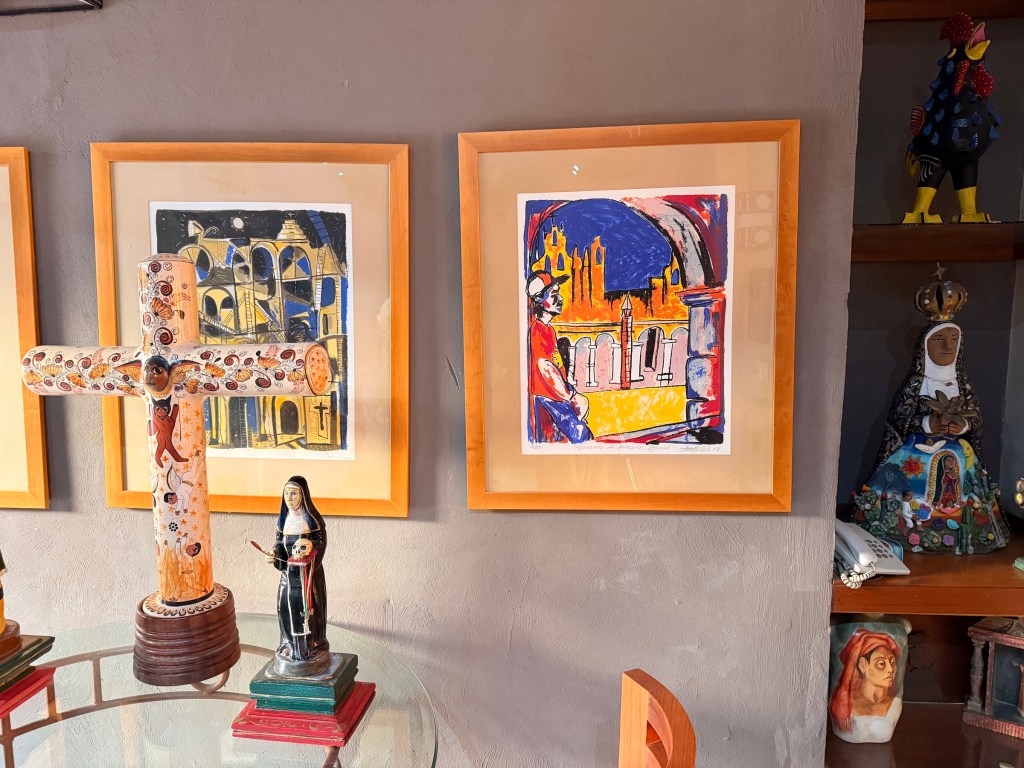
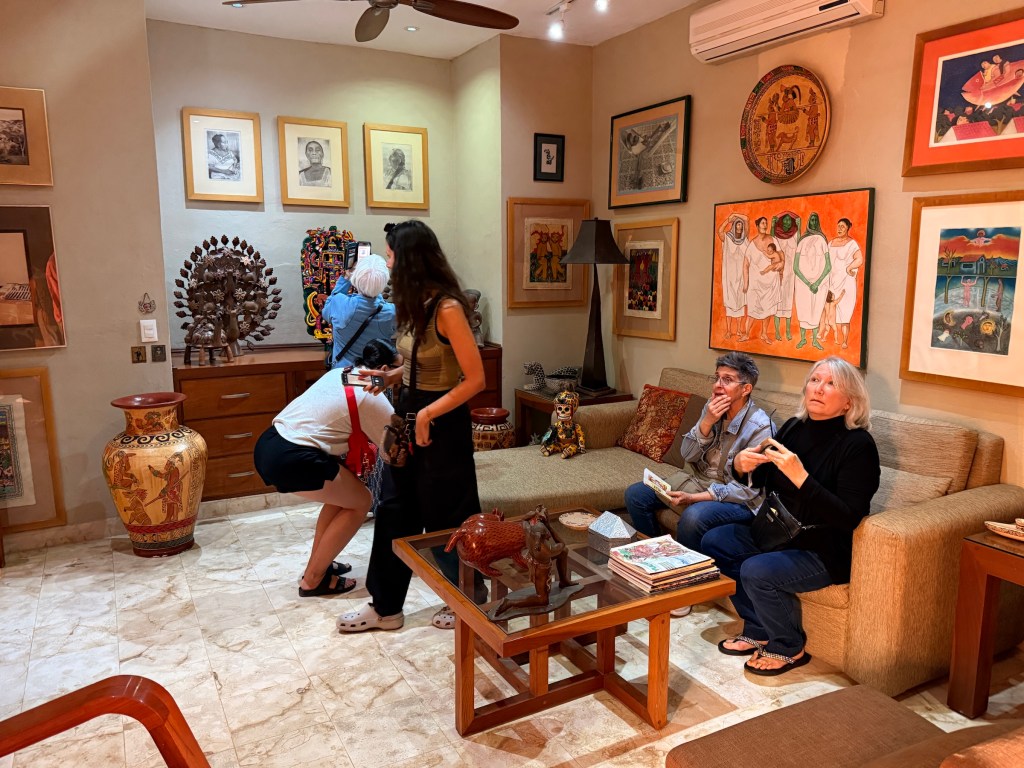
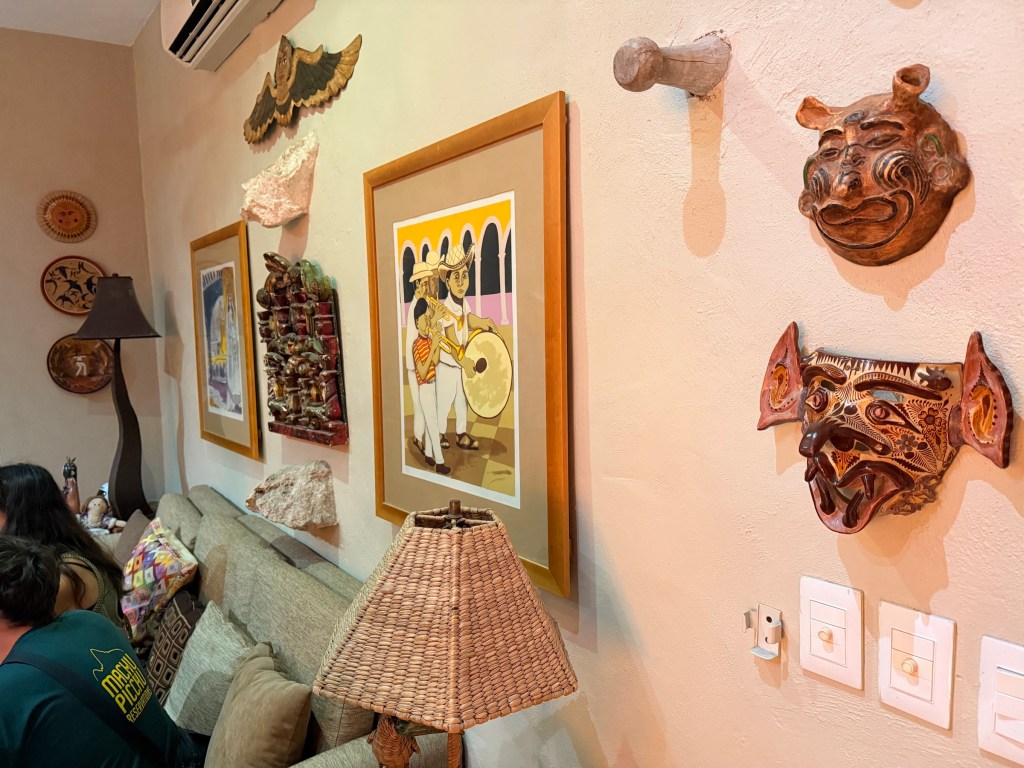
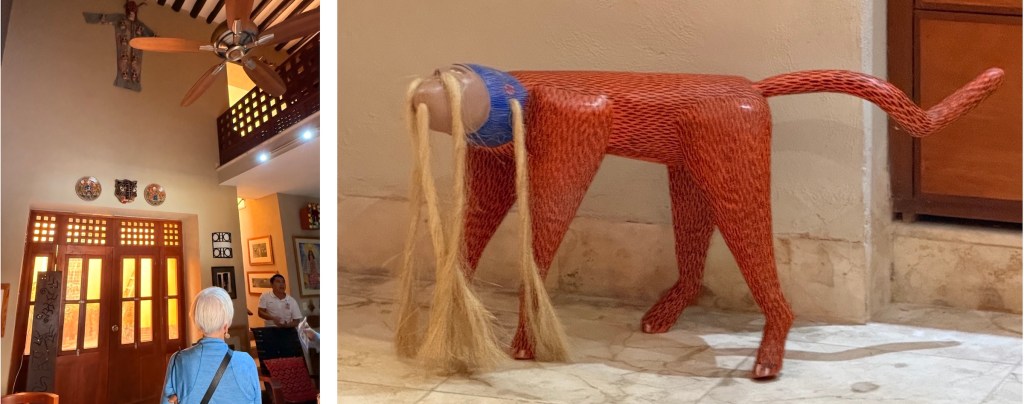
If you’ve become somewhat museum-allergic after viewing countless hermetically-sealed displays in the past, then this place is for you. The owners spent considerable time and effort collecting some of the finest artistic work of the local people, and it’s presented in such a casual and refreshingly different manner that we expect the owners to return any moment. It’s really a memorable experience.
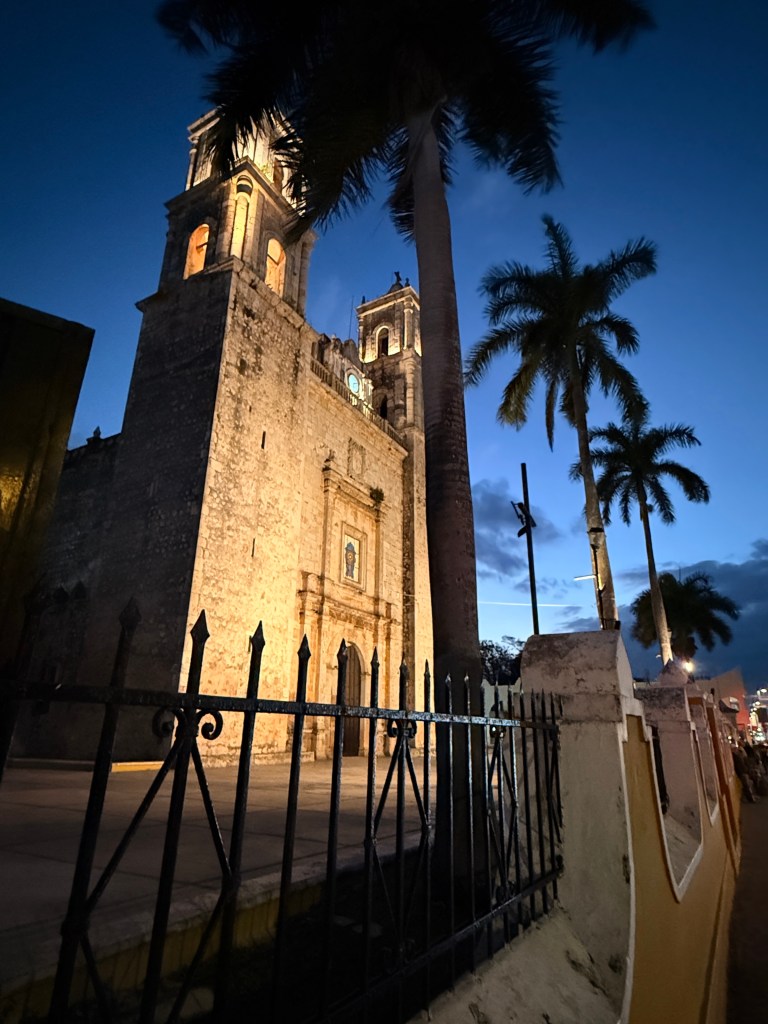
Night descends as we leave the art-filled Casa de los Venados to skirt the plaza, with the infamous Iglesia de San Servasio nicely backgrounded by the evening’s glow. The church was originally built in 1545 but was ordered destroyed in 1703 after the town’s mayor and a friend who sought shelter in the church were murdered by political rivals. The killers were executed, the church was demolished to atone for the atrocity, and it was rebuilt in 1705.
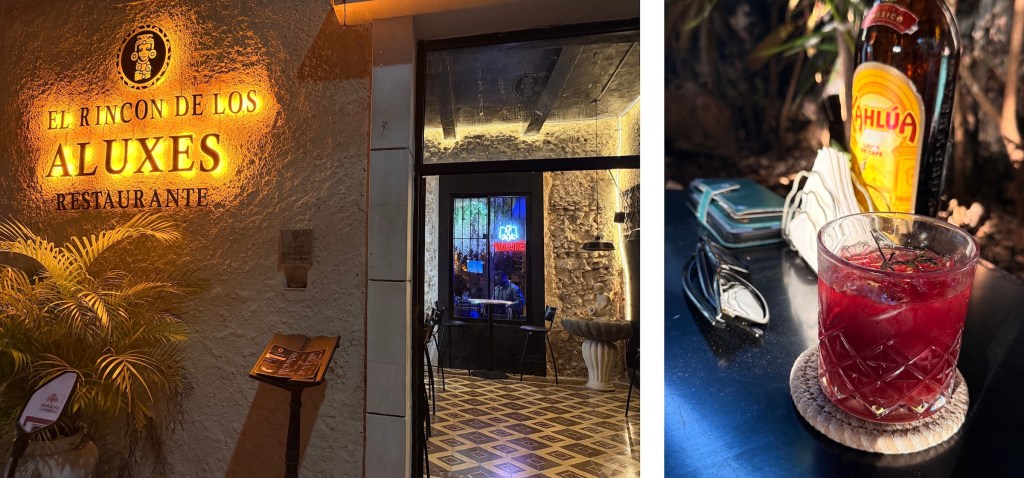
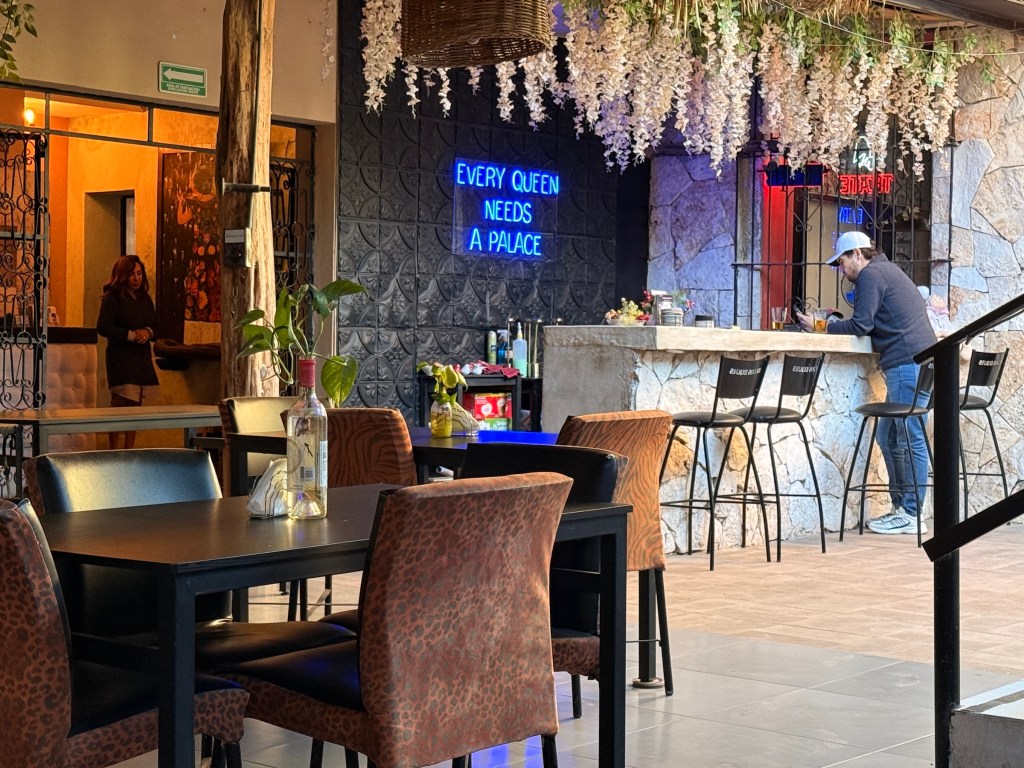
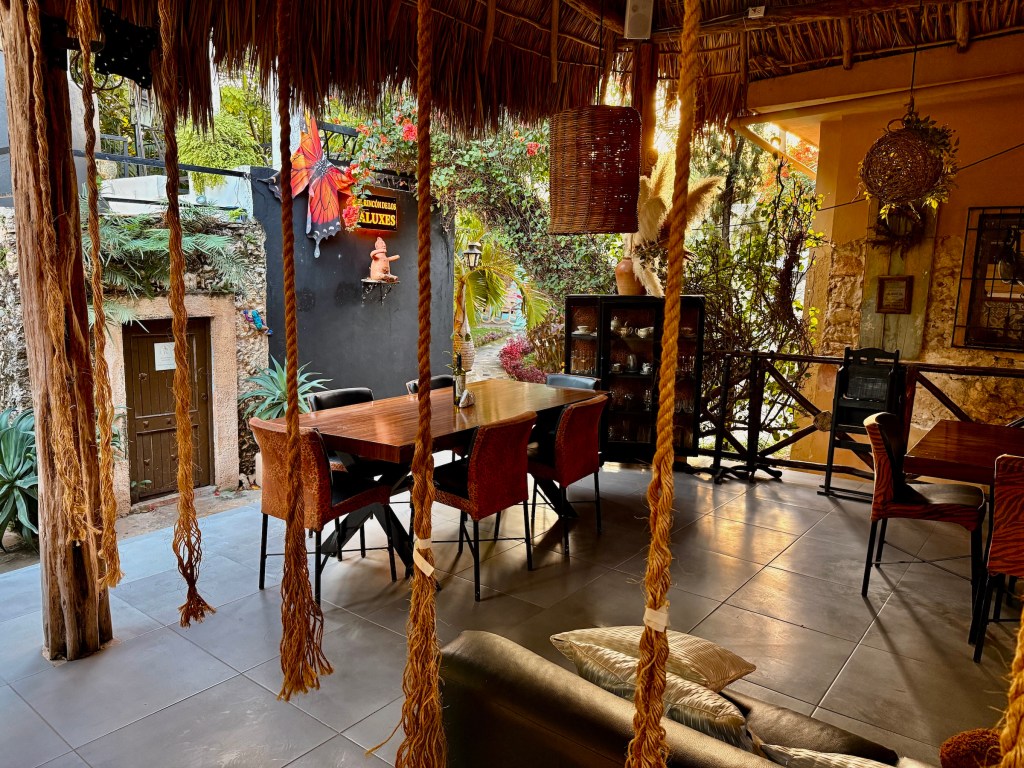
We take a different route back to Esencia through side streets, and we come across an inviting place called El Rincon de los Aluxes. (If you read our dispatch from Palenque, you may remember that we visited a jungle refuge named Aluxes there with many wild animals.) The jungle envelopes us nicely as we enter this quiet refuge to find a rustic niche for drinks and dinner. There’s a clay ‘Alux’ icon seated on a special perch overlooking the place to keep the peace and ward off evil spirits. The Aluxes are described as mischievous, invisible forest guardians.
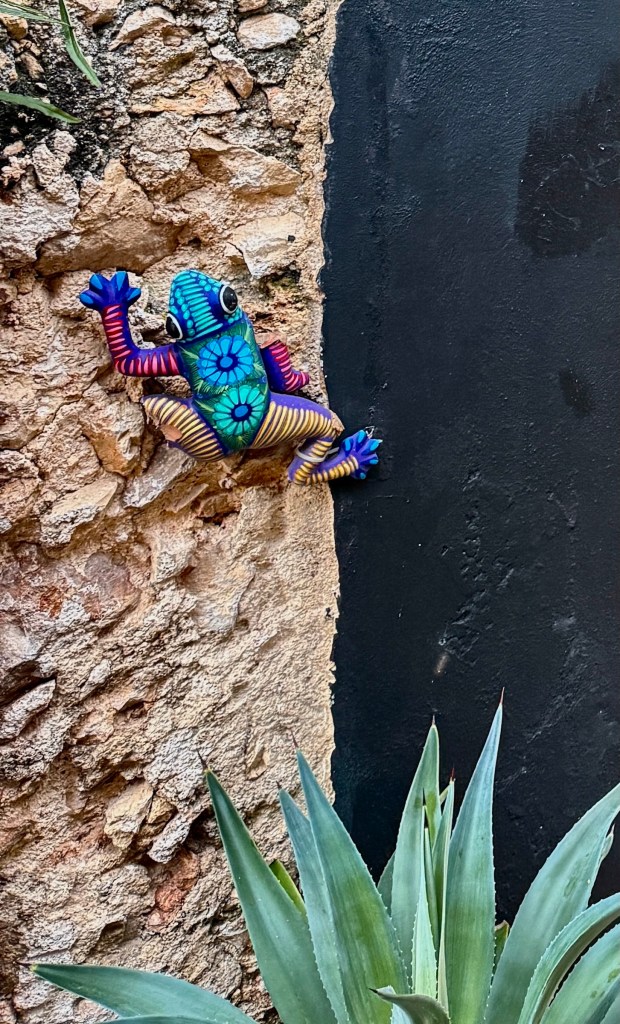
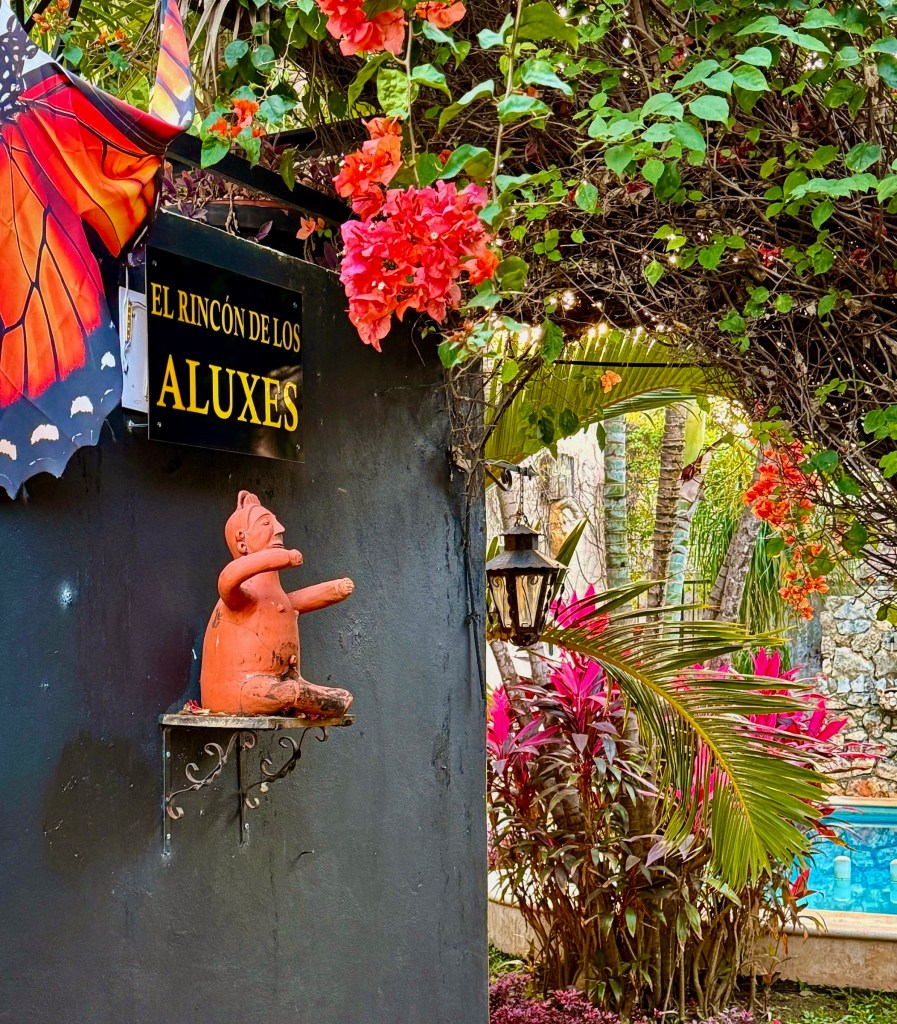
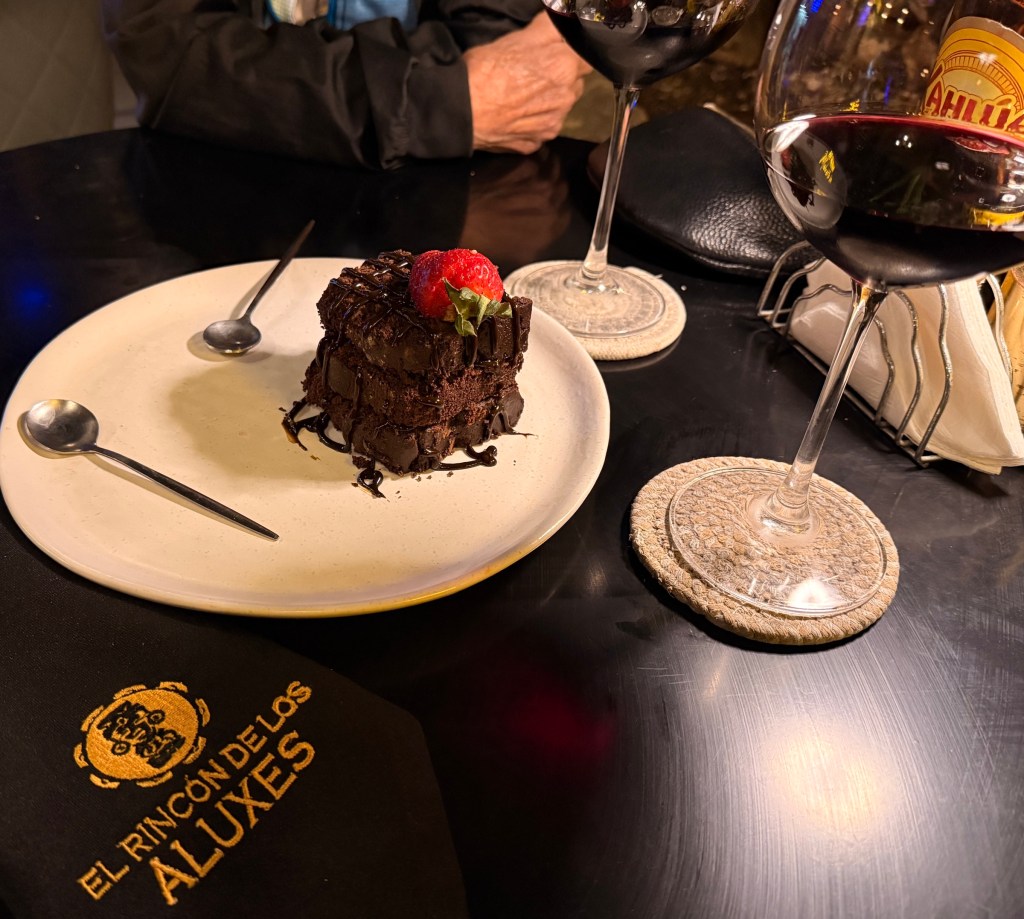
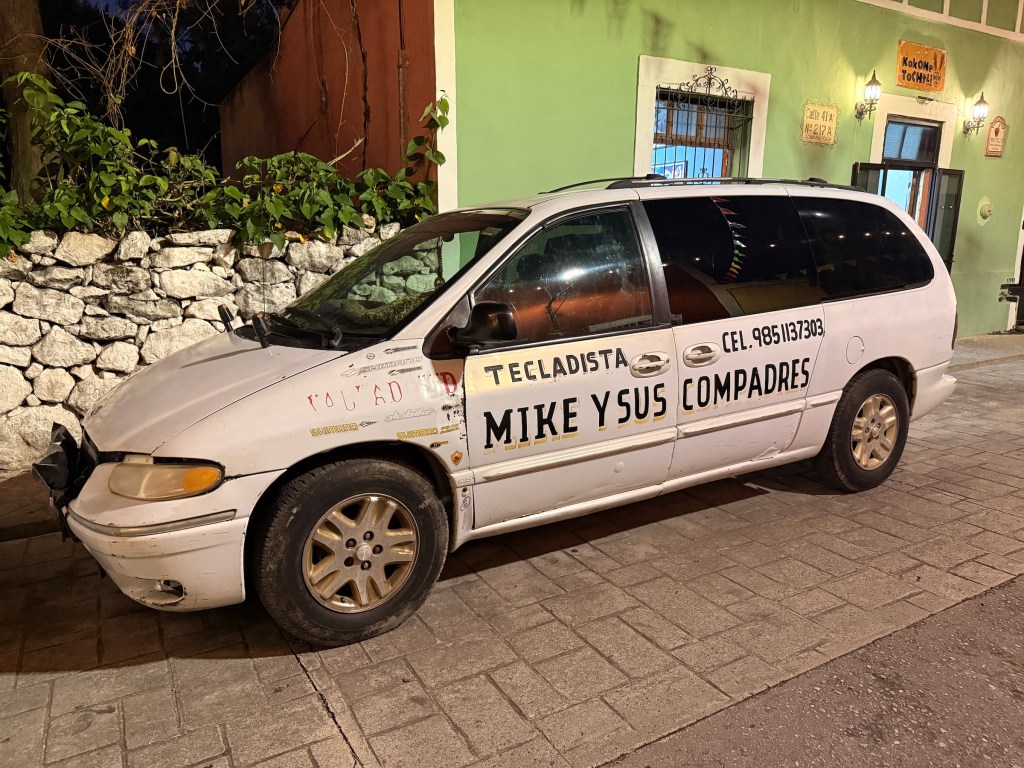
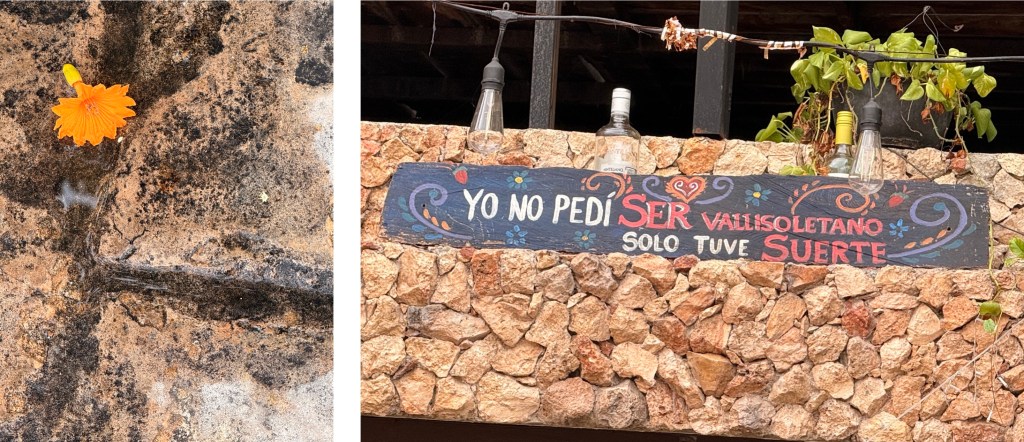
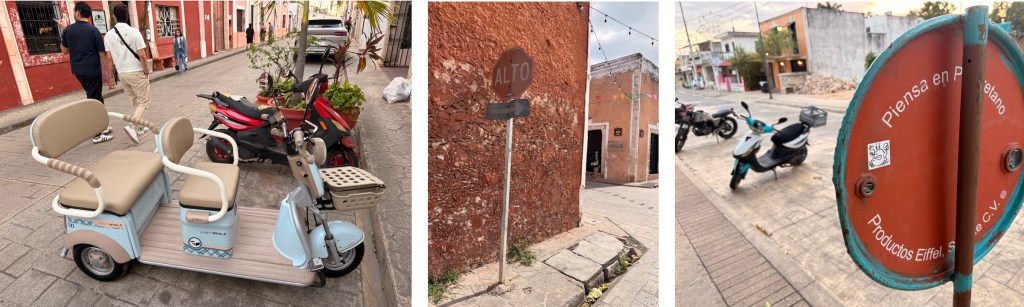
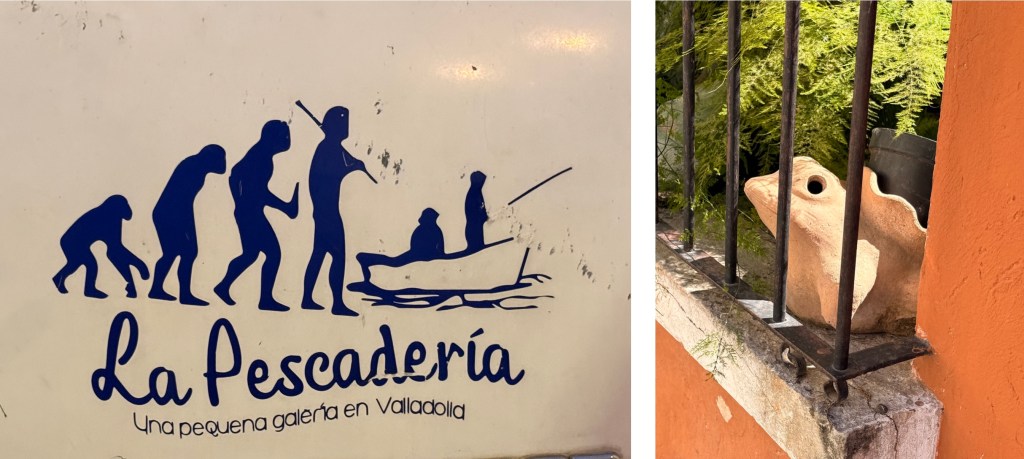
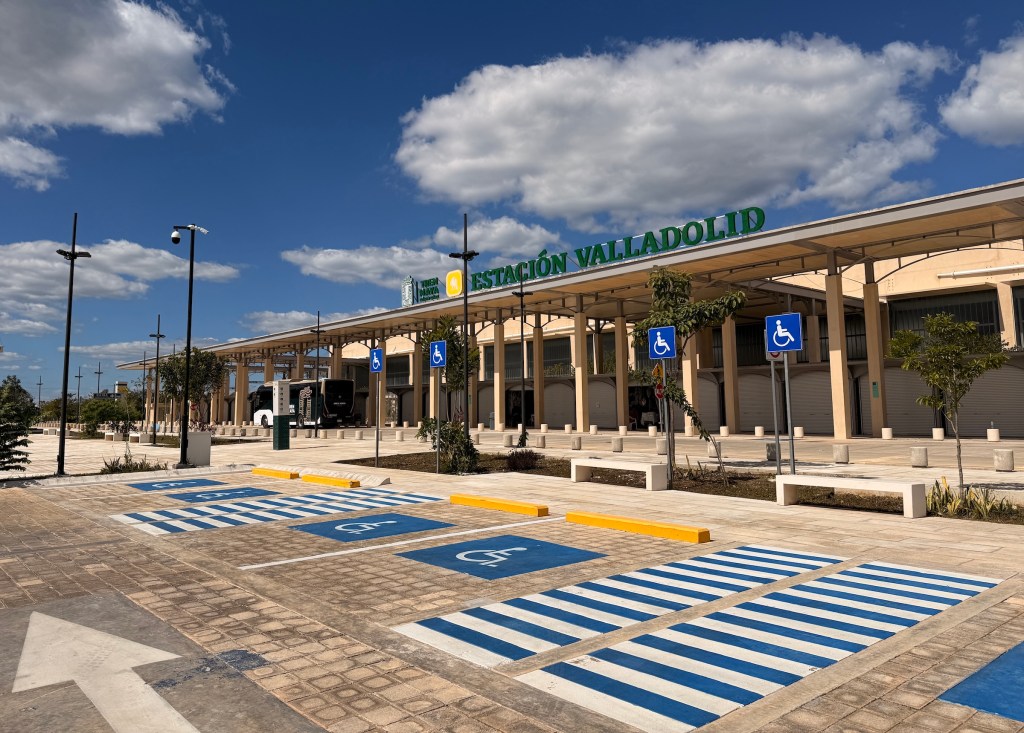
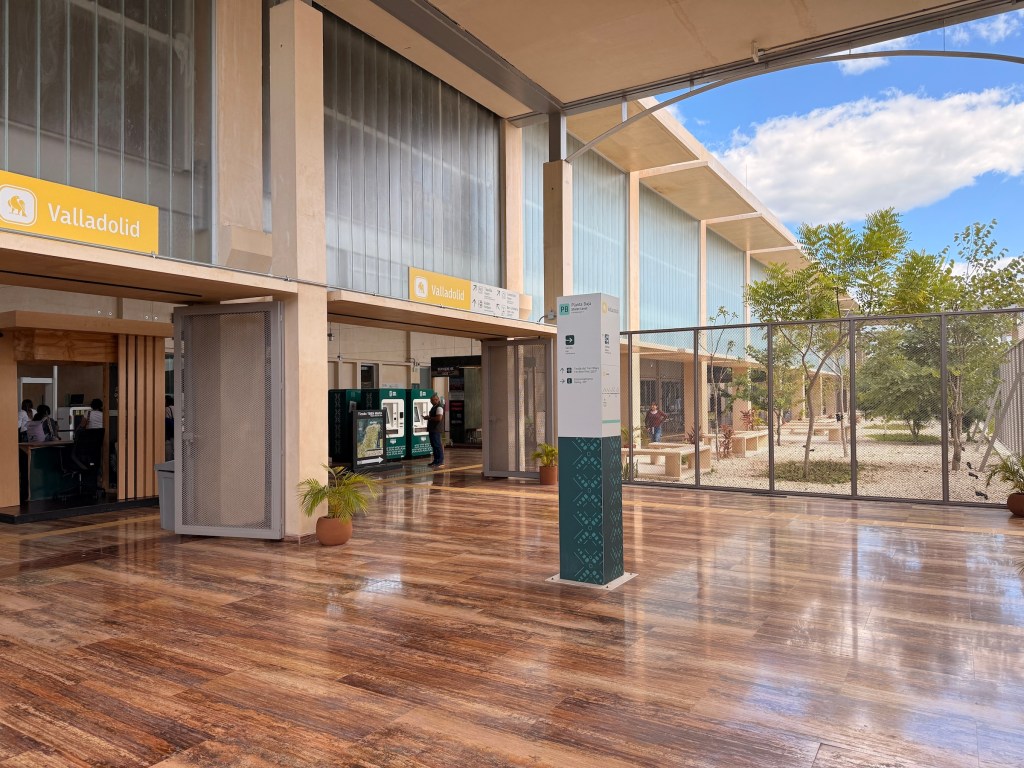
We spend the next few days exploring more of the town, enjoying some of the local quirks you’ll find any in place where you’ll also find humans, and getting tickets for our next trip on the Tren Maya.
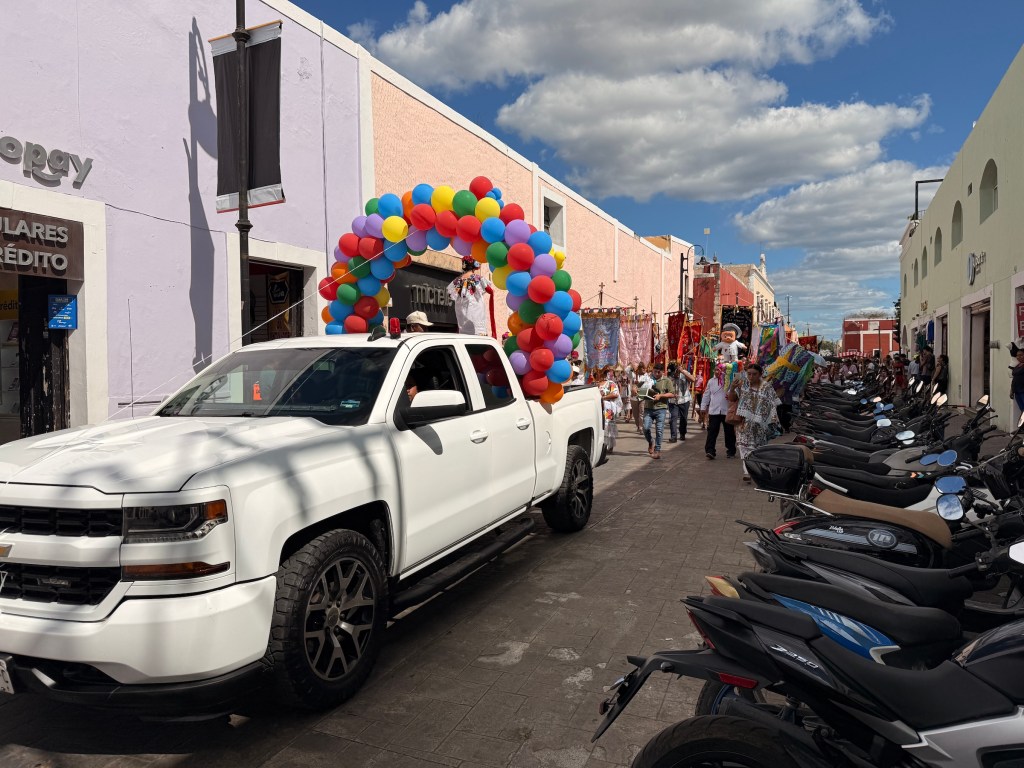
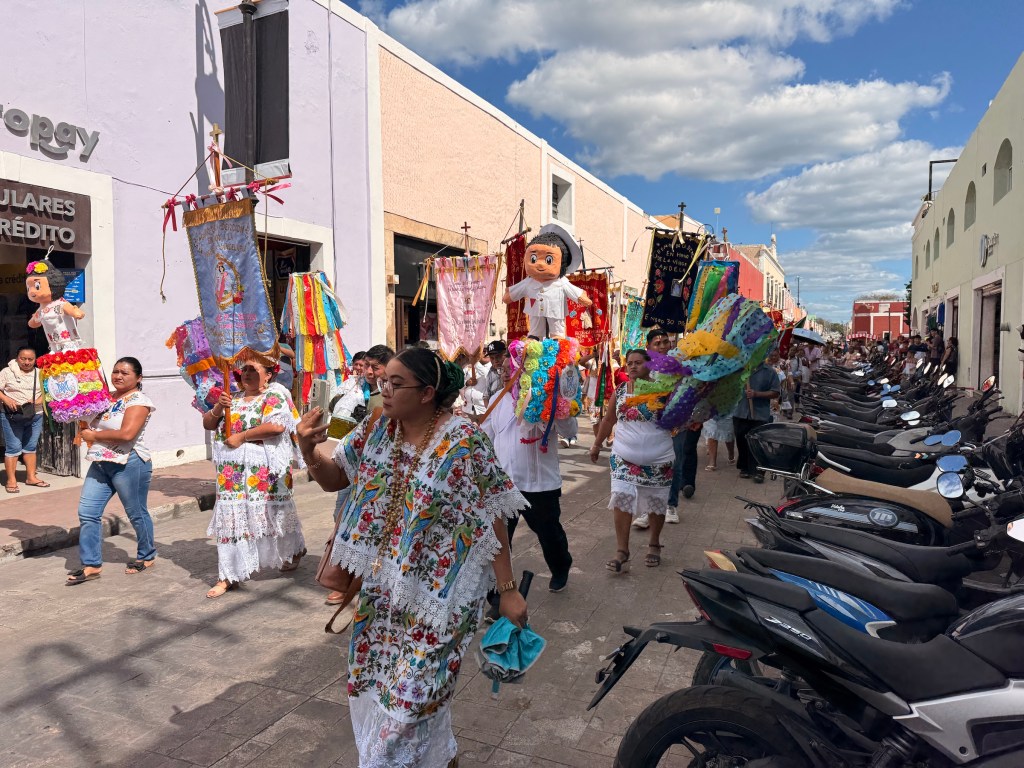
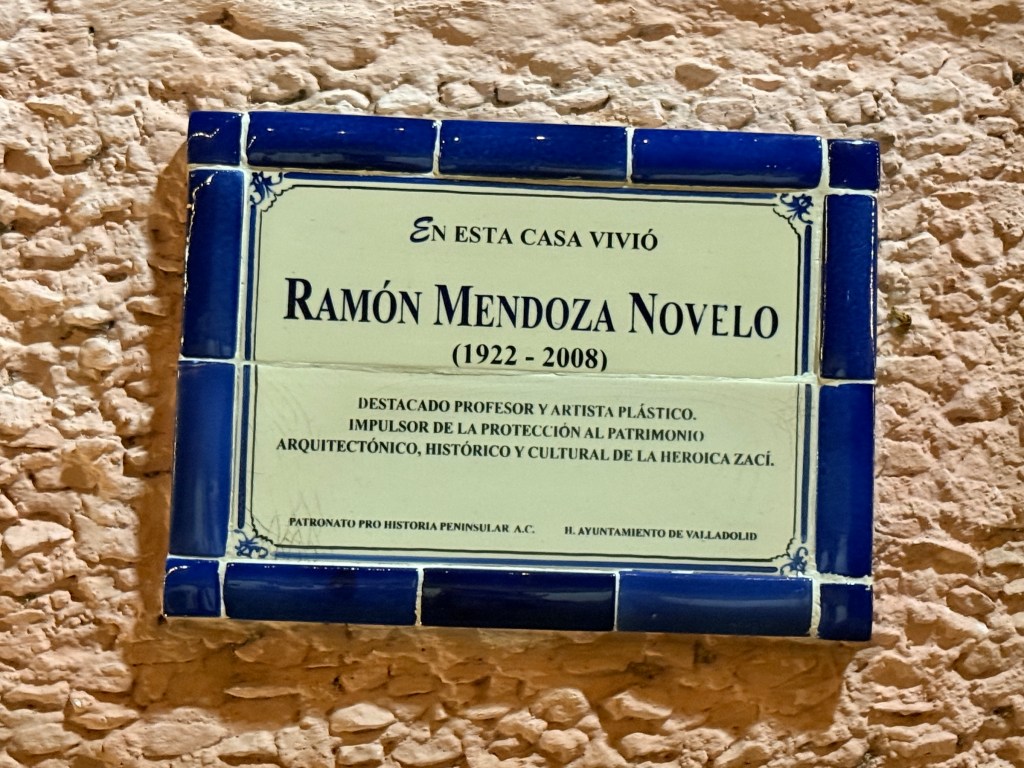
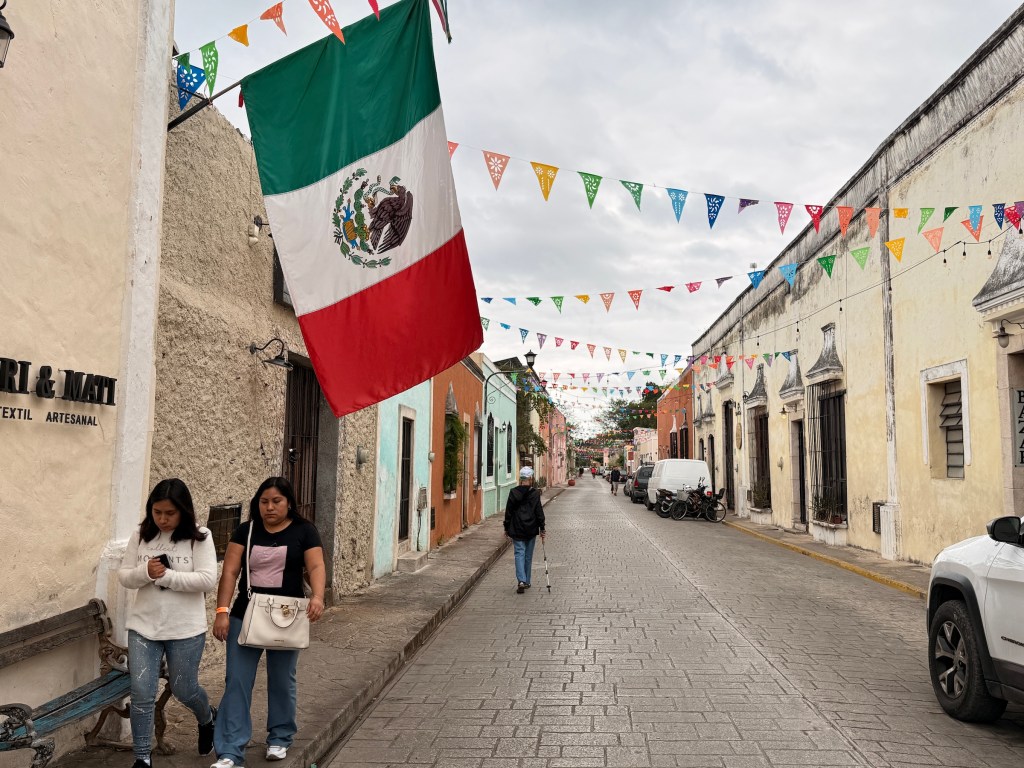
The Calzada takes us to a shady and colorful part of town, with some strange birds-nest type boxes on poles. It’s a chance to see the Templo de San Bernardino and what’s left of the old Convento. And it’s worth a visit to these cool colonnaded spaces to see their elaborately carved altar pieces.
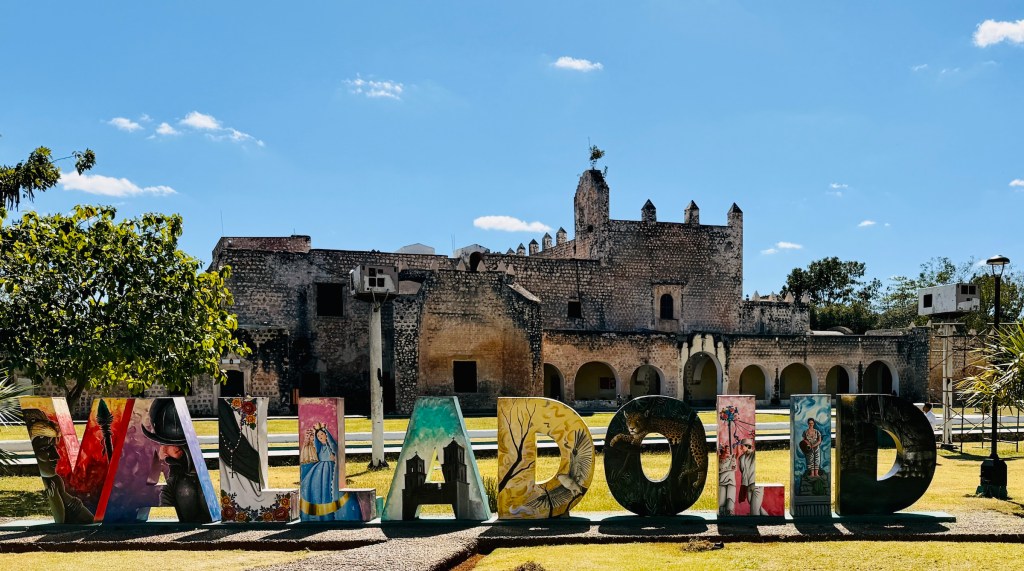
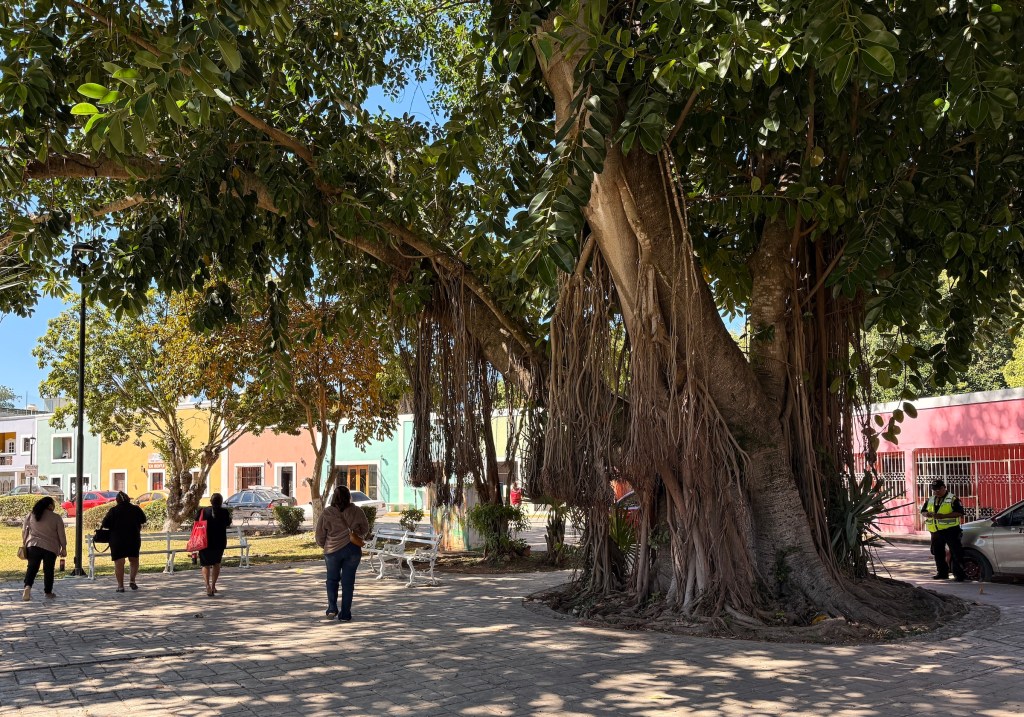
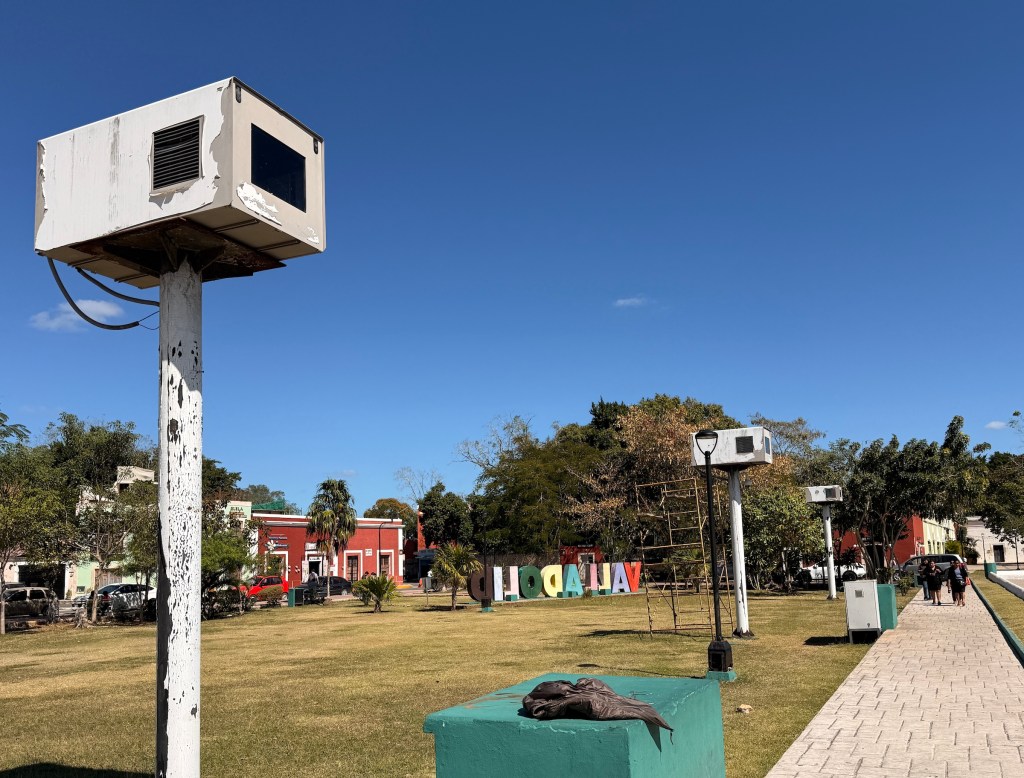
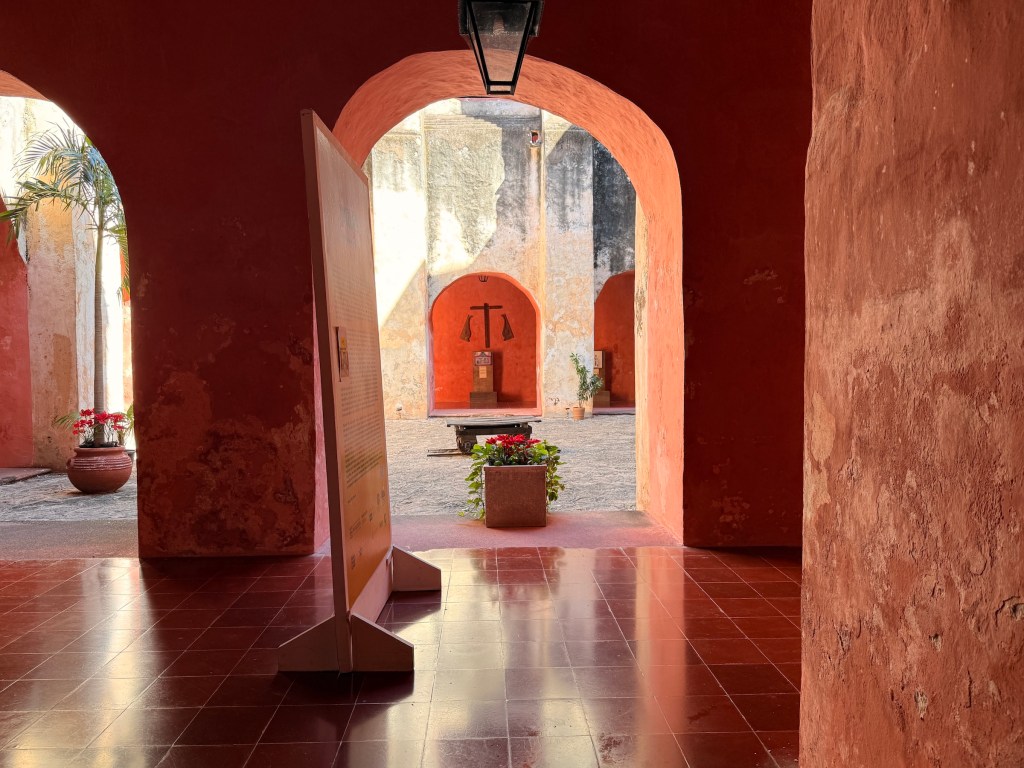
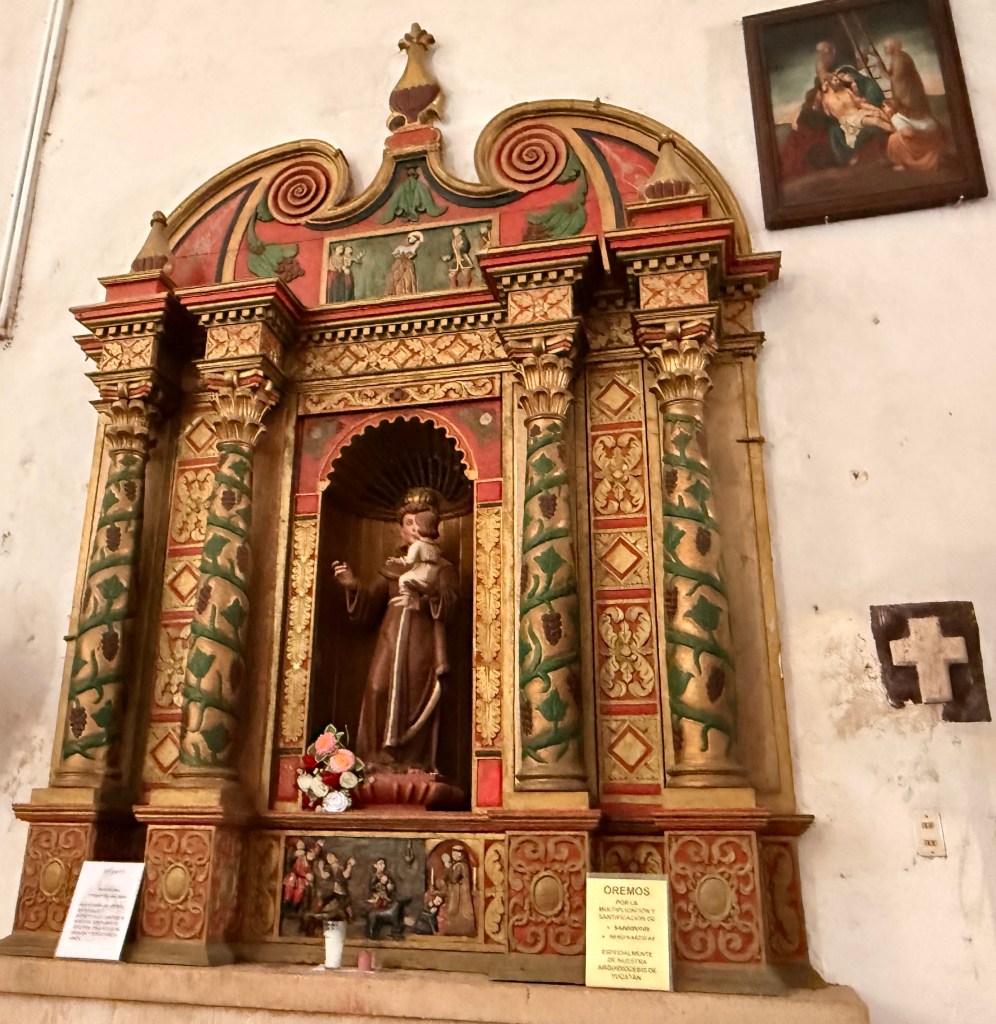
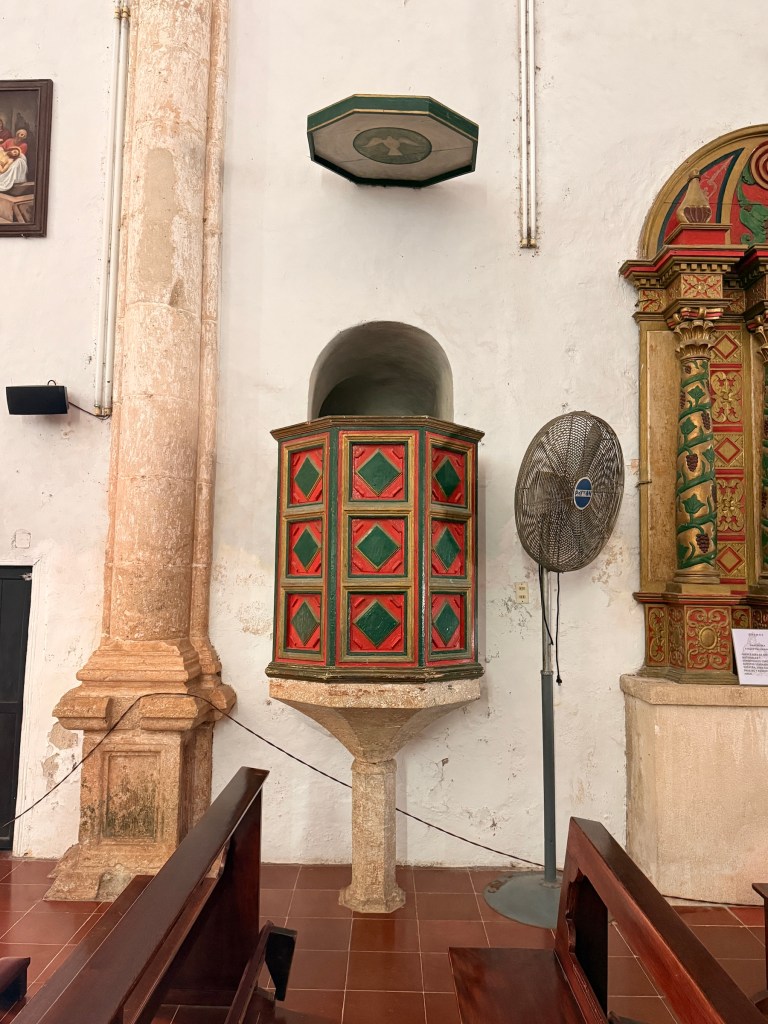
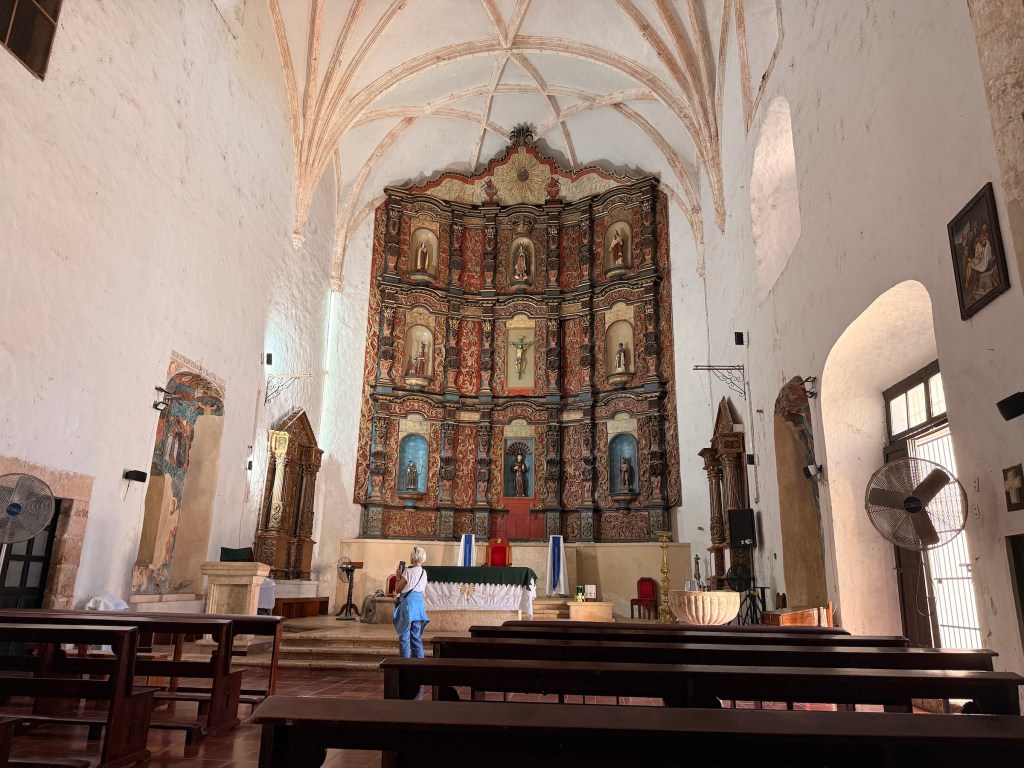
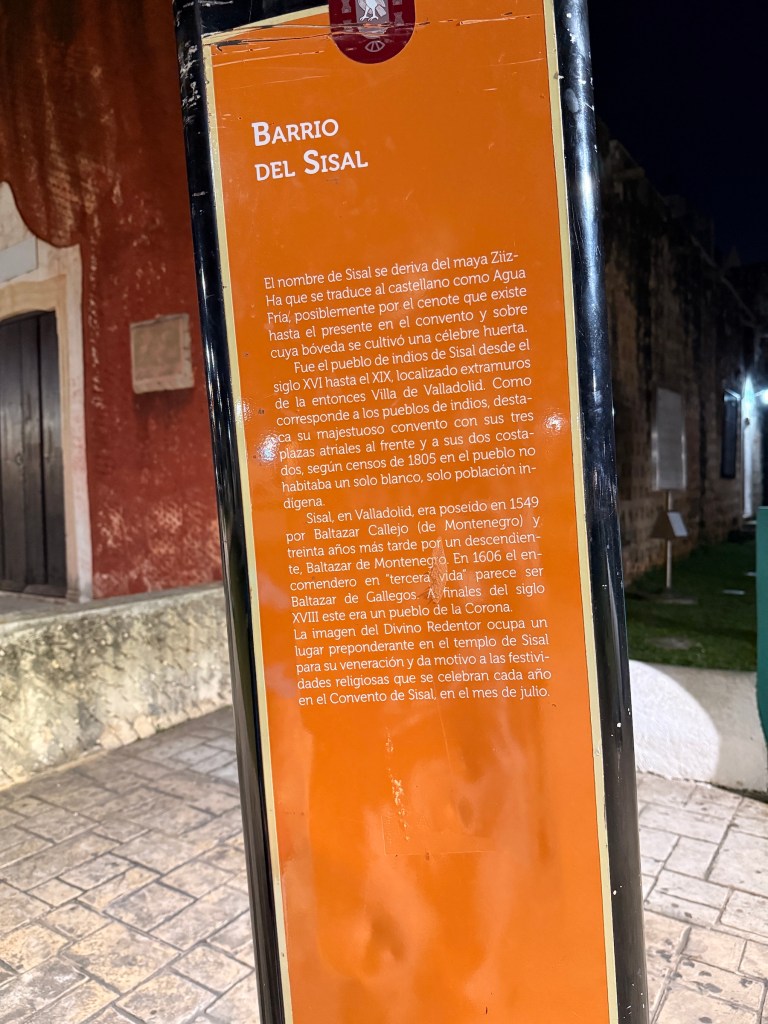
We return later in the evening to experience the cool nighttime, and to see some kind of light show that we saw advertised. And that’s when we realize what those ‘birds-nest boxes’ are all about, as they cast shifting and colorful lighting across the old buildings. We’ve seen such displays in other places and it’s an excellent way to tell a story that showcases some of the heritage of a city.
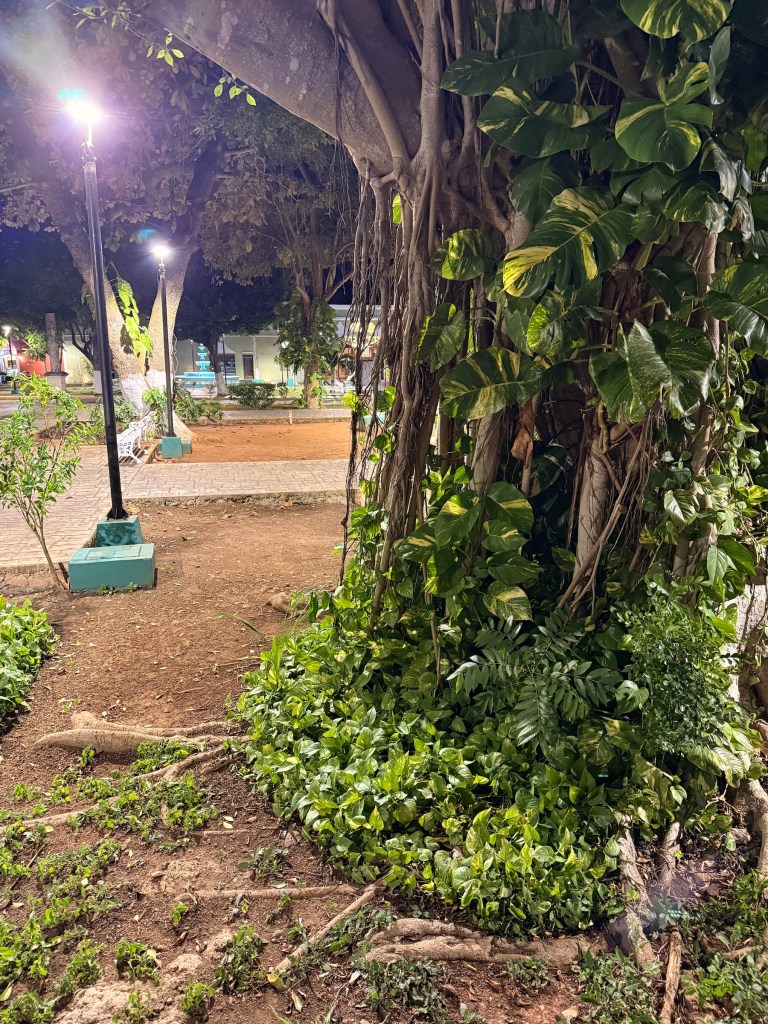
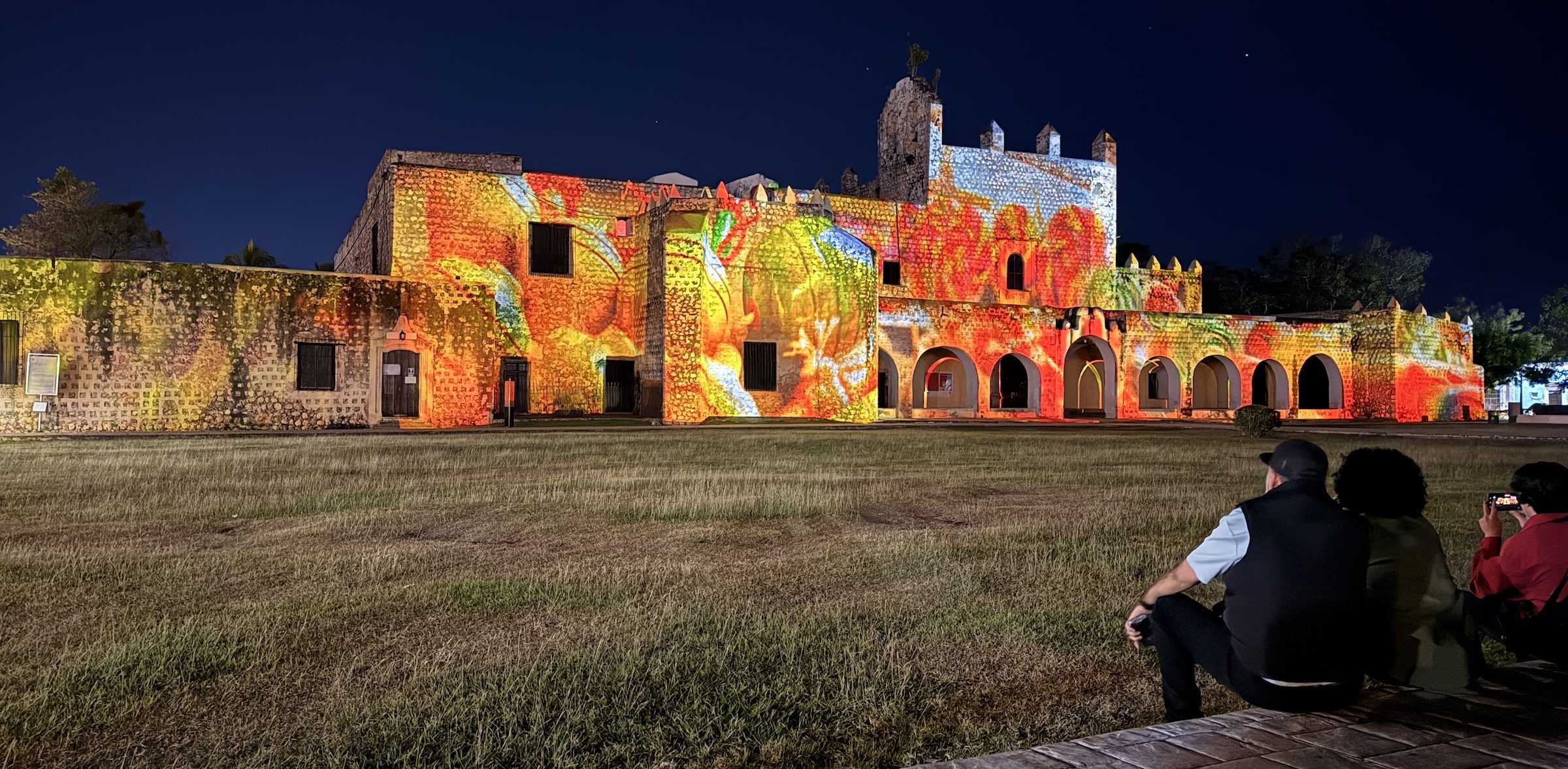
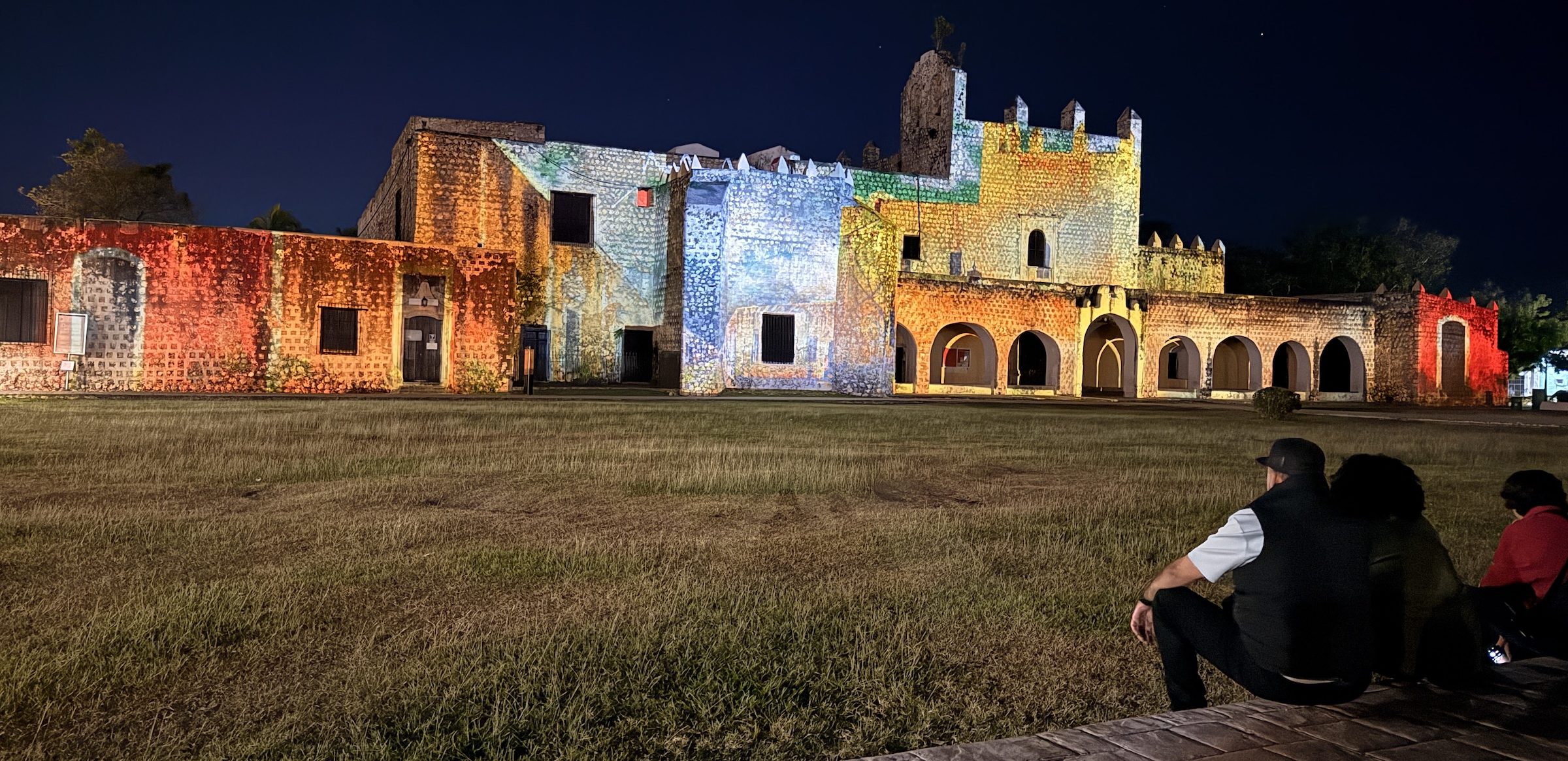
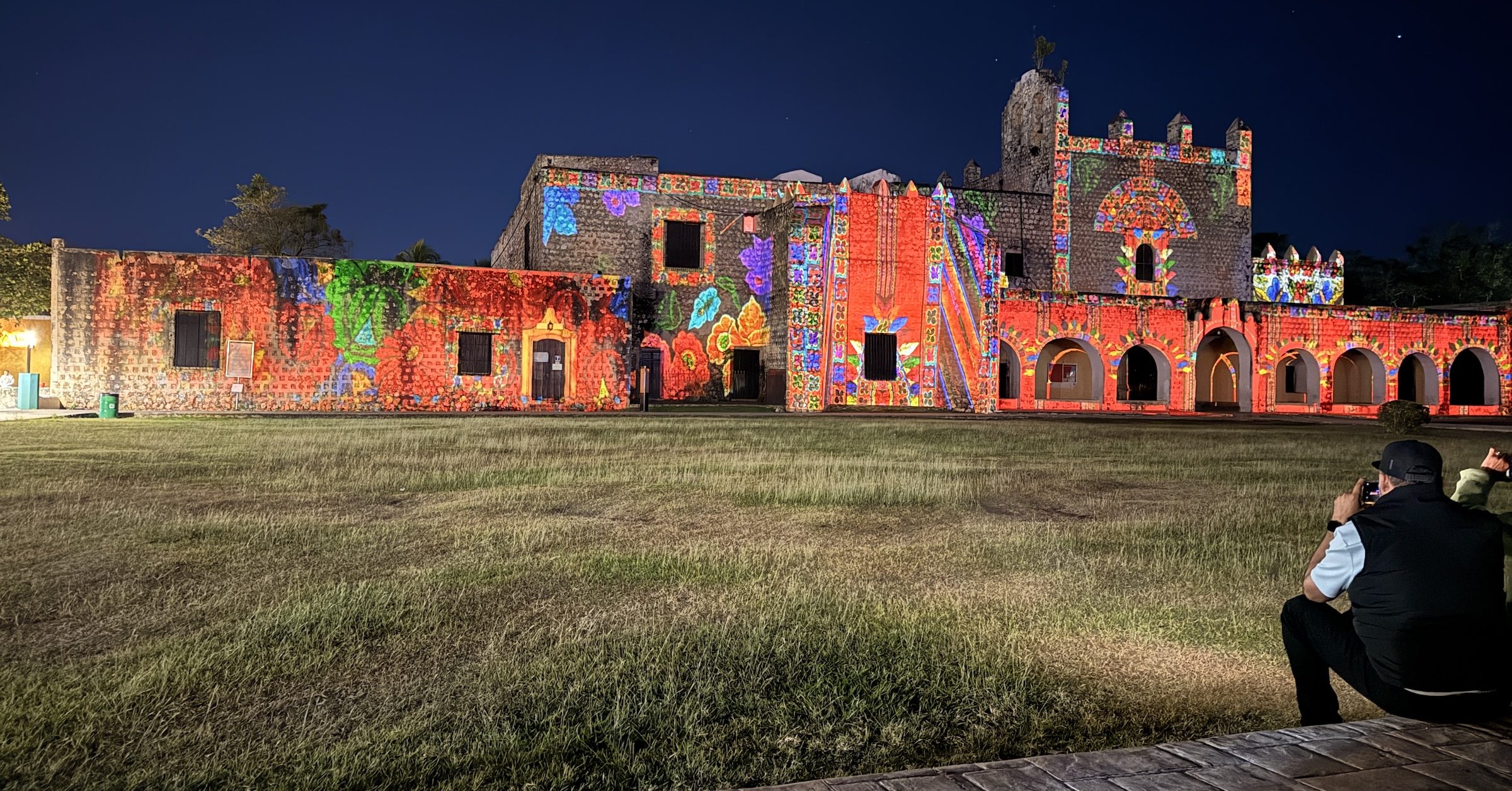
After the show we head back up the Calzada for our final night in town, and one last really nice dinner at a place called Finisterra. They artfully use the walls, the plants, and the landscape to create a space that’s quiet and sheltered, yet open to the evening. And the openness lends a gentle acoustic quality to complete the experience.
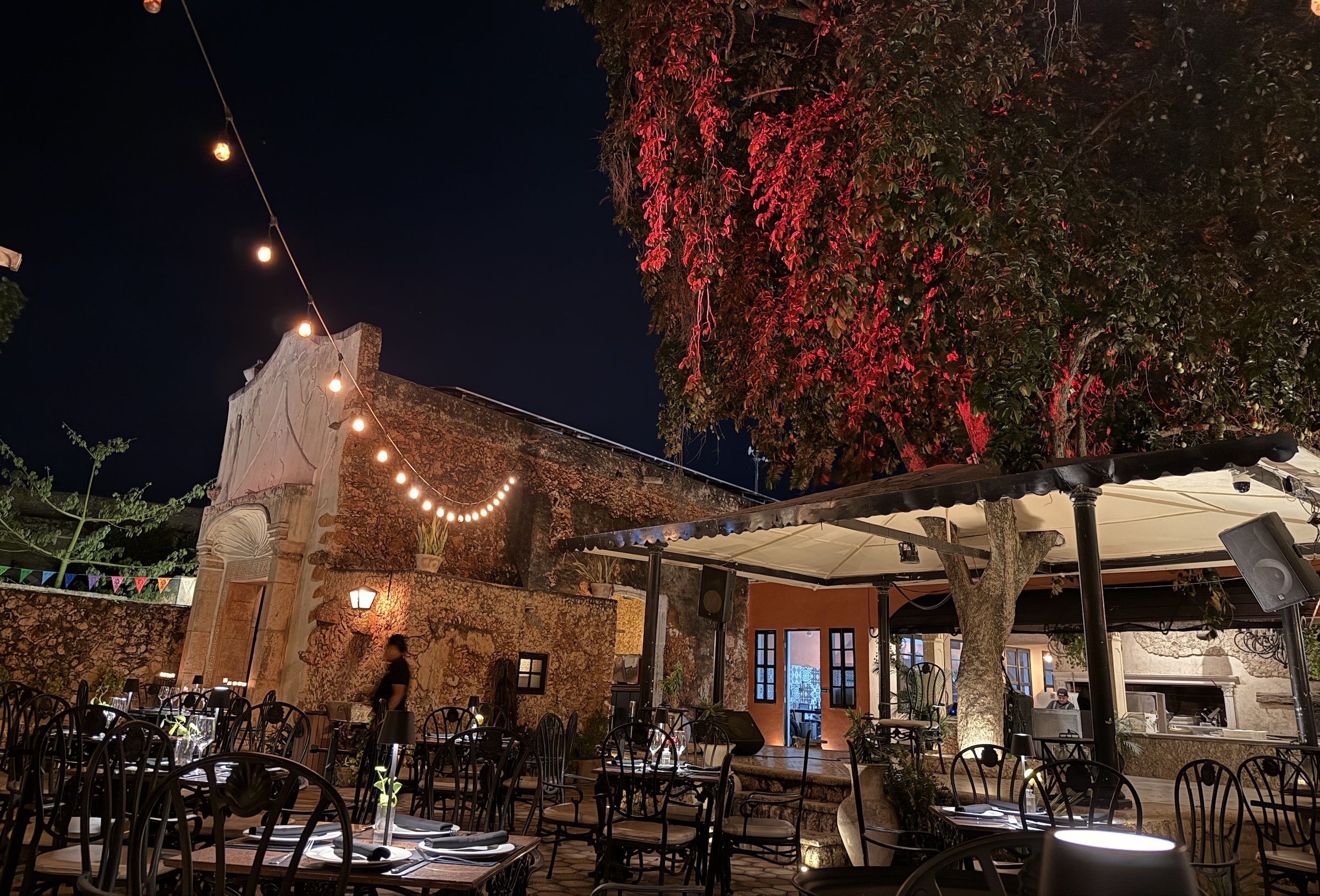
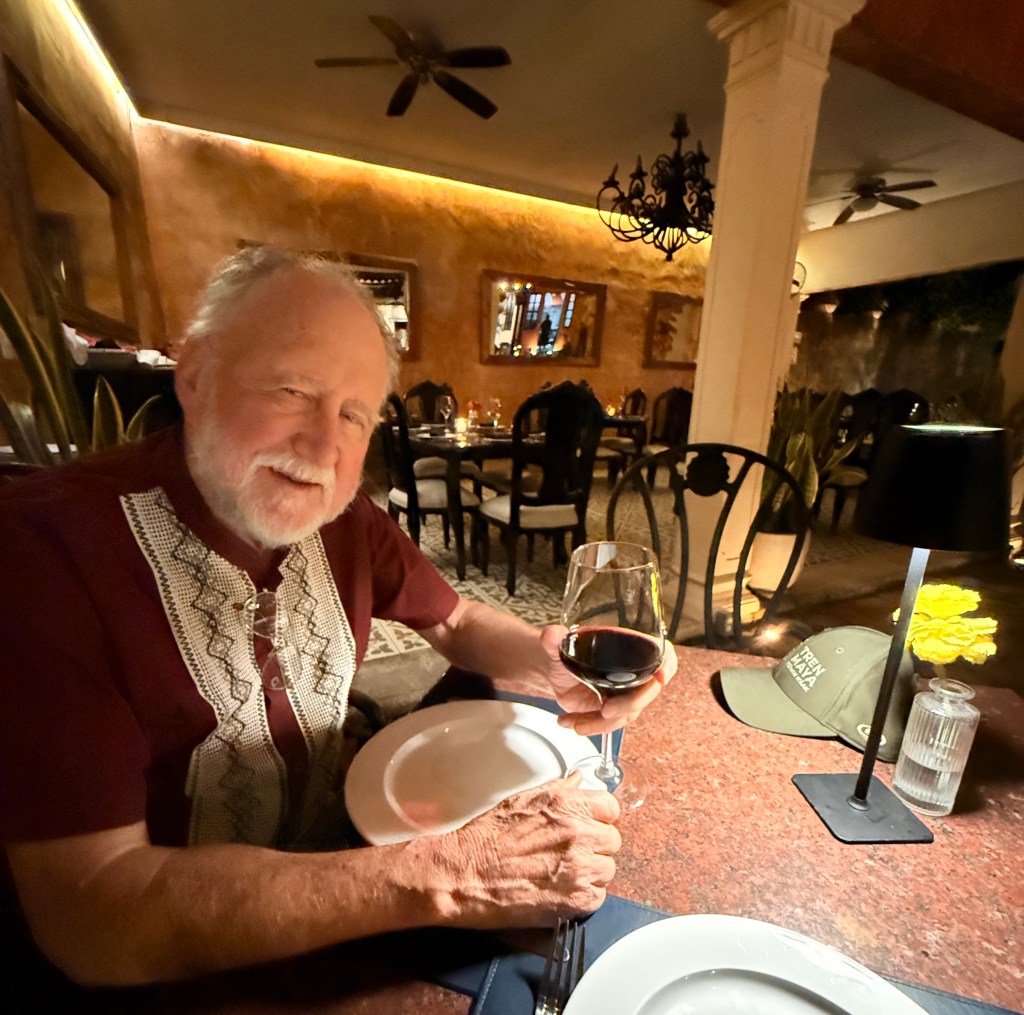
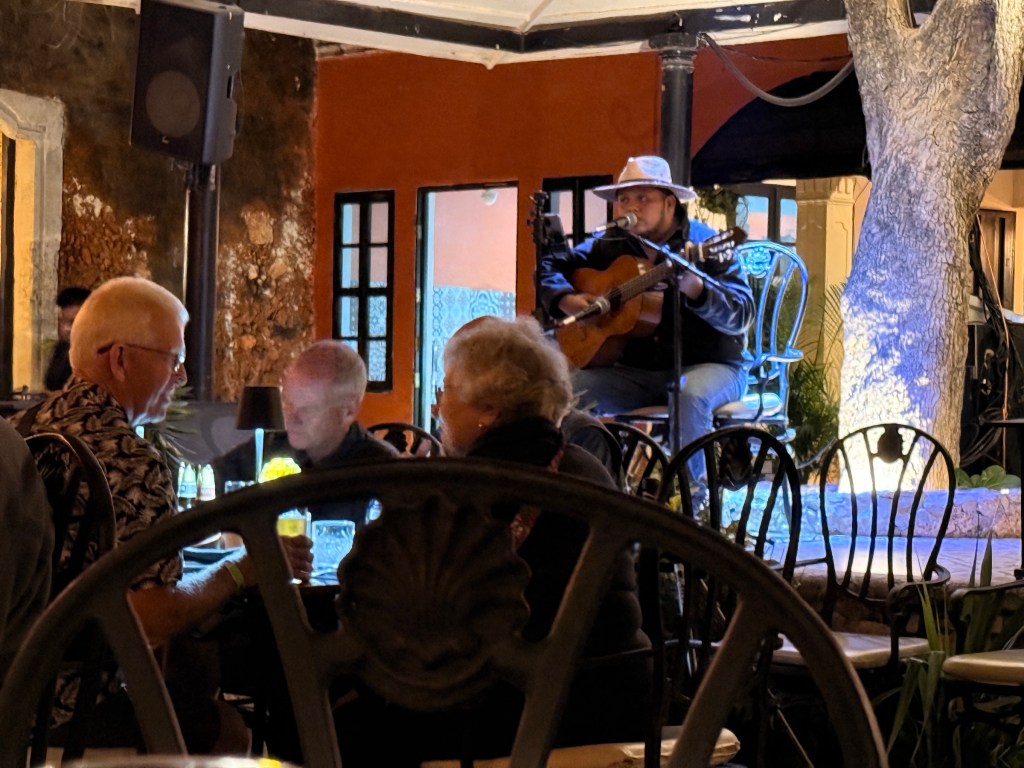
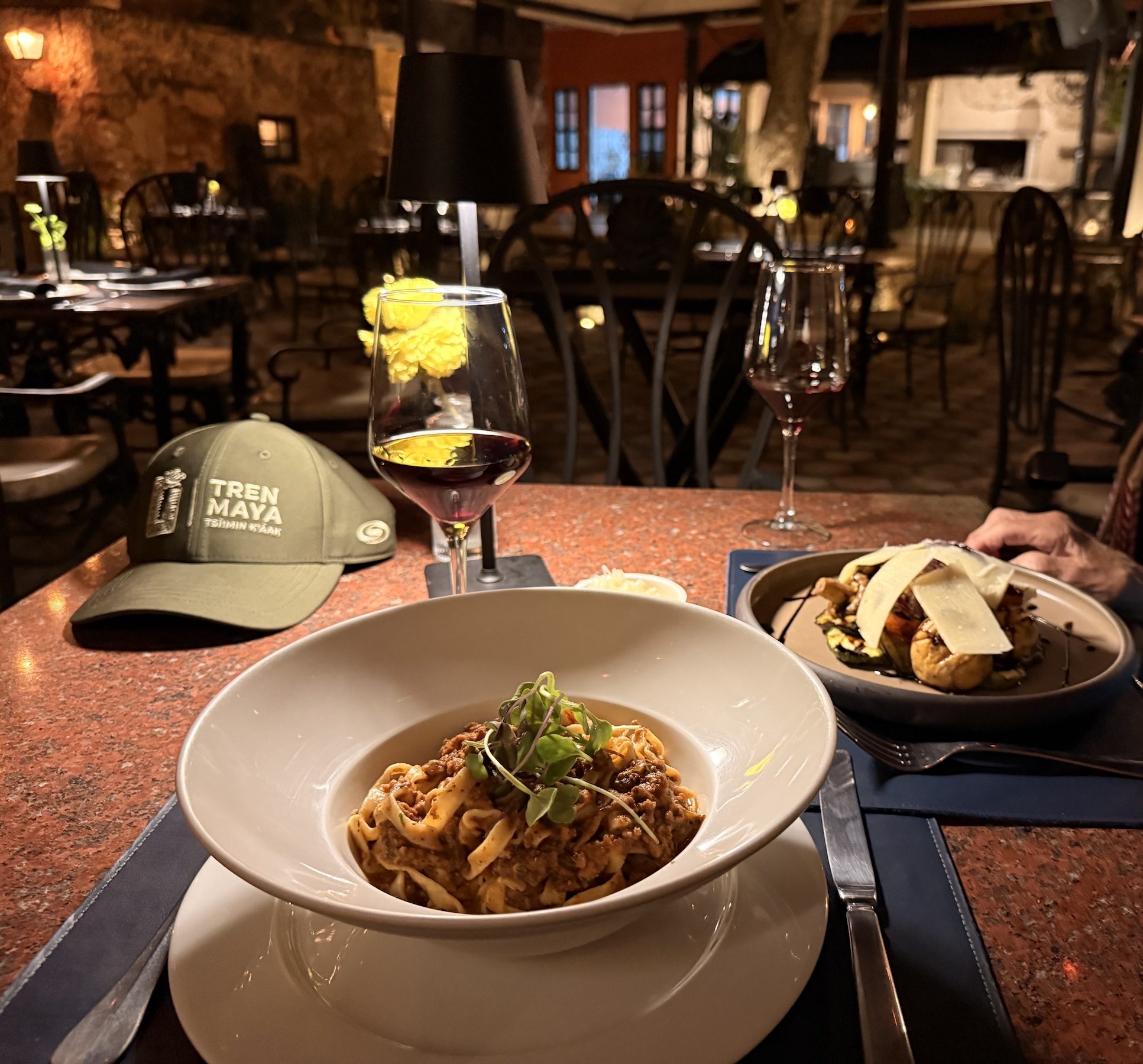
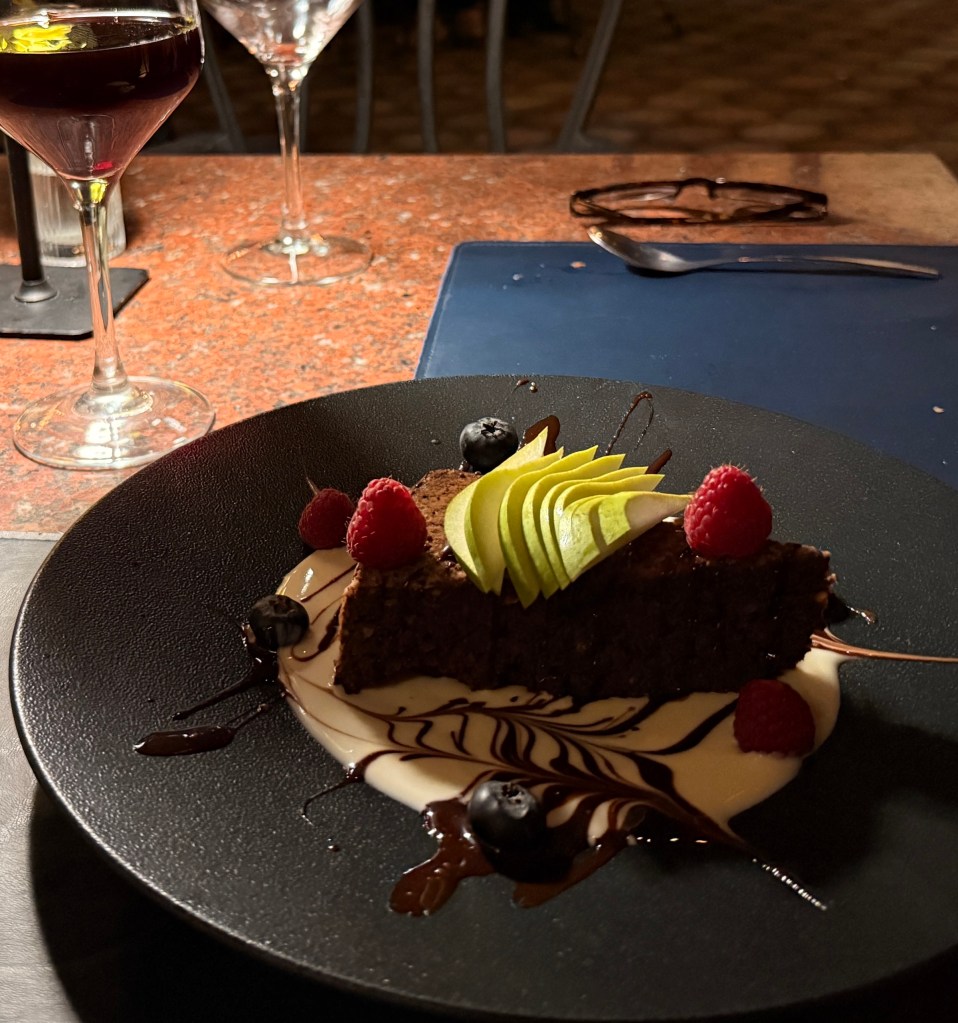
We’re feeling flush so we add a bit of good cognac to top off a fine last evening in quaint Valladolid. And we’re lucky that Mexico gives us the opportunity to enjoy such a luxury at a reasonable cost.
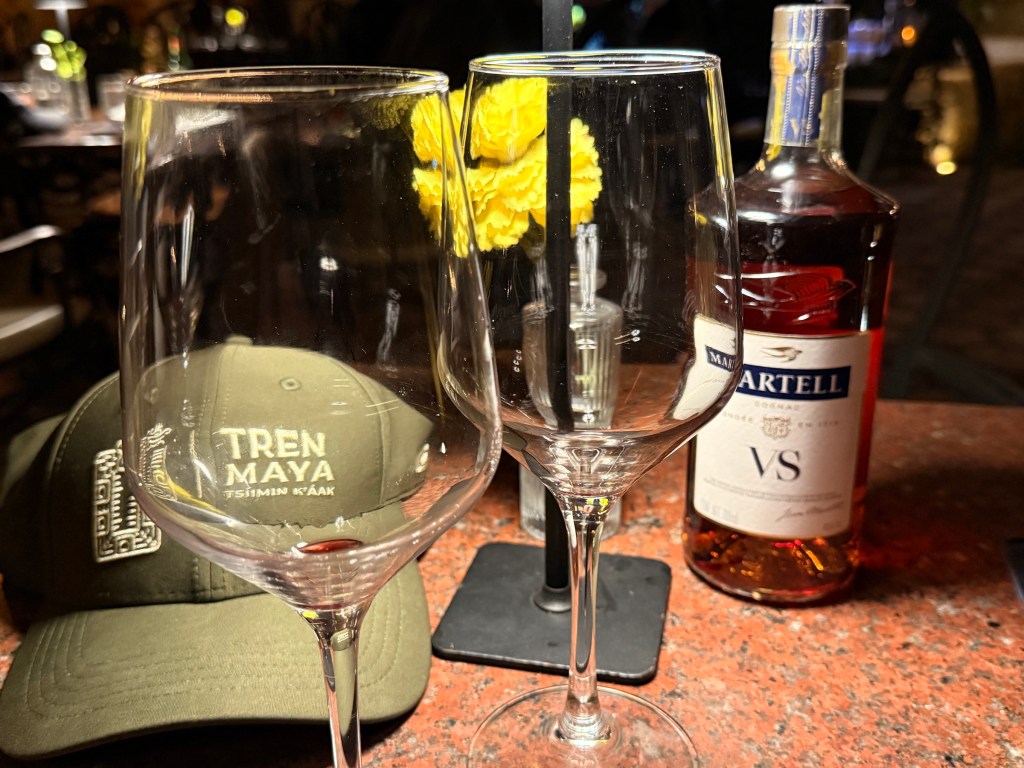
We’ll be leaving Valladolid on the morning train, and hope you’ll join us for our next stop, at Playa del Carmen. — PRW
 Wilkes/Kinsman dispatches
It seems like home for you and in some ways reminds me of the small villages, maybe south Italy, Sicily, hidden hotels and simple outdoor places to eat that are just great!
I did spot the chocolate cake with two forks and two glasses of red wine..I could do that!
♥️
LikeLike