Rotterdam, Netherlands

October 7 – 11, 2024
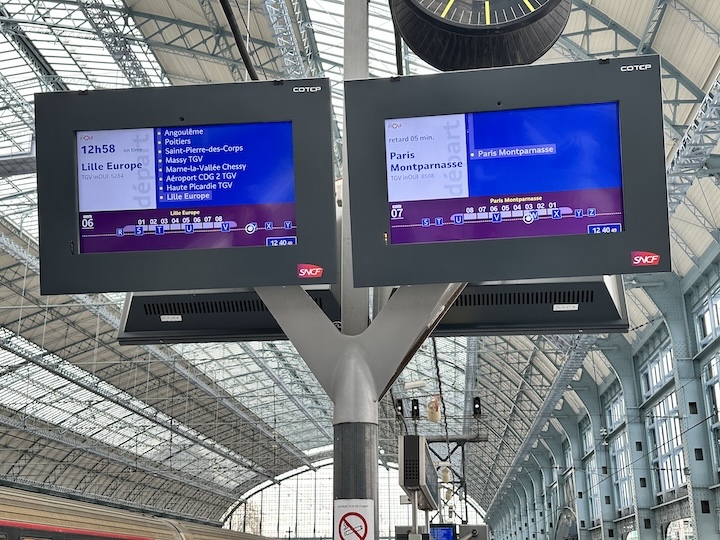
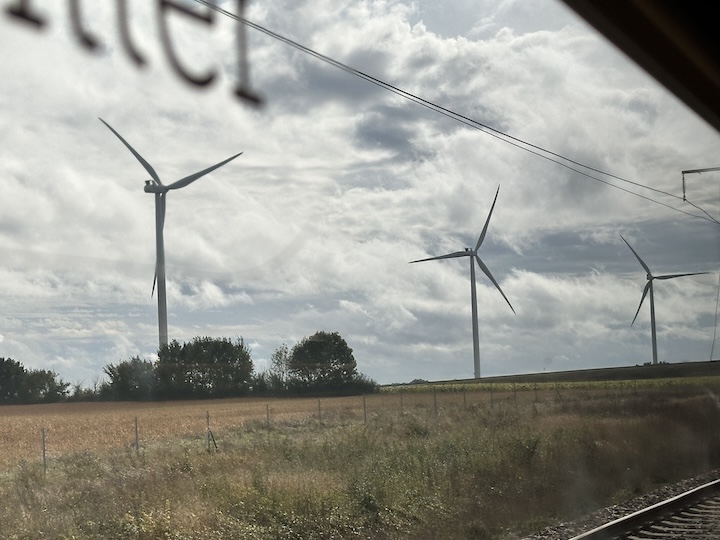
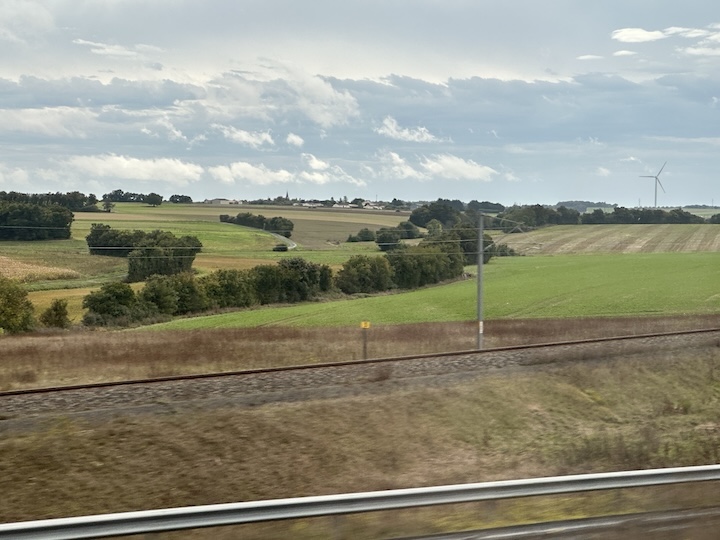
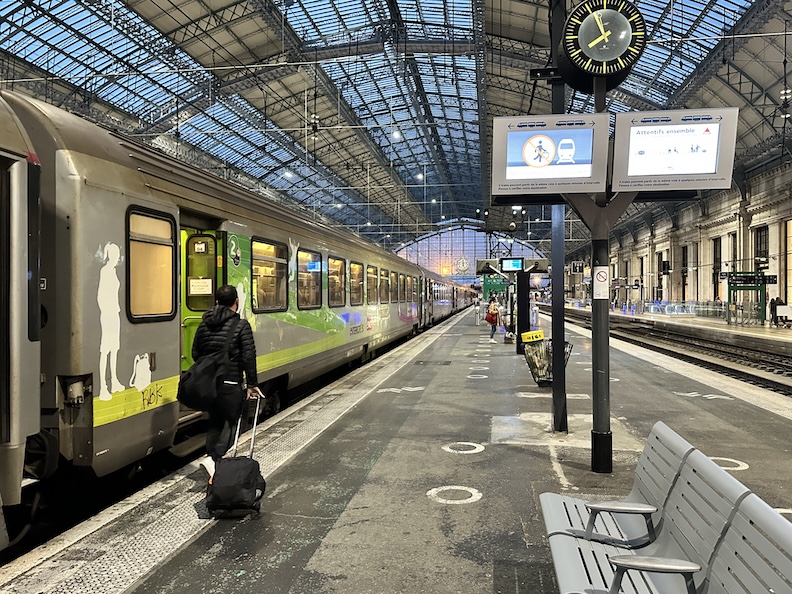
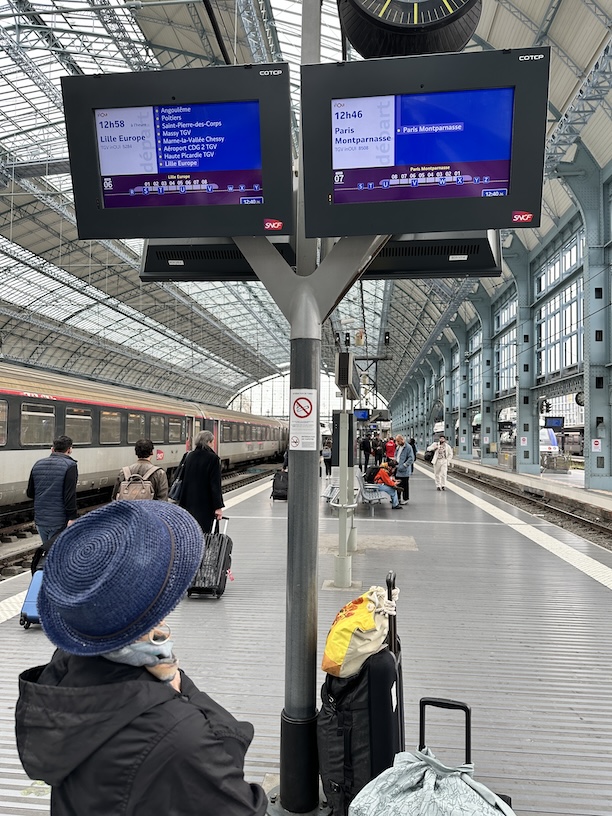
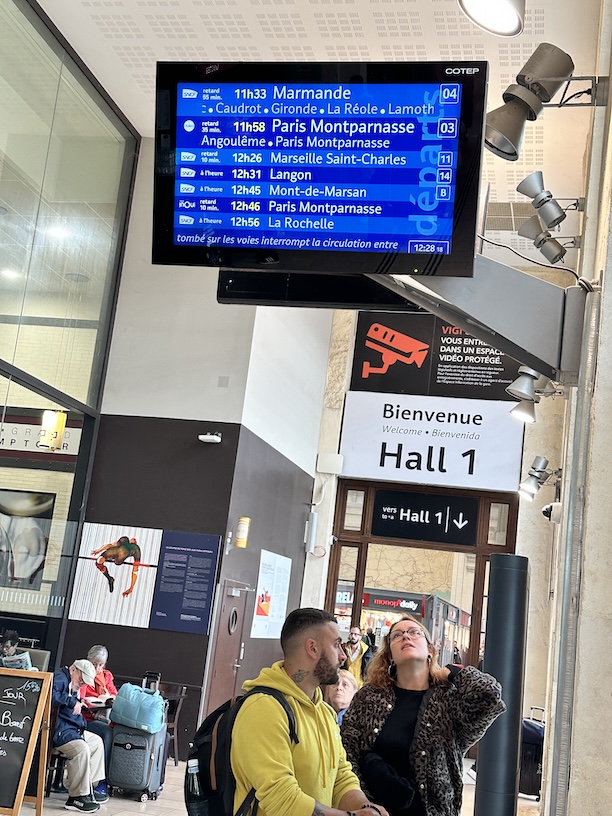
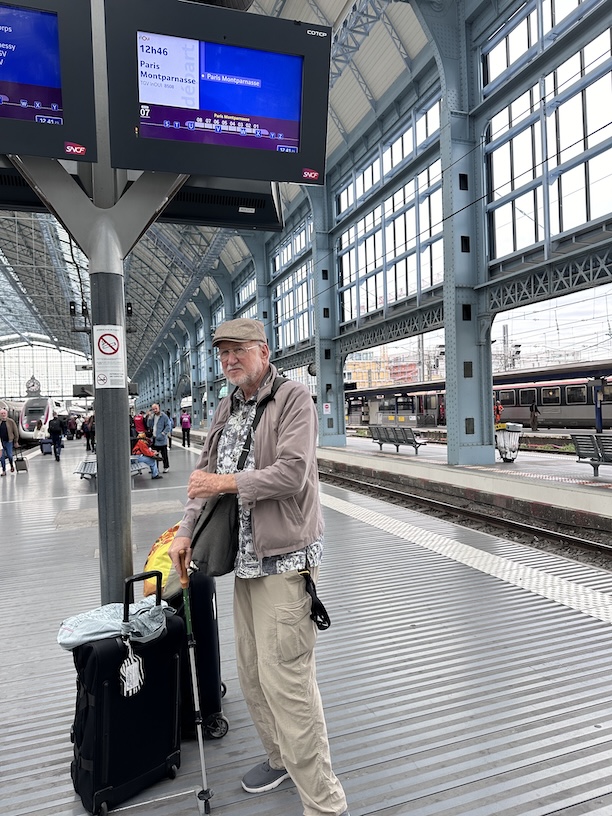
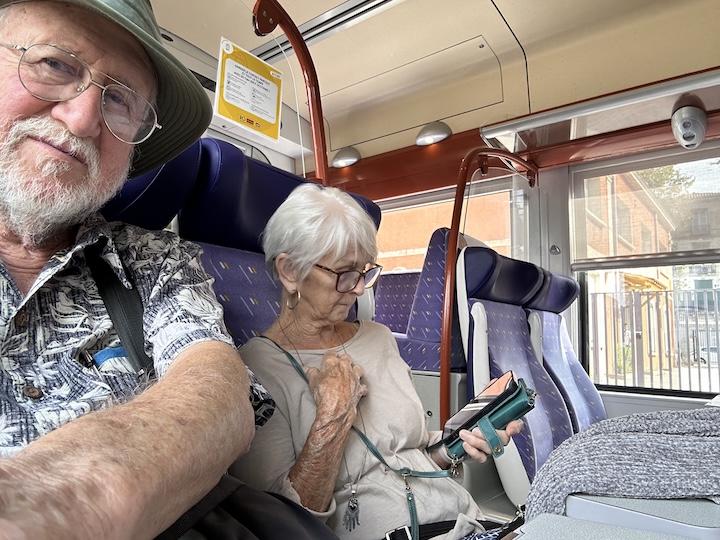
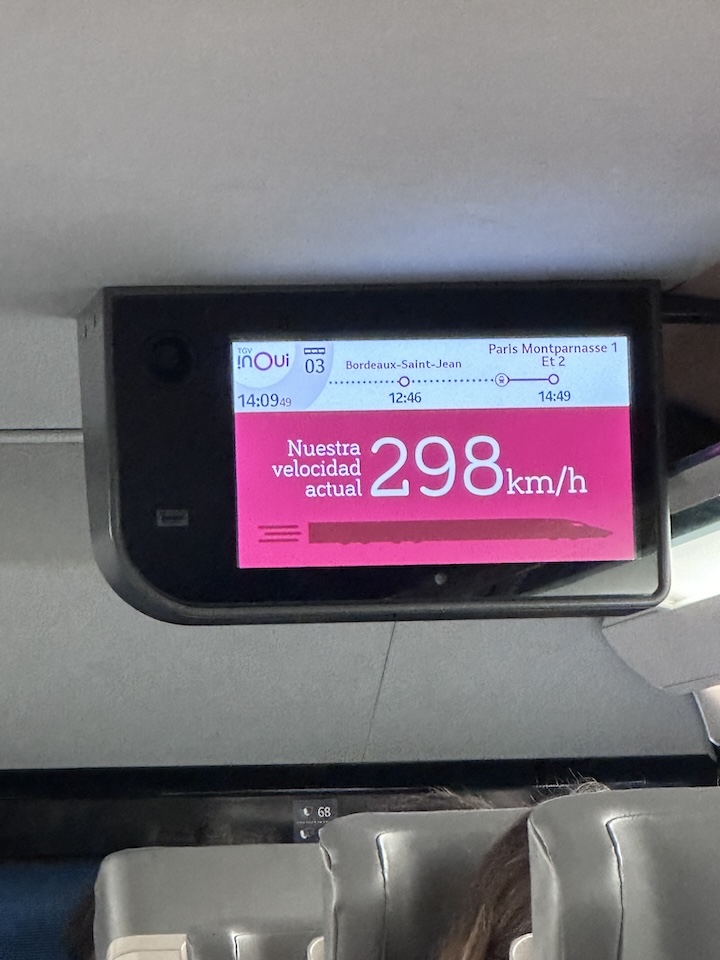
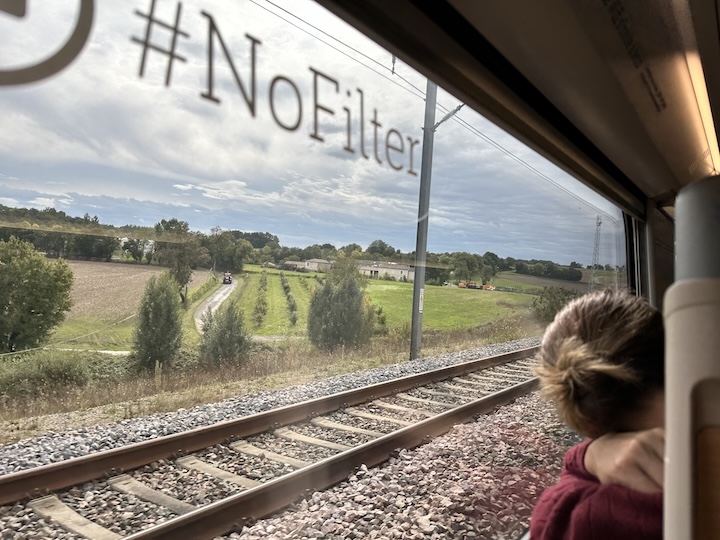
Alas it’s time to leave Bordeaux. One last check of the departure board shows our train heading for the Montparnasse station in Paris is waiting on track number 7 and soon to depart. We stash our bags and find our seats for a fine ride north, with a last look at the fertile lands of southern France just outside our large window. It’s a picturesque ride at 298 km/h (185 mph) on the smooth TGV system, and we can relax instead of driving.
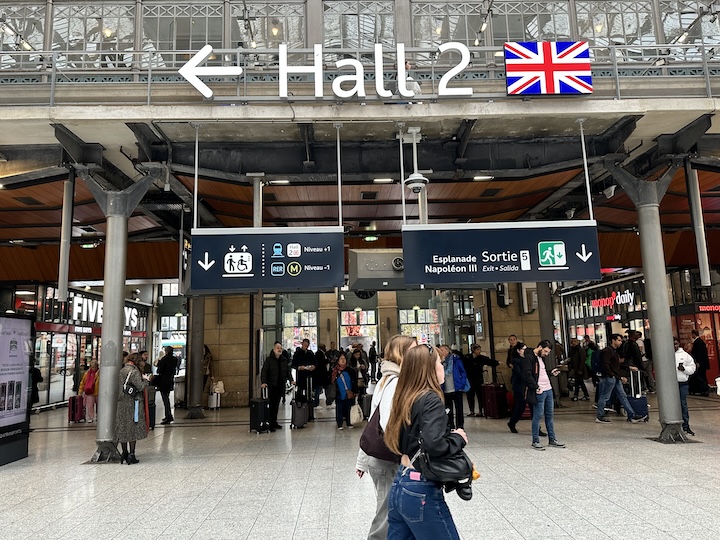
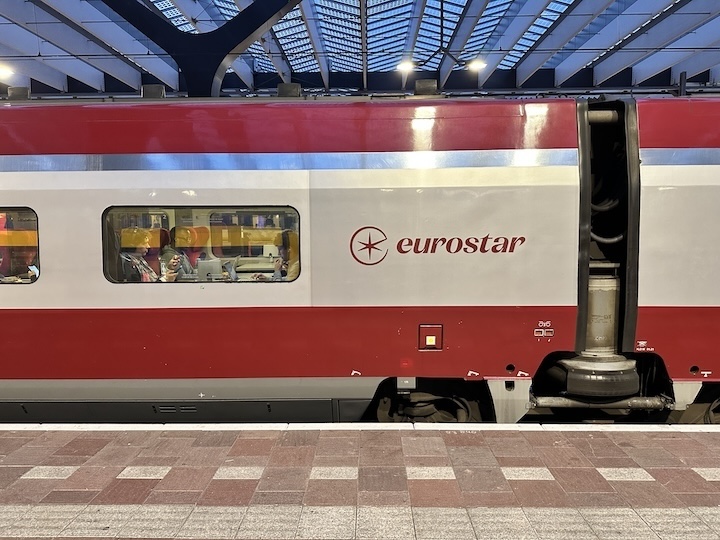
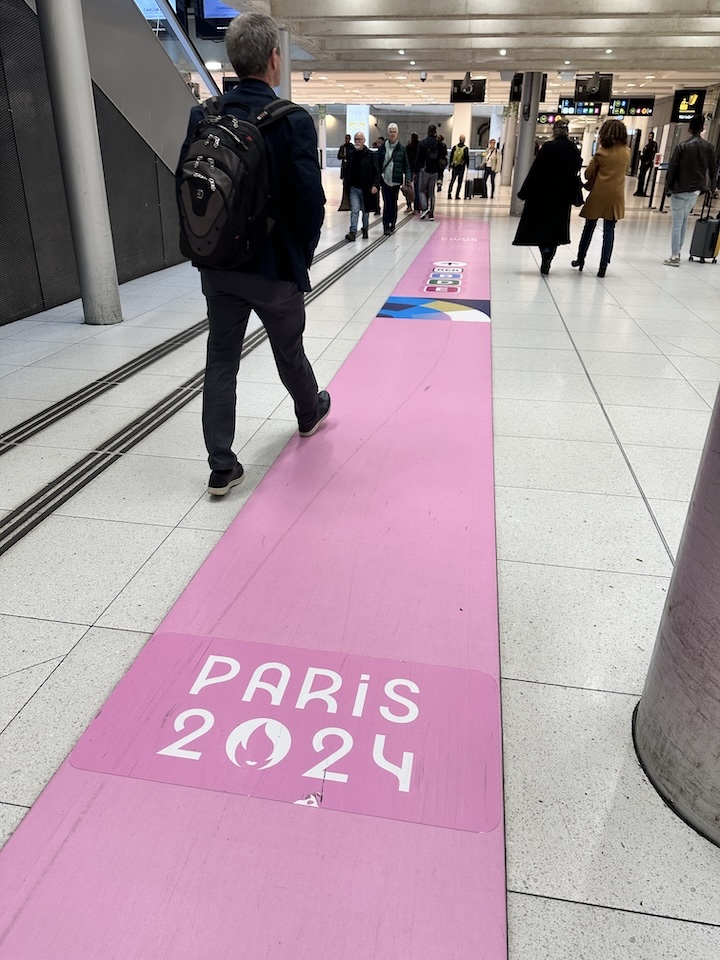
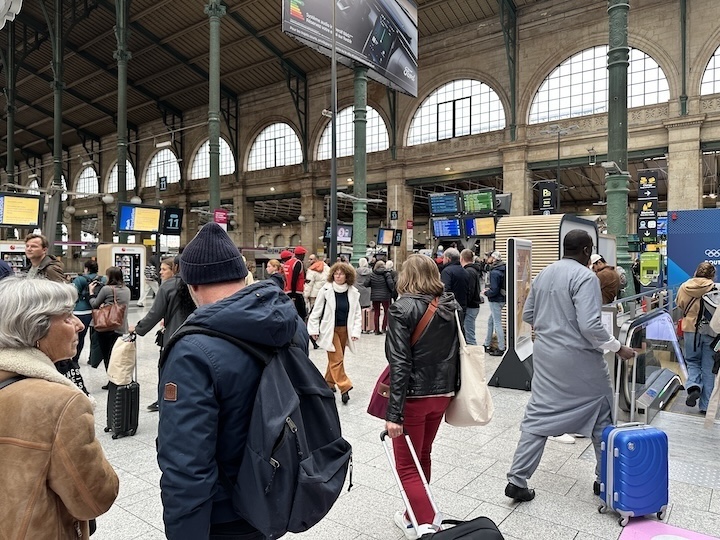
We arrive in Paris, where the pink carpet is out for the 2024 Olympics. And there are large signs in the station for Hall 2, featuring a prominent Union Jack, so Brits can easily find the Eurostar for a quick trip home through the ‘Chunnel,’ that’s buried deep beneath the English Channel. Or ‘La Marche,’ as the French call it.
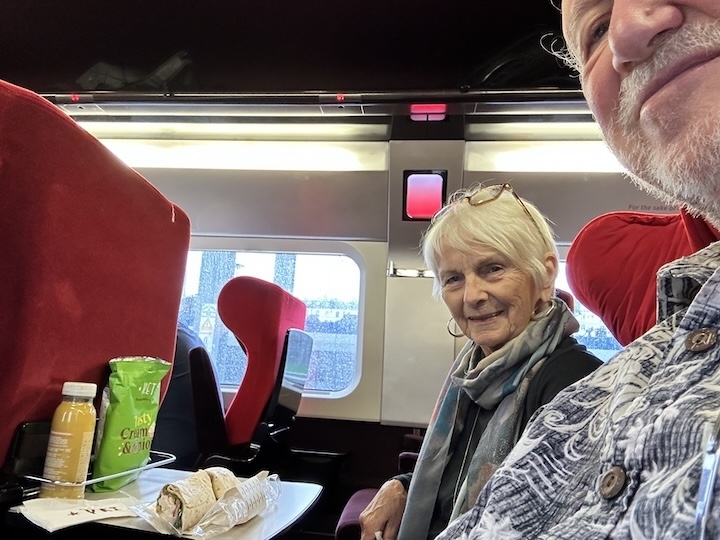
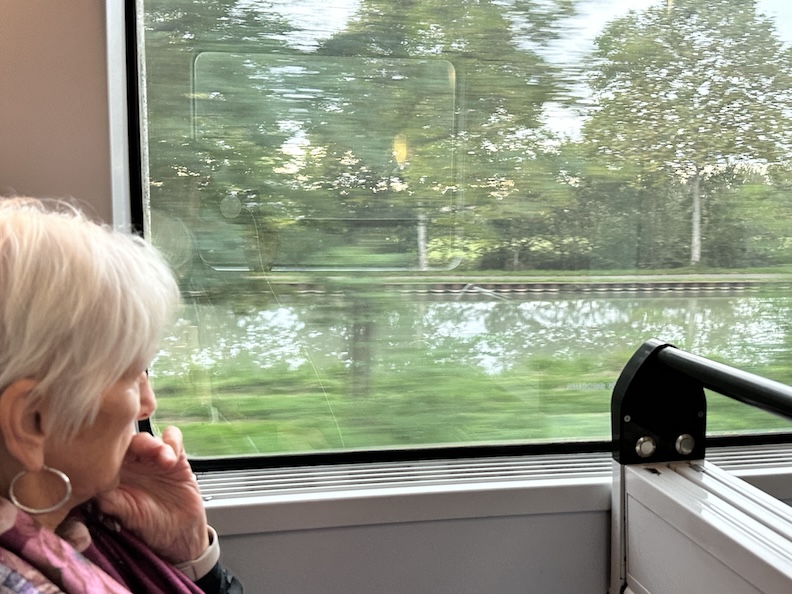
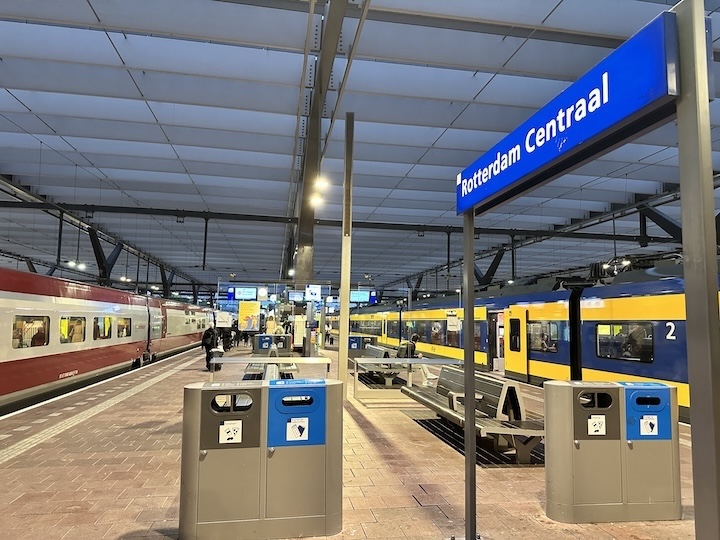
At Brussels our train veers north, for a comfortable ride through the fertile lands of Belgium and the southern Netherlands, to our stop at Rotterdam Centraal. It’s a sweet and easy way to travel, without the cost and hassle of a car. 
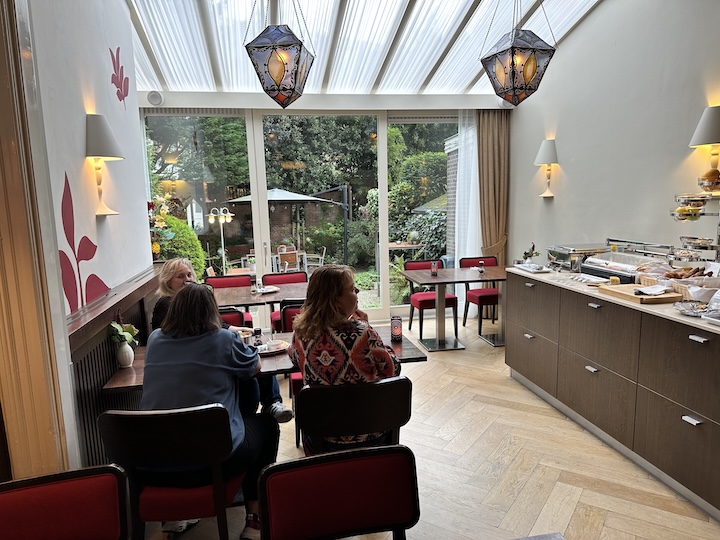
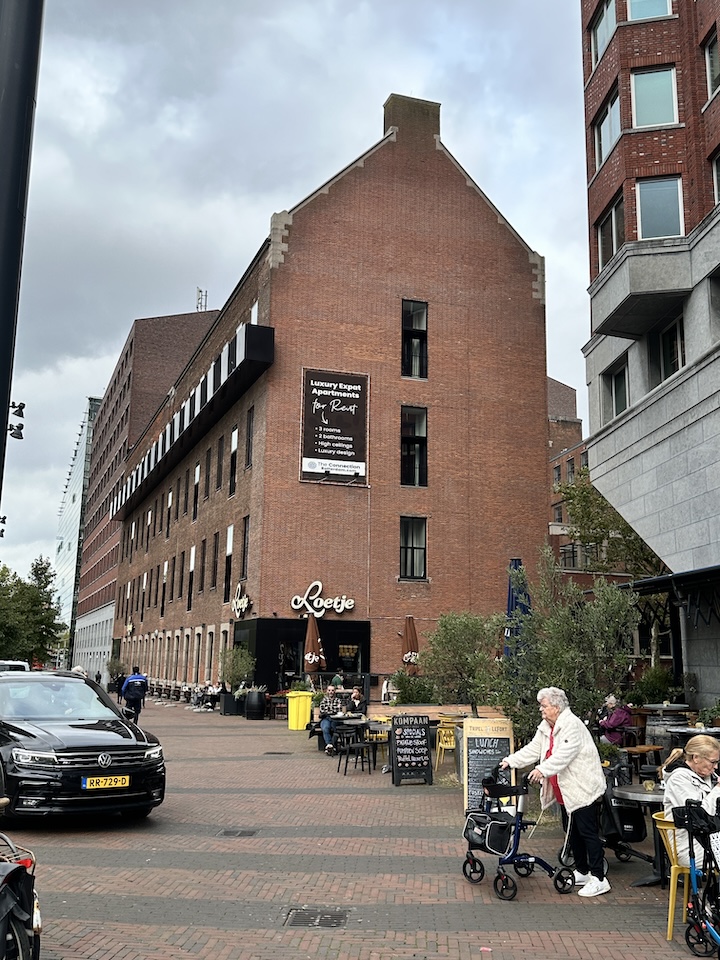
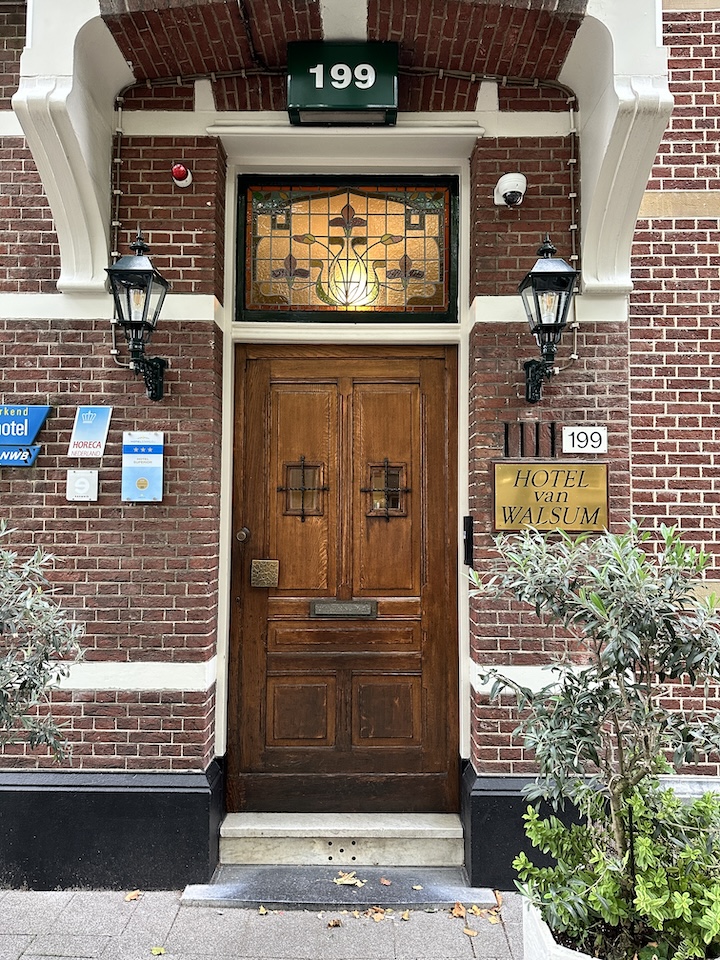
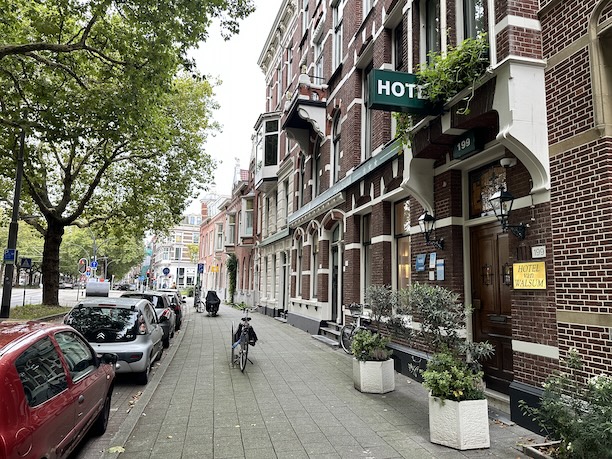
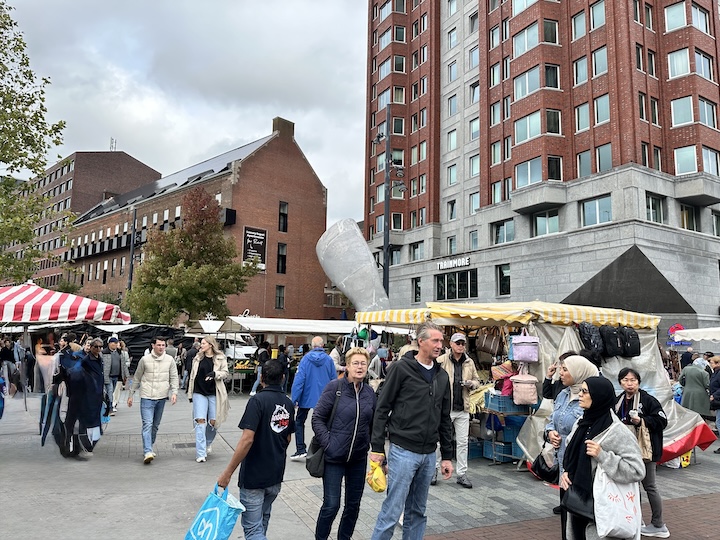
Carolyn found us good lodgings at the Hotel van Walsum. It’s a cosy place on a quiet street, where we can stash ourselves for a few days on our first visit to this very modern city. And there’s a convenient tram line running on the street outside the front door.
But why are we in Rotterdam? 

First of all, our Dutch friend Nathaly, who is an administrator in the Dutch college system, has mentioned Rotterdam as an interesting alternative to famous – and heavily overcrowded – Amsterdam. We’ve enjoyed Amsterdam several times in the past, and it has a number of outstanding sites worth seeing along those many beautiful canals. There are four excellent museums around the large plaza called the Museumplein. It’s also just a pleasure to walk those narrow medieval streets, passing all those charming narrow houses. But it’s time we saw a different part of the country and experienced a few other things.

And second of all, there’s a Holland America Lines (HAL) ship named the Rotterdam that will be departing from here for an Atlantic crossing. And we’ll take that option back to the States to unwind after a good long European wander. And get this, the entire trip, 16 nights aboard with full food, lodging, and entertainment costs us less than the mid-summer ‘economy’ flight we took to Europe in the first place. It’s crazy, but that’s the way of the world these days. 

It’s actually called a ‘Repositioning’ ship, as numerous cruise lines move dozens of ships from the Mediterranean summer trade to wintertime routes in the warm Caribbean. Apparently there are very few people who actually want to spend a couple of weeks crossing the Atlantic and the cruise lines need to fill all those cabins. So we’re happy to help them buy the fuel they need for the crossing, and they give us a nice discount for our efforts. (Check out Vacationstogo.com for details.)

The modern city of Rotterdam has become quite an impressive architectural event, after its near destruction during the Second World War. And it all began as a tiny settlement around the year 950 along a muddy stream called the Rotte, in the vast delta where the mighty Rhine meets the Meuse river and they both empty into the North Sea. In the 1260s locals built a dam here as a flood control measure, and a canal was built in the 1350s to connect the area to several larger towns, providing port access to England and Germany. Among centuries of enterprise, the port also became part of the lucrative Atlantic Slave Trade, until that practice was abolished in 1814 by the new United Netherlands

Yet the city continued to prosper and grow until its future changed dramatically at the beginning of the Second World War. Hitler expected that an invasion of the Netherlands in 1940 would be easy, but the German Army was initially met with strong resistance. Then the Luftwaffe conducted a massive terrorist bombing of Rotterdam on May 14, 1940, that largely destroyed the entire medieval center of the city. The Germans threatened to do the same to other important cities in the Netherlands, and that’s when the Dutch surrendered to the Third Reich.  
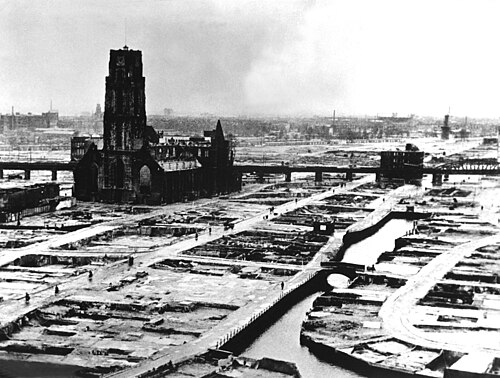
After the war, the ruins of Rotterdam emerged as a blank slate for urban designers, engineers, and architects to create a new city of the future. Today’s dynamic city is the result of 80 years of Dutch ingenuity and post-war rebuilding, and from 1962 to 2004 the sprawling port of Rotterdam was the world’s busiest port by annual cargo tonnage. 

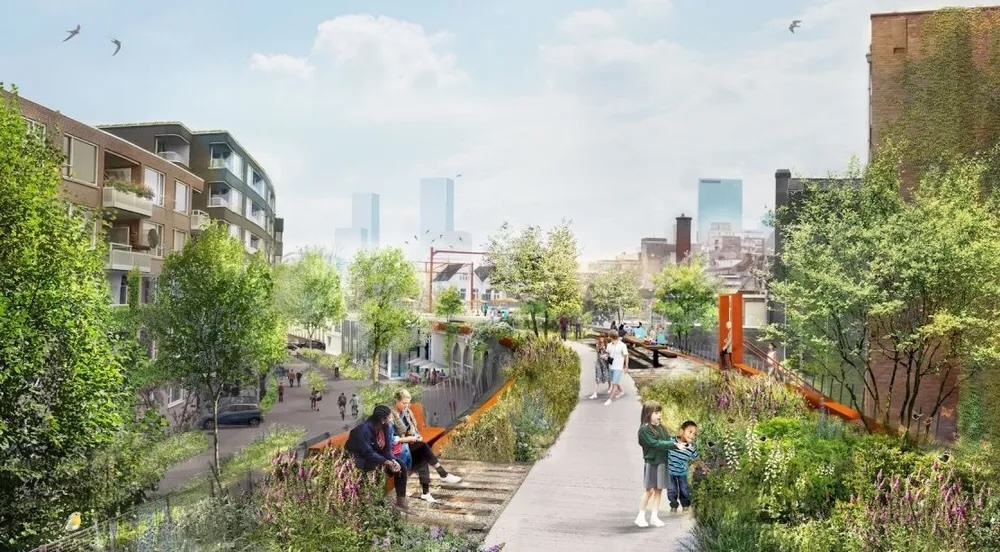
Today it remains the largest seaport in Europe, with one of the world’s most heavily automated cargo handling systems; and the current city administration is working to dramatically reduce the area’s carbon footprint with large renewable energy investments, more efficient housing and transportation, green spaces, and walkways.
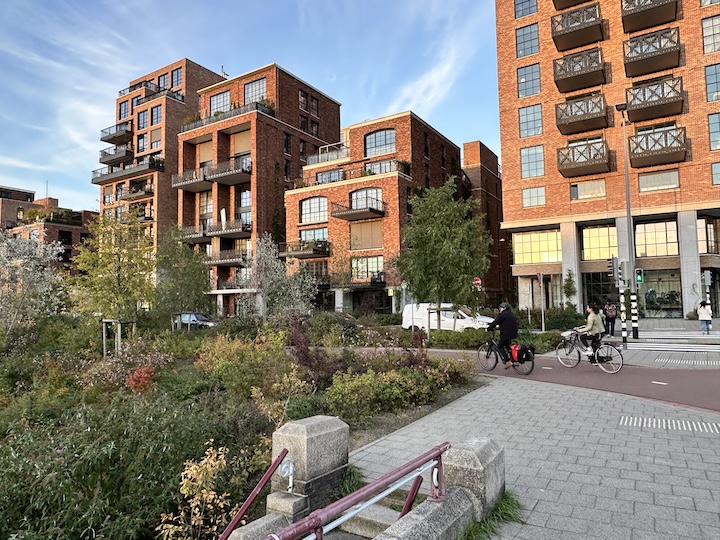
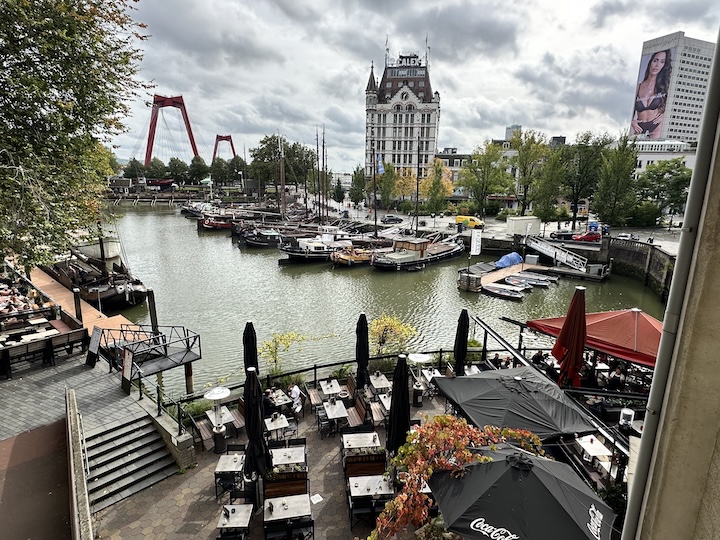
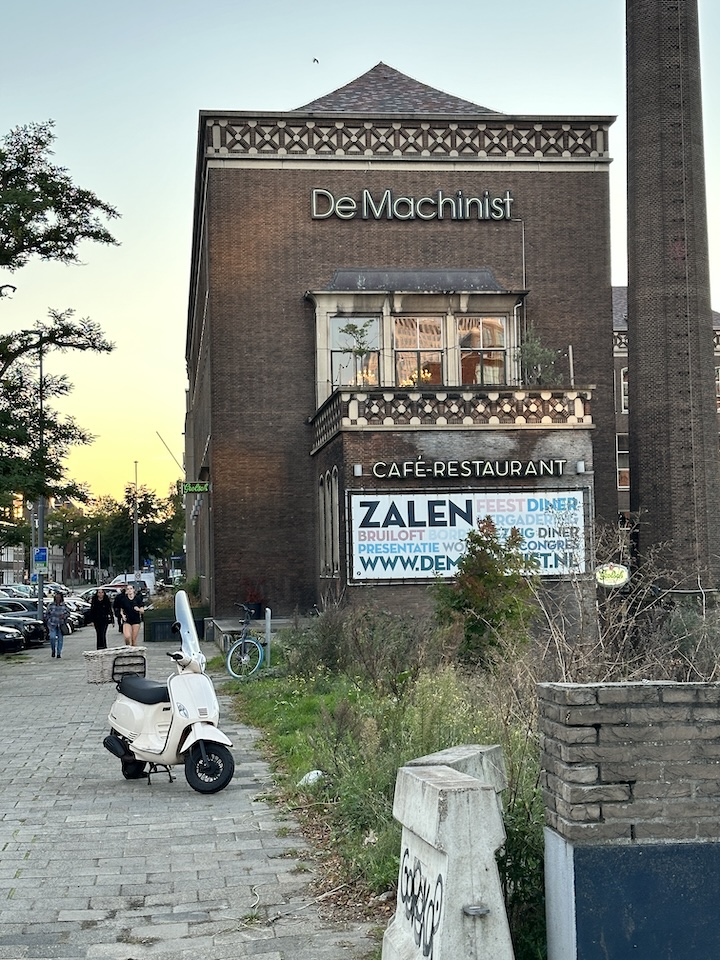
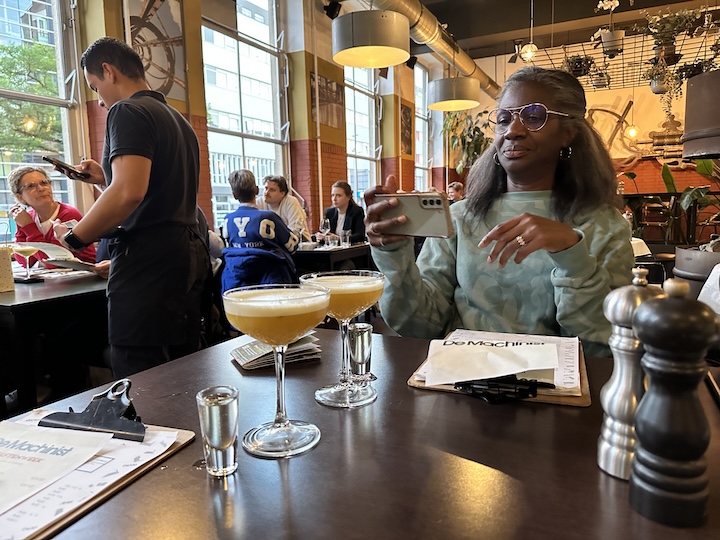
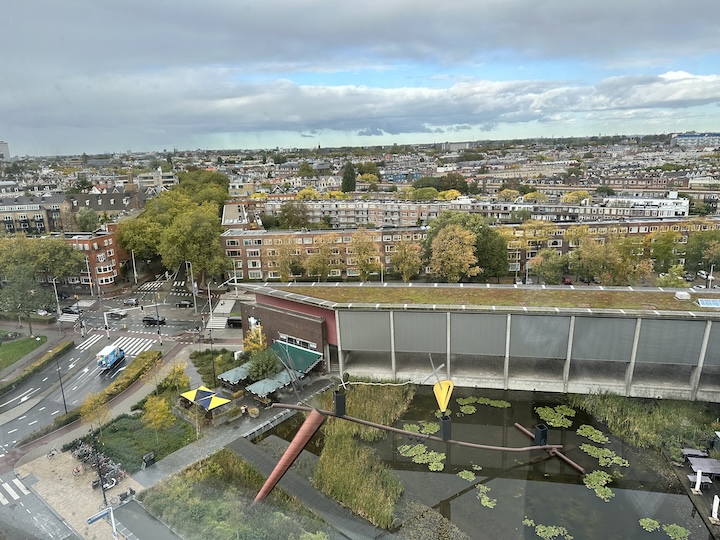
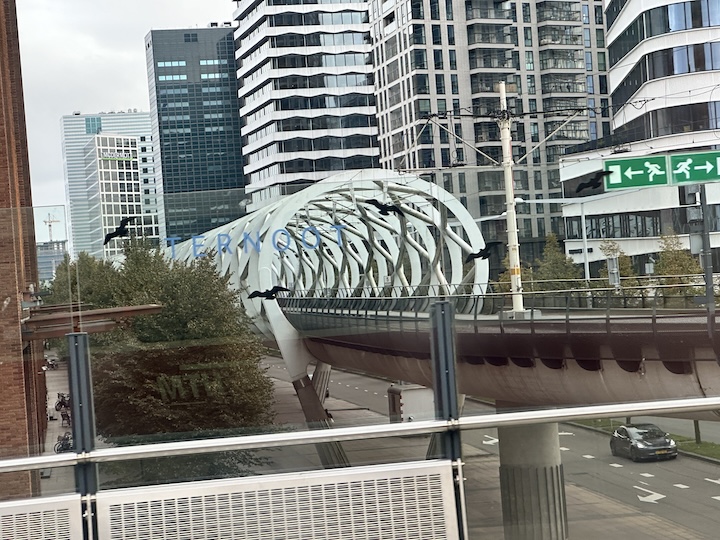
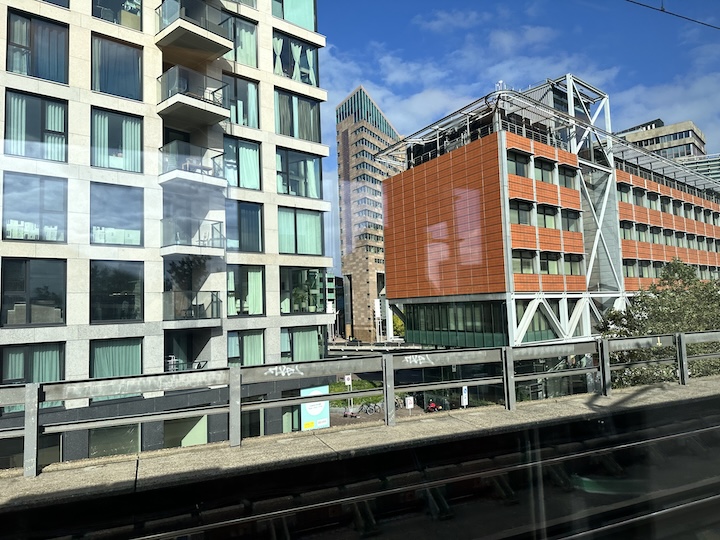
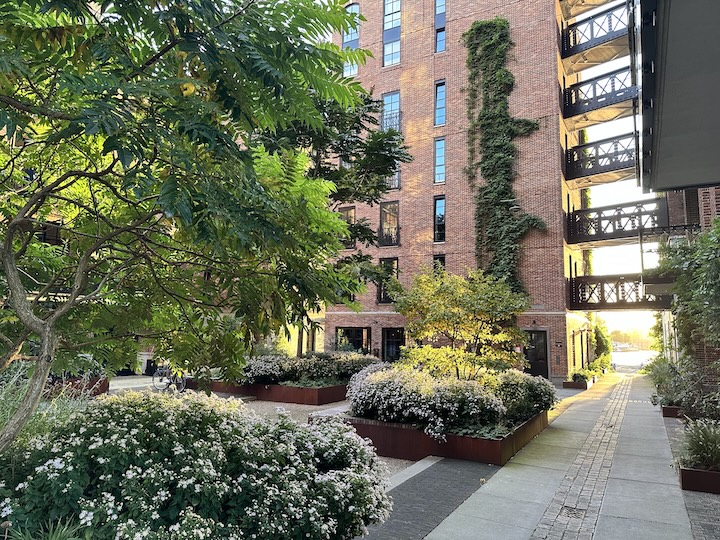
Today there are plenty of nice post-war brick buildings in Rotterdam, many of them influenced by the modernists of the Bauhaus. And there’s a fair amount of boring modernish concrete and glass around as well. But there are some very rad places recently added to the mix, and our friend Nathaly showed us around some of the better ones overlooking the city’s pretty waterways and marinas. And we also happen to be on our way to dinner on a nice evening at De Machinist, an old trade school that is now a very atmospheric dining hall. It was a fine way to end the day.
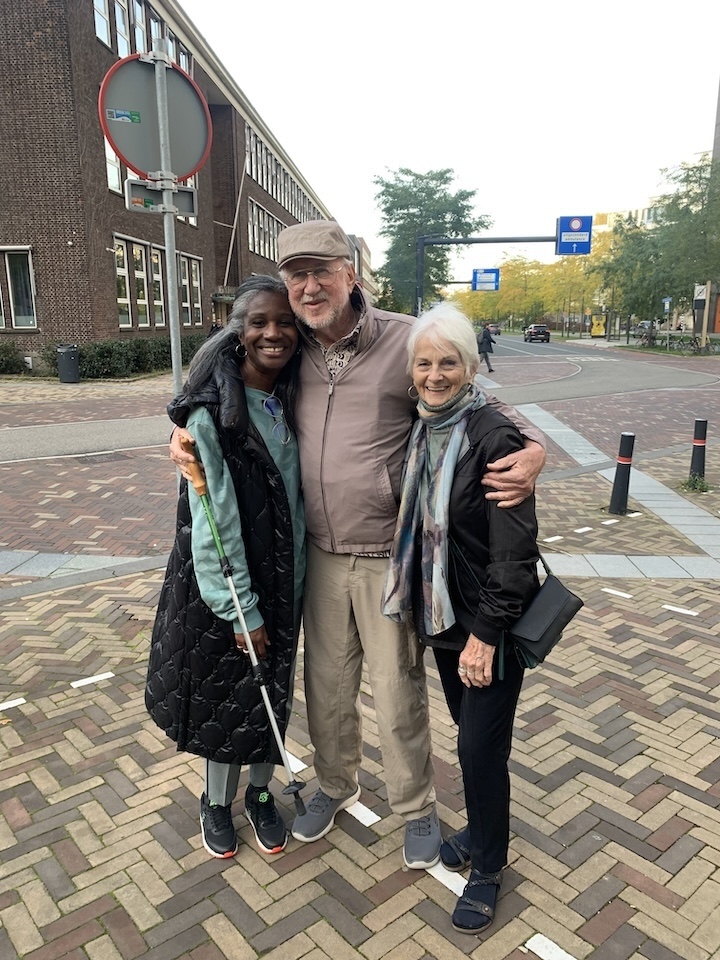
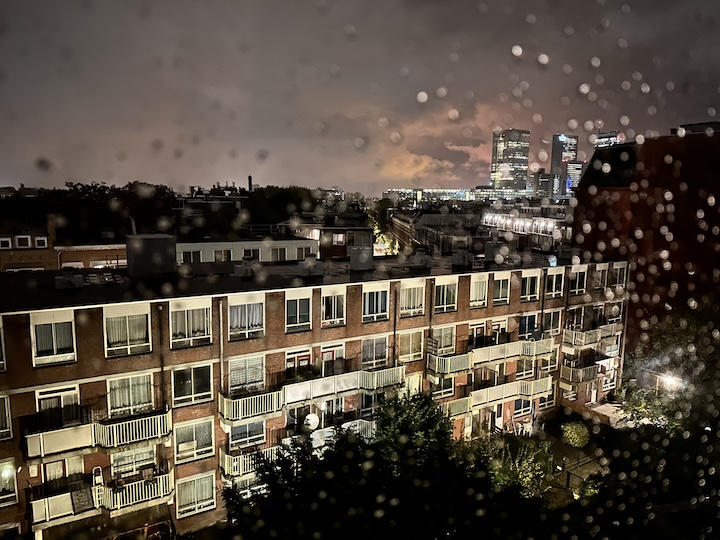
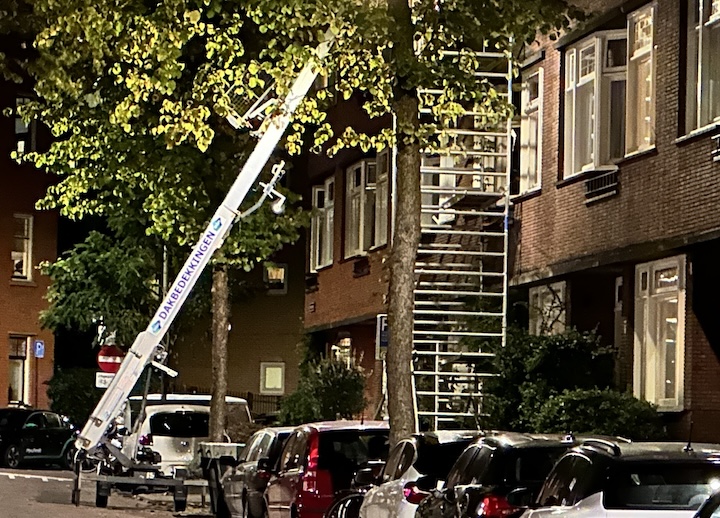
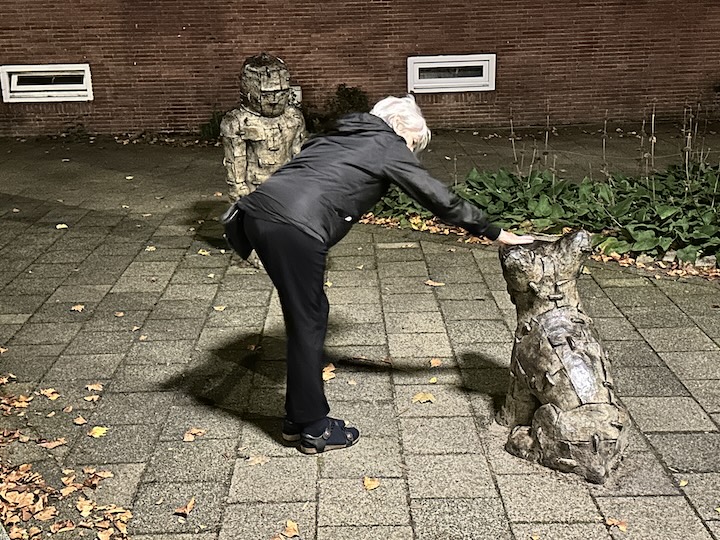
We parted company with Nathaly after dinner and walked back to our hotel through the quiet nighttime streets of Rotterdam. There were interesting encounters along the way, including a dog statue for Carolyn to pet, and watching as someone’s furniture gets hoisted into their new apartment. The elevators and stairs can be too small to accommodate large items, and the windows are usually designed for this kind of delivery. 
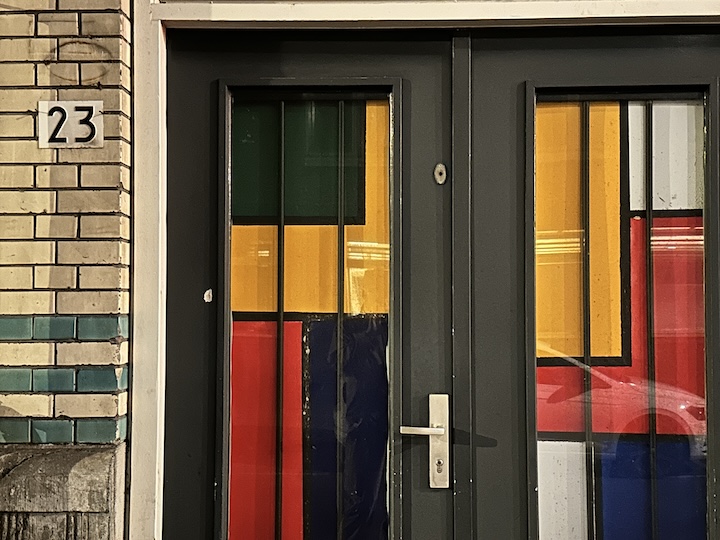
We passed a beautiful Matisse-influenced doorway, and of course there were some of those scandalous neon-lit ‘Santa with an adult toy’ decorations that the city has become known for.  
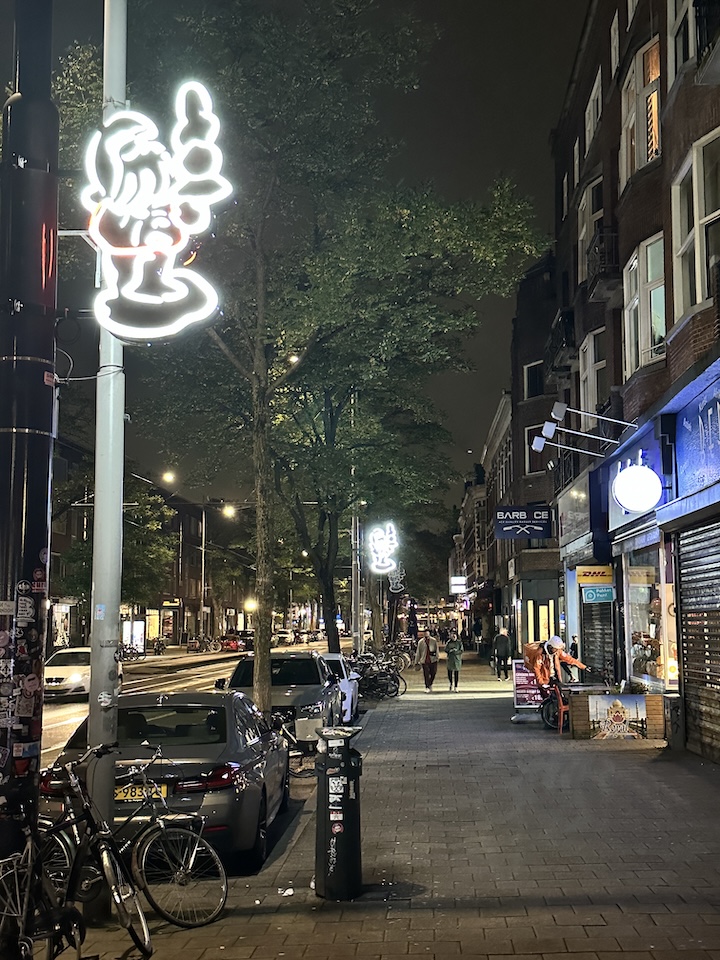
(More info: https://en.wikipedia.org/wiki/Santa_Claus_(sculpture))

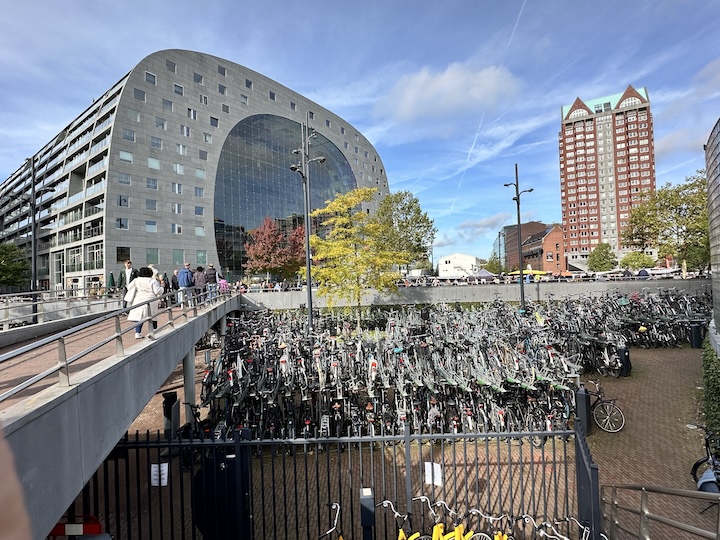
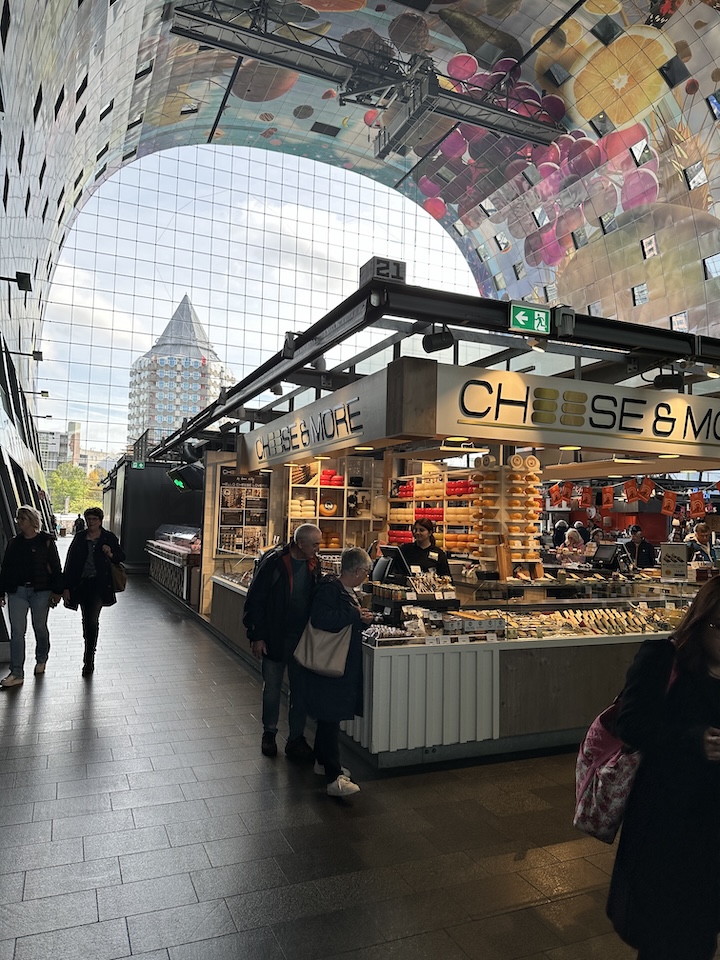
Among the newest and more radical multi-use architectural sites, the imposing Markthal is now one of those ‘must see’ places in Rotterdam. From the outside, this wonderfully oddball place resembles a massive crazy upside down magnet, like the small one I used to play with as a kid. The building has become an attraction in its own right, and we feel compelled to enter the place just to experience the food and whatever else there is inside.  
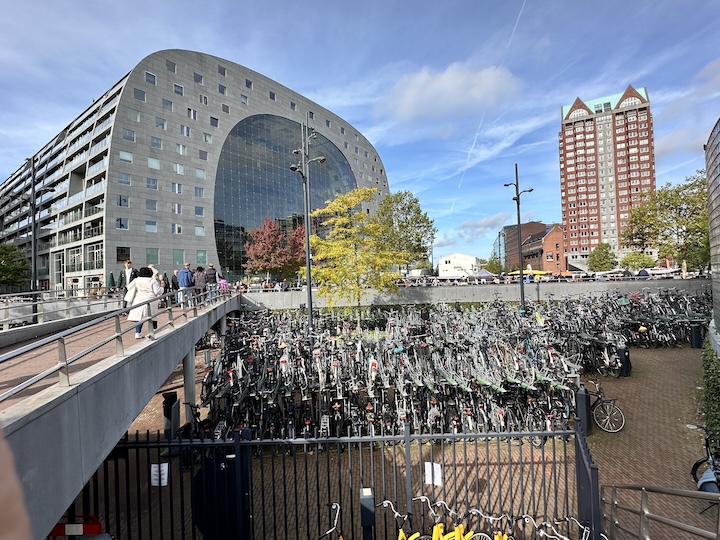
The city was looking to increase overall livability, and add more living space, in the central area around the busy Blaak tram station. Unusual ideas were presented, in typical Rotterdam form, by a variety of daring architectural firms. Among them was the young partnership of MVRDV who proposed a twist on the traditional design of two-parallel-apartment-blocks-with-a-central-space. So they flipped it upside down. And the main architect, Winy Maas, also asked in a 2014 NYT article, “Why don’t we make it almost like a cathedral where you proudly show food?” 
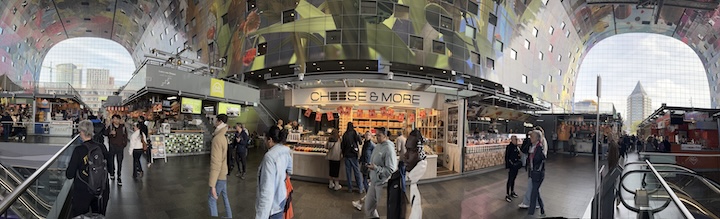
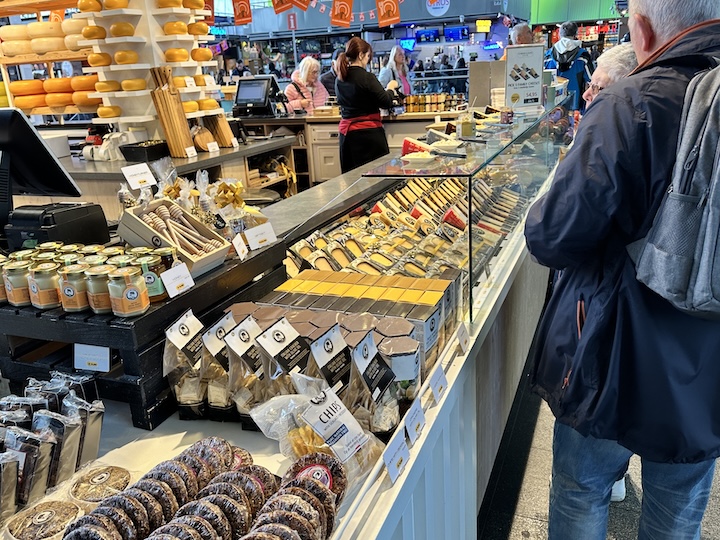
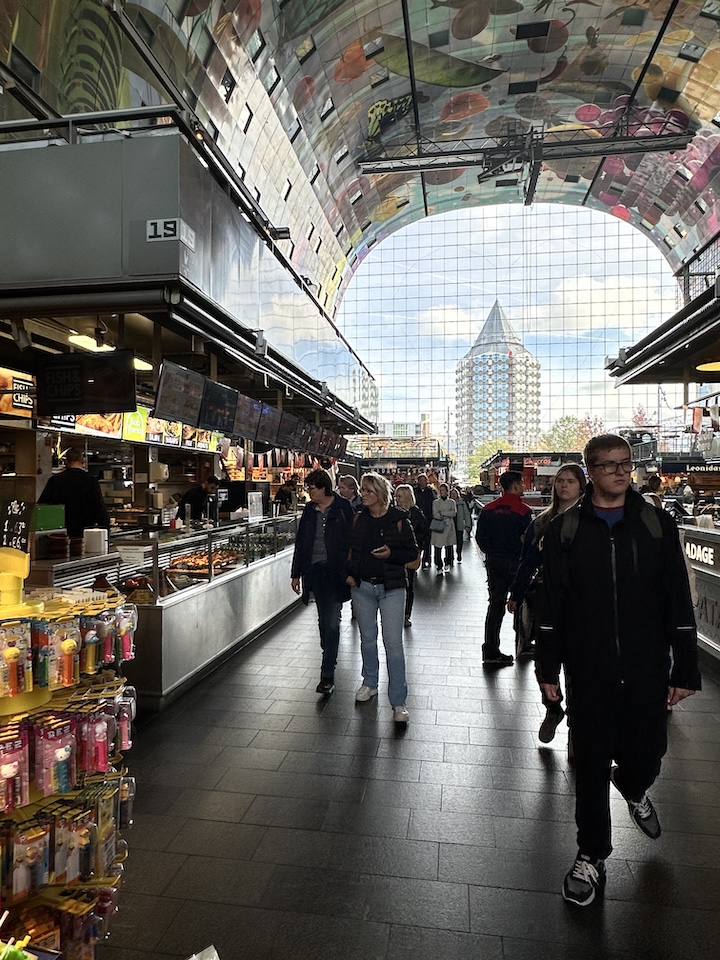
So now we’re wandering through a strange apartment building hovering over an astounding array of the finest food the Netherlands has to offer. At the ground level, which is the size of an NFL football field, there are about 100 food stalls, 20 shops, eight restaurants, a supermarket and escalators to underground parking. At this point we’re really wishing we had rented a local apartment for a month so we could take armloads of this luscious stuff back to enjoy in our own kitchen. 

The walls around us are dotted with windows from about half the 228 apartments in this 12-story building, and many of the penthouses in the ceiling have windows in their floors. It might seem a little crazy, but all the amazing food on offer is far more distracting than any peeping residents overhead. Natalie de Vries, the architectural partner responsible for the amusing food-flung ceiling, managed to integrate those windows in the design. In a 2020 interview with Madam Architect magazine she shared her philosophy of running a good office at MVRDV, “We make sure that people here are happy. It’s not about only working hard; we also have some fun.” And that approach seems apparent in the delightful ceiling design of the Markthall.
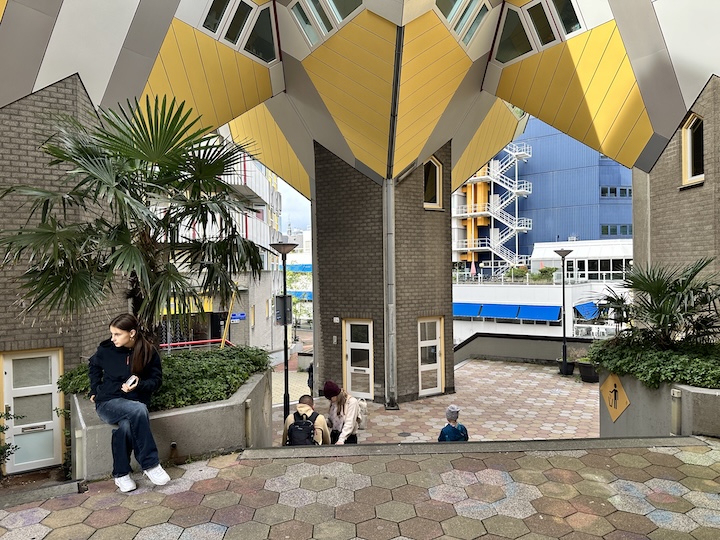
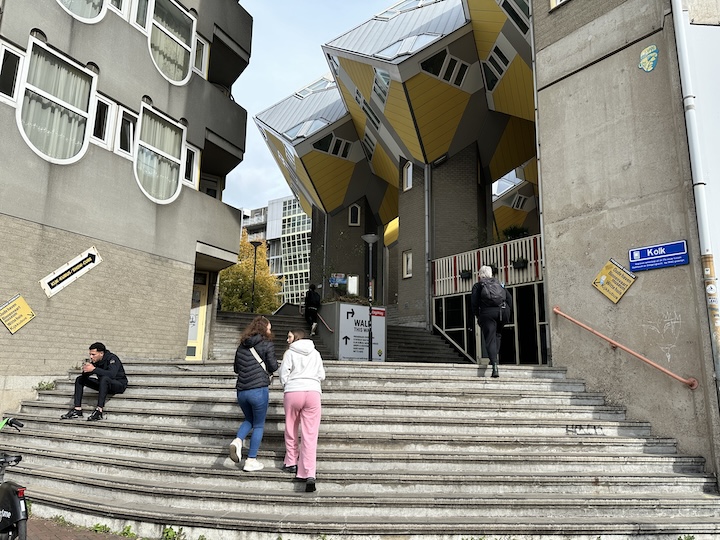
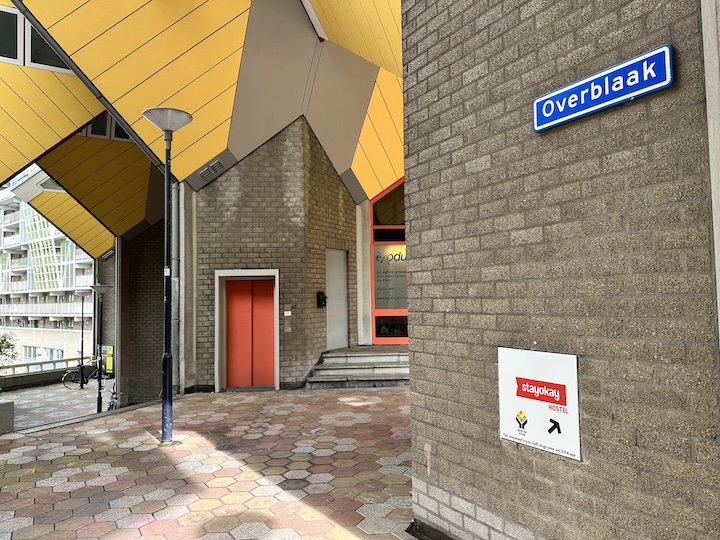
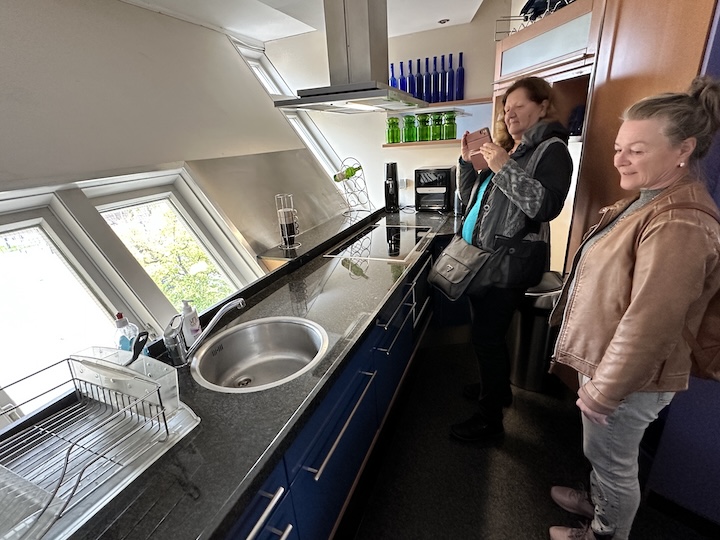
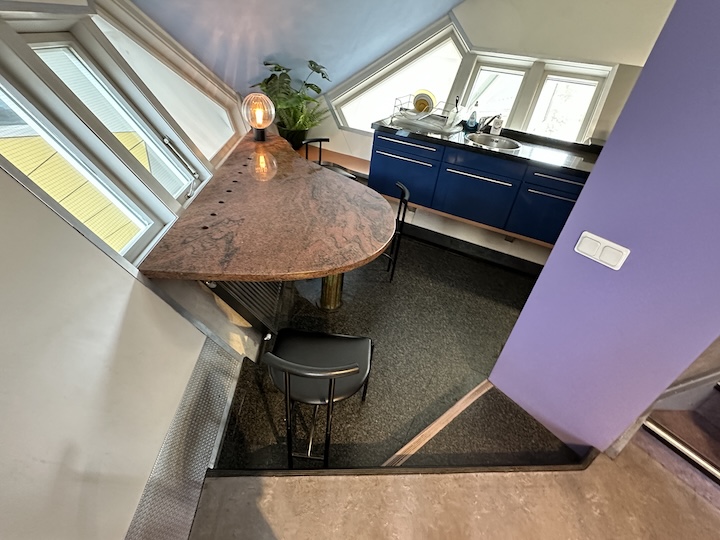
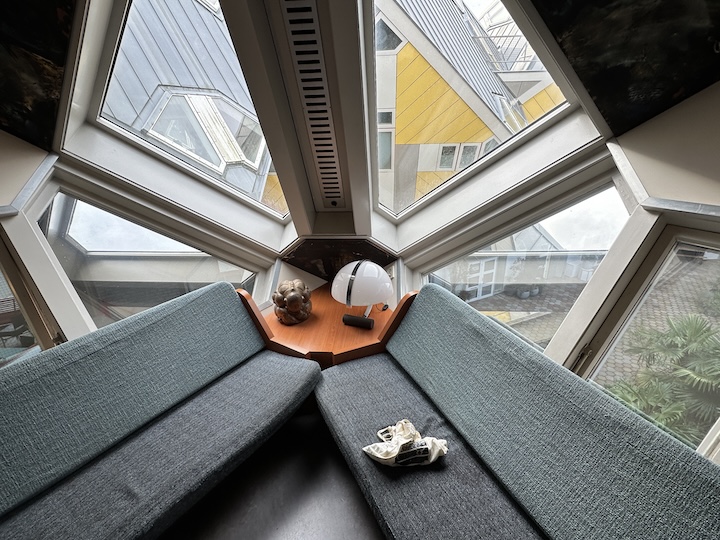
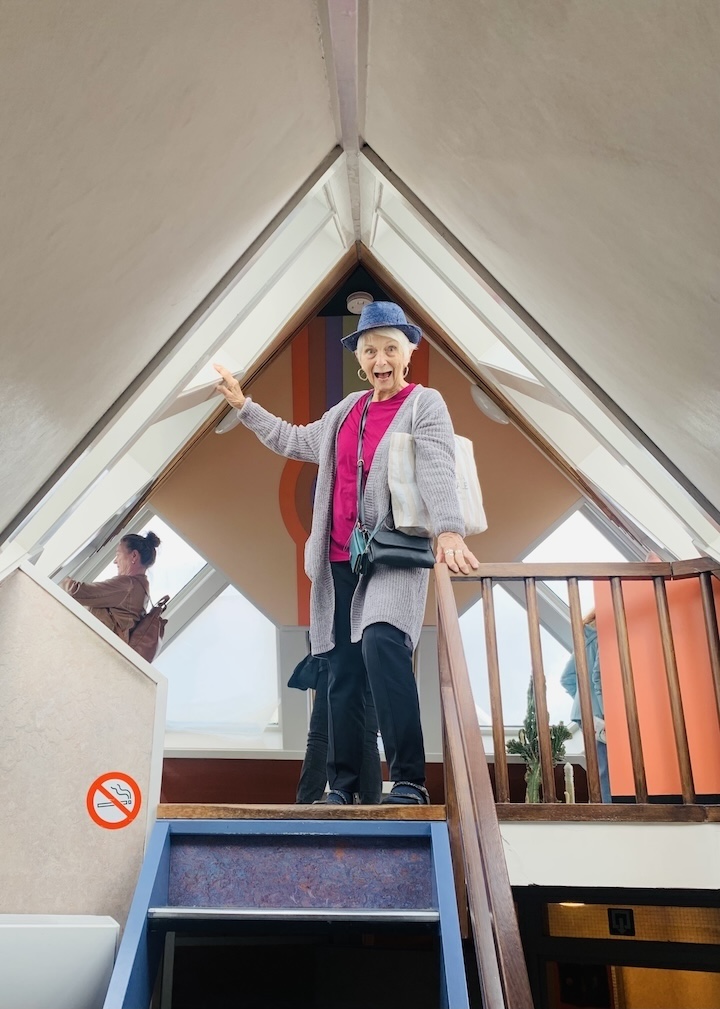
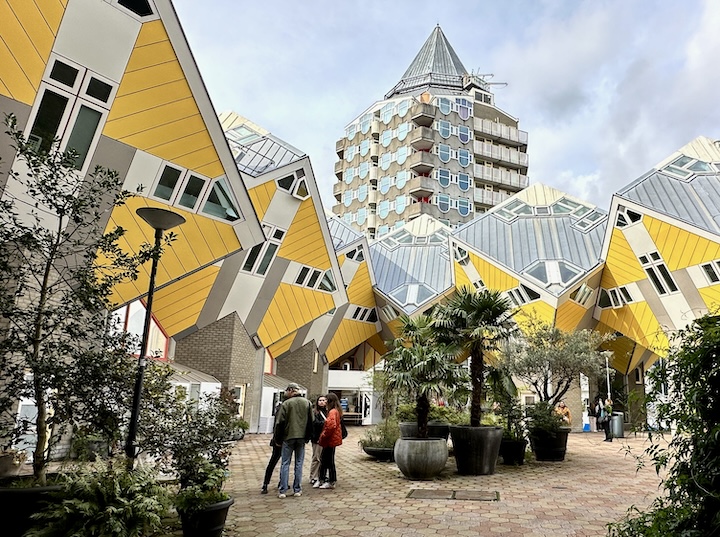
And just across the Blaak plein, a bright yellow mid-air housing development utilizes that leftover space above the streetscape, tram station, and plaza for a different sort of housing adventure. It’s called the Kubuswoningen, or Cube Houses, and the central idea of Piet Blom, the architect, is all about “living as an urban roof.” 
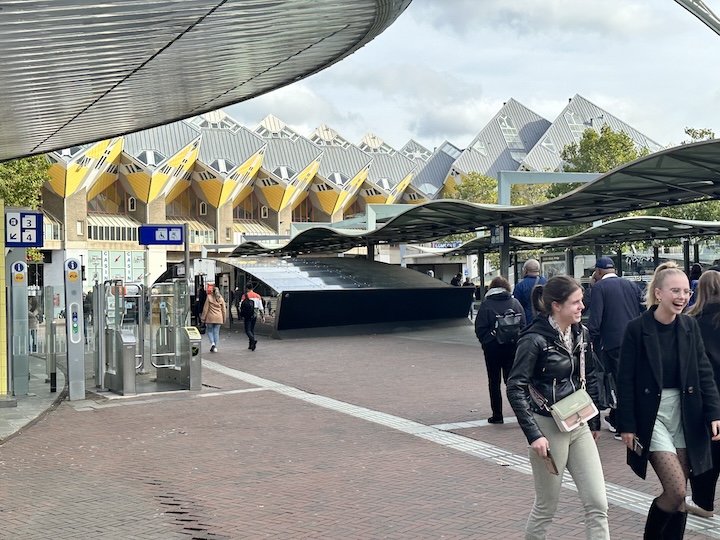
So this part of town got a big shot of postmodernism and a jolt of color to liven things up. And now it’s a fun environment that attracts quite a few people, like butterflies to a flower garden.  

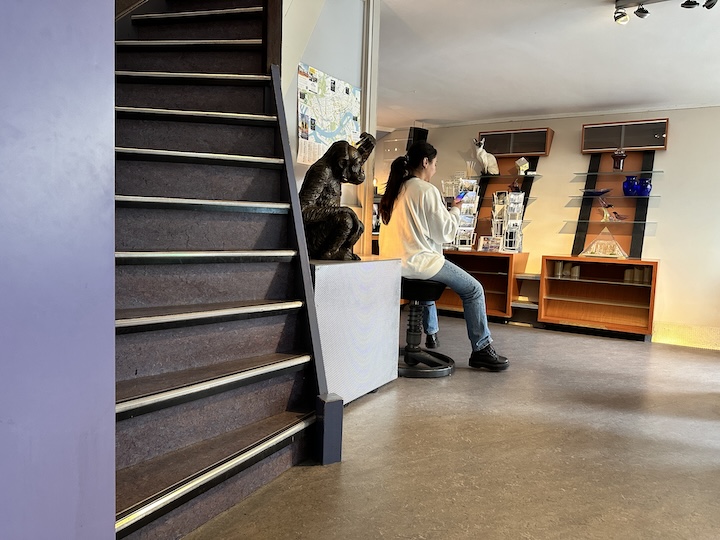
There have been plenty of curious tourists here since the Cube Houses were built, and one of the residents currently makes a living by charging nosy folks like us to drop in, or climb in, and take a look around. And it’s certainly worth the €3 entry fee to attempt to feel how these off-kilter spaces really work. 

As far as actually living in one of these crazy ‘fun-houses’, it might take a bit of adjustment. For me, at least. And it would require a more minimalist life than many of us might prefer. I’m not really a legitimate hoarder, but there’s no way I could fit all my books in one of these places. And for a dinner party of more than about two, we’d have to find a nearby restaurant. 
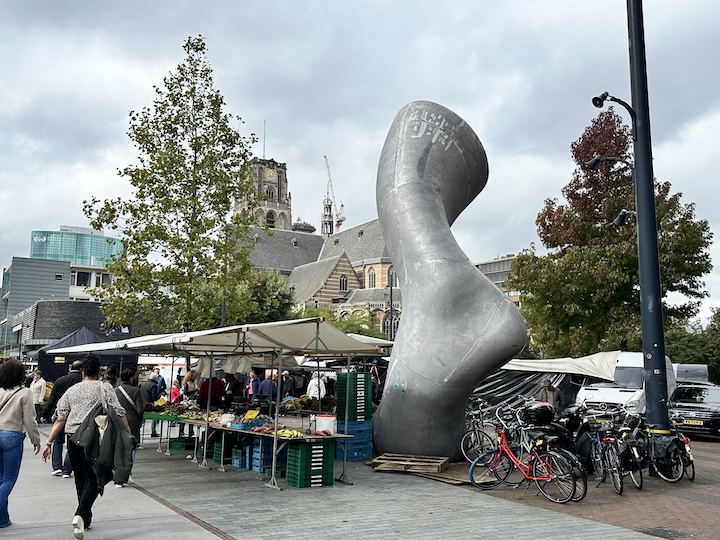
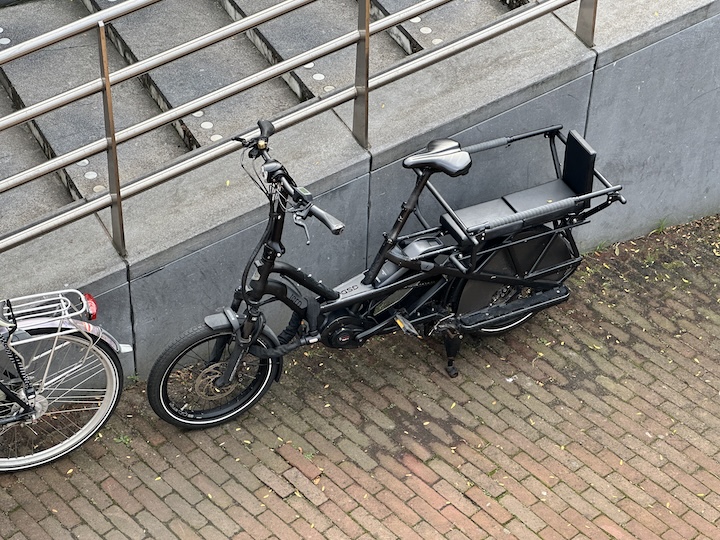
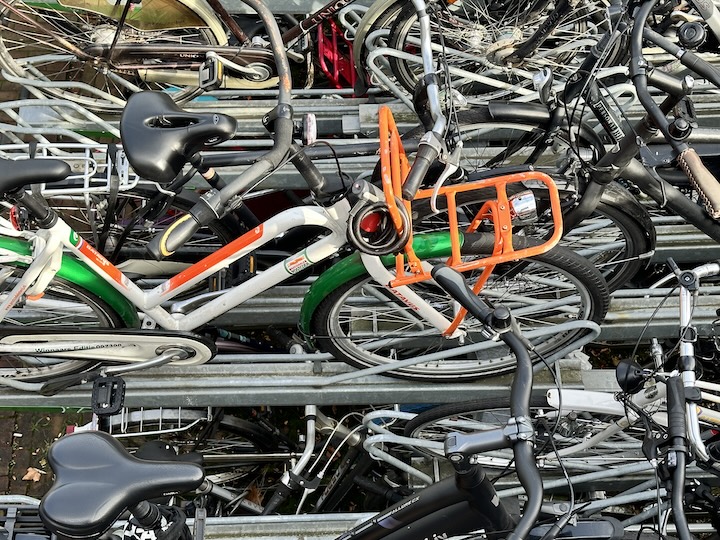
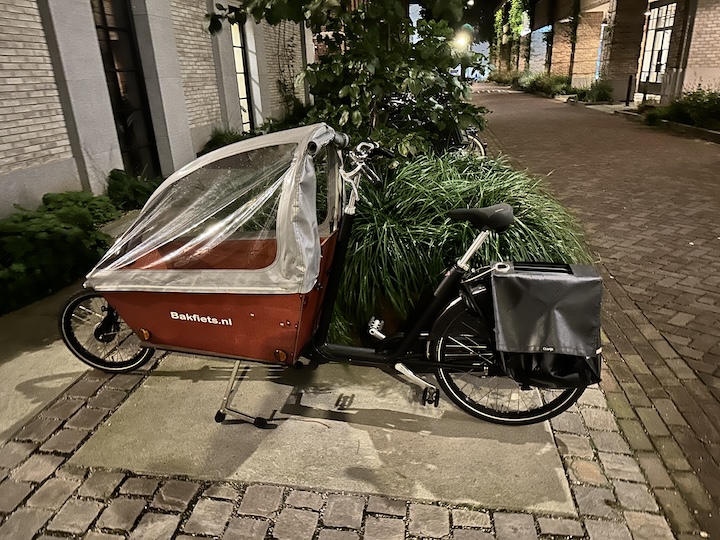
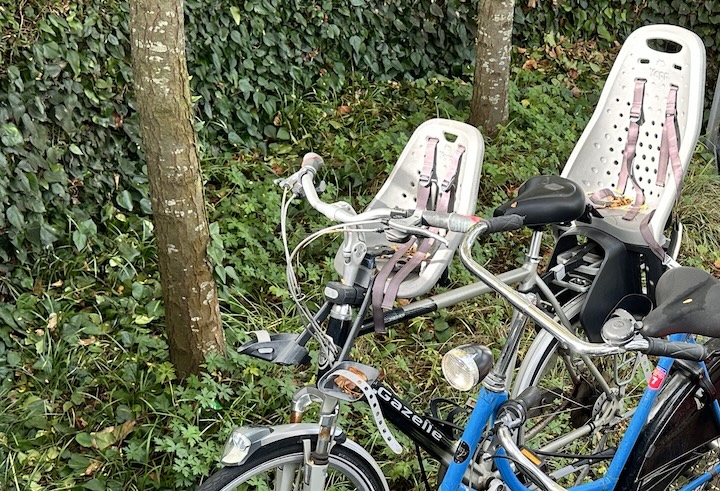
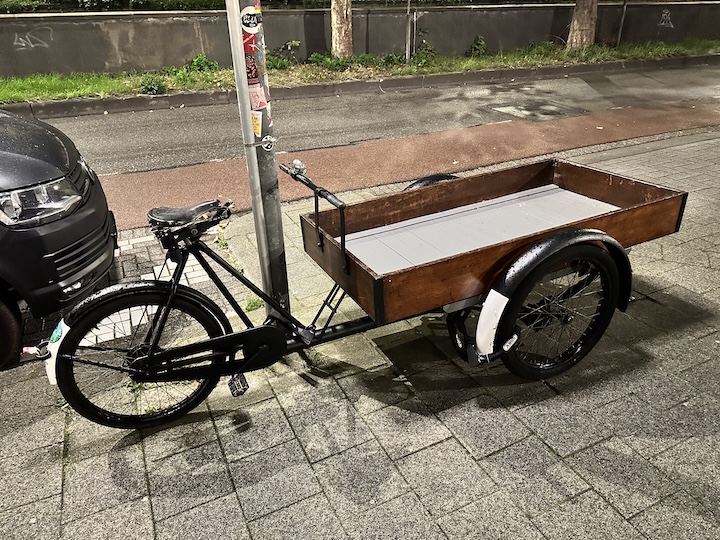
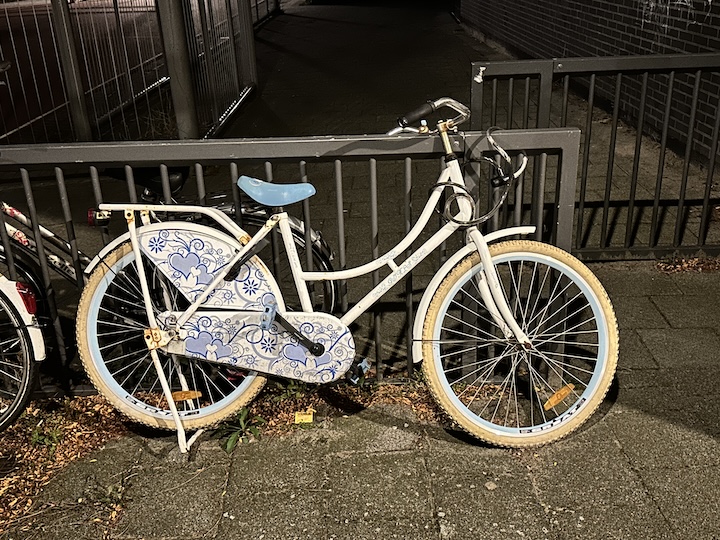
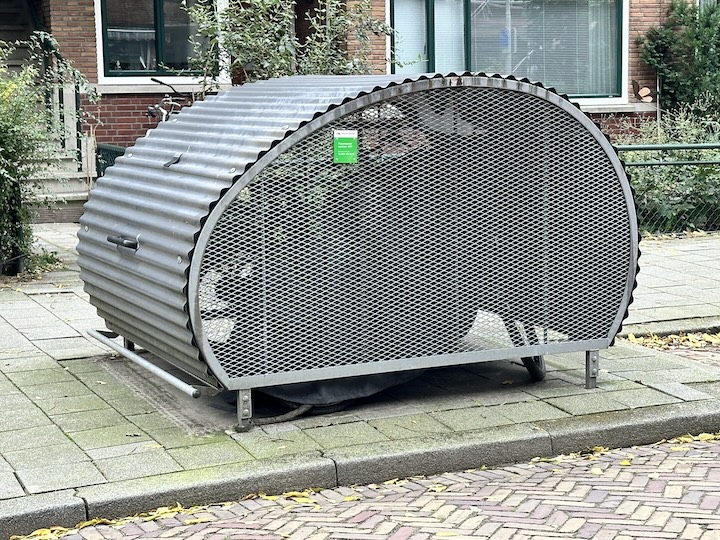
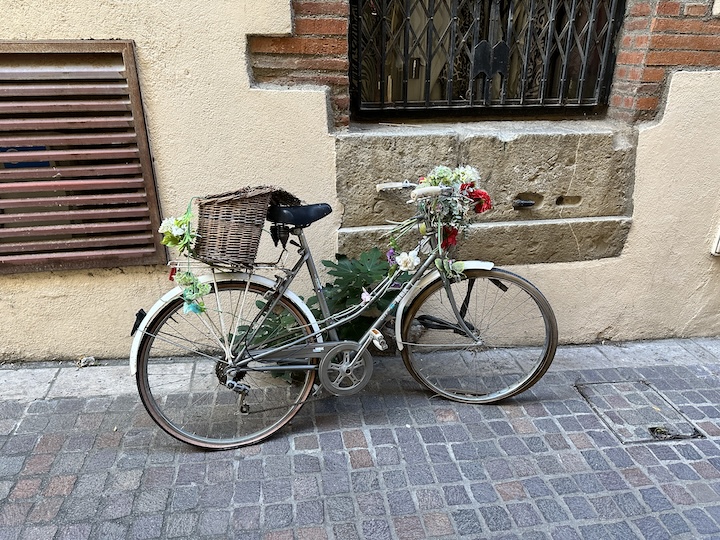
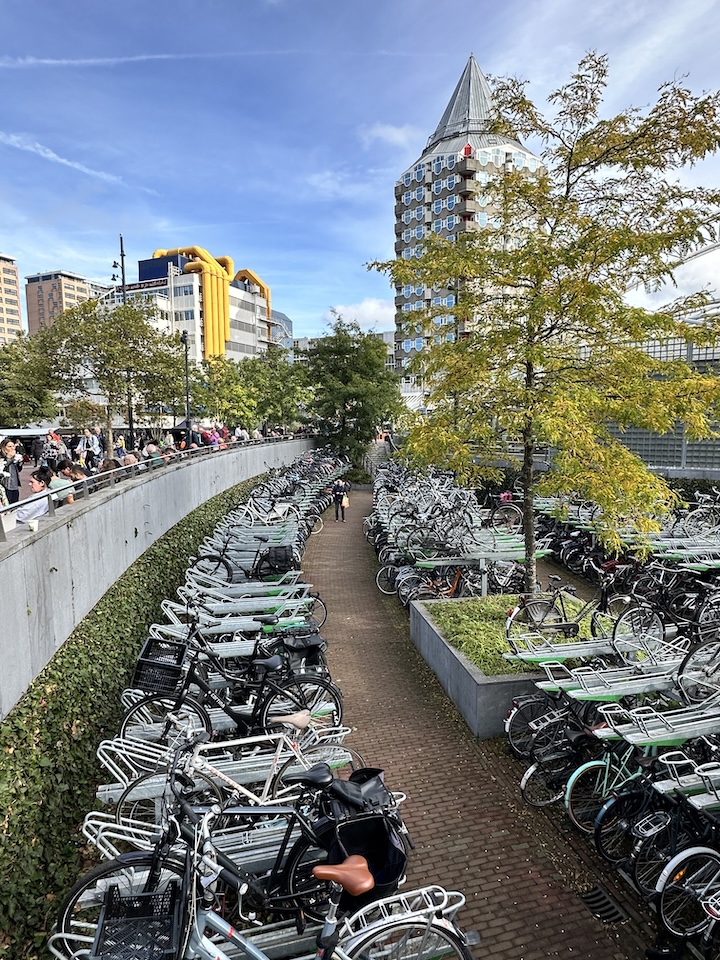
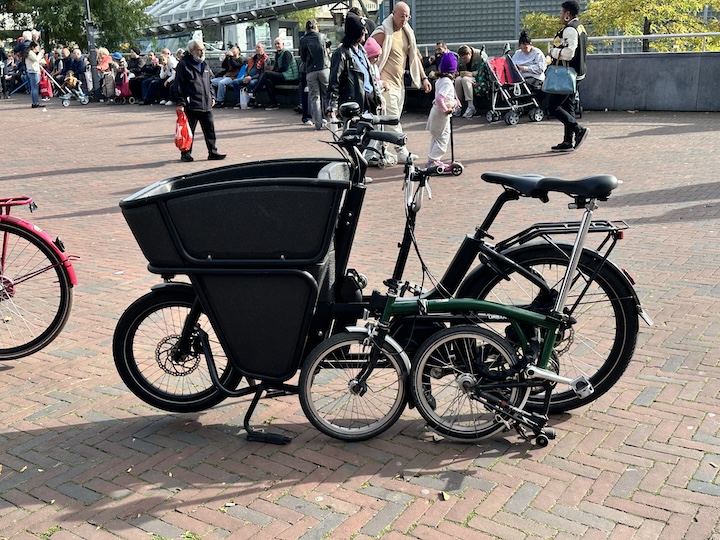
In typical Dutch fashion, there are bicycles everywhere around the Blaak tram station. They’re parked double-decker in the center-well bike park and elsewhere. It’s a very flat country so bikes are easy to use and they’re everywhere, and in every other Dutch town we’ve seen. Bike travel is about the most efficient way to move people around because you can sit down and take the weight off while you peddle along. You can park a lot of bikes in a small space, and they can be adapted for different tasks, like a fleet of small trucks that don’t clog up the city. And you can pack them into a simple bike shed outside your front door. The Dutch are just more technologically advanced than most of the rest of us.
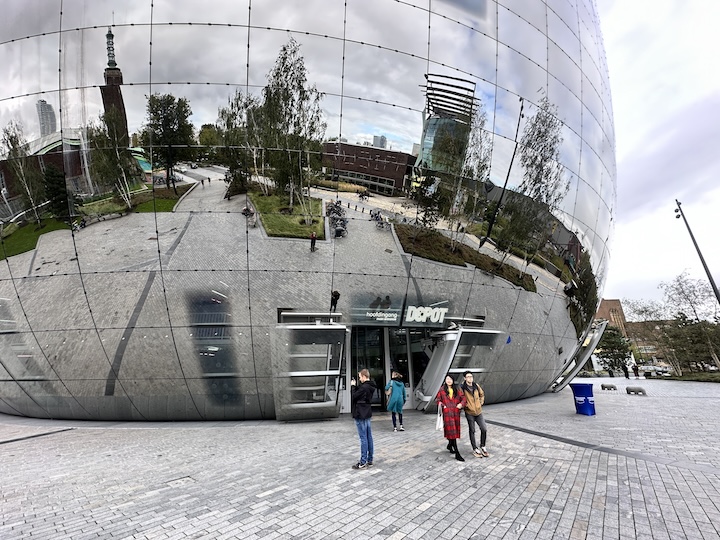
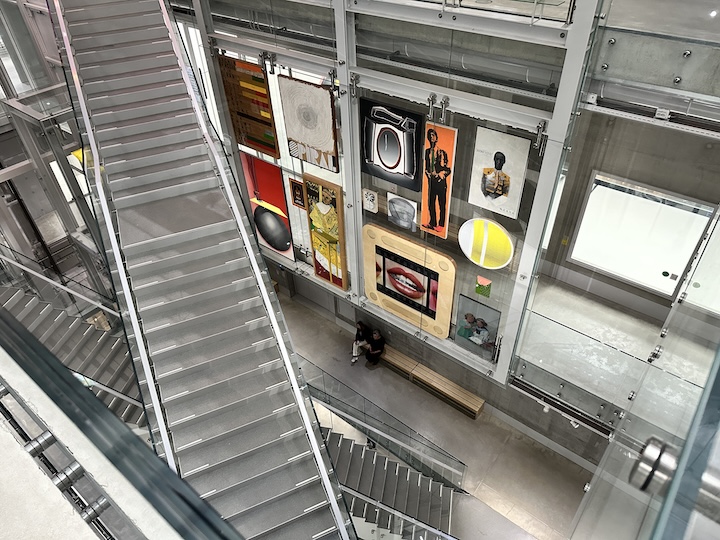
And then there’s the big, round, uber-curious, Depot Boijmans van Beuningen in the Museumpark, which is only a short tram ride – or a brisk walk or bike ride –away from the Cube Houses. Almost every large art museum has way too much art to keep on display, so it’s hidden in storage for later use. But the Boijmans van Beuningen museum, which is currently being rebuilt, took a different approach and built an innovative Depot where that excess art can be viewed, and also studied by the visitors. 
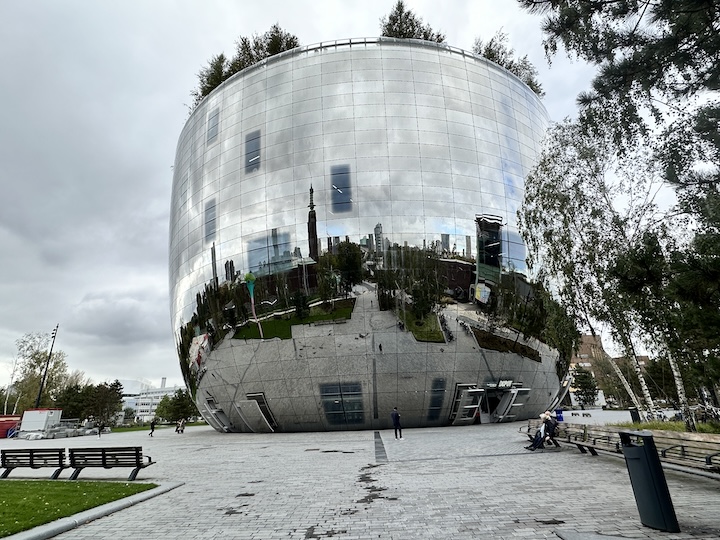
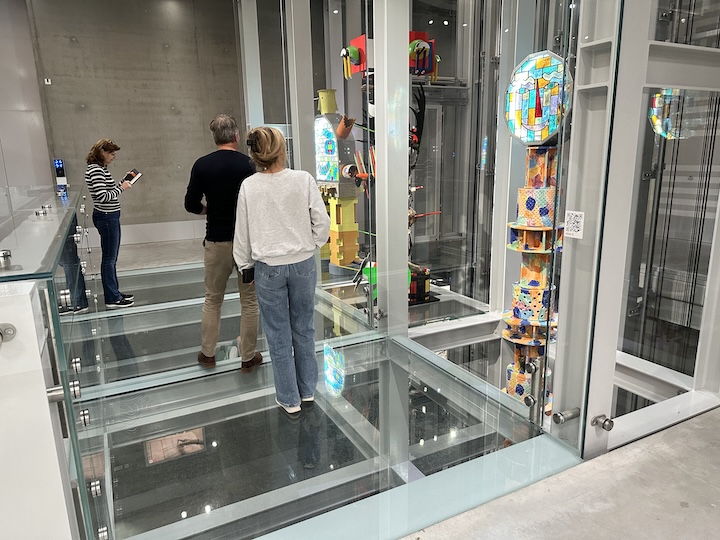
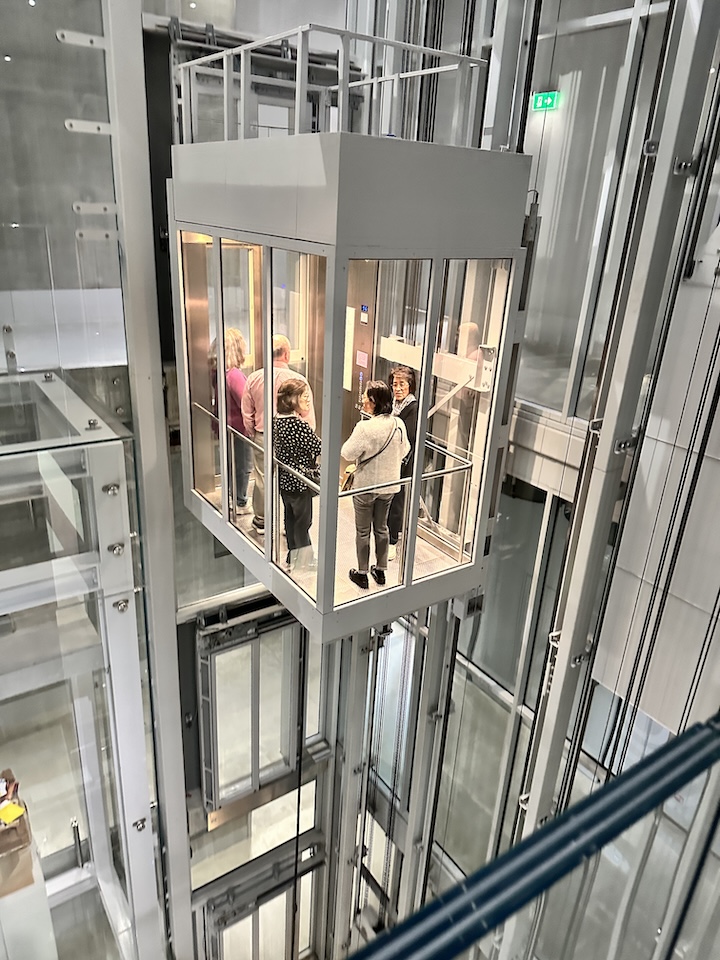
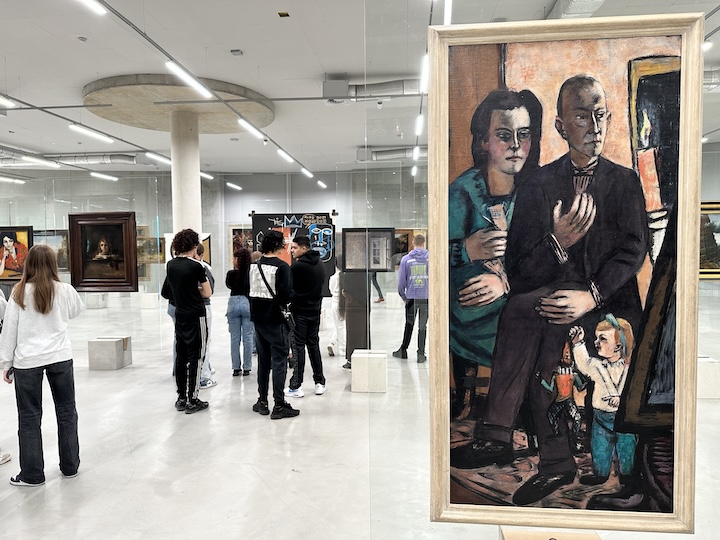
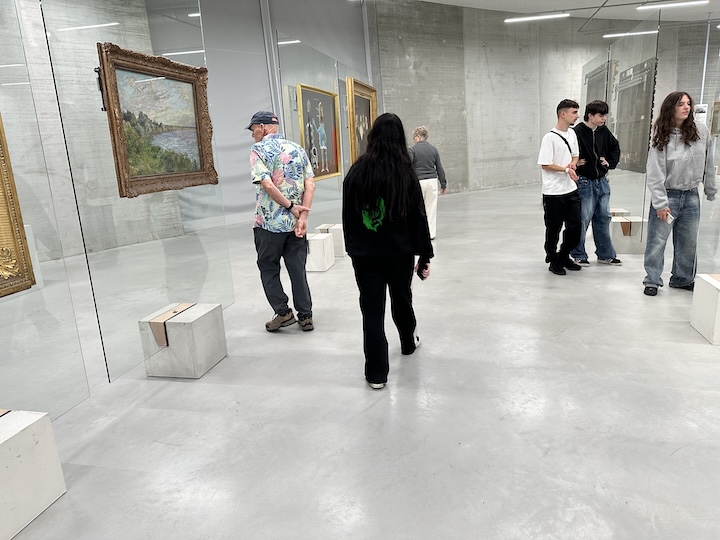
Transparency is the operative word here, and it’s the only such place I’ve been where the works are suspended between two pieces of plastic so I can also look at the back of a painting to see how the artist constructed it, and even added notes as needed. Transparent elevators deliver you to each floor and show some of the art from multiple directions. And the Depot’s team of restorers work in their own transparent facility which helps to demystify some of the magic of that whole arcane process.
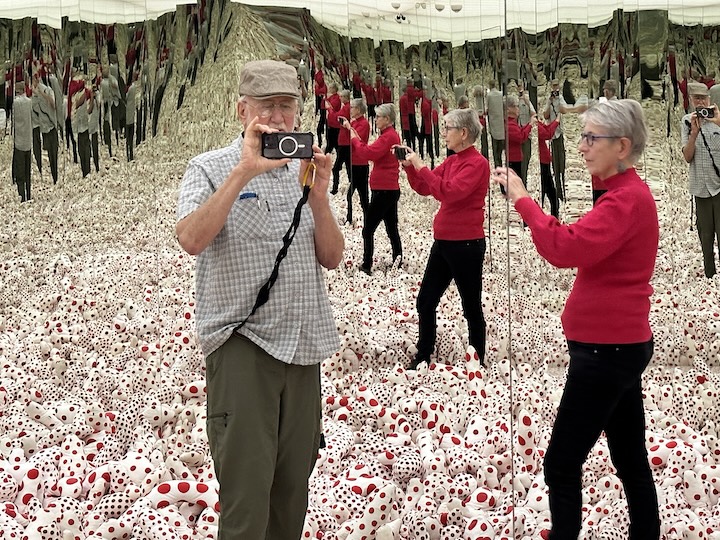
As a special bonus, the Depot currently has one of Yayoi Kusama’s daring mirror fantasy works on display. She is now 96 years old and still as rebellious as in her sometimes-scandalous youth. She’s still producing challenging works for those who enter these mirrored rooms filled with her famous polka dotted multiple art environments. In 1978 she explained that, “Round, soft, colorful, senseless and unknowing. Polka-dots become movement … Polka dots are a way to infinity.” 

It’s fun to encounter Yayoi’s work, and I shared this ‘only two at a time’ space with a lady whose red sweater played off quite well against the surrounding field of polka dotted forms.
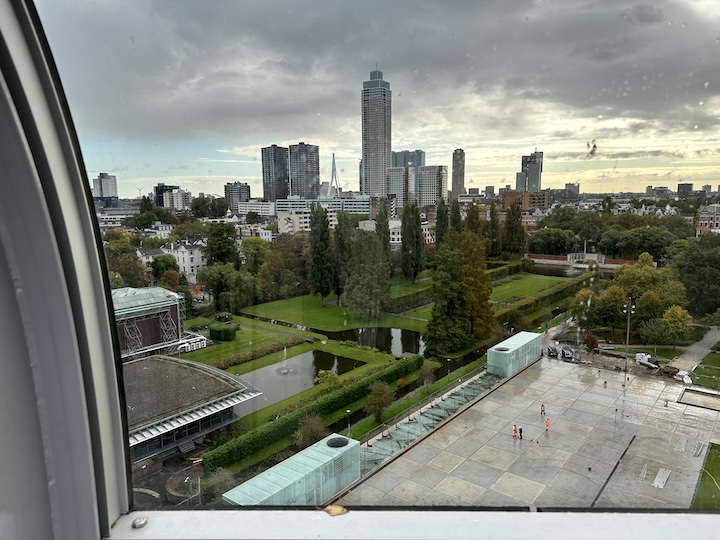
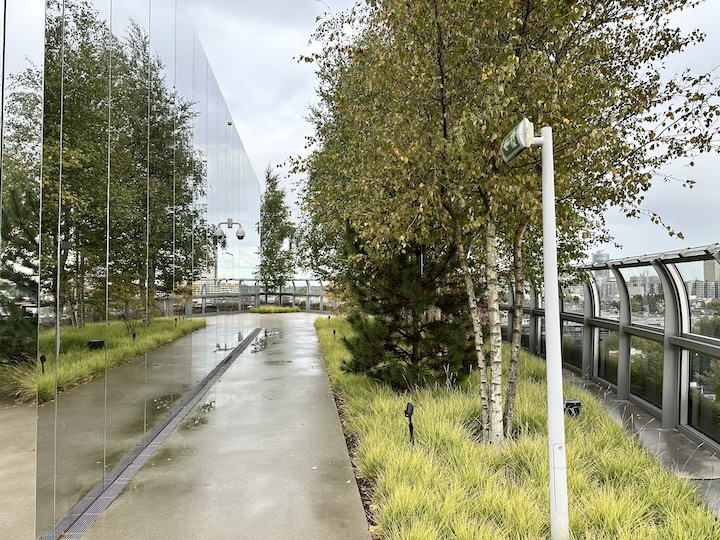
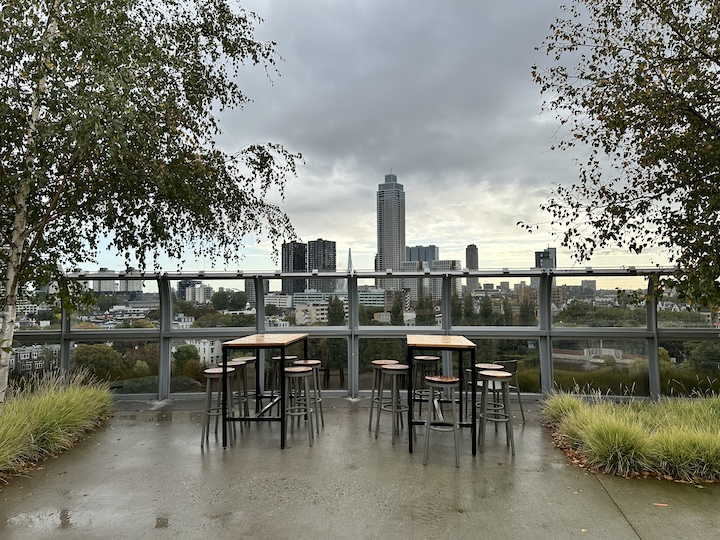
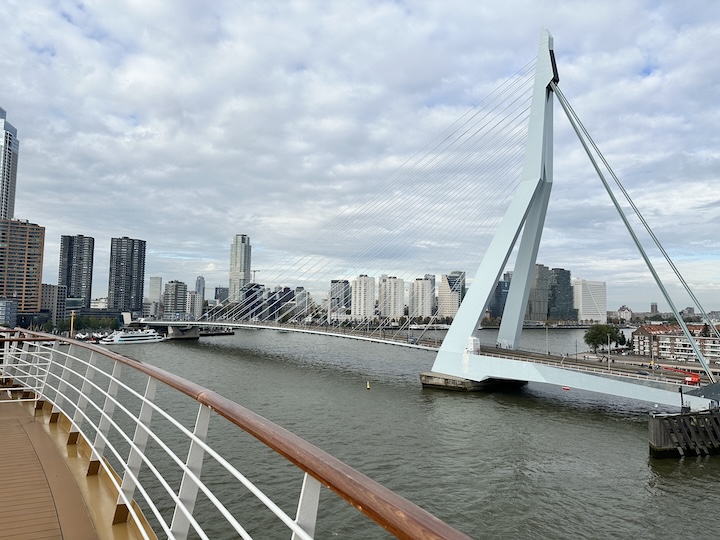
And outside in the roof-forest at the very top, there’s a rewarding grand view across the entire city below. In the distance, the famous Erasmus Bridge, named for the Dutch philosopher who was born here in 1466, emerges among the tallest buildings as an almost Eiffel Tower form.   
You can watch a short video of Winy Maas, the Architect, explaining the Depot at https://www.youtube.com/watch?v=ZFecSI_Q0Ss

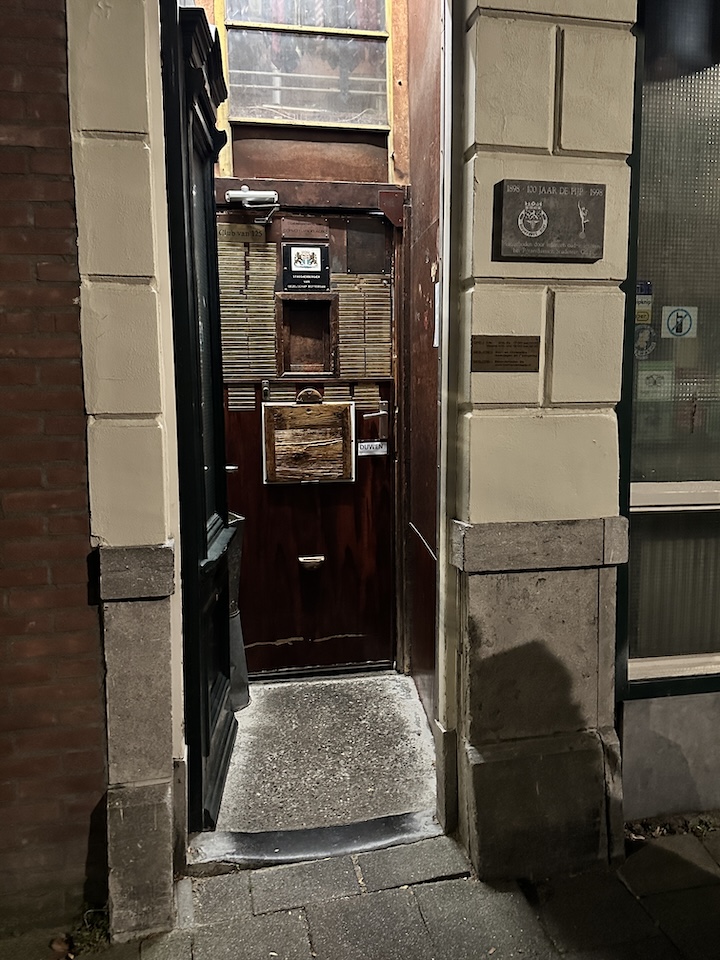
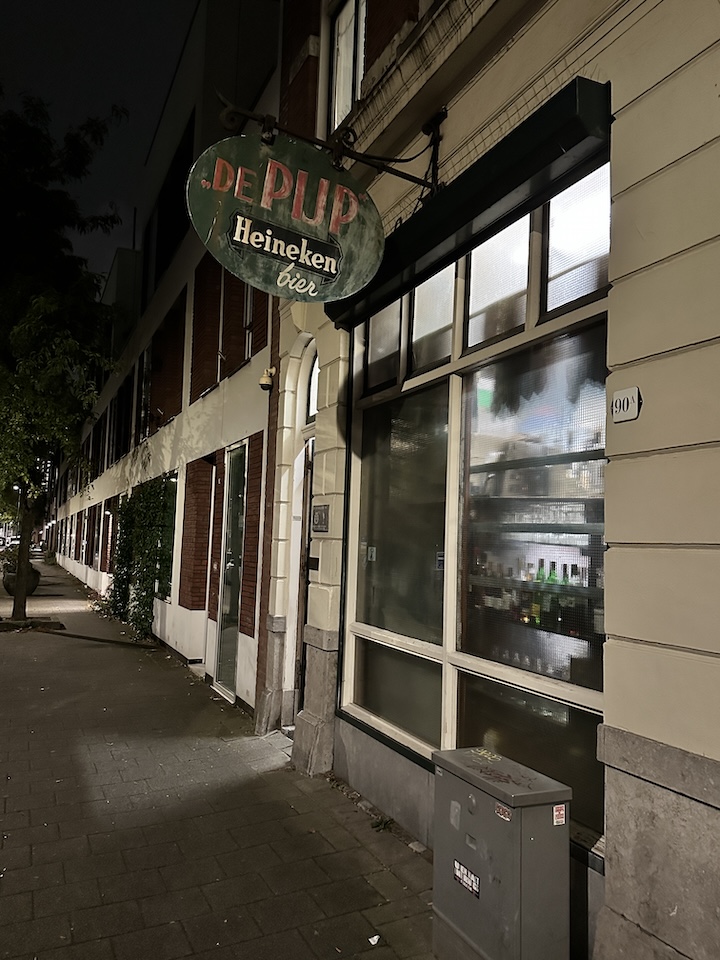
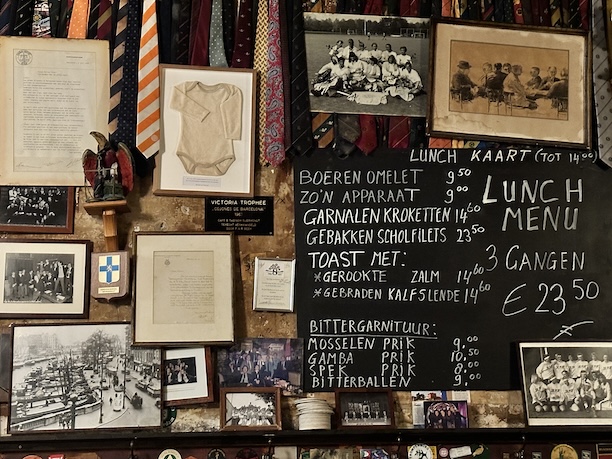
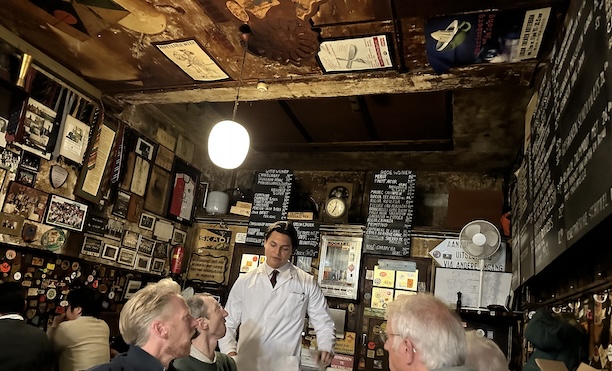
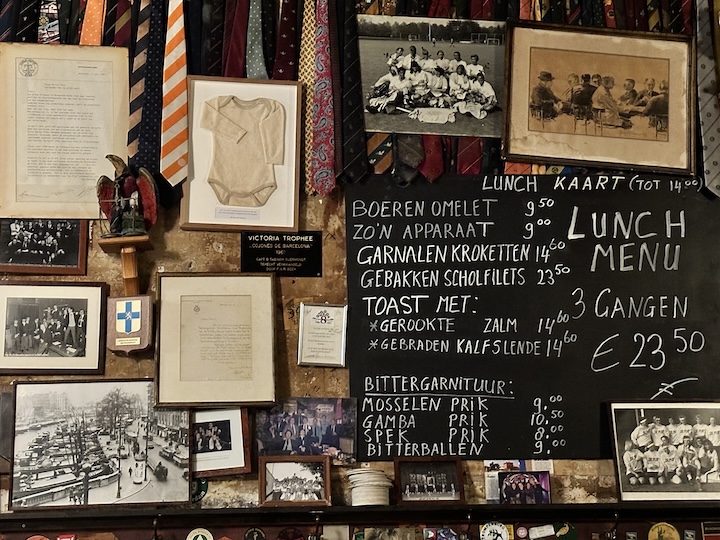
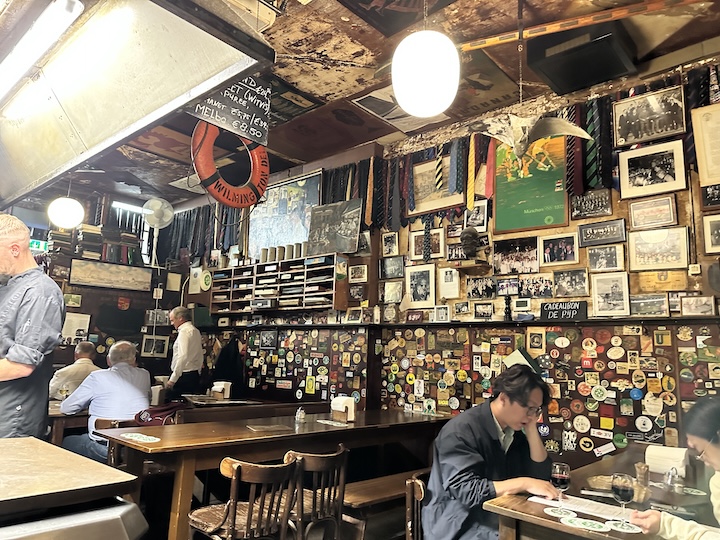
But a few remnants of old Rotterdam still exist, and there’s a memorable eatery called “De Pijp,” that’s hidden down a dark side street. You would probably miss the sign, as we did, if you weren’t actually looking for it. The name means ‘The Pipe’ and it may refer to those long clay pipes we see Dutchmen smoking in old paintings of the Dutch Masters. 
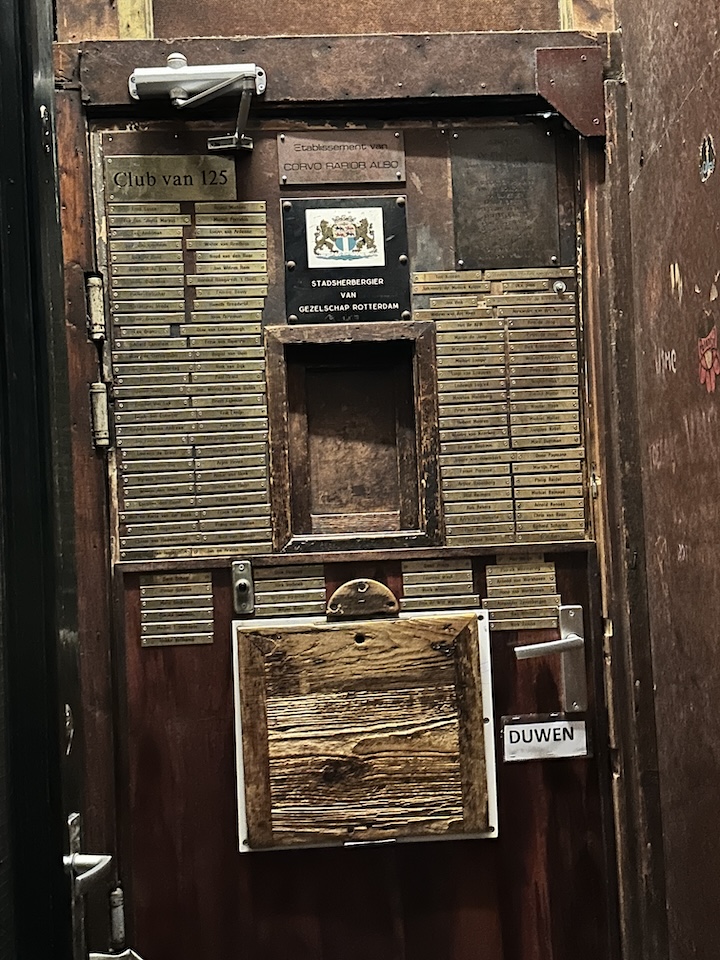
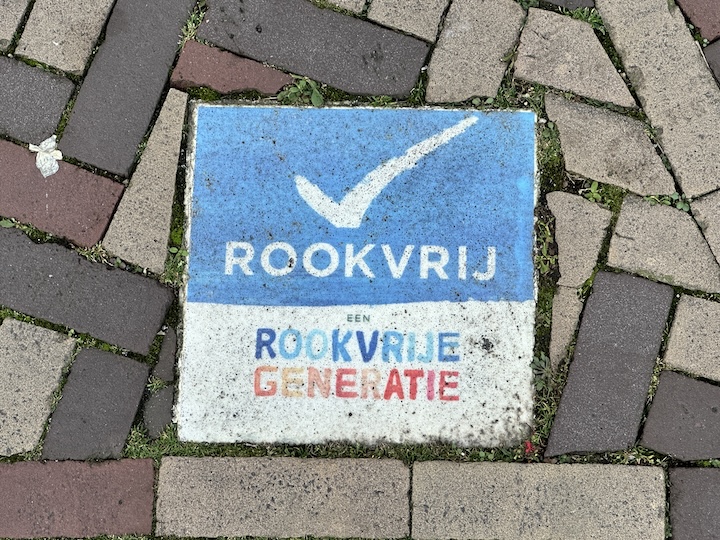
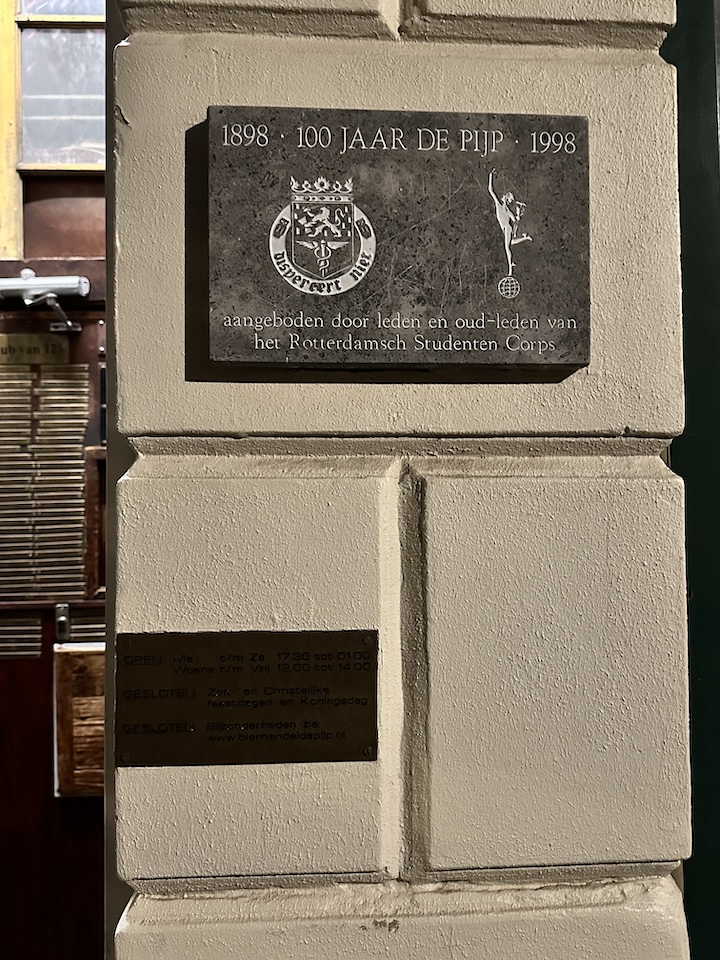
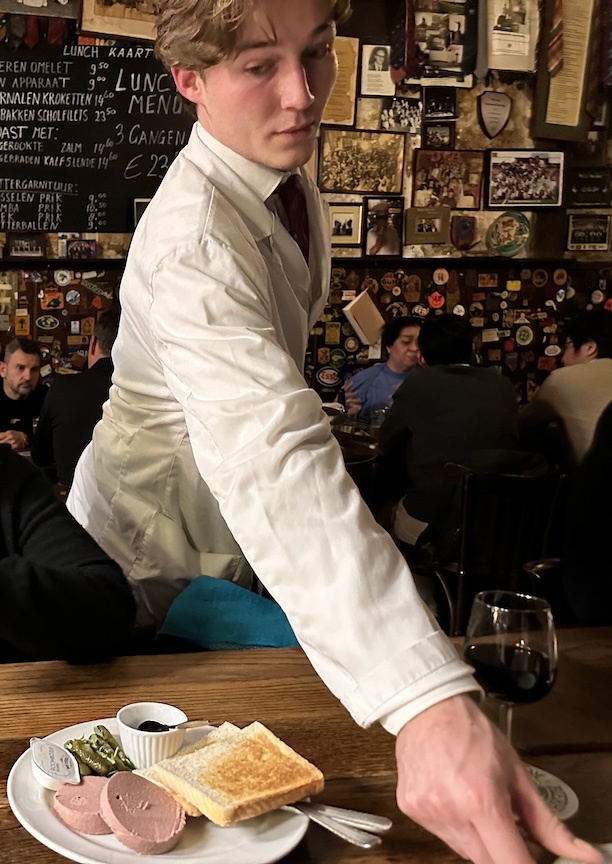
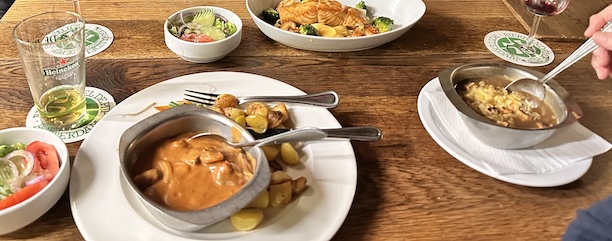
De Pijp celebrated its 100th anniversary back in 1998, and there are metal name plates on the battered front door listing members of the ‘Club van 125.’ There’s no smoking inside these days, and it’s a great place to find some dinner as you watch them fix your order in the kitchen that actually extends into the dining area. It’s almost like a participatory cooking experience at the home of your good friends.

TripAdvisor UK says that De Pijp “…transports you to a richly textured and authentic world, where tradition still has a warm and friendly meaning and the food is absolutely delicious.”
And here’s a fun trip around Rotterdam with Luisito (in Spanish, with English subtitles)
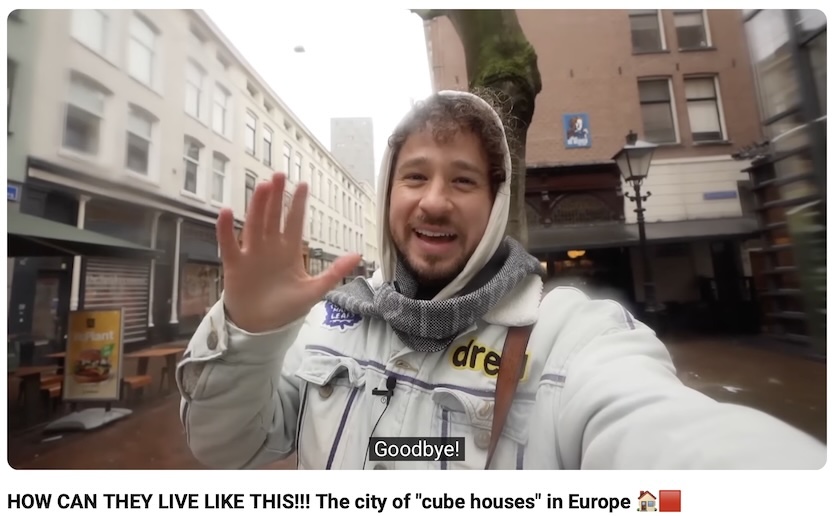
https://www.youtube.com/watch?v=-5Z9puLeNTA

……………………………………………………………………………………………………………….

Den Haag

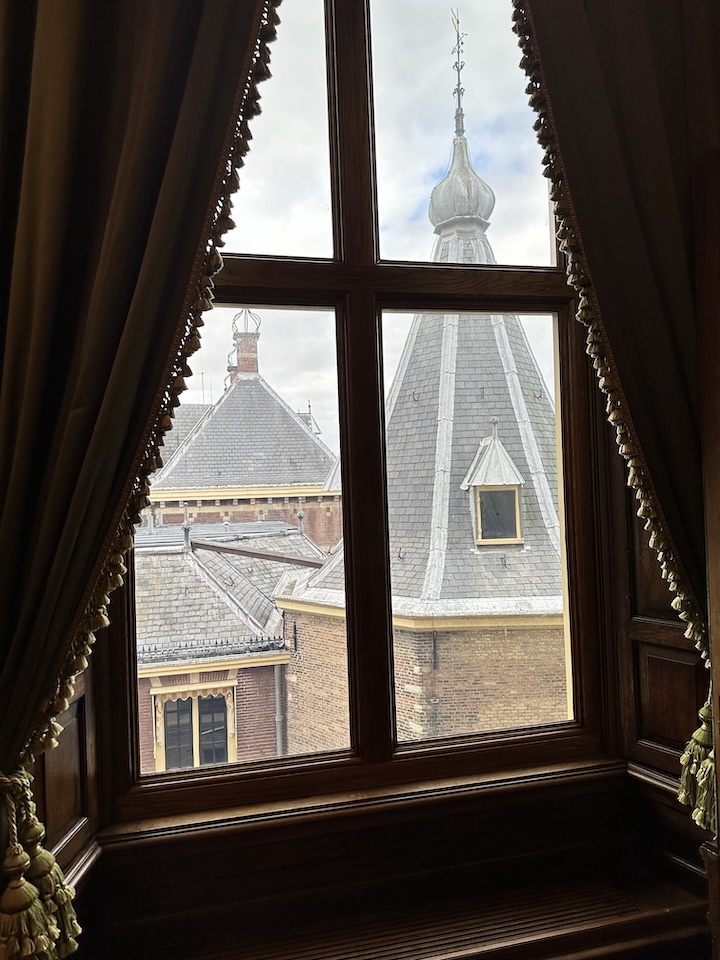
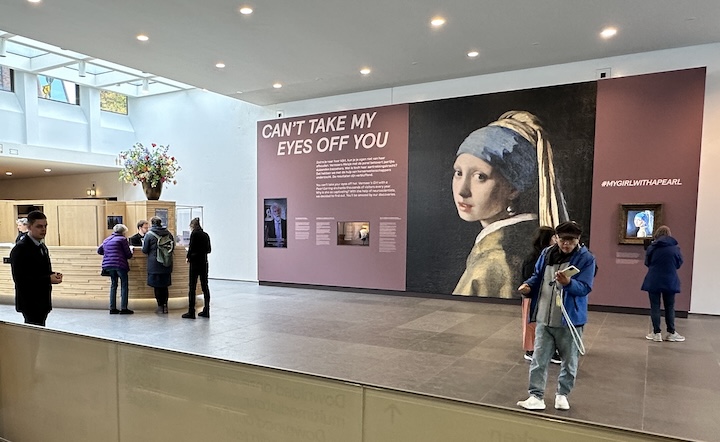
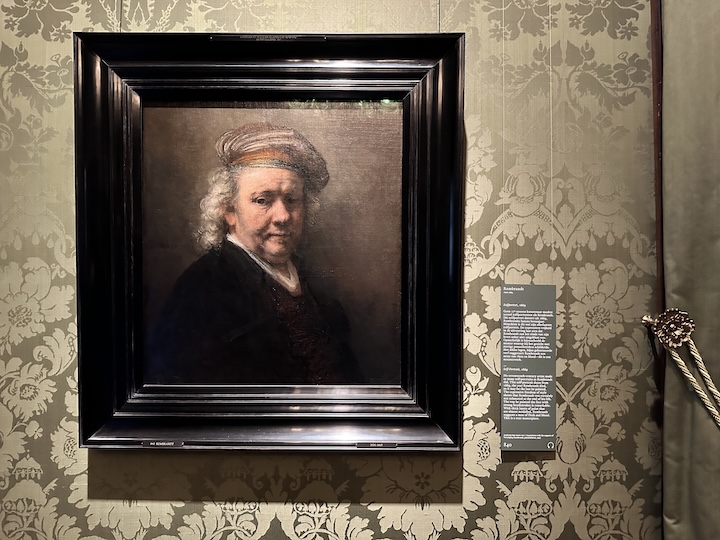
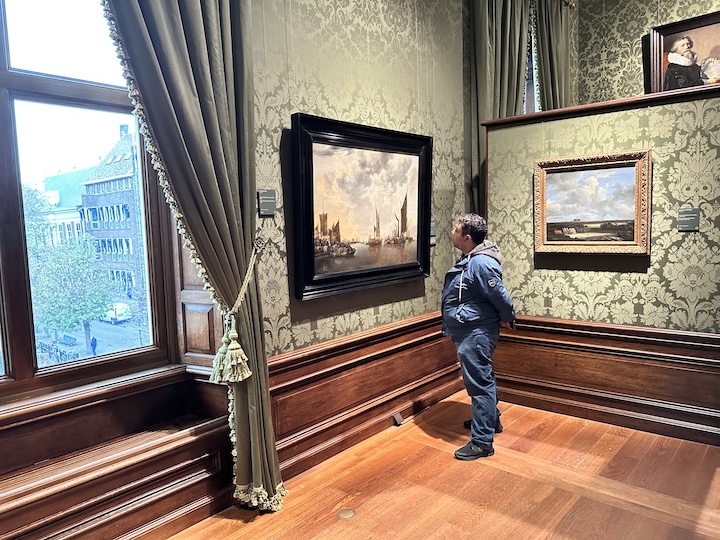
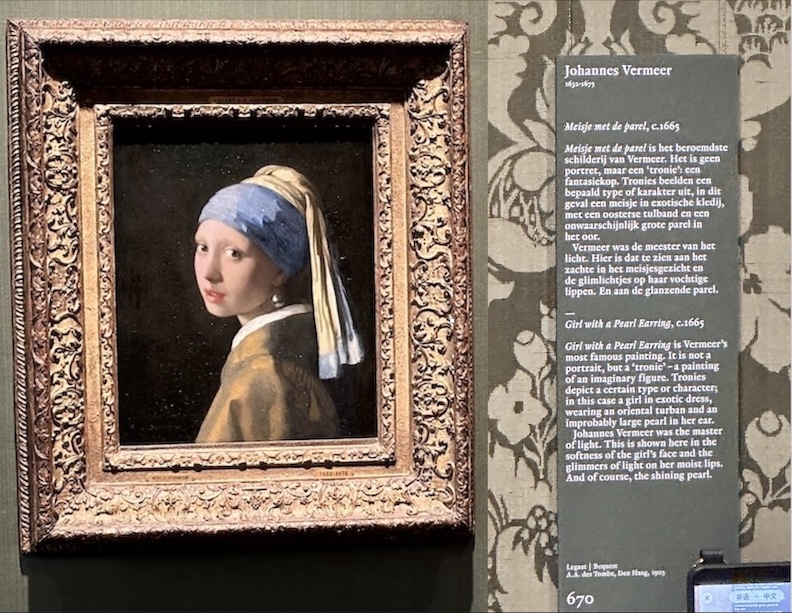
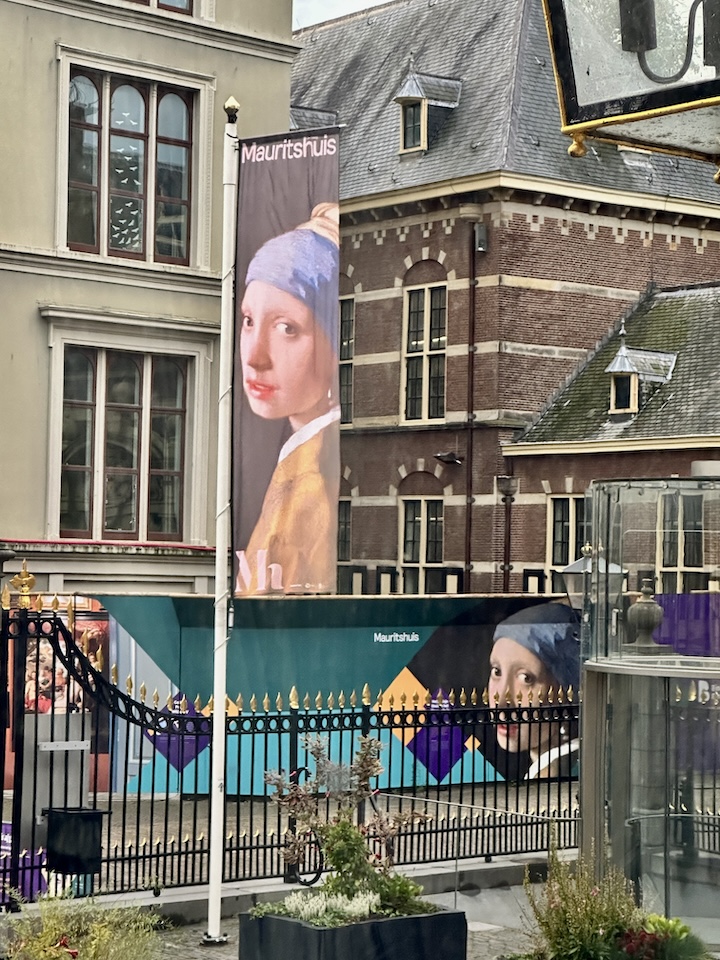
Rotterdam is only a few miles from The Hague, so a visit to the famous Mauritshuis museum was in order. This is the home of Vermeer’s luminous painting of “Girl with a Pearl Earring,” which has become another ‘must see’ ever since Tracy Chevalier’s novel of the same name was published in 1999. The painting is prominently featured outside the Museum and in the lobby, in case we forgot why we came here. And the Mauritshuis itself is nicely connected through its many windows to the bucolic everyday scenes that are just outside.

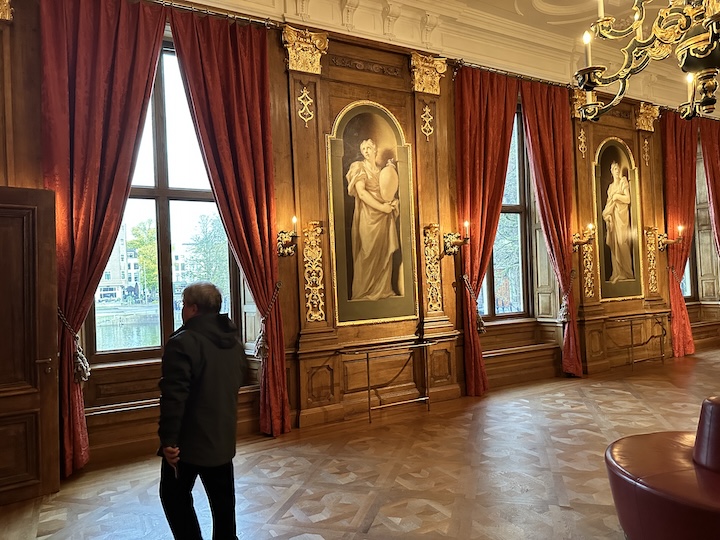
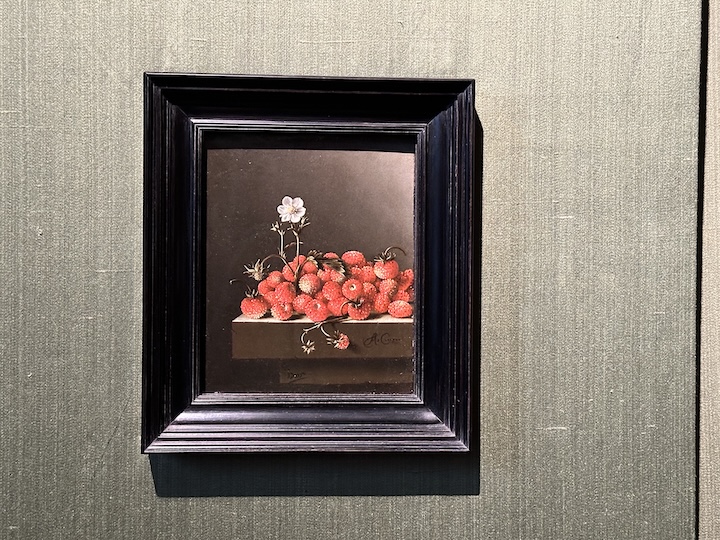
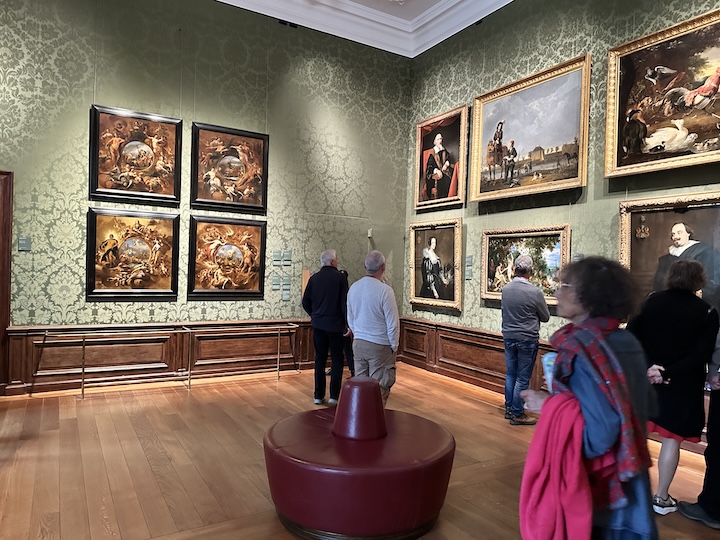
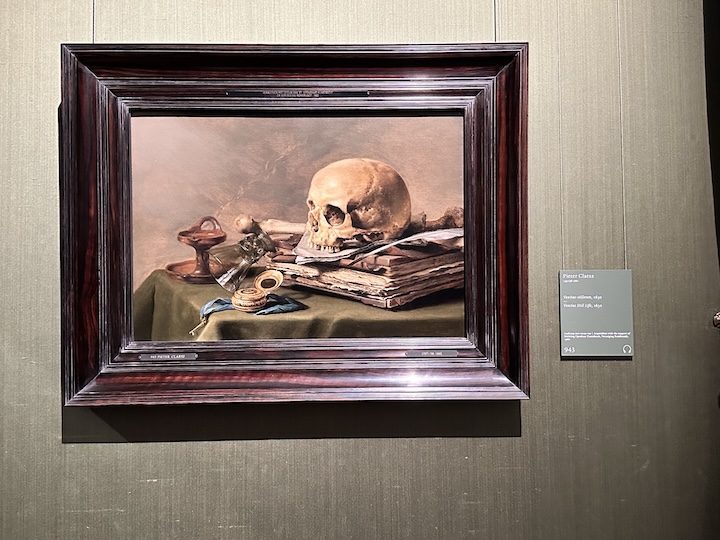
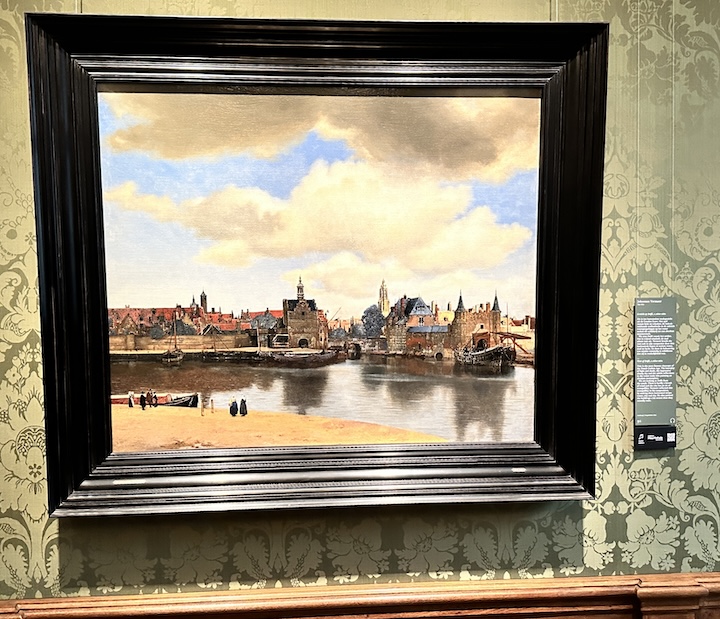
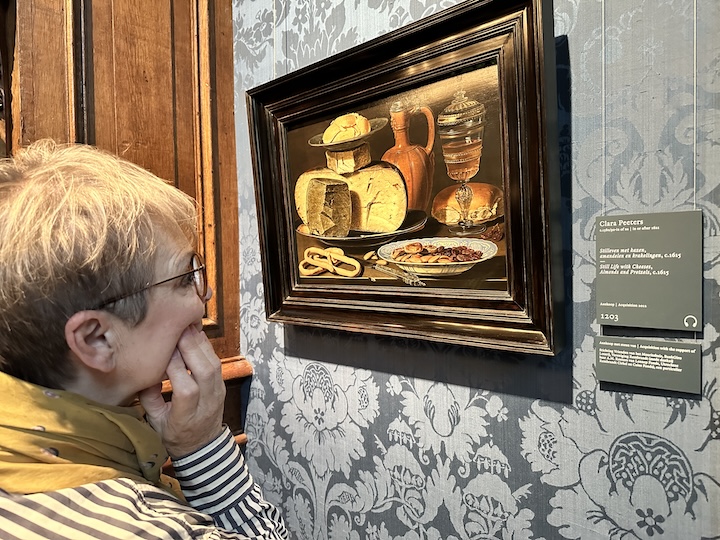
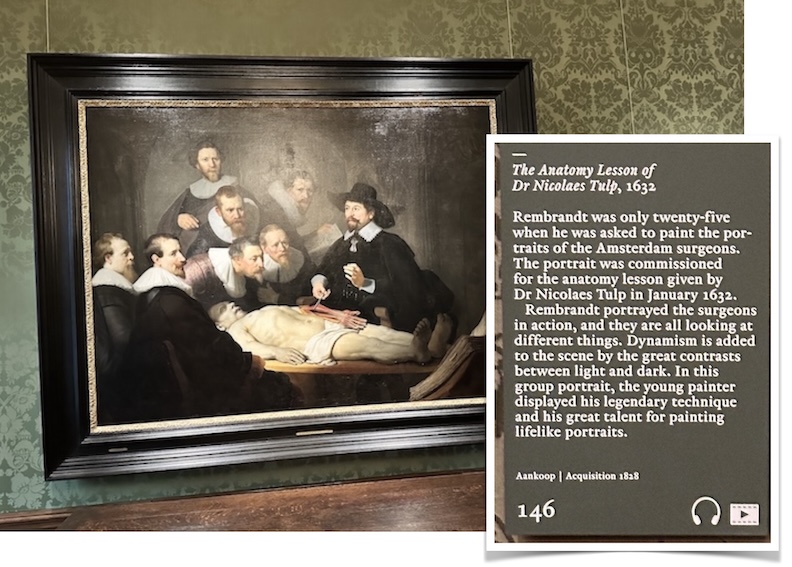
The museum is packed with examples of the finest Dutch art, and is well worth a visit in its own right. The Dutch Golden Age of the 17th century was a period of great prosperity, and the new Dutch Republic’s break with the strictures of the Catholic Church opened a whole new world for their artists to consider.  Religious subjects were out and the simple lives of common people became a popular theme, along with portraits, landscapes, sailing ships, brothels, and still lifes. 
An excellently rendered picture of cheese and wine certainly deserves a closer look.
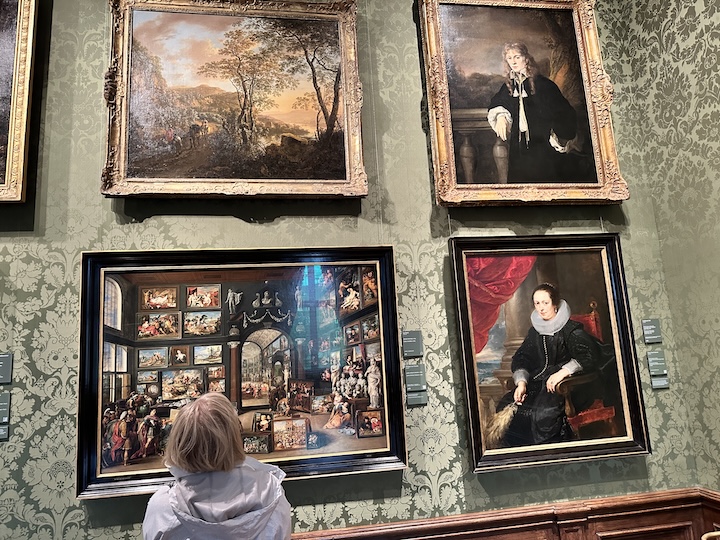
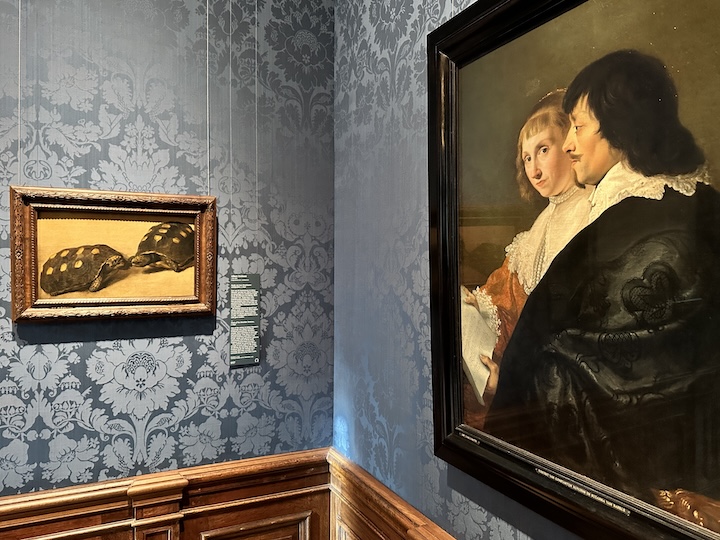
And credit goes to the curator who hung a portrait whose subject appears to be studying a painting of turtles on the side wall, as his wife looks directly into our eyes to study our reaction. 
The ability of so many Dutch Masters to capture a landscape with the fleeting daylight that somehow penetrates the nation’s often-cloudy skies still astounds us today. Albert Camus, in his book The Fall (1956), said the clouds over Amsterdam were really huge flocks of birds, and the snow was their feathers floating to the ground. In any case, it’s a fine miracle of nature.
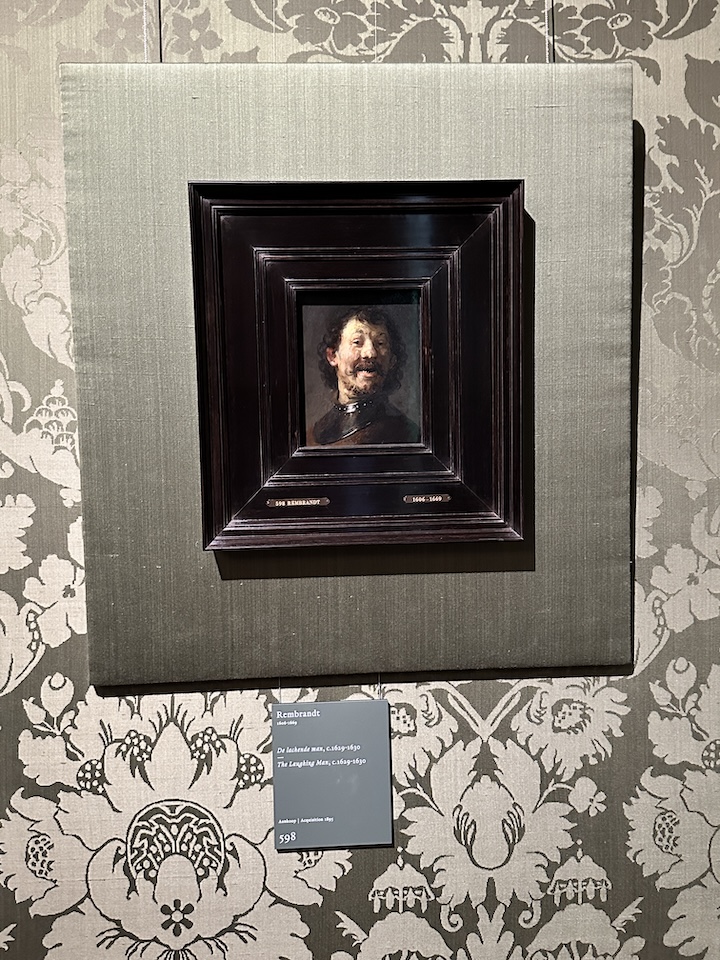
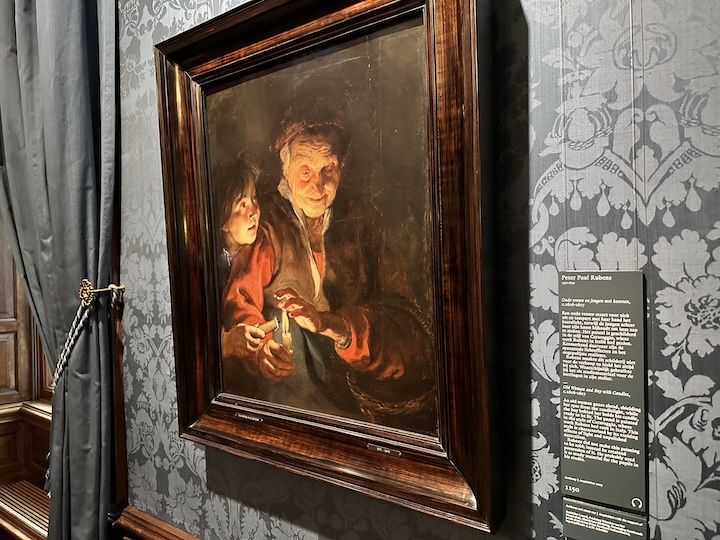
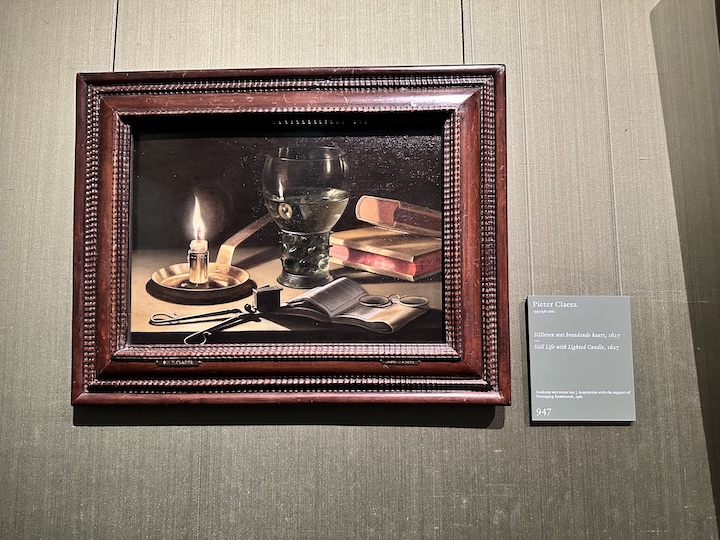
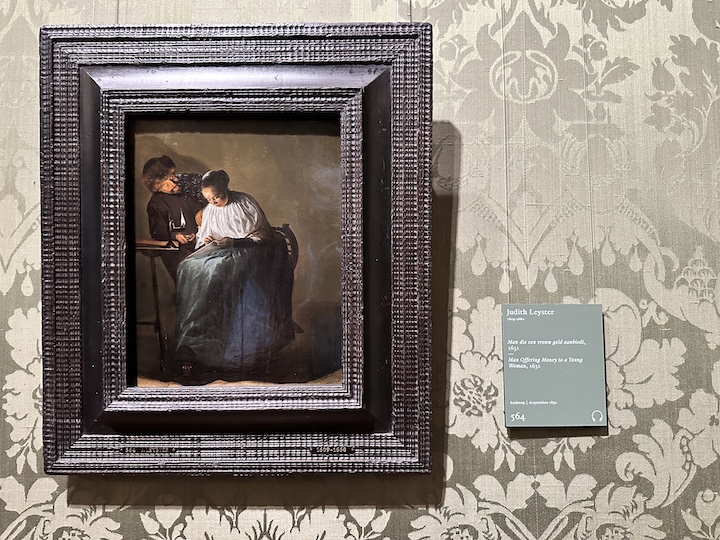
And the way that a soft flickering light that emanates from a simple candle, whether handheld or resting on a tabletop, can be captured by the artist to highlight the subject, is a study in artistic magic. 
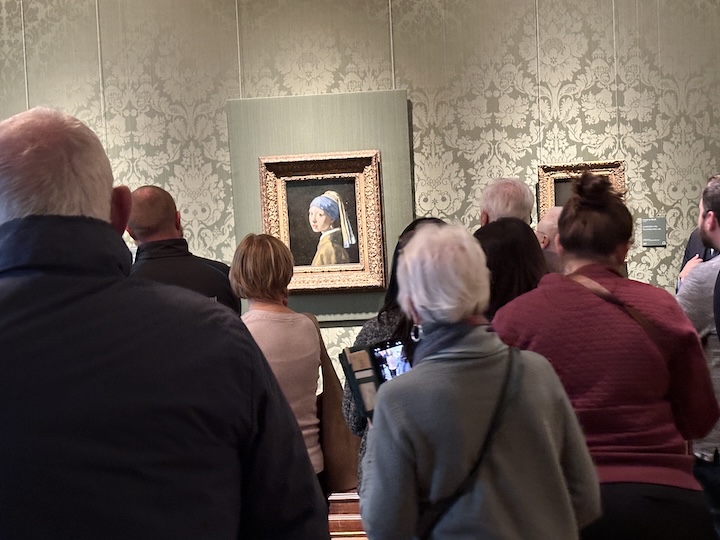
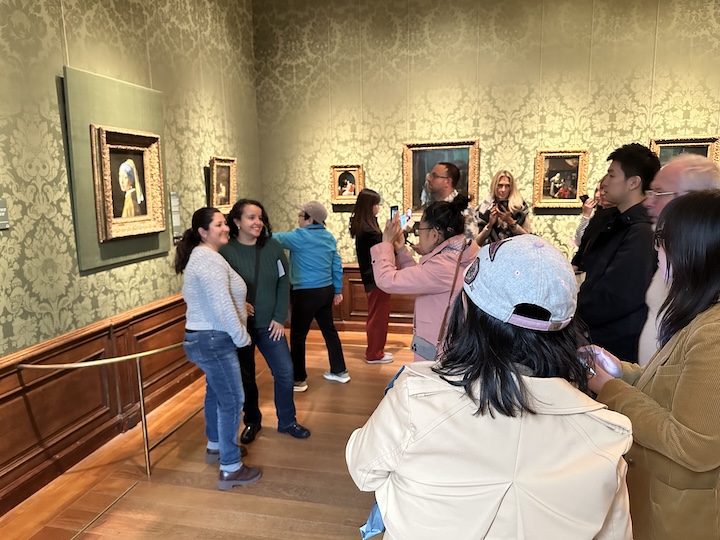
When we finally get to the famous “Girl With a Pearl Earring,” it’s in a modestly-sized room and the painting looks to be around the same size as the Mona Lisa. There’s a crowd, of course, but it’s a smaller crowd than at the Louvre; and everyone patiently takes their turn with this fine piece of work. We make our way forward while trying not to disrupt the selfie takers, and I’m actually quite glad that they’re showing such keen interest in the arts.
……………………………………………………………………………………………………………….

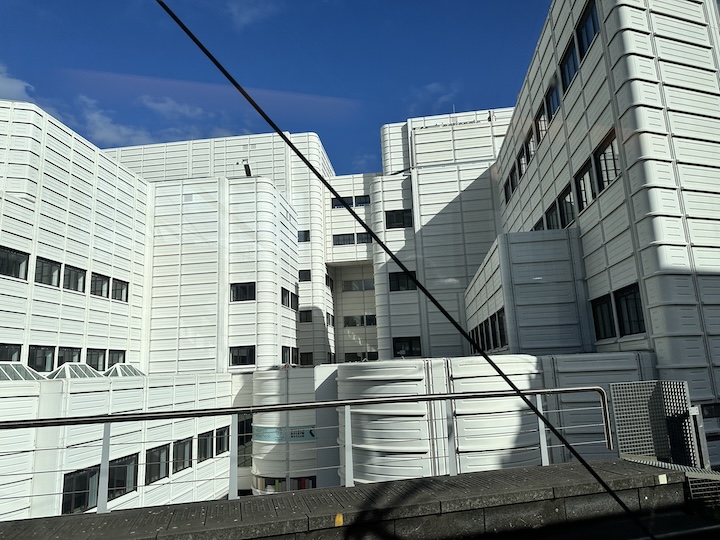
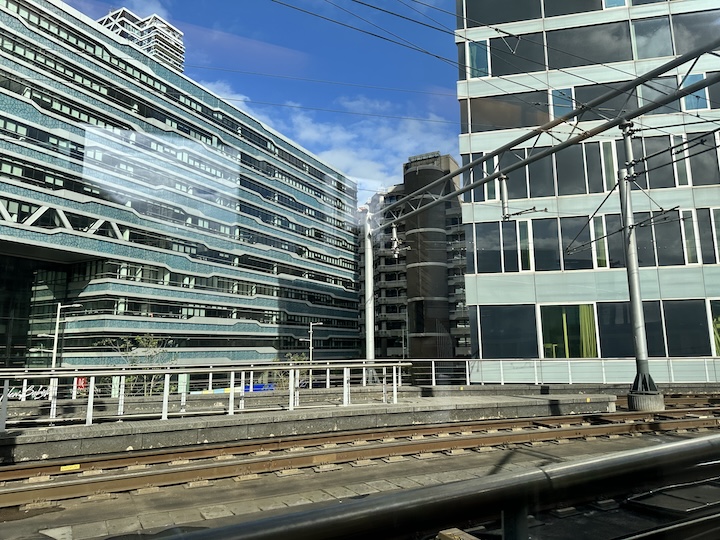
After all that fine art, it’s only a short train ride back to Rotterdam. And we get a closeup look at more of the inventive Dutch modernism that also enriches The Hague.  
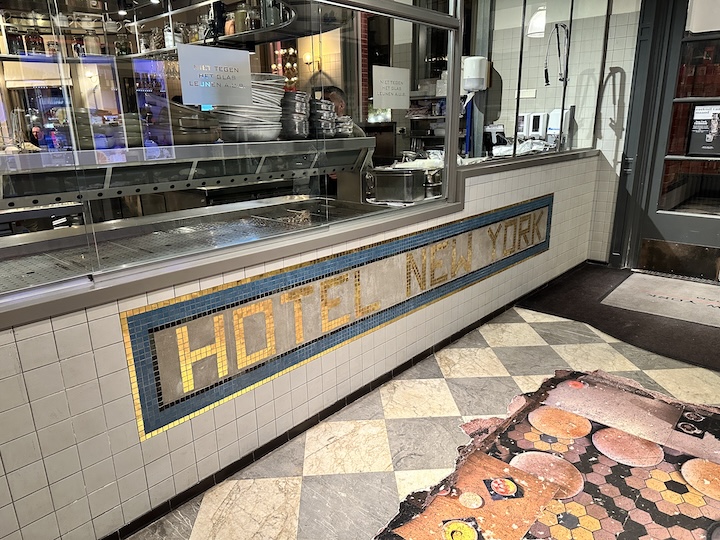
So it’s finally time to depart from Europe after an excellent four months of exploration – on a much more modest budget than Lord Byron availed himself of when he ‘went continental’ long ago. And we’ll end another fine evening with our friend Nathaly at dinner in the old Hotel New York. 
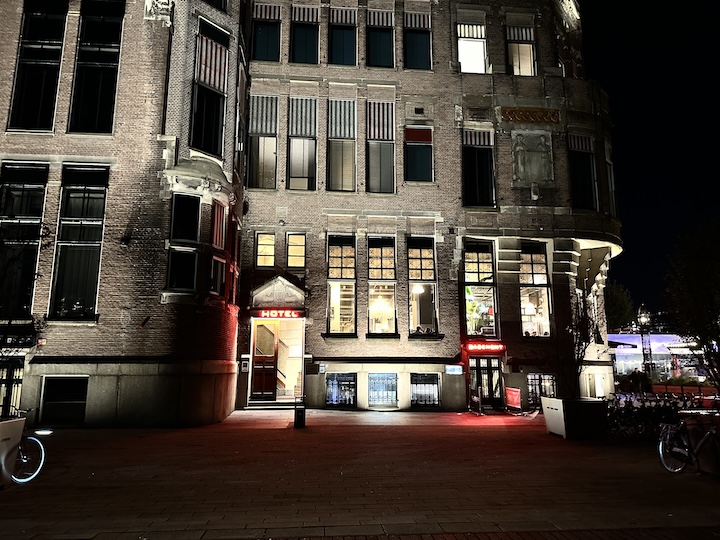
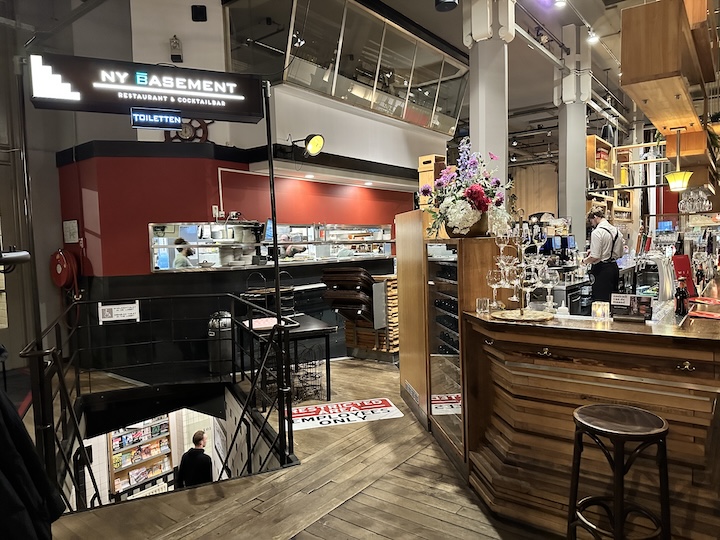
After all these years the staff at this place knows the first question among many patrons concerns where the toilets are located. So they helpfully point the way.
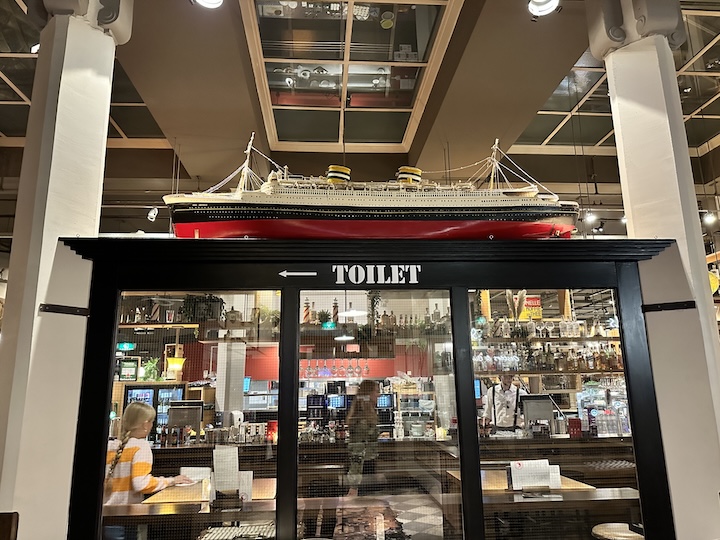
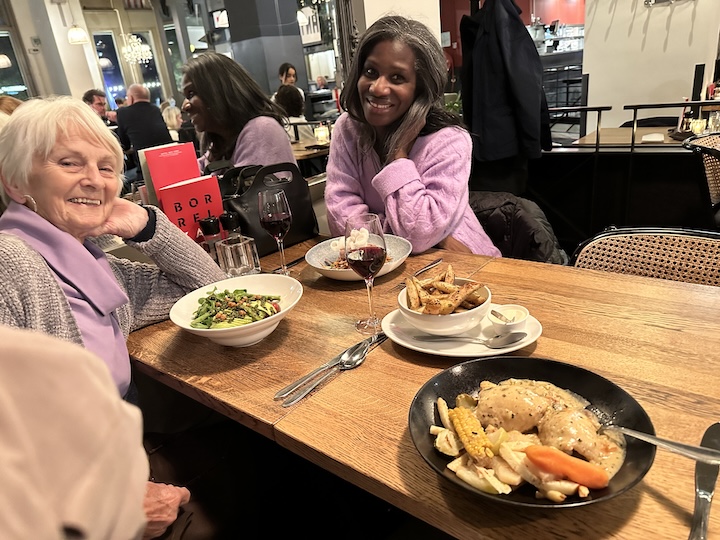
The New York has been a dockside attraction here for many years and we’re glad they found a nice table for us.
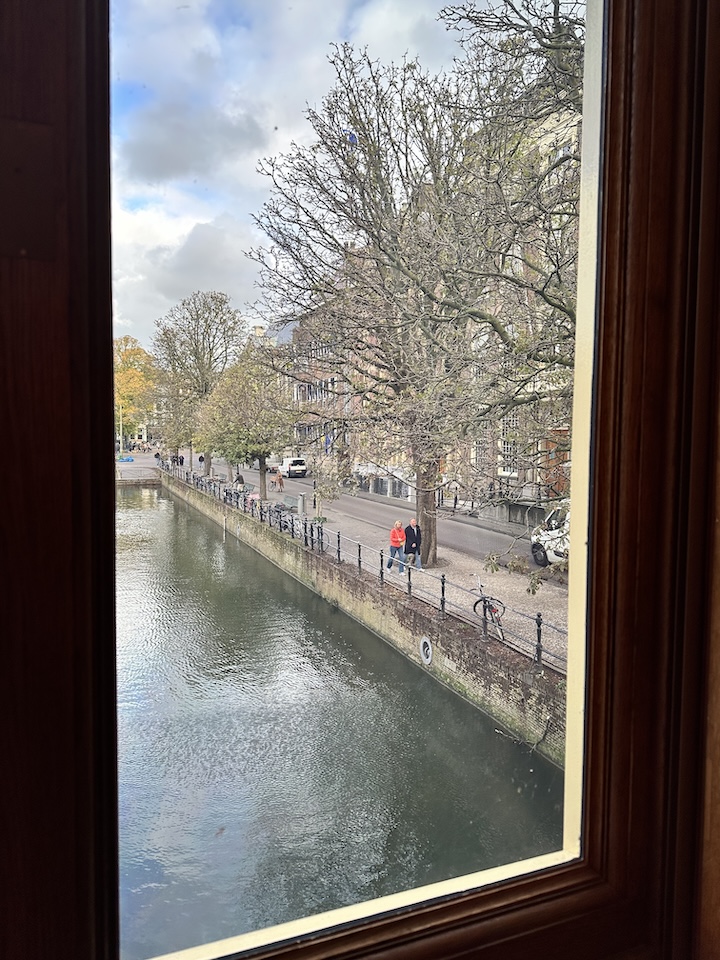
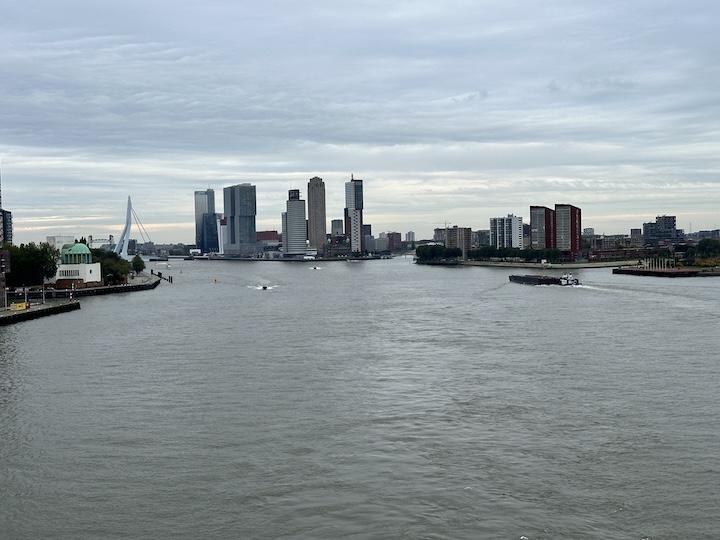
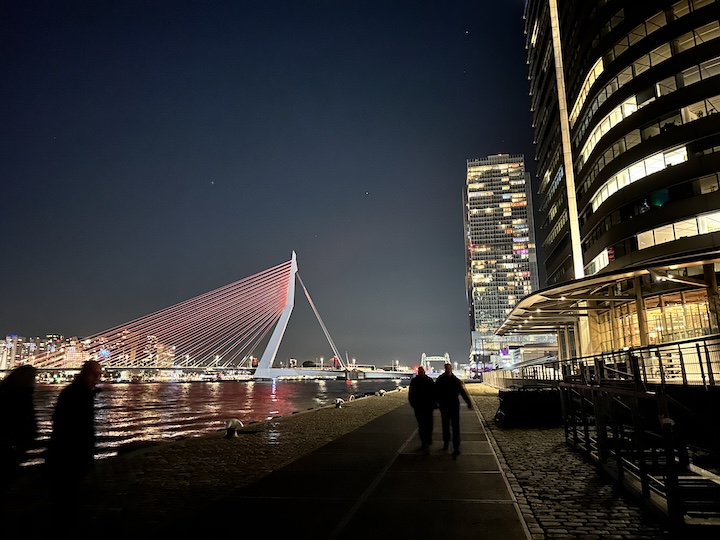
We end the evening later with a nice dockside stroll, and with the beautifully-lit Erasmus Bridge illuminating the evening. It’s hard to imagine a finer way to say goodbye to the very engaging city of Rotterdam.
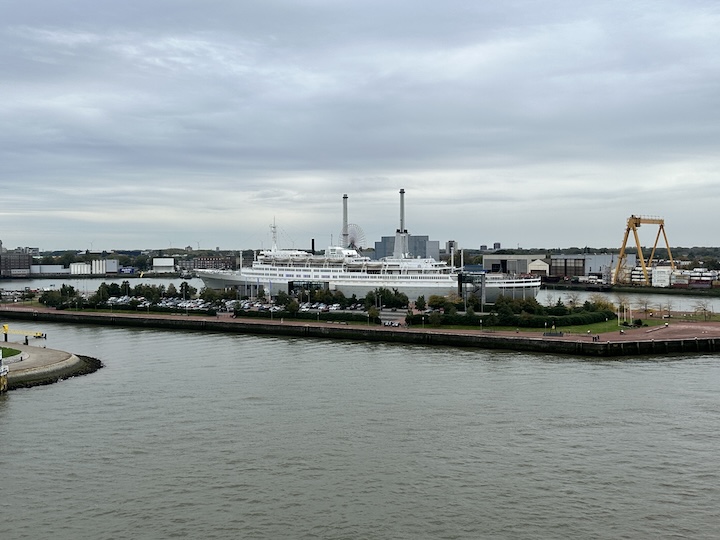
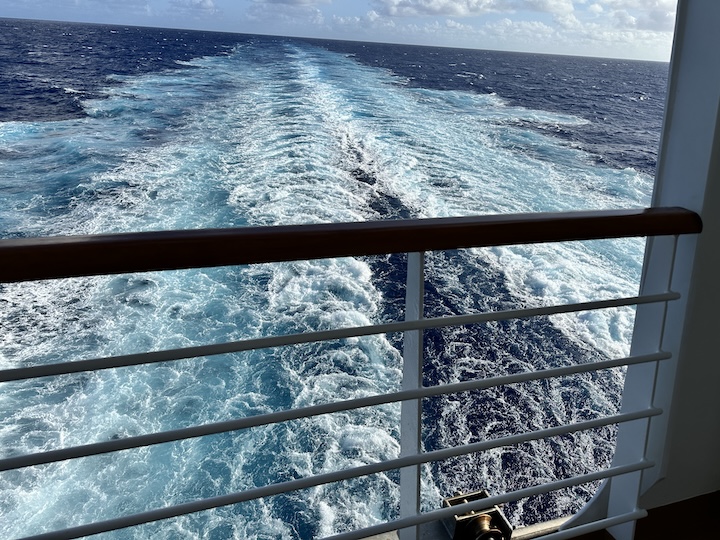
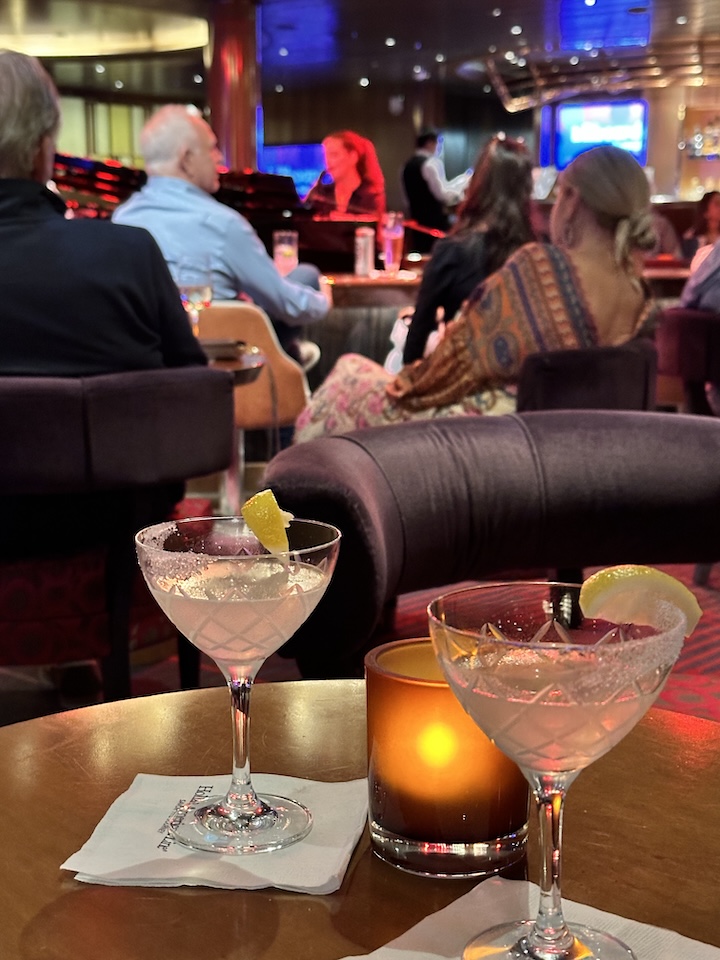
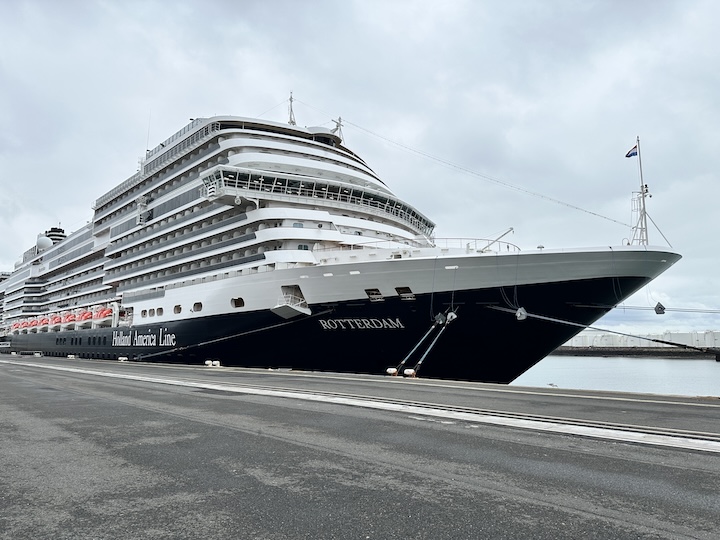
The morning finds us boarding the Holland America Line’s good ship Rotterdam as it departs on a comfortable TransAtlantic trip for the New World. We soon leave the Rotterdam skyline behind, and when the evening arrives we settle in for a bit of piano music and some refreshment. It’s been a good adventure. — PRW
Bordeaux, France

October 1 – 6, 2024

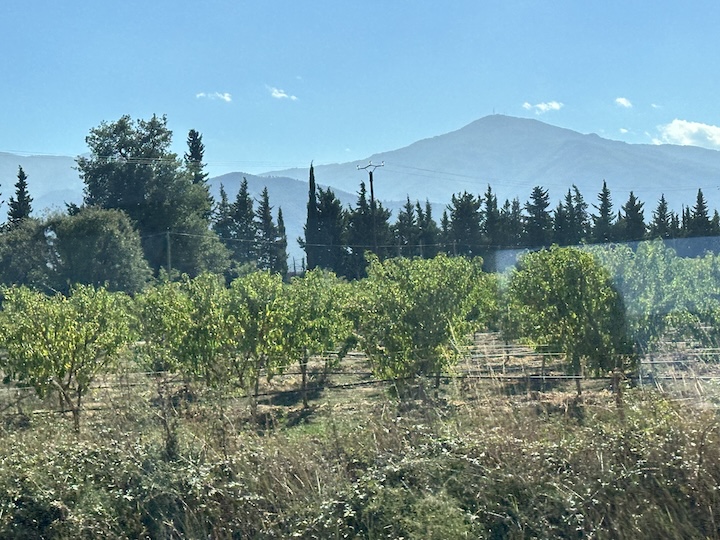
It’s a gorgeous fall day as our train departs Perpignan and the balmy Mediterranean coast for the Atlantic city of Bordeaux. Pretty farms and small villages pass by our window, and they seem to suggest we should return someday to enjoy more of their fresh produce, savory cheeses, and outstanding wine. That’s no doubt a fine idea for another time.  

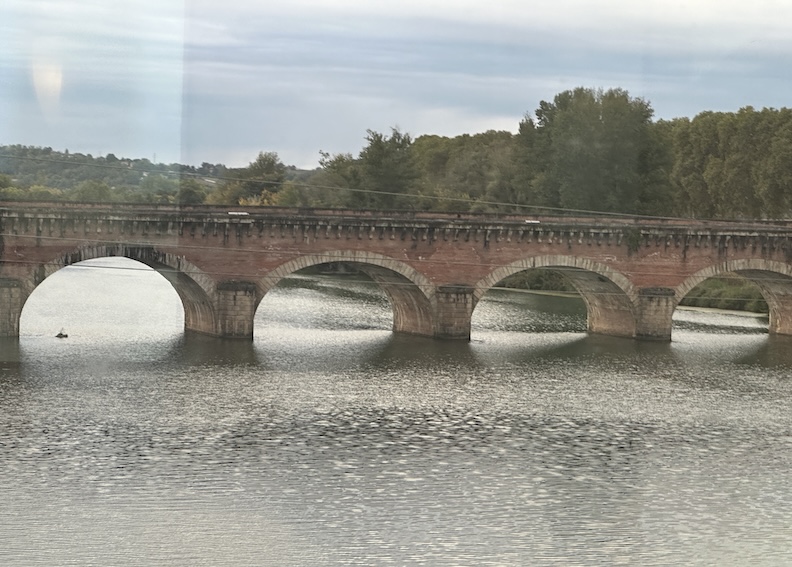
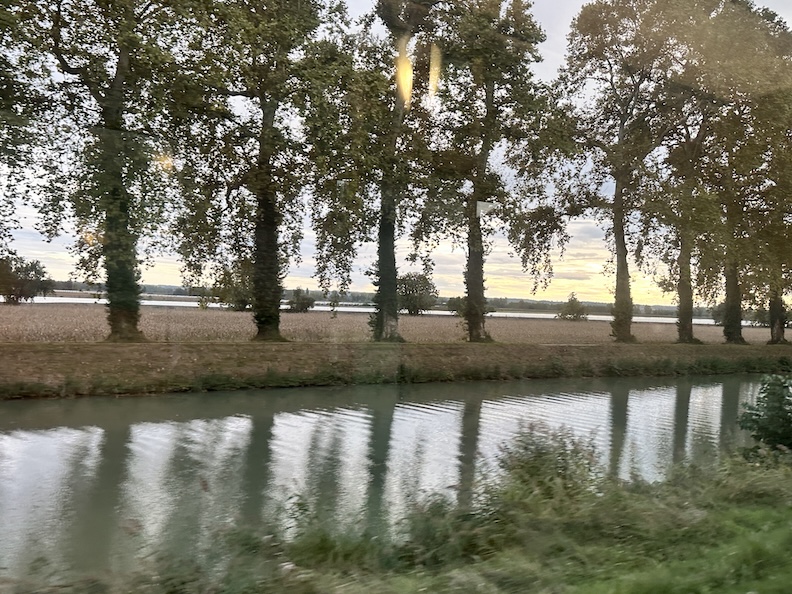
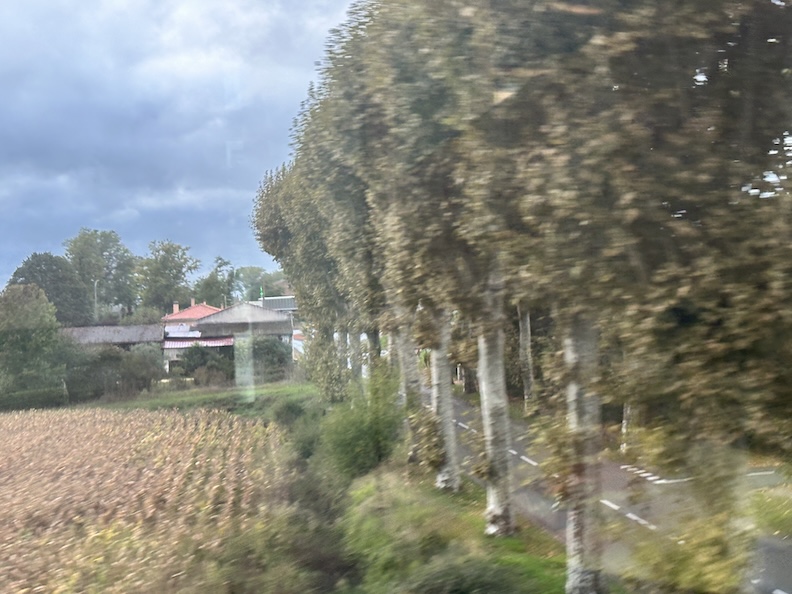
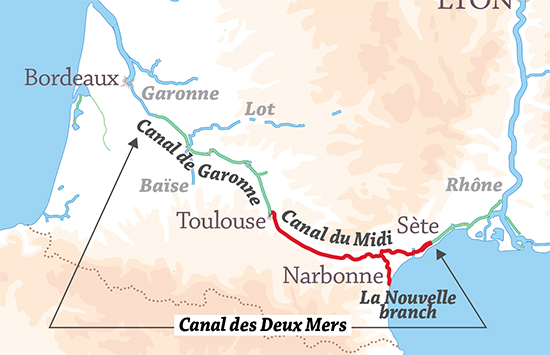
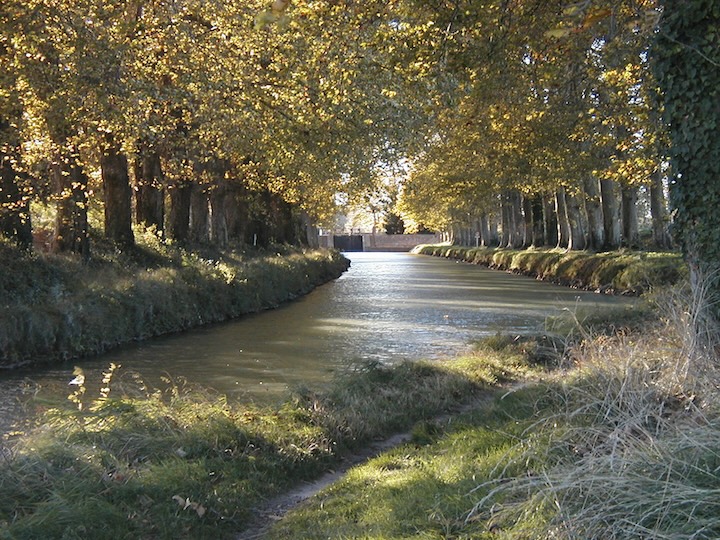
After a while the train follows the placid tree-lined banks of the Canal des Deux Mers, an engineering wonder, built from 1666 to 1681, as a hookup between the Canal du Midi and the Canal de Garonne to finally connect the Atlantic Ocean with the Mediterranean. It was a longtime dream that became a characteristically ambitious project under the reign of Louis XIV, the “Sun King.” 

The idea had intrigued various leaders dating back to Caesar Augustus and Charlemagne. In 1516 Francois I enticed the brilliant but aging Leonardo Da Vinci to live out his days in France, and they may also have discussed the project. Such a waterway had many potential advantages, as it could expand the development of French commerce and agriculture in the Languedoc region north of the Pyrenees and improve their access to lucrative markets, while French ships could bypass that dangerous month-long passage around the Iberian Peninsula. It was also a way to deprive the King of Spain of shipping taxes and revenues, while avoiding bands of pirates sailing from ports along the Barbary Coast of North Africa.

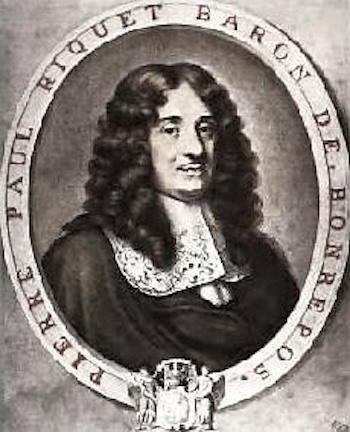
So when Pierre-Paul Riquet, an enterprising local collector of ‘salt taxes,’ brought the first feasible proposal for such a canal to the royal court, the Sun King was soon convinced and willing to authorize its construction. The problem that none of the many earlier designers had solved was how to provide adequate water for the operation of locks passing over the highest point of the watershed separating the Atlantic and the Mediterranean. But Riquet spent considerable time studying the local hydrology and found a solution by using various streams of the Montagne Noire, a large massif just north of the canal route.

It took 15 years for 12,000 workers, wielding picks and shovels and baskets, to build the canal in an era when important concepts of hydraulic engineering were still in their infancy. Women from nearby Pyrenean villages used traditional ancient Roman-era techniques to build many of the water-conveying structures that were essential to the success of the project. The Canal seems to have worked well for the next 177 years until the Bordeaux-Sète railway line opened in 1858 and connected the Atlantic to the Mediterranean by steam power, making the Canal obsolete. 

Today the famous Canal is a gorgeous shady waterway for pleasure boaters and fishermen, with pathways for cyclists and runners. And it all looks very appealing from our train windows as we draw nearer to our debarkation at Bordeaux’s Gare Saint-Jean.

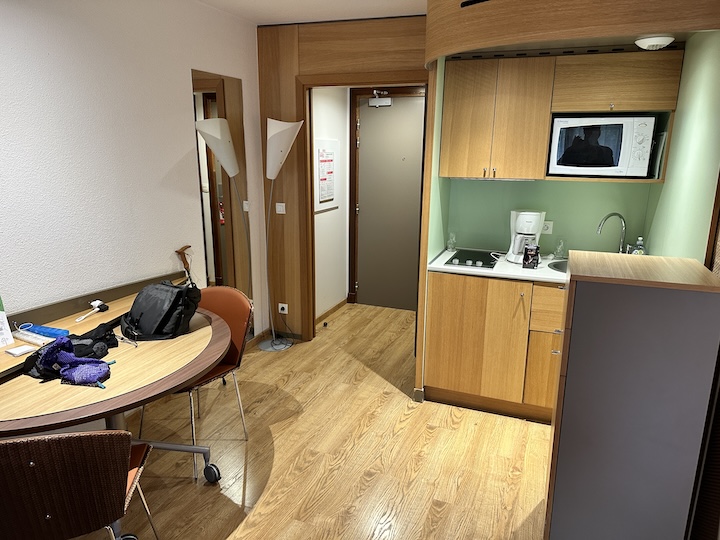
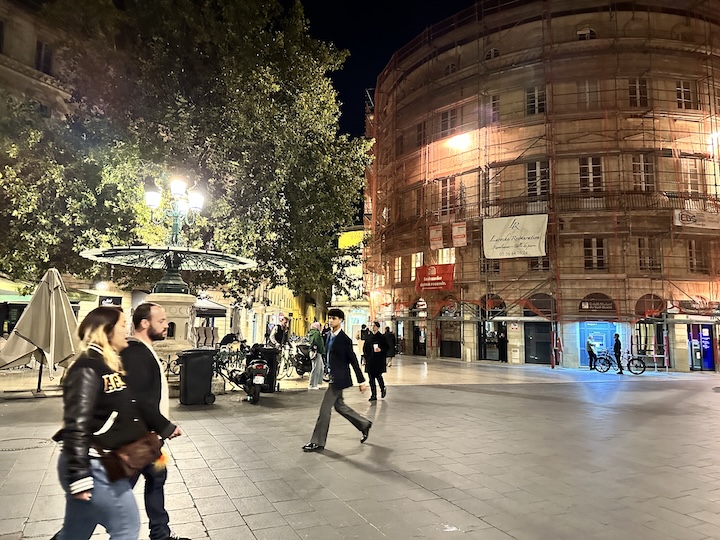
We arrive in Bordeaux as the evening sets, and we take a cab to a comfortable room at the Aparthotel Adagio by the Place Gambetta. It’s a modern purpose-built hotel, with clean and simple suites near a good tram line in the center of town. And we won’t be doing an Airbnb thing, taking lodging away from the locals.

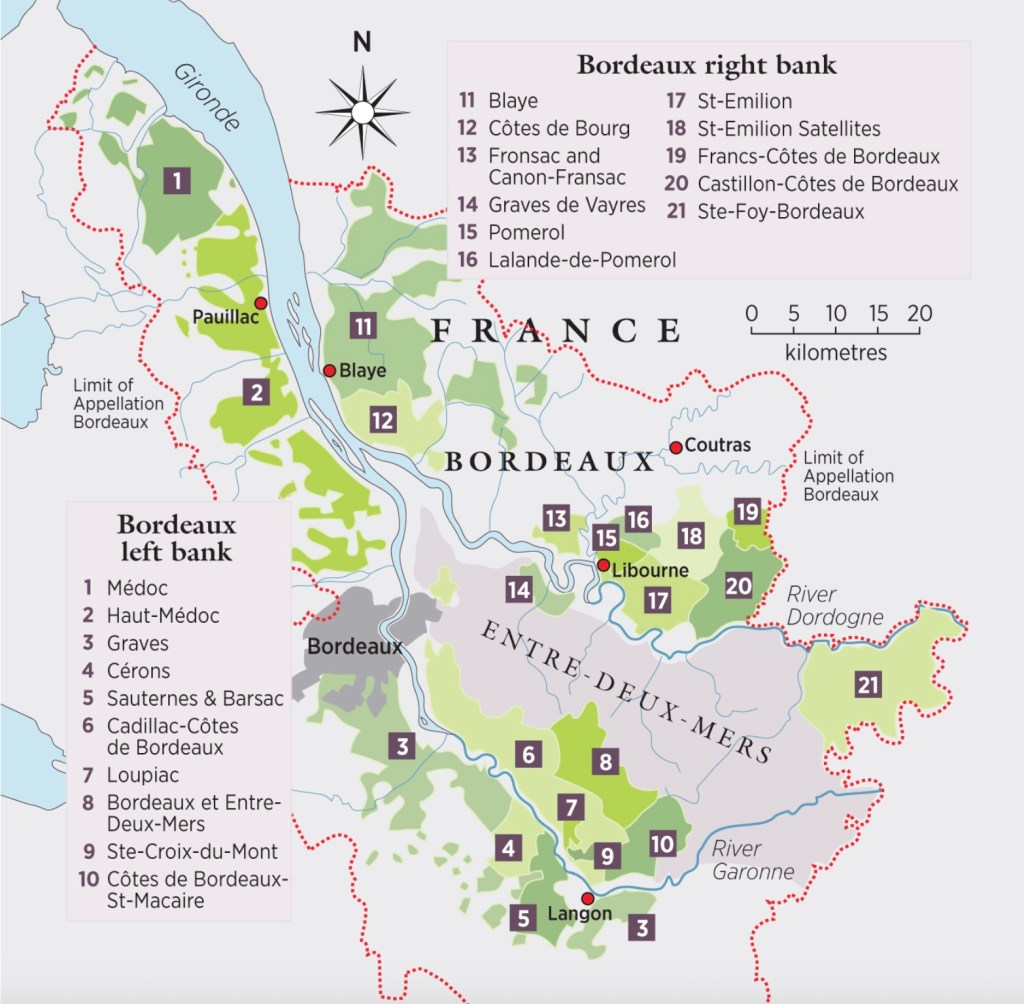
A visit to southwestern France means easy access to famous local attractions involving food, wine, and fine cognac. The actual town of Cognac is only about an hour and a half north of here by train, and it’s certainly a temptation to visit the venerable old houses of Martell, Rémy Martin, and Hennessy. The city of Bordeaux lies near the base of the Médoc, a long fertile tongue of land that separates the stormy Bay of Biscay from the protected waters of the Gironde estuary. The famous Chateau Lafite Rothschild, Château Latour, and Château Mouton Rothschild are located on that fertile strip of land. And the wineries of “Entre deux Mers” (‘Between two Seas’) are between two rivers just to the east of Bordeaux. It’s a golden opportunity for lots of side jaunts – but we’ll be so involved with exploring Bordeaux that we’ll actually manage to do none of that.  

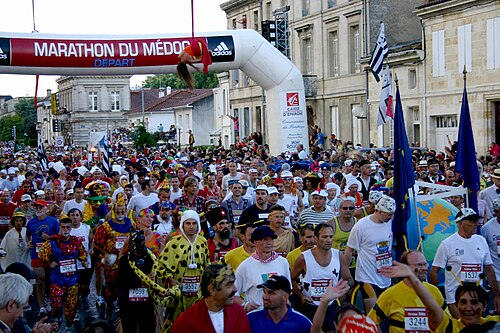
We won’t even get to the festivities surrounding the rollicking Marathon du Médoc in nearby Pauillac, which is known as the longest marathon in the world due to the many stops for wine tasting and the 50 or so musical orchestras along the route. It would seem that speed is not of the essence for the participants, who mostly show up in costume and seem to heavily favor a hearty joie de vivre instead. 

The fact is, we’re nearing the end of a four-month Euro jaunt, we’ve already seen an awful lot of the continent, and our brains are now a bit clogged with many fine adventures. So we’ll just content ourselves with getting to know the city of Bordeaux, instead of running around the countryside. We’ll save all those other attractions for another day.

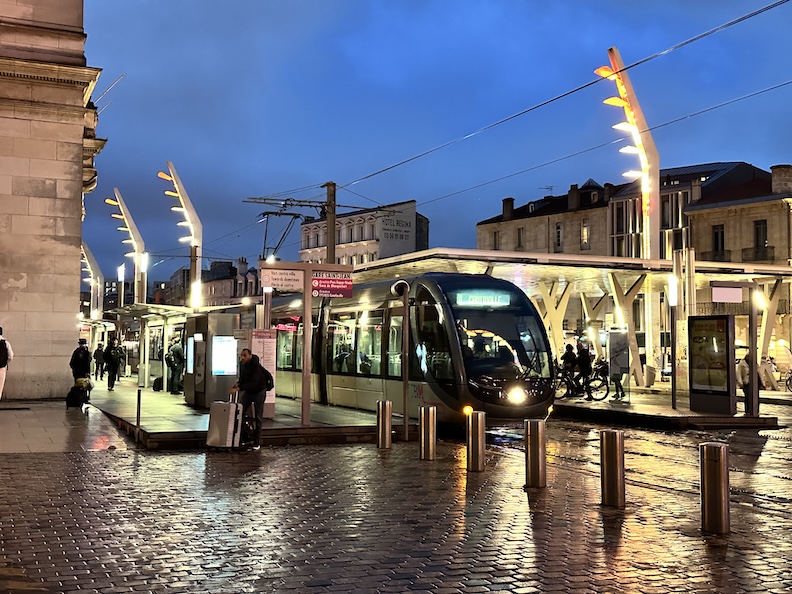
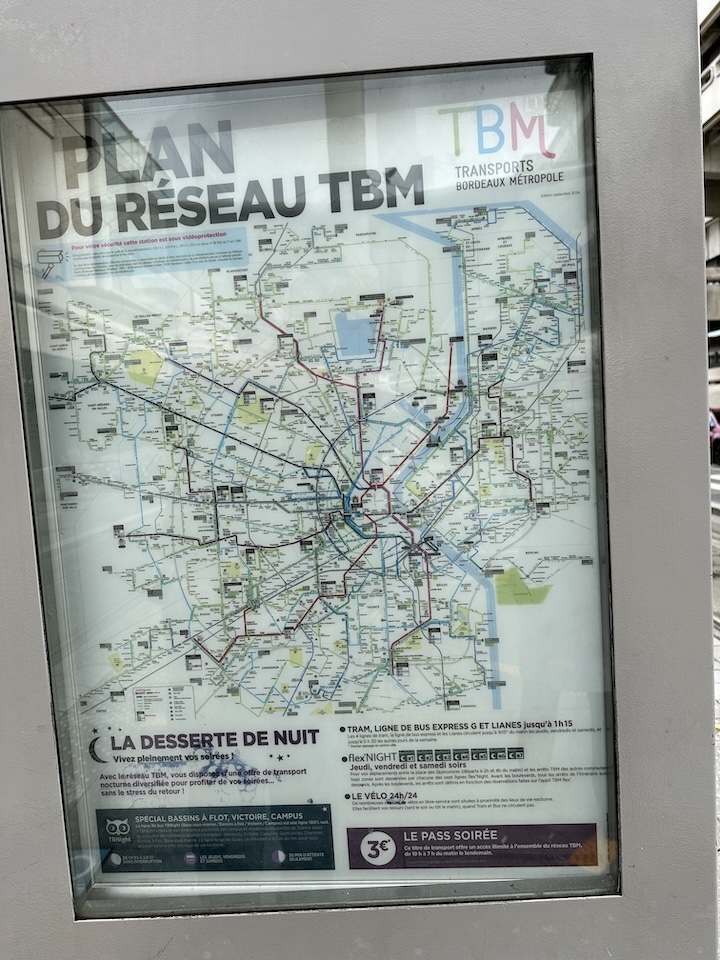
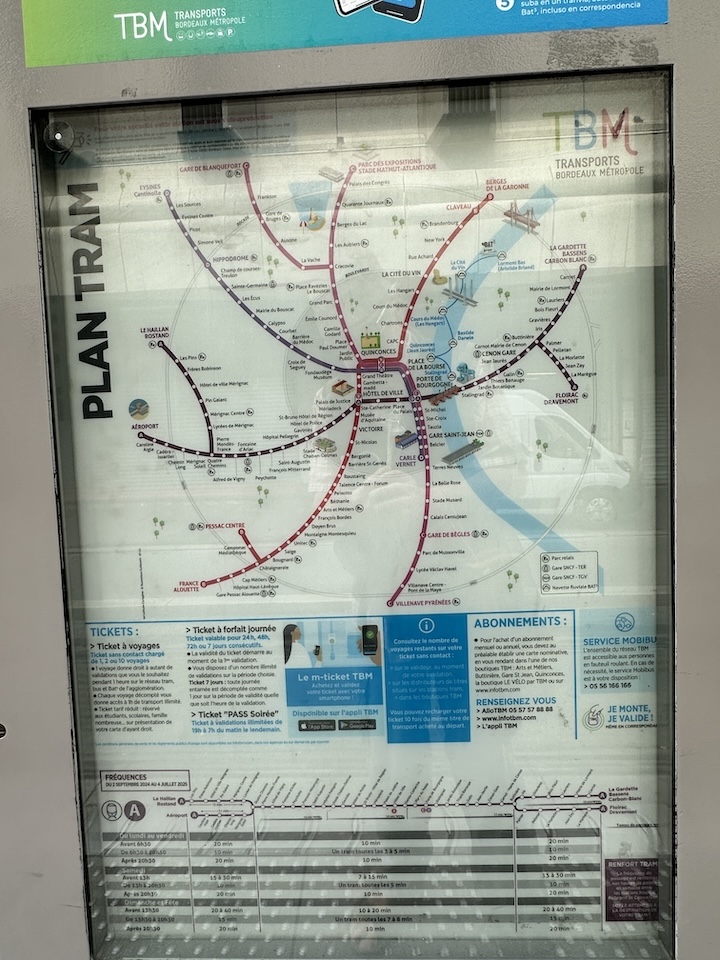
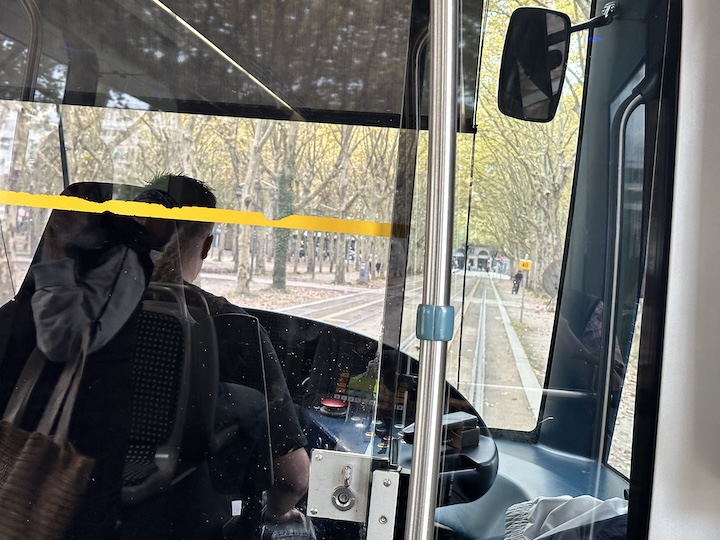
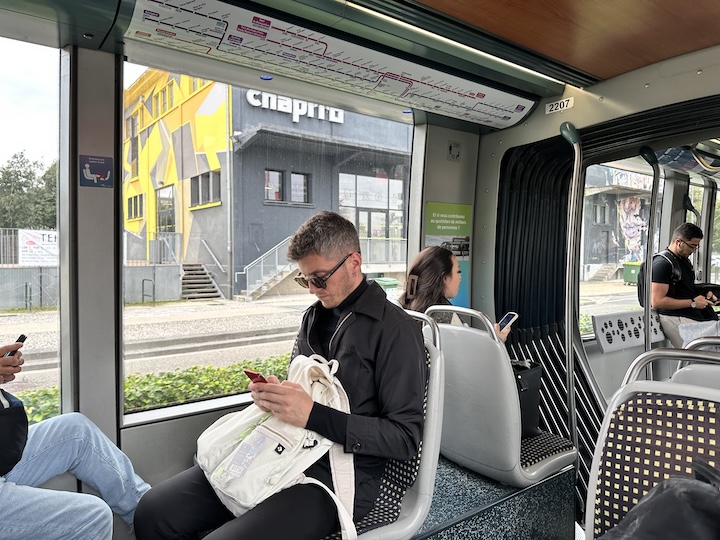
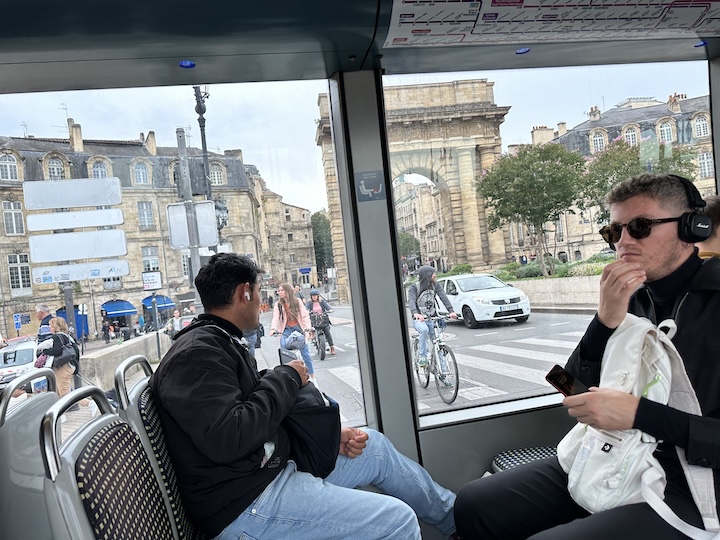
We’ve often mentioned (maybe too often!) the ease of local public transportation. But after a quick glance at Bordeaux’s confusing ‘Plan du Réseau’ (Network Plan), we decided we’d better stick to the local tram lines for a low-cost tour of the city. 

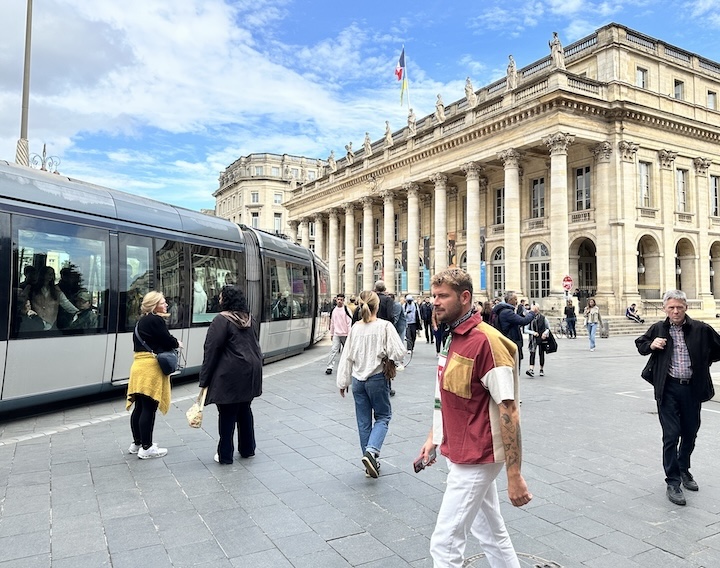
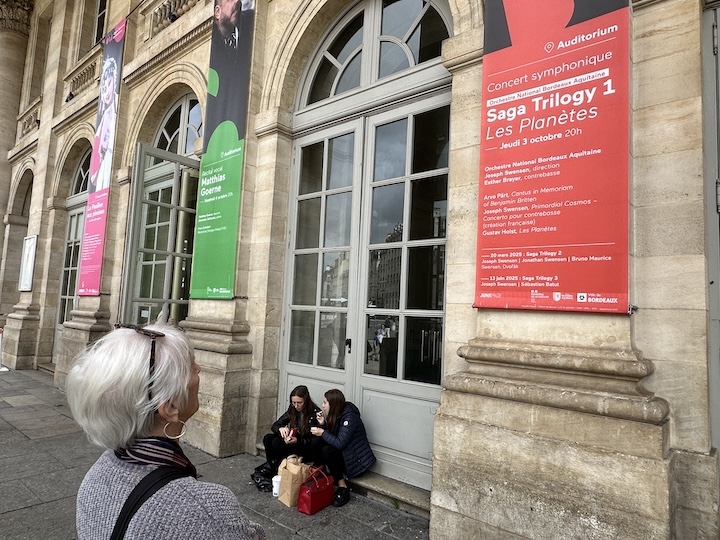
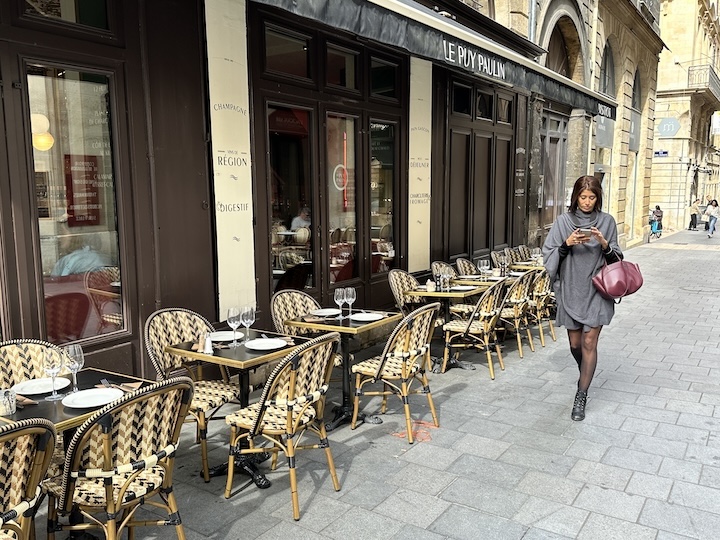
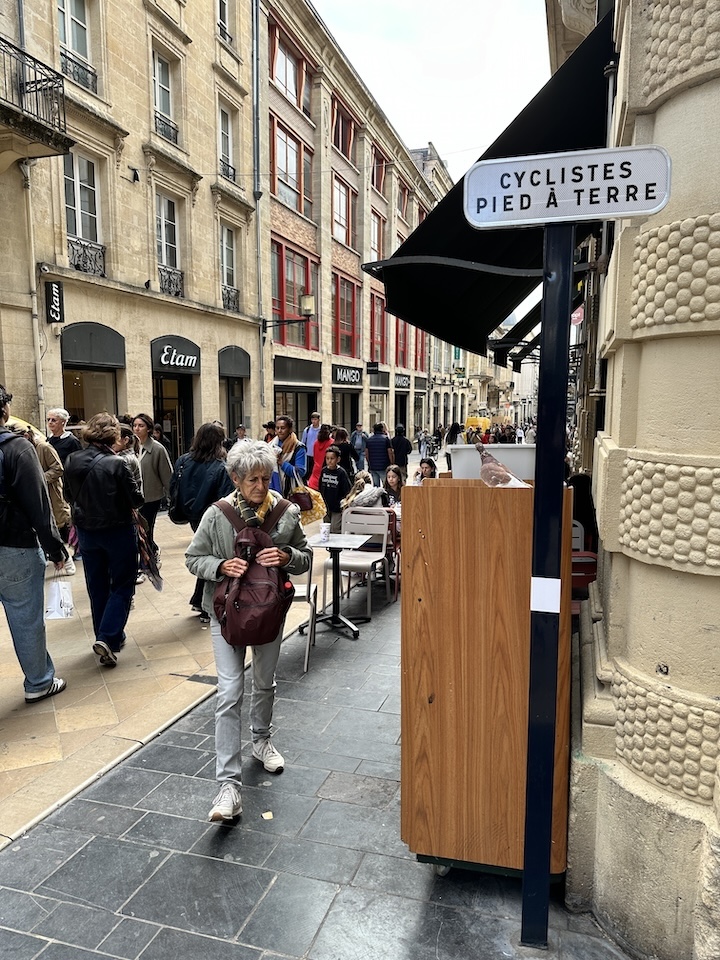
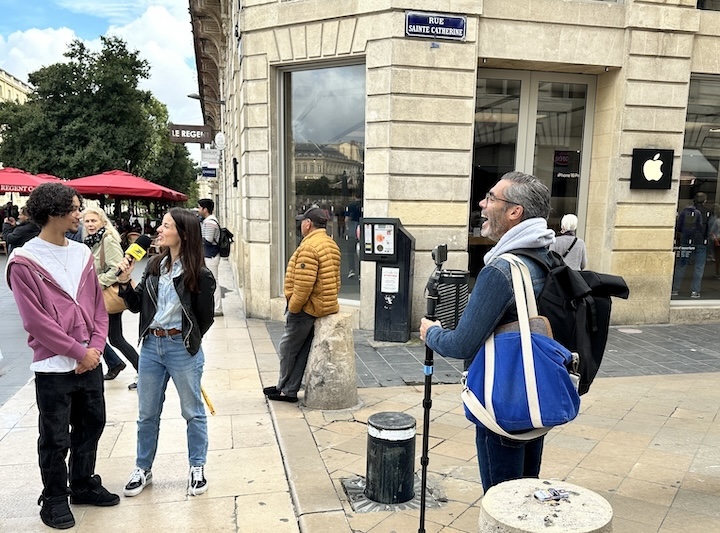
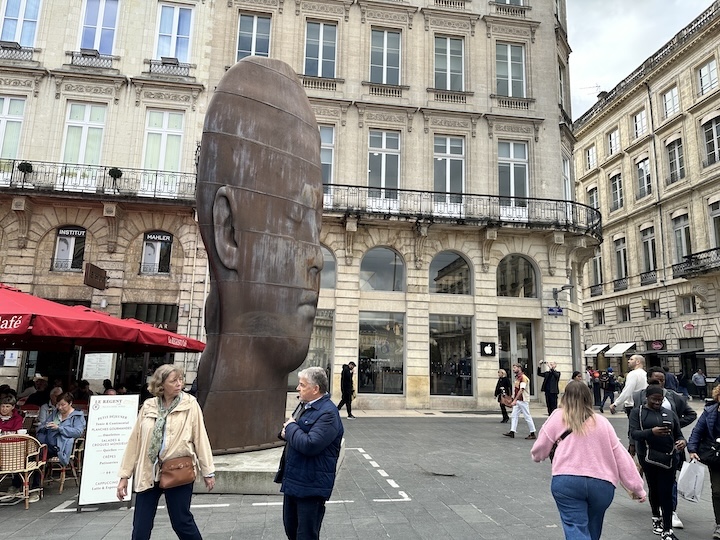
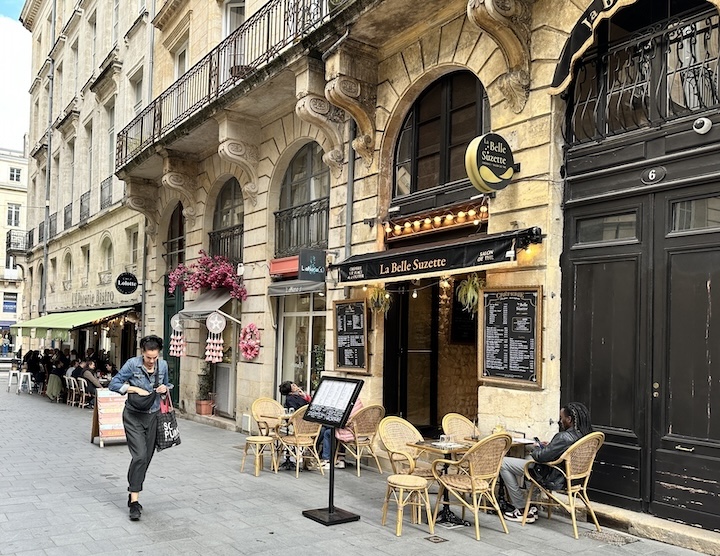
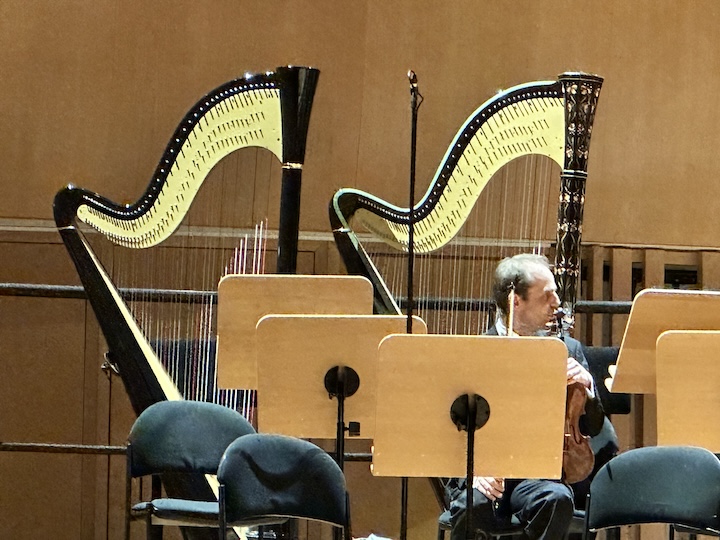
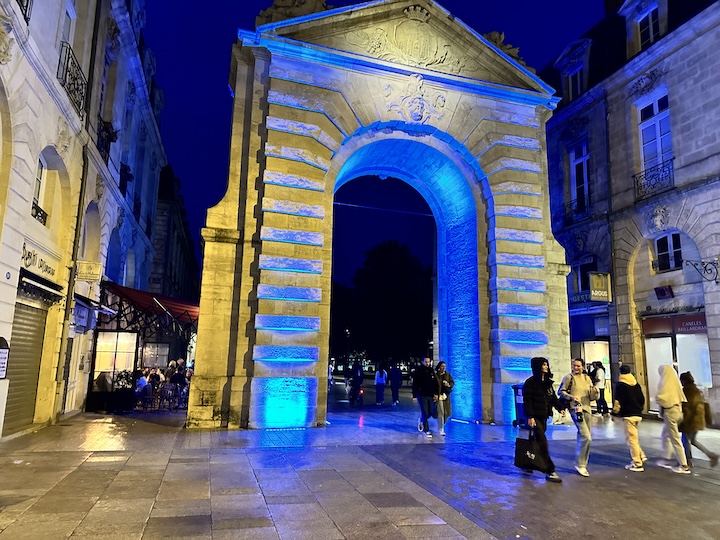
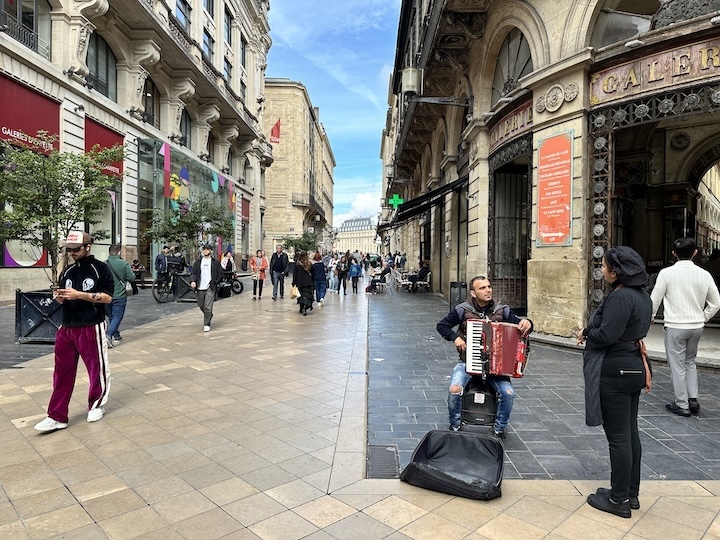
And soon our tram rolls past the city’s fine classical Opera Hall. It’s in the beautiful old center of town right by the Apple Store, where some guy is involved in a street interview. This is a pedestrian-friendly district full of historic and Neo-classical buildings which is currently the largest UNESCO-listed urban World Heritage site. There’s a rich mixture of street art, fancy shops, and charming sidewalk cafes where we can absorb some of the busy street life and atmosphere that engulfs us. We stop to share a sandwich, and then buy tickets for an upcoming orchestral evening. 

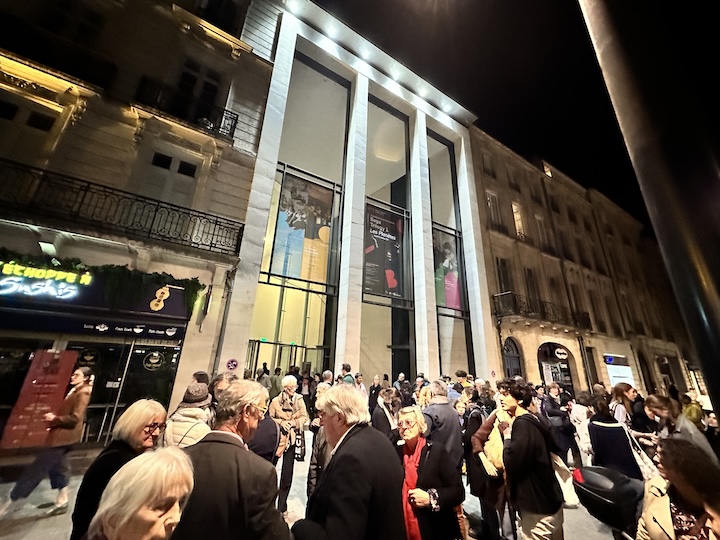
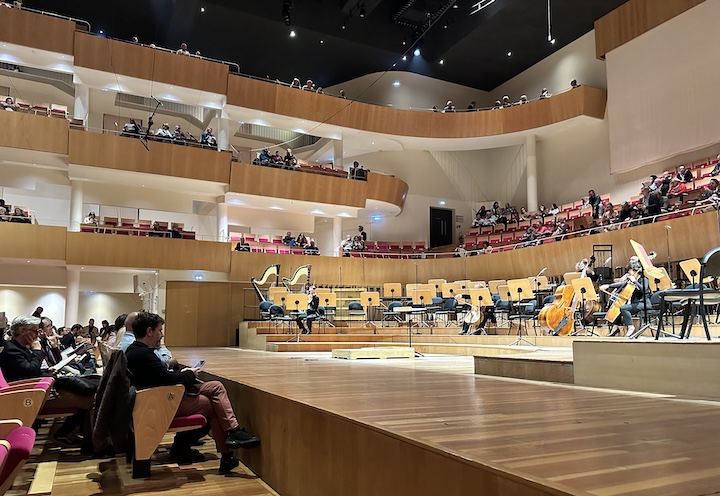
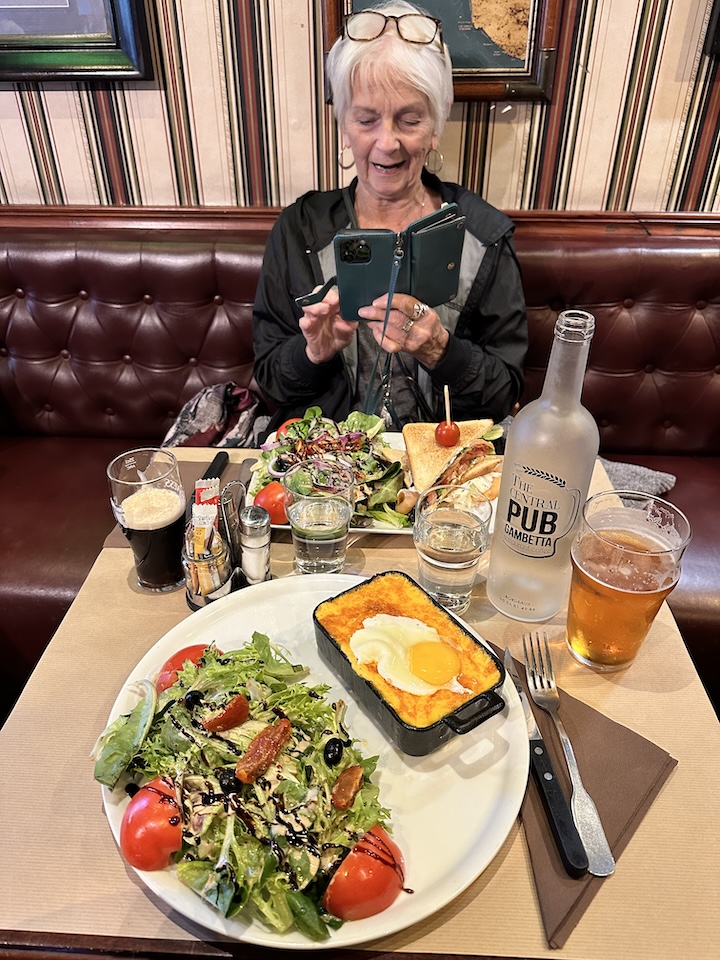
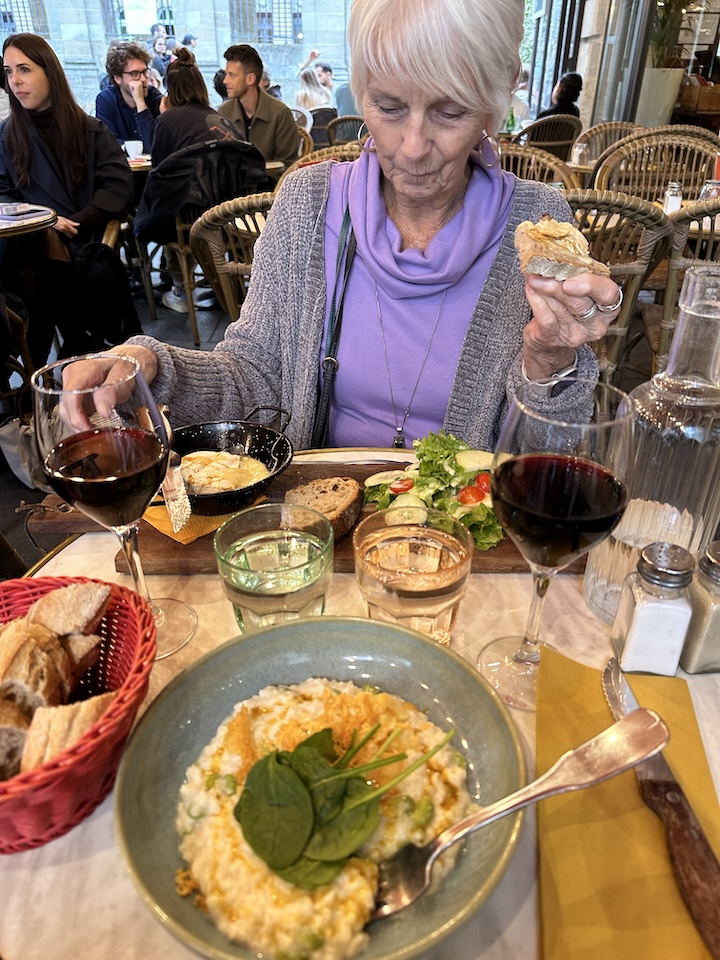
But later we realize the orchestral evening is actually to be held at a more modern nearby venue. Ah well, it’s important to read the fine print. But we had a grand evening anyway – along with a good meal at a local bistro and some of that famous regional wine .   

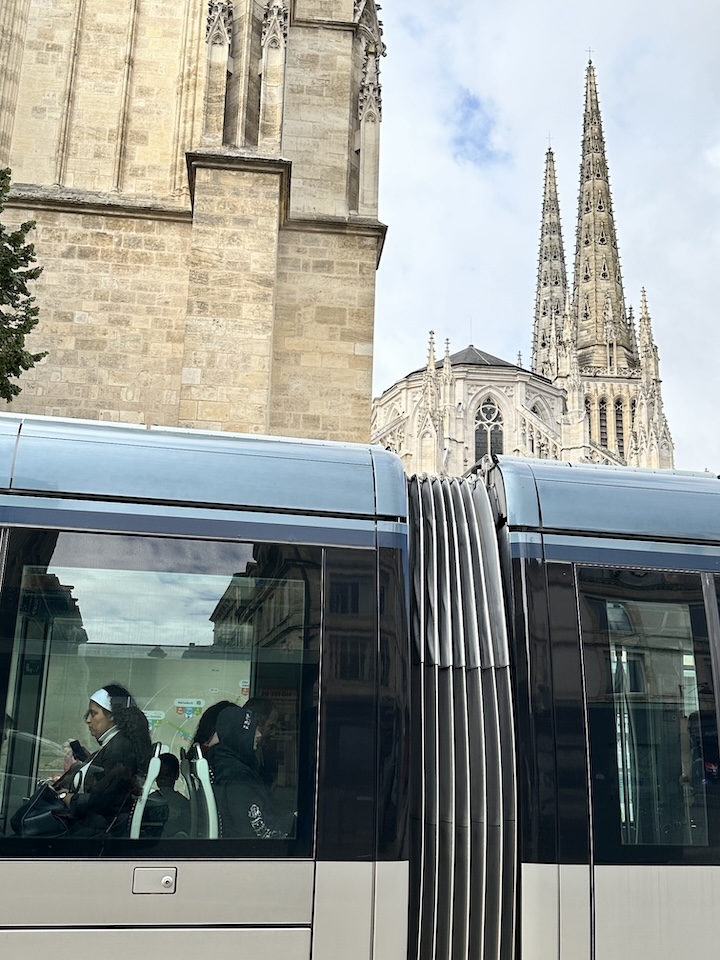
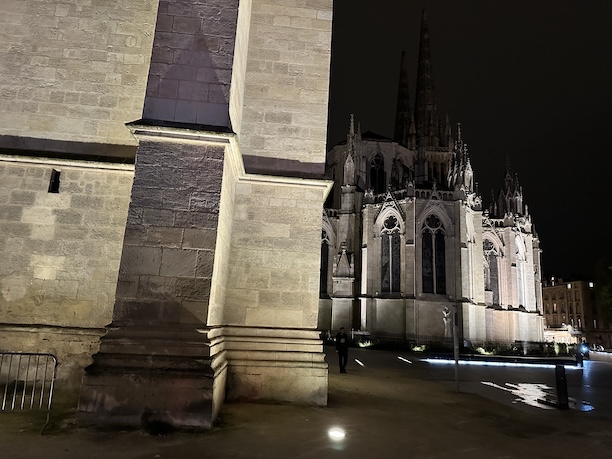
On another day we’re off to explore more of the city, and I’m captivated by the sight of a nun on the tram as we pass the Gothic towers of the Cathédrale St-André, dating from 1096. Some things are timeless, even in an era when efficient mass transit has replaced the charm of horse-drawn carts on manure-strewn streets.

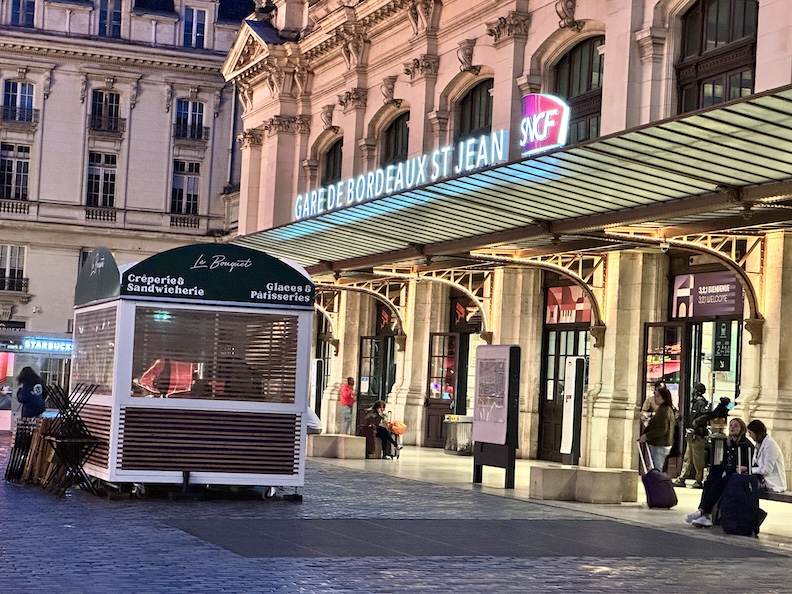
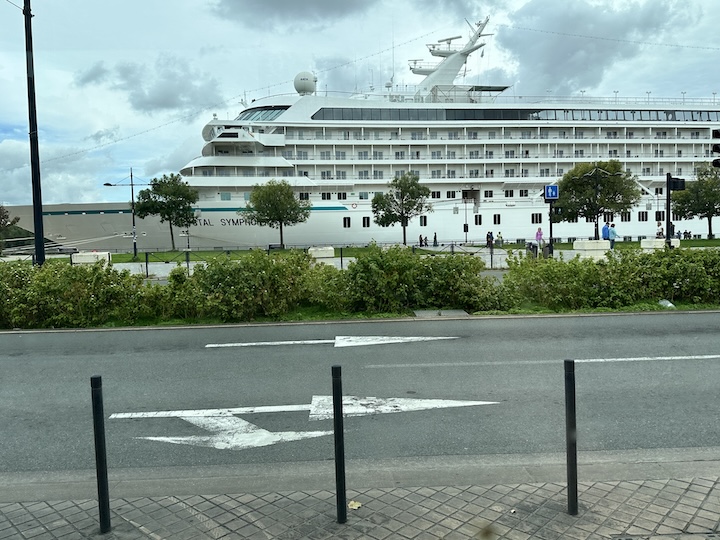
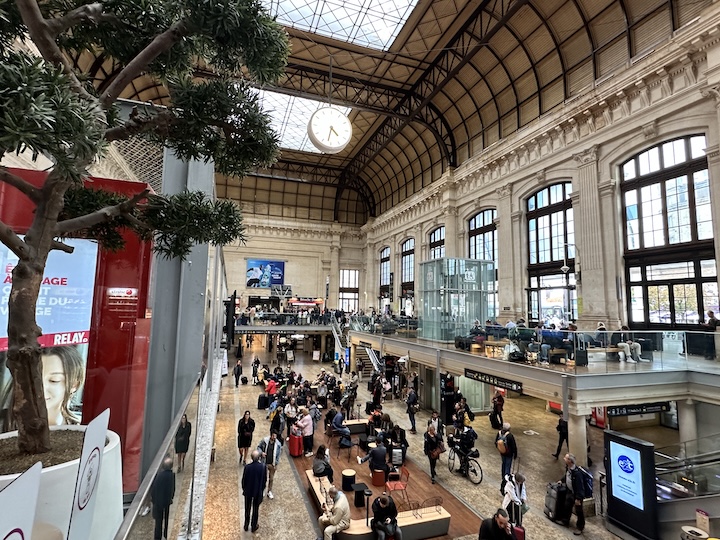
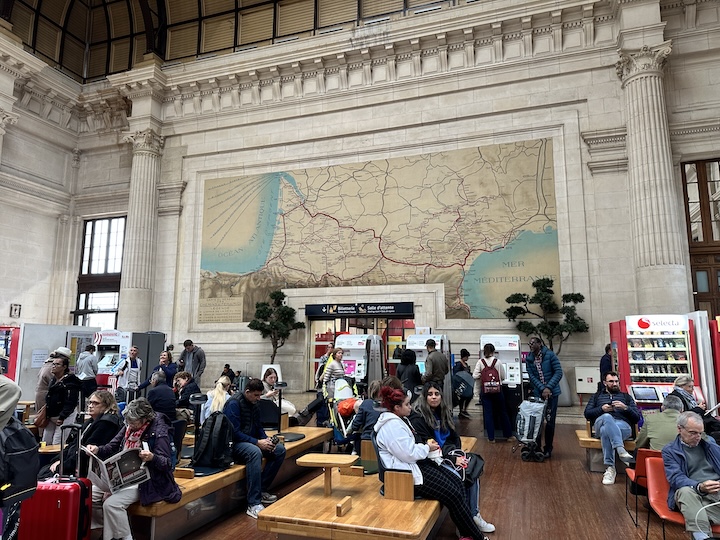
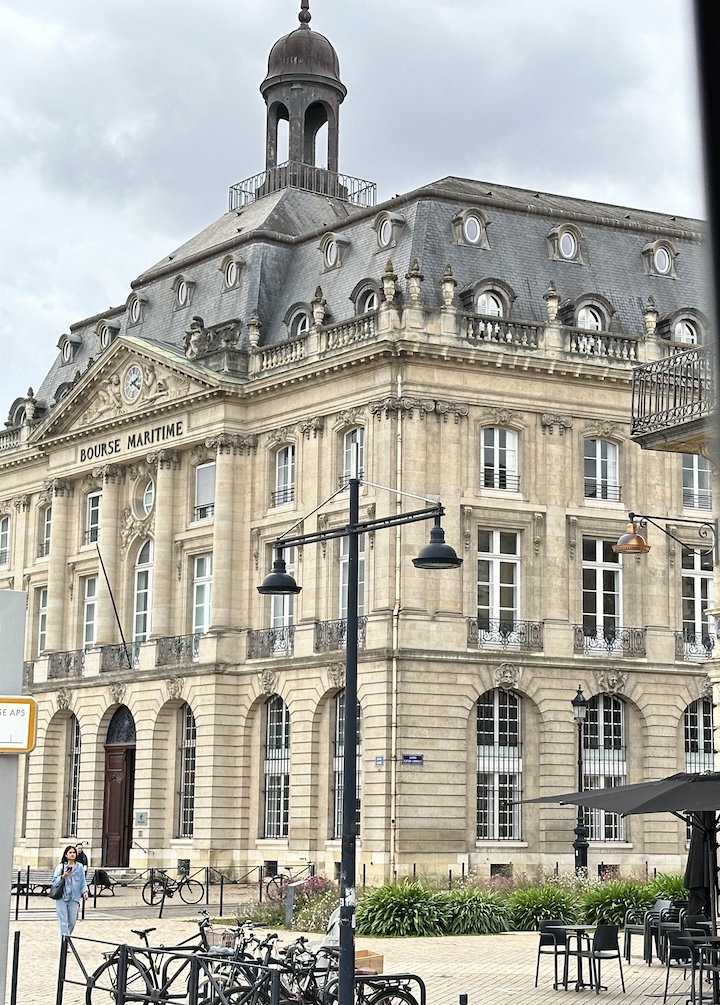
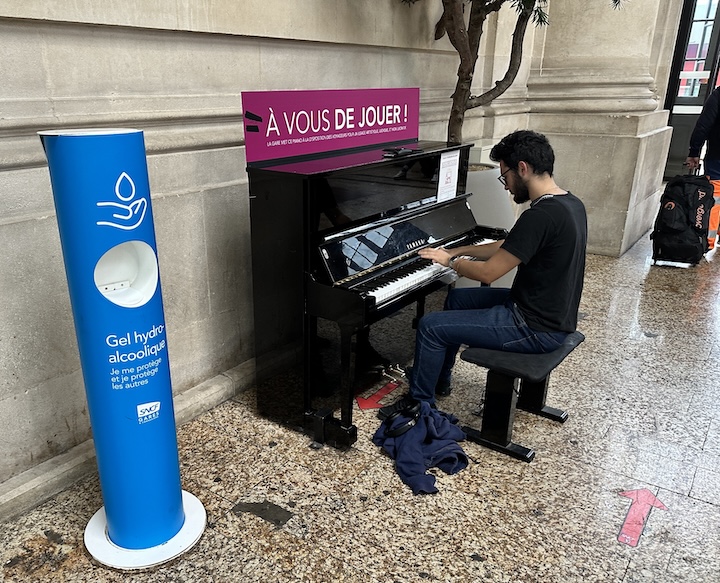
Today we pass the docks where the cruise ships are located, and we pass the classic old Bourse Maritime on our way back to visit the Gare St-Jean to buy the train tickets we’ll need in just a few days as our Euro 2024 trip finally winds down. There’s someone at the piano, of course, and you can trace the famous Bordeaux to Sète train line up there on a huge map at one end of the grand hall. But we’ll be taking the train heading north instead, toward Paris.

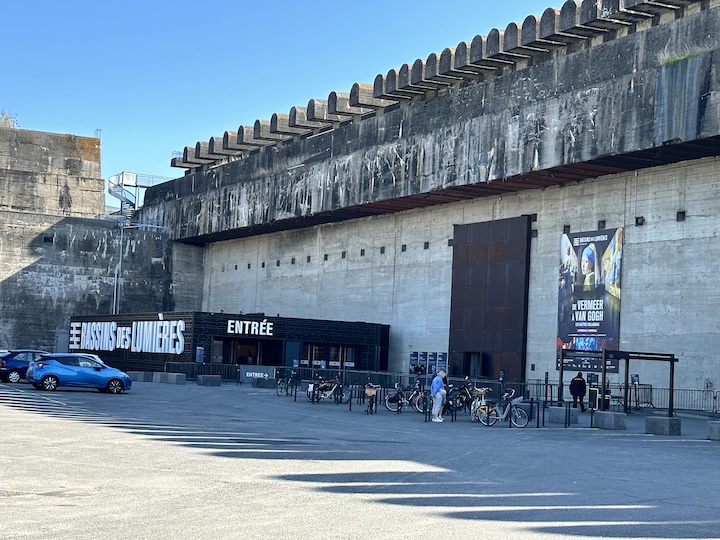
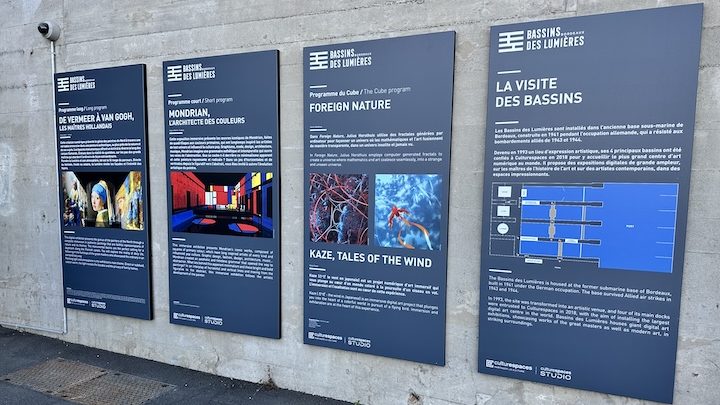
The tram makes its way onward through the streets of Bordeaux, to the new immersive art show at the Bassin, the city’s large yacht basin. These new immersive art shows are an artistic and musical treat for the senses, similar to those ‘laser light shows’ we recall from the 1960s, and designed to attract a modern audience that’s more attuned to video games. But this one was so dark inside that I kept stumbling over the people ahead of me, and finally I needed to duck out by the way we came in – against the protestations of the staff.  

It’s a wonderfully bright day just outside the door, and a fine place to admire the many fine yachts at their moorings. There’s also a memorial to the patriots of the Spanish Civil War who fought for freedom against Franco’s forces. Their defeat led to decades of oppression in Spain and are a reminder to all of us that freedom is a precious commodity.

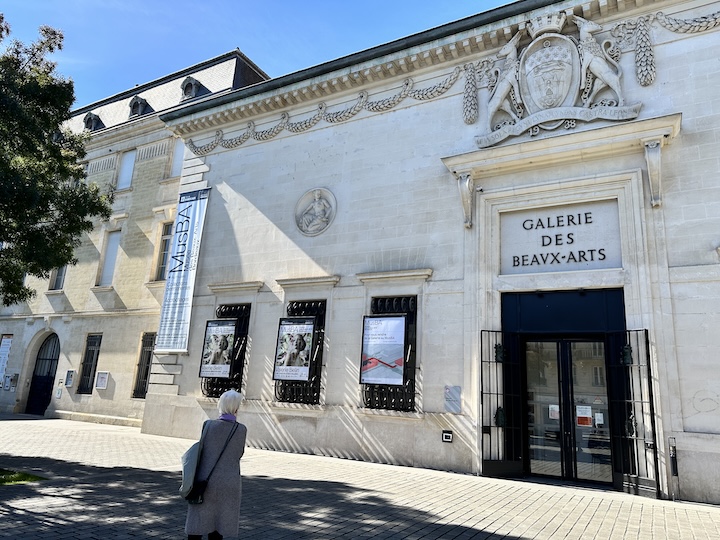
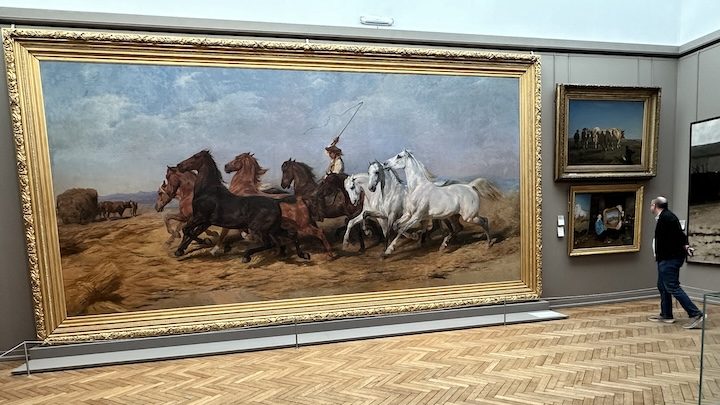
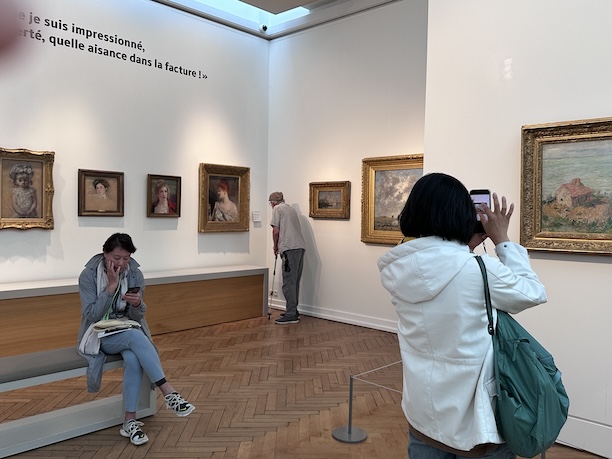
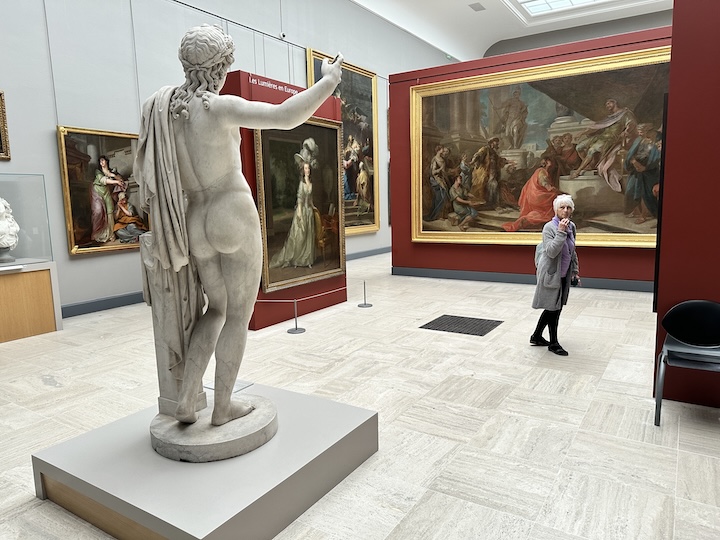
Bordeaux’s fine Galerie des Beaux-Arts is another fine attraction. We spend considerable time wandering through its extensive works, to maybe gain a few more insights into the long and fraught history of Europe. And the many finely-crafted paintings of sailing boats always have the ability to grab my attention.

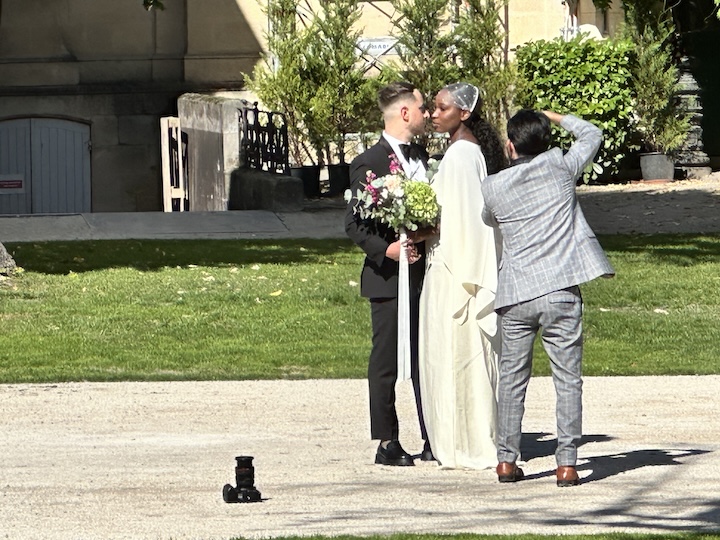
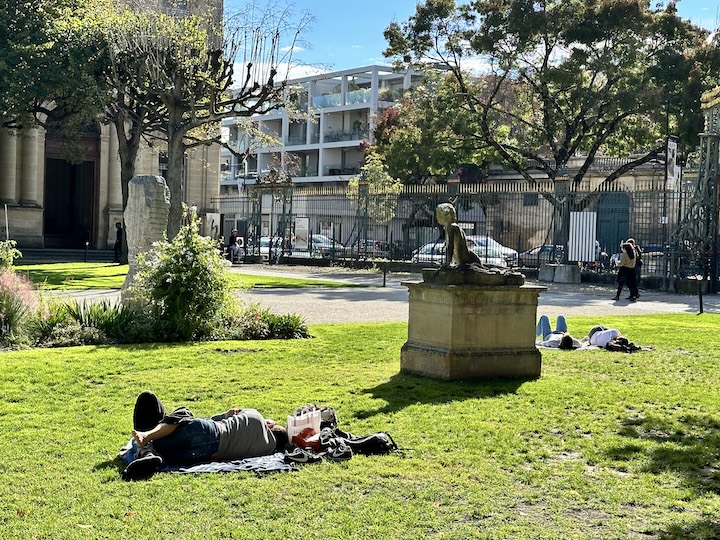
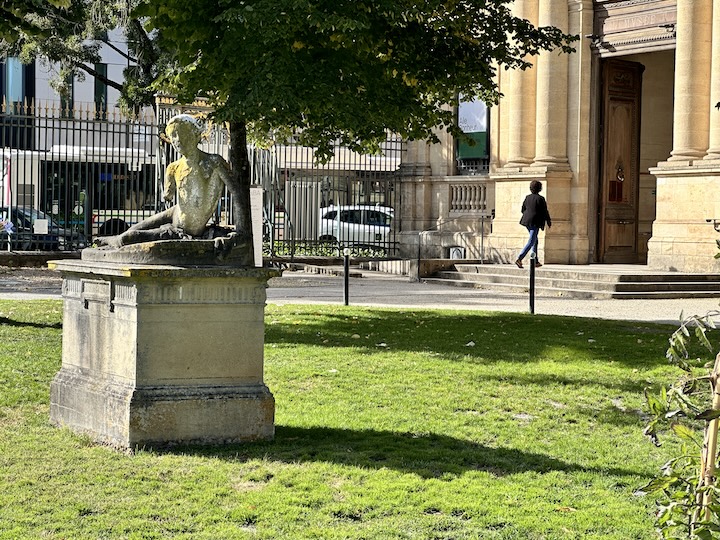
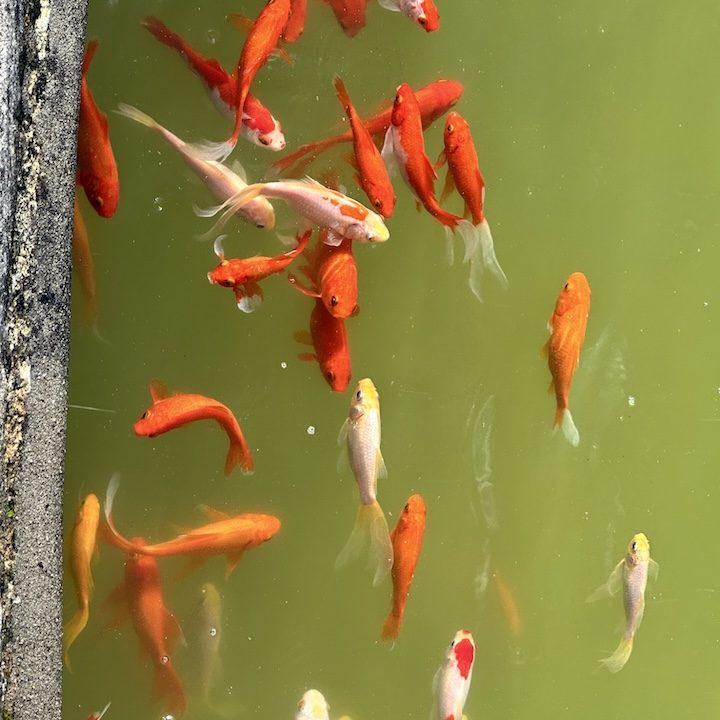
Just outside the door there are pleasures awaiting us through a wander into the sculpture garden. What appears to be a wedding shoot is underway. There are languid gold fish aplenty just hoping we might drop a crumb or two into the water. And a happy couple appear to be engaged in a pleasurable match of lawn-wrestling.

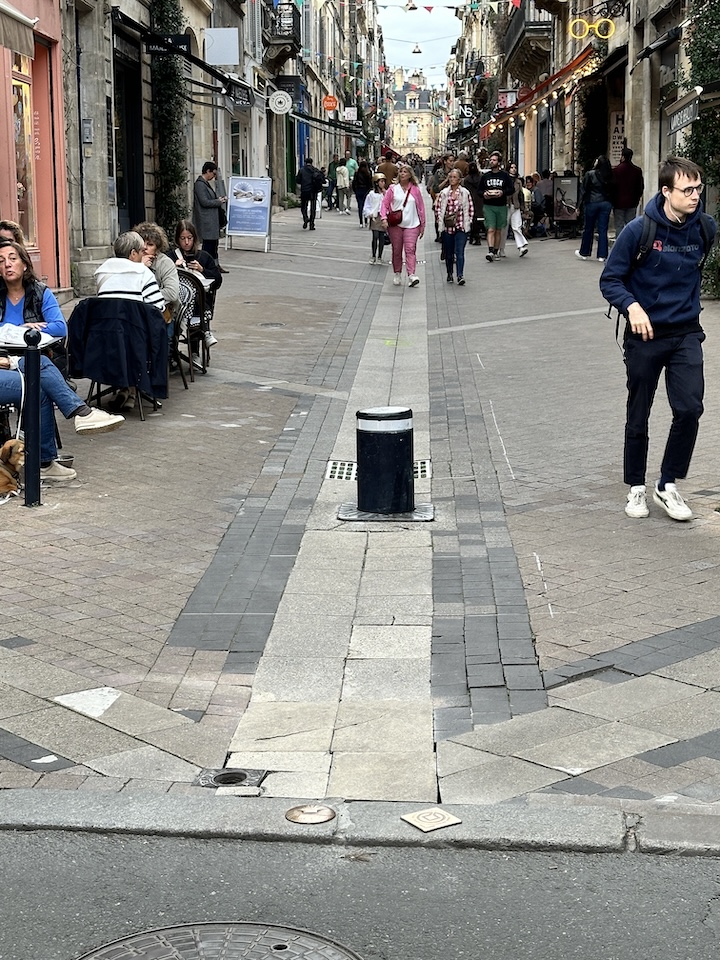
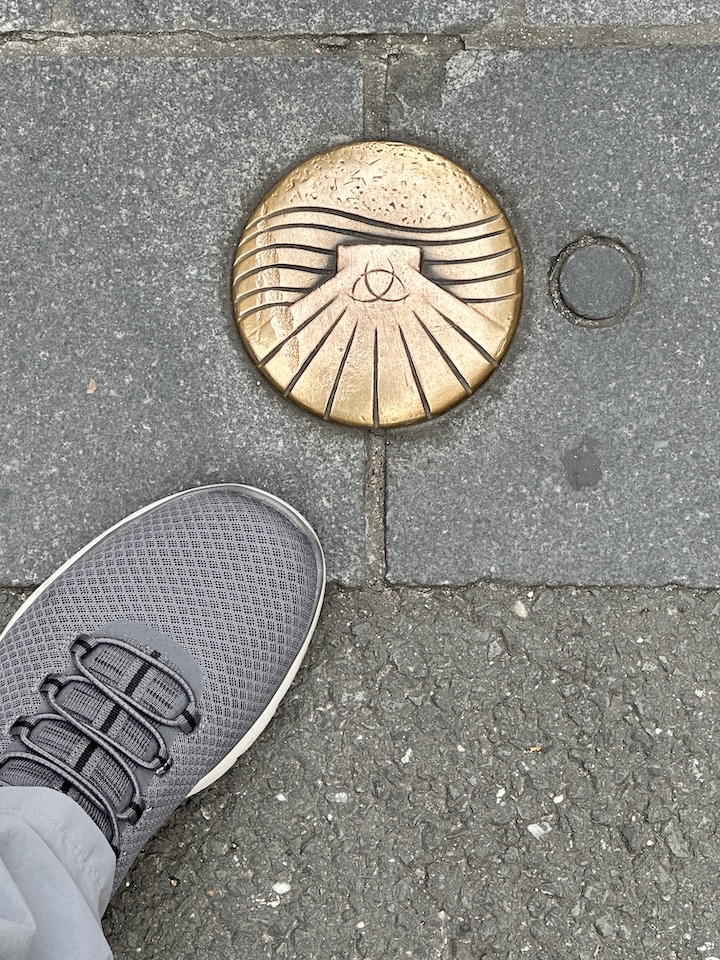
We emerge into the lengthening shadows of evening to find yet another bronze marker in the pavement for those avid souls who are inclined to hike off toward the Pyrenees and then onward to distant Santiago de Compostela in Spain. 

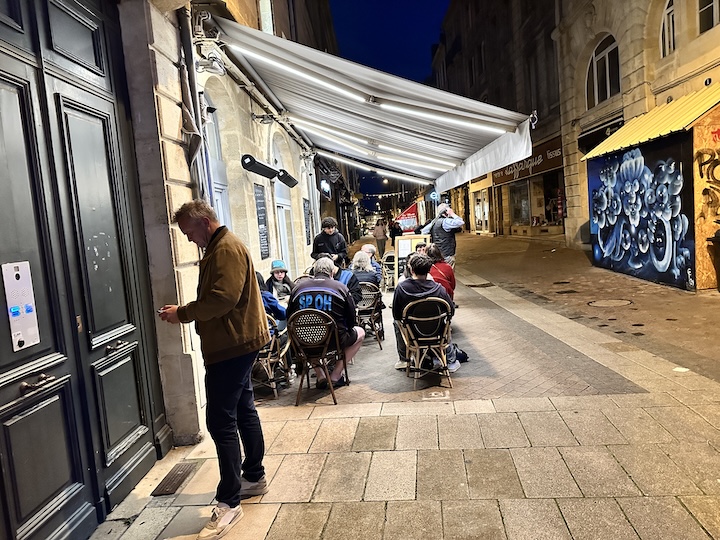
But we’ll content ourselves with a leisurely wander in search of a good evening’s repast, and a decent glass of wine, before making our way back through the nightly streetscape to our quiet lodging place.

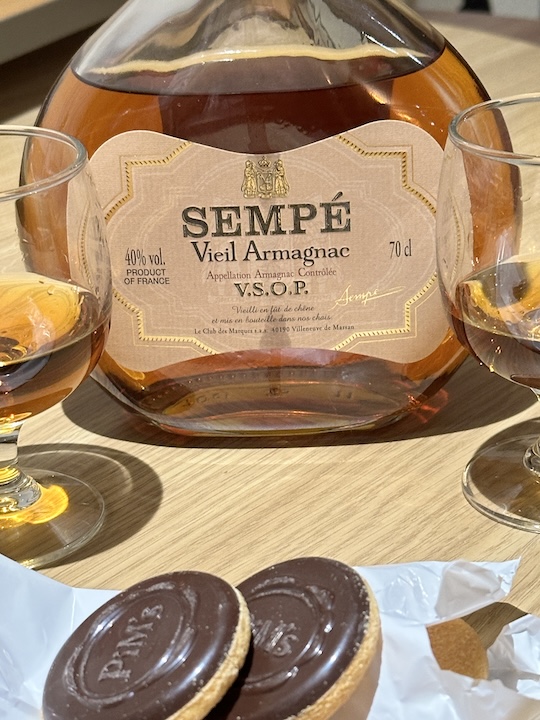
And back at the hotel we’ll enjoy a few cookies with a tot of fine golden Armagnac before collapsing into a good night’s rest. 

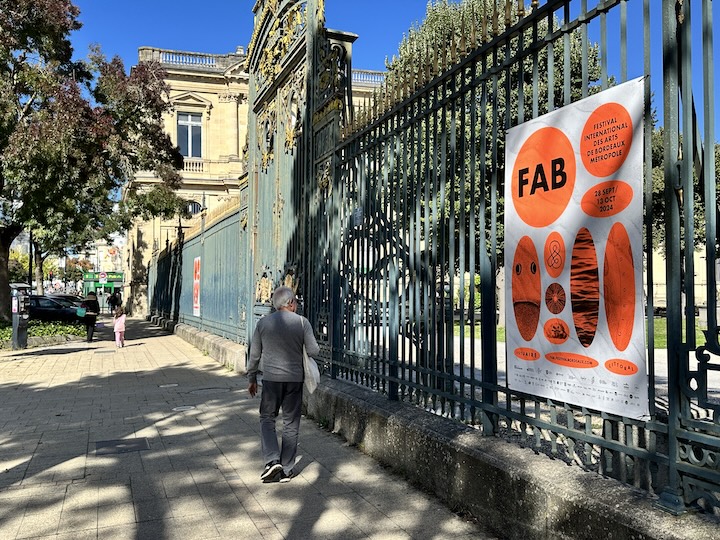
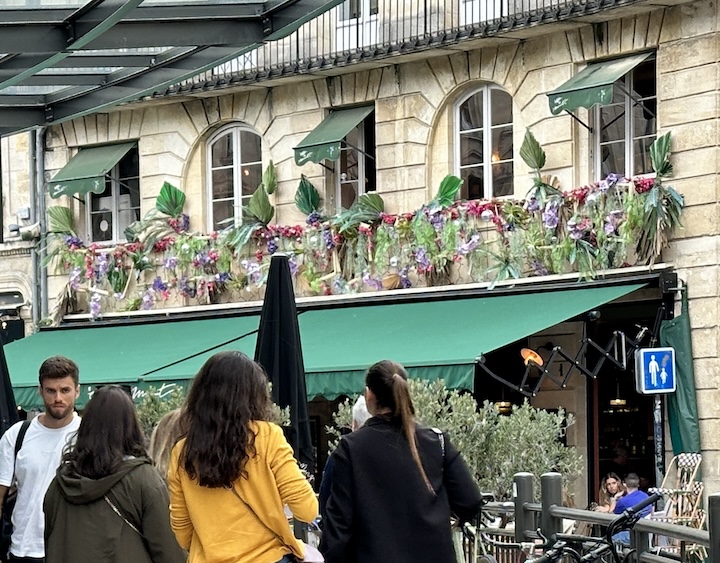
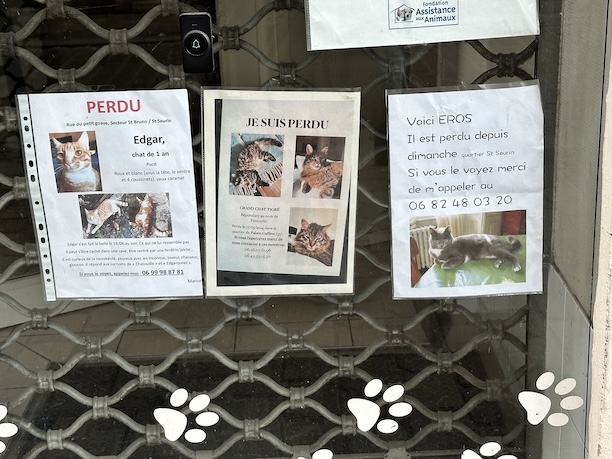
We spend our last full day exploring more of this diverse city, passing signs for an upcoming international film fest, enjoying the plant-filled balconies overlooking a fine coffee shop just below. The old Jewish section and its tragic memories remind us that European history also contains atrocities among all the beauty. And of course there’s a “Lost Cat” poster, as we’ve seen in almost every city we’ve ever visited.

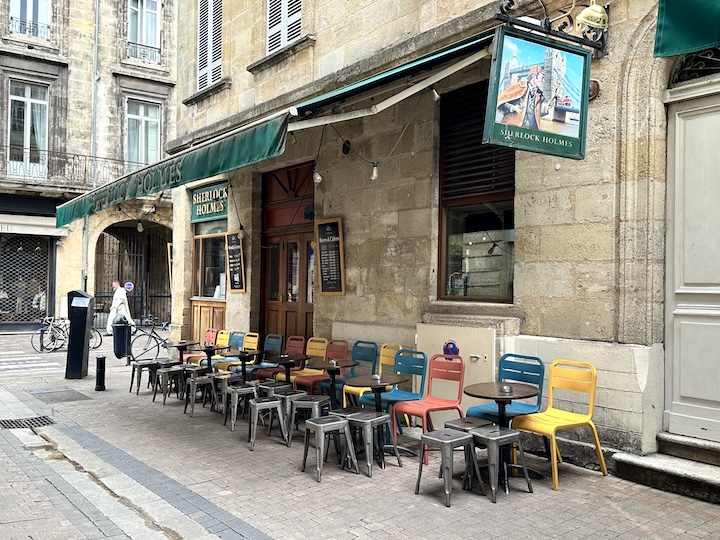
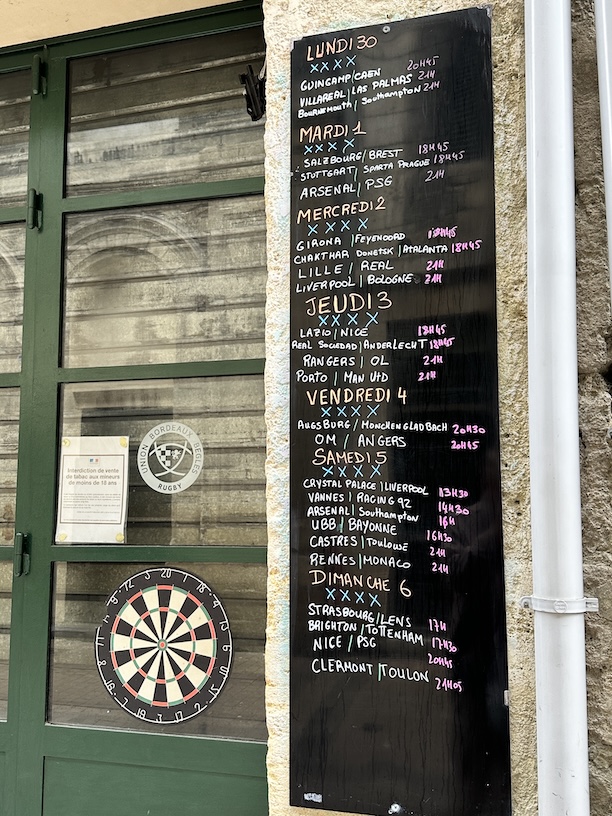
They even have a Sherlock Holmes pub, with a full listing of the coming week’s Euro-fútbol matches that will be playing on the big screens inside. What a nice way to enjoy a pint or two, and maybe a hearty shepherds pie. But it’s still morning and we’re not all-day boozers.

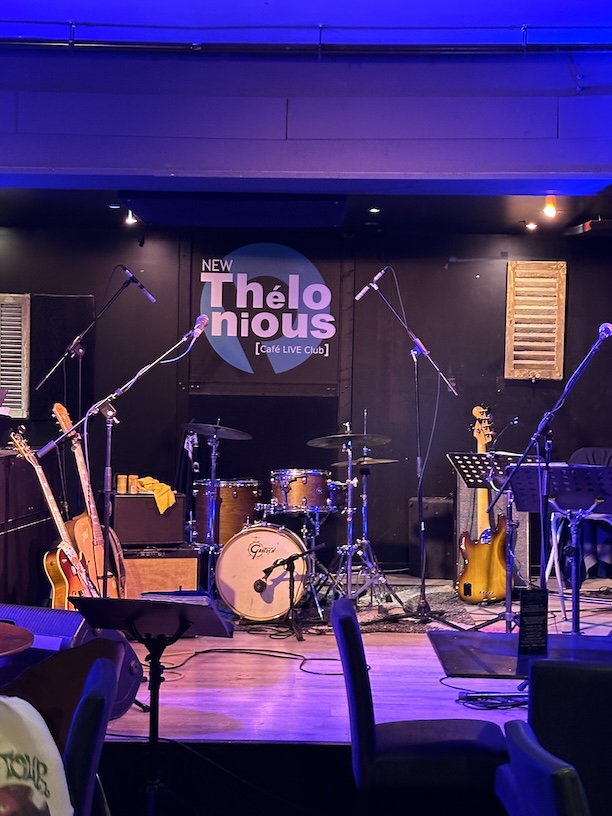
We’re wishing we had more time to spend in every one of the many places we’ve managed to visit on this trip. It’s such a big world out there and there’s so much still left to do. And this afternoon we’re making our way toward a local jazz bar called the New Thelonious Café LIVE Club. It’s a cool little joint on a back street near the port, and the music, inspired by the great Thelonious Monk, becomes an excellent part of our last evening in town. 

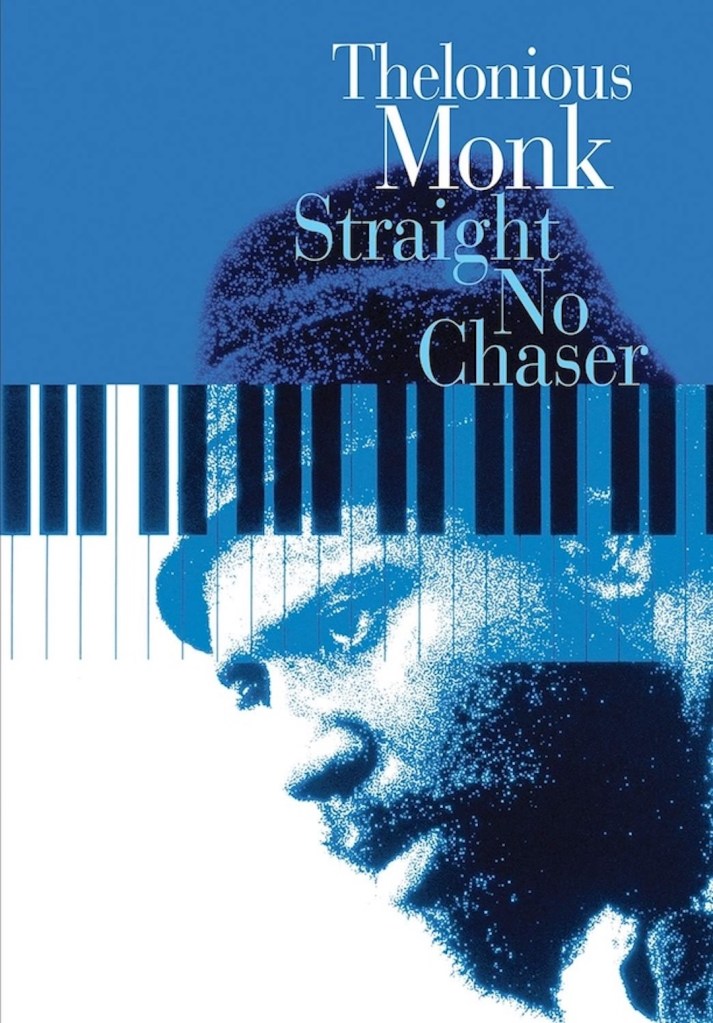
Monk had a unique and challenging vision for the piano and he was an innovator of atonality that led other jazz greats into their own inspired creations. He played with almost all of the most important jazz masters of the day, including Miles Davis, Dizzy Gillespie, John Coltrane and Charlie Parker, although he was not adept at self promotion and generally preferred to hang out in New York where he was most comfortable. He has been described as, “A brilliant composer and criminally underrated pianist whose sense of rhythm, space, and harmony made him one of the founders of modern jazz.” (Wikipedia). His 1944 piece, “Round Midnight” is the most recorded jazz number in history. And the 1988 movie, “Thelonious Monk: Straight, No Chaser,” produced by Clint Eastwood, is worth a watch for anyone who’s seriously interested in jazz.

In the morning we’re on the train again, and it will be about the longest travel day of our entire three month trip. There are frequent departures from Bordeaux to the Montparnasse station in Paris, where we’ll have to take the Métro across town to the Gare du Nord station.

And from there we’ll catch a train to intriguing Rotterdam. It will be a long travel day, so please join us soon for the final stop on our 2024 Euro adventure! — PRW

Collioure, France

Sept 26-30, 2024

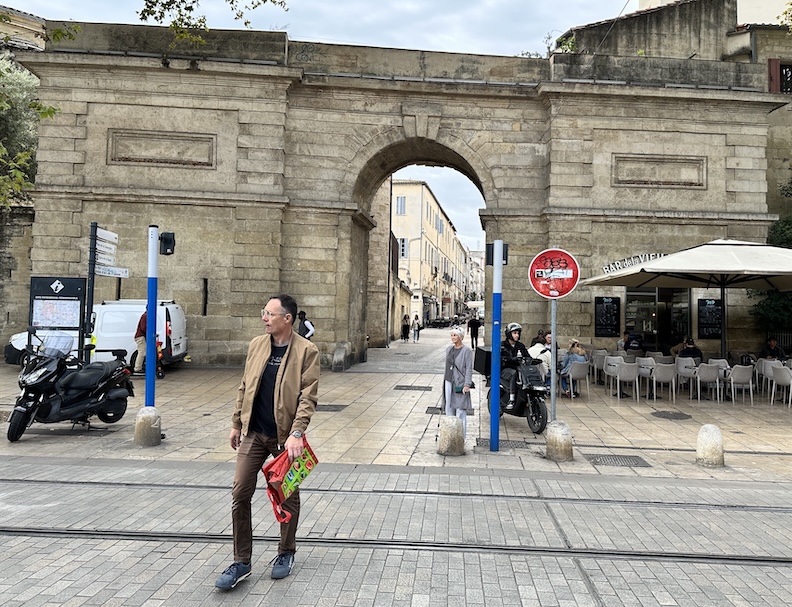
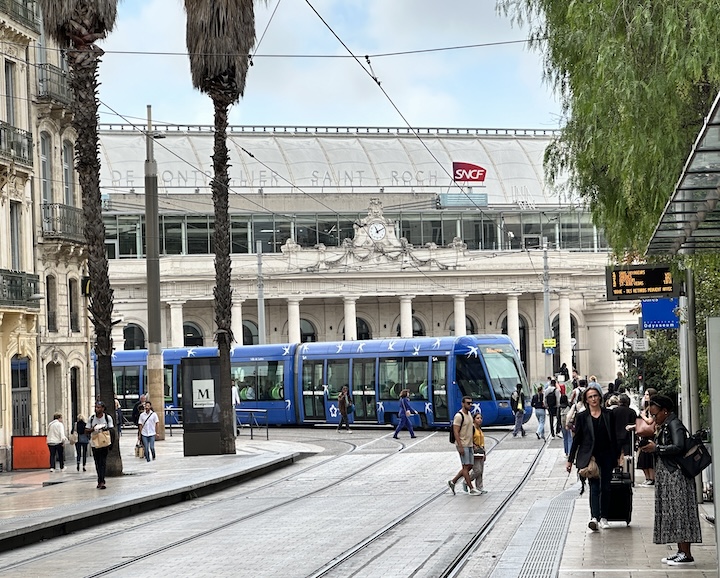
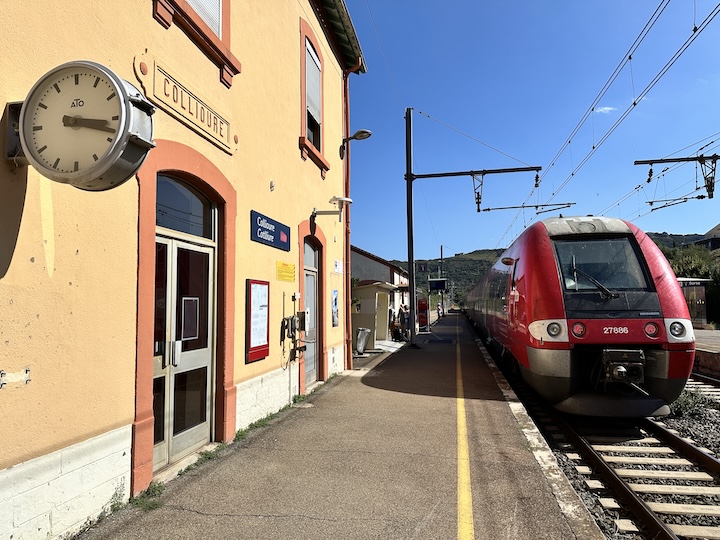
The narrow lanes, fine art, good food and student energy of Montpellier have kept us well entranced, and yet the time has come for us to depart. We’ll grab a last cup of strong coffee just inside the old stone city gate before we emerge onto the street and toss our bags on a tram to the train station. Then we’ll continue down the Med coast past an abundance of wetlands and vineyards to Collioure, a small port city in the shadow of the Pyrenees, just a little north of the Spanish border. 

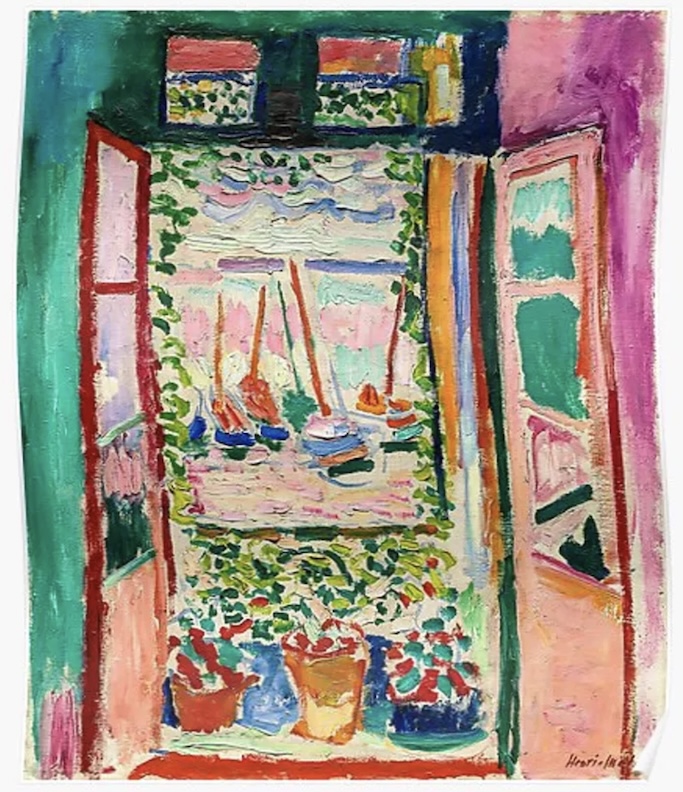
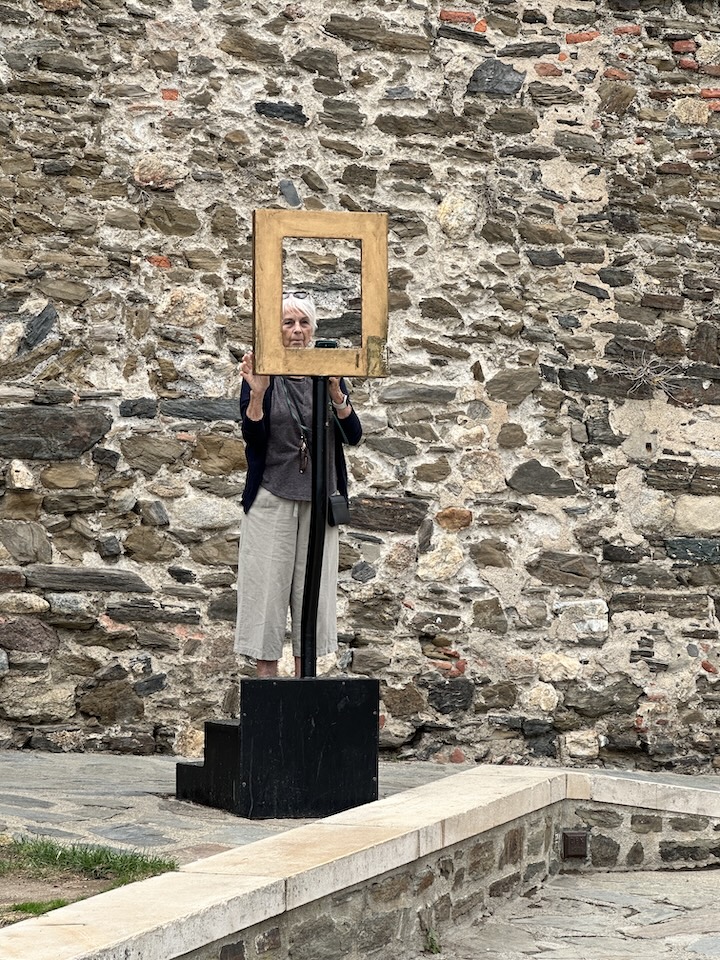
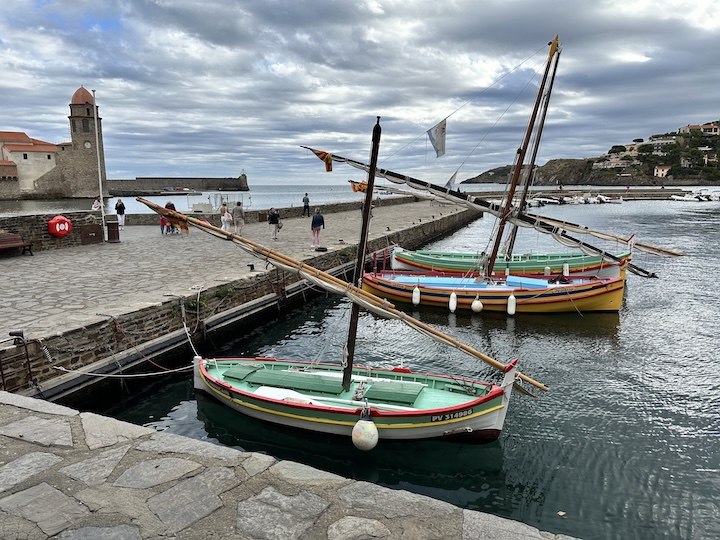
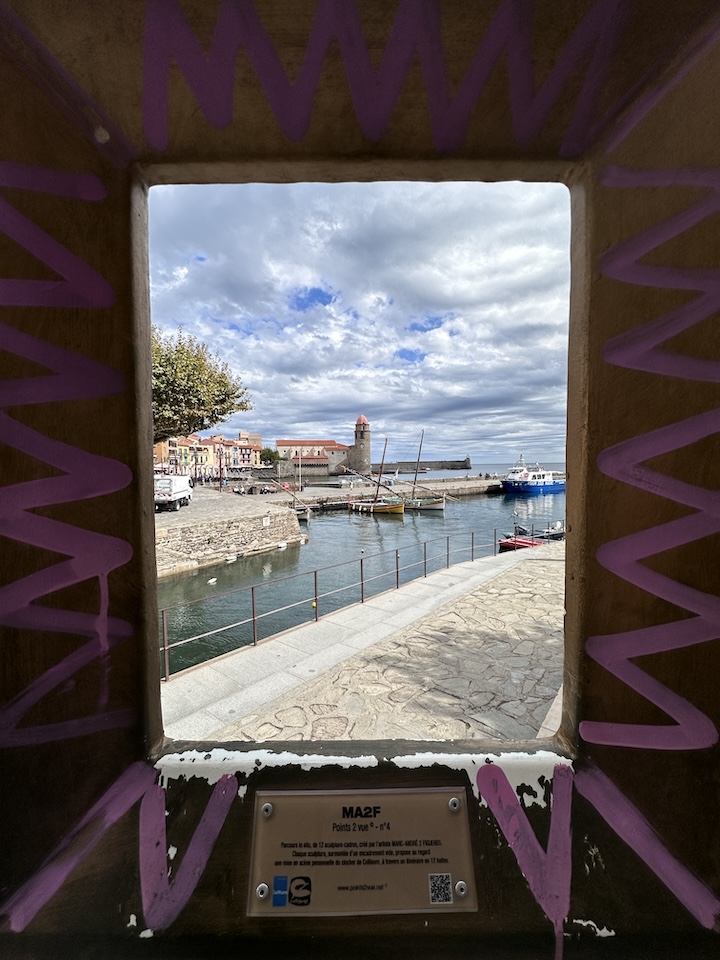
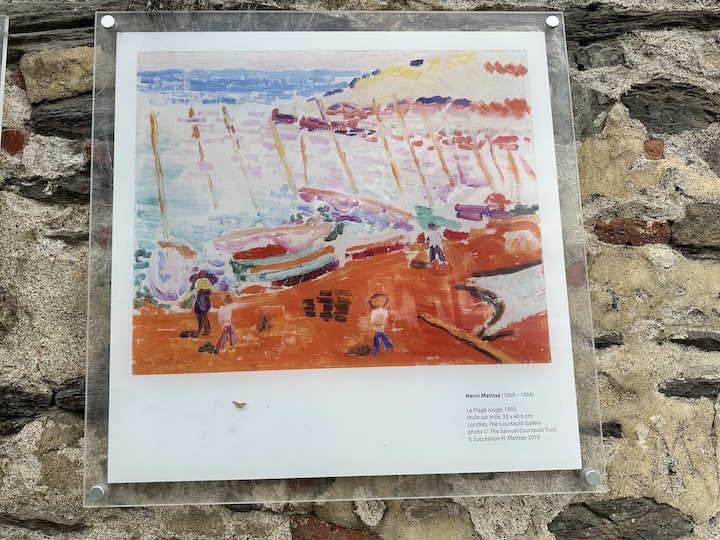
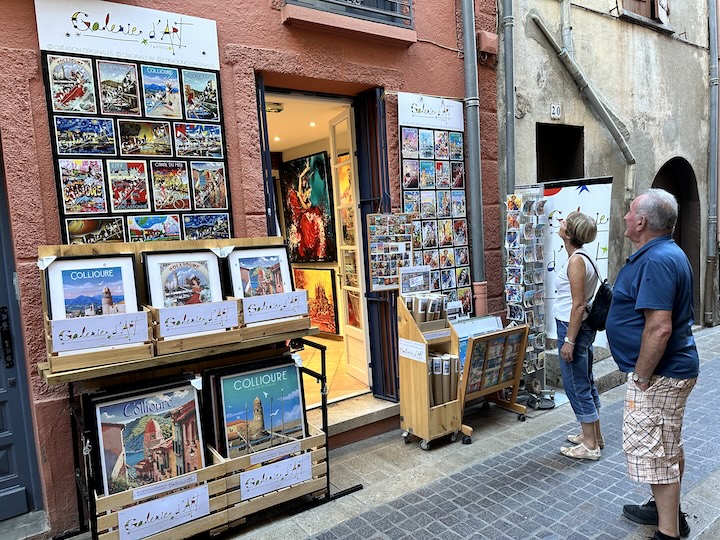
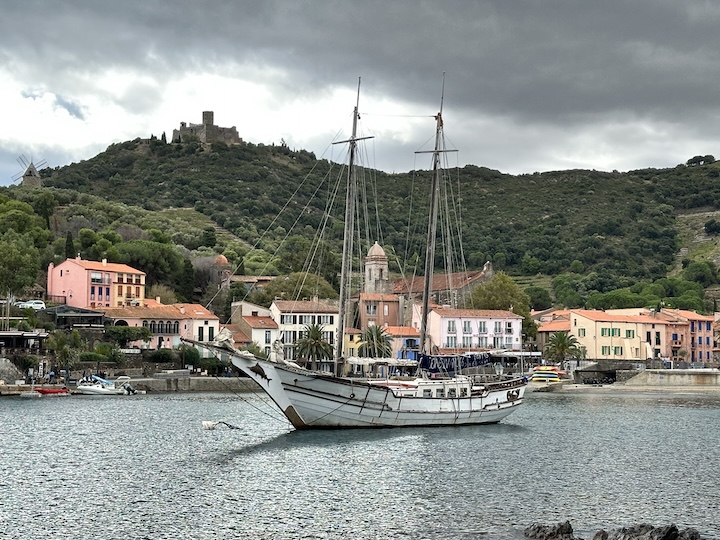
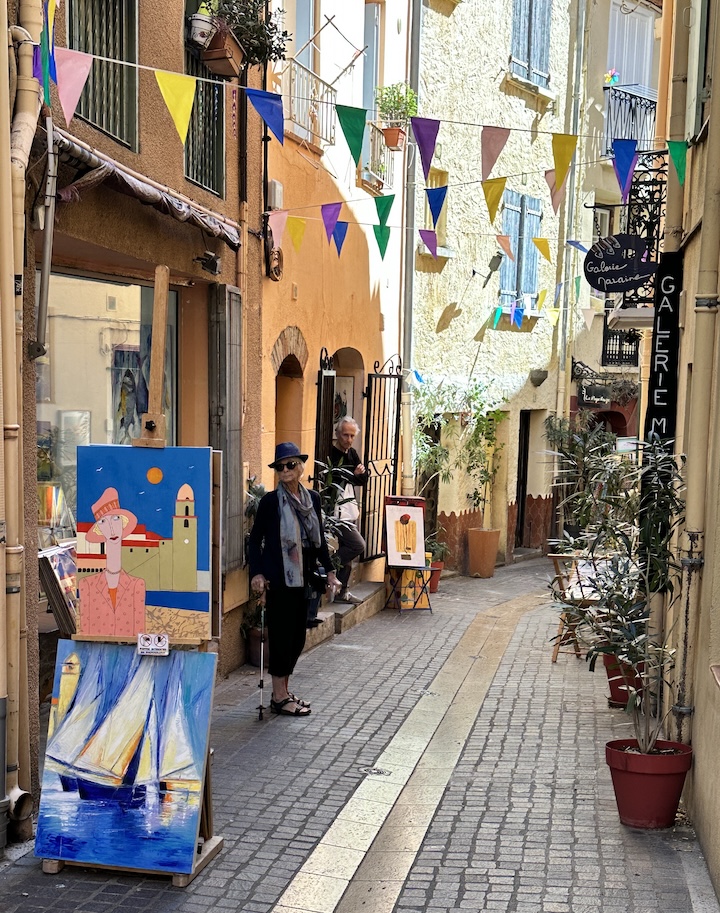
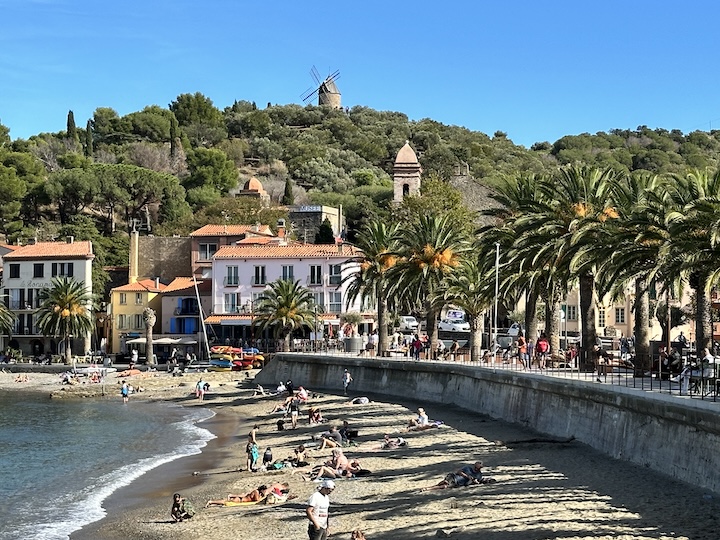
This seaside village once had a harbor full of small fishing boats that enchanted such young ‘fauvist’ artists as Braque, Derain, Picasso and Matisse. And they painted those sturdy hulls, waving masts, and wind-caught sails in the wildest of colors. These days, reproductions of works by Matisse and Derain are found in the village at the locations where they were painted – along with a few frames to view what the artists were seeing.

Matisse Open Window

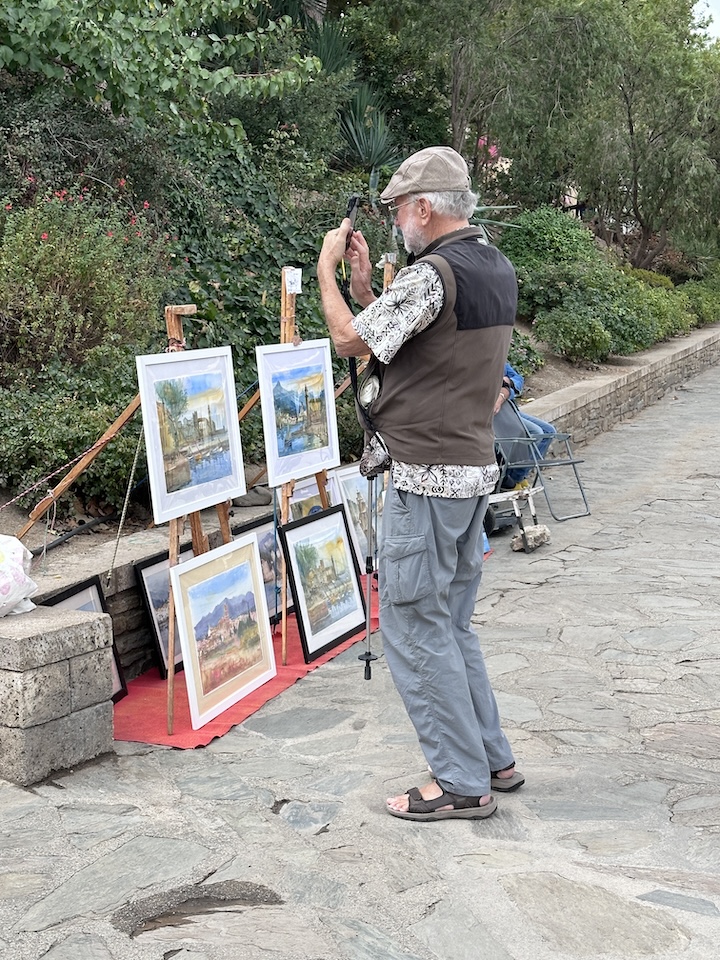
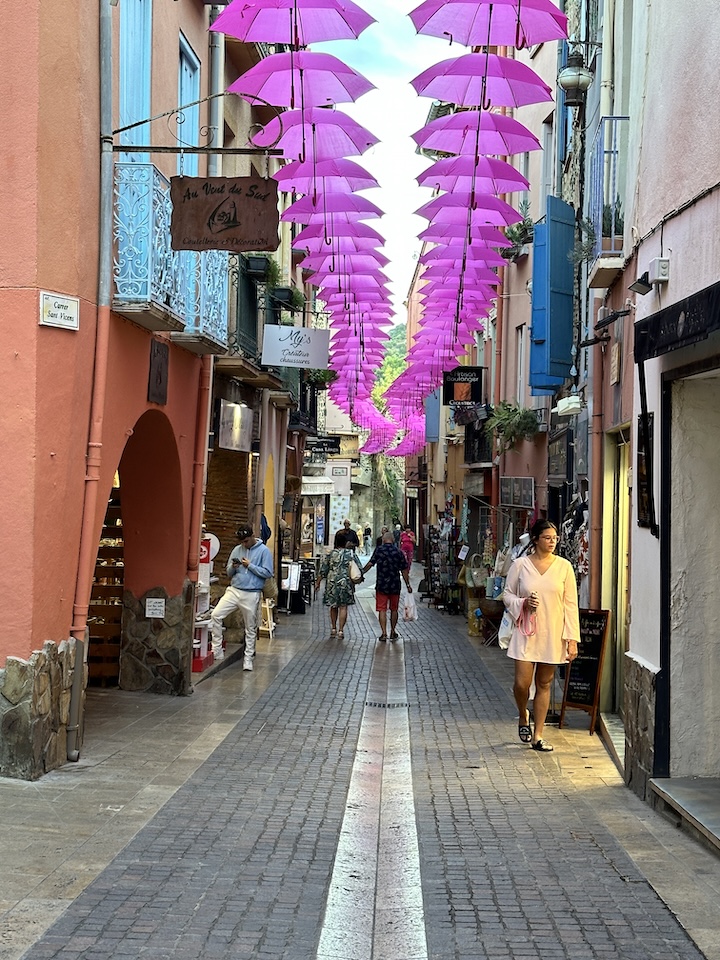
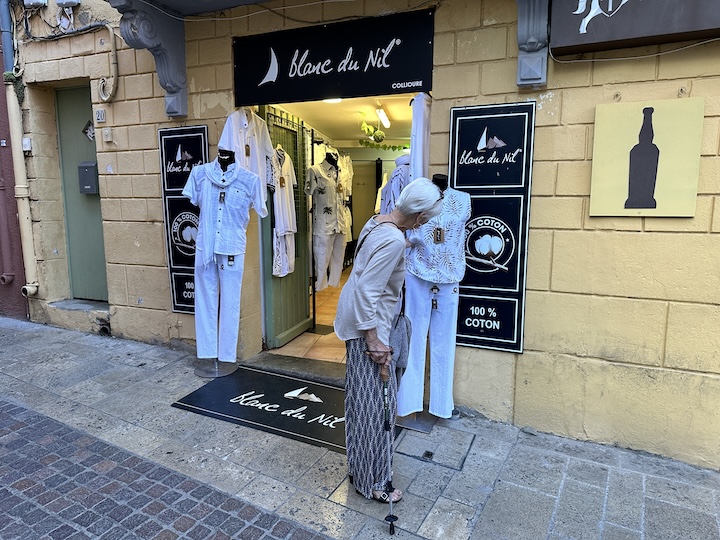
The colorful galleries, walkways, and eateries of today are a visual treat, although they’re certainly far different than the old rough fishing port of yore, the one where poor artists once arrived to escape the Parisian winters and capture the honest simplicity of these hardworking local people. It’s clear that we’re about a century late if we had really wanted to experience the same purity – and the probable poverty – that those now-famous artists ‘enjoyed’ in their day. And I seem to recall that most of them moved on to nicer digs once they became successful enough to do so. If poverty equals purity, I believe few of us today would follow Tolstoy’s example and gladly accept the bargain. Yet it’s easy to understand the sheer beauty here that brought so many young artists to these streets. 

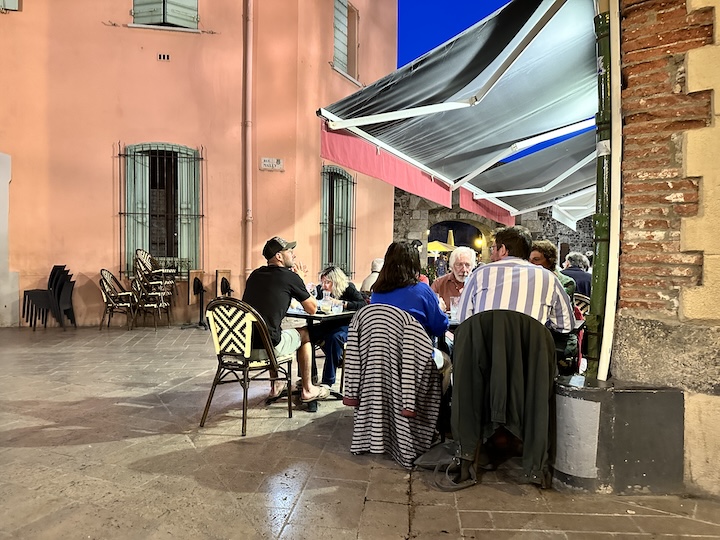
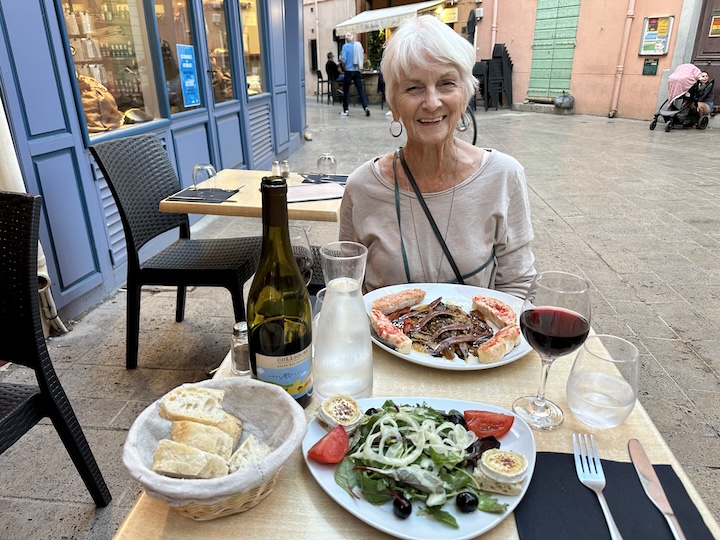
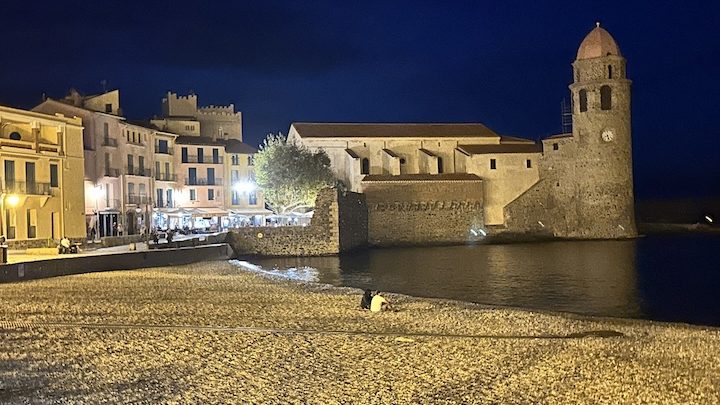
We’ll top off our first day here with a fine dinner under a cloudless sky. And then follow that with a romantic nighttime walk by the harbor, with ample time to further consider the ageless question regarding the virtues of poverty. Before we retire to a comfortable bed. 

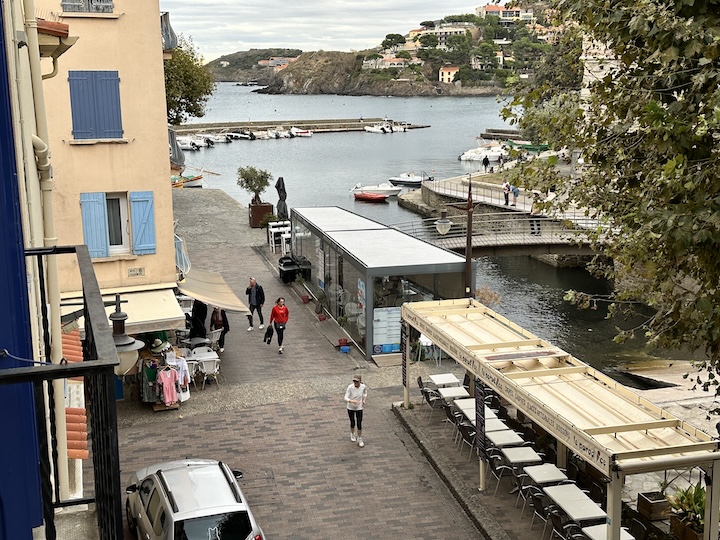
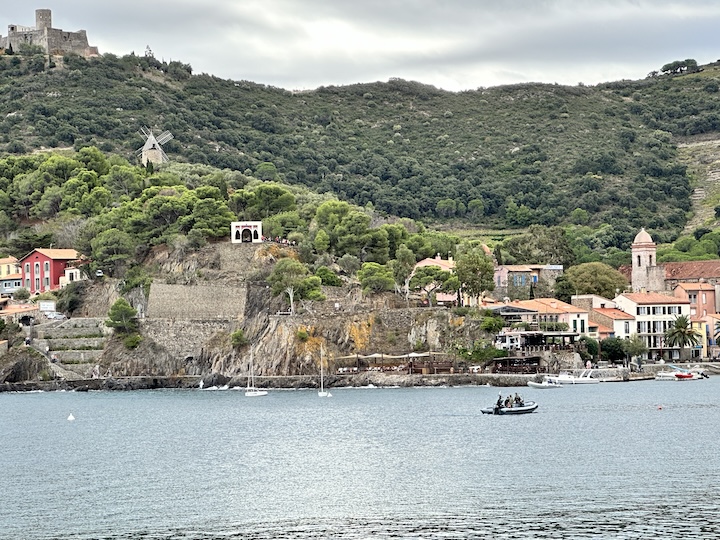
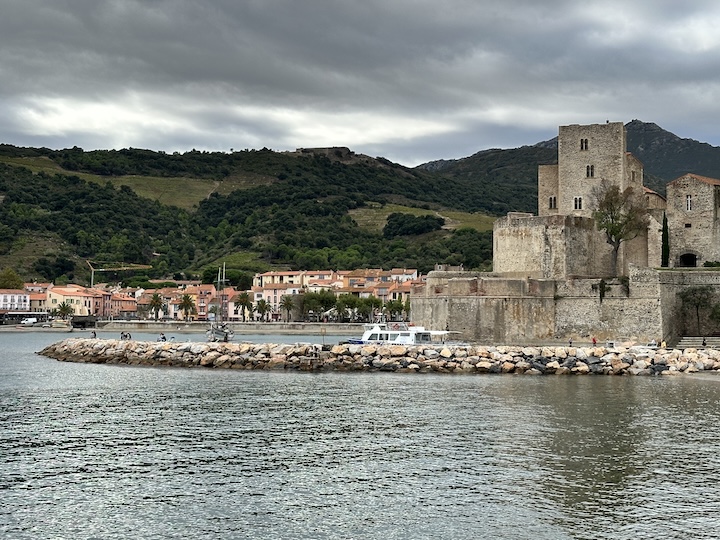
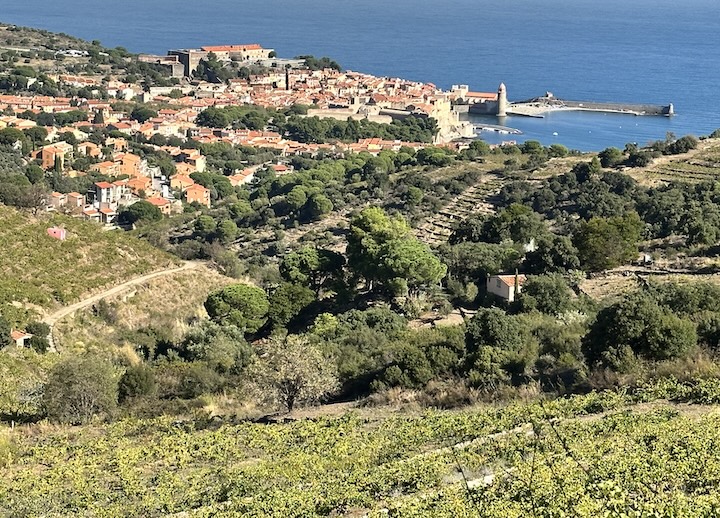
A harbor-side morning walk introduces us to the town’s well-protected strategic harbor, under the watchful gaze of an old hilltop fort. This is a place that changed hands many times before the kings of France and Spain signed the 1659 Treaty of the Pyrenees that set their national boundaries along the ridge-tops of those tall mountains. But while the Treaty solved one problem for the kings, it created another, by dividing the Pyrenees-centered Catalans and Basques between the two countries – resulting in centuries of rebellion and further discontent.  

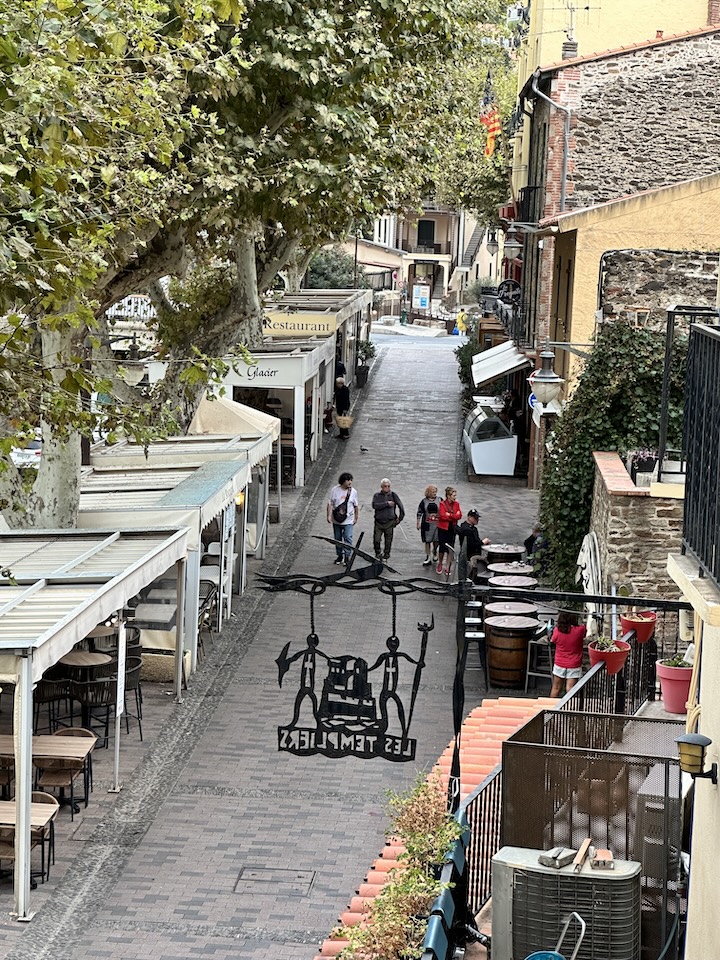
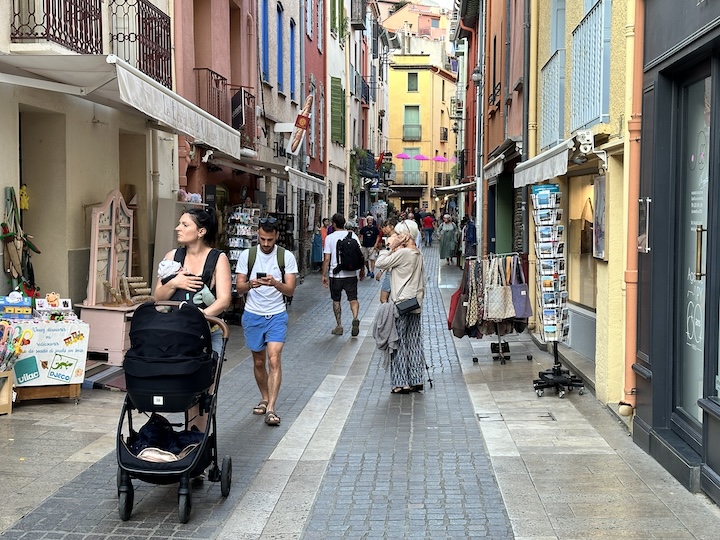
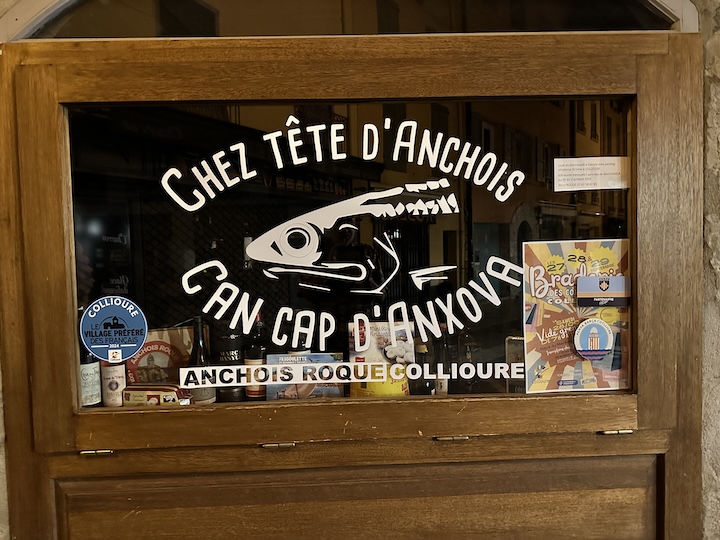
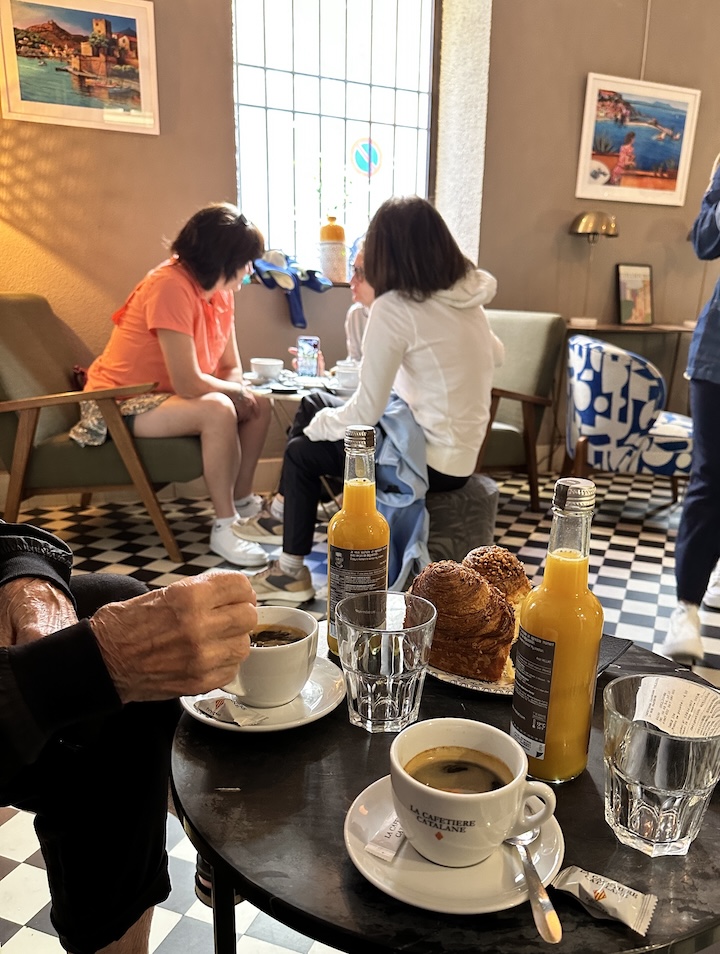
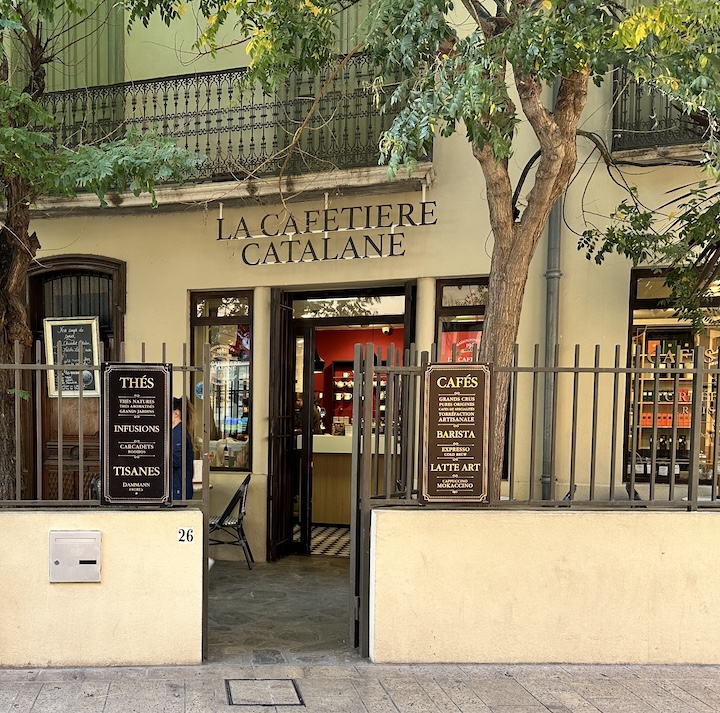
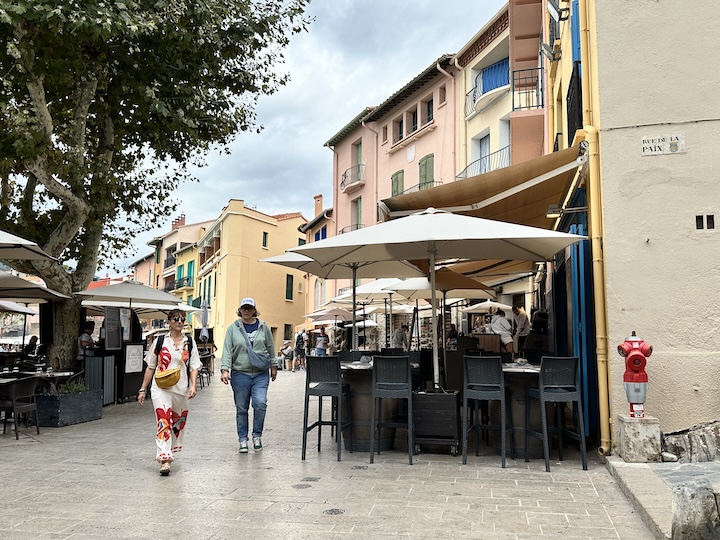
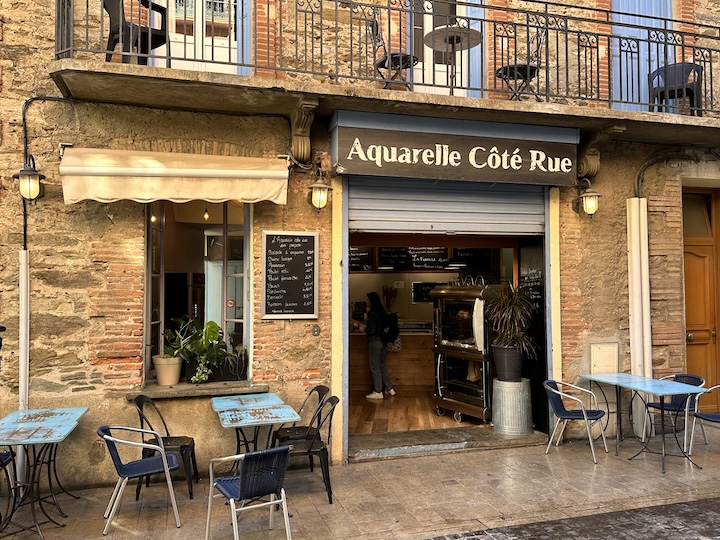
These days, the streets and alleys of Collioure remain a tranquil place to pause over a rich cup of hot coffee and a delicious brioche at a quaint Catalan cafe. 

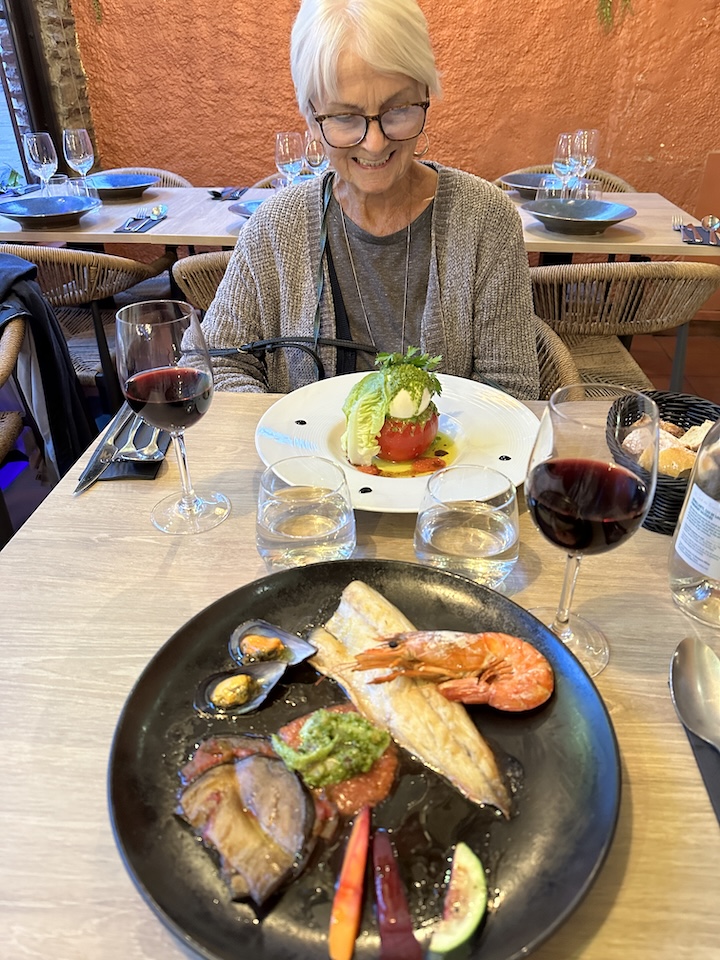
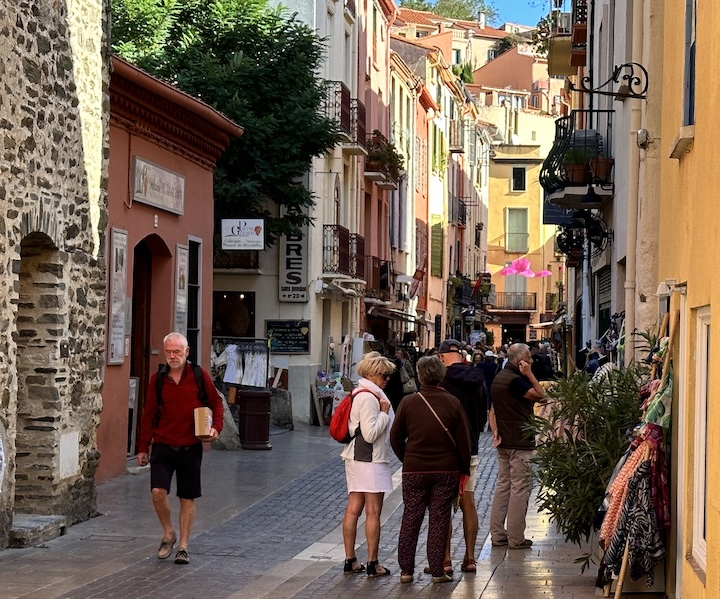
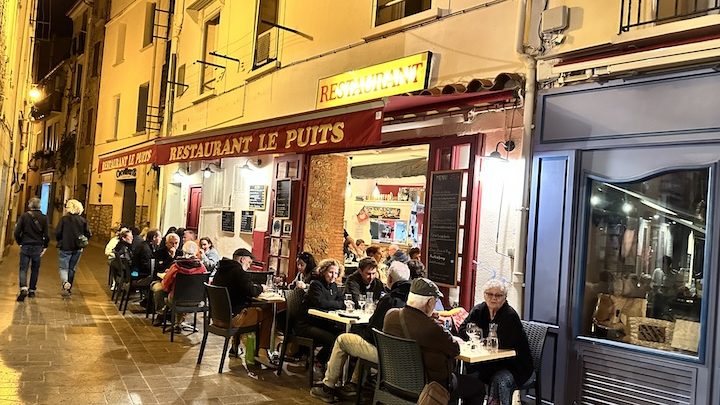
After a morning bite we’ll explore more of this intriguing place that abounds in gorgeous and highly paintable views. One intriguing alleyway leads to another, taking us well into the afternoon. And after a good long day of exploration we’re ready for another hearty dinner of local fare.

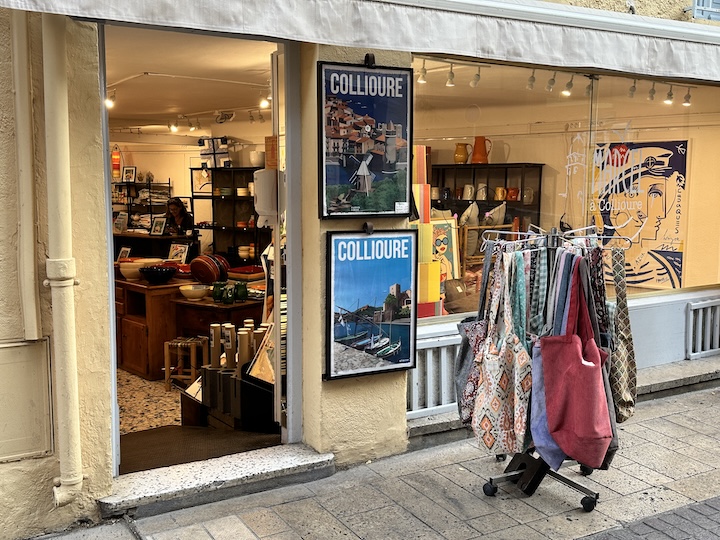
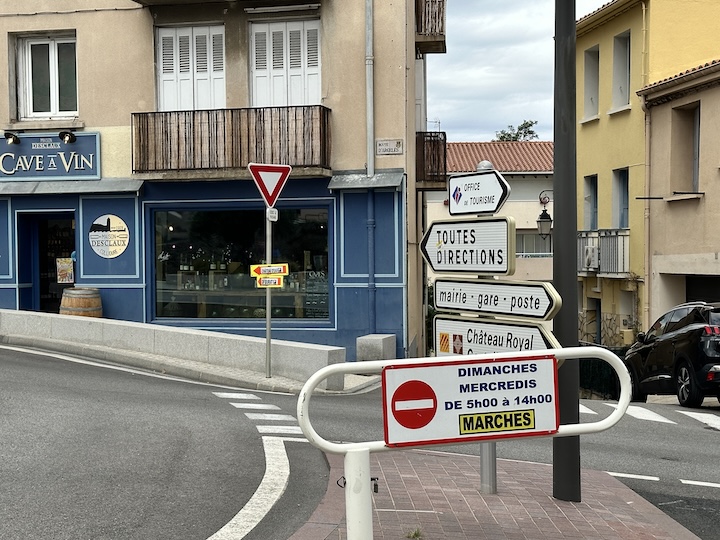
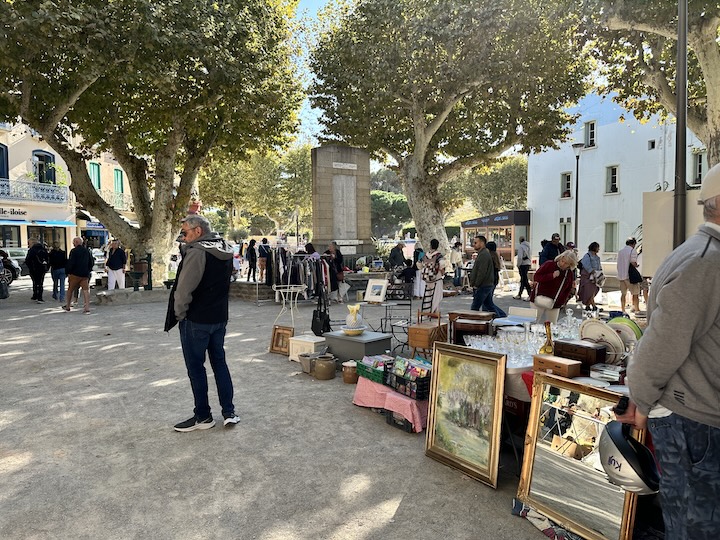
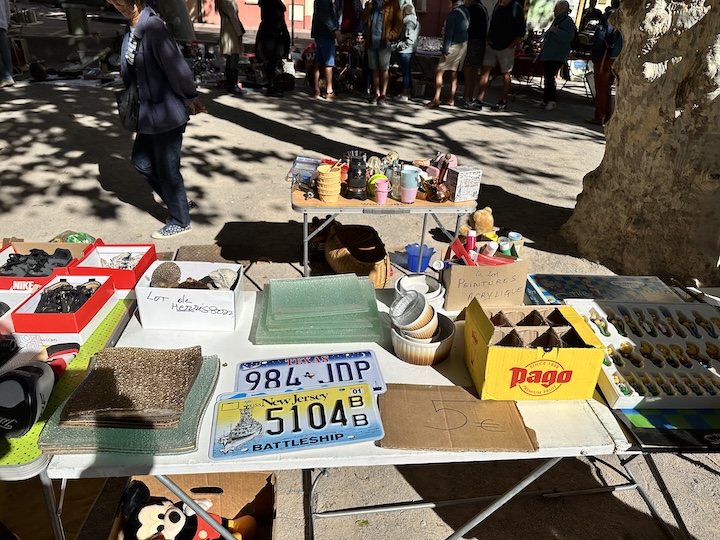
Another day finds us at Le Marché Traditionnel, the bi-weekly open-air market under tall spreading plane trees in the Place Gén. Leclerc. There were plenty of interesting things on view, if we weren’t still tossing our bags onto trains and concerned about the extra weight. But if we decided to relocate to gorgeous Collioure, there were temptations that could easily find a place on our walls and shelves.

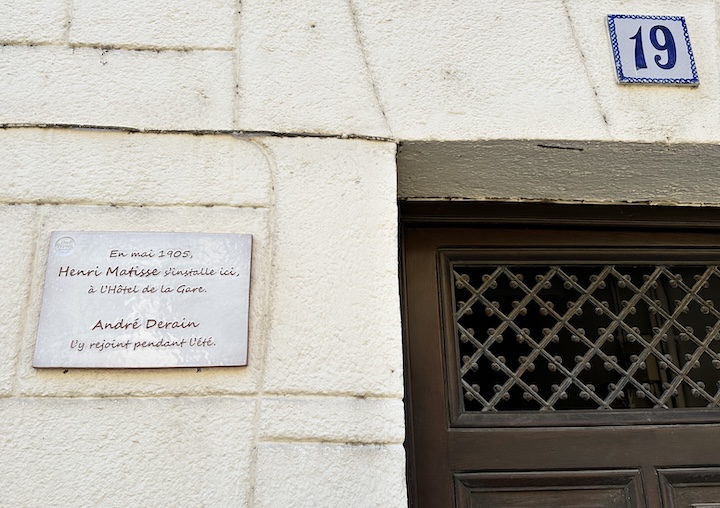
This is also the day when we need to buy train tickets onward to our next destination, as we’ll be departing again in just a few more days. A placard on a building we pass along the uphill walk to the station notes that Matisse and Derain both lived in that particular house in 1905. 

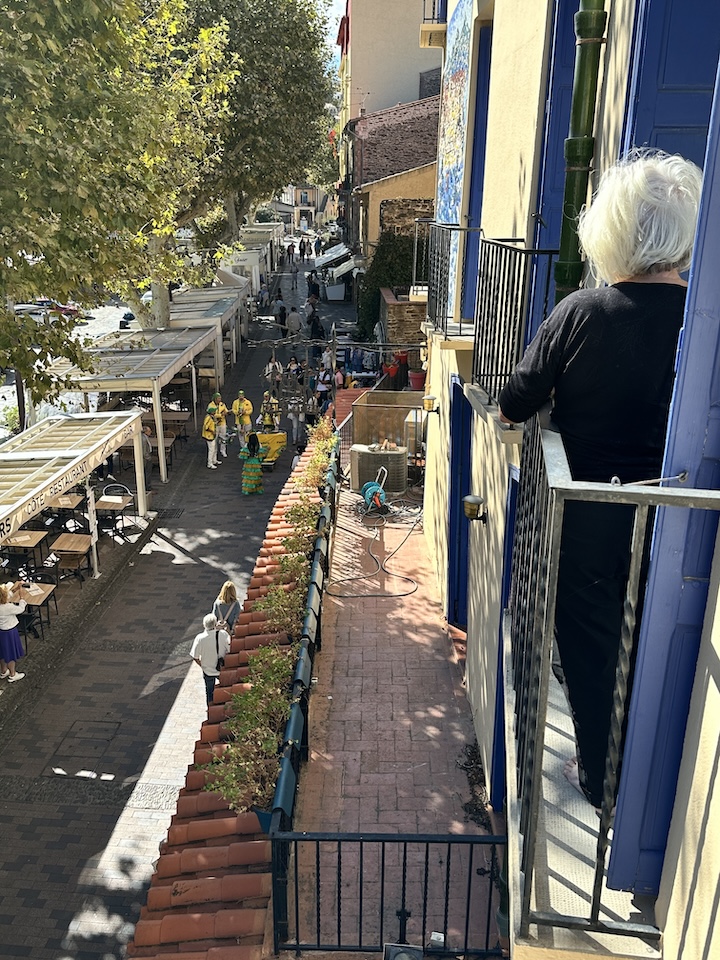
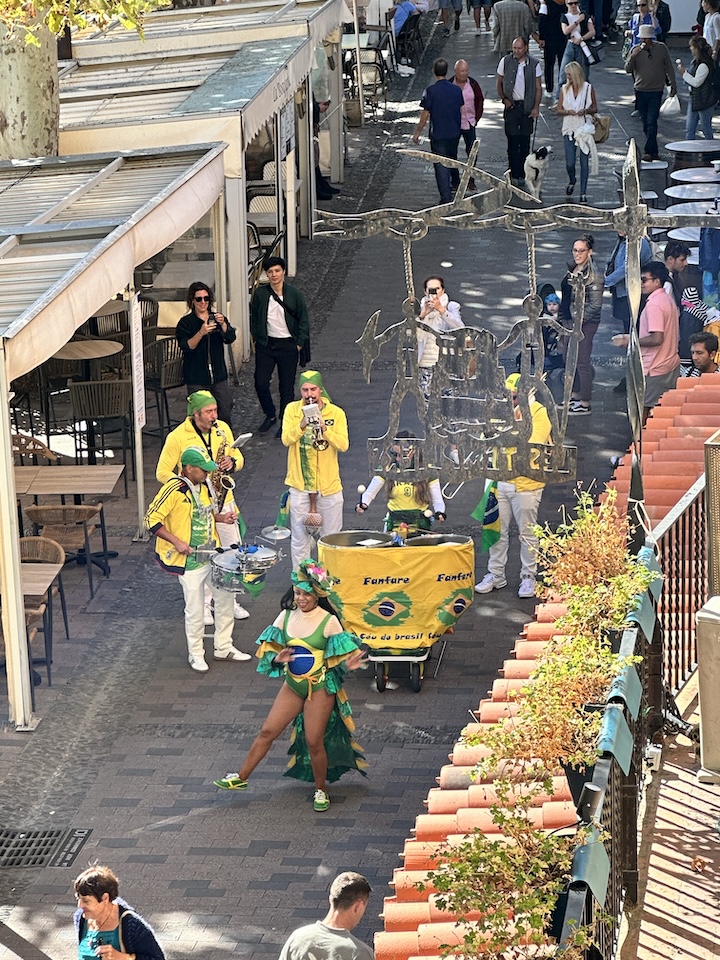
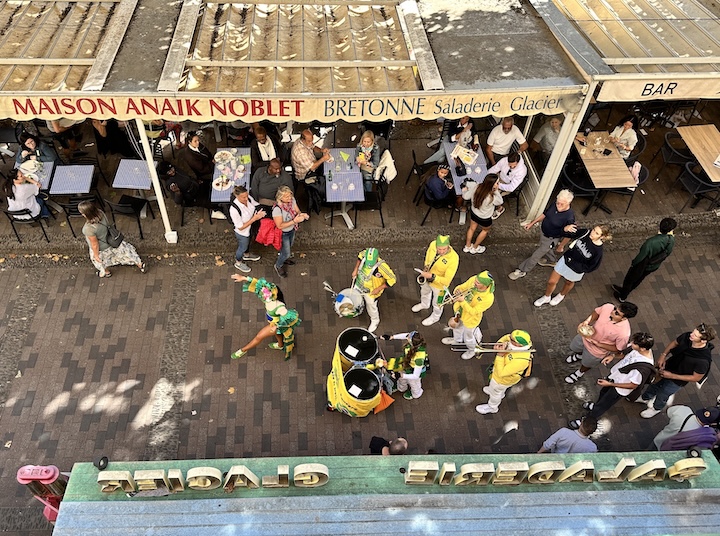
And just about the time we get back to our room for an afternoon nap, there’s a Brazilian band, steel drums and all, marching and strutting down the street below. The nap can wait.

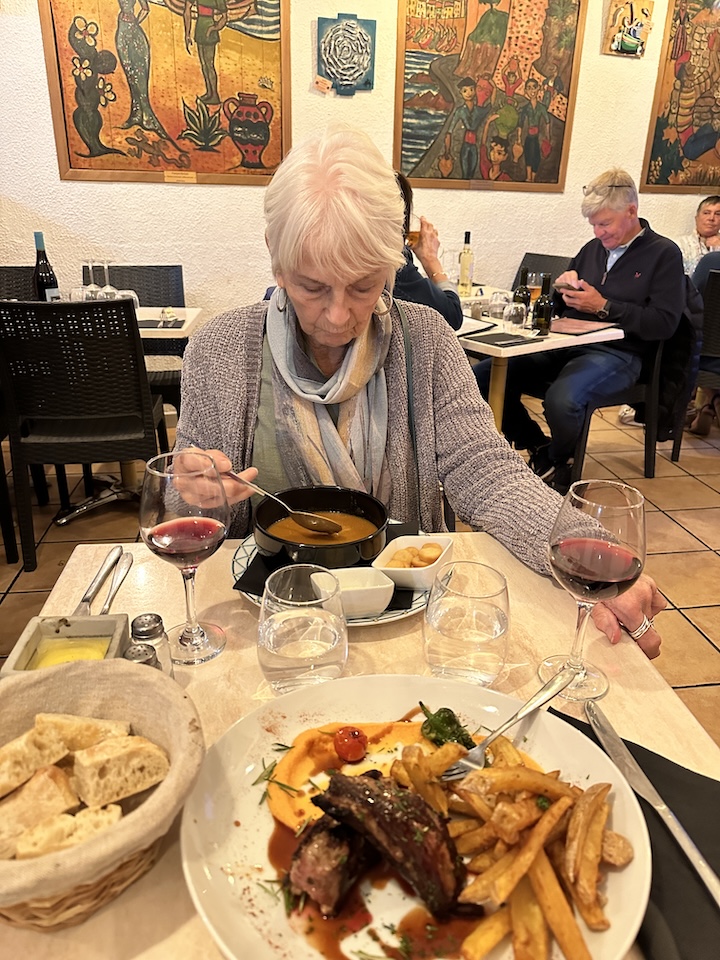
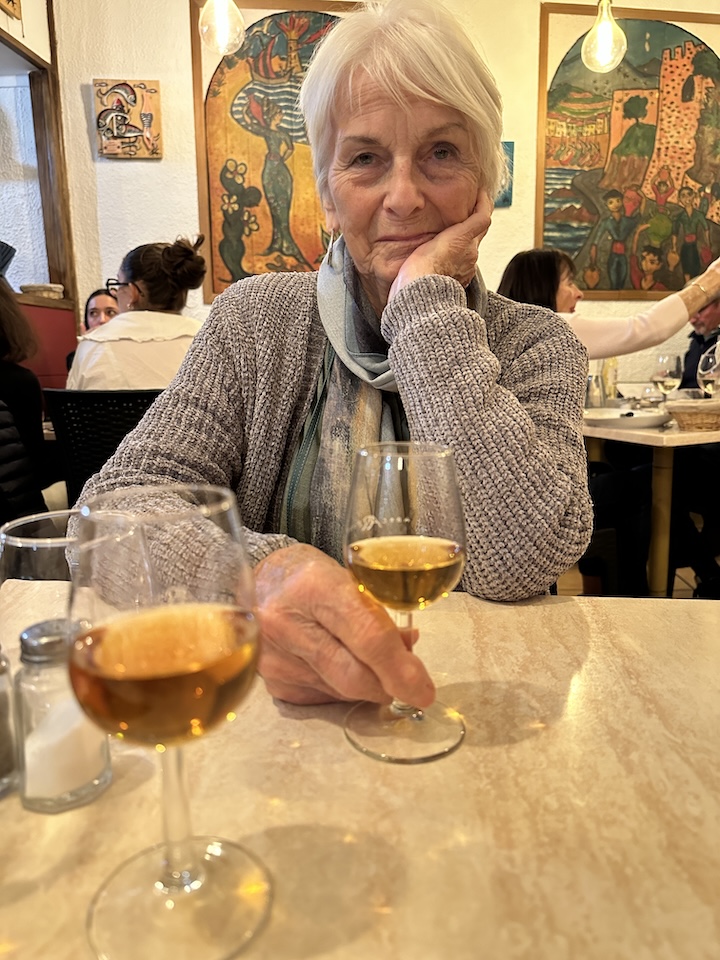
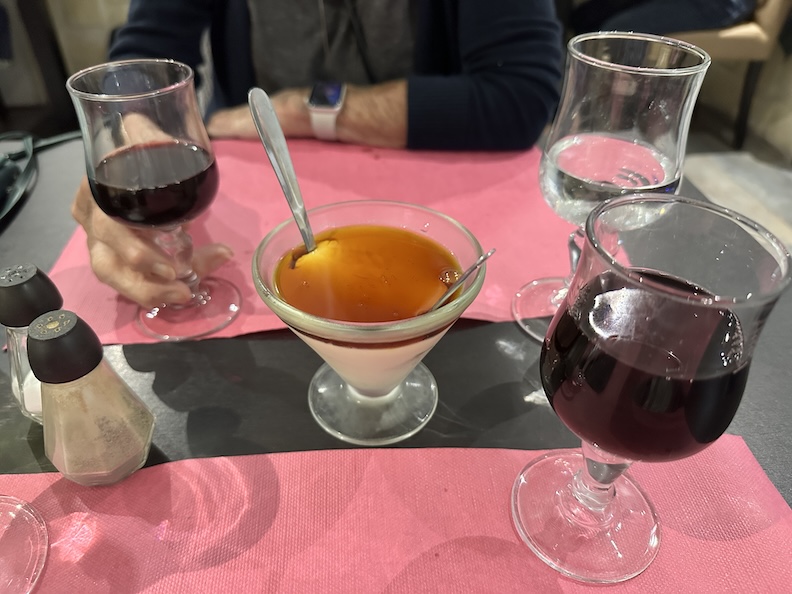
We’re hungry yet again after our nap and the day’s exercise and we embark on a quest for more of the fine food on offer in this little port town. And we follow that up with a pair of amber cognacs to relax into another gentle night in this peaceful village.

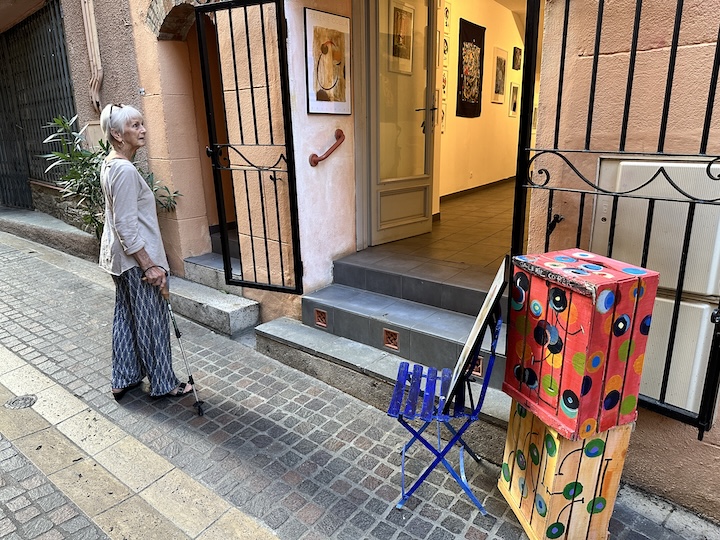
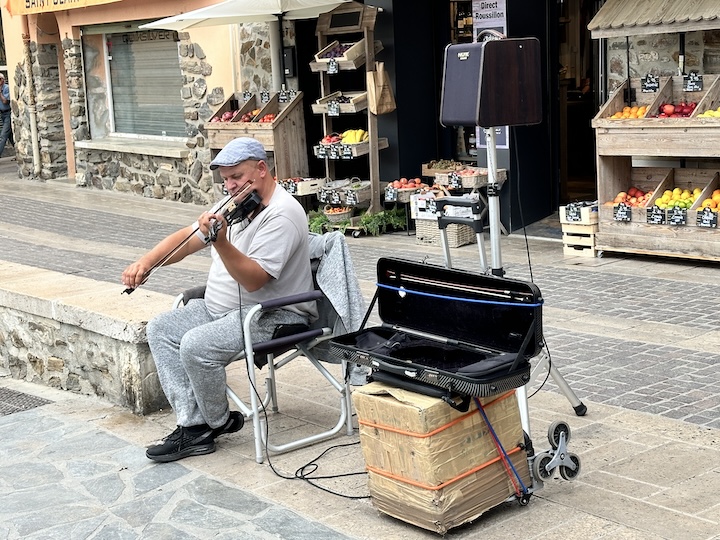
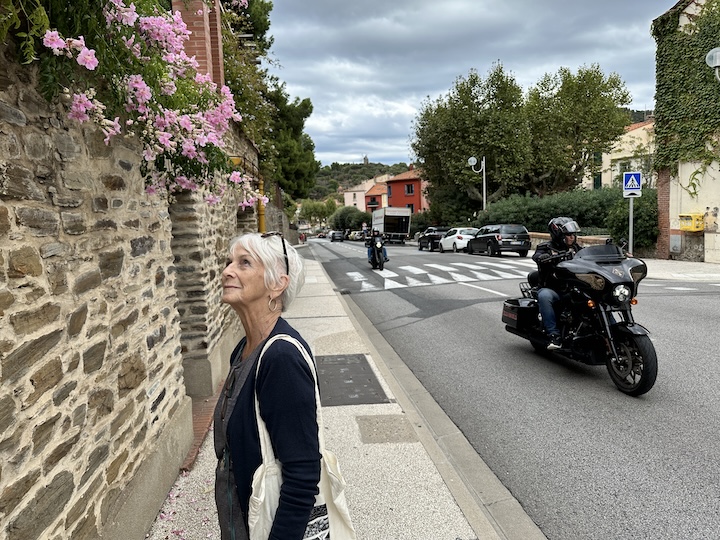
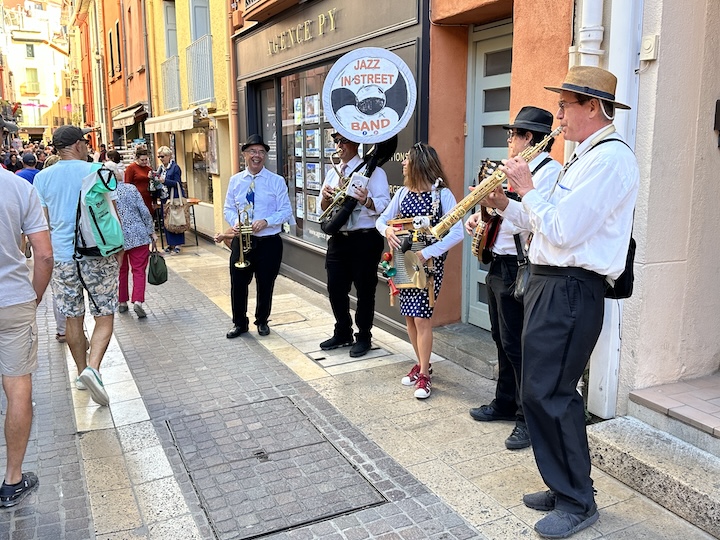
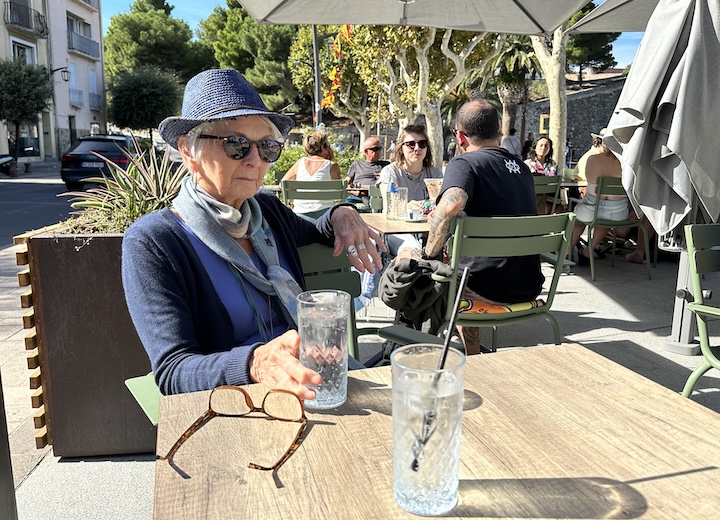
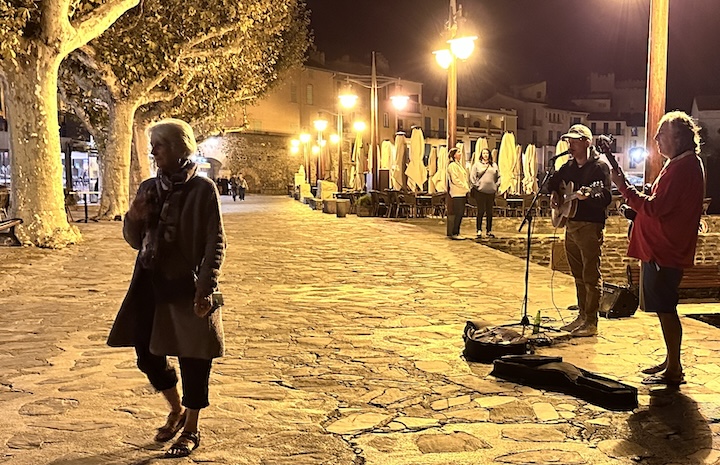
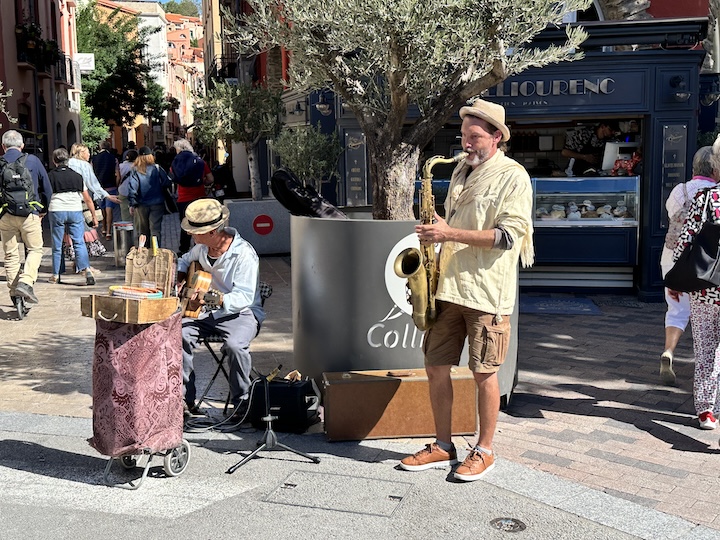
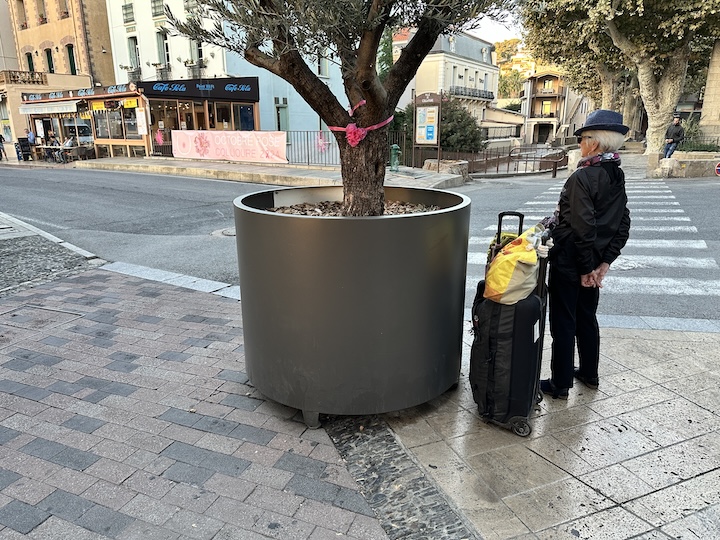
A good breakfast is easy to find among the quaint streets of Collioure, and we settle into a tasty morning egg casserole. Meanwhile, a street band is playing some good jazz just down the block. The galleries are opening their doors, and Carolyn managed to find a cute blue hat to go with her dramatic silver locks. Silver and blue make a very good combo.

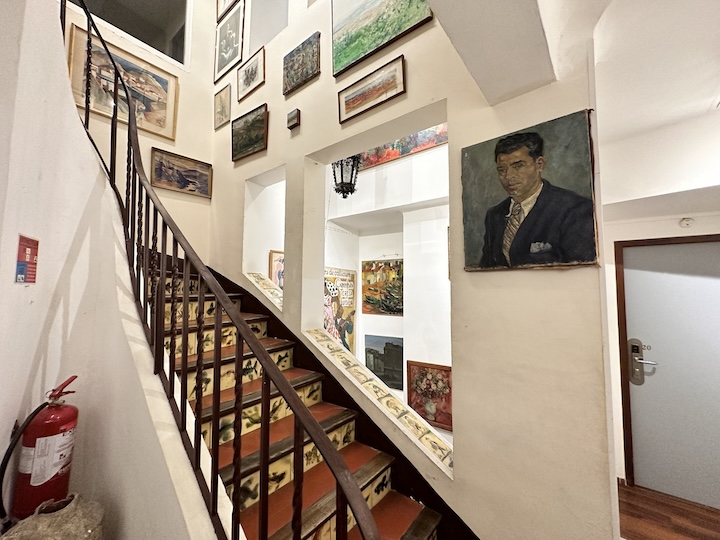
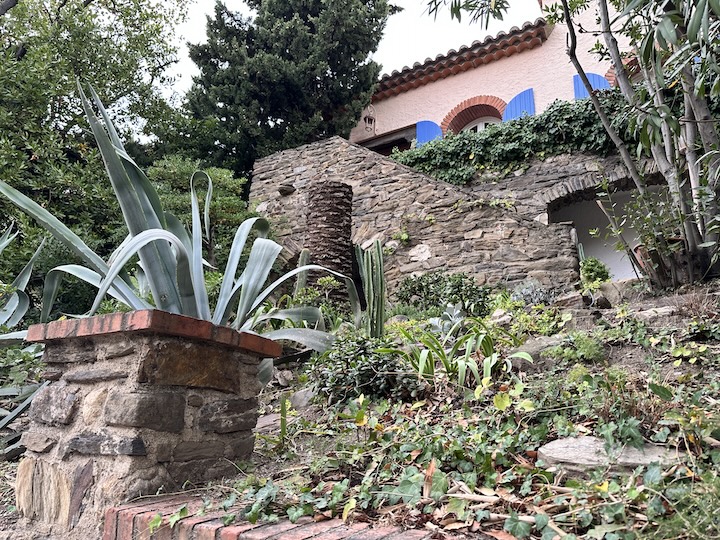
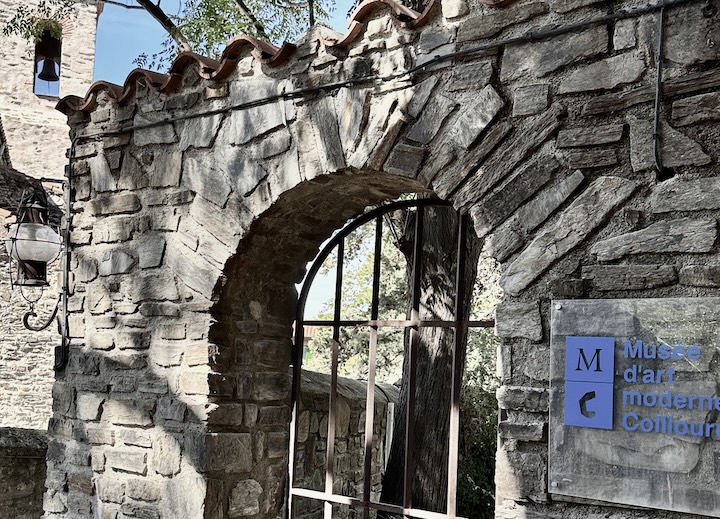
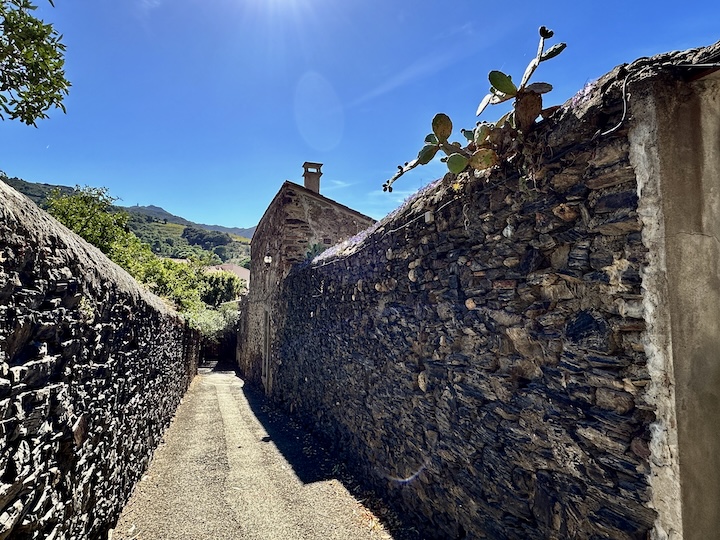
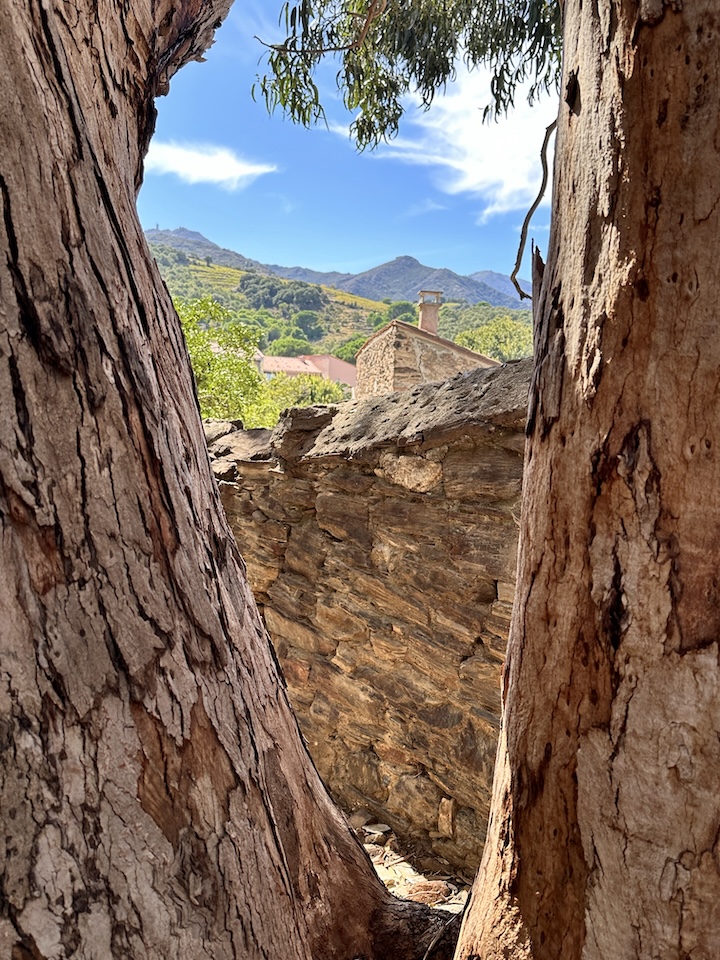
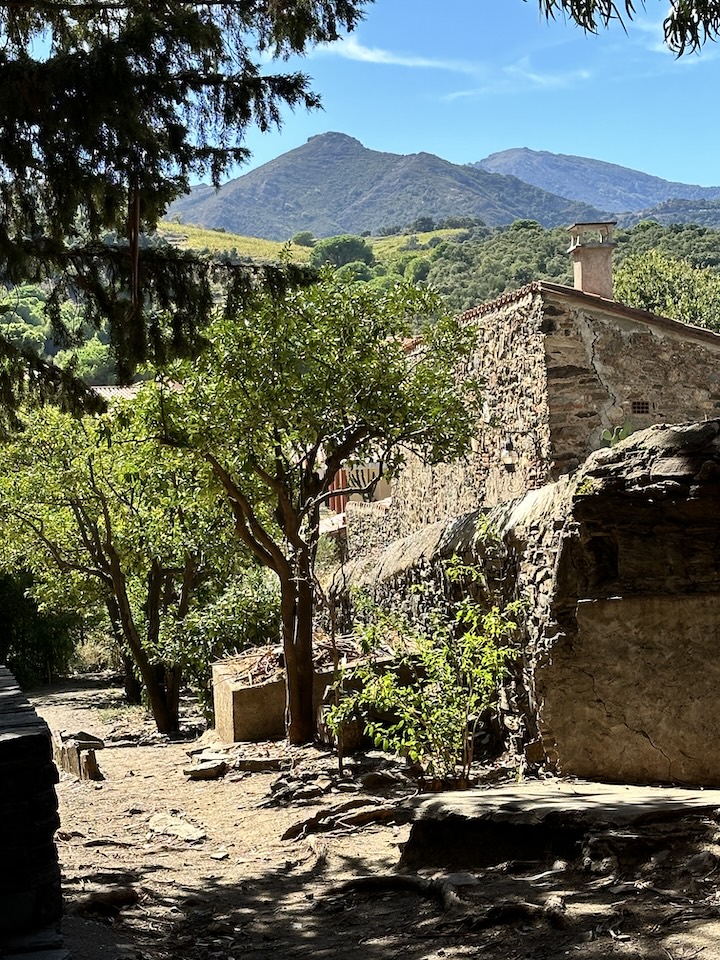
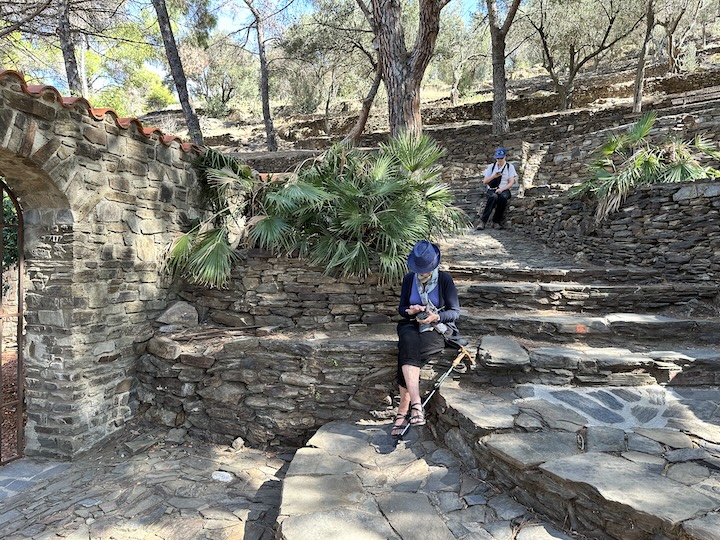
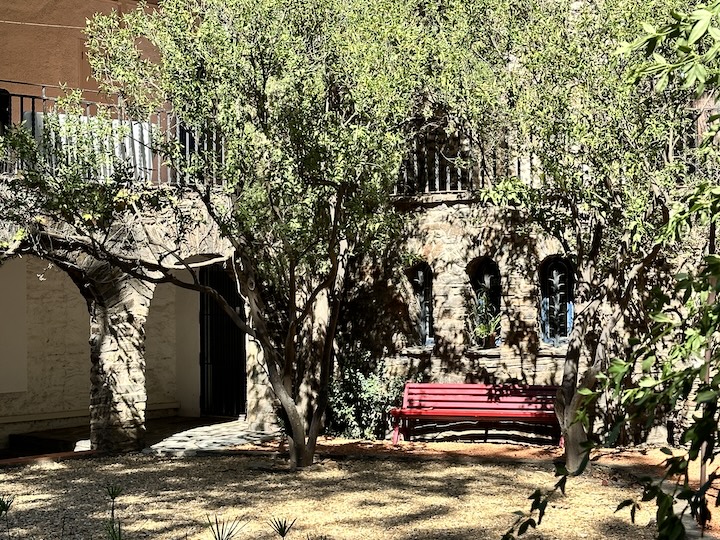
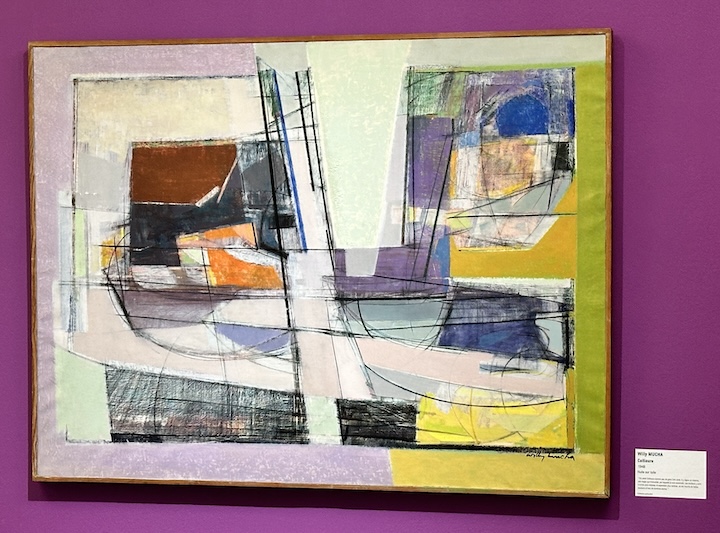
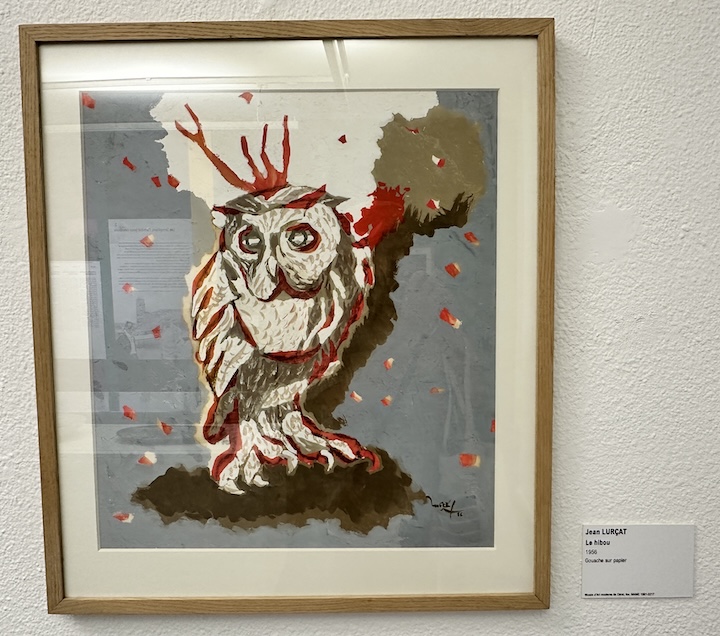
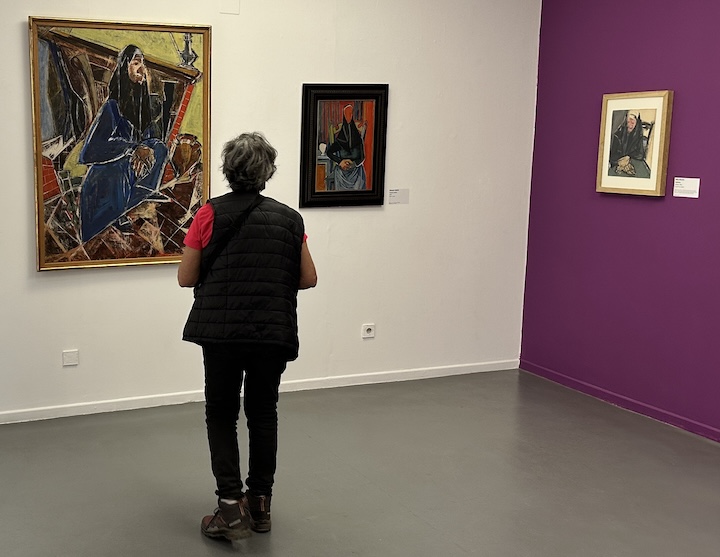
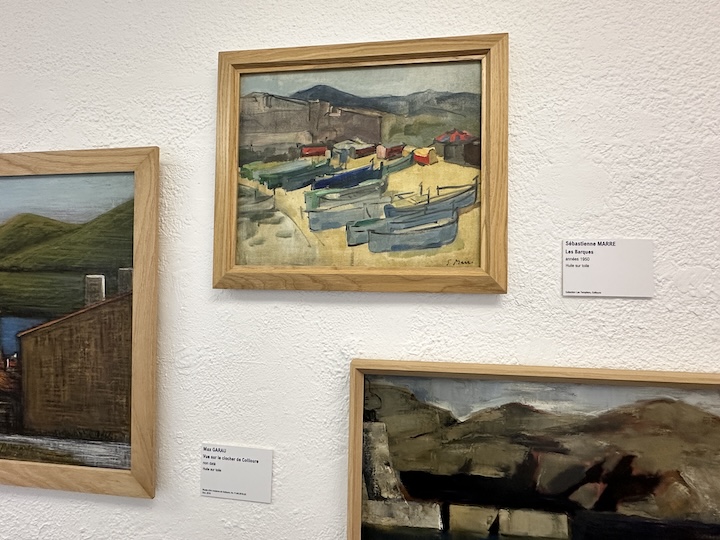
This is the day we’ll wander off to find the Musee d’Art Moderne de Collioure. It’s up a stone walled back alley that leads to more precious views over the countryside. We’re just a bit early, and it’s a fine place to relax for awhile on rocky steps under the old olive trees. We count ourselves lucky once again.

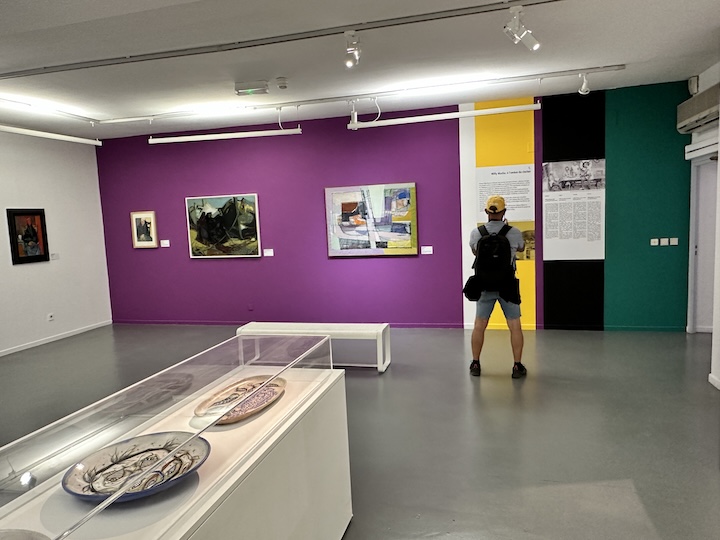
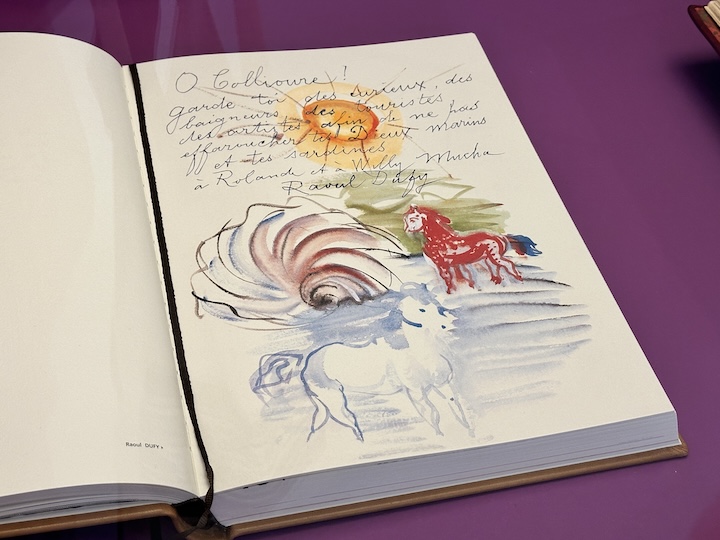
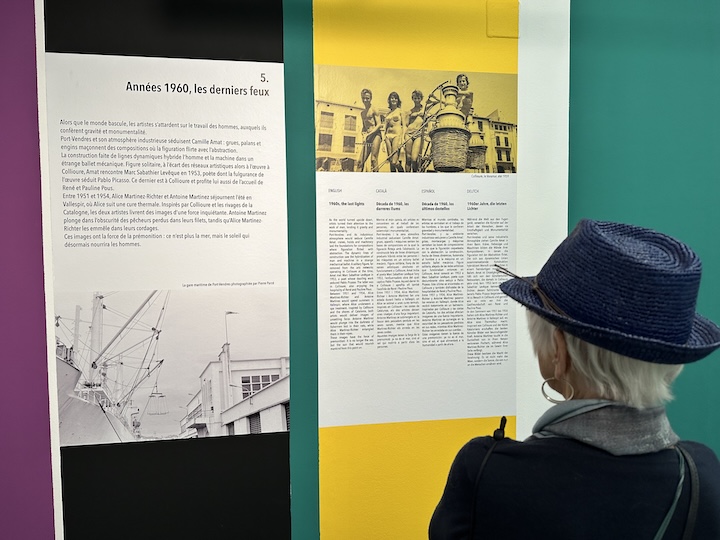
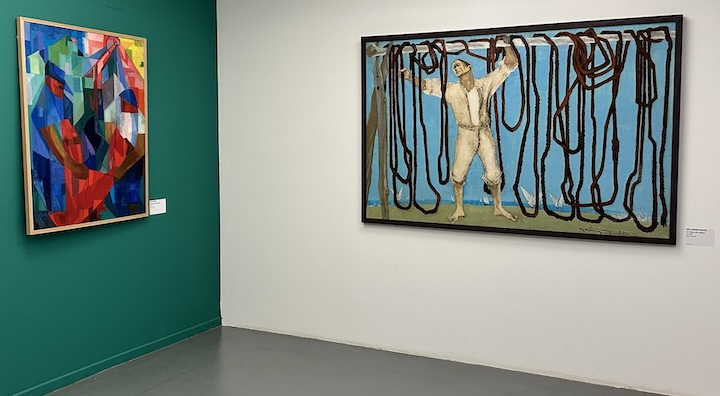
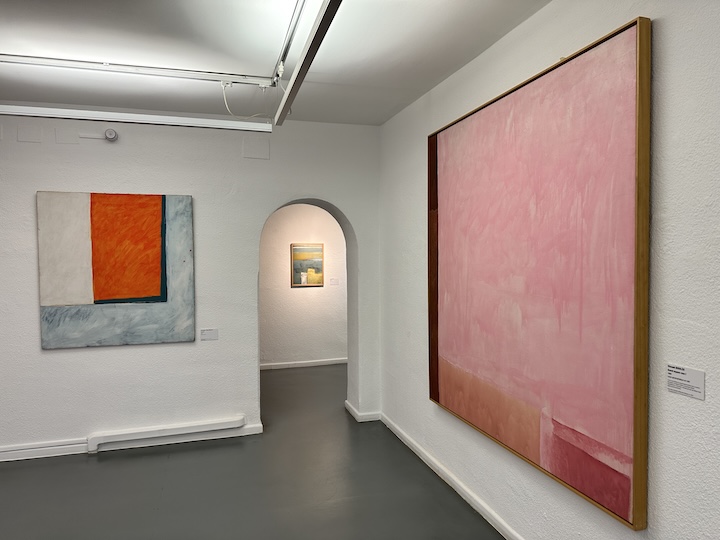
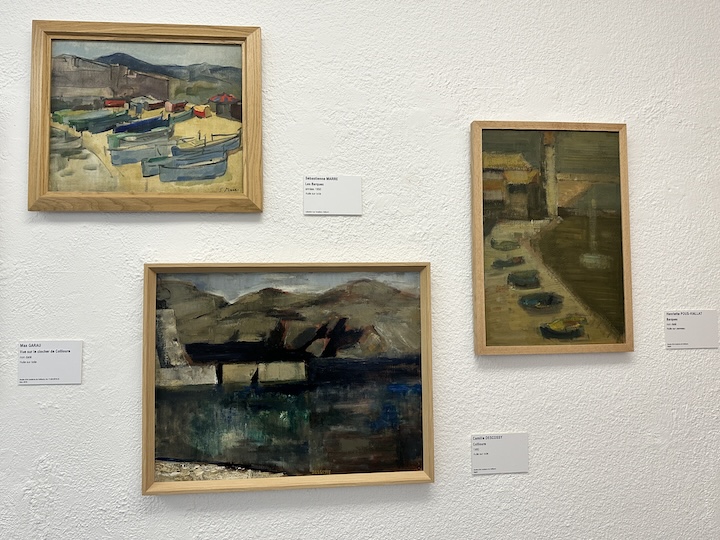
While we find no works in the Musee by Matisse or Derain, or other members of their famous cohort, there are many good examples of contemporary artists reflecting local subjects. And there’s a continuing posted narrative to explain the various artistic phases the village has experienced over the years. Sailing, and fishing, and bullfights are well represented here, and the museum is worth a visit.

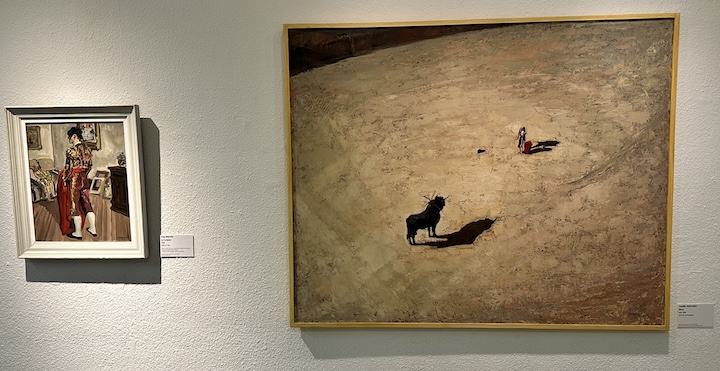
I was especially taken by the vast emptiness of one painting showing only a bull and a toreador alone in the ring. The work, by Camille Descossy and titled “Ahora (1958),” amply shows that final moment, when all the crowd noise dims and the distractions vanish as the bull and the toreador concentrate solely upon each other. It is indeed a tense and lonely moment where nothing else matters, and “Now” is the time.

I actually prefer the less violent form of ‘bullfighting’ that we wrote about in 2016 during a fine month in Beaucaire on the banks of the Rhône, where two teams of agile young men try to steal the ribbon that’s attached between the bull’s horns. It’s a dangerous game of tag-team, and a crowd-pleasing performance where no blood is shed if those young men are lucky enough to escape injury – although one of those agile lads might end up in your lap while leaping the barrier – with the bull close behind! And the bull eventually leaves the ring frustrated but unhurt. 
See the postBeaucaire 2″ near the middle of this archived dispatch PDF: 45. Summer 2016 – Paris. Beaucaire 1 & 2. August 2016

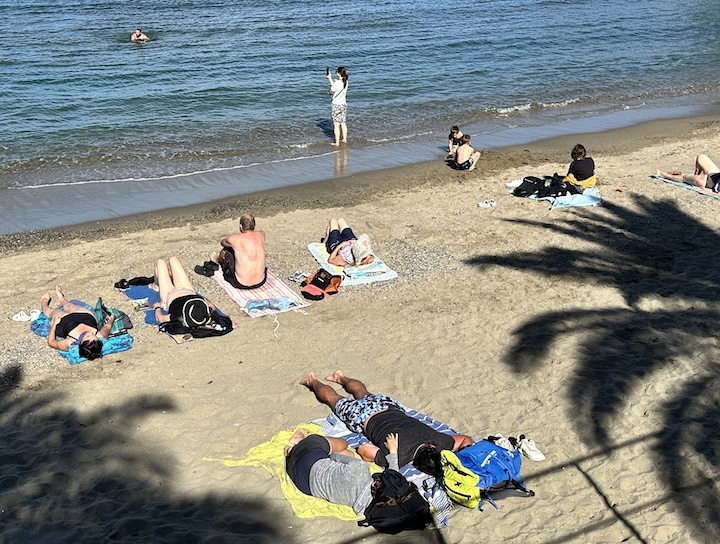
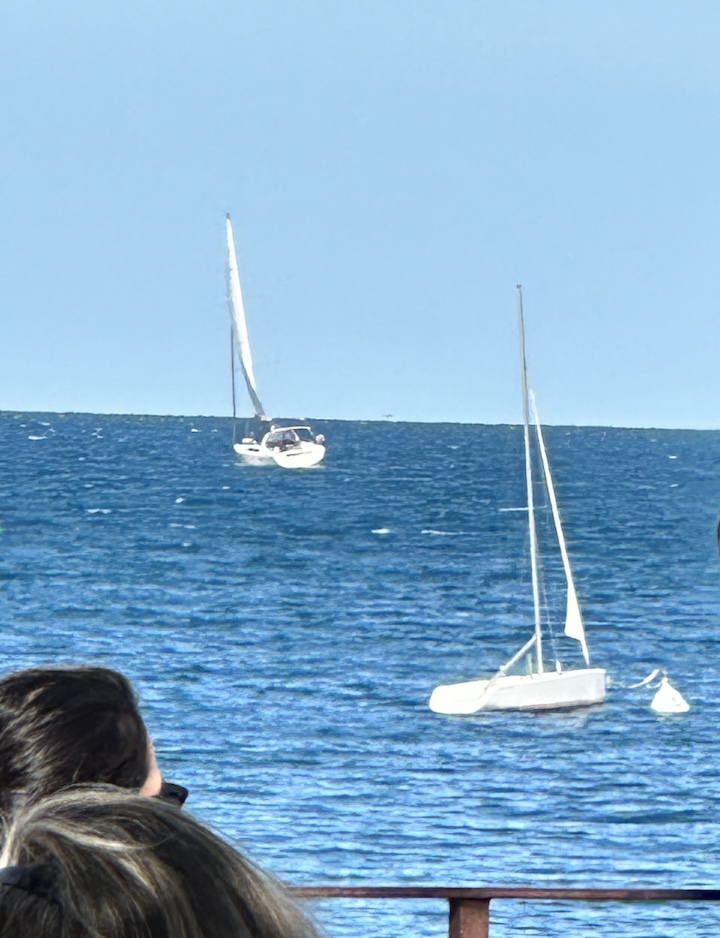
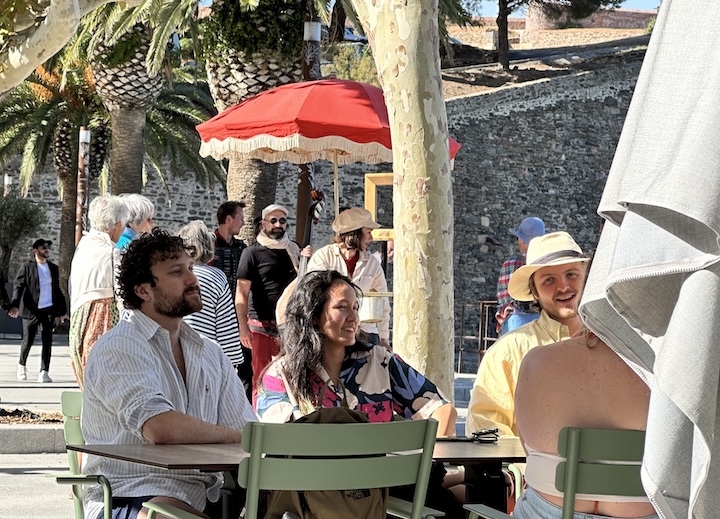
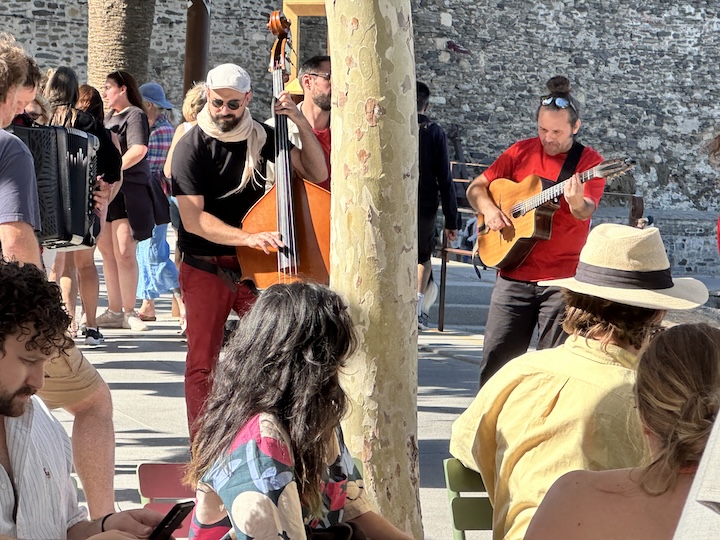
We emerge from the Musee into a warm and sunny day, and there are plenty of people taking advantage of the beach. We settle into a couple of refreshing drinks and watch as one of the anchored yachts hauls up her mainsail and jib and tacks away to some distant destination. It brings back fond memories of our own sailing days and the spray of salt water over the gun’lls. Soon another street band arrives to play a few tunes and we toss some Euros into the basket.

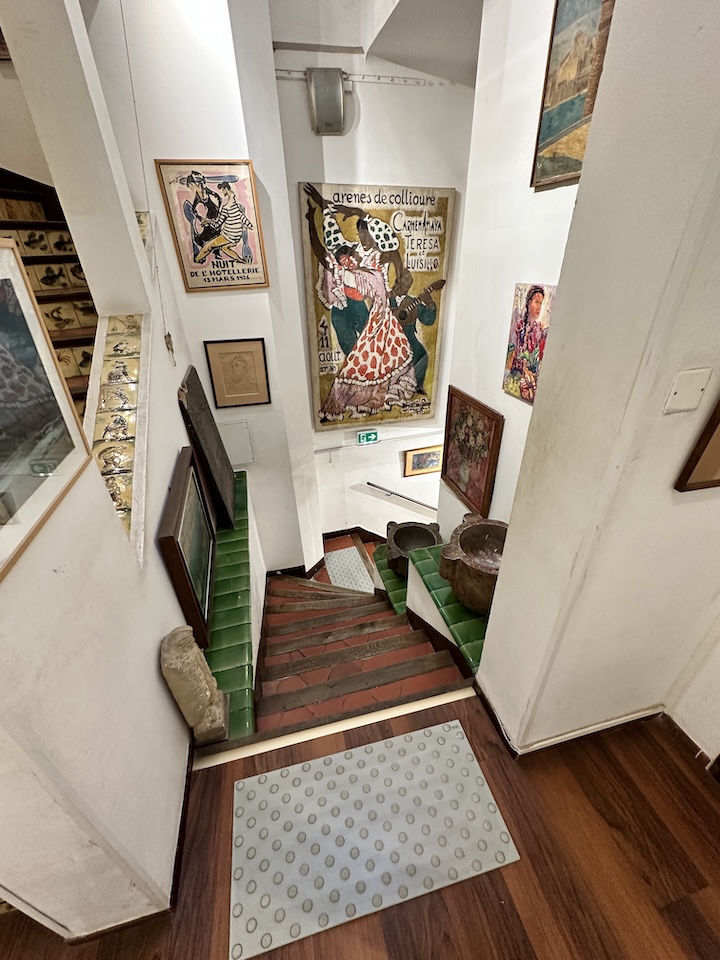
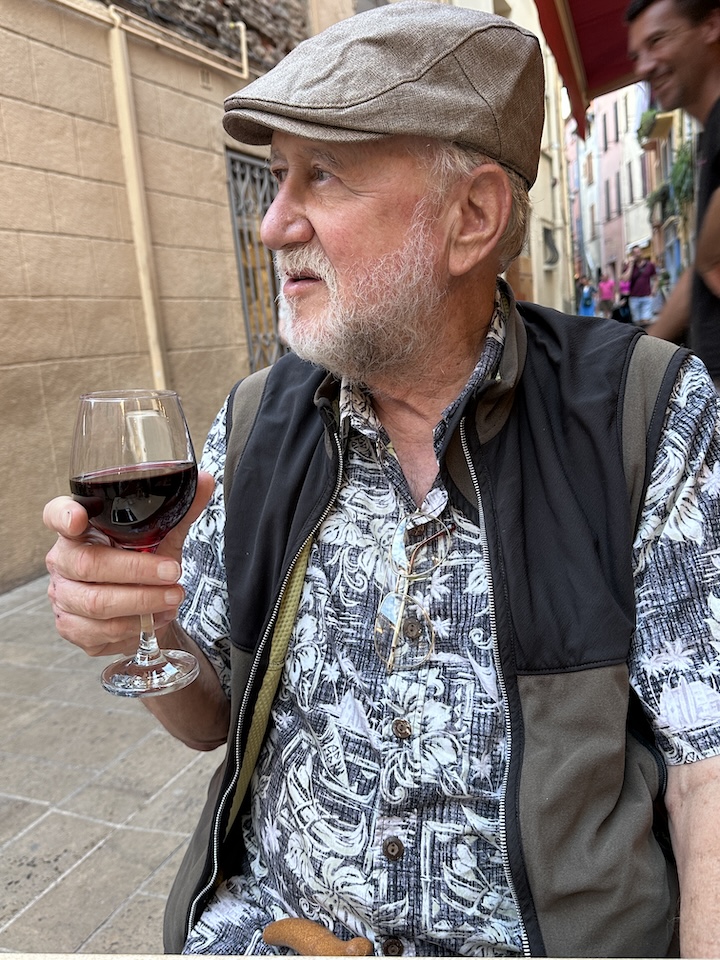
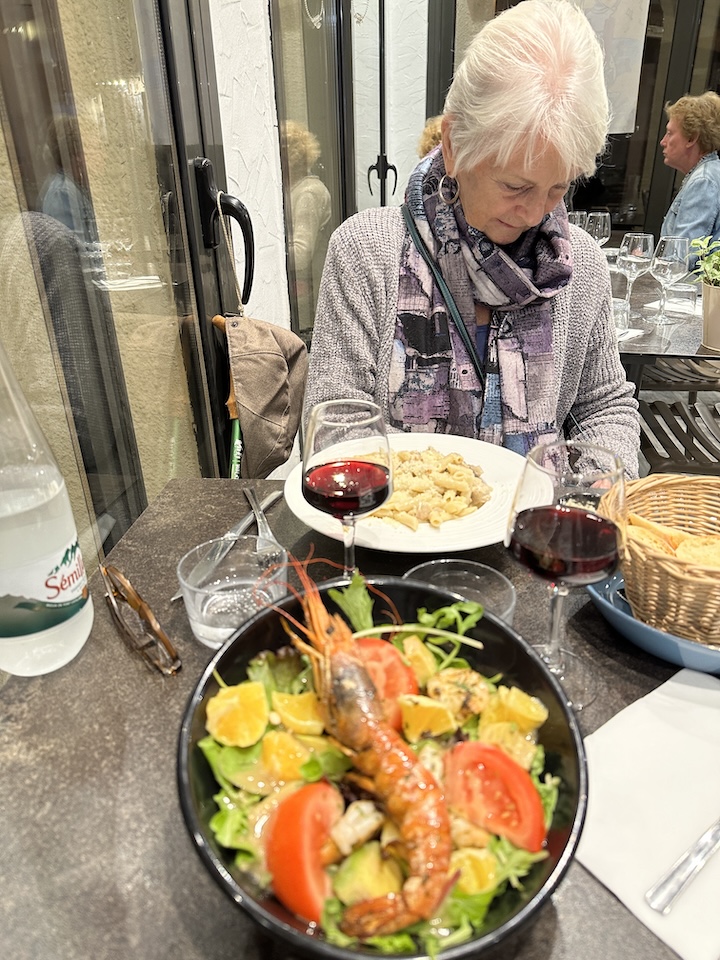
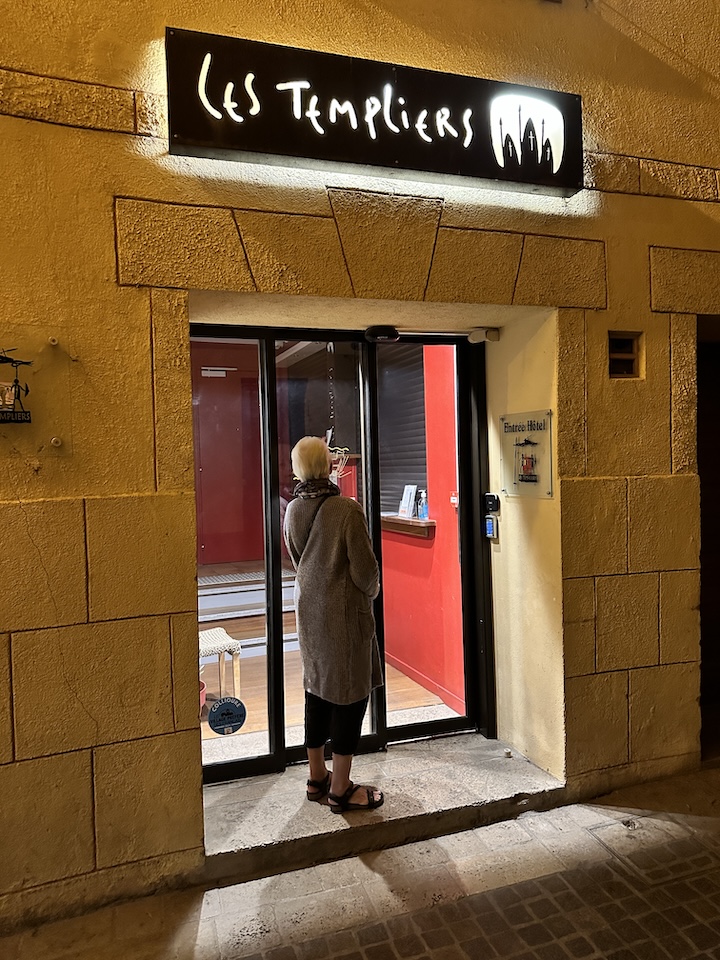
Eventually evening descends again upon the harbor and we find another good regional platter to share, with more good local wine. And then we find our way back down dim alleyways to Les Templiers for another restful night.

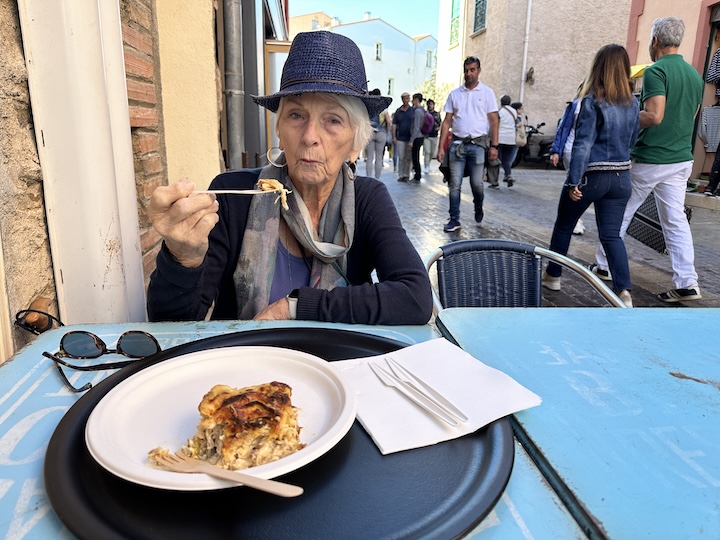
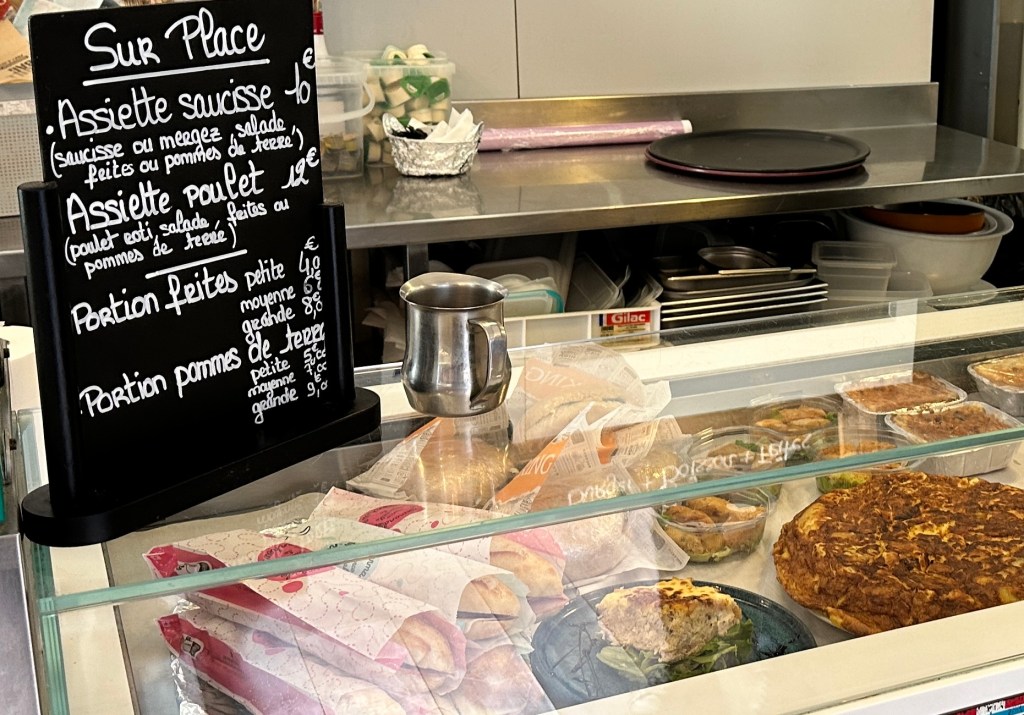
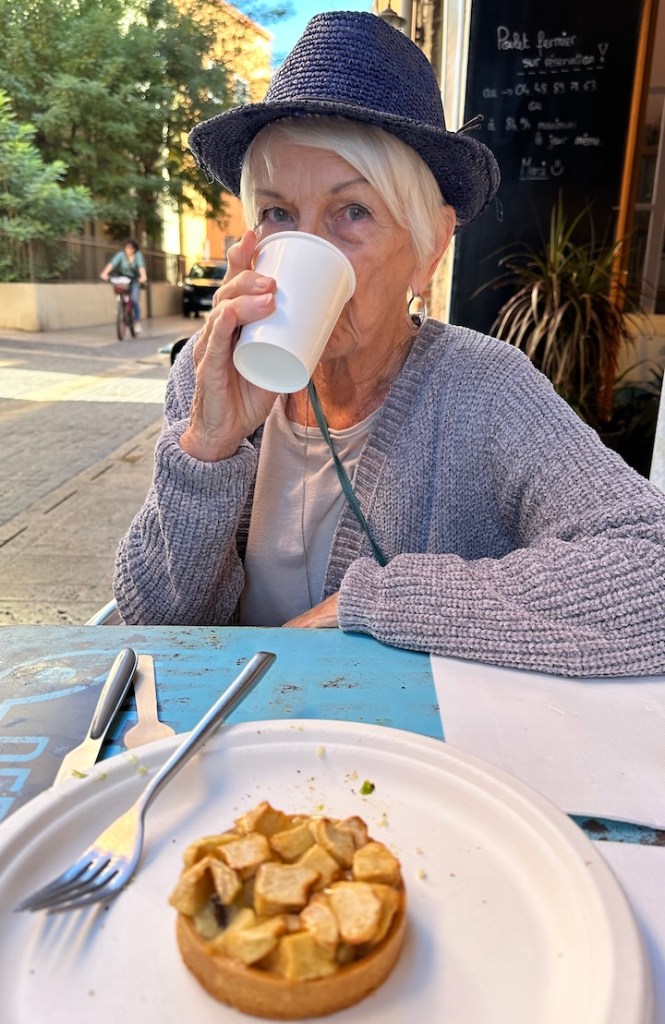
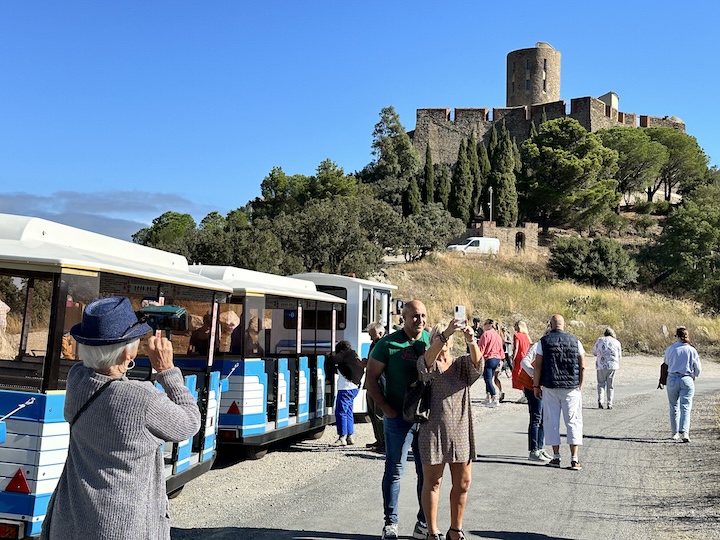
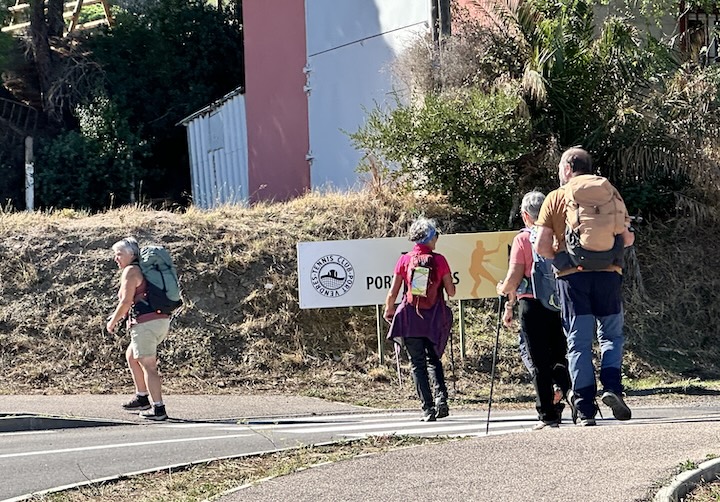
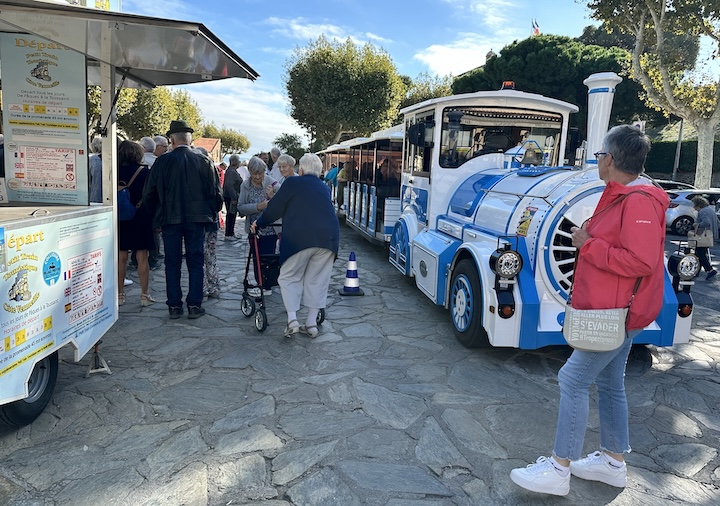
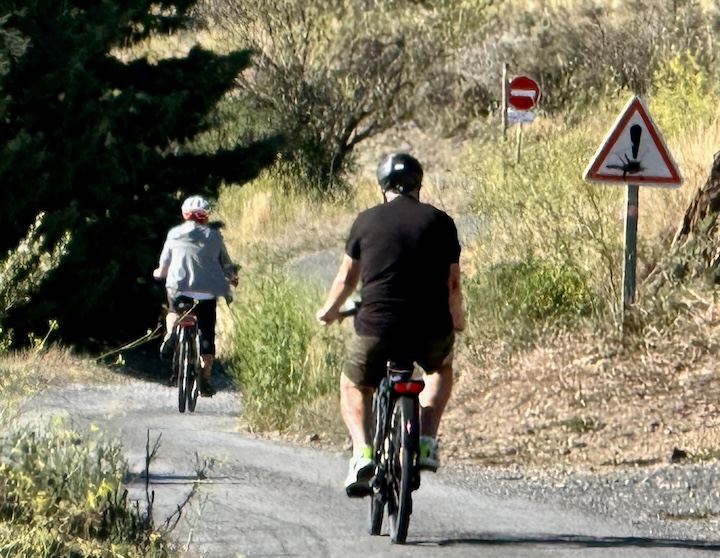
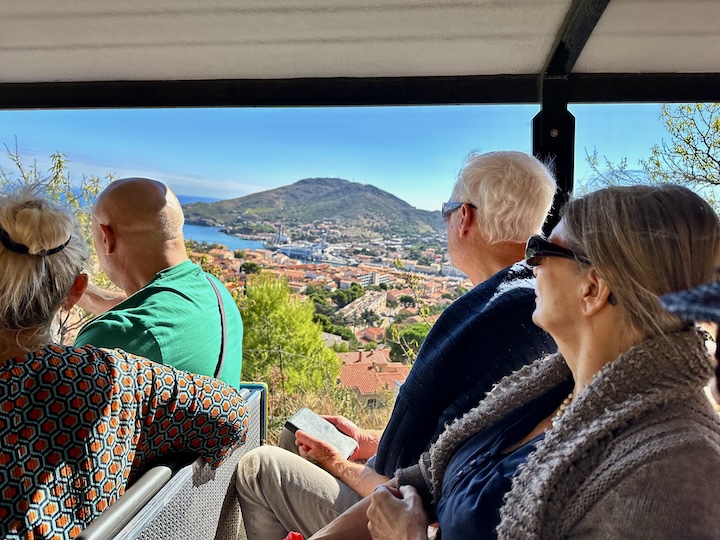
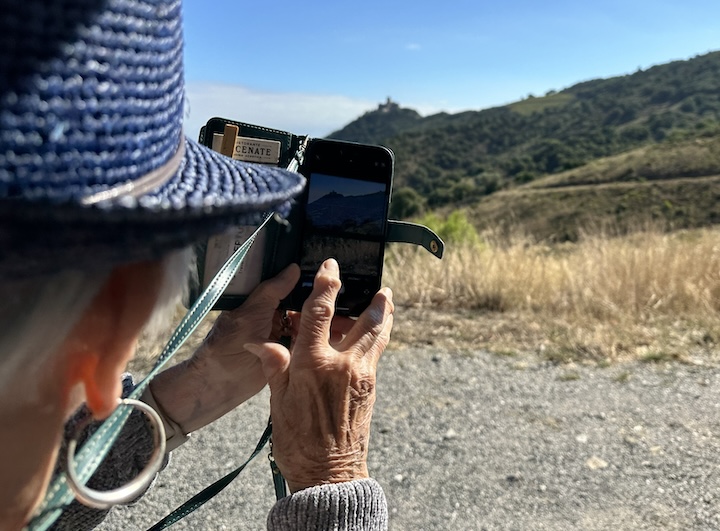
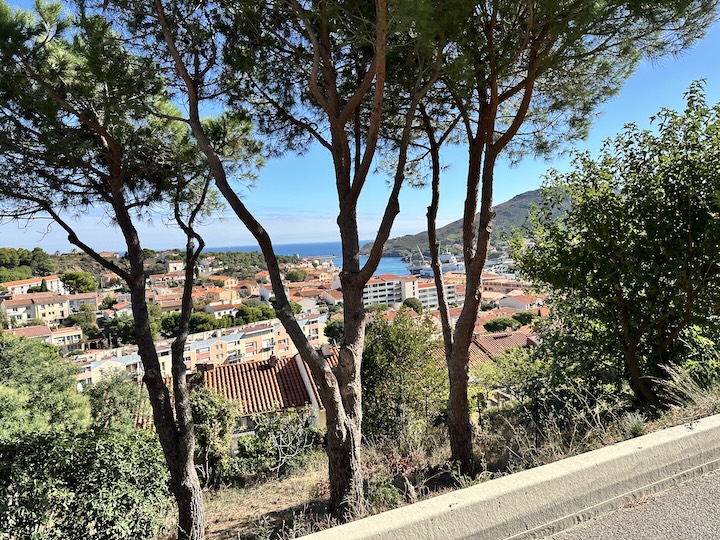
Morning again finds us in need of good coffee, with a good quiche. And an apple tart. And then we’re ready to board the local tourist ‘train’ that takes us to the hilltop castle on our scenic way to nearby Port Vendres. There are some far more ambitious folks than us who seem to have huffed their way to the top on bicycles. And there are others hiking the coastal trail. But those of us on the train seem to be happily sedentary.

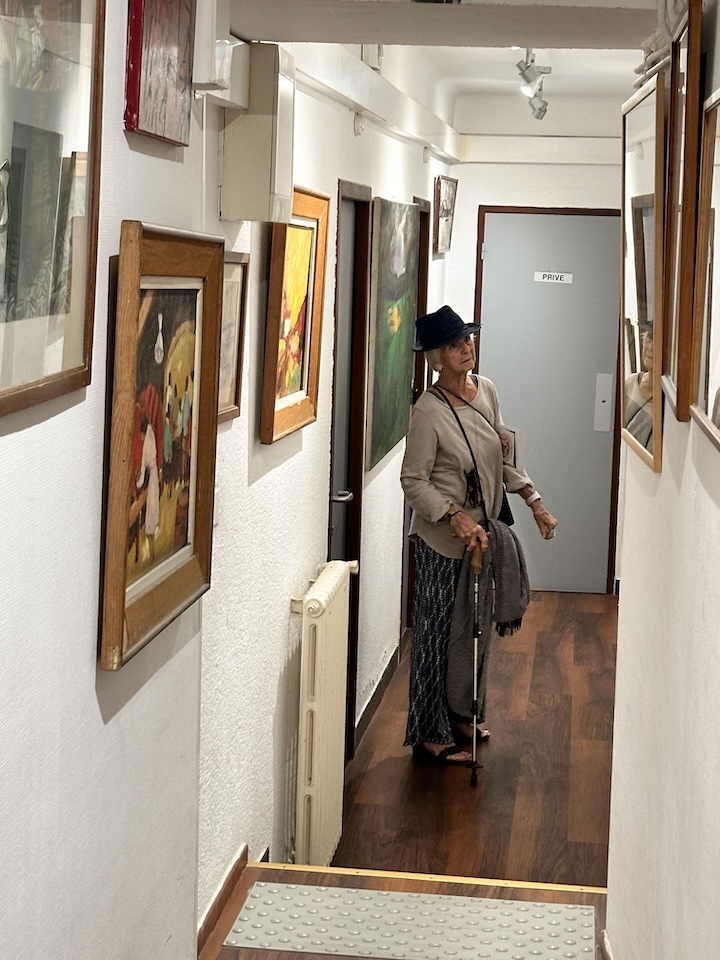
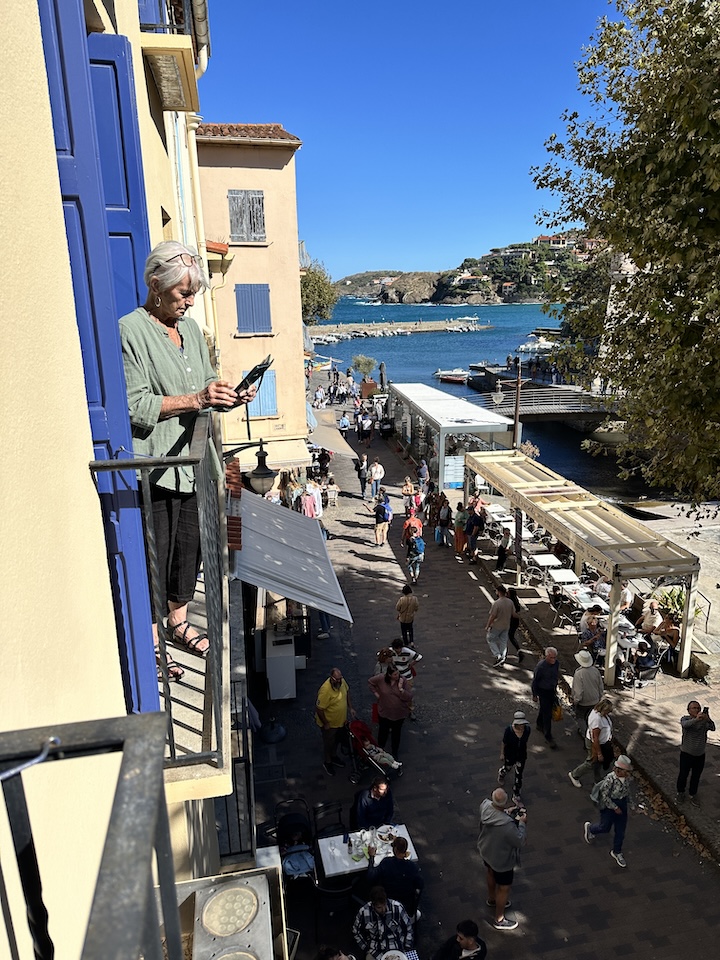
The train drops us off back in Collioure, where other musicians are awaiting. And more Euros are expected. We’ll be leaving in the morning so we make our way up through art-festooned hallways to our room for a last fond gaze from our balcony, and an afternoon nap. And later we emerge for a final good dinner in the narrow alleys of Collioure. It’s been a fine visit for us to this very sweet Mediterranean village.

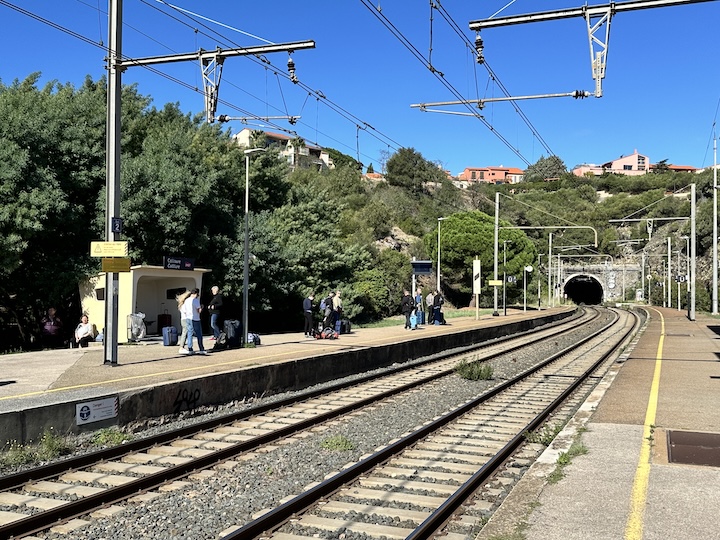
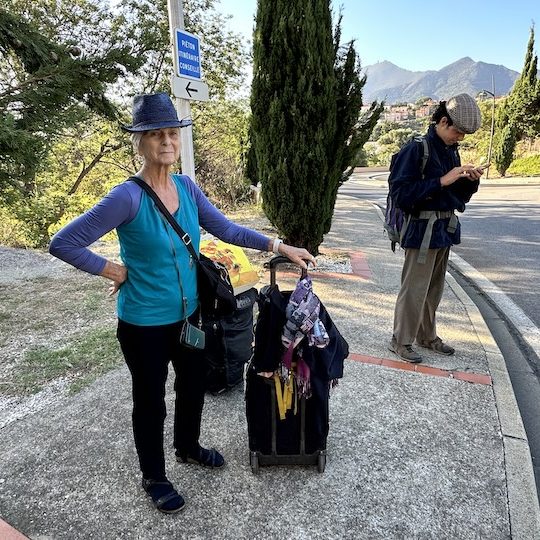
The morning finds us out semi-early, along with the cleanup crew, and waiting for a taxi up to the little train station. We plan to get a bit of breakfast in the larger train station at Perpignan, and then take a morning train to our next stop, in Bordeaux. 

But there’s a hitch in the plans. As we’re waiting by the strangely-silent tracks, a notice keeps flashing on the schedule board. I attempt to decipher it with my abysmal French, as it seems to say – and I dearly hope I’m wrong – that there’s a strike or something and our train will not arrive at all today. A few other folks arrive and then wander off. We are soon joined by a very nice young Frenchman, who is planning to visit his new wife in Barcelona, and he confirms my inept translation.

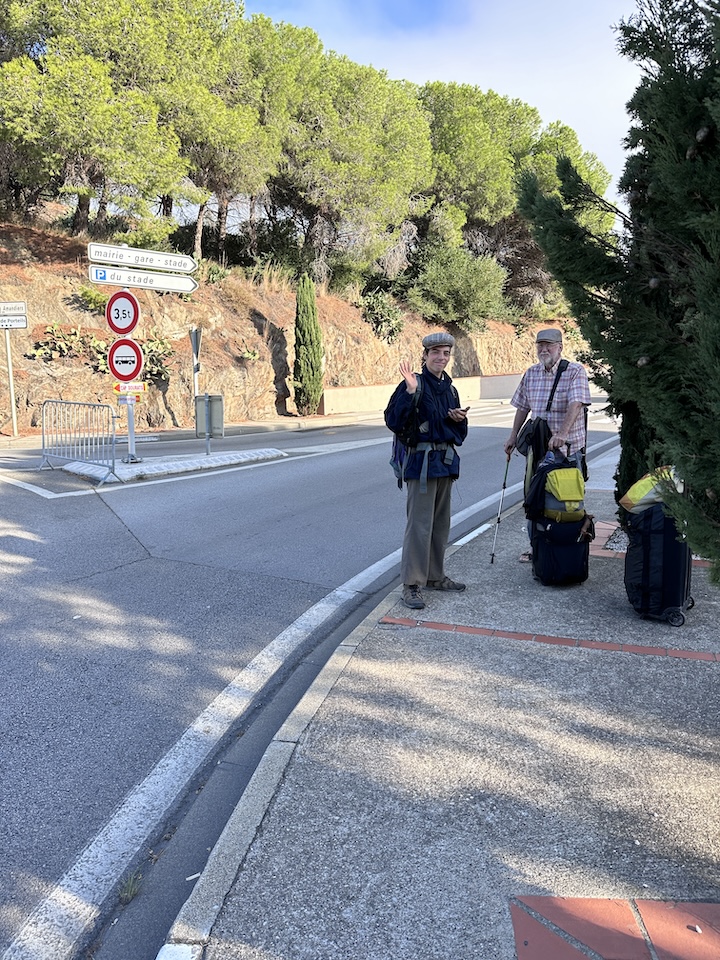
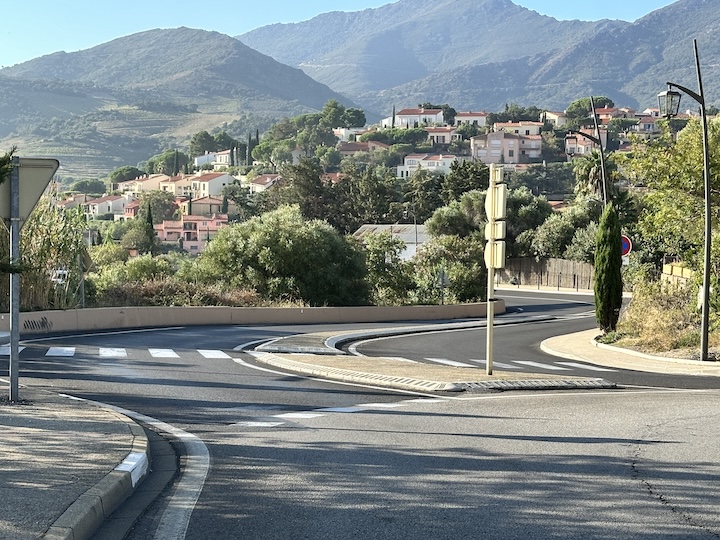
There’s only one thing to do. We follow him up a steep side street to the highway that runs over the hills in hopes of catching a local bus to the train station in Perpignan. We both like to think we’re still fairly young(ish), but after a glance at the two at us huffing our heavy bags, our new young friend grabs the handles of both bags and hauls them up to the highway for us. And we almost have to run to keep up with him.

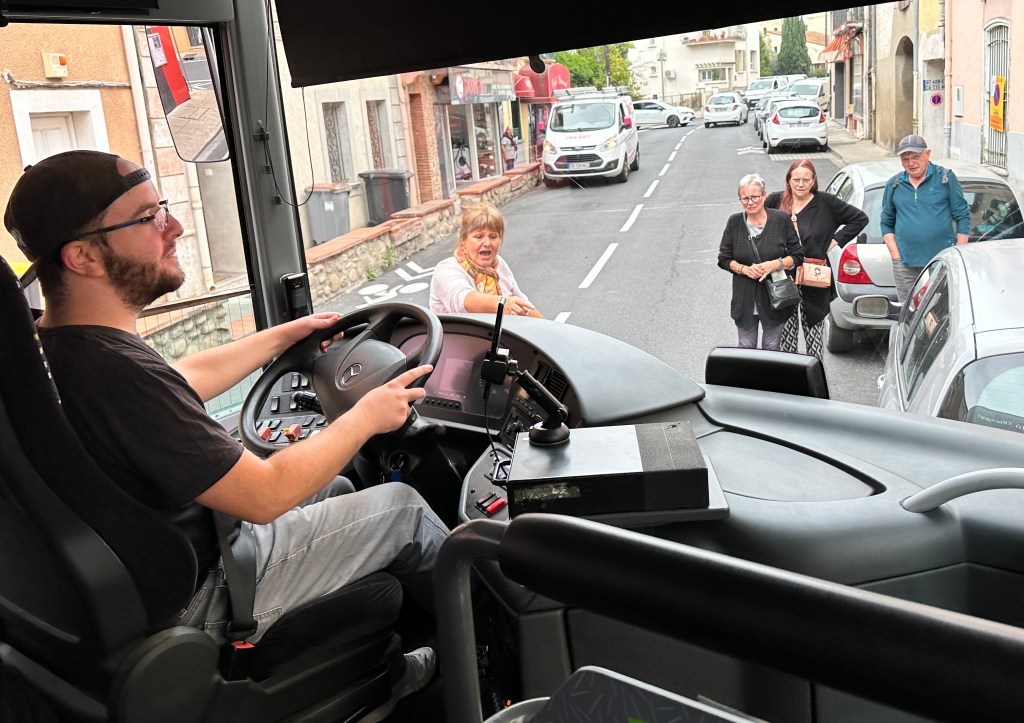
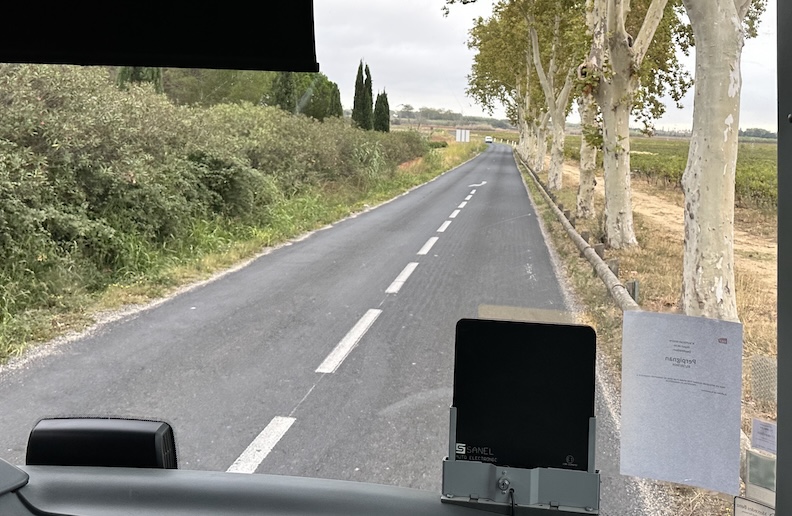
And then we wait for a ride, as local traffic passes us by. After a while a bus appears and the driver explains he’s there to pick up train passengers stranded at the stations and get them to Perpignan. If we’d just waited at the station he would have picked us up there. So we’ve gotten some very good morning exercise and now we’re getting a scenic view of rural France, as the driver takes us down tree-lined lanes and negotiates his way – with help from the locals – through the tight corners of several villages.   

Soon enough we’ve arrived at Perpignan. We have bought our tickets for Bordeaux, and we’re gobbling our way through some good pastries. All is indeed fine once again, in our own tight little corner of the world. We’ll be boarding the next train and we’ll see you soon in our next Dispatch, on the Atlantic side of France in the city of Bordeaux.
— PRW

Montpelier, France

Sept 20-25, 2024

Dolceacqua has been a sweet and picturesque little town, and well worth the restful almost-week we spent there. But now we’re off for a different experience. We’re heading to the ancient university city of Montpellier, in southern France.  

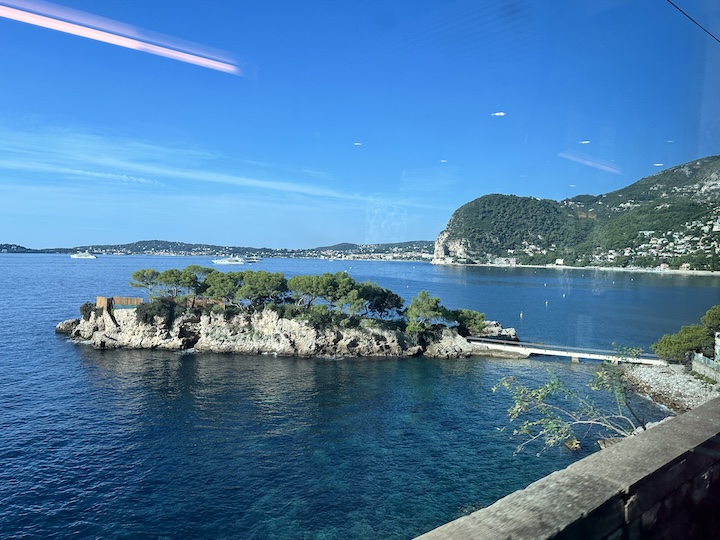
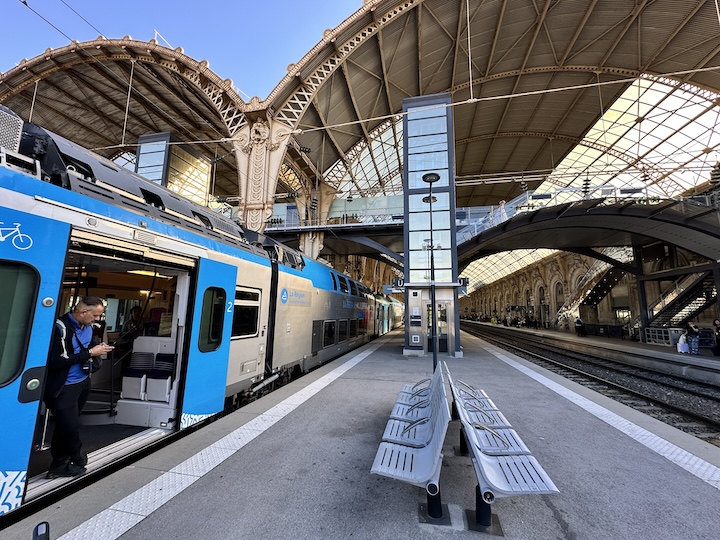
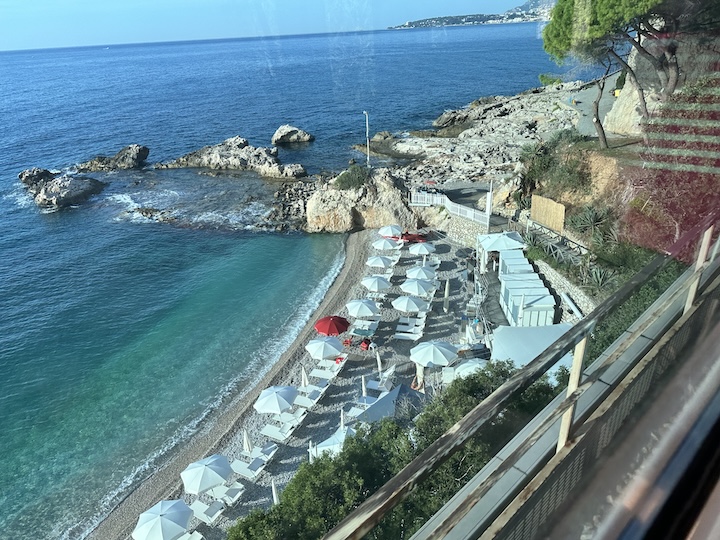
The rocky Ligurian coast of Northern Italy passes by our train windows, and soon we’ve crossed over the French border to make a change at the station in Nice. 

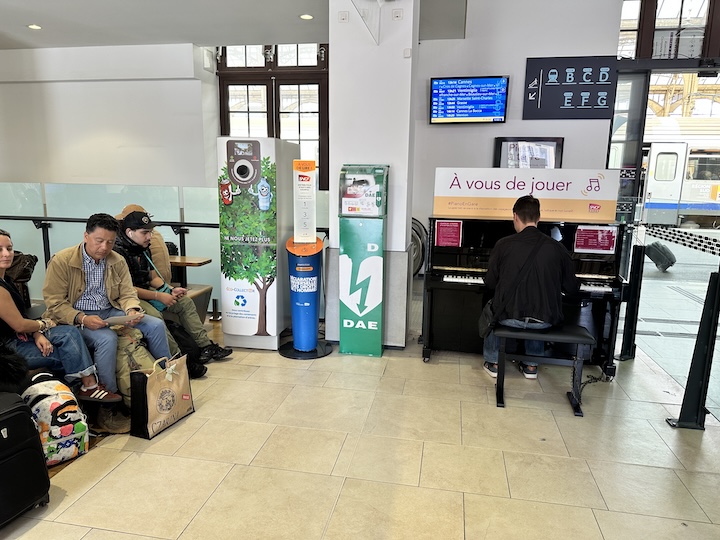
We can usually count on a talented person to take a seat at one of the public pianos that are thoughtfully provided in many Euro stations, And there is so much musical talent among the young people in Europe that they fill the place with fine music. The sign above the piano translates as, “It’s up to you.” (‘To bring this piano to life,’ I guess.)

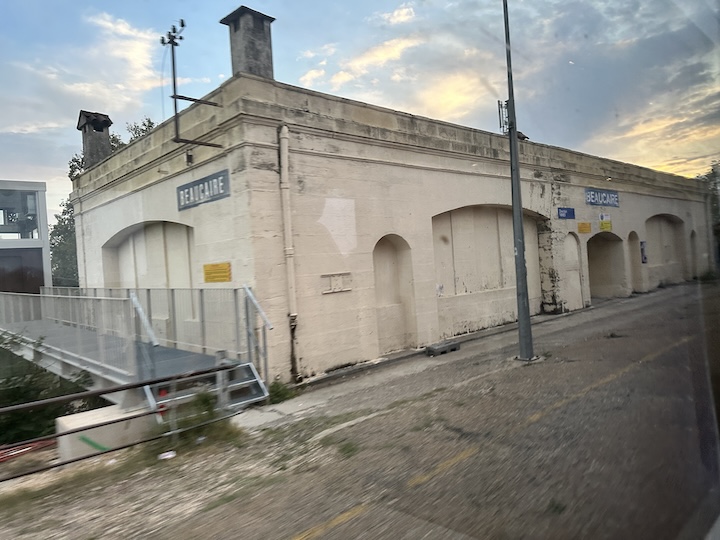
It’s a day-long train ride from Nice to Montpellier, with a change in Marseilles, and soon we’ve crossed the Rhône river, racing past the old unused train station in Beaucaire. It brings back fond memories of a month we spent in that small riverside town several years ago.

Our dispatch from Beaucaire (& Marseilles) I is included in the Past Dispatches Archive on this site: 45. Summer 2016 – Paris. Beaucaire 1 & 2. August 2016. 

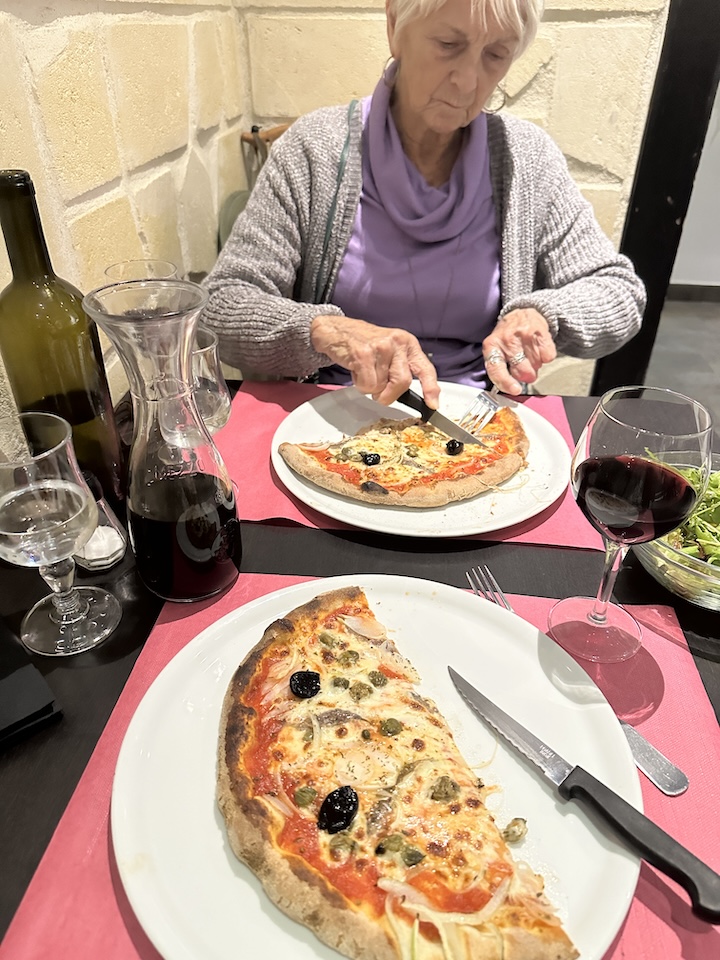
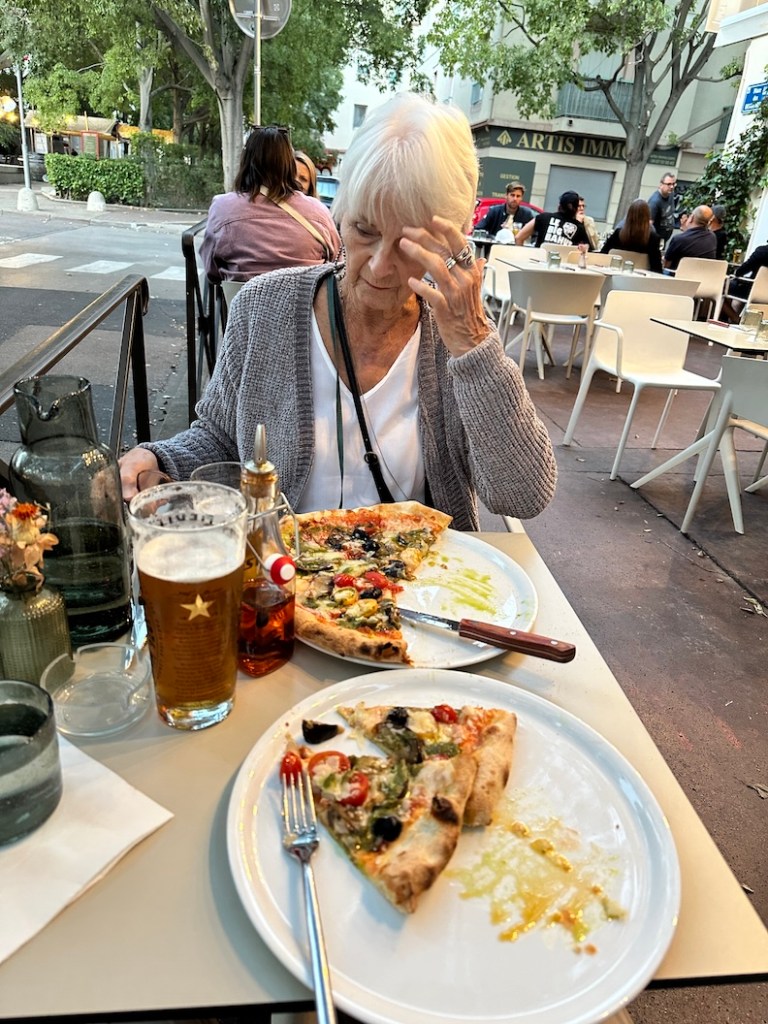
We arrive at Montpellier in the early evening to a very nice apartment in a quiet neighborhood. Soon we’ve found a friendly nearby eatery called Chez Vincent to share tables with the locals and enjoy an excellent pizza. There’s also an ample pichet of local wine to brighten the night.

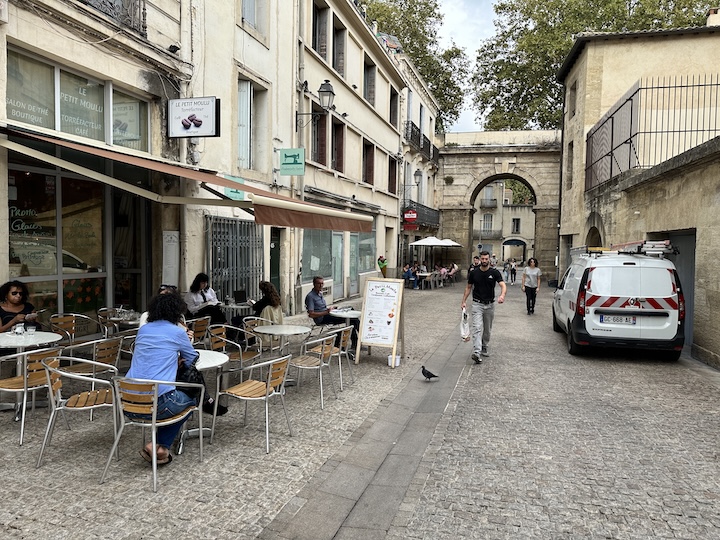
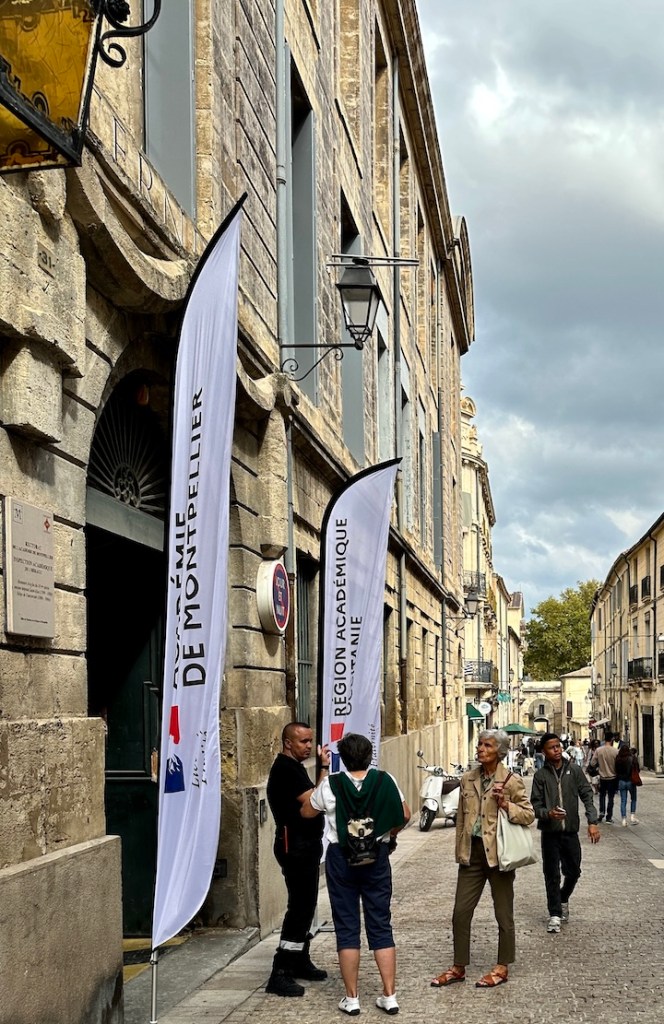
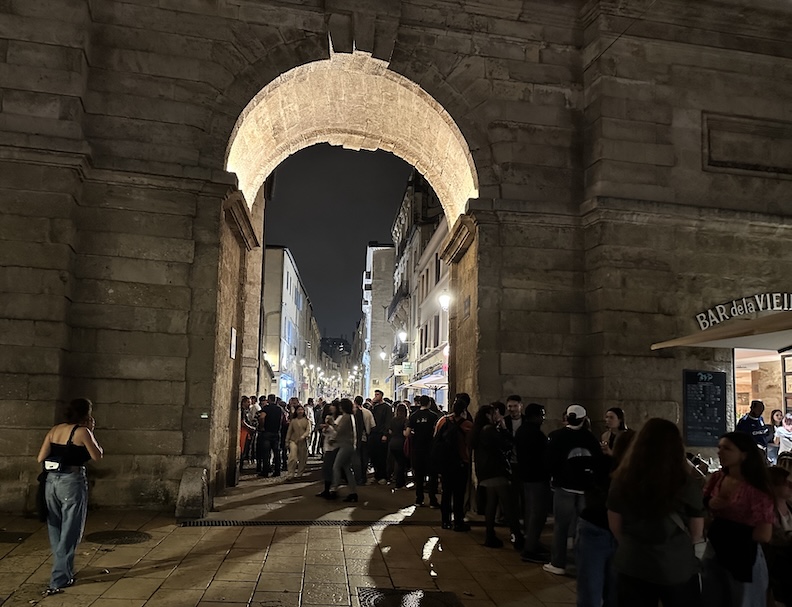
Montpellier is home to one of the oldest universities in Europe, dating to its official first statutes issued by the abbot Conrad of Urach in 1220. We like university towns for their reasonable rentals, easy public transportation, good food, youthful energy, and varied cultural activities, so it’s time we stopped in Montpellier. And in the morning we’re off through the old stone entry archway in search of a student-haunted coffee shop – one that also offers fine pastry.

Evidence of higher level teaching in Montpellier actually goes back centuries earlier than the official date of 1220. It’s even likely that the schools of liberal arts date from the ancient Gallo-Roman tradition following masters of rhetoric. The school of law was founded in 1160 by Placentinus, from the University of Bologna. And the school of medicine dates to scholars from Muslim Spain as early as 1137; it’s considered the world’s oldest medical school still in operation.

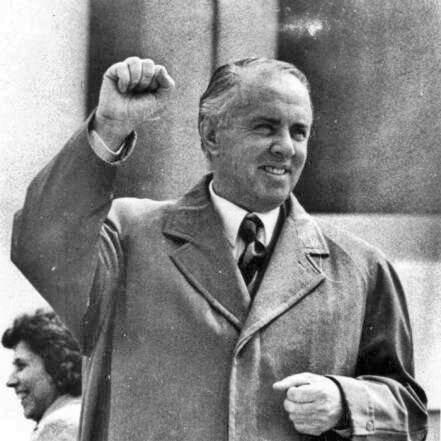
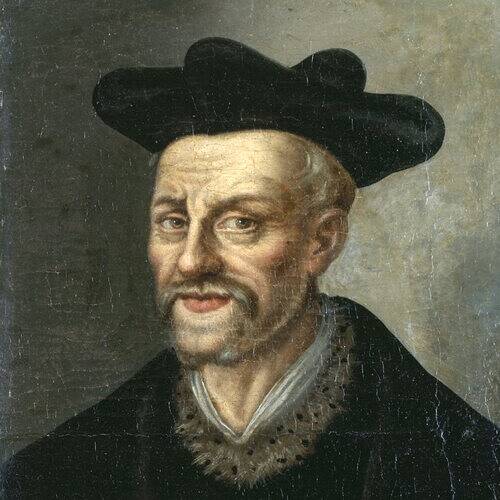
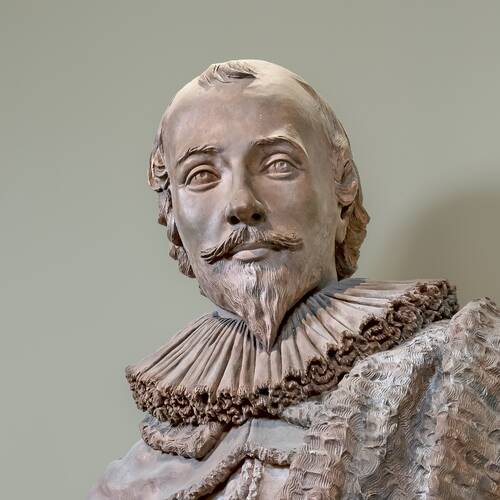
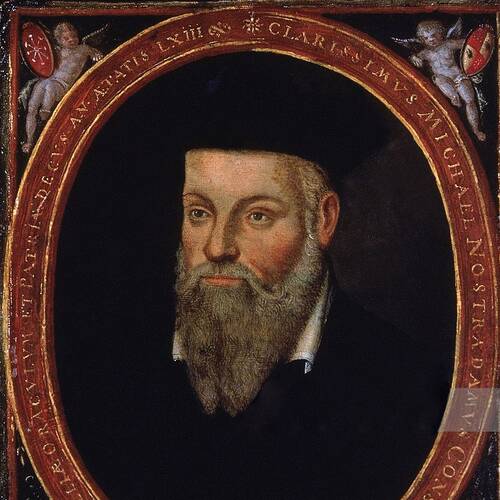
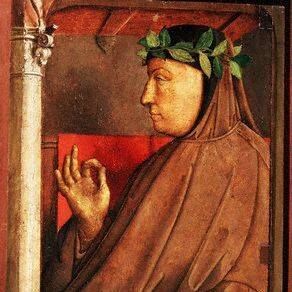
Some of the university’s more noteworthy graduates and teachers have been Nostradamus, Petrarch, Rabelais – and the infamous Guillaume de Nogaret, who conspired to arrest Pope Boniface XII. He was later counselor to both Pope Urban V, and the antipope (!) Benedict XIII. 

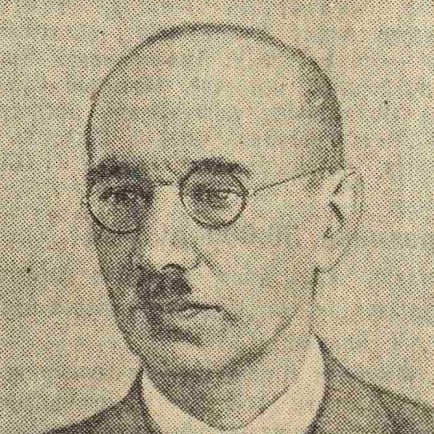
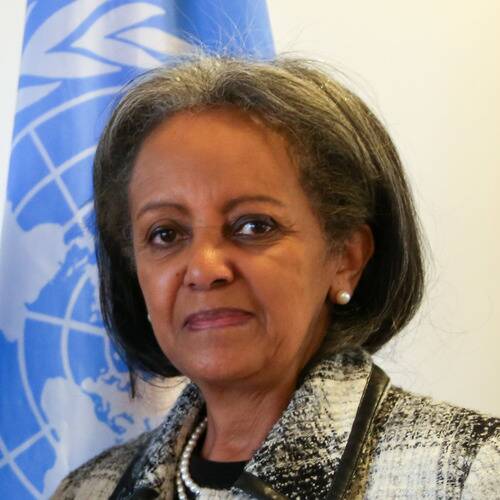
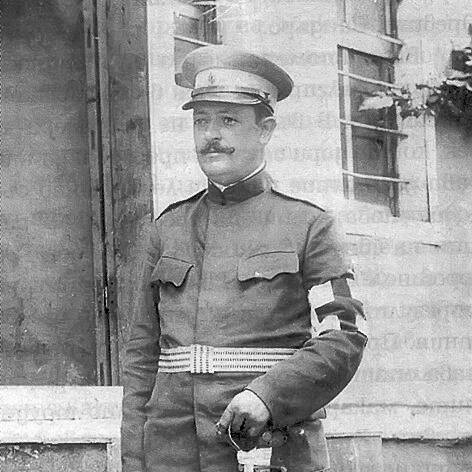
Other famous graduates include Enver Hoxha, the longtime dictator of Albania;  Sahle-Work Zewde, the first woman President of Ethiopia; Mikhail Gurevich, designer of MiG aircraft for the USSR; and Stamen Grigorov, who discovered the Lactobacillus bulgaricus used in the making of yogurt.

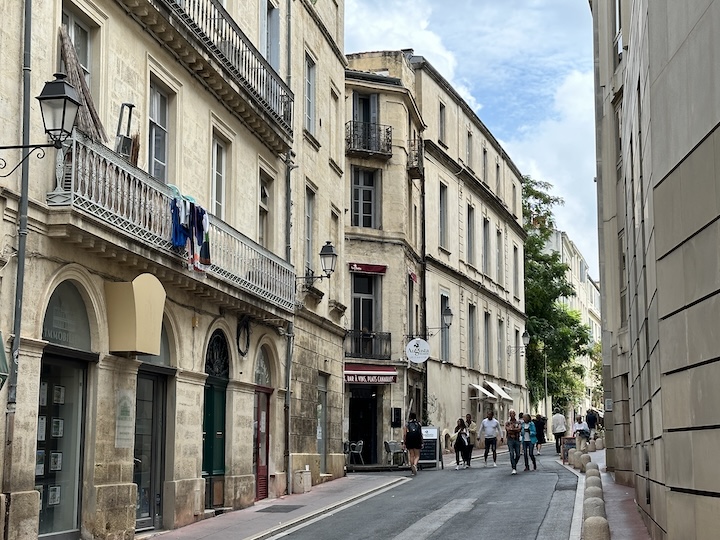
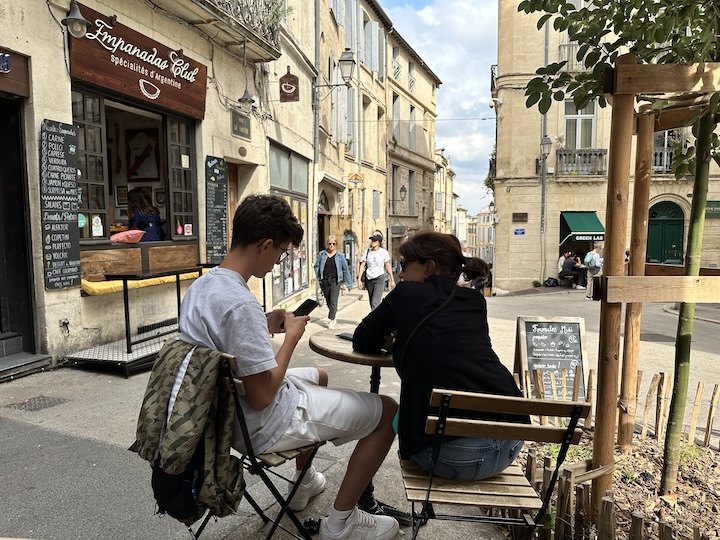
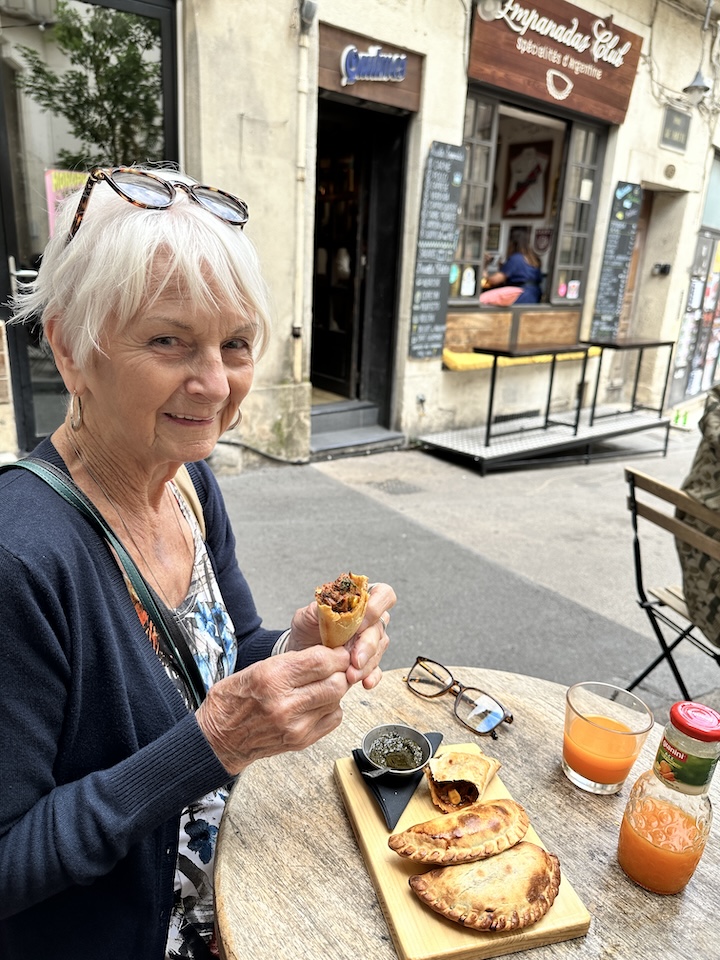
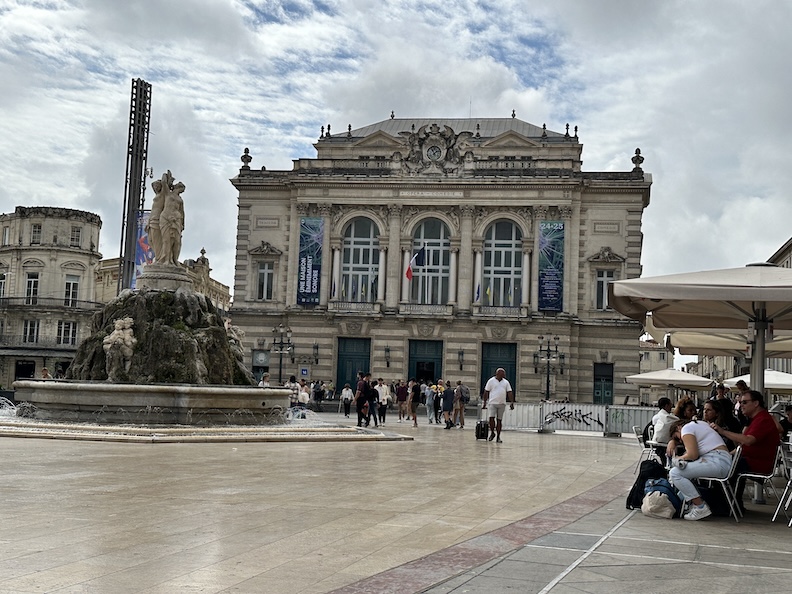
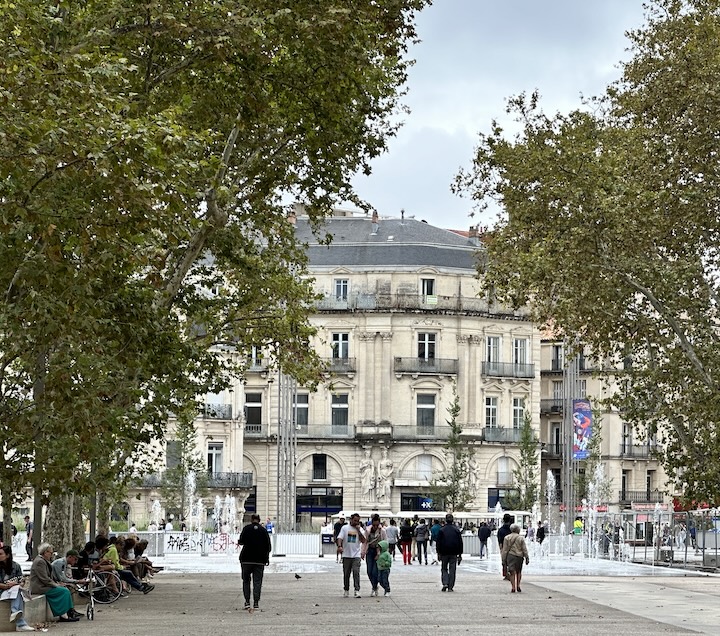
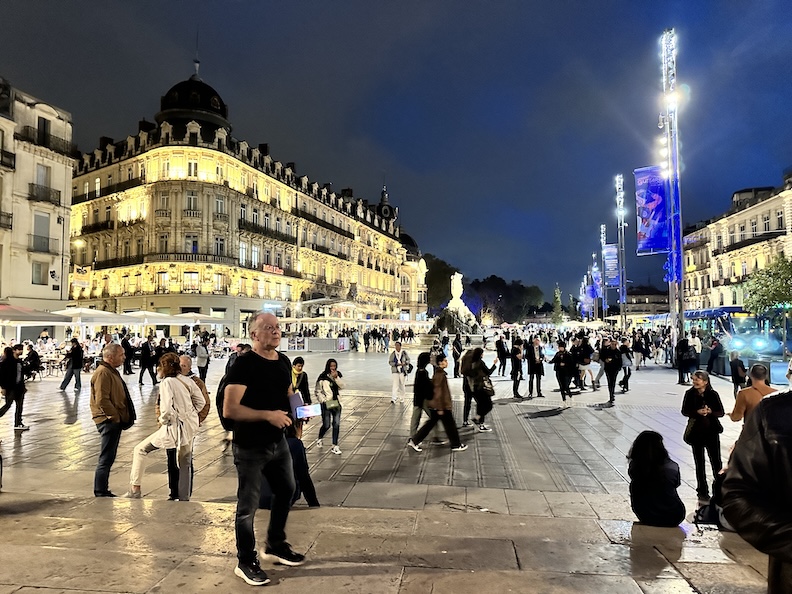
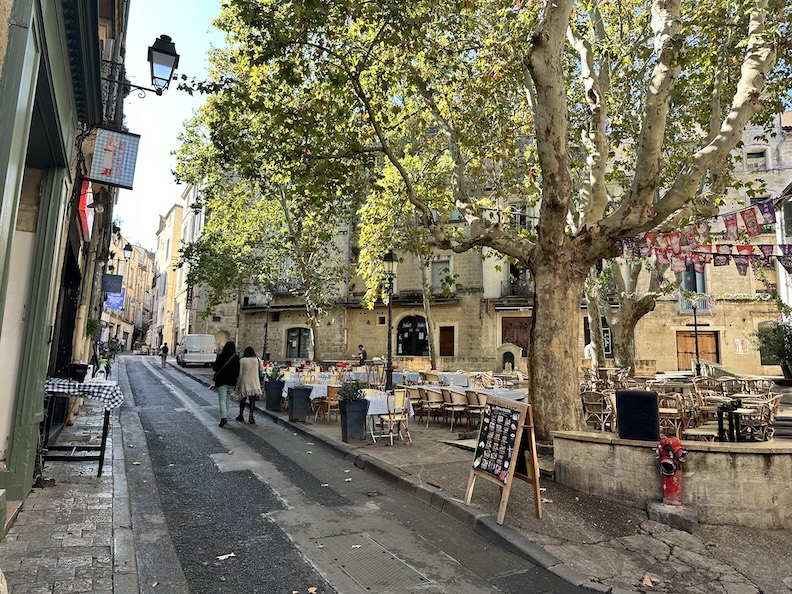
There’s no actual mountain in Montpellier, although the name might suggest otherwise, but the narrow streets of the old university district climb a large hill to the broad open Place de la Comédie at the top. And there are plenty of enticing eateries along the way. In the morning we had coffee and a pastry at the bottom of the hill, and the scent of Argentine empanadas along the Rue Foch soon convinced us that we were hungry again.

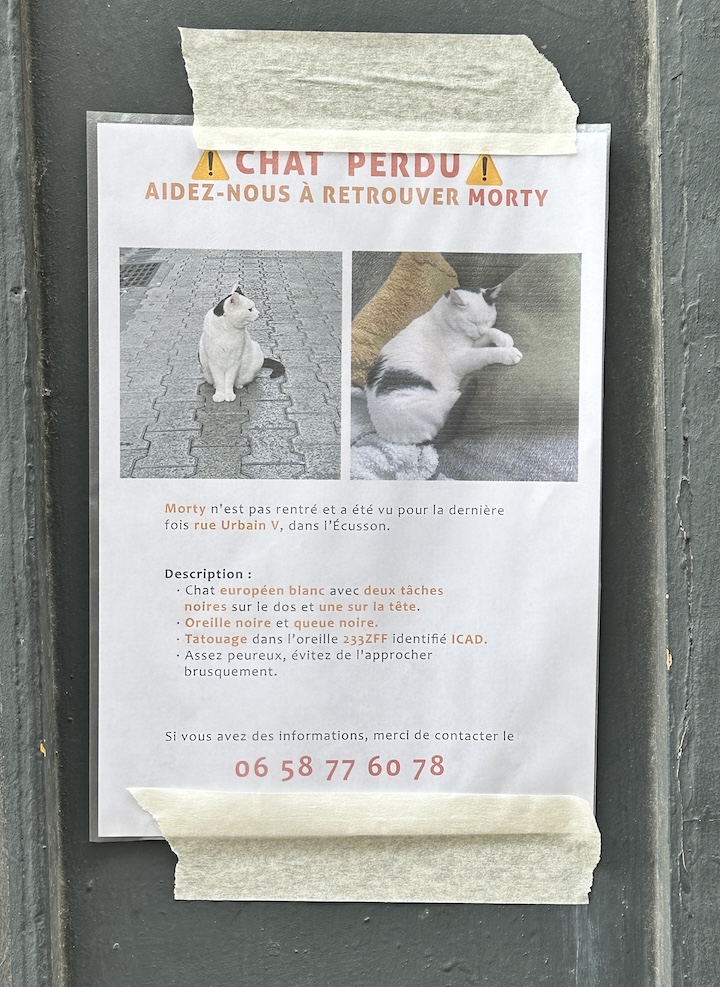
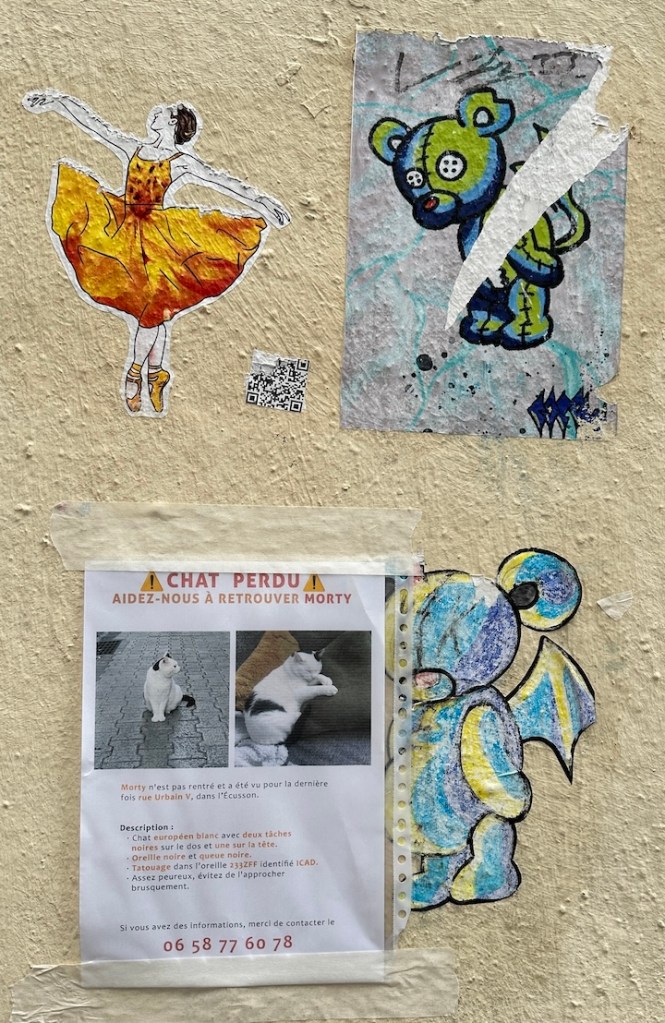
We spend the rest of the day exploring the ‘mountain’ and its many narrow streets with their interesting examples of wall art. And of course there’s a poster for a lost cat named Morty in this old university district.

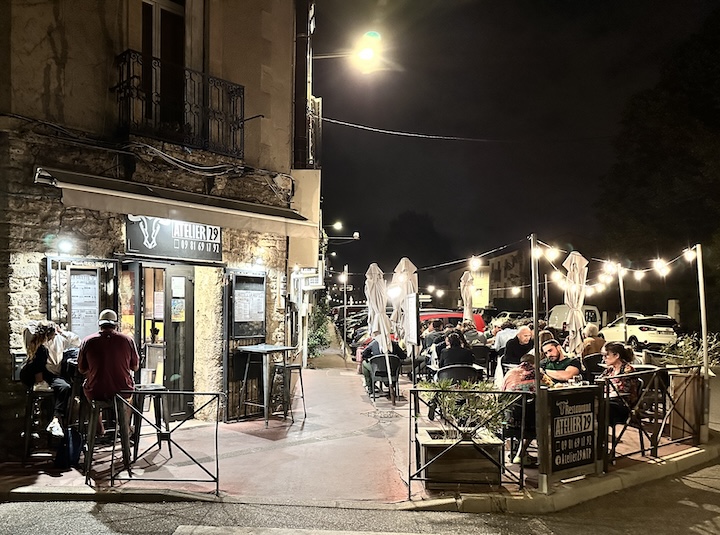
At the end of day, as nighttime finally blankets the town, the lights of a bistro named Atelier 29 beckon to us and we are like moths to the flame. And a delicious flame it is, with lots of grilled vegetables. For those who ask, “Ou est le bain?” (“Where’s the Bathroom?”), there’s a door at the back wall labeled “C’est ici” (“It’s here!”).

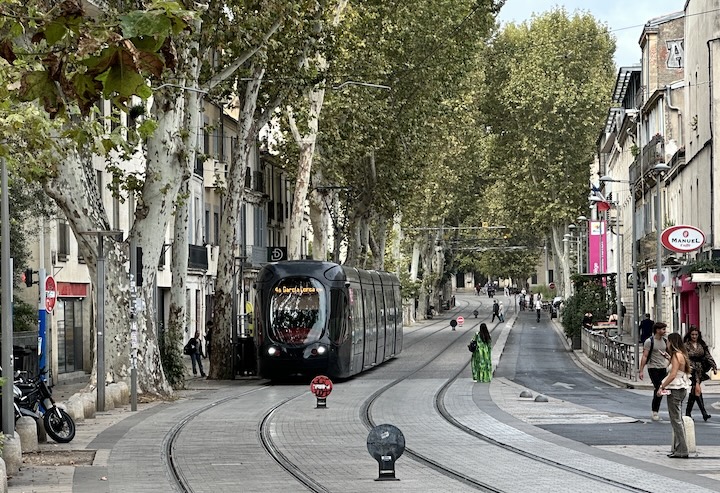
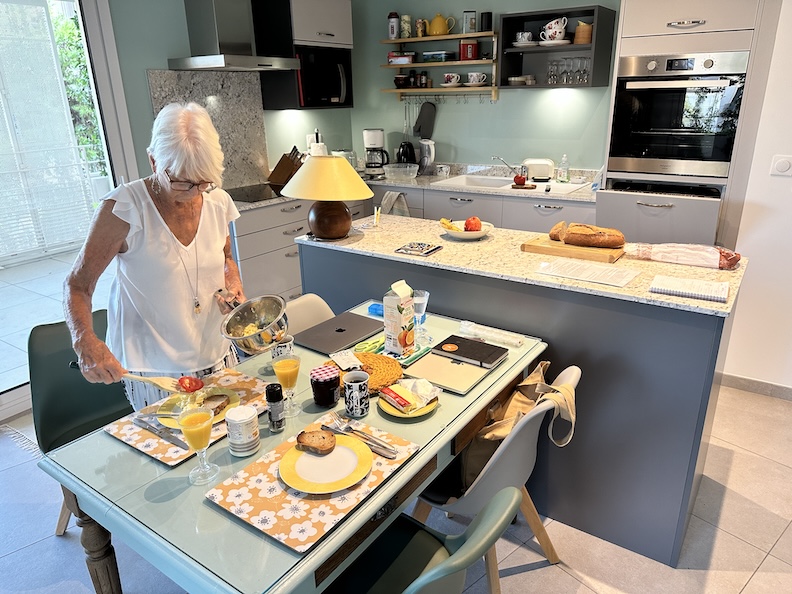
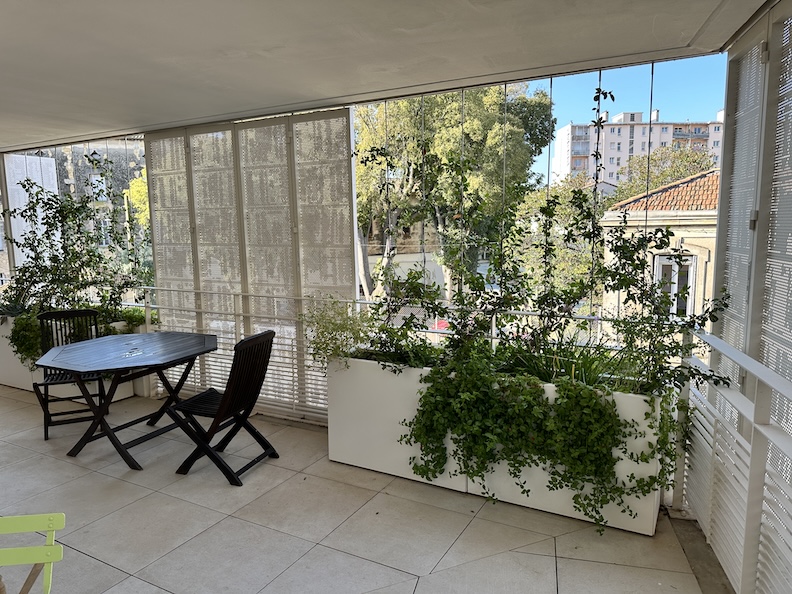
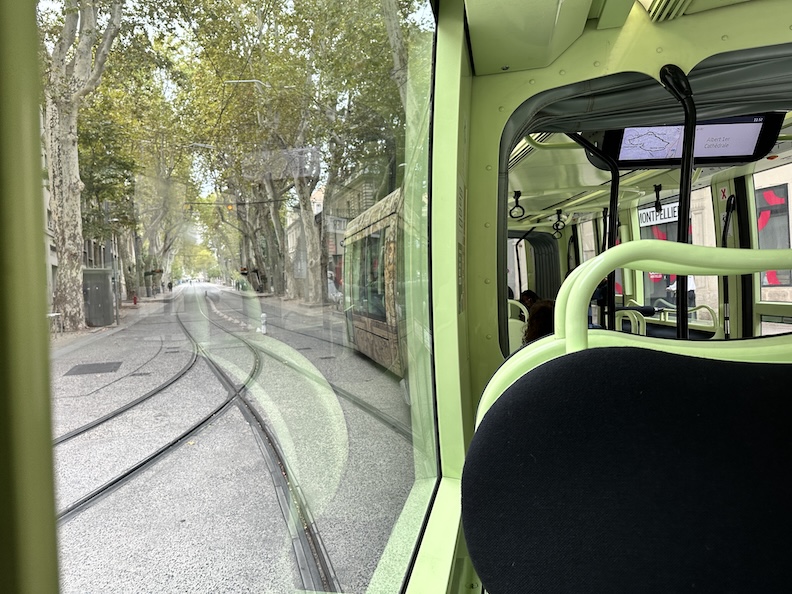
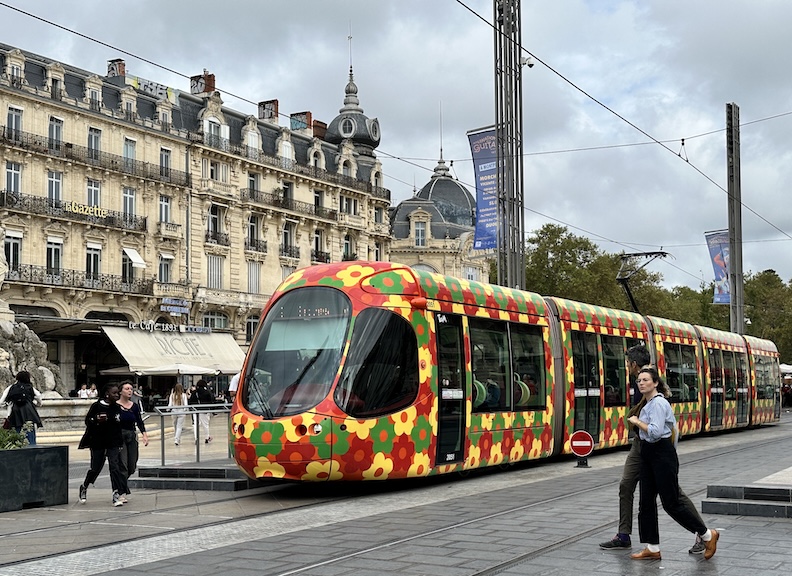
In the morning we enjoy a simple breakfast in our nice flat before we hop a tram for a cheap tour of the city. The tram takes us along tree-lined streets and across the Place de la Comédie, and we make a brief stop at the train station to get tickets to our next destination down the coast. And to enjoy some more of that good piano music we find in the train stations of Europe.

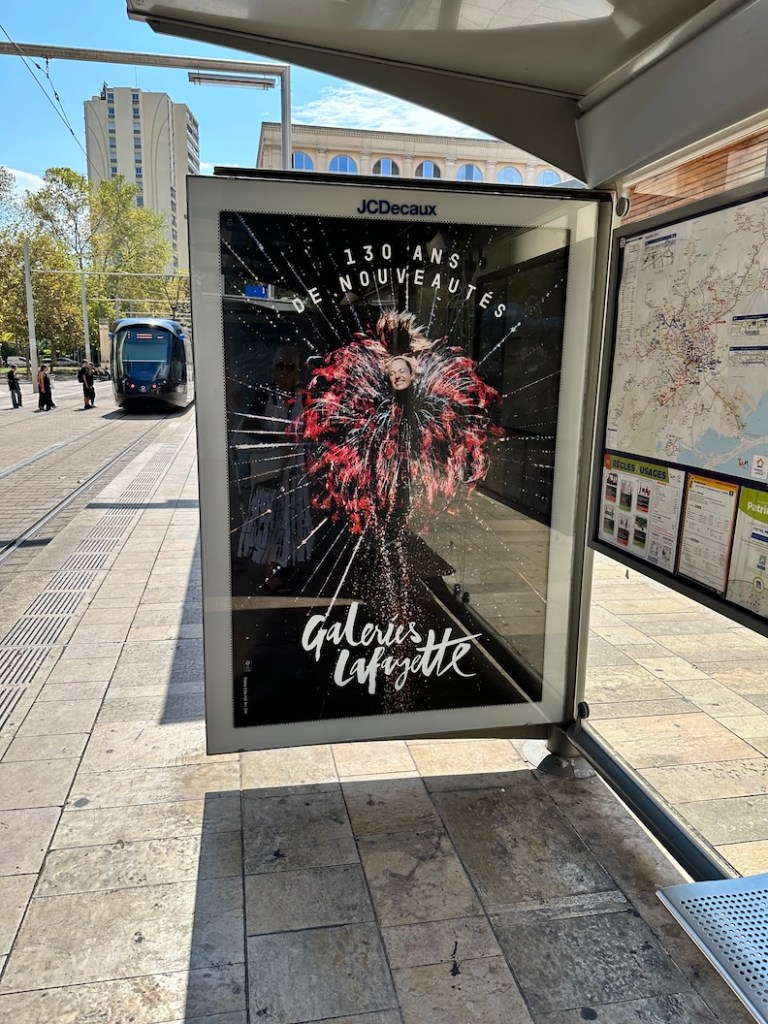
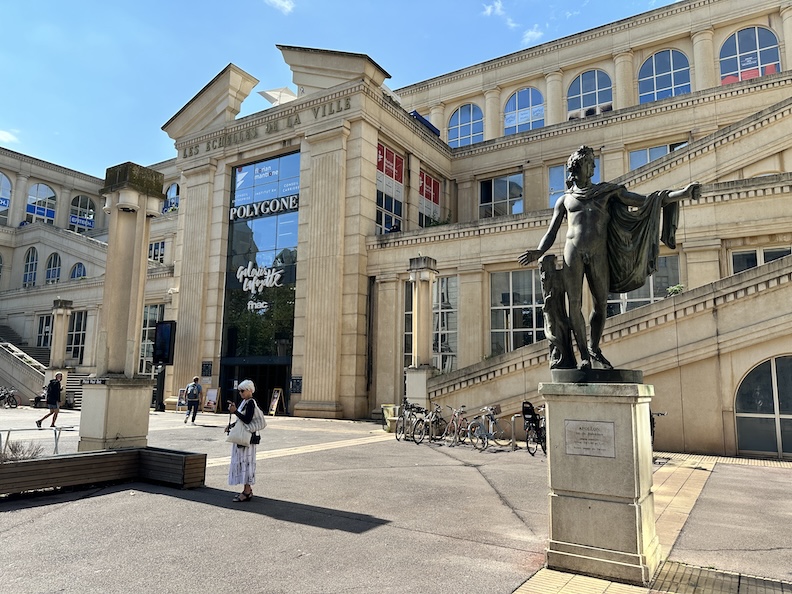
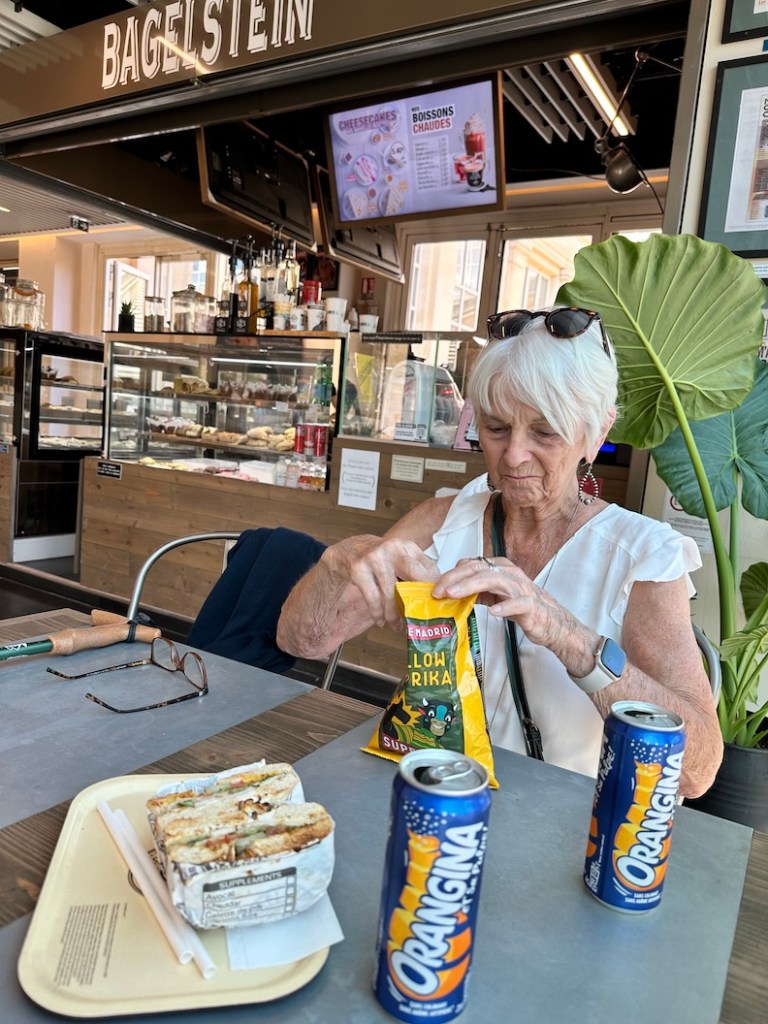
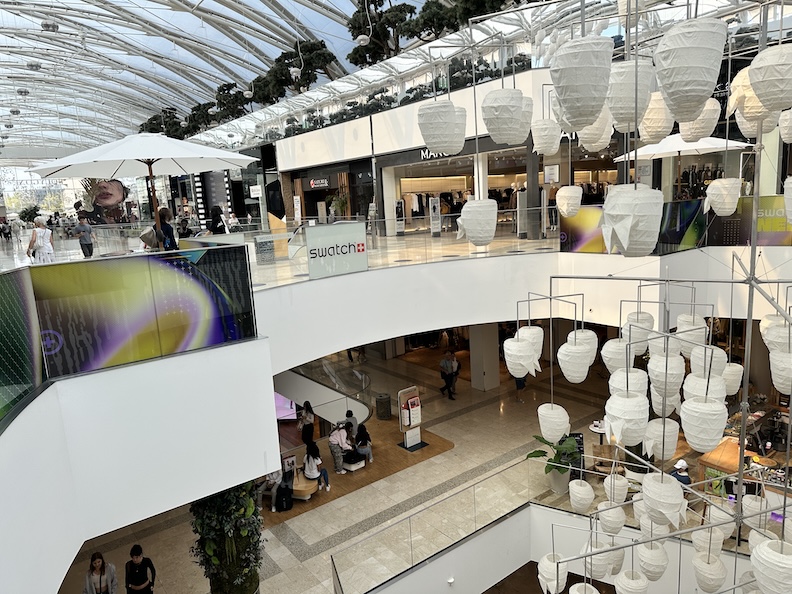
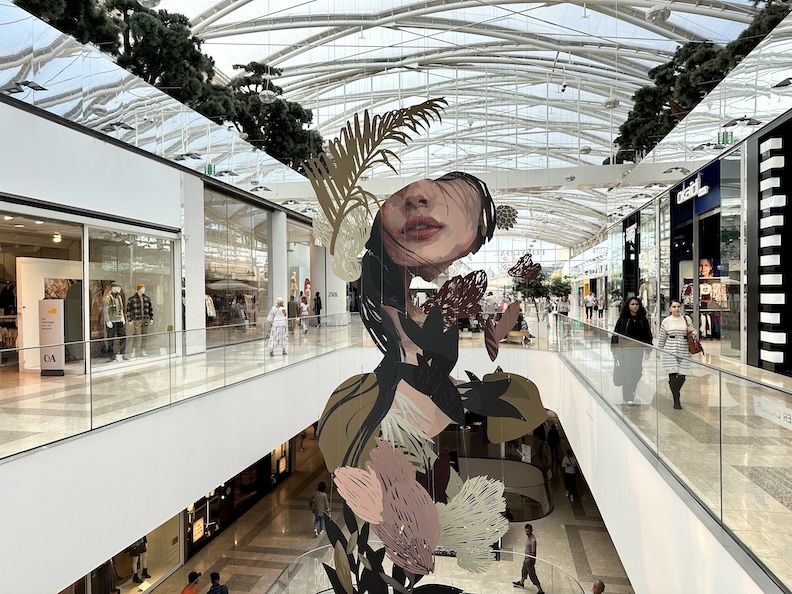
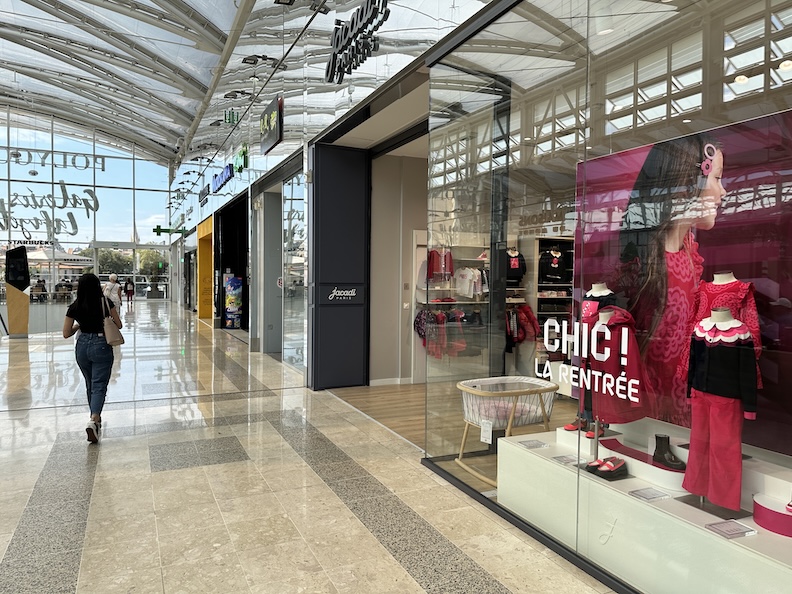
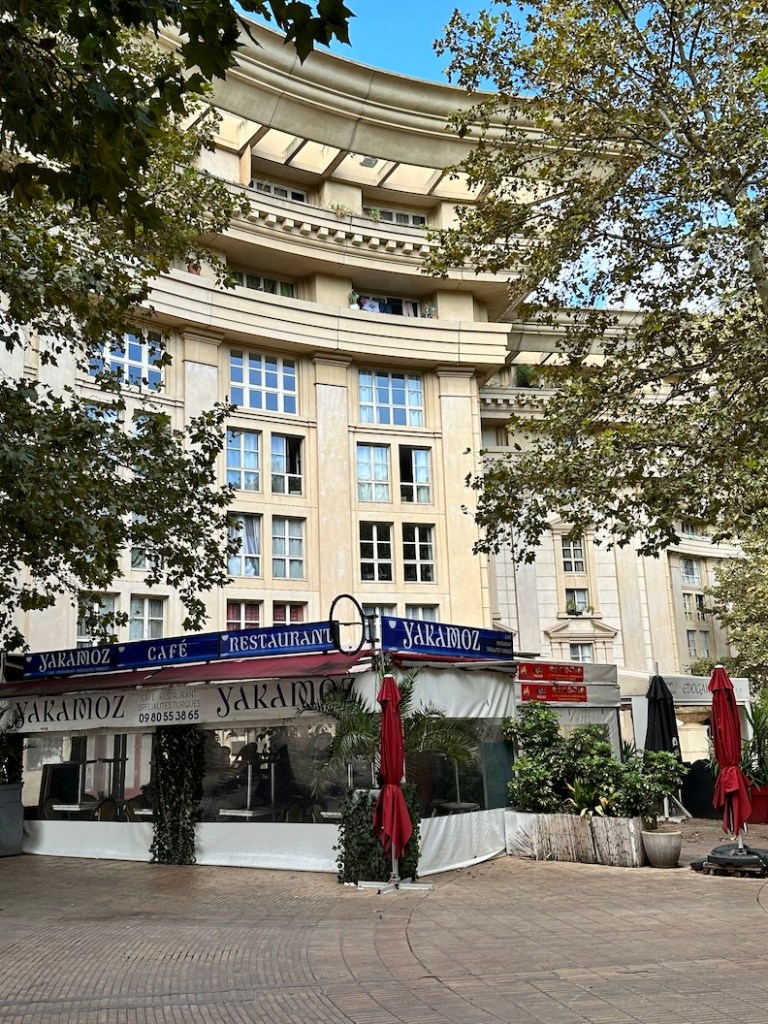
Our next tram rambles onward into modern developments, where there’s an Apple Store and a Costco at the end of the line. The return puts us into the developing urban Quartier Antigone, where we hop off by the statue of Apollo for a bite of lunch at the huge Galleries Lafayette shopping center. It’s late September, so there are plenty of sales still underway for ‘La Rentrée,’ French society’s annual Fall ‘re-entry’ into the working world after the Summer holidays.

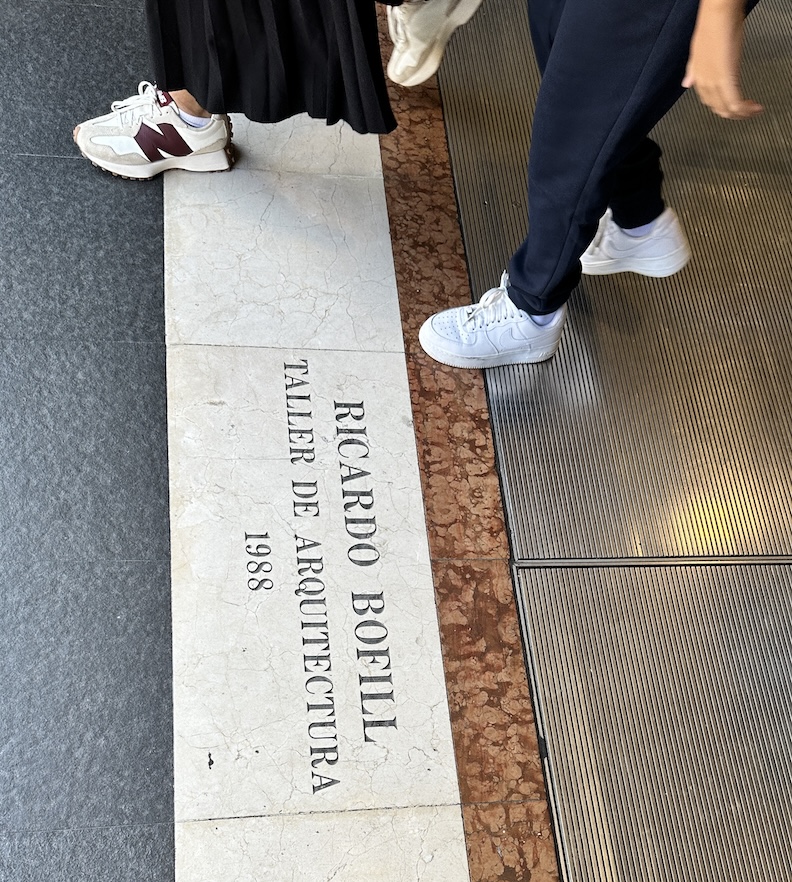
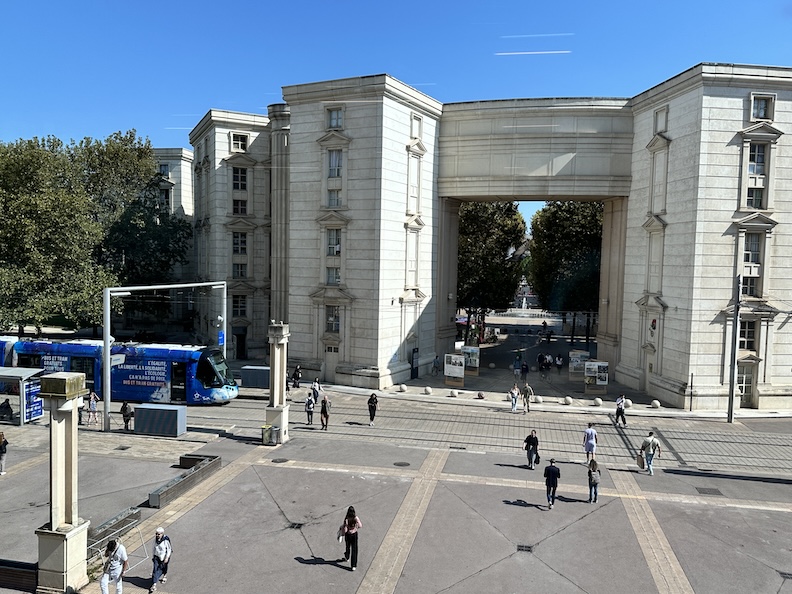
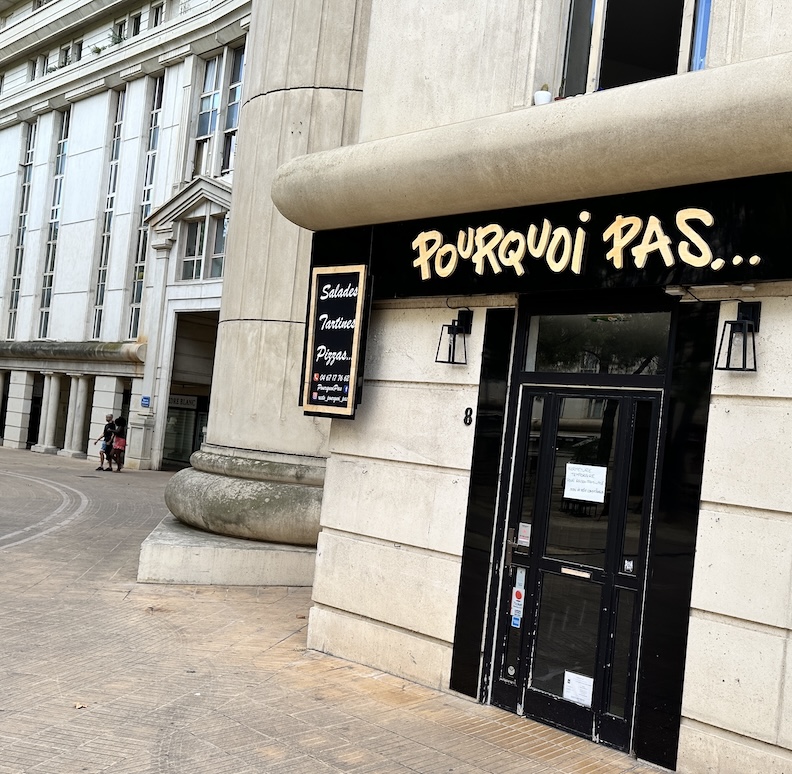
Just across the street is the ultra-classical Place du Nombre d’Or (Plaza of the Golden Mean), a mixed residential and commercial urban design project from 1999, by the noted Architect Ricardo Bofill, of Barcelona. He was an important modernist who was known for his ‘critical regionalism,’ an effort to correct the faceless and placeless lack of identity of the cold and sterile International Style. The broad entryway to the project leads to a quiet open walking space that’s sheltered from the noise of everything happening in the city. And there’s an eatery called “Pourquoi Pas” (“Why Not…”) that would certainly call to us if we hadn’t just had lunch.  

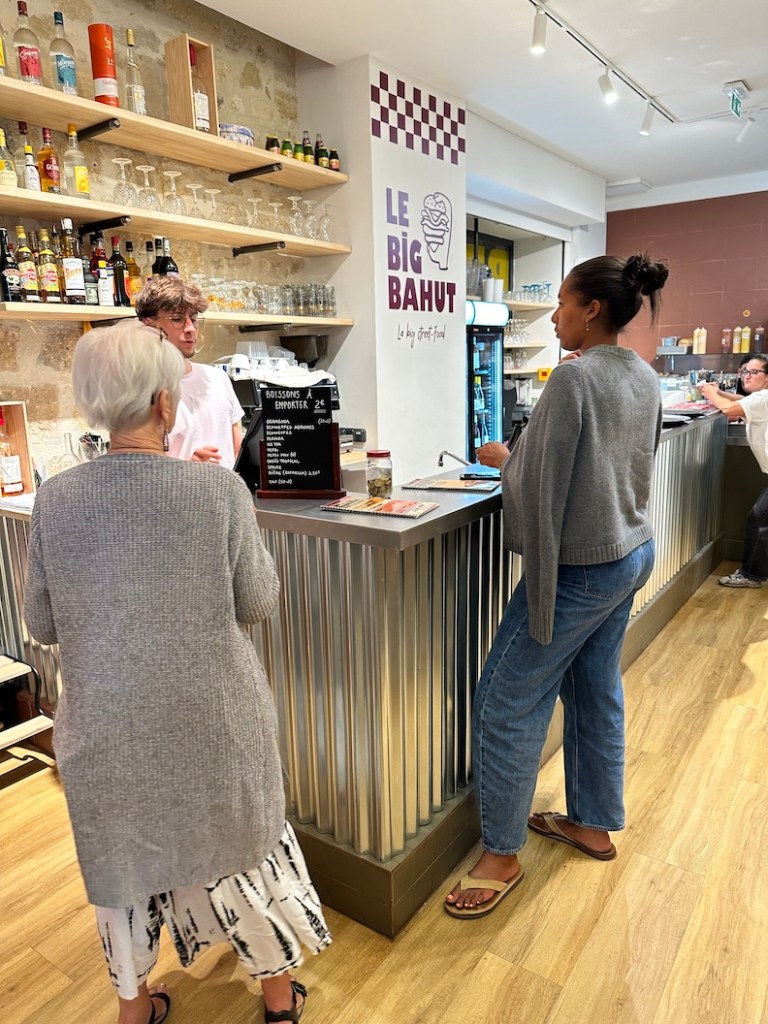
A further wander into the afternoon calls us back to the narrow streets and old alleys of the University district. And our nice rental on Rue Proudhon is near to several more quirky-good eateries, like Le Big Bahut, in an open-air public park.

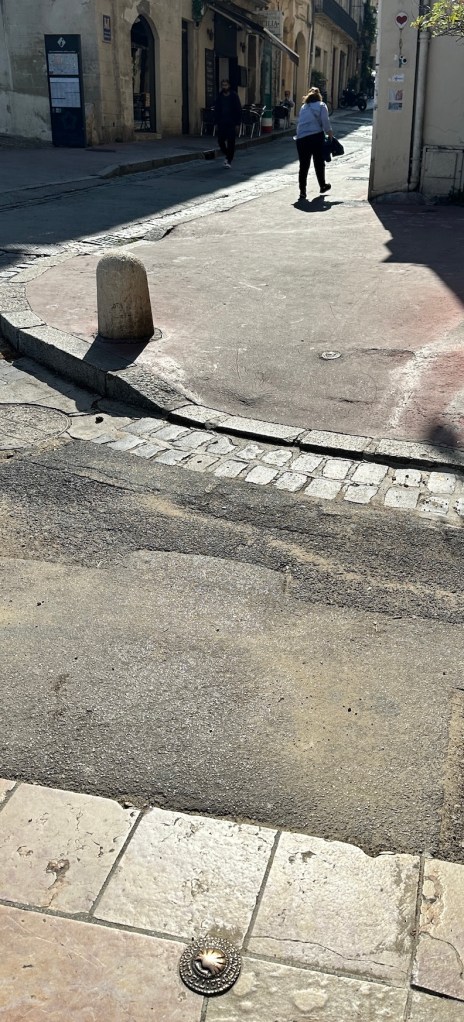
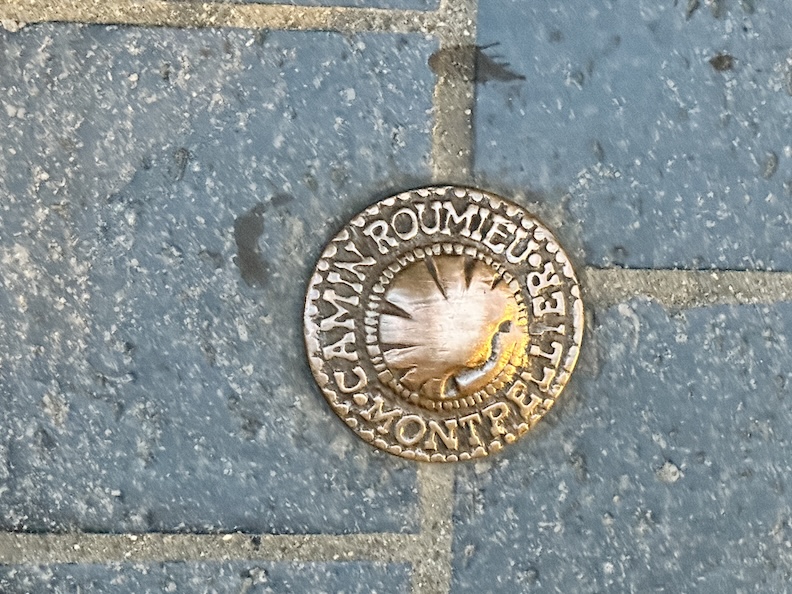
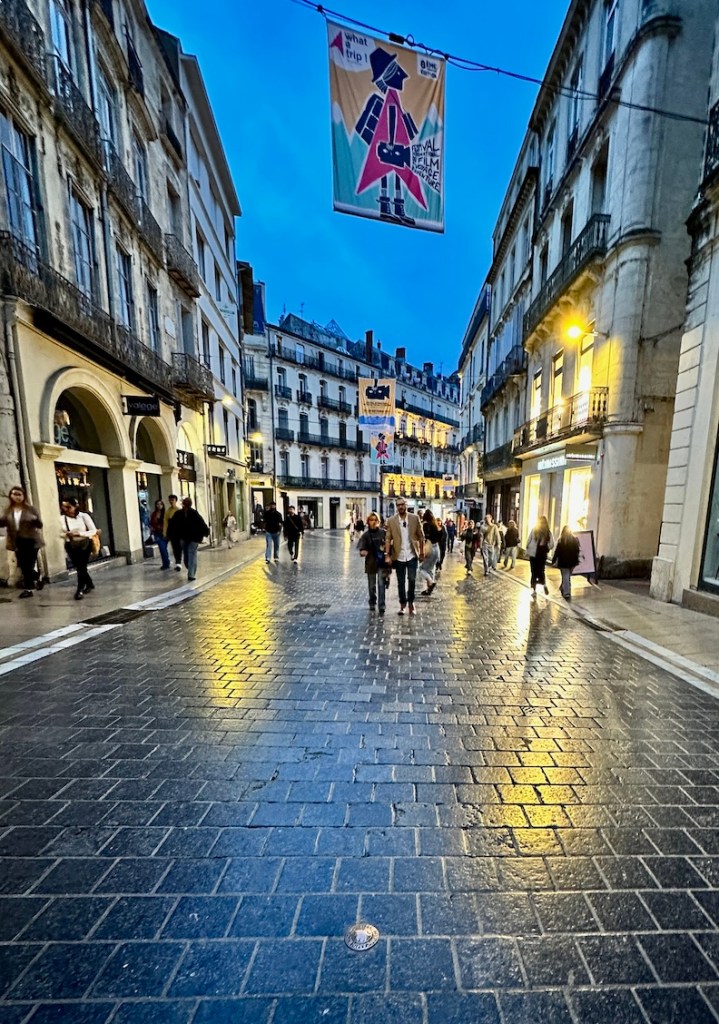
In our Euro travels we often find familiar markers that signify we’re on one of the many Vias, Caminos, Ways, Wegs, or Chemins that guide pilgrims across Europe to the famous shrine of Santiago de Compostela in Spain. Or in the other direction, to Rome. Or to boat embarkations for The Holy Land. These shiny brass markers in the pavement show the pathway through Montpellier along the Camin Roumieu, up the hill to the Place de la Comédie and down the other side, heading east through Arles and then onward to Rome. Or maybe we could go westerly from here across southern France to Spain. If you still have your hiking legs, there are lots of ‘ways’ to follow in Europe.

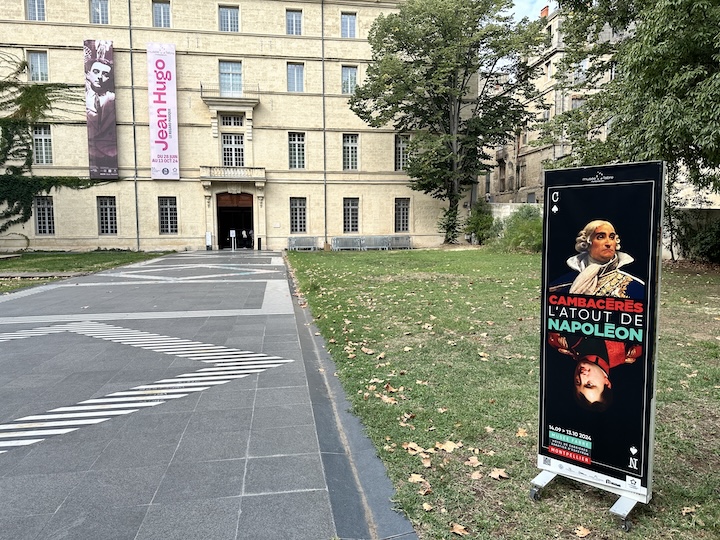
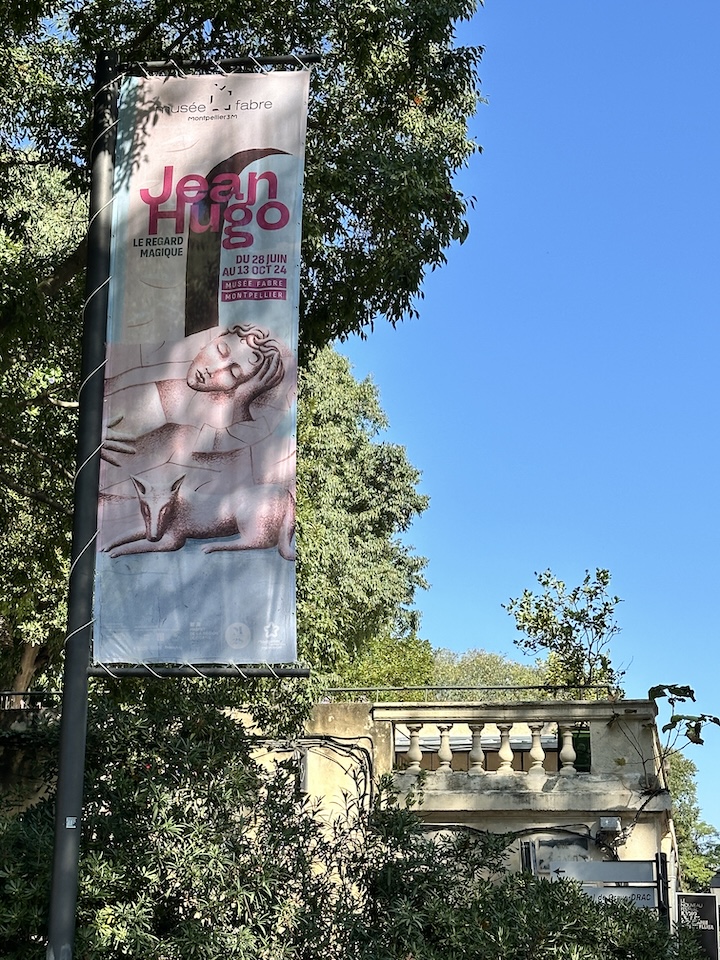
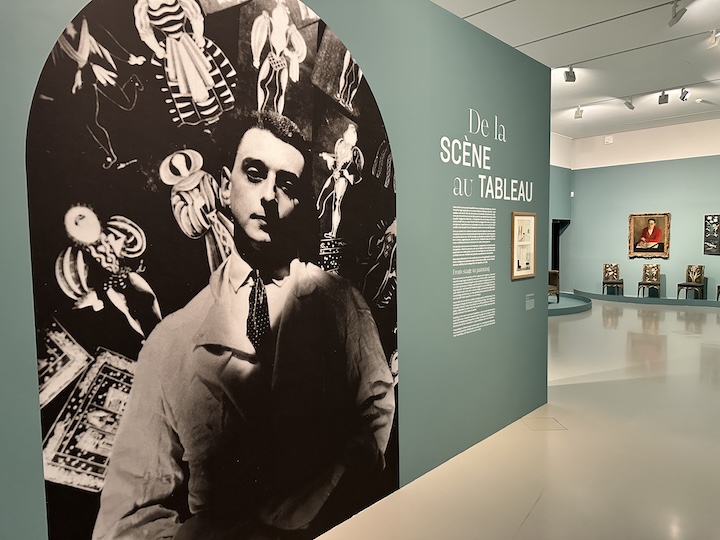
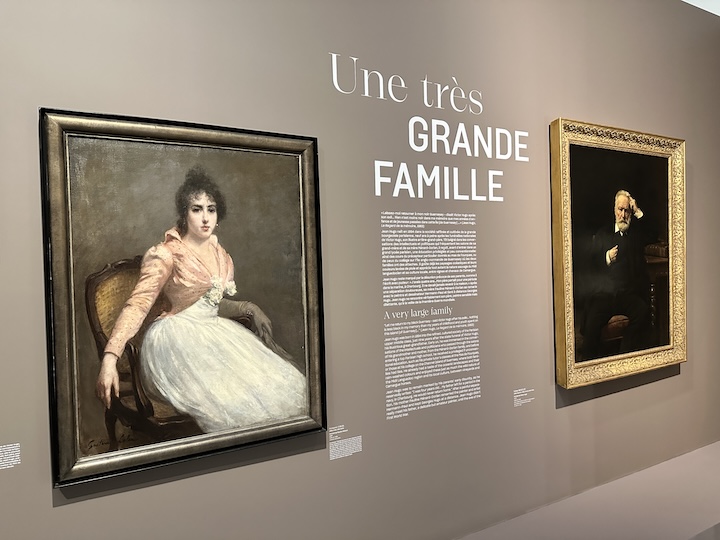
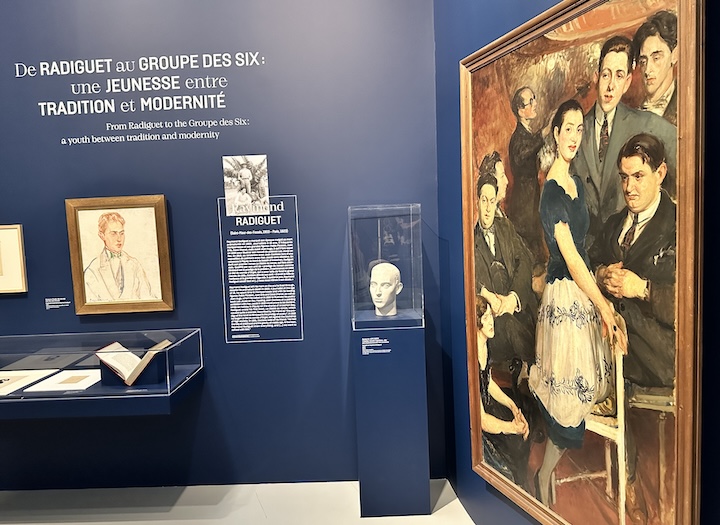
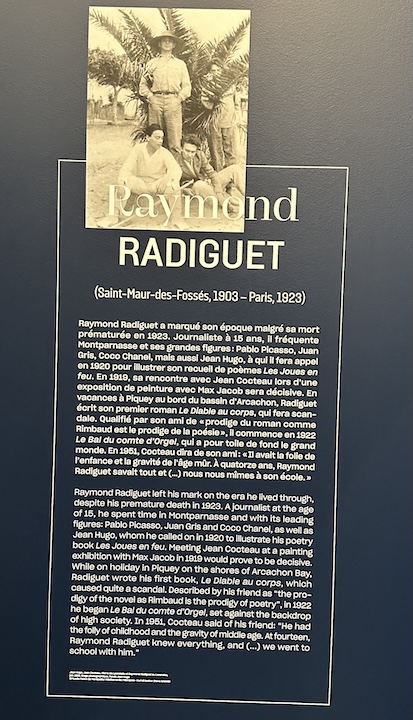
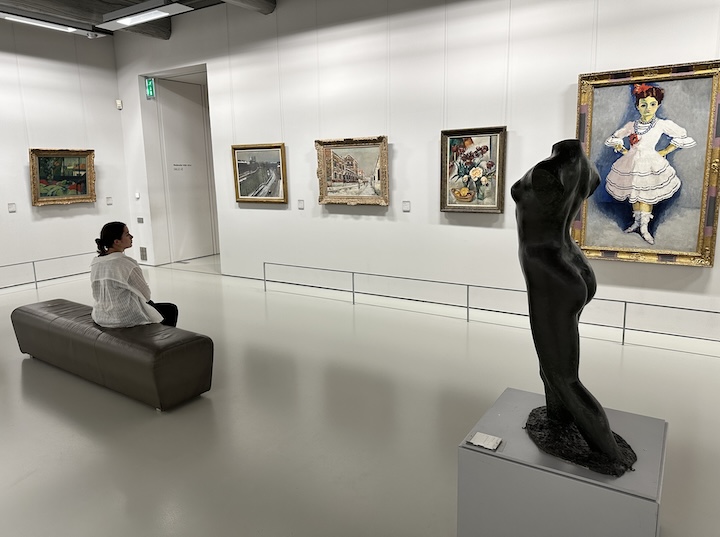
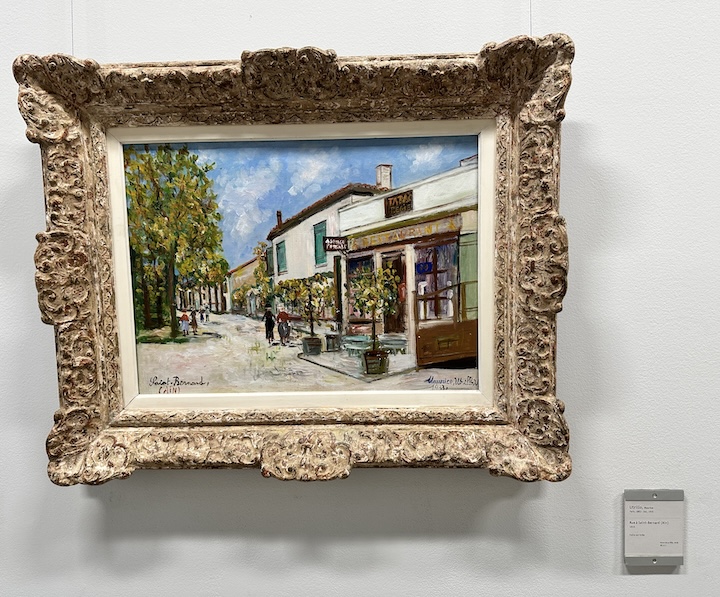
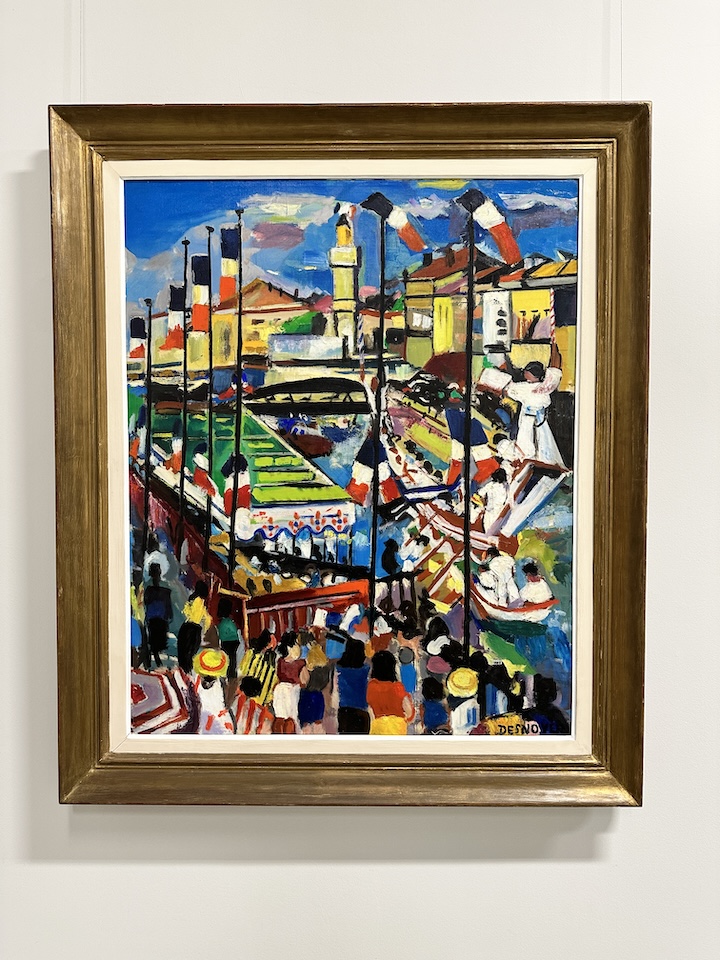
The Musee Fabres is recognized as one of the finest art museums in France and is located on the broad Esplanade Charles-de-Gaulle near the Place de la Comédie. The Museum’s wide-ranging collection includes works by Fragonard, Veronese, Bernini, Rubens, Brueghel the Younger, Zurbarán, Reynolds, Courbet, Delacroix, Dufy, Maillol, Soulanges, and de Staël.

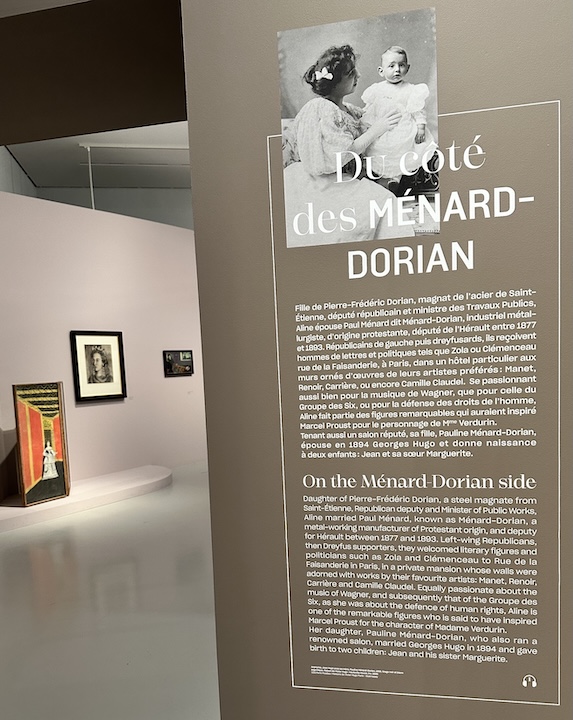
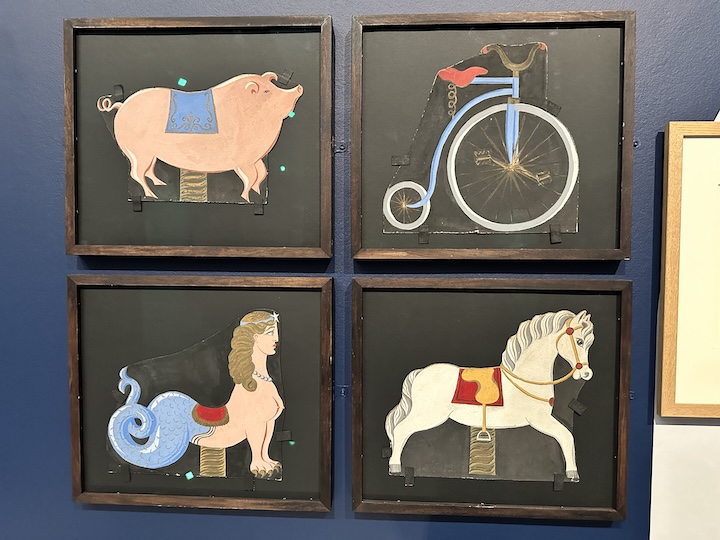
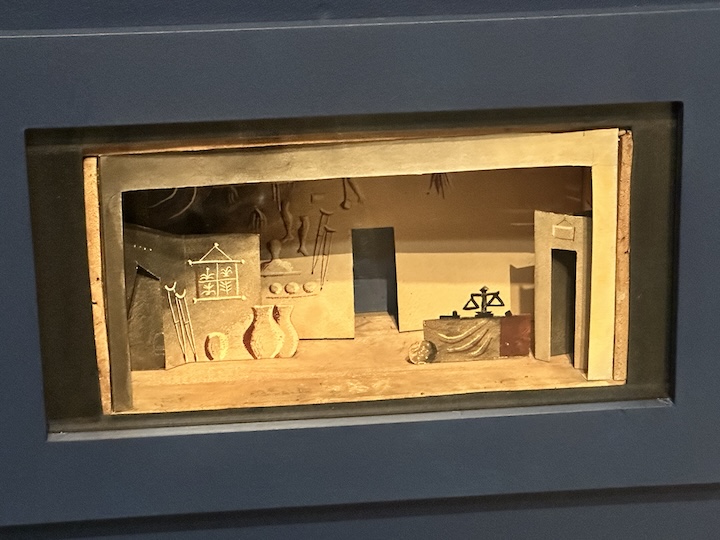
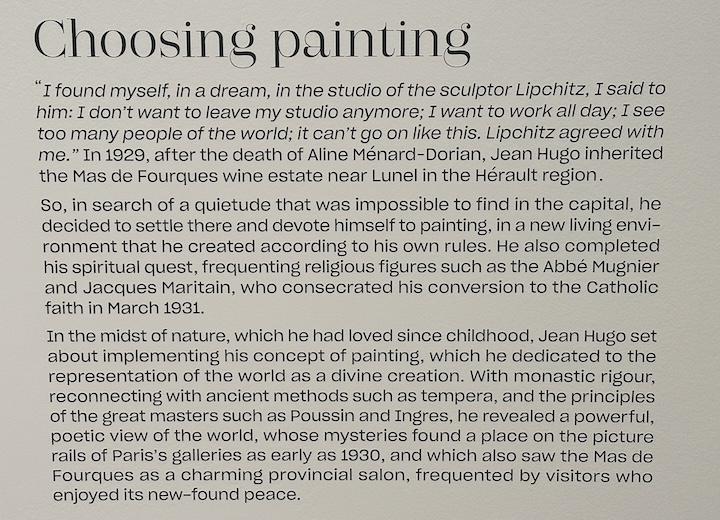
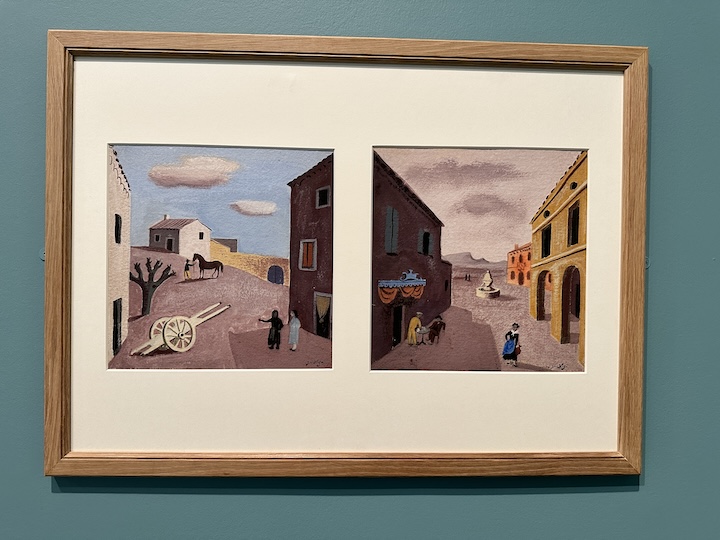
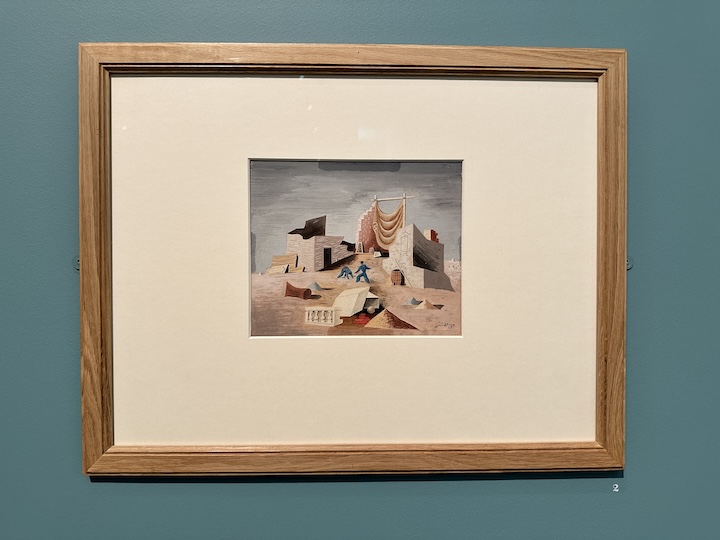
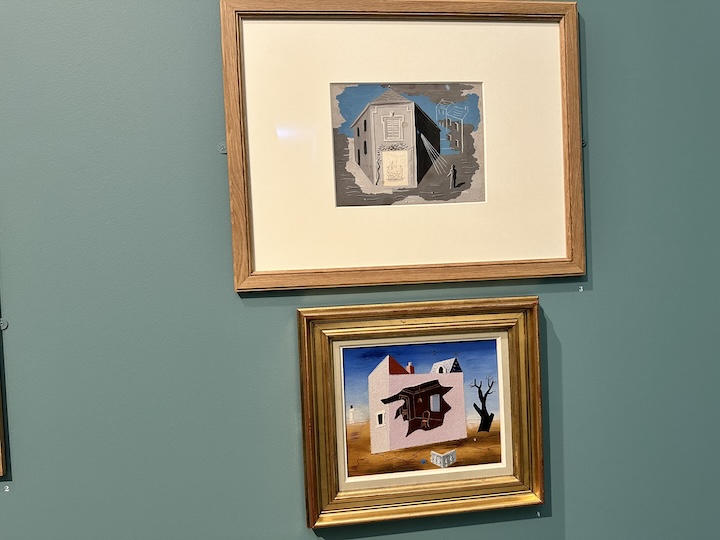
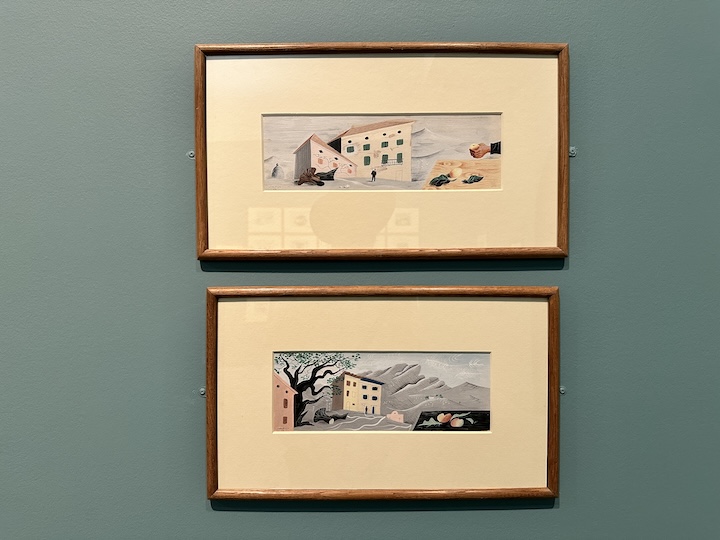
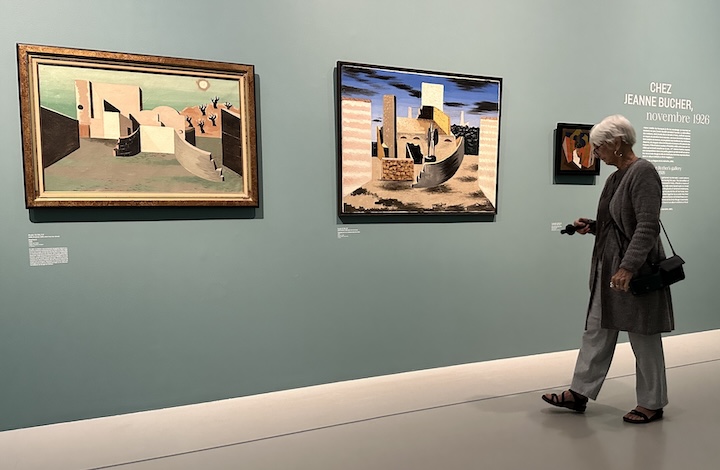
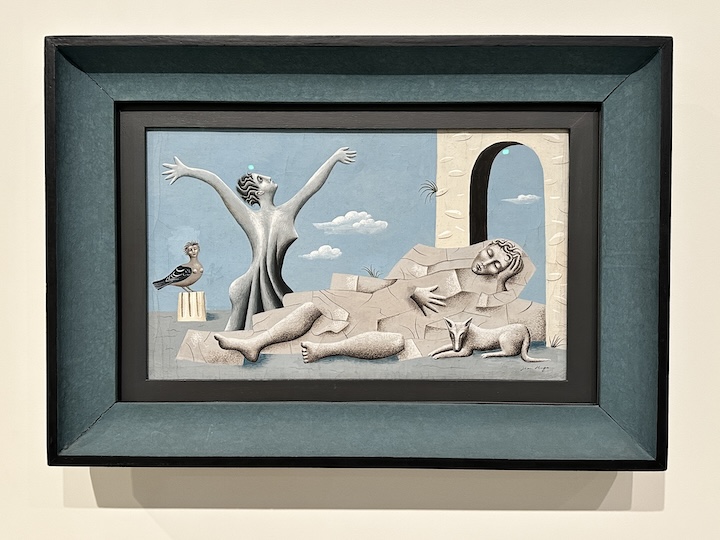
The current exhibit is focused on the painter, illustrator, theater designer, and author Jean Hugo, whose great grandfather was Victor Hugo. Now showing is the wide scope of his work and his bold geometric style. 

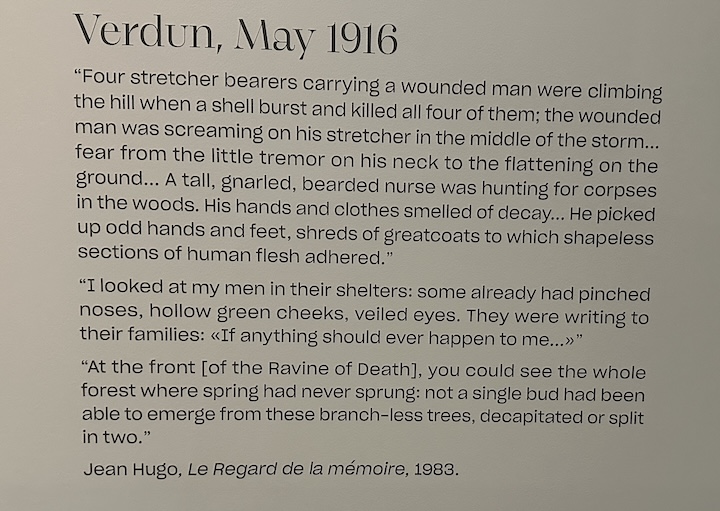
Images of villages with shattered walls and shattered people are reflections of the butchery he witnessed in WWI that influenced his work. In his diary he recorded horrible images of the insanity at the 1916 battle of Verdun, which cost about 750,000 total casualties between German and French troops over a period of 302 days. And the gains by each side were negligible. 

The First World War left almost 20 million deaths among military troops and civilians. Terrible indictments of the insanity of the war, and incompetence of the leadership, were written by the British officer Siegfried Sassoon, and by the young lieutenant Wilfred Owen, who recalled “the old lie” of the Roman poet Horace:

Dulce et decorum est pro patria mori. (“Sweet and proper it is to die for one’s country.”)

Wilfred Owen died in action in France one week before the Armistice was signed to end WWI. And in 1971 John Kerry, in speaking of a different war, said “How do you ask a man to be the last man to die for a mistake?”

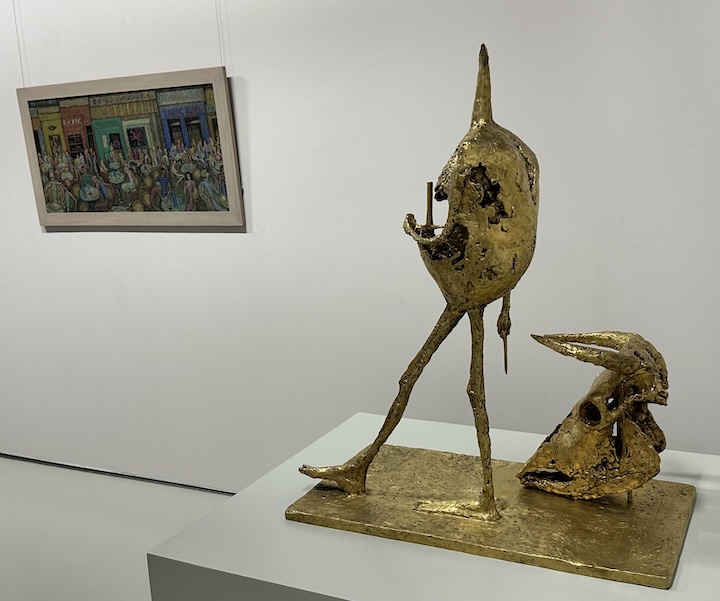
Other galleries contain additional fine examples of the vast collections of the Musee Fabres, and the pictures speak for themselves.

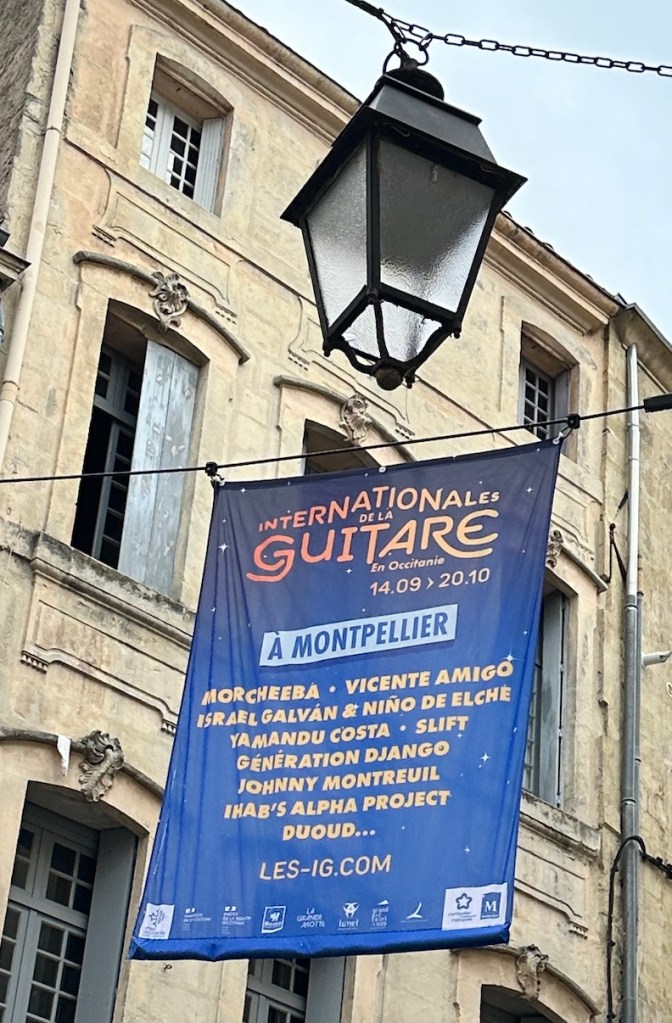
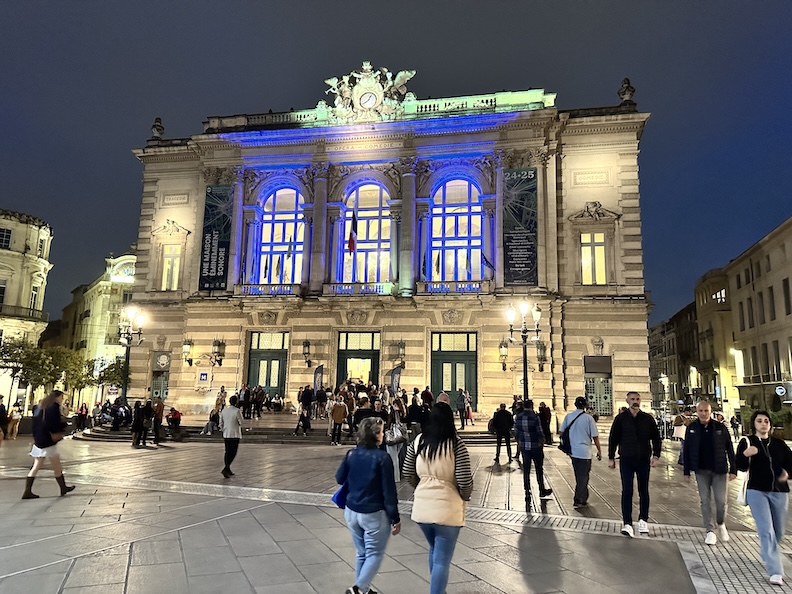
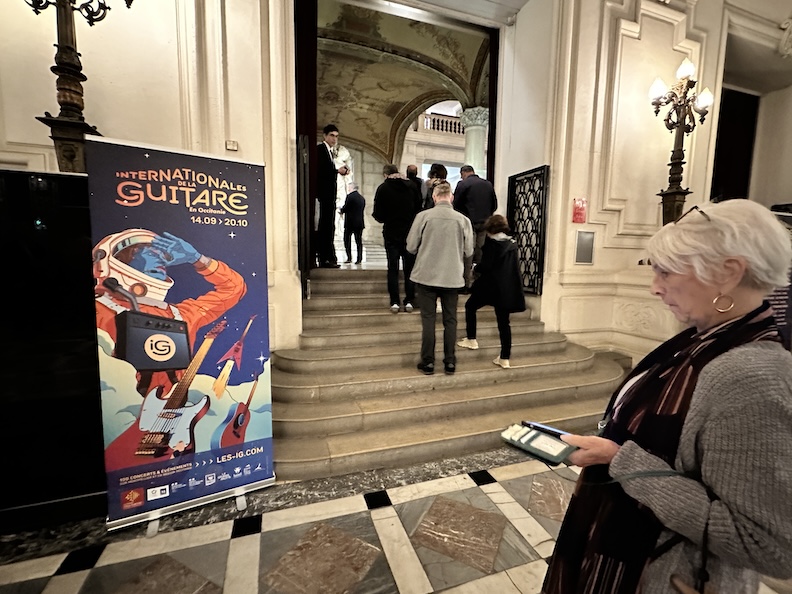
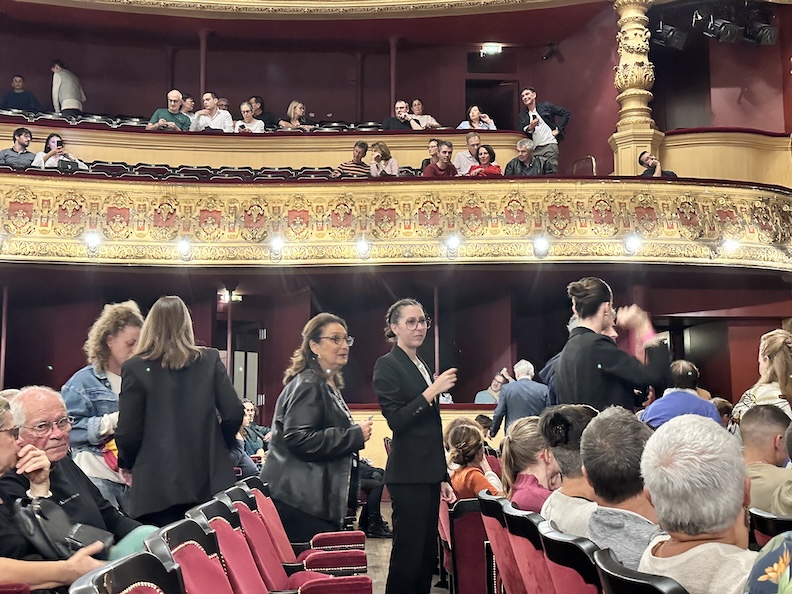
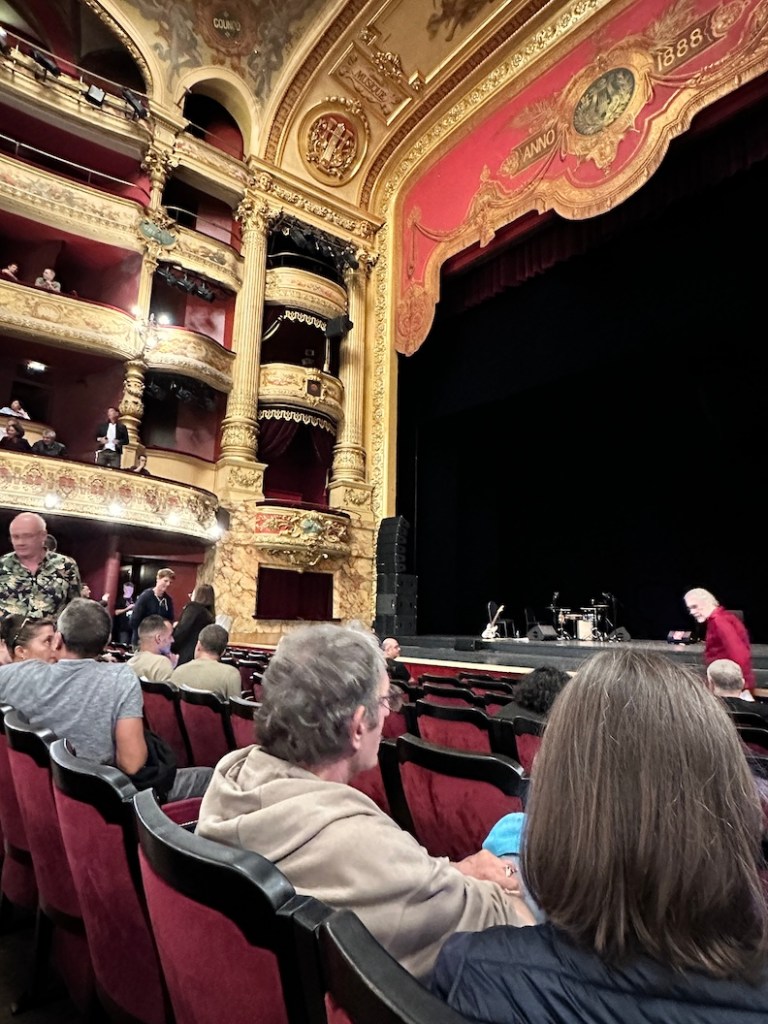
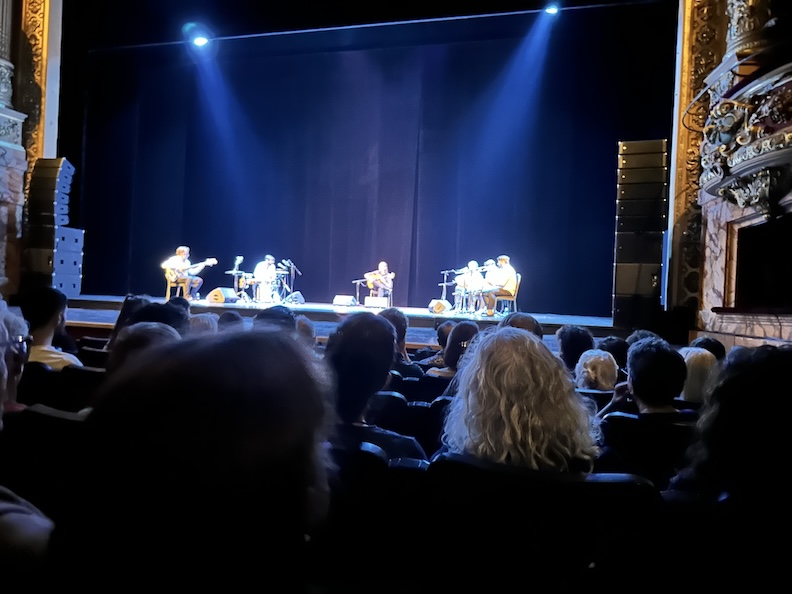
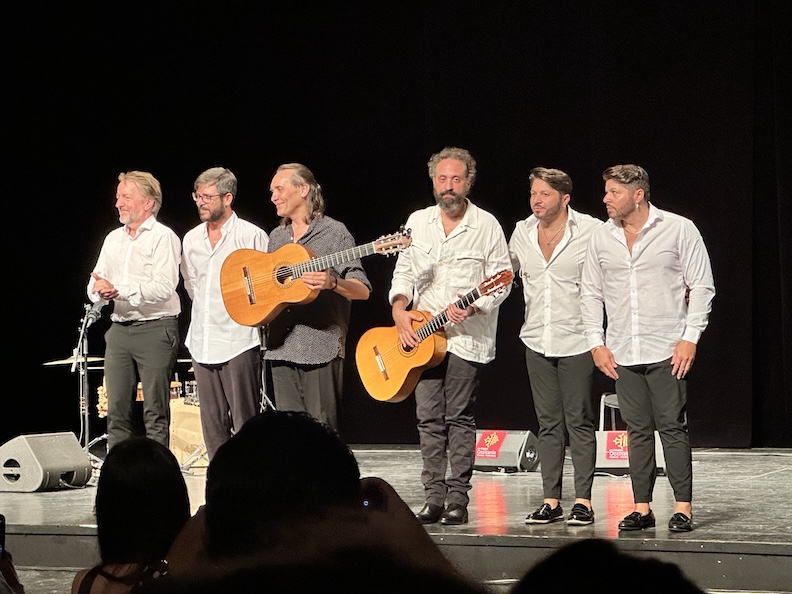
Wherever we go we look for special events, and it turns out there’s an International Guitar Festival currently underway. We bag two tickets and head out for a night of music in that big classical Theatre on the Place de la Comédie. 

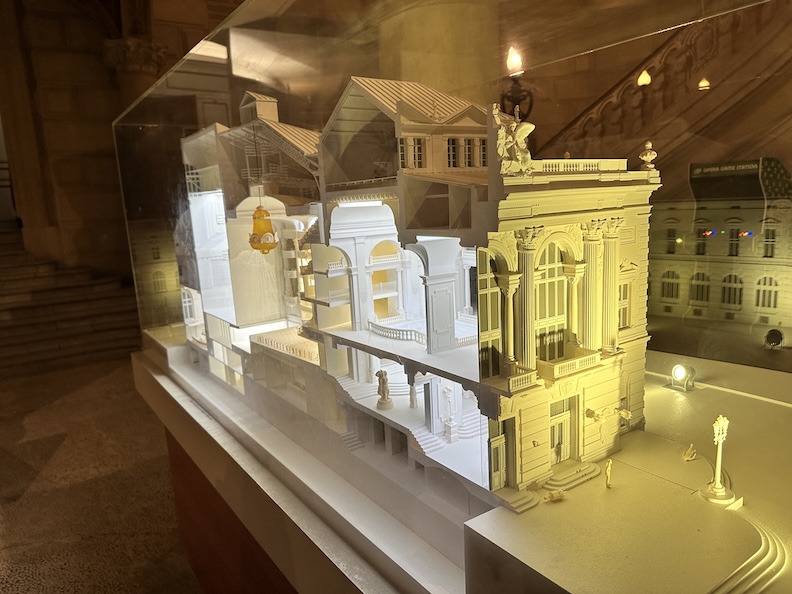
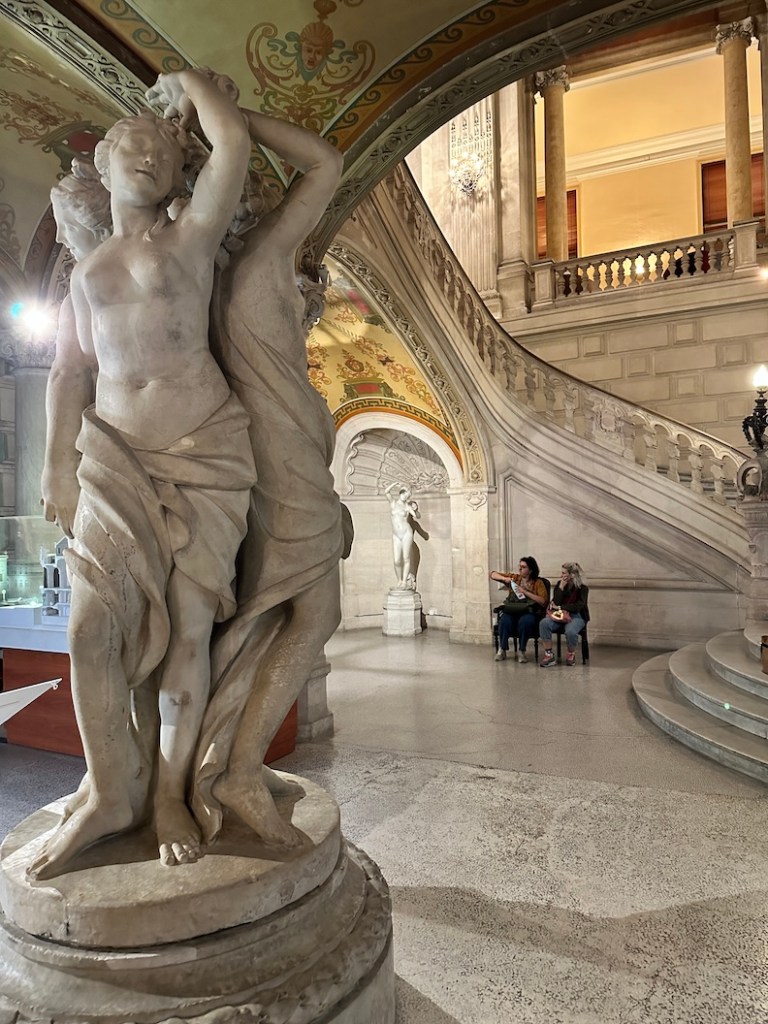
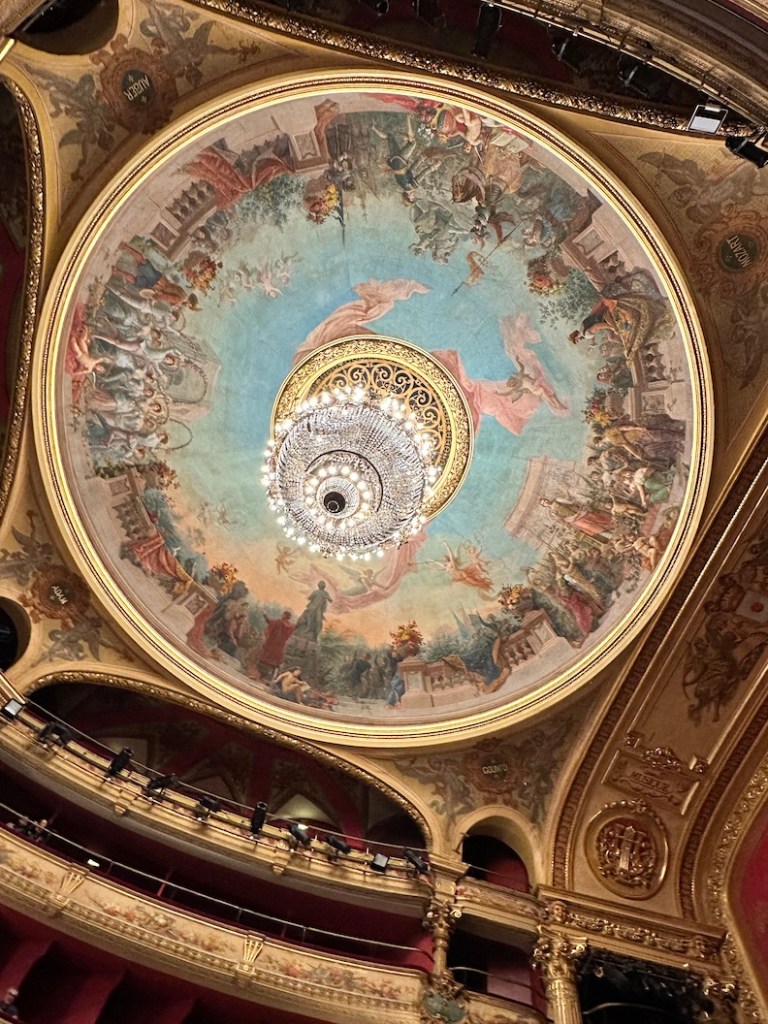
The grand old Theatre is just as impressive on the inside as the outside, and we’re ready for a fine concert by Vicente Amigo and friends. He’s a master of the flamenco guitar, with an impressive style. https://www.youtube.com/watch?v=_TzhCp9HNz8

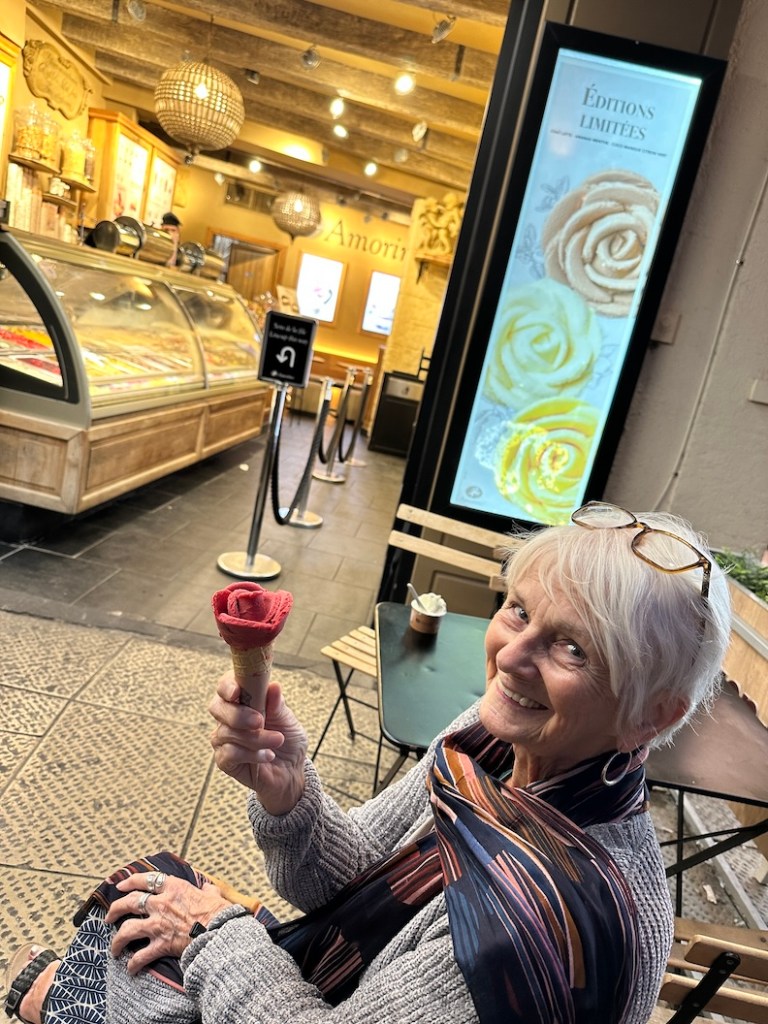
The nighttime is still well alive after we leave the concert, and there’s need for a cone of fine ice cream. The bars are also full to overflowing as we head back to our apartment near the bottom of the hill. It’s easy to see why so many talented students are attracted to Montpellier.

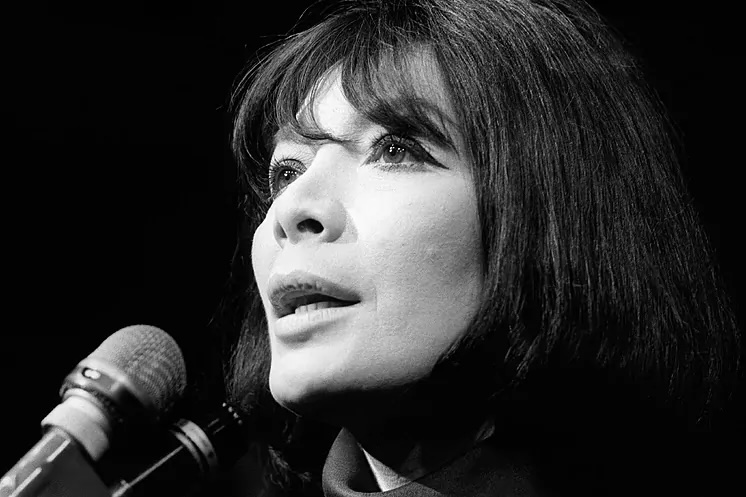
The renowned singer and actor Juliette Gréco was born in Montpellier in 1927. At the age of 16 she was incarcerated and tortured by the Gestapo for her work with the Resistance, along with her mother and older sister. After the war she became a cabaret singer among the artists and intellectuals in the Left Bank cafes of Paris.

Among her best known songs were the iconic “Sous le ciel de Paris” (1951) (https://www.youtube.com/watch?v=LcEKzT8EJm4&list=RDLcEKzT8EJm4&start_radio=1),
and her sultry-playful “Déshabillez-moi” (1967) (https://www.youtube.com/watch?v=-u02lMspv_0). 

Her film credits include, “The Sun Also Rises” (1957), Otto Preminger’s “Bonjour Tristesse” (1958), and “Le Far West” (1973) with Jacques Brel.

Juliette Gréco was an inspiration for Marianne Faithful and John Lennon. And a love-smitten Paul McCartney even said that he wrote the song “Michelle” for her. She passed away in 2020 in the village of Ramatuelle, near St Tropez, at the age of 93.

The University of Montpellier surrounds us with its many campuses and the energy of her students. It’s the kind of energy we enjoy as we stop under yet another leafy tree-filled grove to sip another round of coffee at another nicely funky cafe.

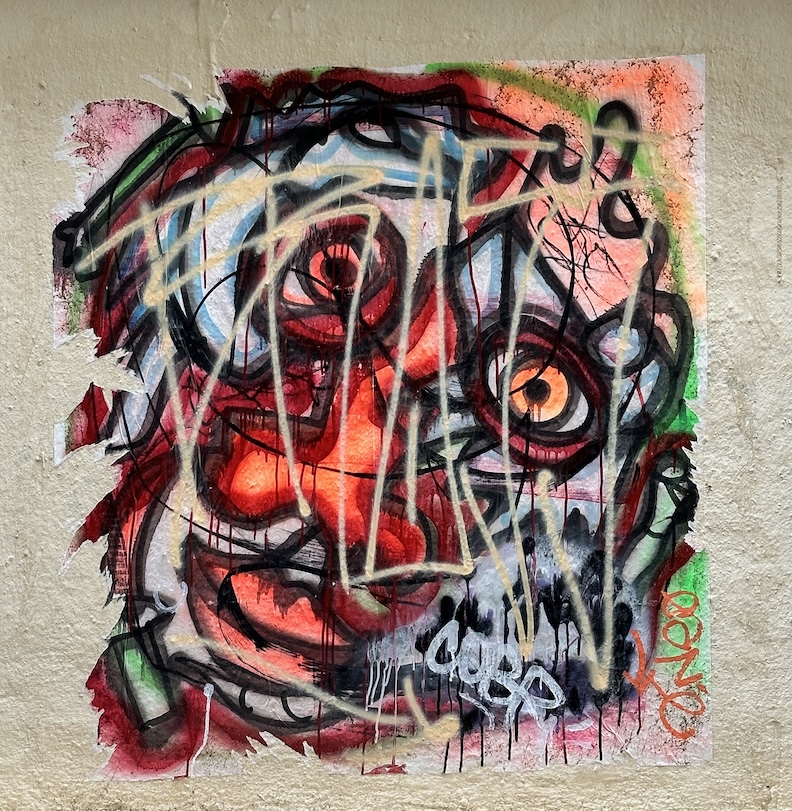
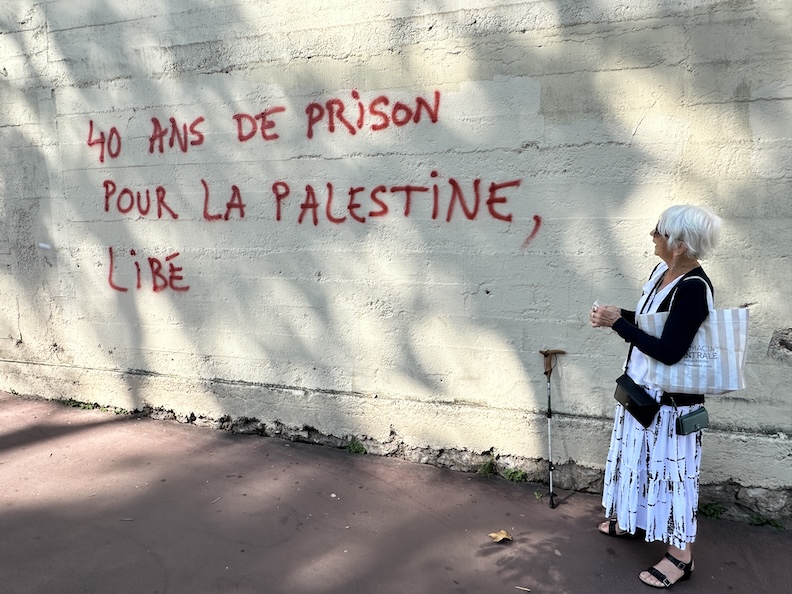
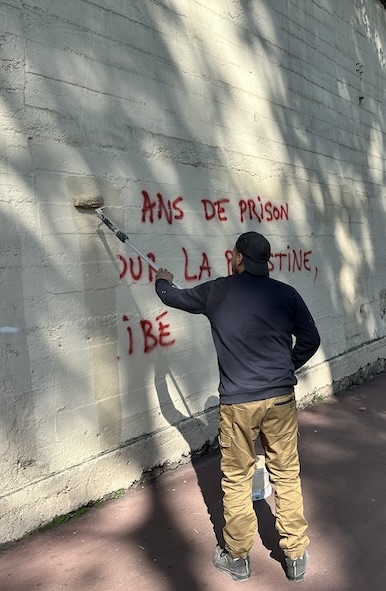
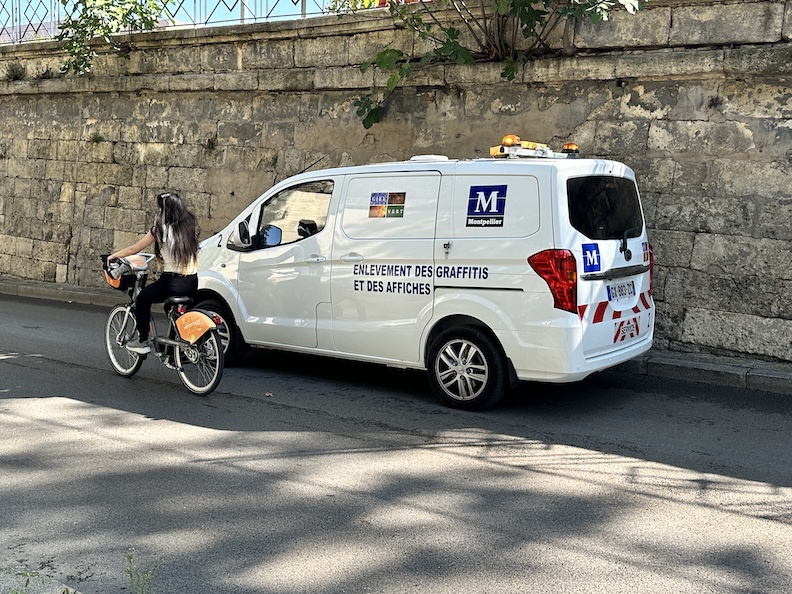
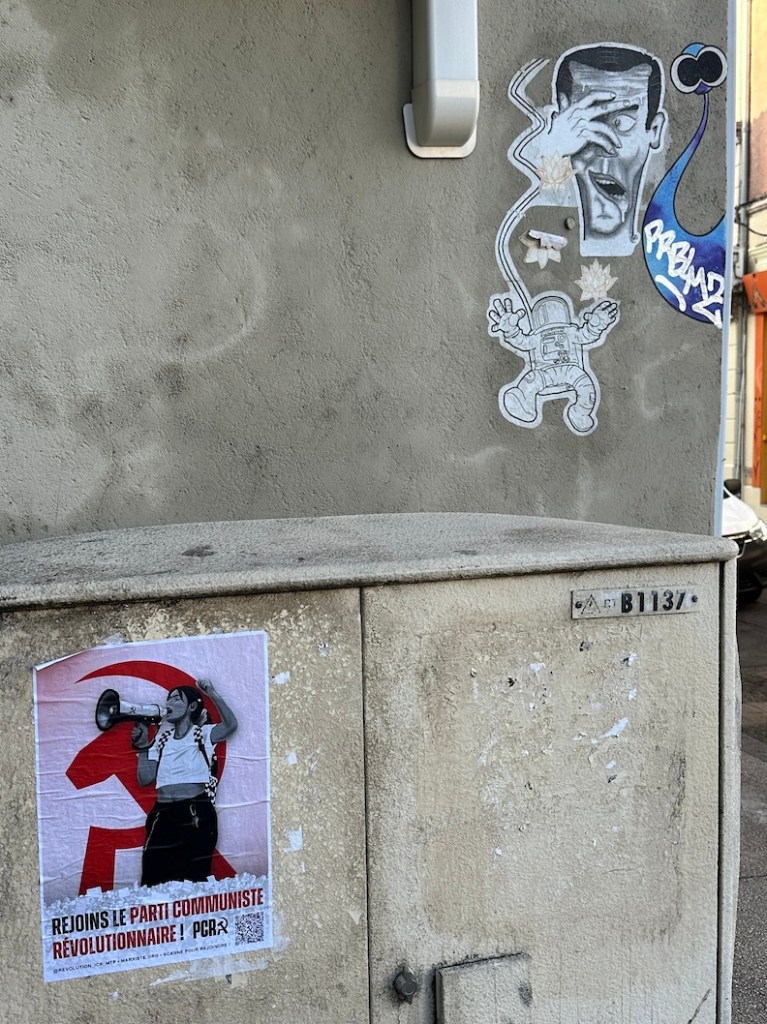
The students are also filled with passion concerning the events of the world, which may sometimes spill out onto the walls of the city. And there’s a crew that’s quick to cover these latest slogans, in matching paint.  

This is our last day here in Montpellier and we can easily find another sweet little cafe to enjoy our last evening meal.

In the morning we’ll be on the train again, and heading just down the coast to a gorgeous little port that long ago captivated such artists as Matisse and Derain. It’s a place called Collioure, and we hope you’ll join us there.

— PRW
A dispatch from Vienna!

We have another dispatch to share…this one from our trip to Vienna in 2018. Yes, it’s a long time coming, but extenuating circumstances got in the way back then, and now we are trying to catch up! Besides, Vienna was/is such a compelling place that we can’t just let it go. 

So, please visit Vienna with us, while we work on the NEXT catch-up piece from Southern Austria.

Your happy wanderers…

Perry & Carolyn