June 29 – July 19, 2026
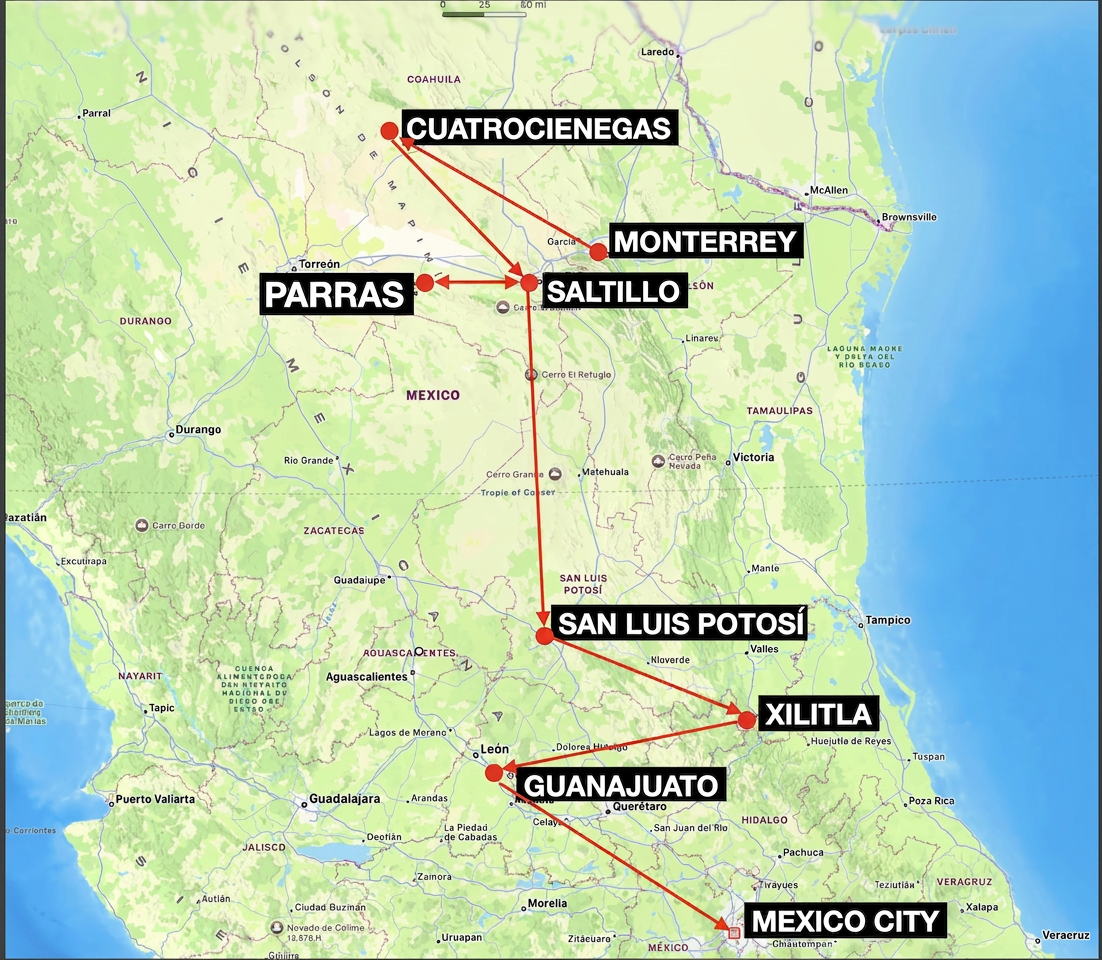
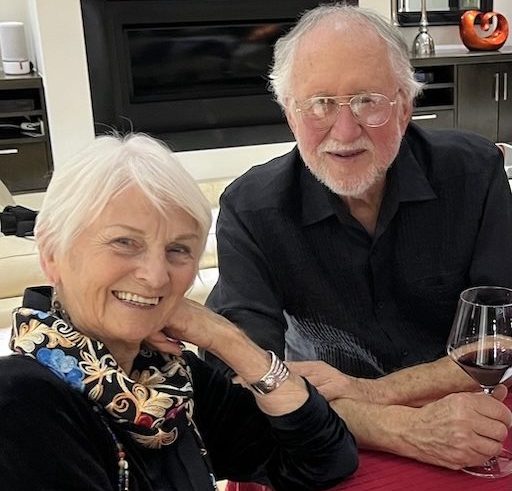
The summer of 2025 has been good and we’ve covered a lot of ground by bus to so many interesting corners of Mexico. It’s been a memorable excursion so far and now we’re ready to wrap it up with a return visit to the nation’s dynamic capital of Mexico City. And maybe we’ll have a nice lunch somewhere in the city with our old friend Alicia. We haven’t seen her in a while, and none of us are getting younger.
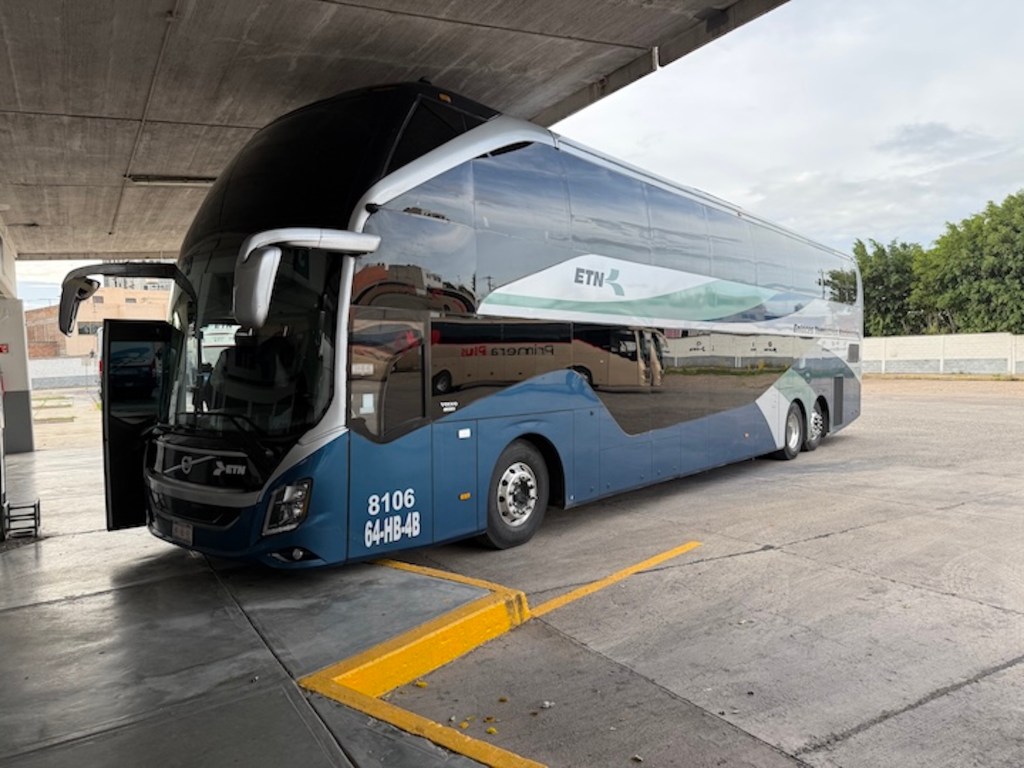
So it’s time to leave the magical alleyways of Guanajuato behind, and board a comfortable ETN bus for the 3-hour trip to Mexico City. We could catch a plane from the nearby airport in León, but it wouldn’t be any faster, the seats would be more cramped than this nice bus, and it would cost a lot more. And besides, we want to see what’s really happening on the ground along this route to Mexico’s famous capital city. This is a country that is seriously on the move, and skipping high over it all would give us a distorted view of things.
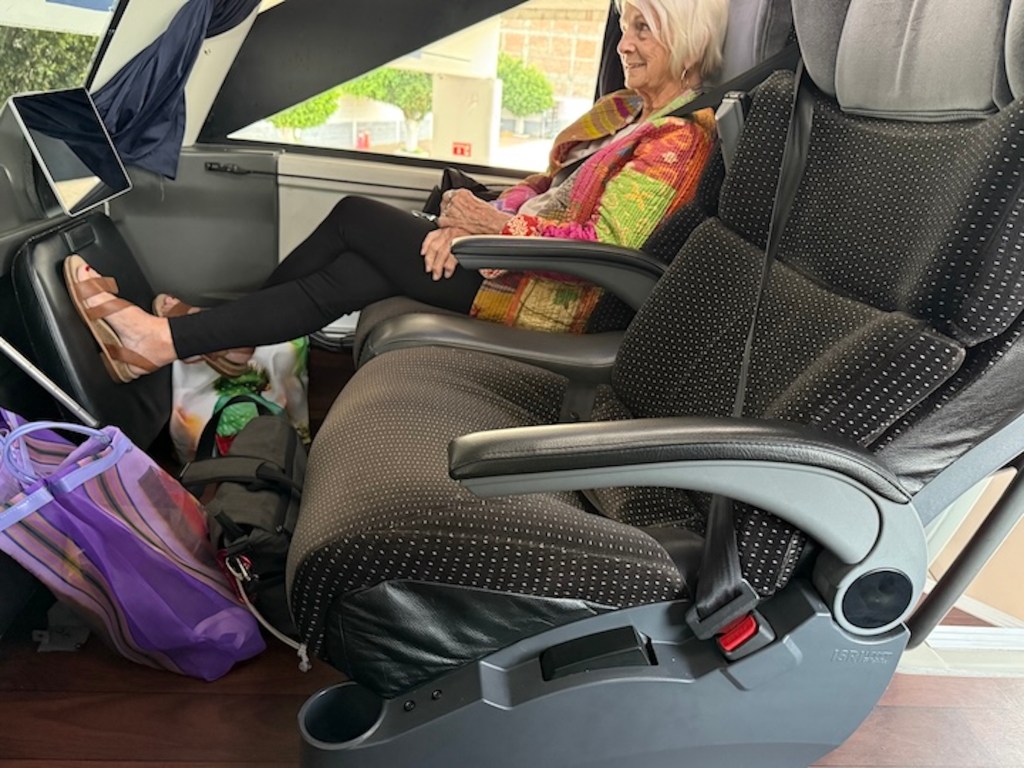
This is a nice Clase Ejecutivo double-decker bus with only three seats across, so everyone has extra room and two private armrests. We went to the station a few days early and reserved two seats on the second level just above the driver to get the broadest view possible, and now we’re well settled in for the ride.

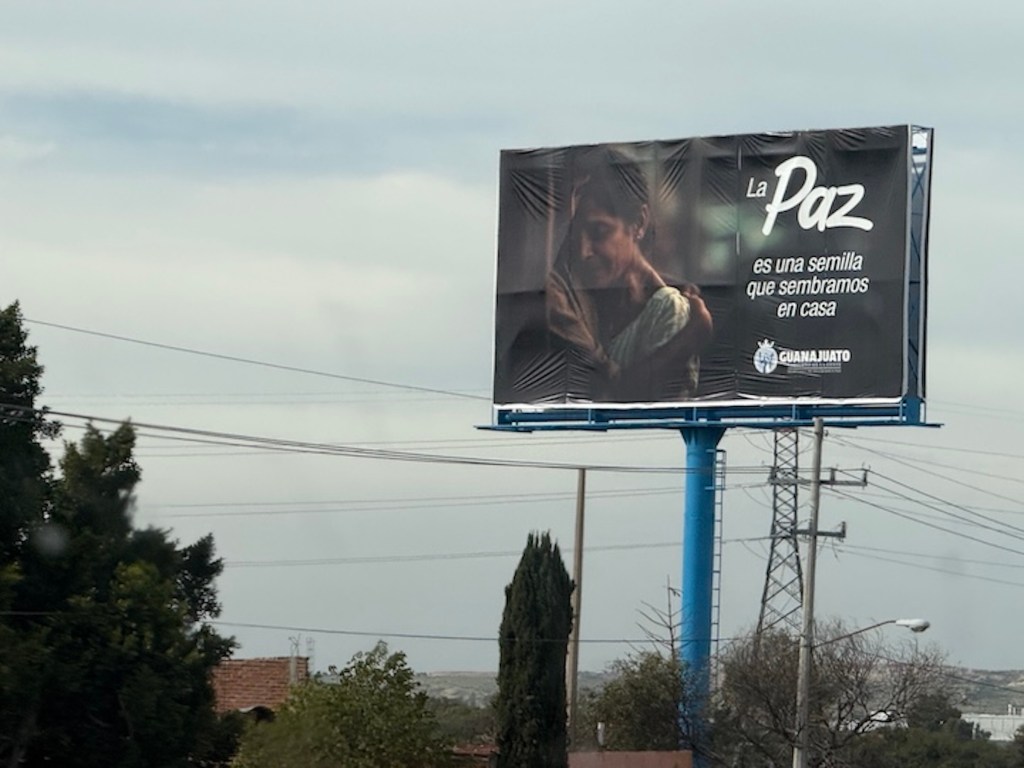
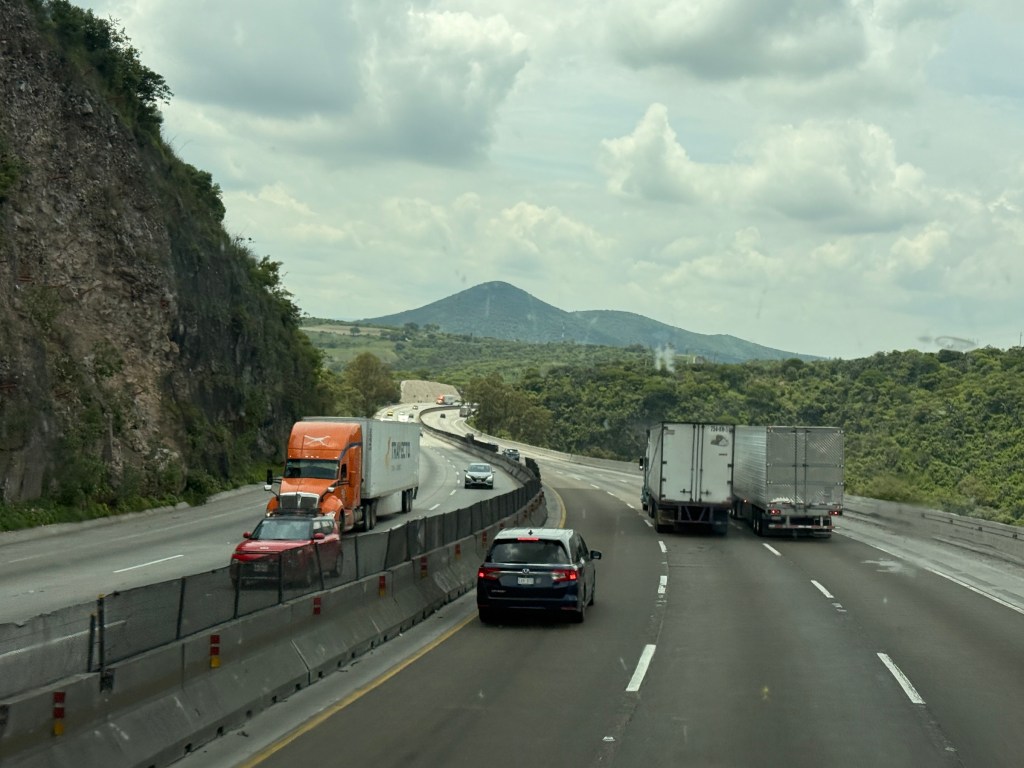
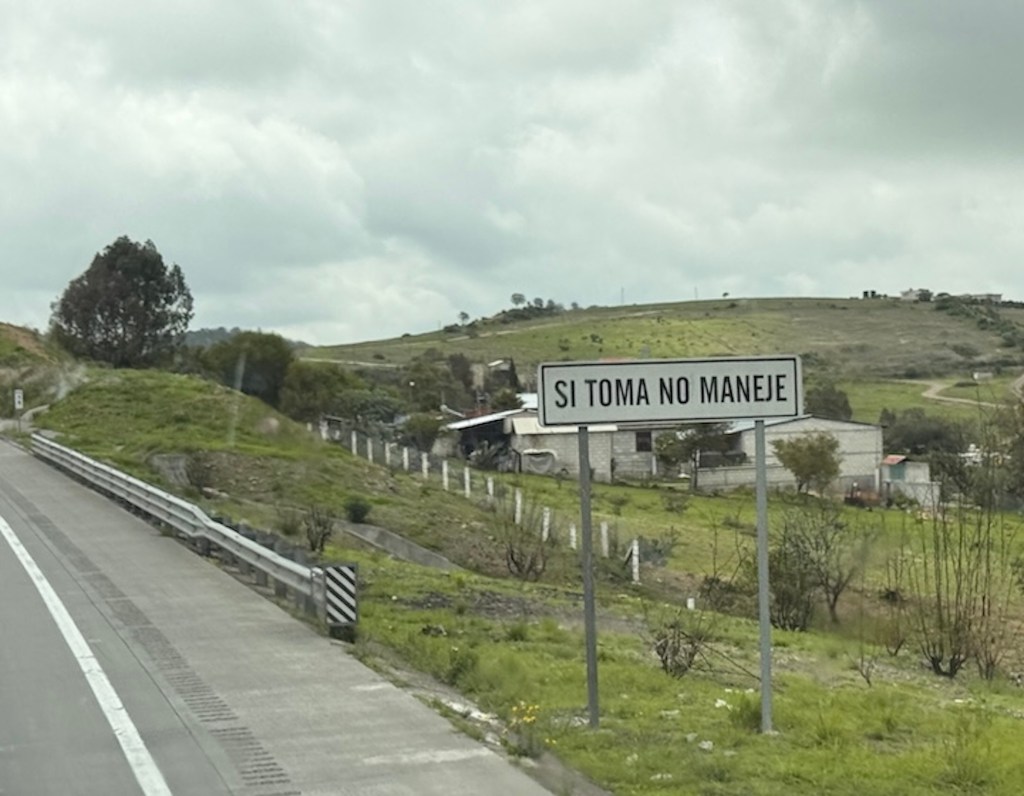
Mexico has some good highways, and the landscape near the capital city is generally higher and greener than the deserts we traveled through from Monterrey south to Saltillo, and then further south to San Luis Potosí. Frequent signs along the highway here in the State of Guanajuato extoll the importance of a healthy lifestyle, which includes getting the kids new notebooks and backpacks for school. One reads “Peace is a seed that we plant at home.” Another sign mentions “The last tree” and says, “Climate change is no lie.” And yet another sign encourages businesspeople to get certified as a “Clean Business.”
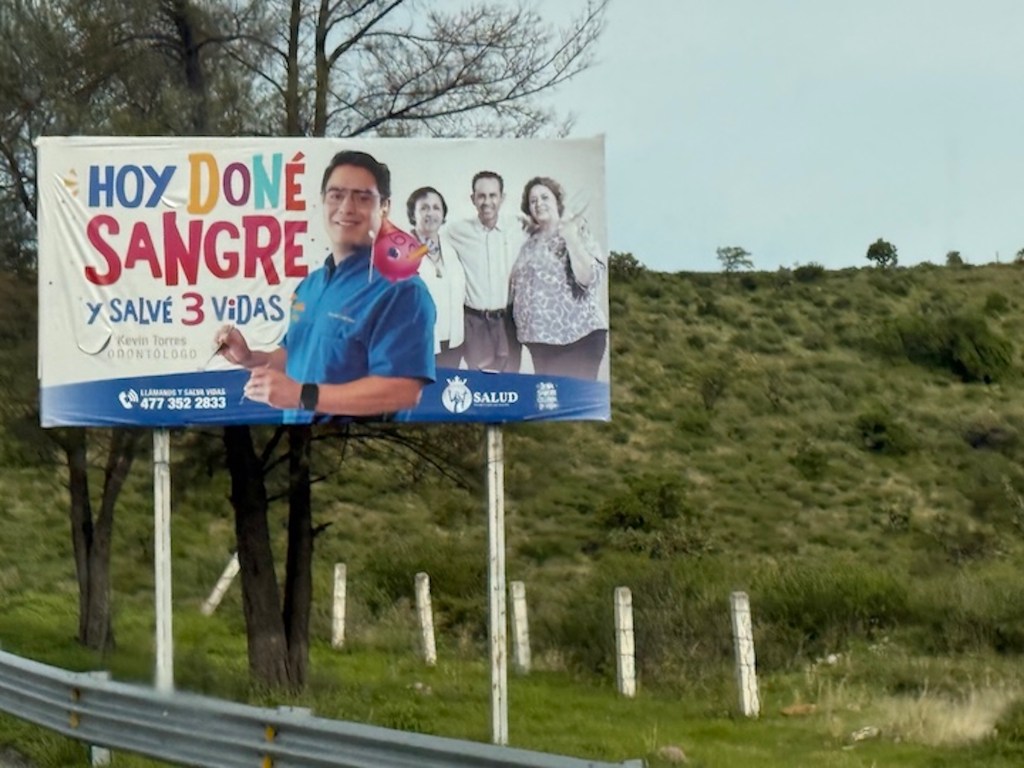
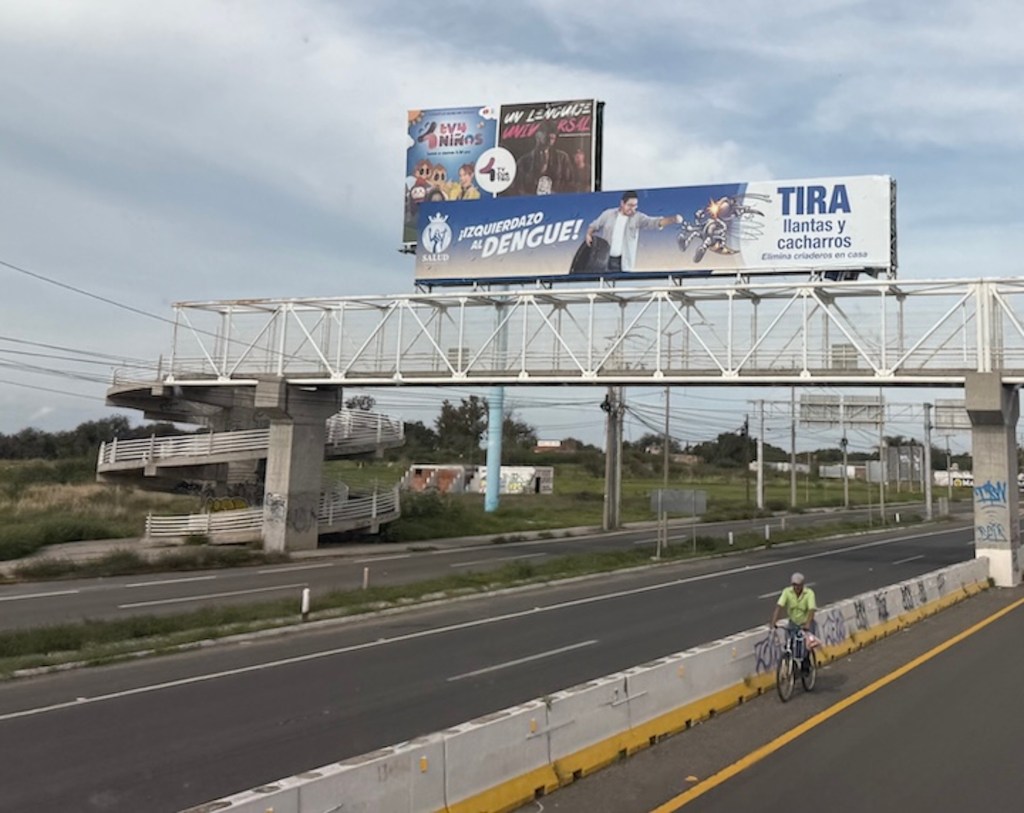
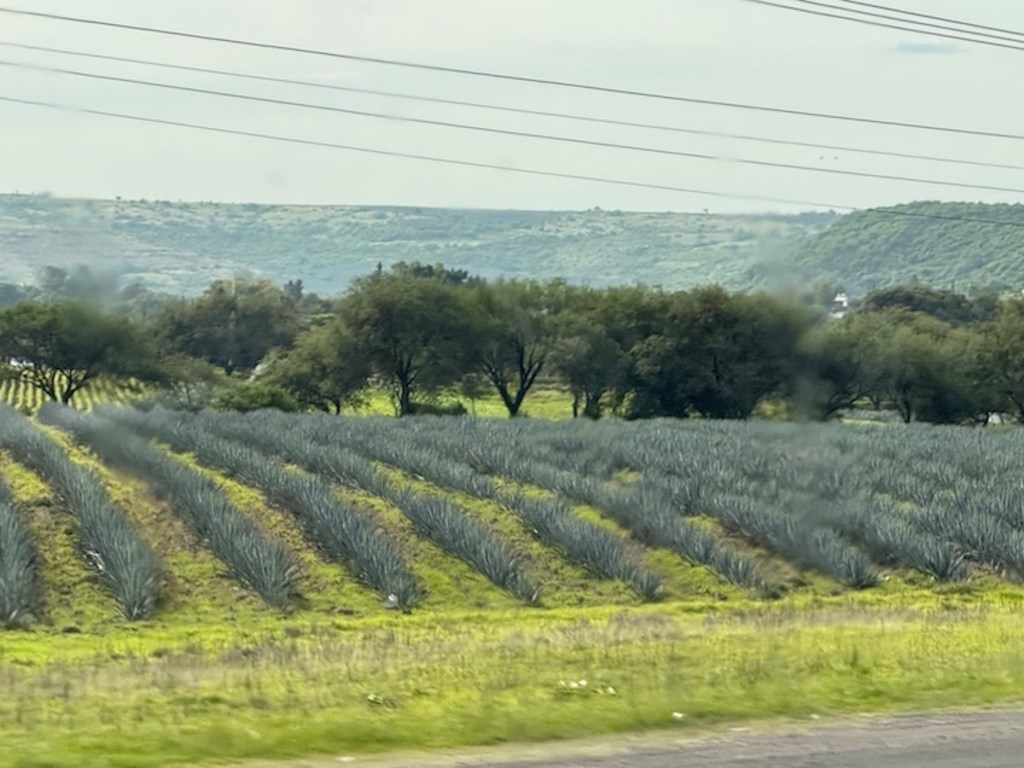
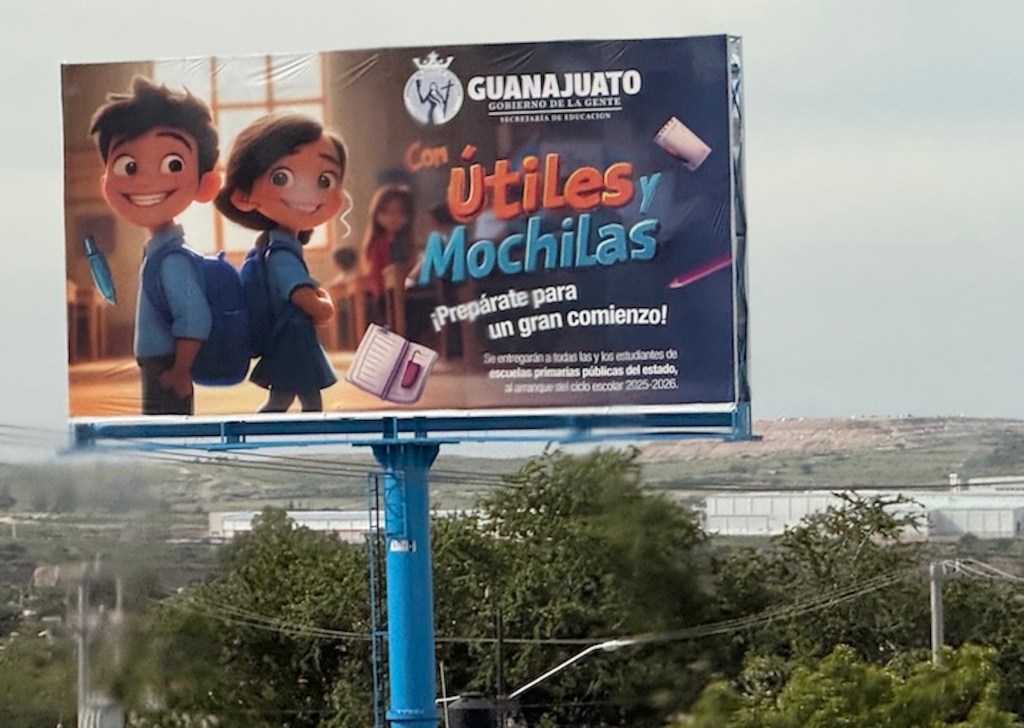
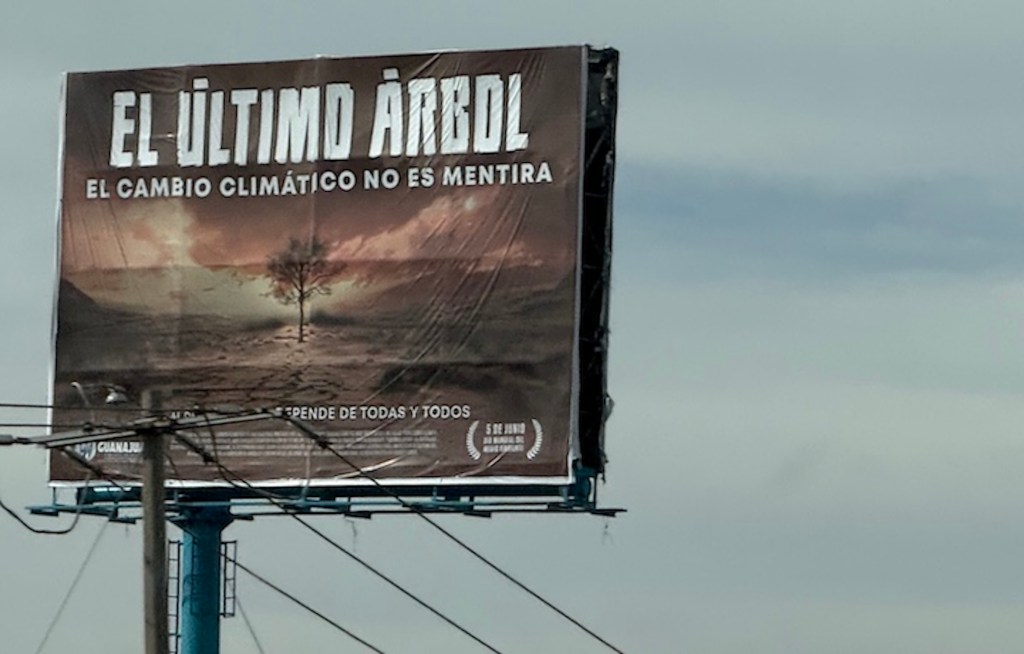
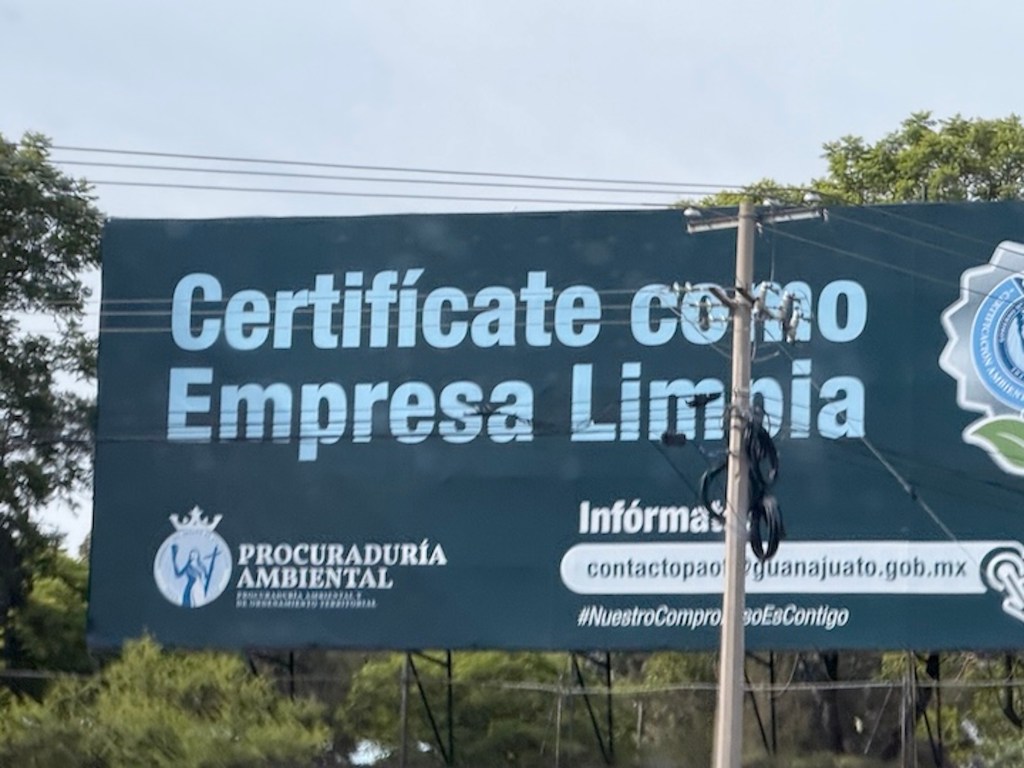
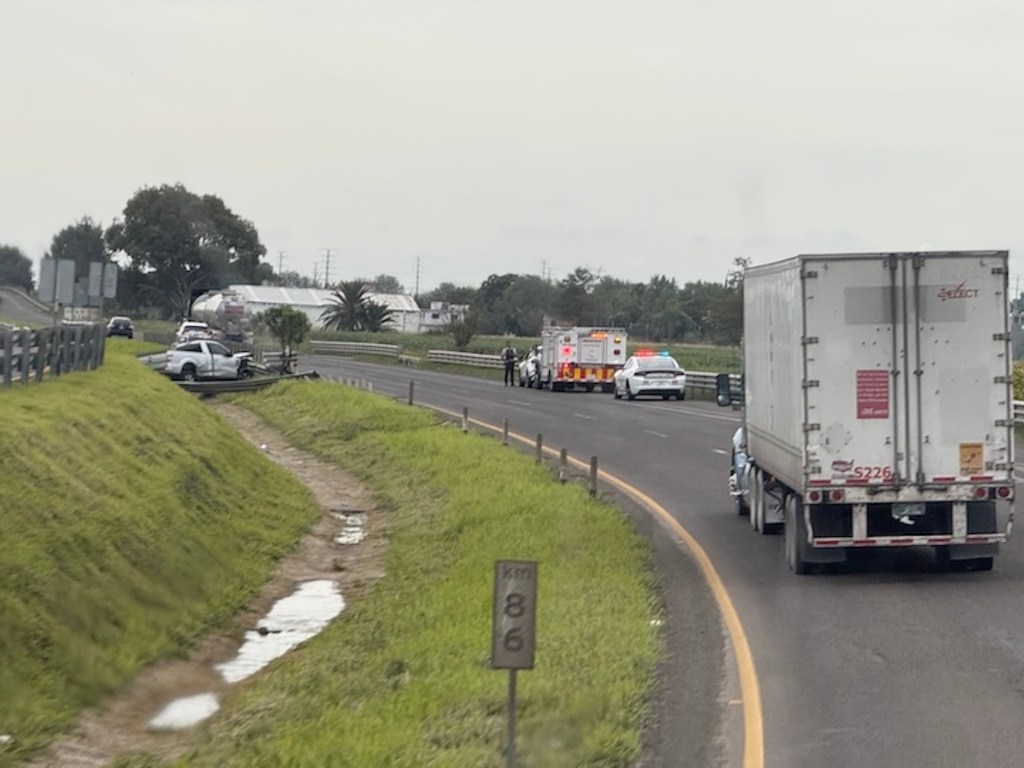
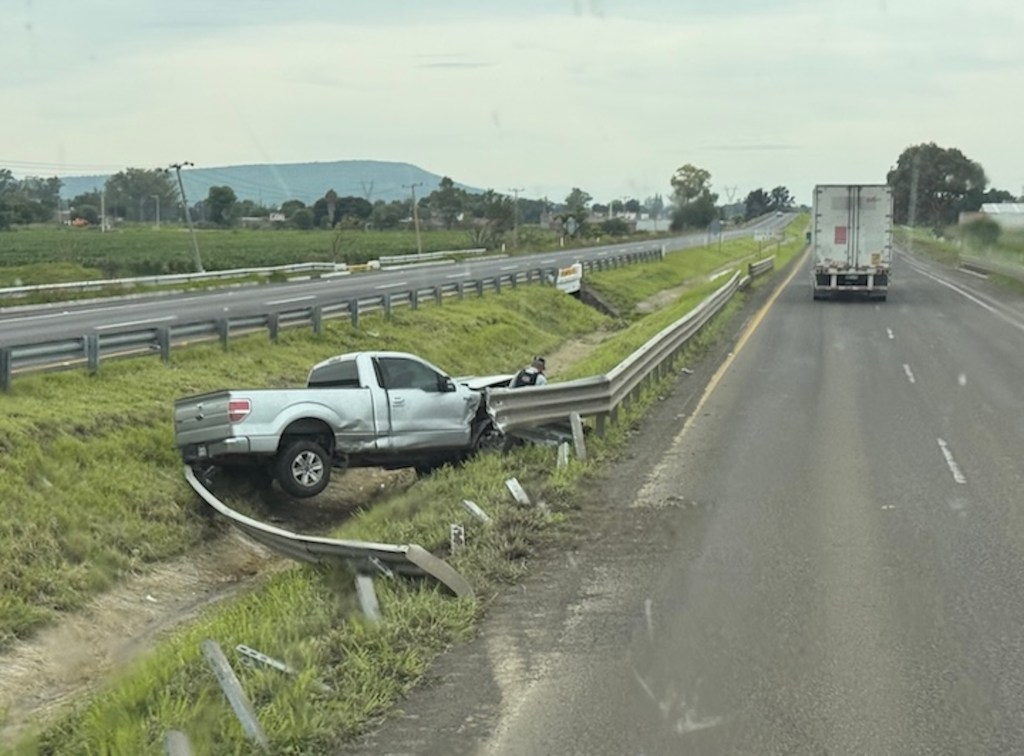
Somebody in a white pickup truck seems to have taken a curve at high speed and has managed to end up in the ditch. Big white pickup trucks often seem to be in some kind of hurry here in Mexico.
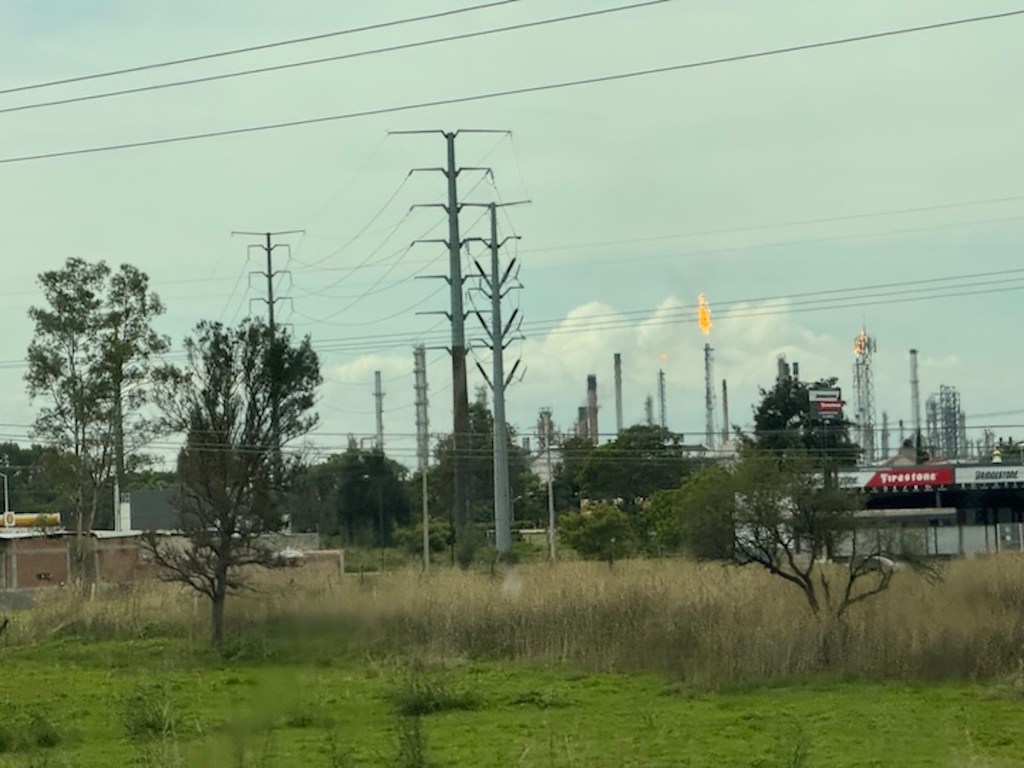
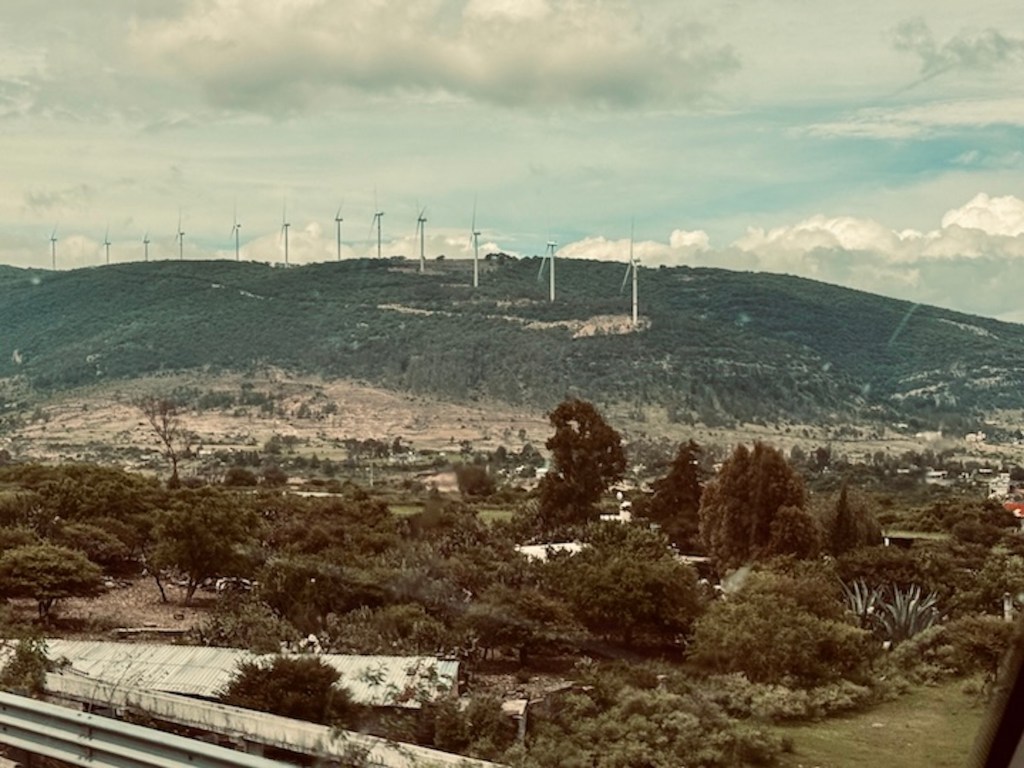
We pass a large refinery flaming off the methane gas that they should be conserving for later use, so it’s apparent that the country still needs to work on becoming more energy efficient. But a line of tall wind turbines on a hill crest shows that things are heading in the right direction.
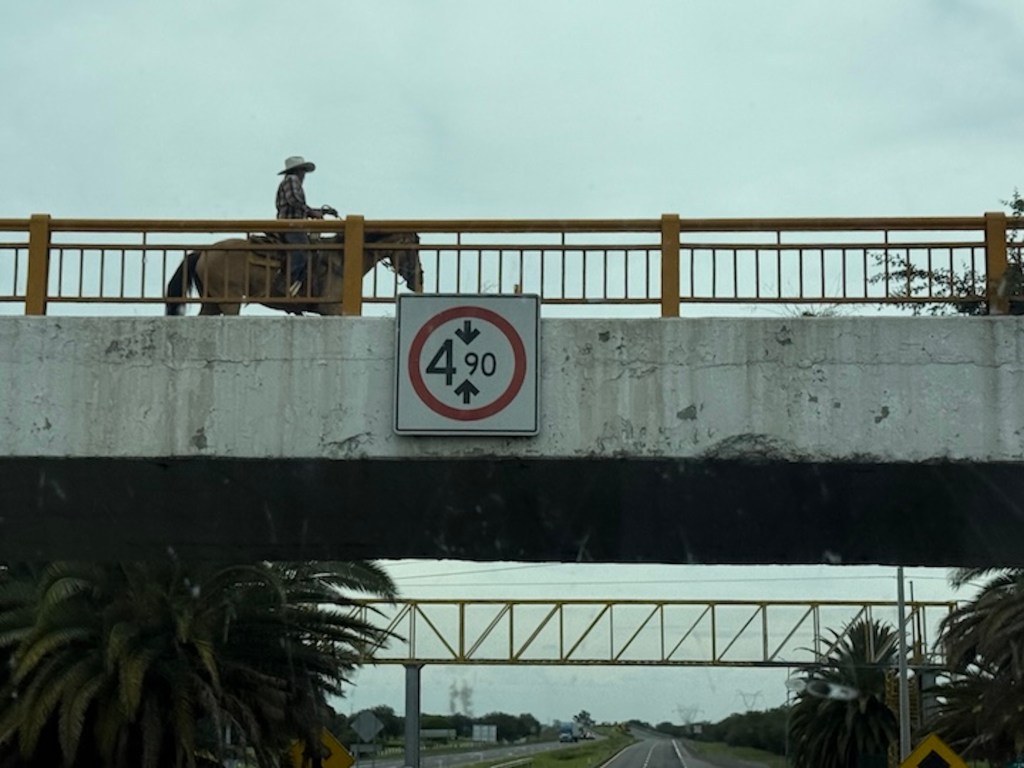
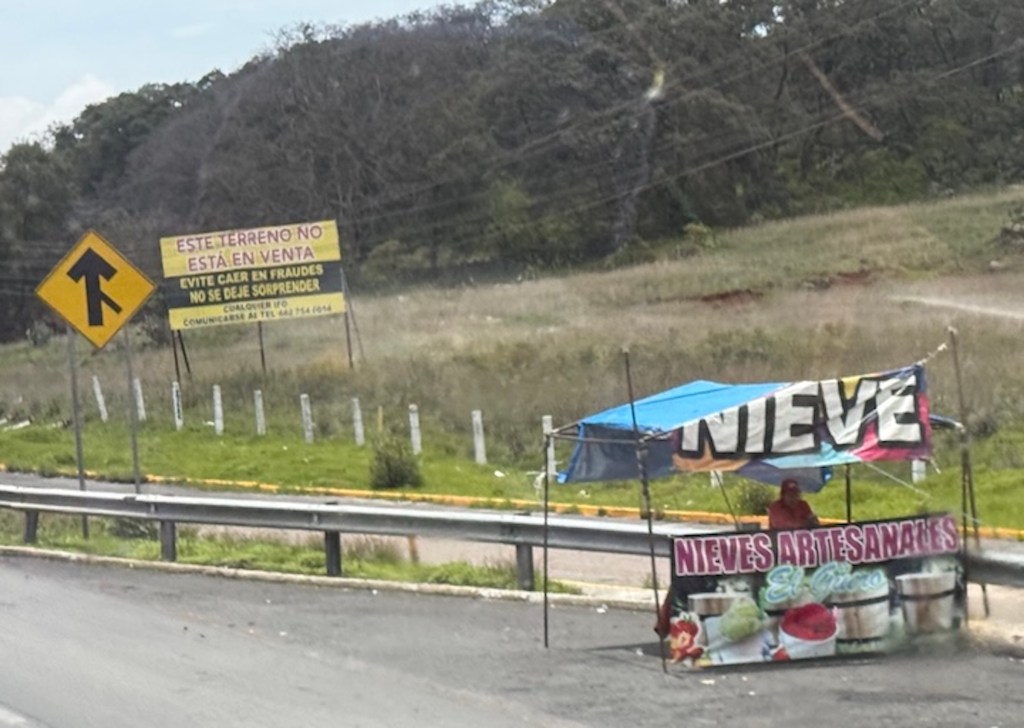
The misty mountains of central Mexico pass by our windows, and someone is selling ‘artisanal ice cream’ beside the highway.
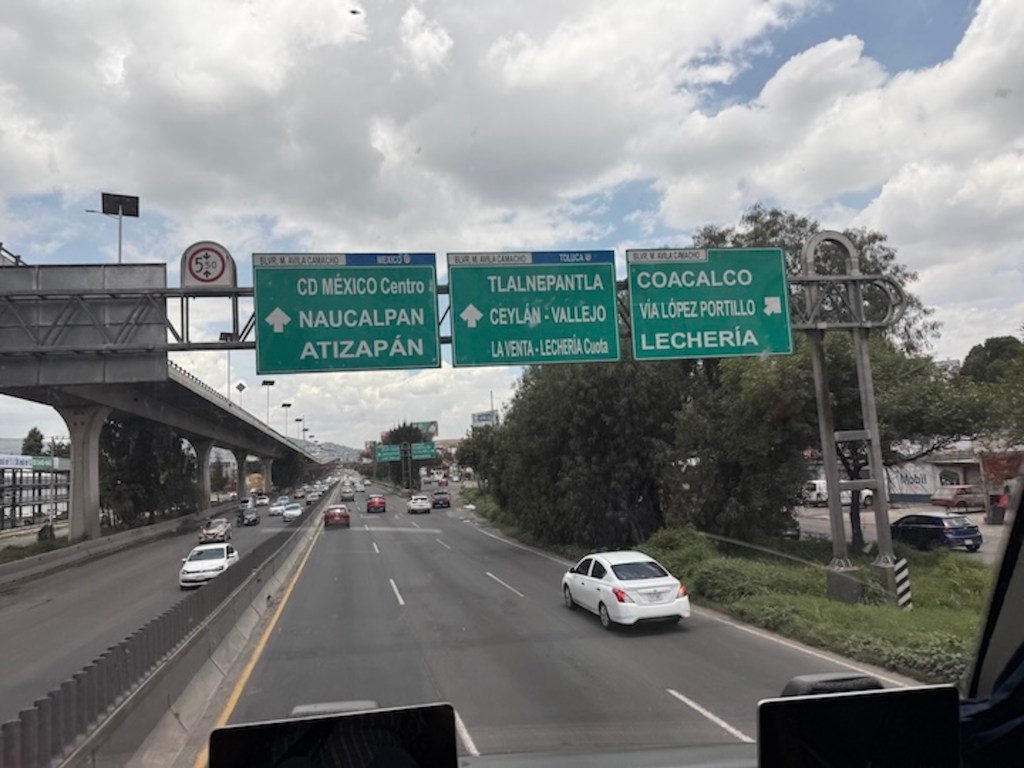
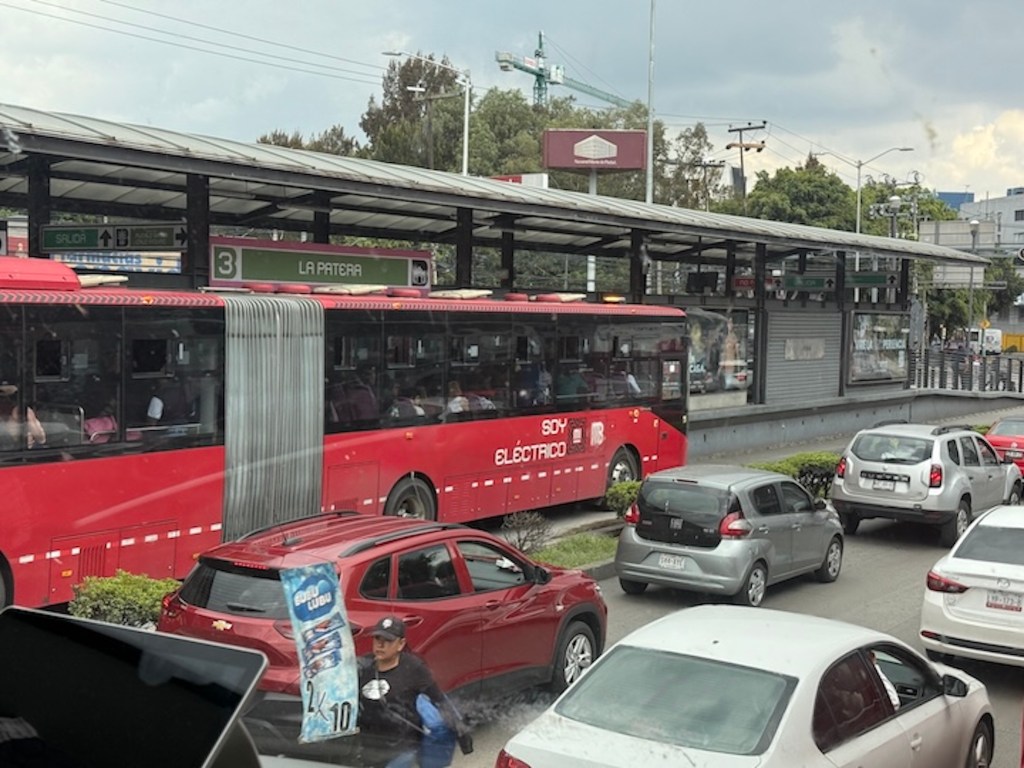
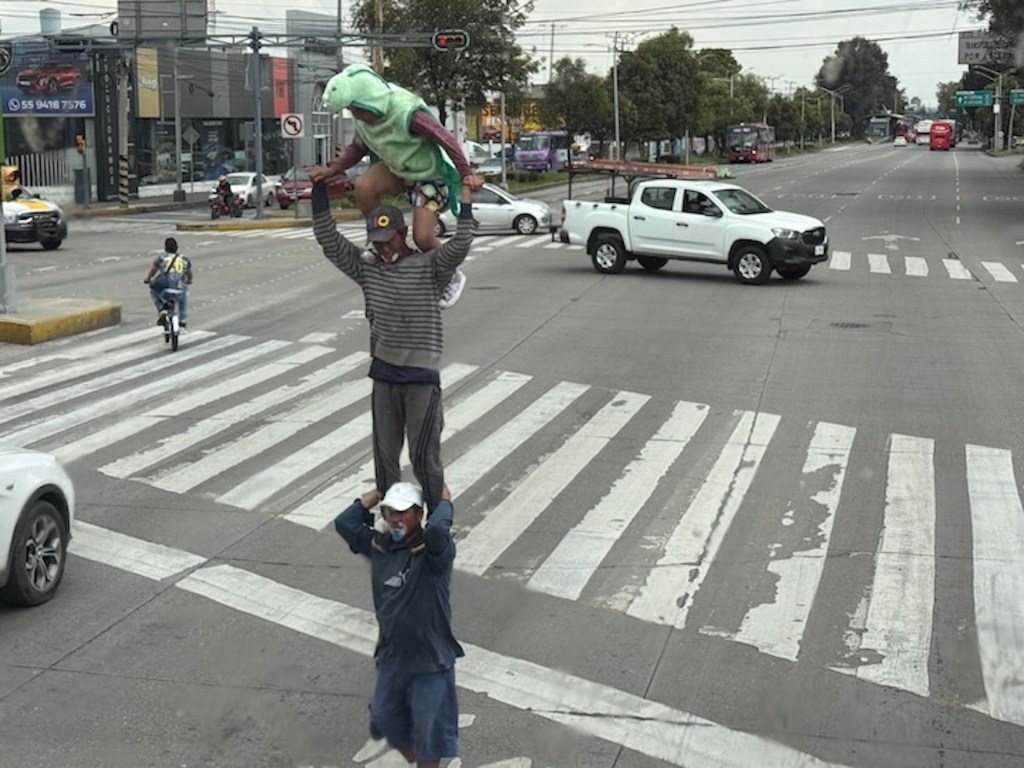
Soon we’re at the outskirts of CDMX, where a new train connection to Querétaro is under construction. A cluster of overhead signs reminds us that the sprawling city ahead is really a collection of ancient native towns and villages. A long red electric MetroBus occupies a dedicated lane and whisks people quickly to their jobs. And some strong young men are performing at a traffic light for tips. Alas, the bus windows are sealed and we can’t drop a ten-peso coin into their cup, but we’ll find other opportunities as we enter the big city.
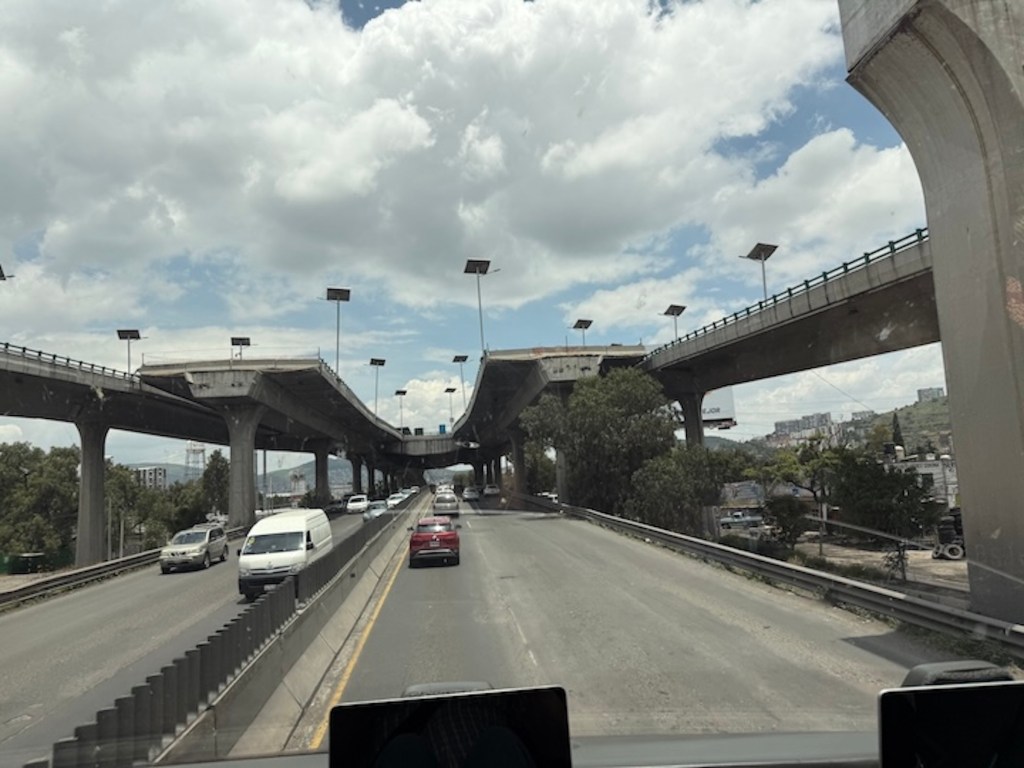
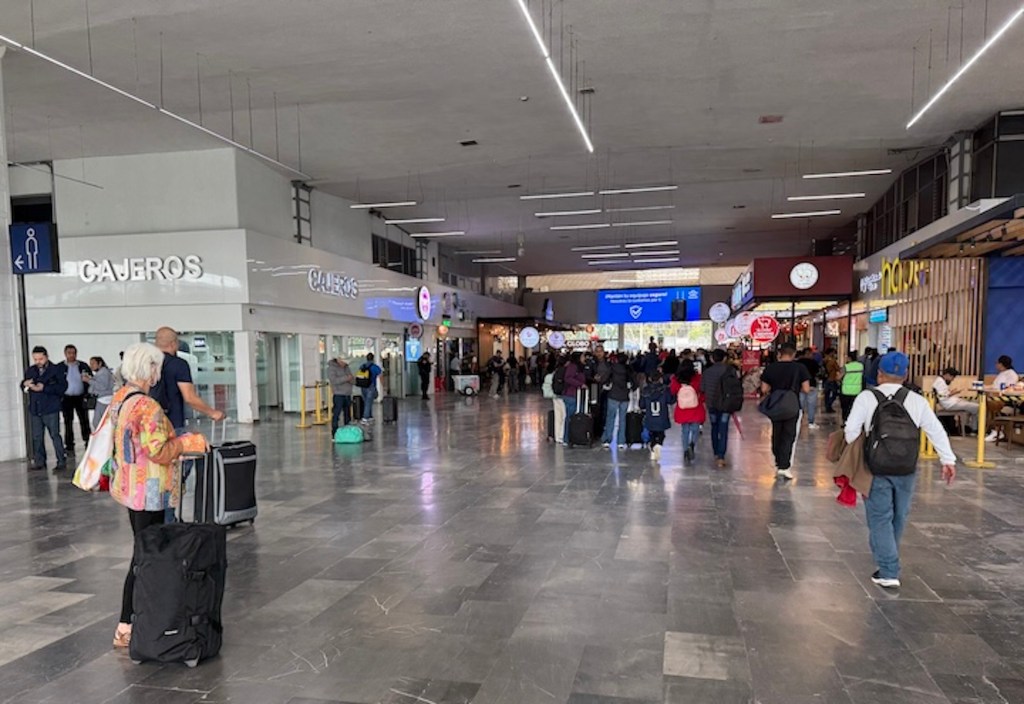
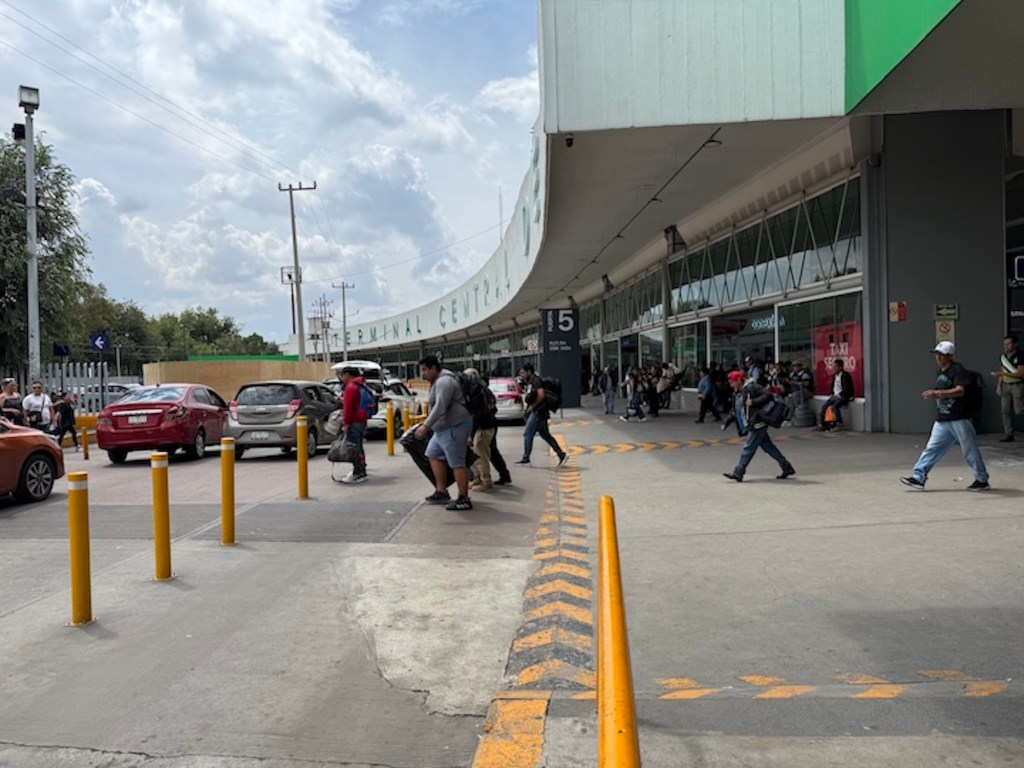
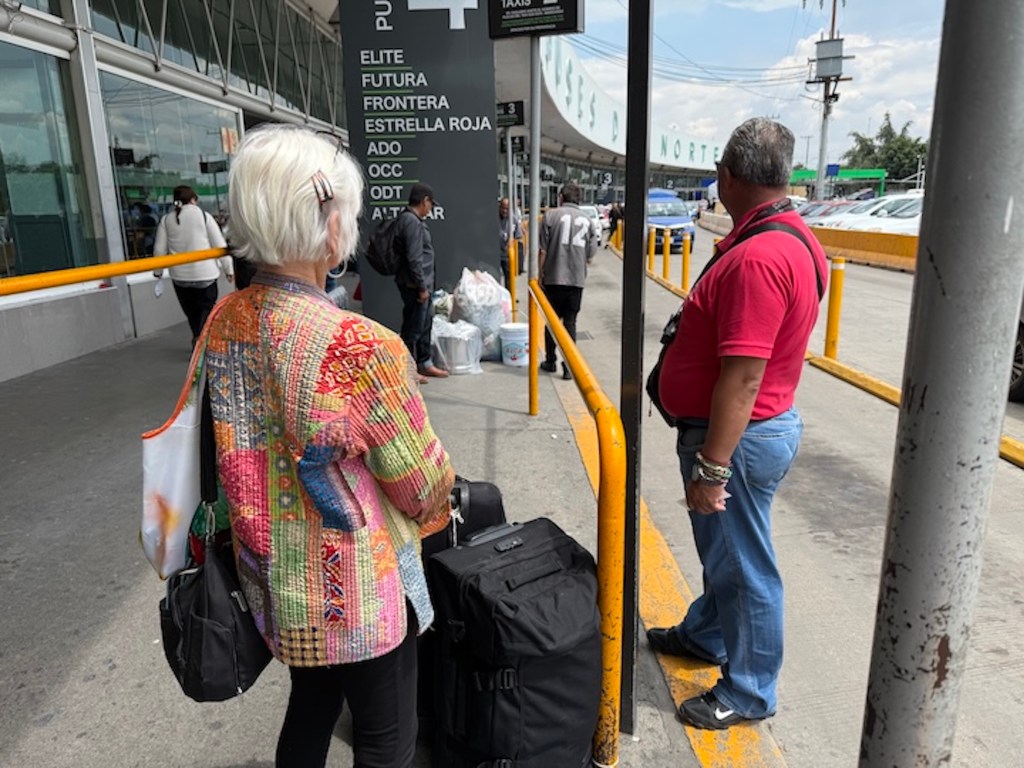
We arrive soon at the city’s large and modern Estación del Norte, and then we get a Taxi Seguro for a quick ride to our accommodations in the leafy Condesa district.
Yet when we get to the place where we’d booked an apartment, we’re not on the guardia’s list. After a few phone calls, to the apartment owners, etc, it’s clear that we’re been had. At least sort of. It was clearly some kind of scam – or something like that. We’re not really sure.
So there’s no room for us, but we’re not actually out any money. It’s just weird. What kind of scam doesn’t cheat us out of money? We still don’t know what happened, but it was approaching evening, it was raining, and we had to find some other place to stay.
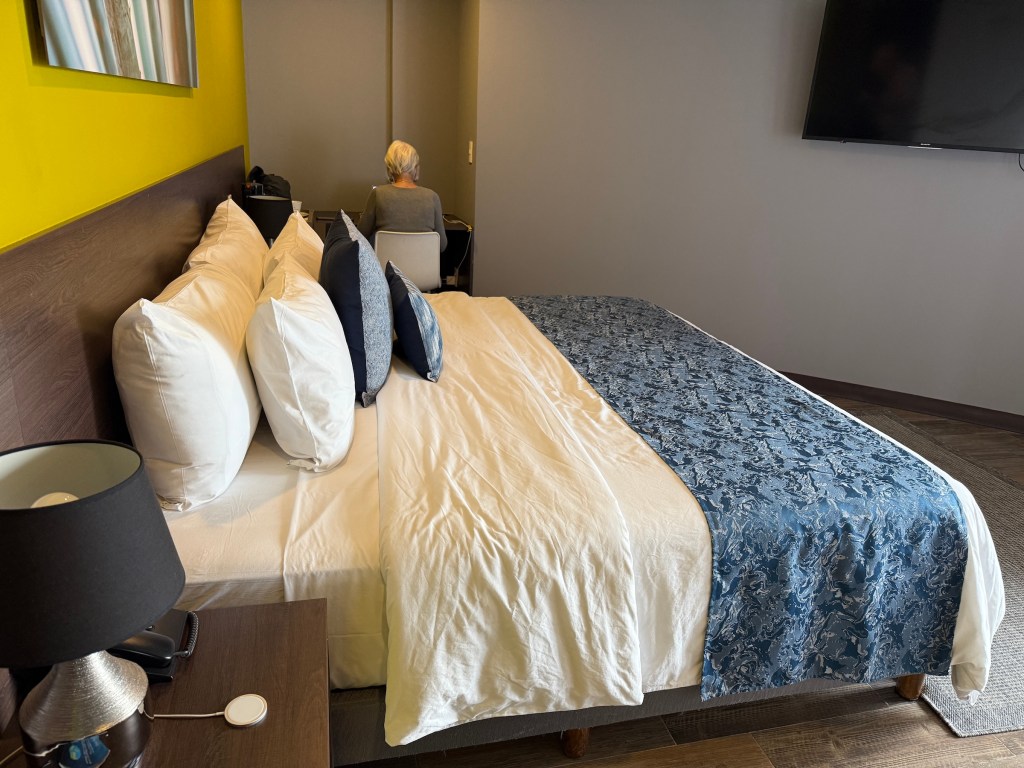
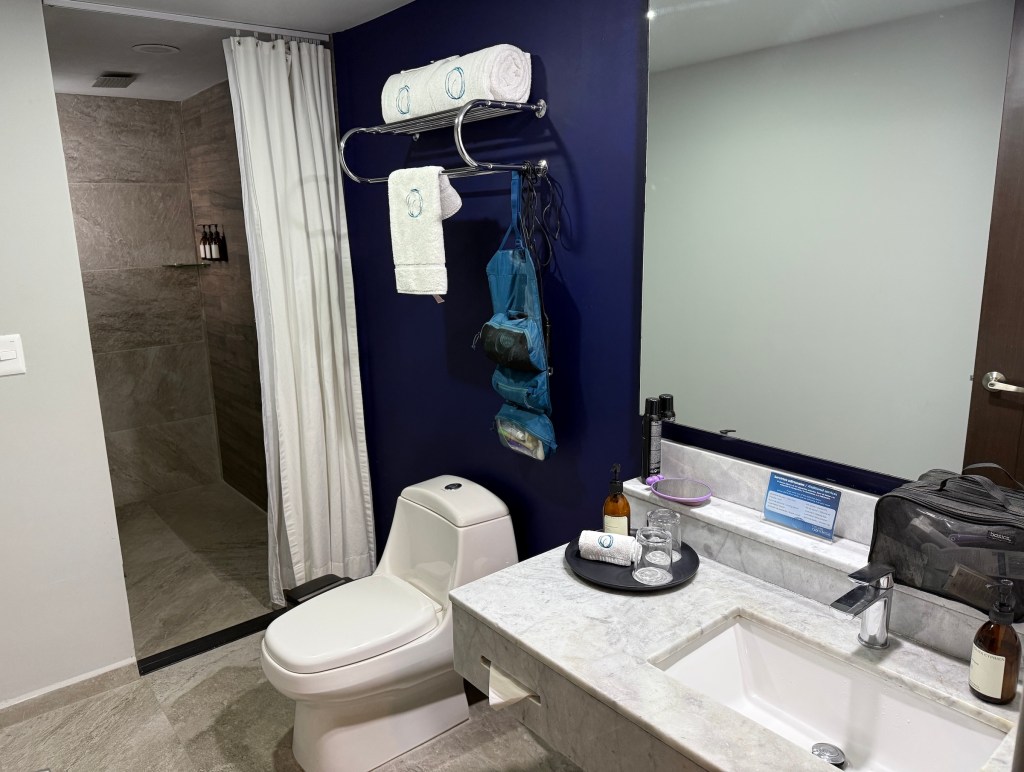
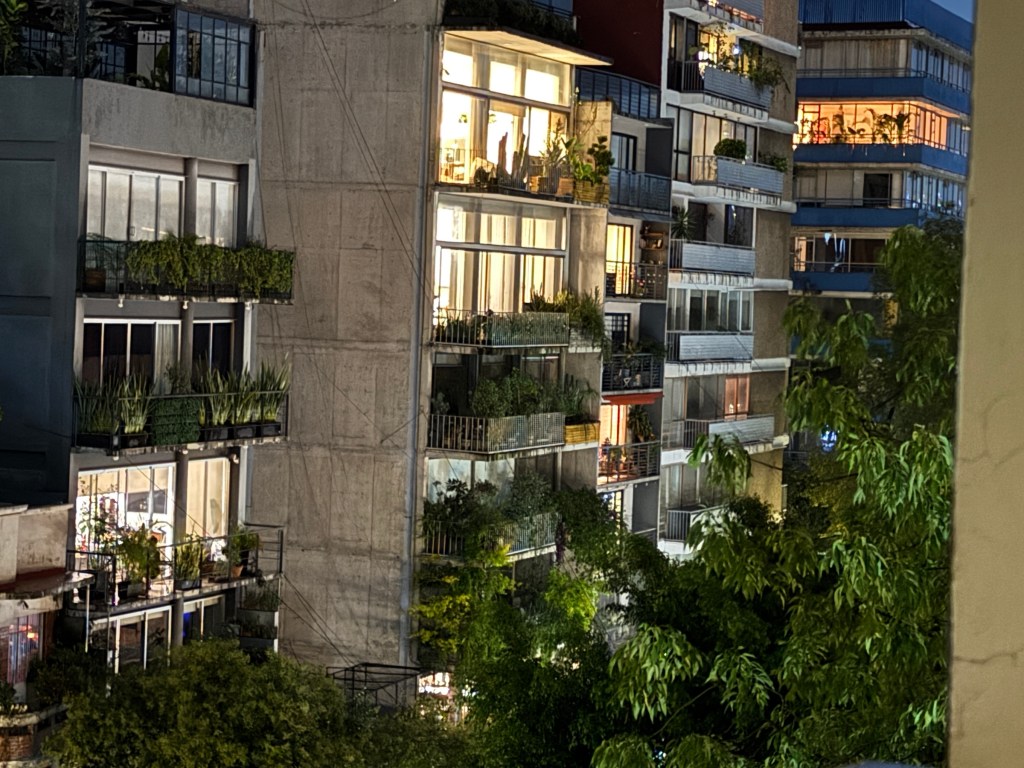
We had wanted to rent a little apartment so we’d have a kitchen, but that was not to be. So we found a room at the modernista Hotel Circulo instead, and it all turned out very well. There appeared to be only three rooms per floor and we were several floors up, with a good view into the neighborhood and no excess ground-floor noise issues.
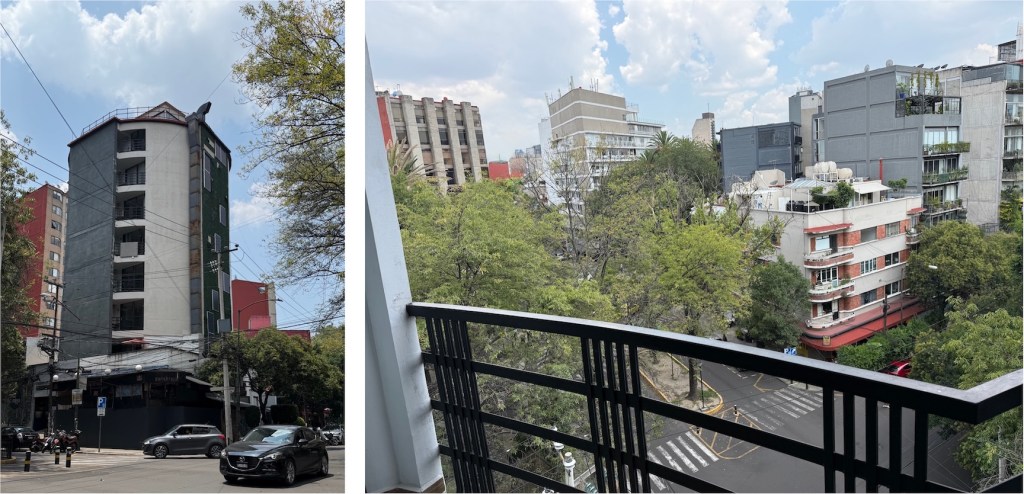
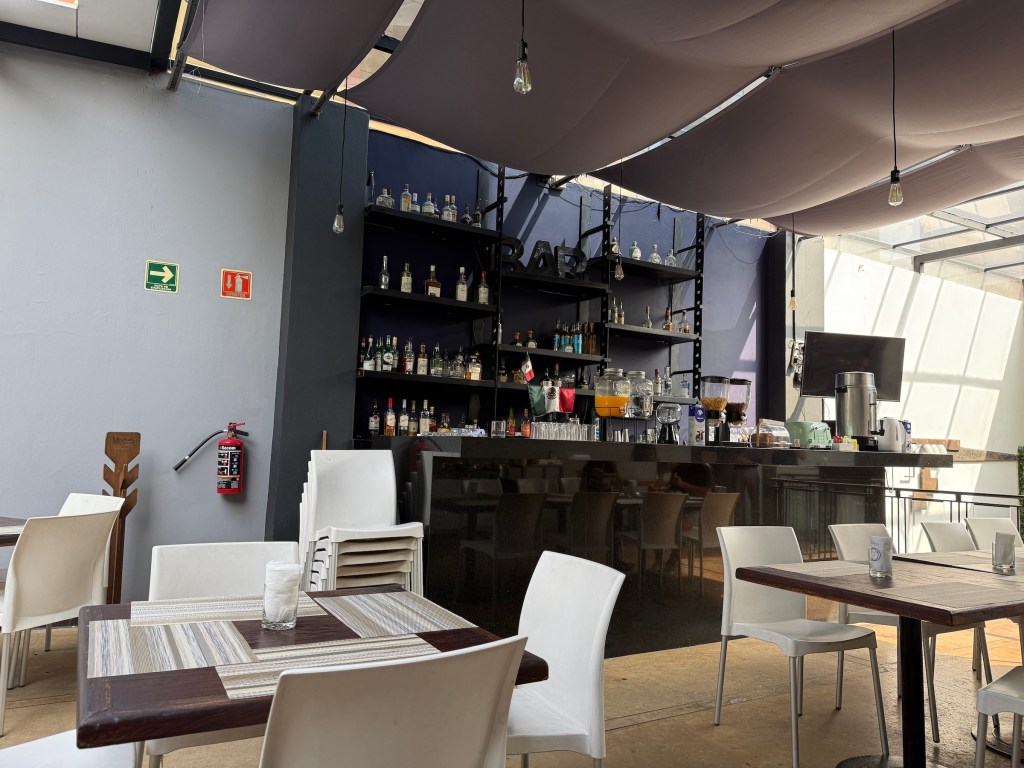
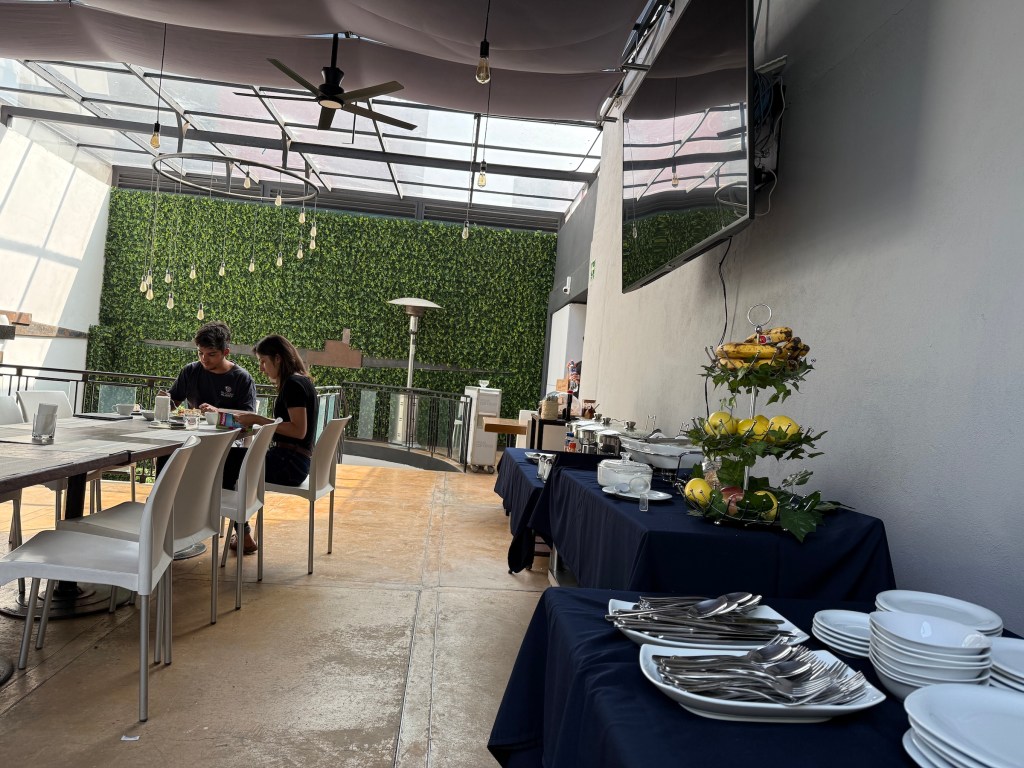
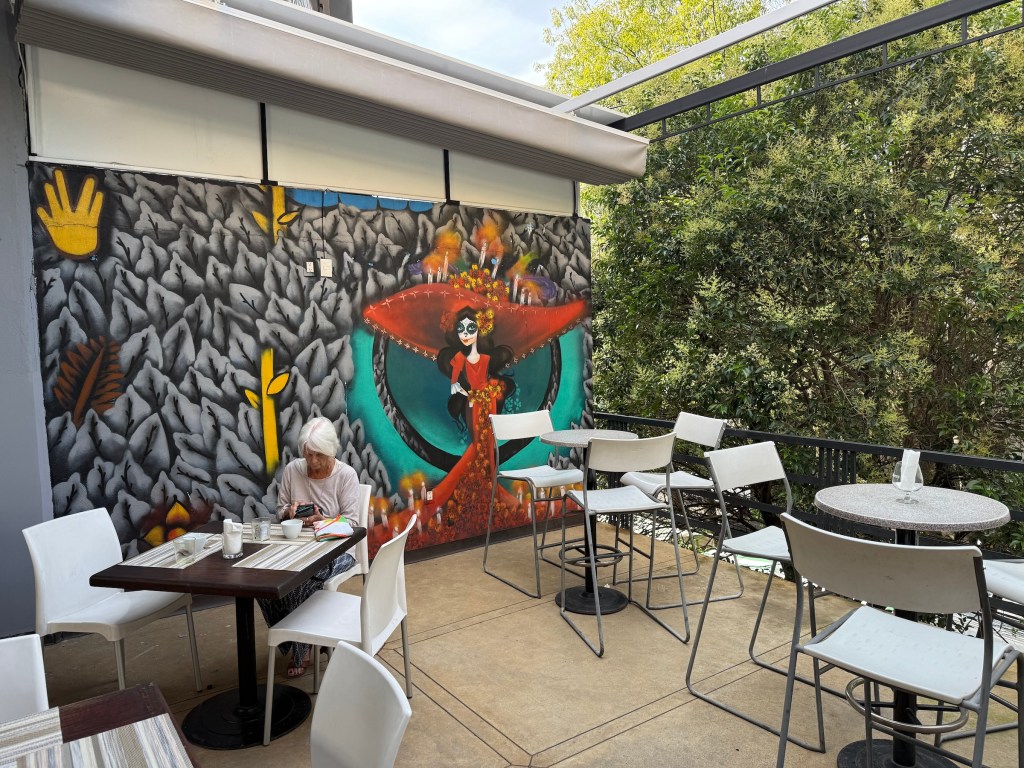
The hotel has an open-air bar and breakfast area on the second floor that looks right into the neighborhood trees, and the birds. And the breakfast buffet is excellent.
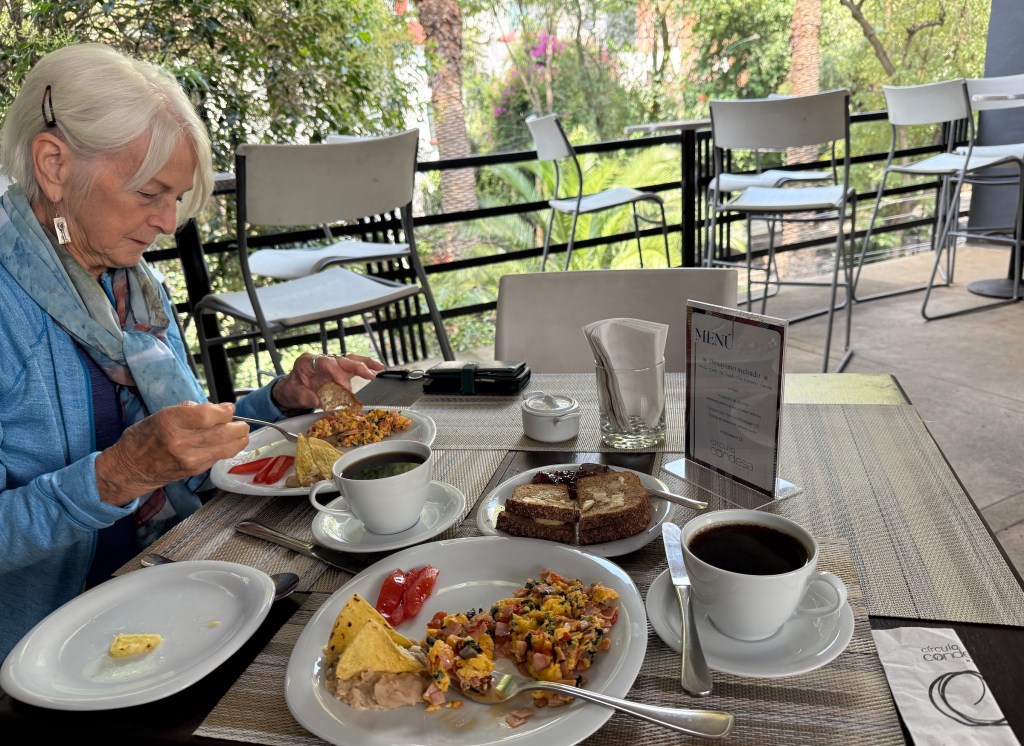
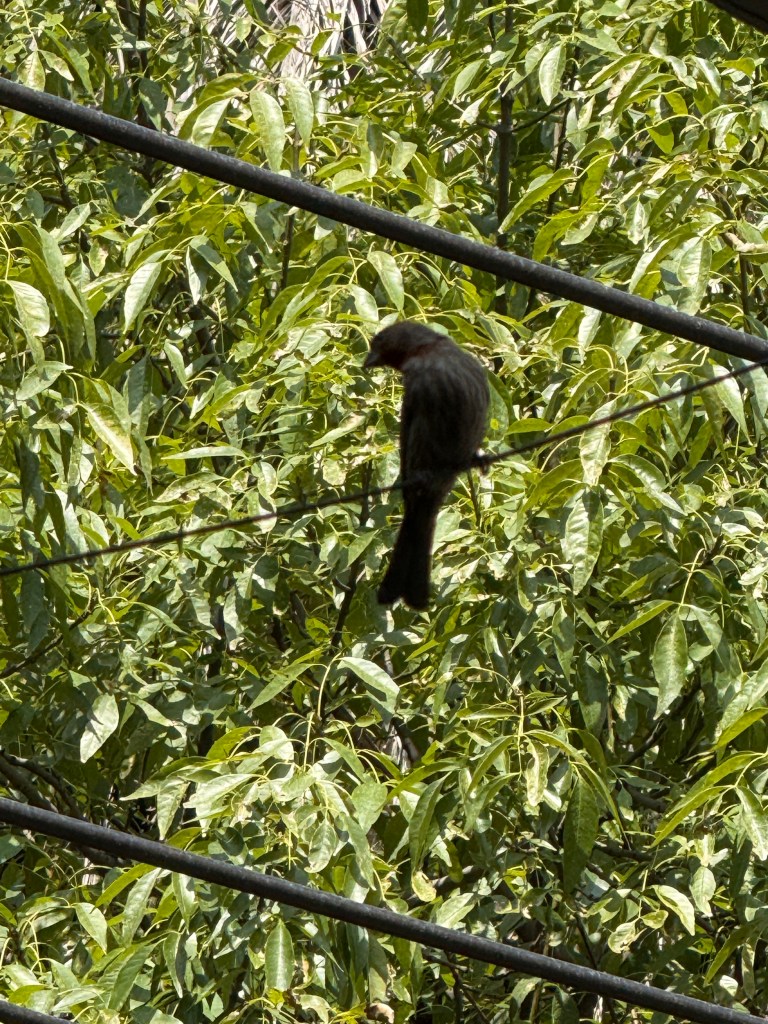
We’re staying in the Condesa district, which has become our favorite part of this world-class city. It’s good to be wandering again on that tree-lined walkway down the center of Avenida Amsterdam. And sharing it with all the walkers and the runners.
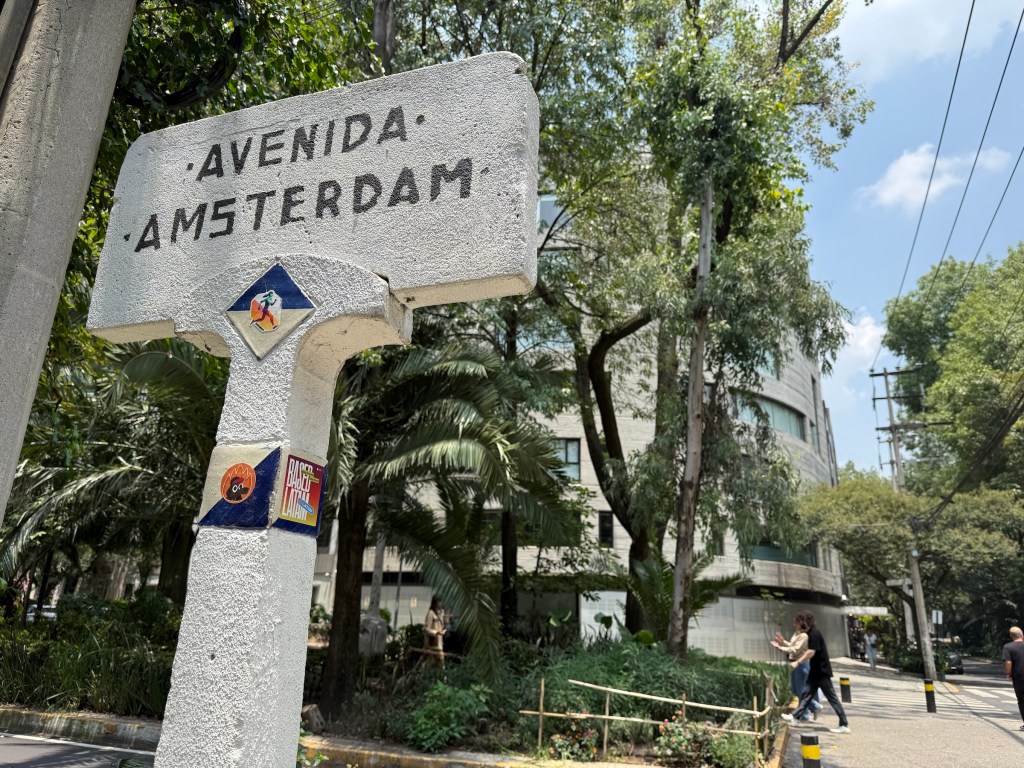
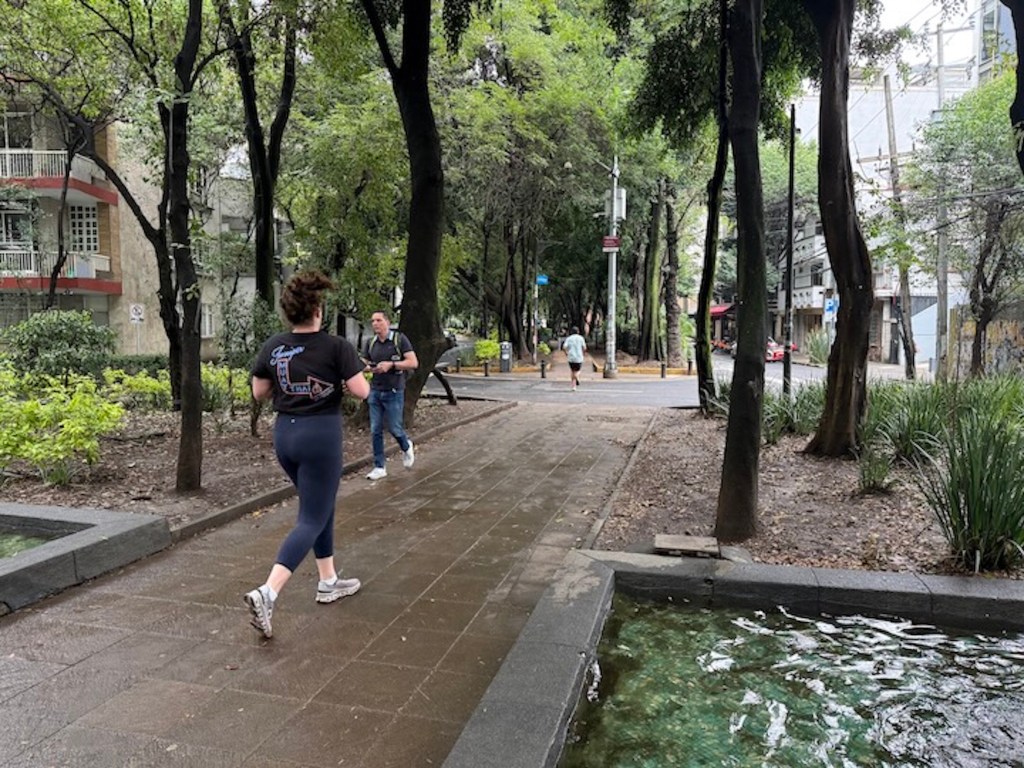
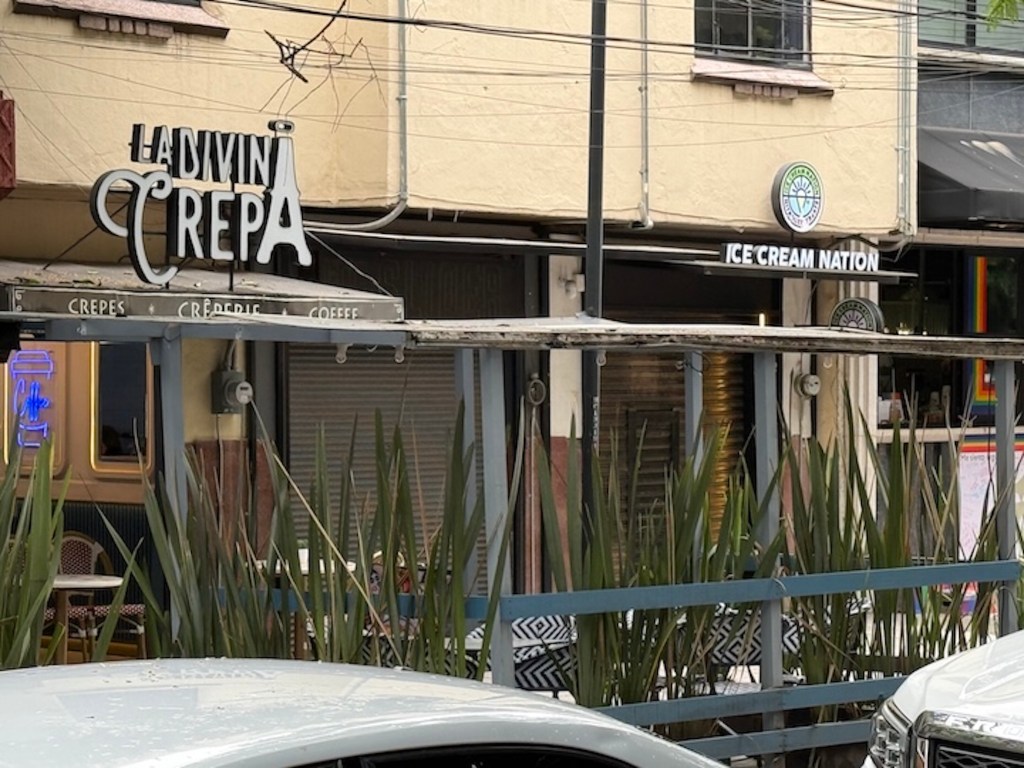
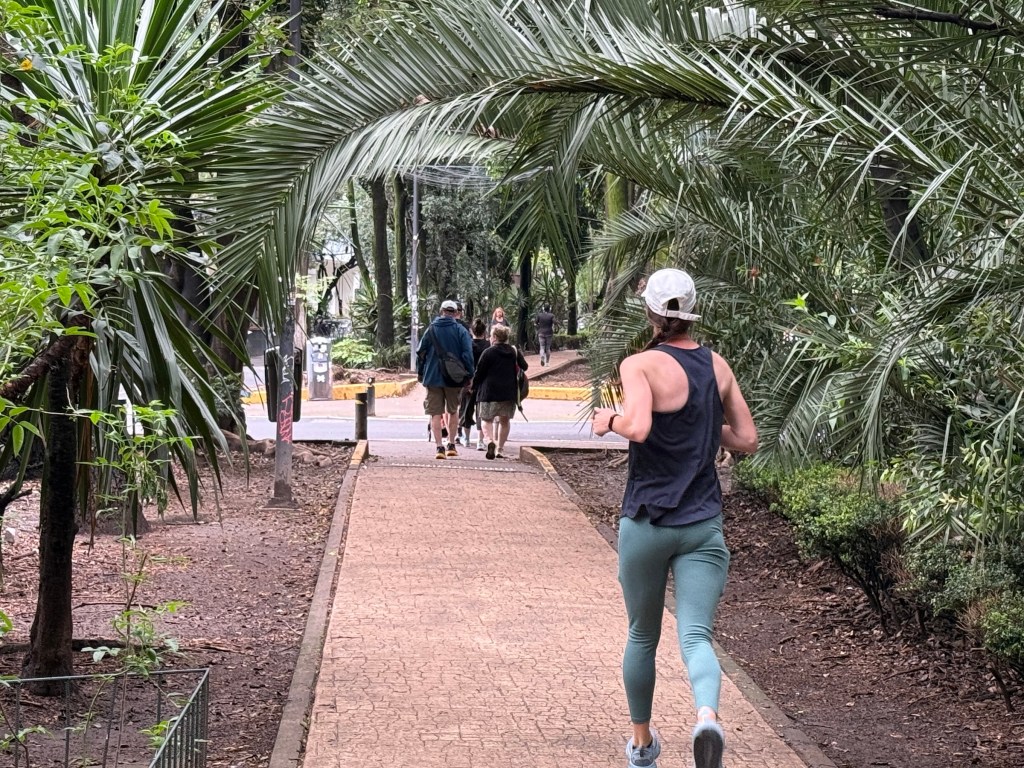
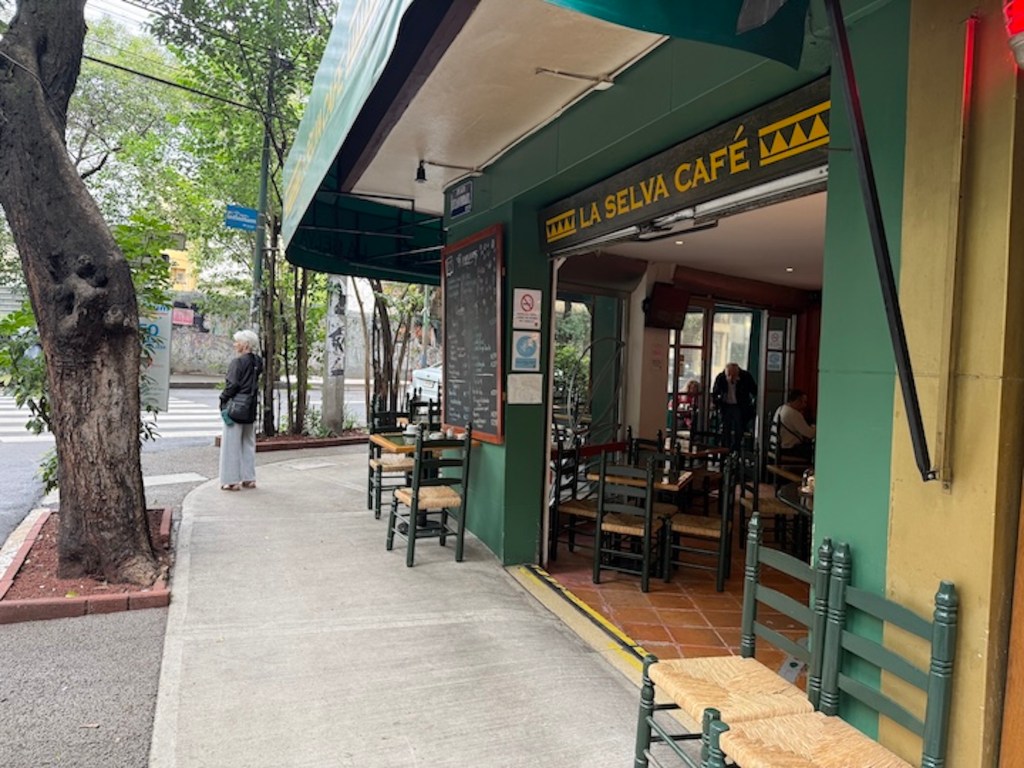
Avenida Amsterdam is a large leafy oval that used to be a horse racing track long ago. The verdant Parque México, a fine place for long walks, is just a block away inside the oval, with a bust of Einstein and his famous formula of E=MC2 in the flower bed in front of him. It’s also where you can watch people trying out their latest rad dance moves – before they dare go on stage. And this is the season when the city’s famous jacaranda trees drop their purple blossoms in carpets along the streets.
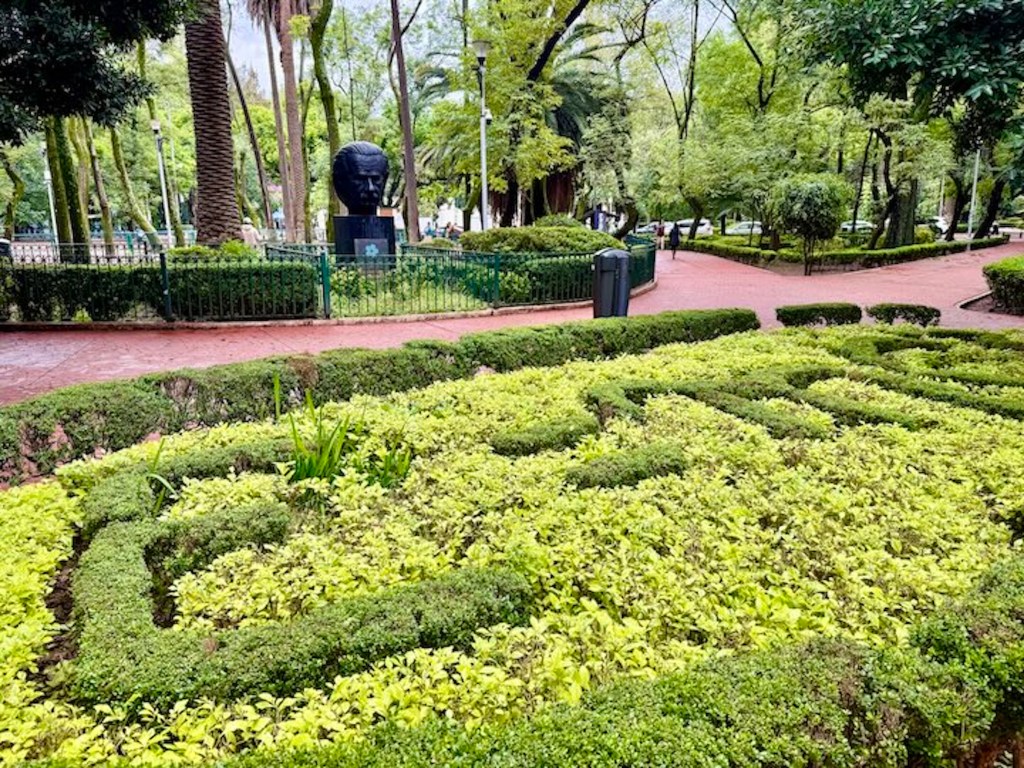
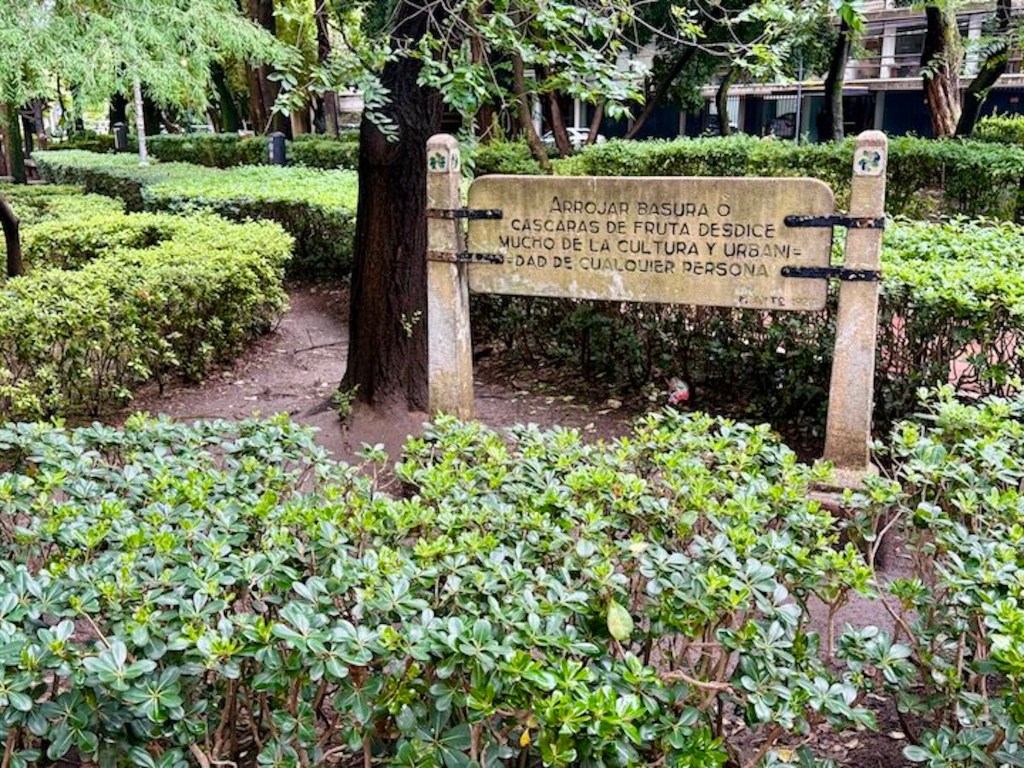
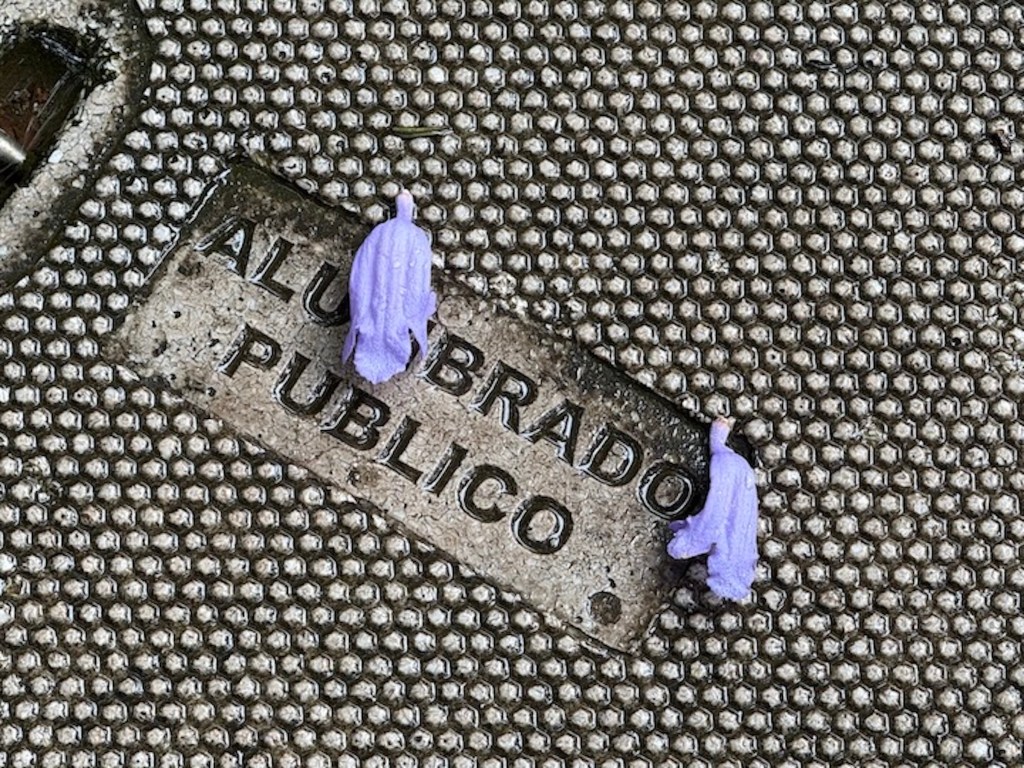
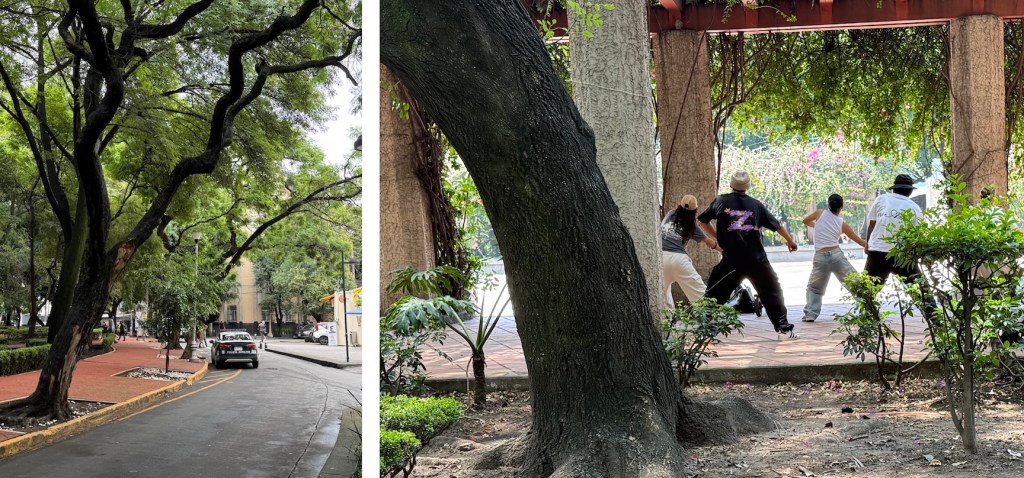
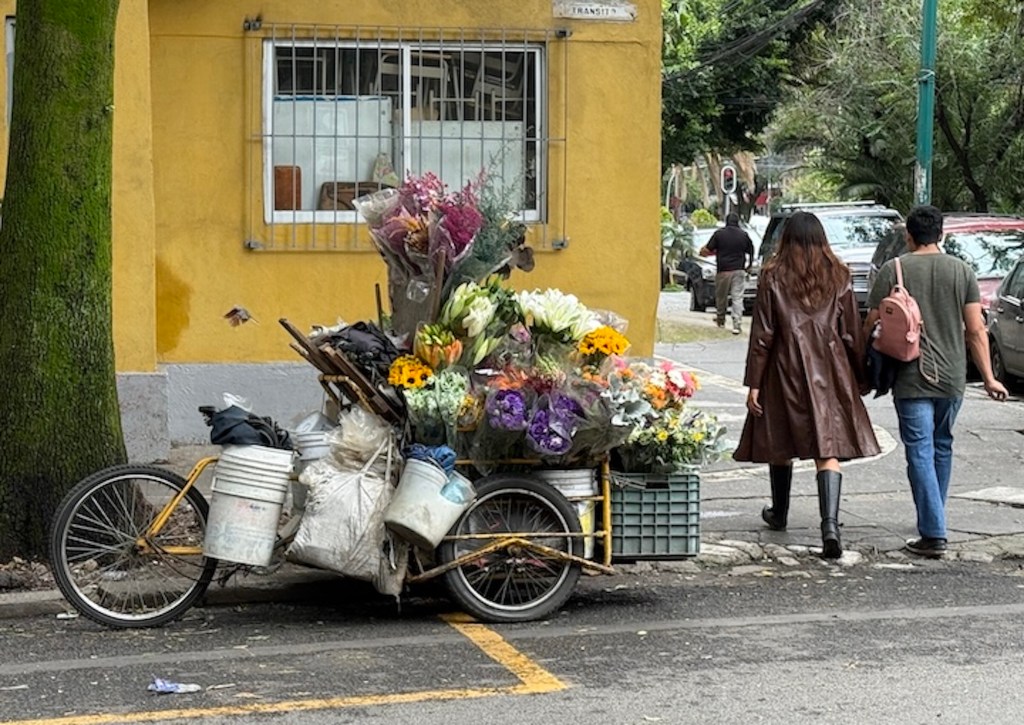
The surrounding area is filled with interesting shops and vendors and there are so many really good places to enjoy a fine dinner. This is one of the world’s great neighborhoods.
We won’t be able to ignore the dogs of the Condesa, taking regular walks with their humans. For many of the others, a professional dog-walker appears at the door each morning, and they’re heading to a fenced-off playground in Parque México. That’s where they leave their leashes behind to hang out with friends. It’s a special daily occasion in ‘dog world.’
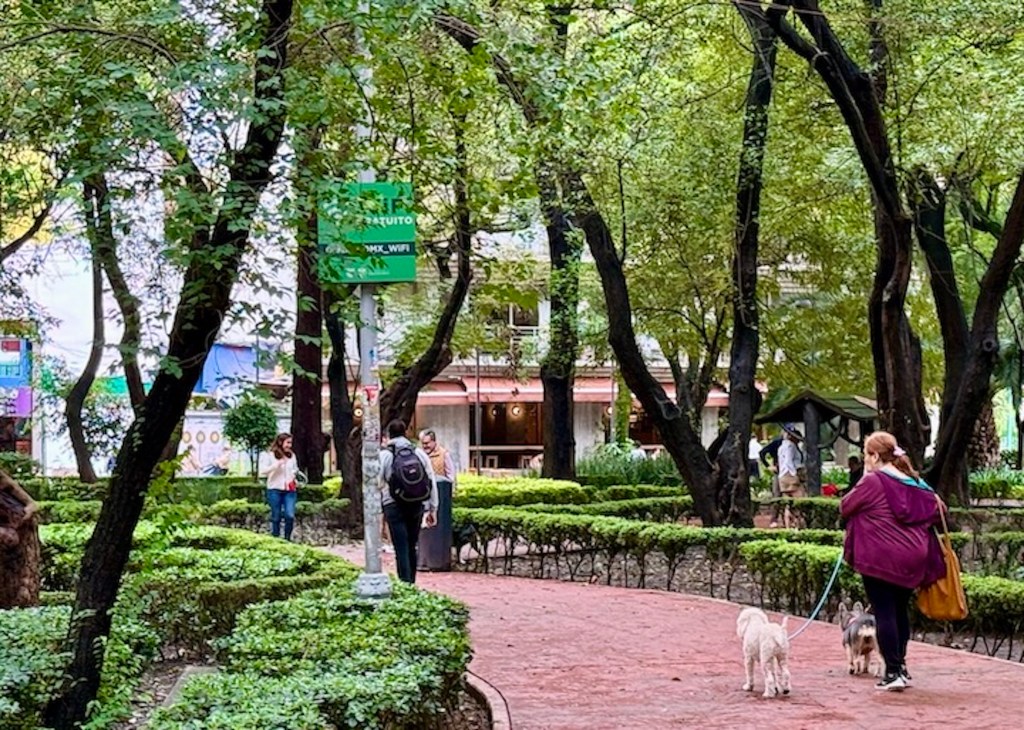
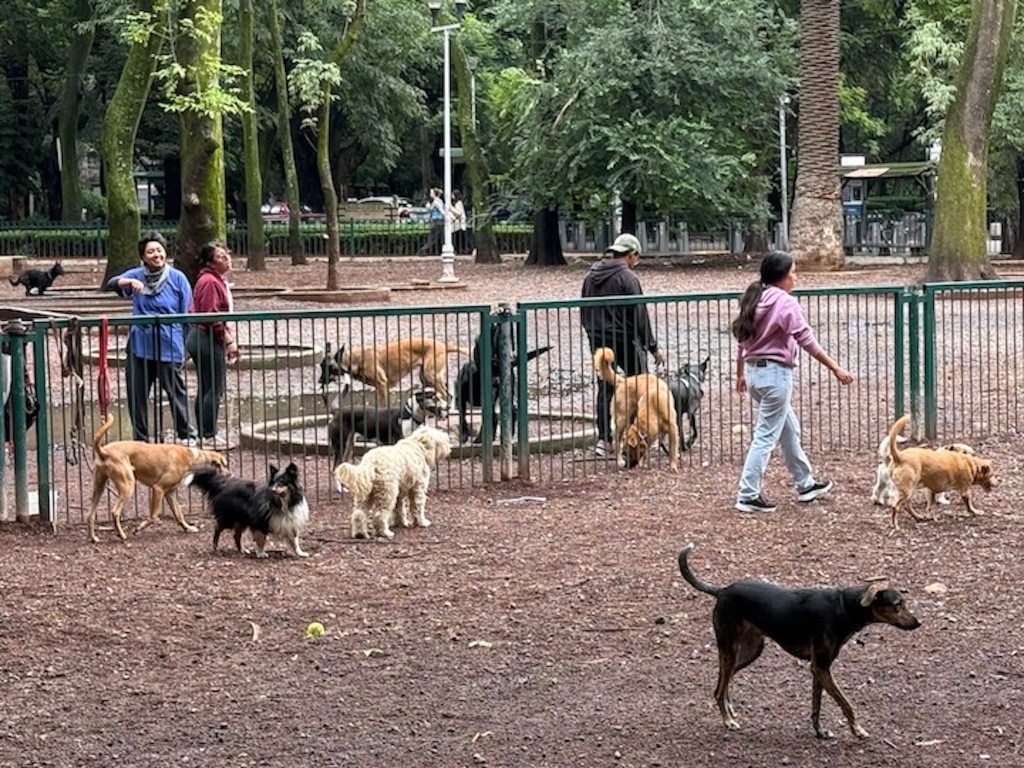
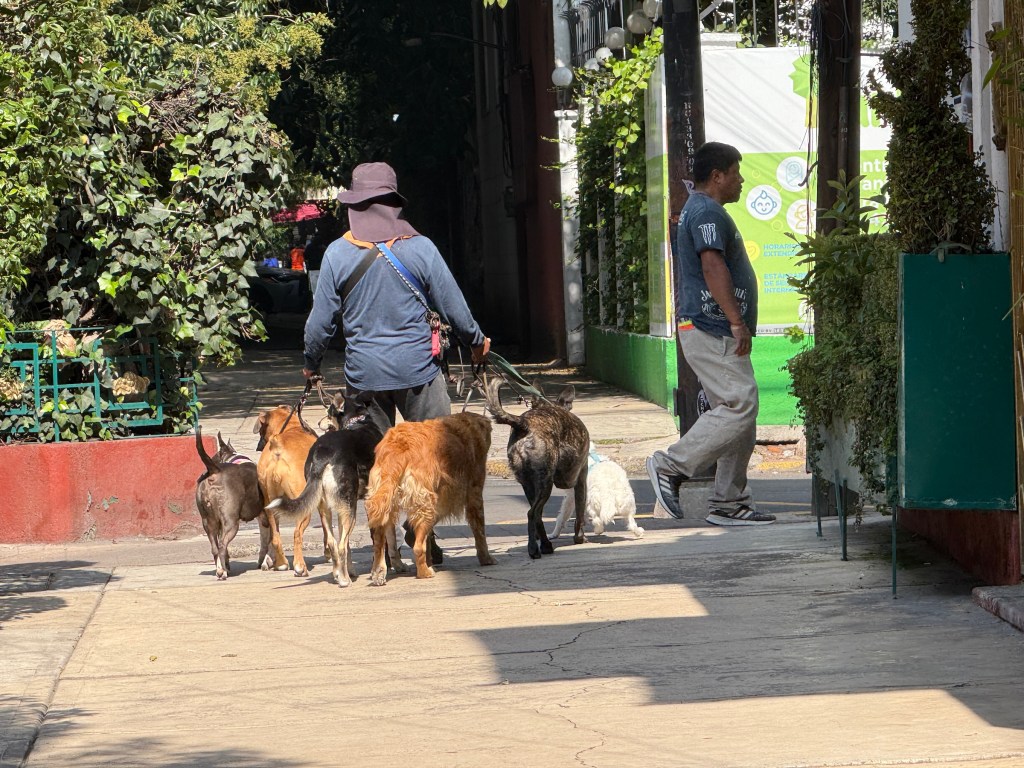
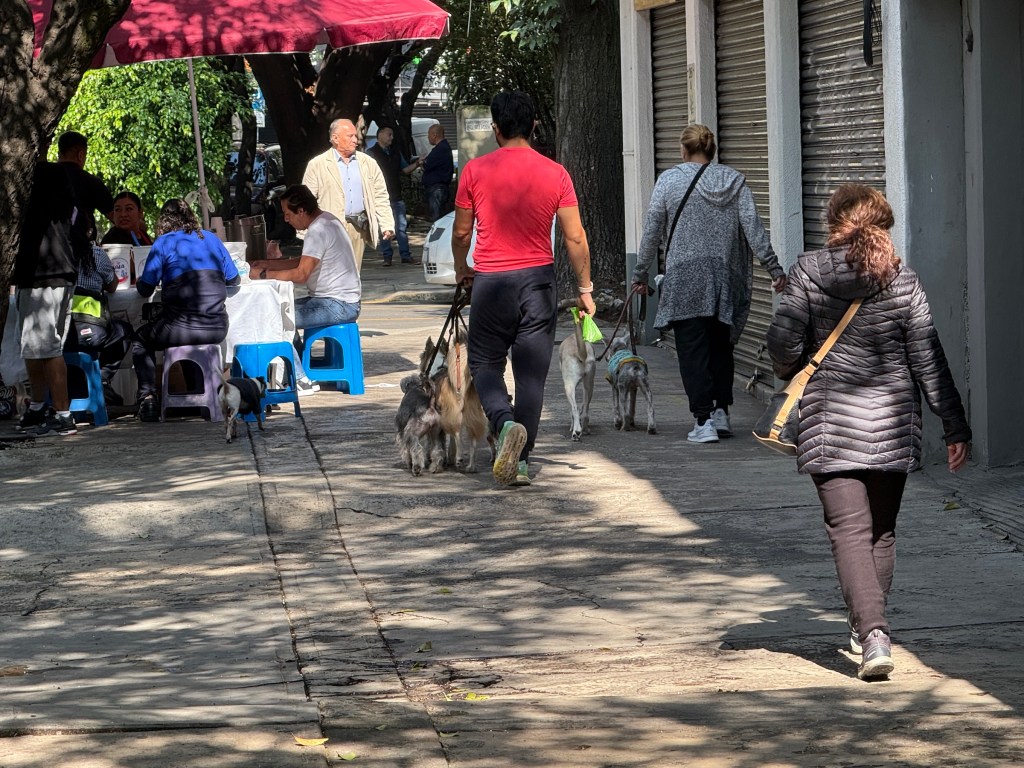
As for living ‘a dog’s life,’ that doesn’t seem to apply to the CDMX mutts who get pampered and live a pretty sweet existence.
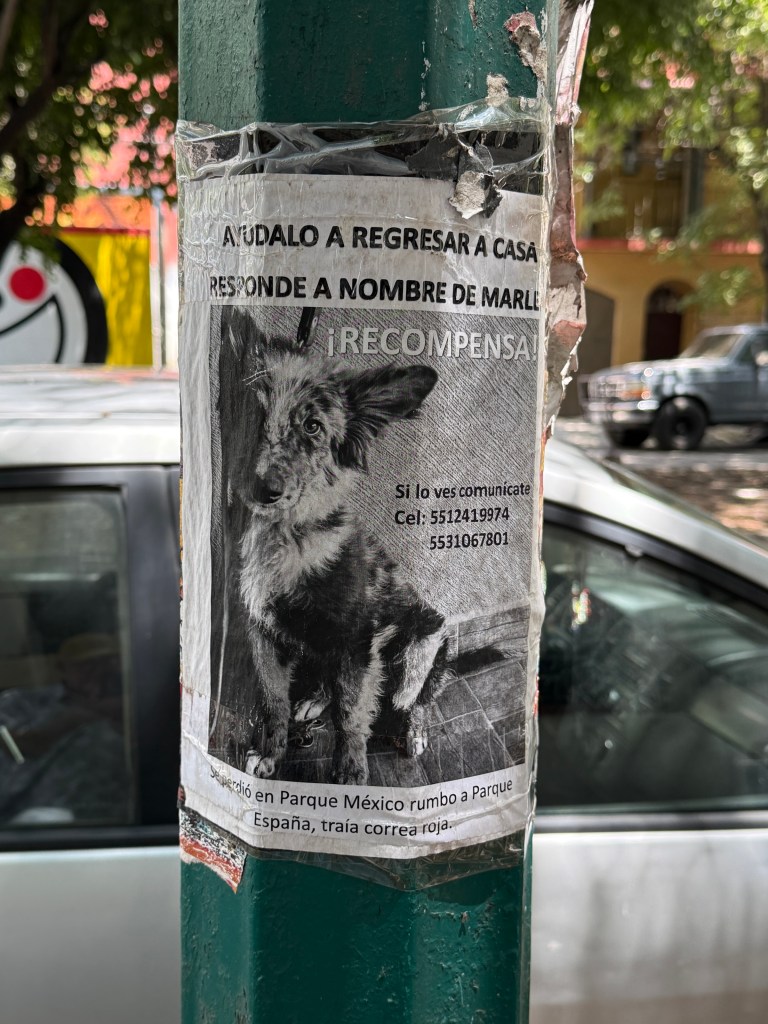
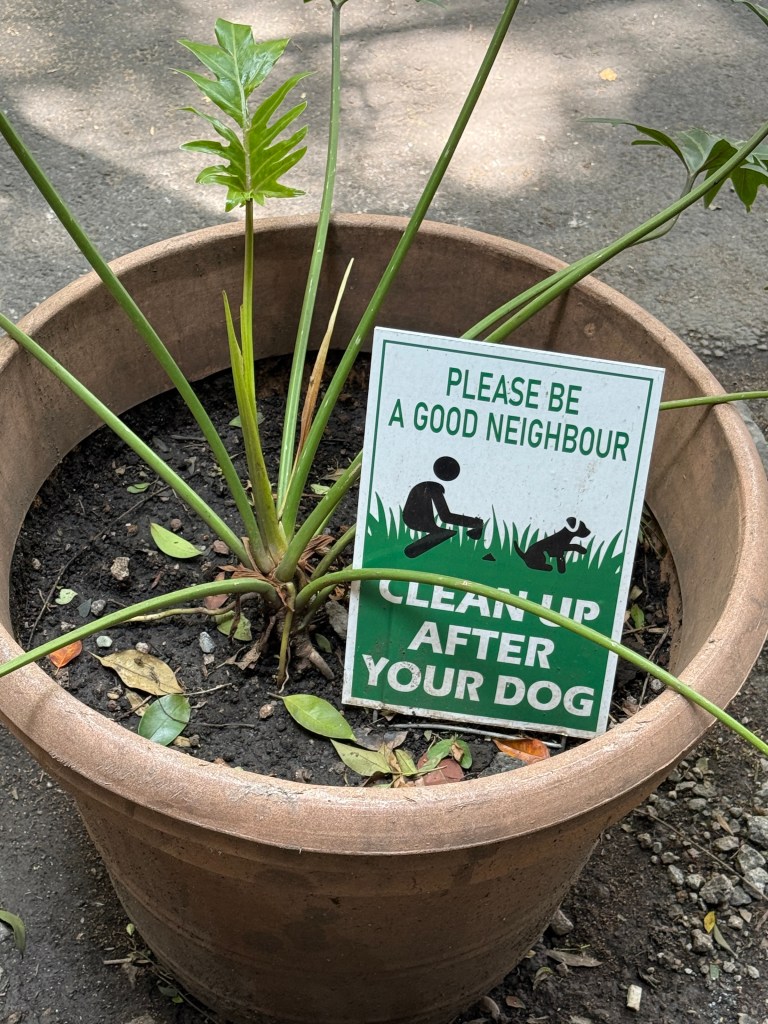
Yet some of these well-loved curs still manage to get lost, like ‘Marley’ in this ad posted on a light pole. Hope they can bring poor Marley home again soon. And some of the neighbors ask for a bit of consideration among those numerous dog owners.
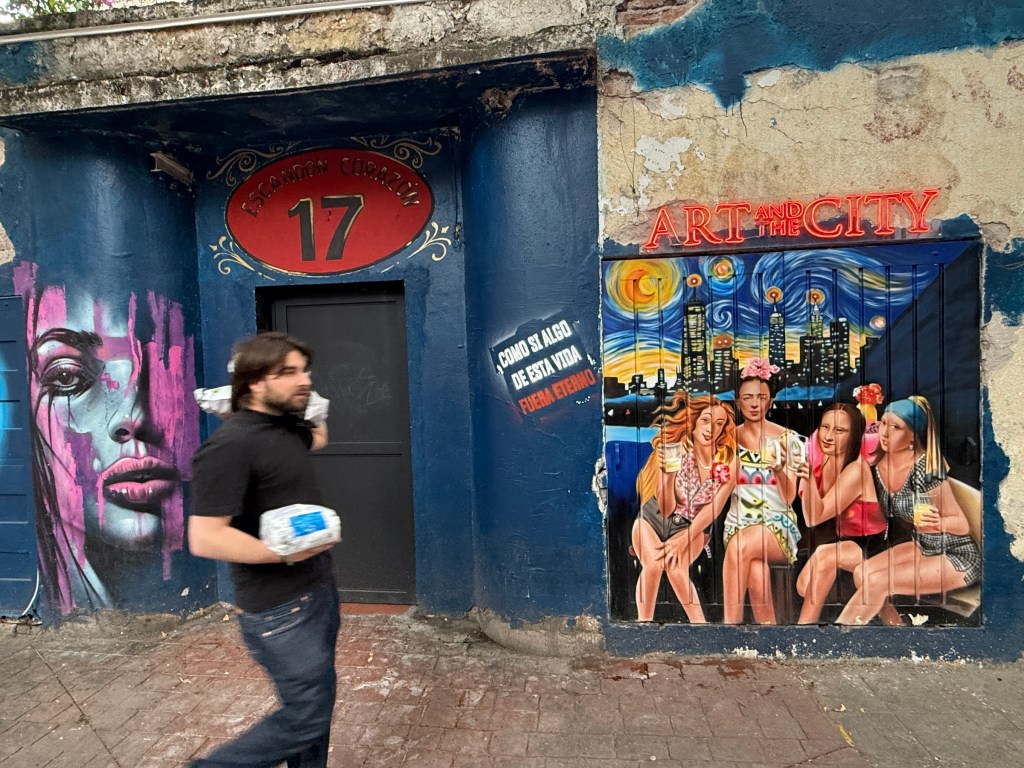
There is so much to see along the streets of CDMX that going off for a sort of long ‘lost-wander’ can be very rewarding. You might just end up finding that part of yourself that you’ve noticed has been missing lately – maybe you’ll even find it among the mural of famous party girls happily hoisting their drinks, and named Mona Lisa, Frida, the Pearl Earring Girl, and The Girl on the Half Shell (re: Joan Baez in “Diamonds and Rust”).
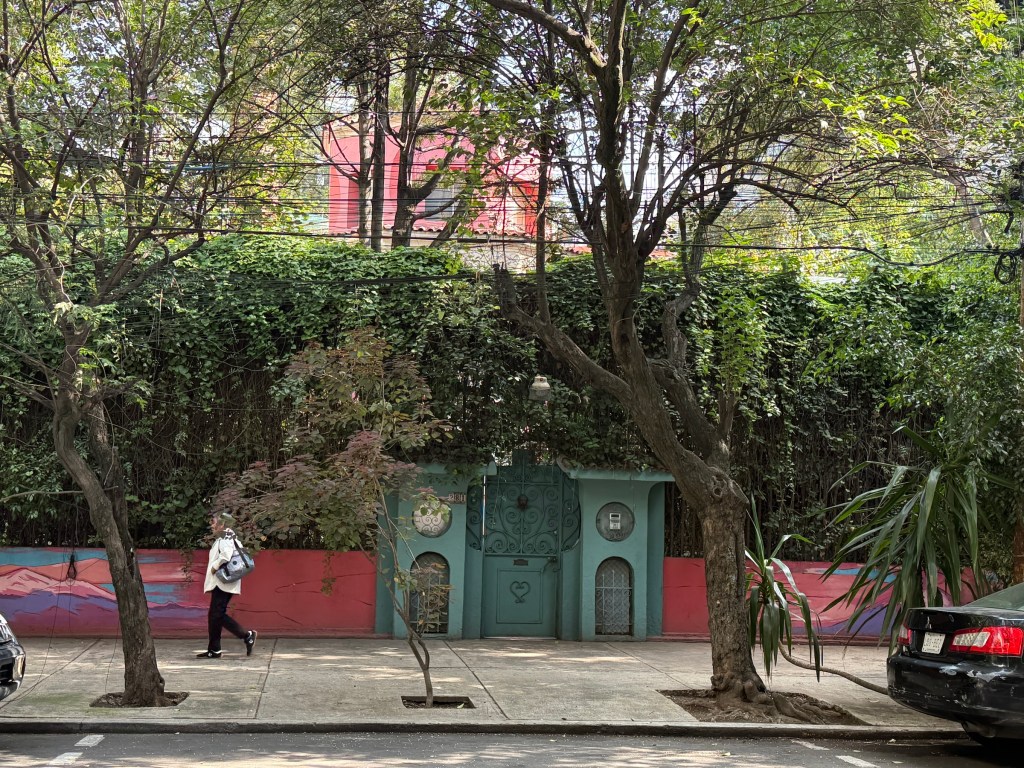
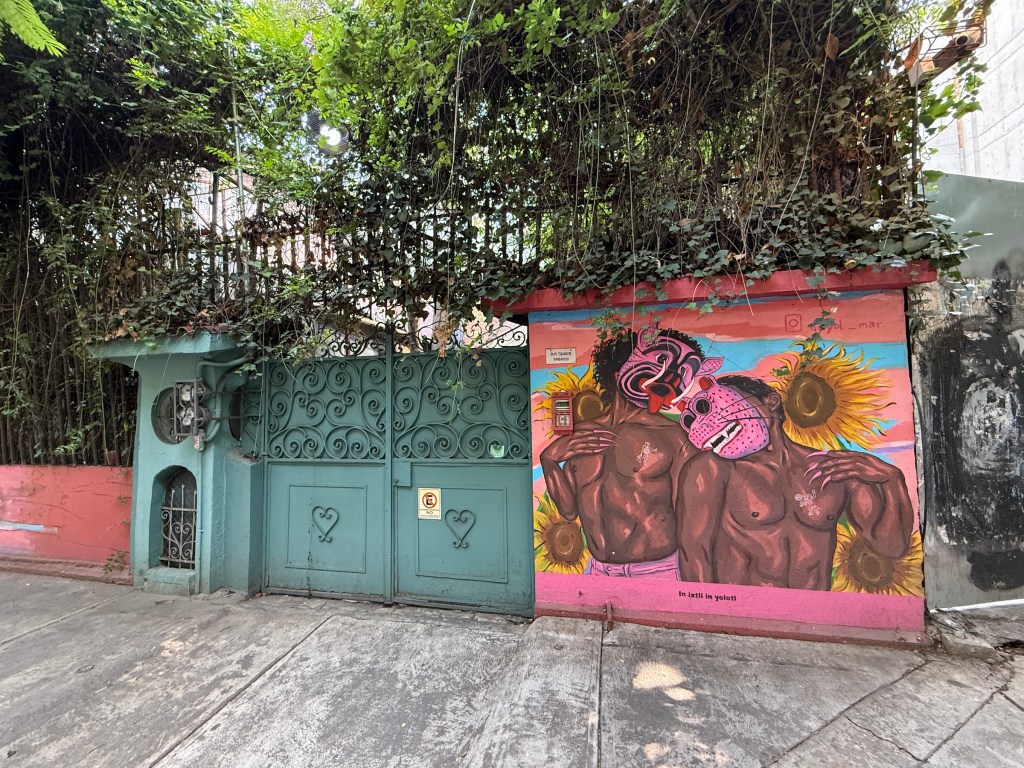
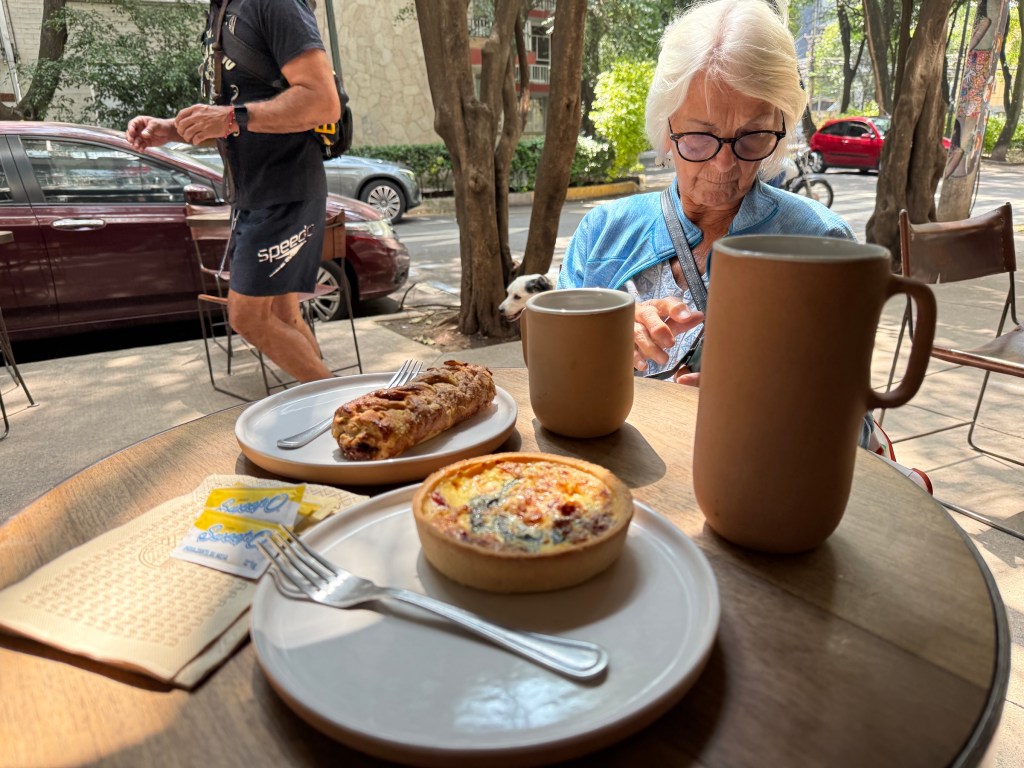
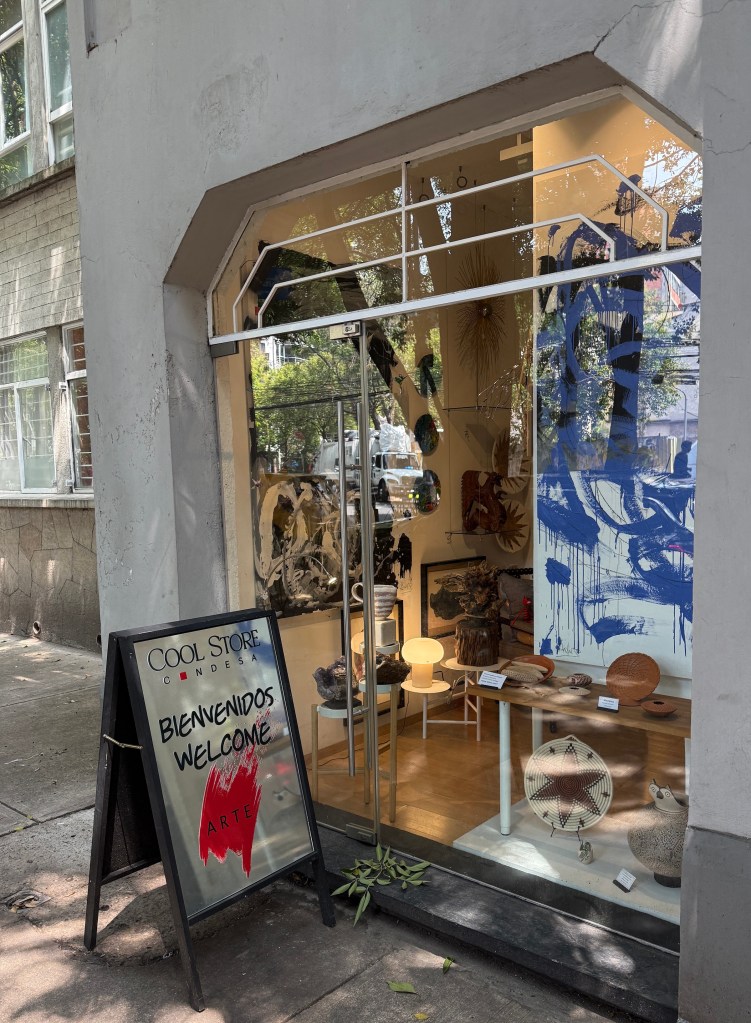
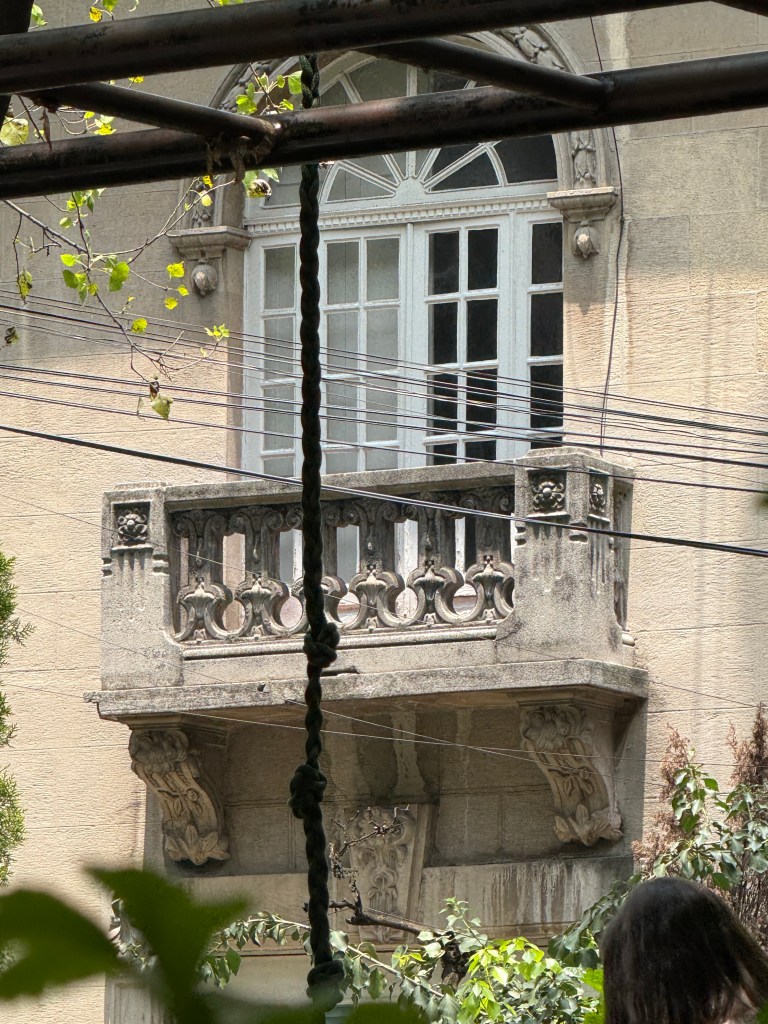
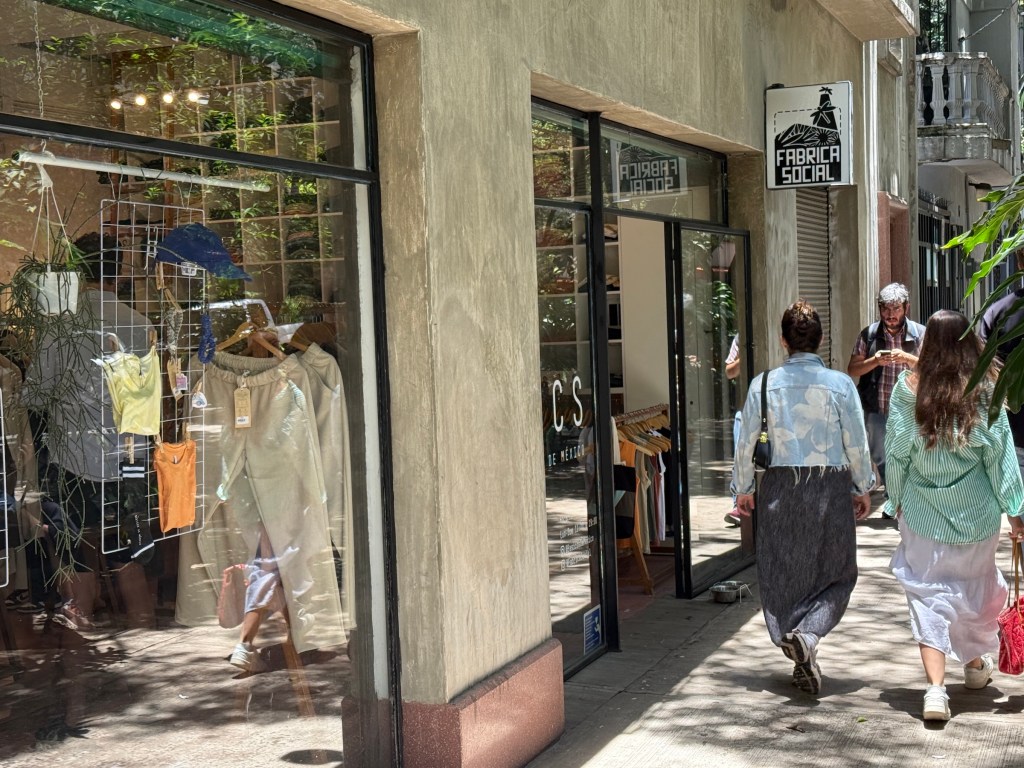
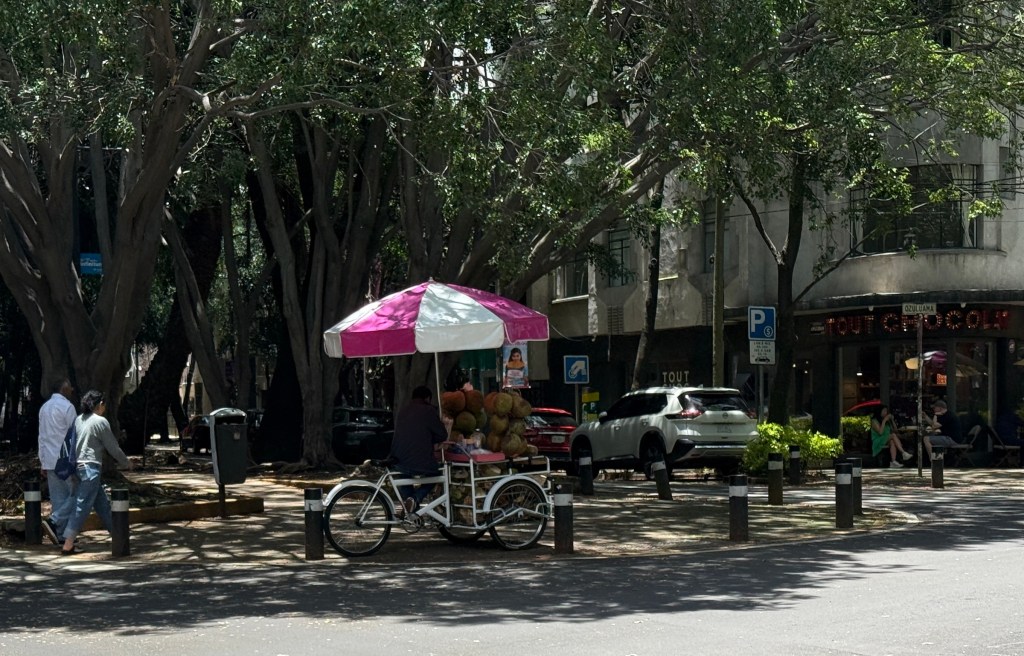
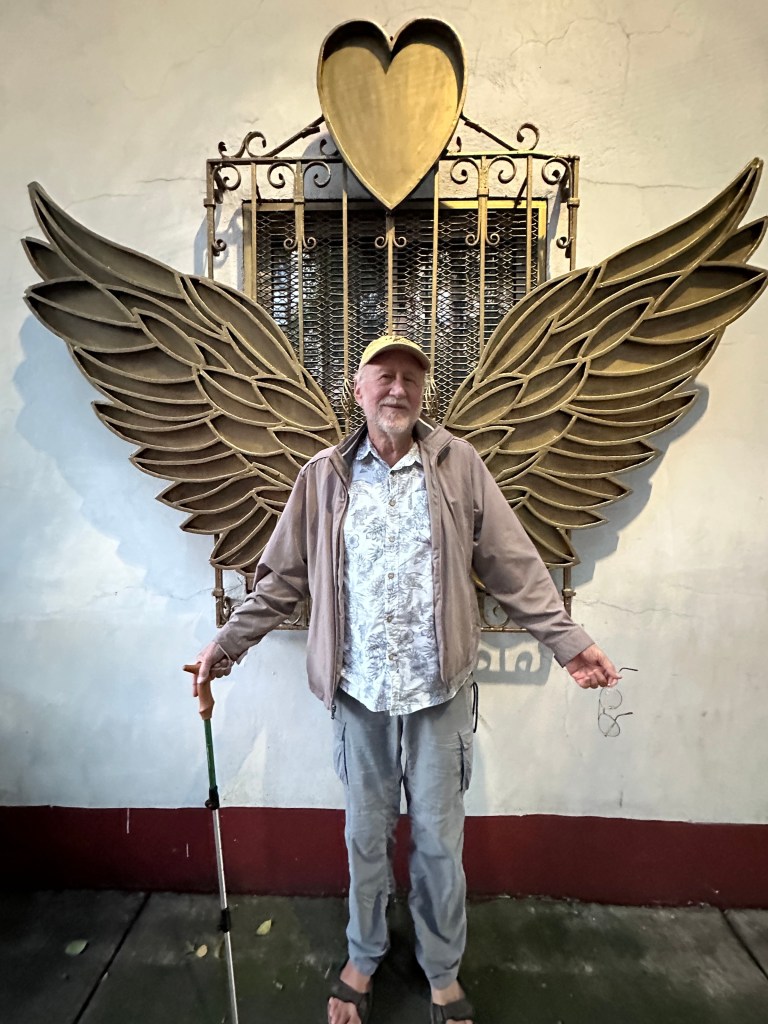
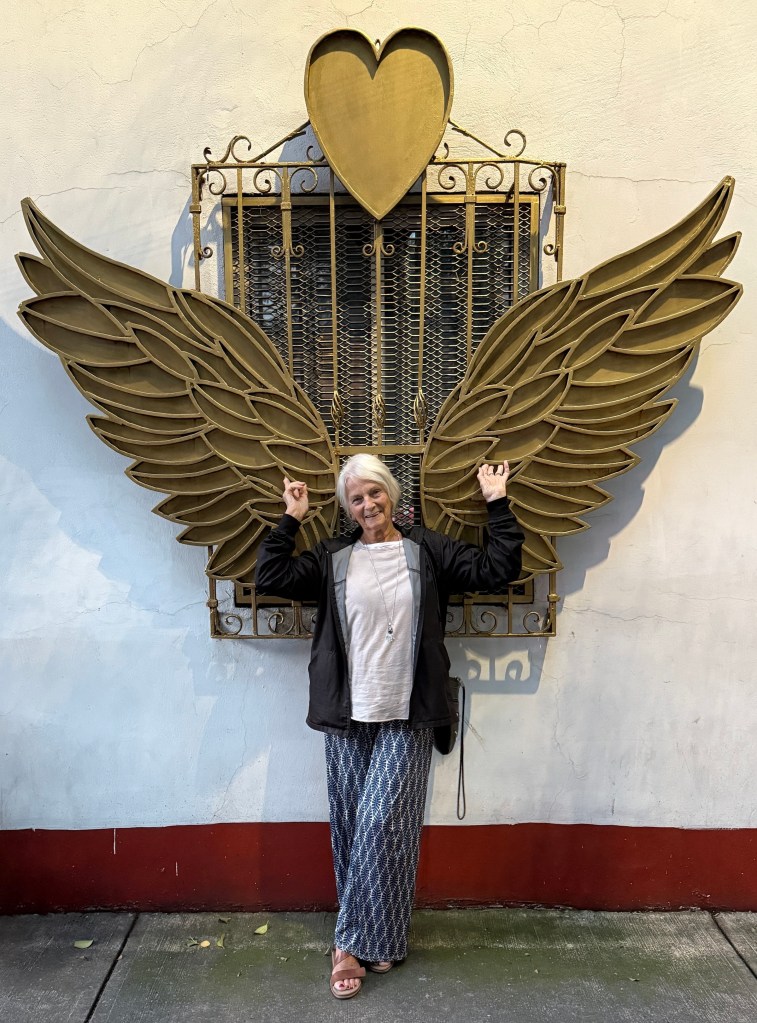
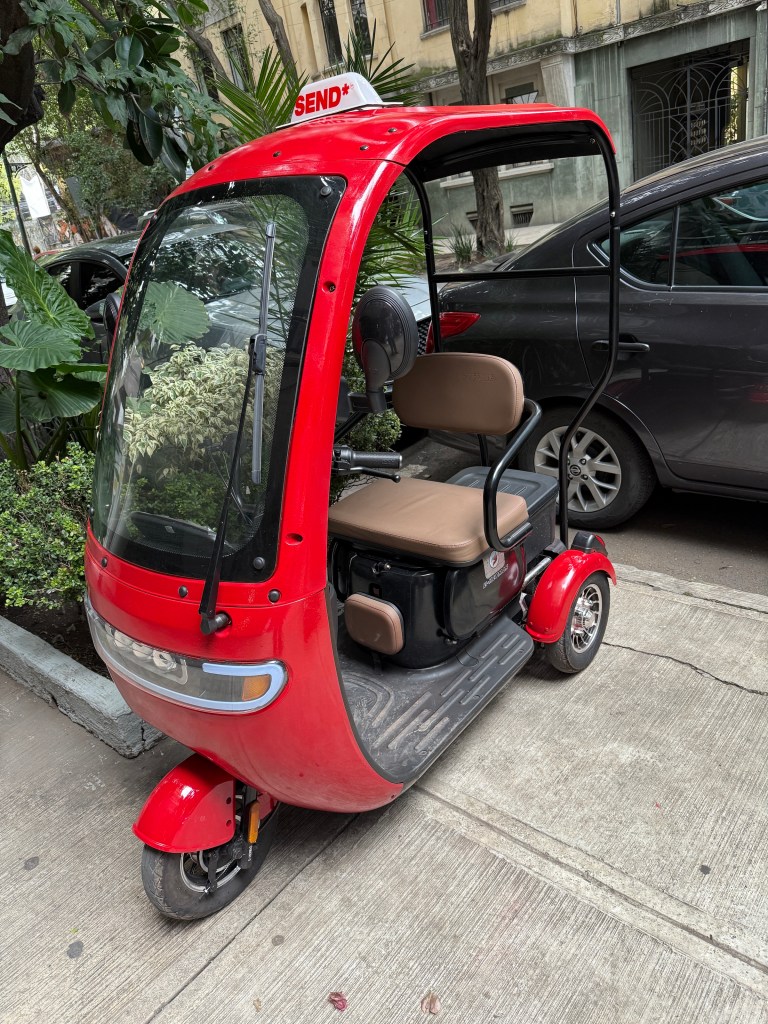
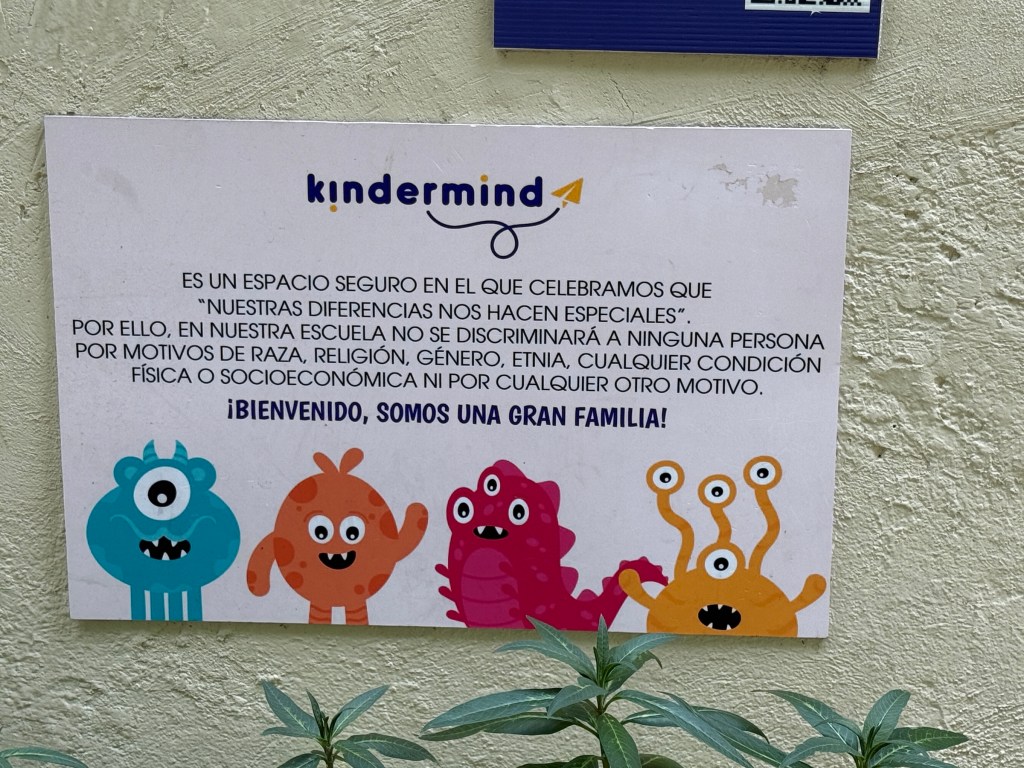
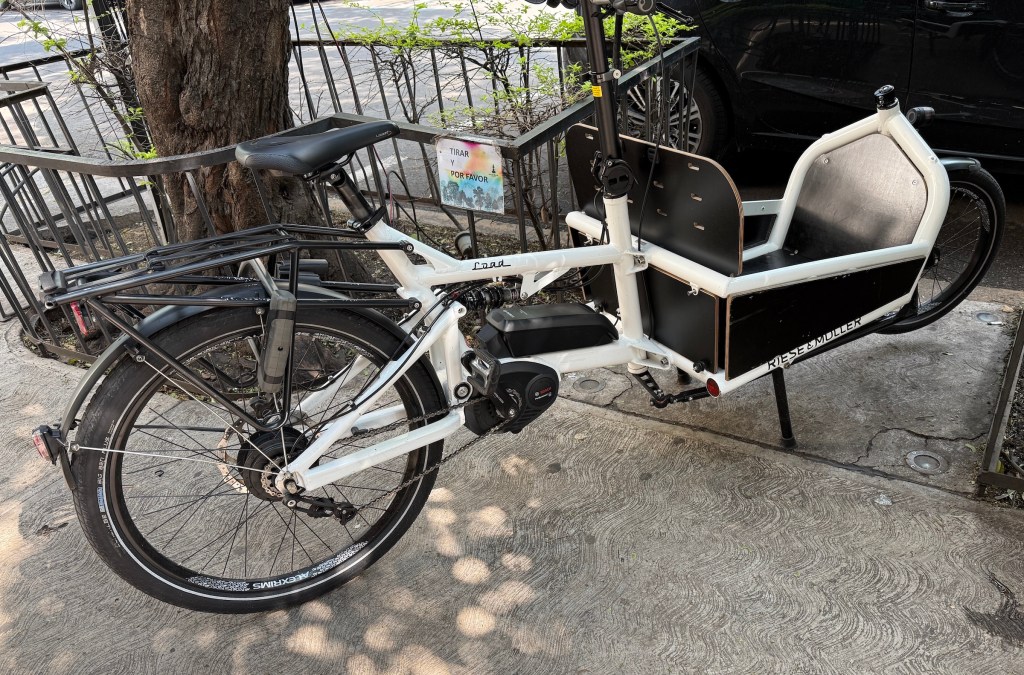
A long day like that can build up a healthy appetite, and so a stopover at Patagonia, a neighborhood joint that specializes in large portions of delicious Argentine food, would be well-deserved.
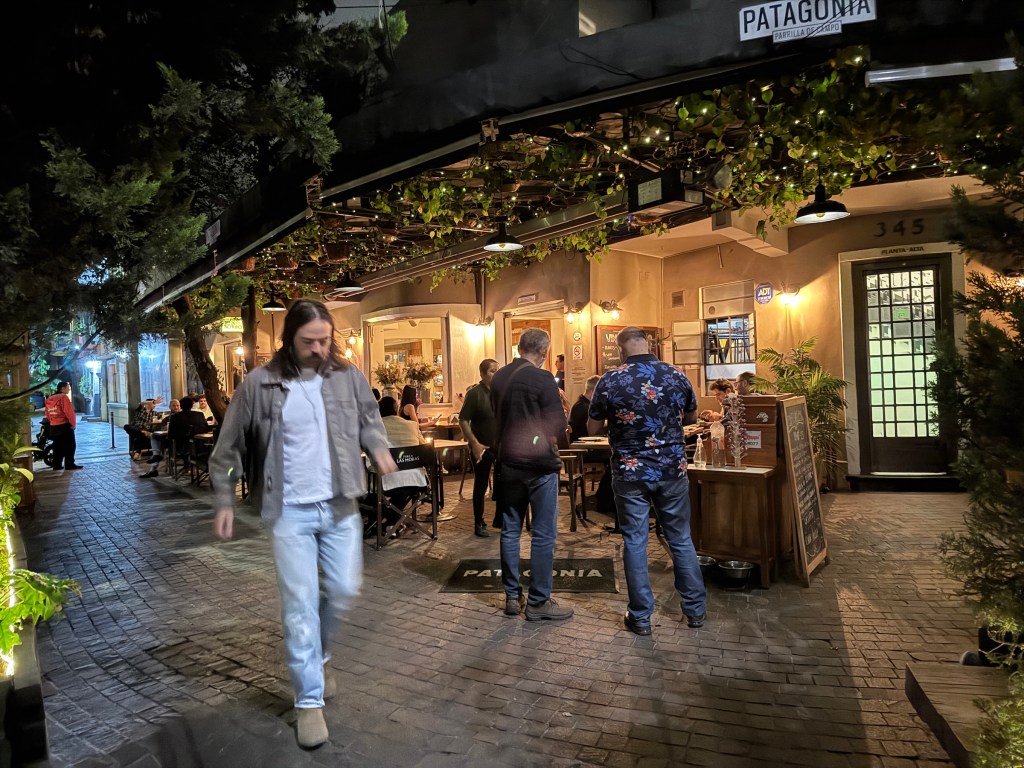
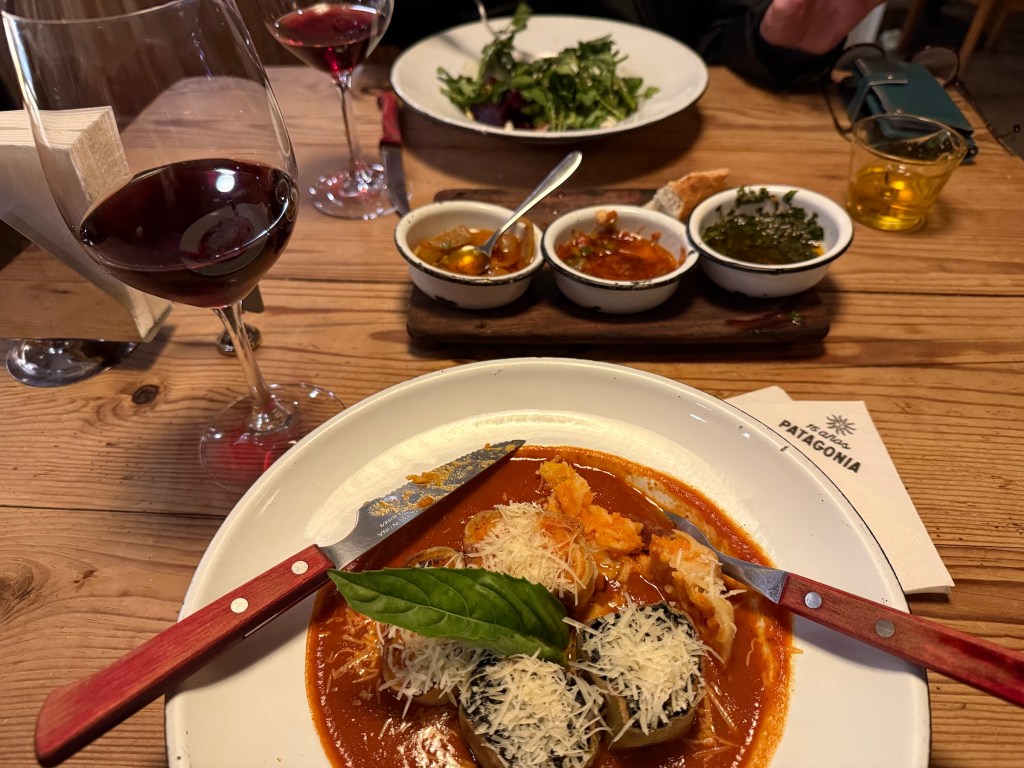
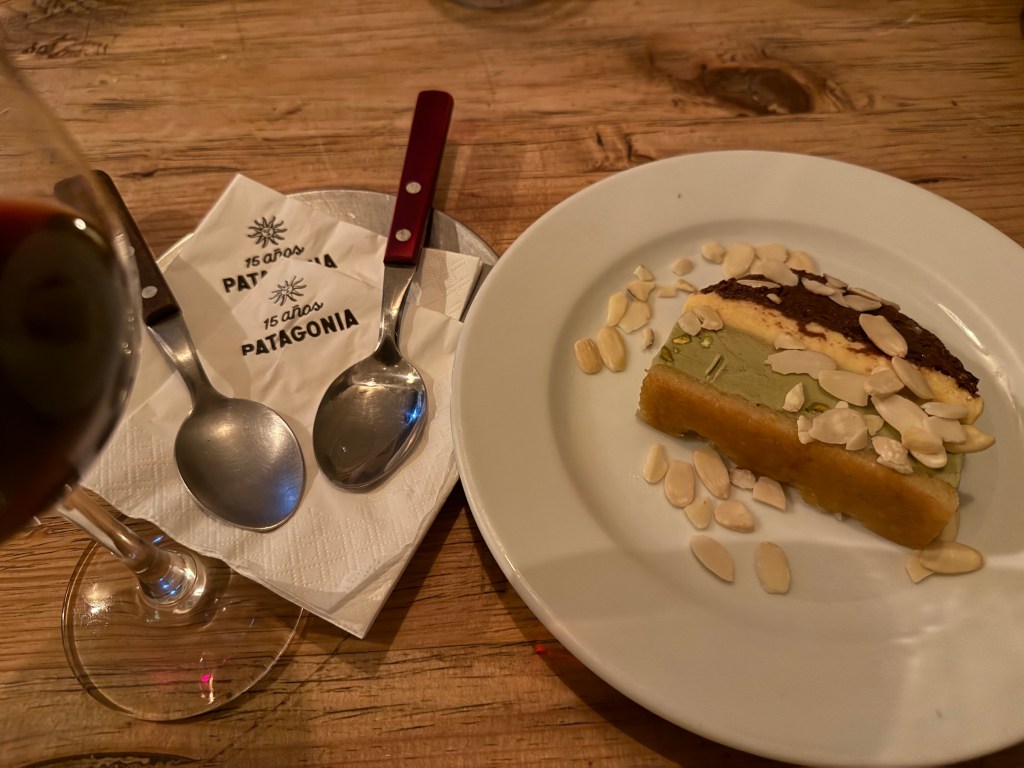
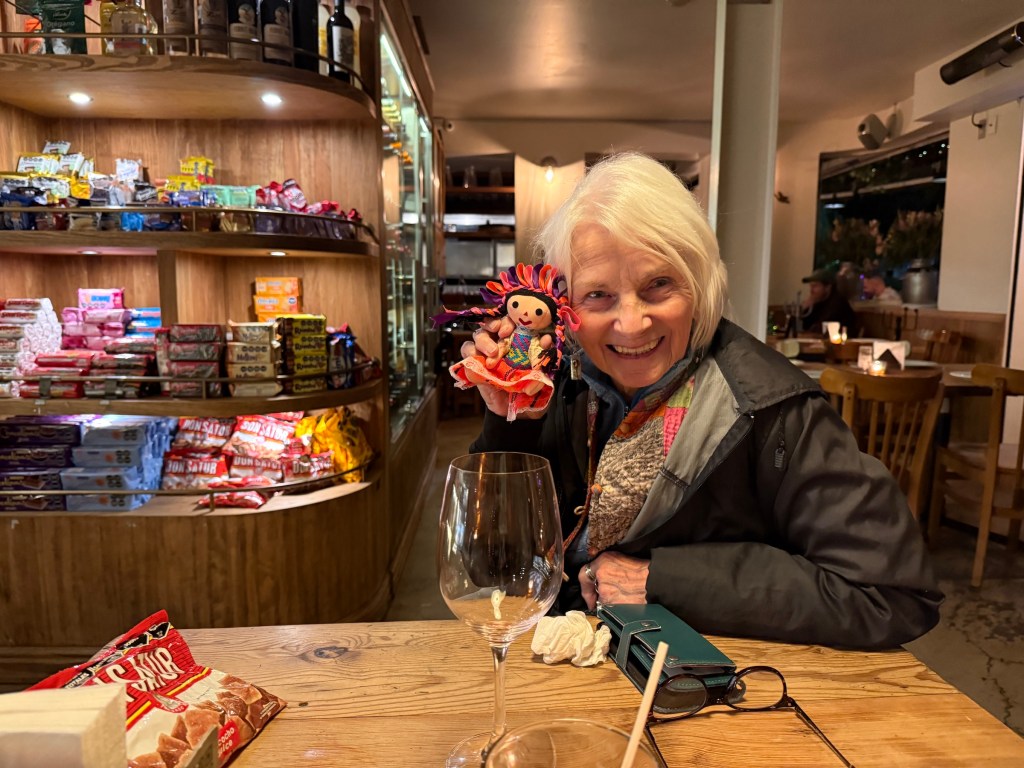
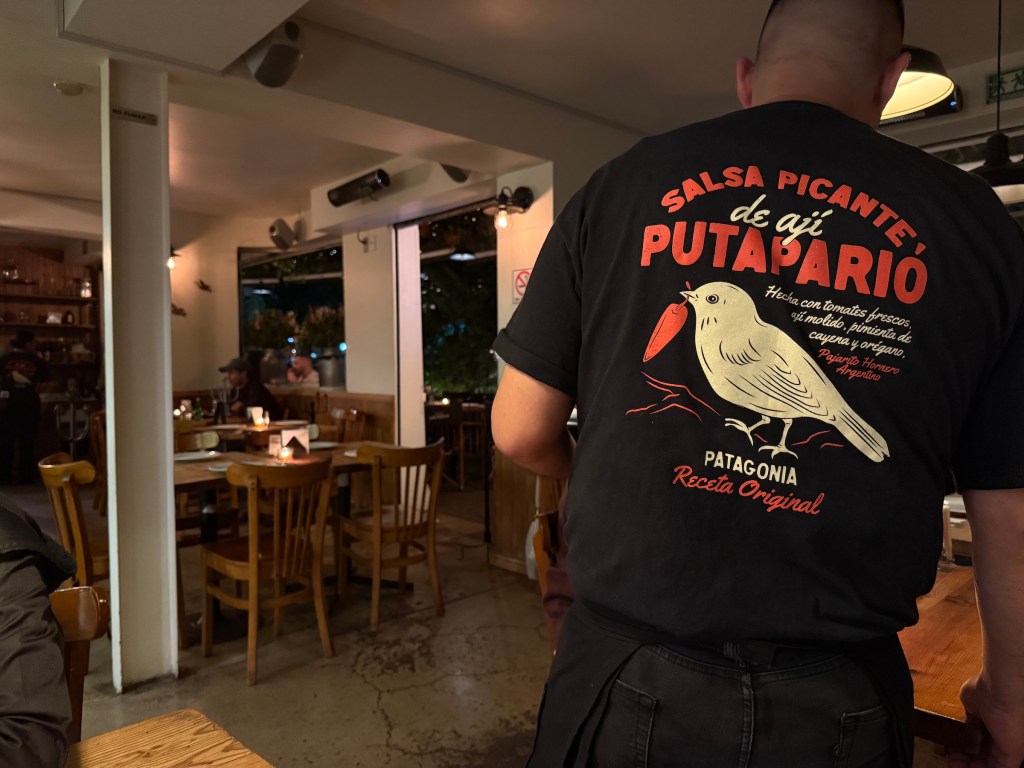
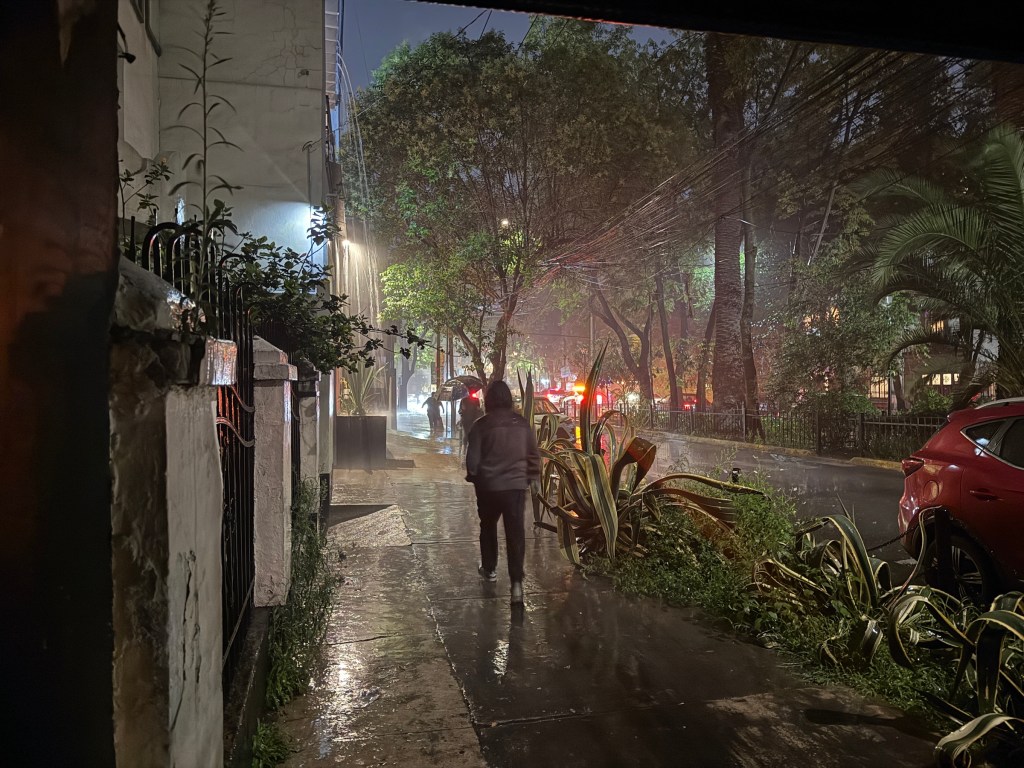
And after a hearty dinner you’re lucky that the hotel is only a block away, since it’s pouring down rain outside! Try to think of the rainy season as ‘romantic.’
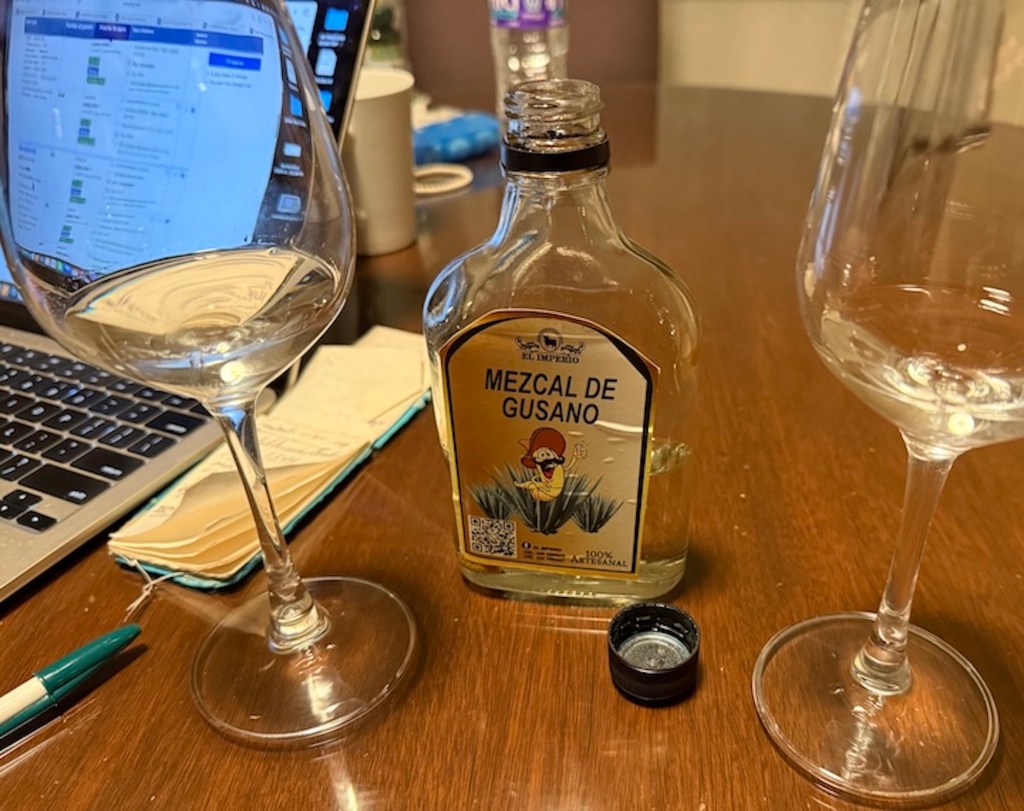
And when you finally return to your lodging after a long day of exploring the Condesa neighborhood, you might just relax with a bottle of good mezcal before bedtime.
…………………………………………………………………………………………………………..
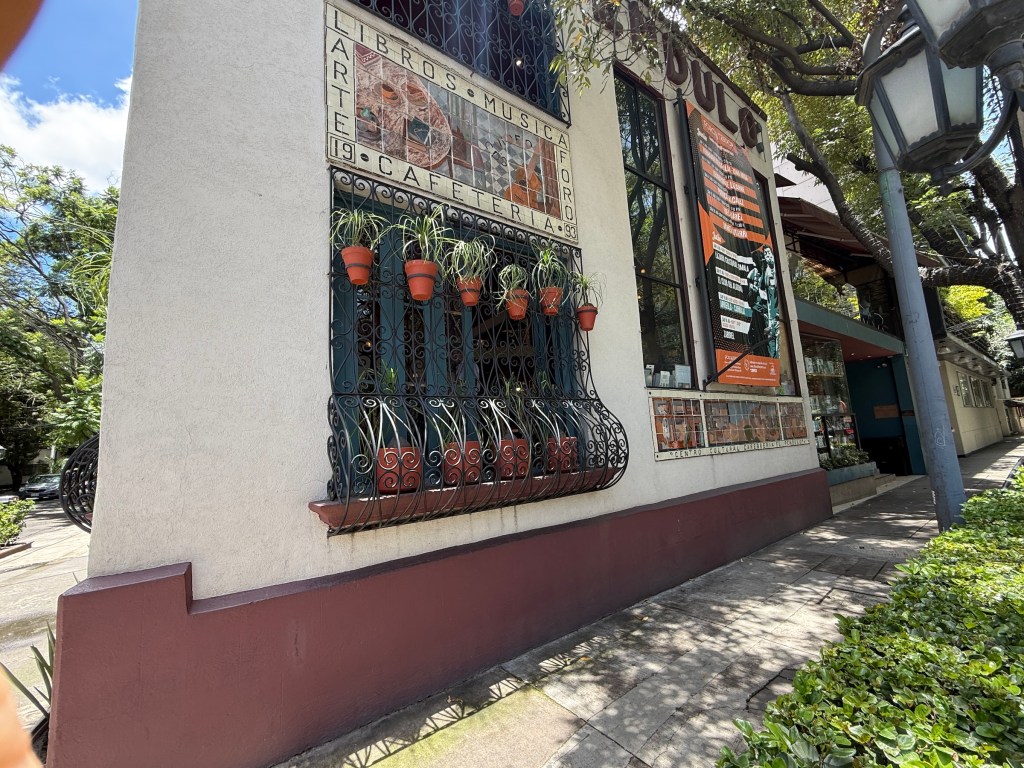
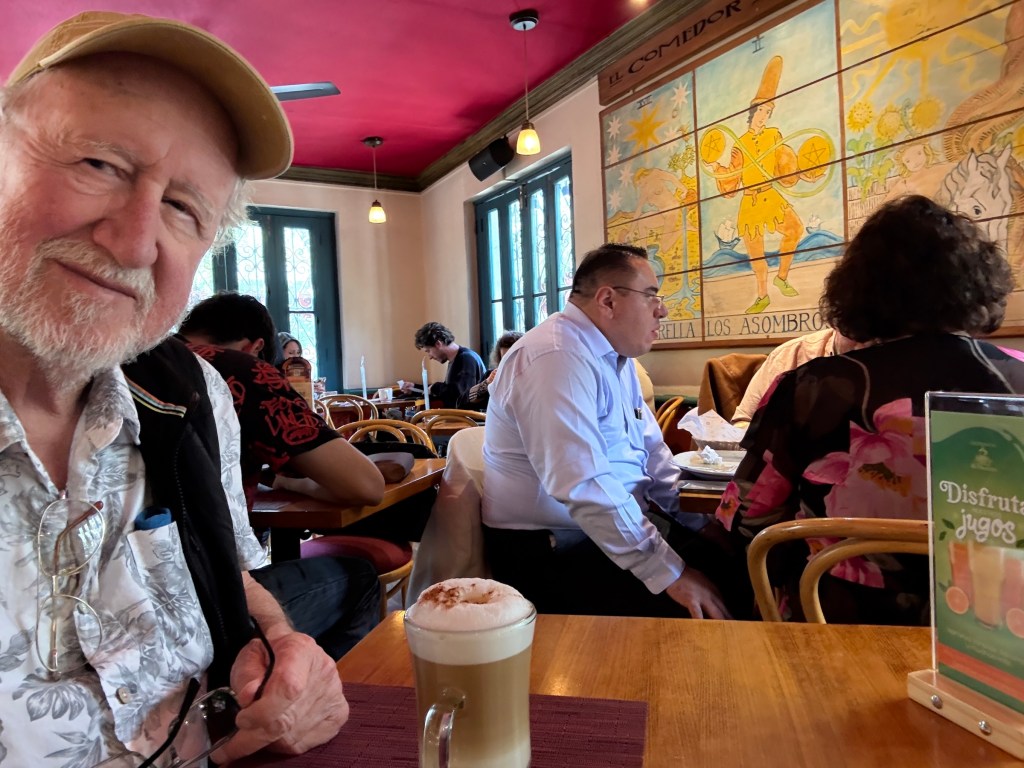
When morning breaks there’s always a good coffee shop just a few blocks away, no matter which direction we walk. One of our favorites is El Péndulo, a ‘cafebrería’ where the coffee is rich, the food is excellent, and the walls are lined with a good selection of books for sale. Many residents of Mexico City are serious readers, and that gives this city a special kind of world-class excellence. El Péndulo is a fine place to settle in over a rich cup of Joe and a good book to kick-start the morning.
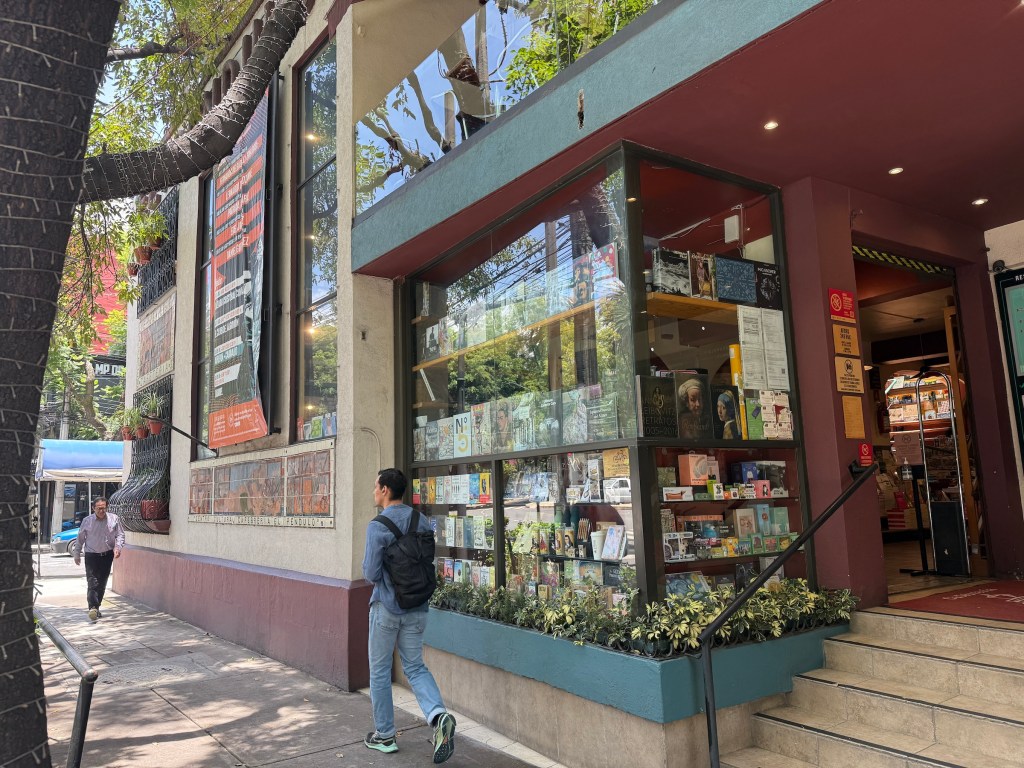
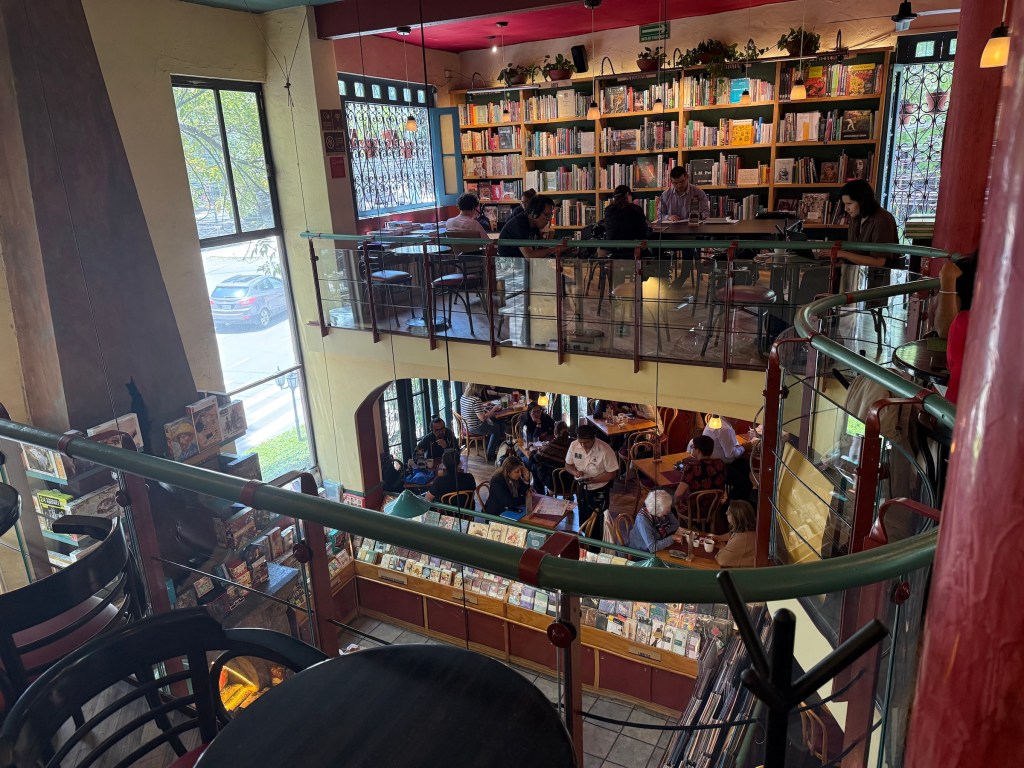
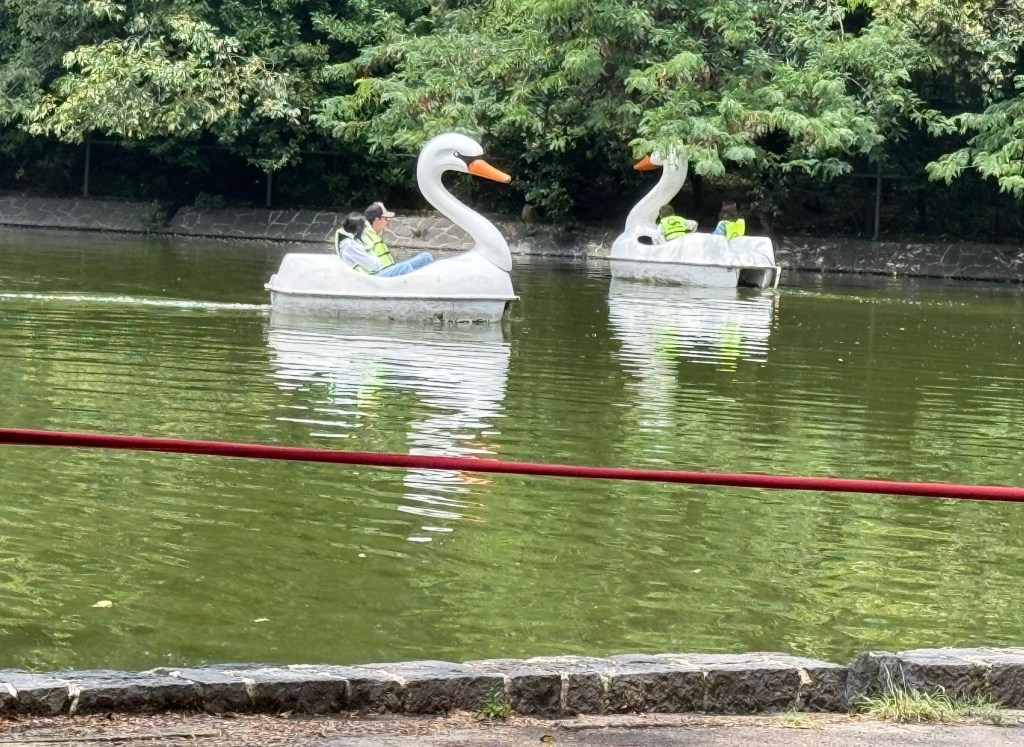
So after a fine brekkie we take the city’s efficient Metro (one of the world’s largest) to Chapultepec Park and emerge onto broad tree-lined Avenida del la Reforma. From here we’re just a short walk to the park entrance and the lakeside Porrúa bookstore, another place that also dispenses rich coffee and good lunch munchies. It’s a pleasure to hang out over coffee, watching herons fishing the shore while humans paddle by.
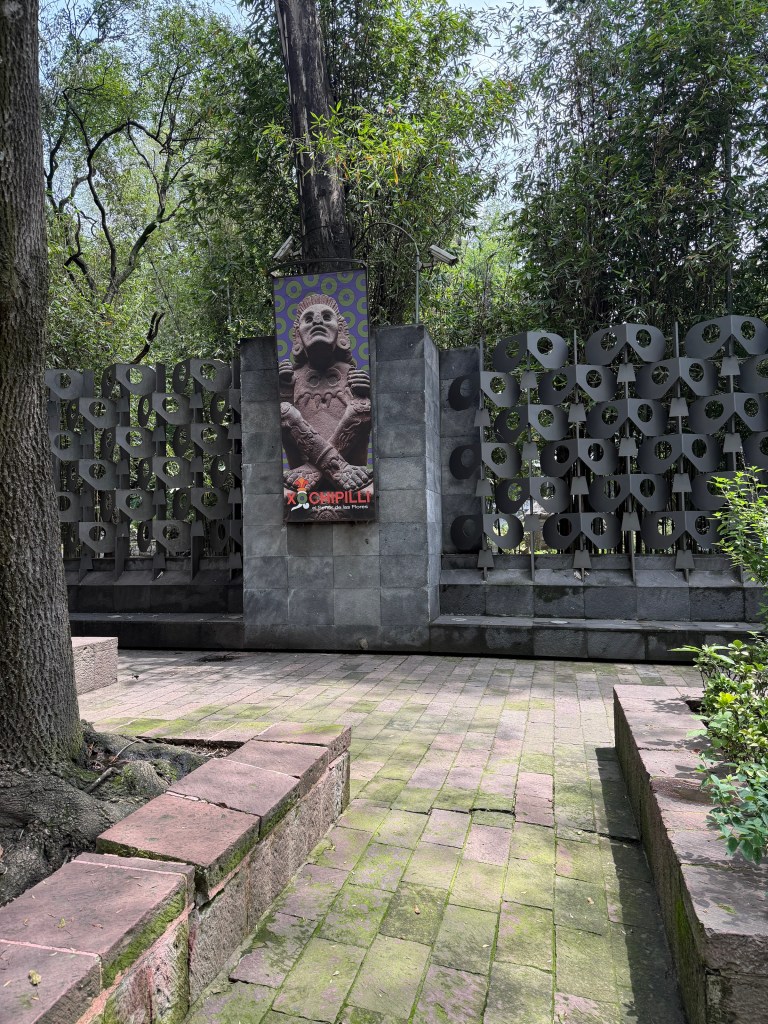
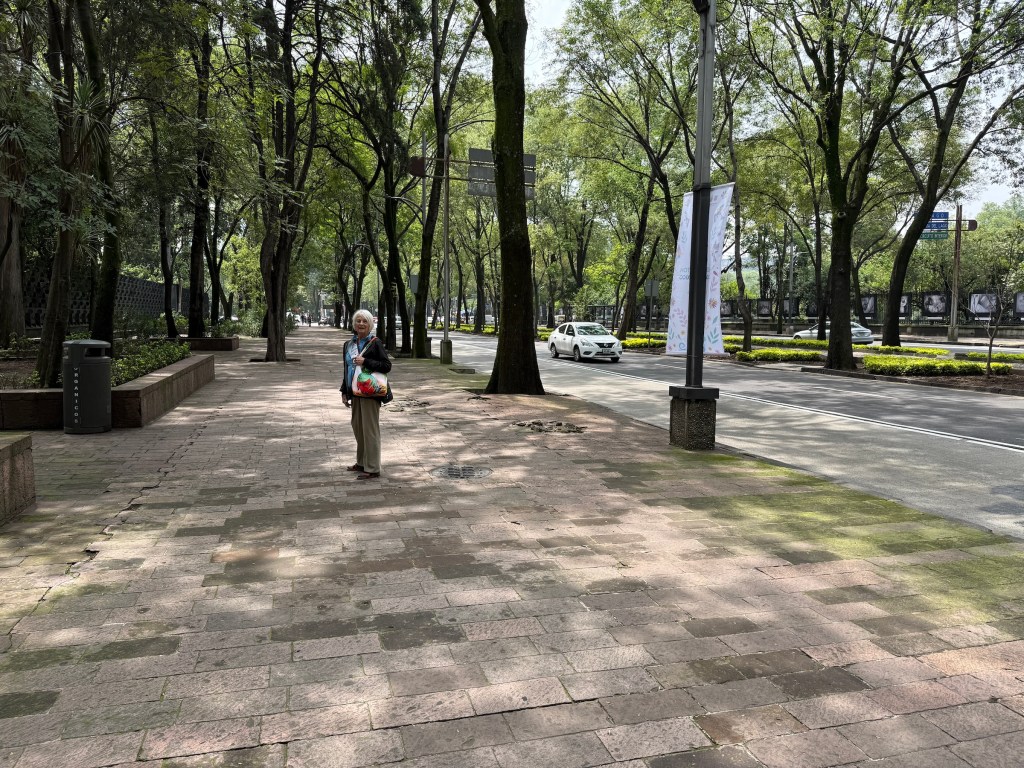
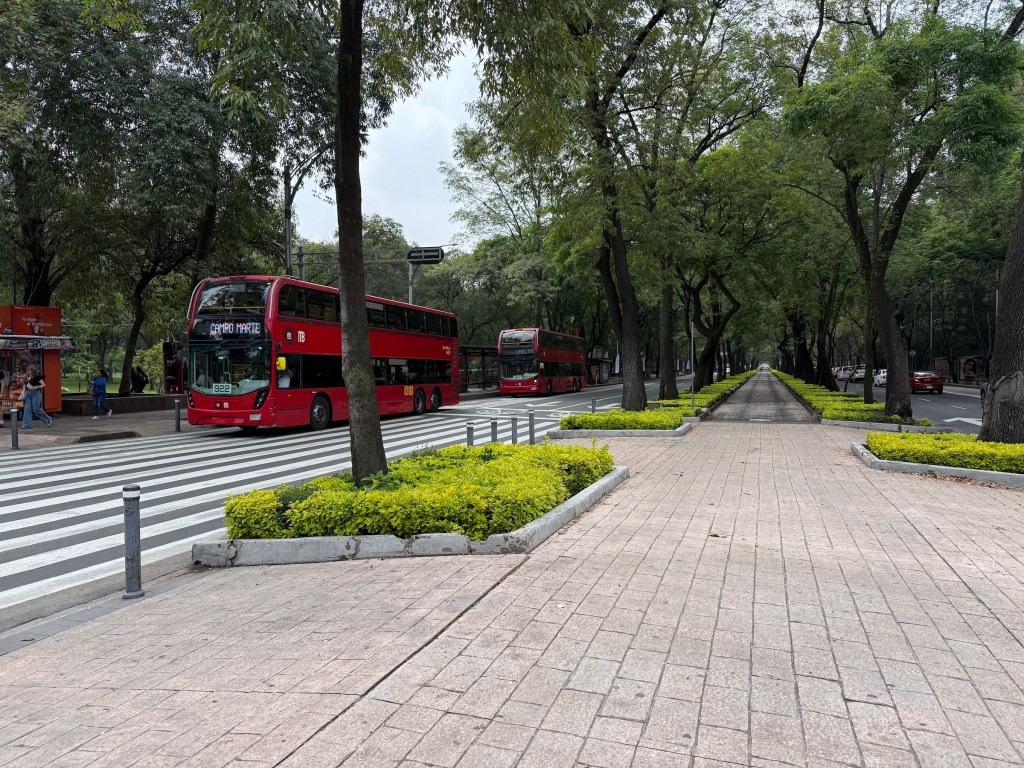
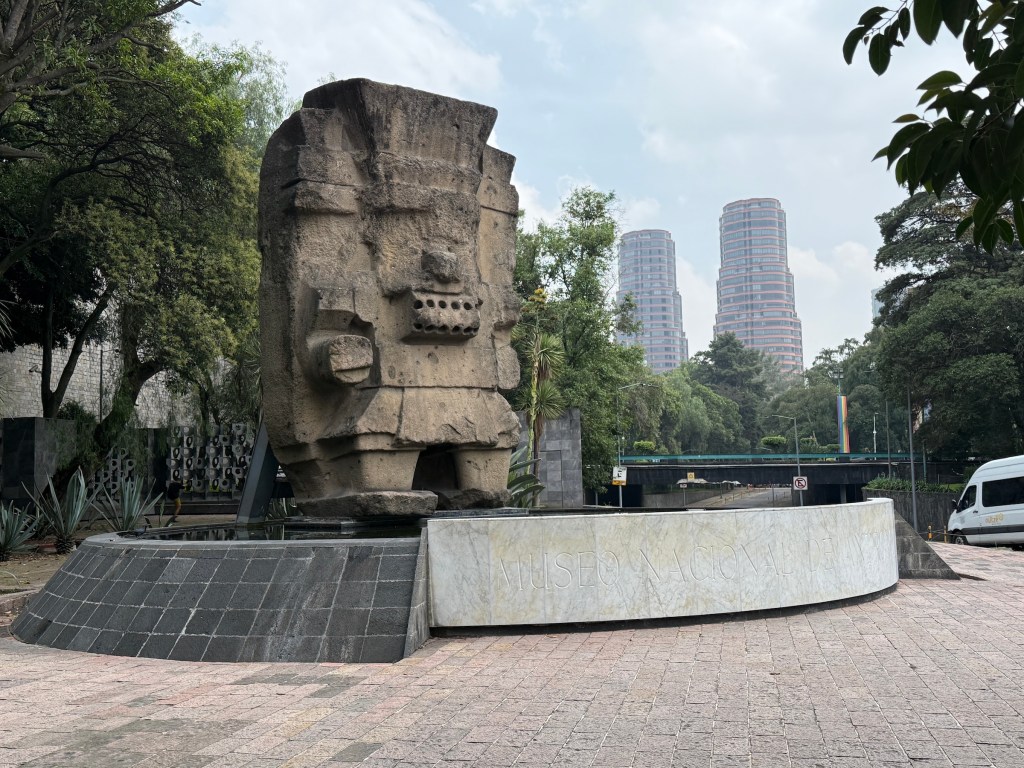
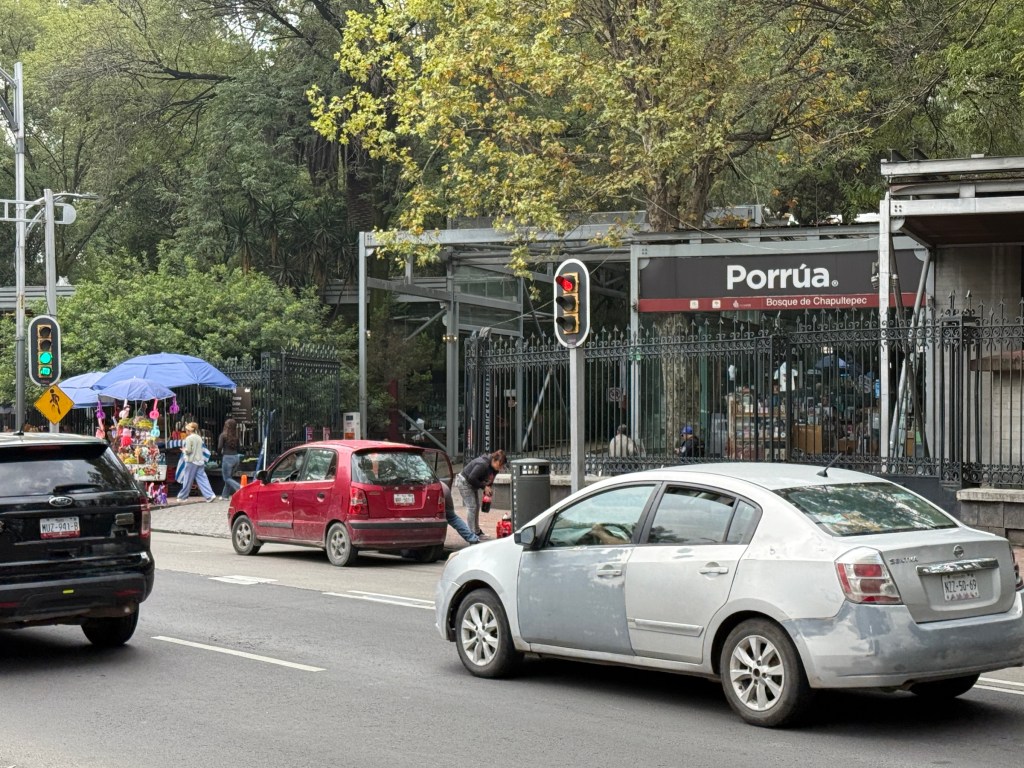
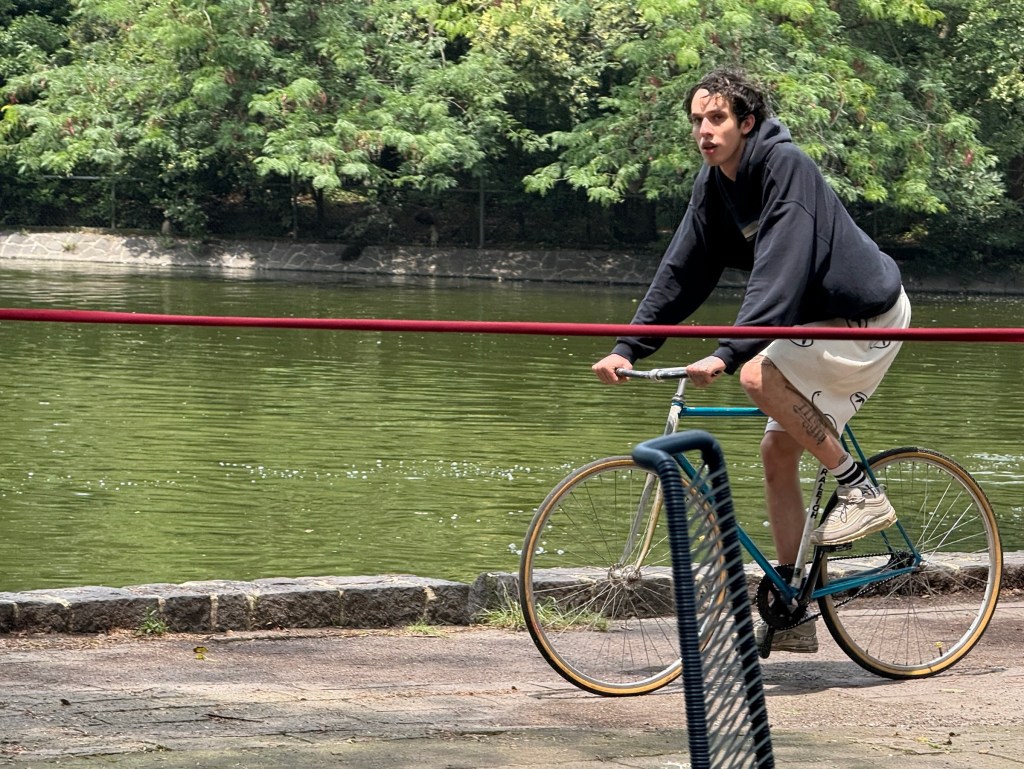
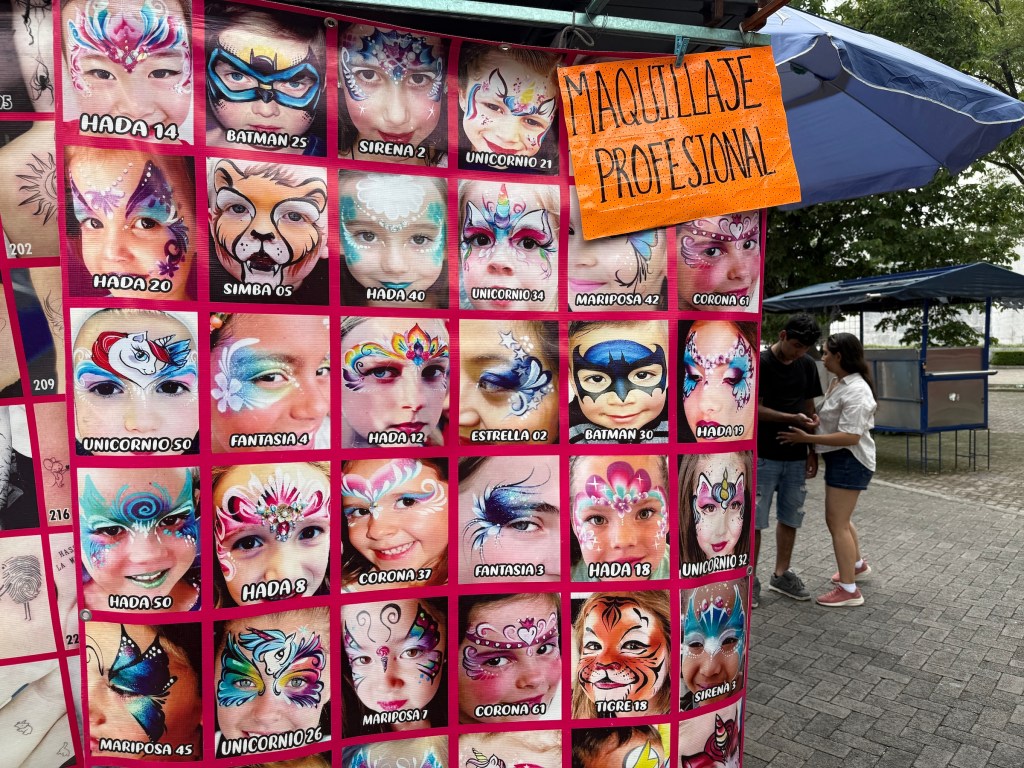
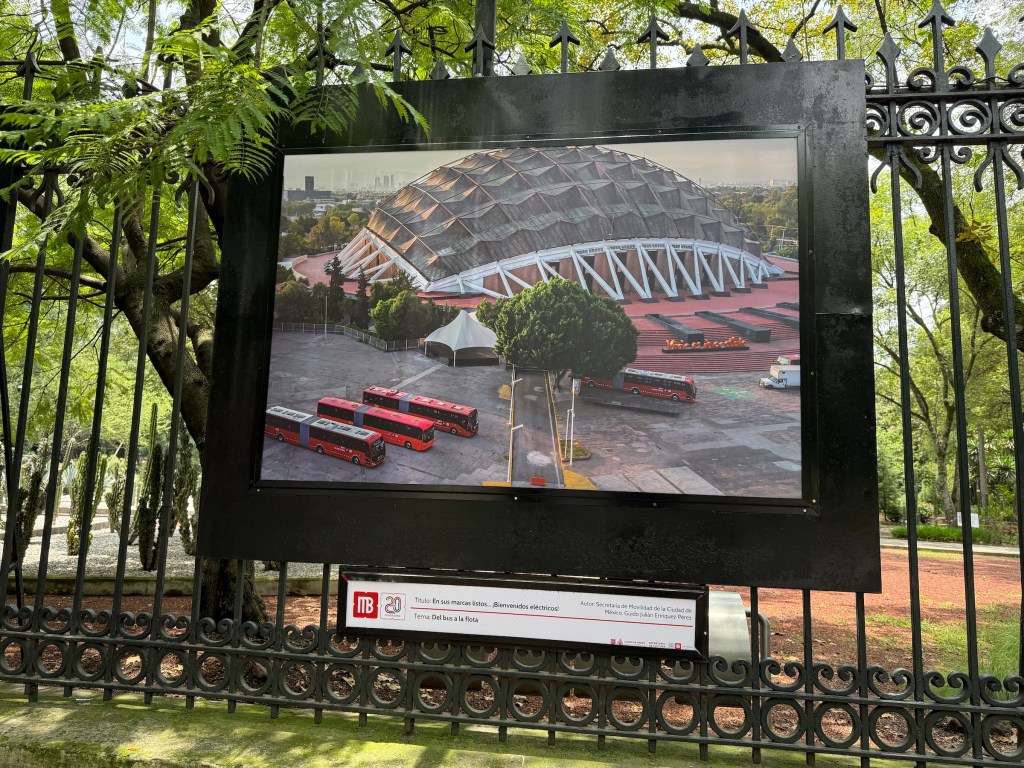
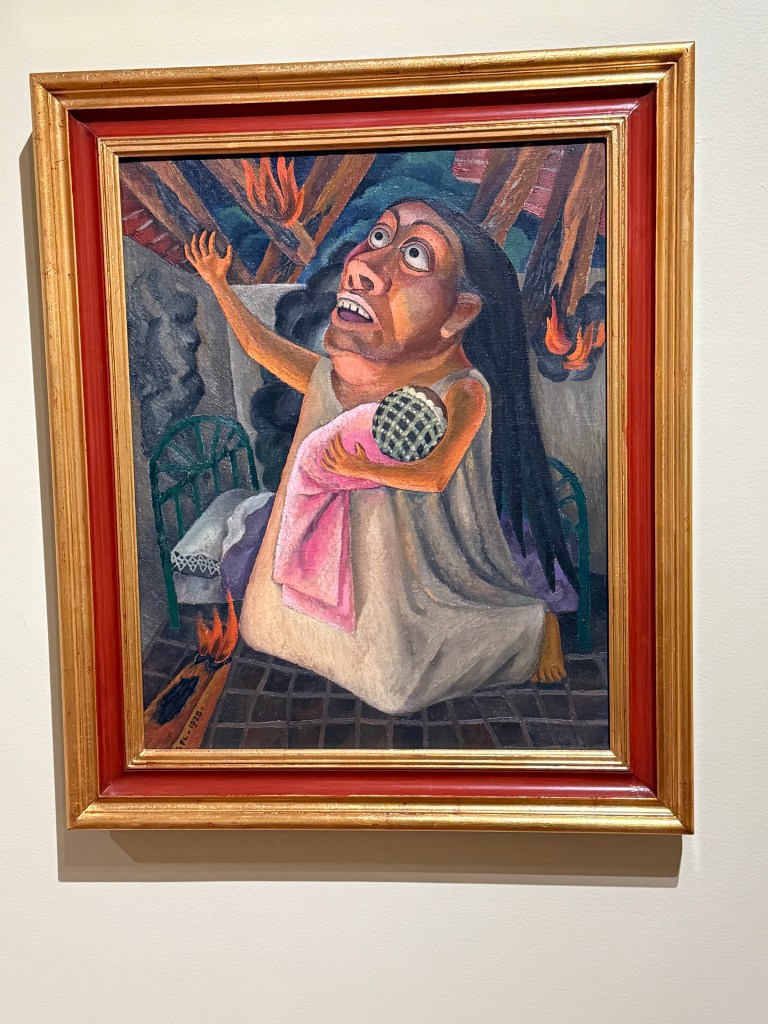
This sprawling and leafy park is one of the city’s many pulmones, or ‘lungs’ to help counteract the pollution. It’s also the home to several important museums, and today we’re heading past photo displays and vendors to the Museo de Arte Moderno to see what’s on the walls lately.
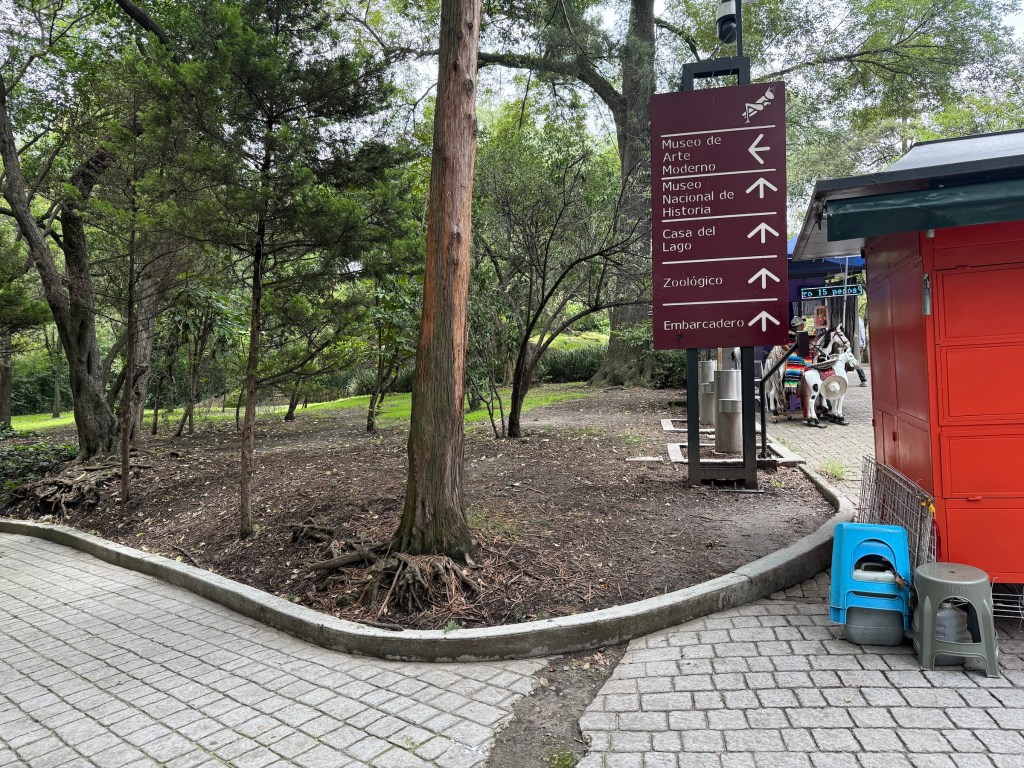
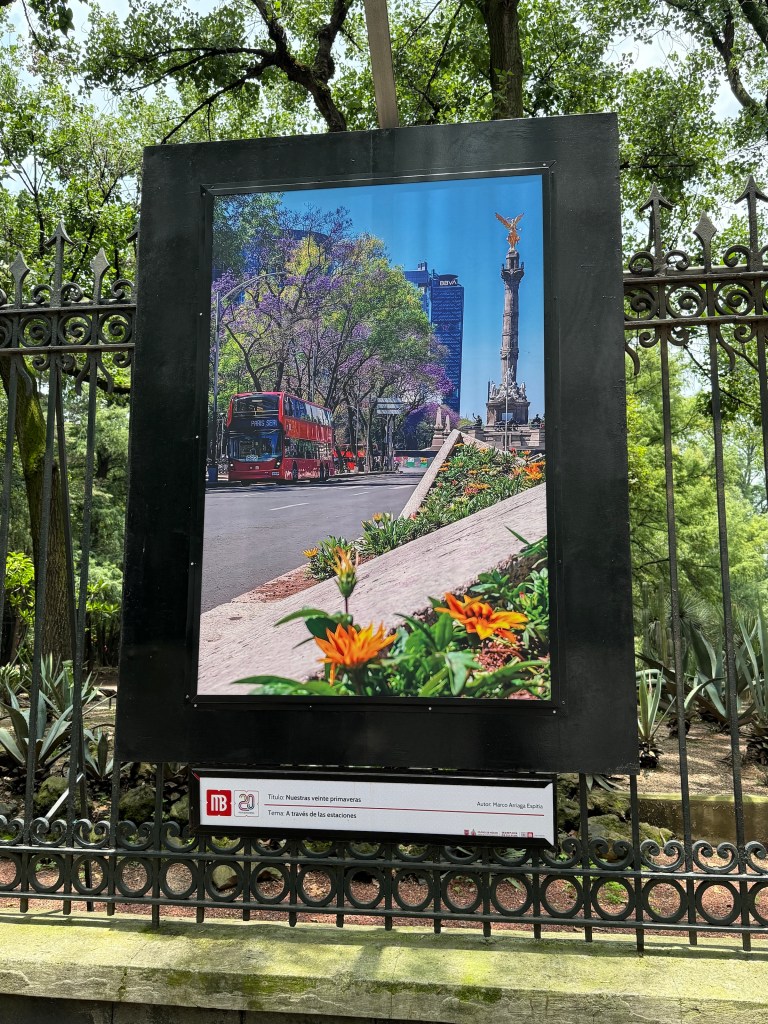
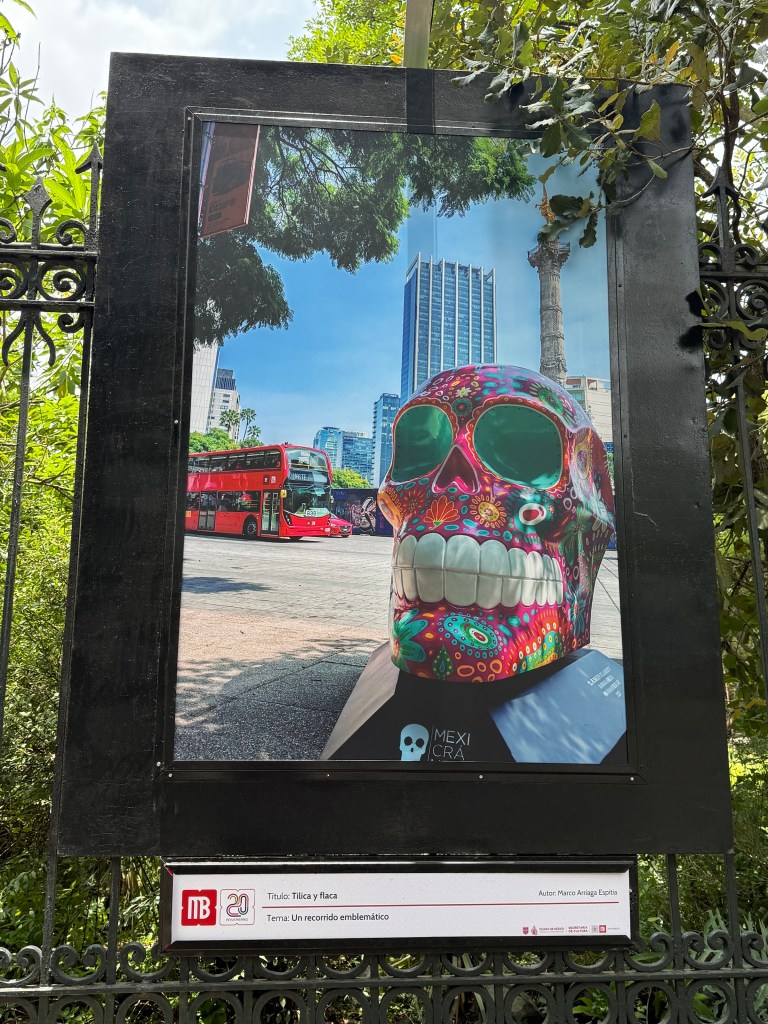
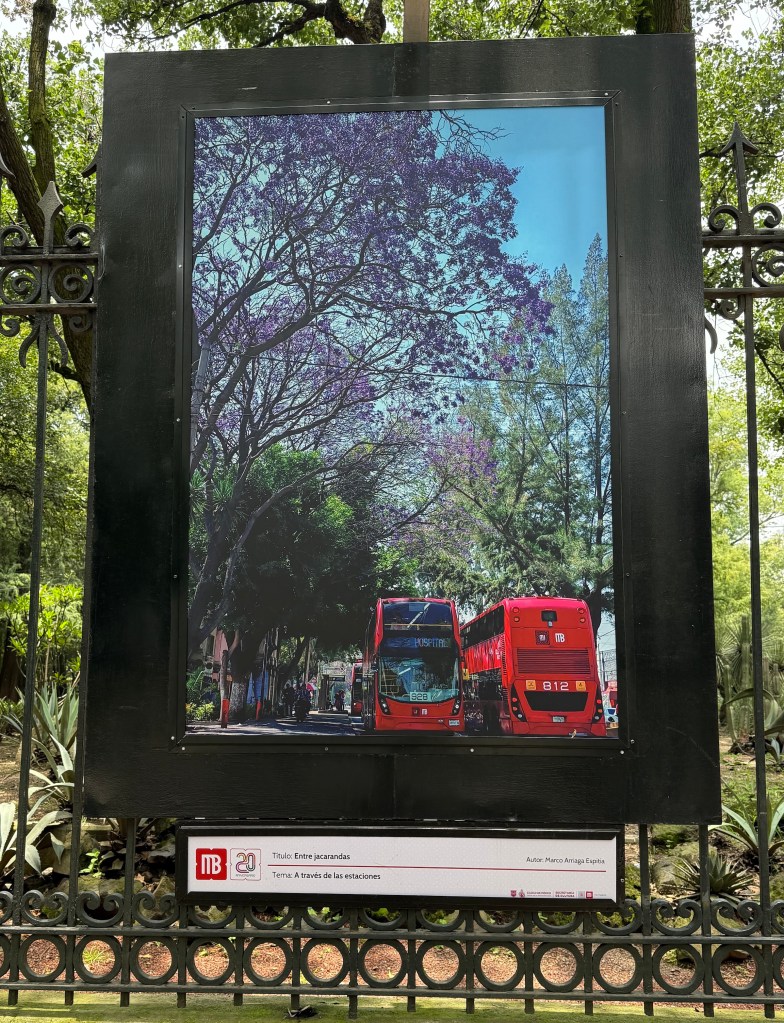
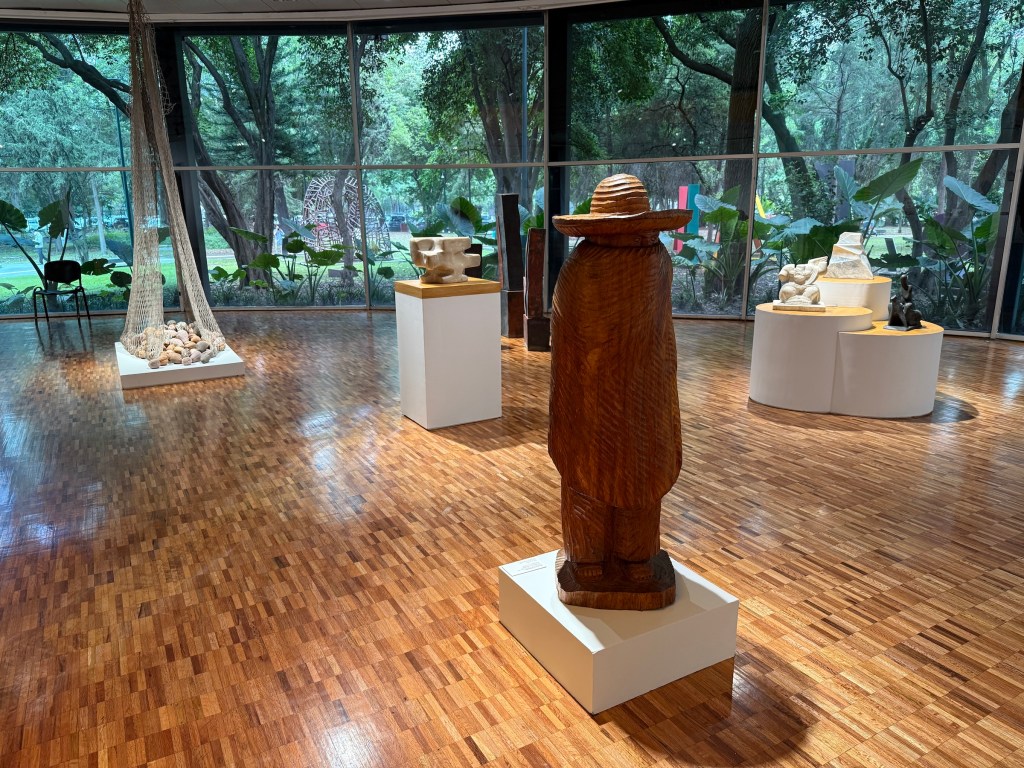
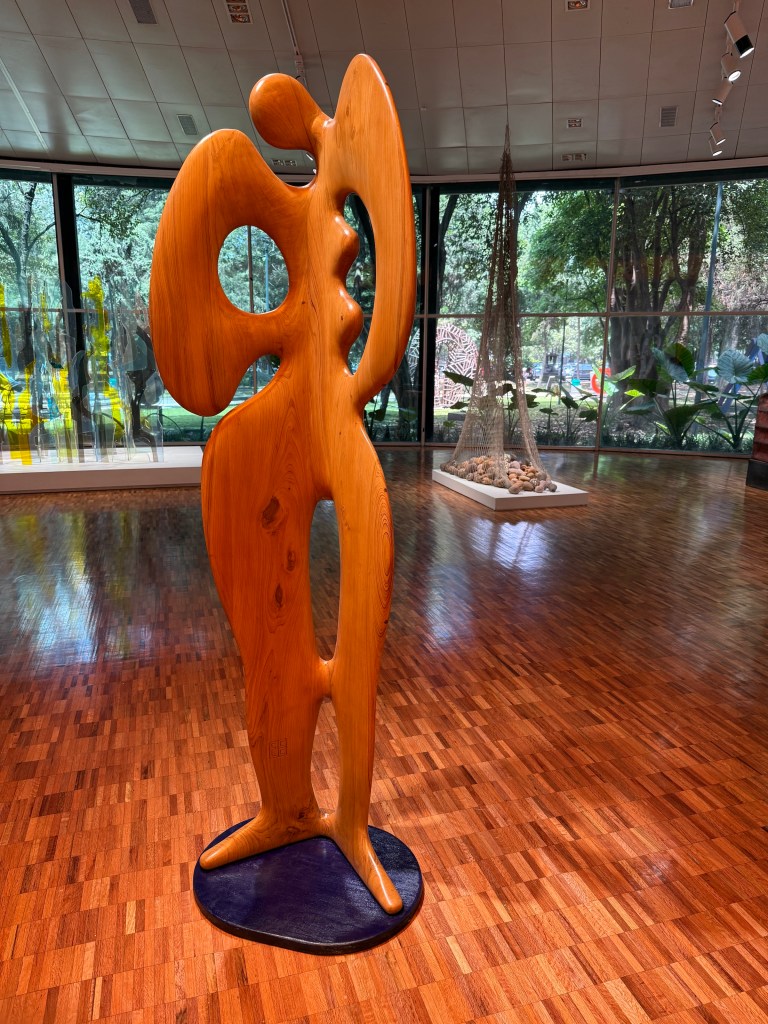
This is a modernist museum-in-the-round of several floors with views radiating out into the surrounding sculpture gardens. And there’s some compelling stuff inside.
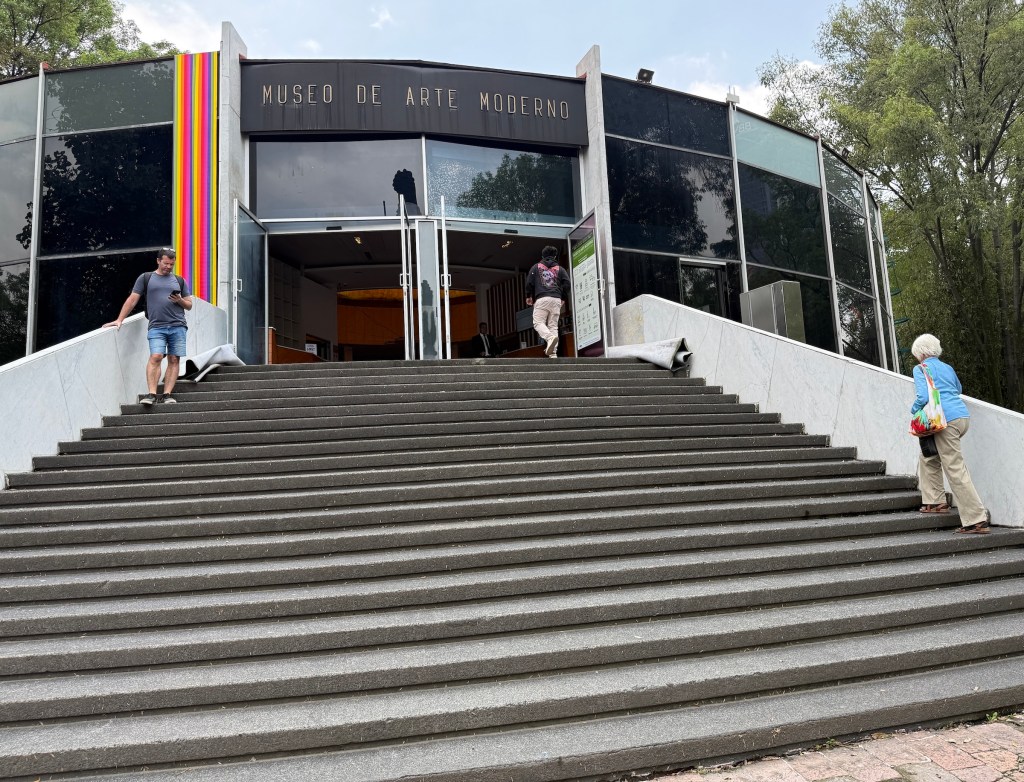
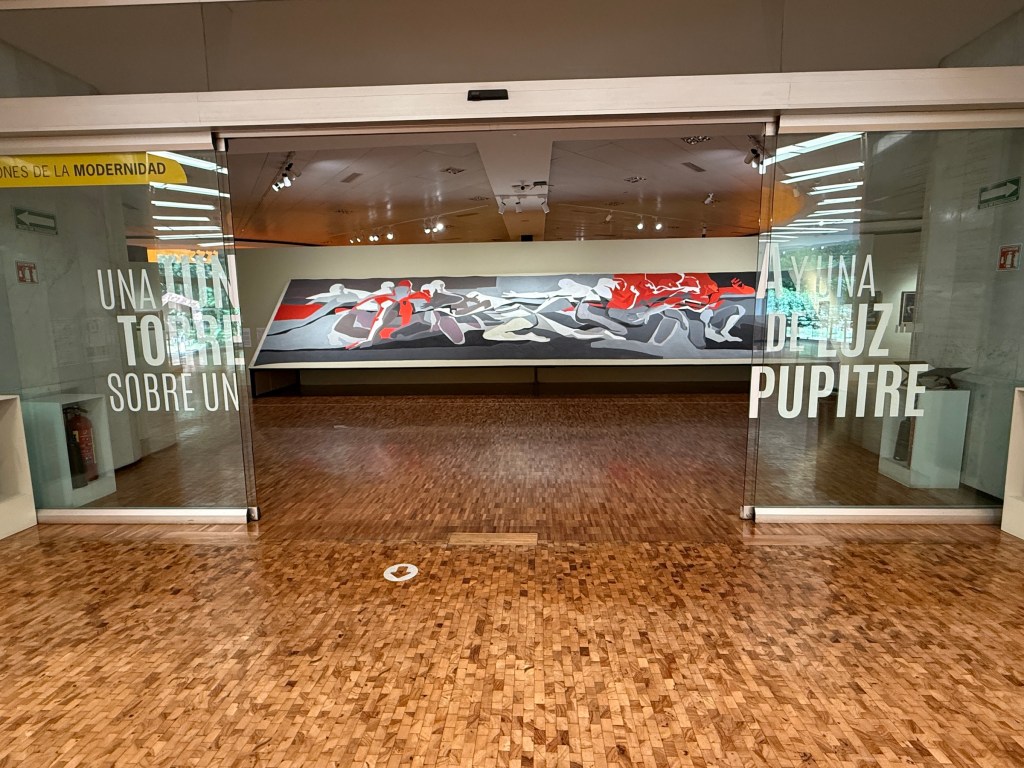
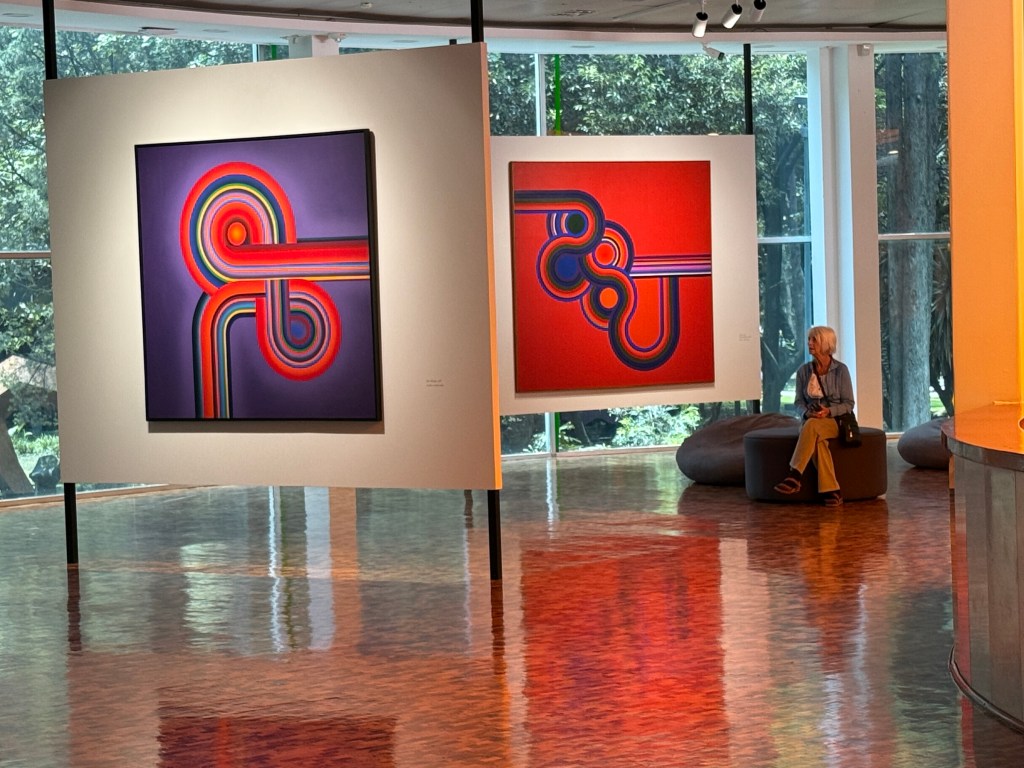
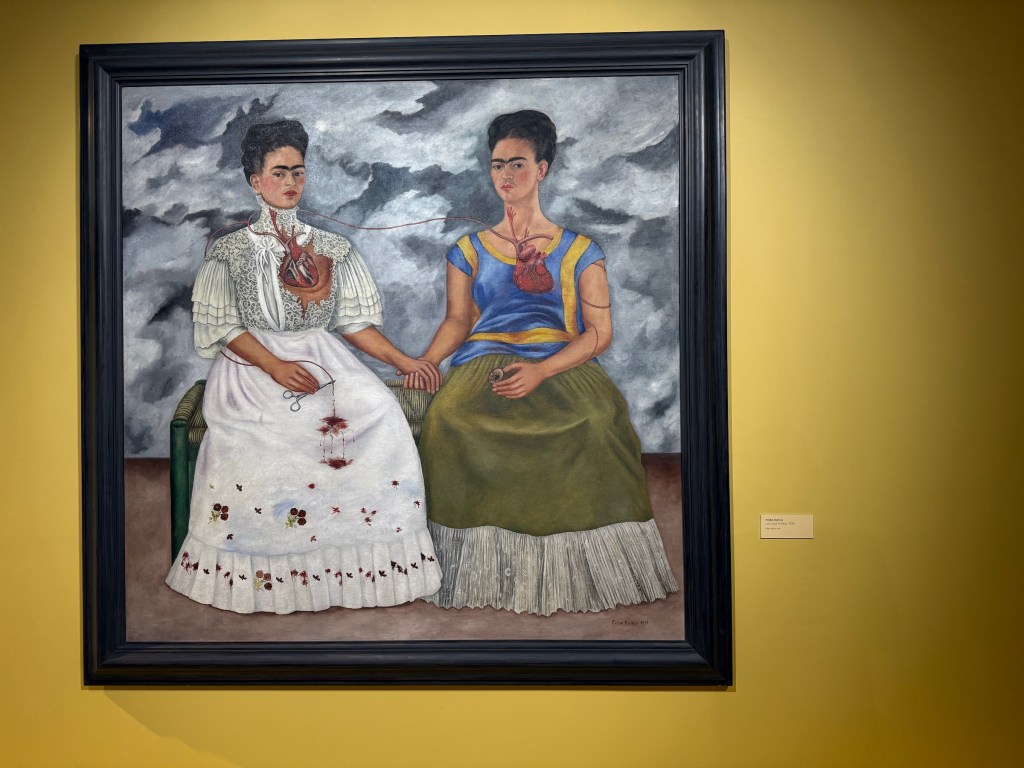
One of the main events here is surely the famous and troubling “Las Dos Fridas” (1939) by Frida Kahlo. Art historians have noted that the bicultural depiction of a European Frida on the left in Victorian dress, and the native Mexican Frida in Tehuana dress on the right show Frida’s own bicultural background – her father was a German immigrant and her mother was a Mexican woman. And the blood spilling down her white victorian dress is in stark contrast to the strong Tehuana side of her heritage. At any rate Frida’s work always gives us much to consider.
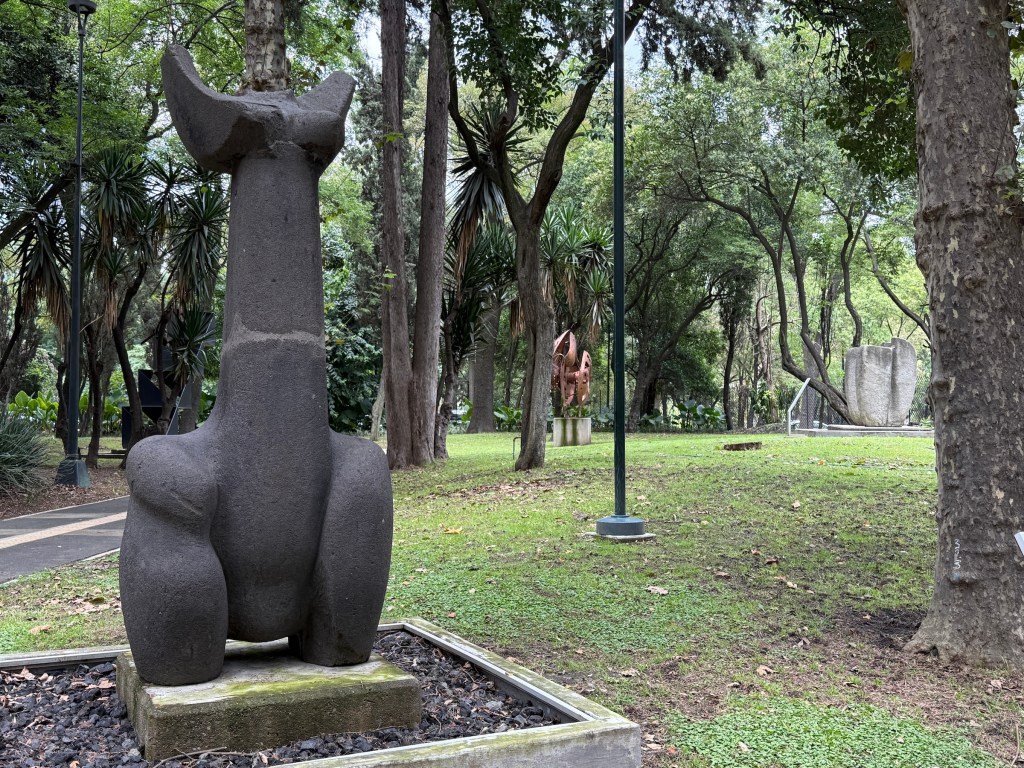
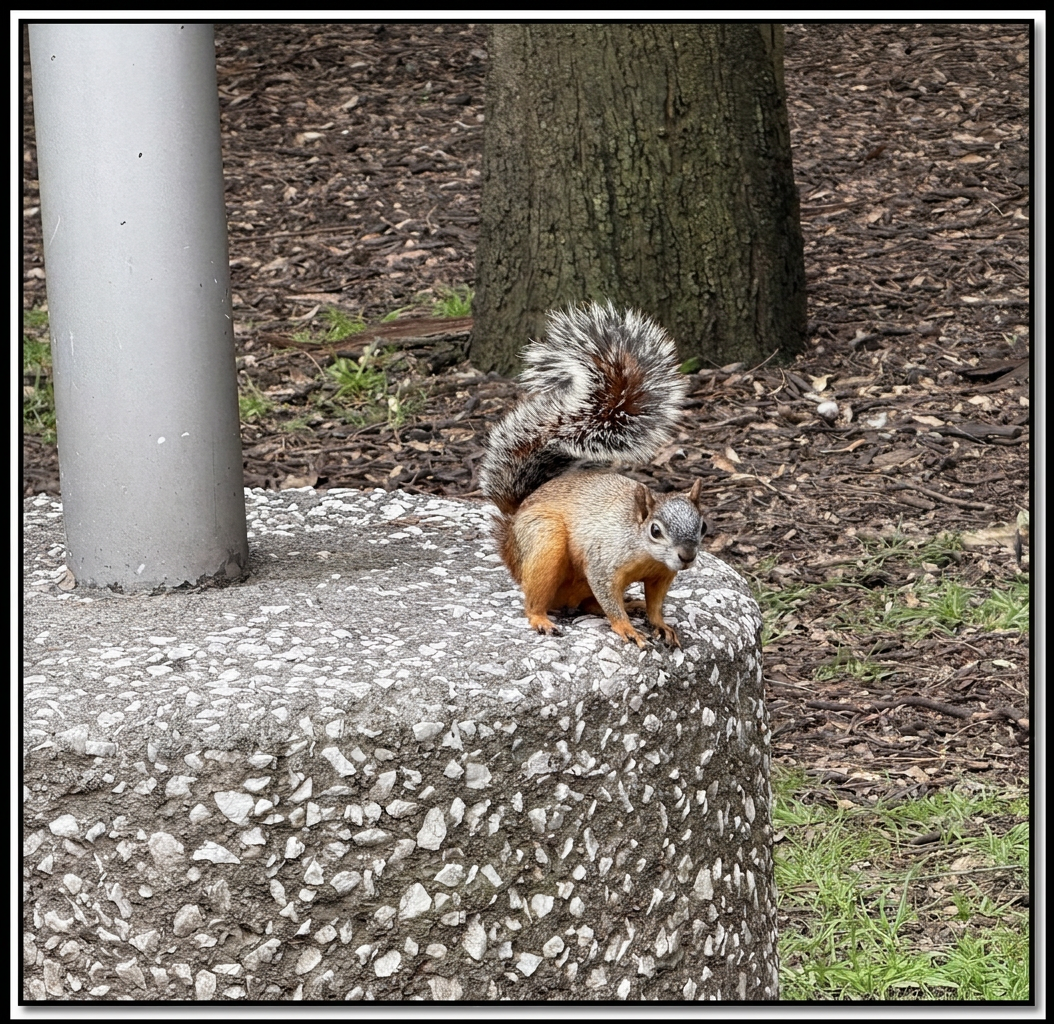
The woodland sculpture garden just outside is filled with large and compelling pieces. It’s an excellent place for an afternoon stroll. The local squirrels might well agree, especially if you’re having a proper lunch at the outdoor cafe and you might be willing to share a bit of artisanal crust.
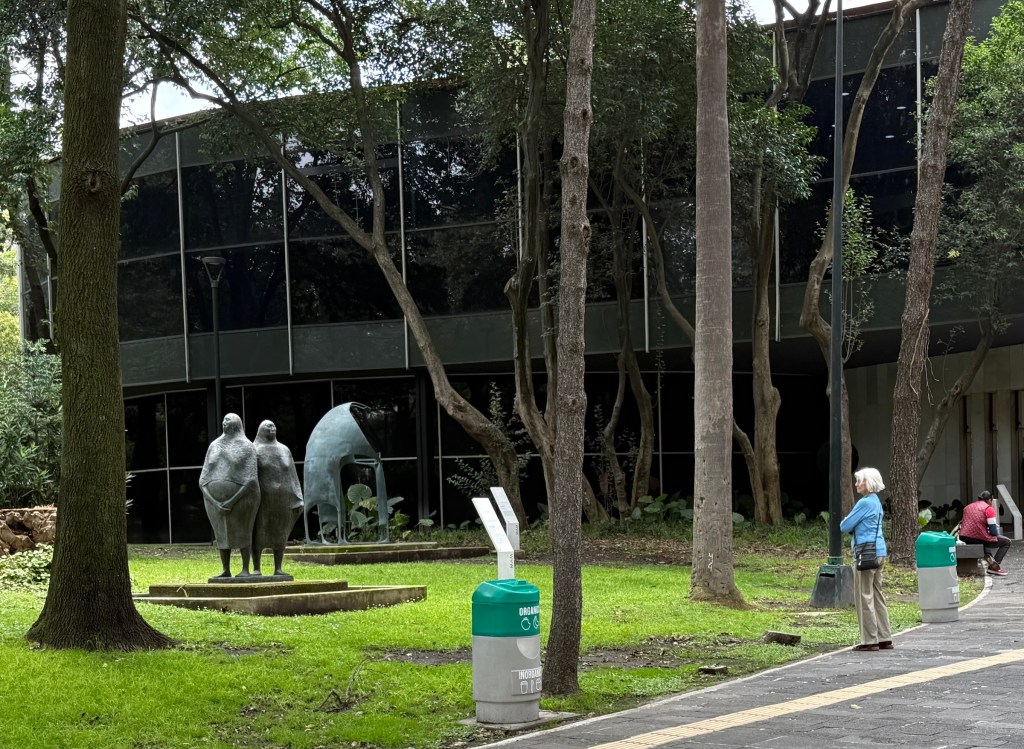
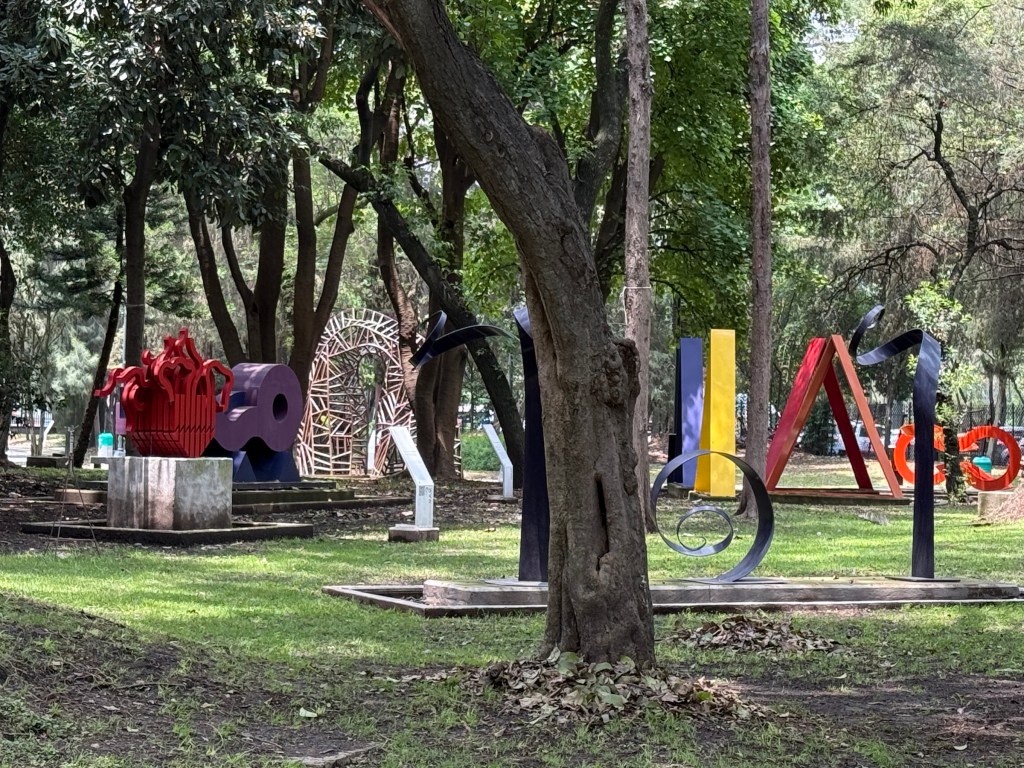
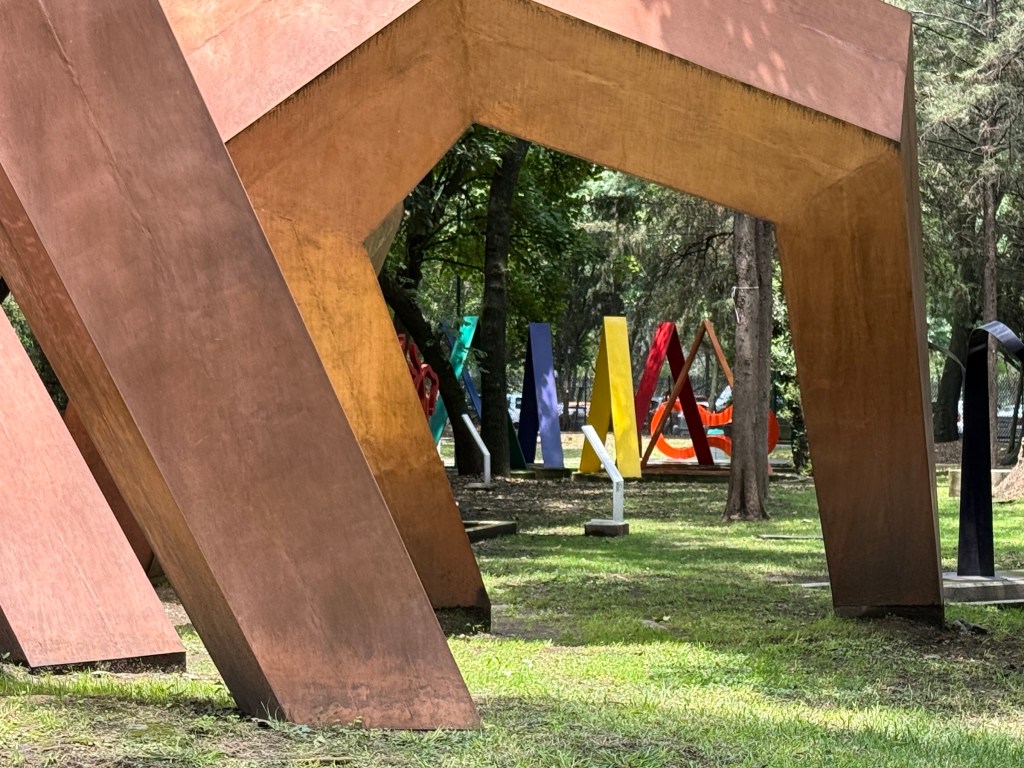
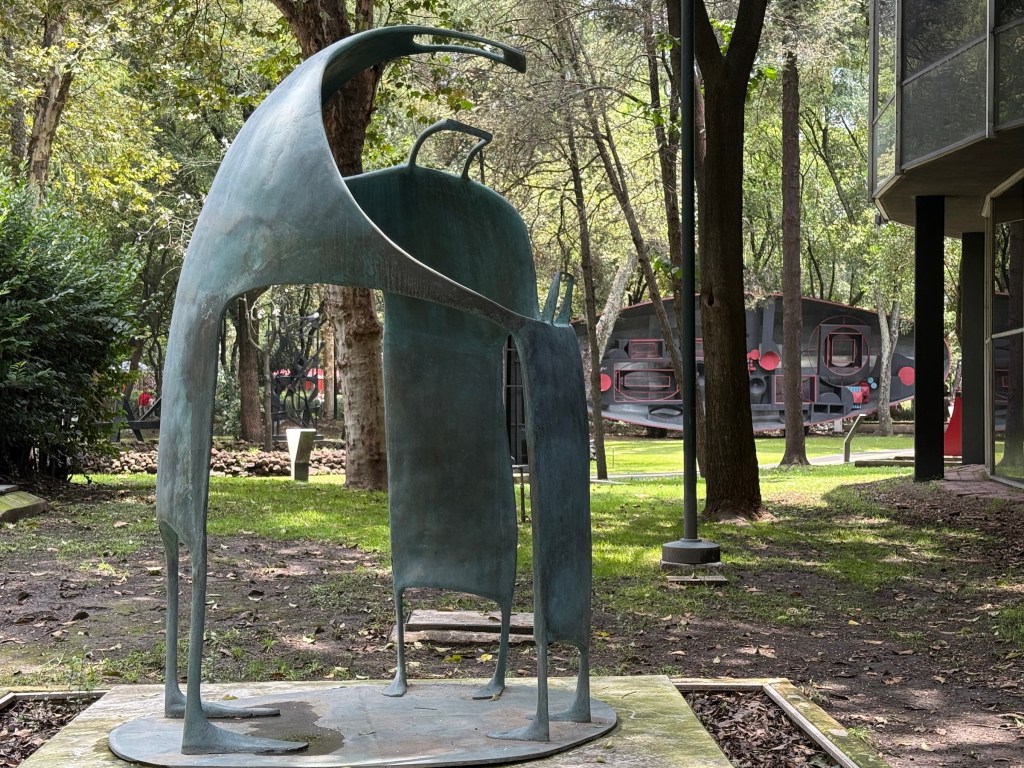
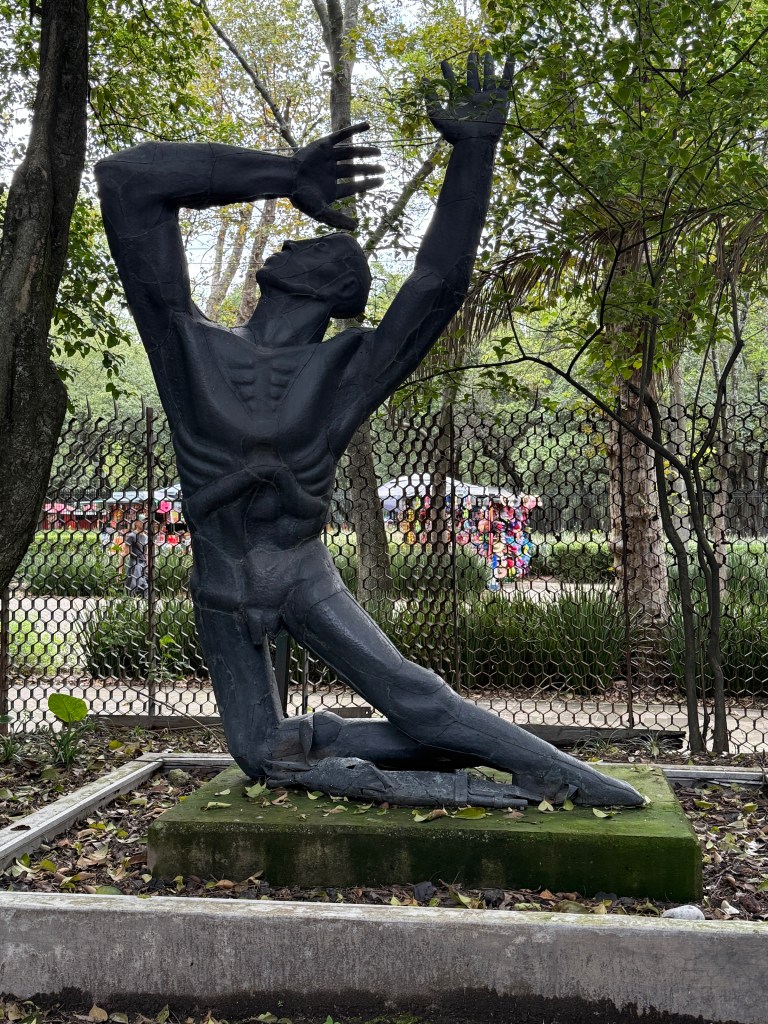
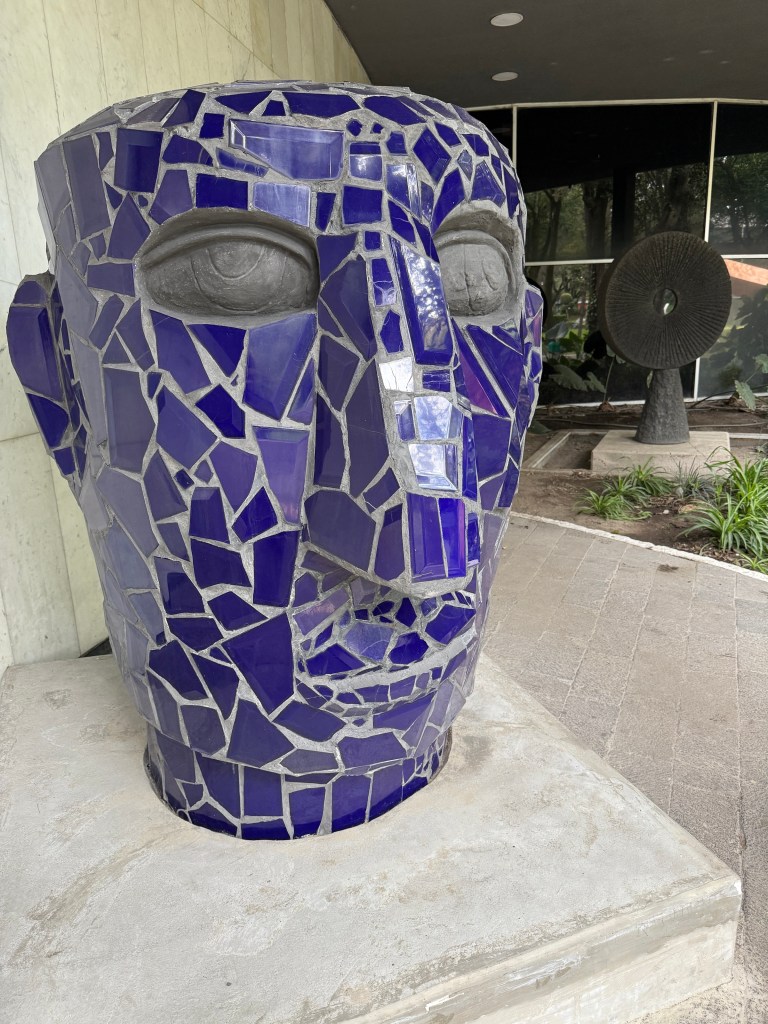
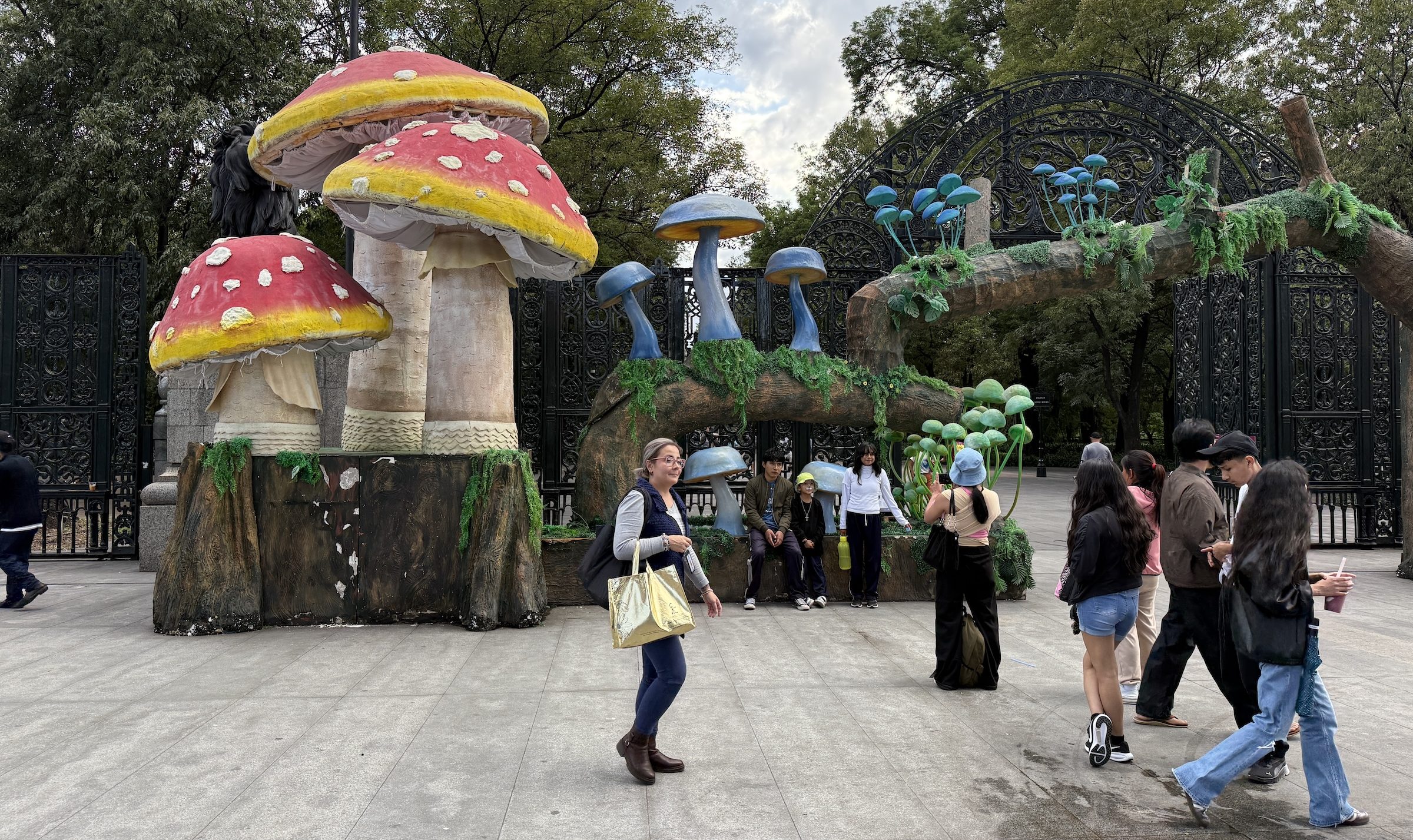
We finally leave the park at the eastern entrance, festooned with ’shroom sculptures, that takes us back into the center of the city. It’s a nice evening for a walk through the streets and interesting neighborhoods of CDMX.
………………………………………………………………………………………………………
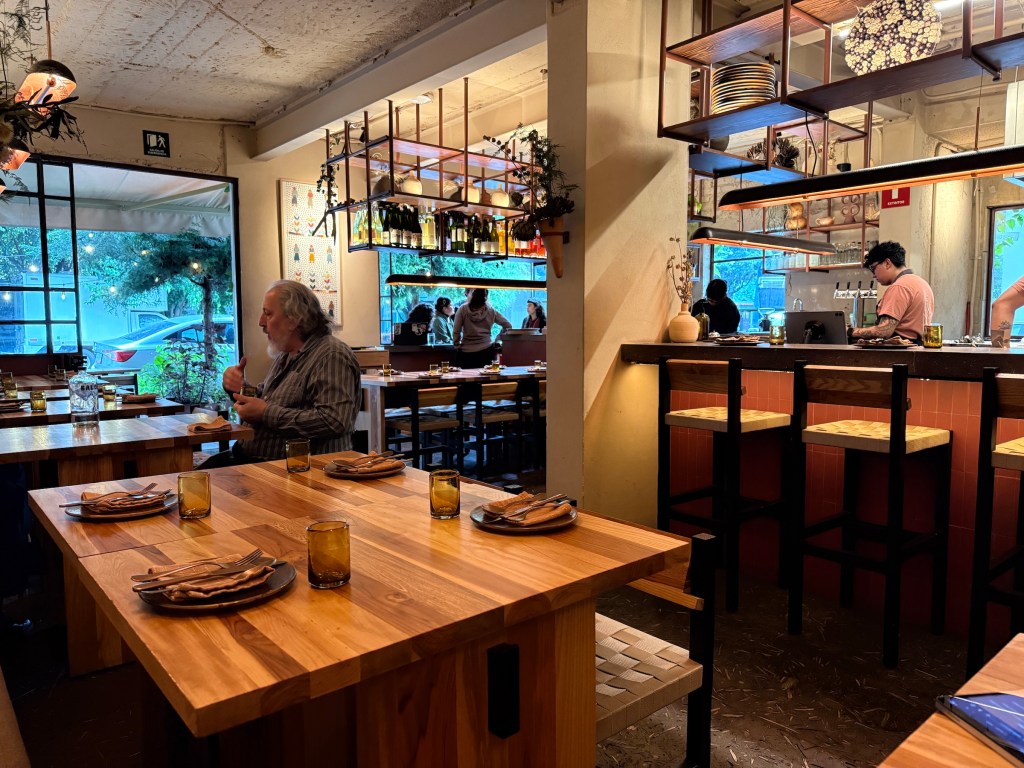
We’ll be stopping off at a new bistro called “Baldio,” that looks to be one of the city’s more interesting eateries these days. This is a place where they recycle and compost everything that’s not consumed. It’s a big task to figure all that out, but they appear to have done it. And we have found that a commitment to making the world a better place is now common in Mexico.
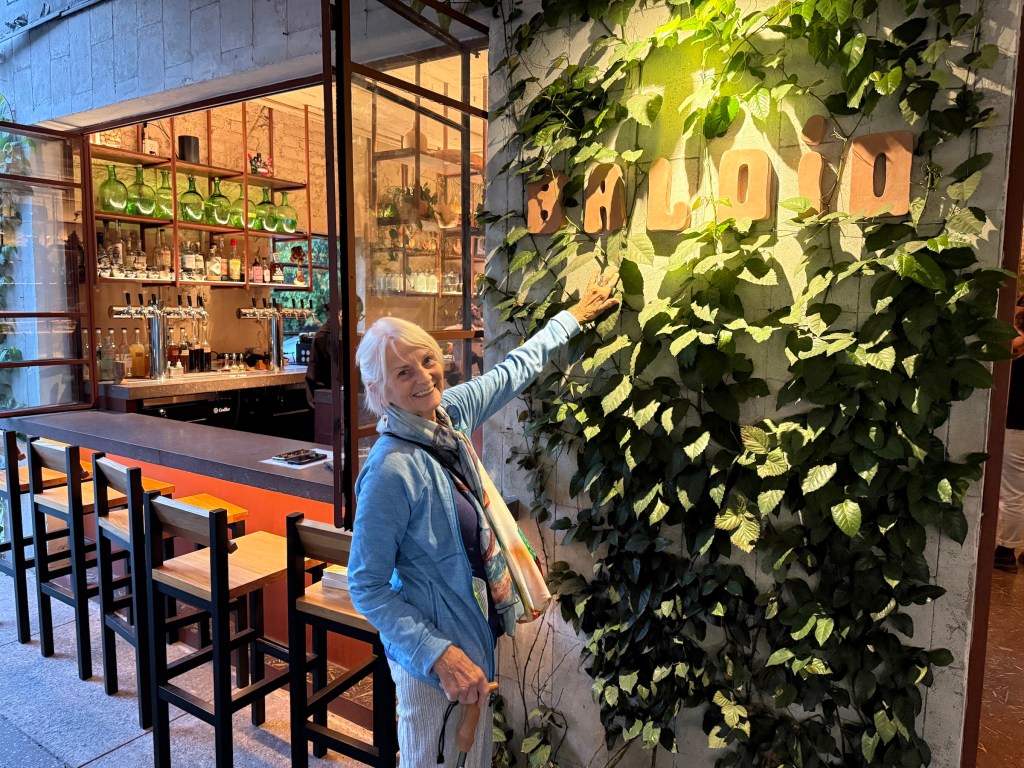
Baldio is hidden on a quiet street in a gorgeous plant-filled space, the hipster crew is fun to deal with, the cocktails are delicious, and the food is superb.
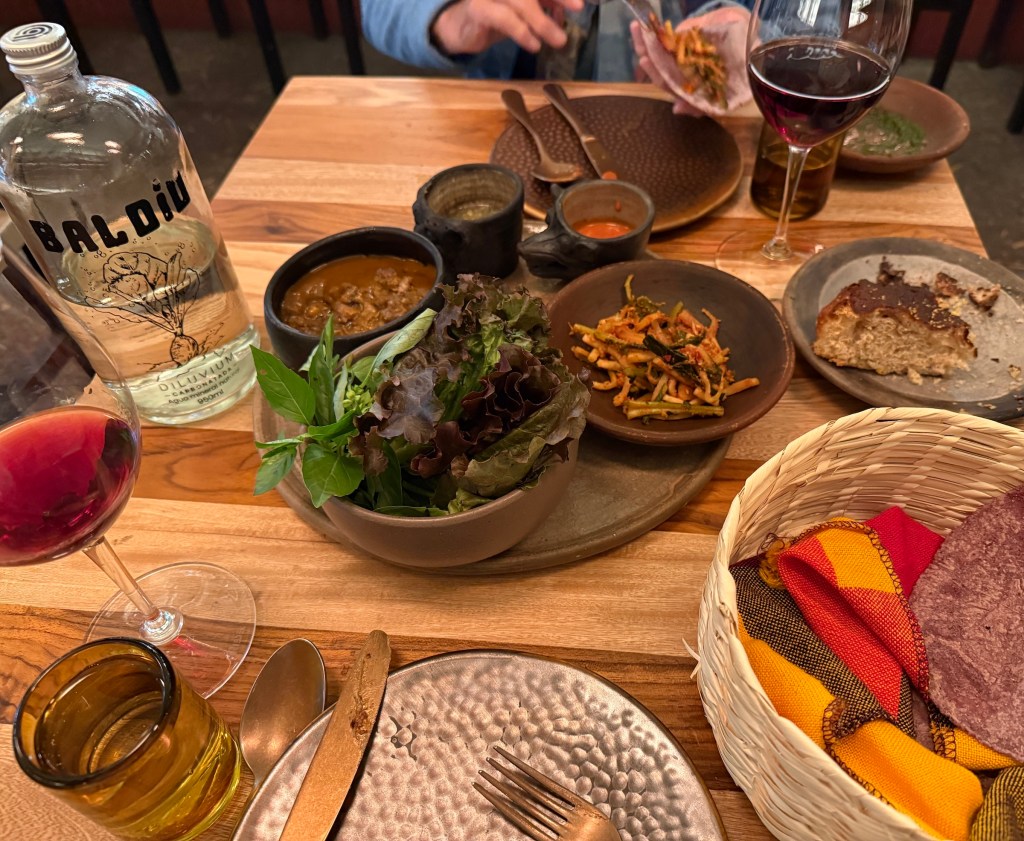
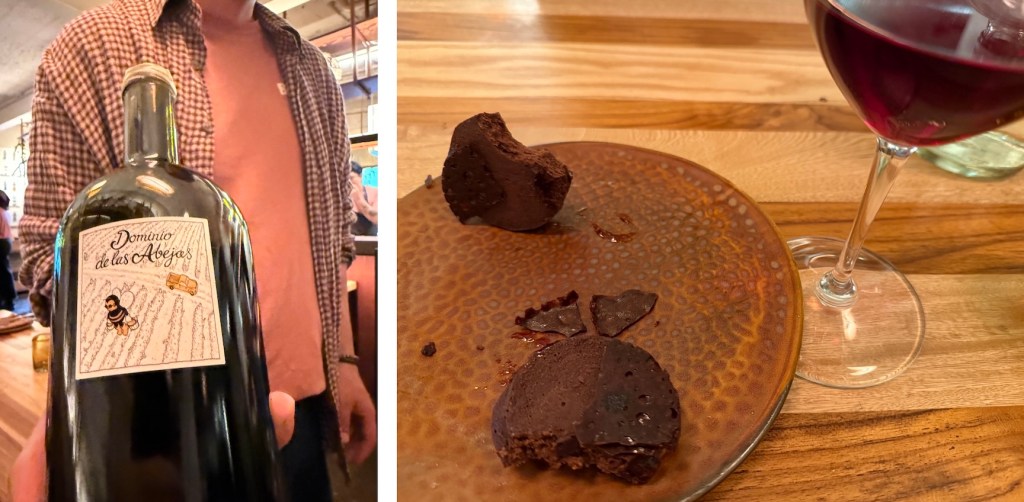
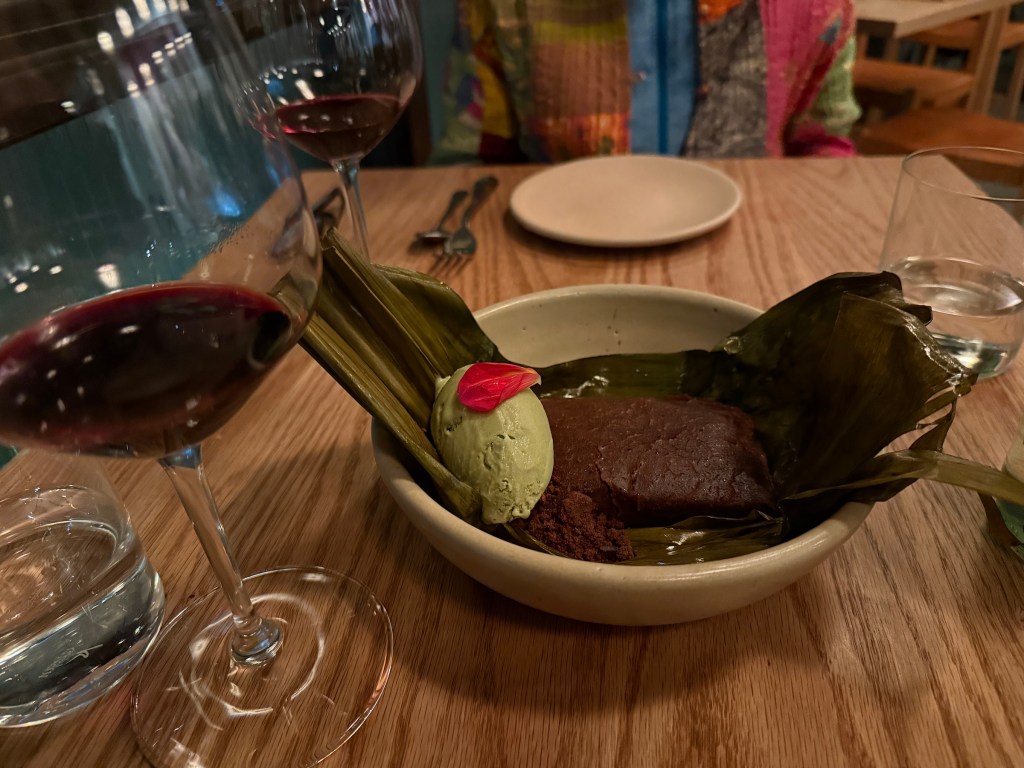
And don’t get me started on the desserts. Well ok, you probably better let me rave on the chocolate amazement that we ended up sharing. And it was complemented nicely with a glass of rich Mexican red wine – one of my all-time favorite dessert combos! It was a fine end to an excellent dinner.
We leave Baldio as the evening spreads out upon the sky. We enjoy a fine walk back to the Hotel Circulo, and we pass a sweet heart-shaped repair in the sidewalk.
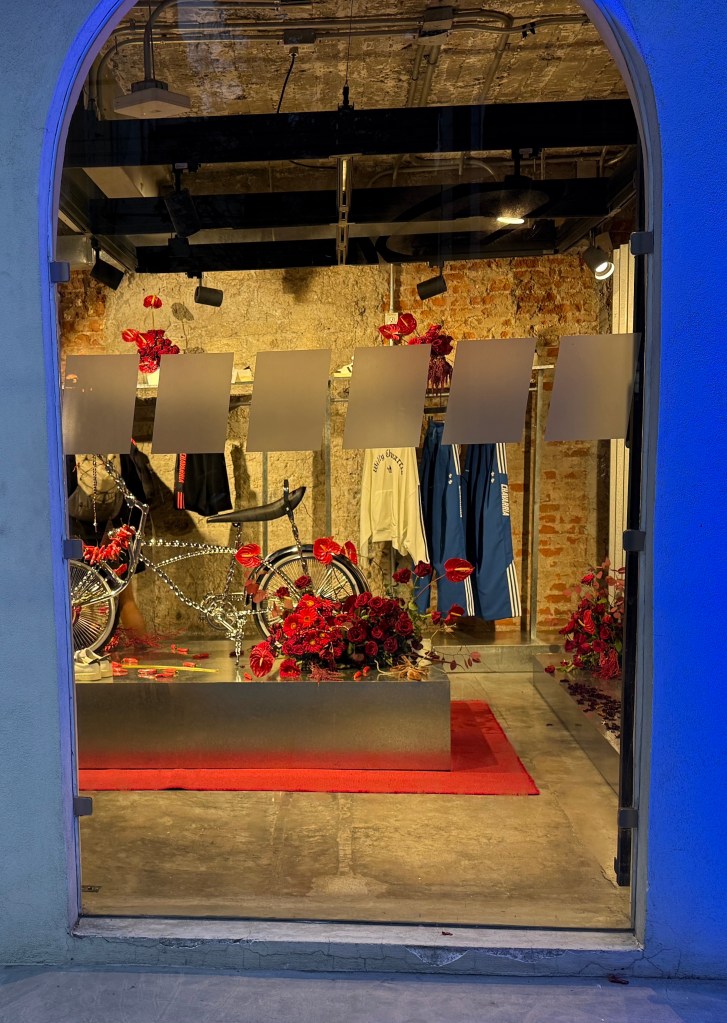
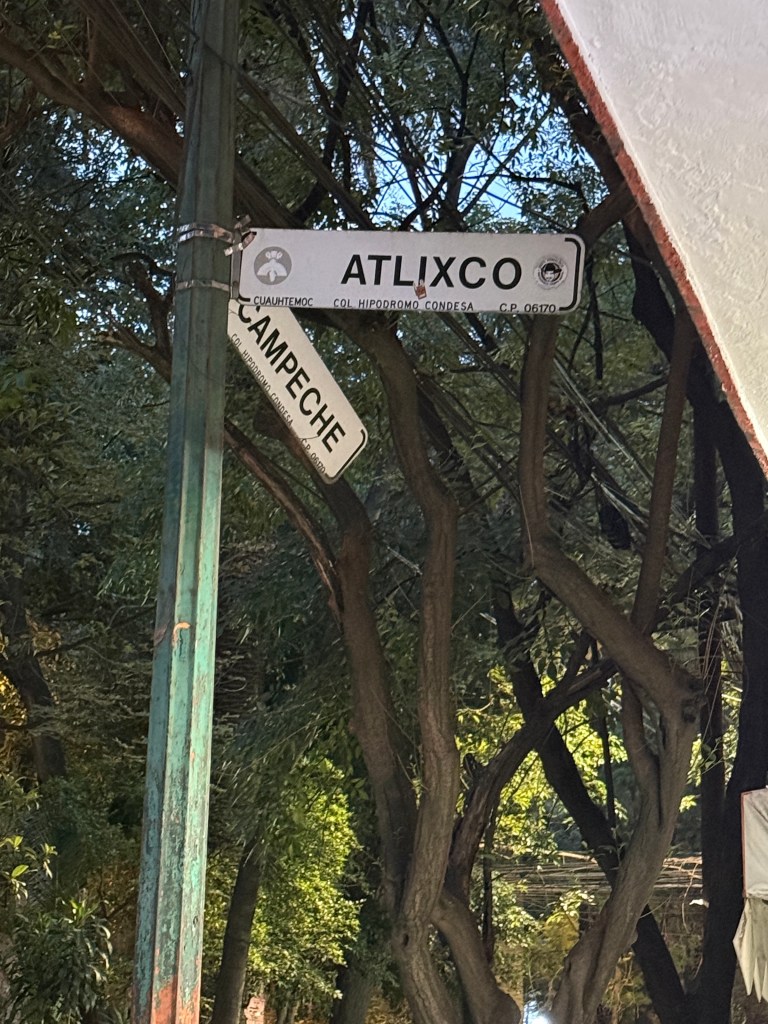
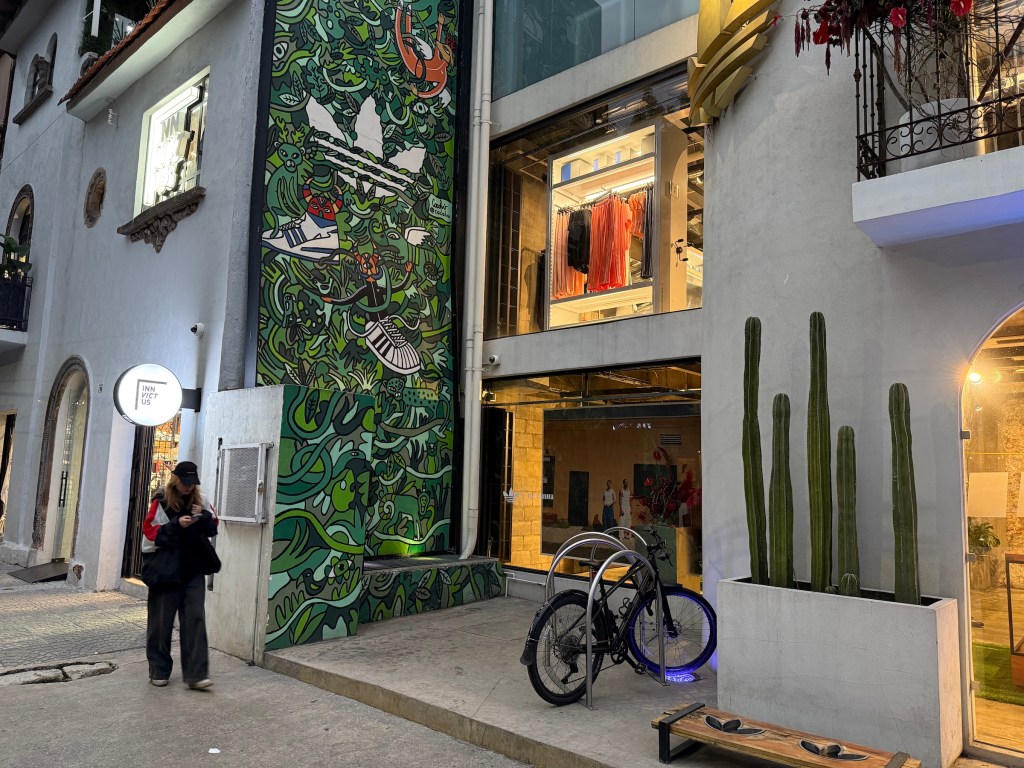
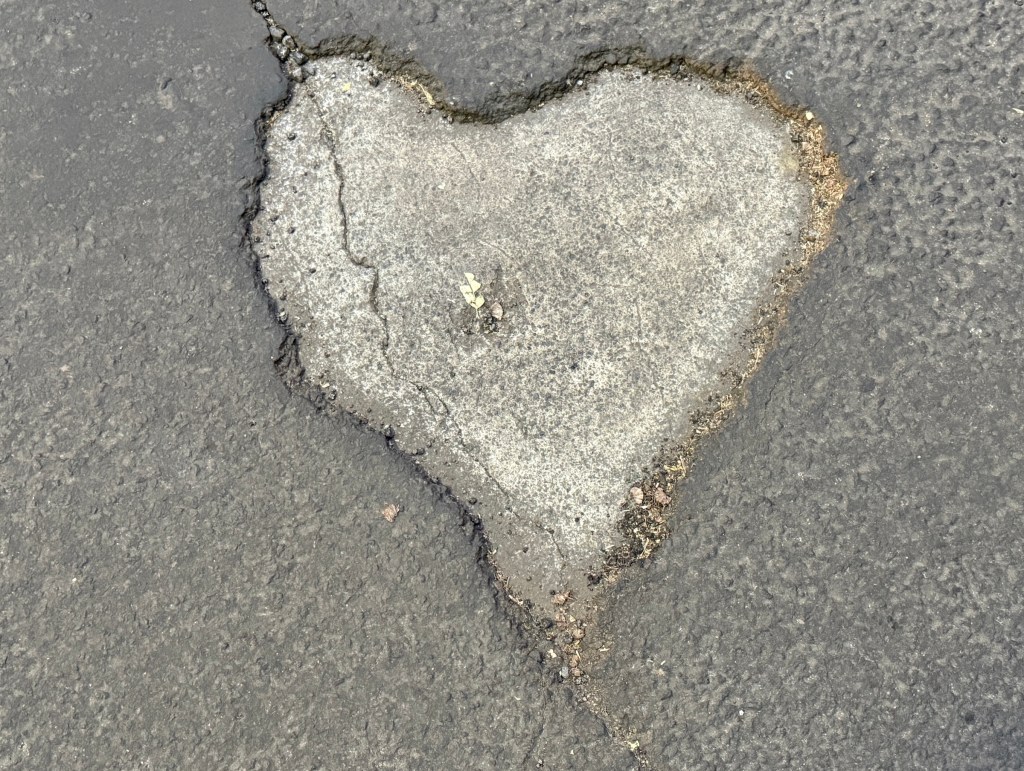
It’s been a good long day, and a gentle evening like this reminds us that CDMX is truly a world-class city. In many ways it’s like visiting Paris, or Rome, or London – but a lot cheaper. And we won’t even bother to visit any of the high-roller districts this time, like Polanco or Santa Fe.
…………………………………………………………………………………………………………
We’ve had a quiet rest as the morning sun breaks anew. And now we’re off for another good long walk around the city, starting with another good coffee shop called Malcriado, on a quiet side street a few blocks away from the busy scene along Avenida Amsterdam. It’s the kind of place that’s frequented by young Mexican residents and professionals and it’s helpful to know some Spanish here, but it’s not required as so many educated young people now have a reasonable knowledge of the language that has become the lingua franca of the world.
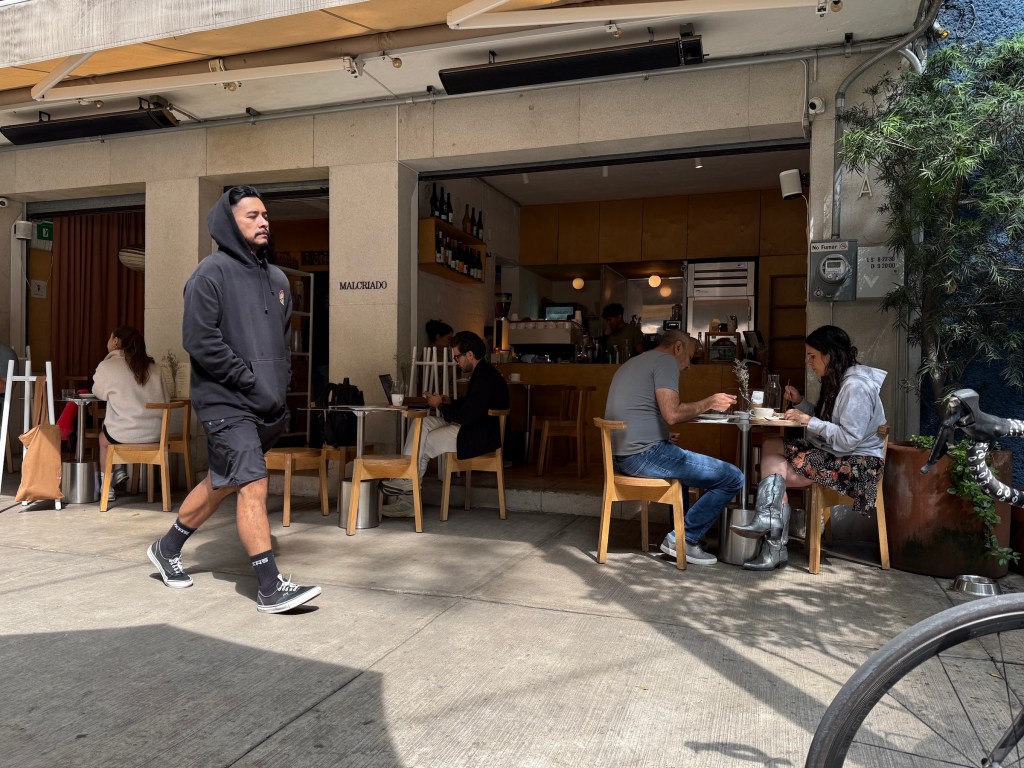
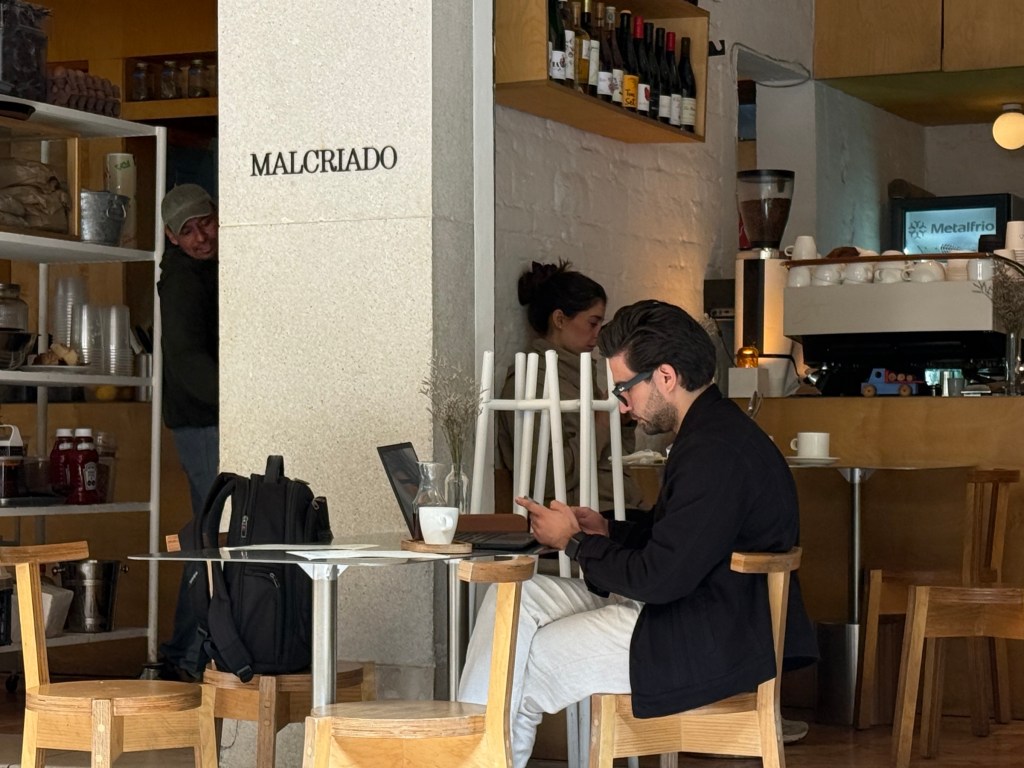
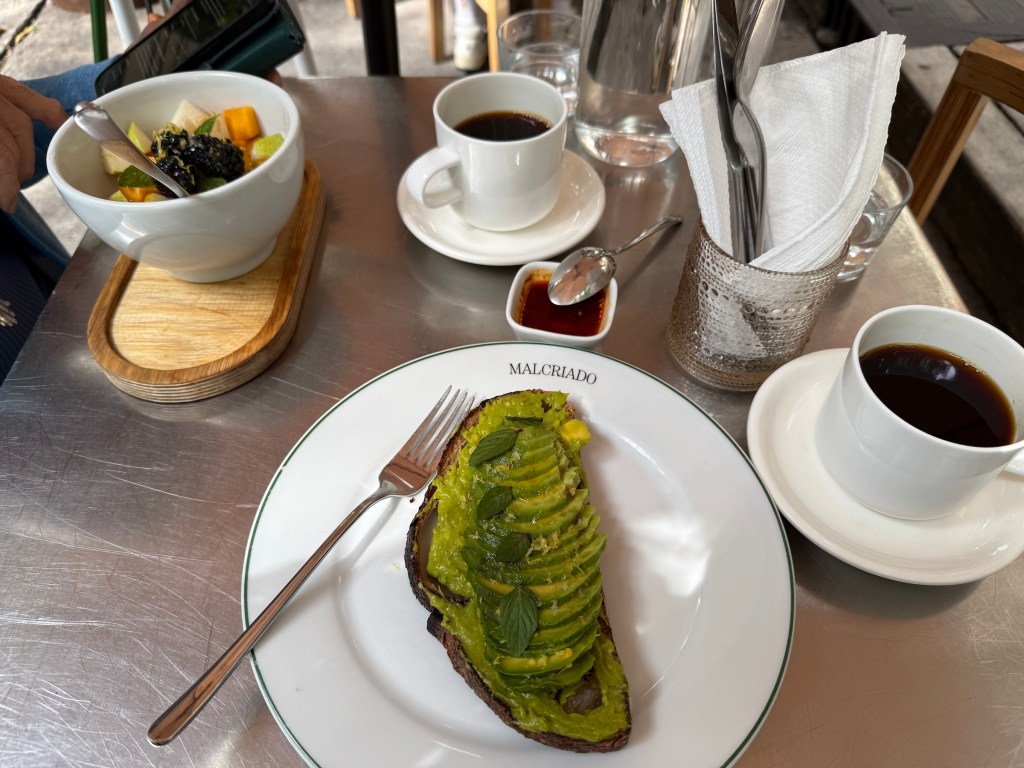
I order an avotoast and coffee while Carolyn has a fruit bowl with berries, as we settle in to an old parking spot that’s carved from the street by potted plants. I bought myself a gorra with Malcriado (spoiled brat) proudly stitched across the brow, but I lost it somewhere later in Albuquerque. And now, getting another one sounds like a good enough reason to plan a return to CDMX.
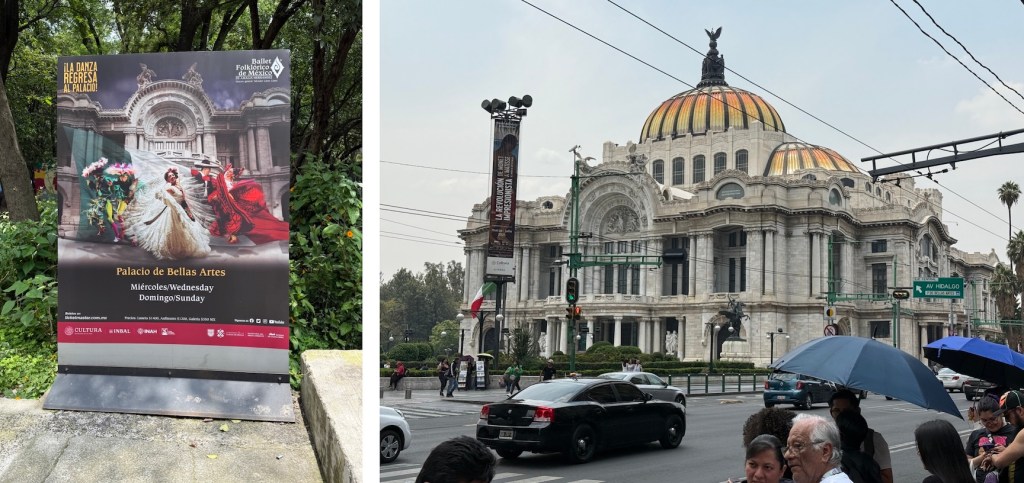
So we’re fortified and ready for a brisk walk toward the National Art Museum, which is near the impressive Palacio de Bellas Artes. The Ballet Folclorico is held here and it’s one of the main events in CDMX. We’ll look forward to being part of that excitement again someday, but not on this visit.
After a good long morning walk we’ve worked up another healthy appetite, so we stop off to share a sandwich at Sanborn’s famous lunch counter in the colorful tile-covered Casa de los Azulejos.
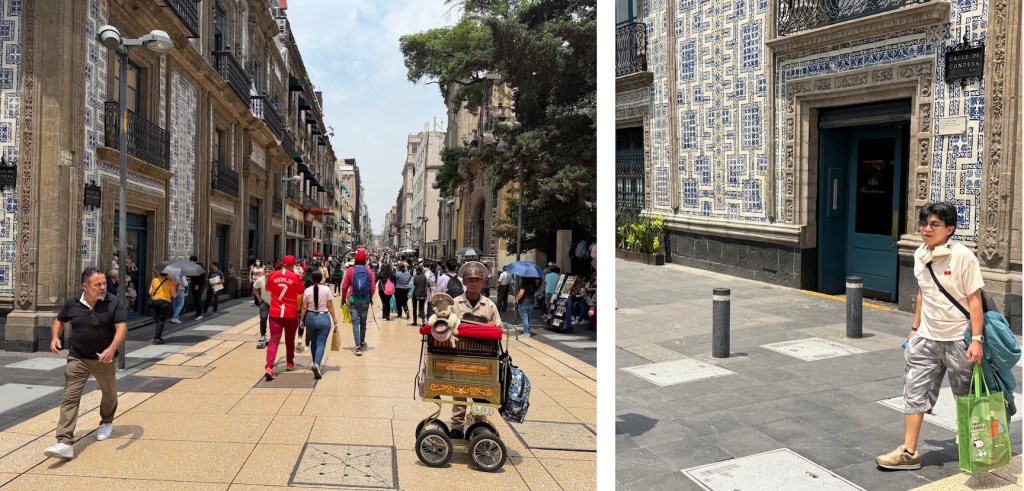
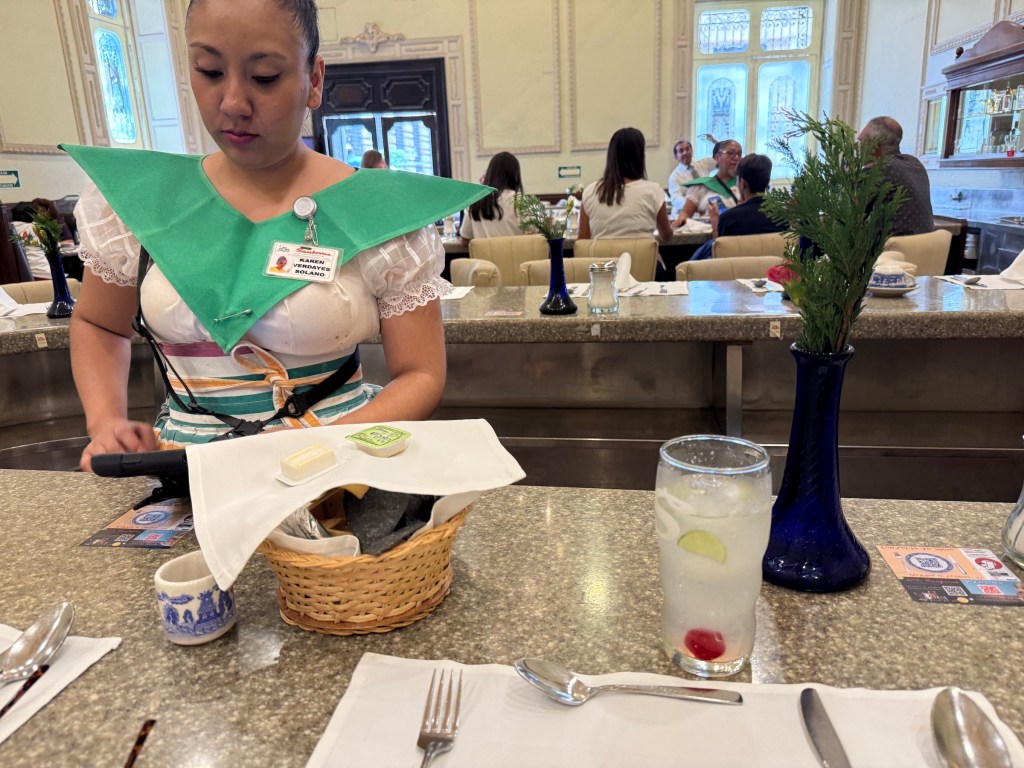
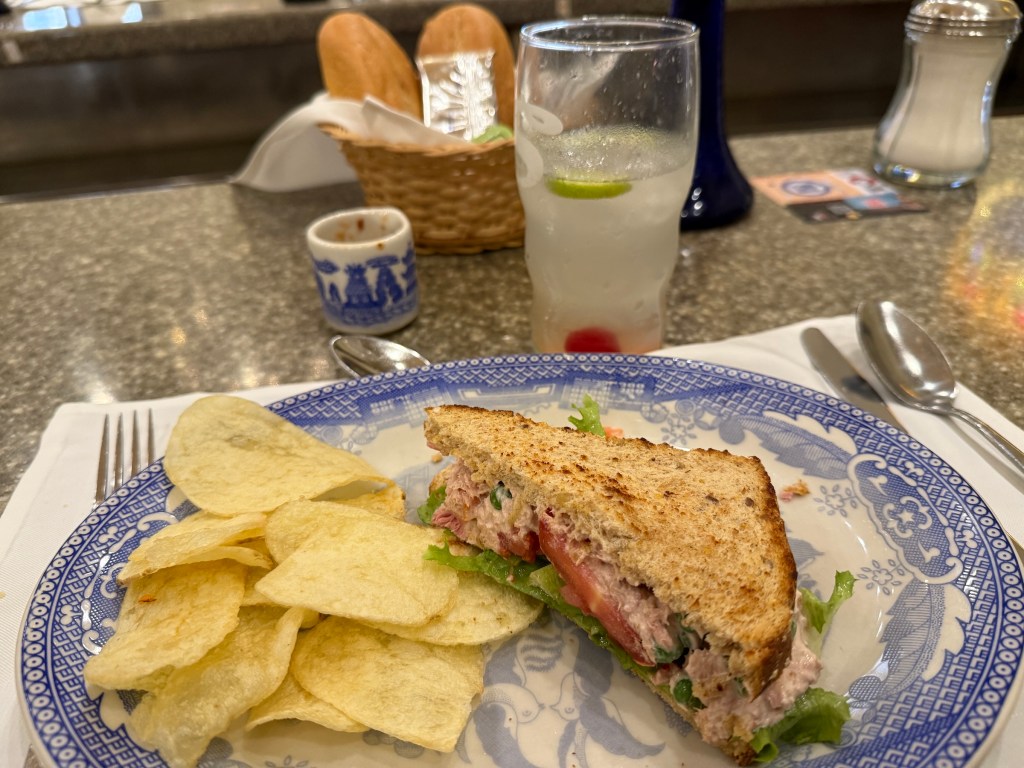
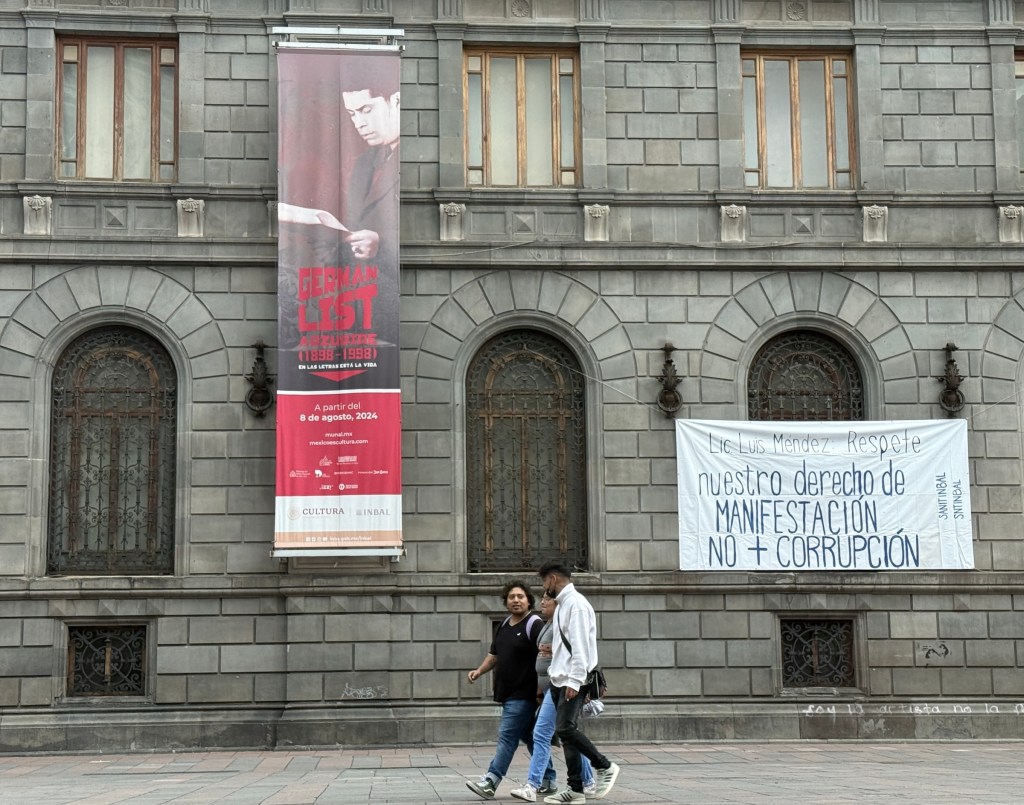
From Sanborn’s the Museo Nacional de Arte is only one more block away. There are always some amazing works of art on display in this old classical building as we can see from the long banner hanging outside. And sometimes there are protest banners hanging there too! Protests and their banners are a common feature of life in Mexico City.
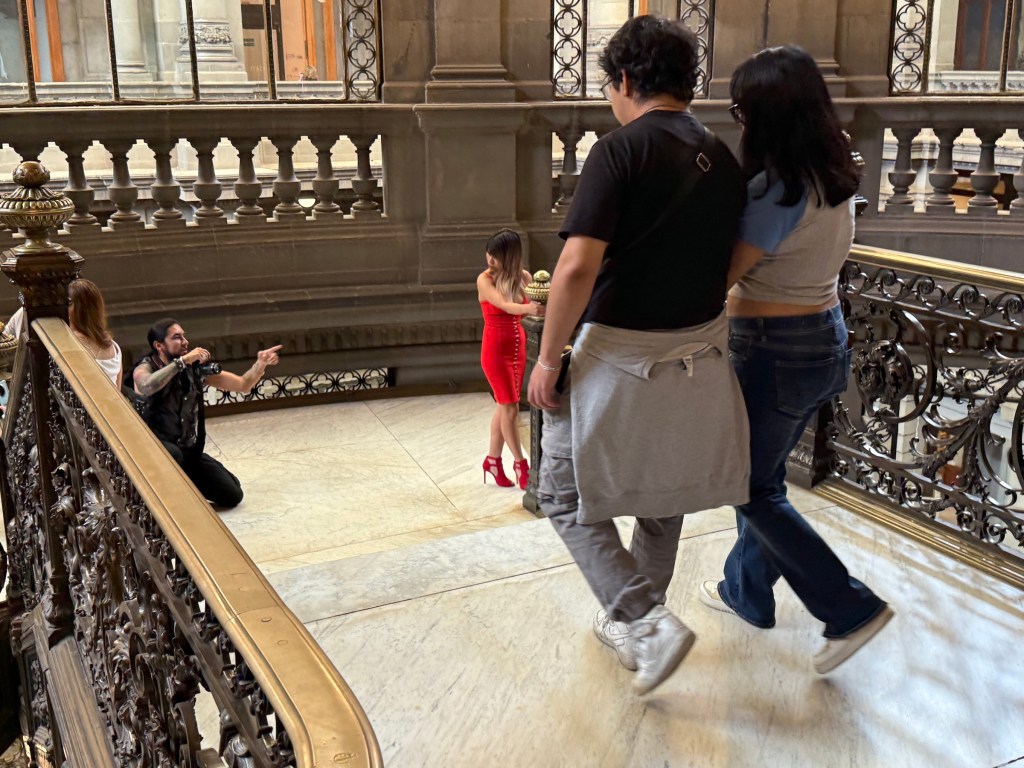
We pause for a few moments as the museum’s classical stone stairway is being used for a dramatic photo shoot. The model’s bright red dress is a striking contrast to the grey stones and the brass stairway finial, and it’s another piece of the artful daily Mexican experience.
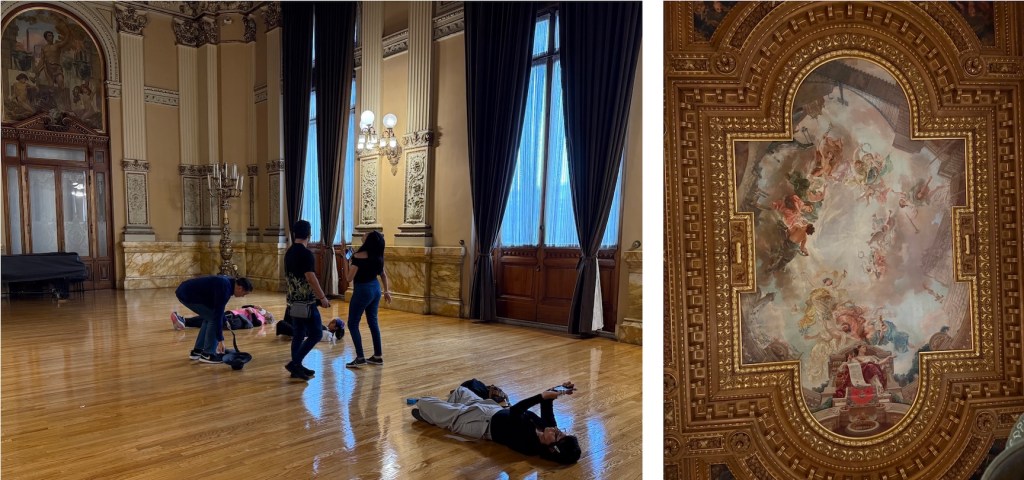
The first high-ceilinged room we encounter looks like a scene from a surrealist film, with people lying about on the floor. But they may be art students trying to get the best view of the intricate allegorical mural that’s high overhead.
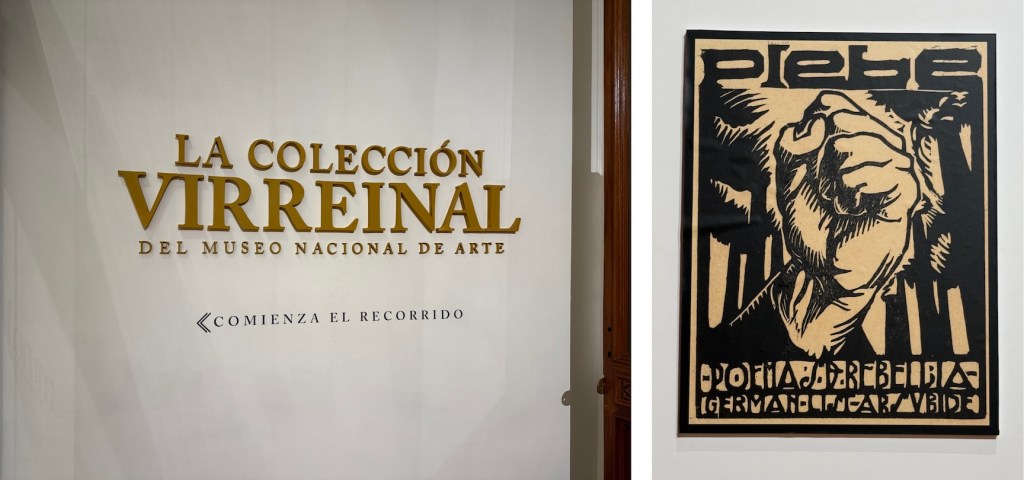
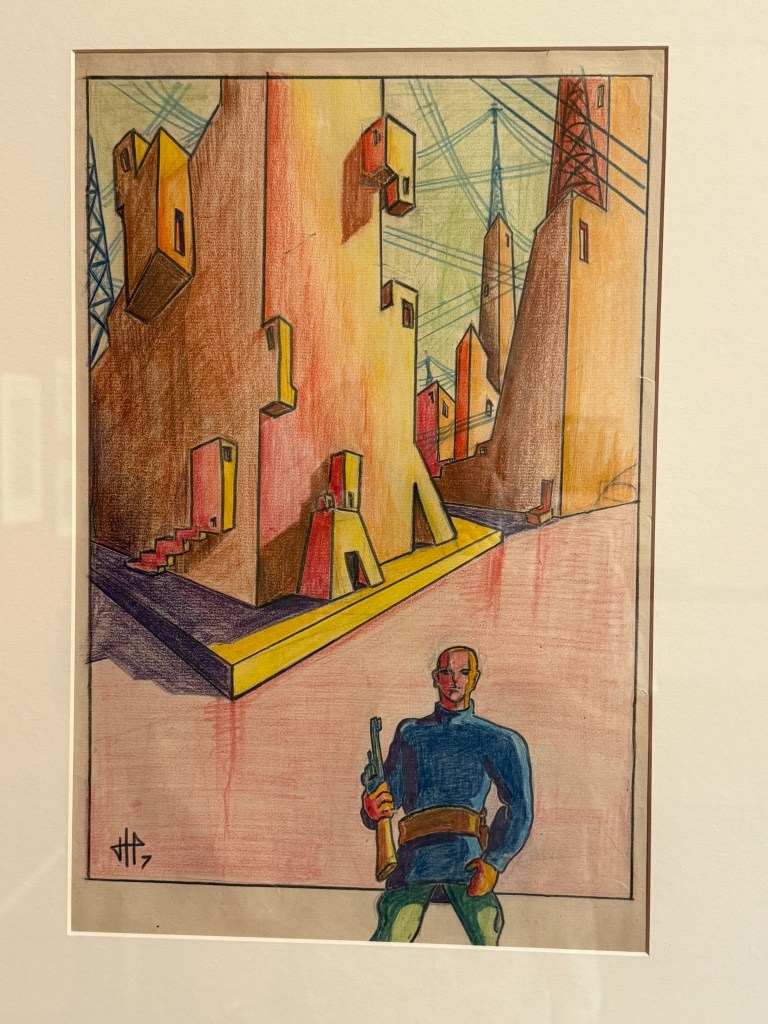
Today’s main exhibit features the revolutionary work of Germán List Arzubide. He lived a long and fruitful life, producing poetry and illustrations for various protest causes going back to those lean years of angry masses during The Depression. He died at the age of 100, still railing about injustice with his fist in the air.
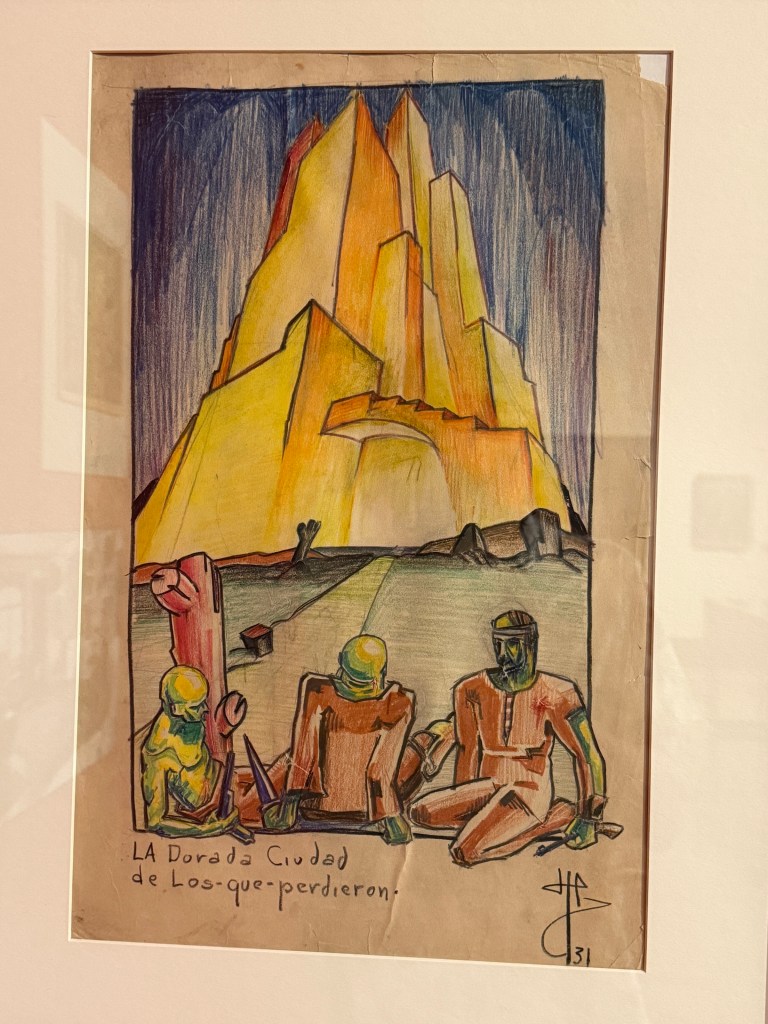
There was a tremendous amount of excellent graphic art produced during those starvation years, and those of us who were born after the terrible years that our ancestors survived in the 1930s may often remain blissfully unaware of those tragic realities of human existence.
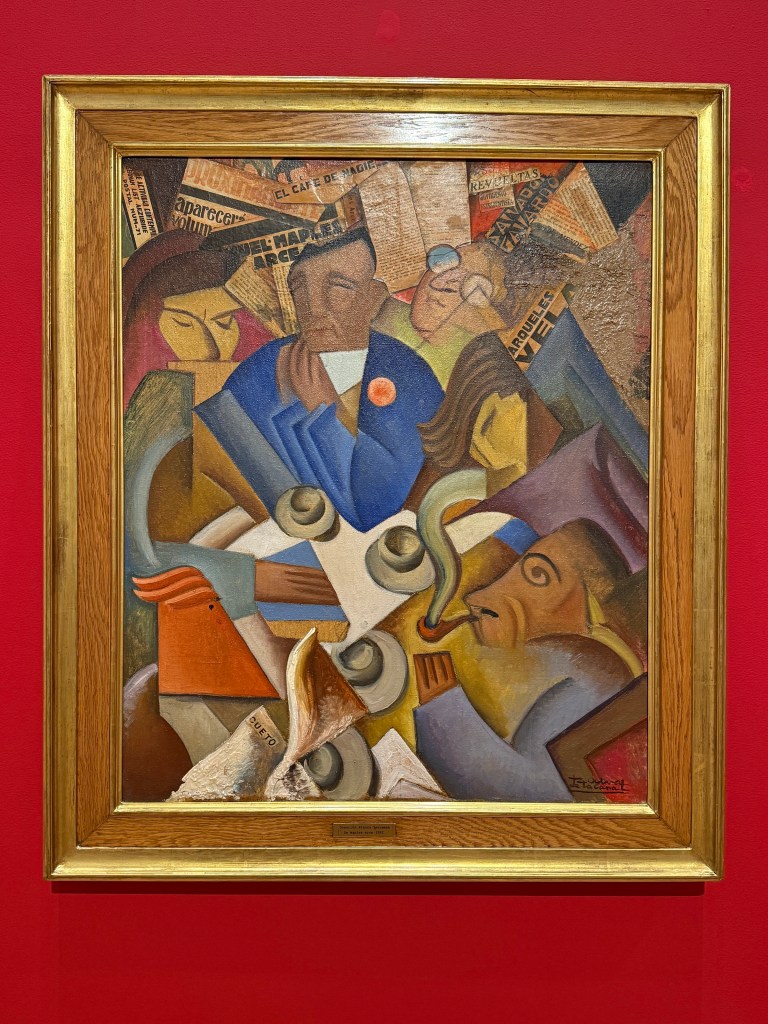
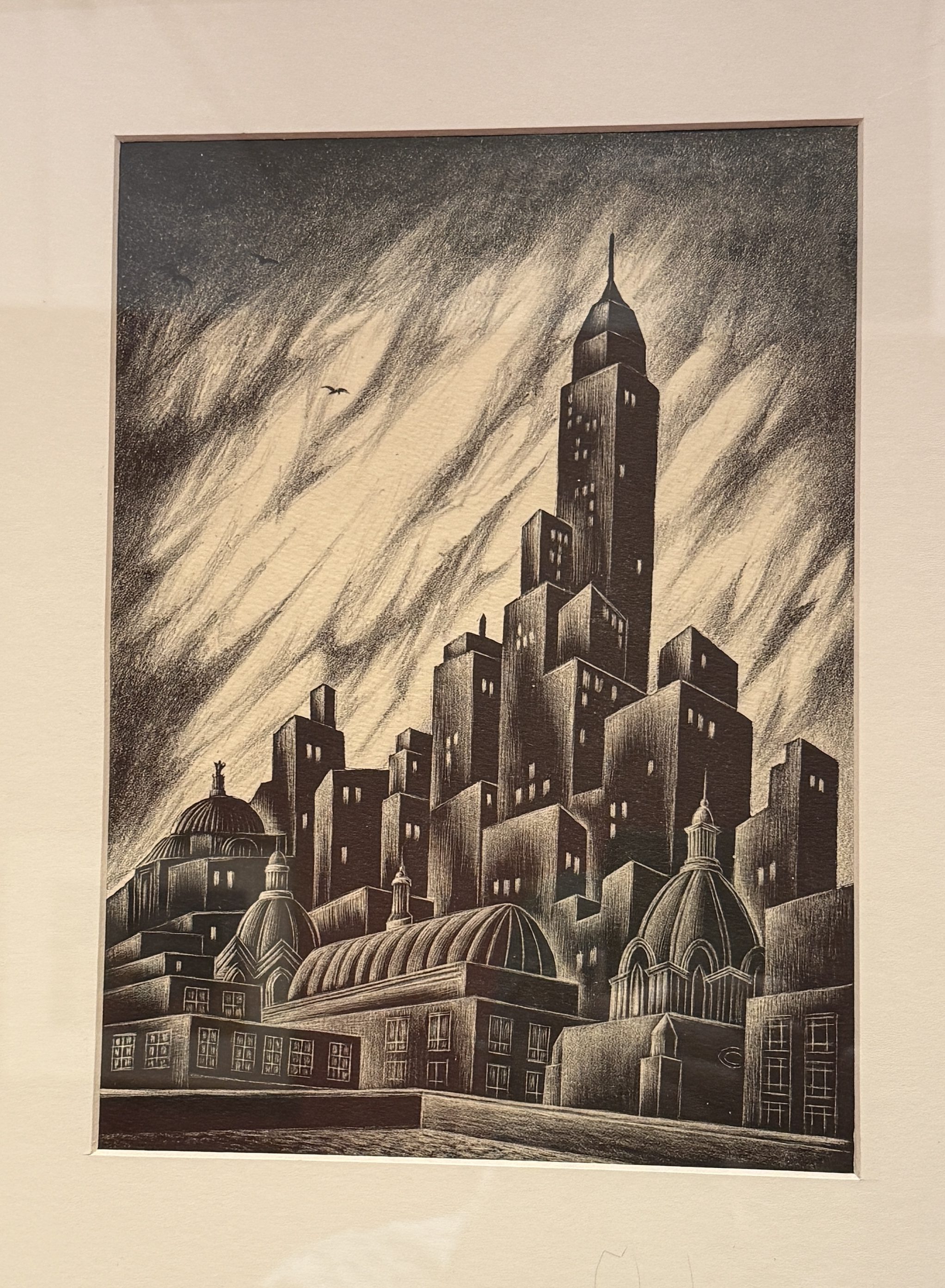
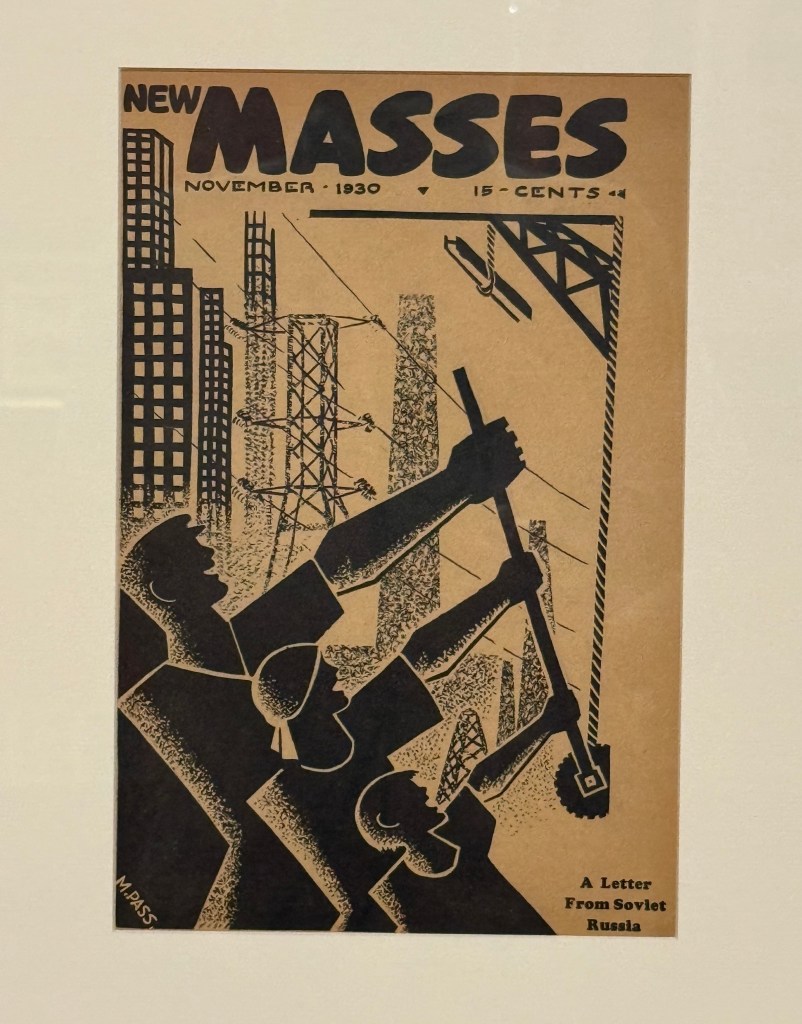
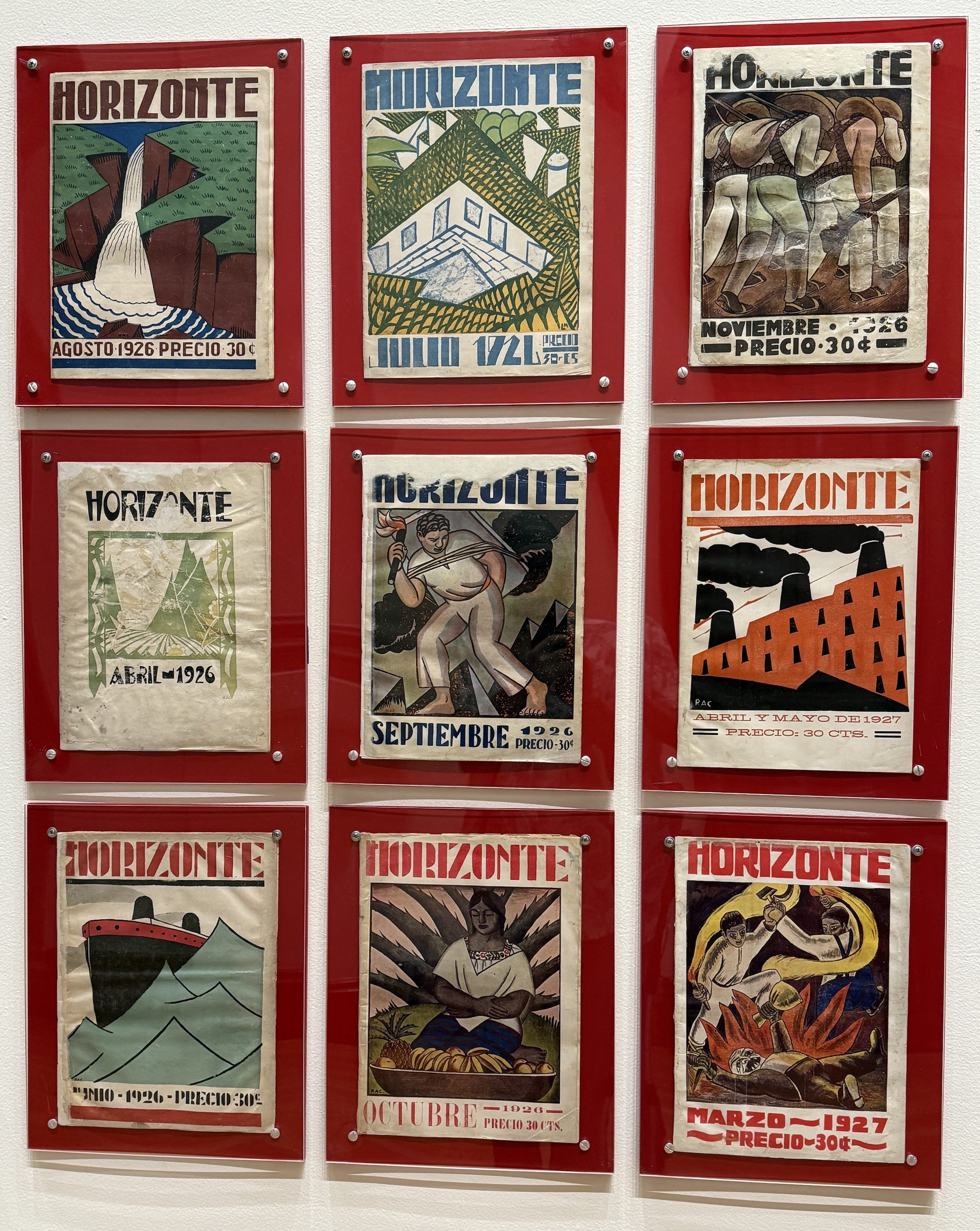
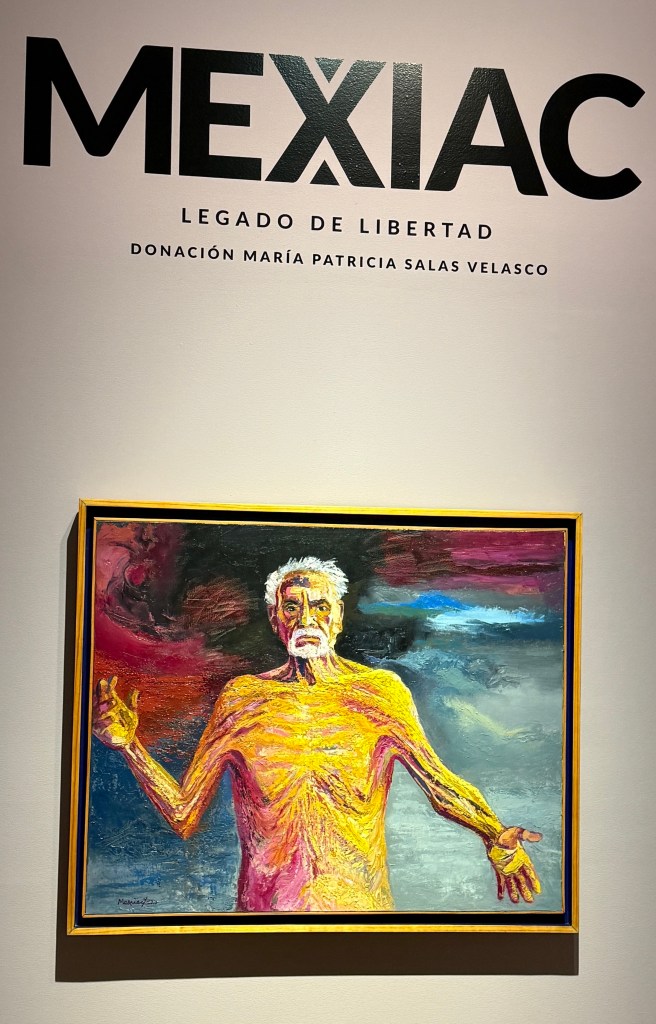
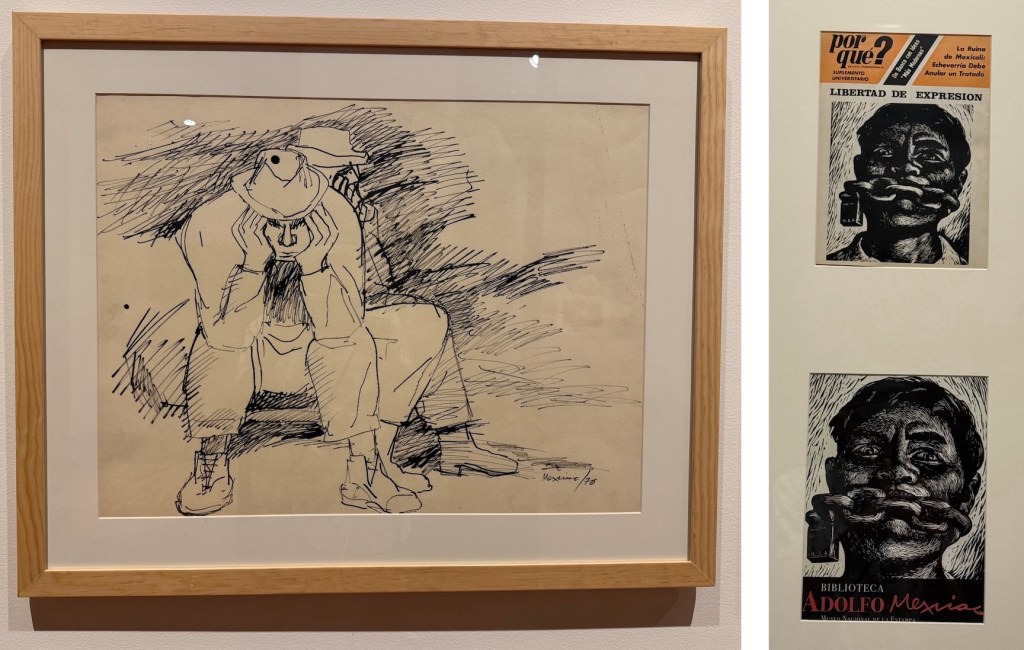
Adolfo Mexiac was yet another of the country’s many gifted graphic artists who represented the struggles of the common person, and the grief they endured in those lean years. His famous work protesting the CIA’s 1954 overthrow of the Árbenz government in Guatemala featured a chained person with a lock labeled “USA,” and demanded ‘Liberty of Expression.’ It was an important statement, although it was controversial in Mexico. He died in 2019 at the age of 92.
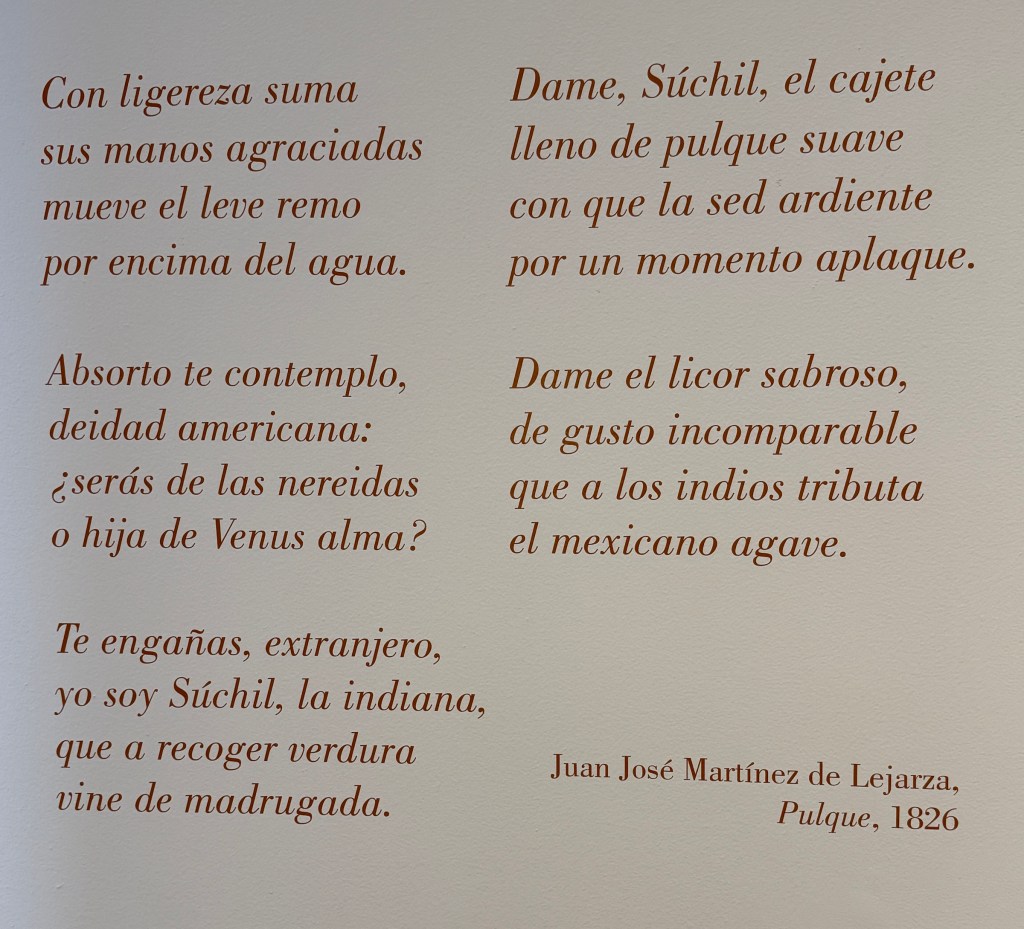
Among other offerings there’s an ode to Pulque (1826) by Lejarza: “Give me the flavorful liquor of incomparable taste that the Indios attribute to the Mexican agave.”
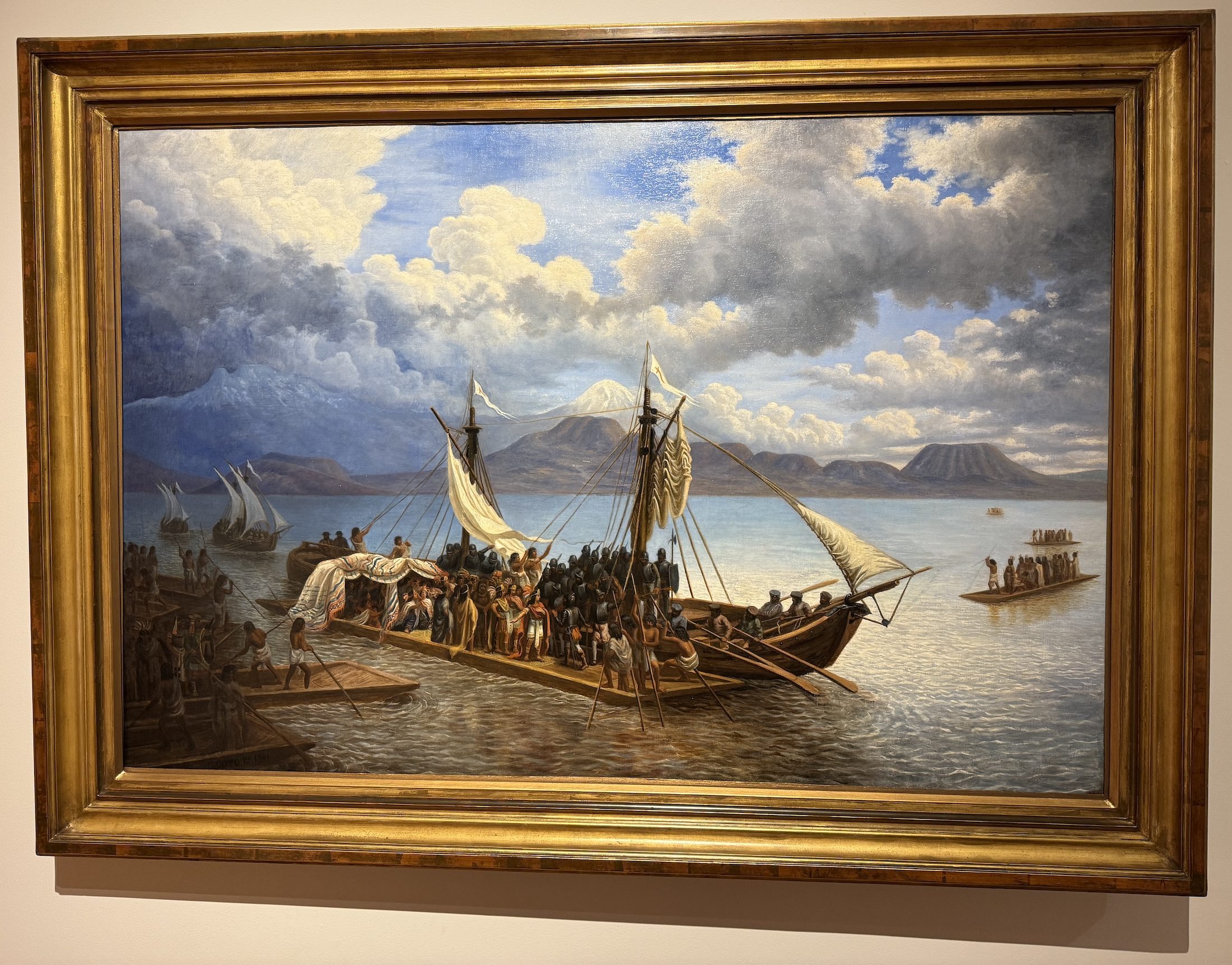
A highly-detailed painting depicts the capture of Cuauhtemoc on Lago Texcoco, with the snow-capped volcano Popocatepetl towering in the background. The last Emperor of the Aztecs, who was left with the hopeless task of maintaining resistance against the invading Spaniards after the failures of Moctezuma, would soon be tortured and murdered by the conqueror Cortez.
There’s an impressive grouping of sculptures and related paintings, including a portrayal of Socrates’ last words to his followers.
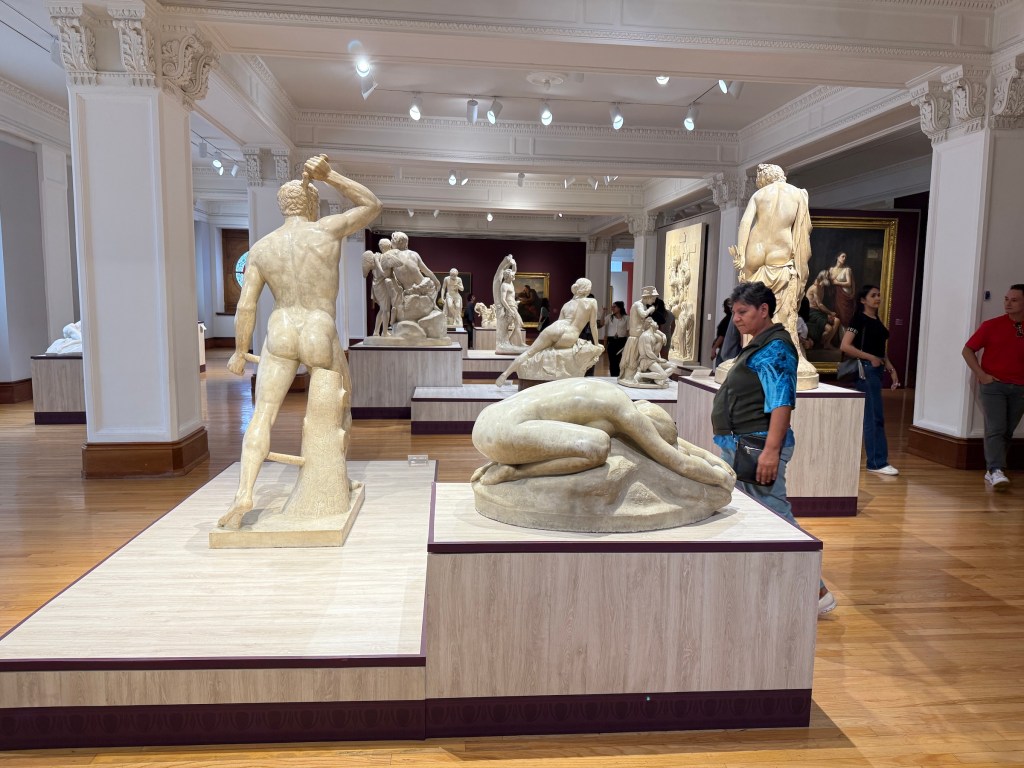
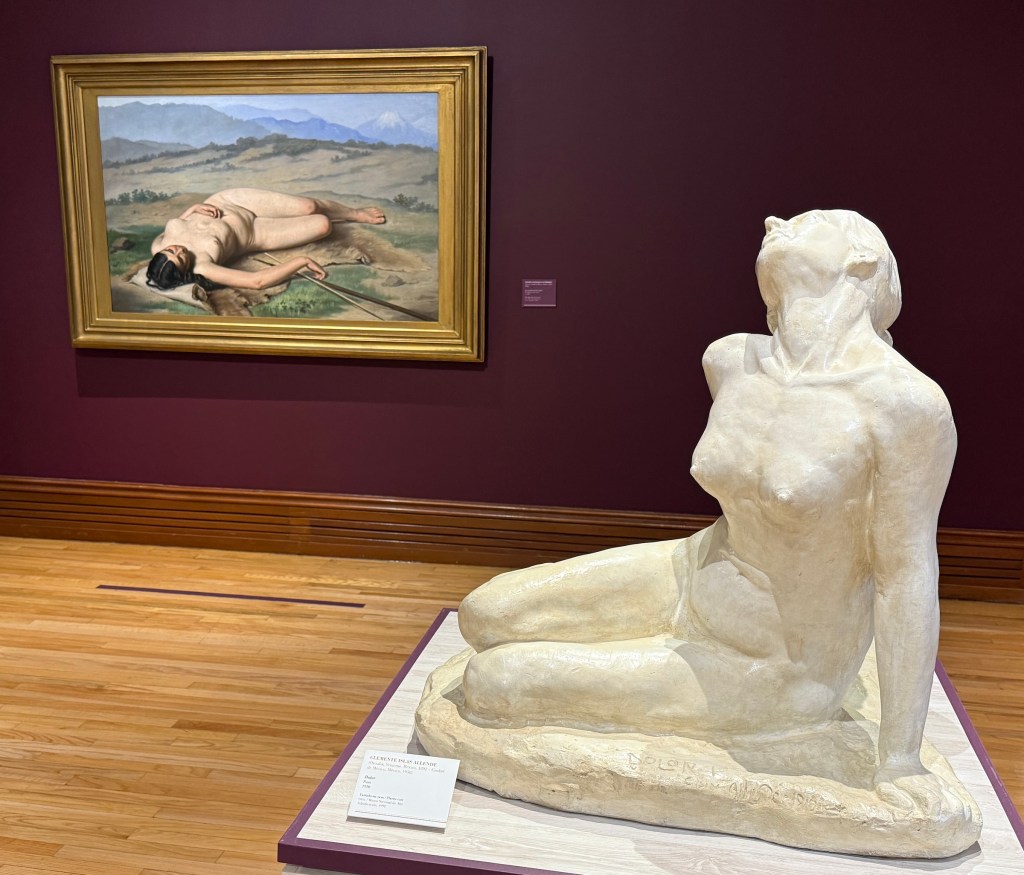
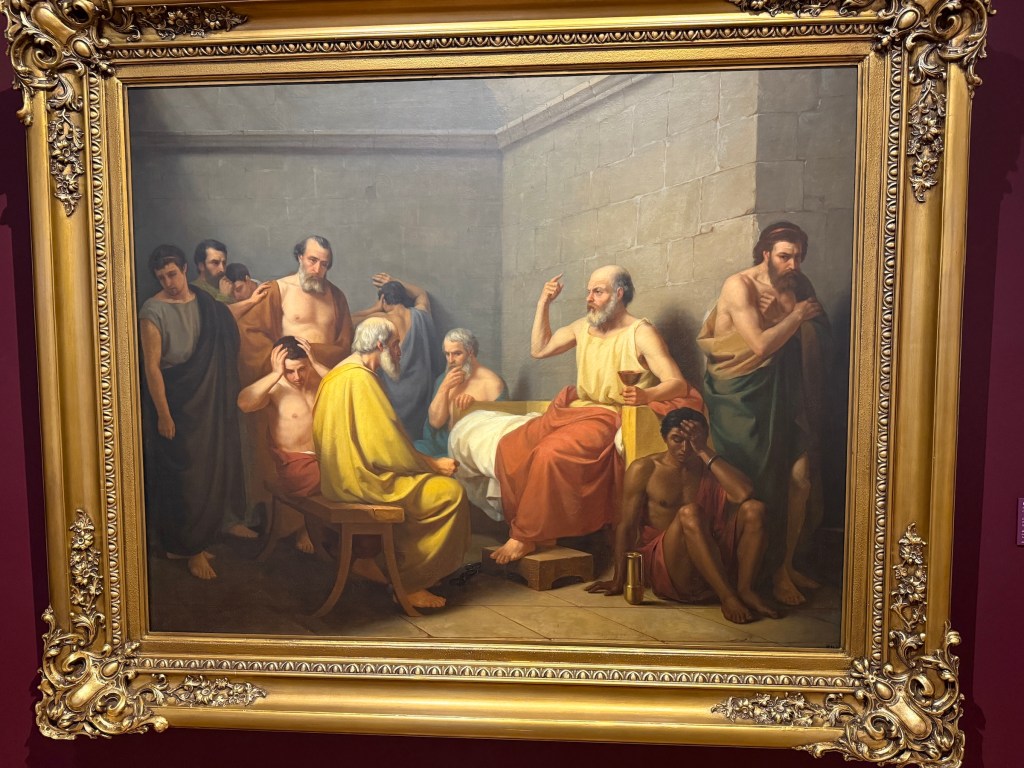
The trial of Socrates occurred after the Athenians were defeated by the Spartans and endured the reign of the Thirty Tyrants. He was tried for ‘impiety,’ largely for questioning the existence of gods, and especially the gods of Athens. It is said that after receiving his death sentence, in 399BCE at the age of 71, he spent his last hours with his followers discussing the nature of death and of the possibility of an afterlife. He has been quoted as saying, “I know that I know nothing” and “The unexamined life is not worth living.”
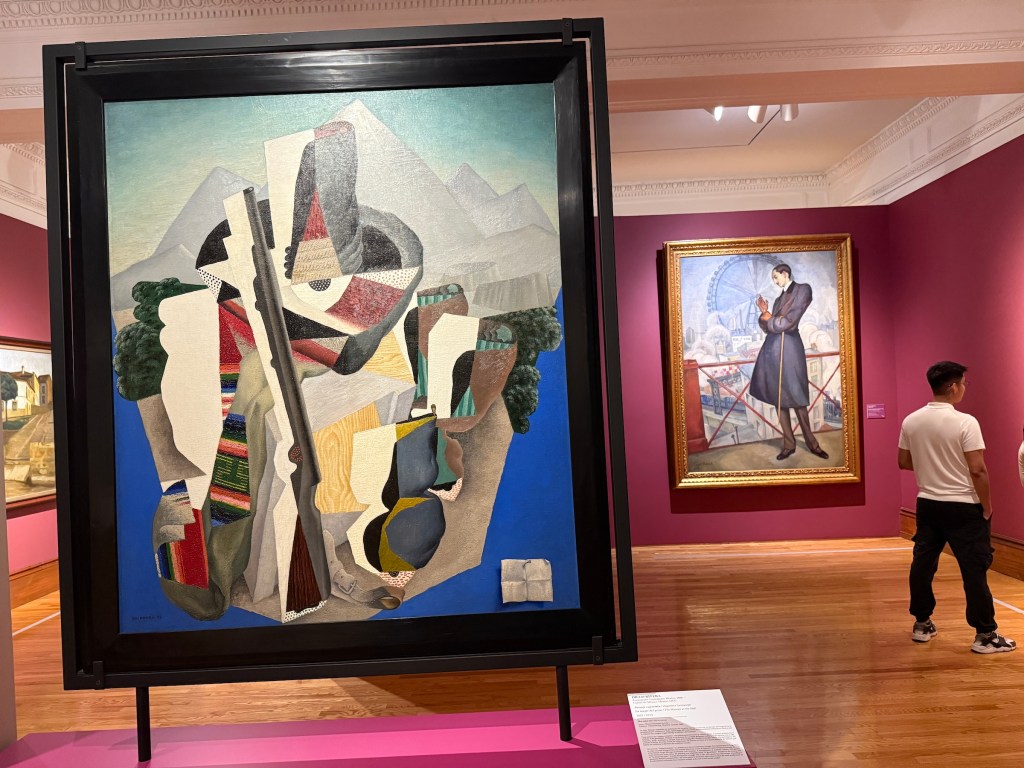
The Museo National de Arte is filled with some of the more important works of Diego Rivera, Dr Atl, Saturnino Herrán, Pablo O’Higgins, and so many more than we can discuss here. While the Louvre and other museums are more famous, a well-educated person should also be acquainted with the many gifted artists of Mexico and other parts of Latin America.
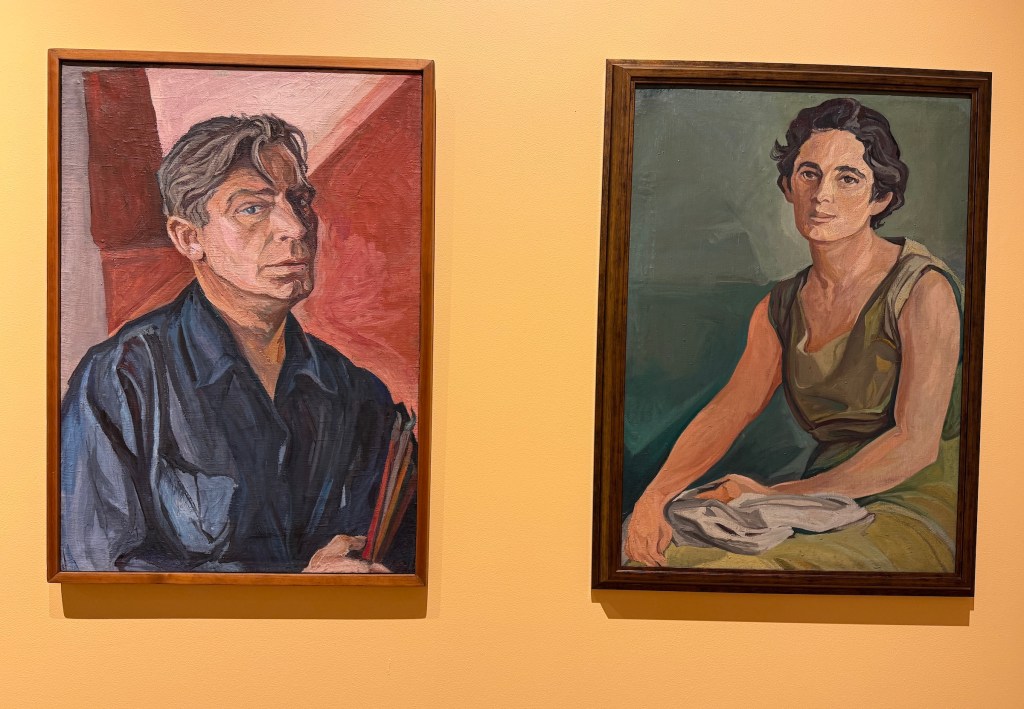
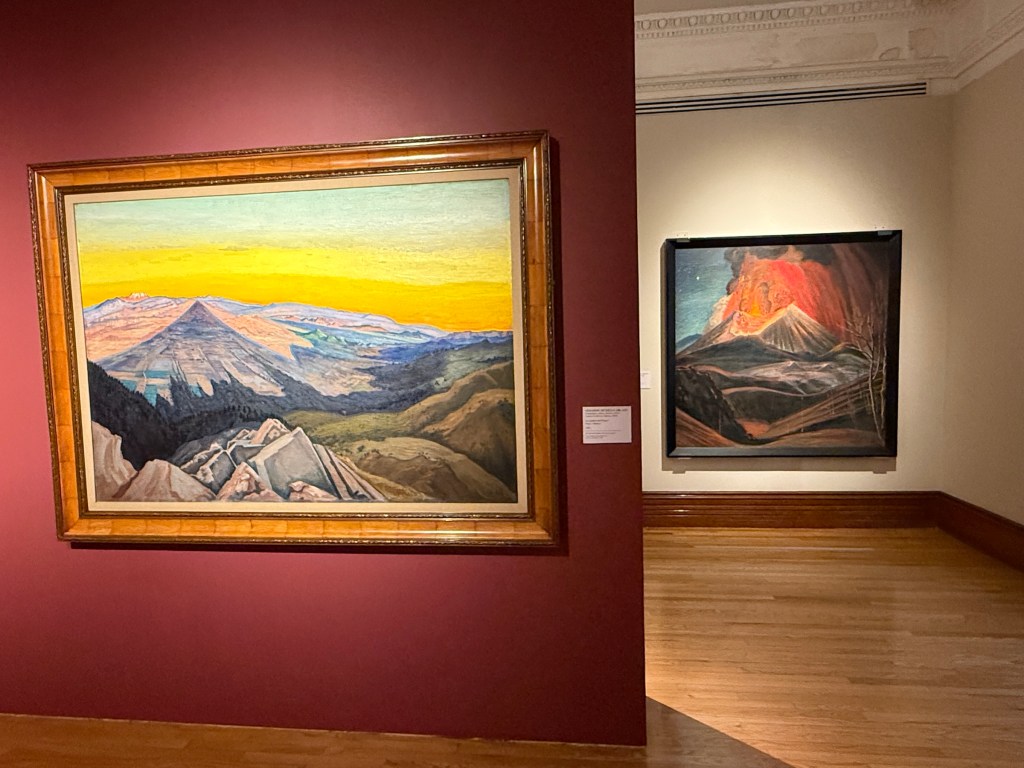
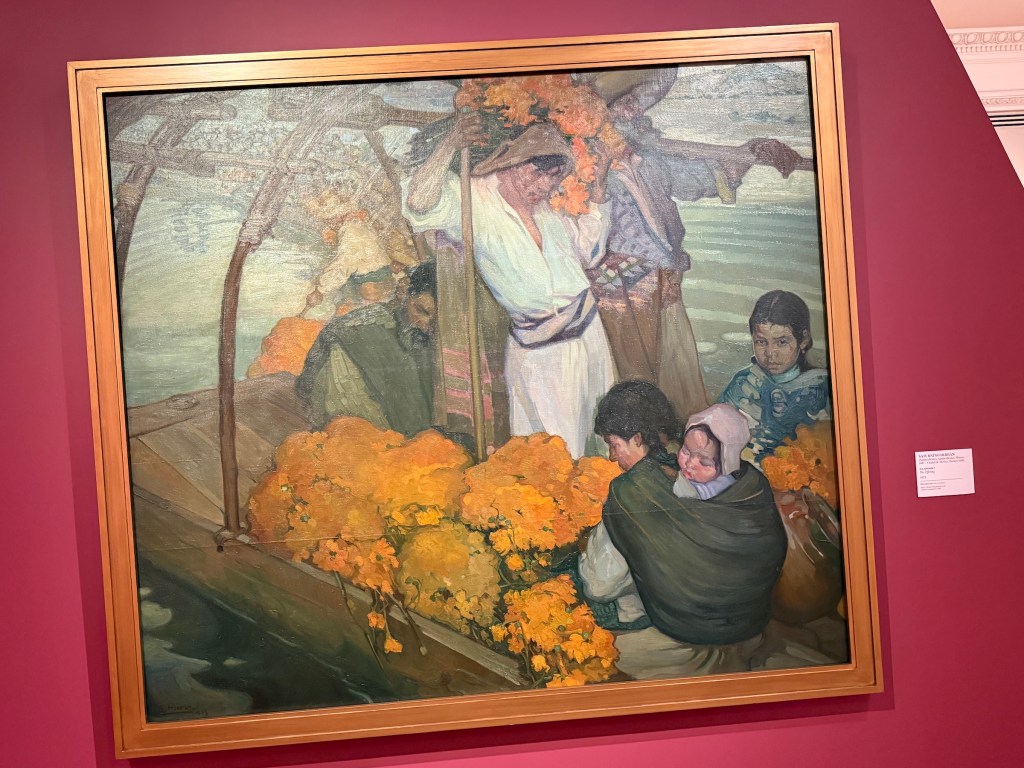
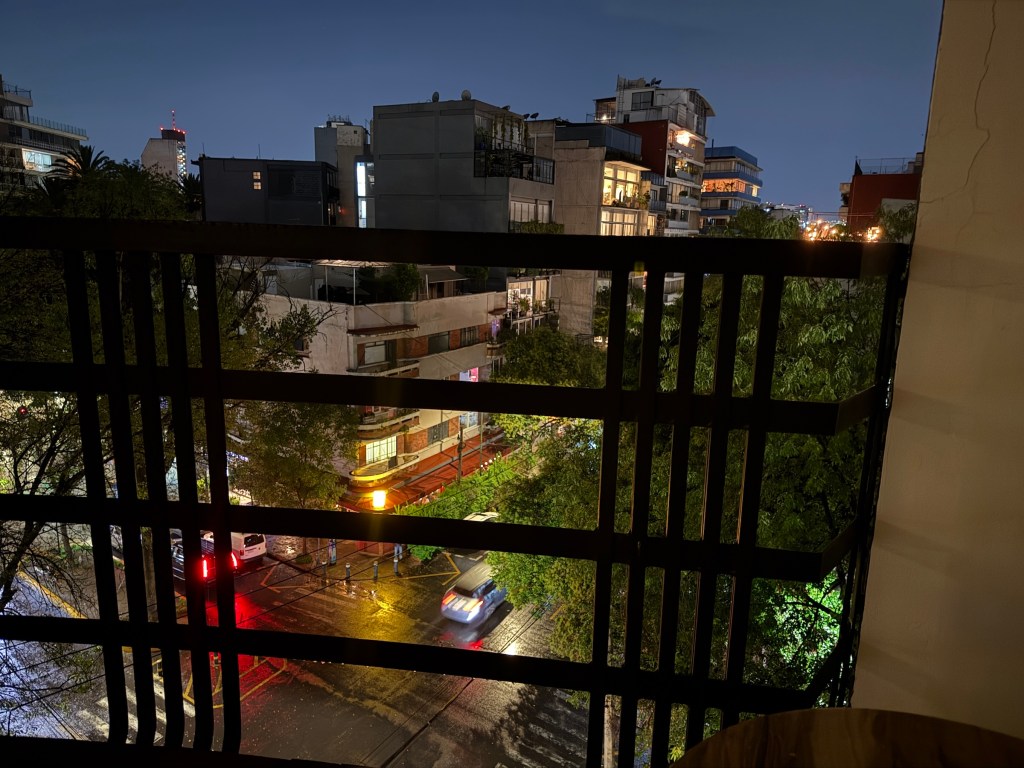
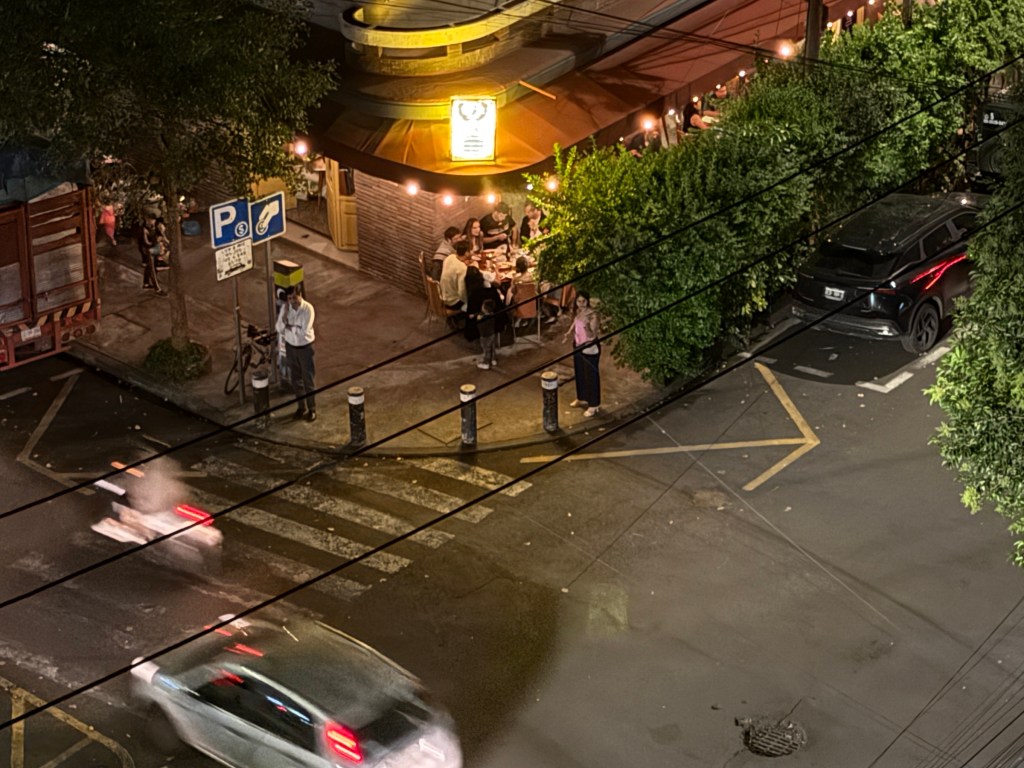
After a good long walk back to our hotel we’ve built up another healthy appetite, and from our balcony we can see a crowded place called the Lagerbar Hércules. It’s brightly-lit and beckoning on a street corner just below, and the very idea of tall frosty lagers suddenly appeals, especially with a big plate of brats and papas. Or wurst und kartoffeln, if we’re being properly German. But in any language it’s delicious, and we’ll find our way back here a few more times before we leave. It’s another place that makes Mexico City a world-class cosmopolitan attraction.
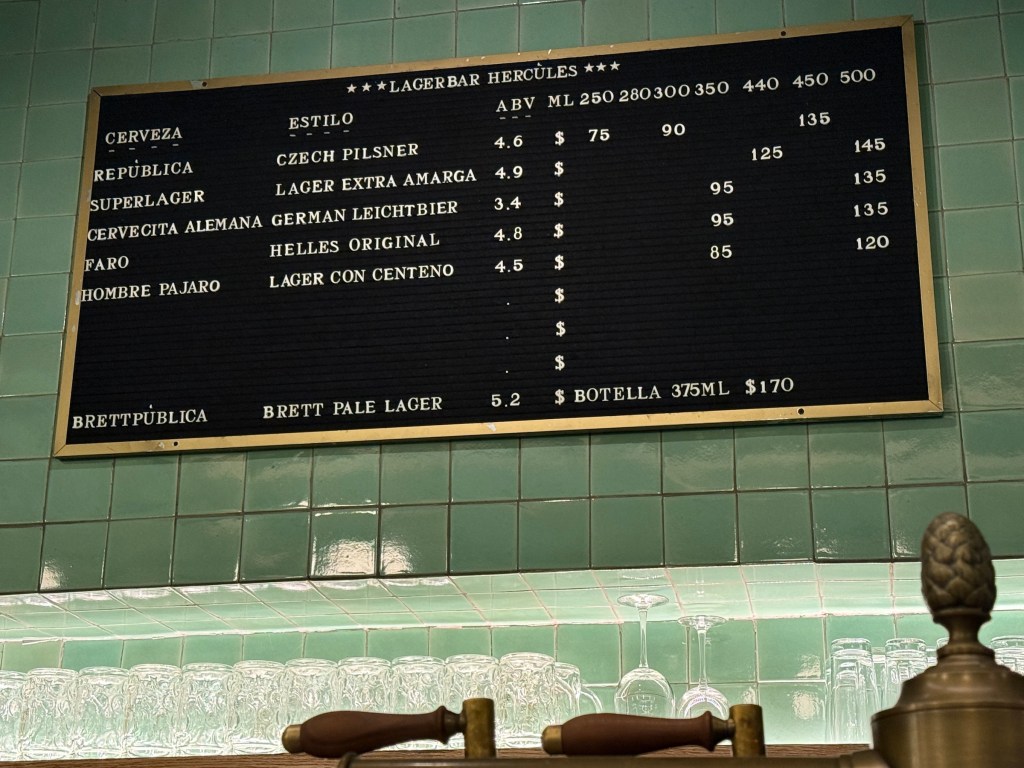
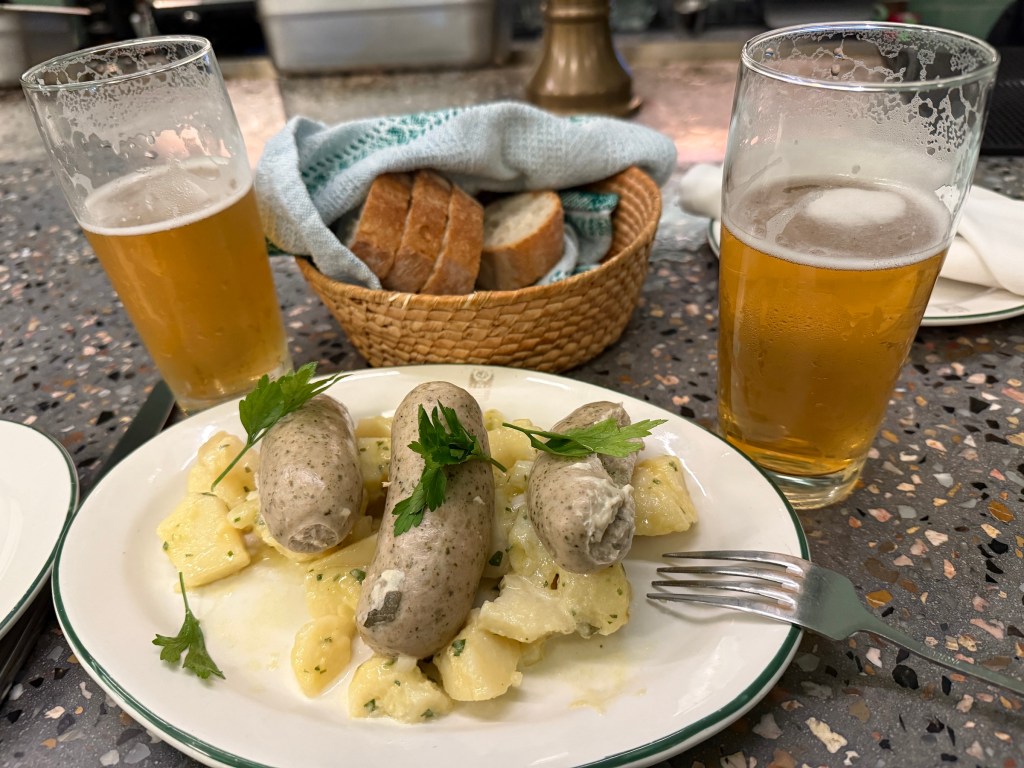
………………………………………………………………………………………………………….
Morning breaks again, and we find ourselves at Emmer for some fresh brew. It’s another fine coffee shop along verdant Avenida Amsterdam, and a quick glance at the display case tells us we’ll need some of those enticing brekkie bites.
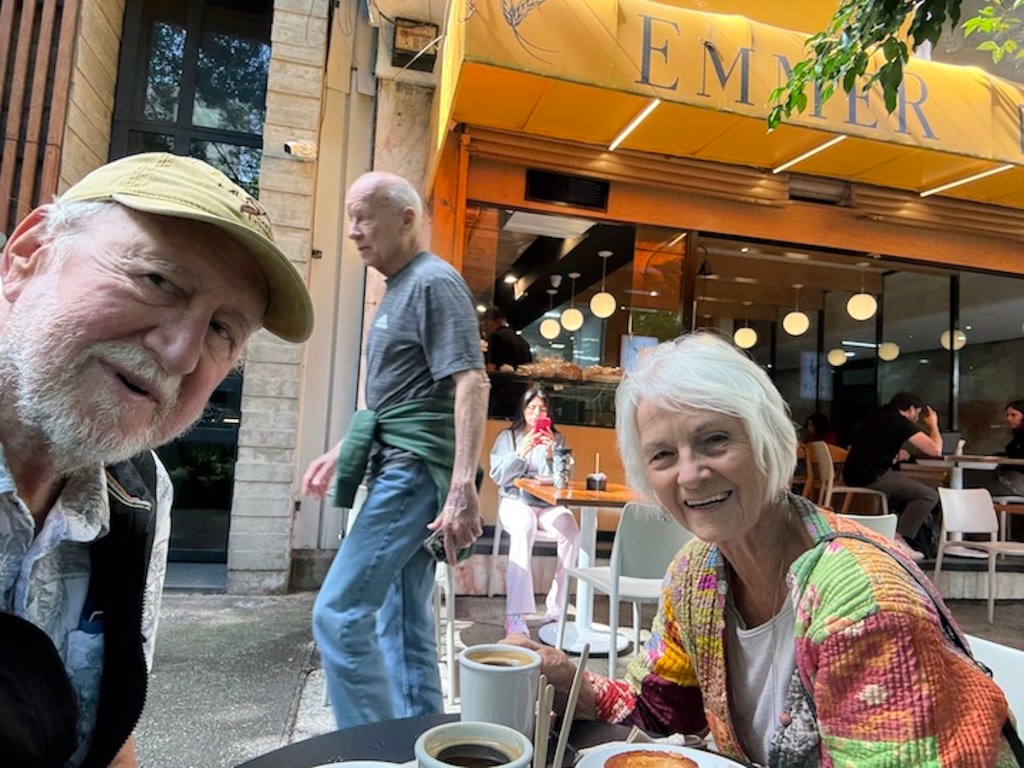
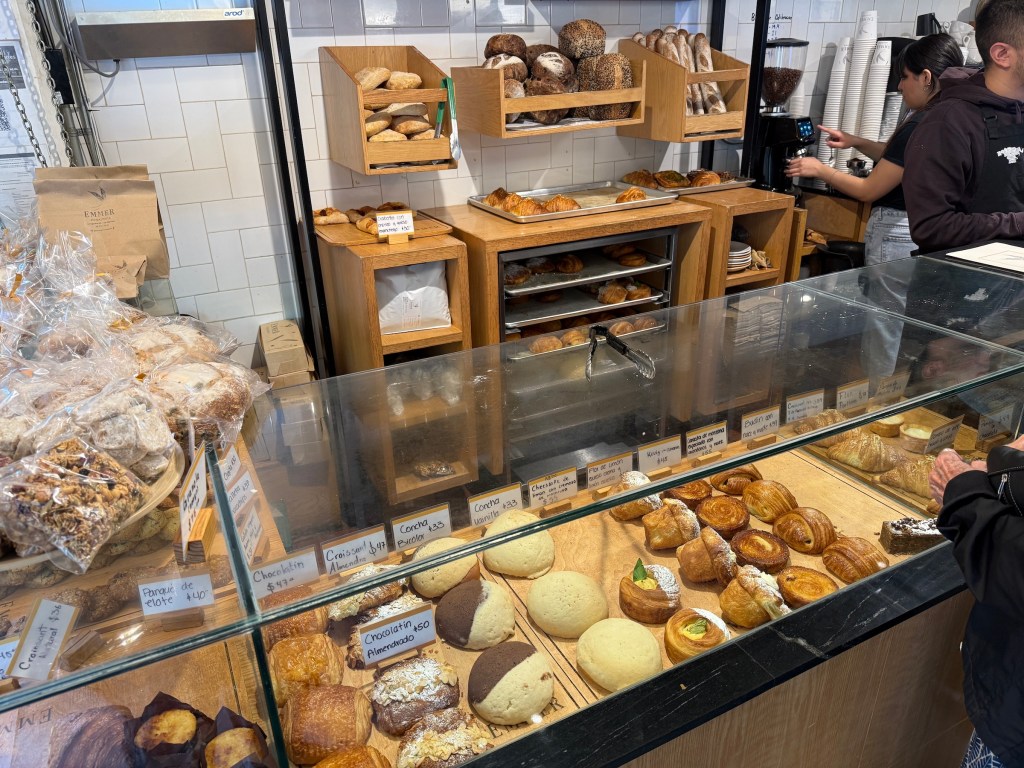
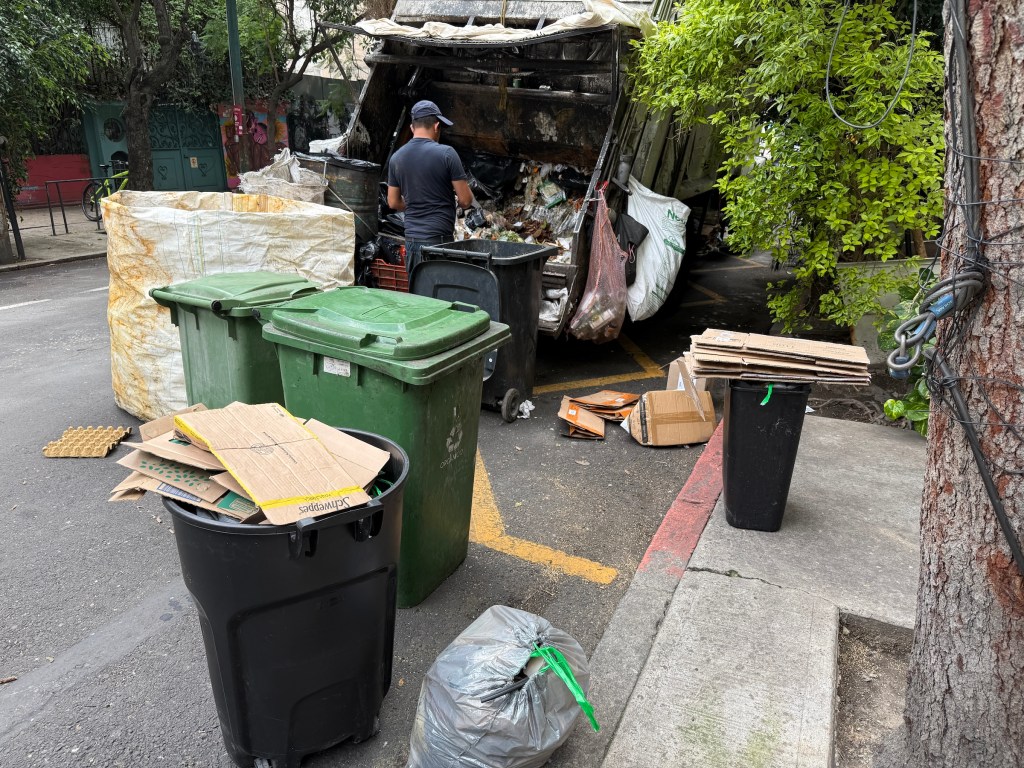
As we’re hanging out over coffee we watch the quotidian life of the city pass us by. And that includes those guys who keep the streets clean every morning, using palm frond brooms and hand carts that become heavily loaded with all the recyclables nicely sorted.
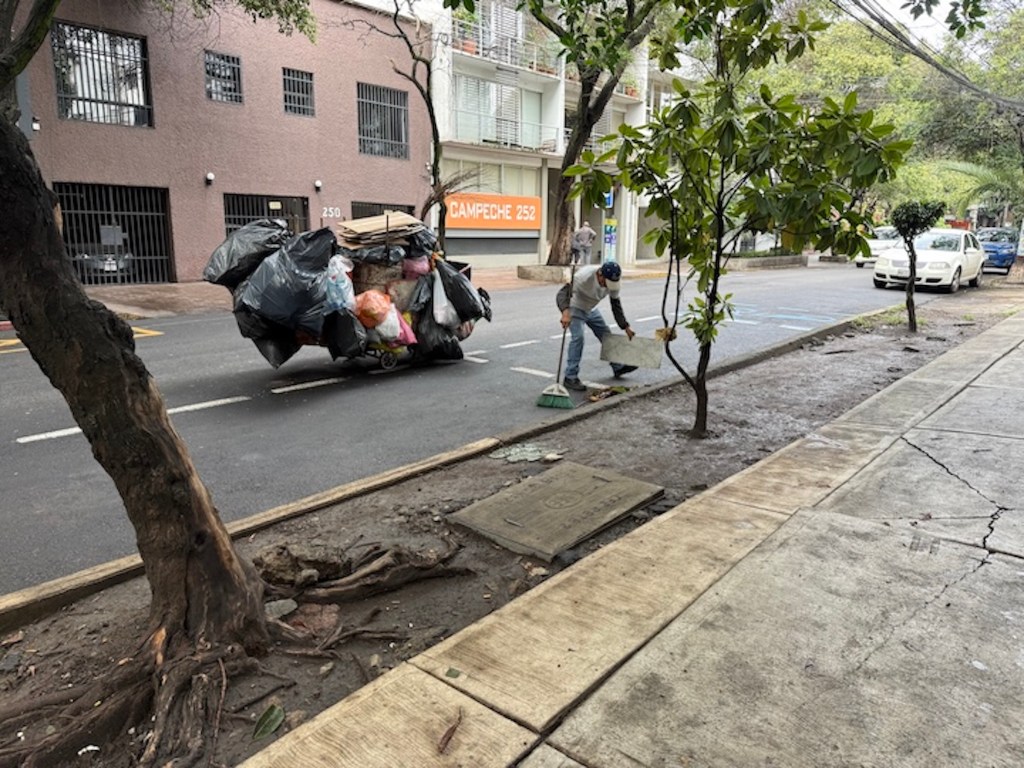
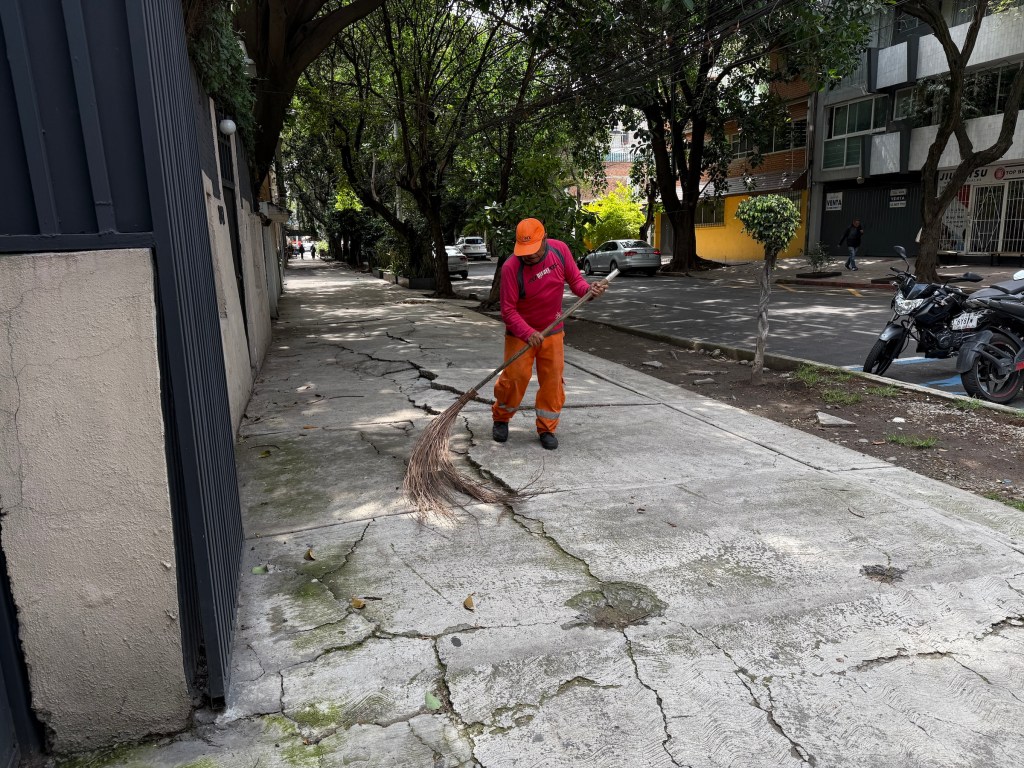
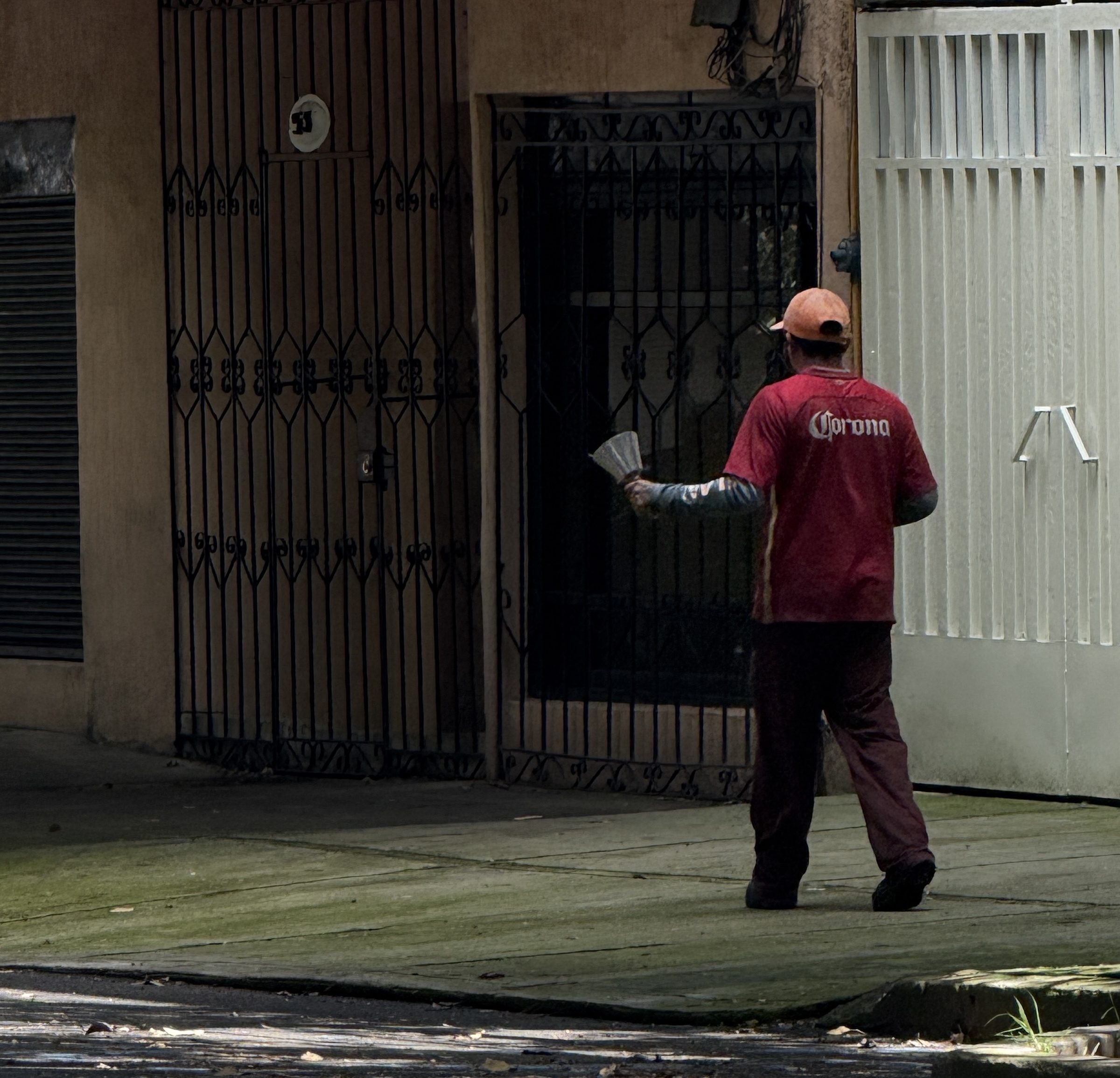
Then a guy comes jogging along with a hand bell and alerts the neighborhood to put out their garbage and recycling. It’s a good system that doesn’t clutter the streets with bulging trash bags just waiting for the dogs to spread around.
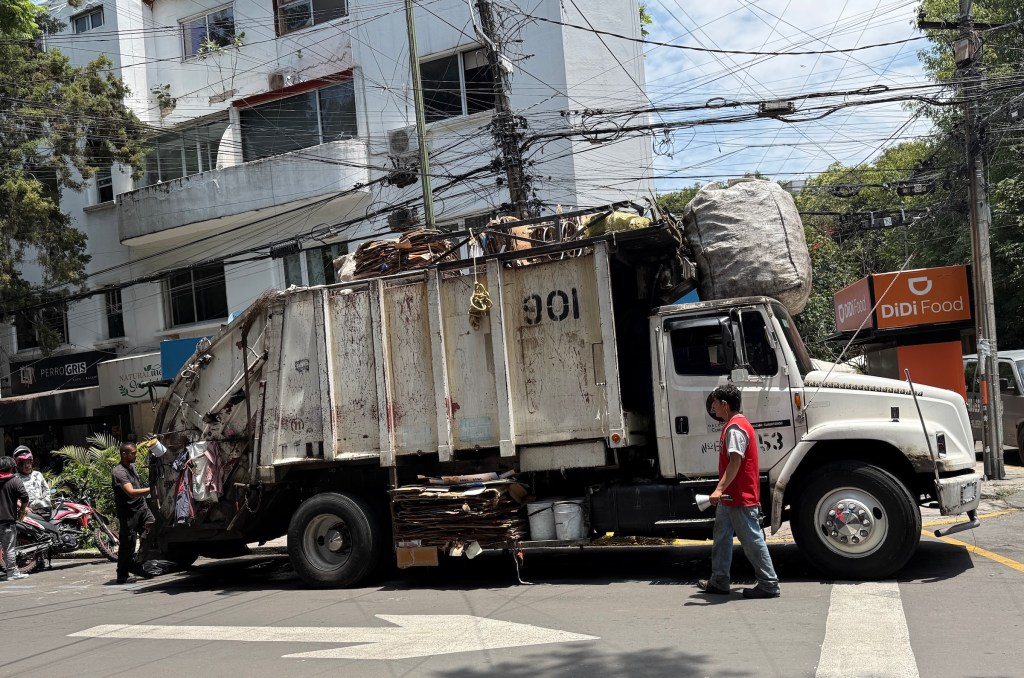
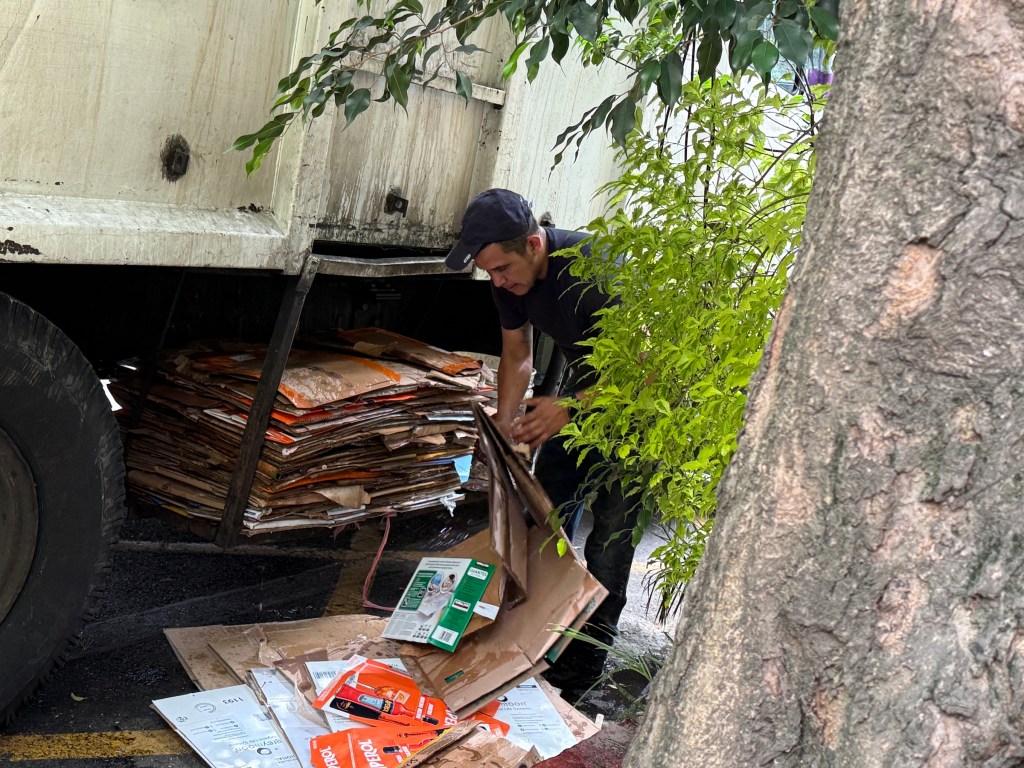
Soon a big garbage truck arrives right beside us, and it’s fascinating to watch the crew separate everything into bigger bags, while another guy stashes the folded cardboard onto a rack under the truck. It’s an efficient way to recycle as much as possible while they employ some street guys to keep things tidy. Most US cities could learn a lot from a visit to CDMX.
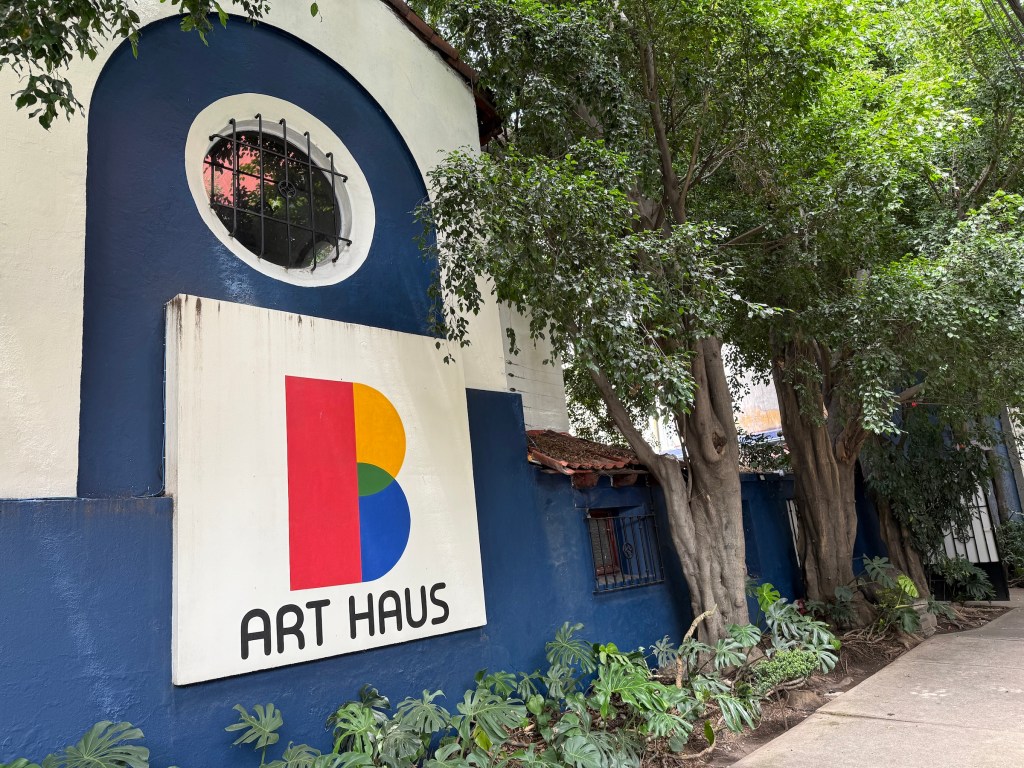
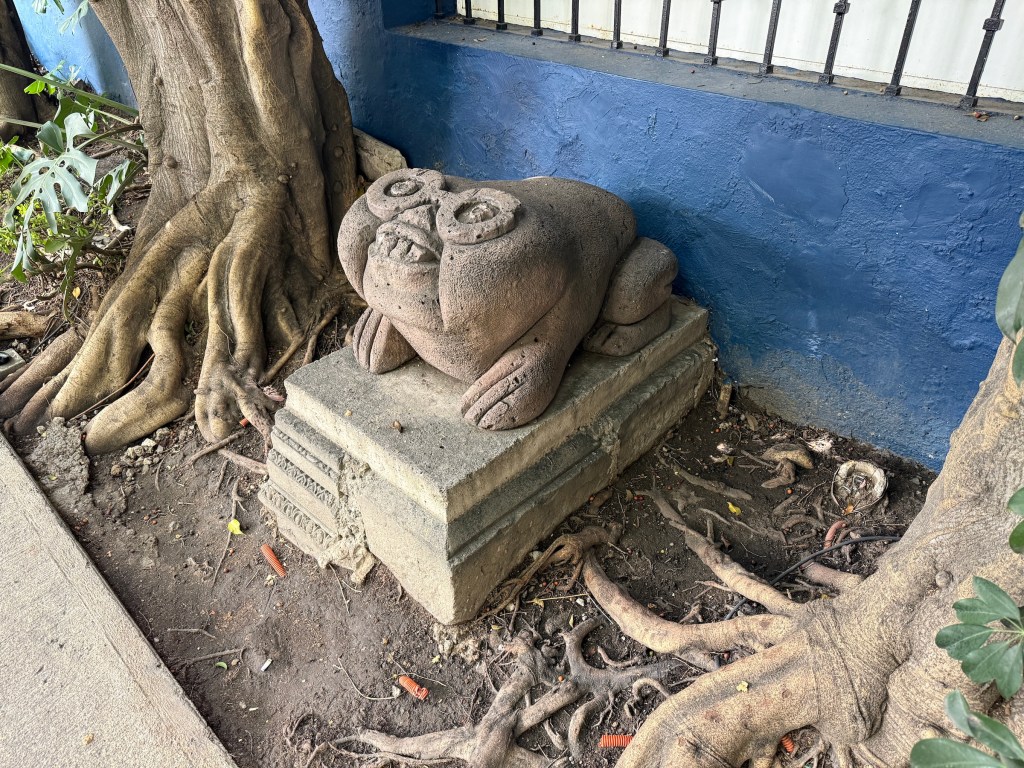
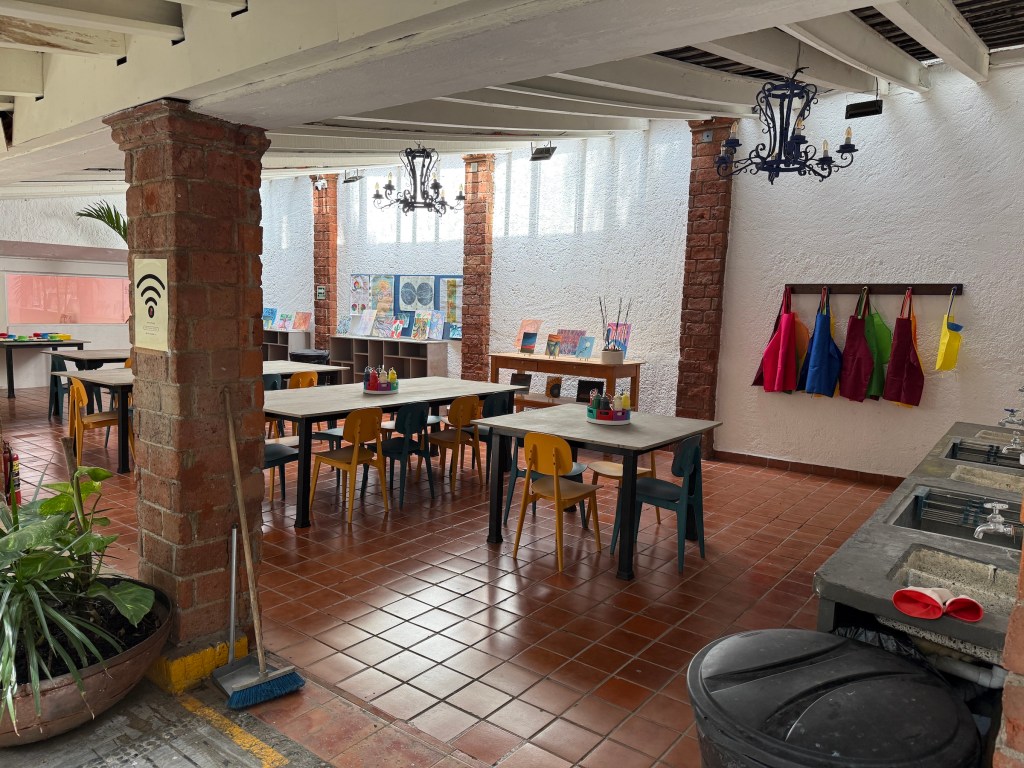
Then we’re off for another long walk around the neighborhood, and soon we find the Art Haus. There’s a full range of art lessons available in this place where you can improve your artistic technique – over frequent breaks at the Art Bar. Sounds like a good way to maximize your next MX City escape!
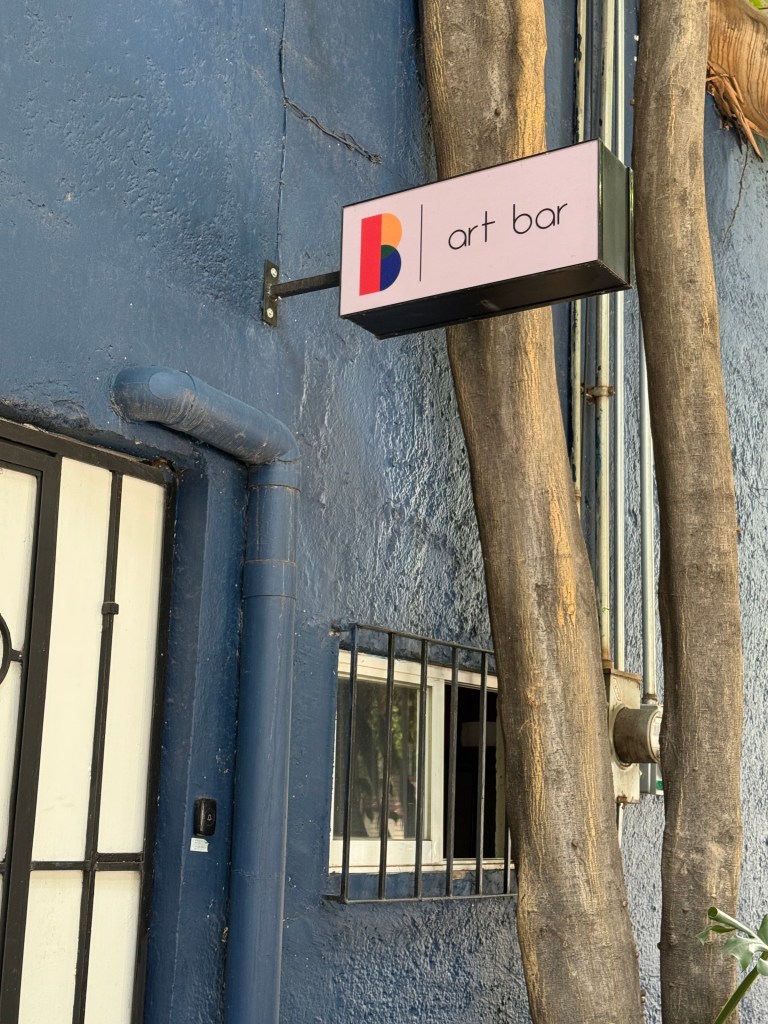
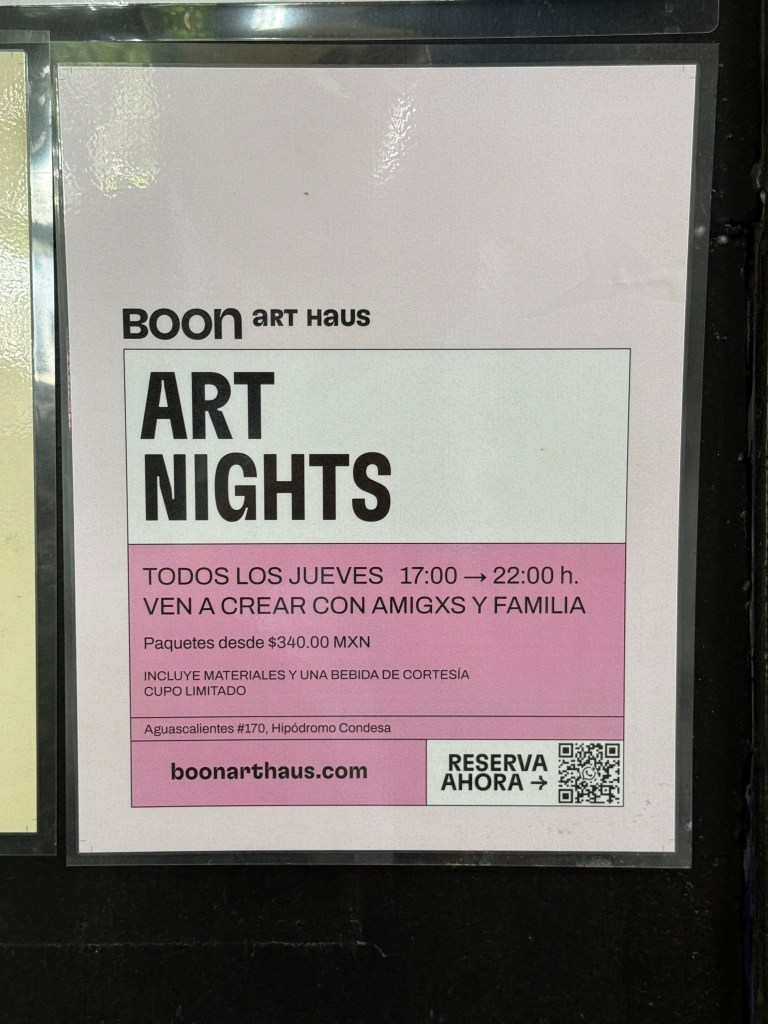
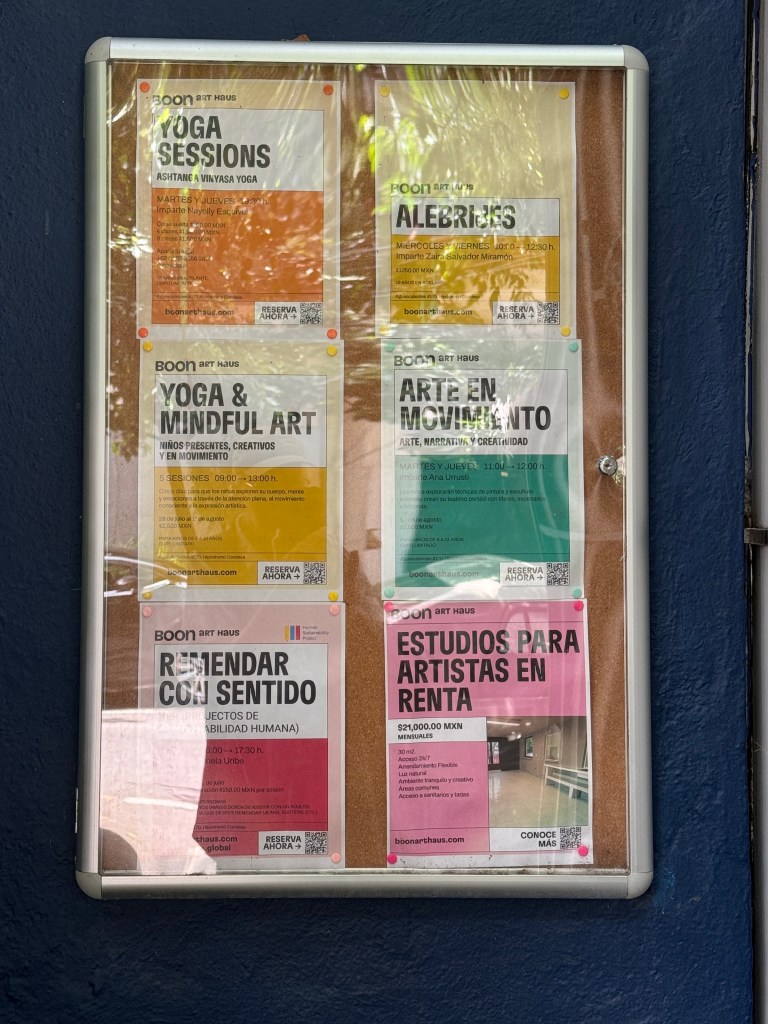
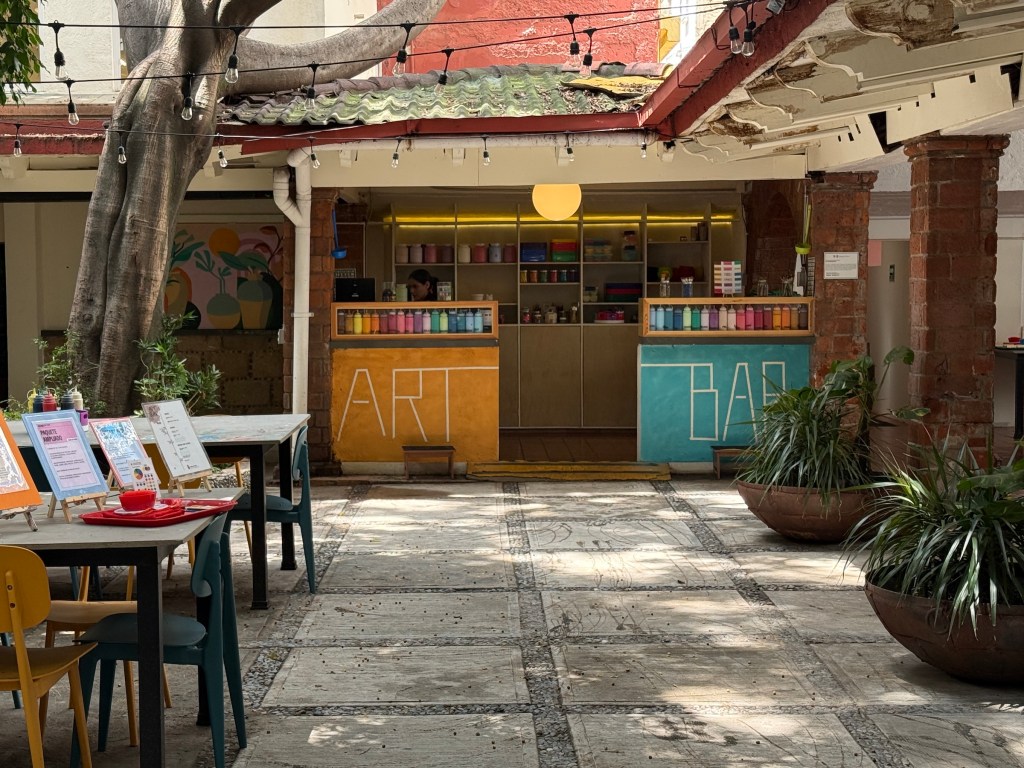
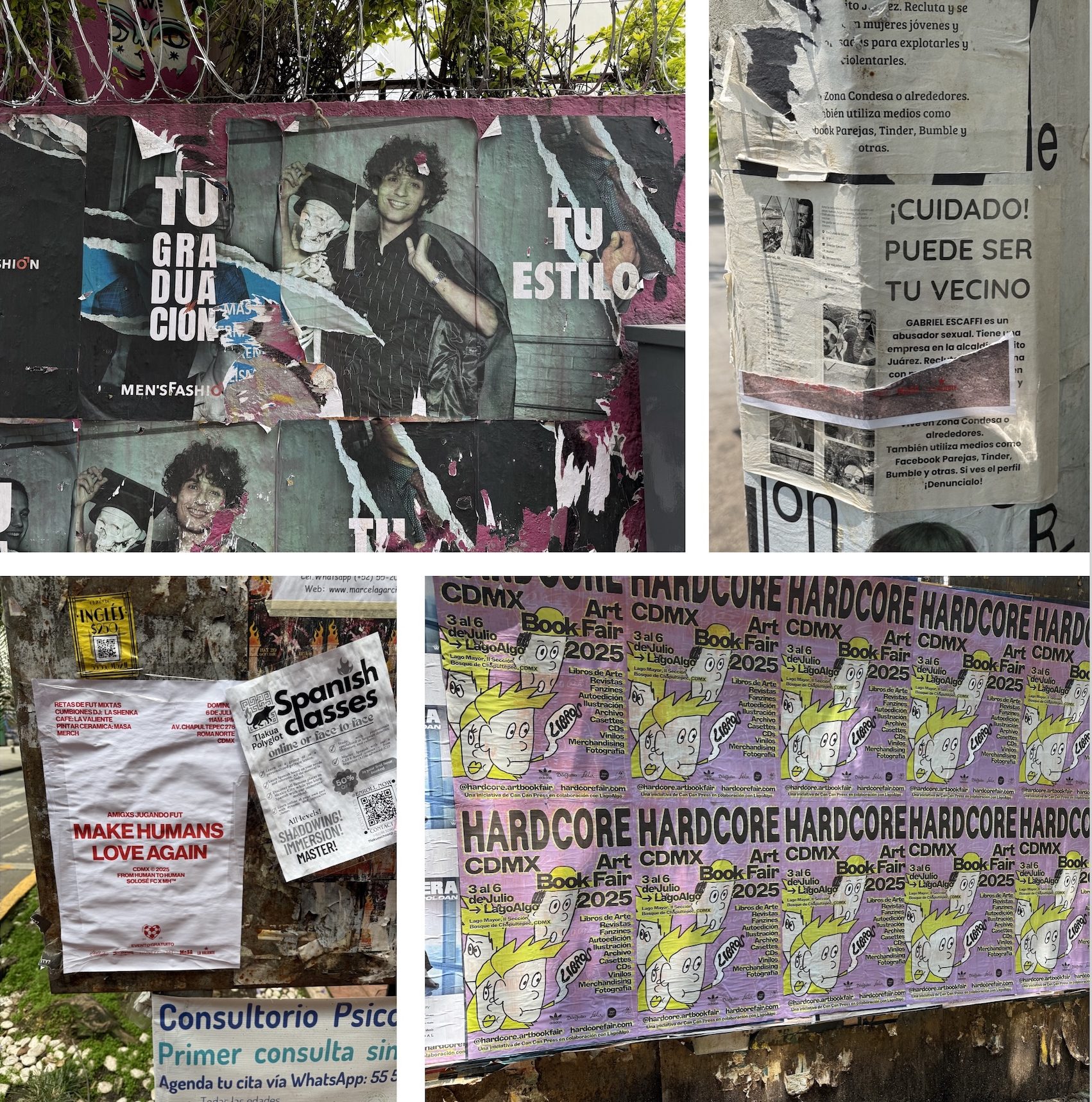
There are posters plastered on walls and light posts throughout the neighborhood, some that have weathered into pieces of street art. There’s an ad for a ‘Hardcore’ Art and Book Fair, and another poster warns against a ‘sexual abuser’ named Gabriel Escaffi, “Who might be your neighbor!”
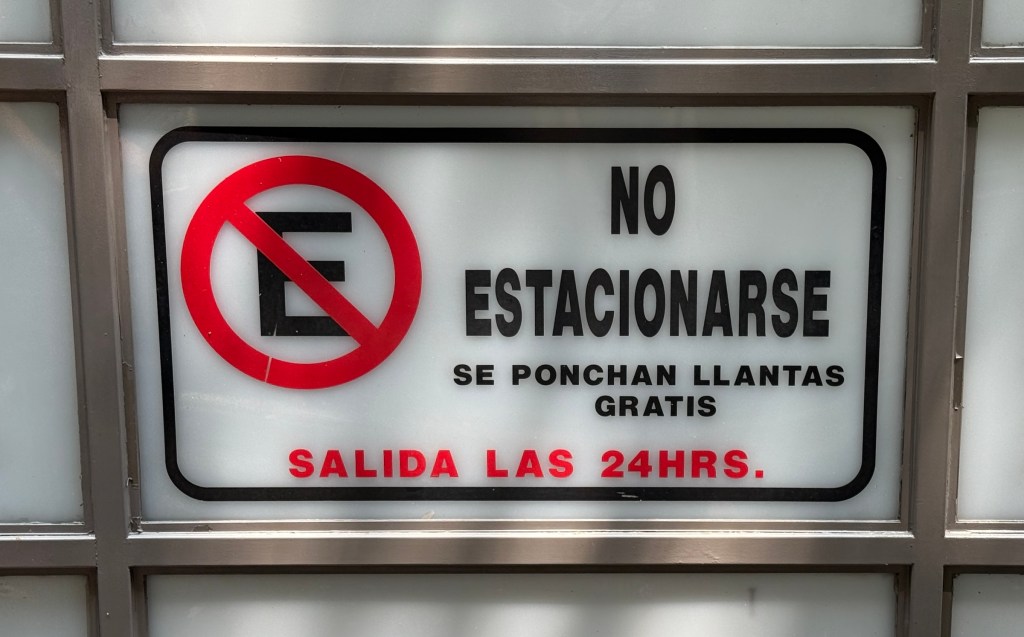
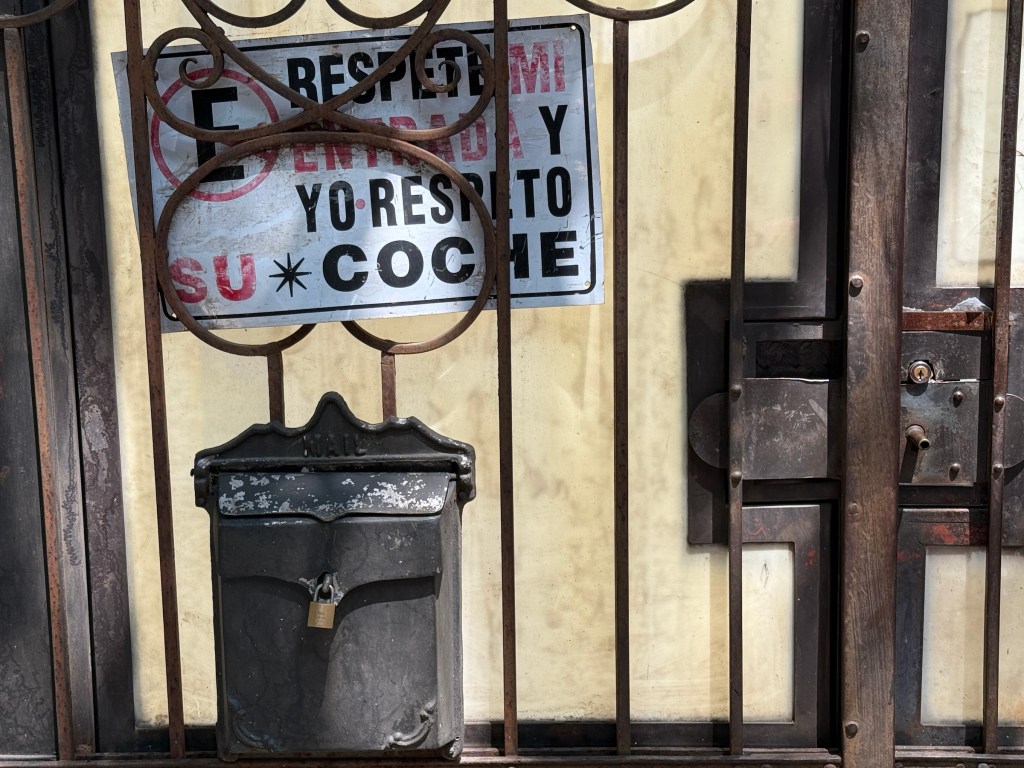
In this crowded central part of the city warnings are posted against parking in front of a person’s driveway. One of them reads, “Tires punctured for free.” And another says “You respect my entryway, and I’ll respect your car.” The message is clear.
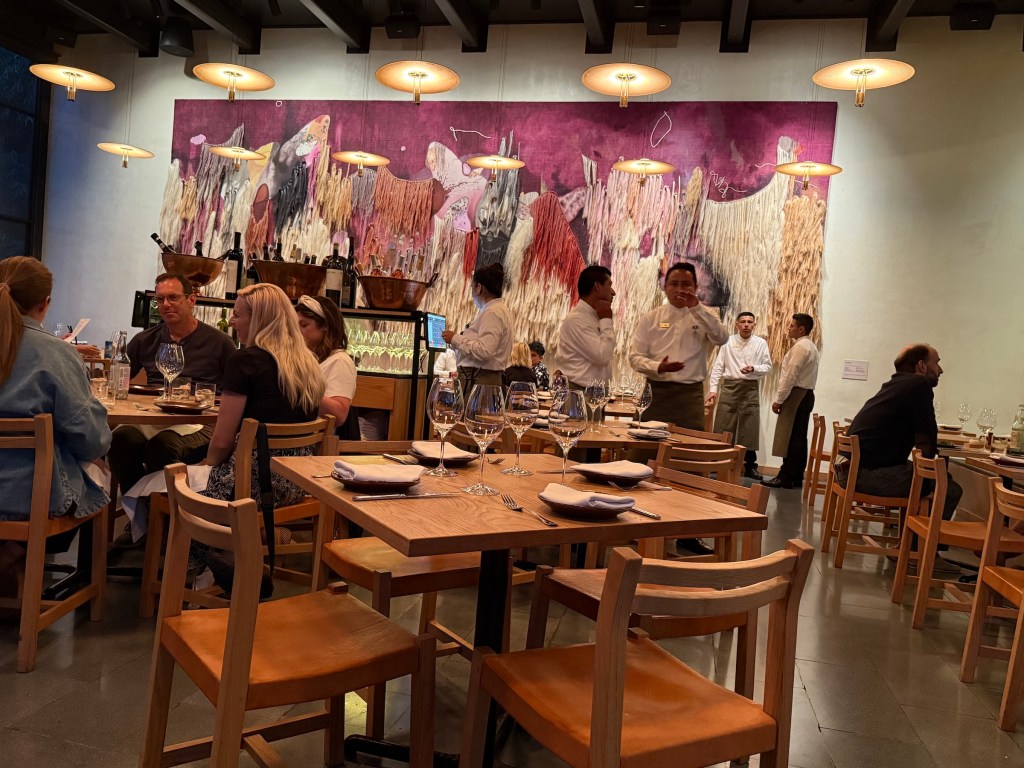
The evening turns rainy just as we get back to the hotel, and we detour into the dry doorway of a spot called Caracól de Mar. That intriguing wide-window view into the second floor dining area has caught our attention over the past few days and this seems like a good evening to try the place out.
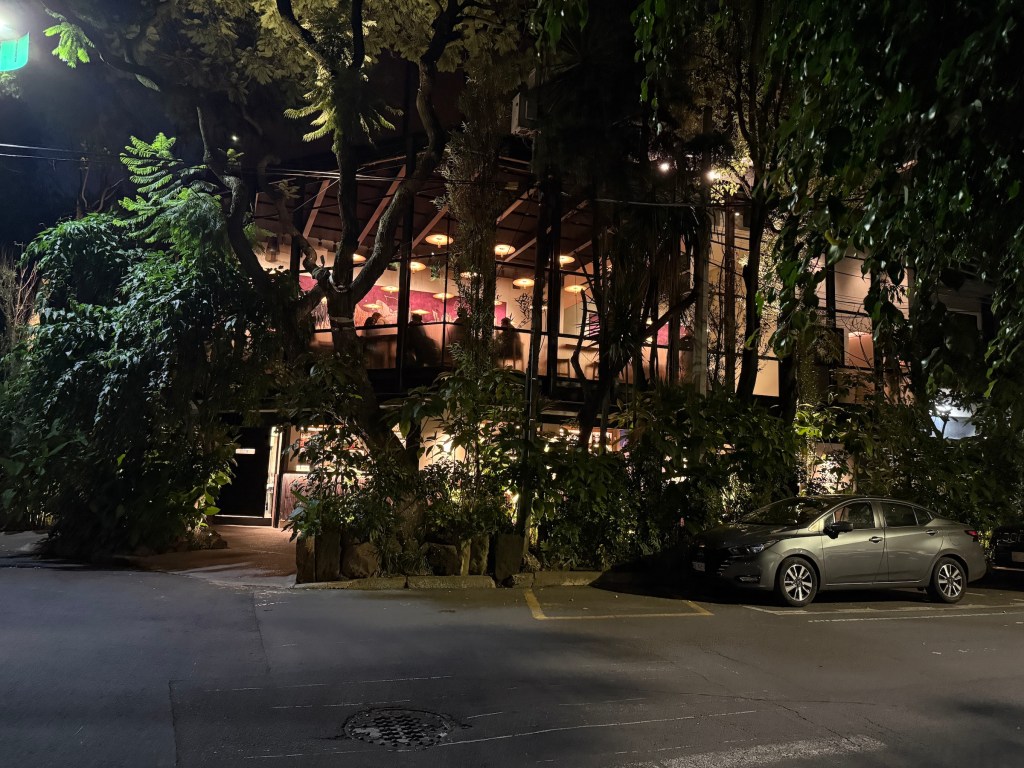
The food and drink are excellent, as befits such an enticing place. We’re in no rush to leave so we relax into the evening as the rainfall rattles against the large windows. It’s been a good day and we’re enjoying the evening although we’ll probably get drenched after we leave. But we’re close enough to the hotel that we don’t really care – the idea of getting thoroughly wet even sounds nicely romantic. And I think there’s a bit of that good mezcal still waiting in our room to warm us up.
…………………………………………………………………………………………………………….
Friday is market day and we’re awakened by the sound of vehicles, loud conversation, and metal braces being assembled under our balcony, as a tent city emerges on the street below.
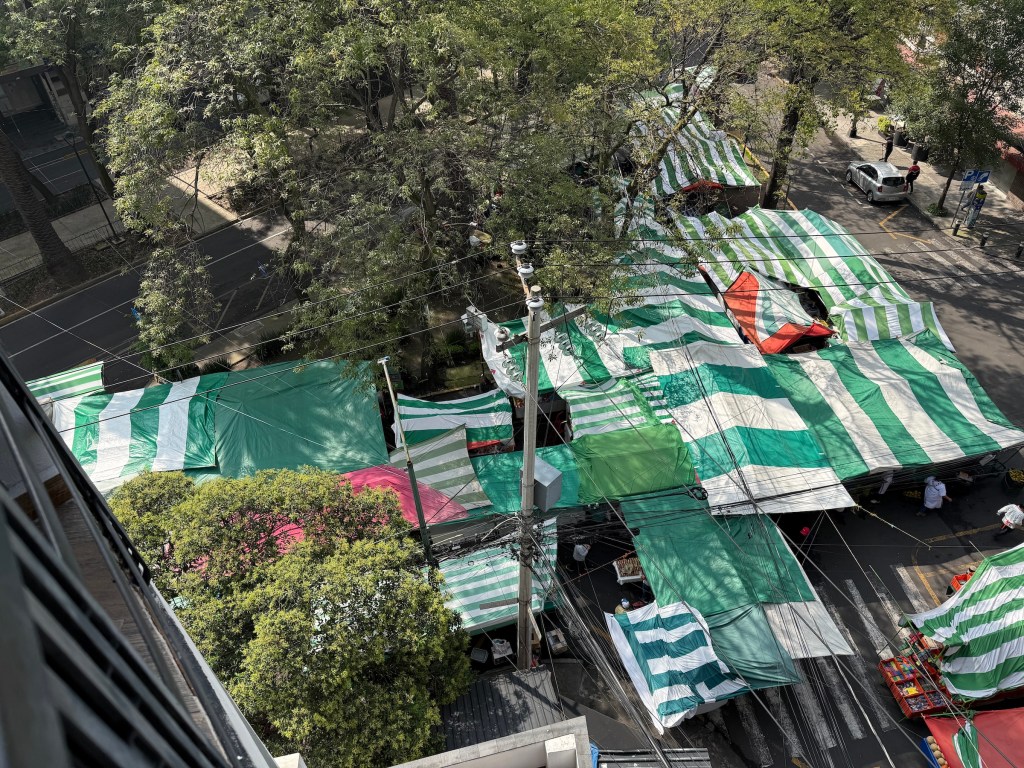
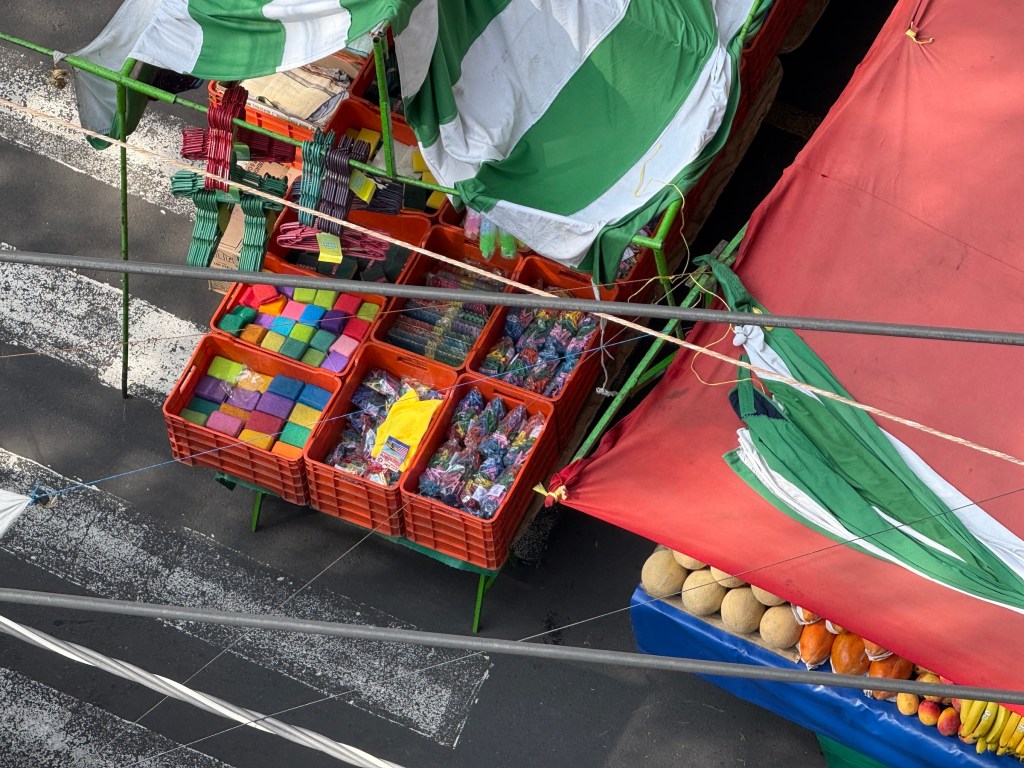
This is the kind of event for wandering through colorful displays of food, housewares, plants, second-hand clothing, and other surprises. Without a kitchen we can’t buy much of the fresh food; maybe just a couple of apples or juicy peaches for a mid-morning treat. And we also have no place to put any of those beautiful beckoning plants.
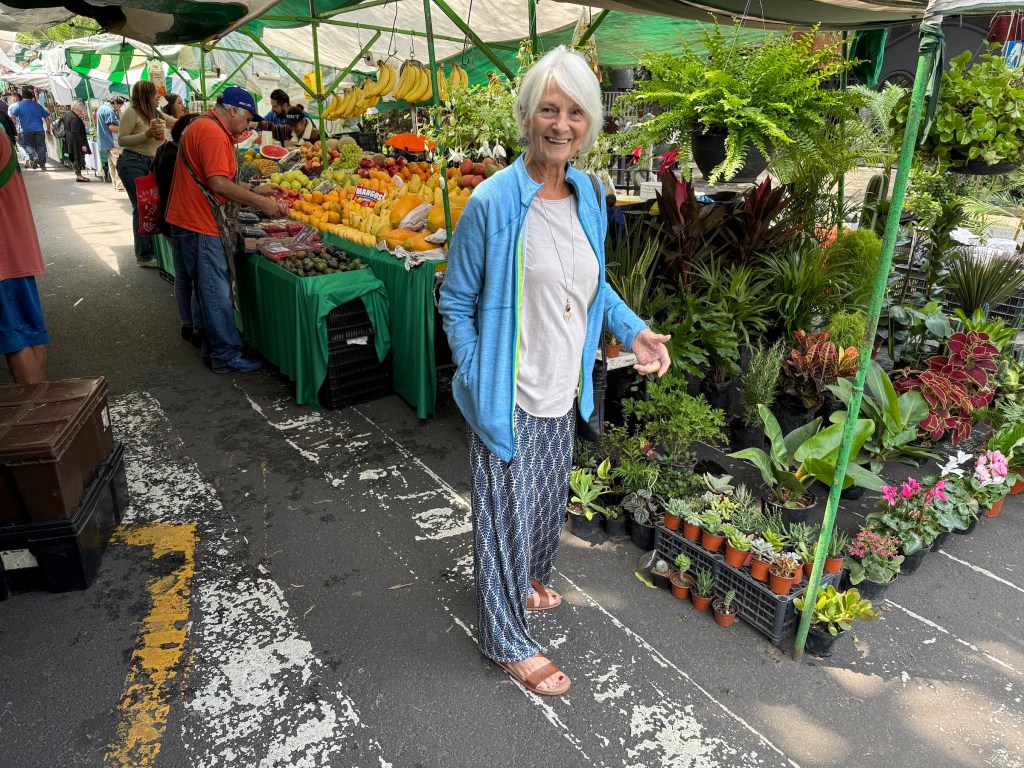
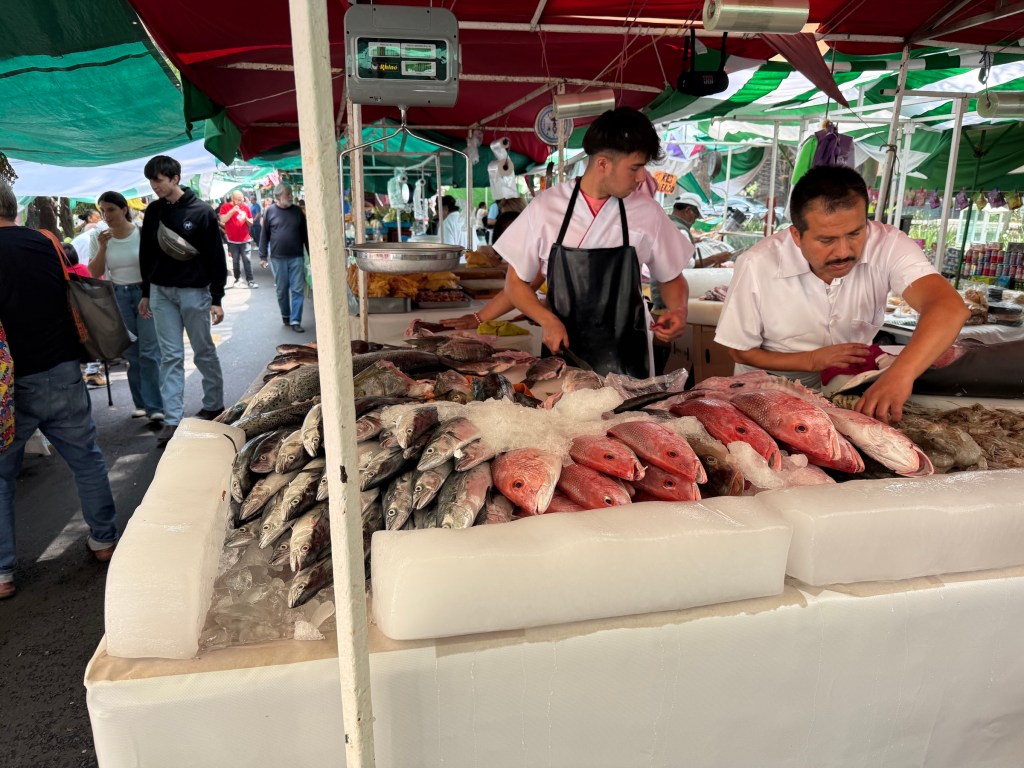
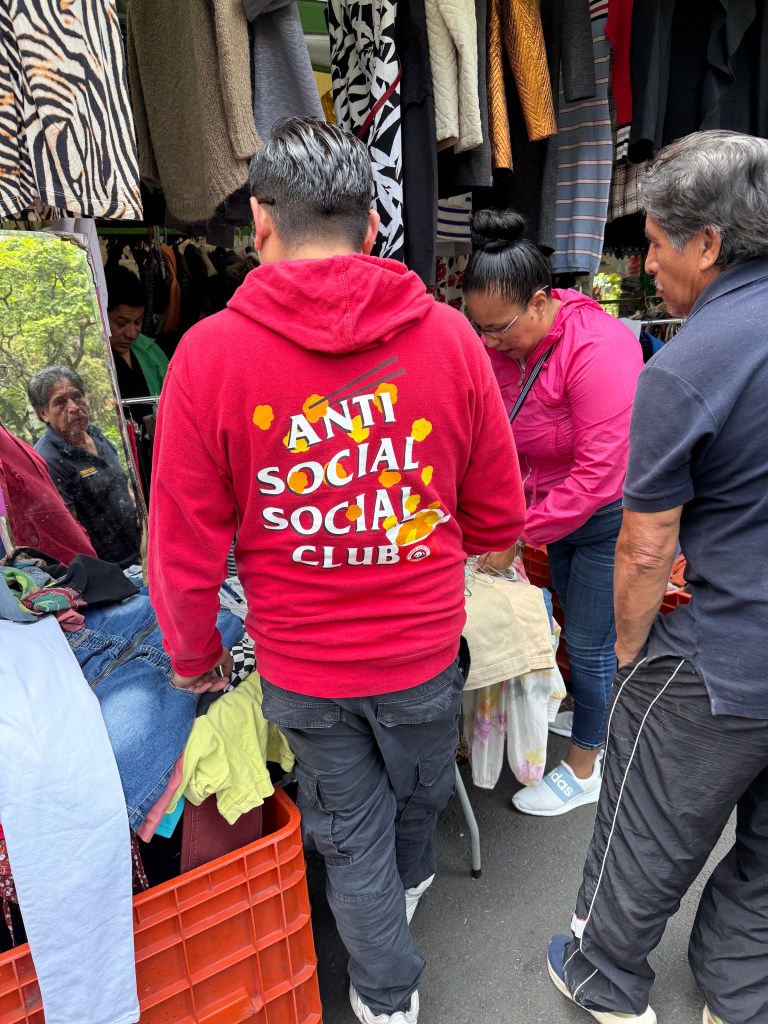
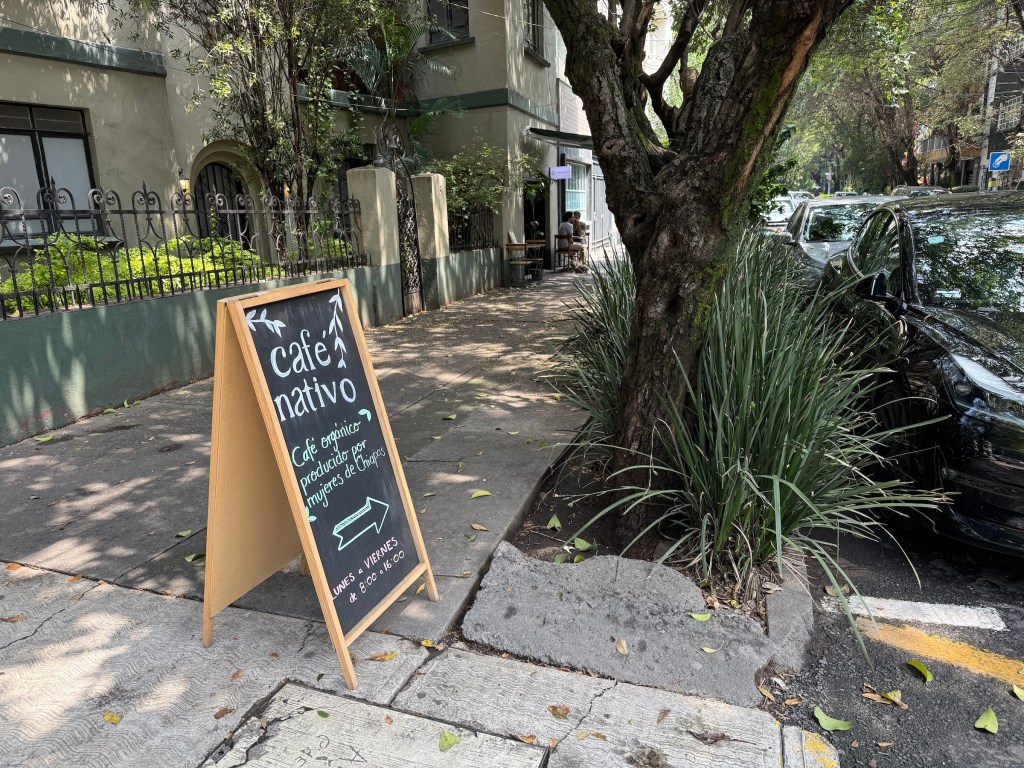
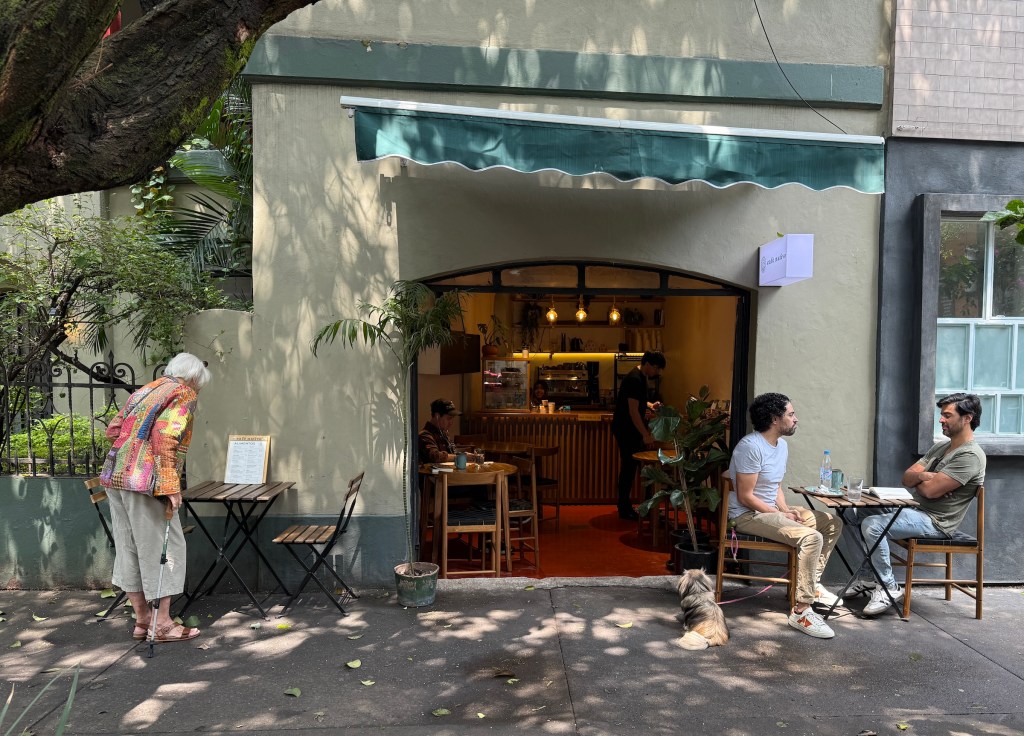
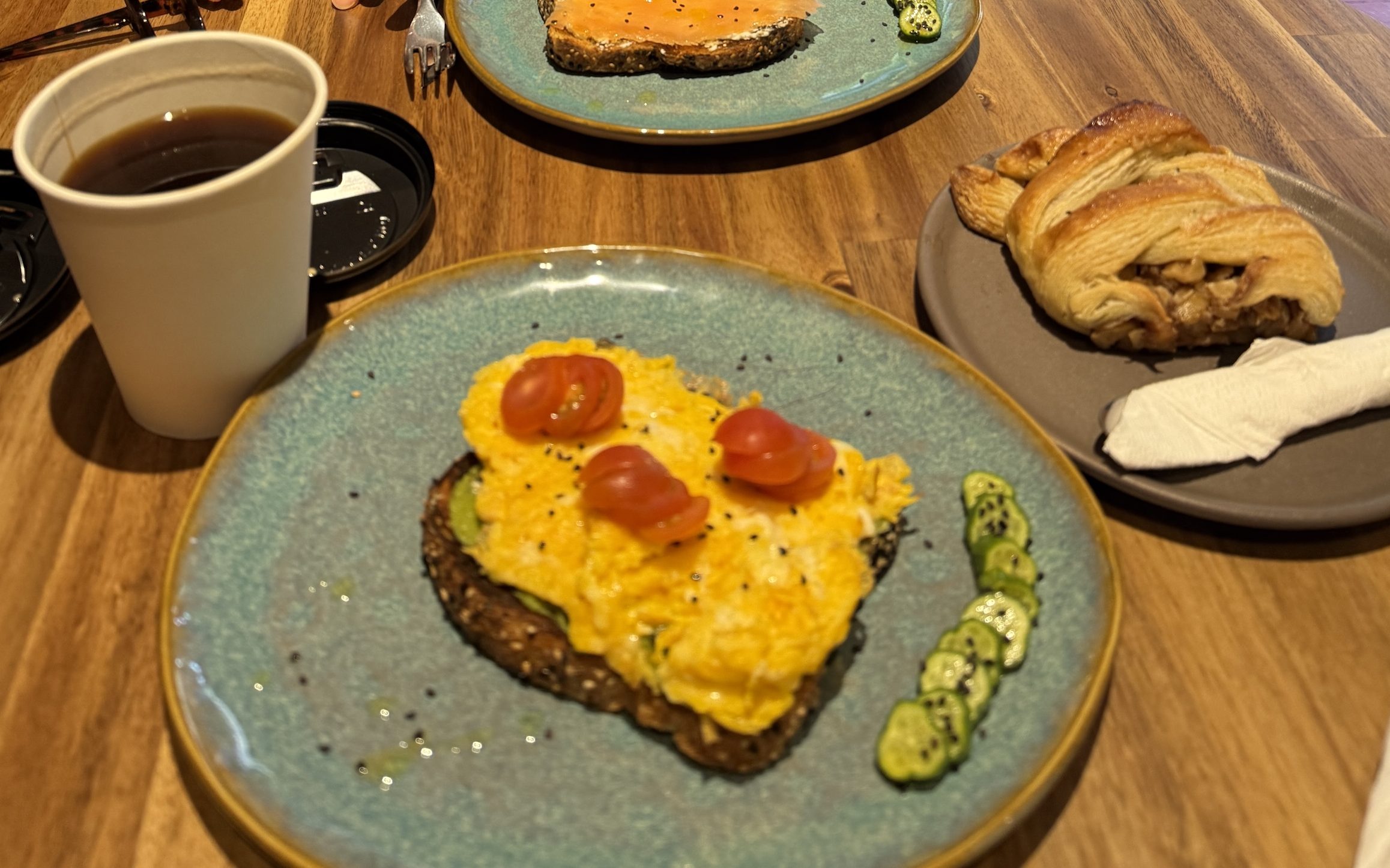
Afterward we’ll wander off to the sweet little Cafe Nativo, with coffee produced by the women of Chiapas. It’s a fine rich brew that goes well with a platter of egg toast and a delicious bear claw pastry.
We’ve passed an interesting artist’s studio over the last few days, and we decide to take a closer look. We won’t be able to carry anything large in our luggage but maybe there’s something that’s easily packable.
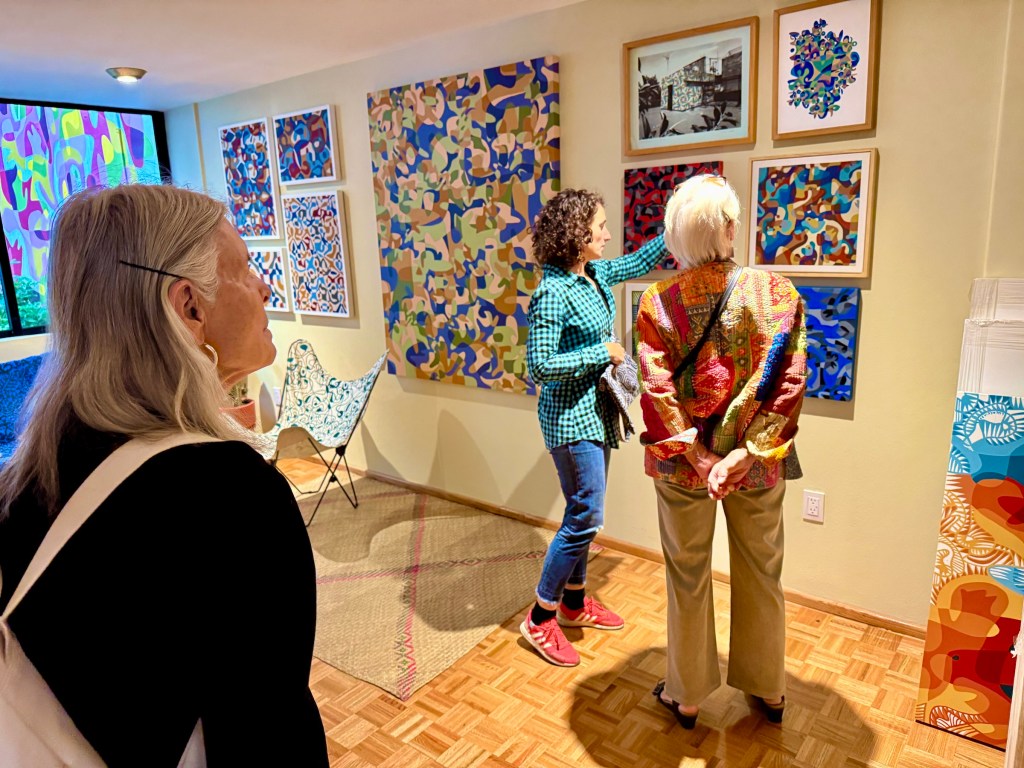
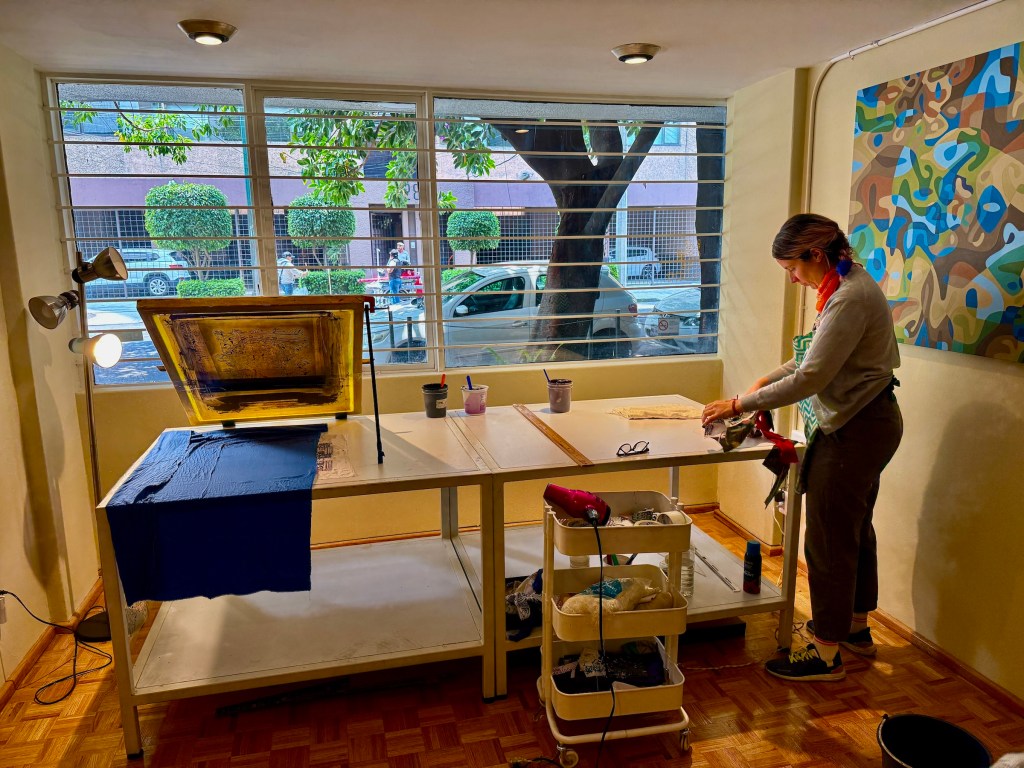
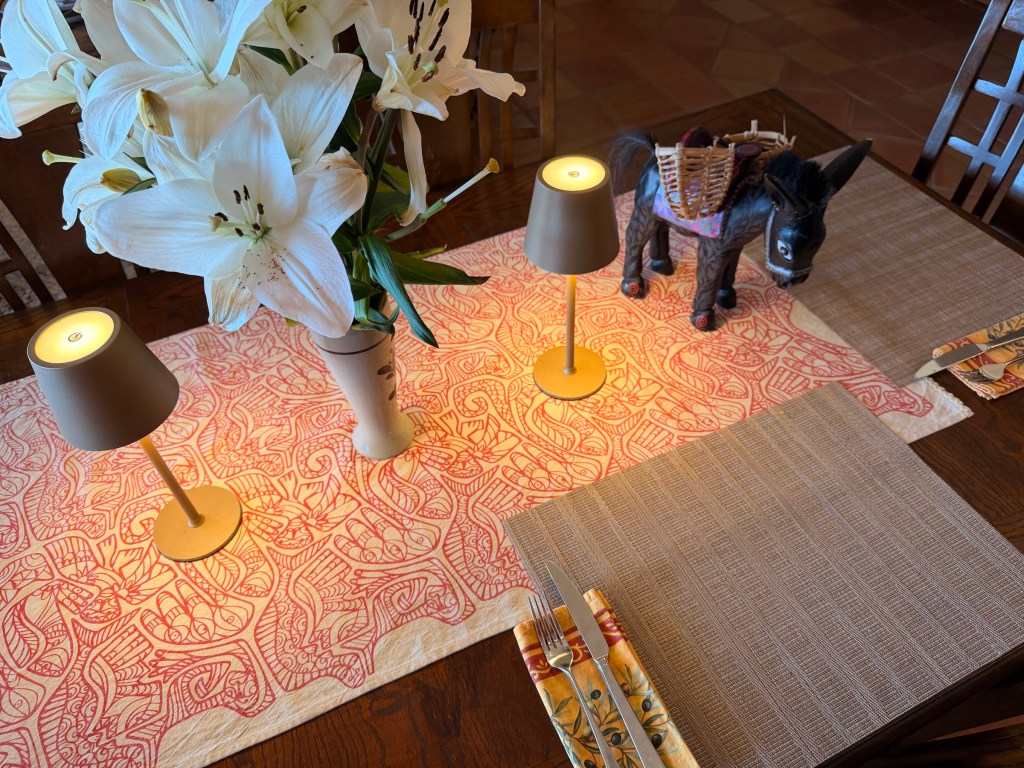
It’s lucky for us that the artist has some long cloth prints and one of them will end up looking fine on our dinner table back in Kino Bay!
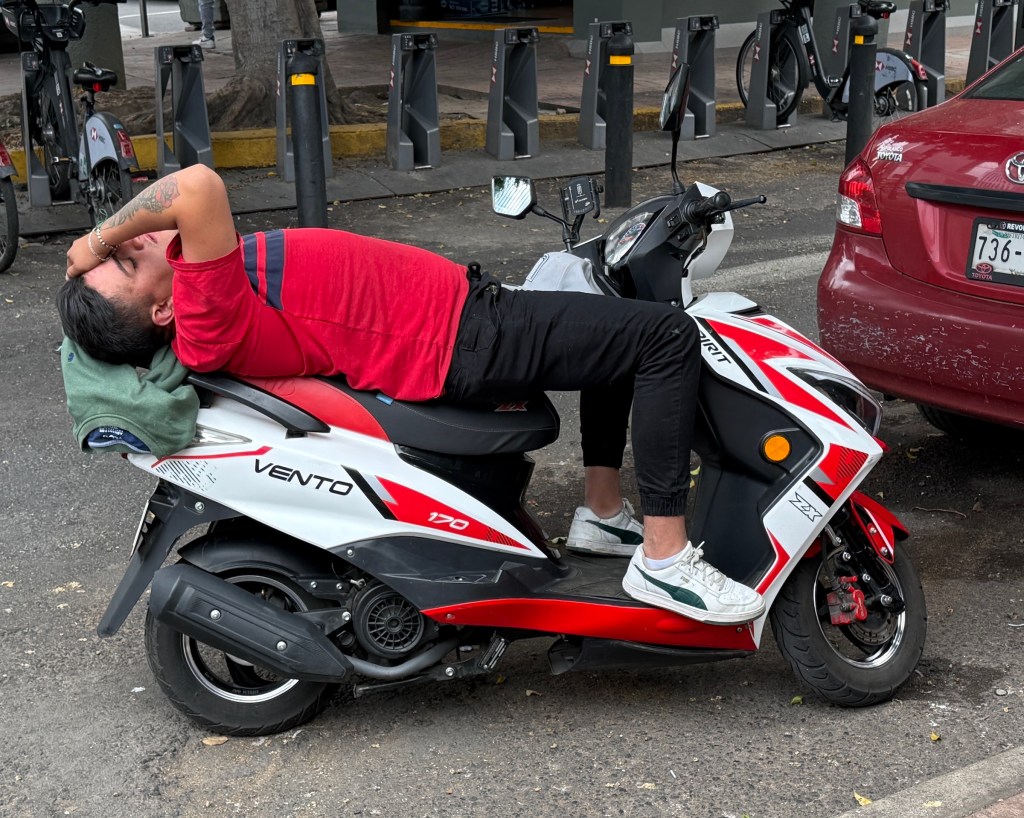
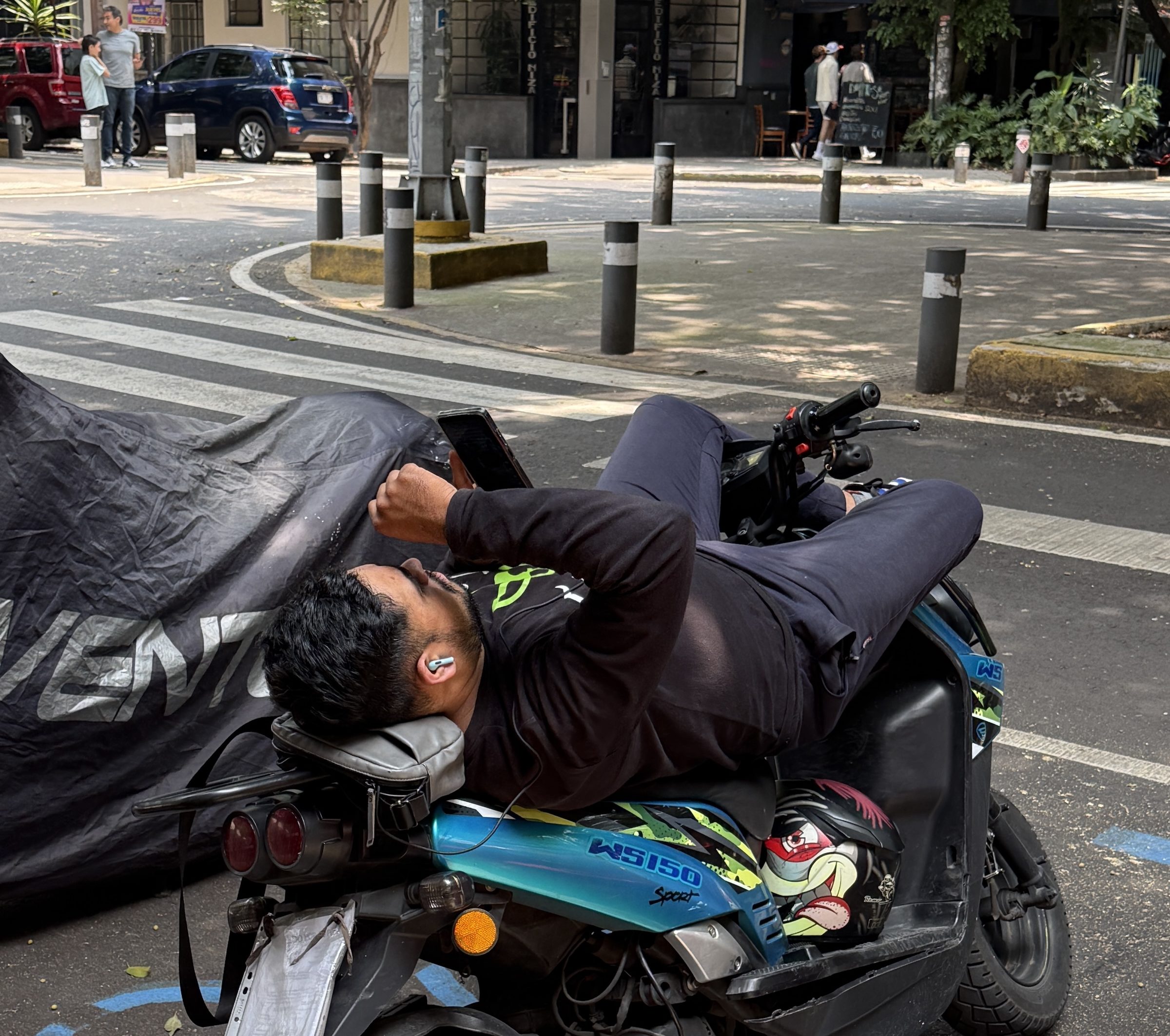
A couple of guys are catching a snooze on their motos, probably between deliveries around town.
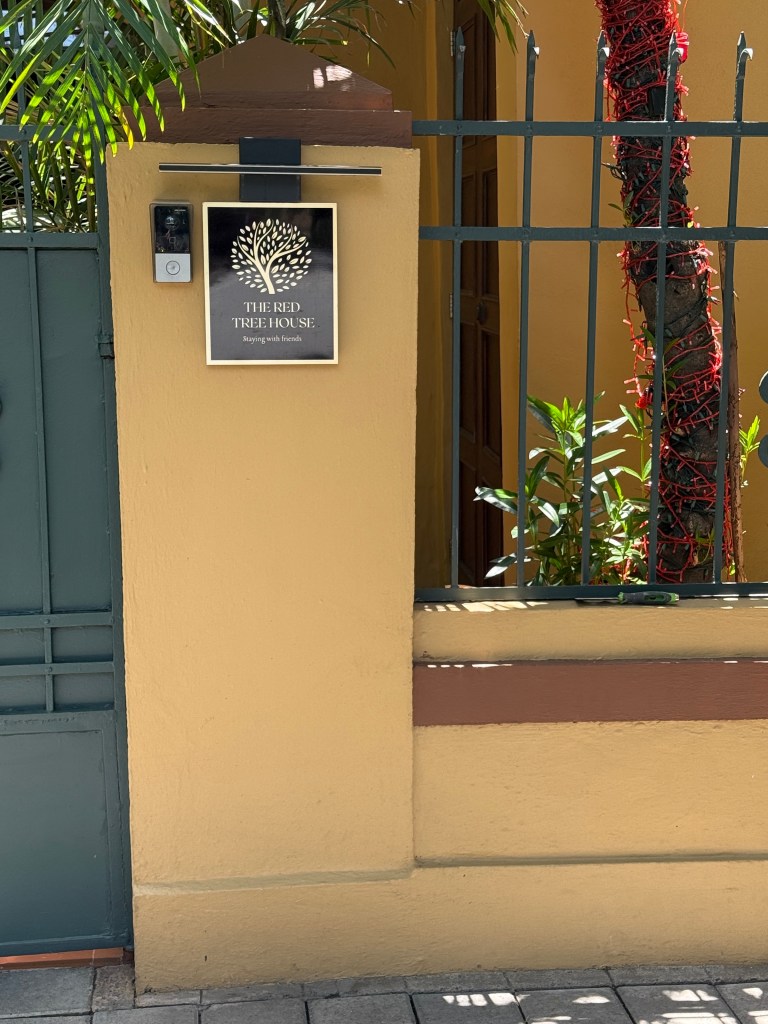
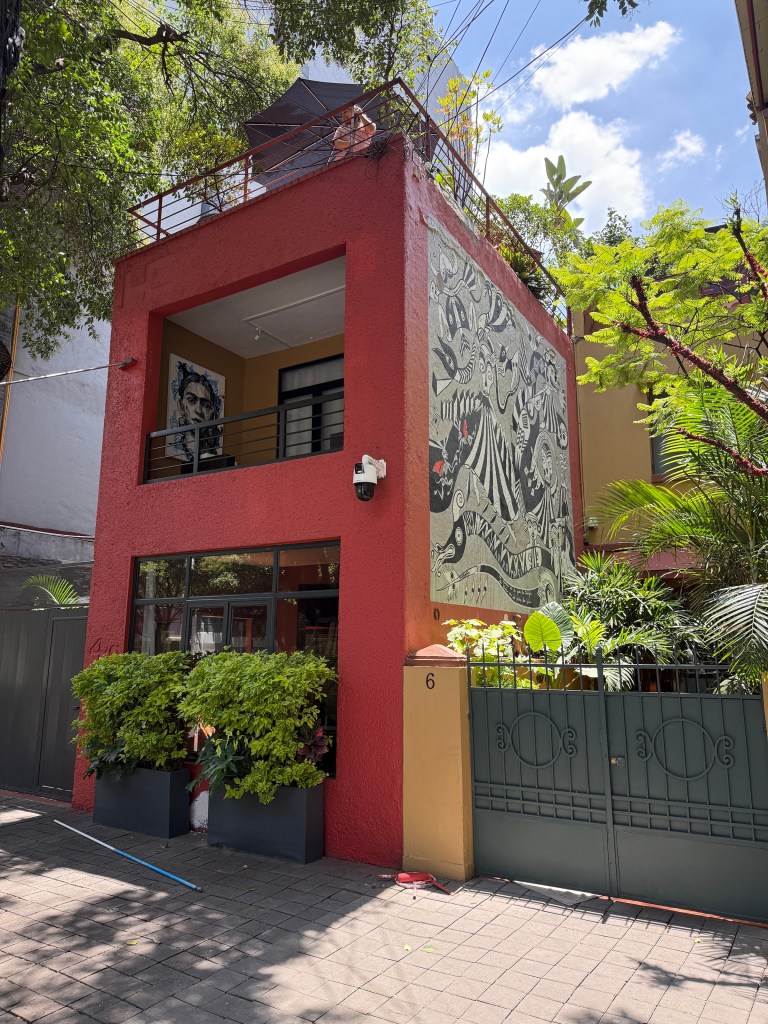
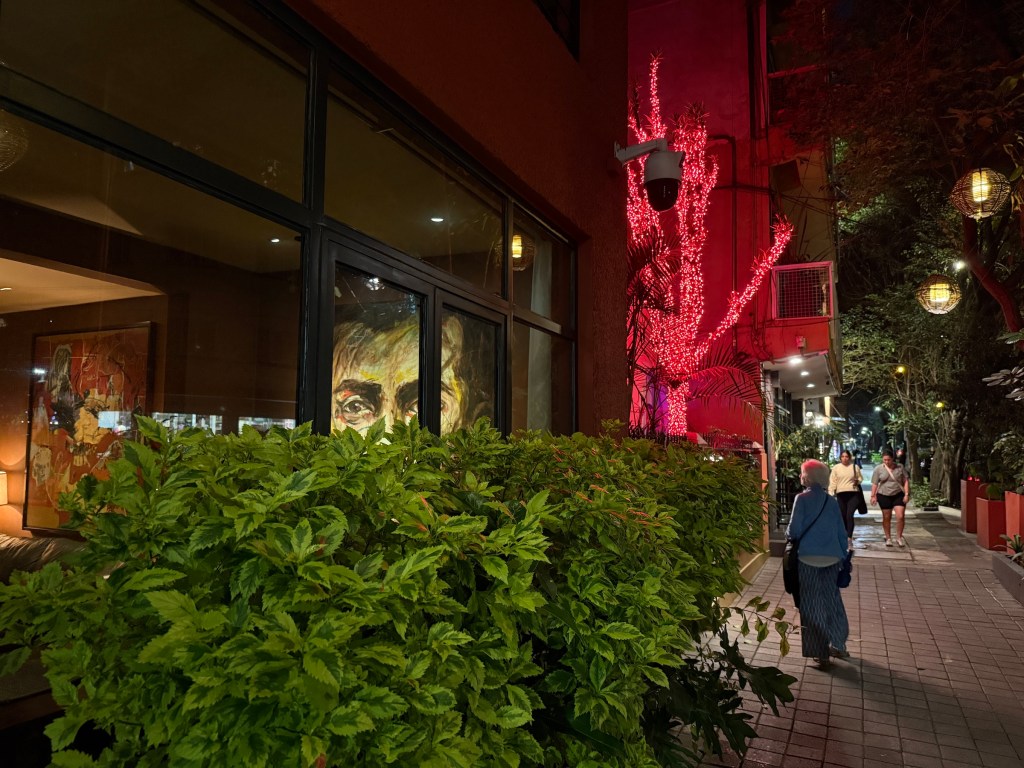
We pass the famous colorful Red Tree House, a popular place where we’ve never been able to stay because it’s always booked. But maybe someday….
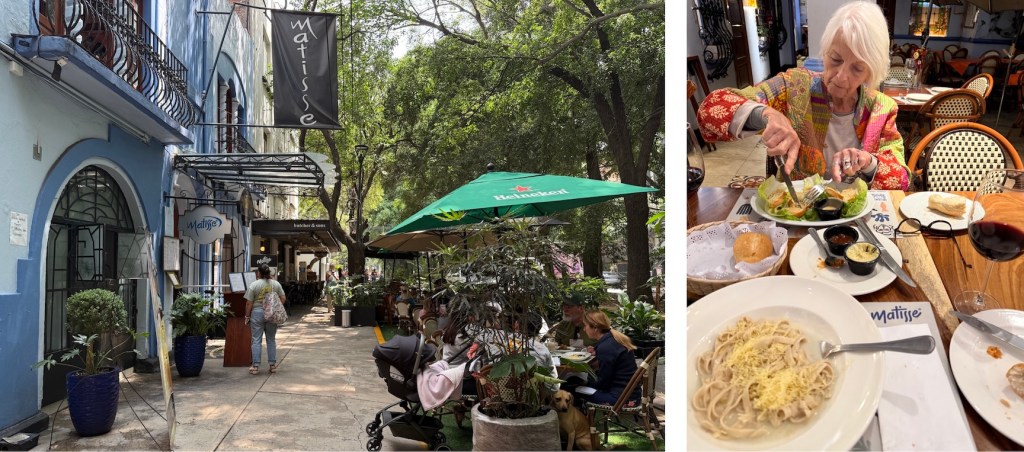
Then we stop for an early dinner at Matisse, a nice place that we’ve been to in past visits. There’s no room outside at the fully-occupied street-side tables, so we’ll be dining in their pretty courtyard. We’re seated amongst an abundance of classic Parisian rattan chairs to enjoy some very good food and wine. It’s not Paris, but it’s a close approximation, and that’s good enough for us.
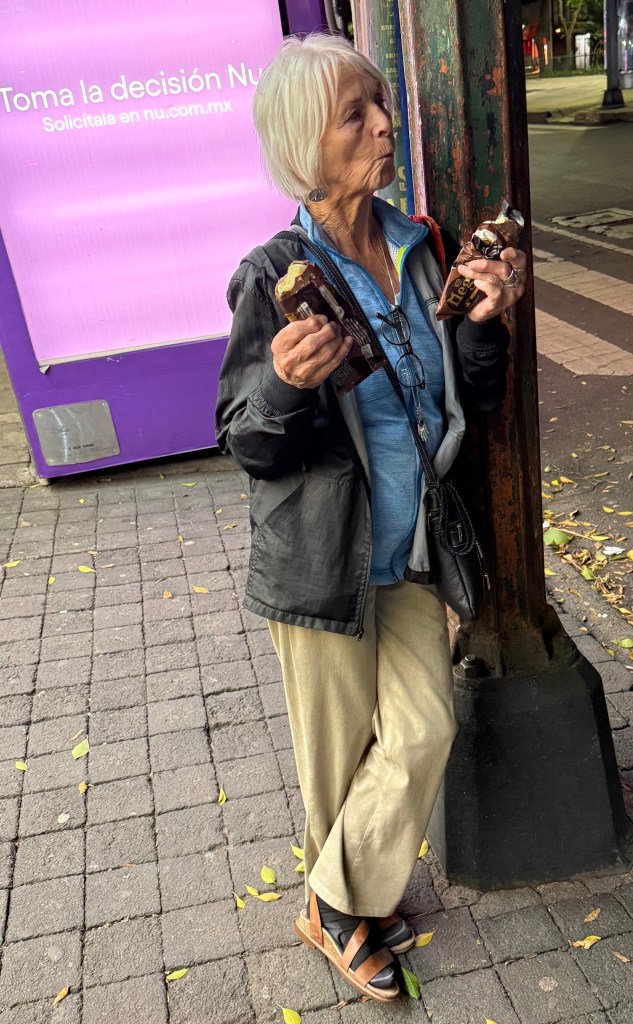
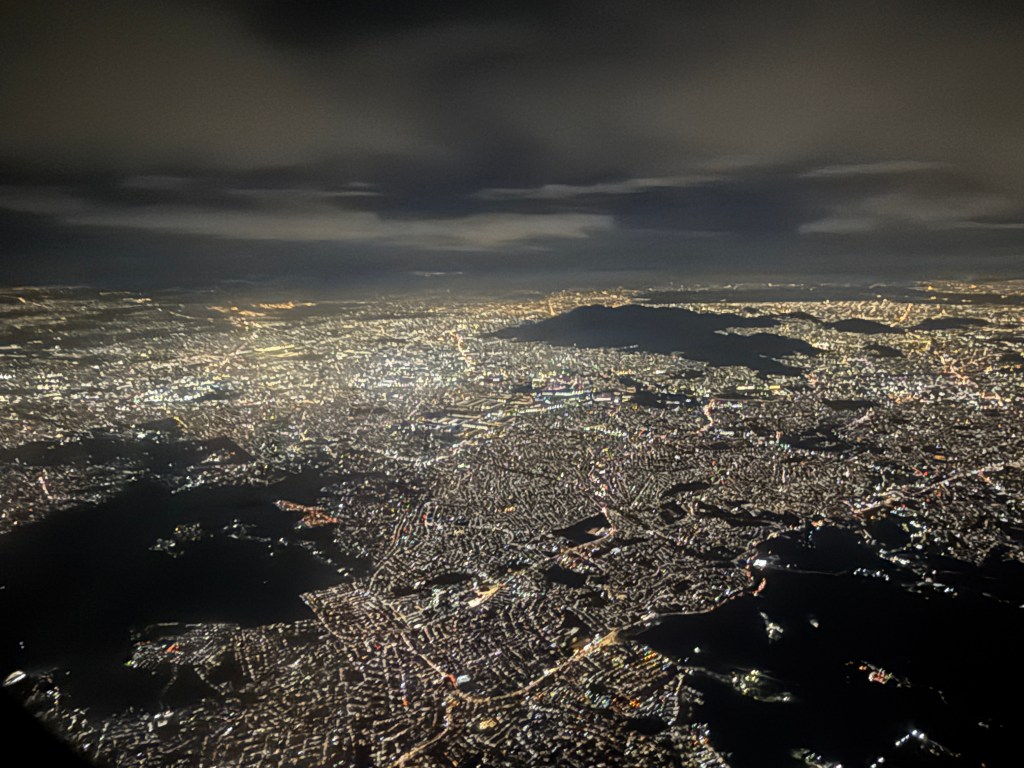
It’s our last night enjoying the culture and the fine food of Mexico City. We stop to share a special treat, an ice cream bar from a local convenience store. We’ve had an excellent few months of travel, beginning at Monterrey in northeastern Mexico and topped off by a couple of good weeks here in CDMX. We depart on an evening plane back to our casa on the beach at Kino Bay in the northern state of Sonora. The lights of Mexico City are below us in the night as if someone has tossed a blanket of luminous pearls across the ground. And we know we’ll return again to this magical place someday soon.
— PRW
………………………………………………………………………………………………………
Afterthoughts…
There were so many more museums and other fine places in this city that we haven’t mentioned, and here are a few of them:
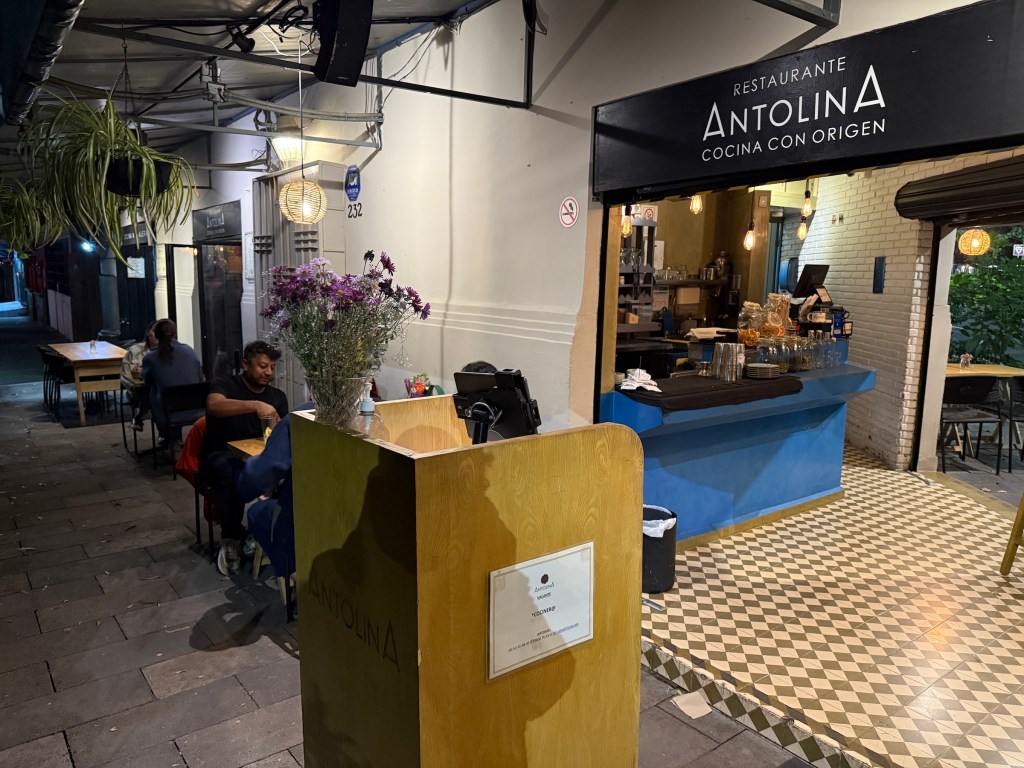
ANTOLINA is a good choice for ample platters of fine Mexican fusion food.
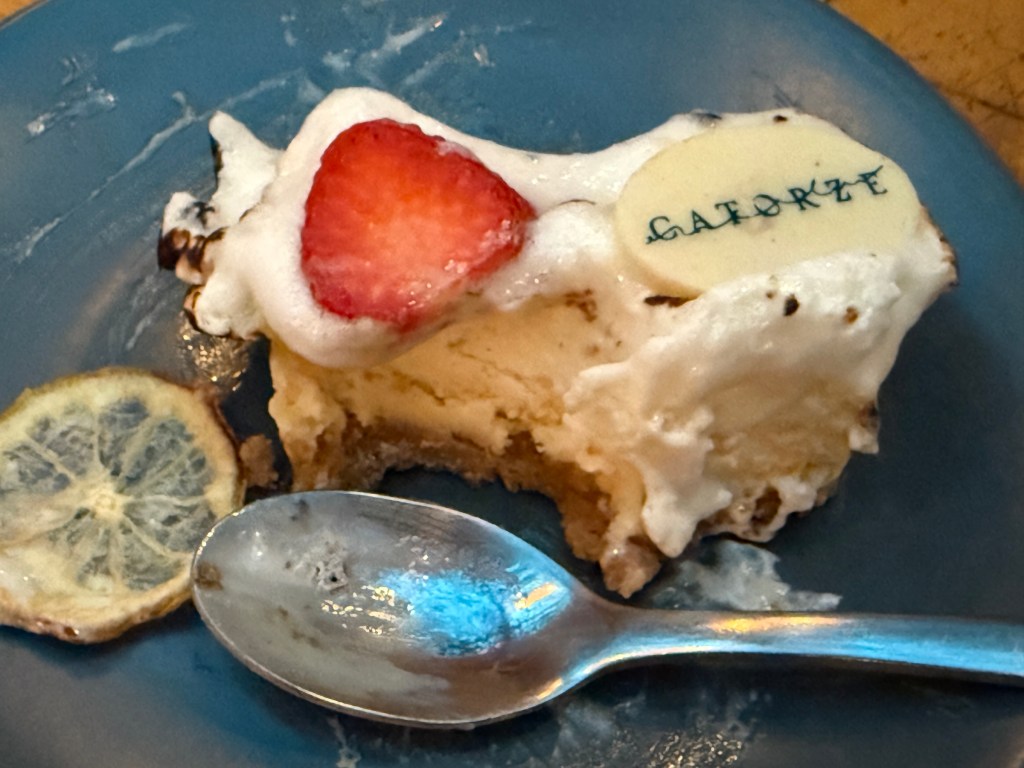
CATORZE excels at food and desserts.
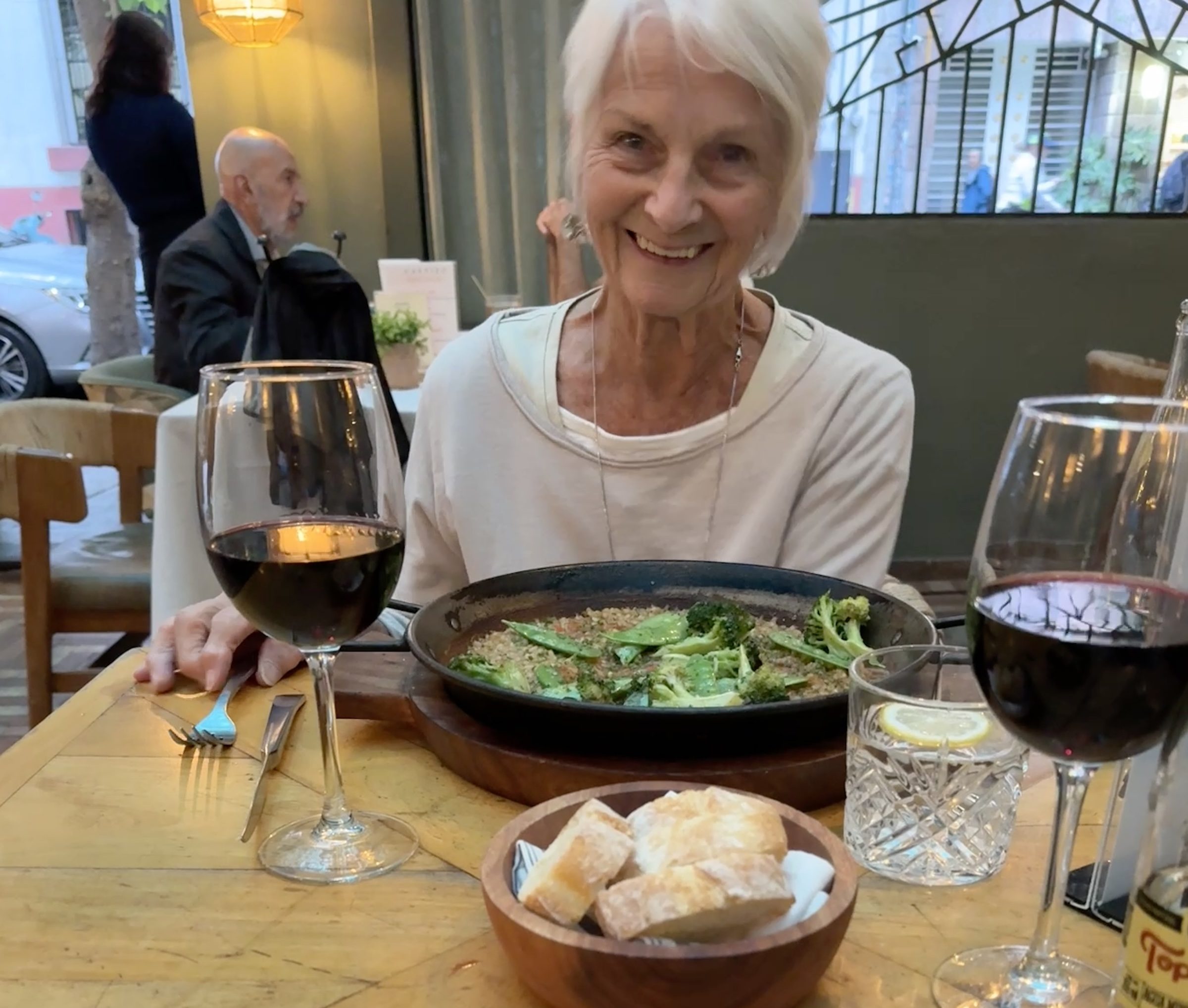
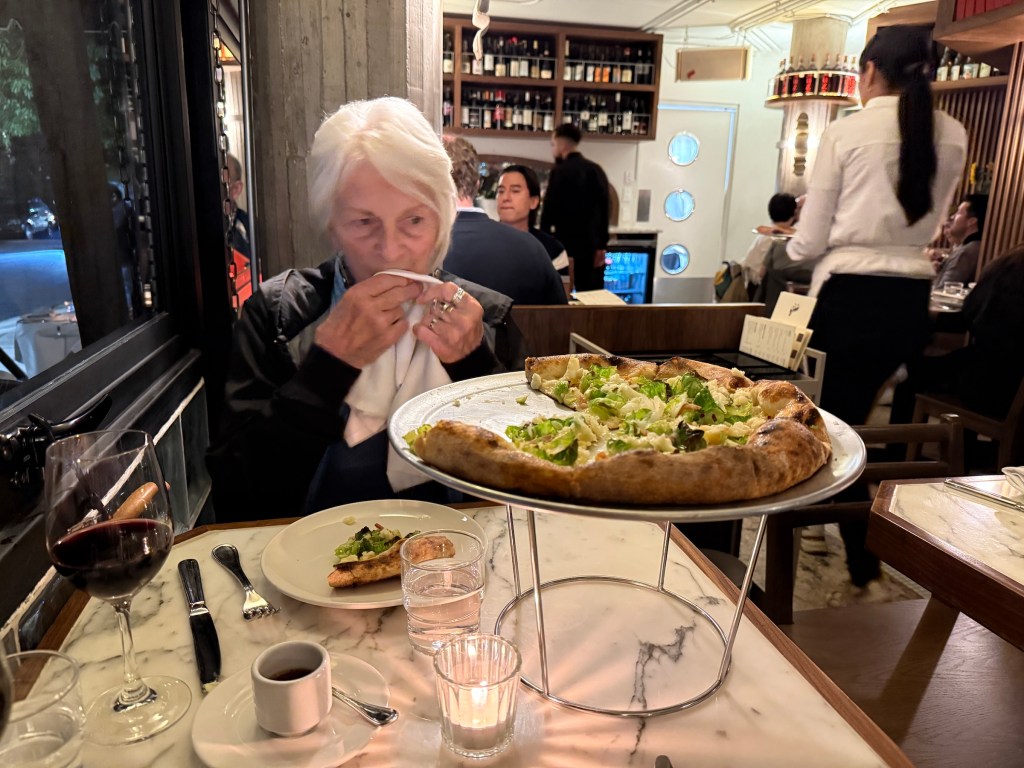
GIA is the place for excellent pizza, and good red wine.
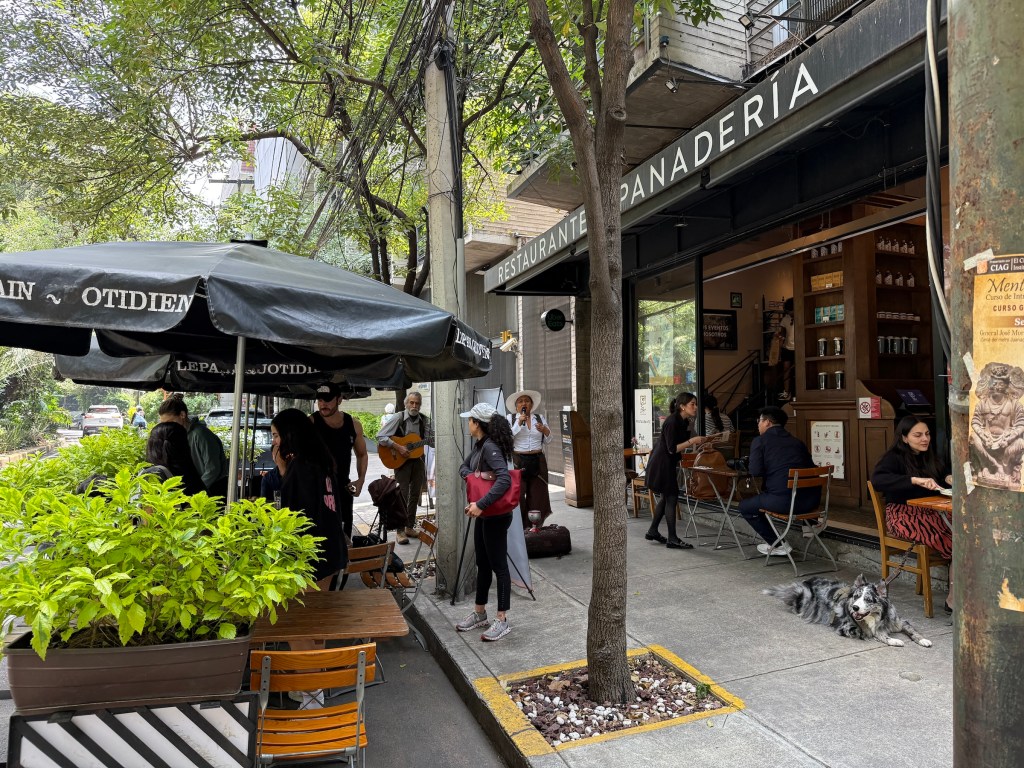
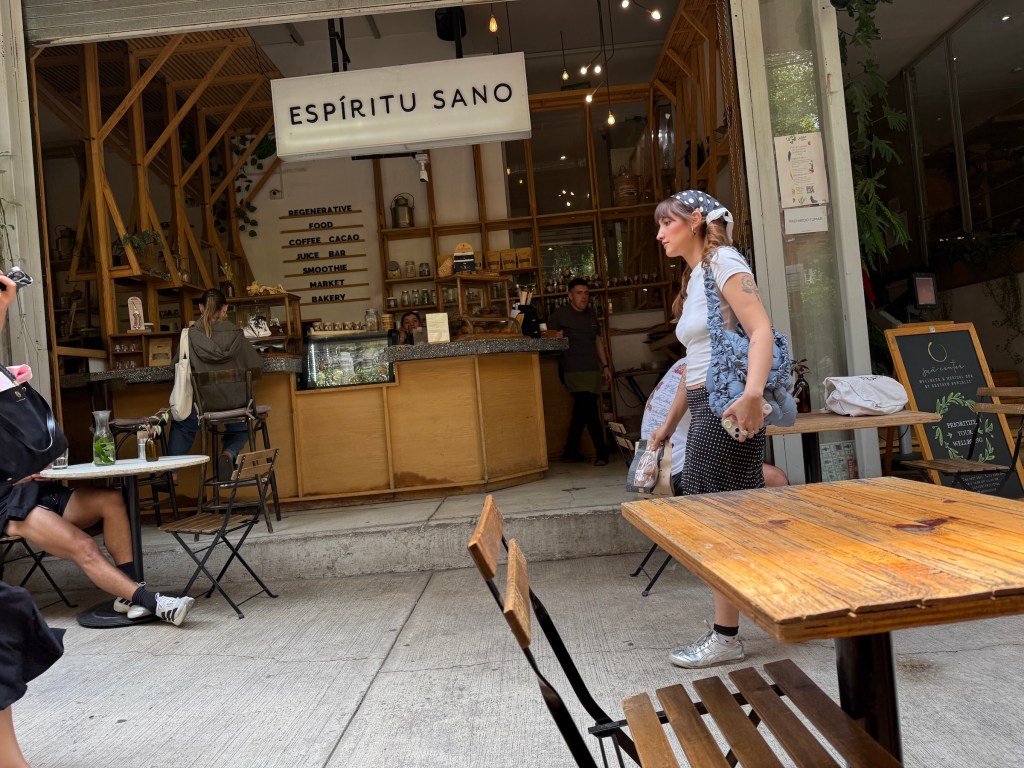
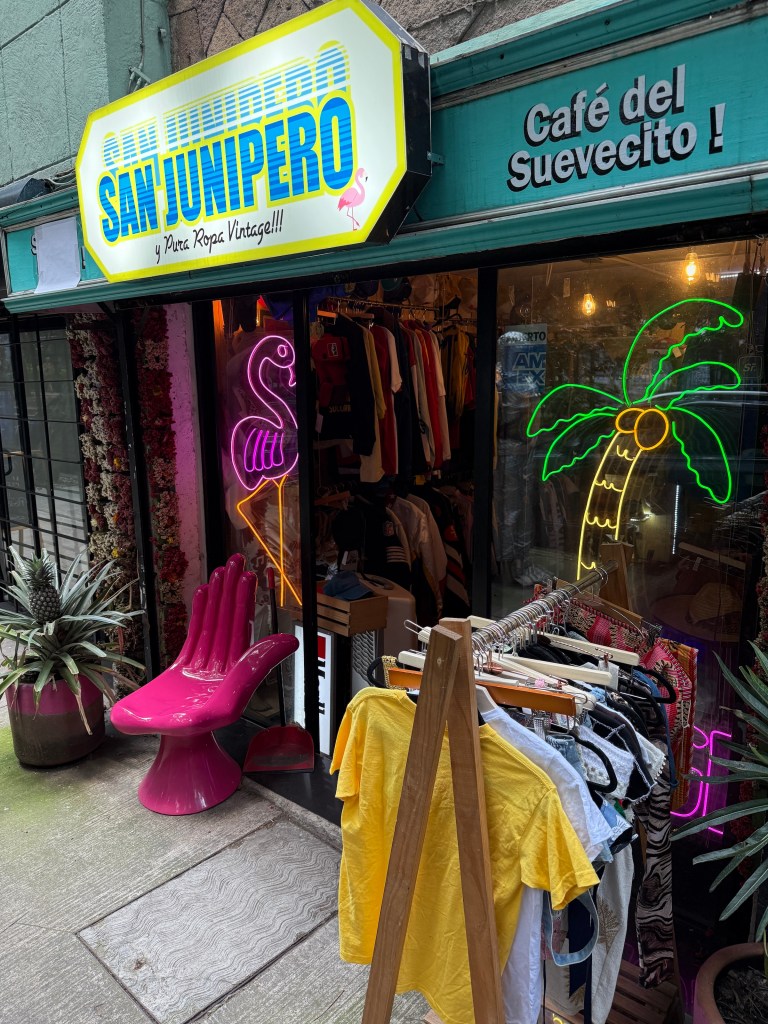
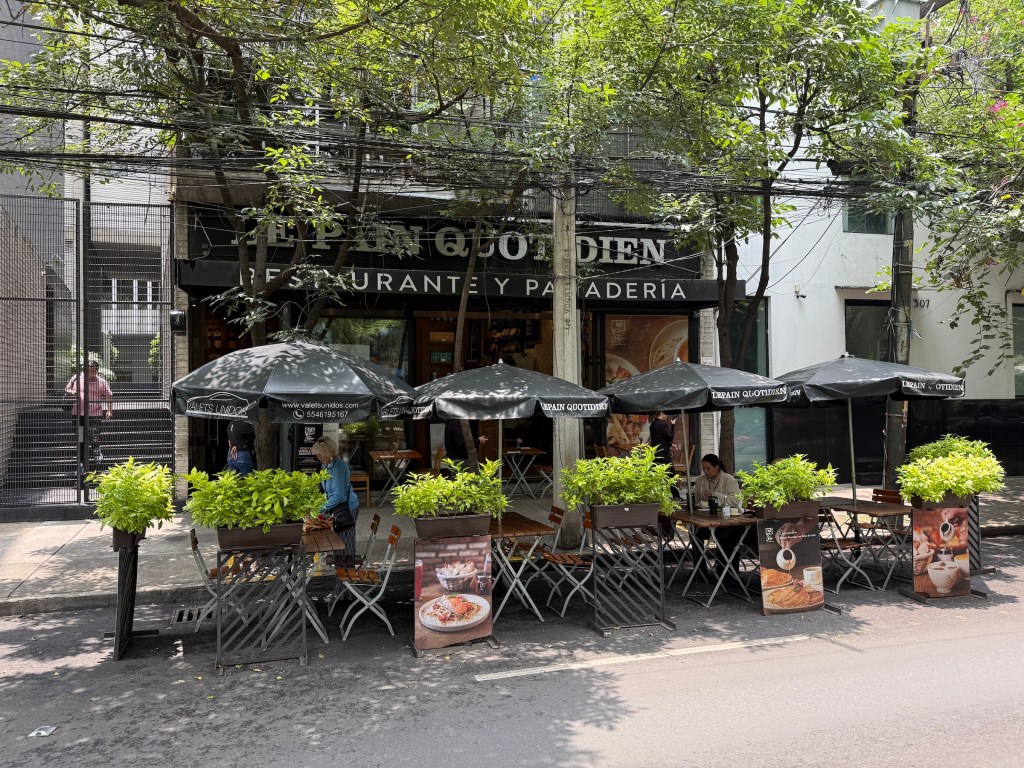
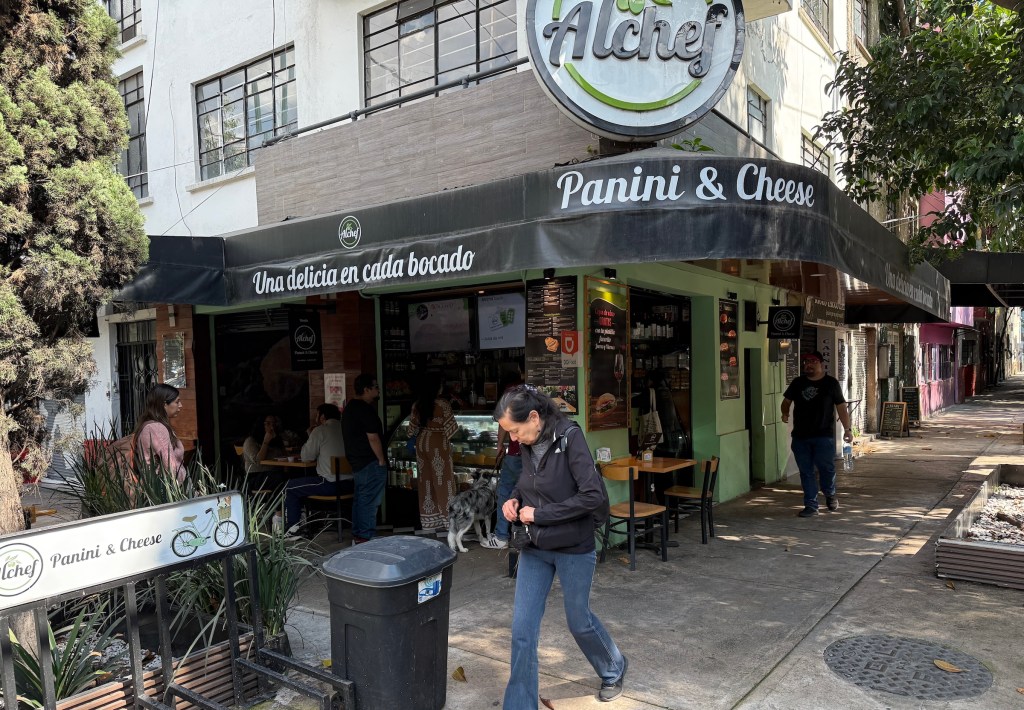
And here are several more good coffee shops that are within easy walking distance of Ave Amsterdam.


THAT WAS FUN! KATHY NELSON AND I HAD A WEEKEND TOGETHER THERE AND I WENT FOR ANOTHER WEEKEND ON MY OWN FROM MY WORKSHOP IN PUEBLA.
CONSUELO IS NOW IN MONGOLIA ON HER OWN FOR A WEEK AND THEN JOINS A TOUR…AND I’M WELL SETTLED AT HOME FINALLY.
IT’S A COOL EVENING AND I’M ON THE PORCH WATCHING THE SUNSET.
I LIKE THIS FORMAT AS I CAN READ AND LOOK AT THE PHOTOS BUT BETTER YET I CAN JUST VIEW THE PHOTOS LARGER AFTERWARDS
WATCHING HIGHLIGHTS OF THE WORLD CUP, MEXICO!
LikeLike
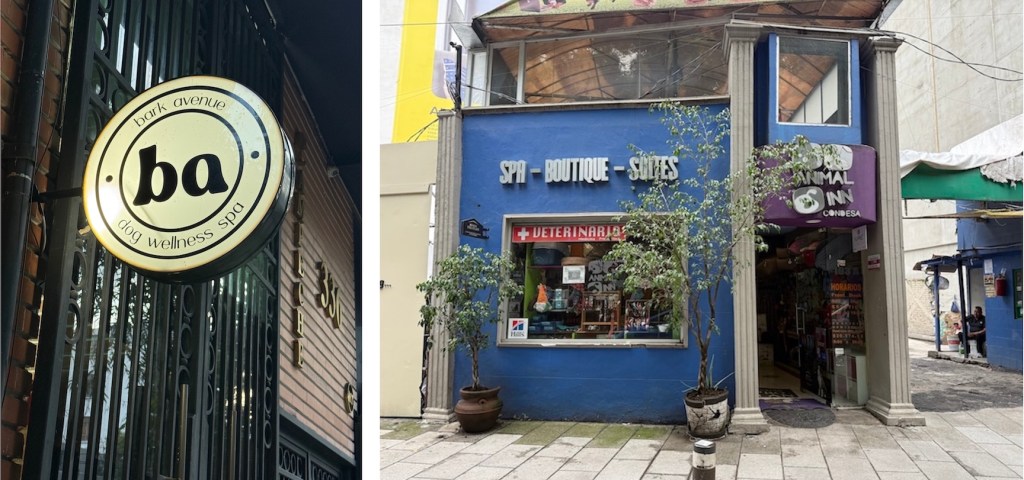
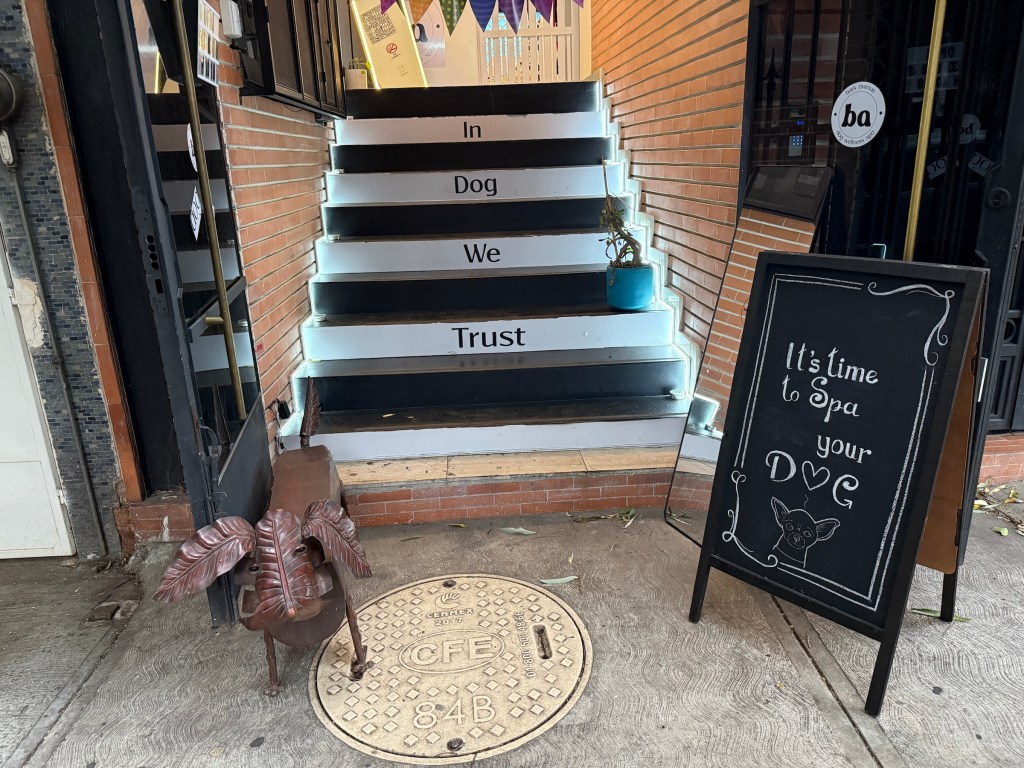
Hi Carolyn and Perry, I loved touring with you two through Condesa. I’ve been loving that area since you recommended it to Dale and I years ago. I’ve been back there on my own and again in December with Peggy. Peggy and I were in your area. We walked past the dog spa with the writing on the steps. And we had dinner at Patagonia. We found another fun restaurant in the same area; Zimo. They make their own pasta. And I had the best Paloma I’ve ever had in my life. And I also found the tiniest Portuguese bakery that makes those custard tarts: Pasteis de Nata. They were yummy. We were on Cholula. I would love to spend a month there. 😍 Sadly, we moved from Condesa to join 2 of Peggy’s friends from Kino. One insisted on staying in a hotel God knows where. I was hoping to see the National museum this visit and the Post Office among other things. It didn’t happen. I had lunch at Sanborn’s on my own in the past. And Peggy and I did walk through the park which I had done with Dale. And Dale and I saw the Freida painting at the Modern Art Museum. He was such a wonderful guide. We saw so much in the time we were there. I miss him. He was a great travel companion. In December we did get to ride the boats in Xochimilco. That was fun. And then we went to Puebla to join a bus tour to Oaxaca which included the Radish Festival among other sights. My granddaughter is going to Cardiff University in Wales this year. Her Mom and brother bring her there in September then he goes home and my daughter and I meet in Budapest. We have an AirB&B for 5 days. Then back to Cardiff for 5 days where I’ll get a tour of the campus and my daughter will make sure her “baby” is OK. Biiiiggg step. But I see more trips to Europe in our future. I’m watching Mexico play Korea in the World Cup as I write. I got Apple TV this winter and binged on Ted Lasso. I don’t understand all the rules of the game but I’m learning. I love the fans. And the managers are so smooth. A far cry from our football coaches. Mexico just scored!! Goooooaall. Thanks again for sharing. Judy
LikeLike