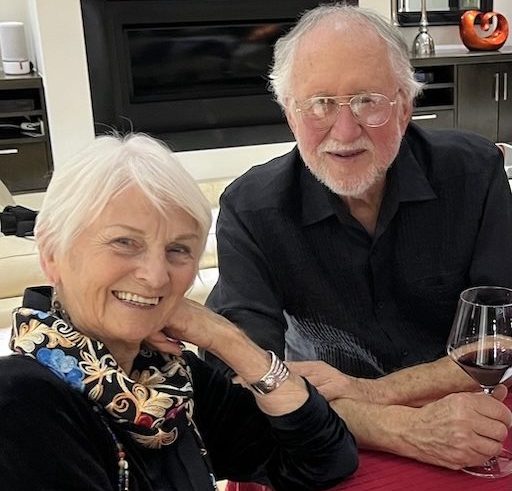
June 22 – 29, 2025
Our trip to San Luis Potosì has come to an end. And for me it was a fond return after my first encounter here 50 years ago, a long awaited wander back down memory lane. But we have a loosely-rigid schedule to maintain, and it’s time to move on. We’re now heading to the artistic and winding alleys of old Guanajuato, an immensely charming place that we’re always glad to see again.
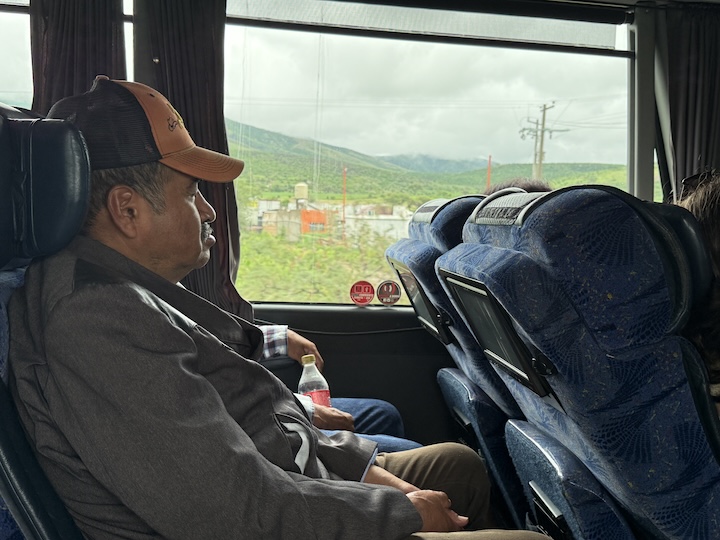
Our big comfortable bus carries us along the next leg of this trip through more of the legendary Mexican countryside. And again, there are no other Gringos in the station or on the bus. I’m sure much of it has to do with the US addiction to cars and an association of bus terminals with low-lifes and drunks. All of that was predictable after the US middle class fled from vibrant cities to the lifeless suburbs. And California’s Proposition 13 was perhaps the most blatant collective abdication of responsibility that sent helpless people into the streets, while the wealthy began seeing large tax breaks. But I digress.
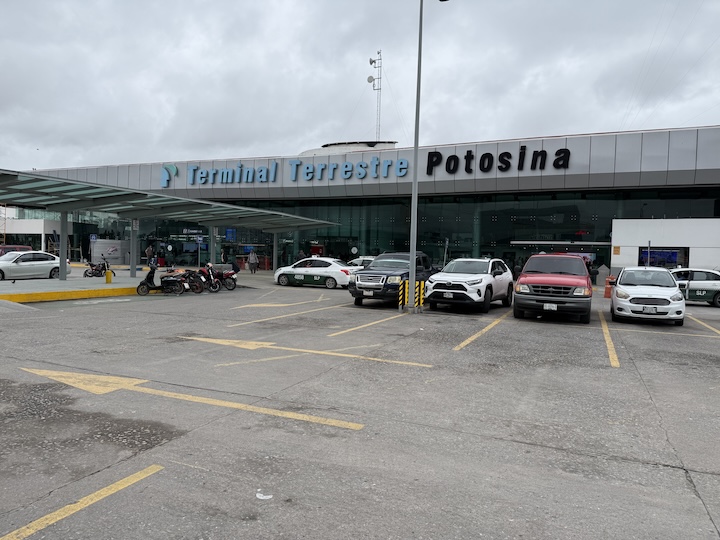
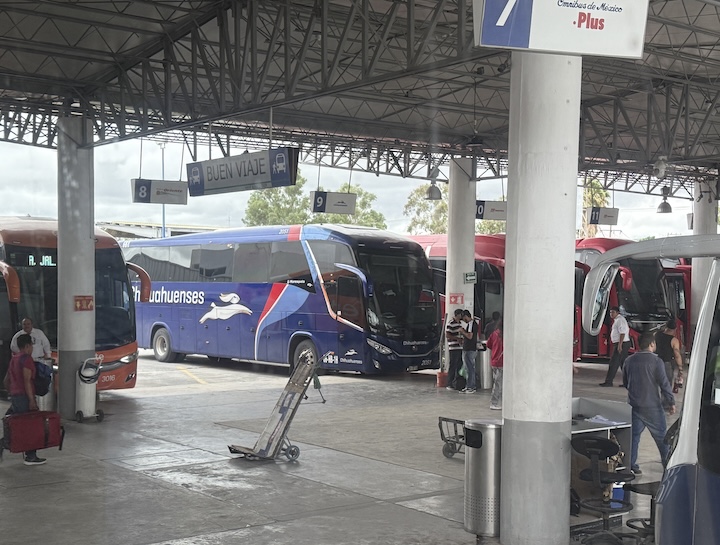
In Mexico the bus stations are clean. The middle class, the college students, and many of the country’s brightest people travel economically by public transport. It’s the same on the trains and buses of Europe and South America.
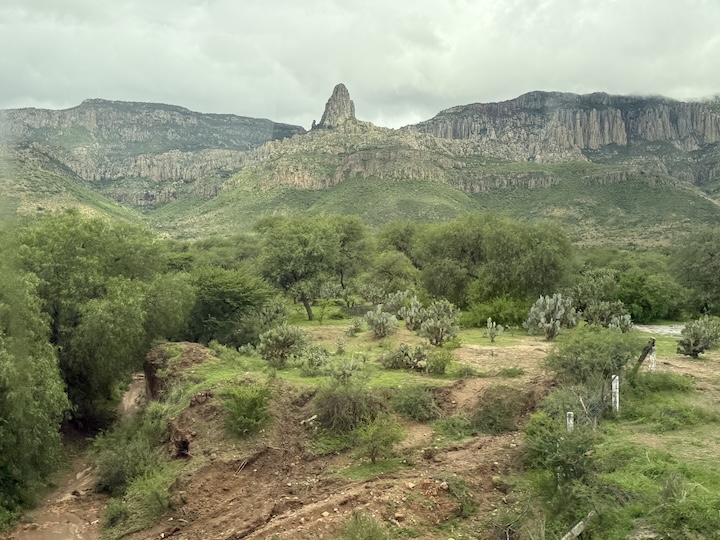
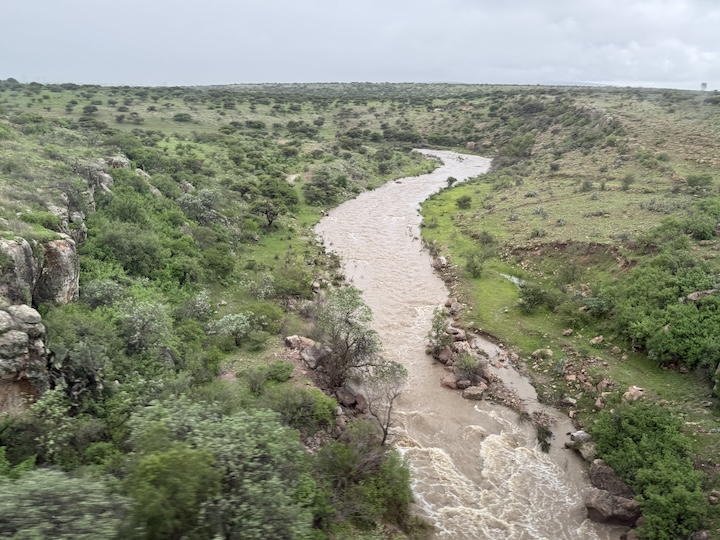
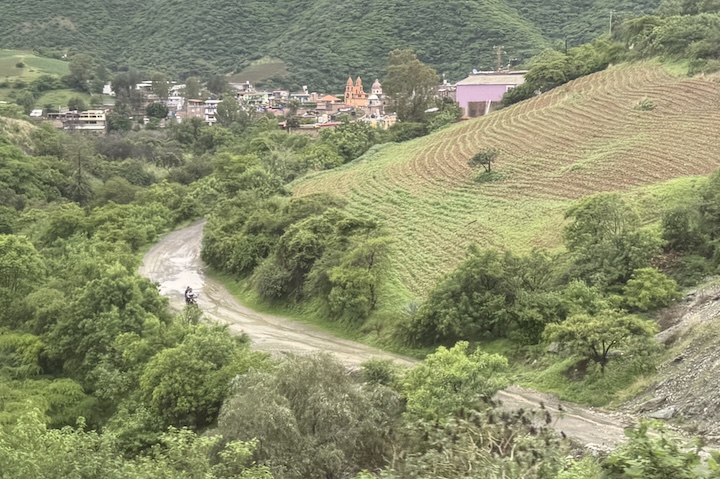
This is still the rainy season, and the craggy peaks and plants of the desert are getting a long-awaited drink. The arroyos are running, the cactus are plumping up again, the tall fields of corn (the milpas) are getting a good rinse, and the rows of spiky blue agave are looking fresh.
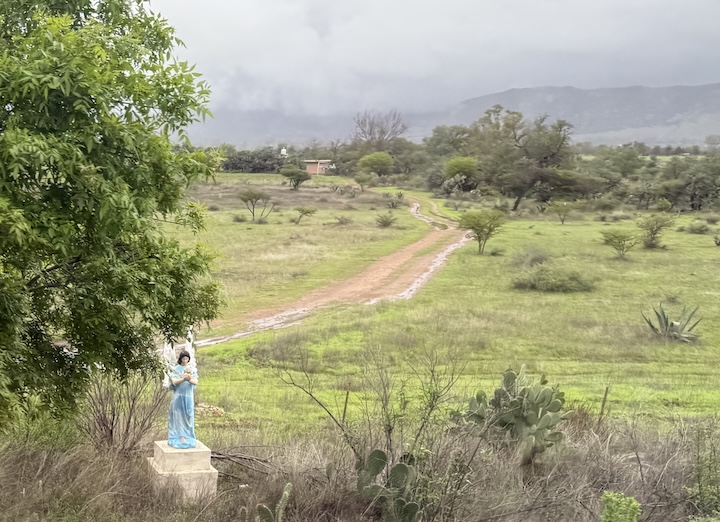
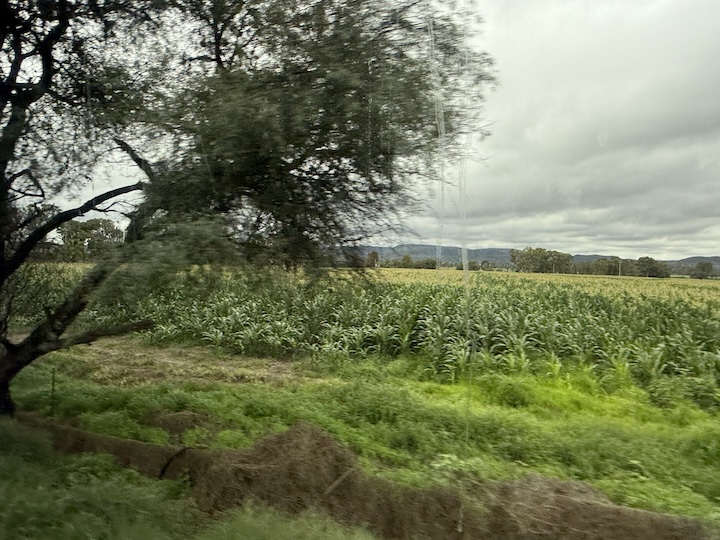
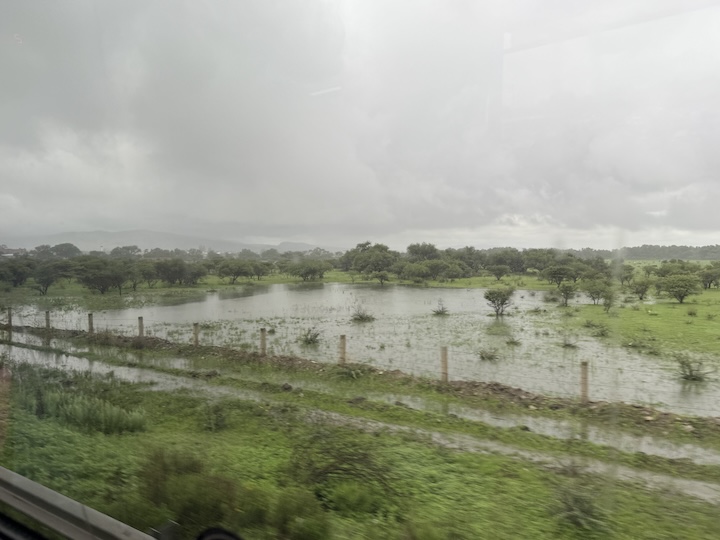
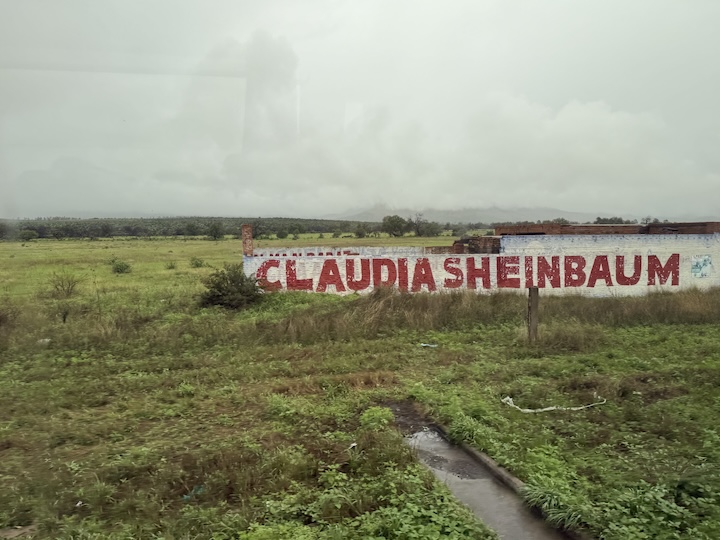
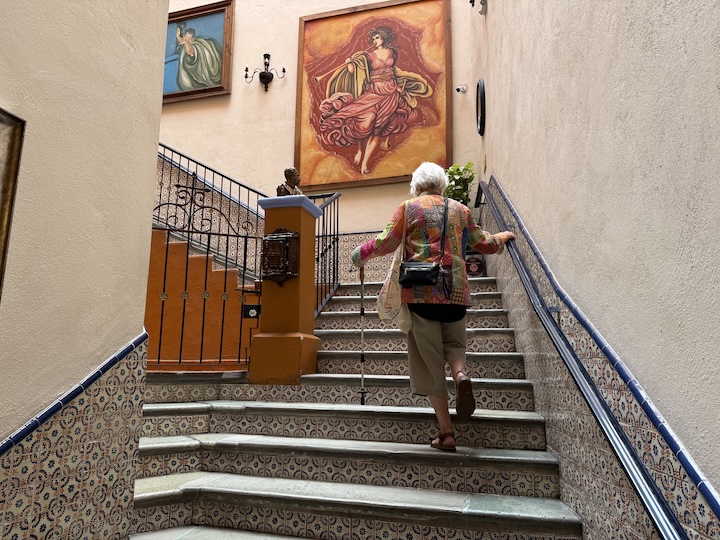
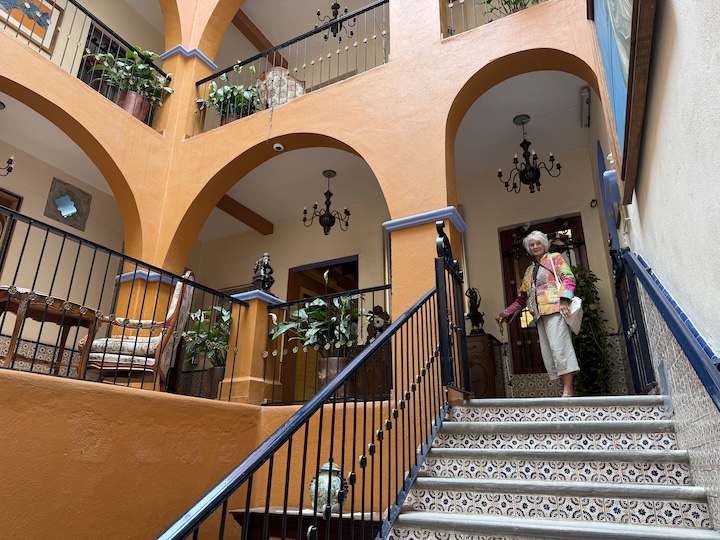
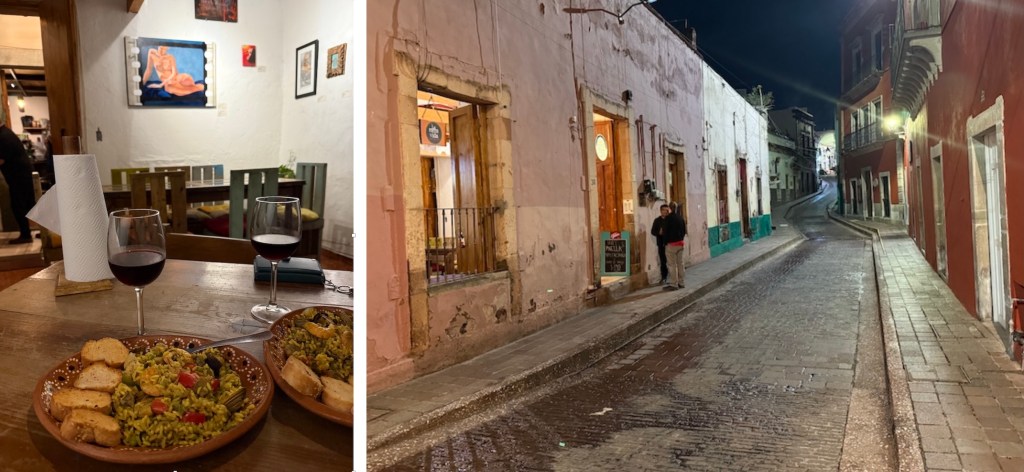
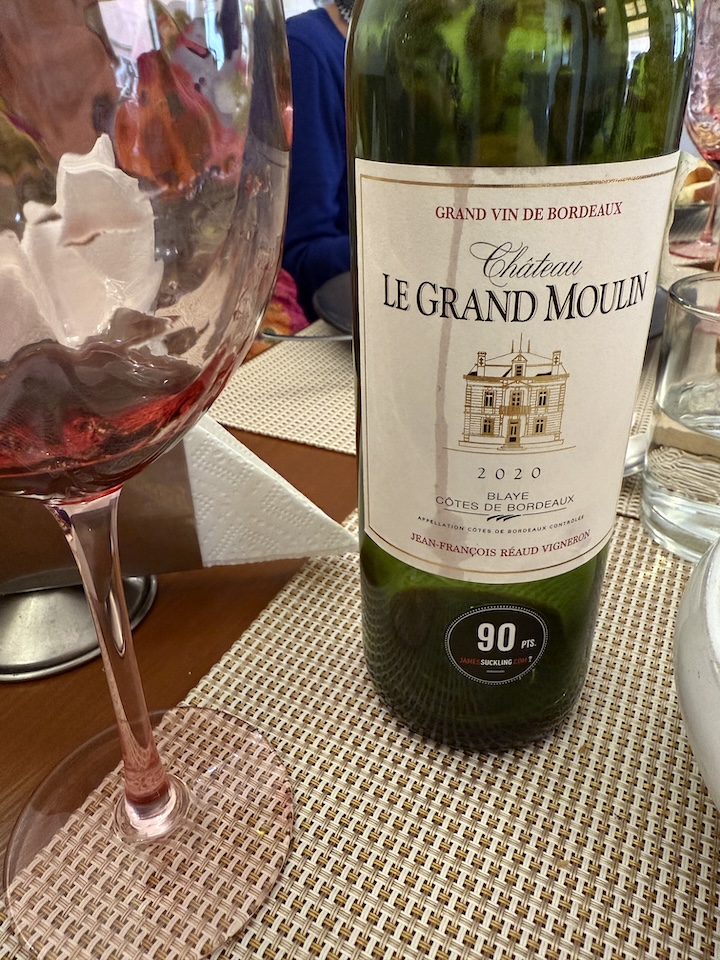
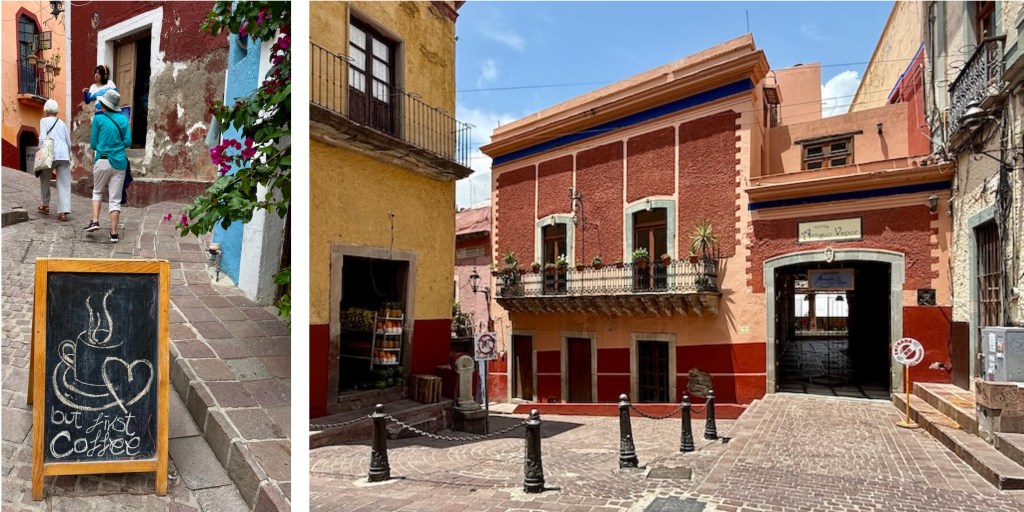
Soon we’re in the charming ancient streets of Guanajuato and we’re checked in to El Mesón de los Poetas, a nice old hotel on a winding lane known as Calle Pocitos. After an afternoon rest we’re back out into the evening to enjoy a fine dinner with good Mexican wine. And later we’ll find our way back in the night along quiet alleyways to our comfortable bed.
‘Laundry is Forever’ is a familiar refrain in our travels, and it can lead us to interesting adventures. So in the morning, it’s time to deal with that heavy bag of dirty clothes we’ve gathered lately.
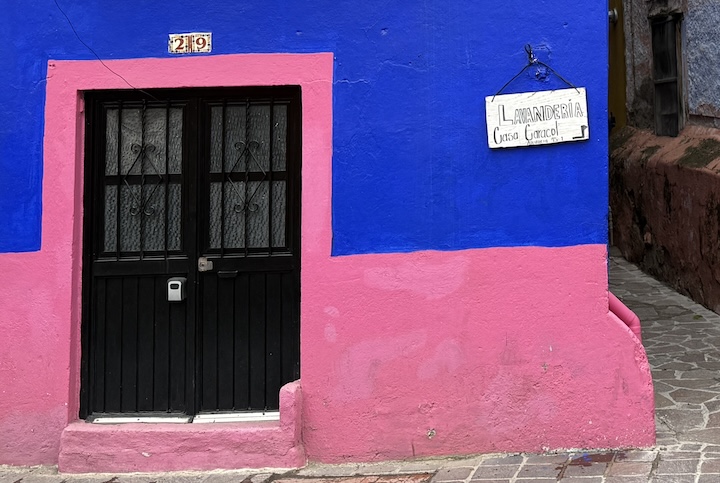
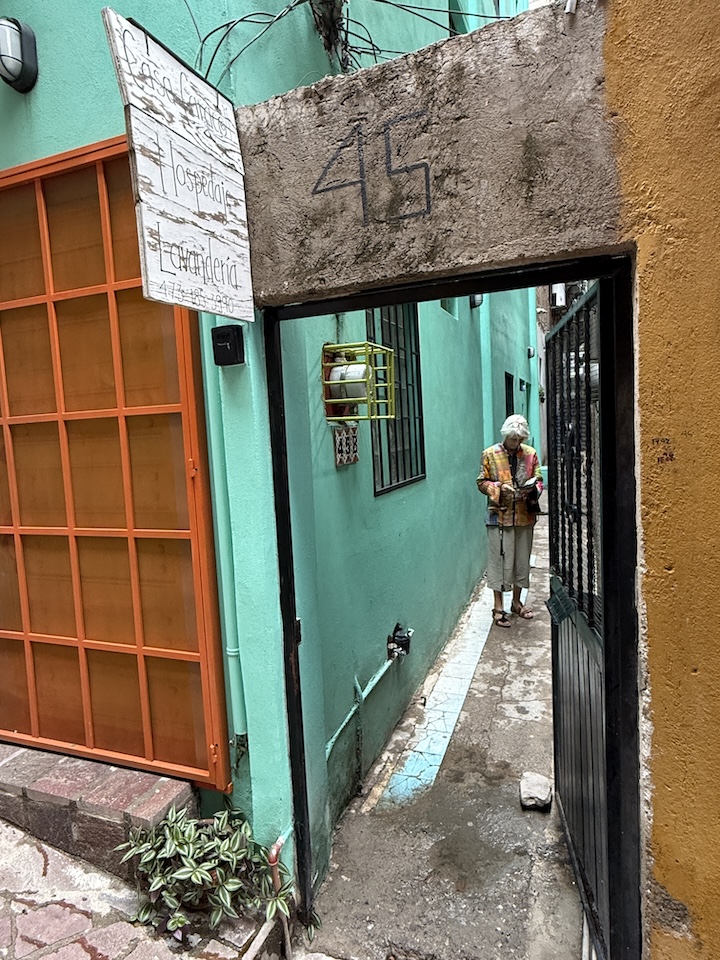
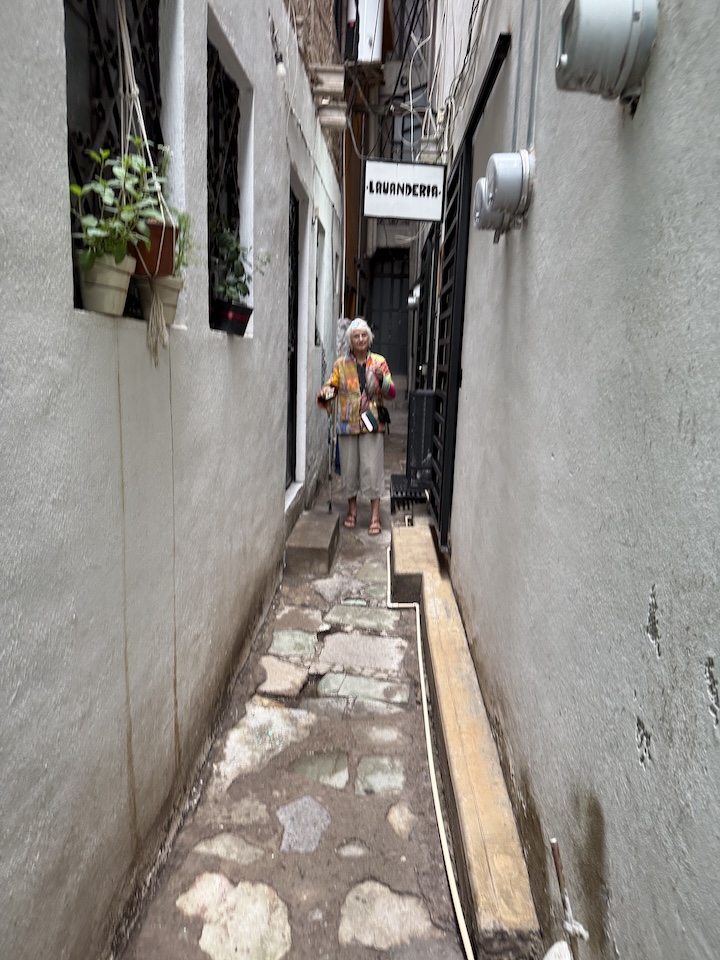
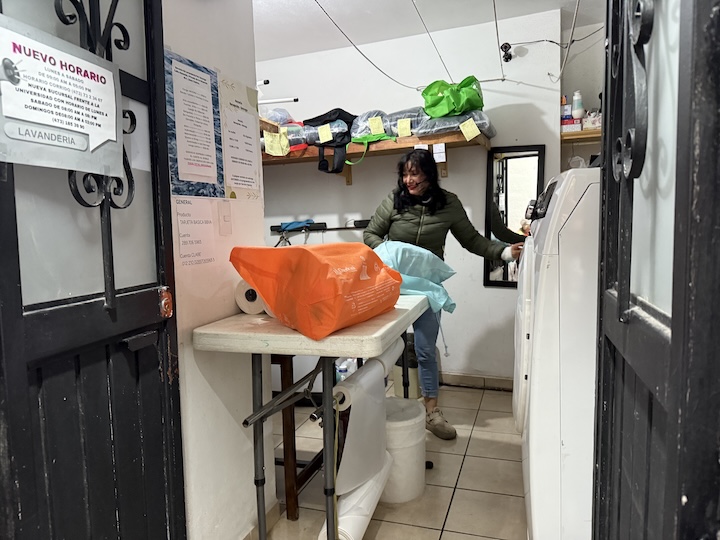
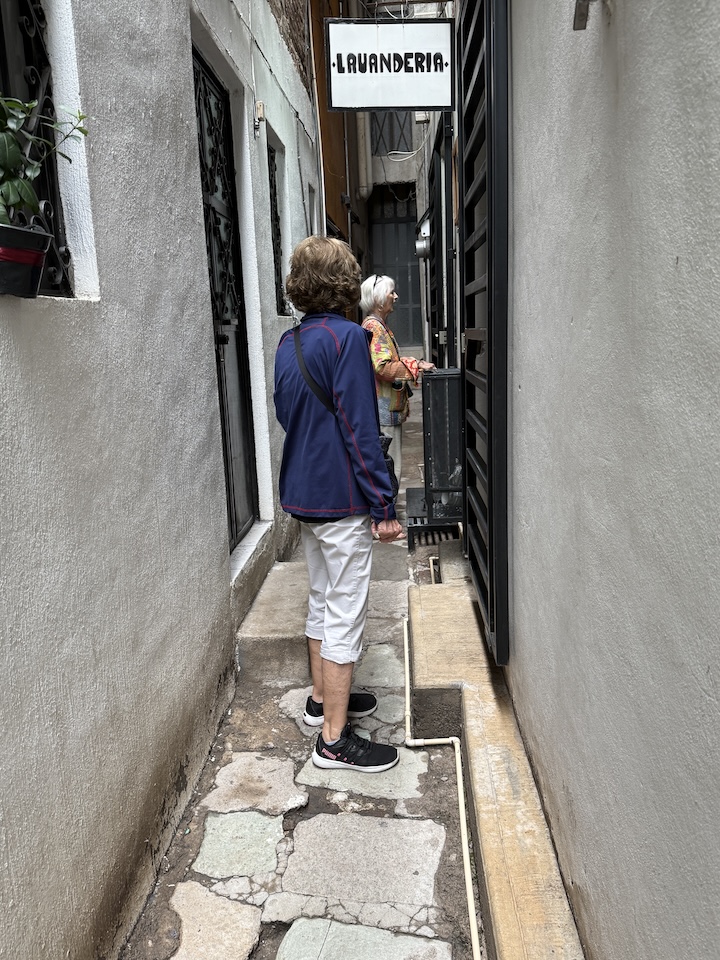
Someone mentioned a place nearby, and our trek leads us to a lavanderia called Casa Caracol. There’s an inauspicious sign on a corner with a squiggly arrow along the bottom edge of the sign that seems to point into a narrow alley. Around the corner we find another faded sign pointing down a narrower side-alley.
It’s beginning to resemble something out of Kafka when we actually locate the lady who does the laundry. She’s wedged into a tiny back corner of an old building, in a well-organized space, with no wasted room, and I think she could lecture most CEOs about productivity. If your product is good enough, there’s no reason to waste money on high-rate rental footage.
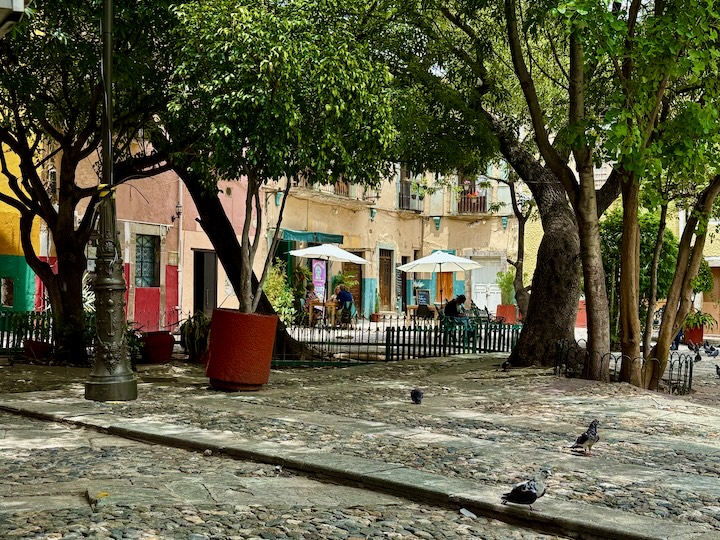
So we leave the laundry behind for now, and we’ll pick it up later. It’s time to find our way down to little Plazuela Baratillo to score some strong coffee, and a nibble or two.
Guanajuato is a colonial silver mining town that’s stuffed into a rocky valley. It’s a collection of alleyways that snake down the old riverbed, with few places wide enough to drive a car. Some of the alleys can be so narrow that it’s said the dogs have to wag their tails up and down.
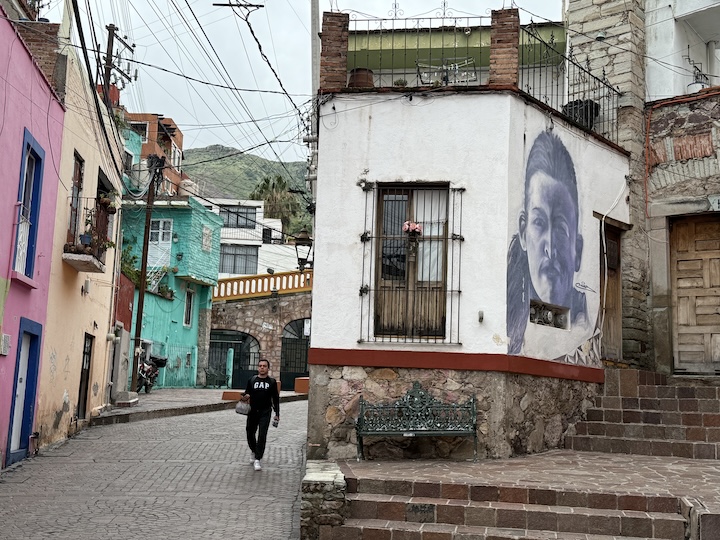
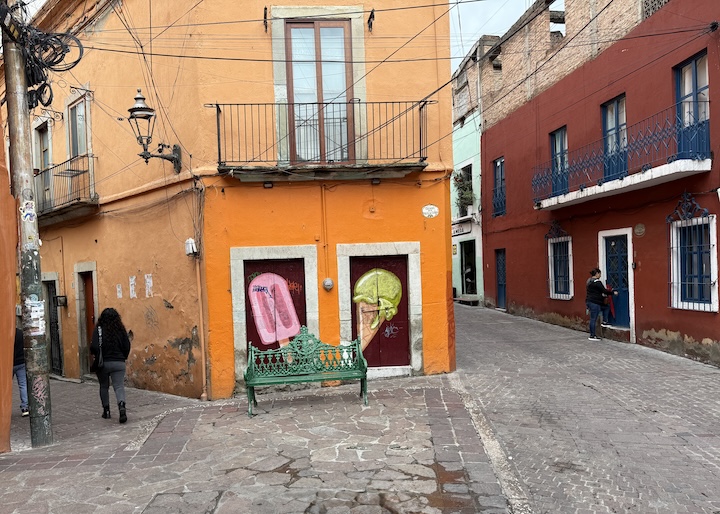
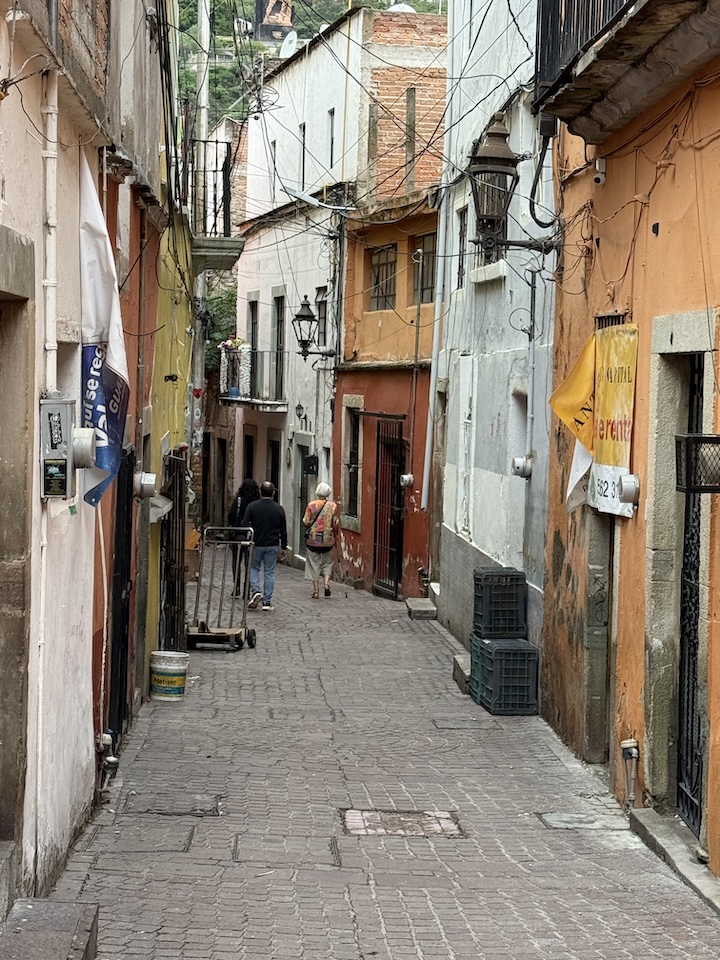
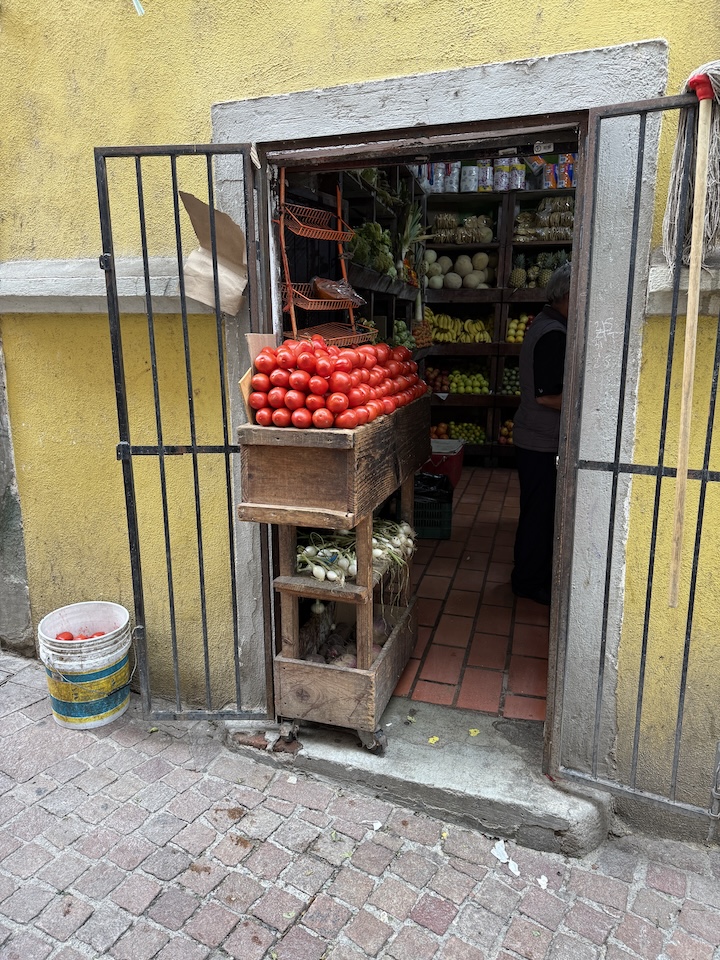
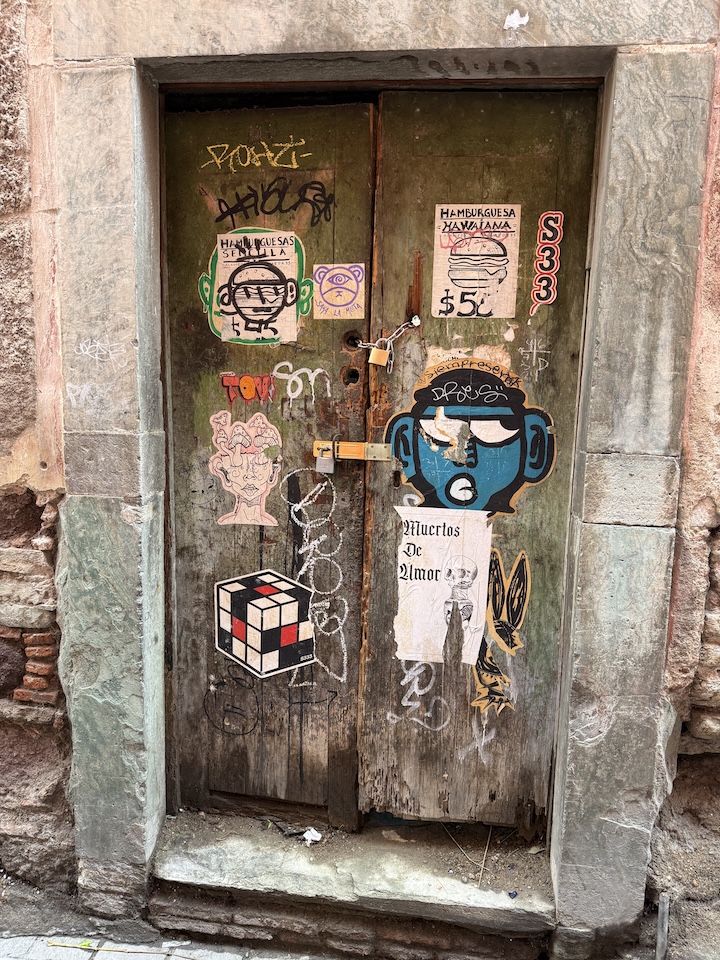
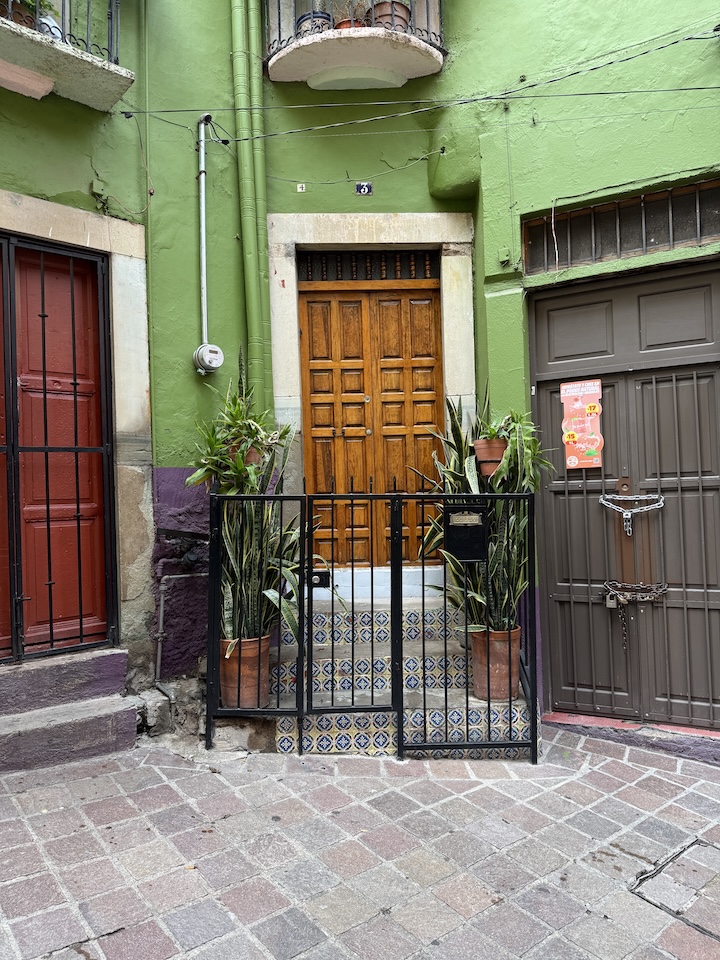
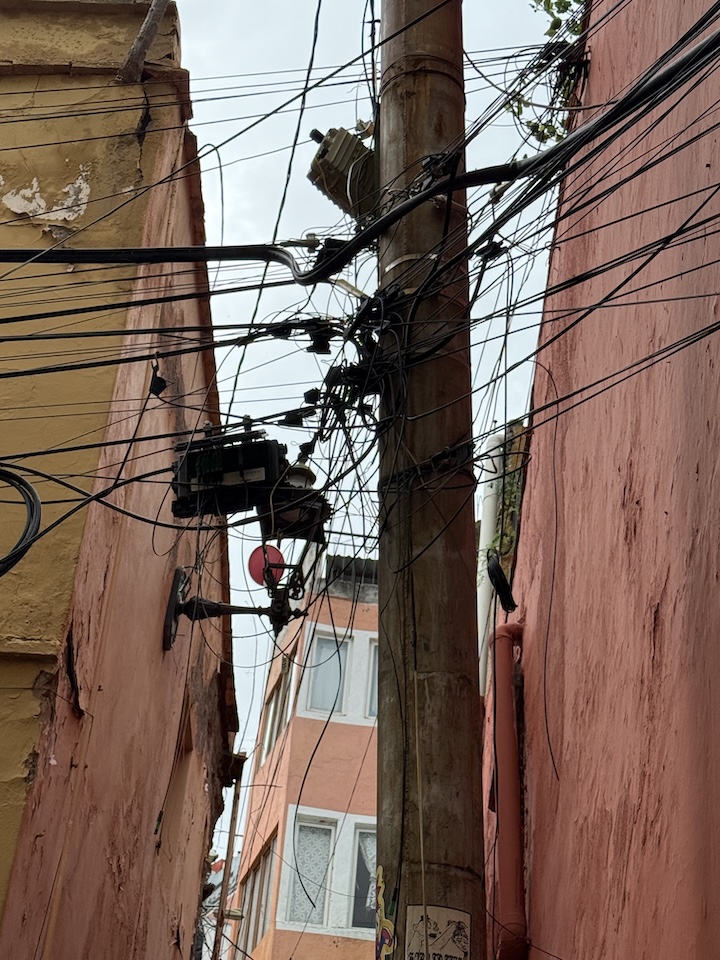
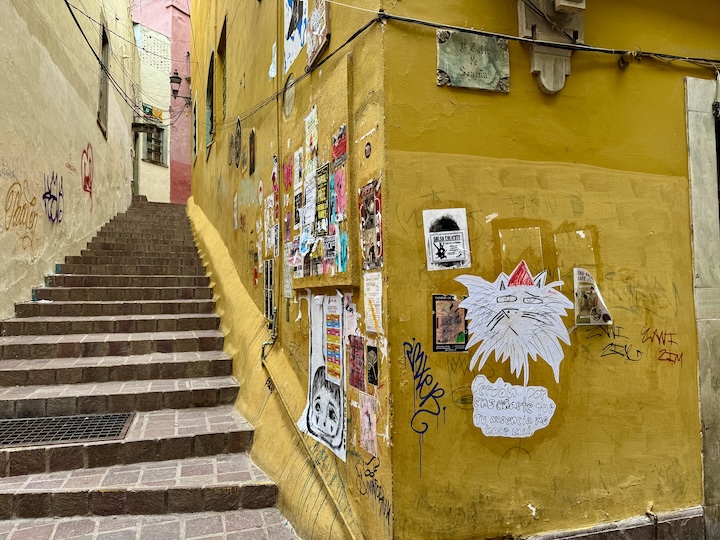
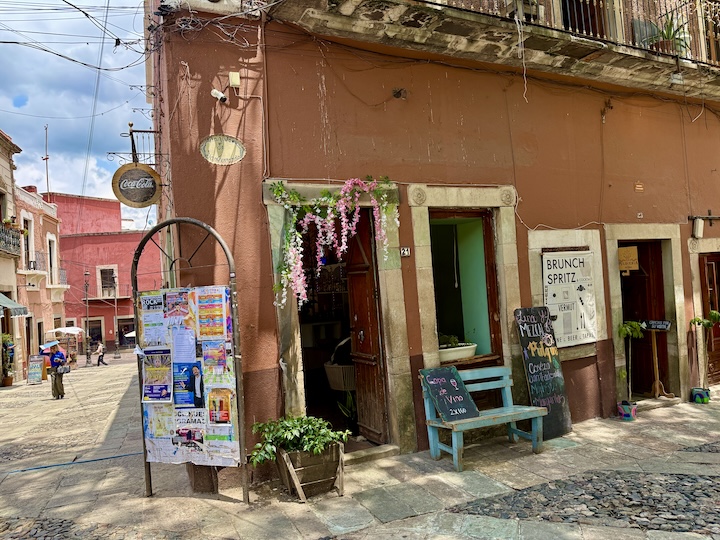
The enticing labyrinth of Guanajuato leads us past a back-alley grocery that we’d surely return to if we had rented an apartment with a kitchen. A semi-artistic array of fraying posters decorates a heavy old wooden door, an almost-artistic tangle of wire and cables is perched high on a light post, and a tiny forecourt has been fenced and filled with plant life.
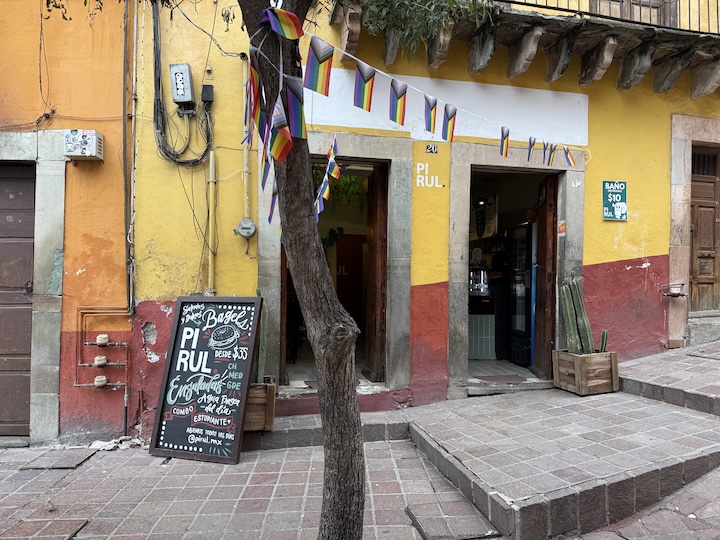
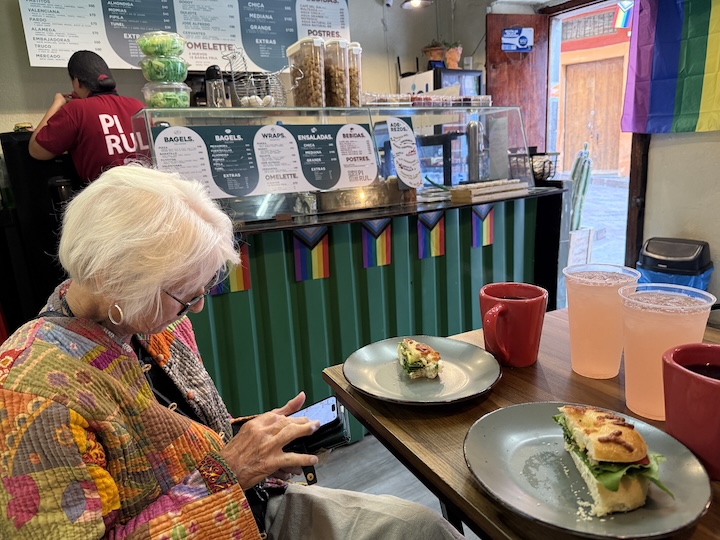
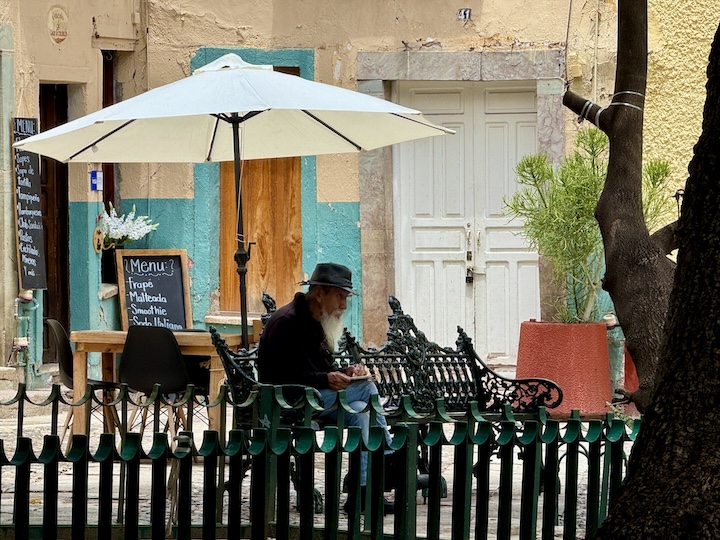
We arrive at ‘Pirul mx’ for coffee and bagels at a corner of the Plazuela del Barratillo and we settle in for a needed jolt of Joe. We asked them what the name means, and we don’t remember what they said. But it’s a good stop to get our morning going.
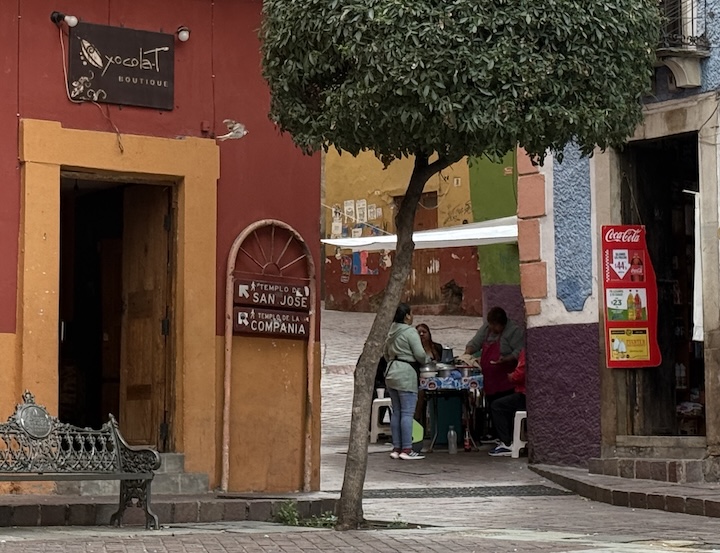
In another corner of the Plaza is ‘Xocolat,’ a fine little chocolate shop that we recall from past visits. We’ll return in a few days to rummage through their seductive array of goodies.
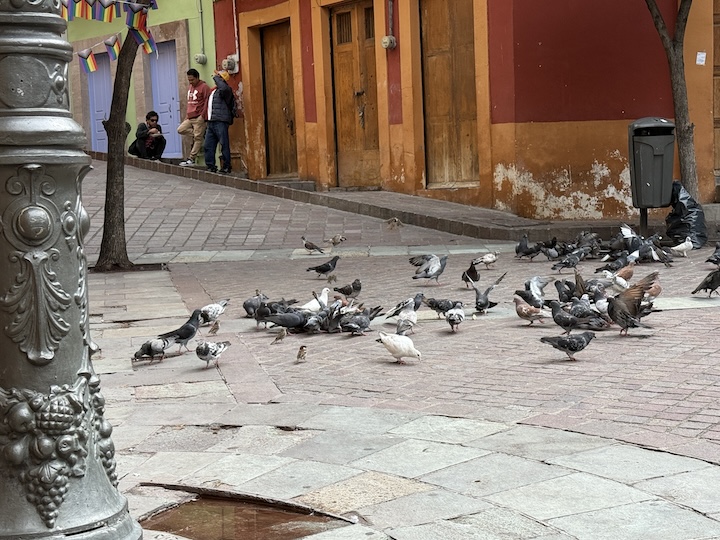
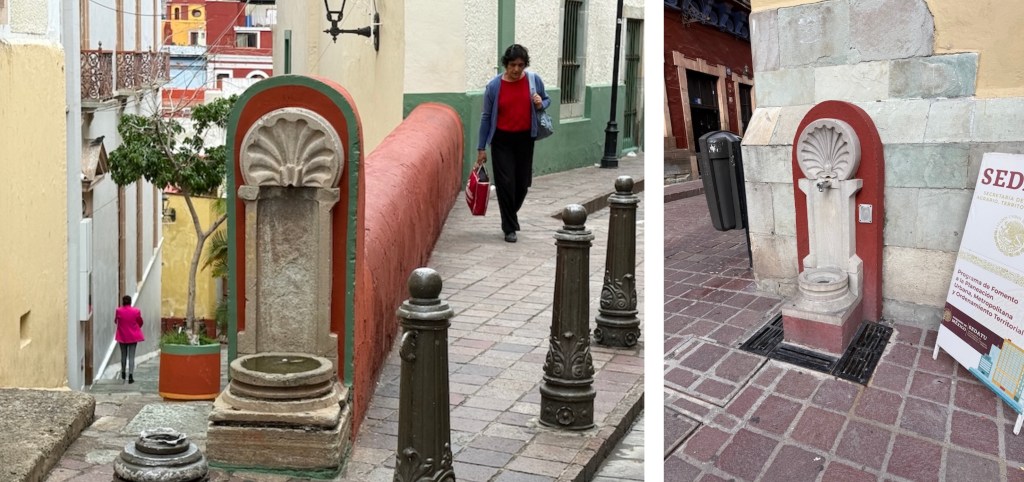
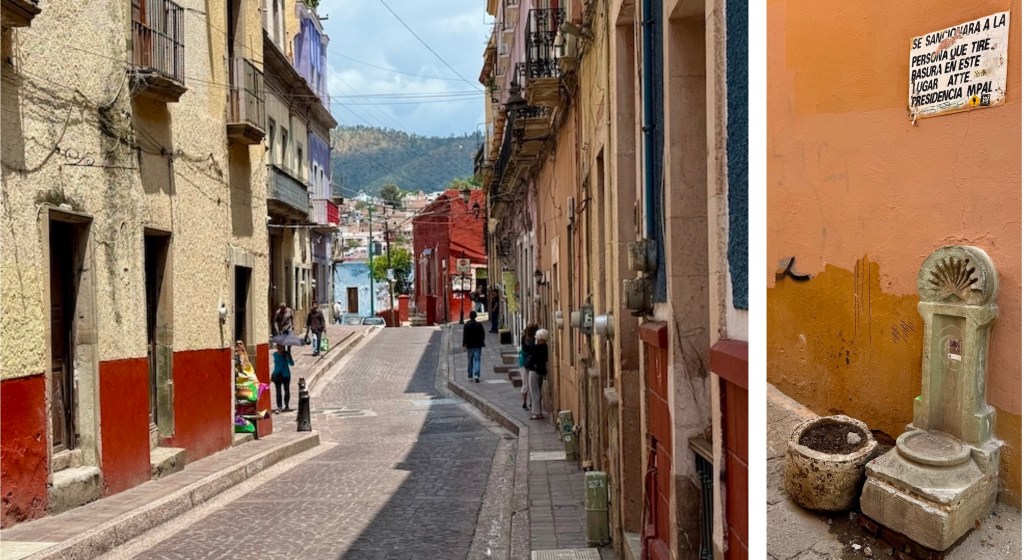
But now it’s time to greet our friend Elaine, who’s arriving today from Albuquerque, and get her settled in the hotel. Then we’ll all trek onward down narrow Calle Pocitos, passing some of those ‘pocitos’ (little wells) that gave the street its name. On my first trip here, in the late 1960s, there was still water running at those taps where people filled their buckets. Things are more modern these days, and a little less quaint, and the taps have been removed. But that vestige of history still remains along these narrow streets.
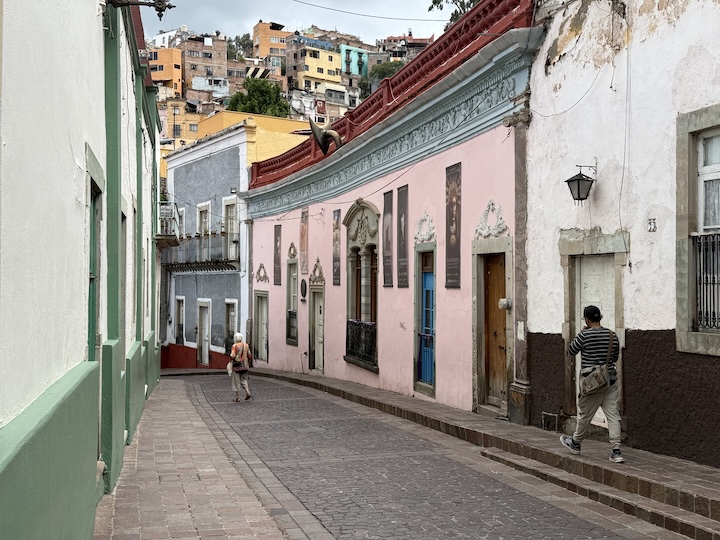
Soon we’re at UG, the Universidad de Guanajuato, where this year’s graduates are gathered on broad white stone steps at the base of the University. The school colors of blue and white are flying in little banners over the street as they celebrate that last big bittersweet event before they move into the working world. I don’t know what happened to the UG hat that I bought here several years back, but I enjoyed wearing a hat that just said ‘UG.’
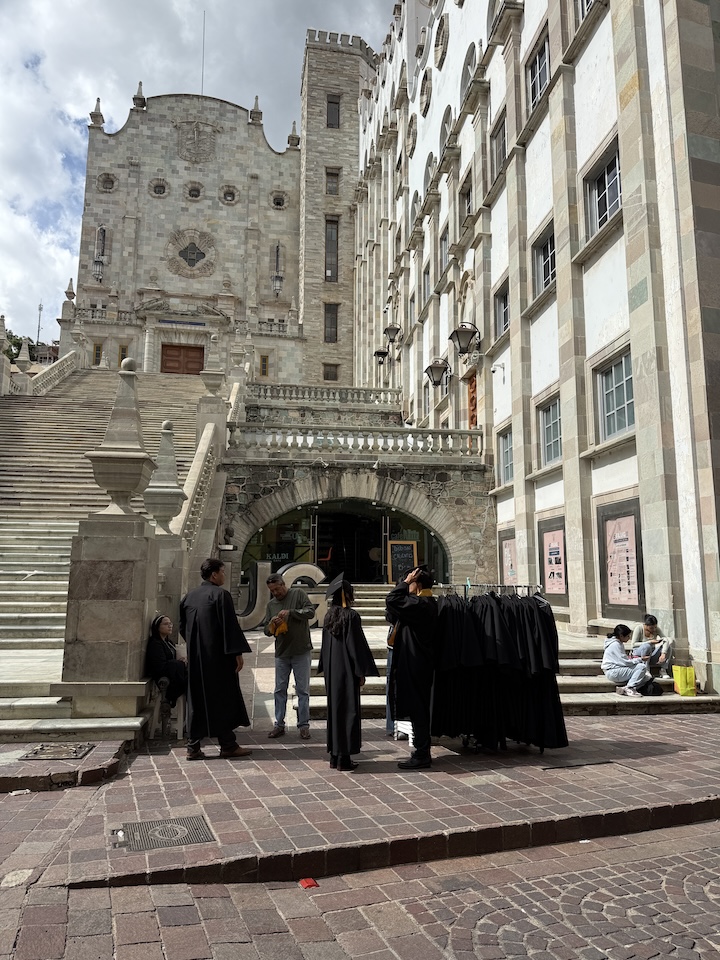
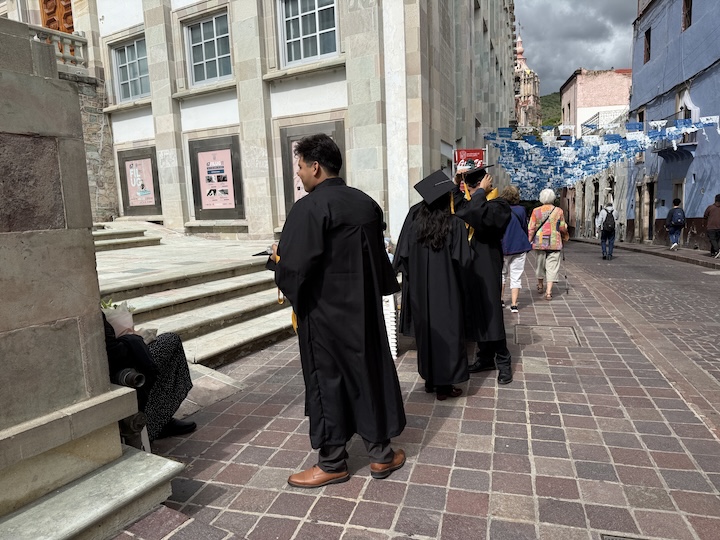
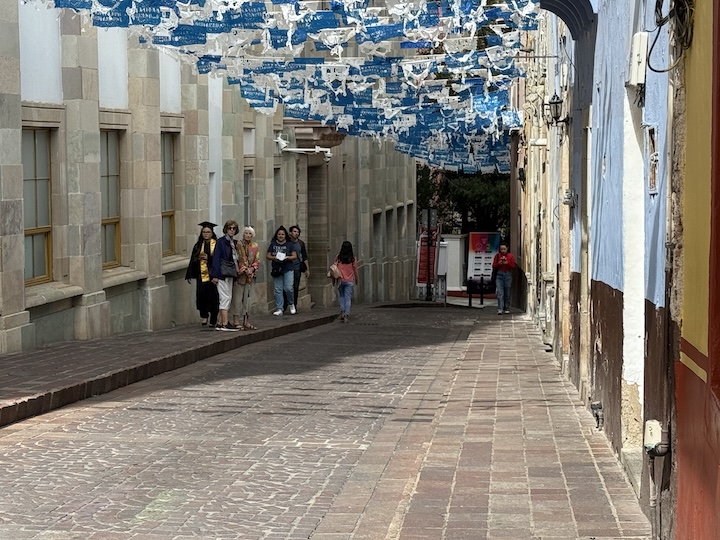
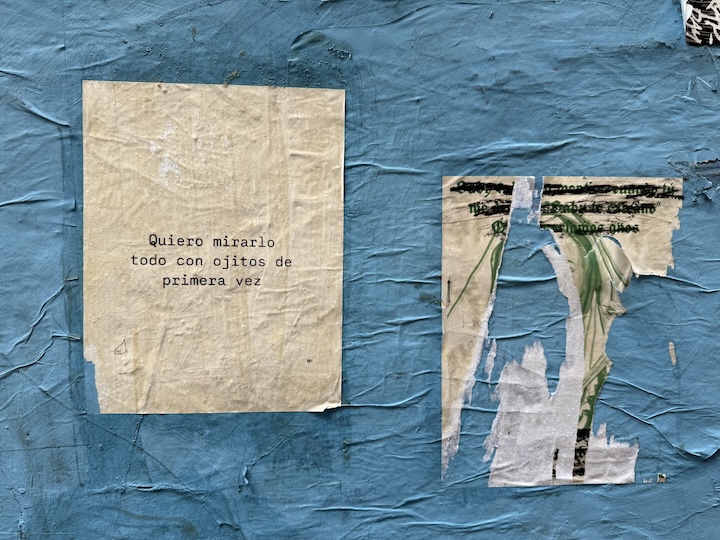
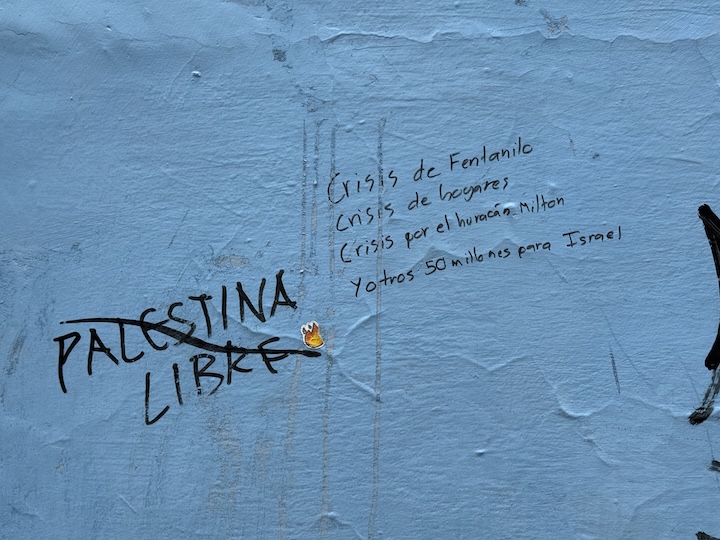
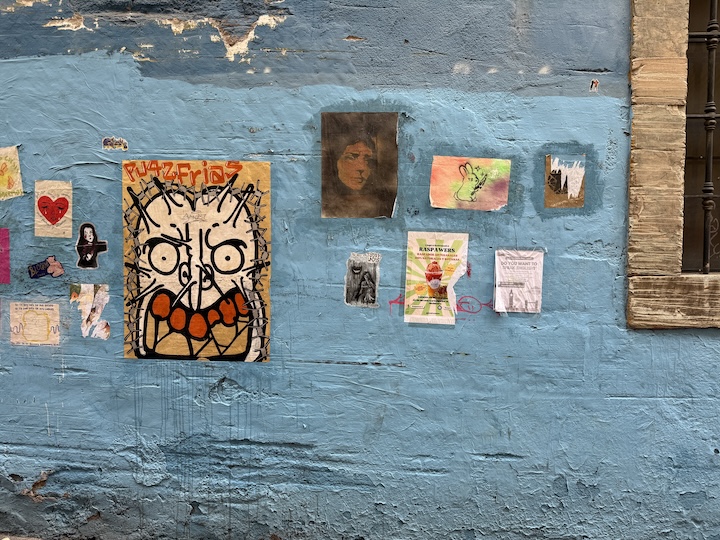
The artistic alleys of Guanajuato are home to large murals, poster art, political screeds, and poetic musings. And one of them reads “Quiero mirarlo todo con ojitos de primera vez” (I want to see it all with little eyes for the first time). Maybe with the eyes of children, open in wonderment? It’a nice thought for the day.
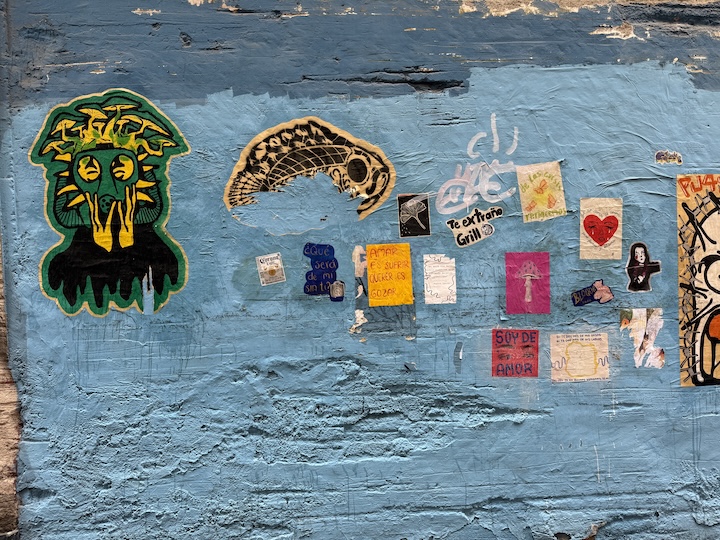
But we’re actually on our way to Cafe Tal, one of my favorite coffee shops in the entire known world. There’s no real sign outside the door, just some old coffee bags hanging over the window railings. It’s a cosy place where you can sit with a cup of fine dark brew by an old window in a thick stone wall and watch the neighborhood go by. I seem to recall that Elaine went for the ‘beso negro’ — a cup of liquid-lava dark chocolate, and she left well refreshed.
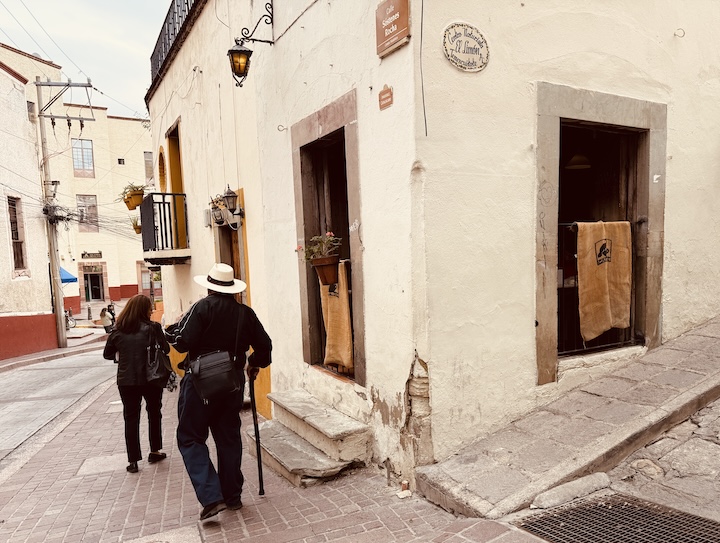
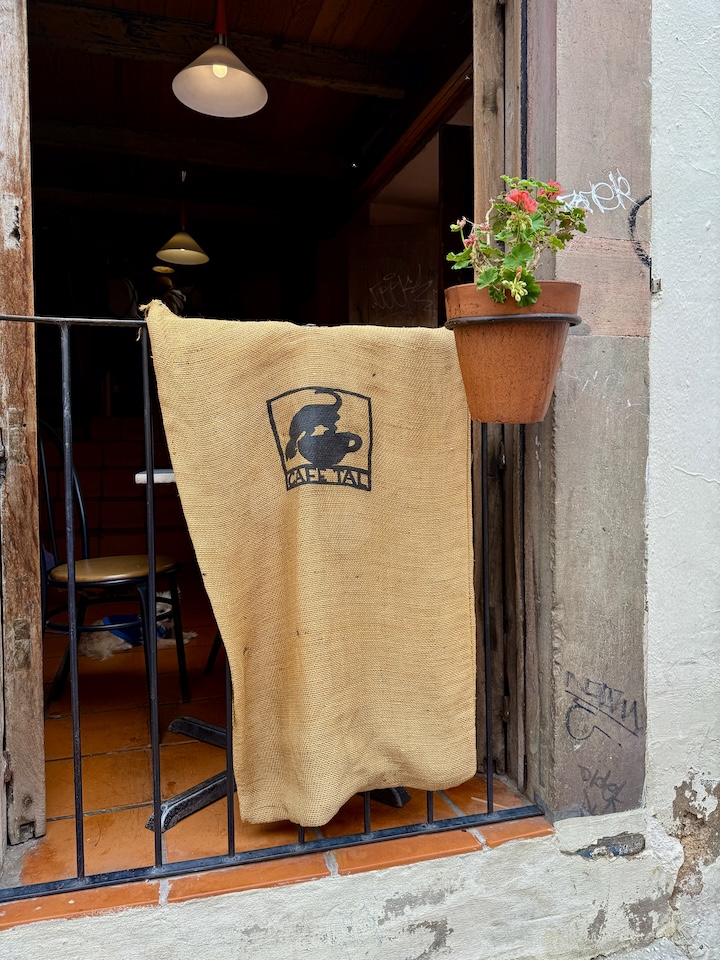
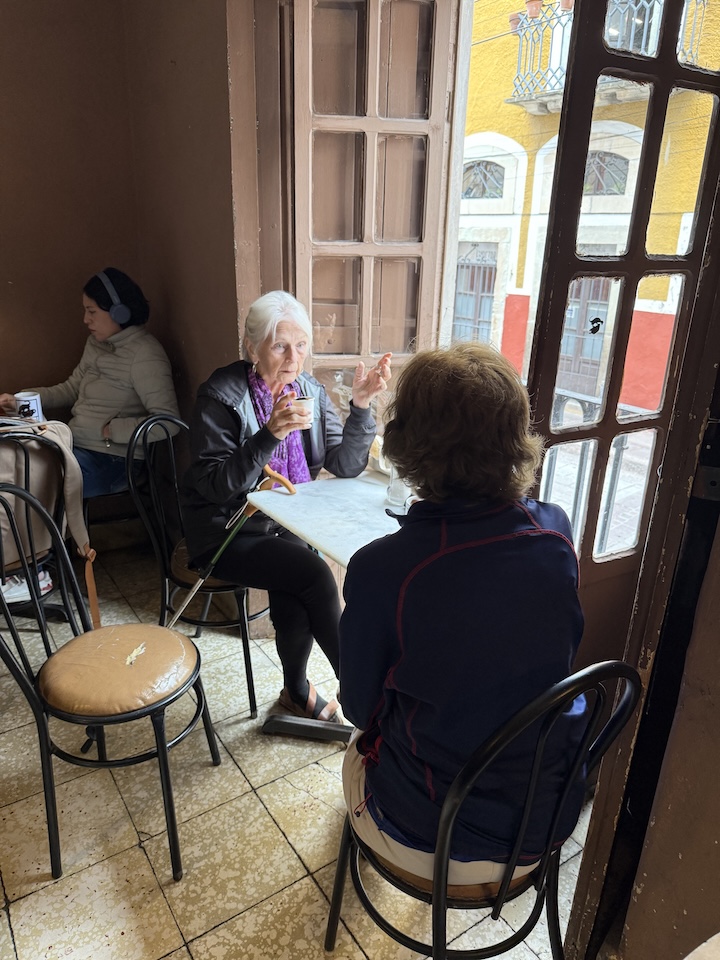
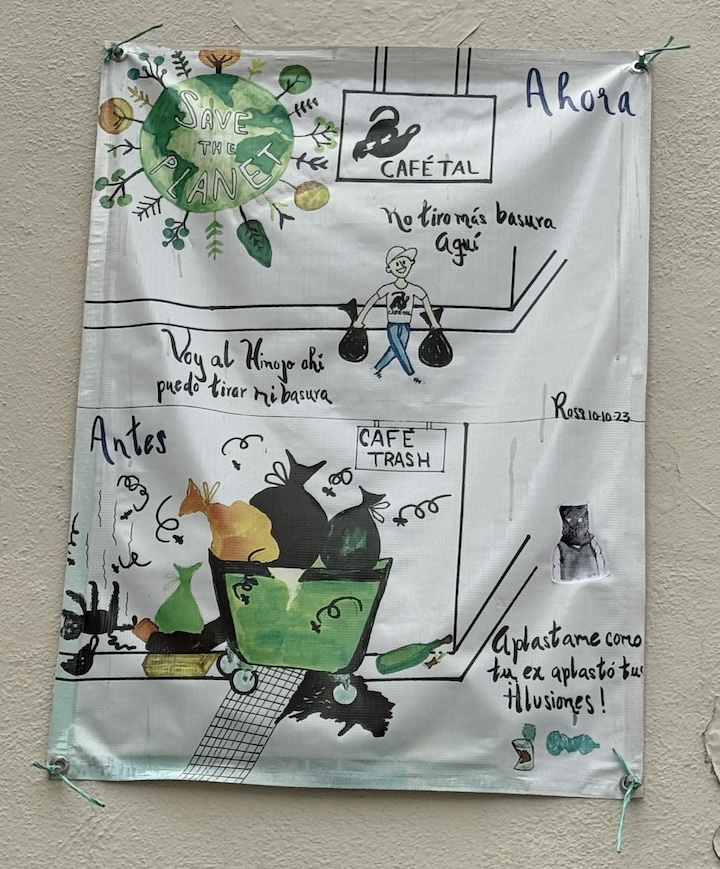
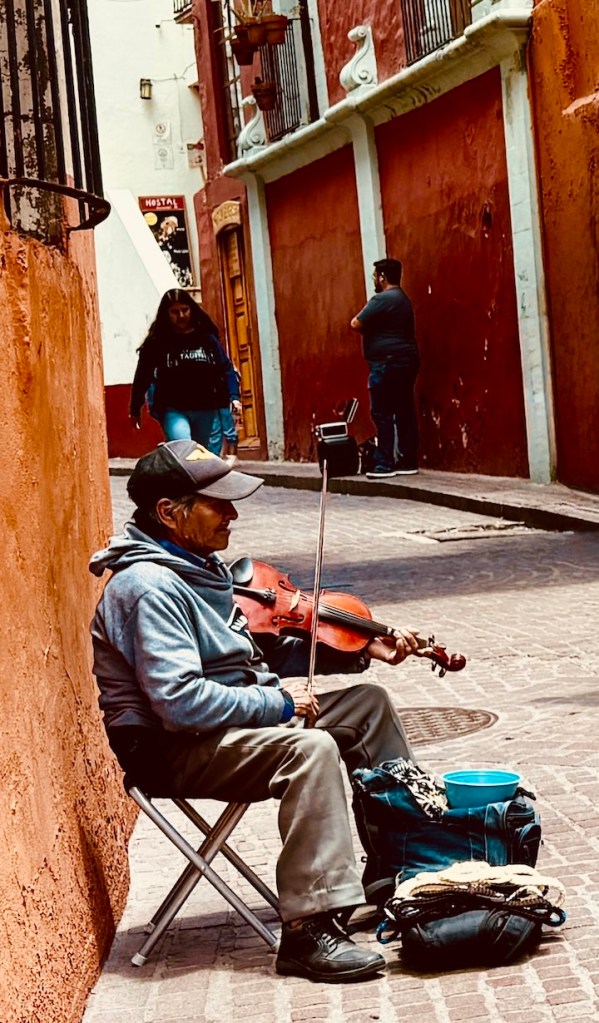
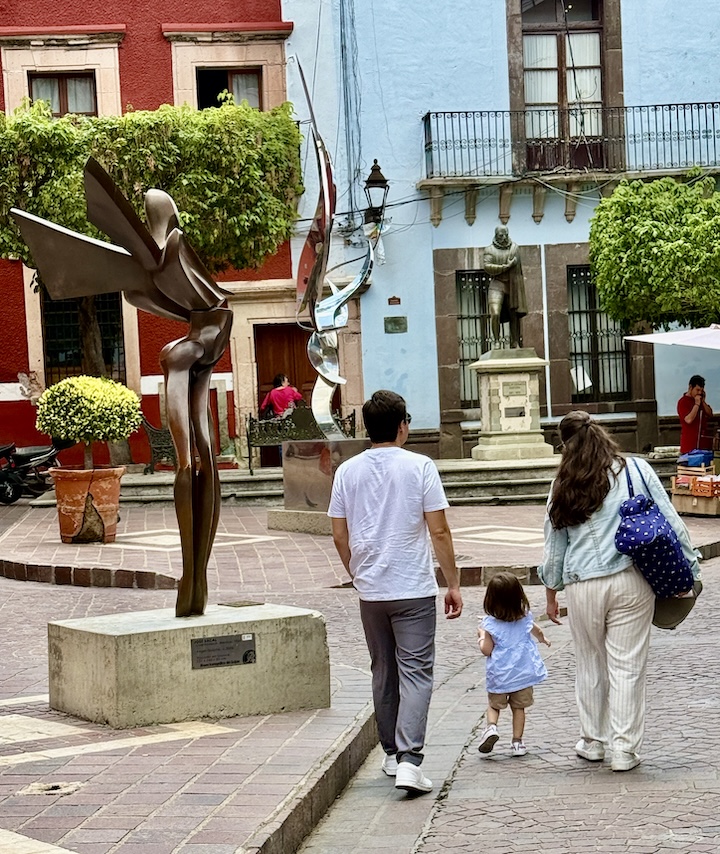
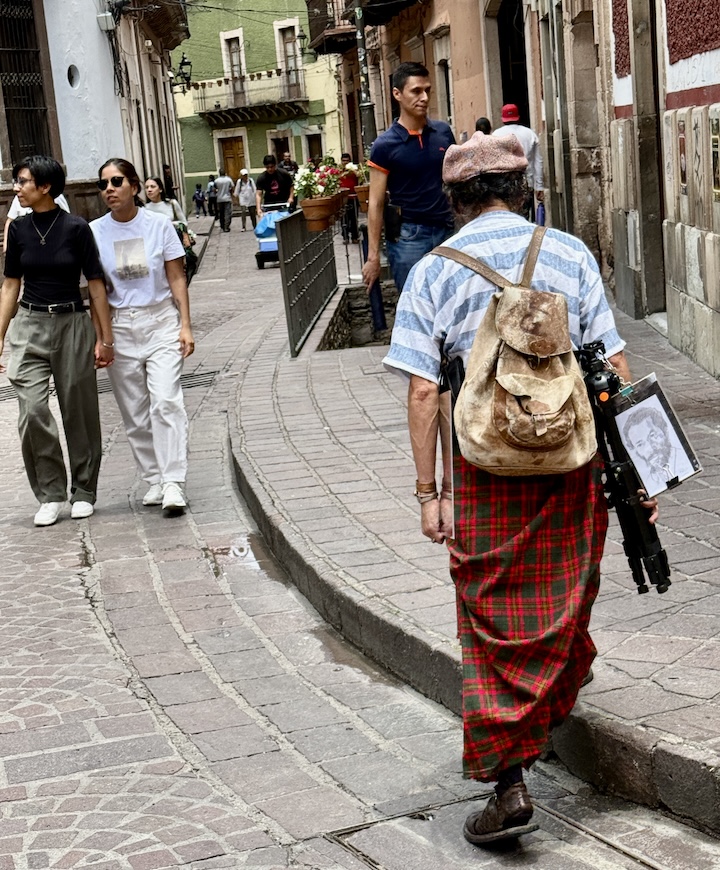
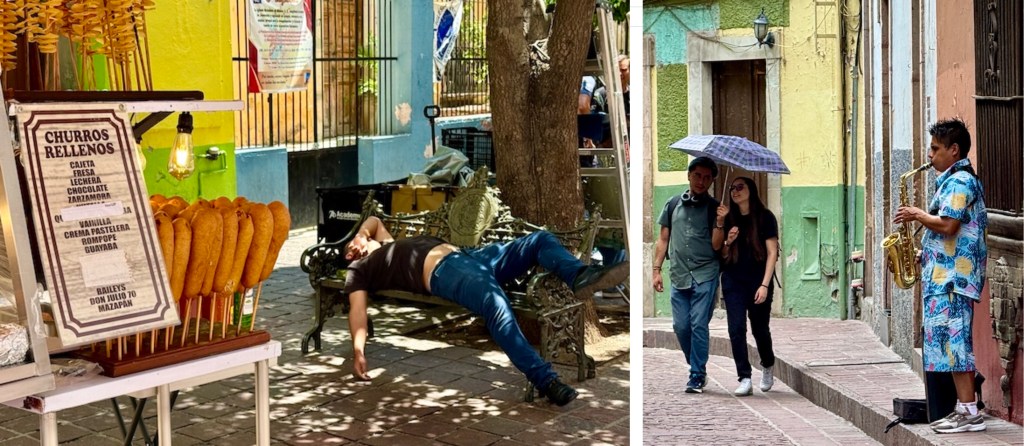
Guanajuato is still the kind of funky, offbeat, and low-gringo town that we appreciate. There’s an opera-quality baritone, and other talented musicians, busking in places where the acoustics of high stone walls in an old alleyway enhance the sound as well as in most concert halls. There’s plenty of public art, and a few local artists are strolling by. And there’s a bench to catch a bit of siesta, if you’re in the need. This is where a basic ability in a second language can enrich your life. When you combine that with the curiosity to toss yourself into unfamiliar circumstances, it makes life more interesting. And you can travel a lot cheaper, like the local people do.
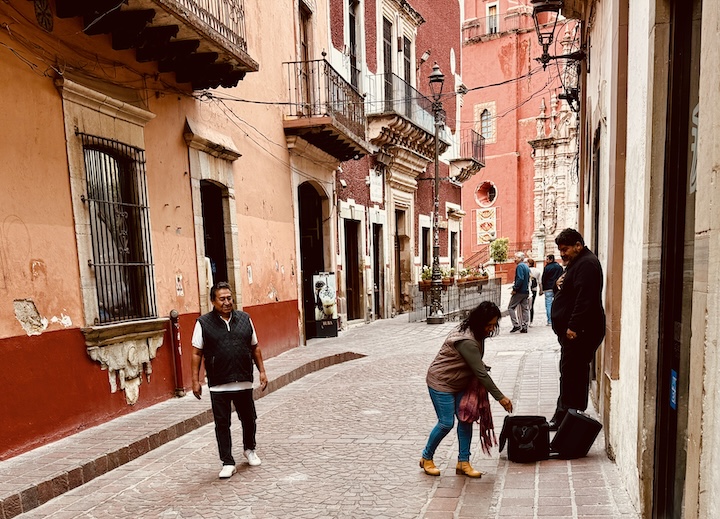
On a previous visit we decided to hang out in our hotel room during the heat of the afternoon, and we flicked on the telly to see if there was a fútbol game. There wasn’t, but we happened upon an old Cantinflas movie instead. He was one of the most famous comedians in all of Latin America, and even had major billing with David Niven in the movie Around the World in Eighty Days (1956).
He was also a fast talker who could turn anybody in circles, and the butt of his jokes in this particular movie was a Gringo actor that I seemed to recall from old B-movie westerns. The Gringo was stumbling through the Spanish while Cantinflas was making rapid-fire jokes that were way above my head. And the whole thing was hilarious.
I thought of those old US TV shows and movies where some Mexican actor bumbled his way through English to great comedic effect – in the kind of roles that are frowned upon today. Yet I realized the Mexican movie industry had been doing the same thing to the Gringos during that same period. And it really was funny, before we all became so serious.
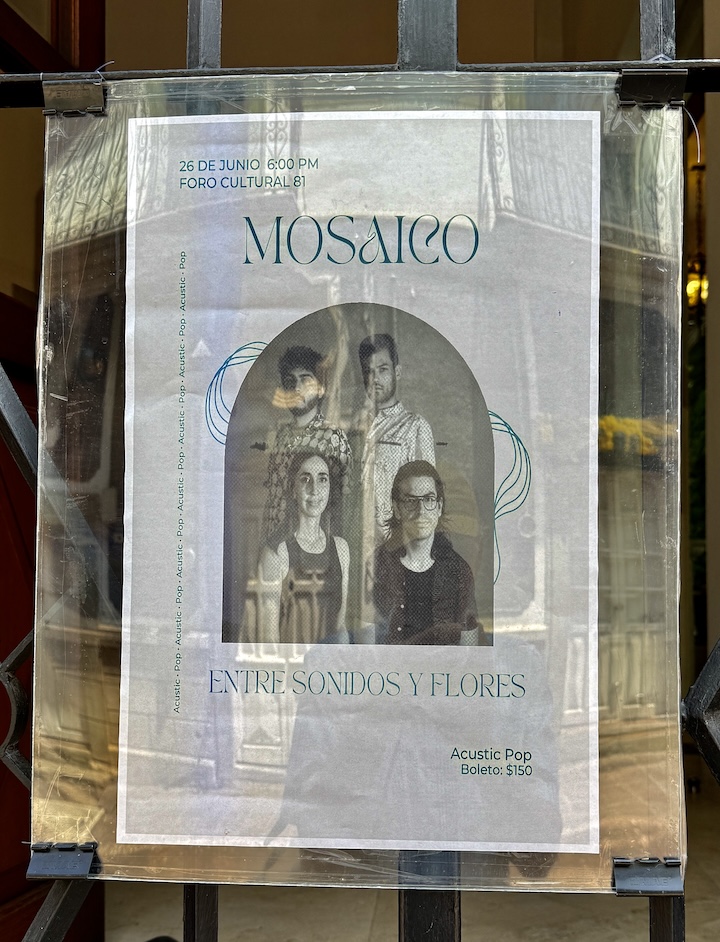
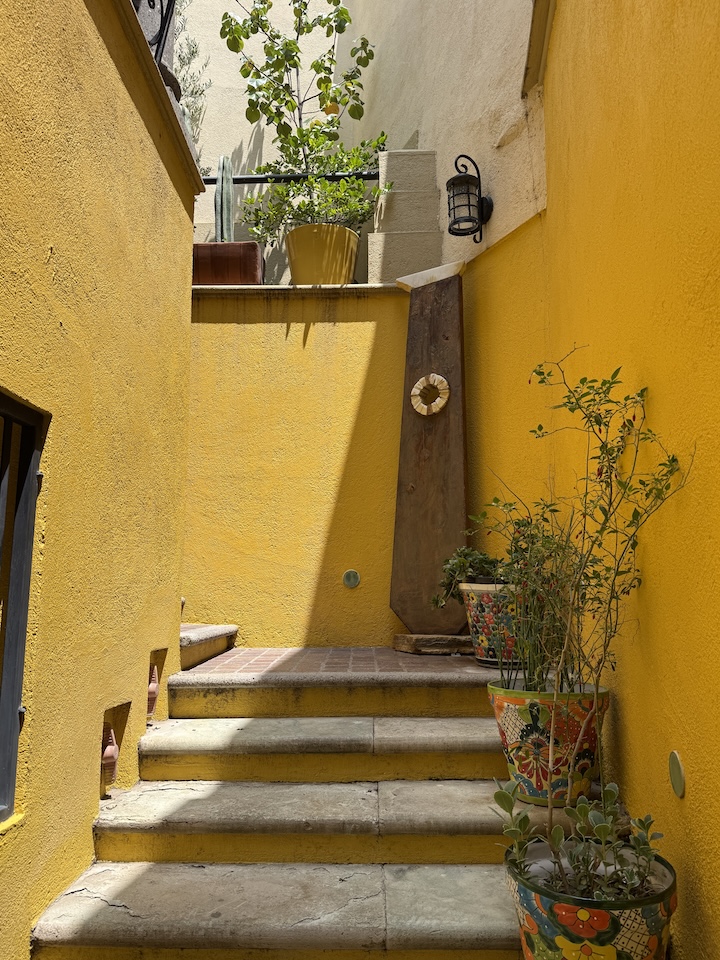
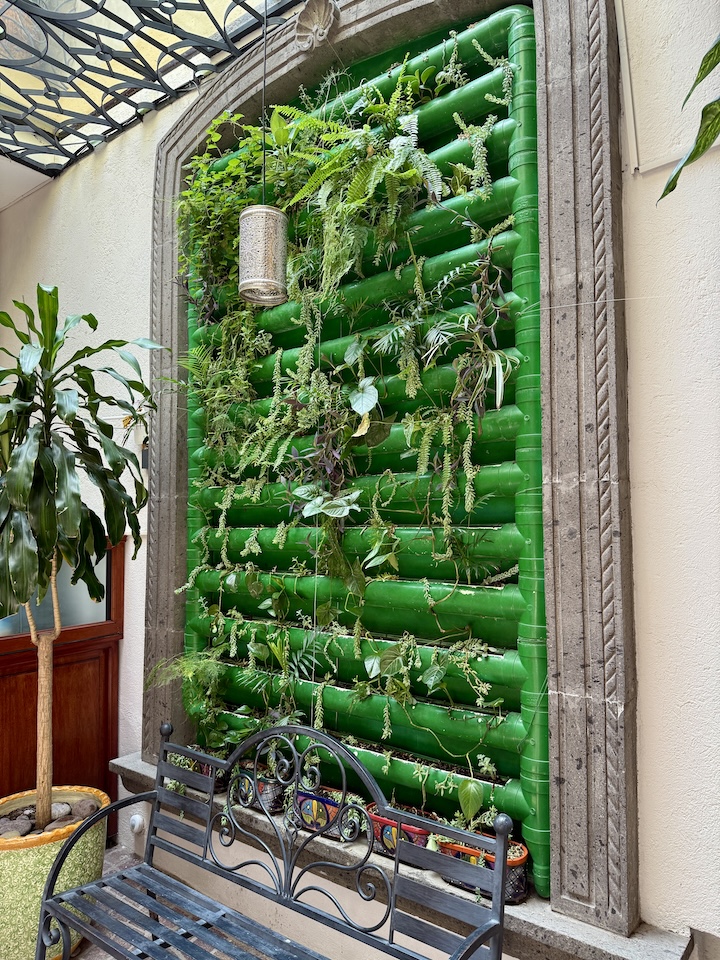
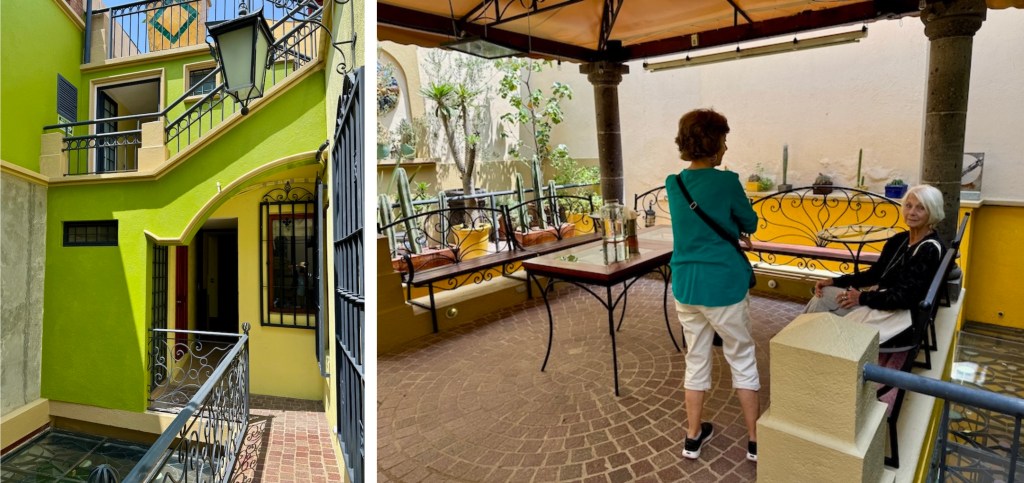
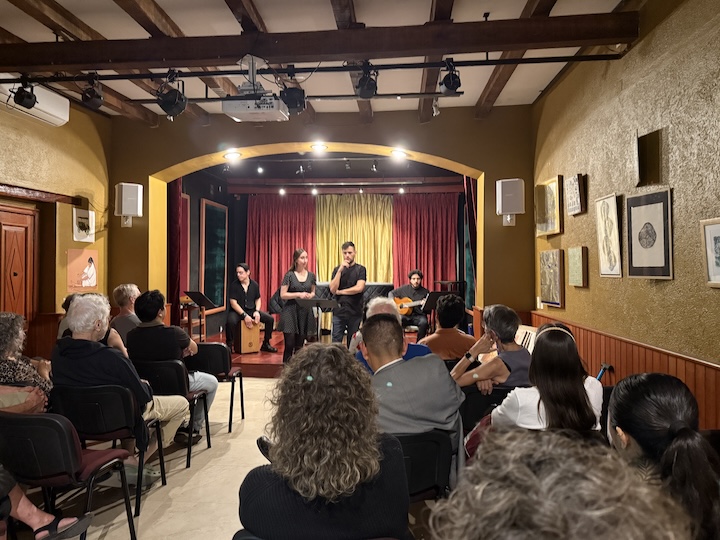
It’s a normal warm and sunny day when we happen upon a poster advertising an afternoon concert by a group called ‘Mosaico.’ We have nothing more important to do, and a concert seems like a fine way to spend our afternoon. The entryway leads past a pretty plant wall and up a stairway to a nice veranda, to await the concert inside an intimate performance space. And it’s a very good event, by a talented local group.
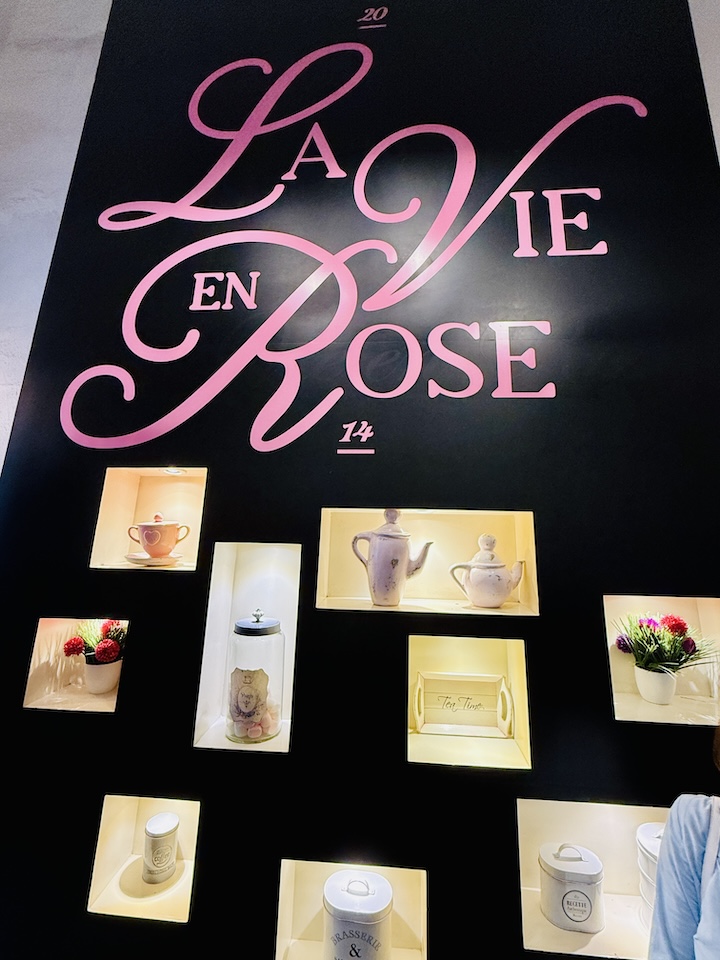
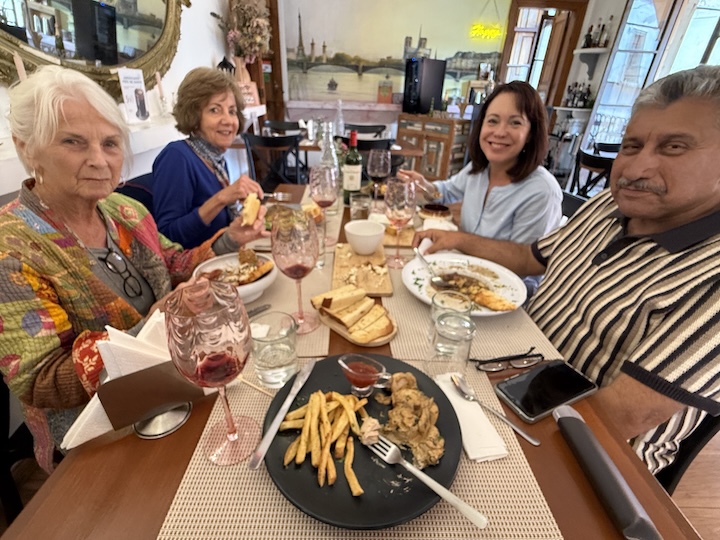
Then it’s time for dinner with our friends Jaime Torrez and Norma Becerra at La Vie en Rose. There’s room available upstairs, with good conversation and some fine food. Jaime is a retired Doctor and Norma is the author of several physical fitness books that are used in school curricula. They used to live in Hermosillo and recently moved to Guanajuato. We’ve travelled together in Europe, and it’s nice to catch up with the latest news in their busy lives.
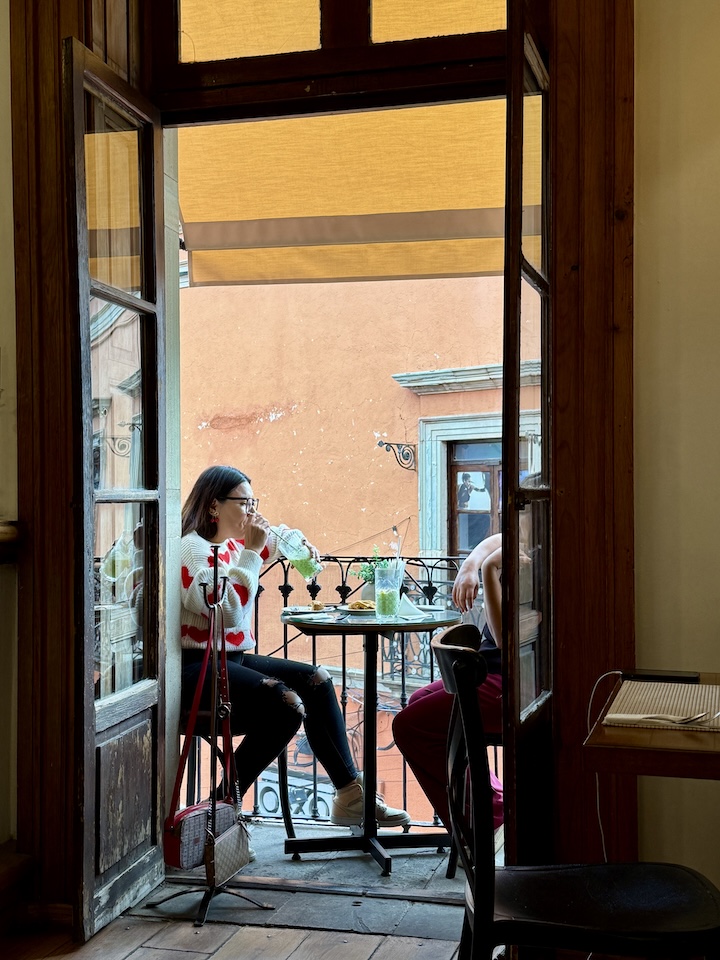
A couple of friends sitting at a table-for-two in a balcony overlooking the street life below are a picturesque backdrop to the evening, framed by a pair of simple old French doors.
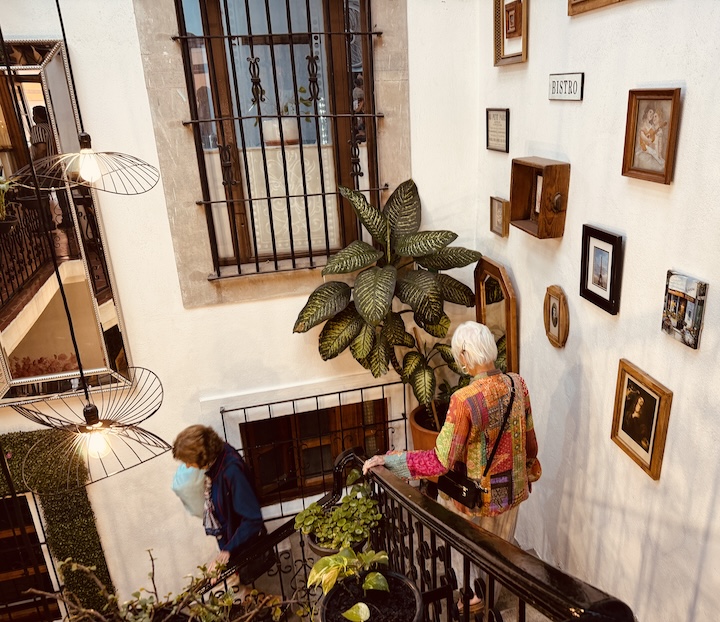
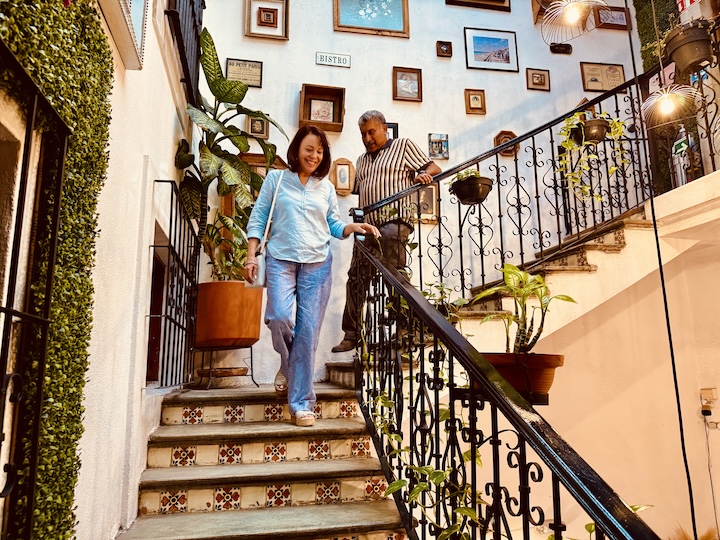
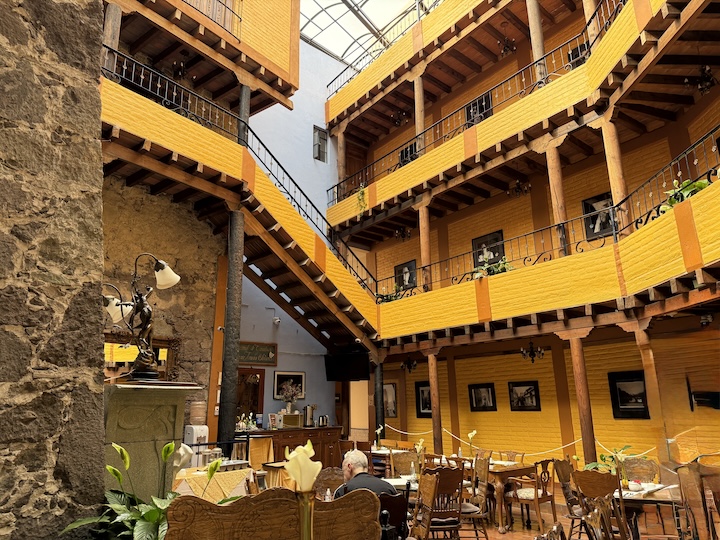
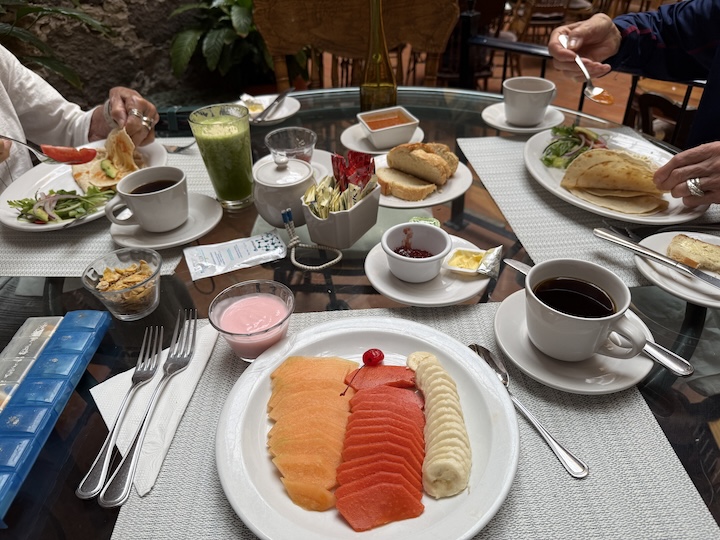
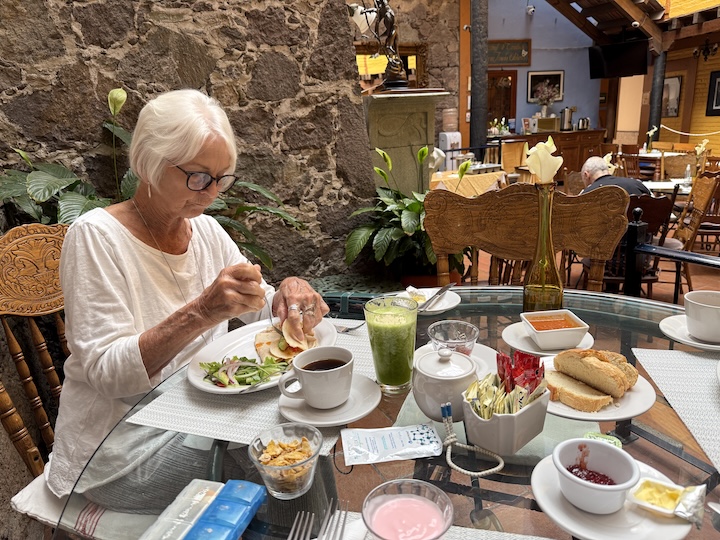
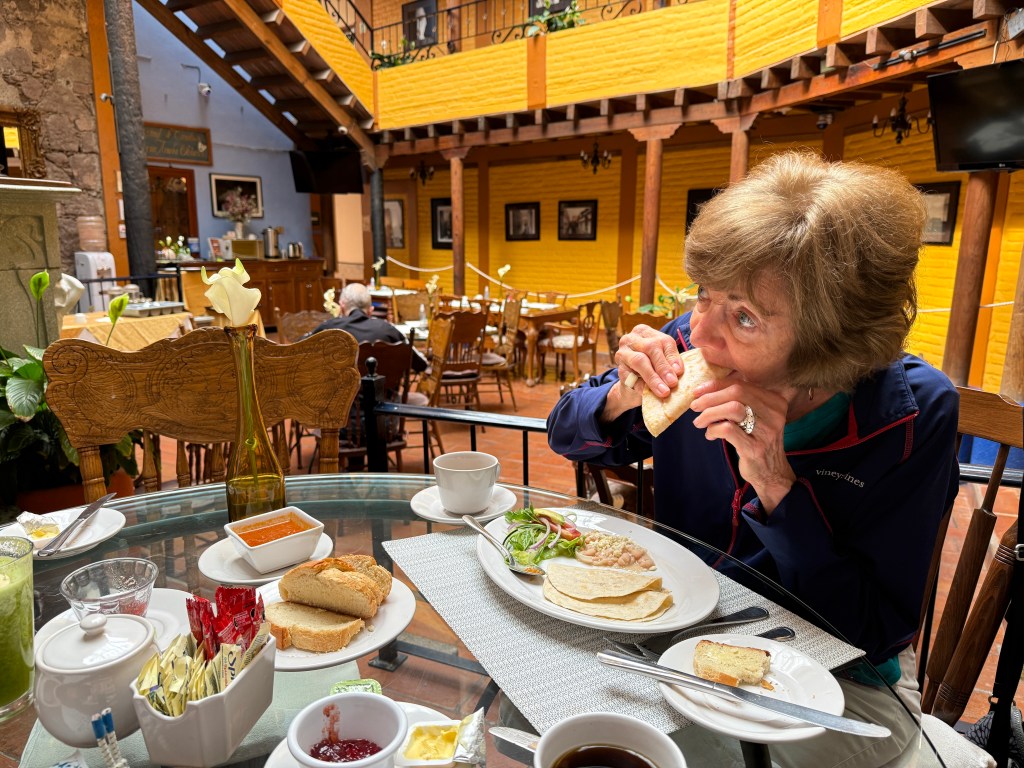
On the next morning we start our day with a hearty breakfast at the hotel, and Elaine is hungry enough to wolverine the food. Then we’re off on a quest to retrieve our laundry so we can get that all tucked away, before exploring more of the city.
Guanajuato occupies a special place in Mexican history, as it’s the site of the first big battle of the country’s 1810 War of Independence from Spain. And the huge old stone granary called the Alóndiga is where the local Spaniards walled themselves up against the ragtag army of Padre Hidalgo, until a local patriot called Pípila breached the main door. Nowadays, a huge statue of Pípila towers over the city from the canyon wall above.
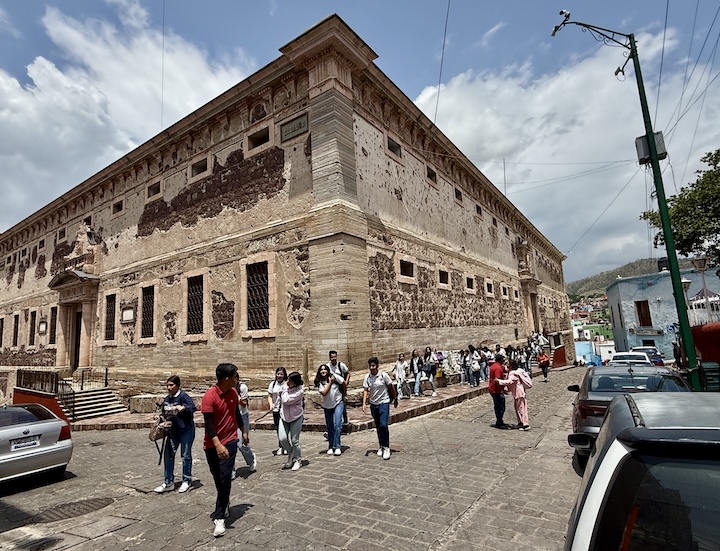
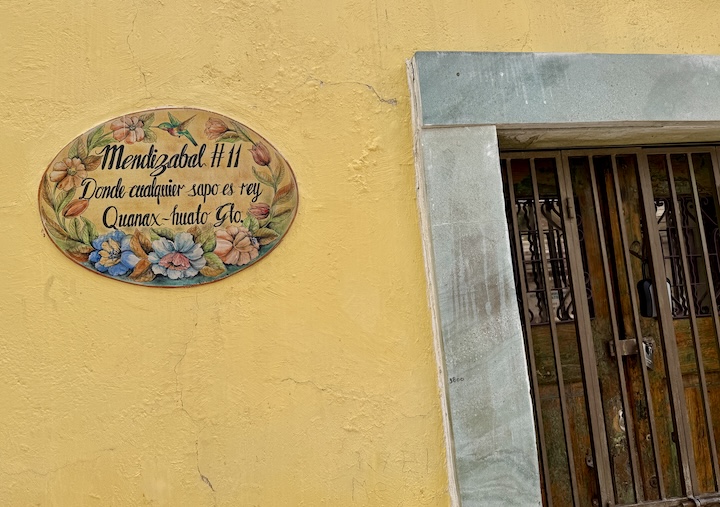
Yet on our visit, the famous Alondiga is swarmed with students on a school outing to visit one of the country’s main heritage sites. Normally it’s a quiet place that also functions as an art museum. We’ll miss out on that today and go downhill instead to the city’s big main market, the Mercado Hidalgo. Along the way, a street address plaque says, ”Donde qualquier sapo es rey.” (“Where any toad is king.”) And the spelling of the town’s name as, “Quanax-huato” goes back to the old Purépecha name, meaning “frog hill.”
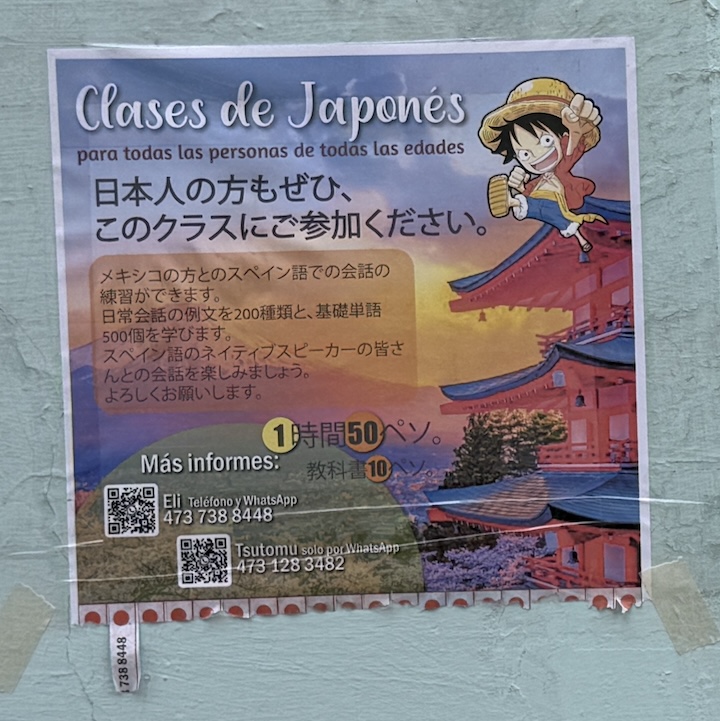
There’s a poster on another wall advertising Japanese lessons, in case you have a need for that. There are interesting things to see in every city, if you keep your eyes open.
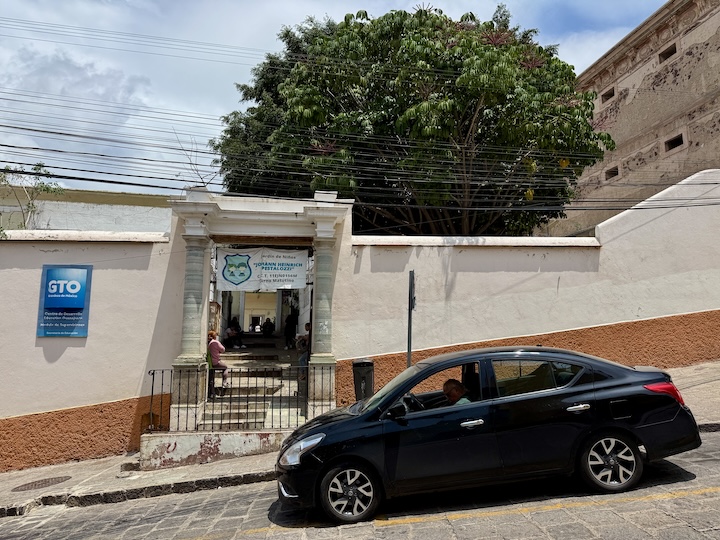
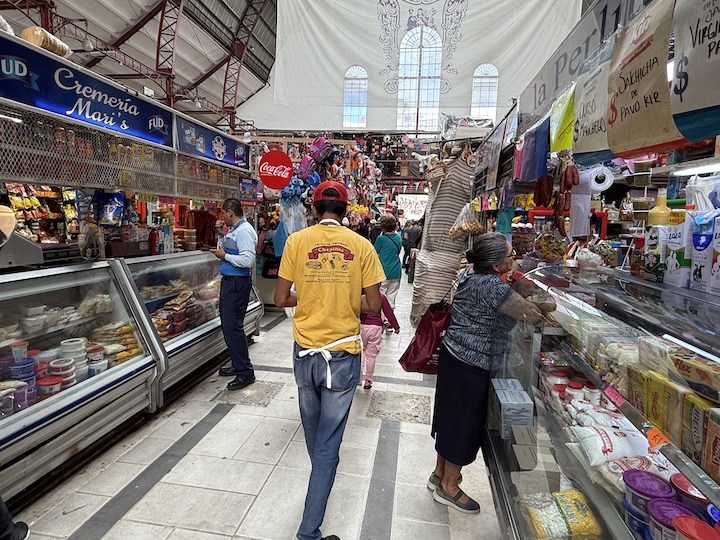
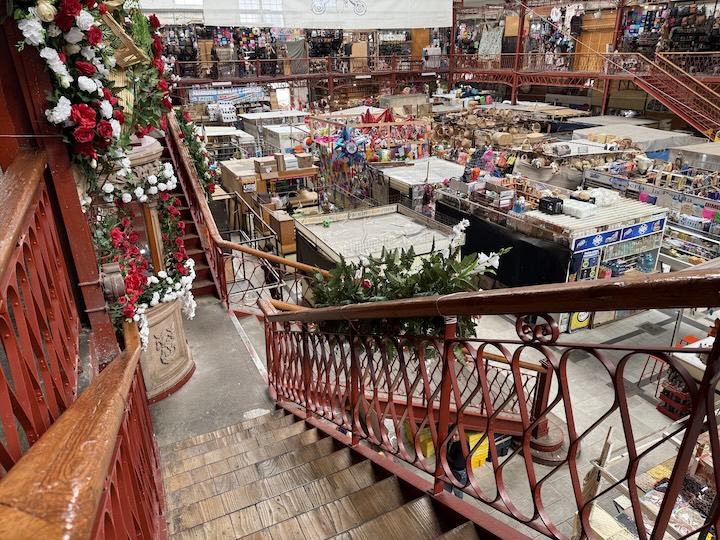
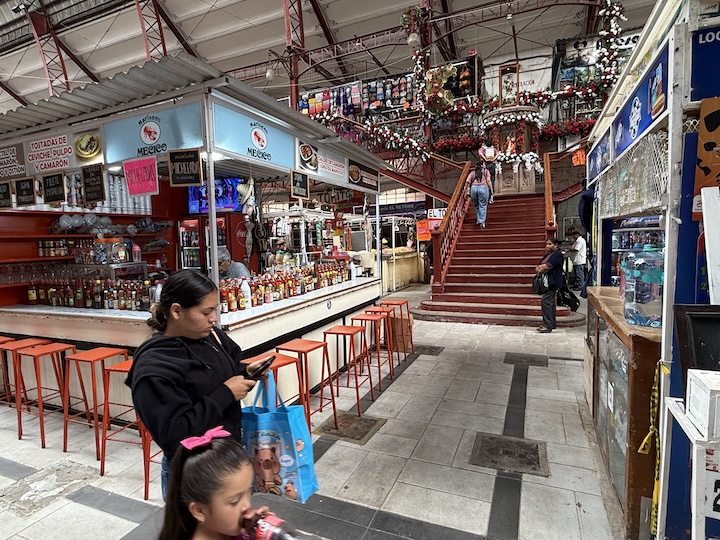
The big Mercado is nestled into the busy city, and the place is filled with all kinds of things to grab your interest, from food to potted plants to piñatas, and everything else. A clamber up the broad red stairway gives us a colorful overview of this great old cast-iron structure, and the daily commerce it holds.
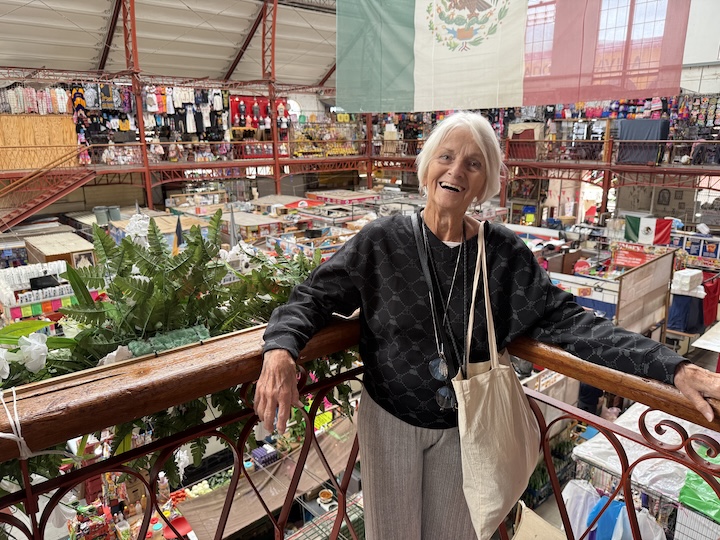
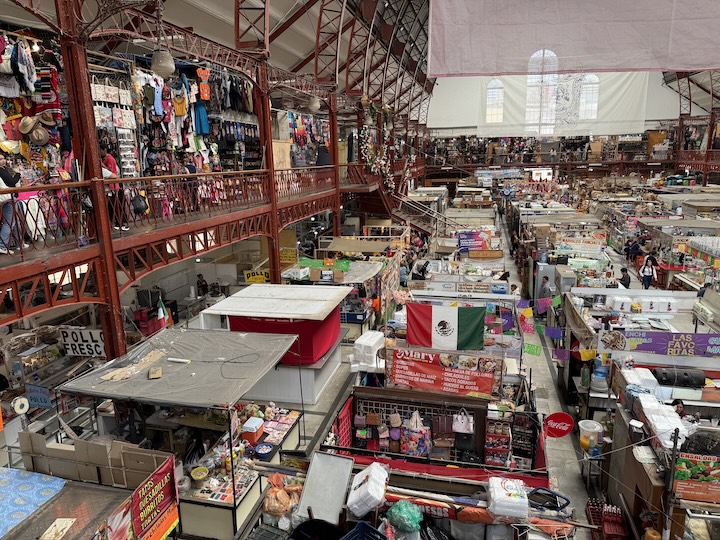
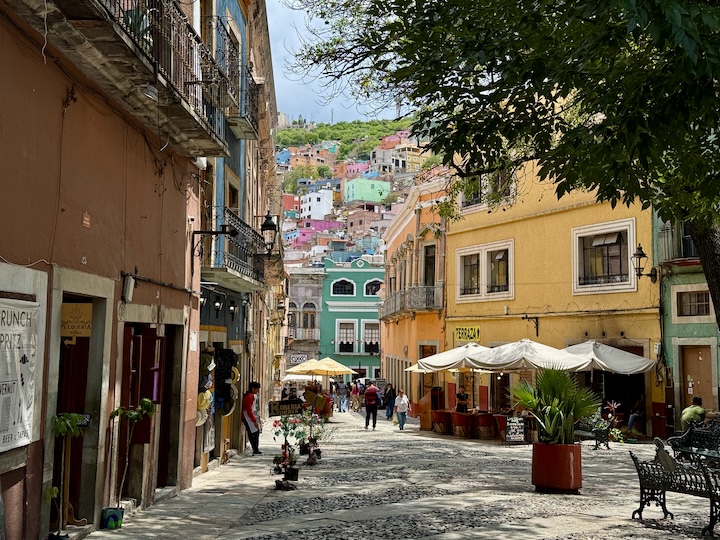
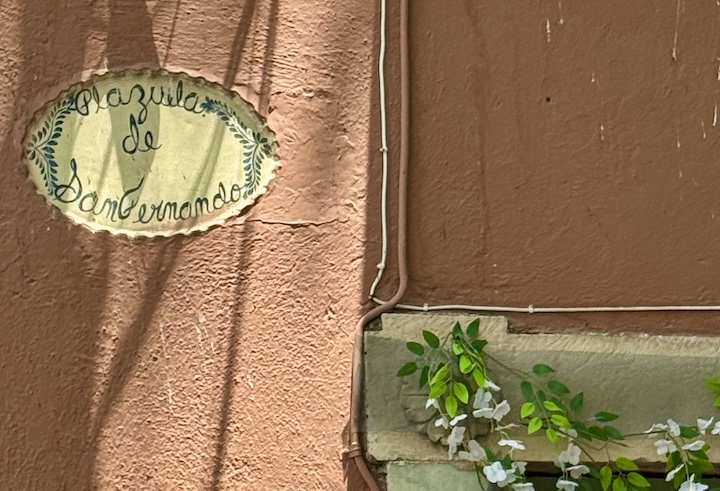
After the Mercado, we detour back uphill through the gorgeous little Plazuela de San Fernando, where an artist could set up an easel facing almost any direction and find plenty of worthy art for inspiration. The colorful casitas that climb the hills beyond are just waiting to be painted. And it all just feels like those famous days in old Montmartre that inspired Picasso, Modigliani, Valadón, and their band of starving artists.
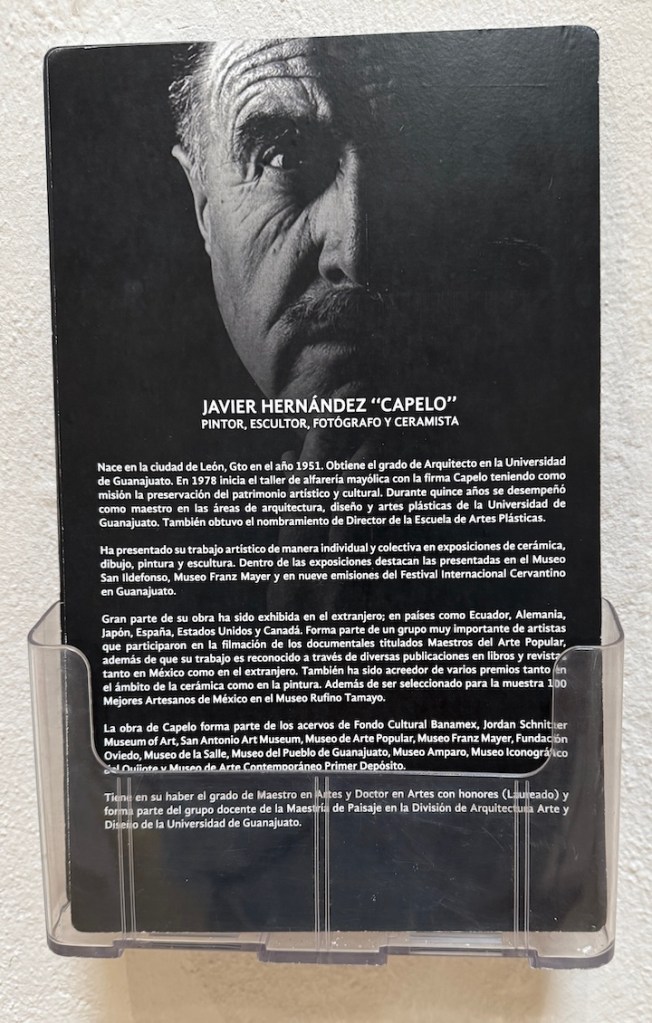
The rest of the afternoon is consumed by the challenging art at a modernista gallery called ‘El Patio.’ There’s a wide range of works by Capelo and others to catch our eyes. They range from realistic to surrealistic, and in sizes from small, to huge and threatening.
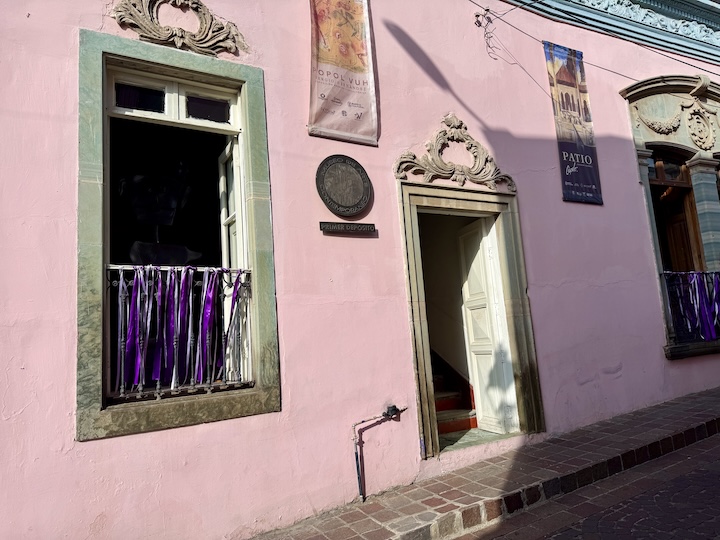
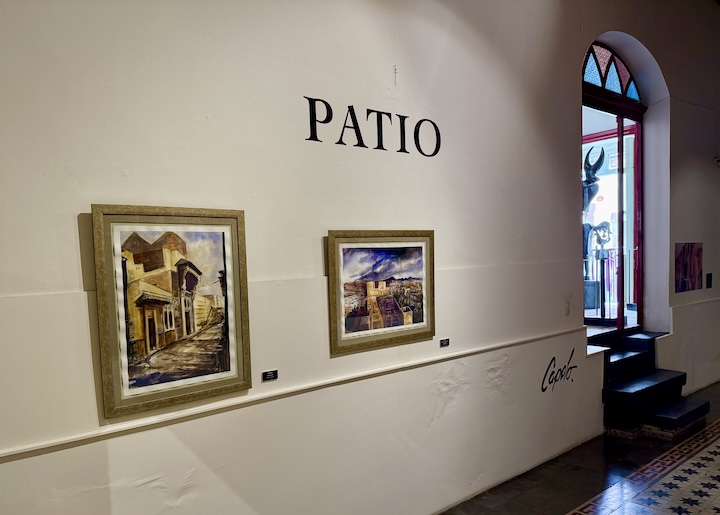
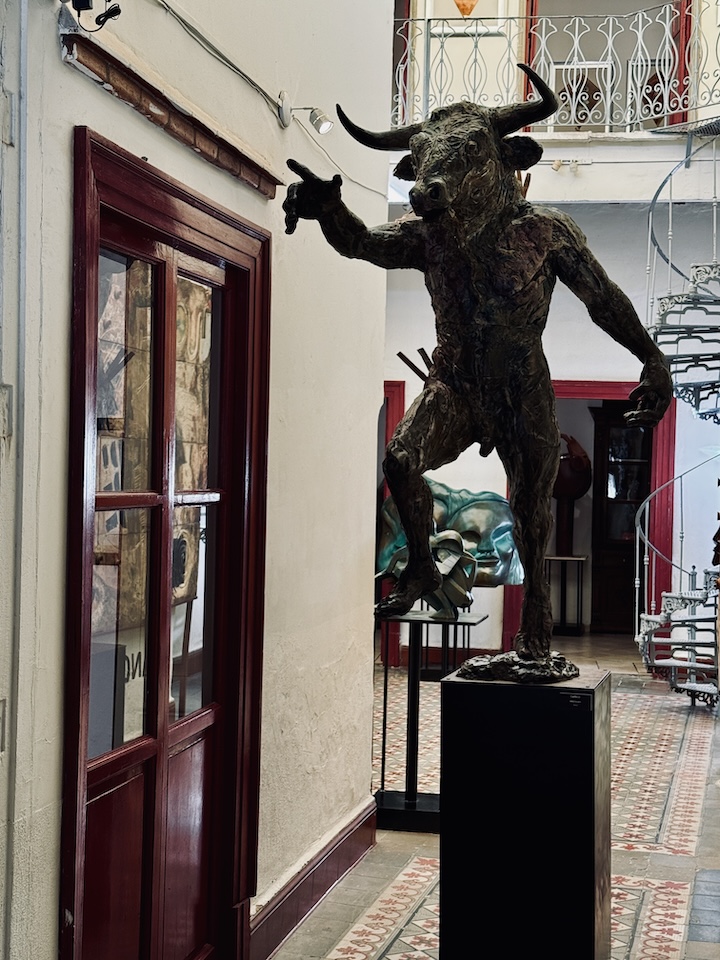
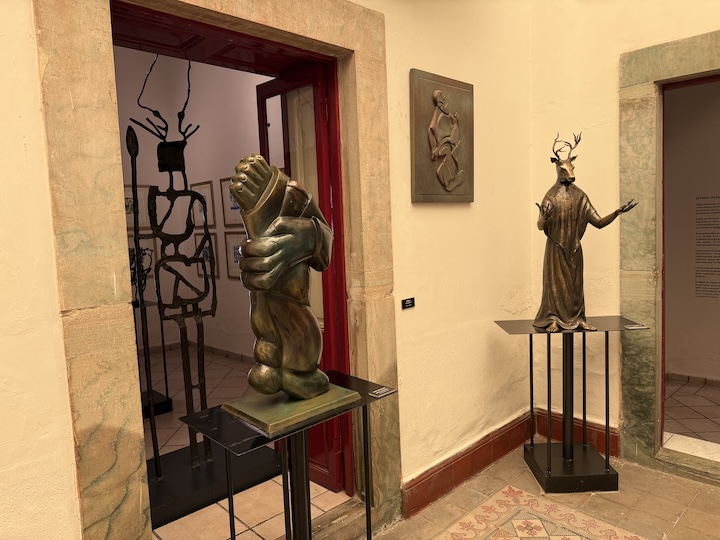
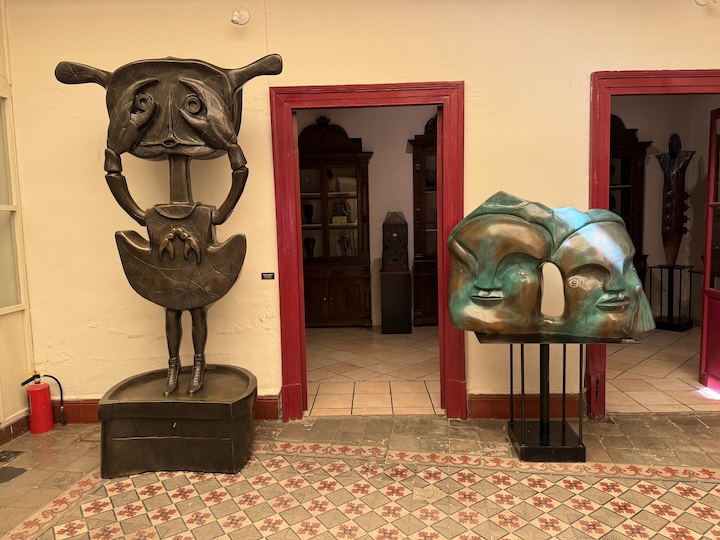
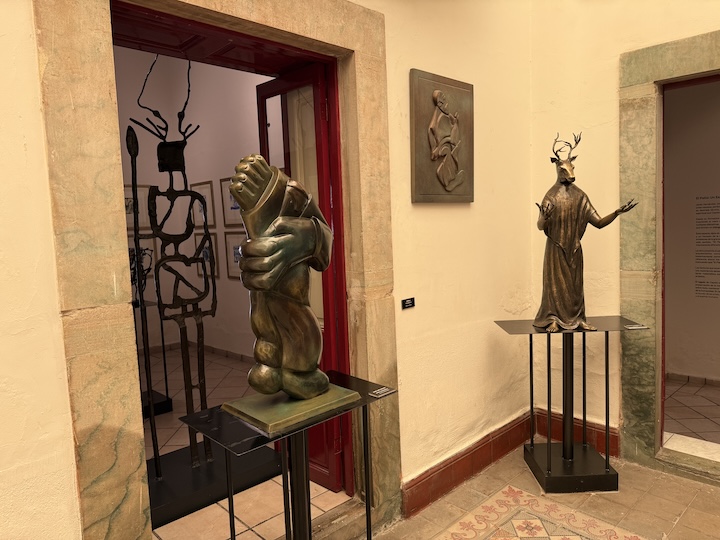
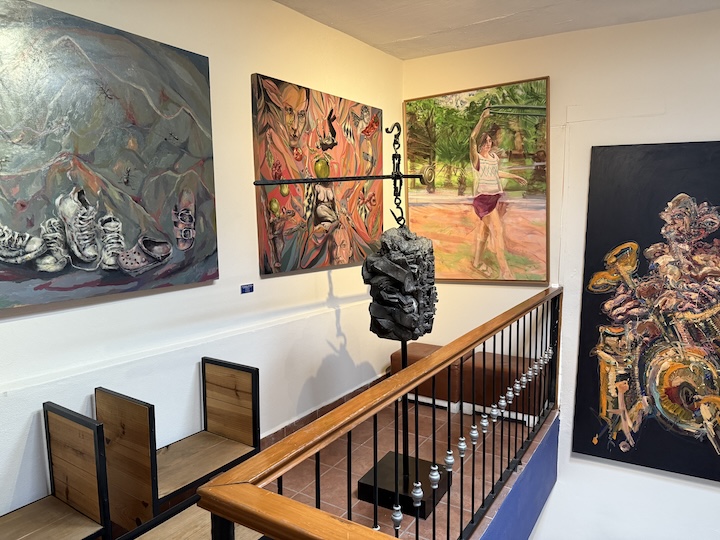
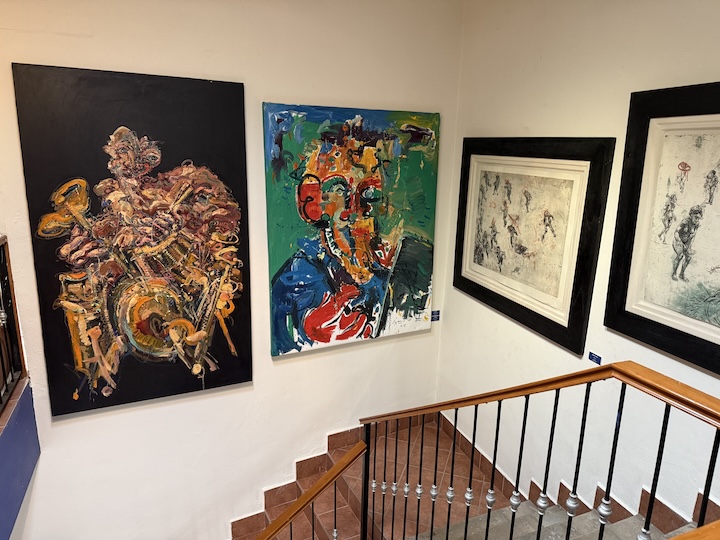
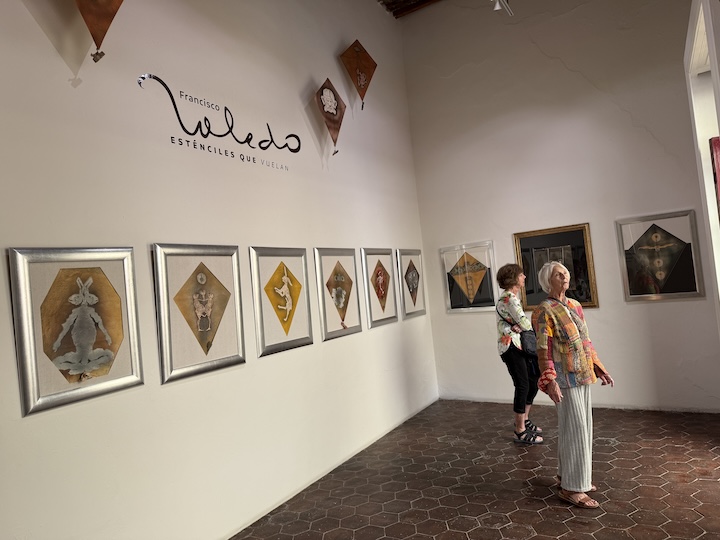
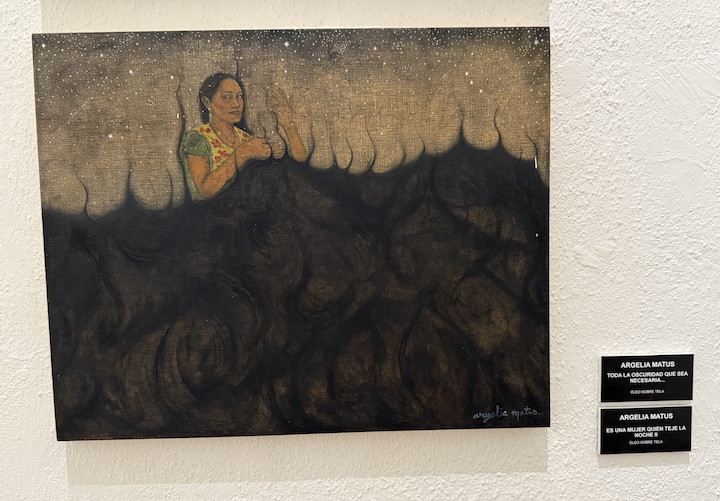
A plaque says the concept of ‘patio’ represents a ‘sieve of the desert, protector of life and passport of the soul.’ It’s also, ‘the digital footprint of God, squaring the circle, beautiful mathematics, textures of the wind, of perfume, and of light.’ Among other essential properties.
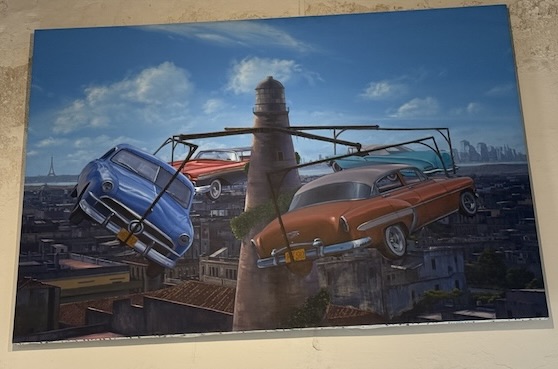
I was especially drawn to a painting that includes a blue 1949 Ford that’s part of some crazy airborne carousel of classic cars. My family, mom, dad, and four kids, came to the West in 1955 on Route 66 in a blue ’49 Ford sedan just like that one, when I was ten years old. And I still recall my amazing first sight of the vast and dry Rio Grande Valley desert as we emerged through the mountains into Albuquerque. So yeah, art can speak to us in strange ways, in unexpected places, and it can rekindle fine old memories.
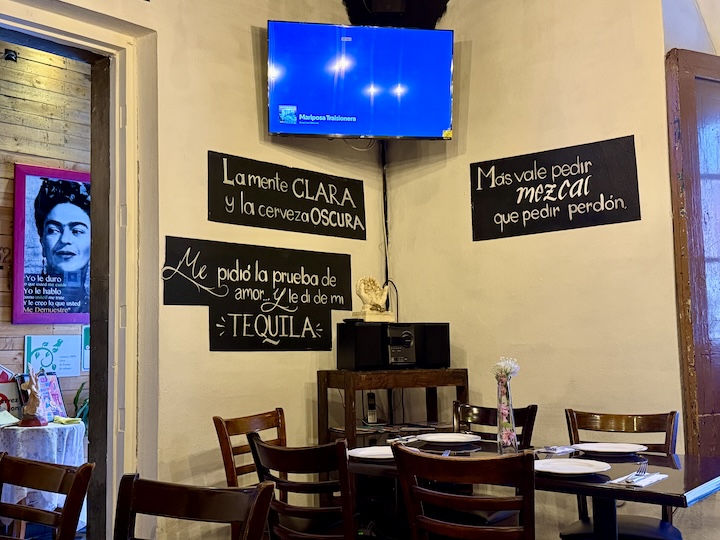
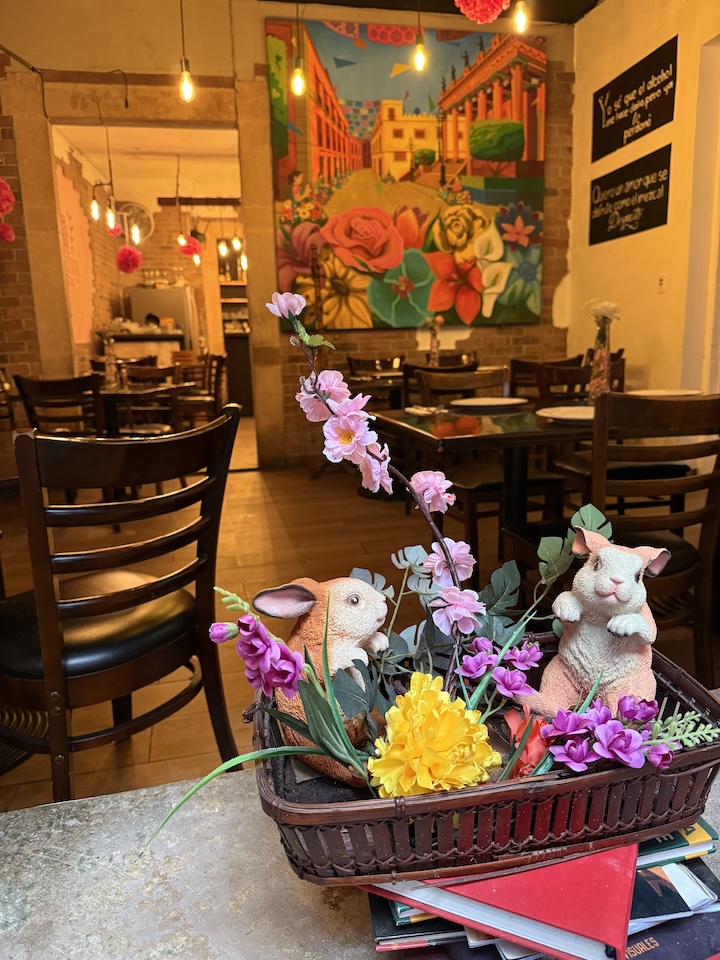
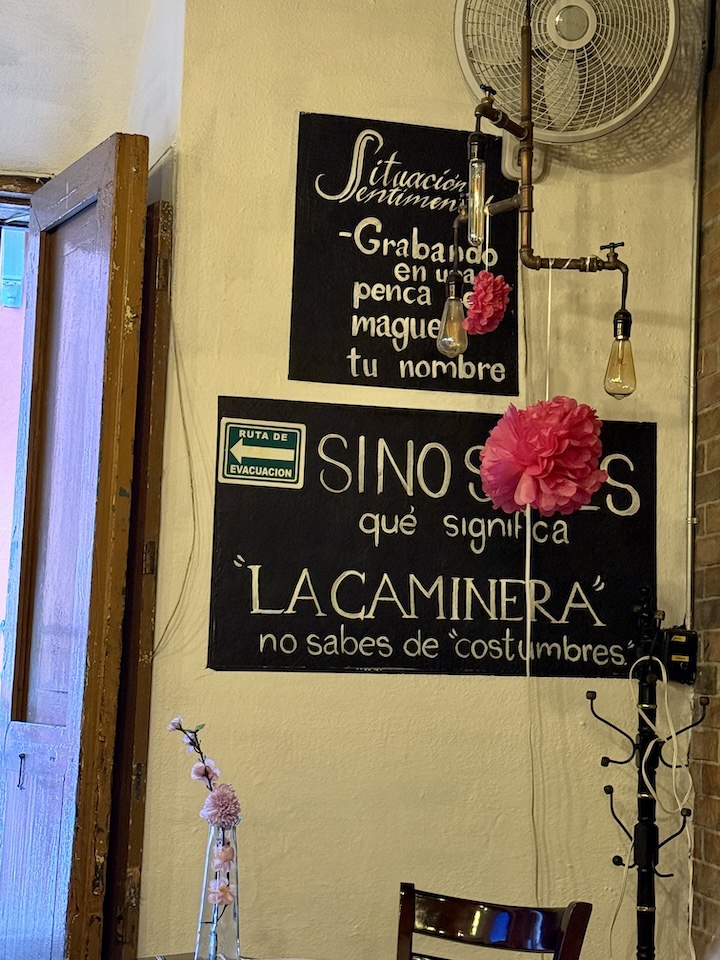
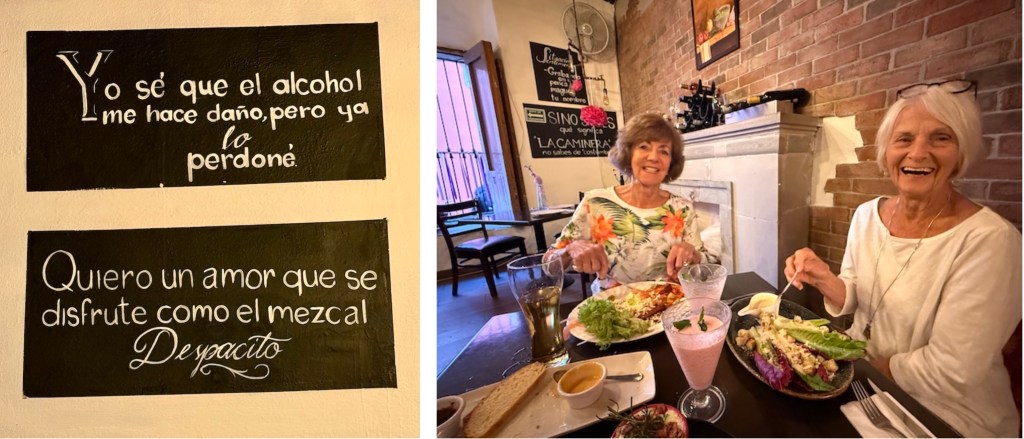
So after a long day of trekking around the alleyways of intriguing Guanajuato, we’re ready again for dinner. Inside a nearby open window is a colorful place with ‘proverbs’ on the walls: ‘I want a love to enjoy like mezcal, slowly’ and ‘A clear mind and a dark beer.’ It’s the kind of place that looks just right for us!
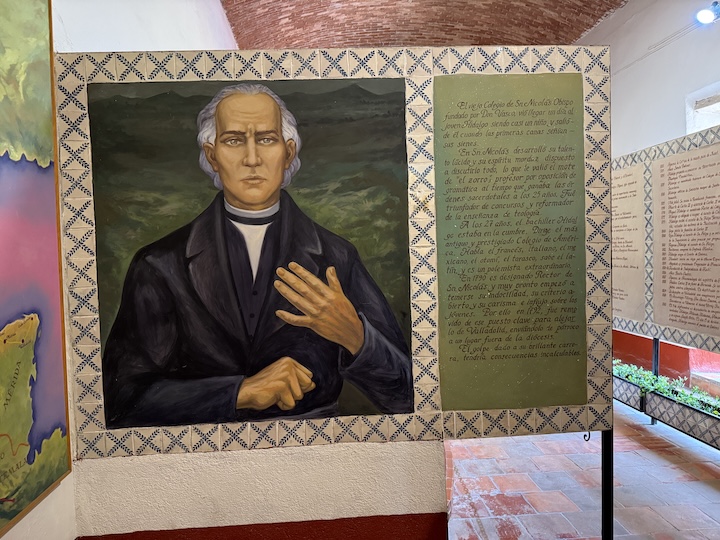
Jaime and Norma have offered to drive us to historic Dolores Hidalgo, where Father Hidalgo issued his “Grito de Dolores,” the famous cry that started the Mexican War of Independence. The plaza is well-kept and well-visited these days due to its historic significance, and it’s a nice place to relax on a hot day.
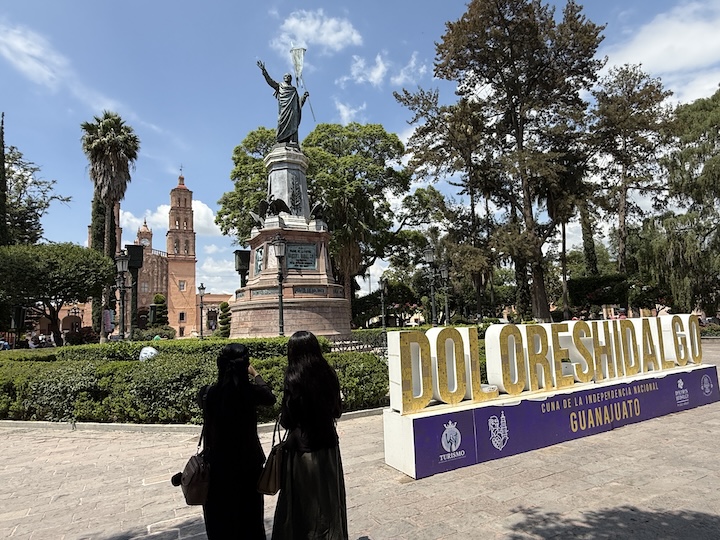
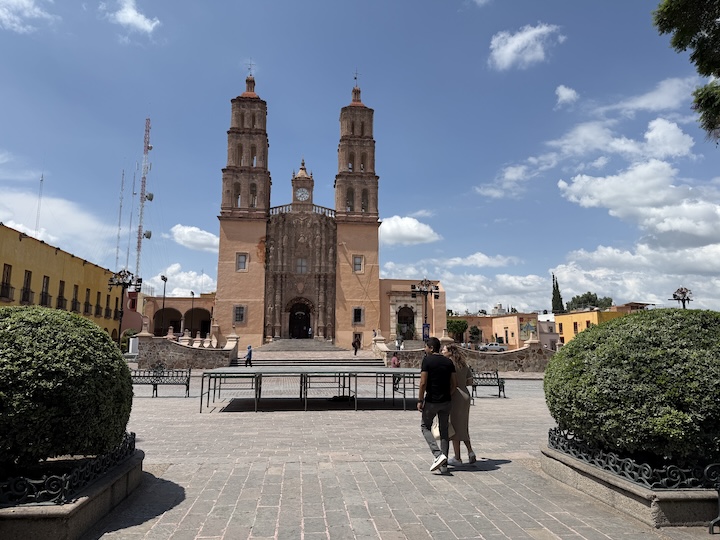
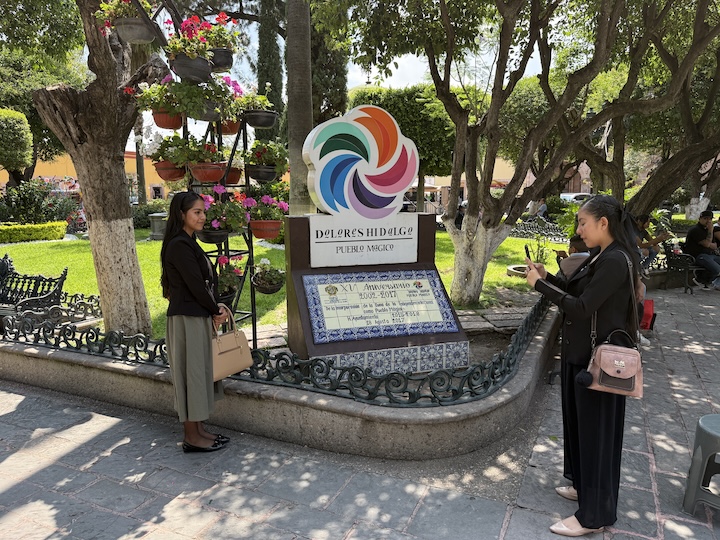
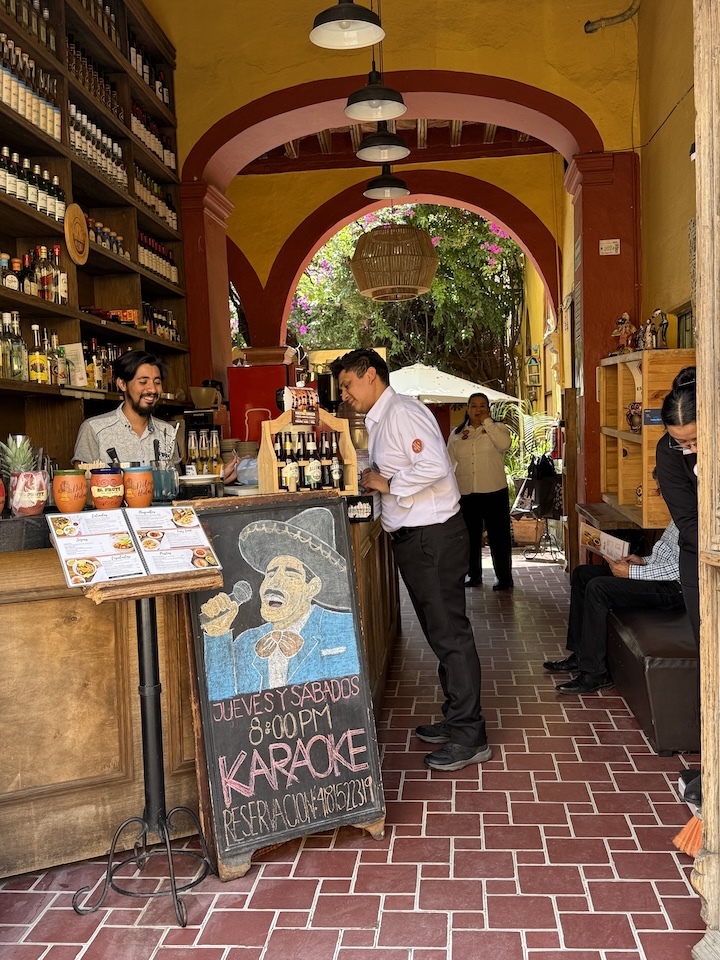
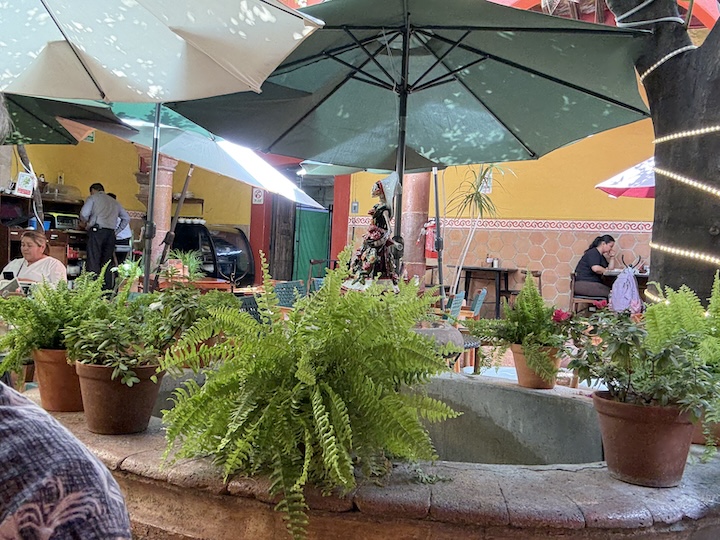
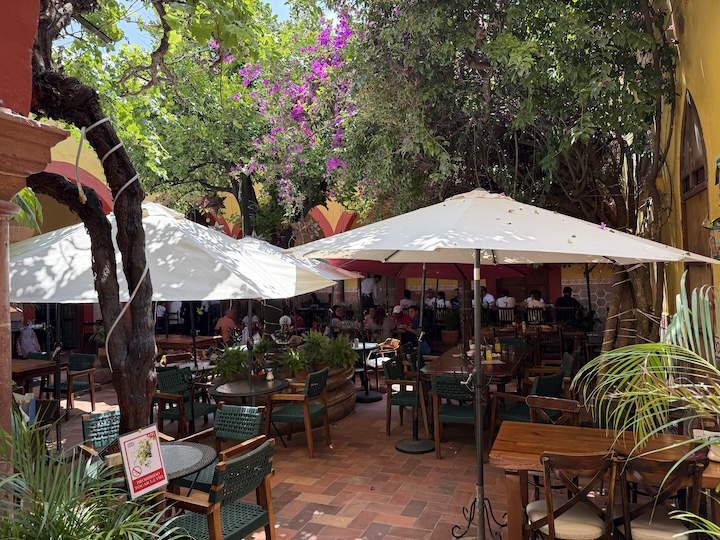
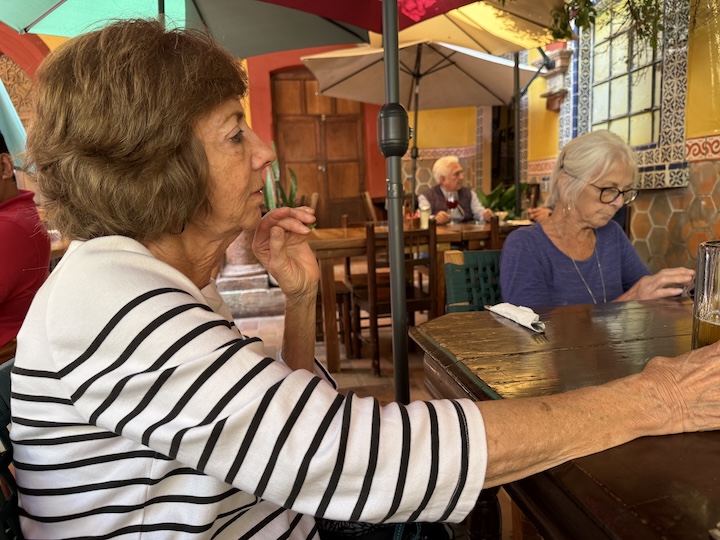
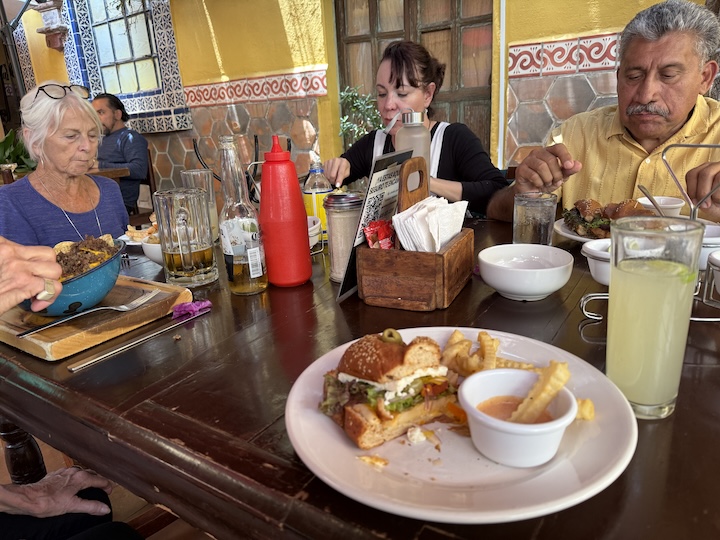
It’s lunch time when we arrive, and the umbrella-filled patio of a place called “El Fruty” entices us to enjoy some fine refreshment before continuing our explorations.
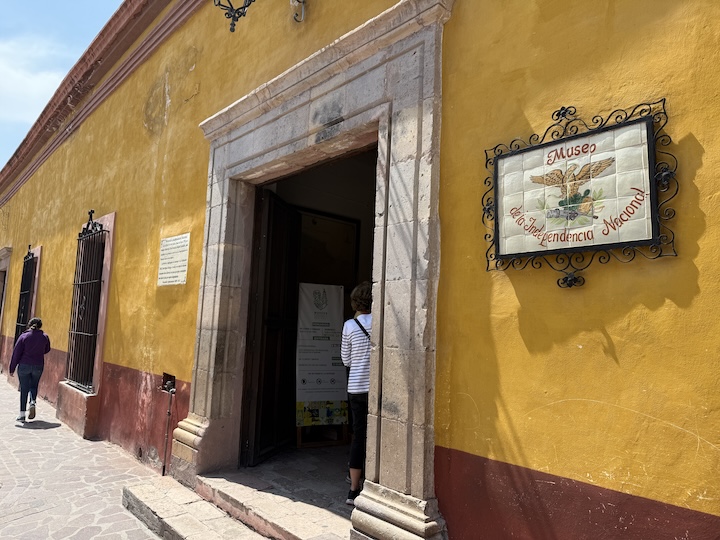
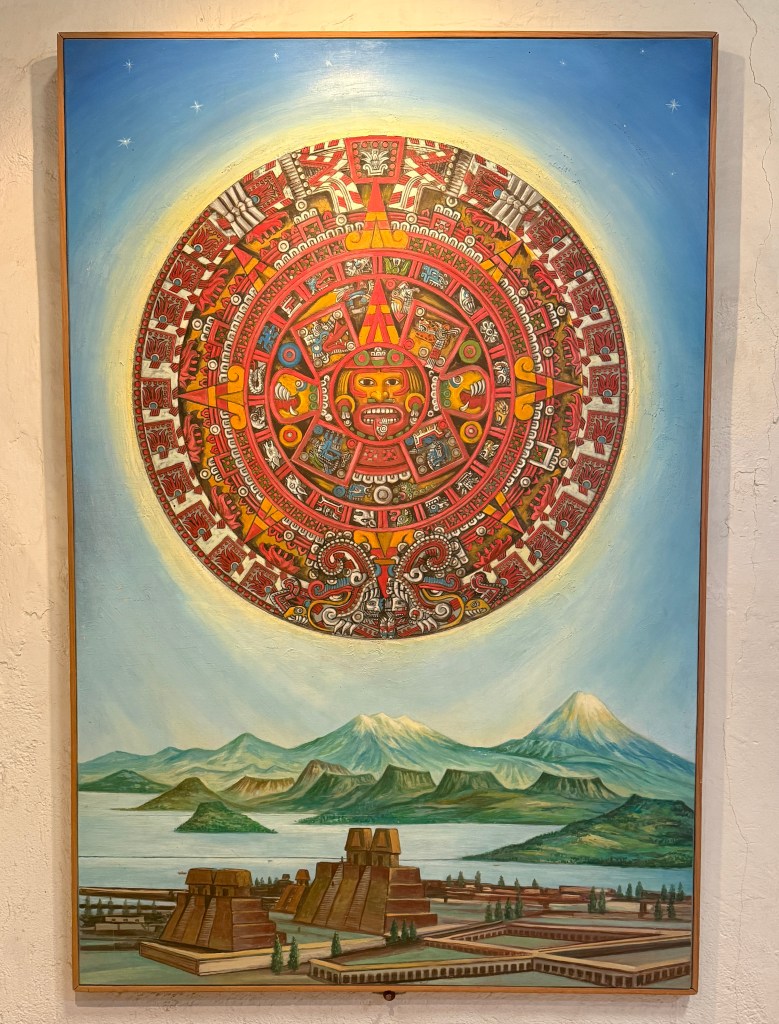
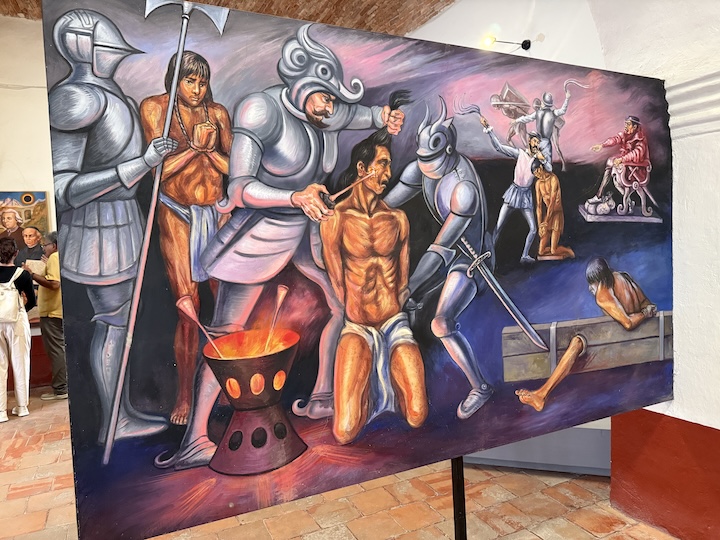
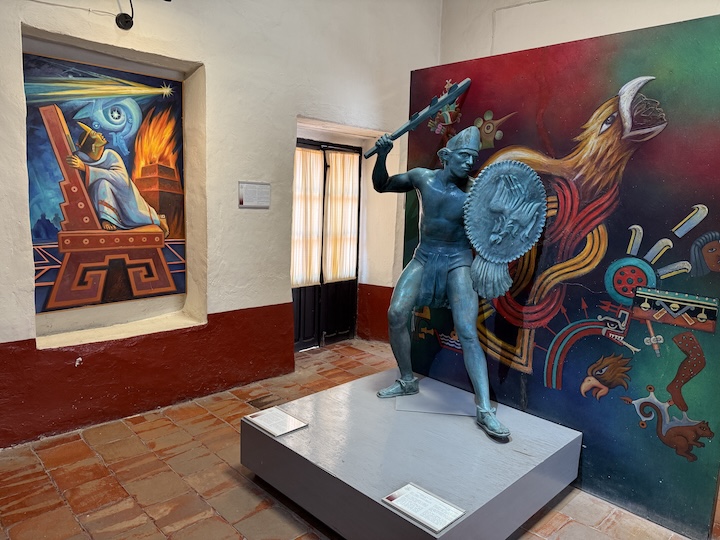
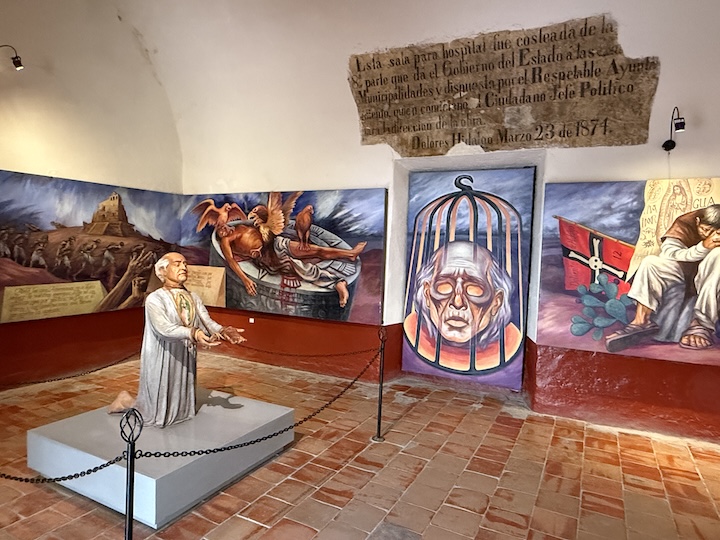
Just off the plaza we find the Museo de la Independencia, which tells the story of the nation’s long struggle for freedom. There’s a painting of an Aztec calendar hovering above the impressive city that stood in Lake Texcoco when the Spaniards arrived. The snow-capped volcanos of Popo and Ixta stand large in the background, a once famous view now obscured by the modern advent of choking pollution.
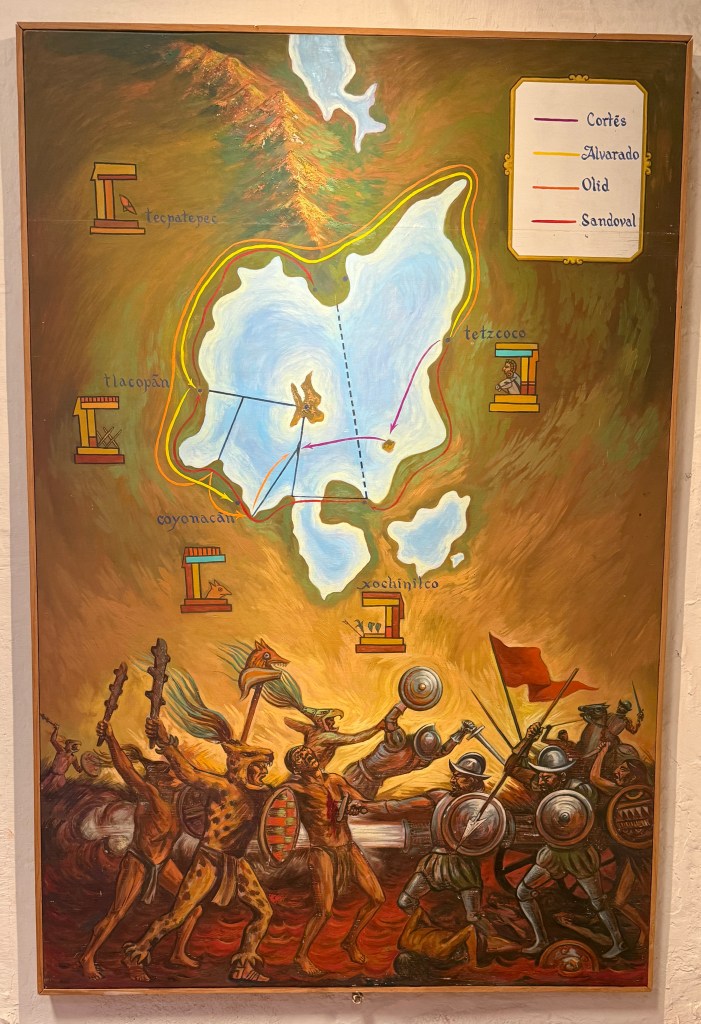
Some of the paintings depict the tortures endured by the Aztecs at the hands of the Spanish conquerors. And others deal with the later defeats suffered by Father Hidalgo and his followers on the long struggle for independence and freedom. We’re reminded that humans are forever an oppressive and bloody lot.
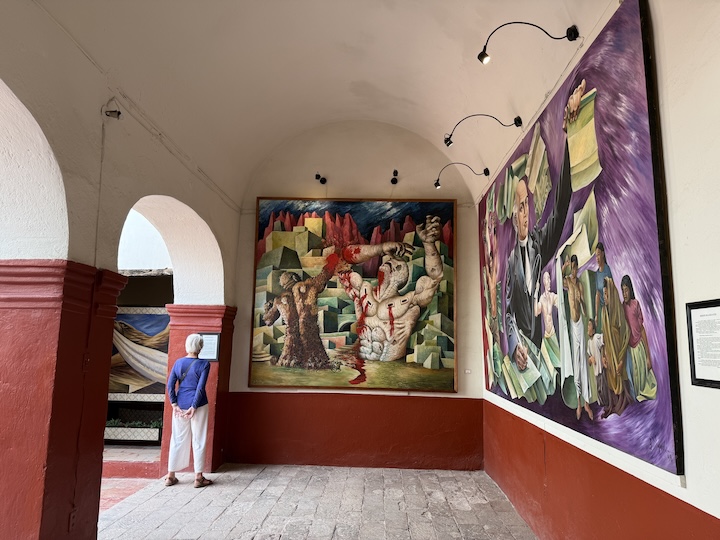
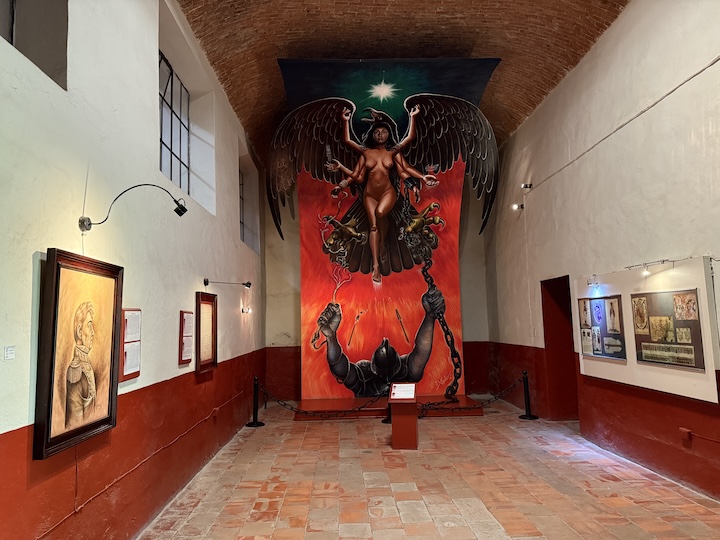
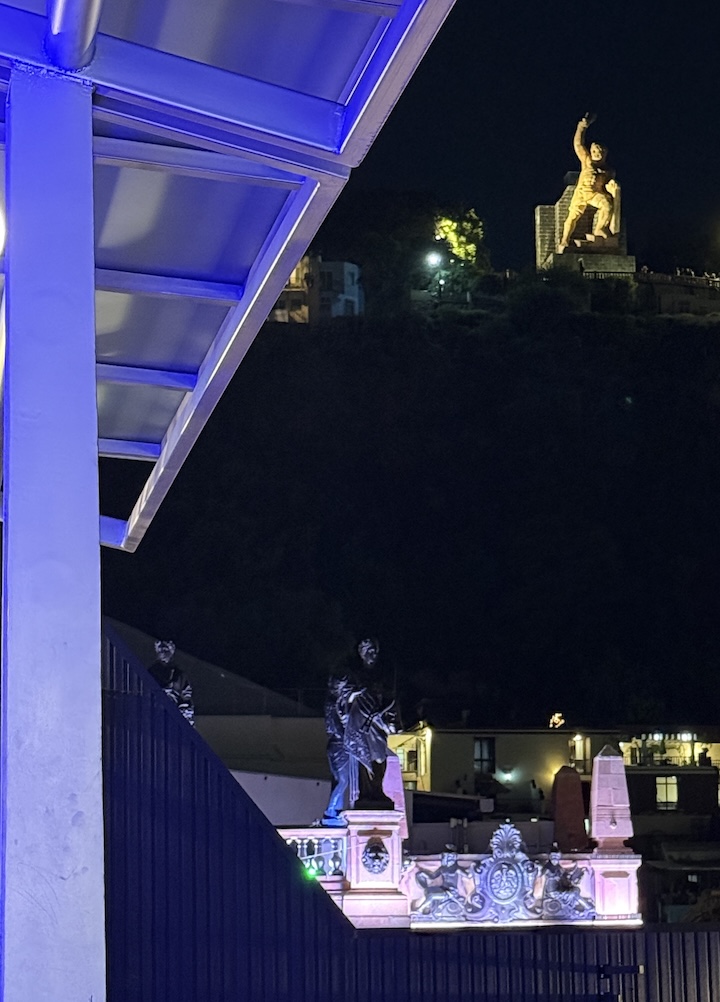
We return later to a beautiful evening in Guanajuato’s tree-filled Jardín Unión where we enjoy a fine dinner under the stars as the fountain bubbles and strolling mariachis play. Students and visitors are relaxing on the steps of the blue-lit classical Teatro Juarez, while the statue of El Pípila glows high on the canyon rim beyond.
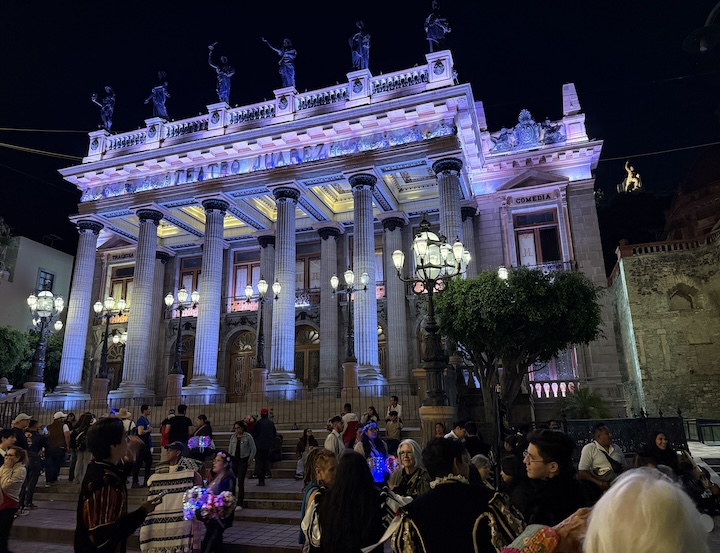
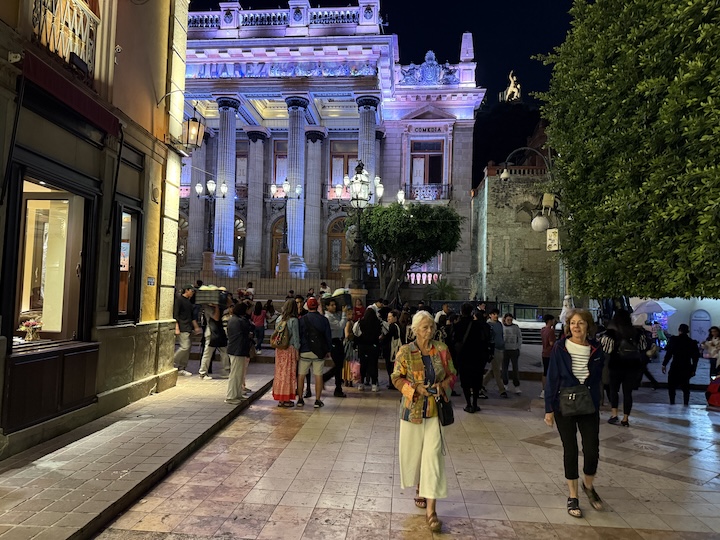
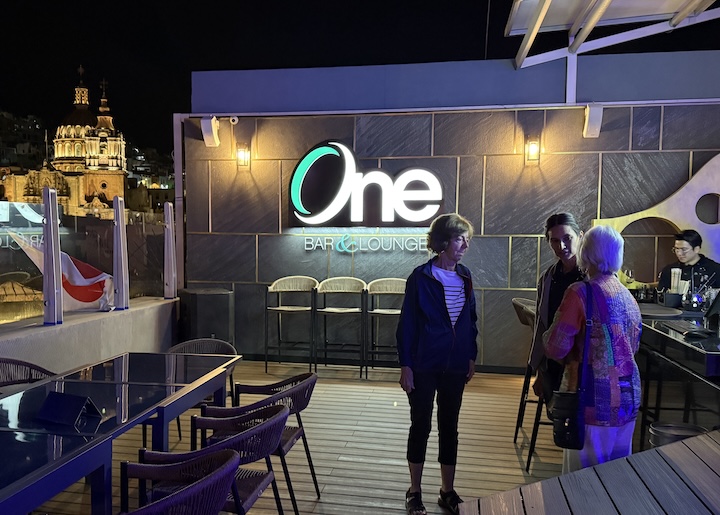
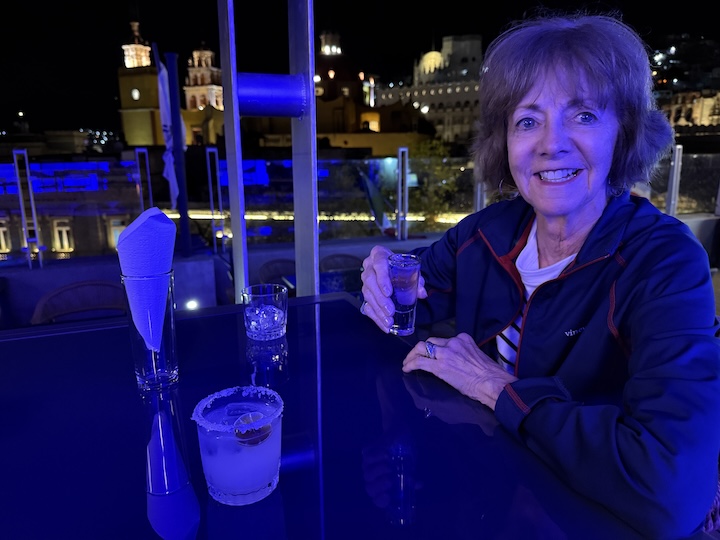
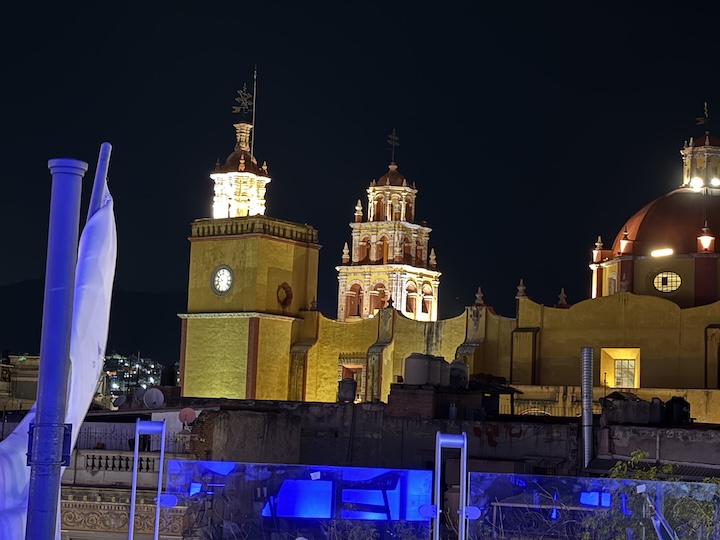
This is Elaine’s last evening in town so we drag her to a rooftop bar known as ‘One,’ with its gorgeous nighttime views of the Teatro Juarez and the statue of Pípila. The red-domed Basilica de Nuestra Señora de Guadalupe is about a block away, and the towering white face of the Universidad glows softly in the nighttime. It’s hard to beat Guanajuato for fine romantic views, and an excellent climate.
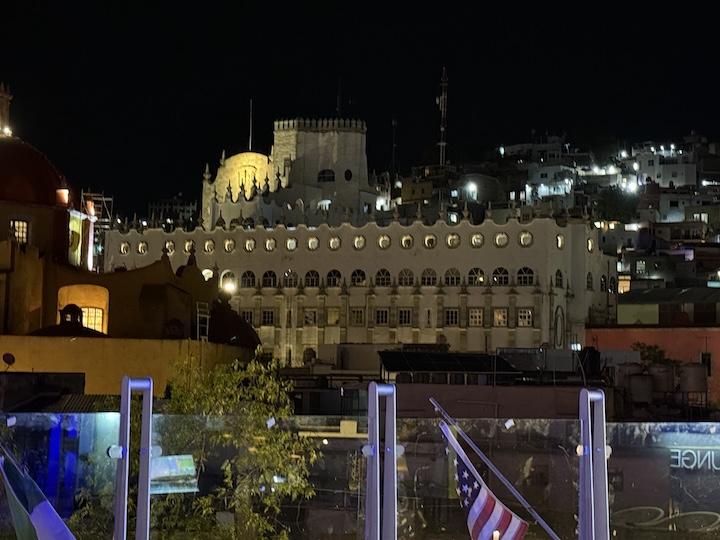
Alas, the time has come for Elaine’s departure. She had things to do that seemed important at the time. But she’ll later tell us she should have dropped all of that and just stayed with us for the final leg of this excellent two and a half month trip, to the compelling streets of Mexico City.
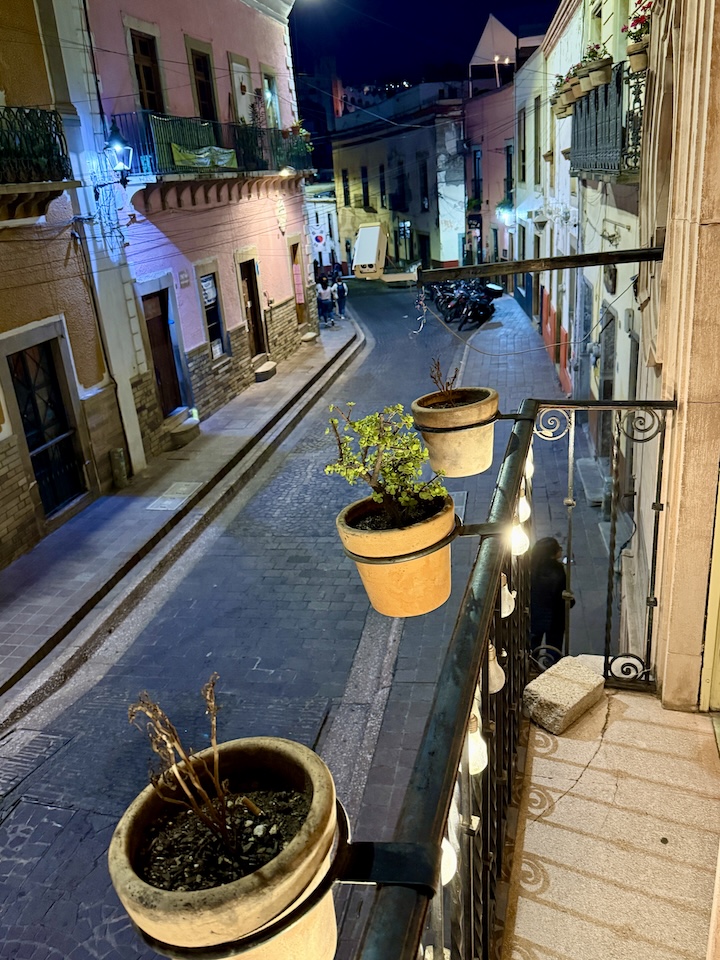
On the following day we share our last evening over a quiet dinner with Dr. Jaime and Norma at another nice second floor bistro along charming Calle Pocitos. Someone just across the alleyway is flying the Cuban flag, and that nighttime balcony view down the winding lane of Pocitos is surely one of the more beautiful in the world.
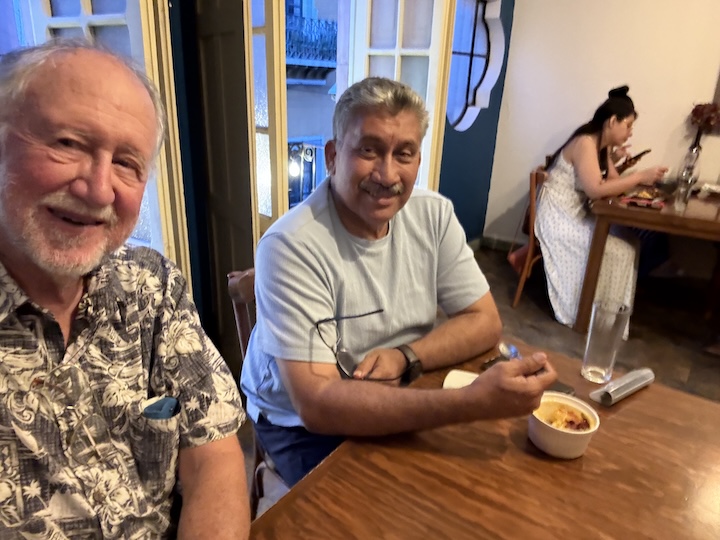
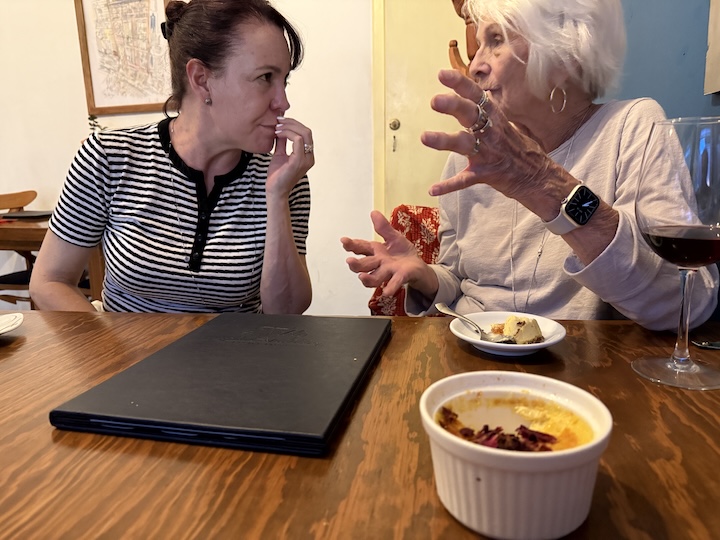
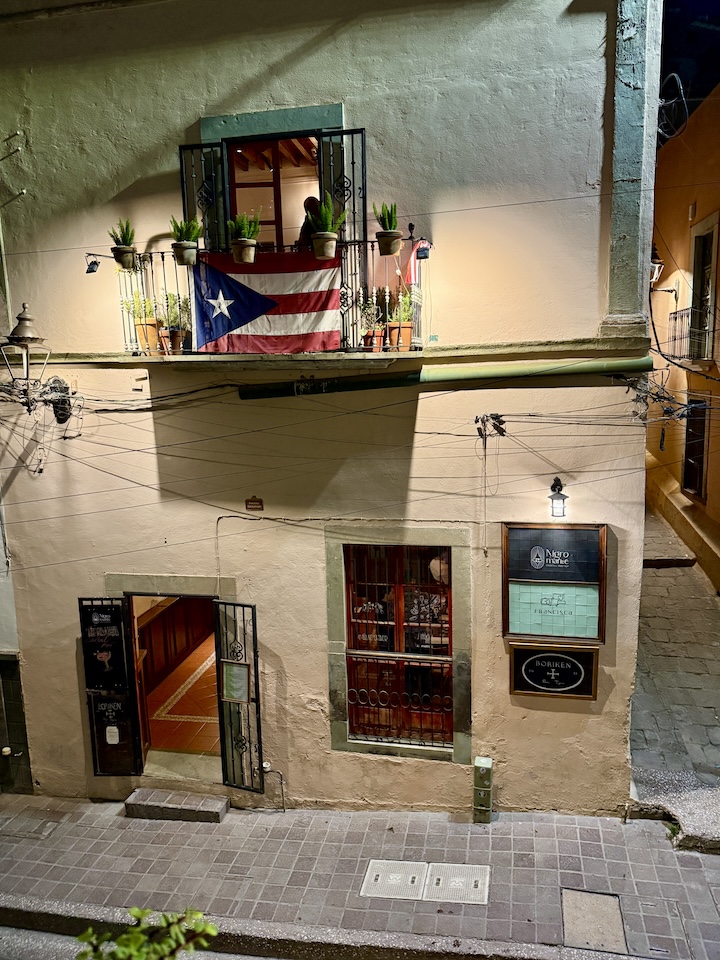
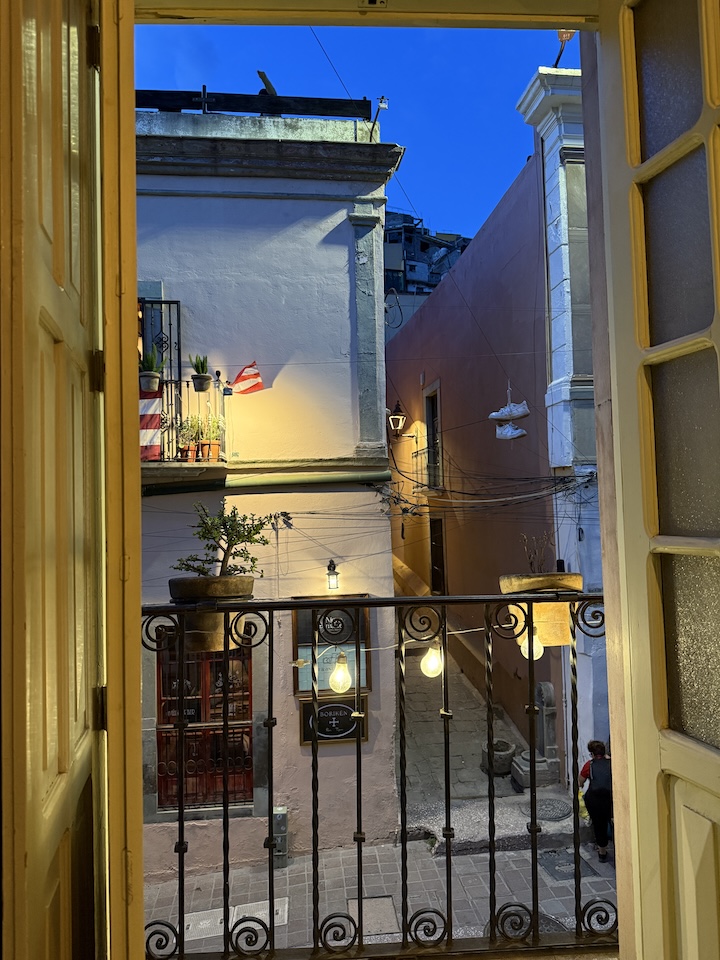
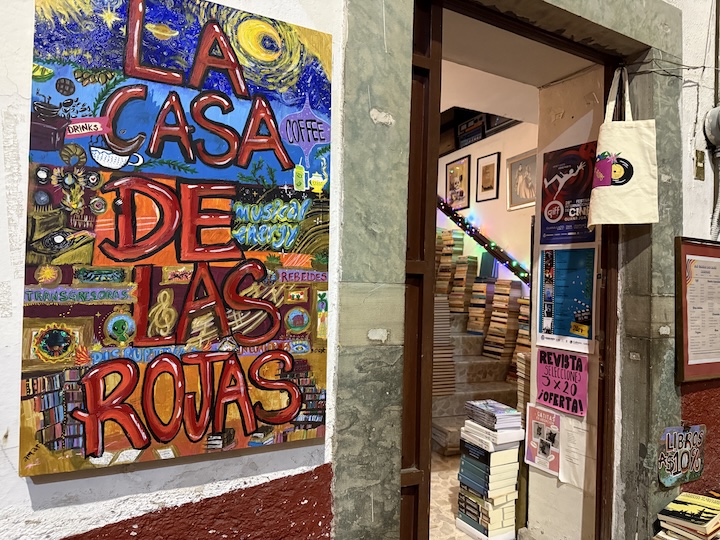
After dinner Carolyn and I walk back in the night to our hotel, and we pass yet another interesting coffee and book shop we hadn’t seen before. This is our last evening in town, so this new experience will have to wait for our next visit to this wonderful artistic village. And that will be soon, we hope.
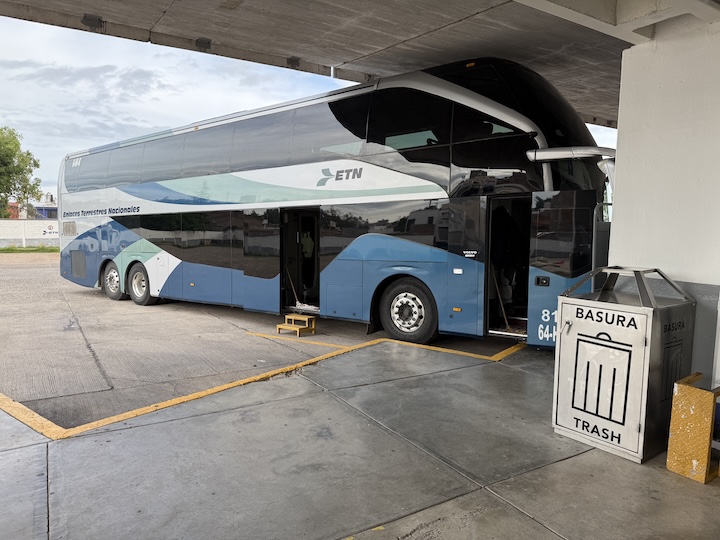
The morning finds us leaving Guanajuato in a comfortable ETN Clase Ejecutiva bus for the 3-hour trip to Mexico City. We had stopped at the station a few days earlier and booked two of the three seats right above the driver, for an unobstructed ‘Vista-Vision’ view of the countryside. And we hope you’ll join us soon there in CDMX for another few weeks of wandering around that world class city. — PRW


Precioso este paseo por Guanajuato. Mis recuerdos se despertaron. Es uno de los estados más bonitos y la capital es culturalmente hablando un centro importante en la república. Sin olvidar su papel en nuestra historia.
Mil gracias por este recorrido.
Que Dios les siga dando salud y entusiasmo para seguir viajando y compartiendo con todos nosotros.
Un fuerte abrazo
María Luisa
PD: pirul es un árbol que da flores rojas que son comestibles. Mx es México.
Von meinem iPhone gesendet
LikeLike
Thanks for the saunter down memory lane through one of our favorite cities.
LikeLike