February 5 – 12, 2026
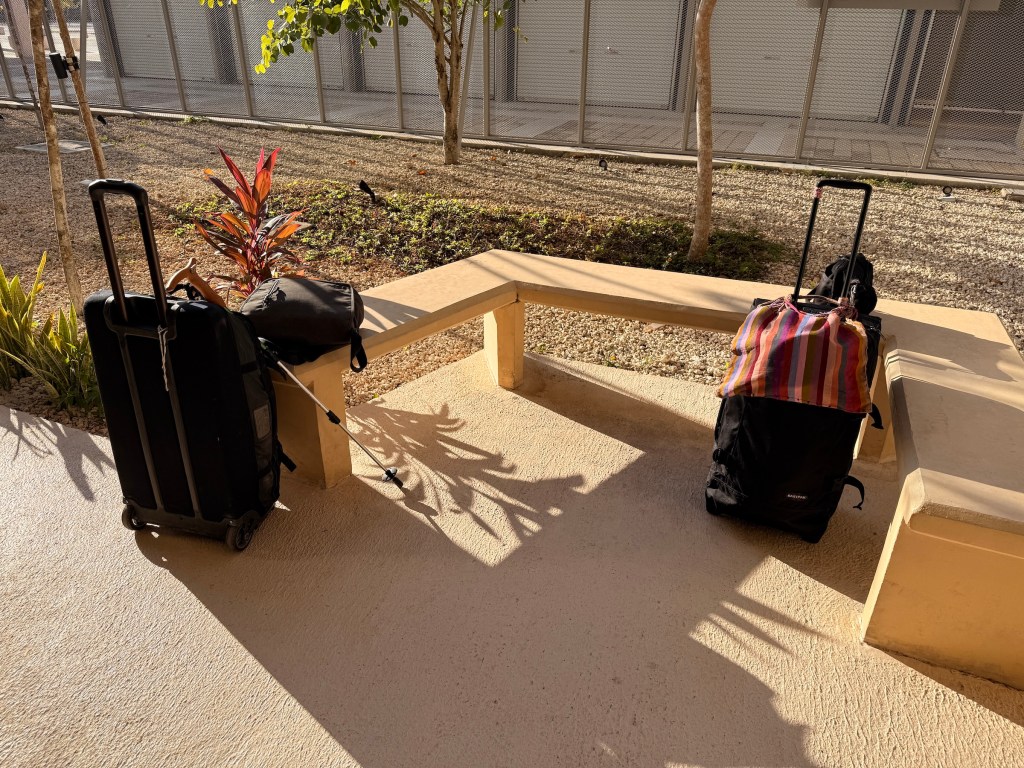
Valladolid was a very good stop, and one that we had somehow missed in the past. It has a nice small town vibe, along with a number of interesting local sites to visit, and it’s easily walkable. But now it’s time to take a cab to the train station at the edge of town for an early departure.
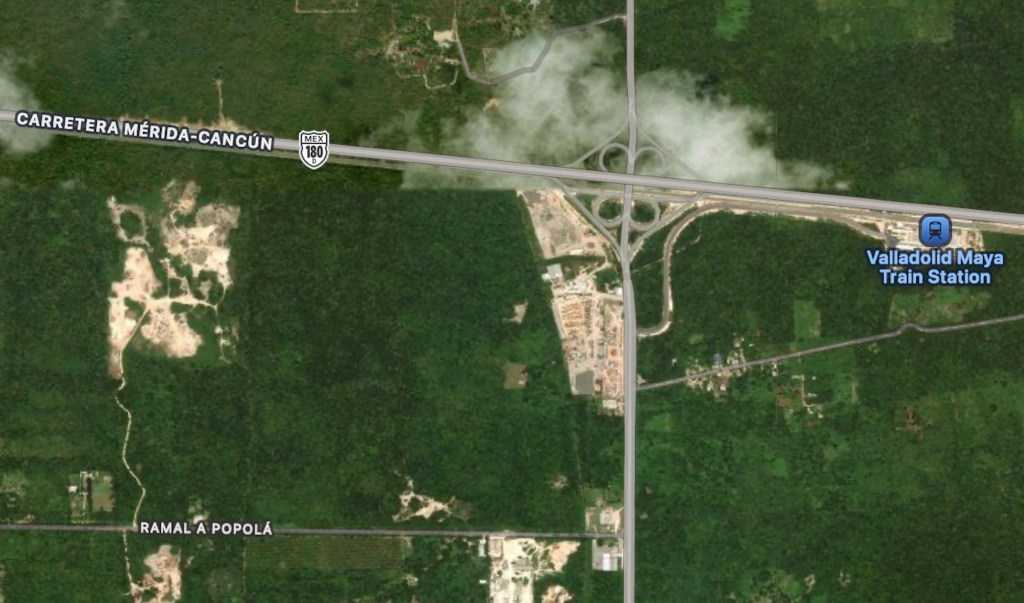
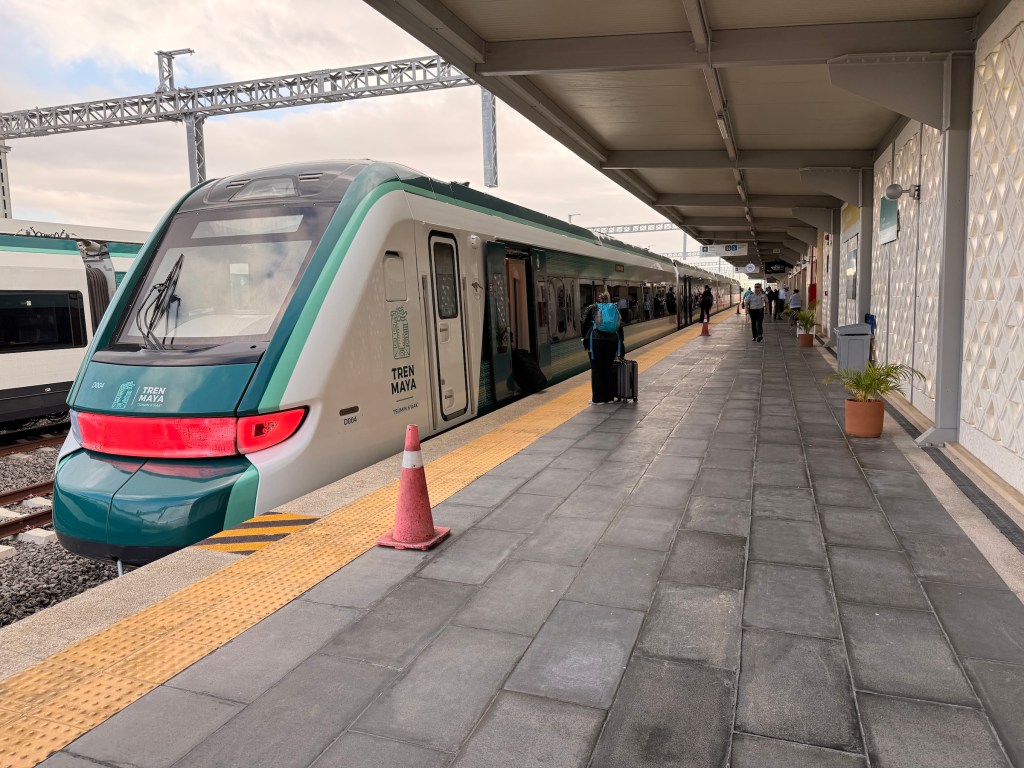
From Valladolid, the Tren Maya heads east following the main cross-Yucatán highway to a stop at the Cancún airport, before making a southerly turn down the coast along the Mayan Riviera. The Cancún airport is an obvious center pivot point for the train where passengers can have easy access to the classic colonial cities and ancient ruins of the interior, or to Tulum and the sandy beach towns arrayed down the coast toward Belize.
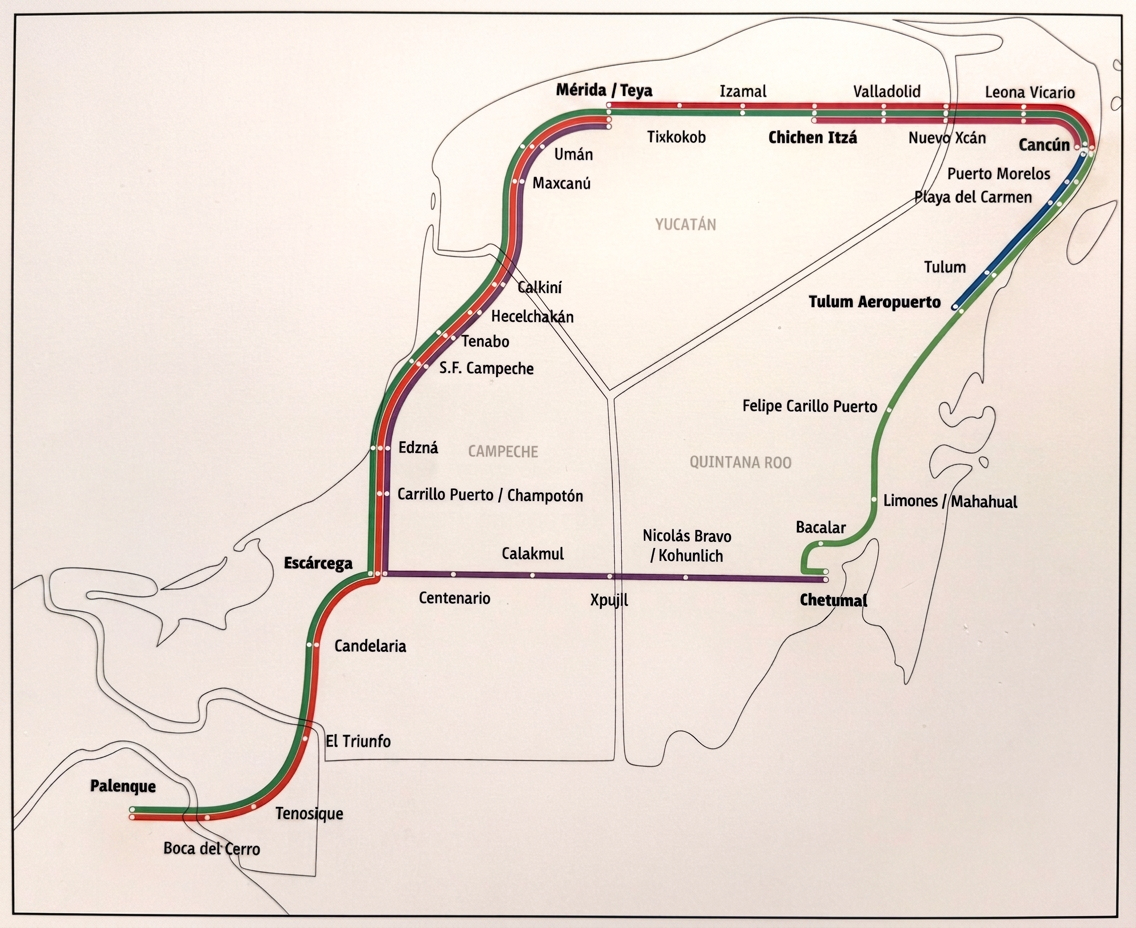
We soon pass into the state of Quintana Roo, where the independent Maya nation of Chan Santa Cruz was created after all the non-natives were driven out during the Caste War of 1847-1915. This portion of the Mayab lands still retains its proud Mayan heritage.
The train tracks are generally inland from the sea and the terrain continues to be flat and woody. We won’t visit Cancún because we live on a nice beach in México and don’t need to see another ‘Gringo paradise.’ But oddly enough we’ll soon be staying at a different version of the same thing, and it’s called Playa del Carmen.
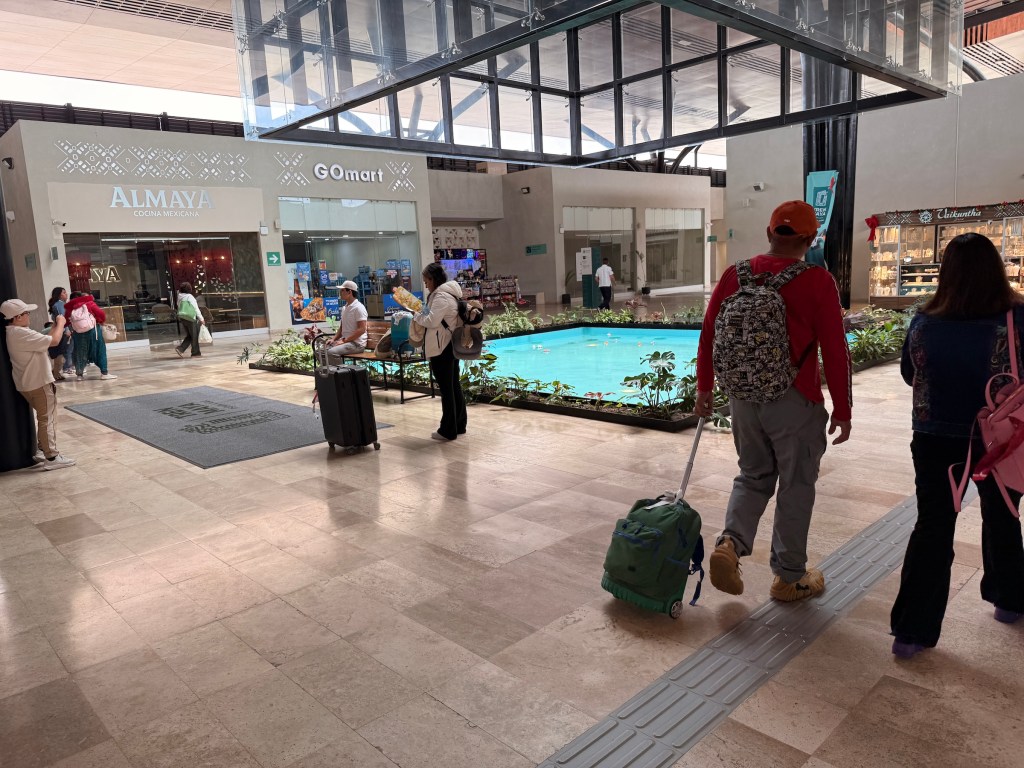
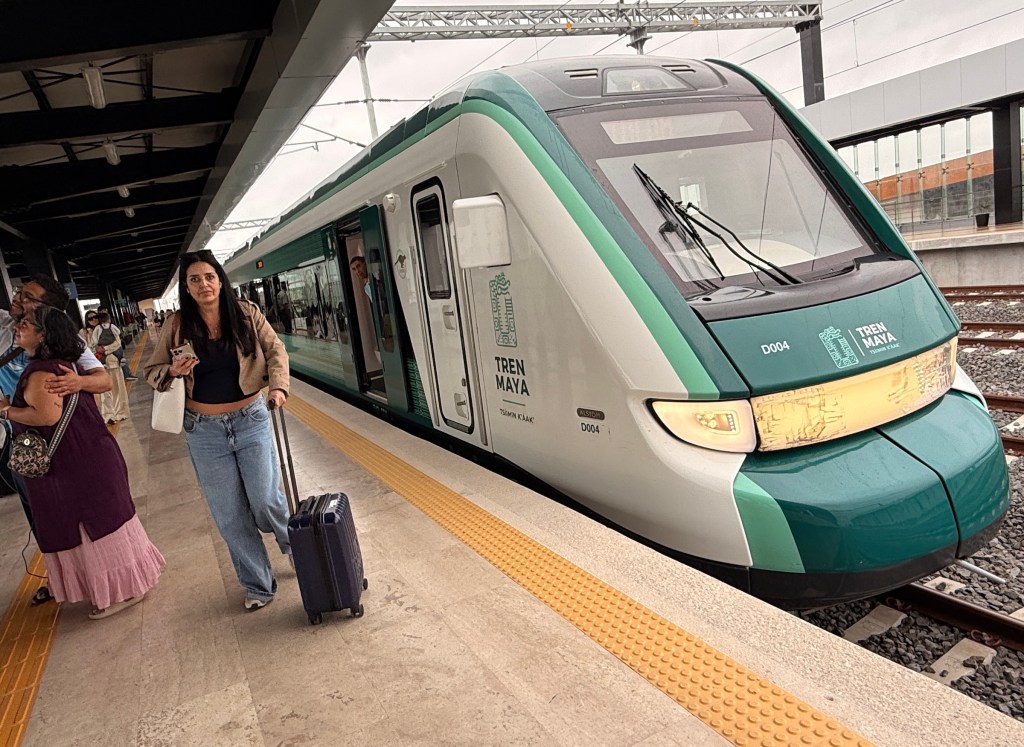
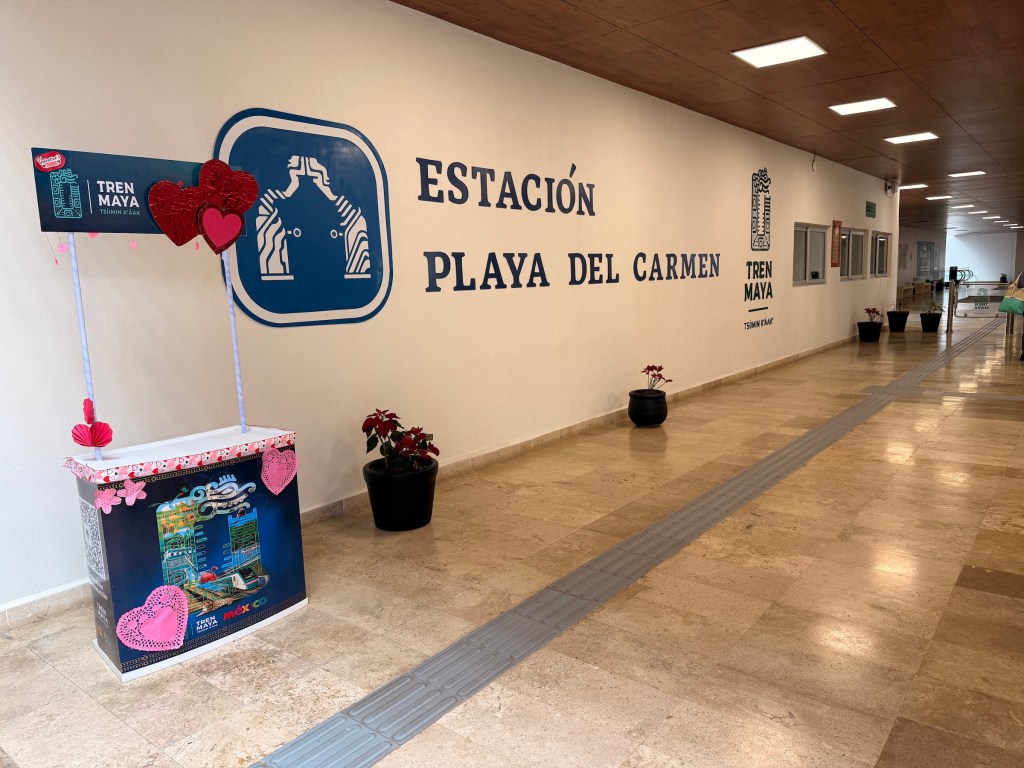
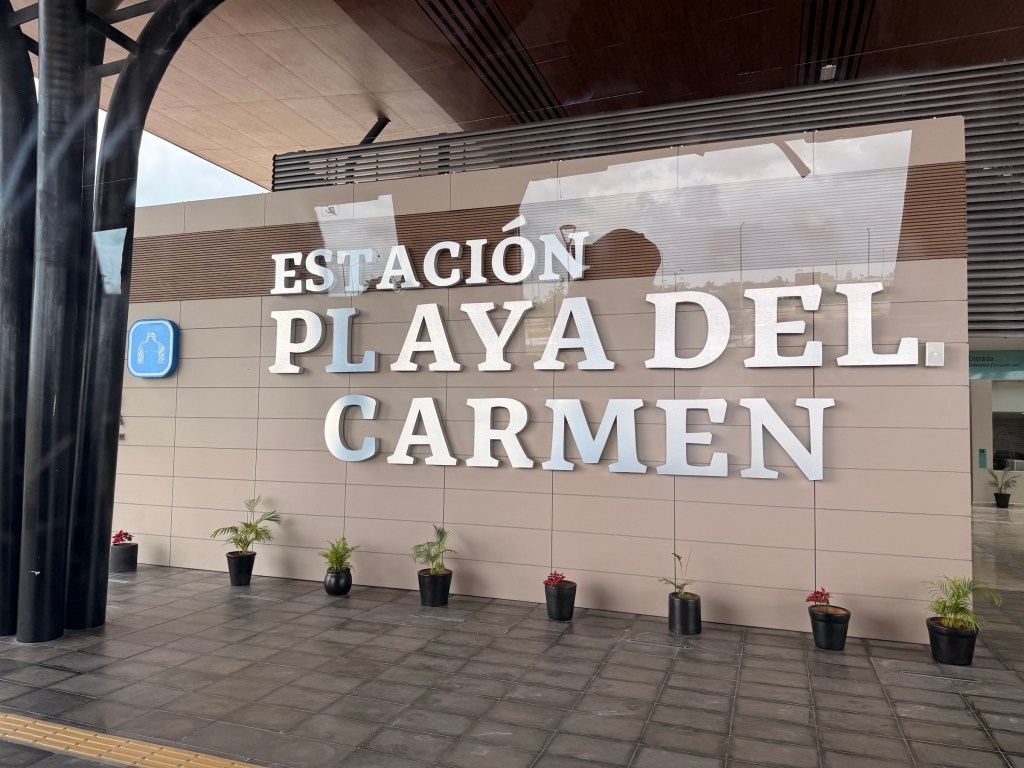
Like the other shiny new Tren Maya stations we’ve seen, the one for Playa del Carmen is at the outside edge of town. But there’s a dedicated transit bus into the center, and it’s a quick ride to our hotel in the heart of things.
••••••••••••••••••••••••••••••••••••••••••••
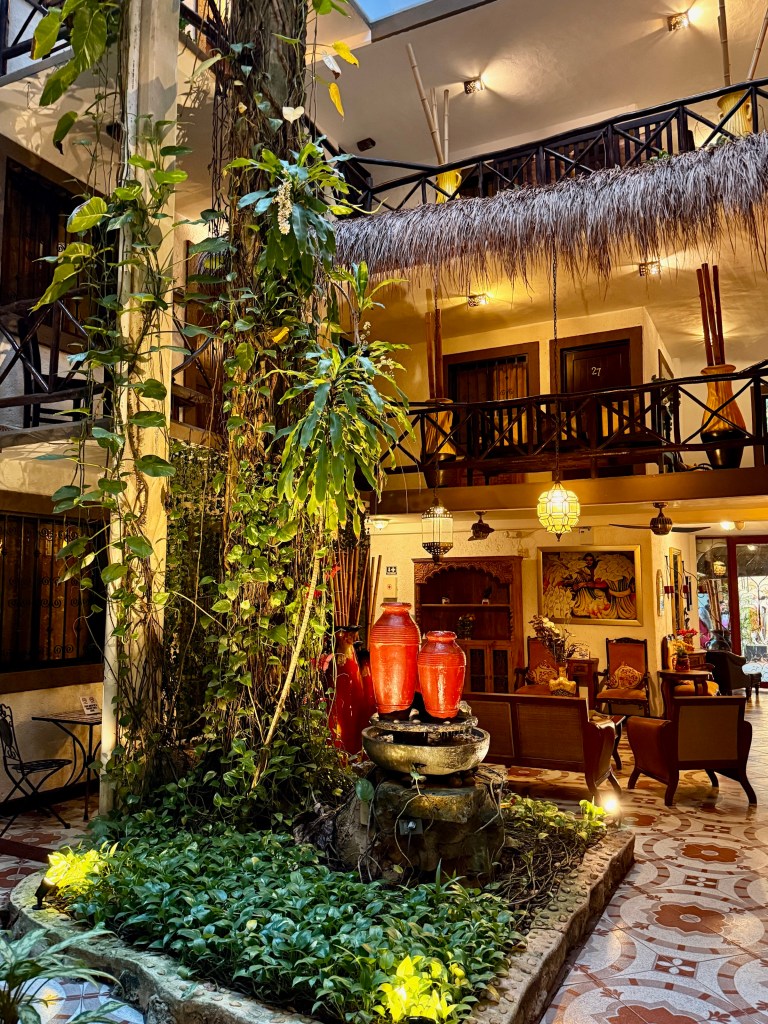
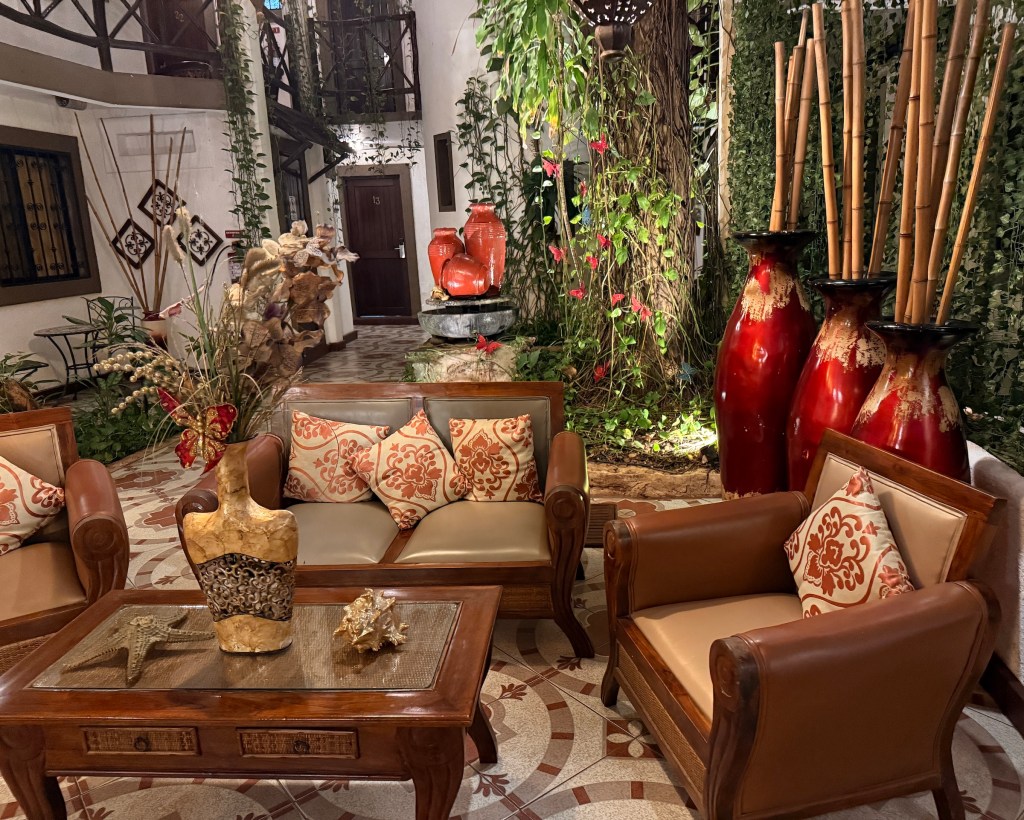
There’s an almost-hidden entrance to our tropical-themed bed-sit, named Posada Mariposa Hotel Boutique, that’s wedged between other businesses. The interior is jungle-centric, with a riot of plants erupting from the first floor planter and searching for the light far above in the overstory. It’s a nice place, with a good bed and a friendly staff.
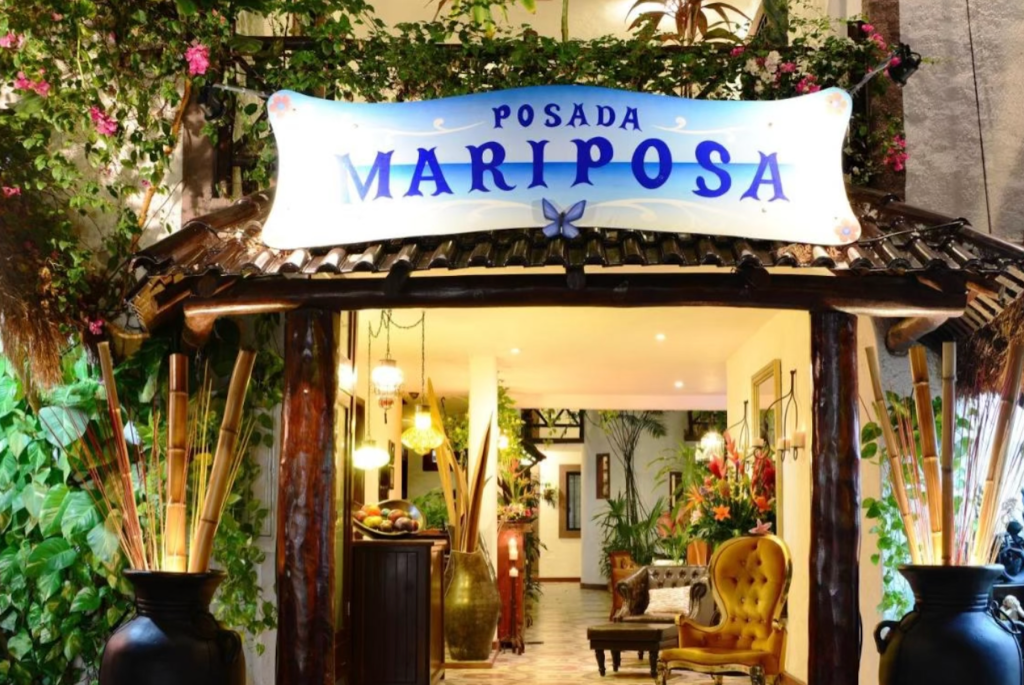
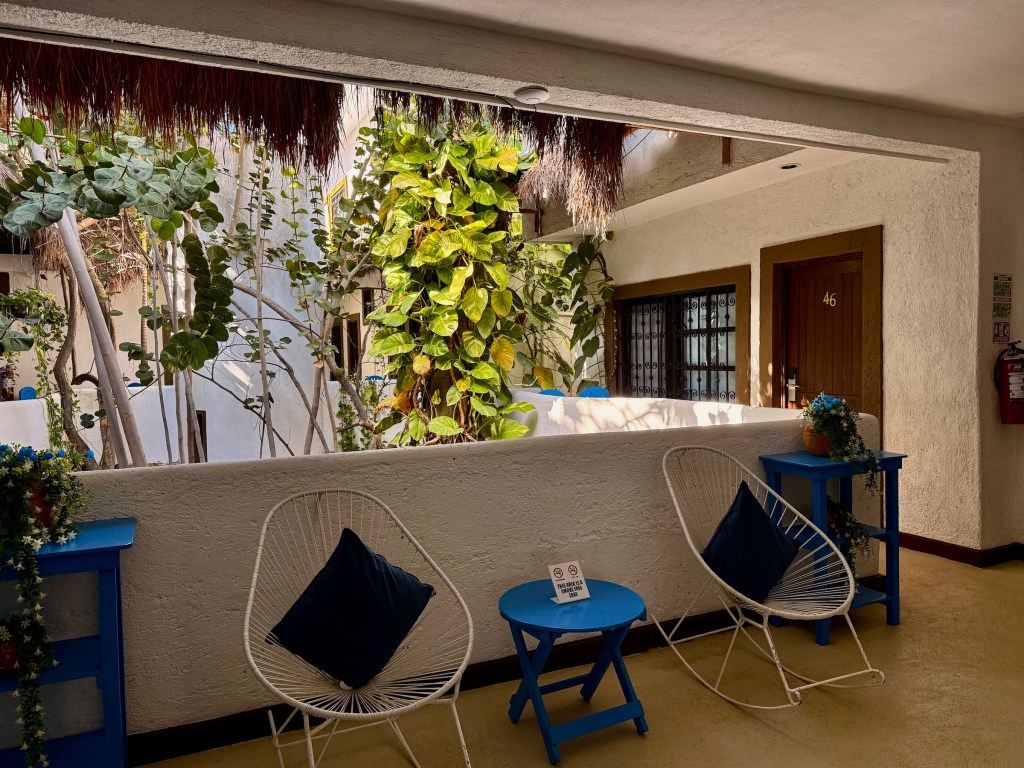
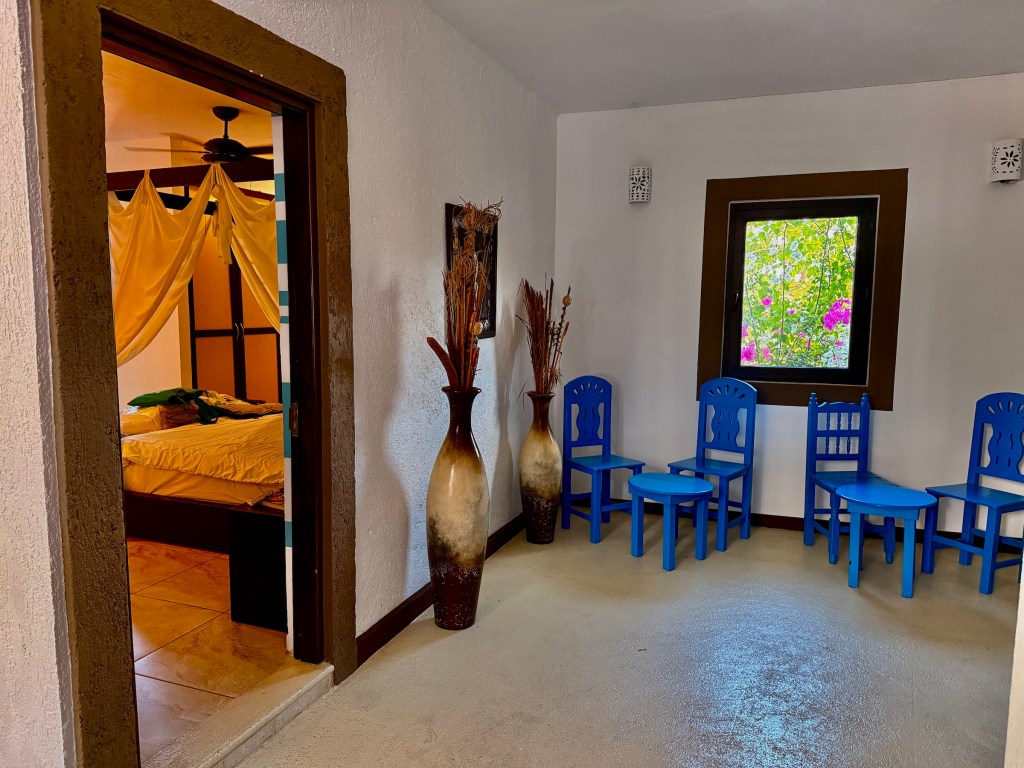
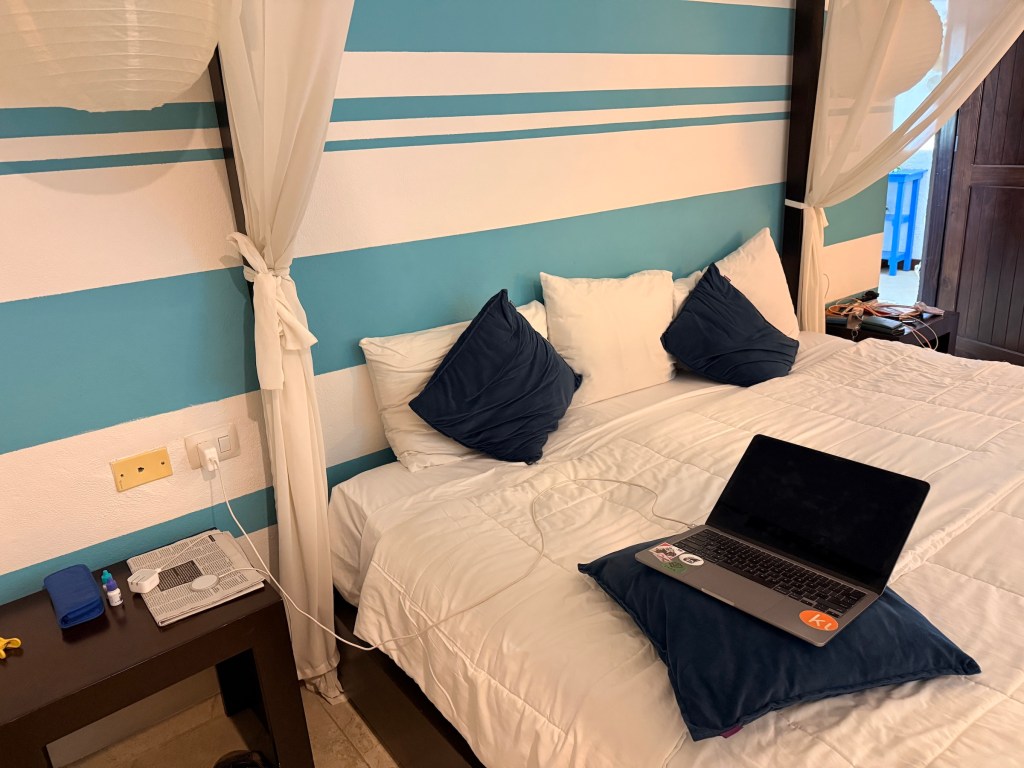
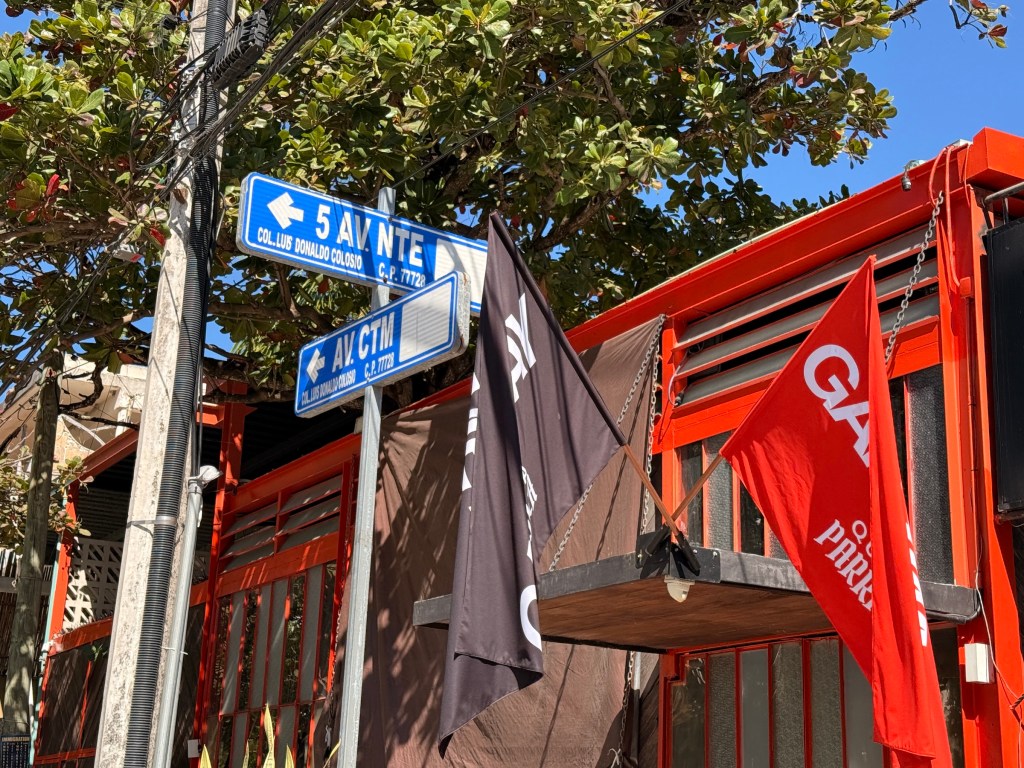
We’re on a street named Quinta Avenida, but called 5th Avenue, and it’s dedicated to the nutty touristic activities we came here for. As we recall from our previous visit, it’s heavily Gringo-laden, with plenty of bars to get a good nose-wet. Places like the Pinche Gringo bar, Señor Frog’s, and the Dirty Martini come to mind. And there’s an adequate number of Starbucks along the way so Gringos can pretend they’re still back in Omaha, but with a beach. Is it embarrassing to be here? Hell yes, it’s embarrassing! This crowded place is really the opposite of that small Mexican town feel back in Valladolid, or even Mérida. But this is a self-inflicted wound on our part, an ‘own-goal’ as they say in fútbol. We actually went out of our way to be here.
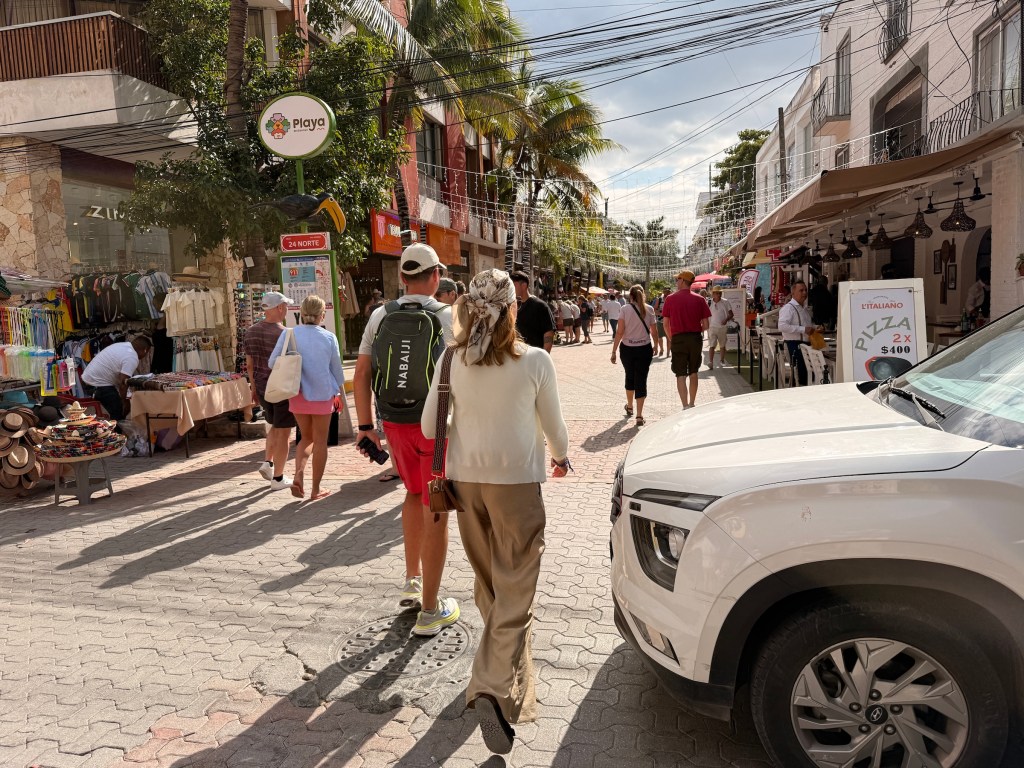
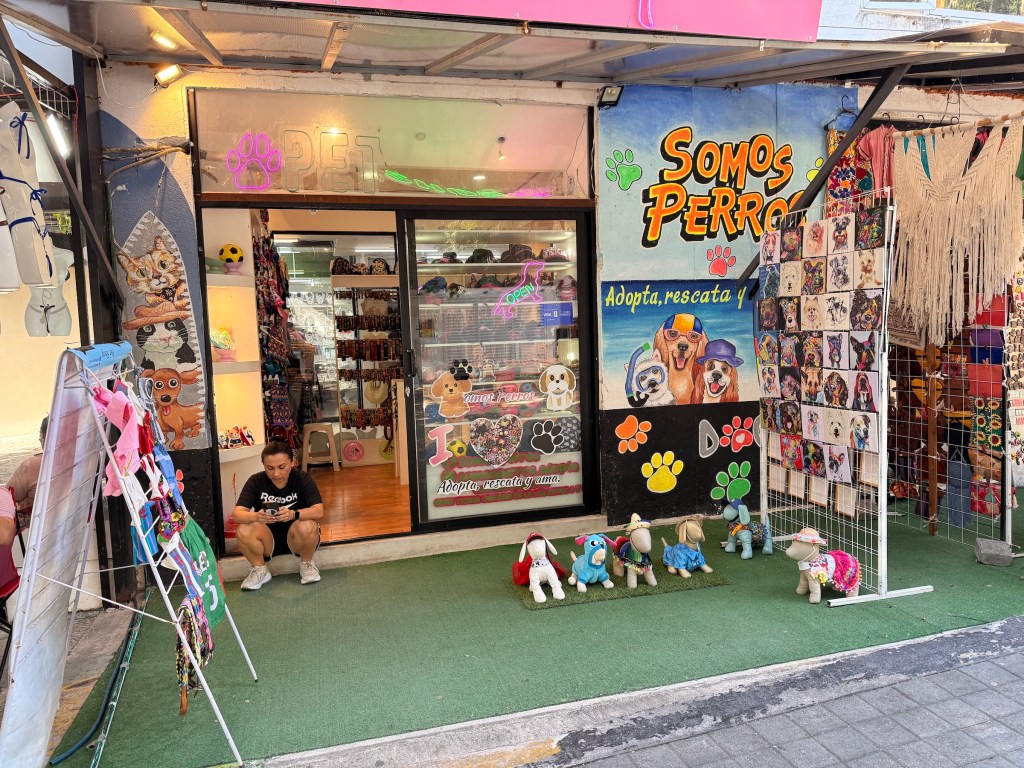
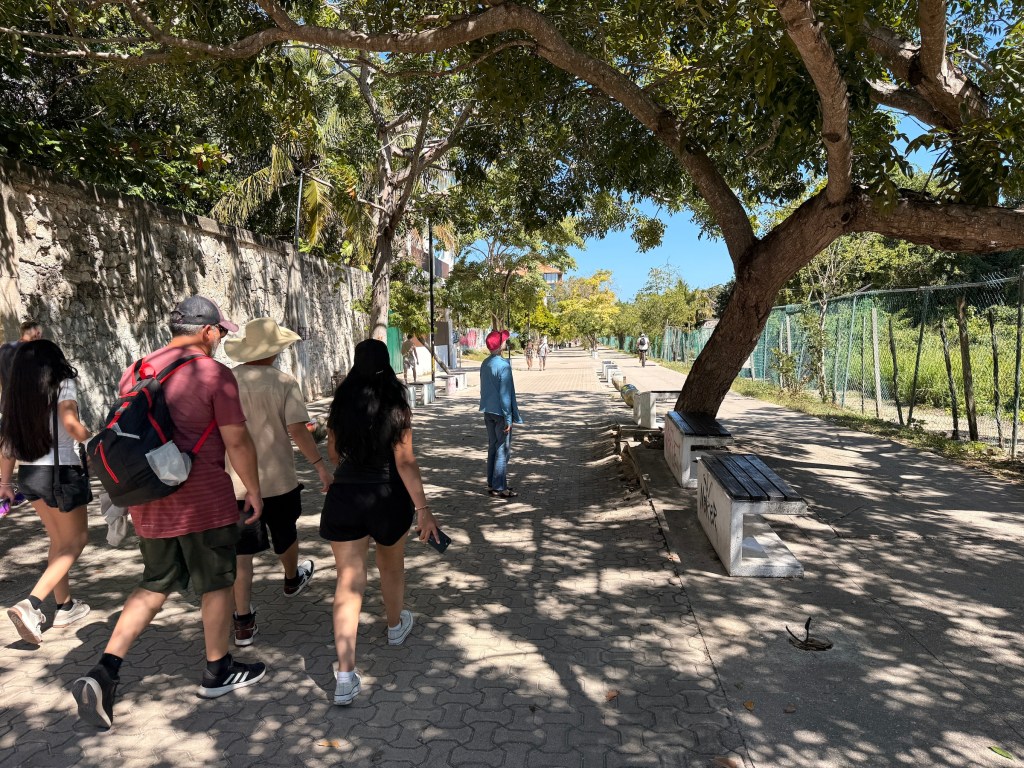
There’s a beachside beauty to it, when we get down to the water where the local fishing boats are still kept. And we can bypass some of the more ostentatious offerings, like the all-inclusive Wyndham Alltra – a place to spend more than $1,000 per night to avoid mingling with the common folk.
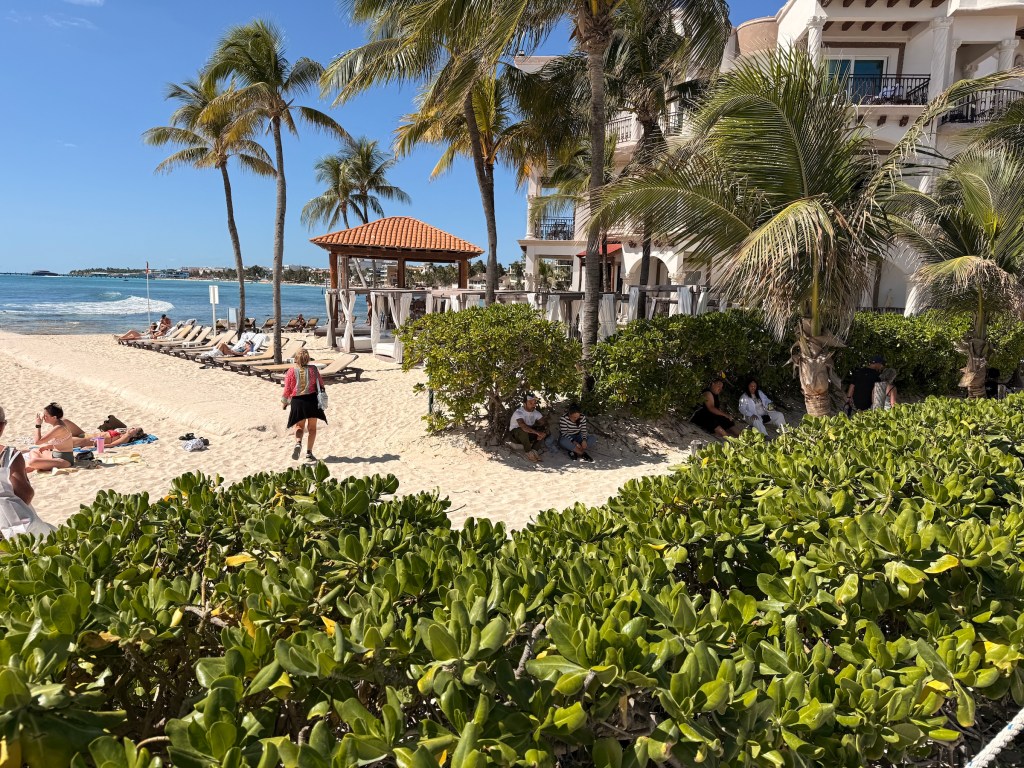
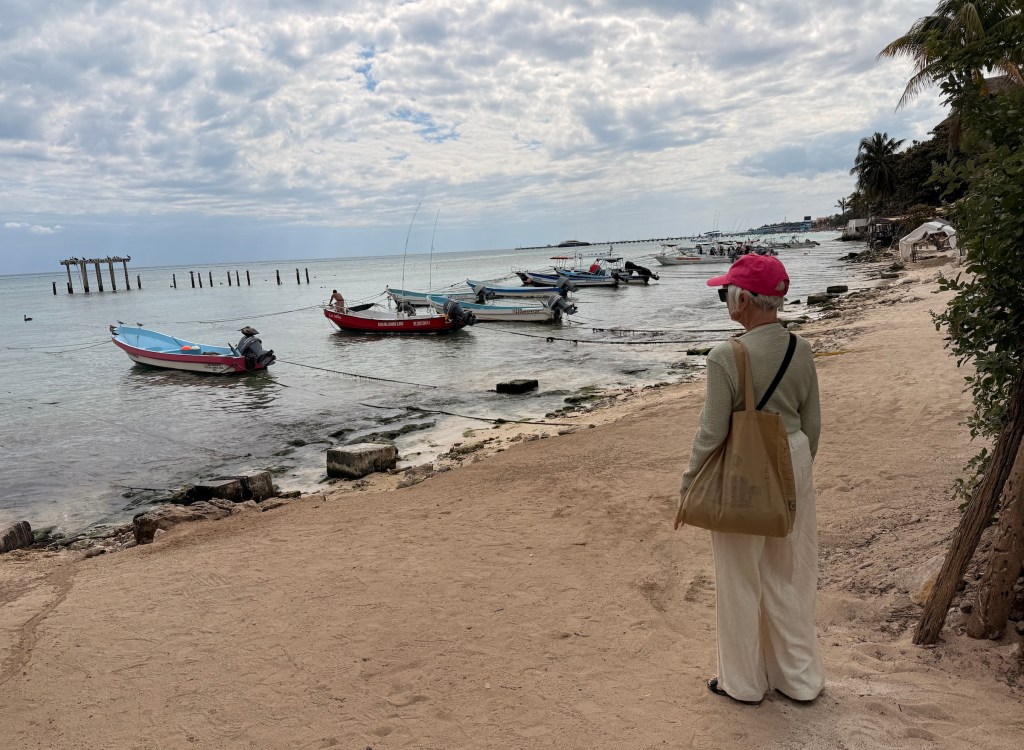
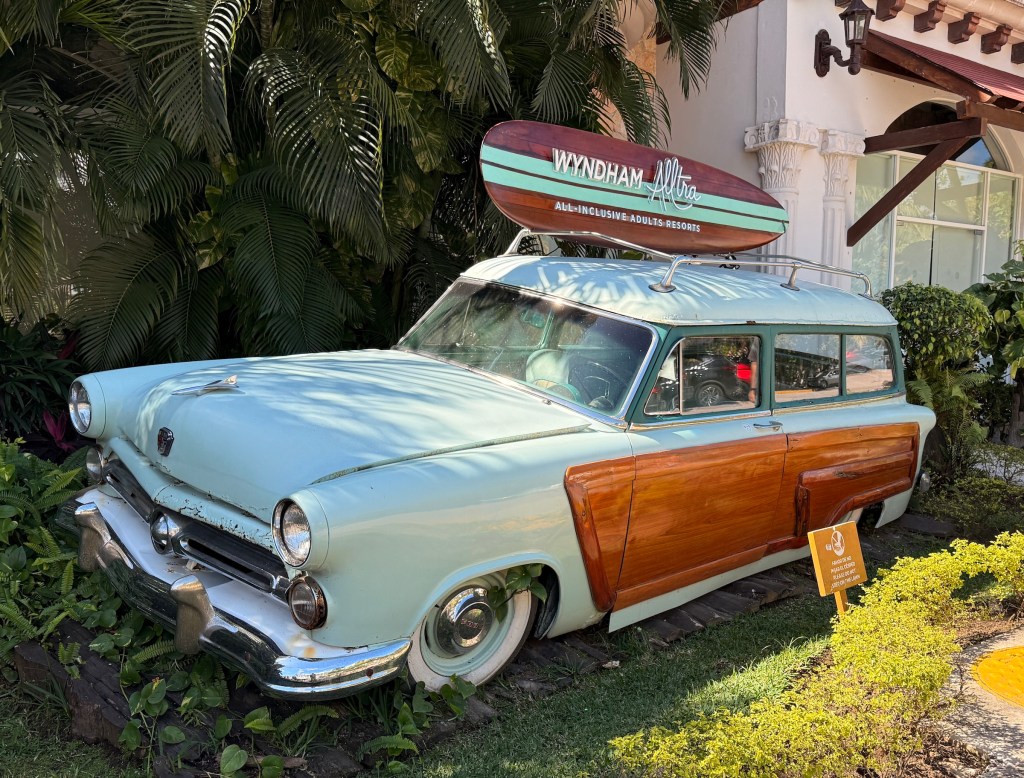
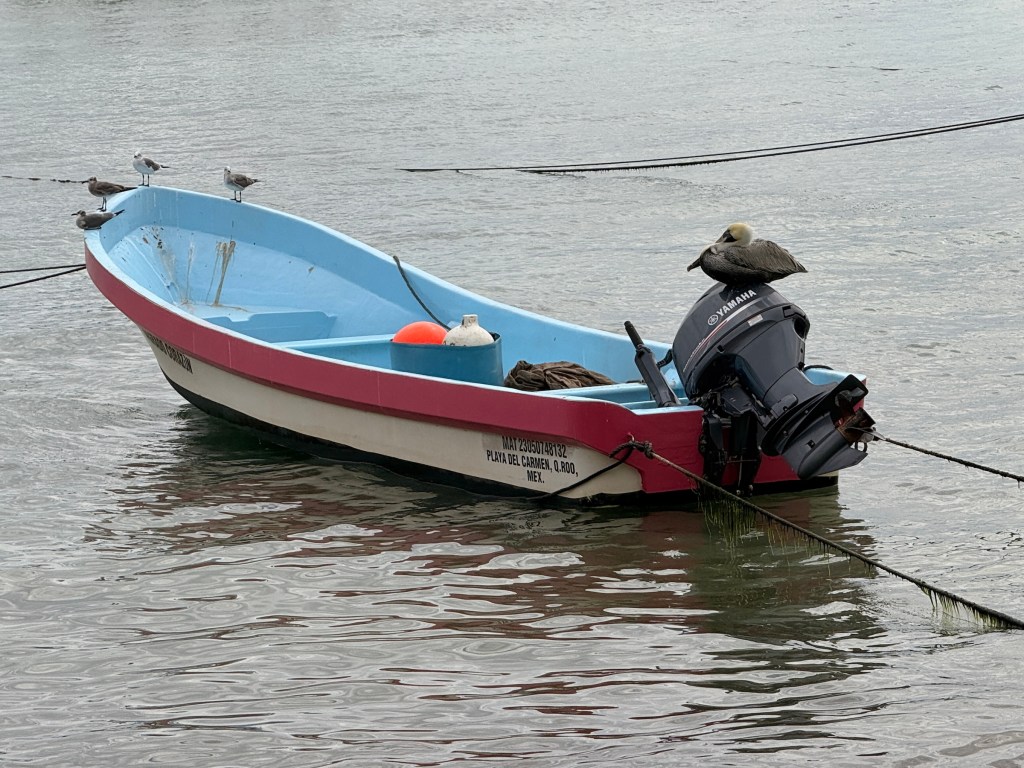
So what’s our actual lame excuse for even hanging out in this Gringo-ghetto-by-the-sea? Well, we really don’t always need to be totally pure in our wanderings. We can slack off now and then to enjoy the quirks of our fellow primates. There’s a Disneyland quality to it, but without entry passes costing hundreds of dollars per day – at least not yet. And so this is a sort of anthropological study of a hominid species in their borrowed habitat from which we hope to extrapolate the future of mankind. Or something like that….
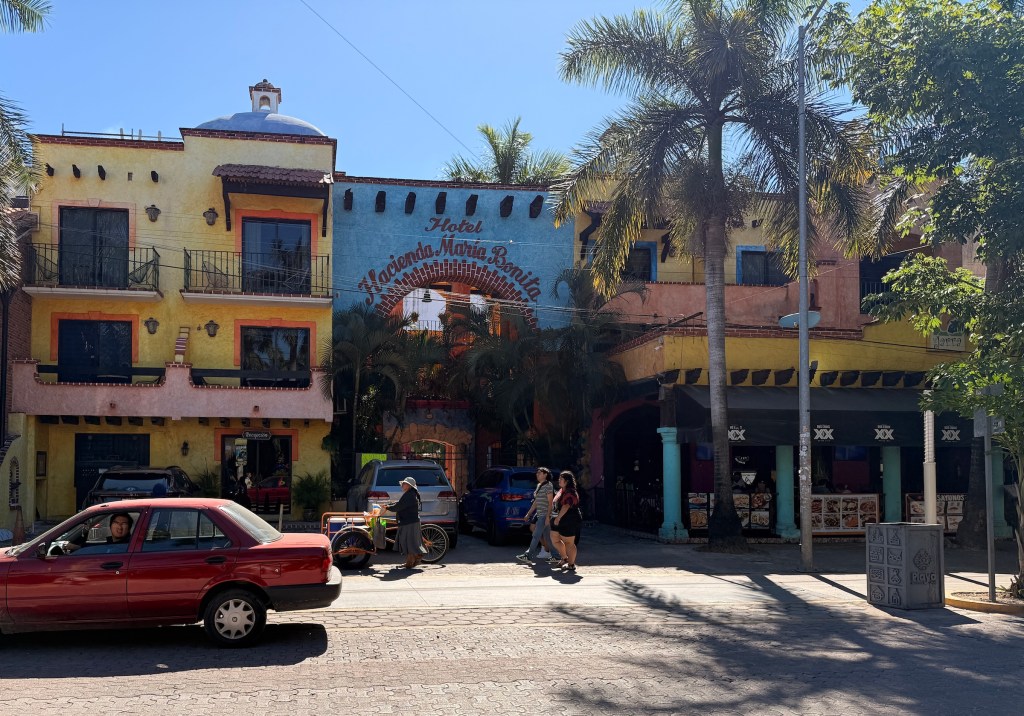
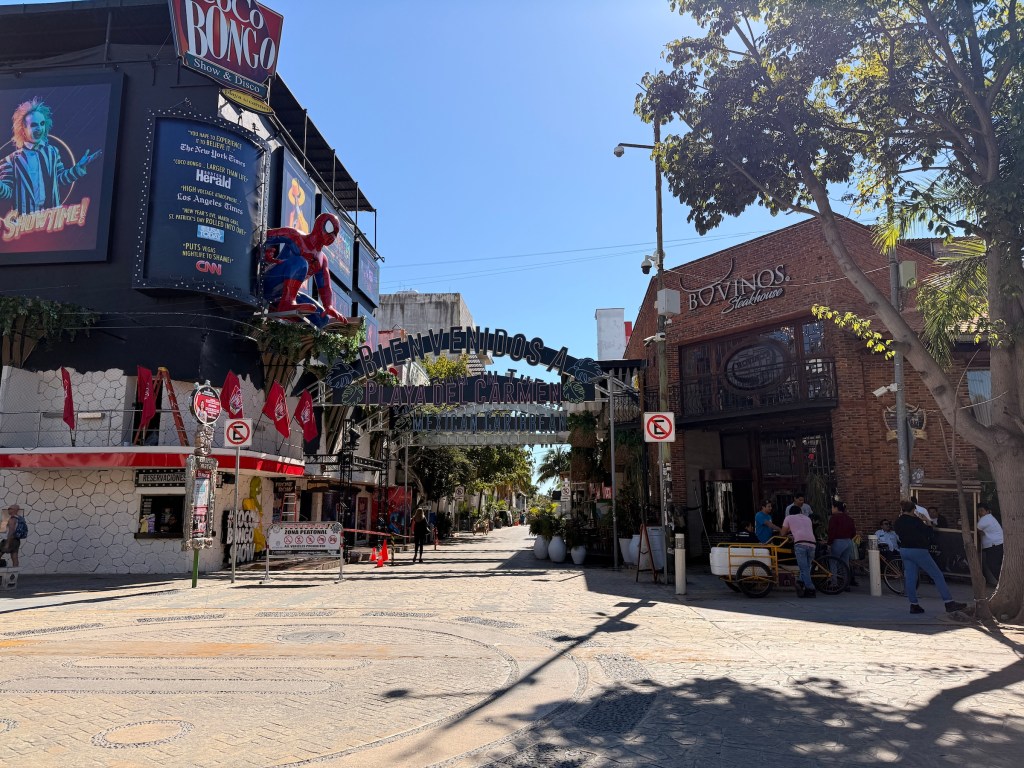
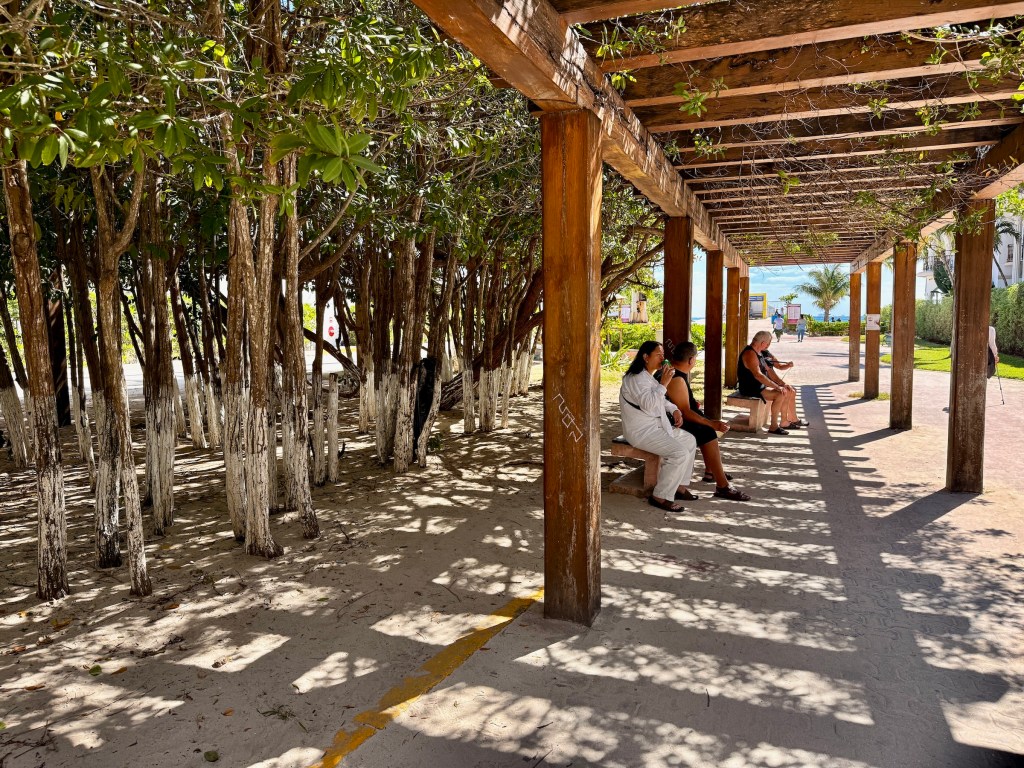
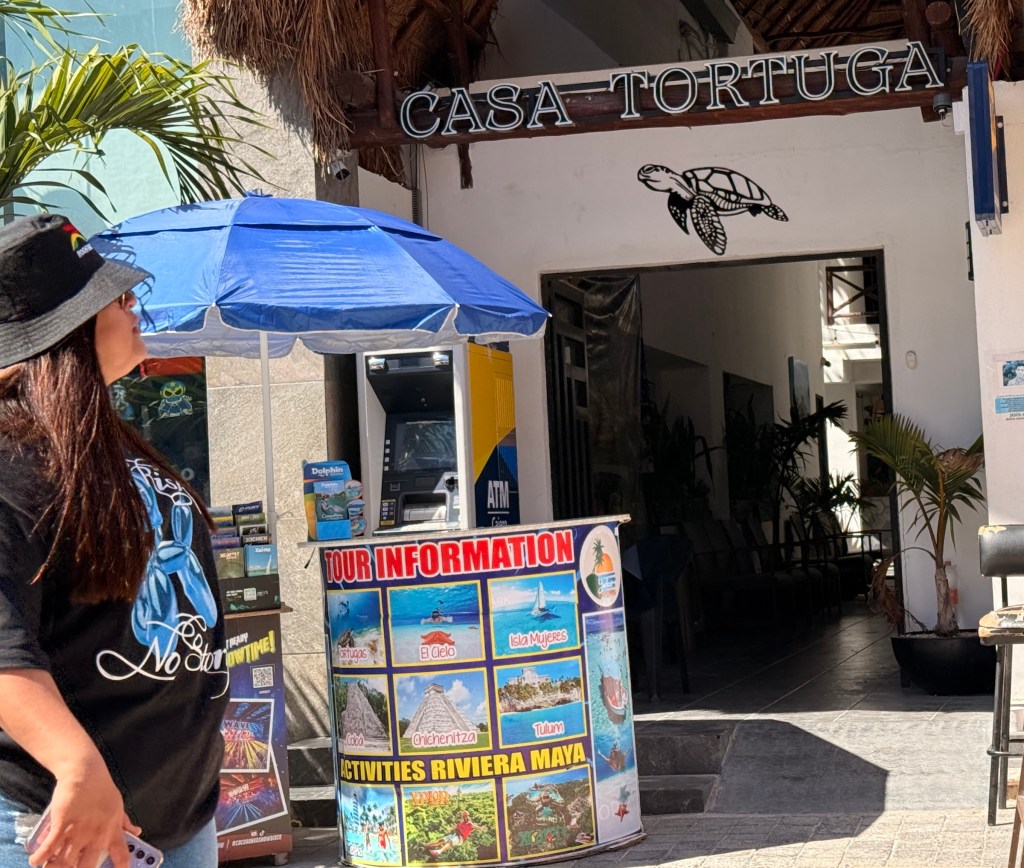
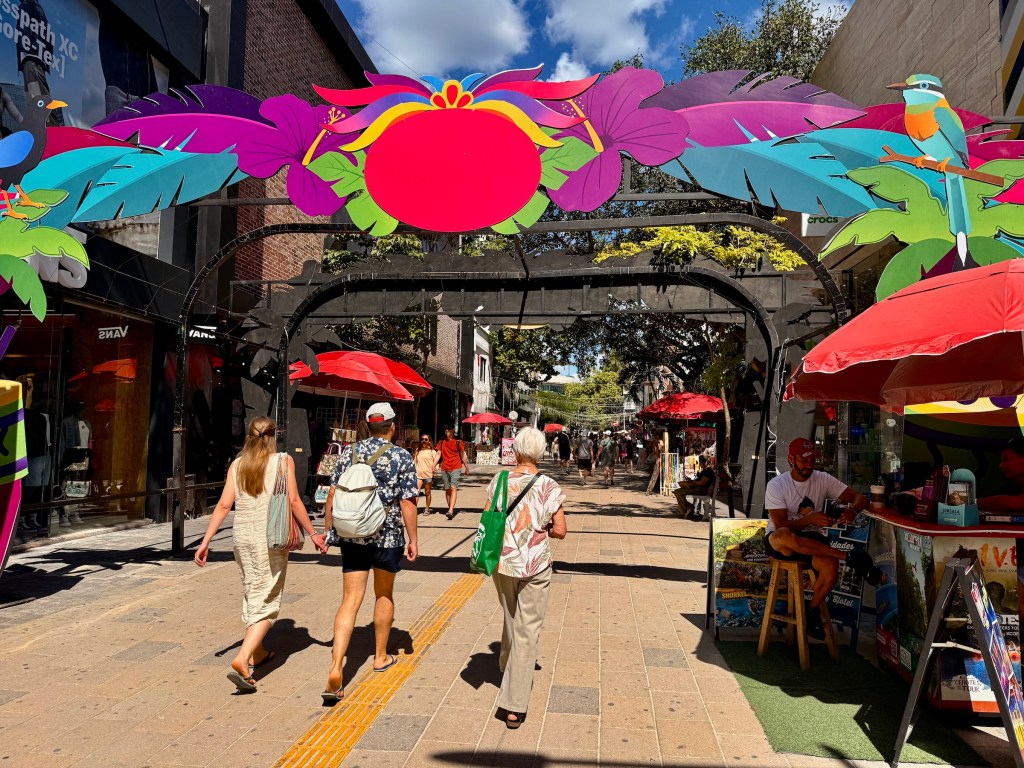
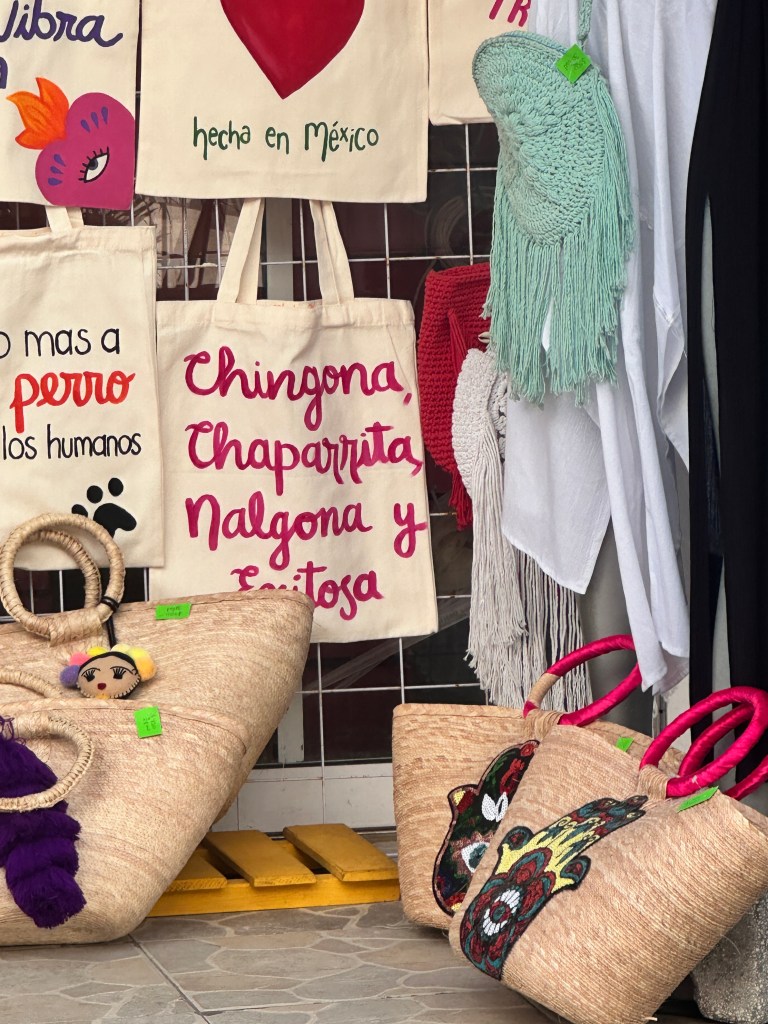
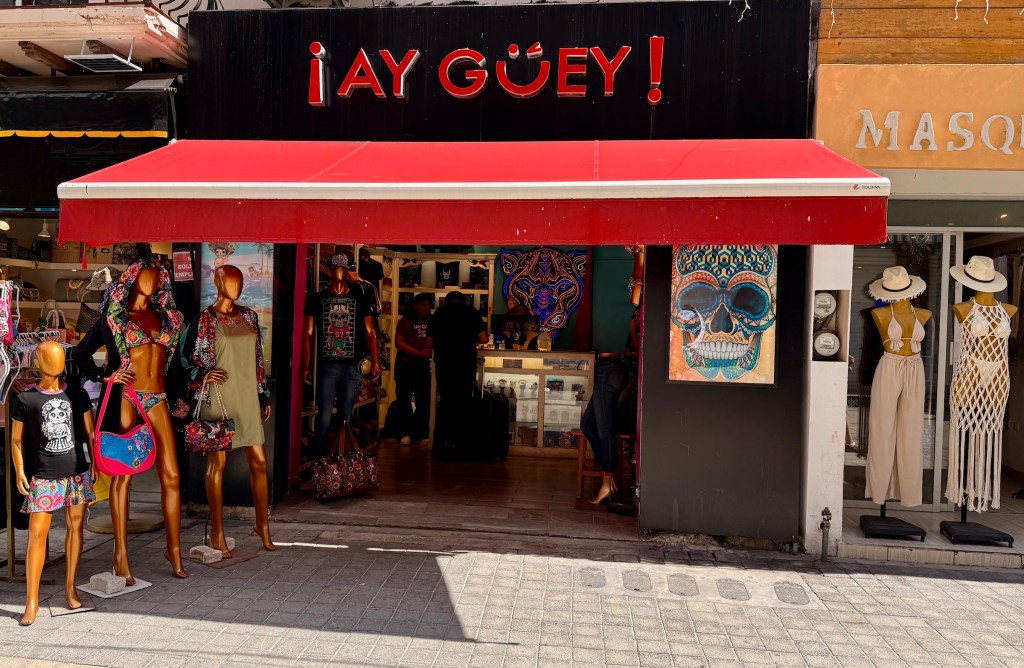
After a long hot day the place comes alive at night with endless frosty drinks, a welcome comfort to the thirsty throngs. And there are many places to indulge in a local brew with a fútbol game, a good dinner under huge old trees, a spectral fire dancer, or a fine local rock band.
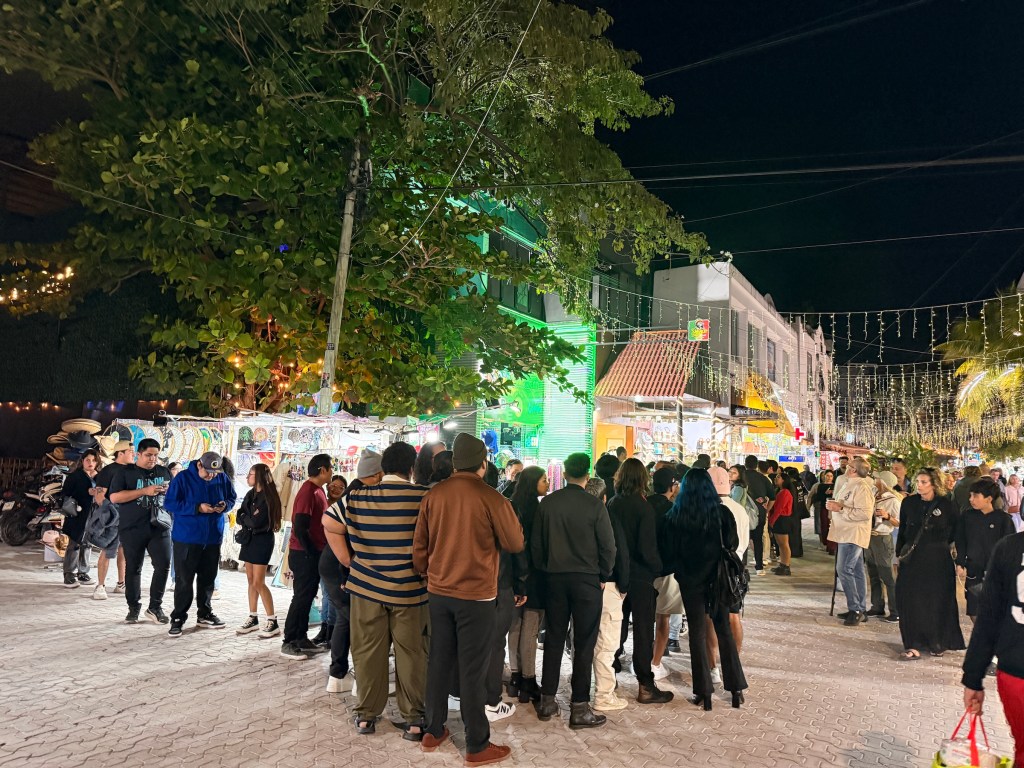
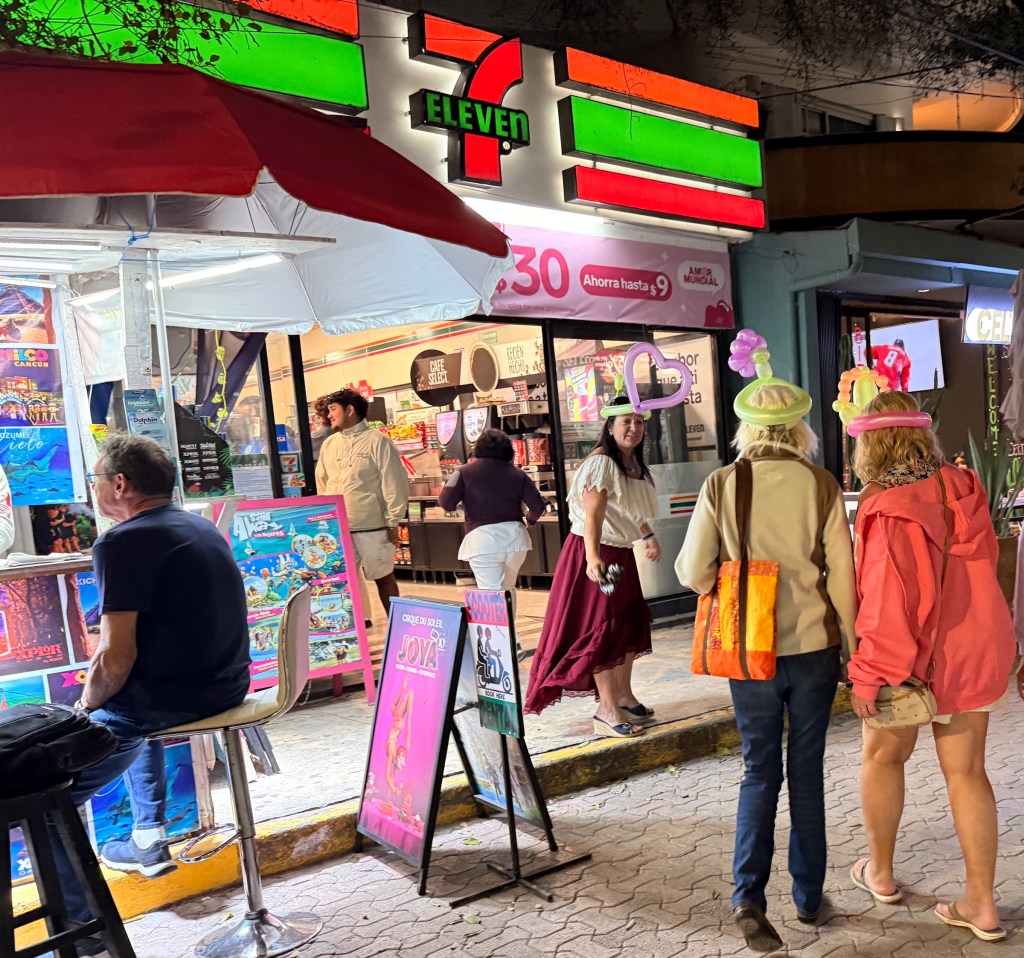
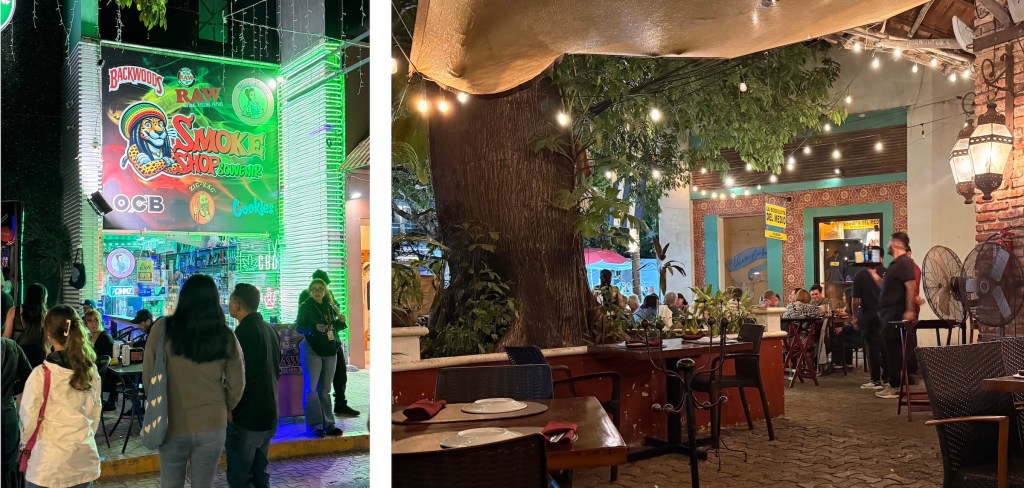
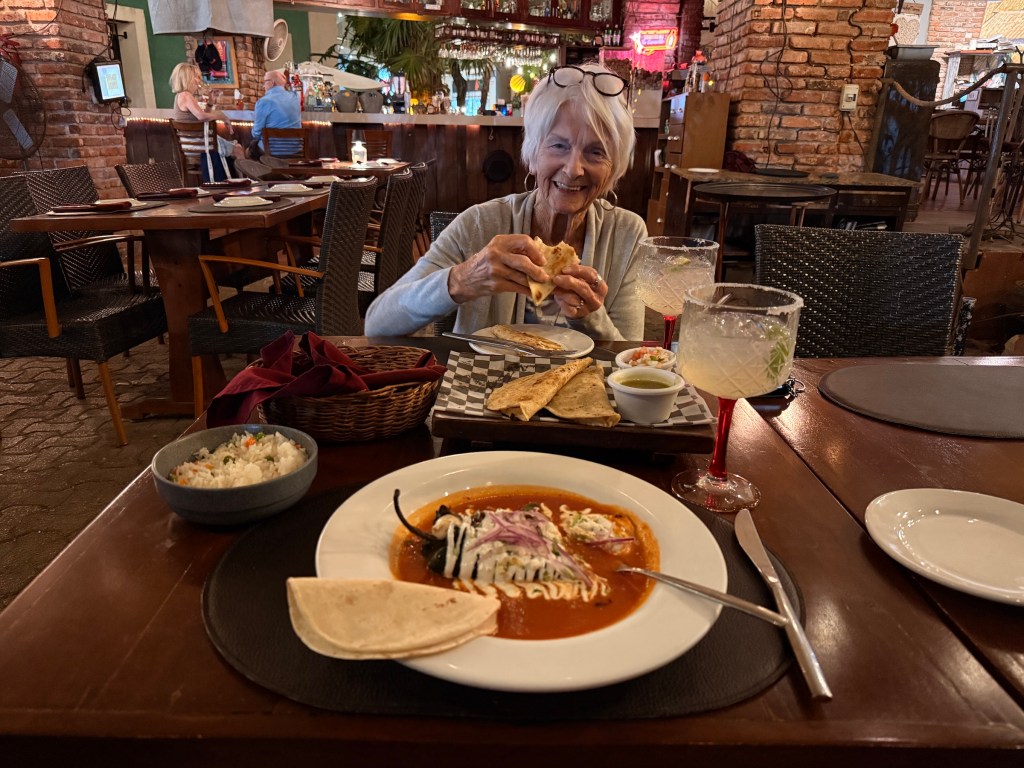
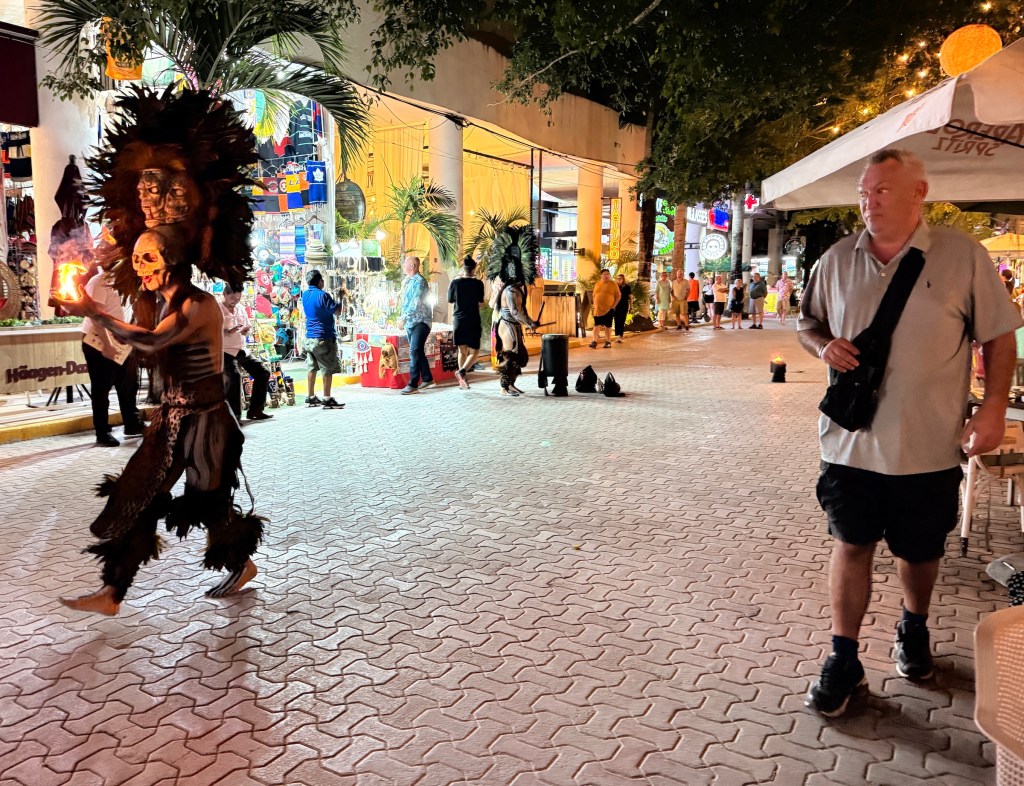
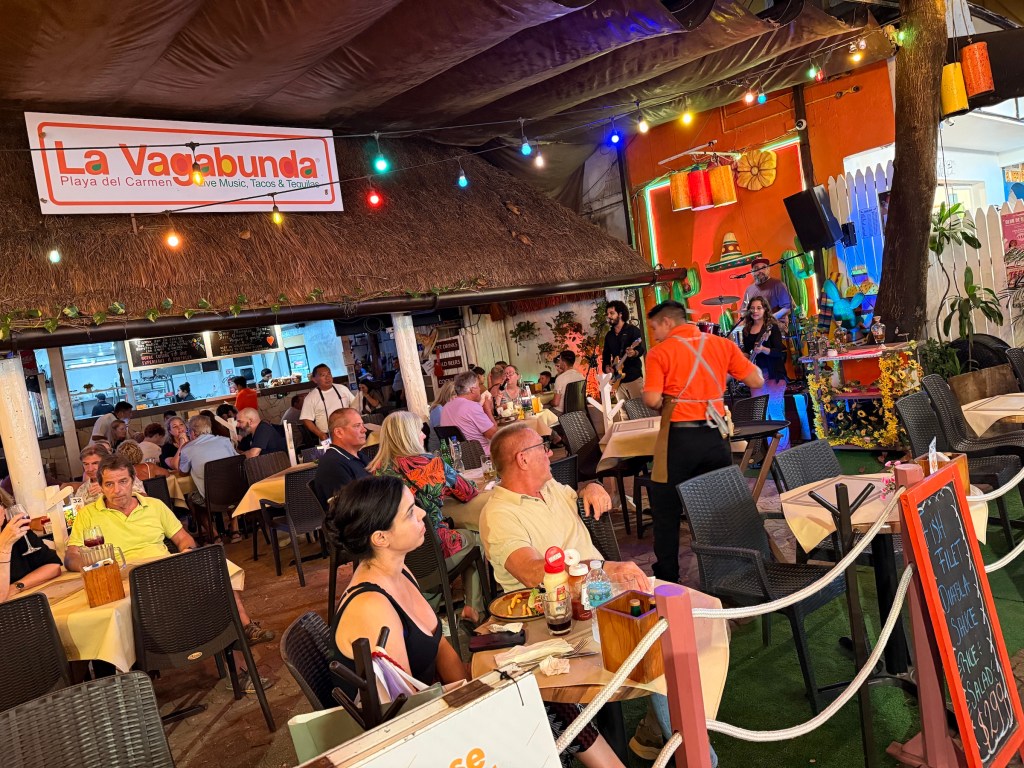
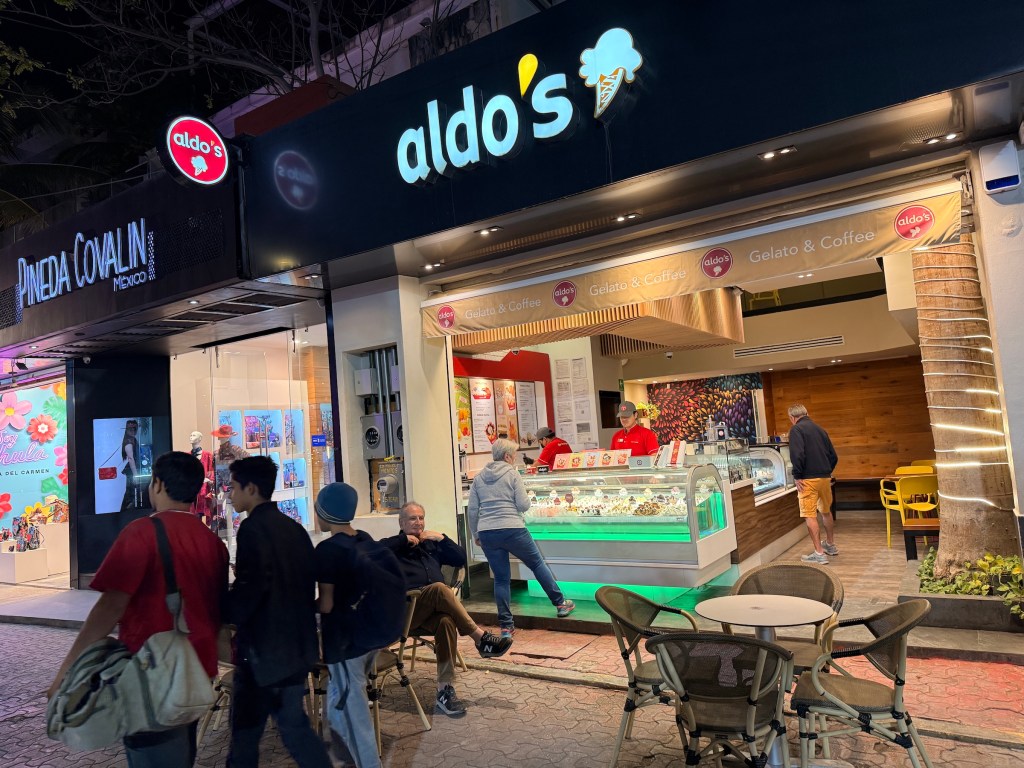
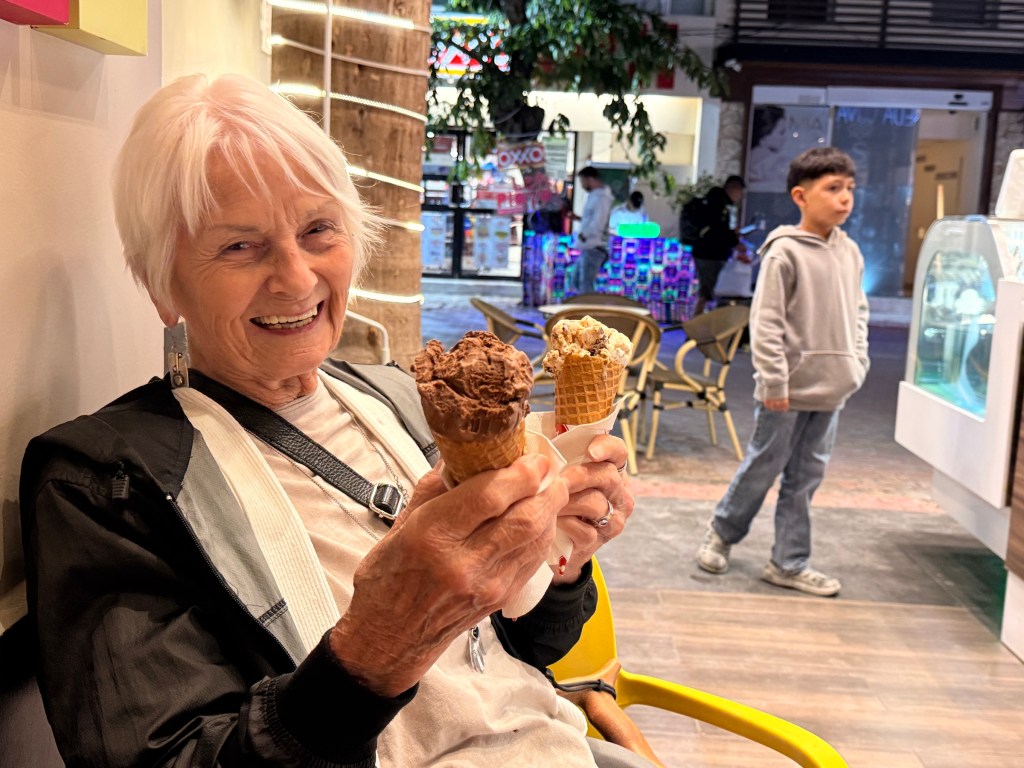
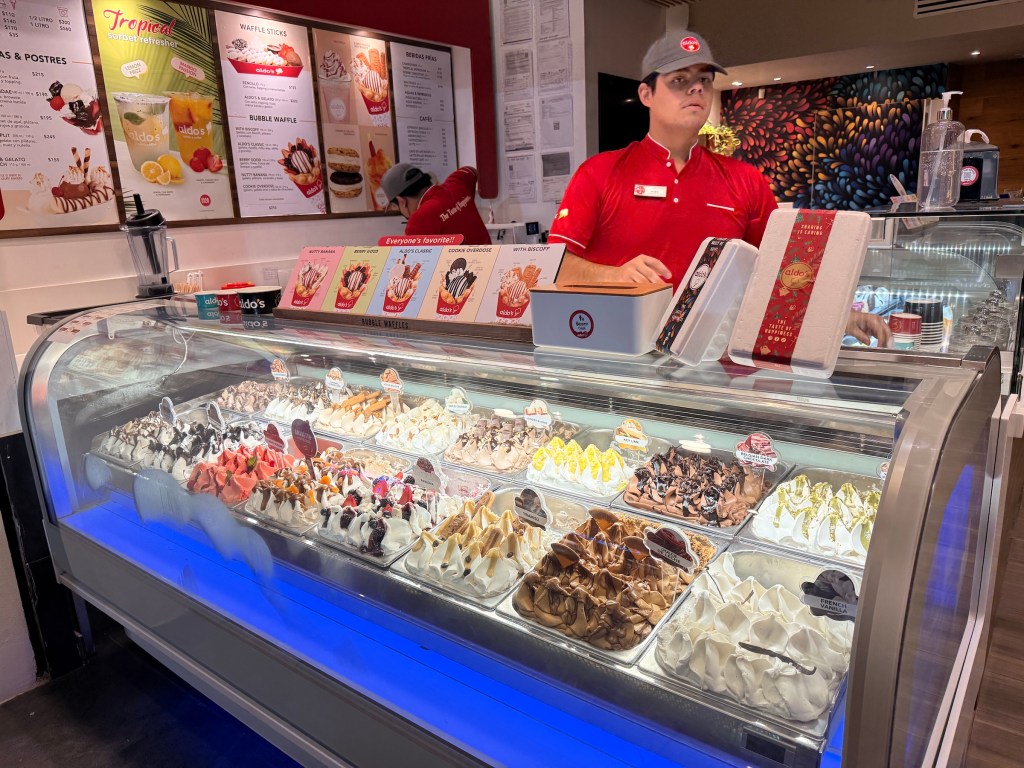
And of course, there’s ice cream. You don’t always need a second frosty margarita to top off a warm tropical evening by the sea when you have the luxury of fresh tasty ice cream. It’s a simple thing that just brings out the inner ten-year-old in most of us.
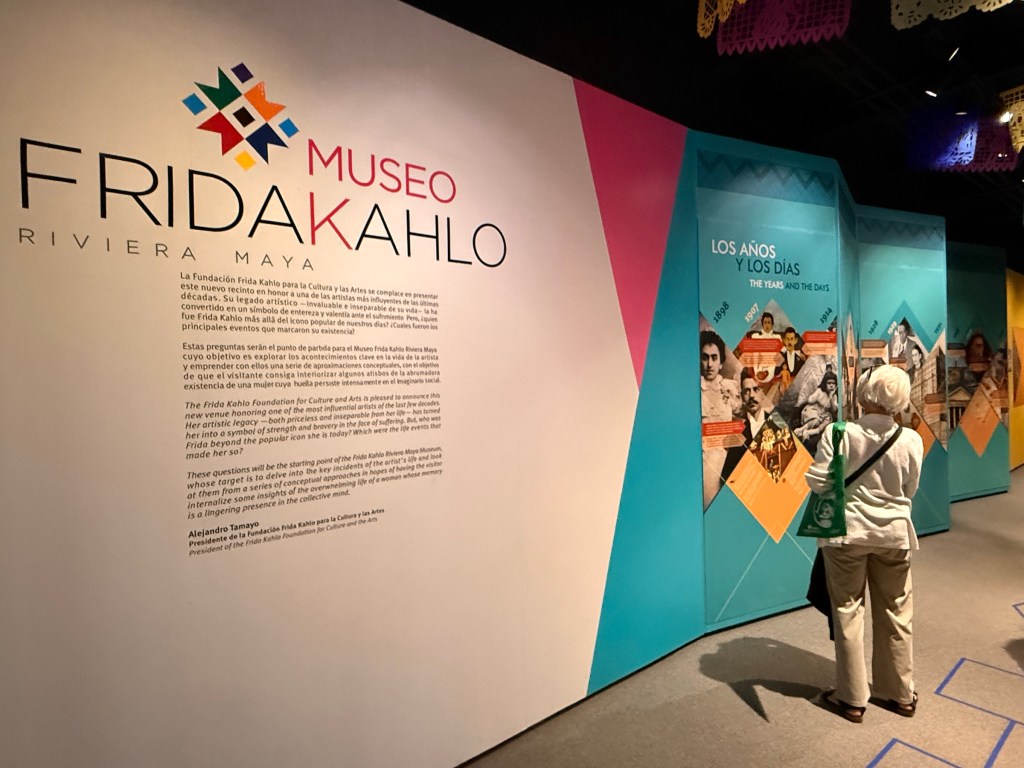
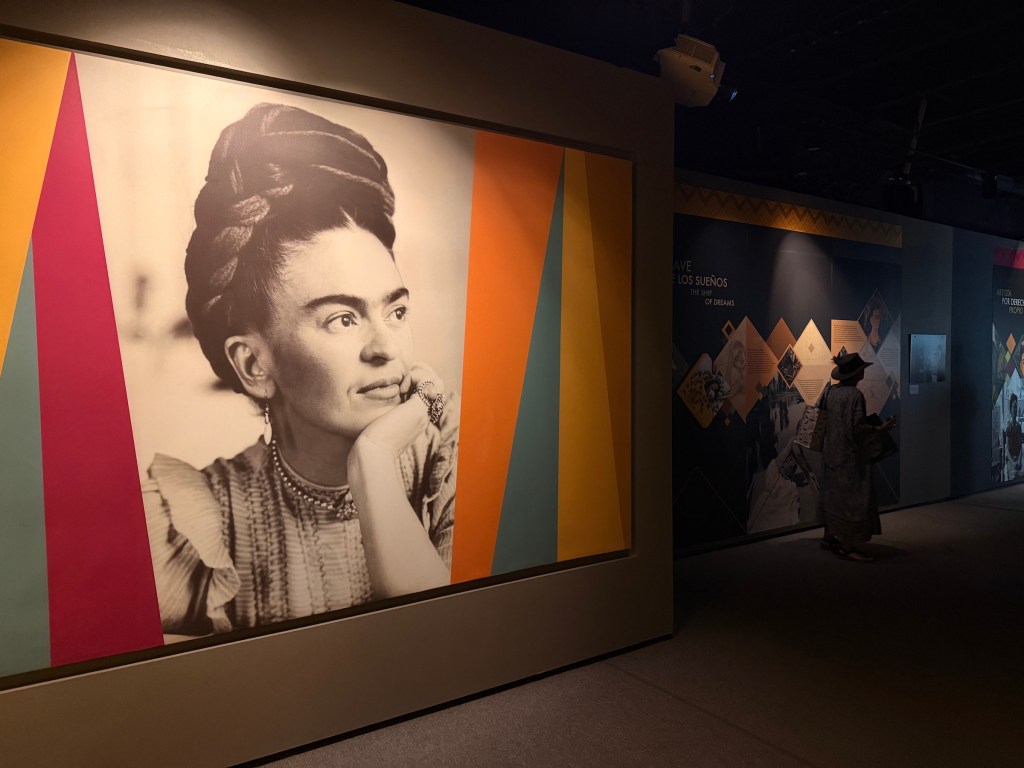
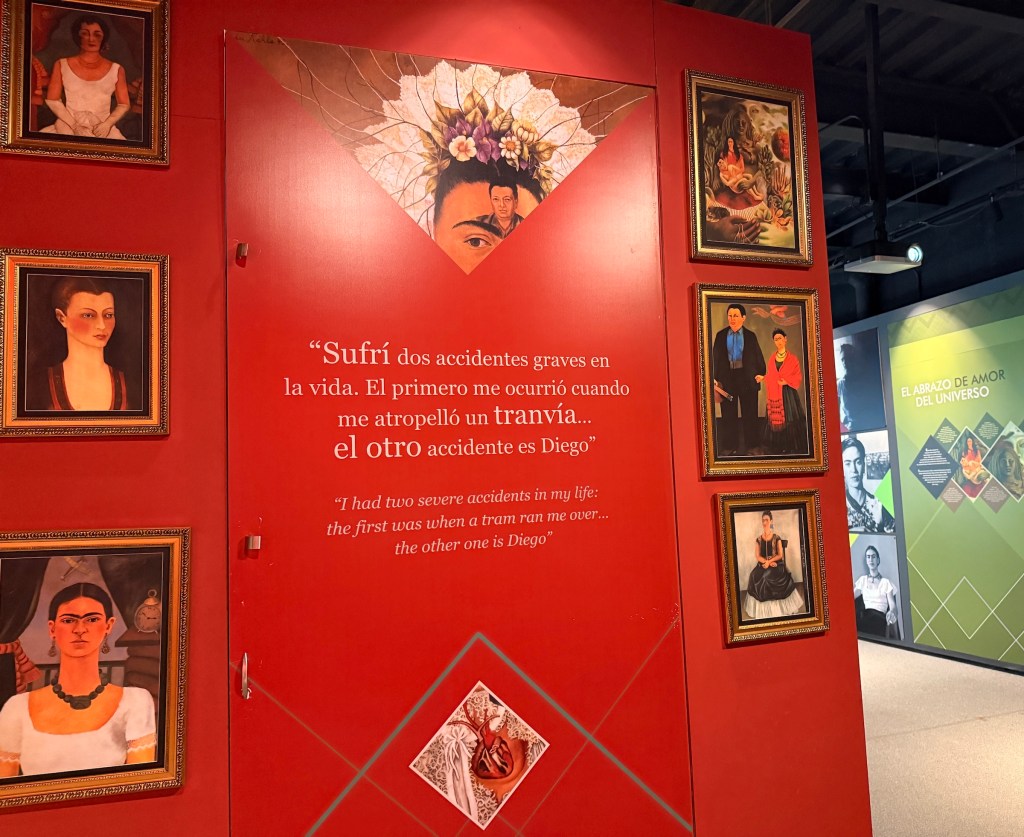
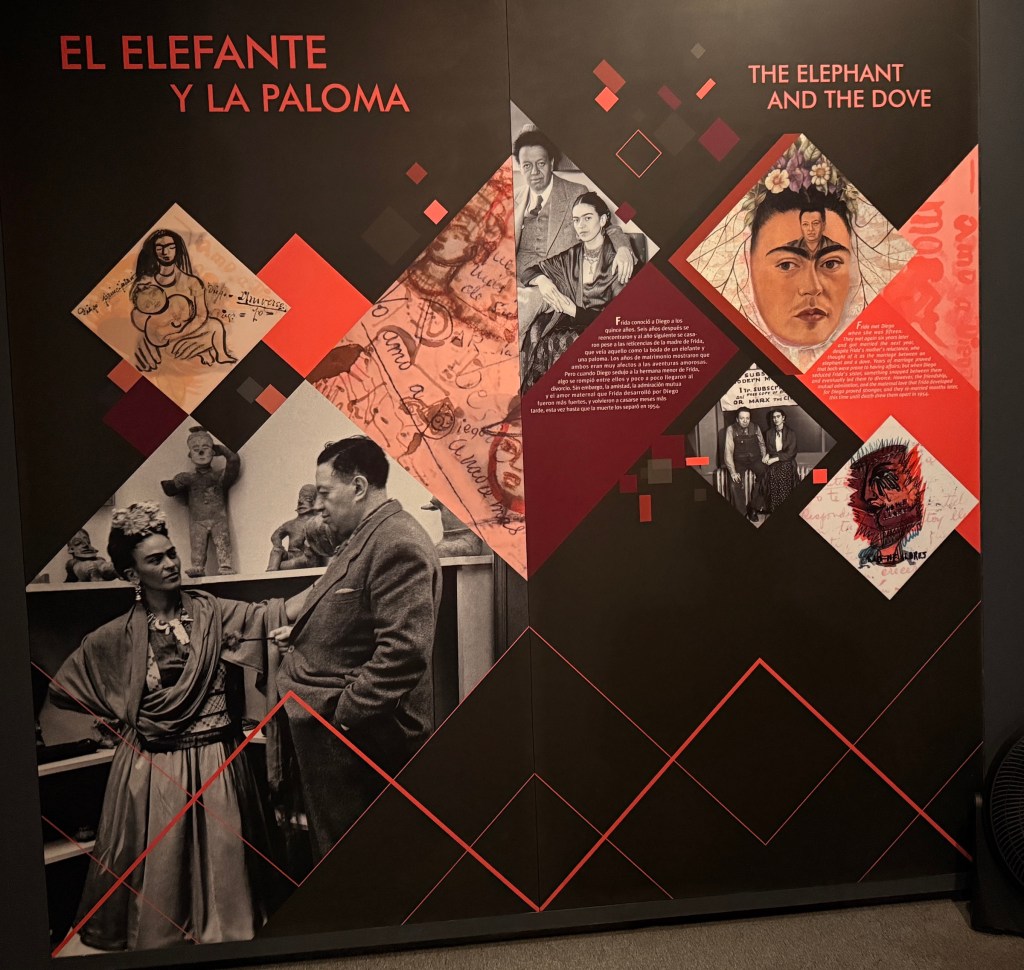
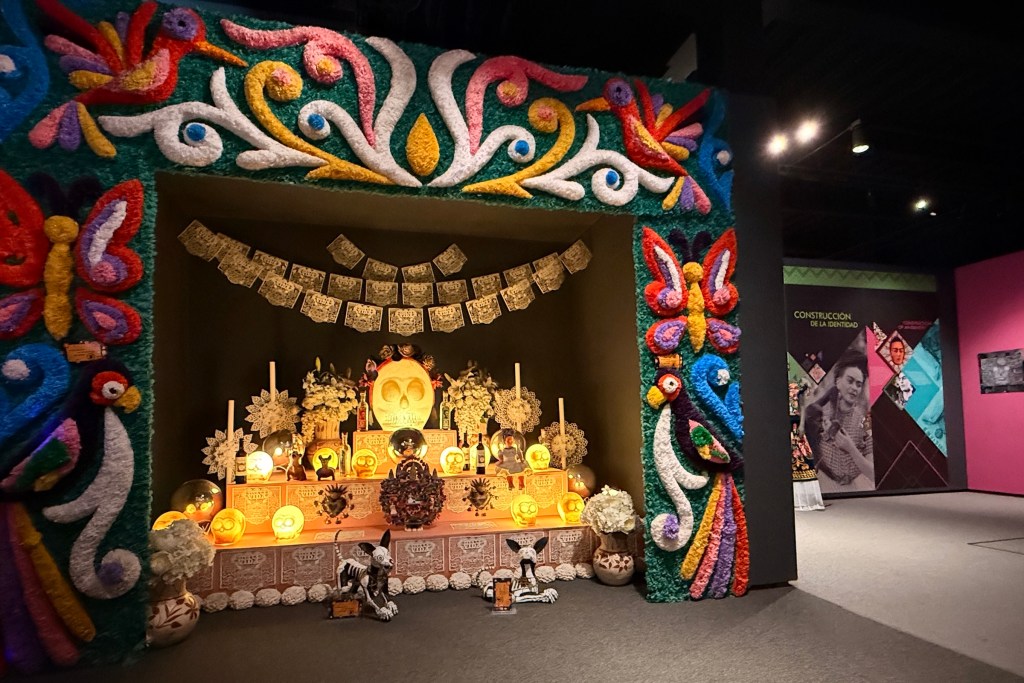
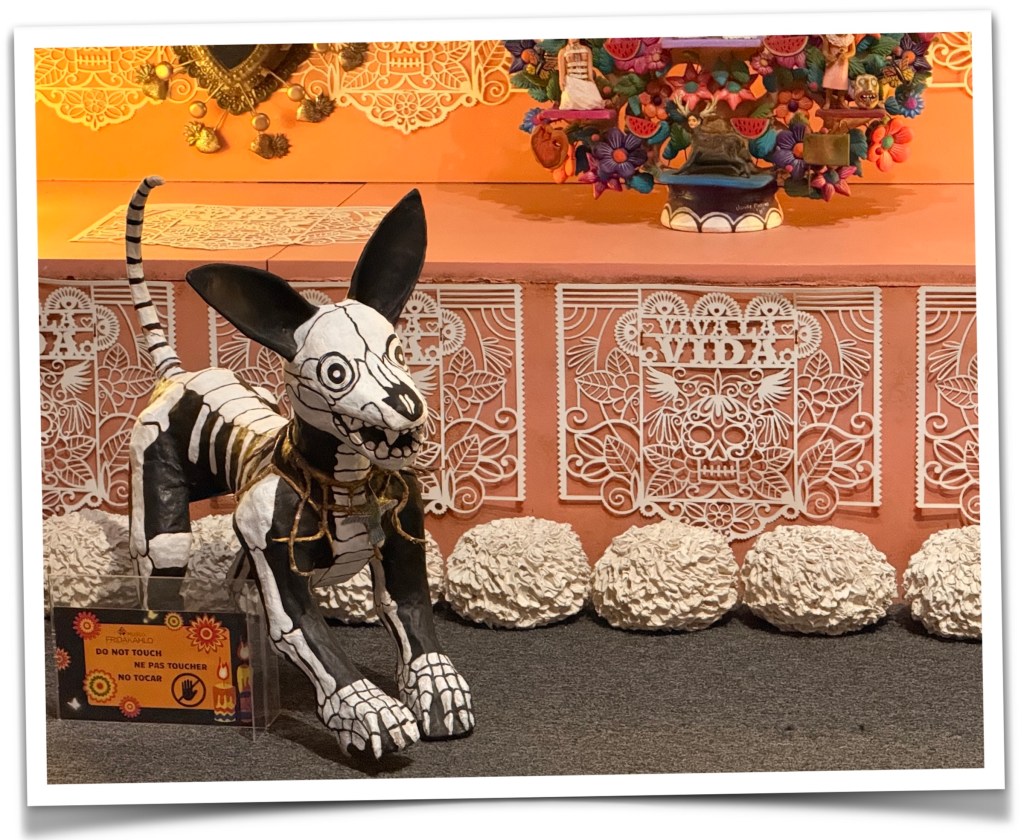
We pass a sign for the local Museo Frida Kahlo, and it’s a nice day to spring for tickets. We don’t expect a world-famous gallery of her work, but they’ve done a fine job, and it’s worth our time to be there. It’s a colorful homage to Frida, and they tell her story well. Her indomitable independence and wit comes through in her art and her words – and she was always immensely quotable, especially regarding her often-stormy marriage to Diego Rivera. Her mother described the relationship as, “a wedding between an elephant and a dove.”
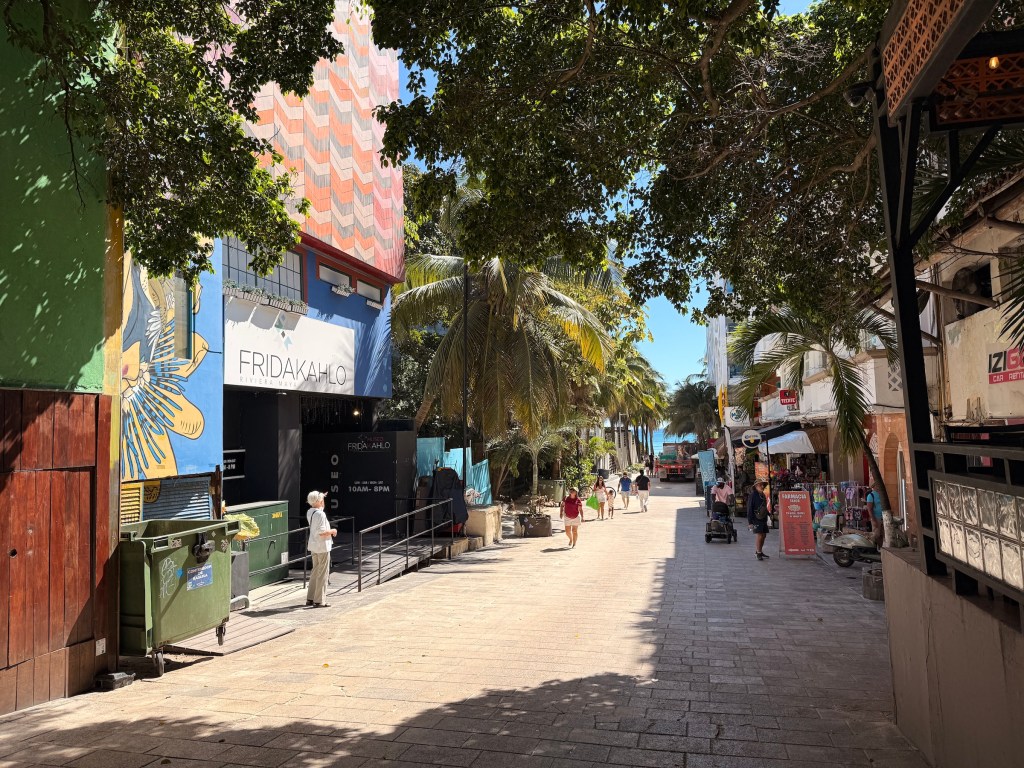
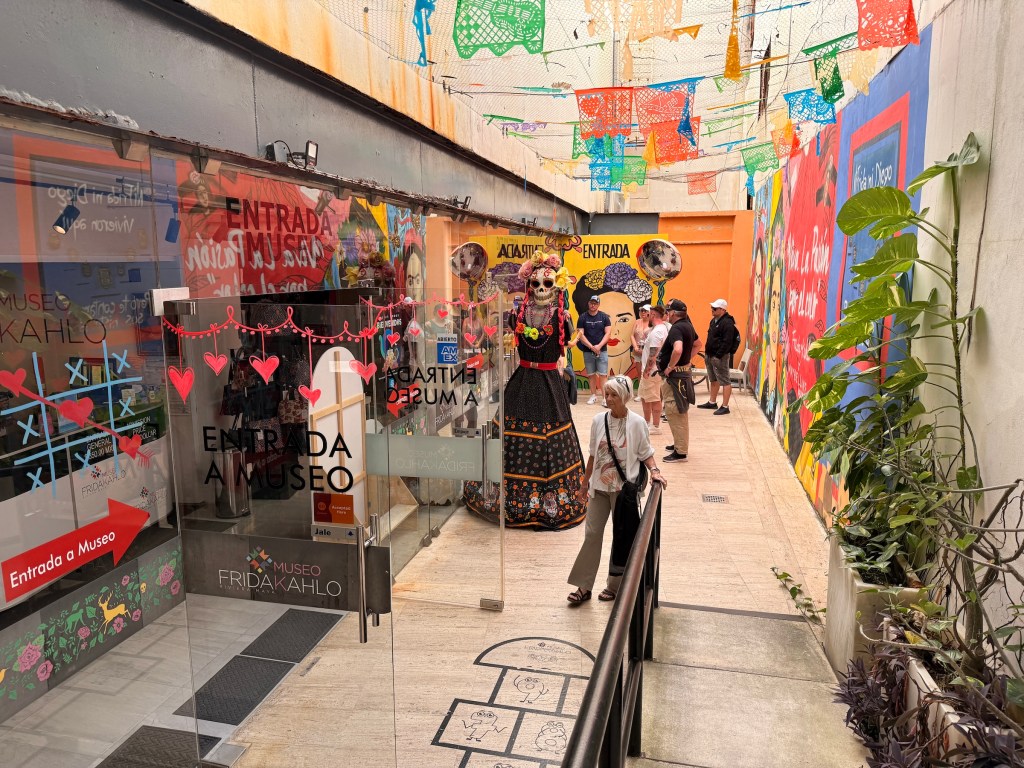
Frida made the most of her brief time among us, and she died in 1954 at the age of 47. London’s Tate Modern considers her to be “one of the most significant artists of the twentieth century,” and is posting a major Frida show this year. And her painting named “El Sueño” broke records for a woman artist in 2025 on auction at Sotheby’s.
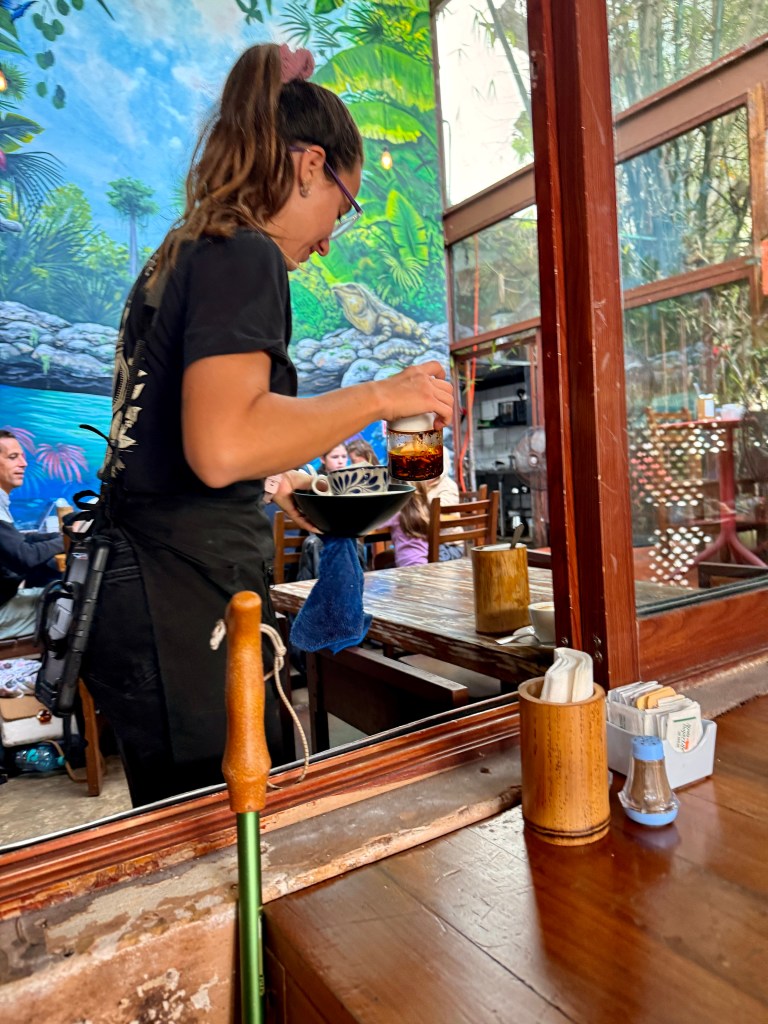
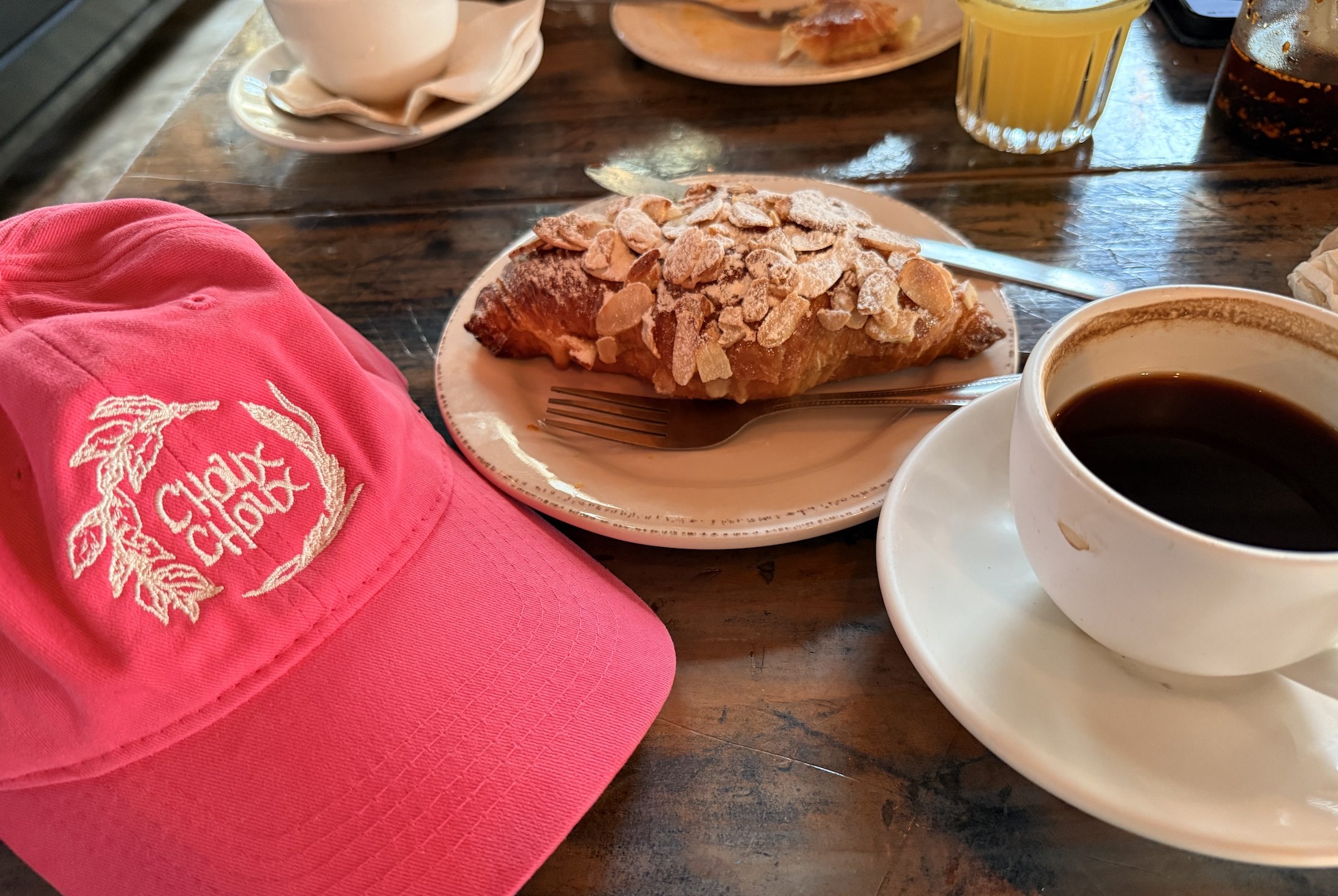
After a few days of wandering the same old Strip, we deviate to see if there’s anything appealing just inland. And that’s where we locate our favorite coffee shop in Playa. To get there requires ambling along several streets and a small park until we see a crowd hanging out at a semi-hidden doorway. We look up on the building to search out the sign, which reads “Choux Choux” – if you can make it out through the foliage. This is clearly our kind of place, where they let the coffee, the food, and the vibes do the talking. And advertising is optional.
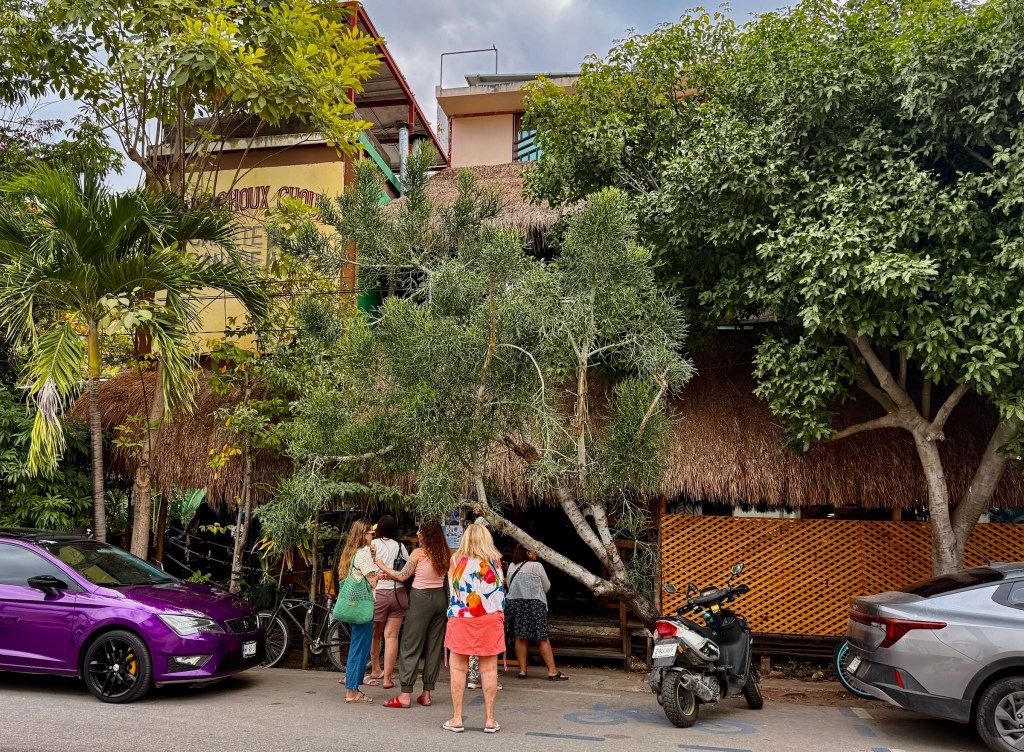
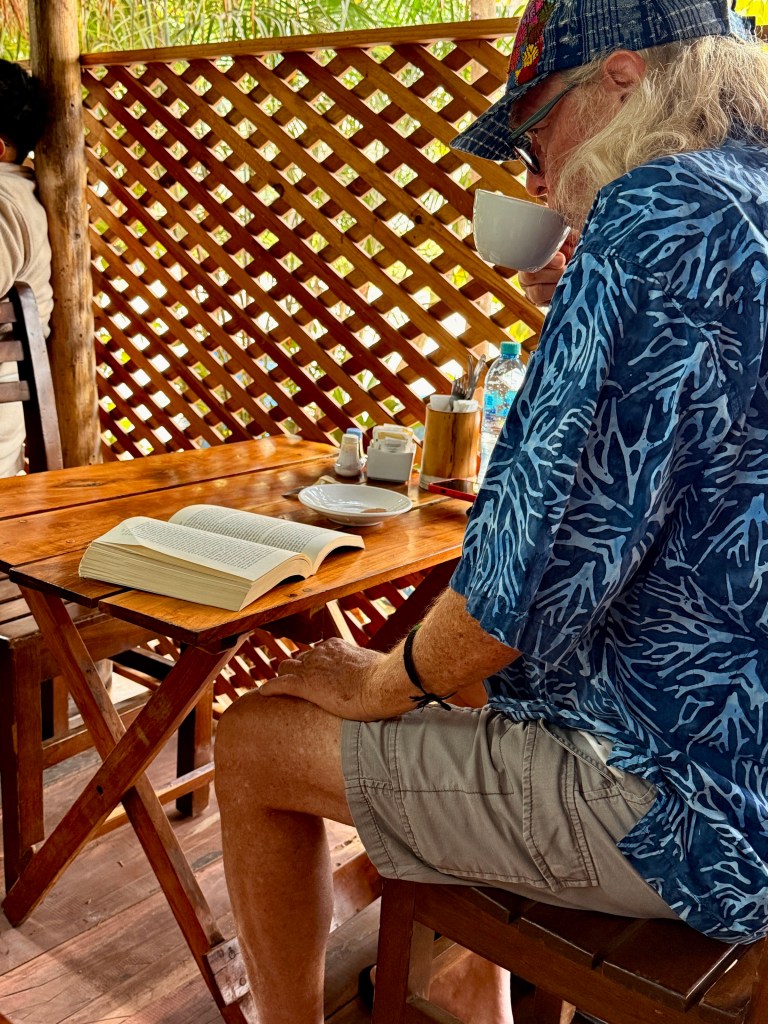
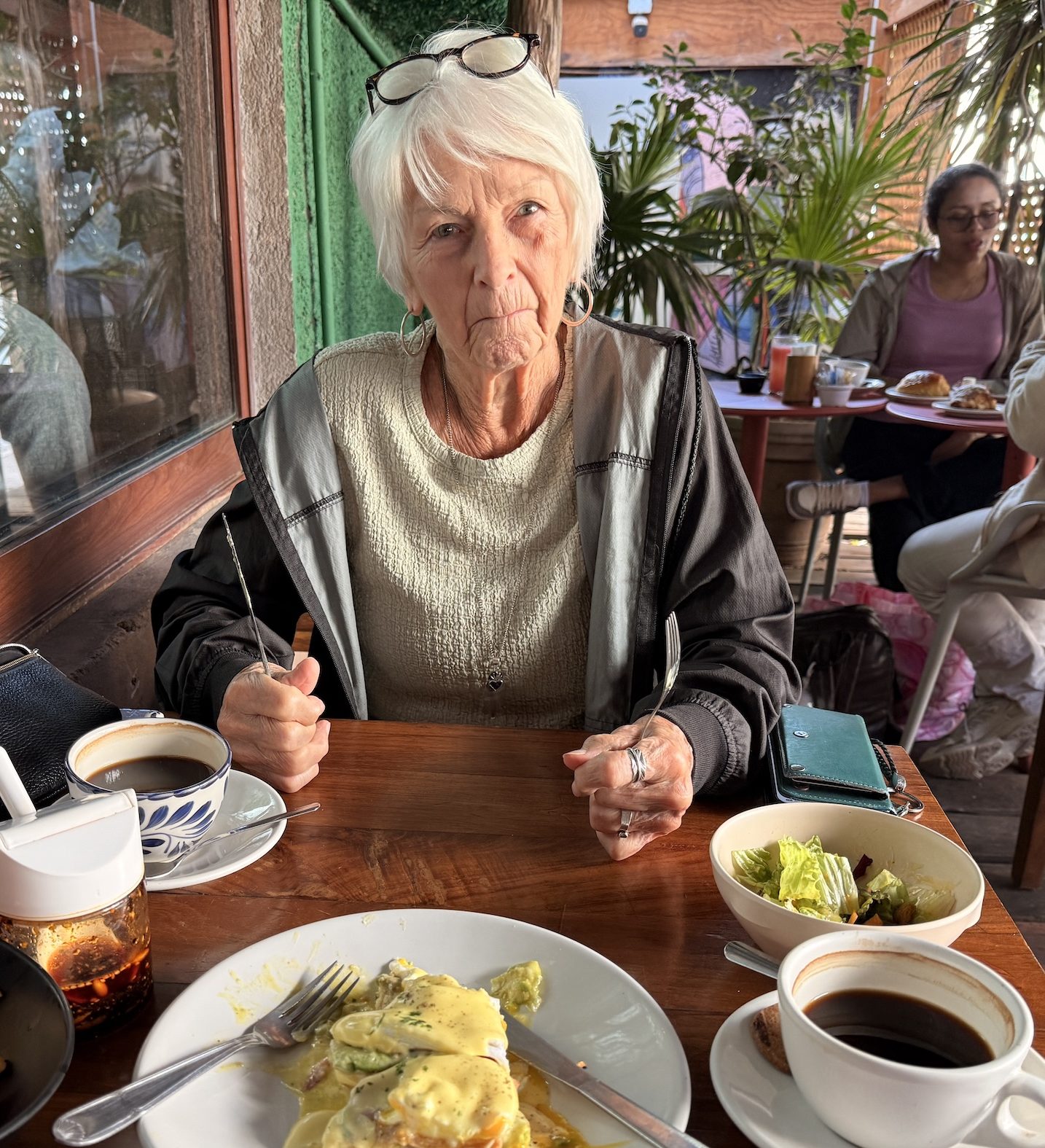
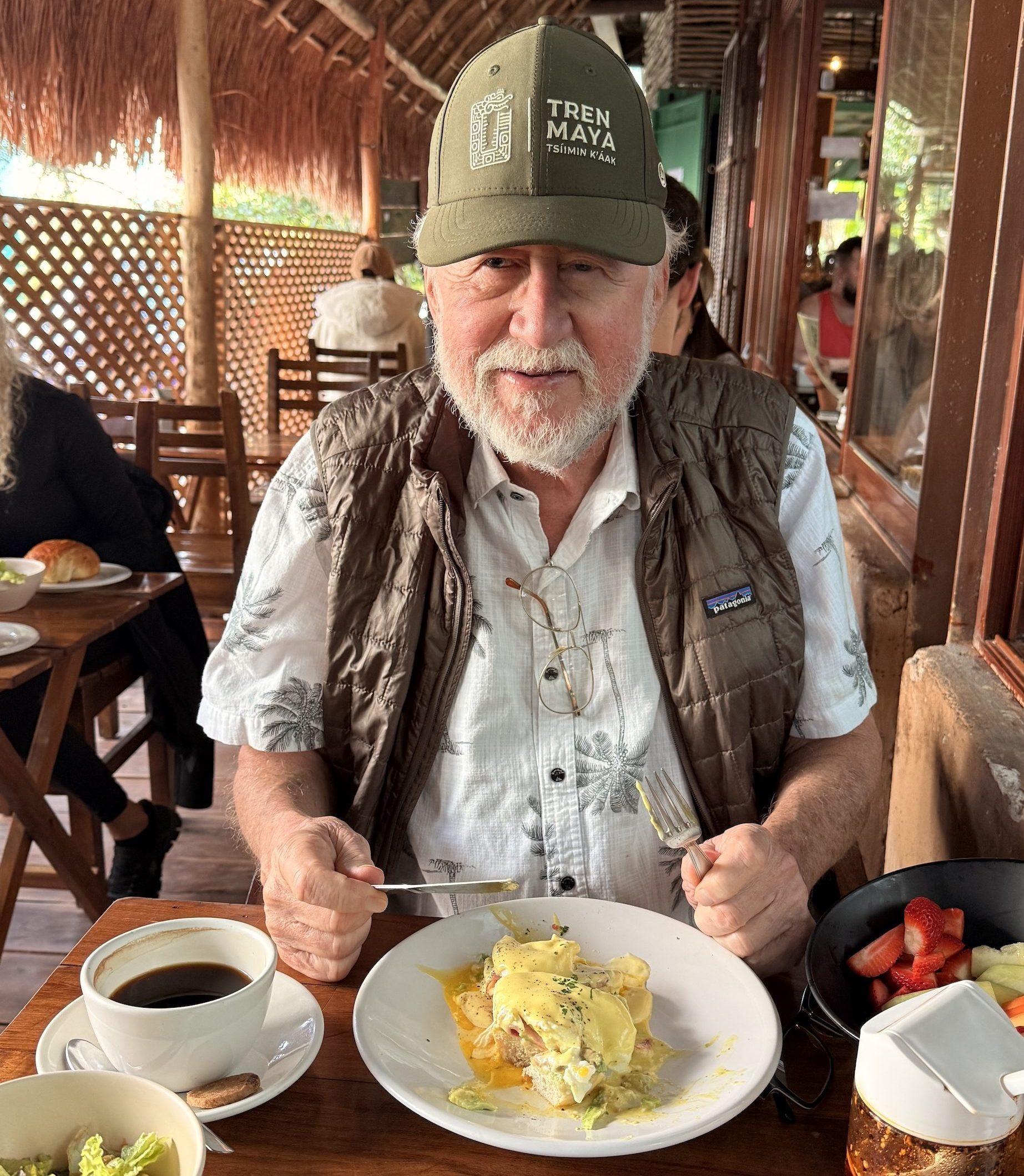
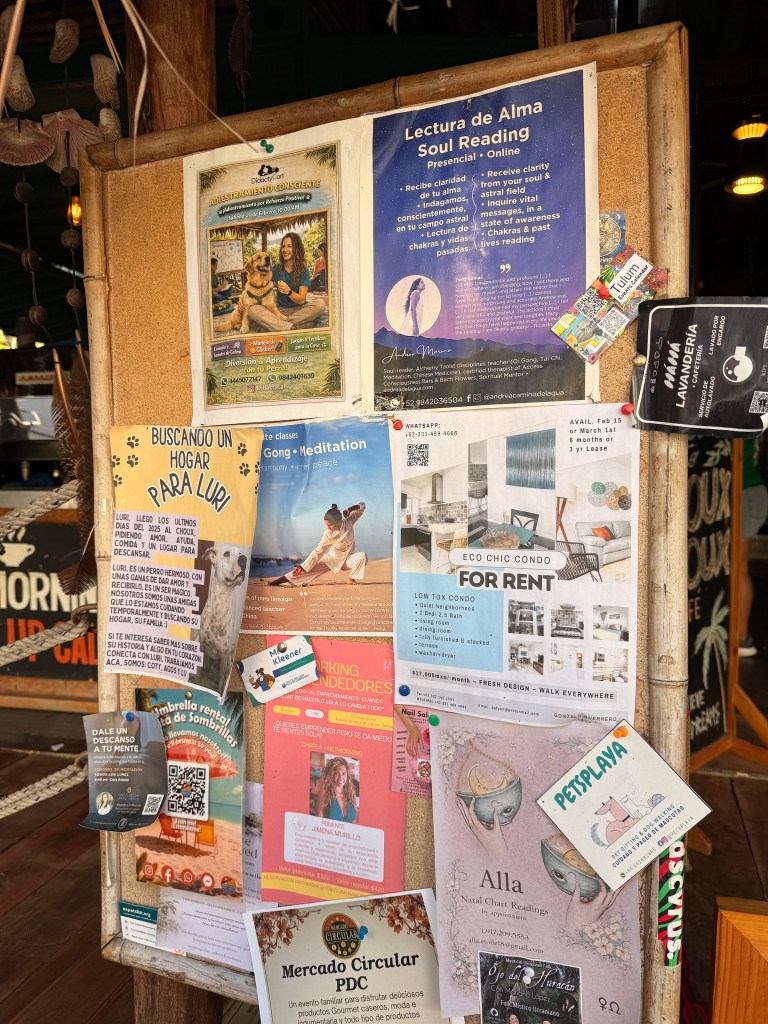
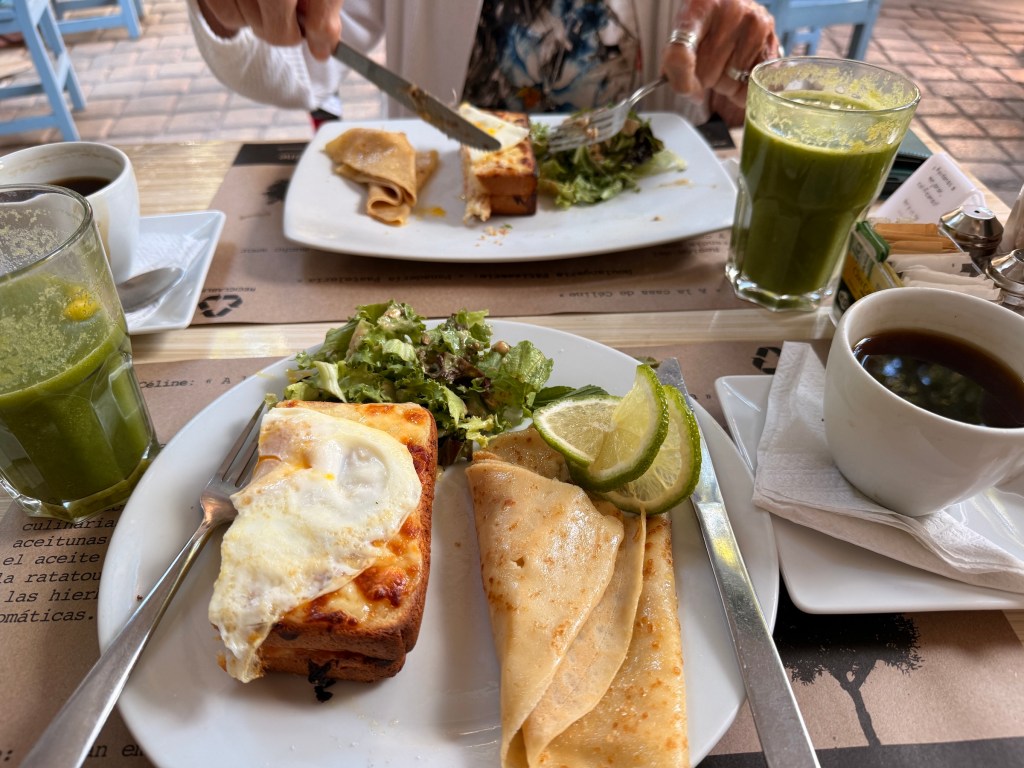
There’s a time-worn guy sitting placidly near us and reading a time-worn book. It’s nice to see such a rare event these days. Carolyn restlessly waits for me to cut into the excellent breakfast we’ll be sharing. The almond croissant is to live joyously for (never understood “…to die for”), and there are local folks willing to rent you a cool apartment, lead you in meditation, or even read your soul!
¿Y qué más? As we say in these parts.
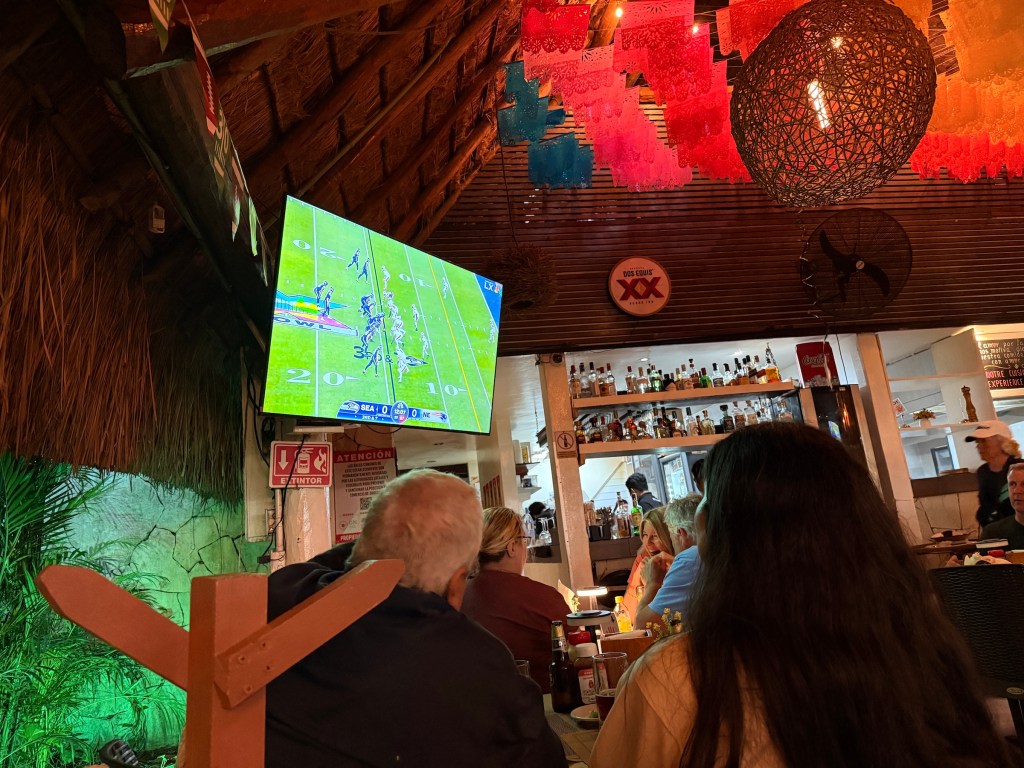
We happen to be in Playa del Carmen for the Super Bowl, and a nice Quebecois couple offered to share a table in a crowded bar. The game was good, but the half-time show was the biggest hit. Bad Bunny was in top form, in Spanish, and the local crowd loved it! We heard later there was some grumpy old guy in the US who complained, but maybe he forgot to take his meds.
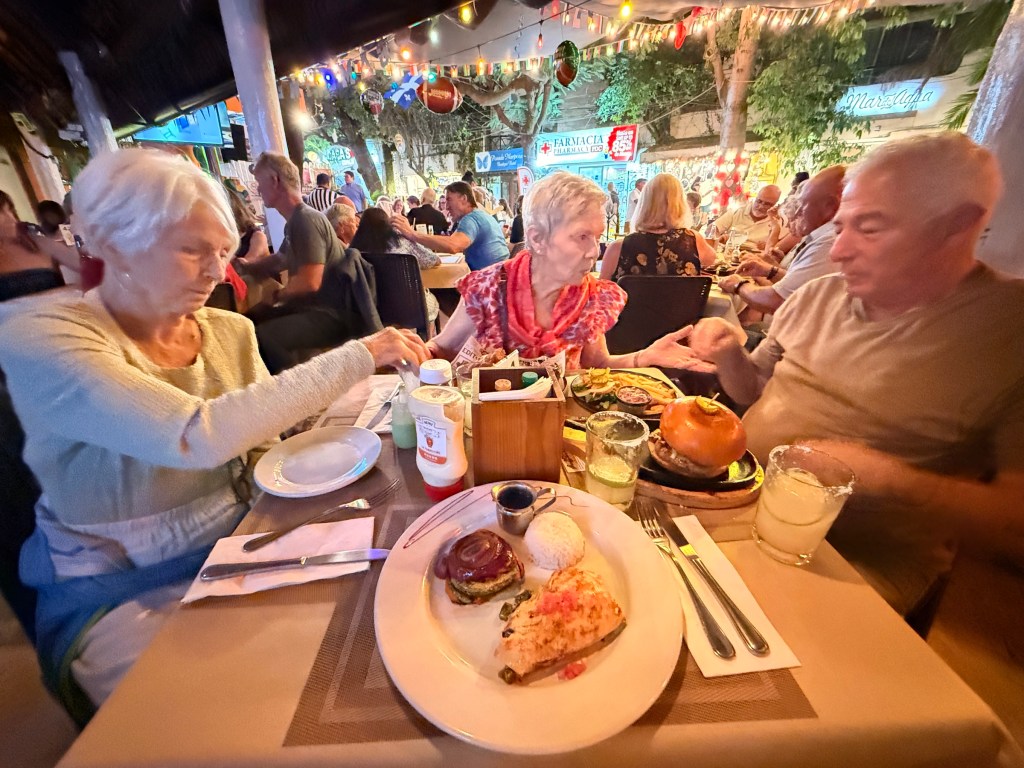
While there, we took advantage of the Quebecer’s knowledge and asked for the real translation of Choux Choux. They explained that one meaning is ‘cabbage,’ but that in this case it’s actually an endearment more like ´Sweetheart’ or ‘Creampuff,’ or even ‘My Little Cabbage.’ So we decided we would take it, and next time we´ll ask that they add one of those gorgeous frosted choux choux in the display case to the bill!
In the morning we check out another good brekkie place at Chez Céline, and then we take a hike to the north end of 5th Ave. to see where the Gringo zone ends, and it does kind of dribble out where the coastal jungle is fenced off at a kind of wildlife area. And we see a ‘Hevy’ Chevy and a nice old red’ Vocho.’
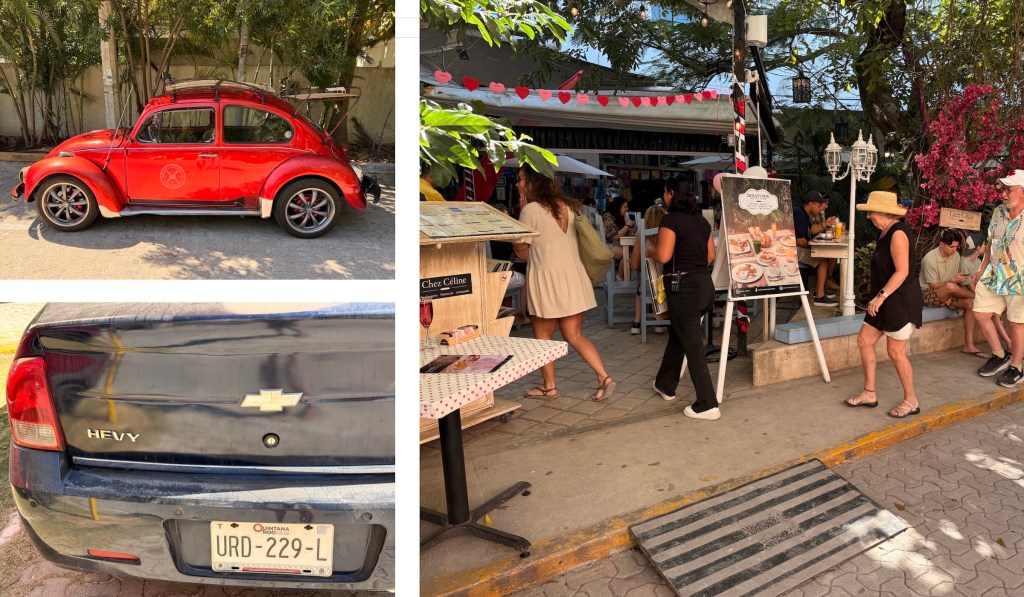
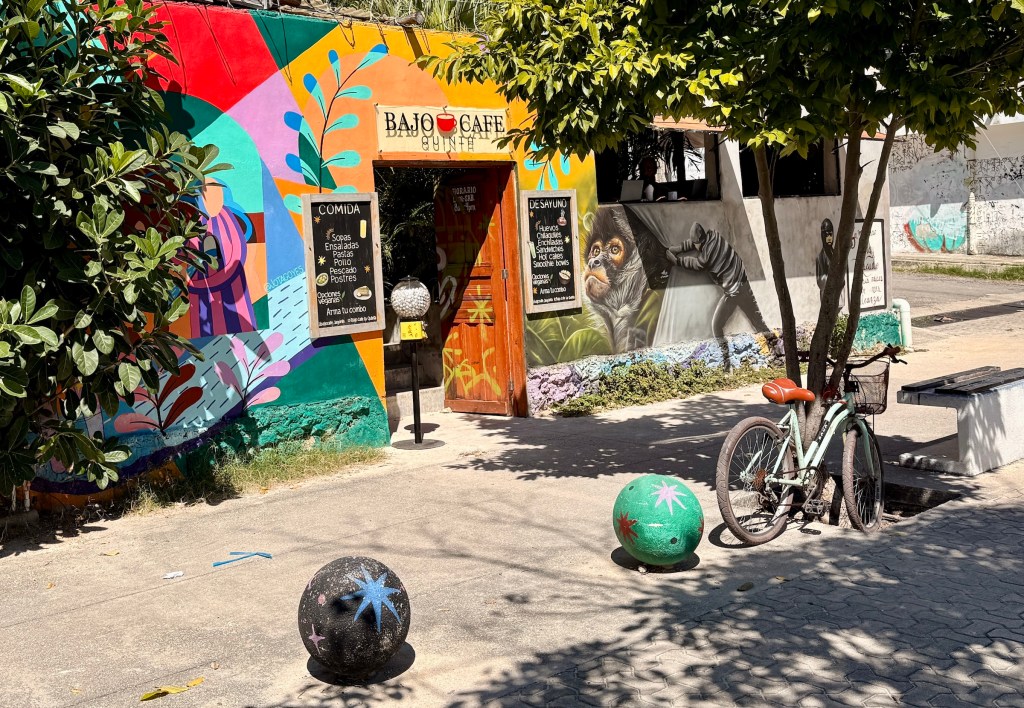
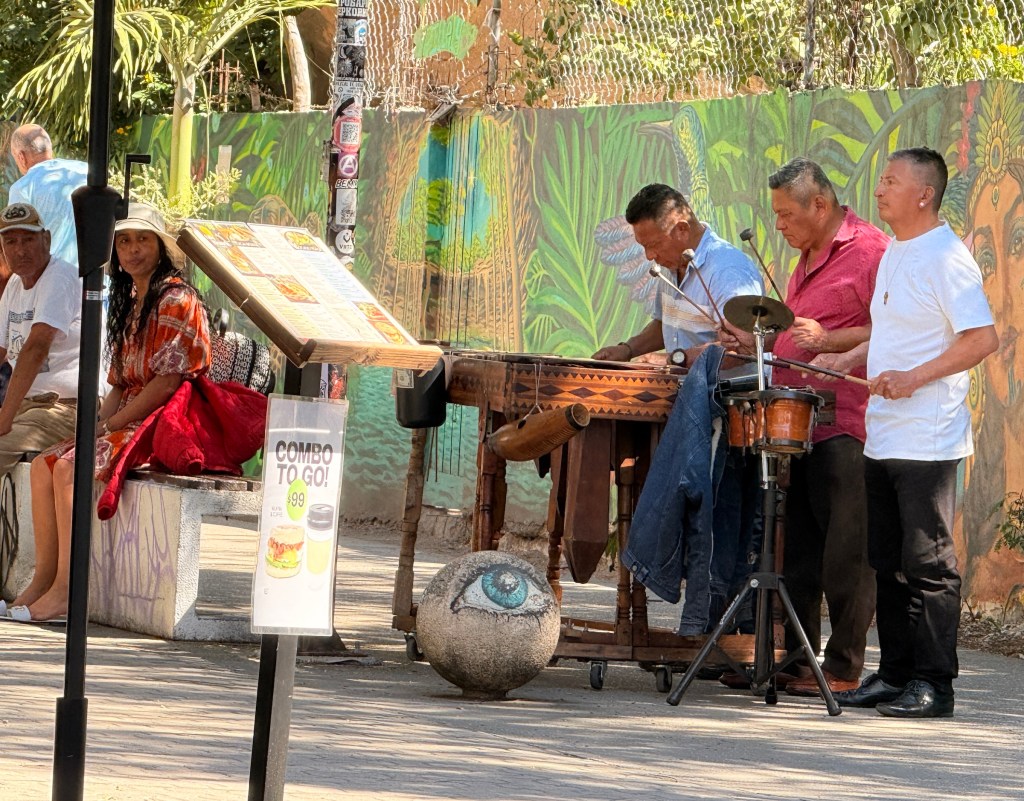
Then we meander through back streets to find some of the local artistic community and get a feel for the actual Mexican part of Playa. There are some very good murals and some fun cartoony art pieces. Also some chickens and a duck are checking out the garbage, and a large charming version of a Matilda cartoon is making a political statement. The city also has an ‘adopt your corner’ program to encourage community involvement with the whole trash thing, and it’s probably a good idea for the rest of us.
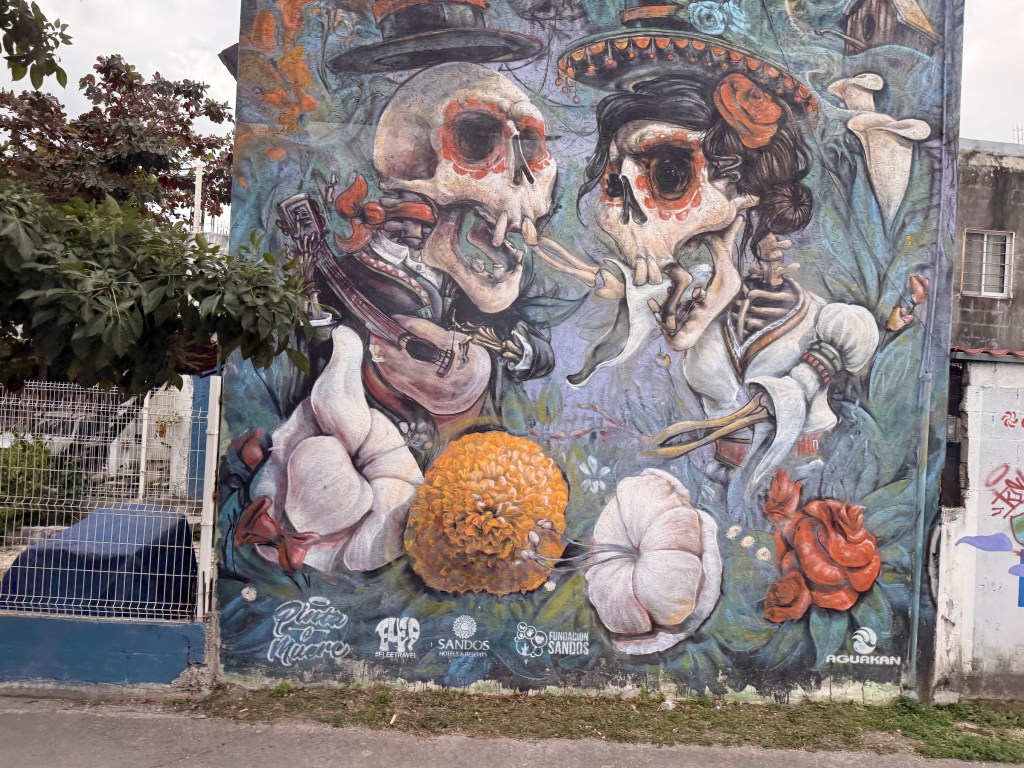
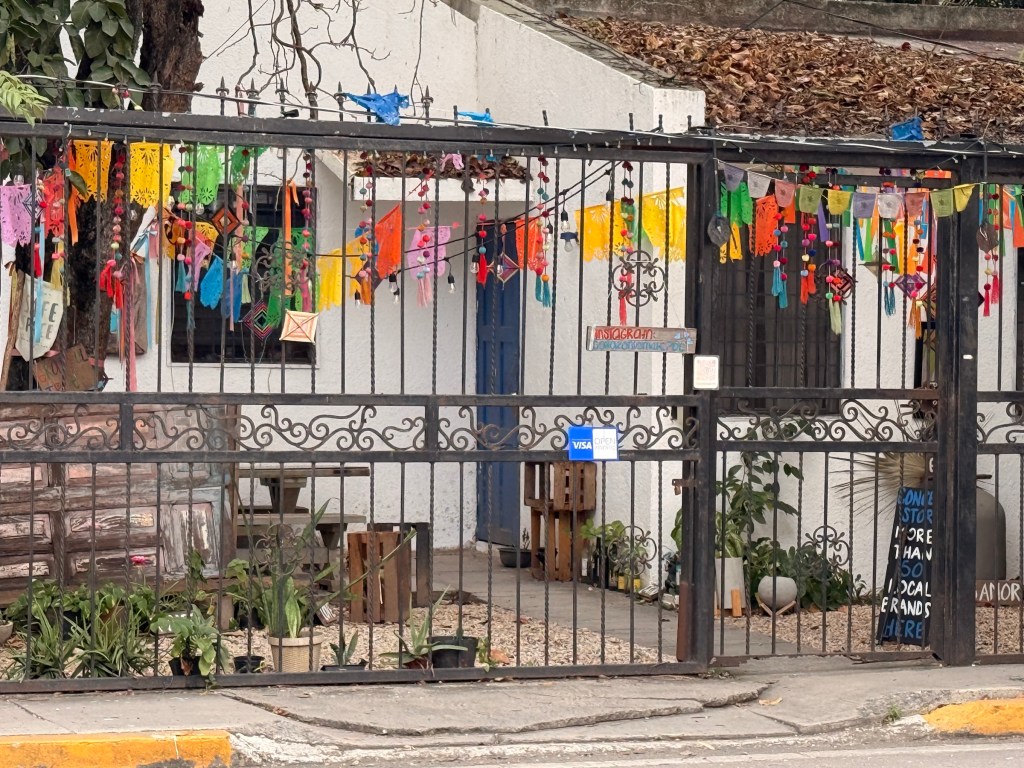
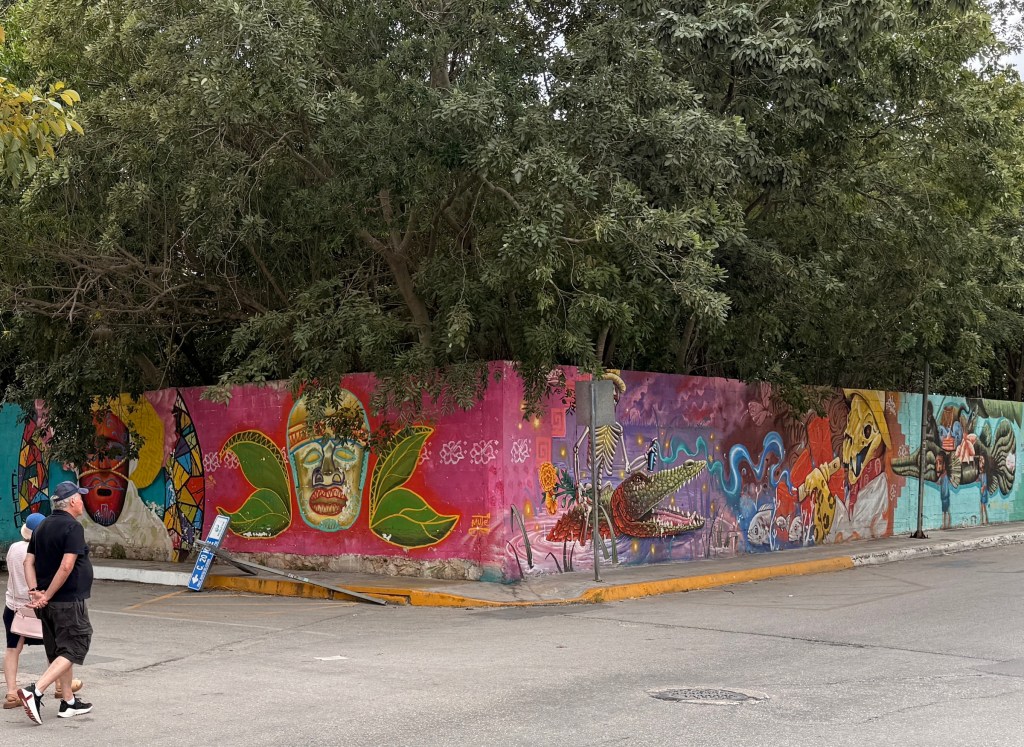
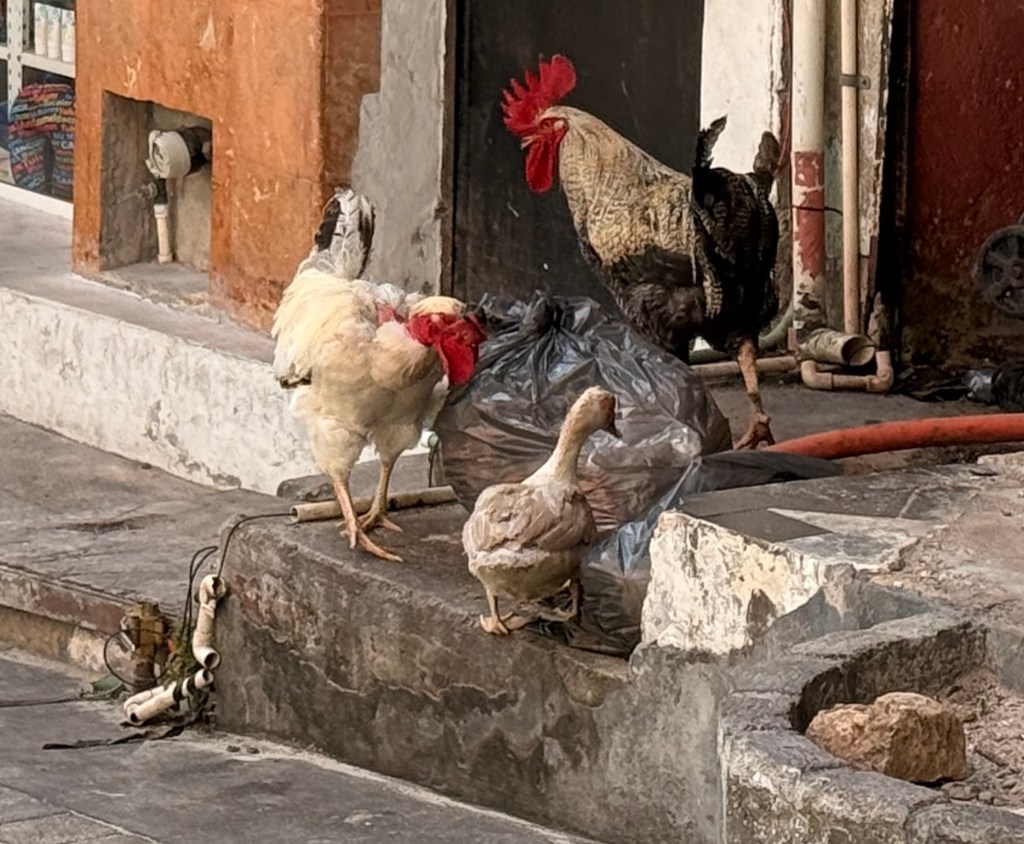
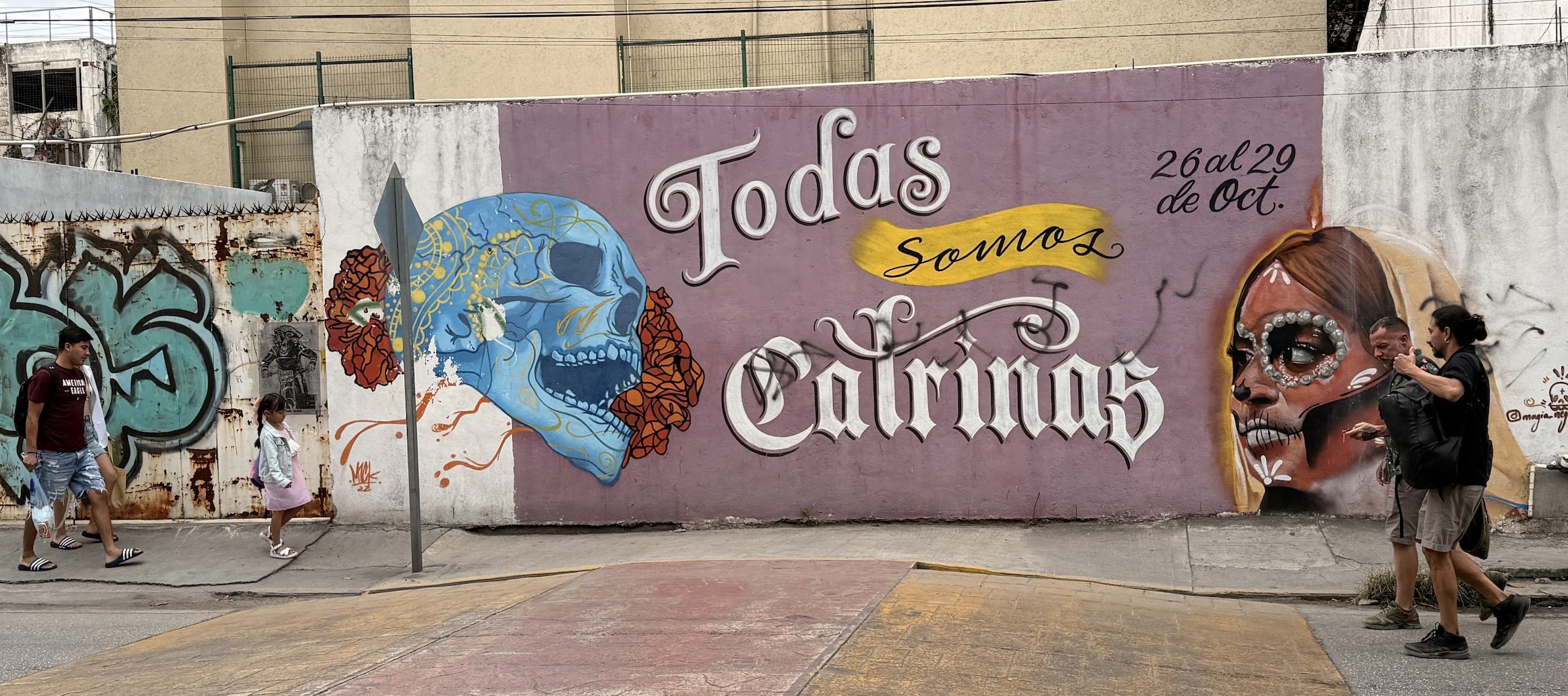
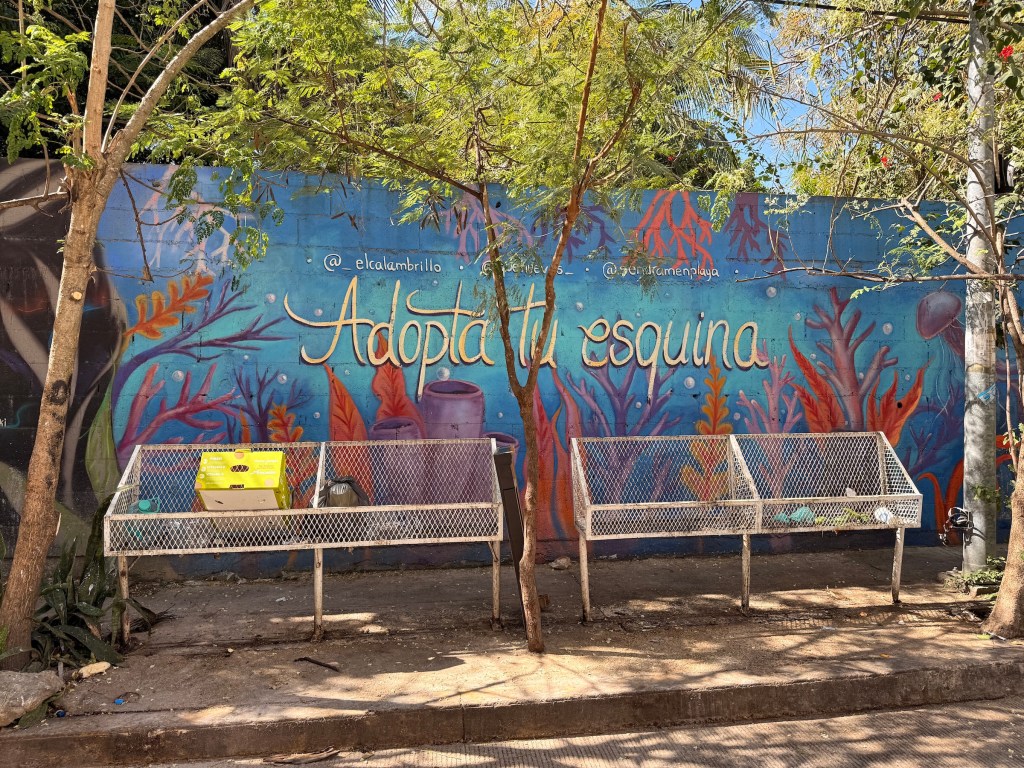
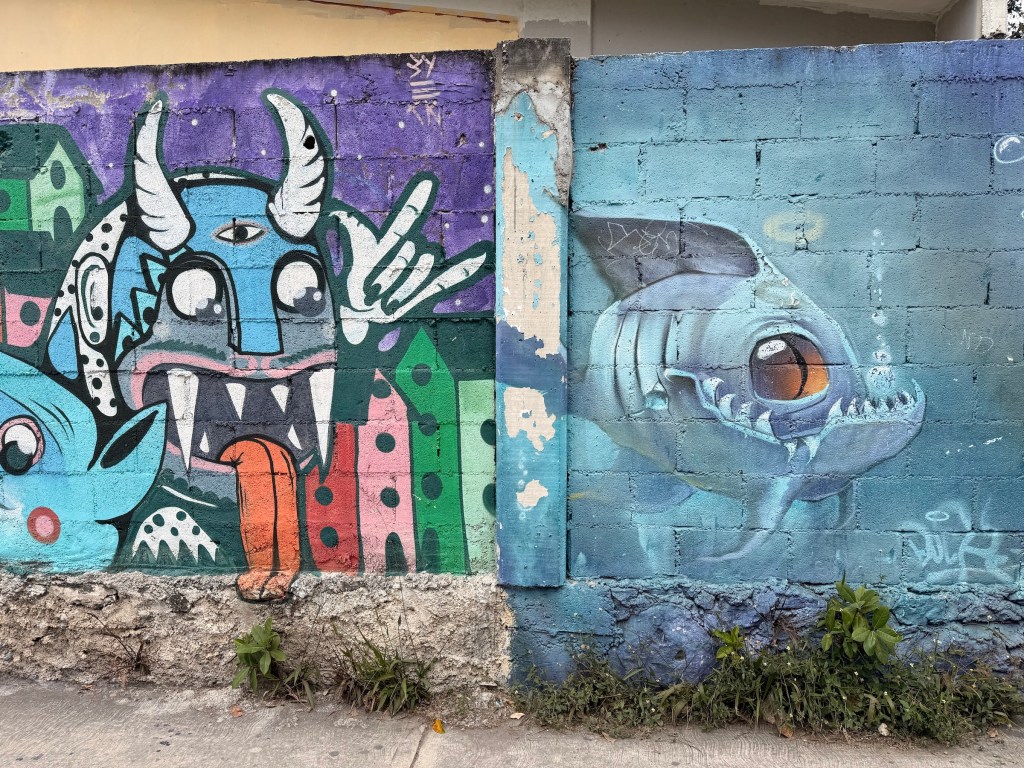
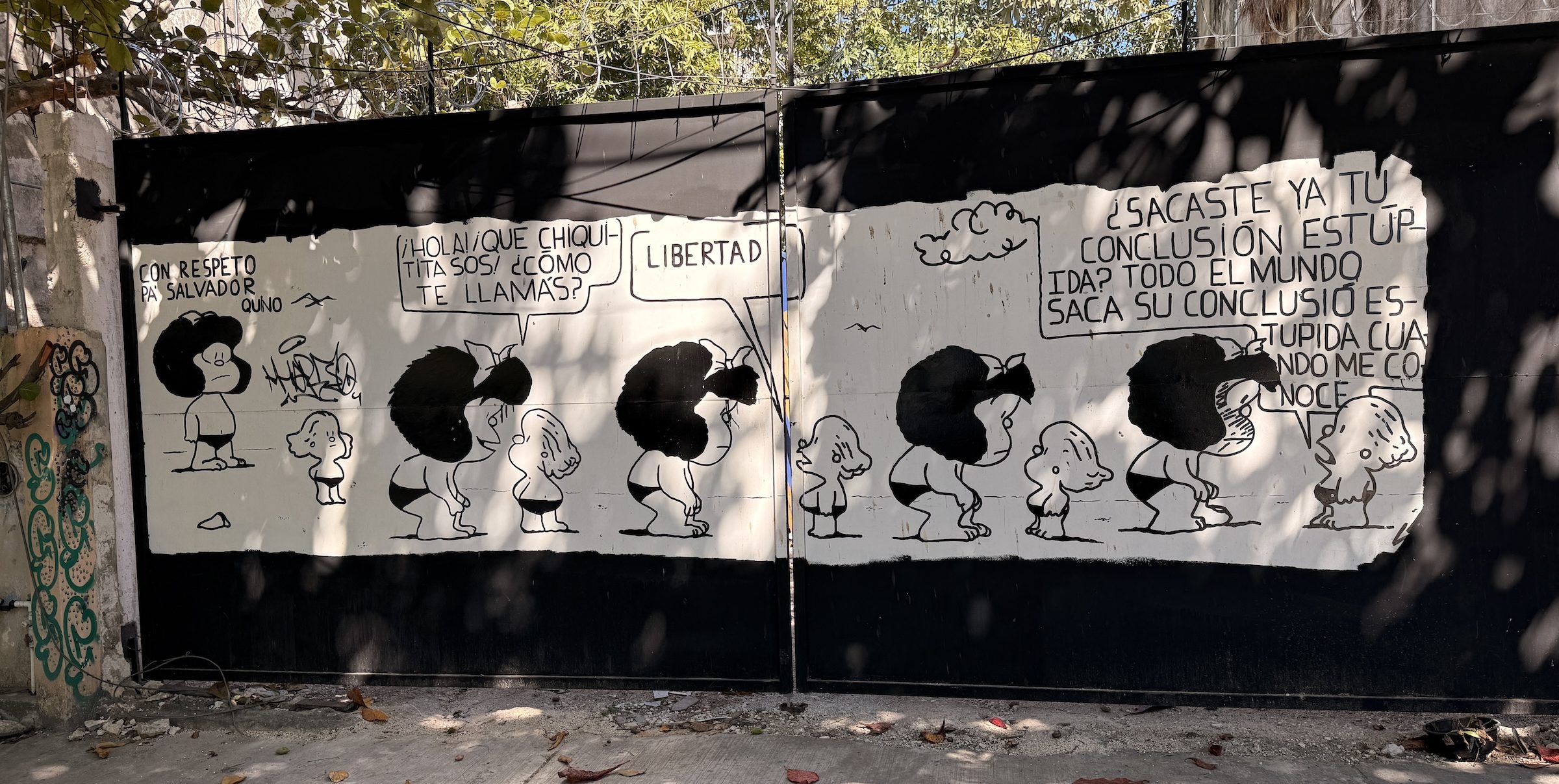
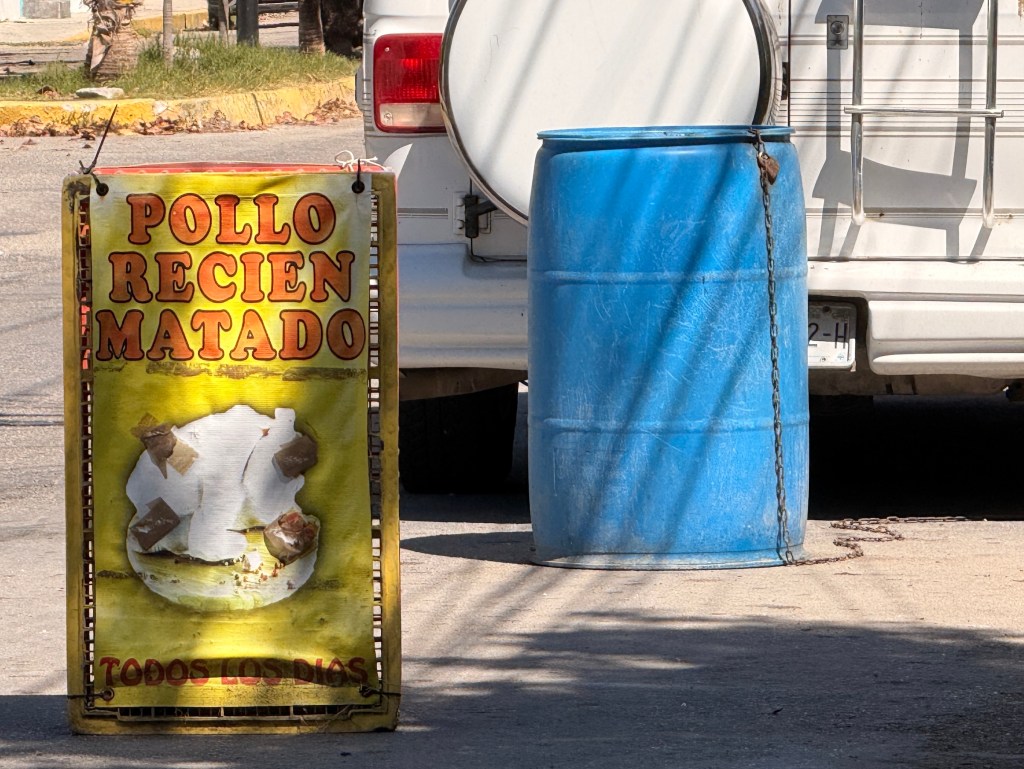
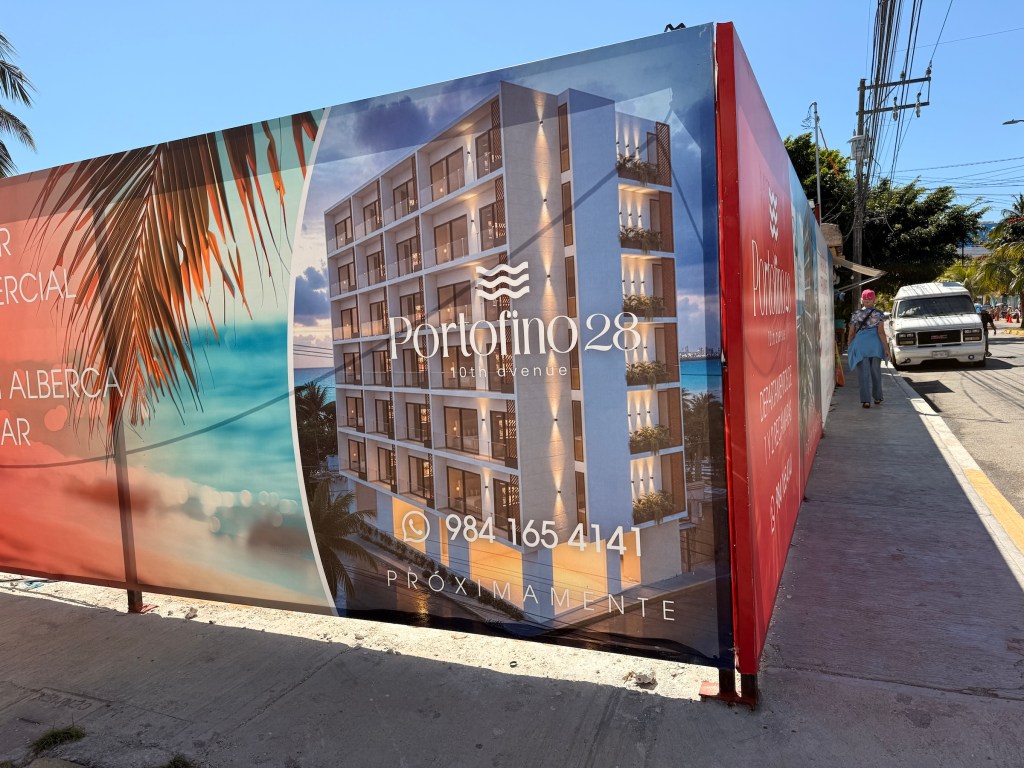
A big sign tells us we can score a fancy condo with some sort of ocean view at the not-yet-built Portofino 28. Another sign says we can bag a recently murdered chicken for dinner.
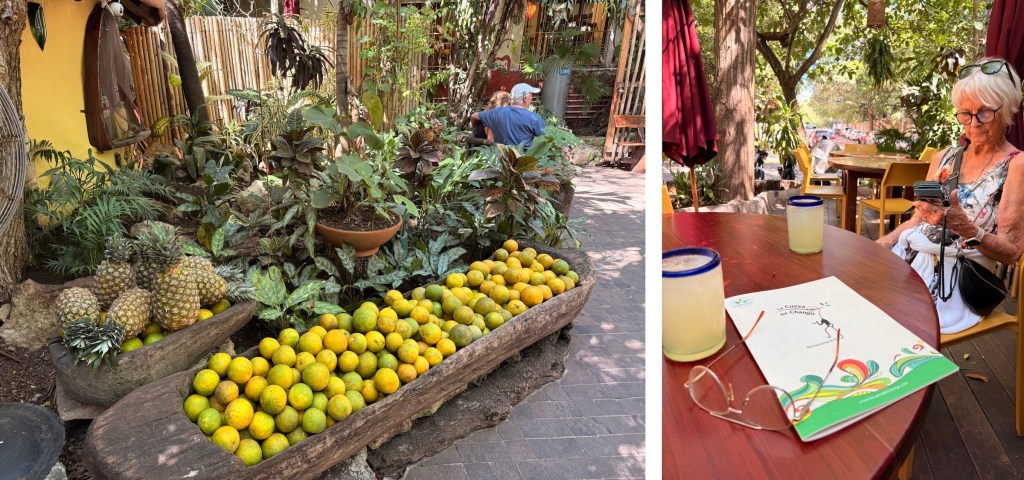
We arrive back at the Cueva del Chango in the afternoon for a couple of frosty drinks rich in vitamin C, in the leafy shade of towering trees.
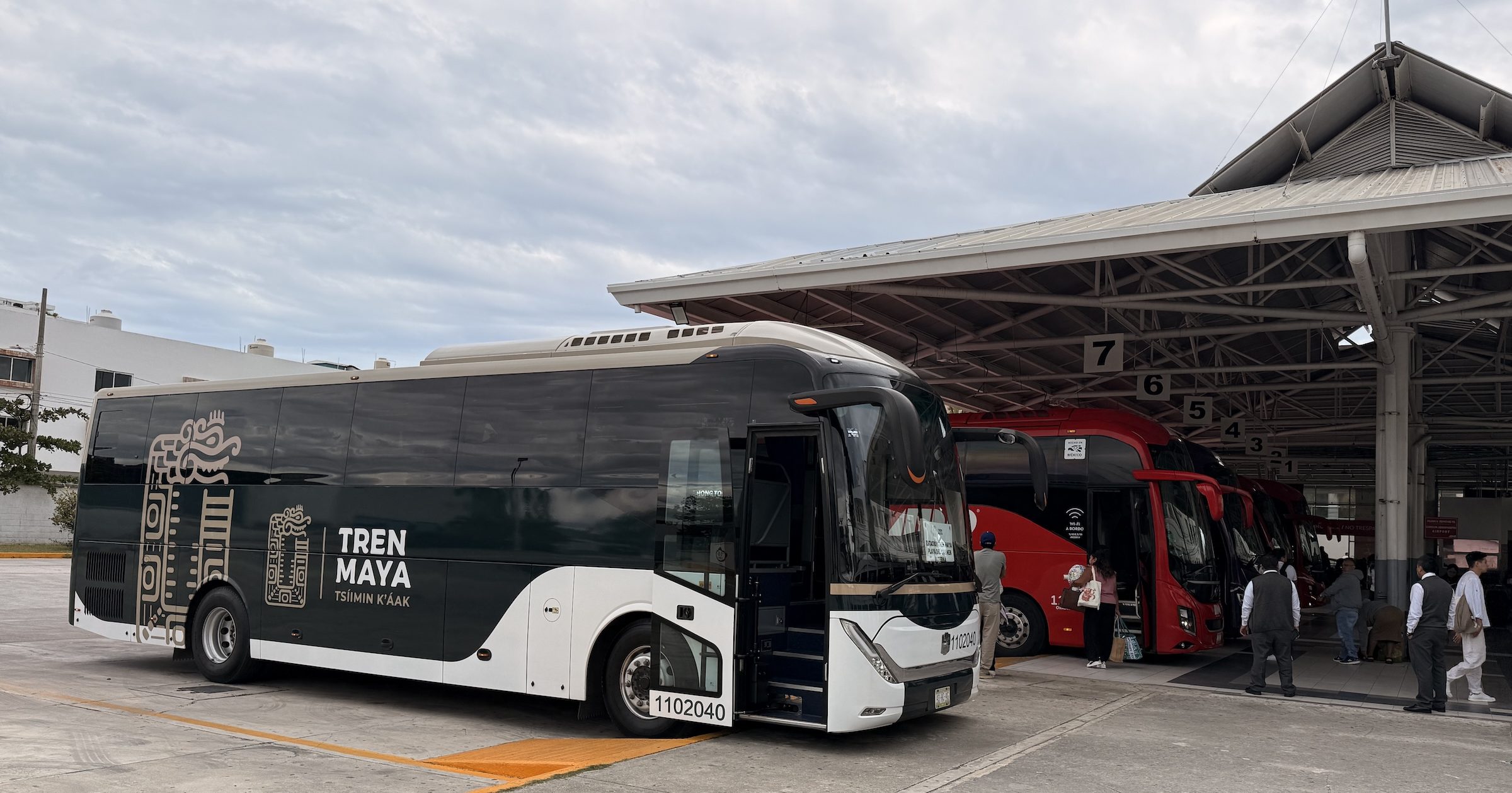
And yet, even with the discovery of a fine local coffee hangout, we’re ready to leave Playa after a few days. It’s time to catch that shuttle bus back to the train station and hit the rails again.
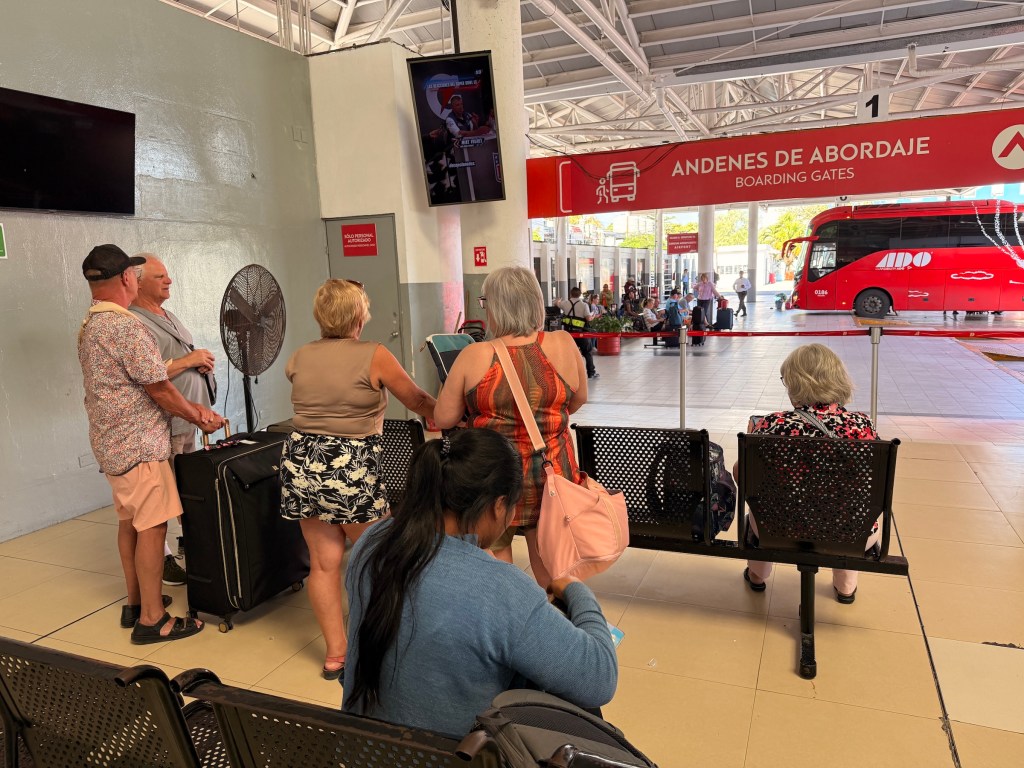
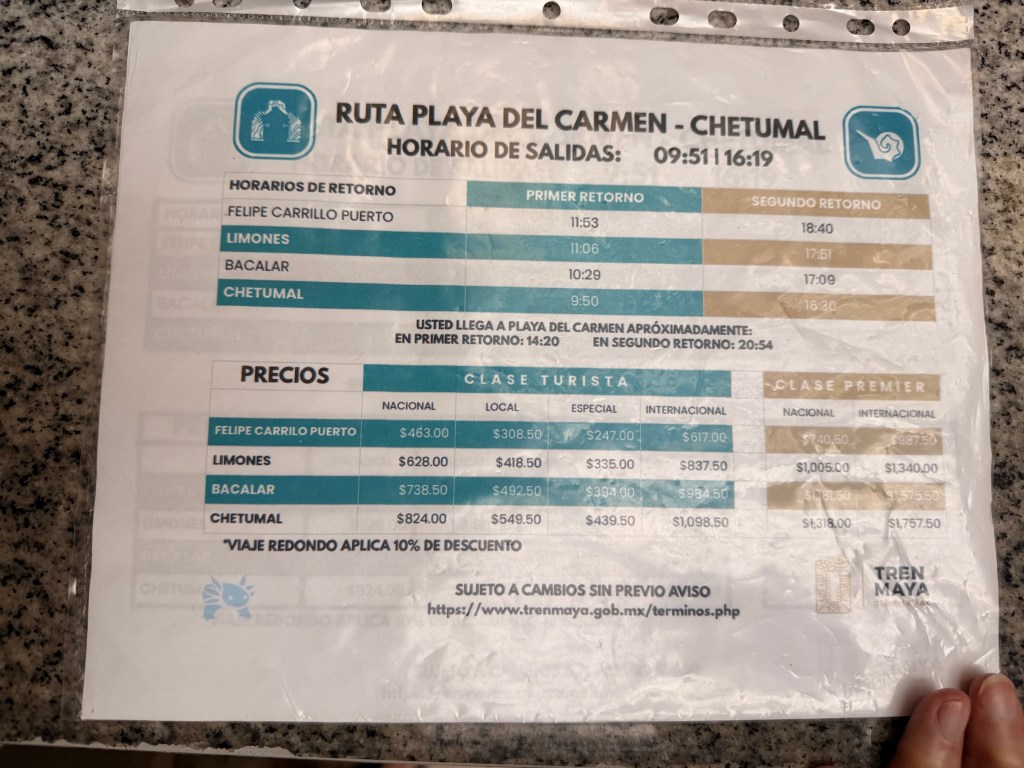
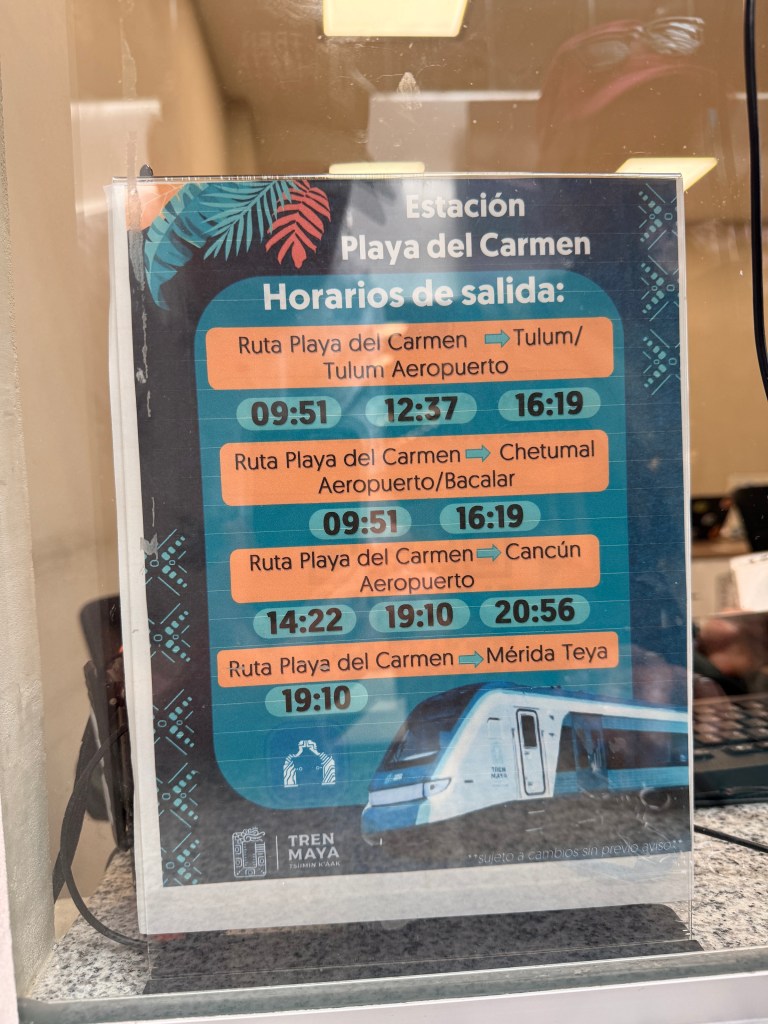
We’ll be heading for a place we’ve never managed to visit in the past, but have heard much about. We’ll be going south again now on the Tren Maya to a place called Bacalar – and we hope to see you there! — PRW

