
June 13 – 22, 2025
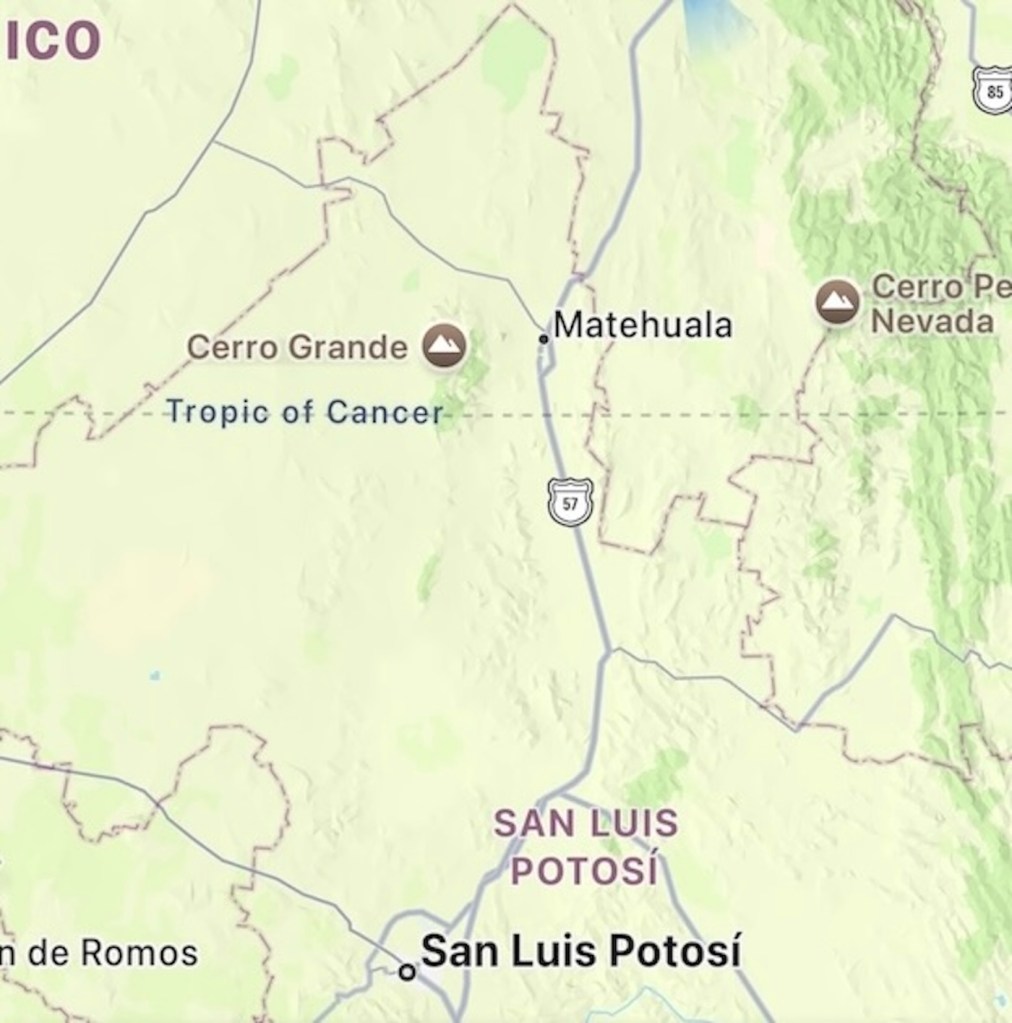
After a few weeks exploring much of northeastern Mexico, we’re now heading south from Saltillo to the city of San Luis Potosí, which is the capital of the State of San Luis Potosí. And then we’ll take an interesting, if ultimately wrong, side trip. But more about that later.
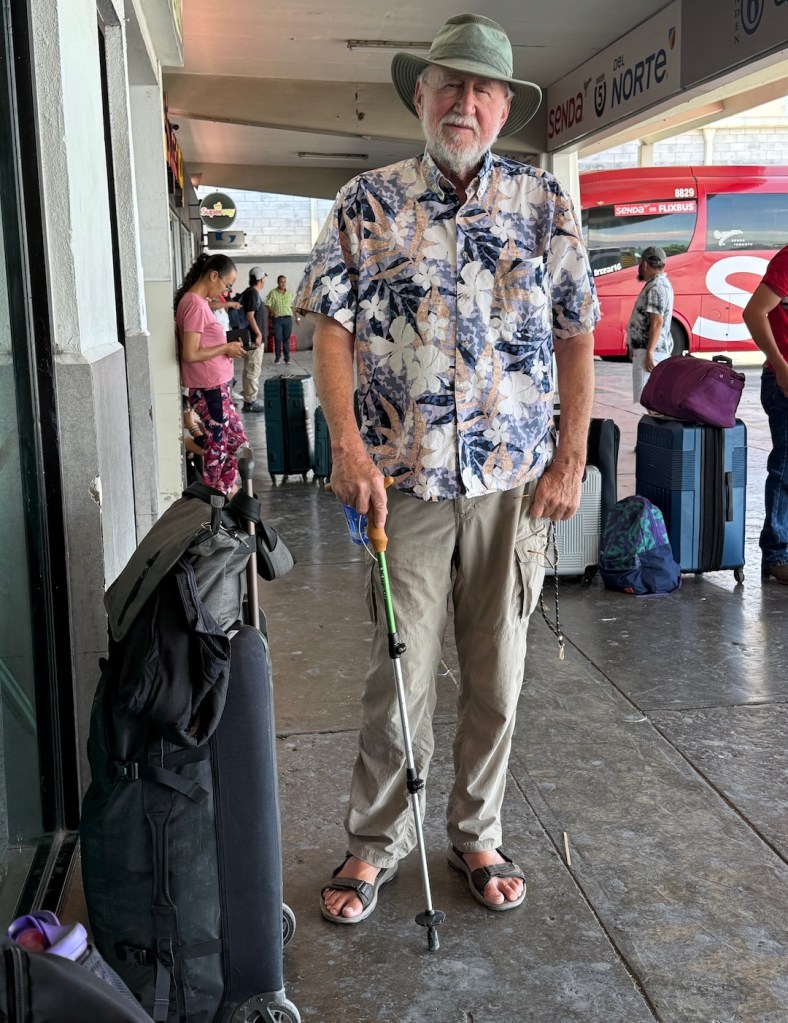
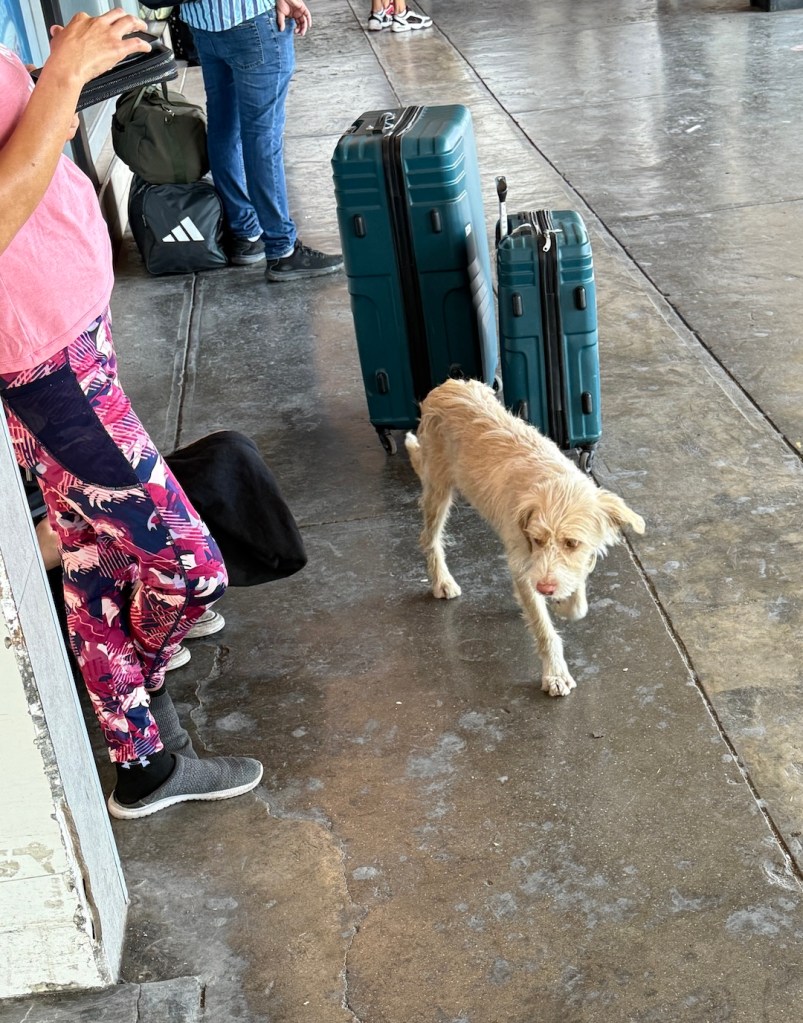
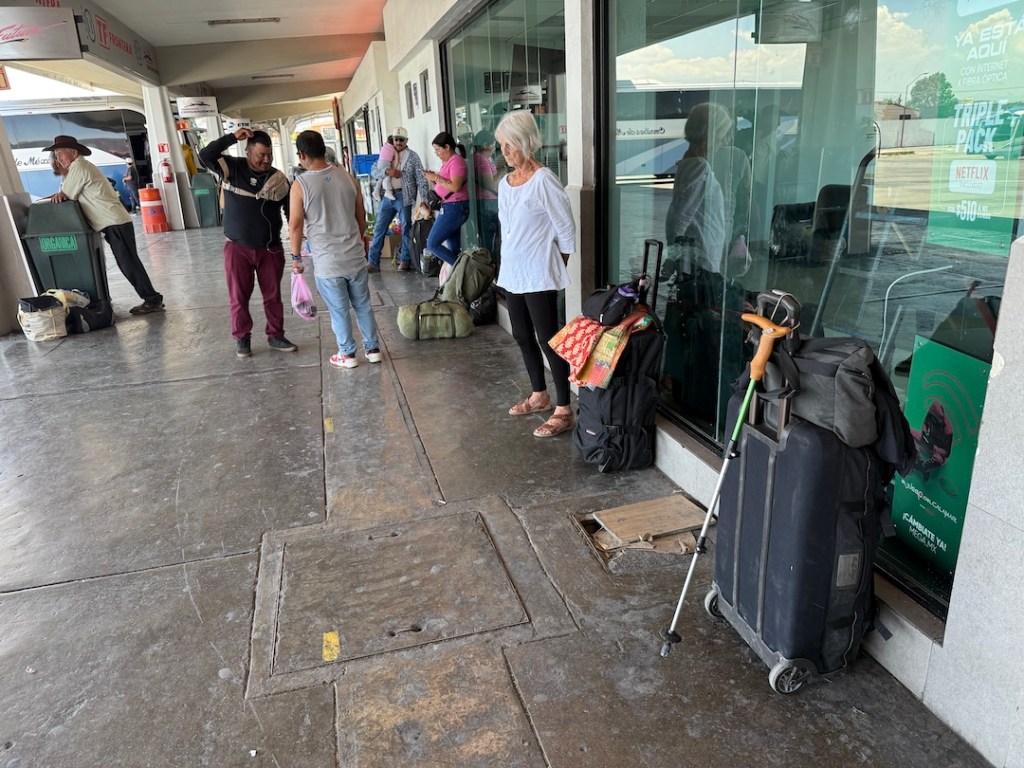
This will be a long ride on an early bus, so we spent last night in a hotel near the station. While Carolyn is buying our tickets I enjoy the general turmoil in the bus station where we can interact with locals before boarding. And the dogs that are often just hanging out, in case anyone is kind enough to drop a morsel.
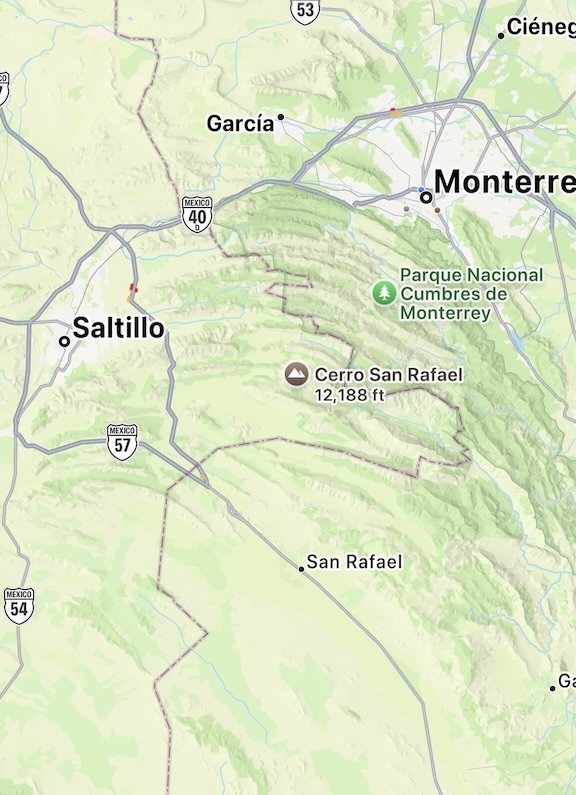
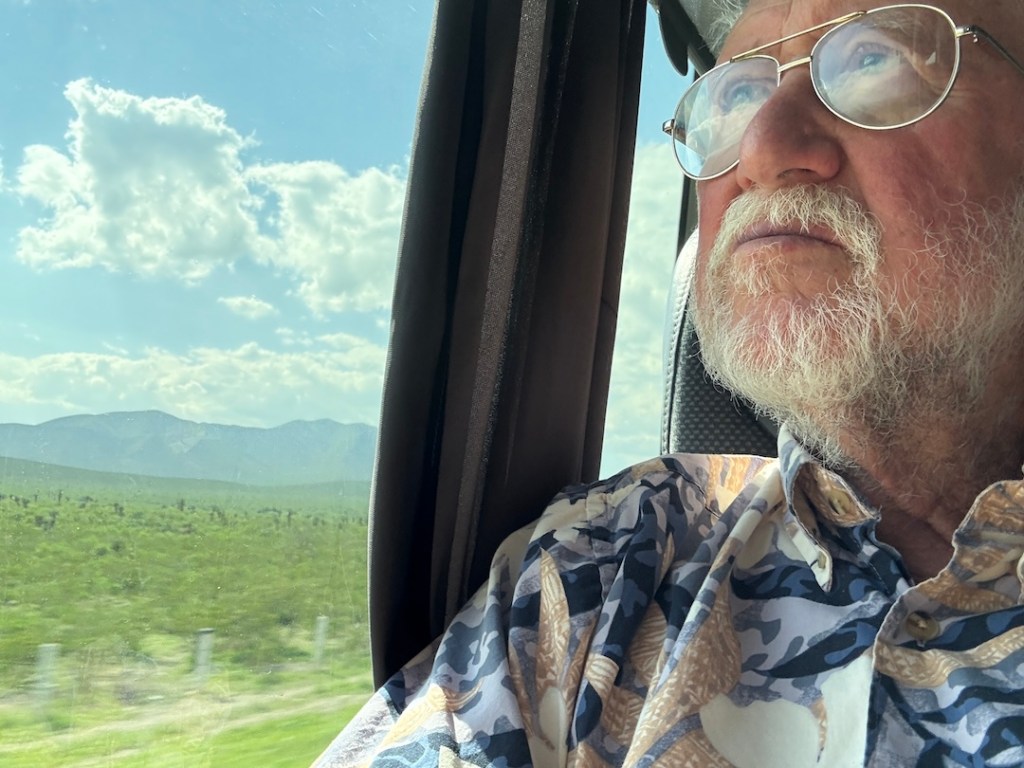
We’re traveling down Hwy 57, passing some of the highest peaks in this part of Mexico that reach to more than 12,000 feet in elevation. The country’s tallest peak is Orizaba, down near Veracruz; it tops out at more than 18,000 feet, making it the third tallest in North America. But these local peaks, punching up through the desert landscape and even altering the local weather, are tall enough. Mexico is a mountainous country, and we’re traveling southward through the high and dry desert lands of the Mexican Plateau that’s embraced on both sides by the Oriental and Occidental branches of the Sierra Madre.
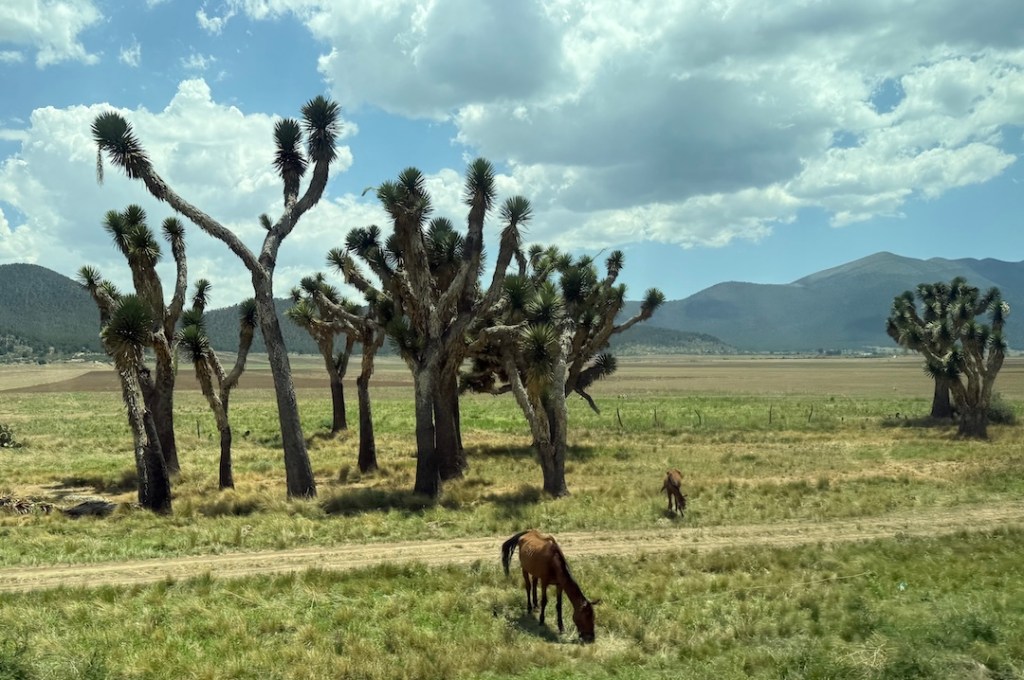
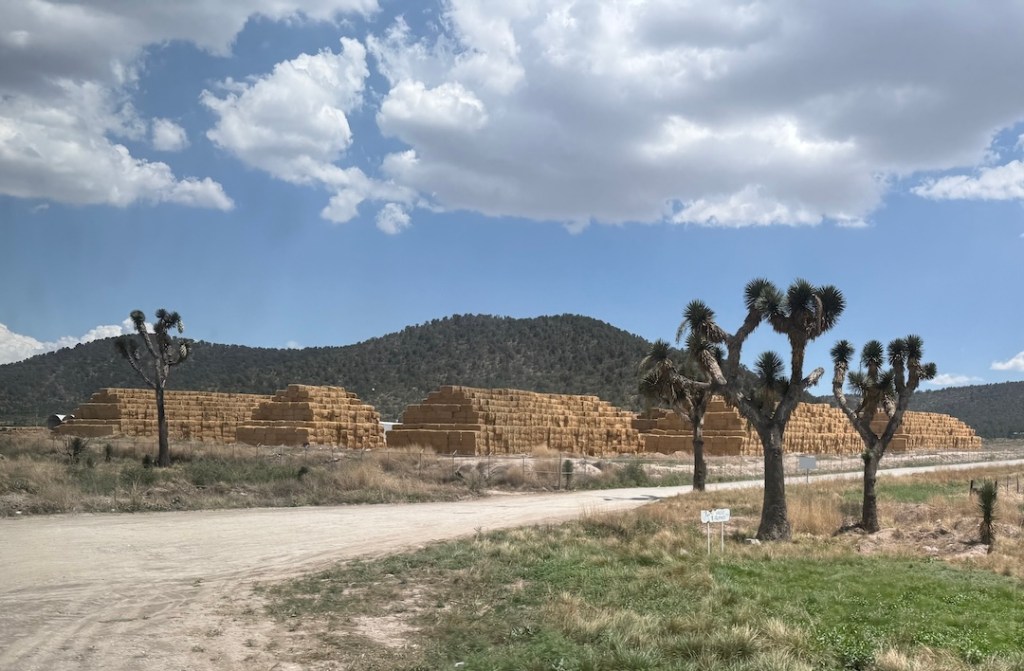
‘Panoply,’ according to Oxford, is “a complete or impressive collection of things.” And the panoply of Mexican daily life is passing just outside our large bus windows as we relax in our comfortable seats. There are simple ranches, small eateries, sturdy desert horses, plenty of ‘vulkas’ (vulcanizadoras to fix a tire that’s thrown a tread), and humble repair shops under tarps. And there are sweeping mountain vistas as we pass by.
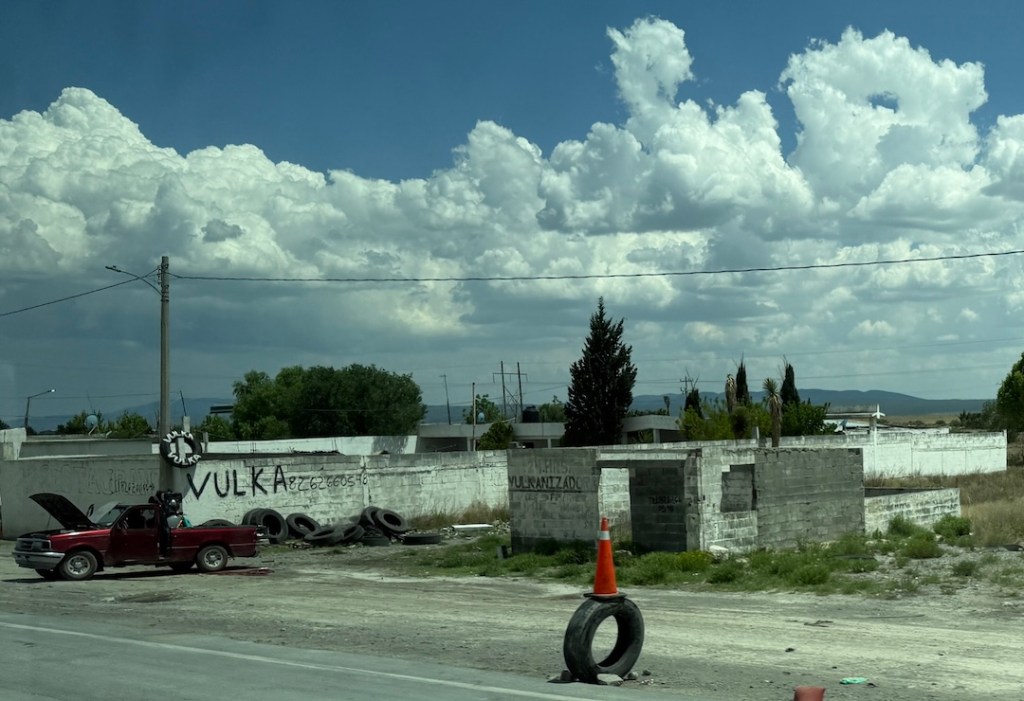
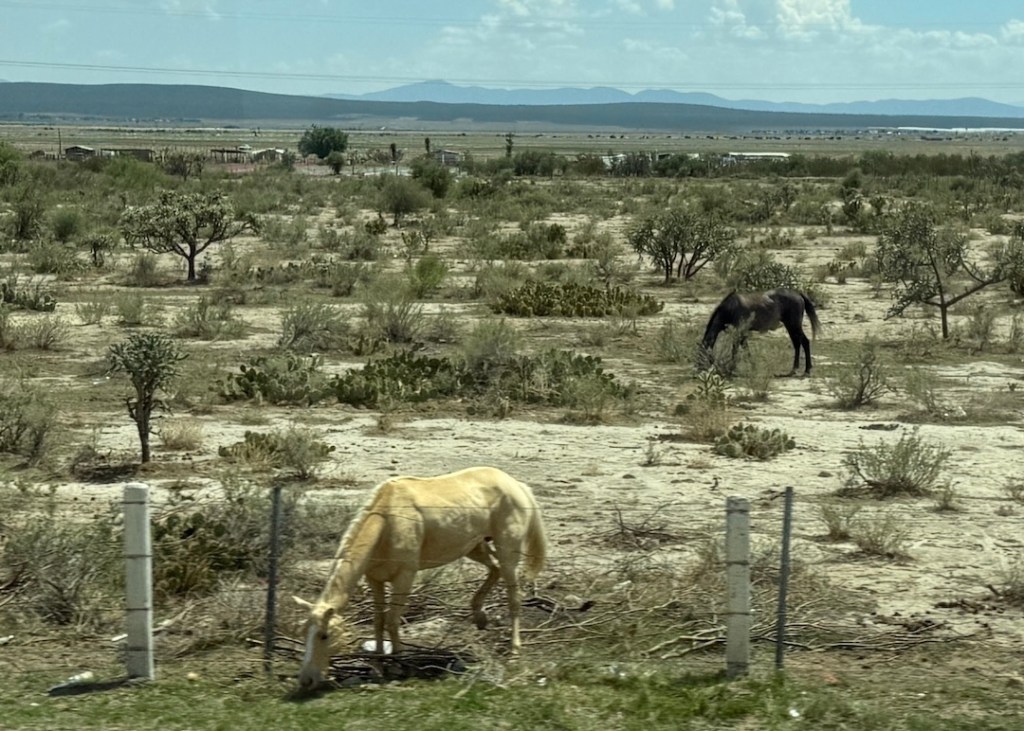
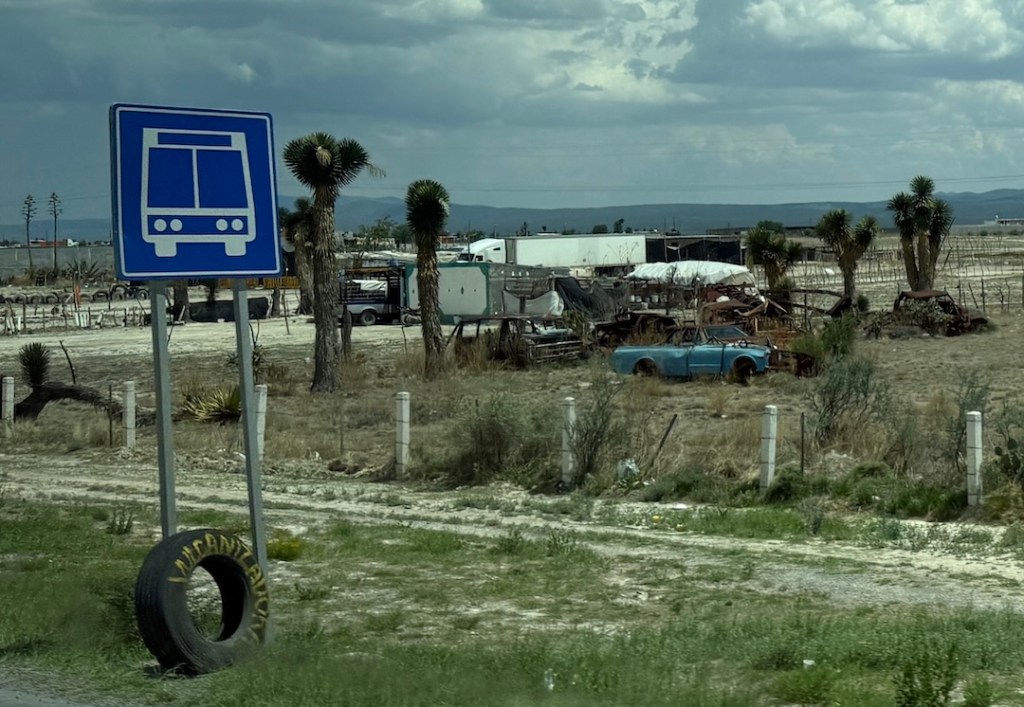
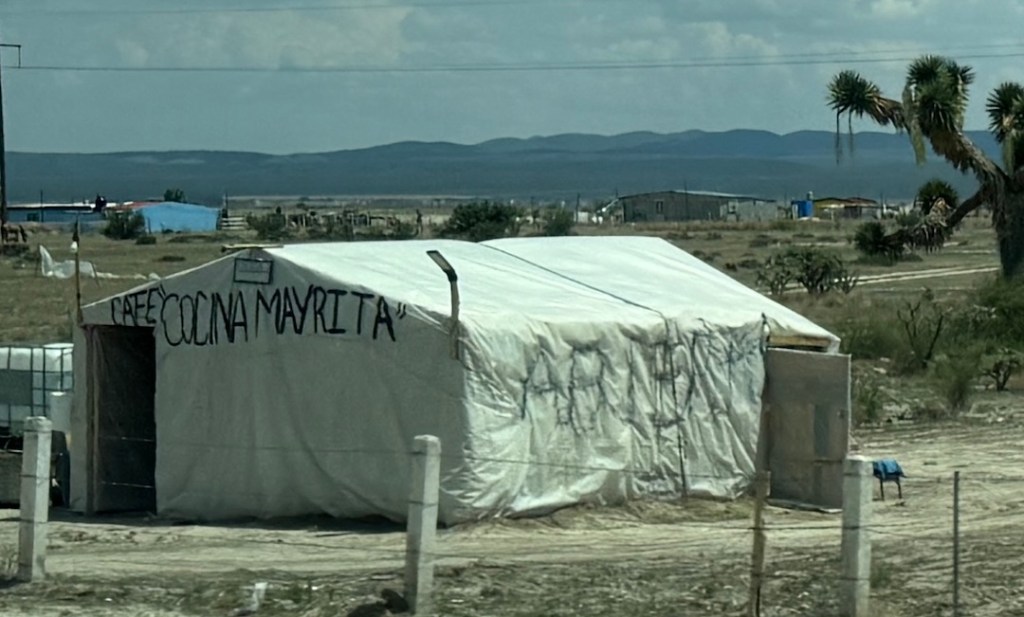
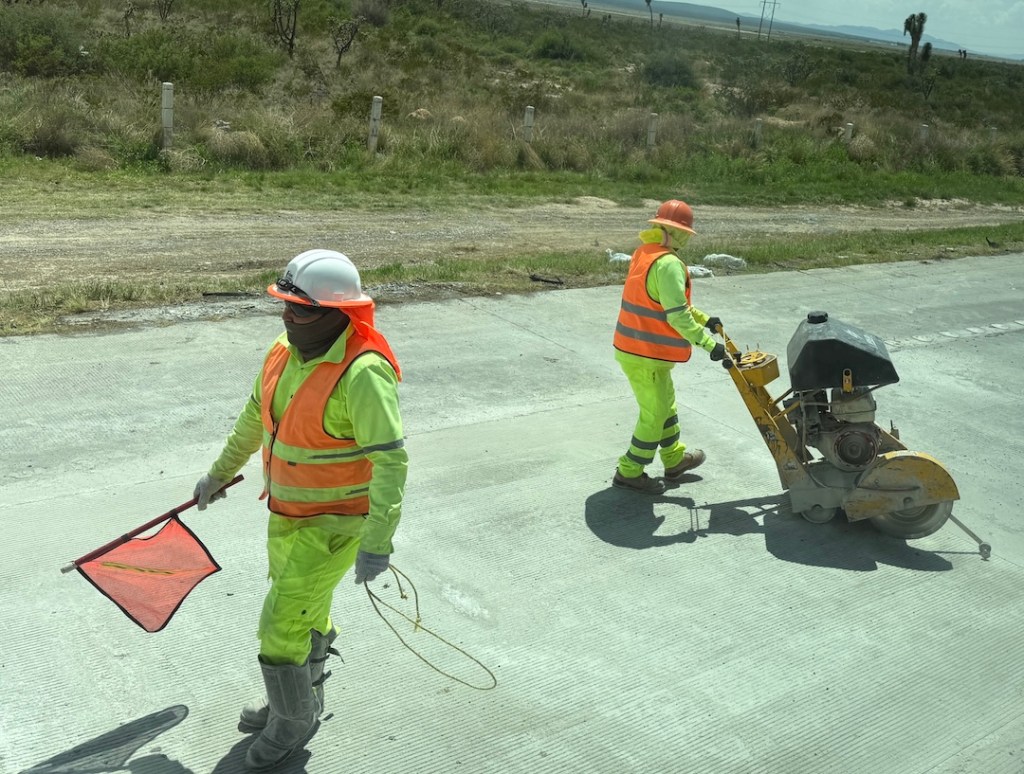
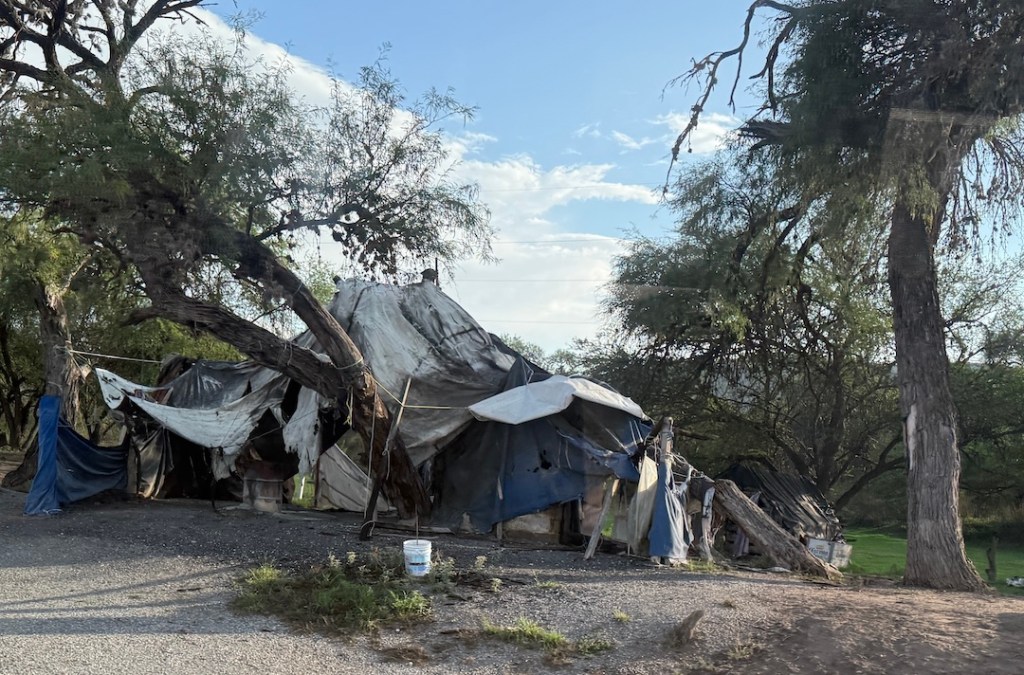
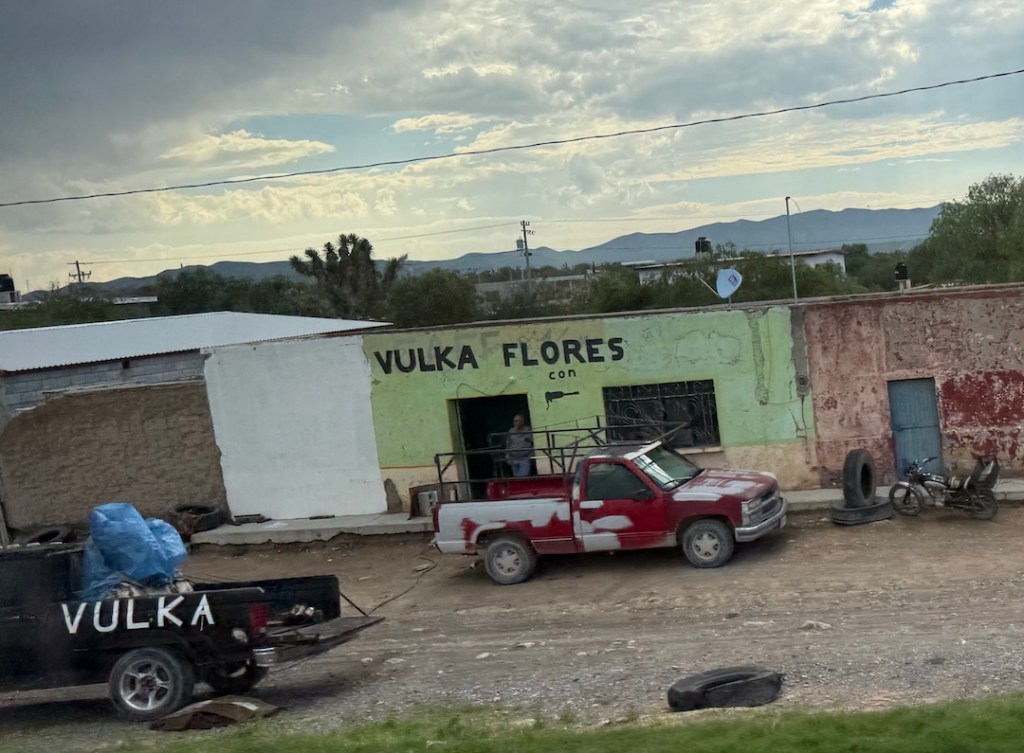
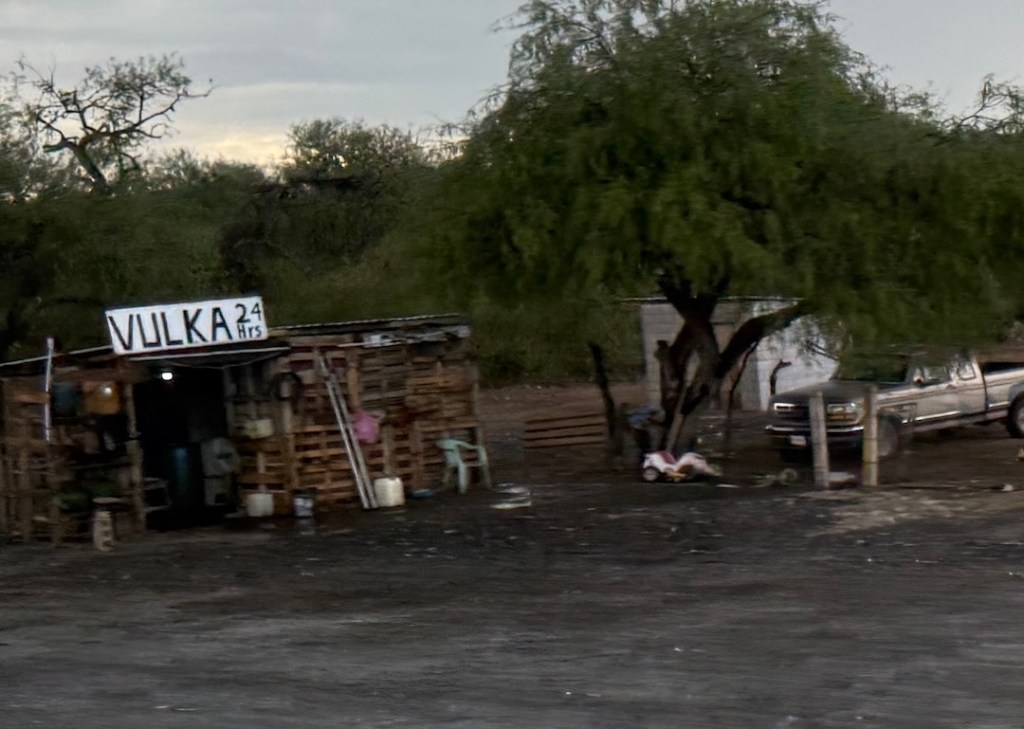
North of San Luis Potosí there’s a detour past a construction project, over a railroad crossing, and onto roads that wander through a number of small villages. This is the back-country and not your usual turista Mexico.
In fact, we’ll see almost no Gringo tourists on this entire trip of about a month and a half in northeastern Mexico, starting in fascinating Monterrey and then heading south to other cities and towns. There were a few Gringos back at that charming hotel in the ‘Pueblo Mágico’ of Parras, as the historic wineries in that valley are an important attraction. But we’ve found almost no other ‘norteamericanos’ on this trip. And that’s fine with us; we didn’t come here to hang out with Gringos.
Mexico has a good bus system, but most Gringos prefer cars – mostly to reach well-known tourist spots. They avoid most of the back areas, probably due to a lack of adequate Spanish. But tourist areas attract crooks, while there are some really nice people living down most of the back roads. And we enjoy the surprised looks we get from local people when two older Gringos show up in a small town or village.
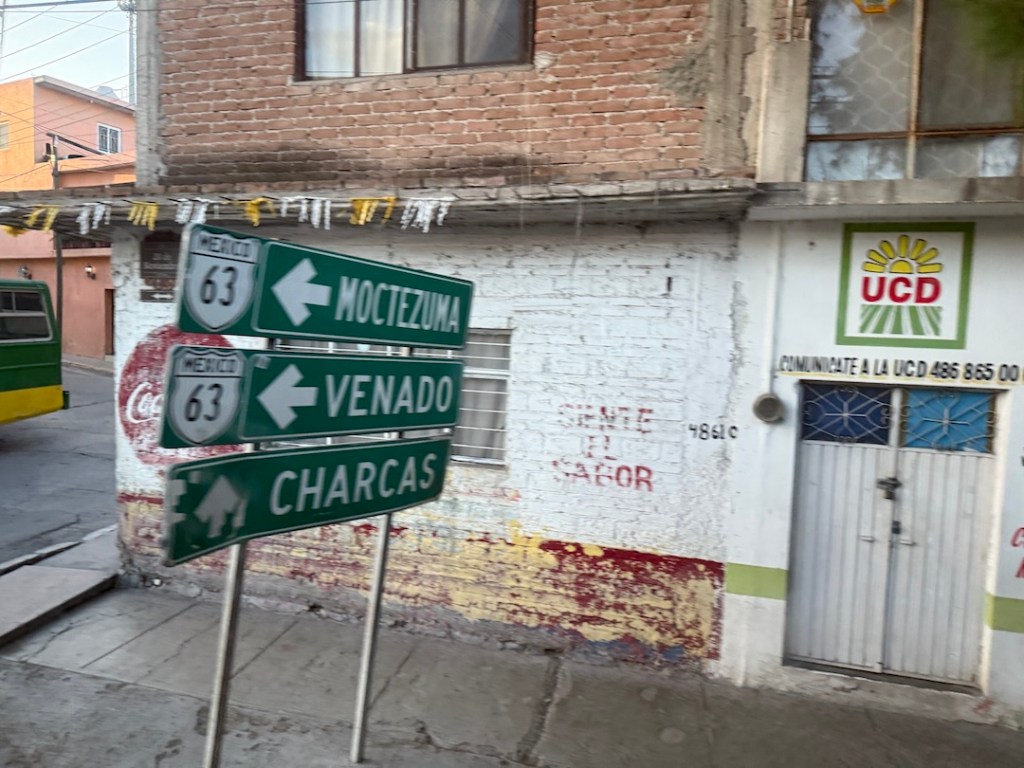
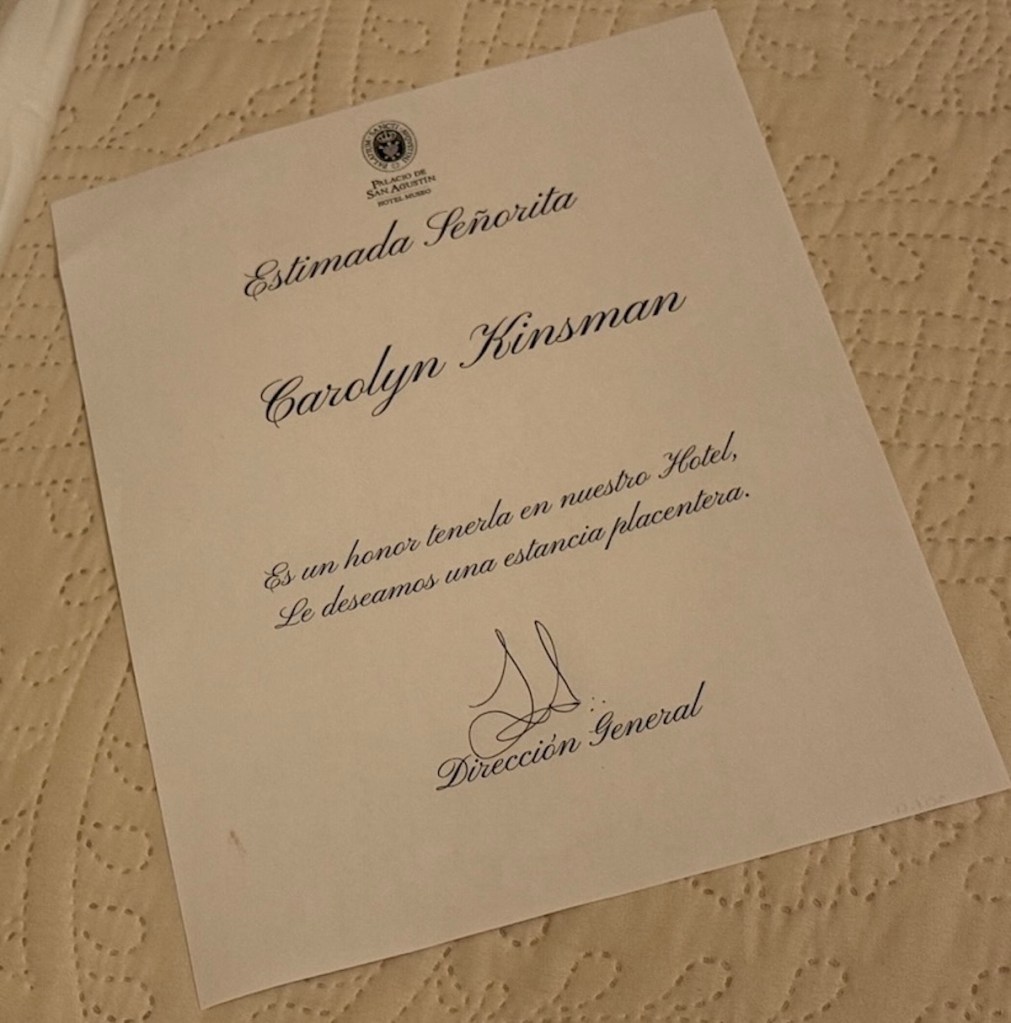
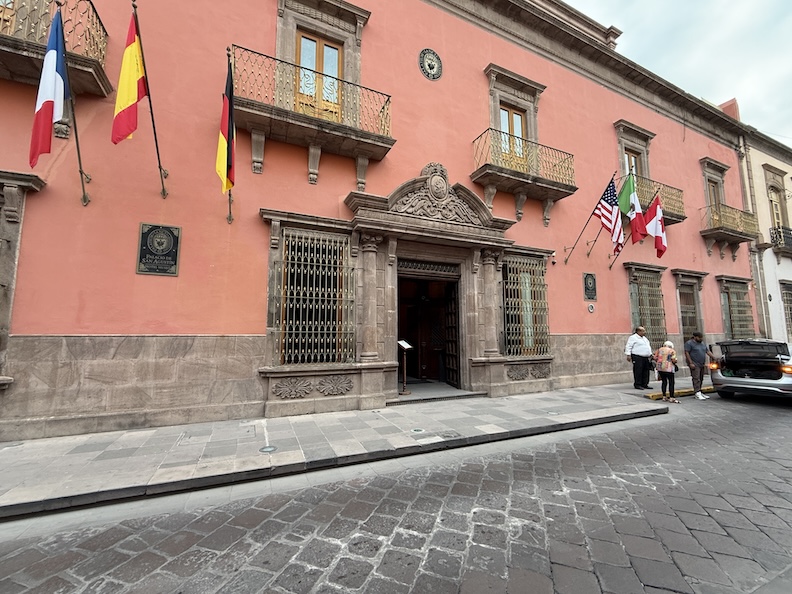
It’s been a long trip and we arrive in the historic narrow streets of central San Luis Potosí in the late afternoon at the fine old Hotel Museo Palacio de San Augustín, dating from the 17th century. It’s another surprising gem that Carolyn managed to find for us, and we’re even greeted with a classy welcoming note that’s signed by the Manager.
The bed is exceptionally comfortable, the bath is well-equipped, and there are antiques (that we’ll be careful not to break) everywhere in the room. A thick photography book about the hotel is lying on the bedroom table, in case we have extra time to read it while we’re here. In the stairway there’s some impressive art – and a grand piano on the landing! And they put out an exceptional buffet every morning.
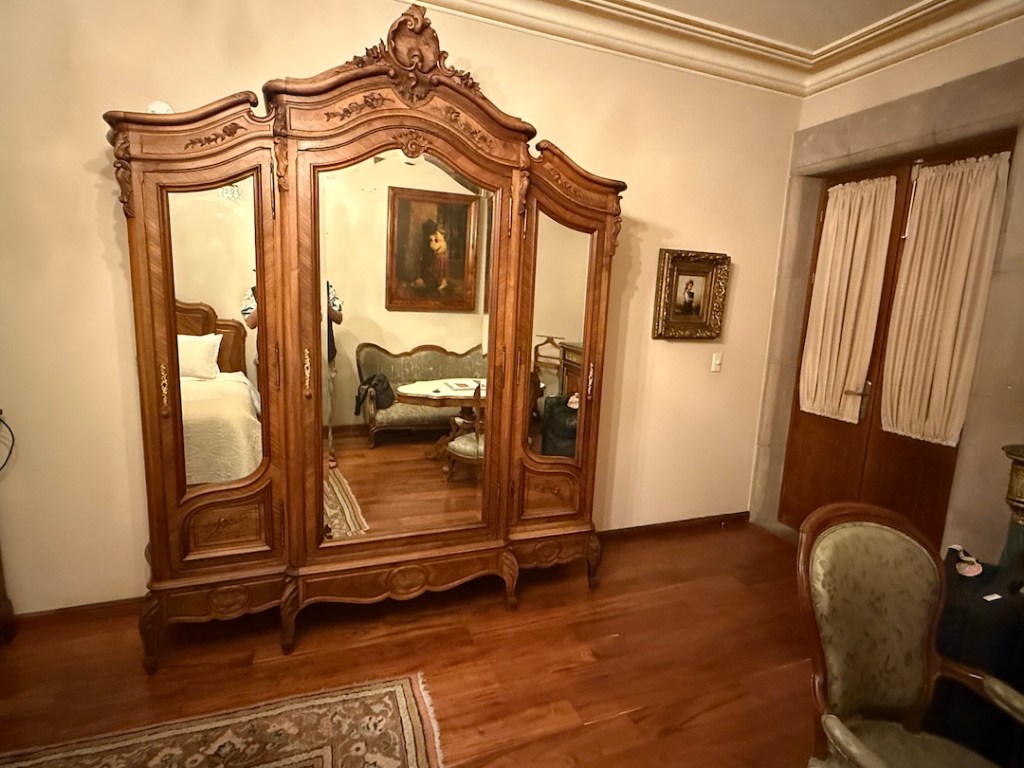
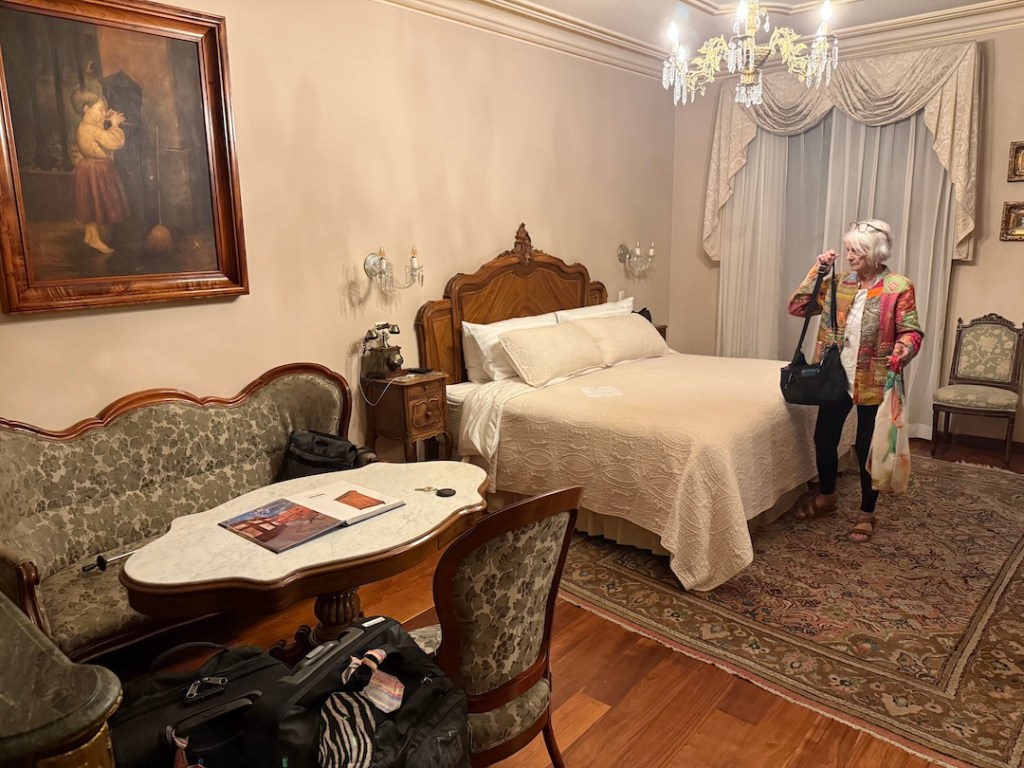
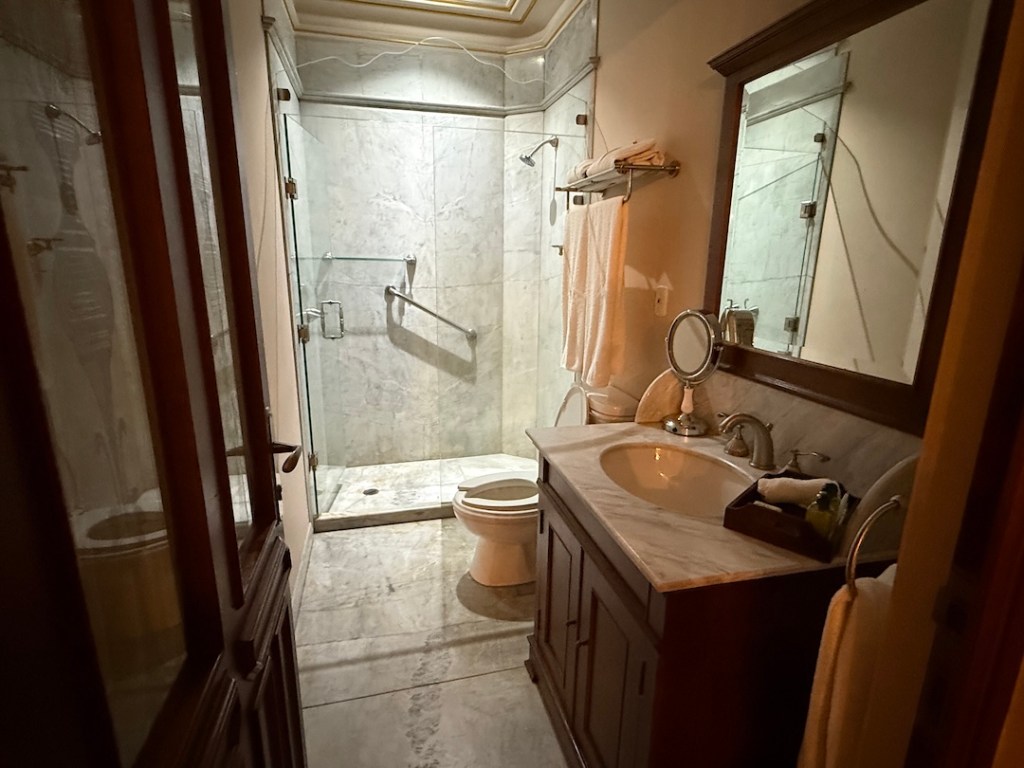
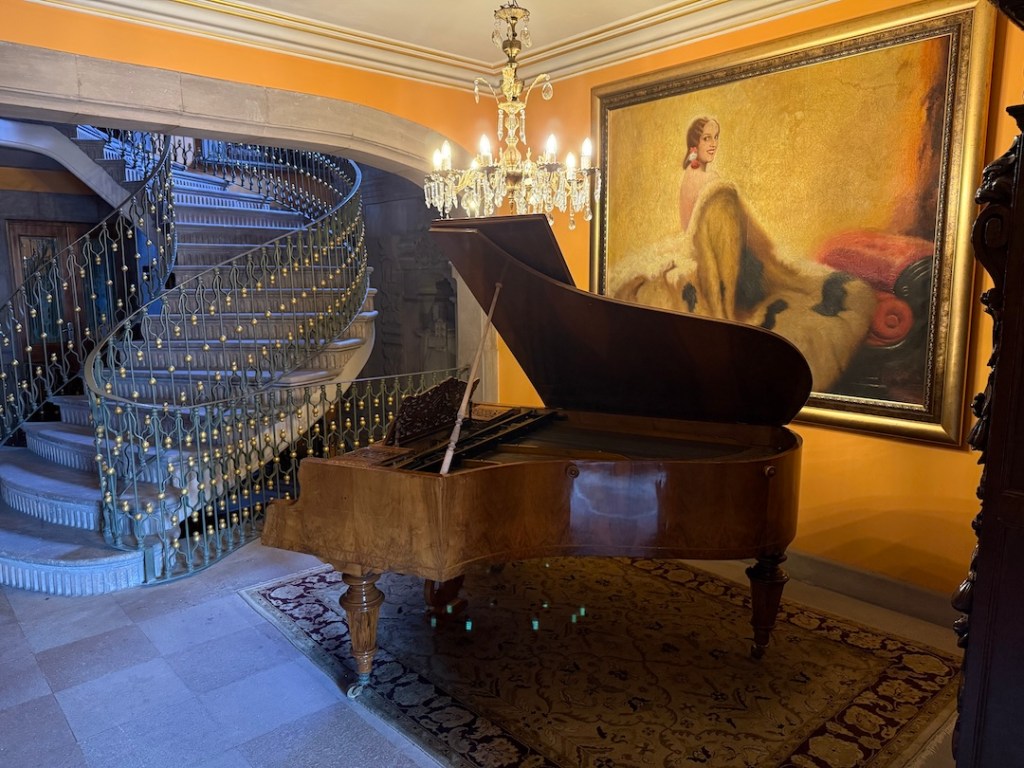
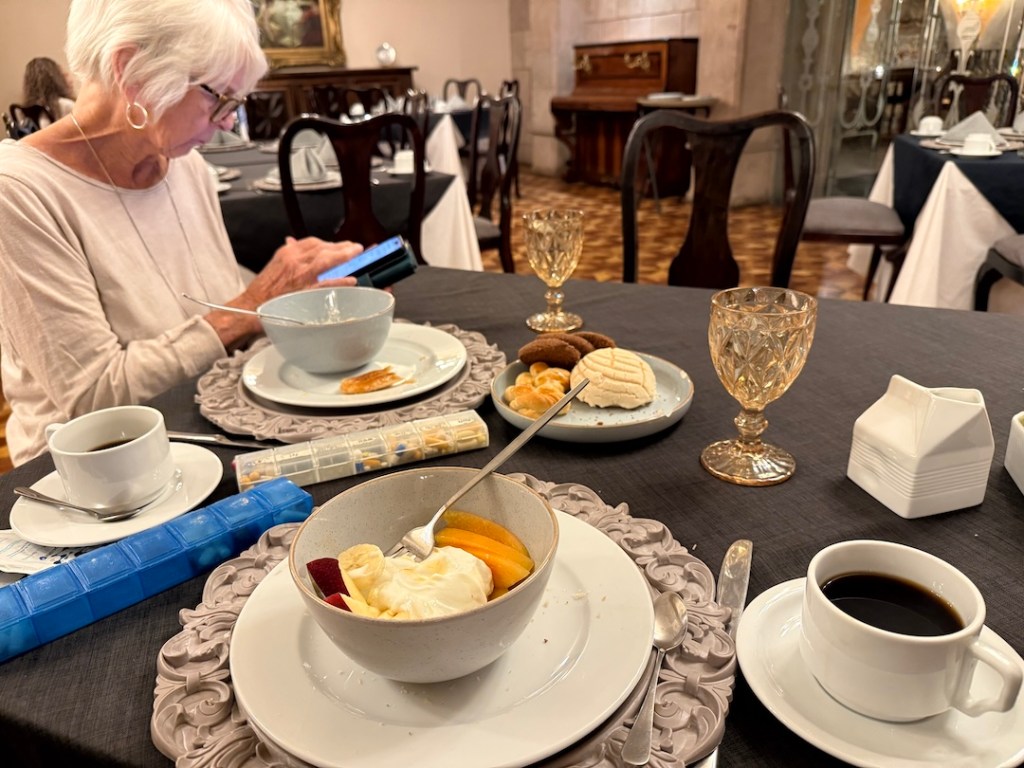
The Palacio seems intended for European royalty, and it’s clearly a step or two above our normal kind of gig. But right outside the main door is the quotidian life of the city, and we’re near the pedestrian-friendly historic center of just about everything we’ll want to see while we’re here.
••••••••••••••••••••••••••••••••••••••••••••••••••••••••••••
San Luis Potosí (SLP) was founded in 1592 near the silver mines of Cerro de San Pedro, and was named for the wealthy Bolivian silver-mining town of Potosí. After the mines played out, San Luis became the most important ranching and business center in NE Mexico until Monterrey rose to prominence in the 20th century.
It’s been 50 years since I was last here, and I recall San Luis as a city of fine old buildings and lavish homes. There was a kind of confident sophistication about this old colonial city that’s far off the usual tourist trail. And I’ve been looking forward to this return trip ever since that first visit.
Fifty years ago the city was rebuilding the old Plaza de Armas and replacing all the paving stones. I had a room in the once-nice but aging Hotel Plaza which overlooked the plaza and it seemed, in my sickness-addled brain, like a local version of New York’s famous Chelsea Hotel back in the 1960s. Patti Smith, then an unknown artist and resident, shared those cheap digs with Dylan, Mapplethorpe, Janis Joplin, and Hendrix, and called it “shabby elegance.” But that was before some rich guy went luxury and ruined it.
I have no idea whether any soon-to-be famous writer and poet outcasts were inhabiting the Hotel Plaza 50 years ago, but I didn’t meet them. The place was sorely in need of repair, and felt like a leftover from the days of Porfirio Diaz, just before the Mexican Revolution (1910-1920). Despite my sickness at the time, due to some youthful imprudence in the days before I arrived, I was attracted by the hotel’s aura of faded glory. And mostly the cheap prices.
After checking in, I collapsed onto a lumpy bed in a fitful night of dysentery, and in the morning I was awakened early by the clang of hammers on chisels. I took a cold and dribbly shower, then I emerged onto my little second-floor stone balcony in a soothing morning drizzle, as I tried to focus on the work below. I stared into the work site as a cool rain settled over my head and ran in rivulets under the collar of my bathrobe and down my neck. My hands held onto the wet and soothing baluster for support, and I watched as carved stone pavers measuring about 6” by 18” were placed carefully in beds of mortar. I slowly scanned with bleary eyes across the work site and noticed there was no stack of pavers waiting to be placed.
Then I focused on the heavy clanging hammers in the street right below me. Two men were pulling large rocks out of a rubble pile onto a long rough table, and shaping them carefully with chisels. They were master stone cutters at work, cutting each paver by hand, as their ancestors had done when they built those ancient large Olmec, Zapotec, and Aztec cities that later impressed the Spaniards. I’ve wanted to return to San Luis Potosí ever since to see how that project turned out.
••••••••••••••••••••••••••••••••••••••••••••••••••••••••••••
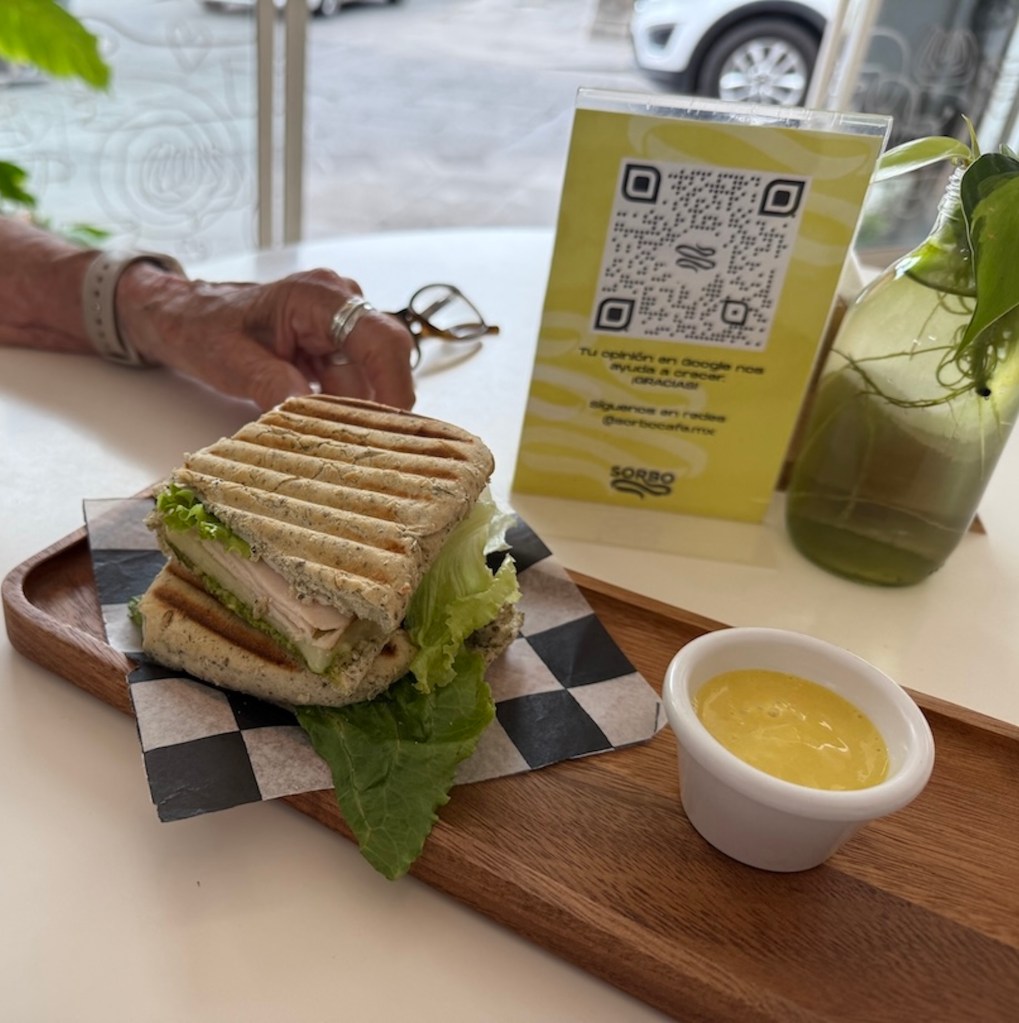
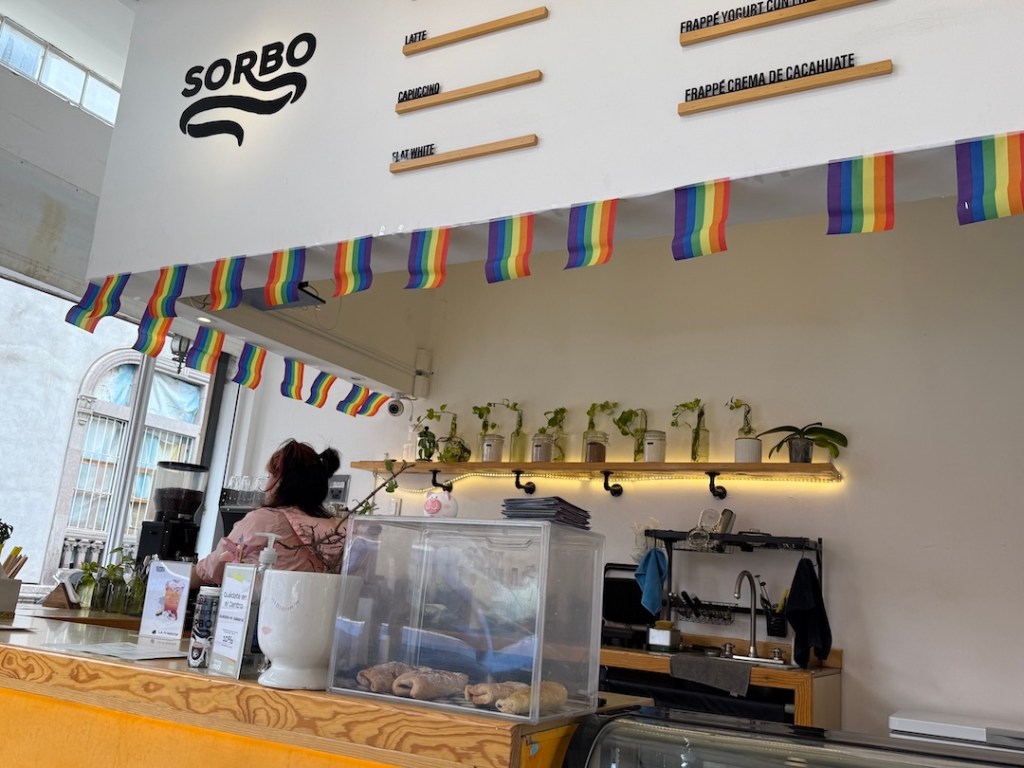
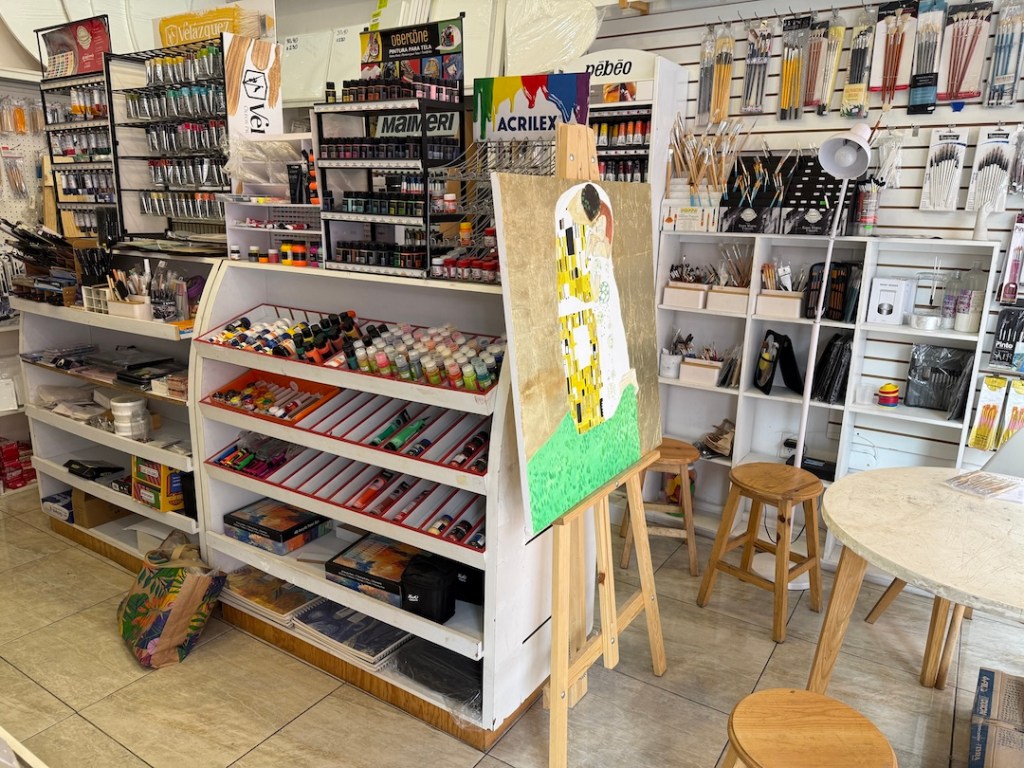
There are good little coffee shops scattered in charming old San Luis, and we’ll enjoy some of them over the next few days instead of always having breakfast at the hotel. We find a coffee shop named Sorbo to get us moving in the morning, and next door is an impressive little art store, in case a few new brushes or colored pencils are in order to try to capture the essence of this city.
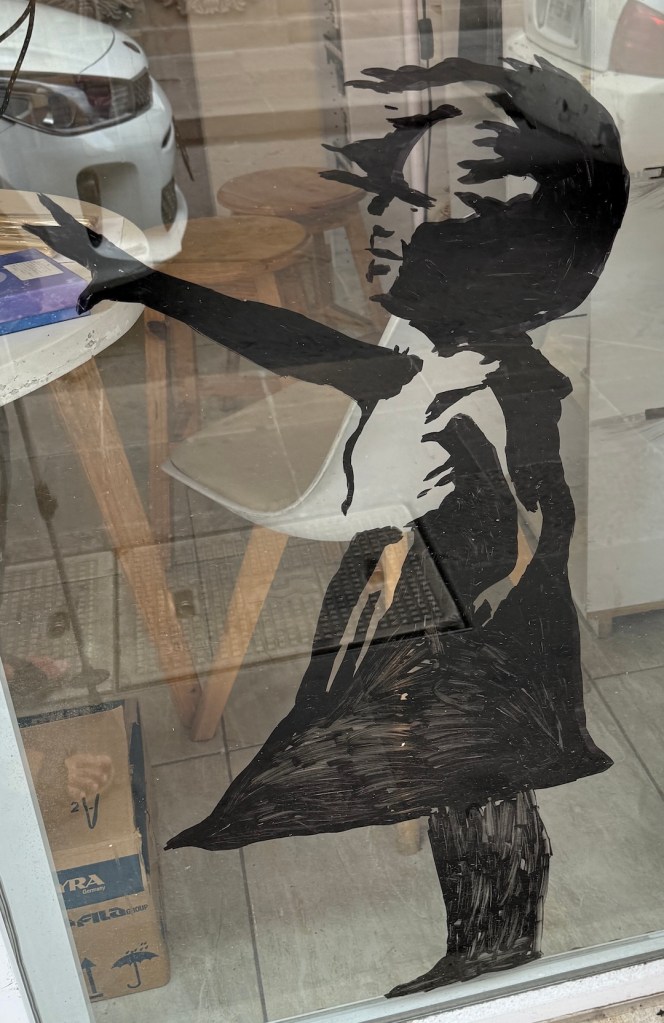
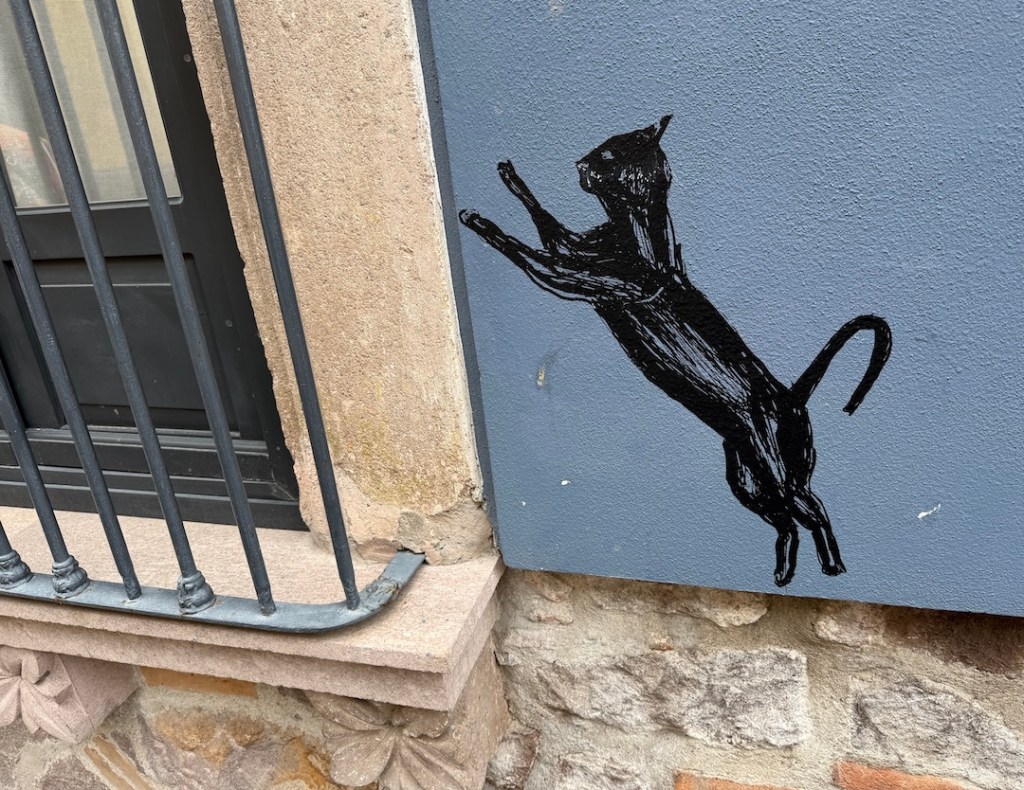
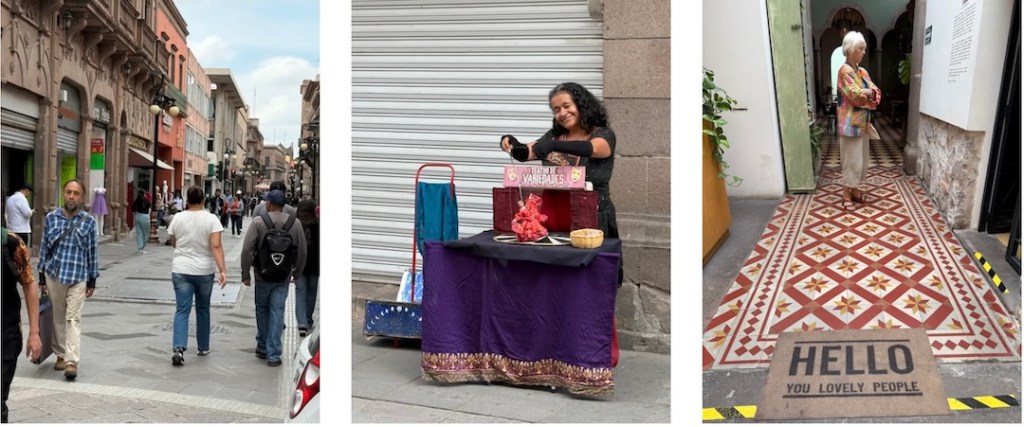
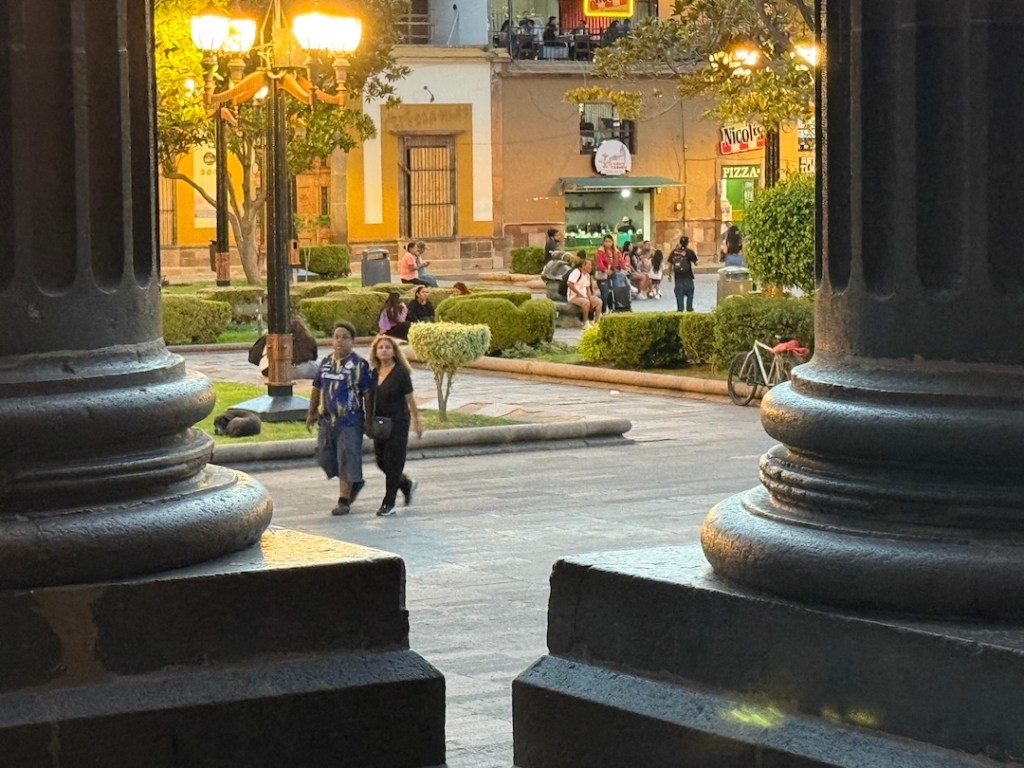
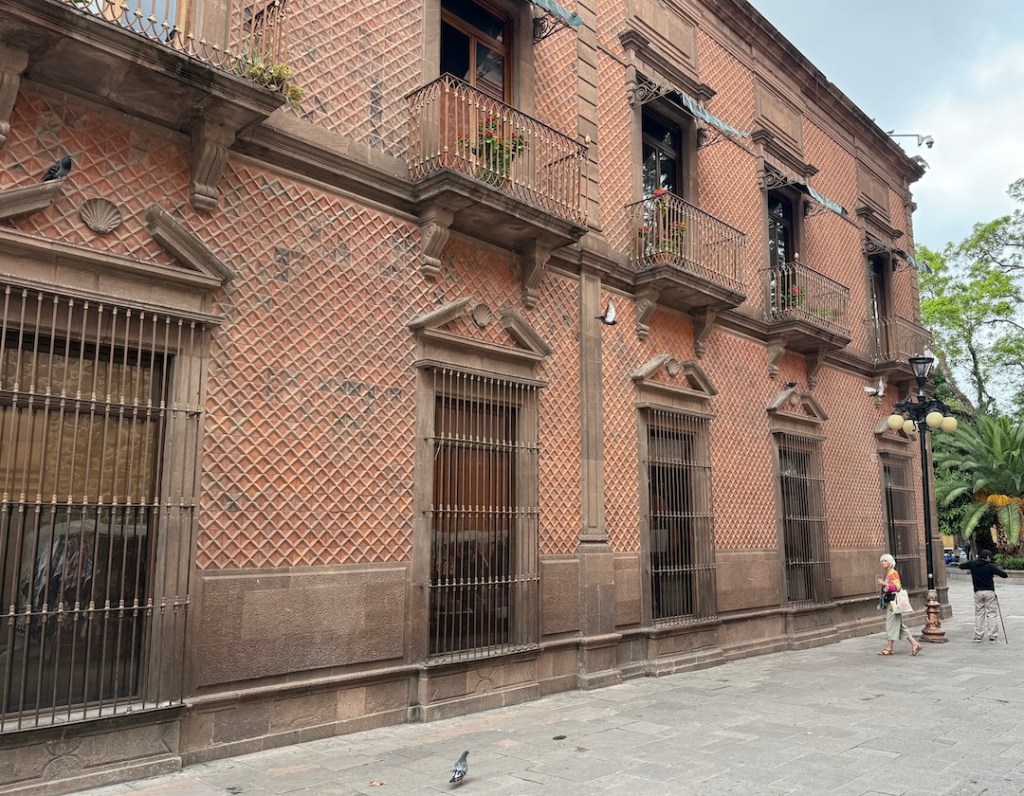
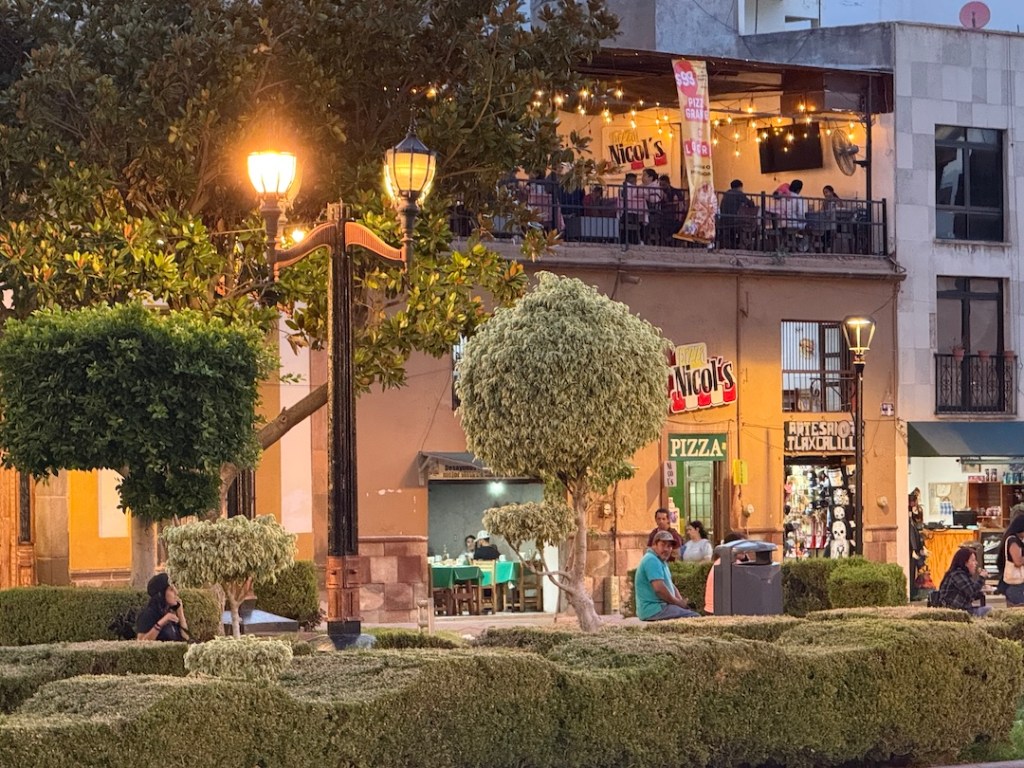
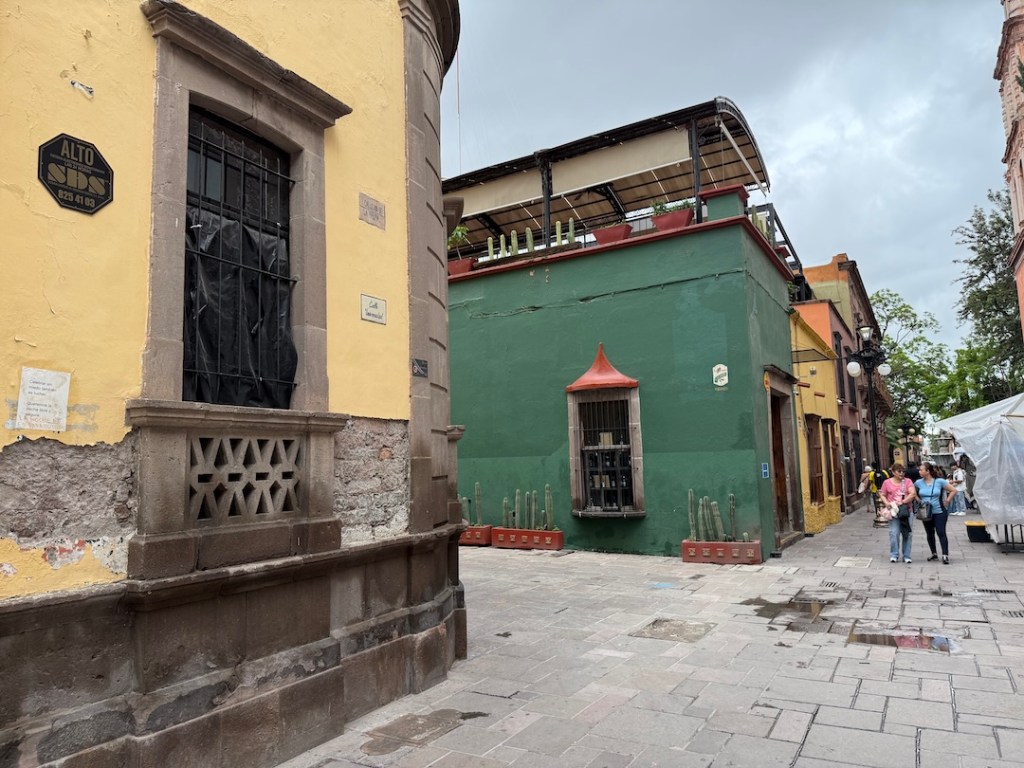
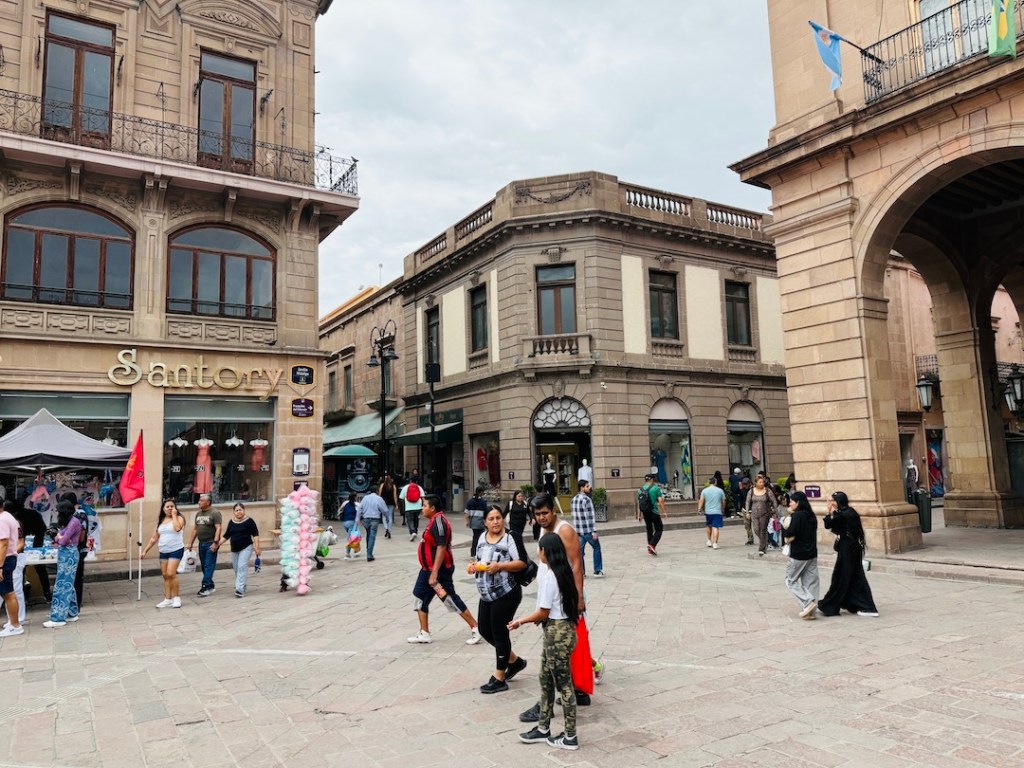
Just a block away is Calle Zaragoza, the pedestrian-only pathway that takes us north into the historic heart of the old city. We spend time enjoying the window displays and a cheerful lady with a little puppet theater, as we wander these fine old streets collecting any number of memories. And photographs.
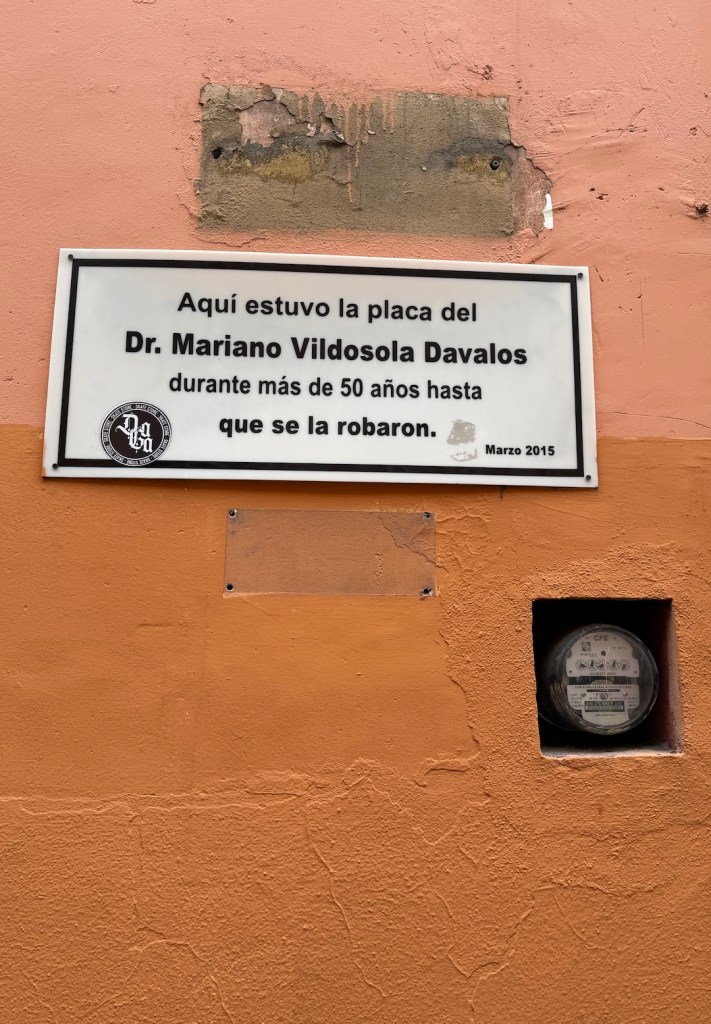
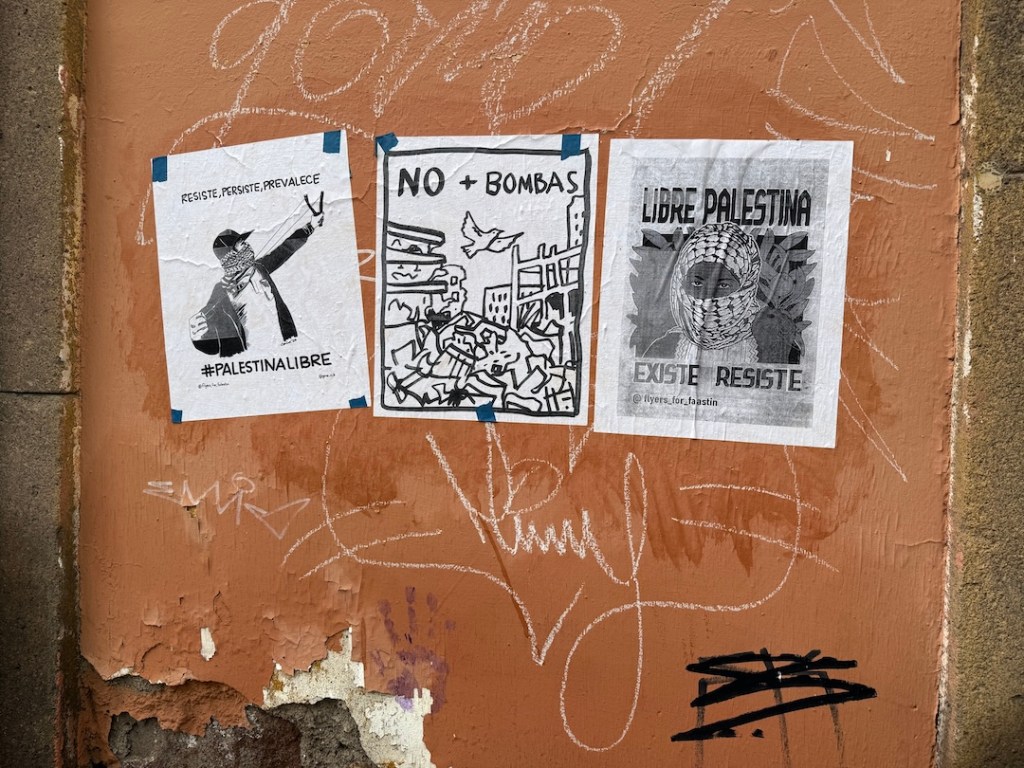
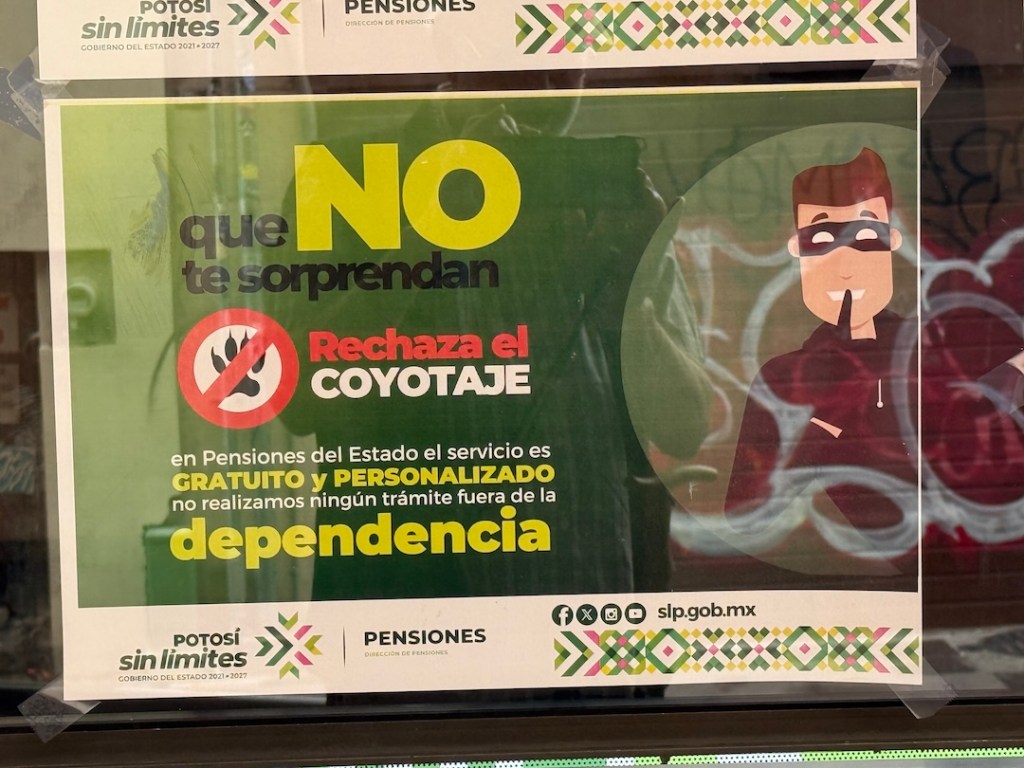
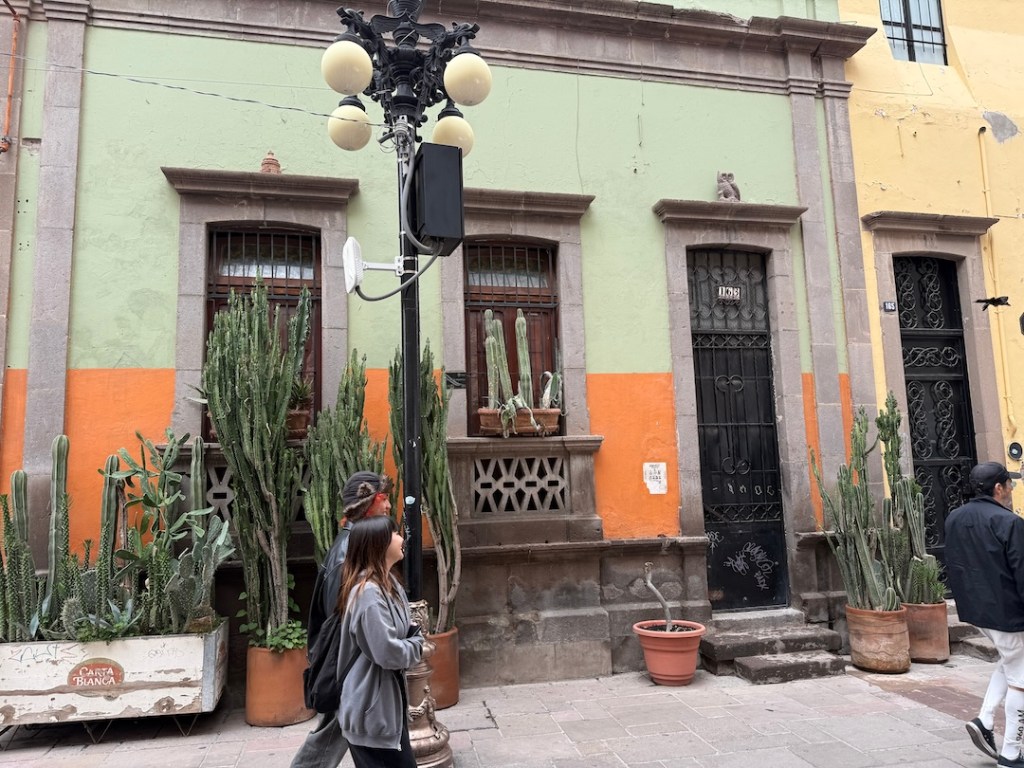
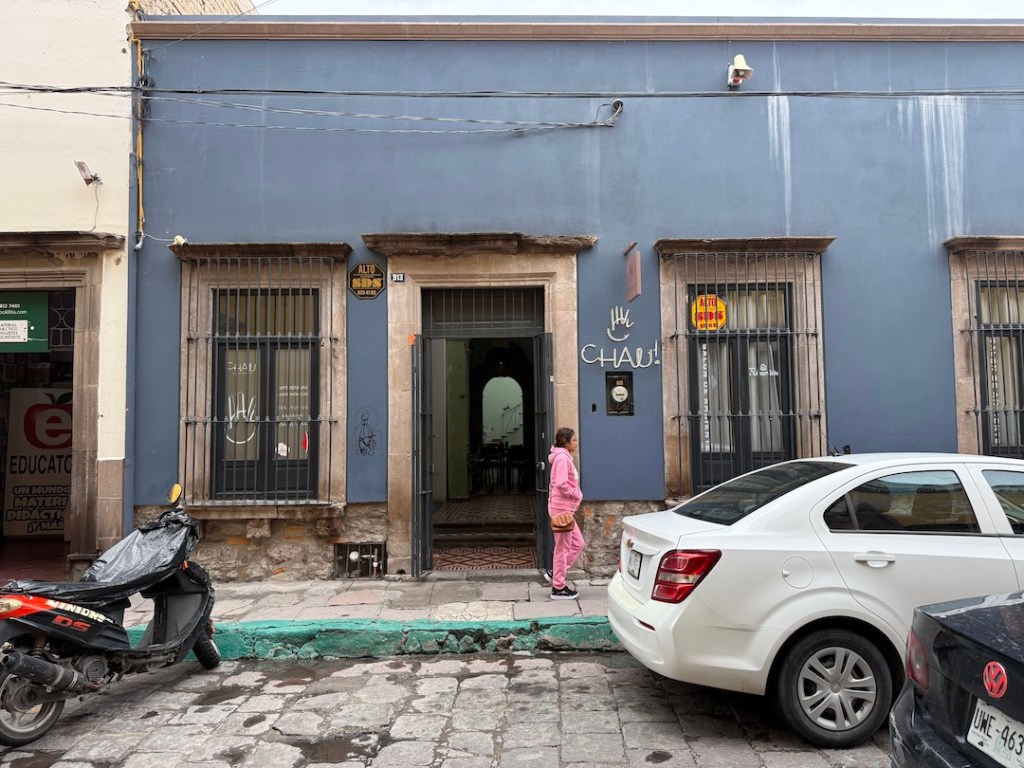
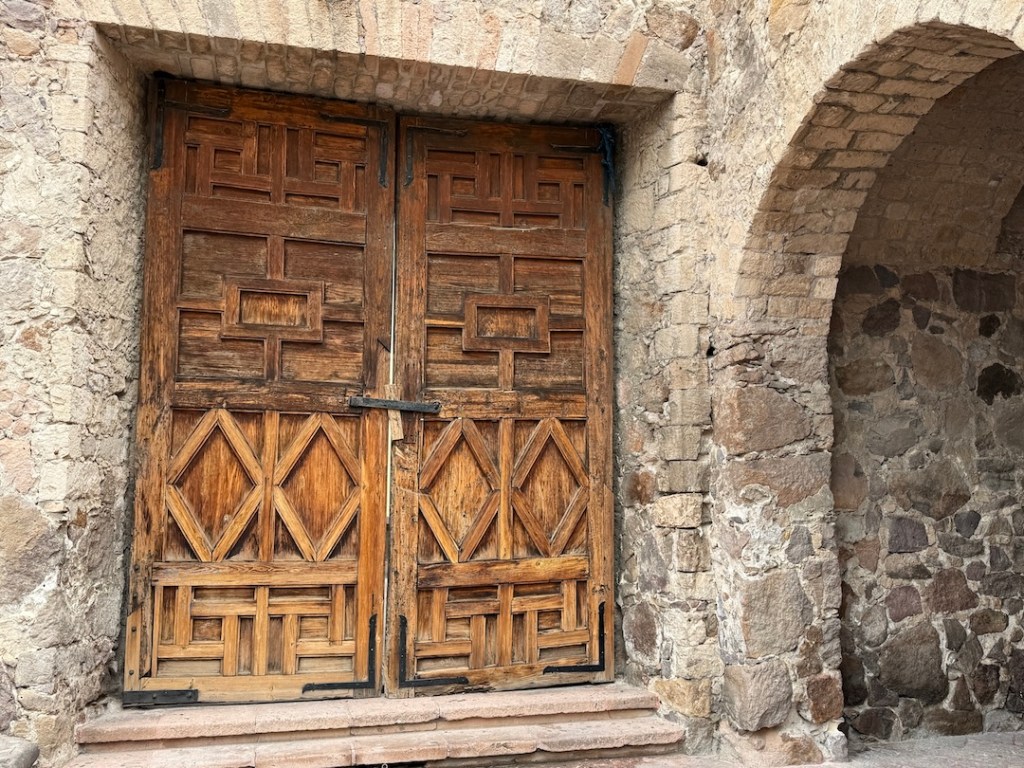
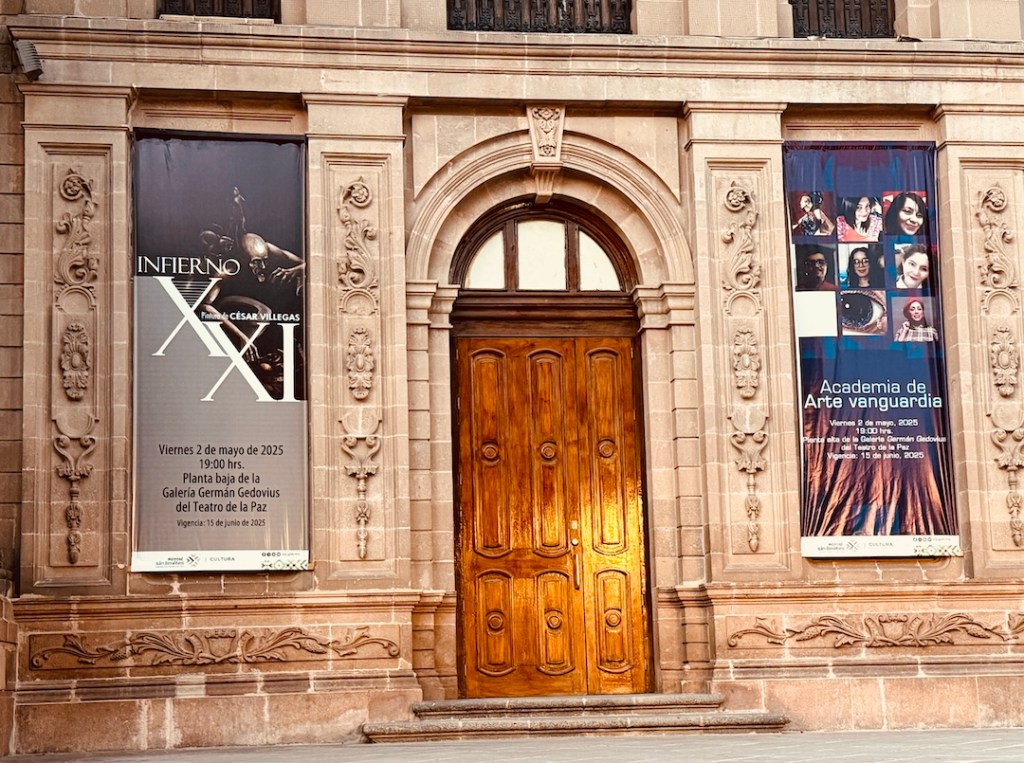
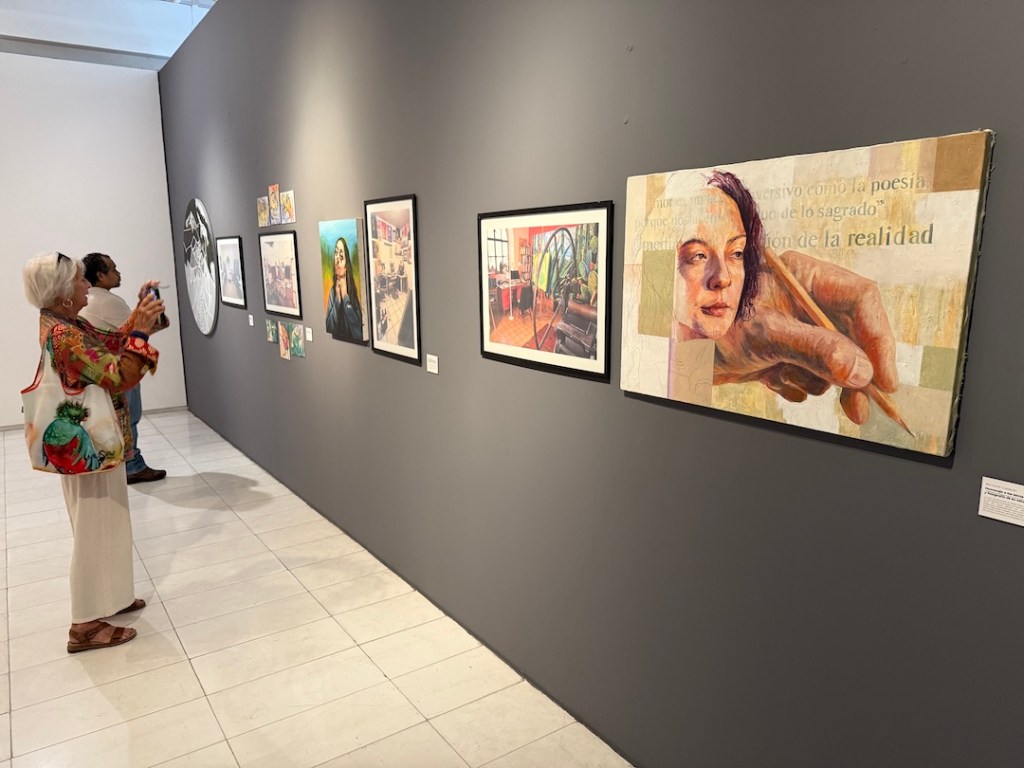
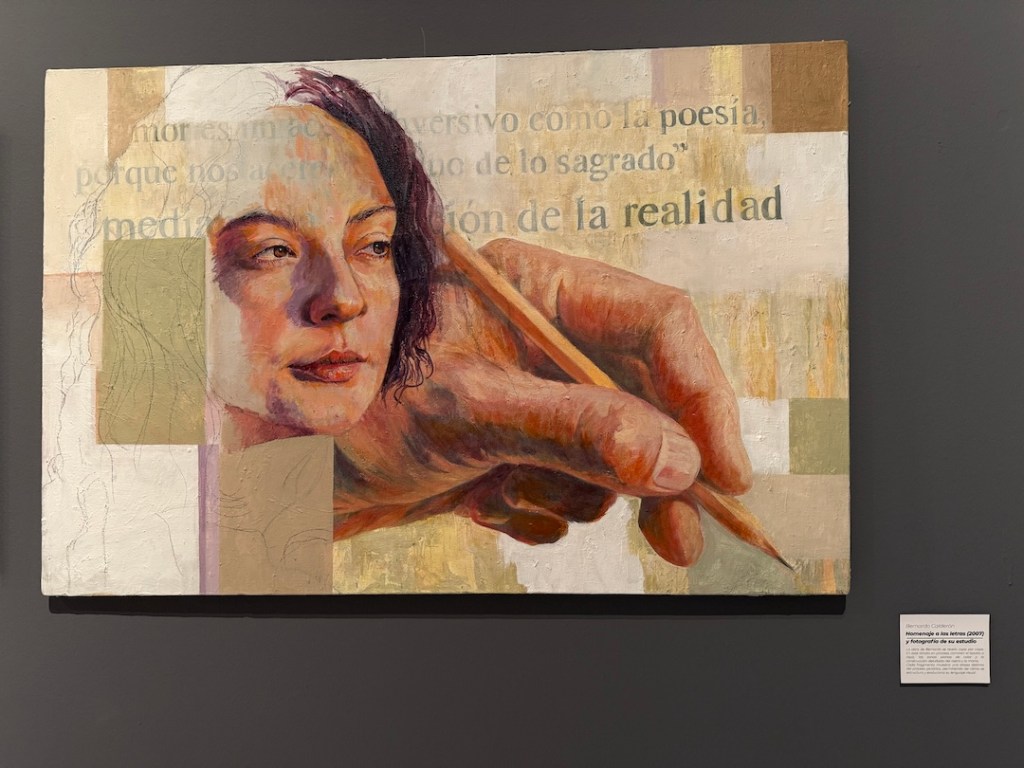
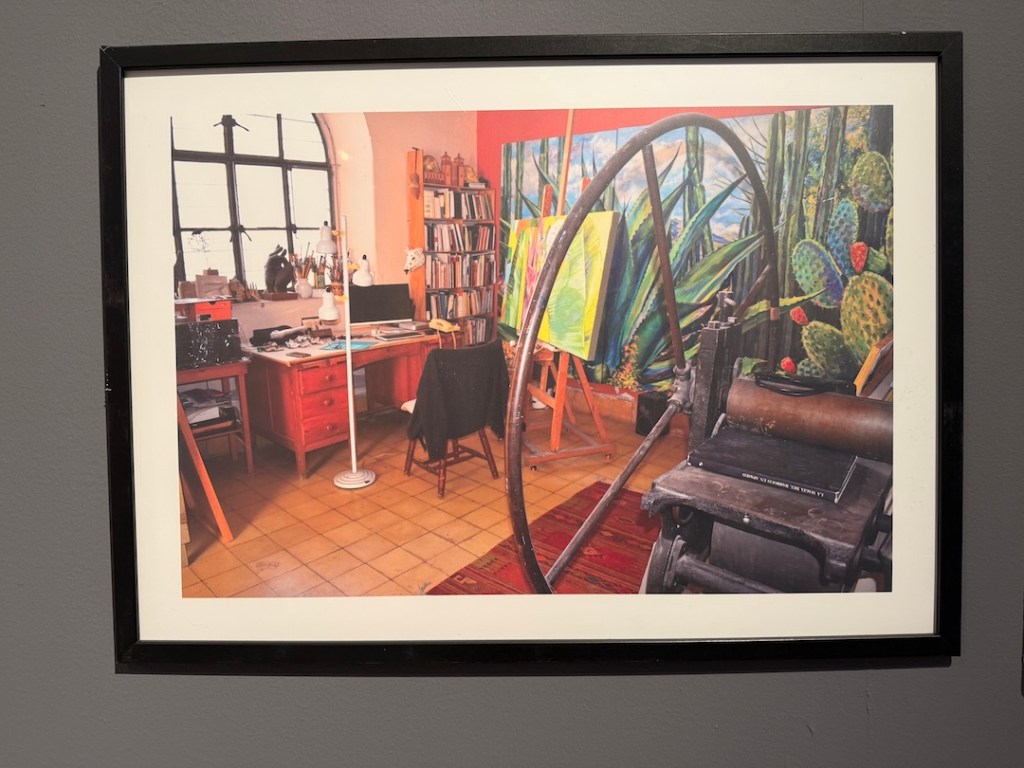
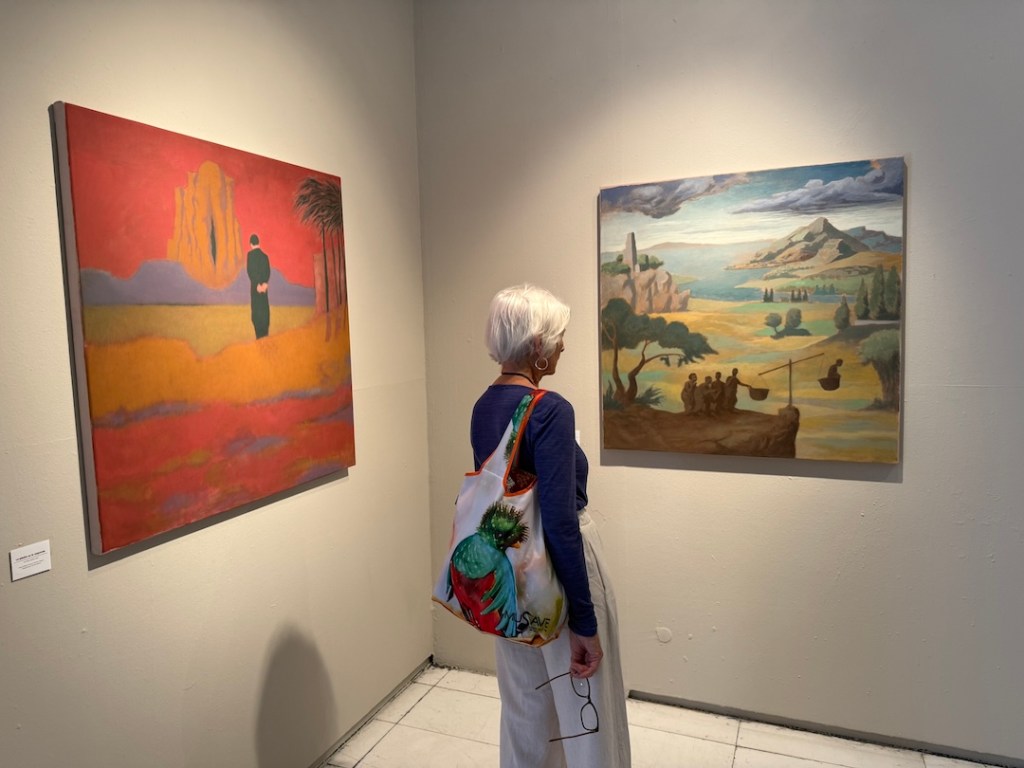
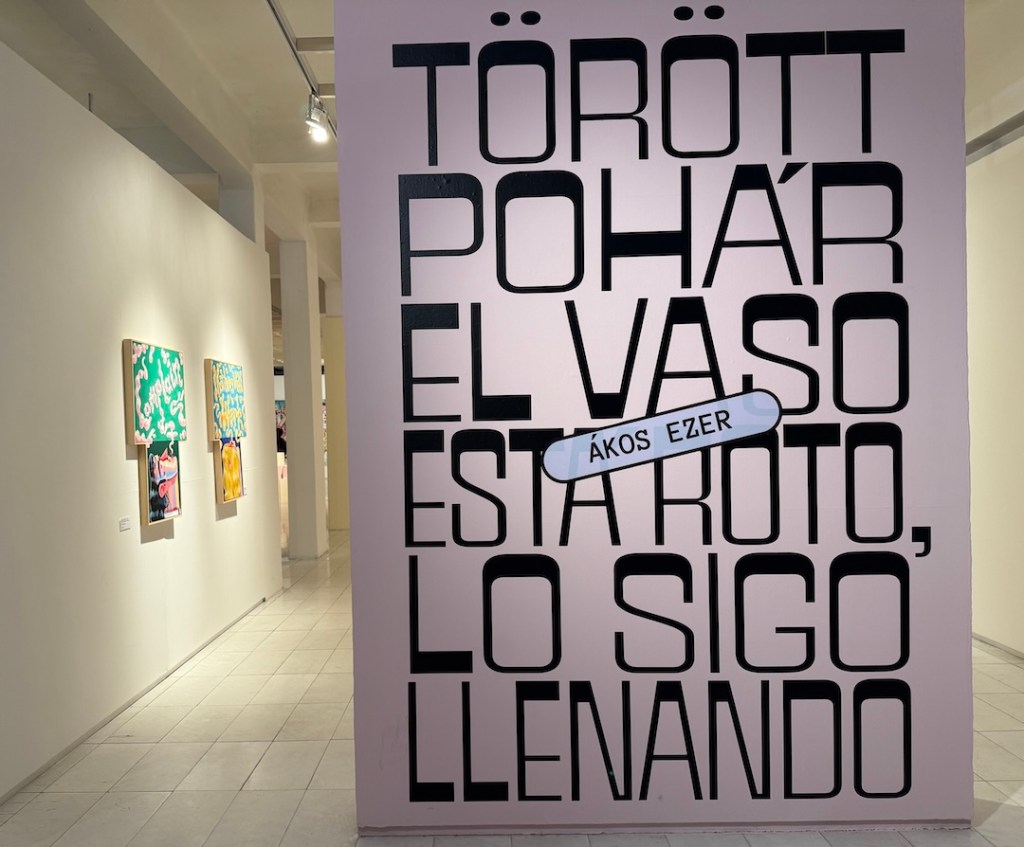
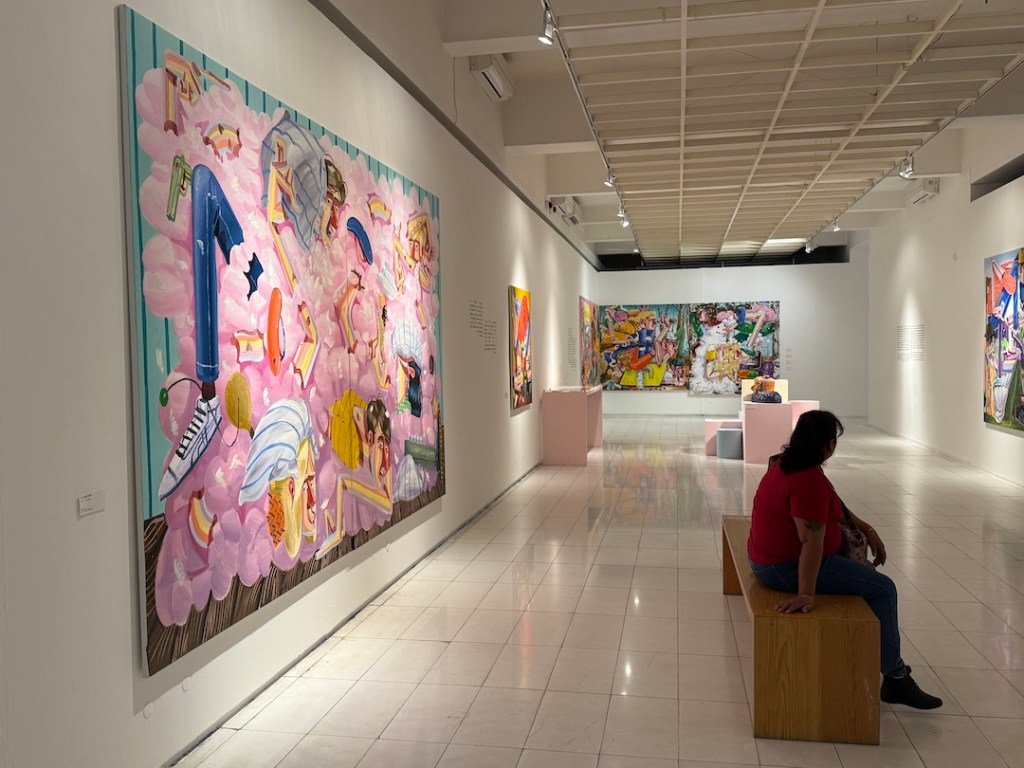
Near the Plaza de Armas we find the Museo de Arte Contemporaneo (MAC), with the sort of challenging works we like to find on our trips. In the sometimes elitist world of art criticism, my primary question becomes, “Would I hang it on my wall?” It’s not an entirely fair question, because I’d avoid large tapestries that require dusting, and we don’t need valuable works that someone would steal. And some works are well-accomplished but too disturbing to have around. But there are plenty of fine artists in the world whom I wish we had room for on our walls. And the extra cash to afford them.
We enter the MAC past galleries of excellent works, visions of serenity, and some fanciful views that taunt the conventional use of color or concept. And many of those could easily hang on our walls, if we had any space available.
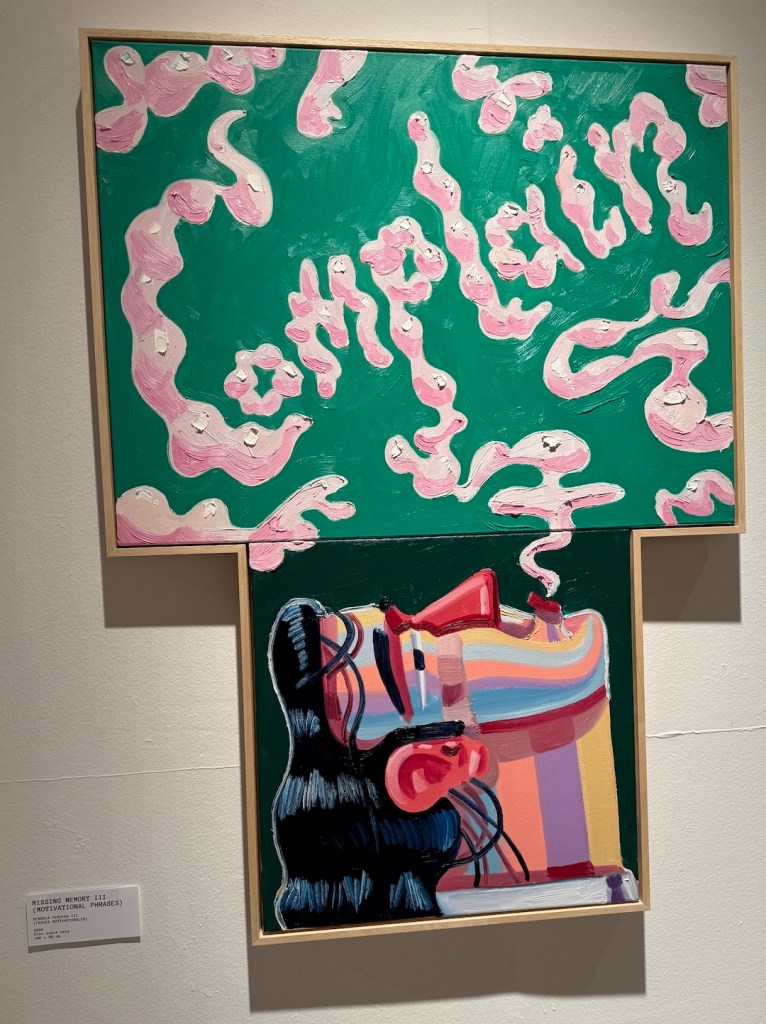
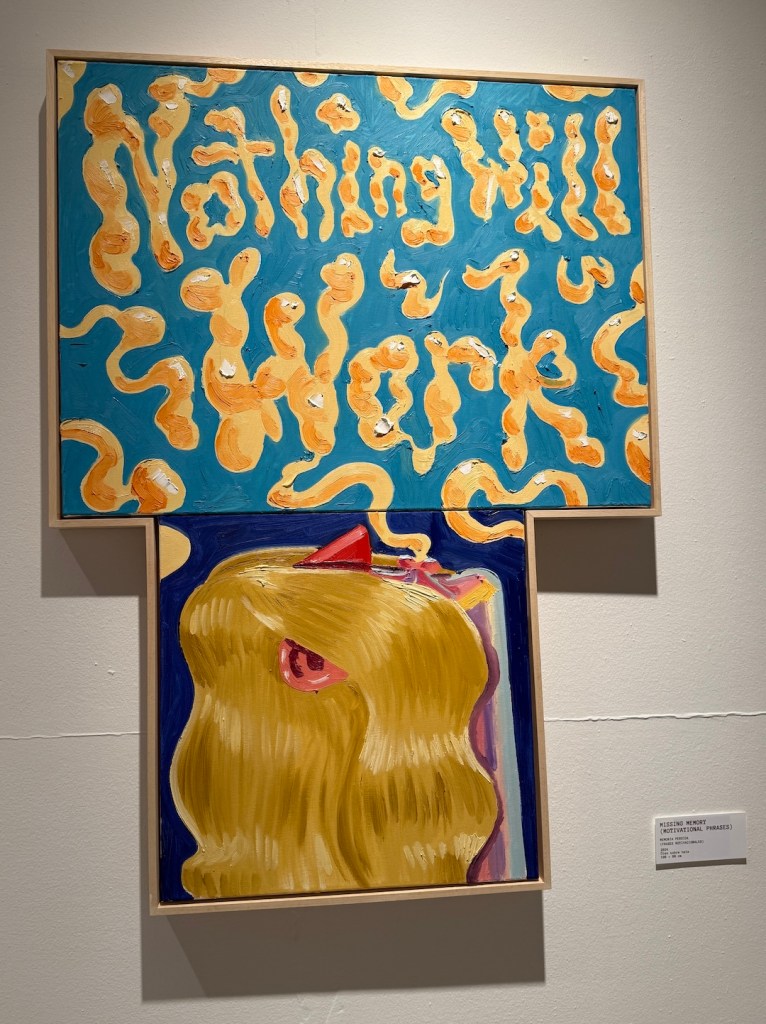
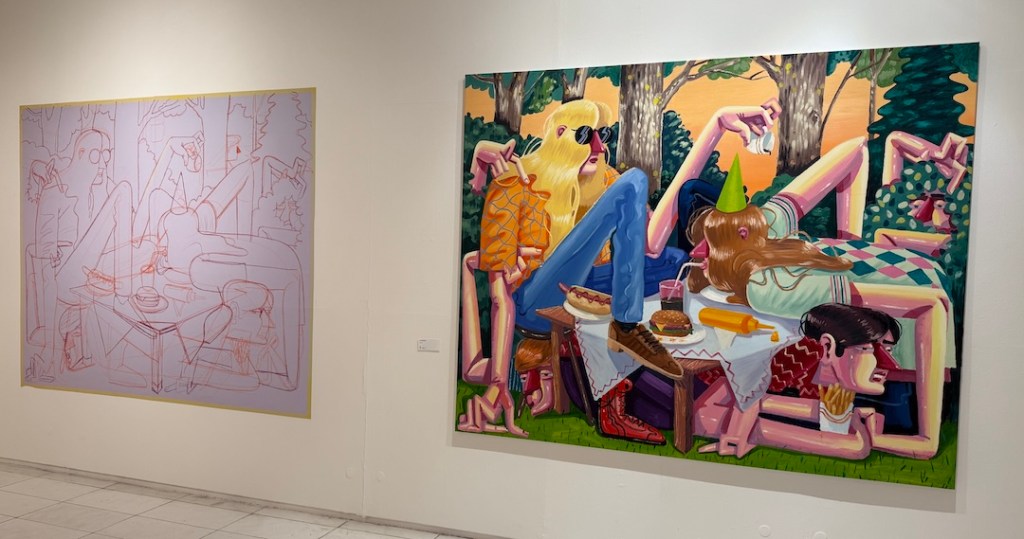
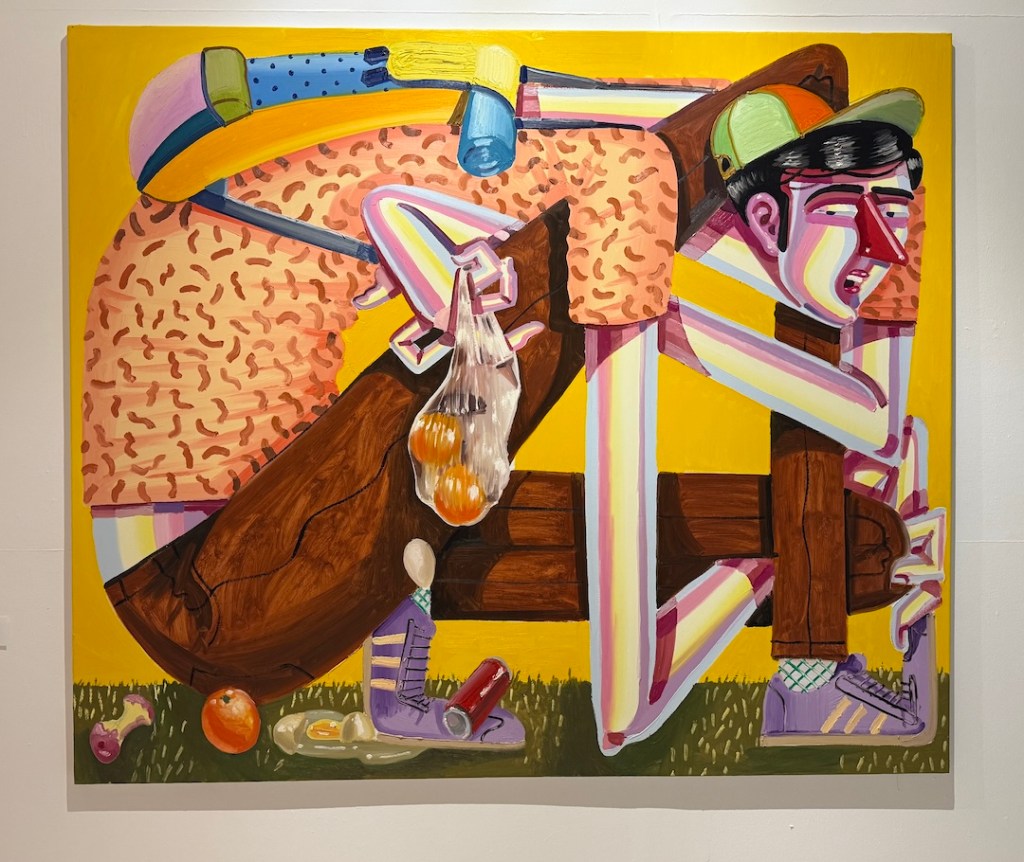
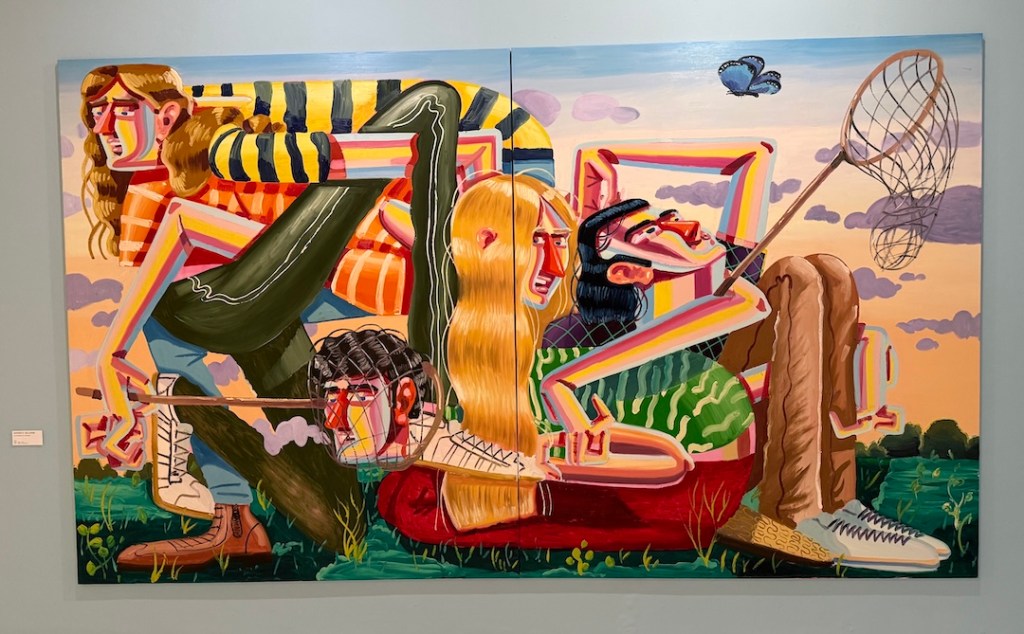
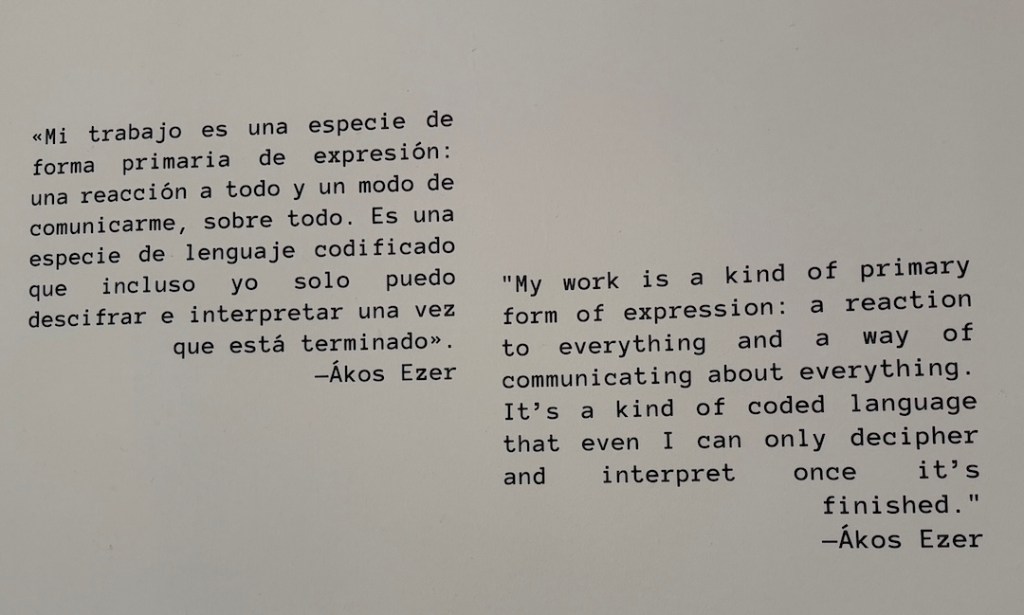
Then we encounter the troubling works of Ákos Ezer. He’s a challenging Hungarian artist who is attempting to express the fraught situation of his present day homeland. The twists and turbulations of fate, in my interpretation, are seen in the painful and contorted figures of his subjects. There’s clearly a touch of humor in it all, a cosmic Hungarian giggle. Or maybe it’s a worldly smirk at the mess of life over there in Mittel Europa, all those ancient tribes surrounded by the deep history of those other contentious tribes of Slavs, Germans, Romanians – every one of them elbowing for breathing room. Or perhaps I’m just making too much out of it. But he got me thinking, and maybe that was his point all along.
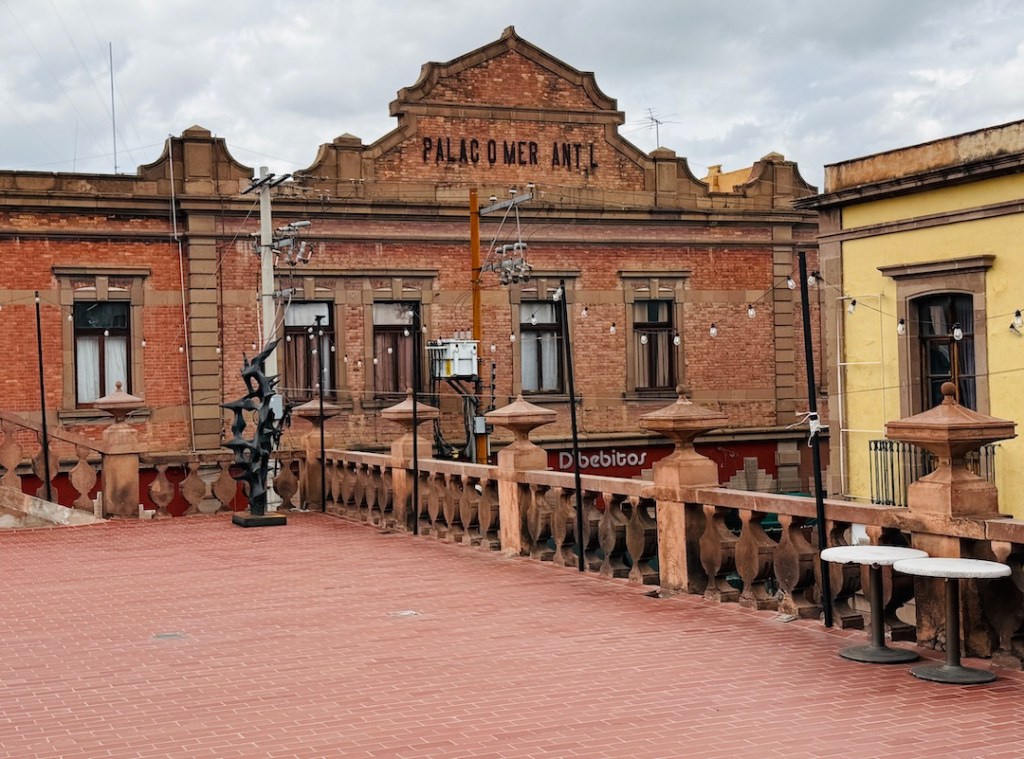
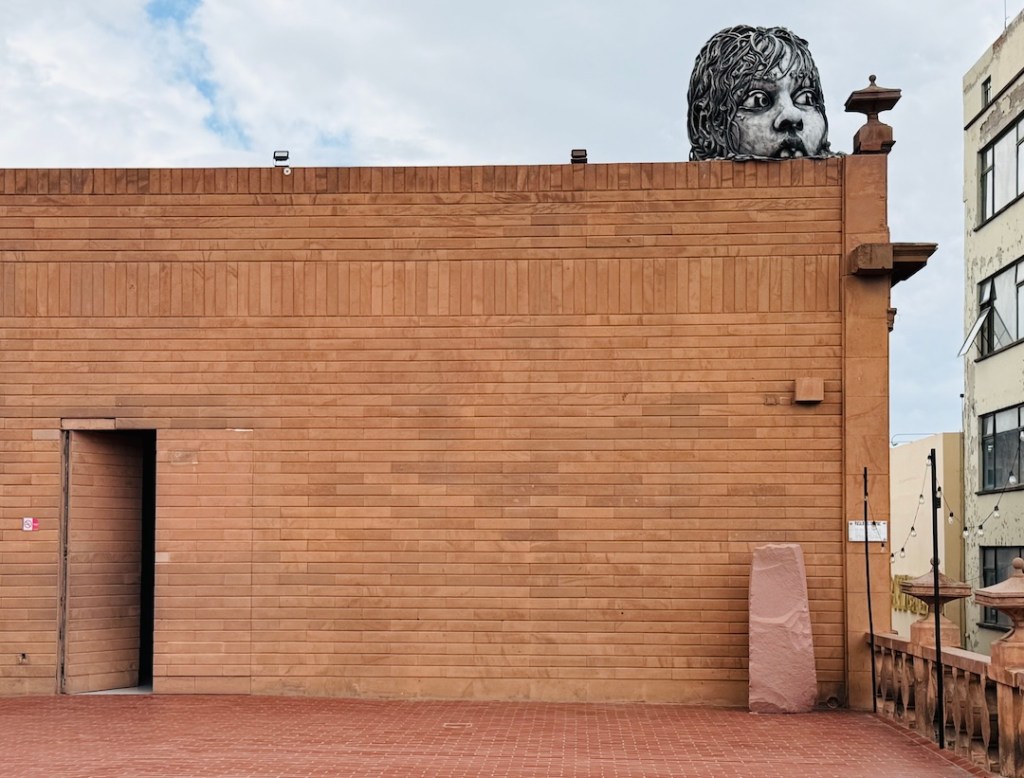
And there’s other interesting stuff up on the rooftop, where they hold occasional openings and guest events overlooking charming older buildings in the surrounding neighborhood. This area was probably the commercial center of town long ago and we can hope there are plans afoot for its renovation.
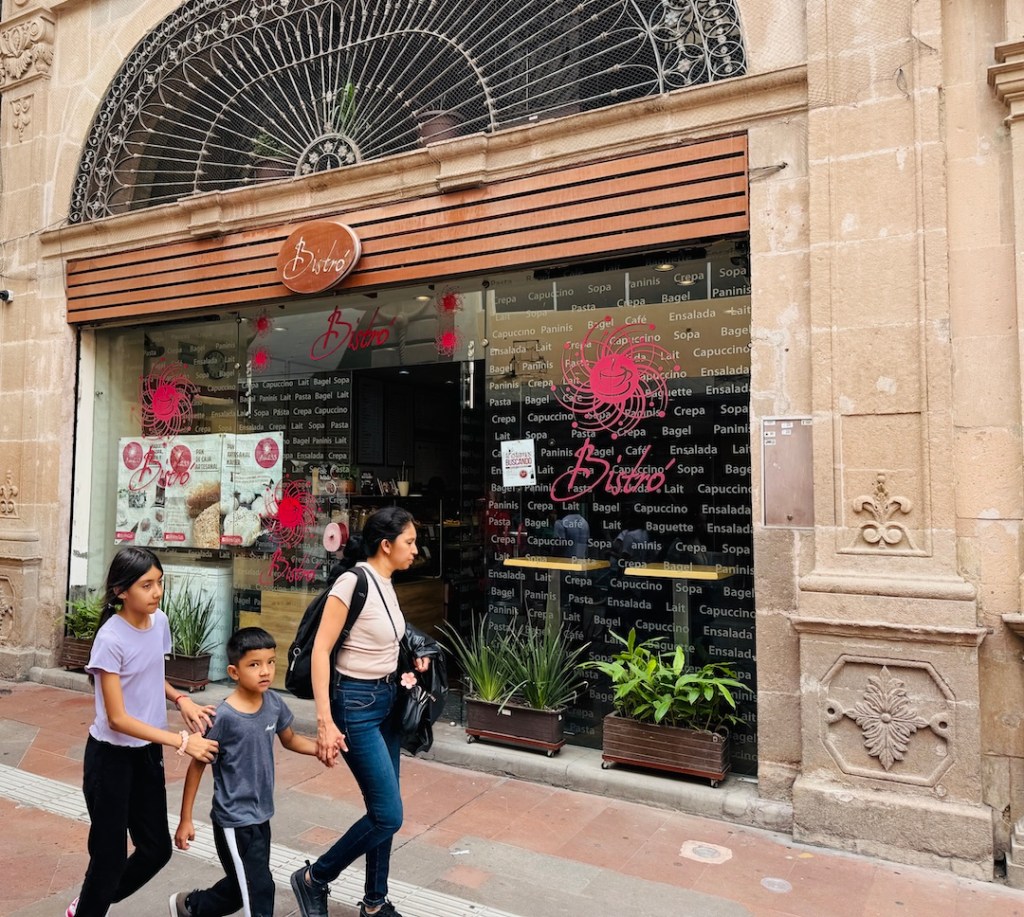
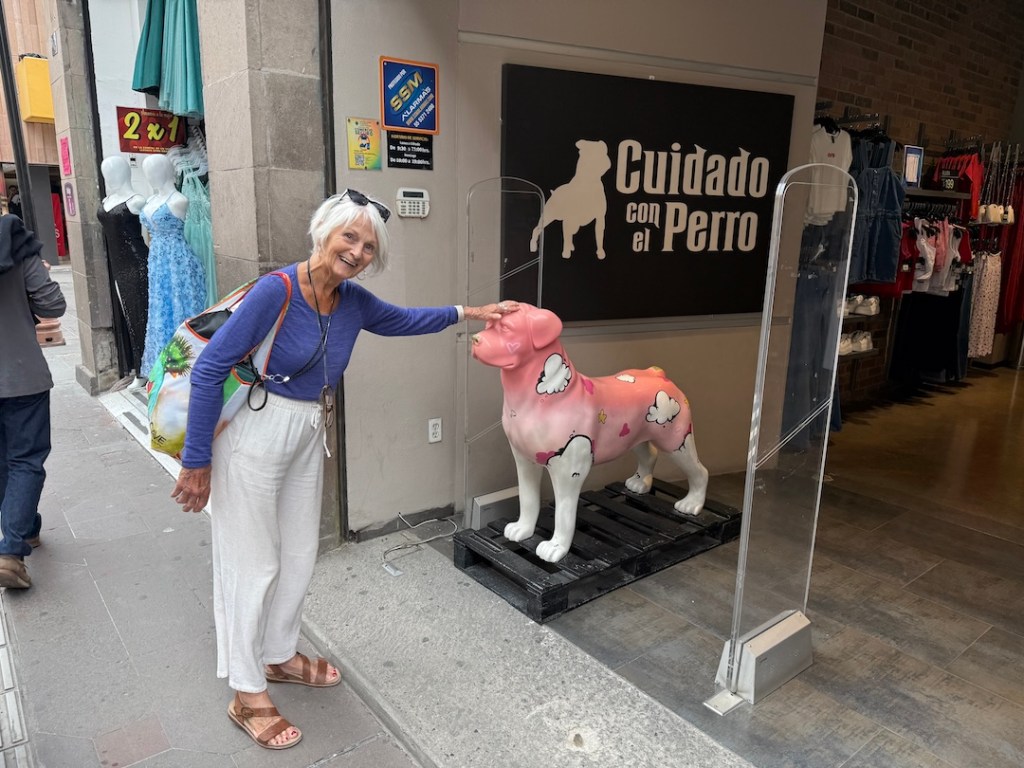
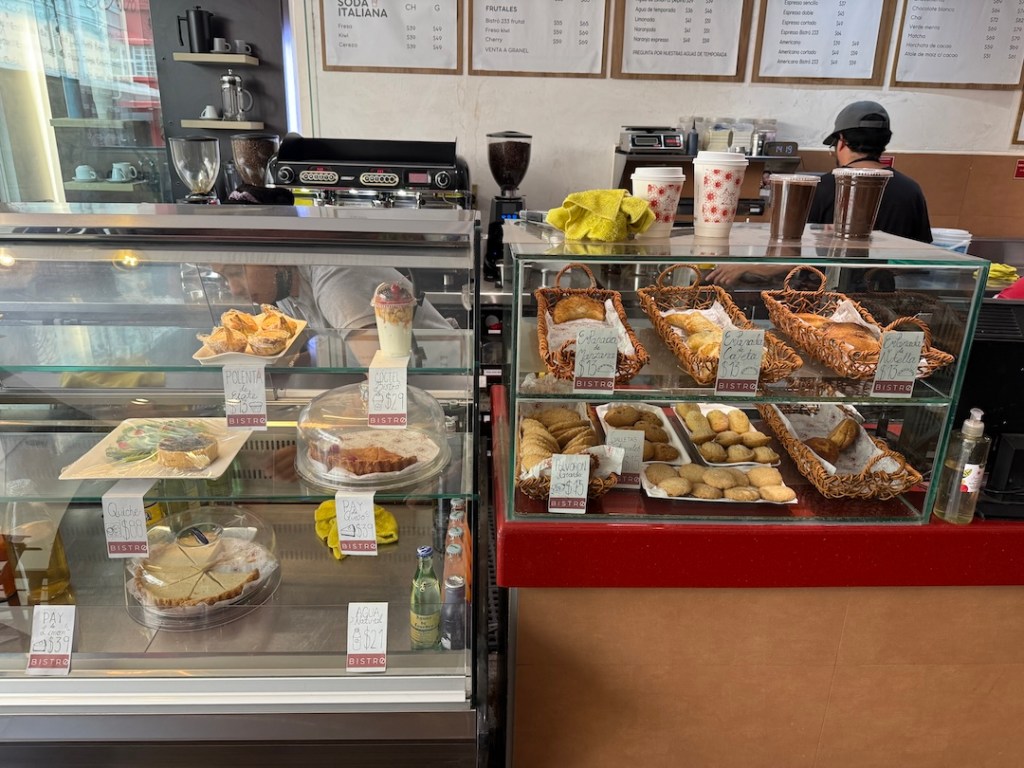
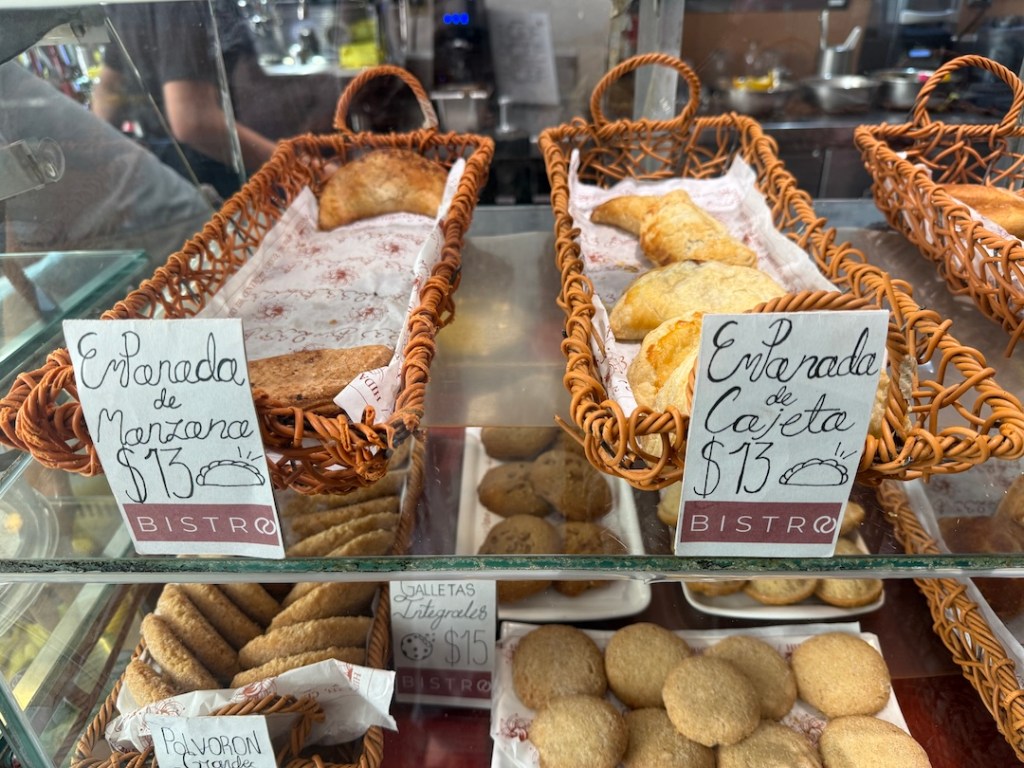
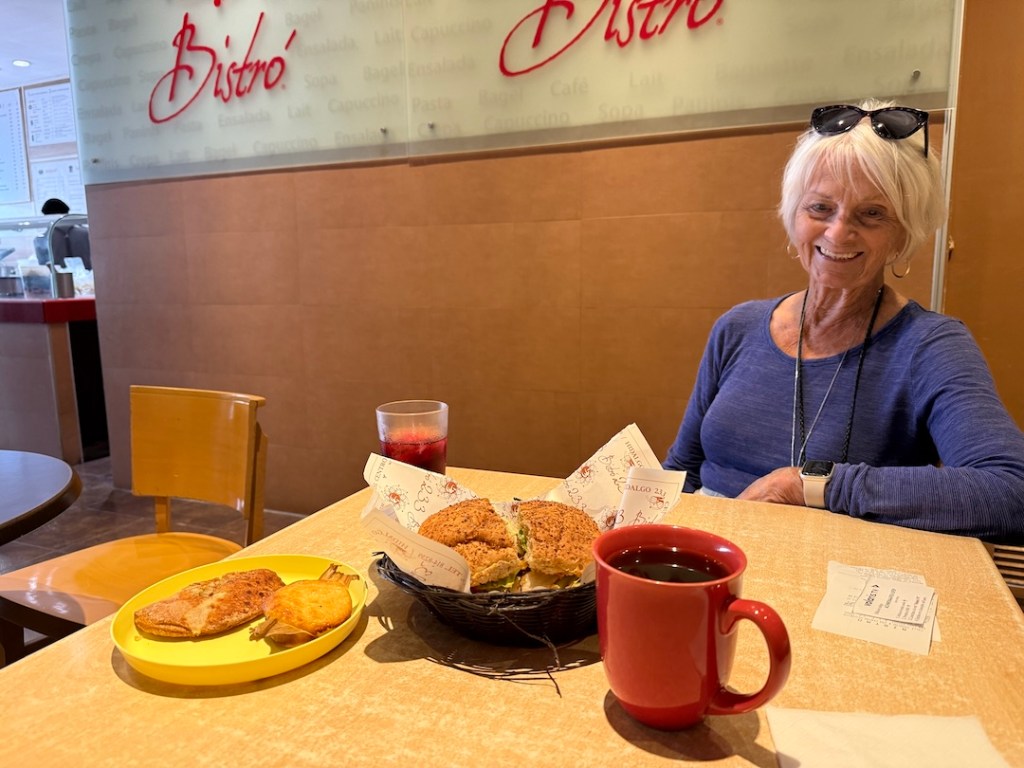
After all that art, it’s time for lunch, and the Bistró 233 is just around the corner. The place offers a delicious mix-up of Mexican-French cuisine. With big cups of coffee. It’s a nice find to relax into for a few minutes while we scarf some good food before we move onward in our quest. There was a handy Cuidado con el Perro store very nearby, with a well-petted pooch out front. And that cup of strong coffee helps us stay focused on what our quest today actually was!
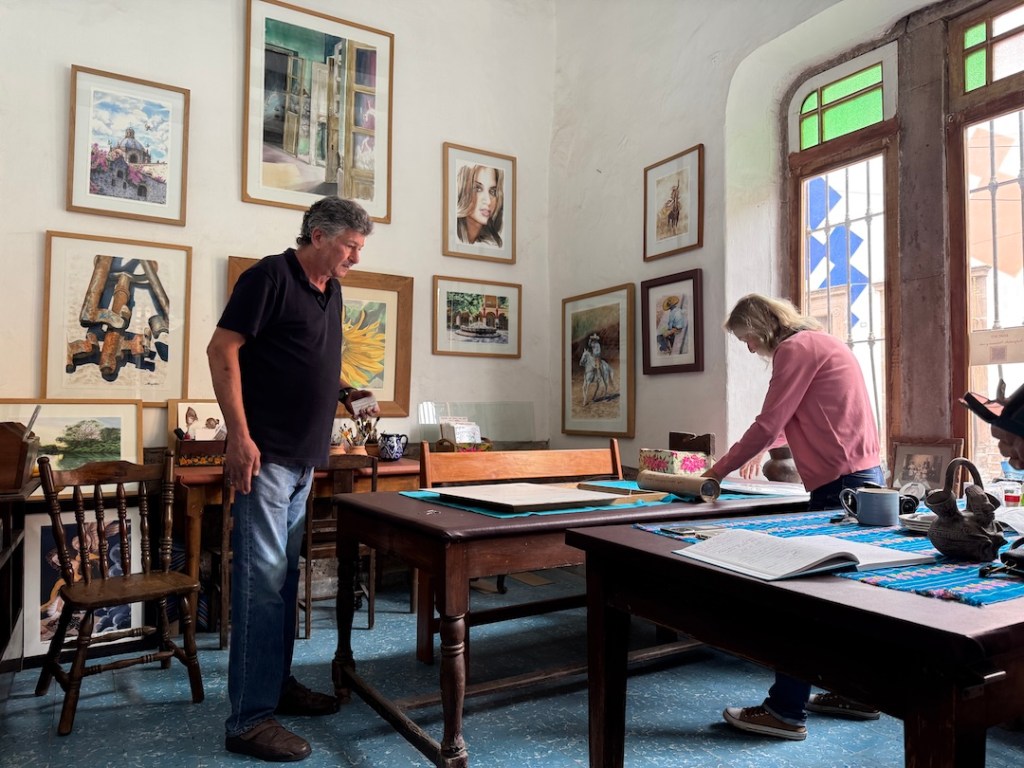
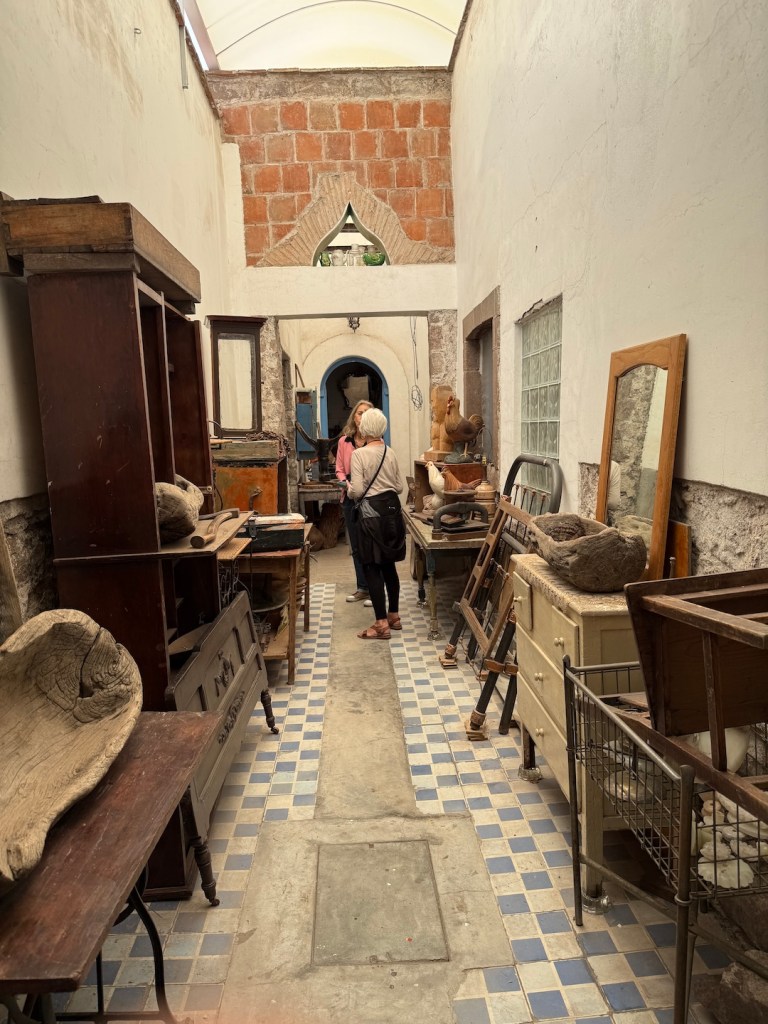
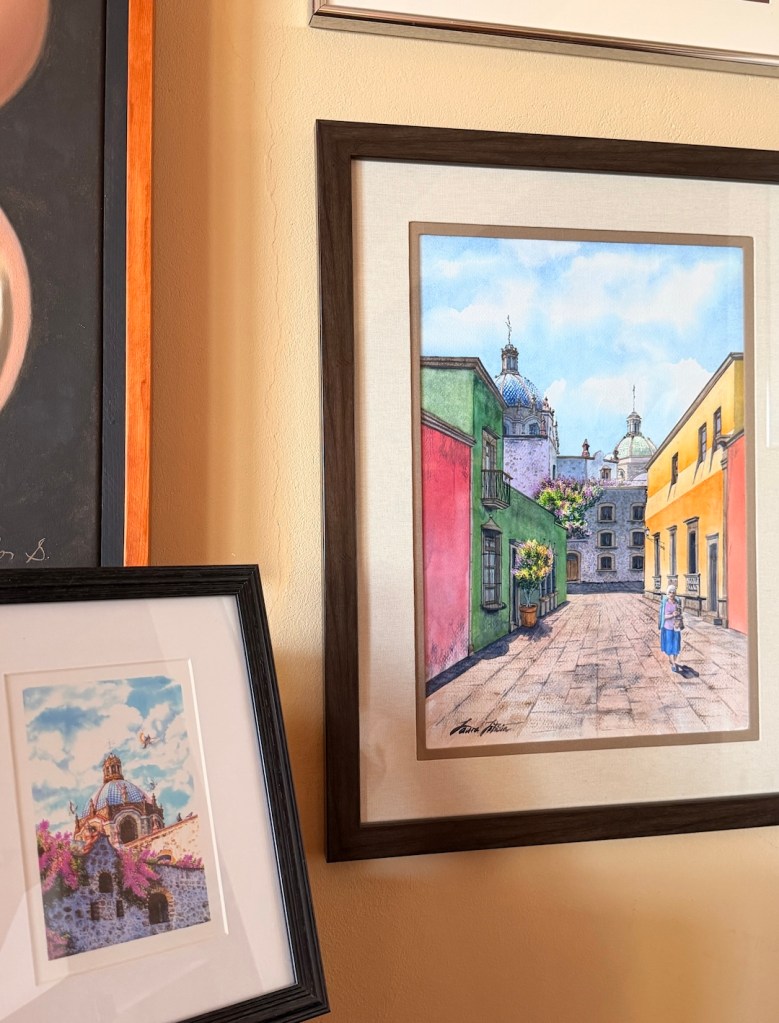
At the MAC we meet an artist named Laura Leticia, and she invites us to her studio on a quiet side street. The place is filled with a collection of various objets d’art, and other inspiring found objects. Some of those influences are among the art that’s hanging on her walls, and she’s a talented artist who captures the spirit of this city with her fine brush and pen work. So we end up with a few pieces that will fit into the remaining extra space in our big rolling bags, and they’ll be joining the eclectic array of art that’s hanging in the limited empty space on our walls.
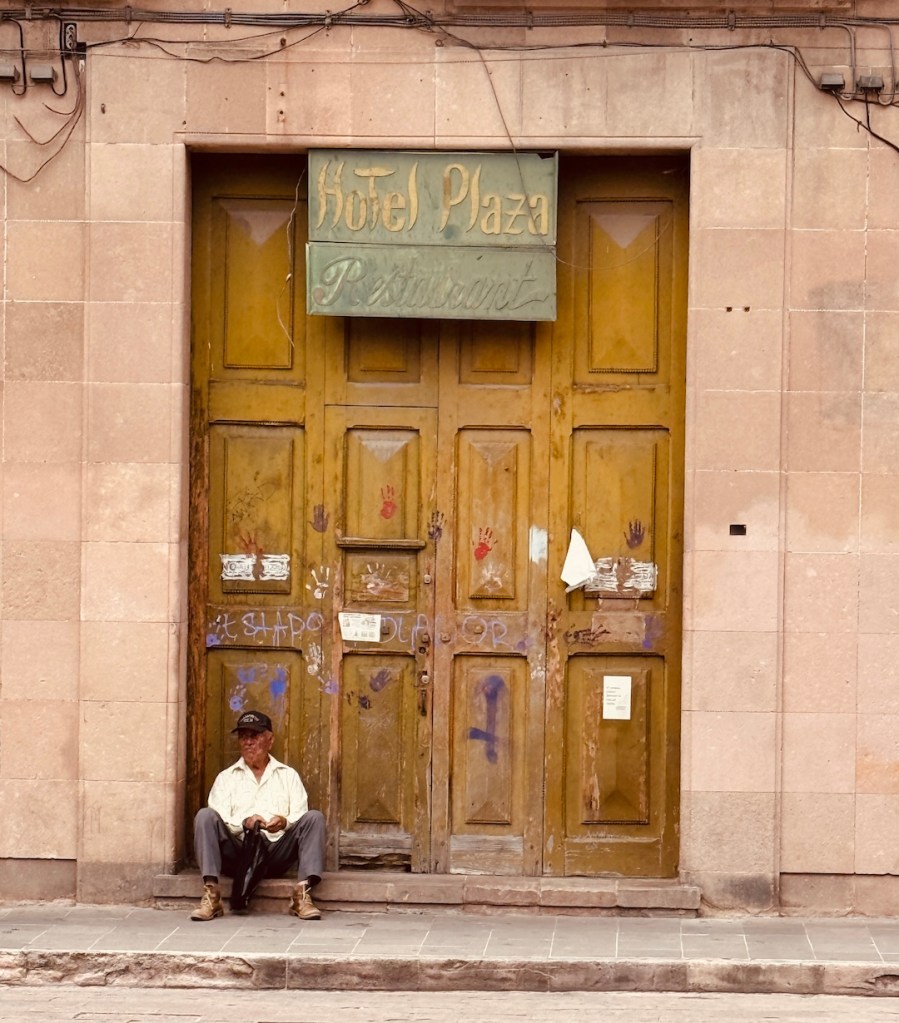
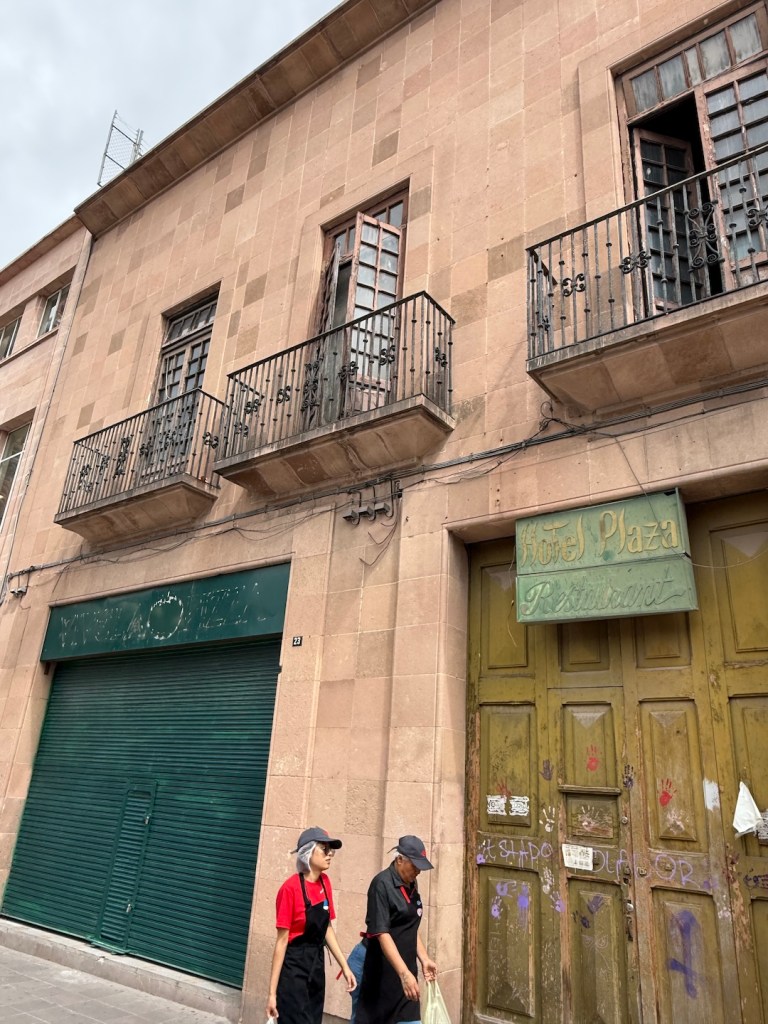
As the afternoon settles in, it’s time to find the old Hotel Plaza of my youthful travels and see how it’s fared over the past 50 years as the city has grown and prospered. But the old Hotel is now closed, and we hope it’s awaiting a financial angel with deep pockets. The place was a minor bastion of faded glory from the city’s deep past when I was last here, but it was charming back then in its decrepit way. And in my aging memories, it just seemed to look much bigger in those days, and more important.
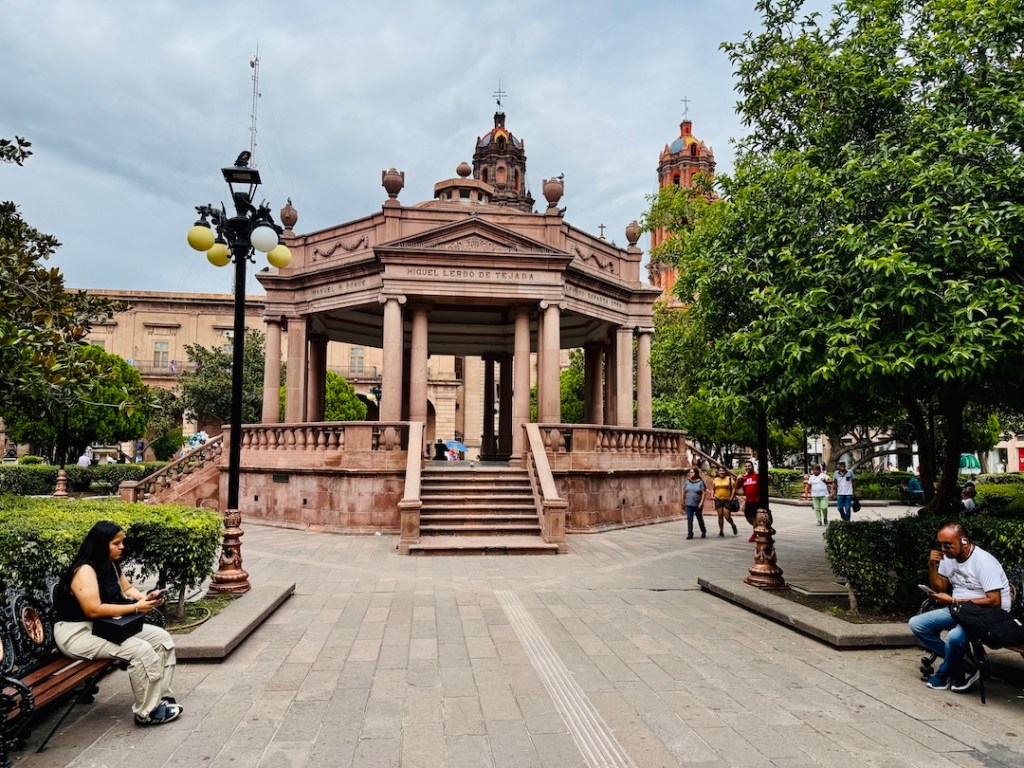
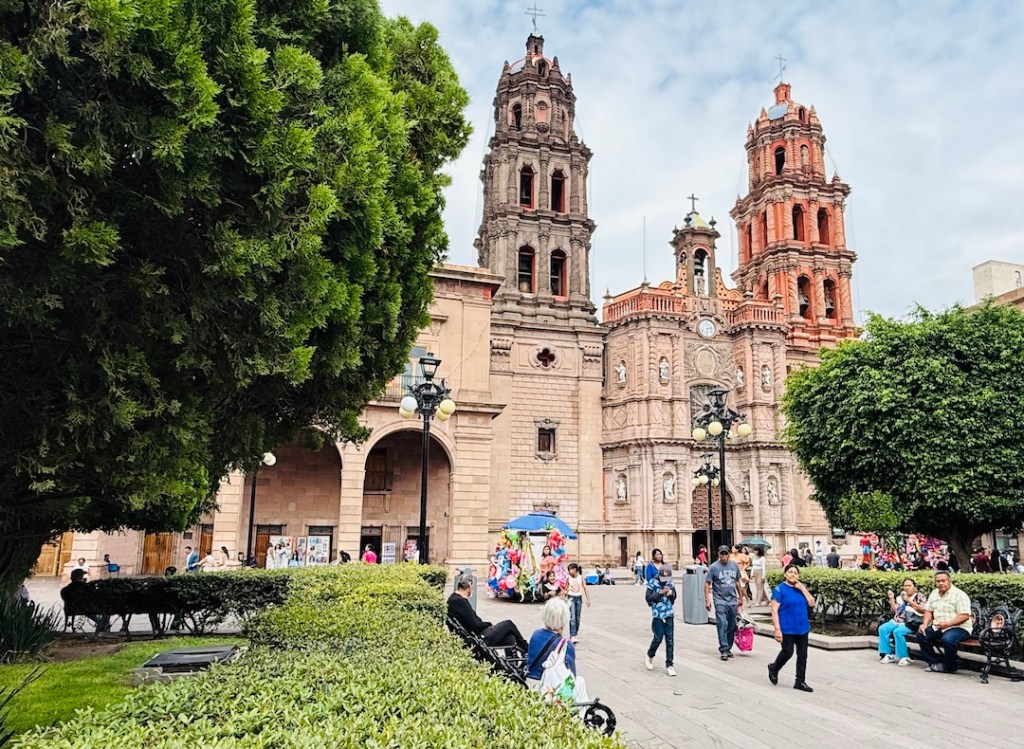
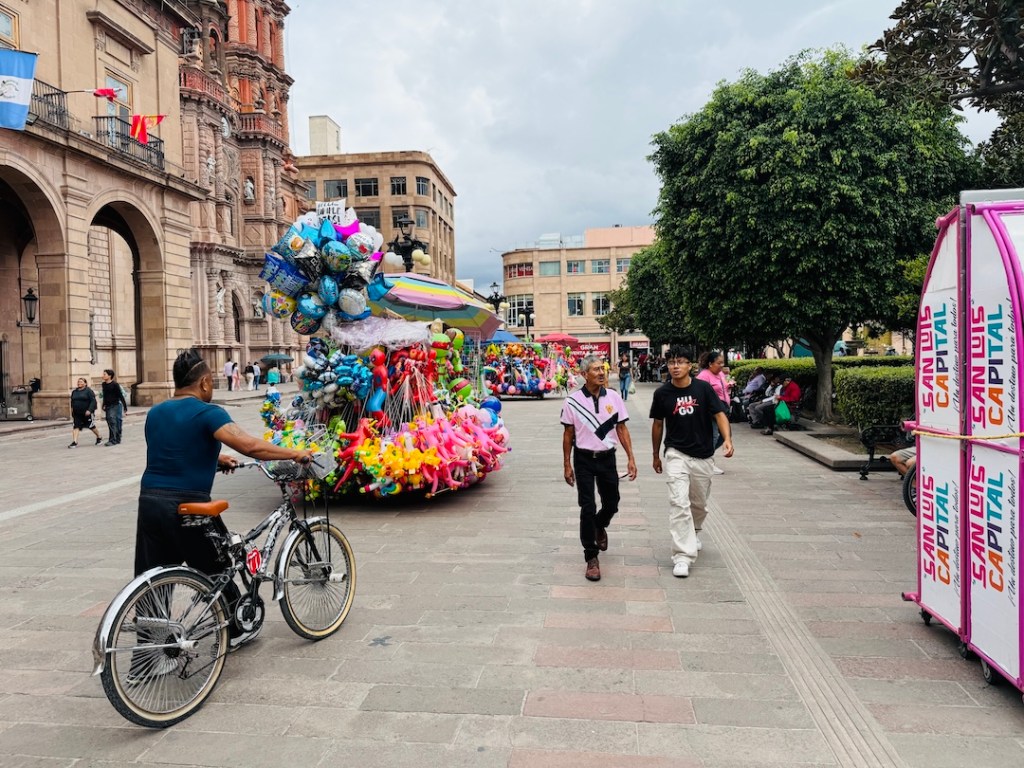
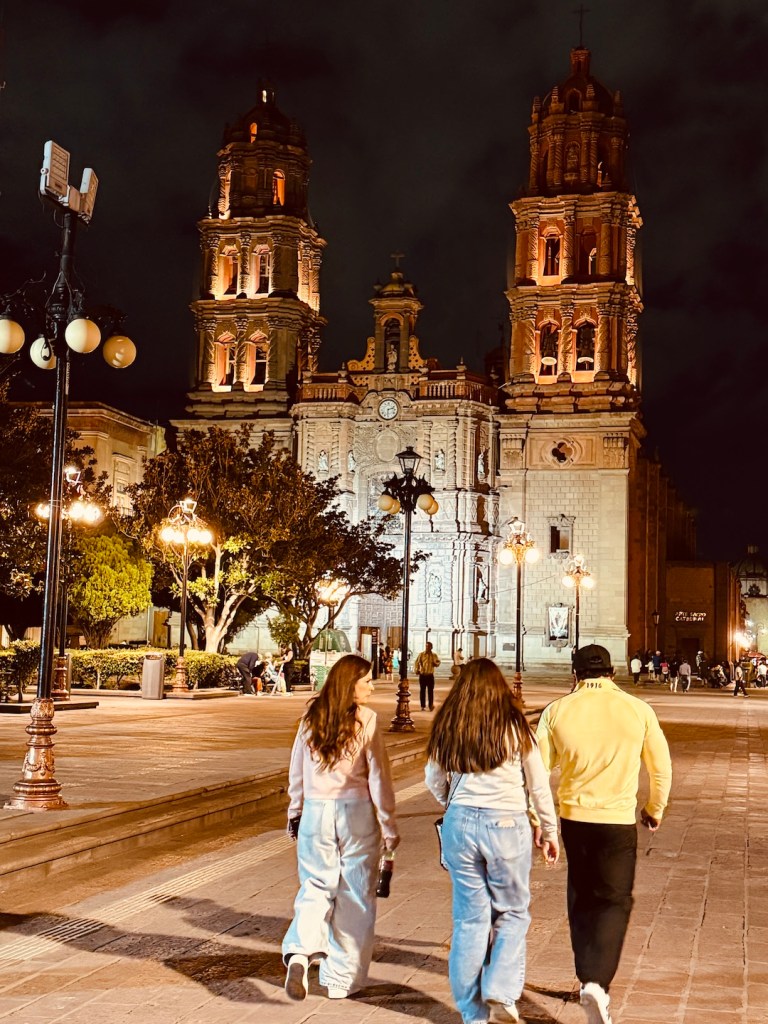
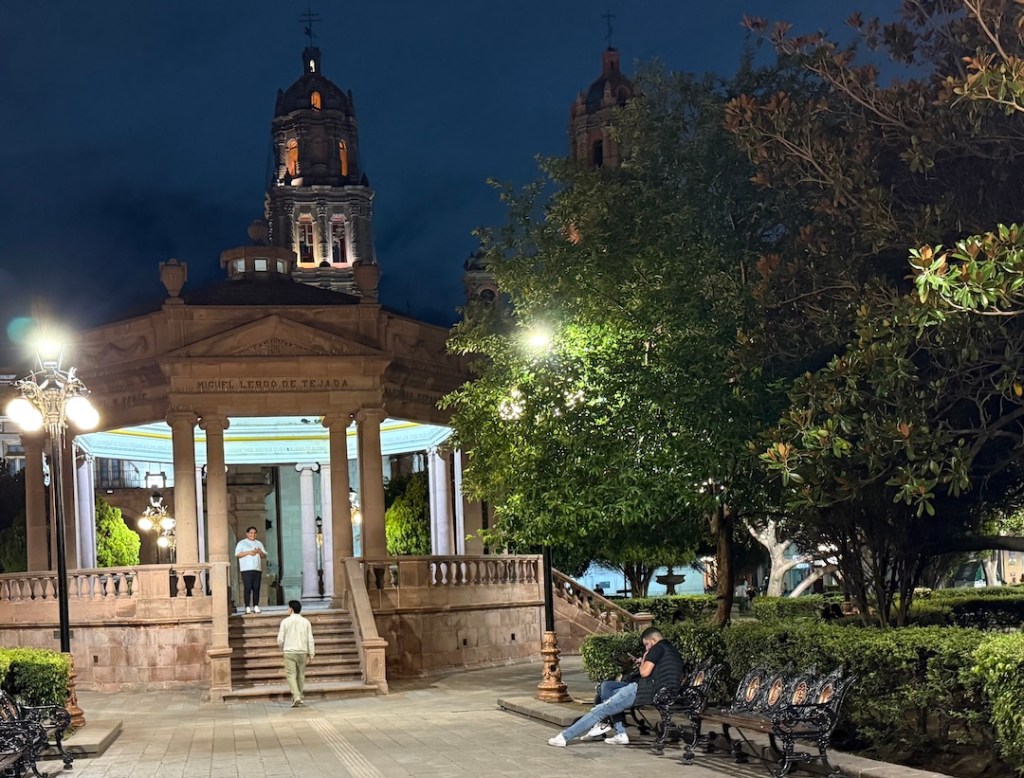
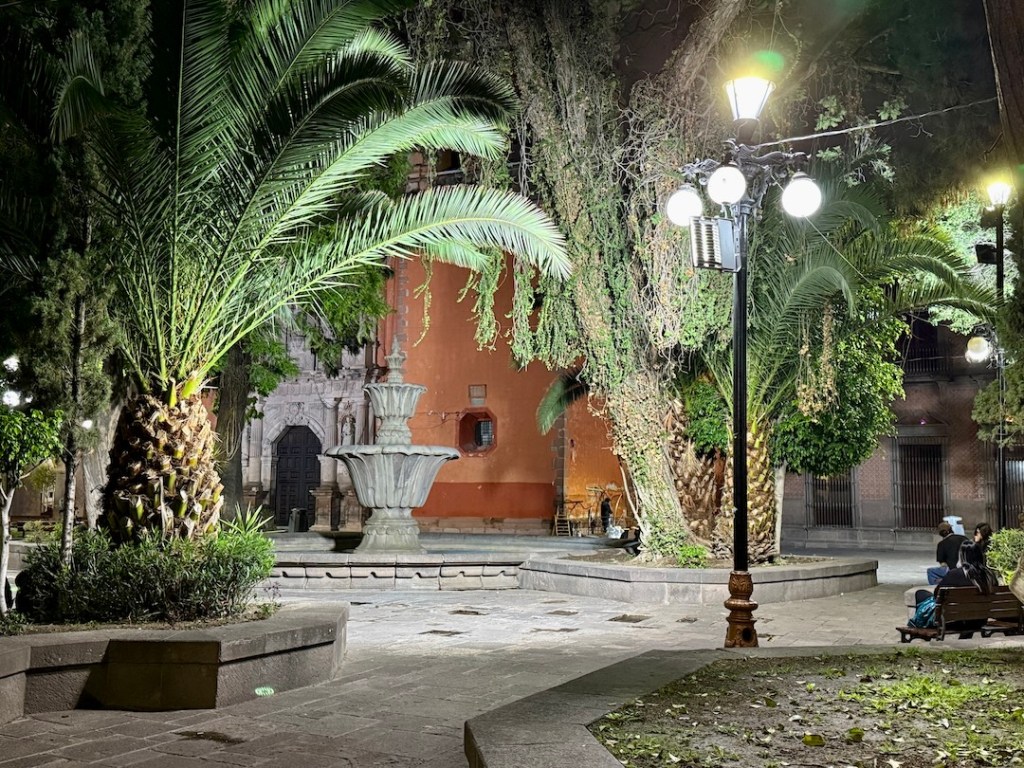
My old balcony is still up there — the second one from the left — where I stood in the rain 50 years ago to watch them rebuilding the plaza. And now I’m standing on the same stones that were chiseled into shape back then on a big rough table in the street. Today the rebuilt Plaza de Armas is well-used, with its fine church undergoing restoration, the impressive stone bandstand, and the gardens. It’s alive with the buzz of families enjoying the evening life of the city.
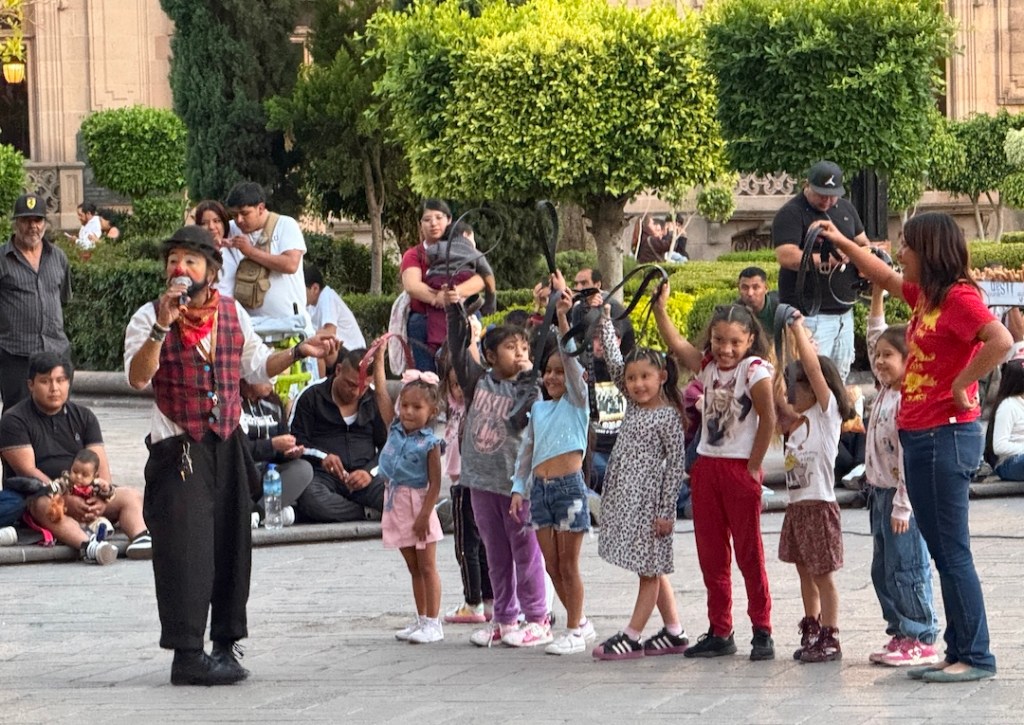
And of course there’s a payaso (a clown) in the plaza who’s gathered a bunch of laughing kids into a line so he can play tricks on them while the audience of parents, grandparents, and others (such as us!) get a great laugh out of it.
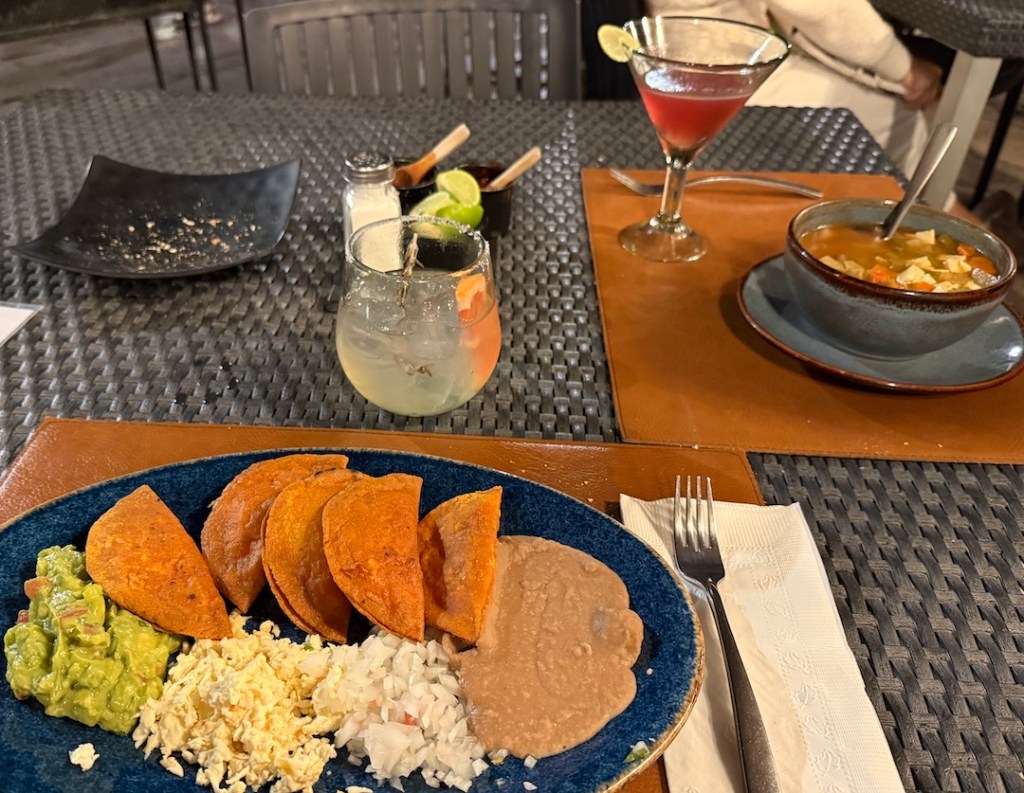
Later in the evening we find an outside table on the Plaza at the beautiful La Posada del Virrey. We’re under the sheltering sky enjoying cold drinks and a traditional Potosino meal, while merchants fold their tents for another day. After dinner we’ll take another walk around the now-quiet plaza to absorb the evening.
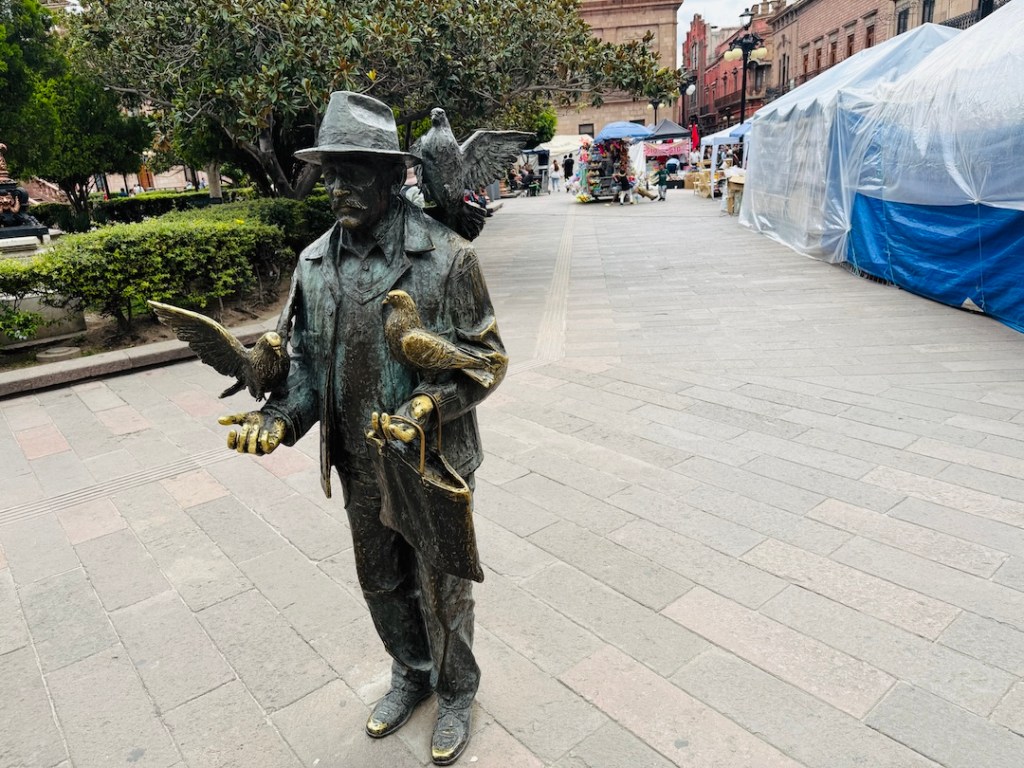
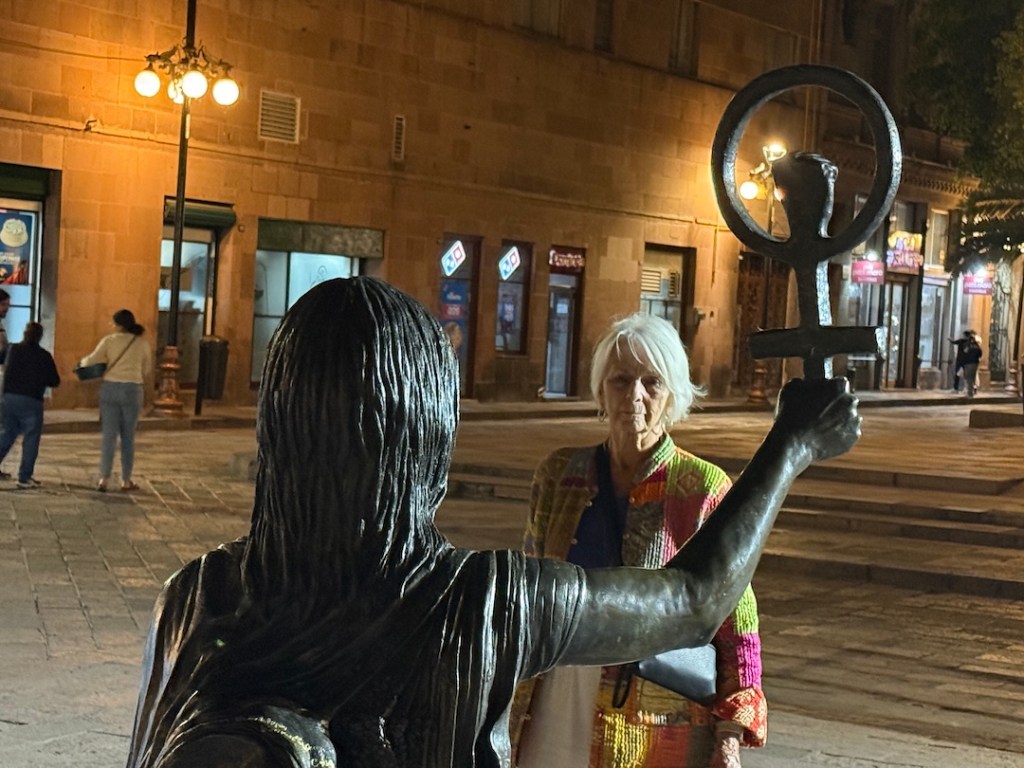
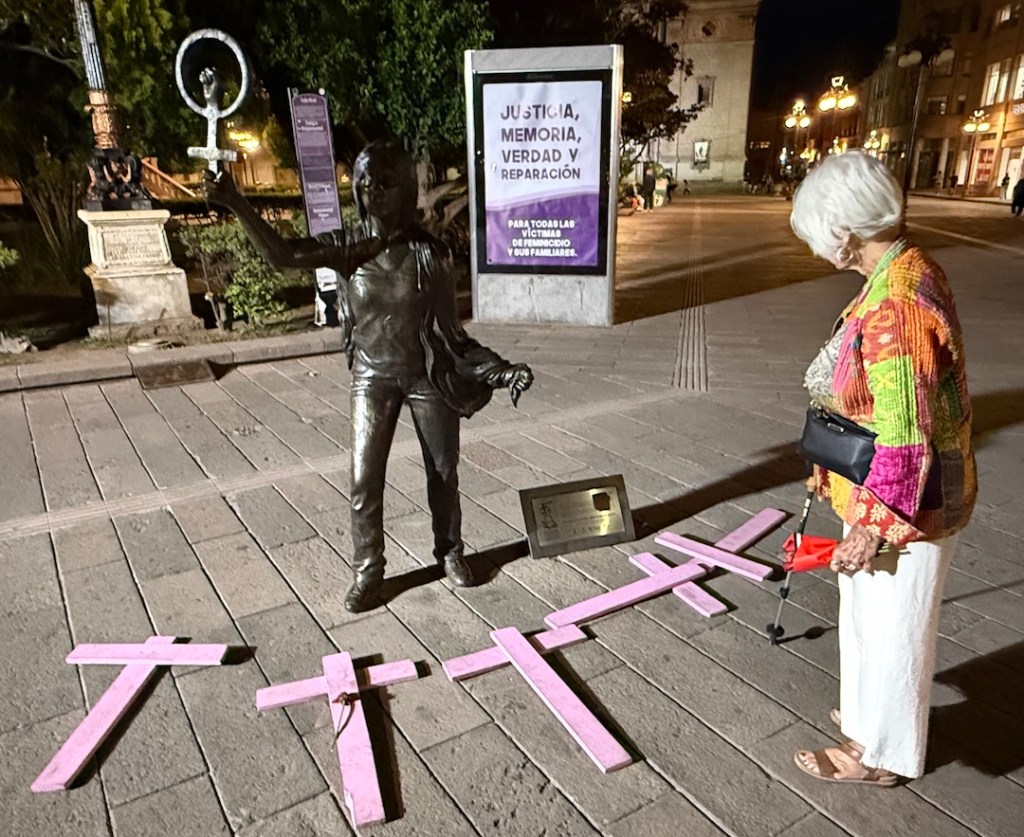
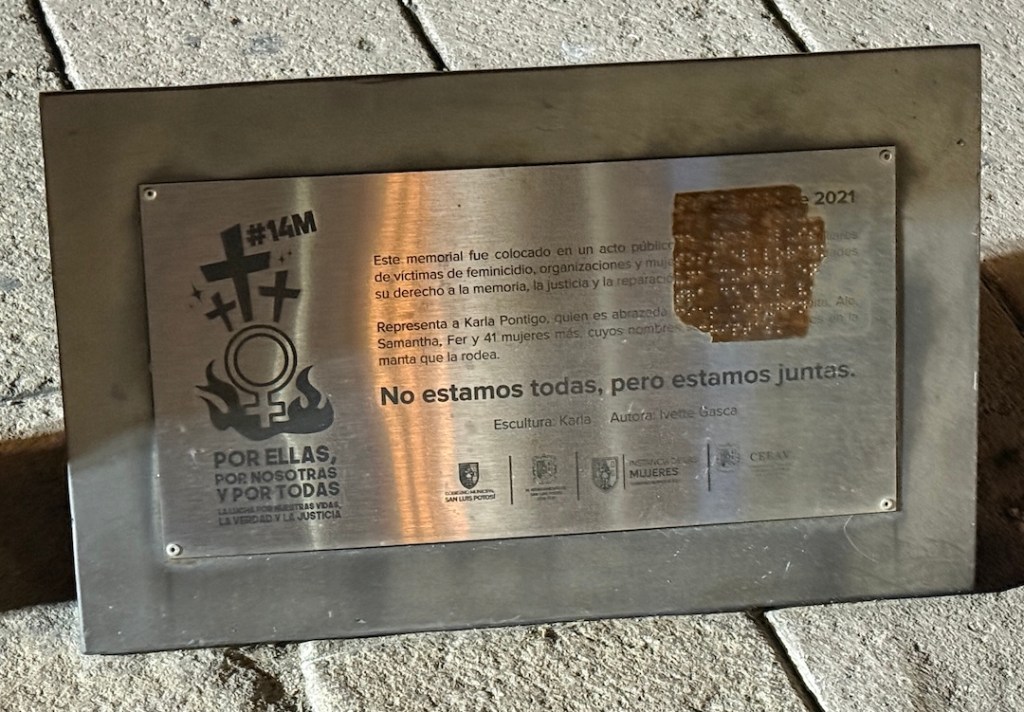
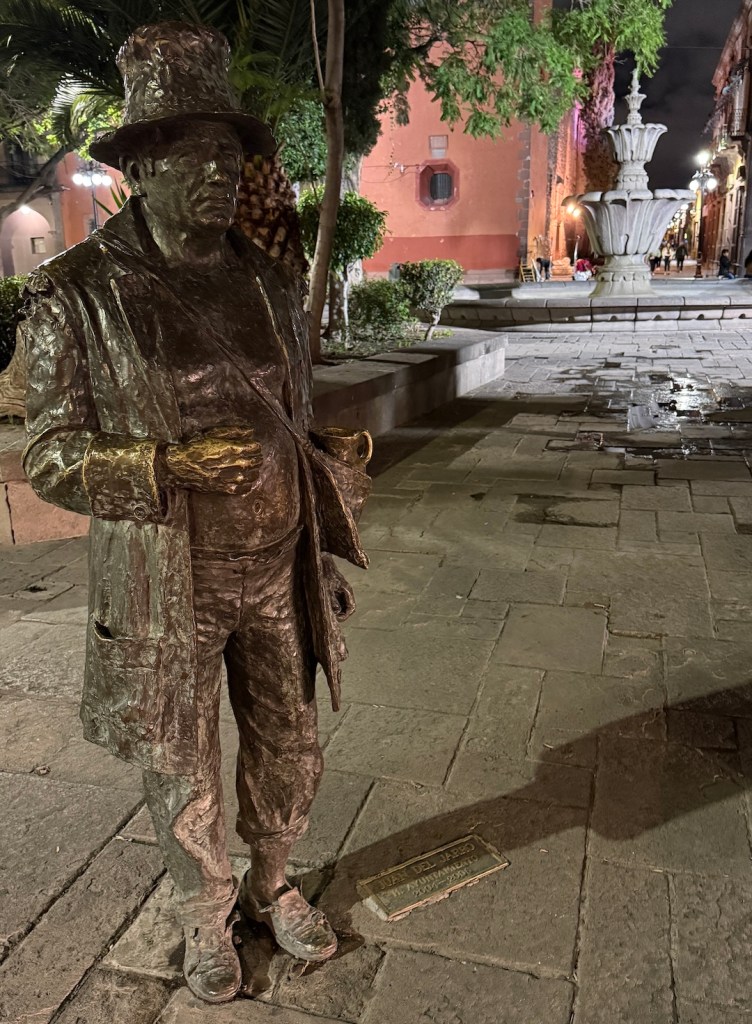
On the far corner of the Plaza we find a life-sized bronze statue of a local 22 year-old student named Karla del Carmen Pontigo, who was murdered here in 2012. The plaque, which some idiot glued a sticker onto, says this is a memorial to the many women who have been murdered in Mexico, and whose families are still seeking justice. It’s a sobering moment, and the array of pink crosses lying on the pavement before her make it all the more memorable. Yet it’s a continuing tragedy in the country that demands attention, as mothers continue to search for their children.
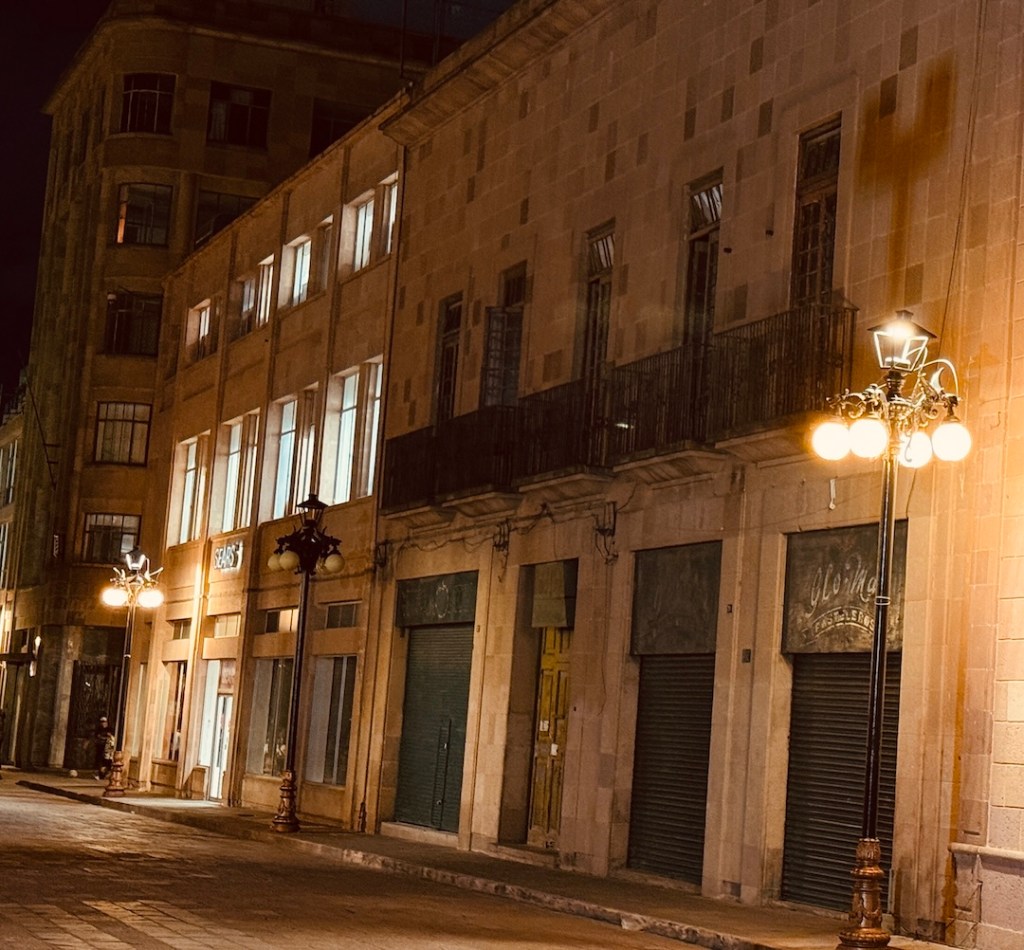
As we leave with our thoughts, the darkened old Hotel Plaza stands there in the nighttime facing the now-quiet Plaza de Armas. It’s a fond memory of San Luis Potosí that I’ll long recall.
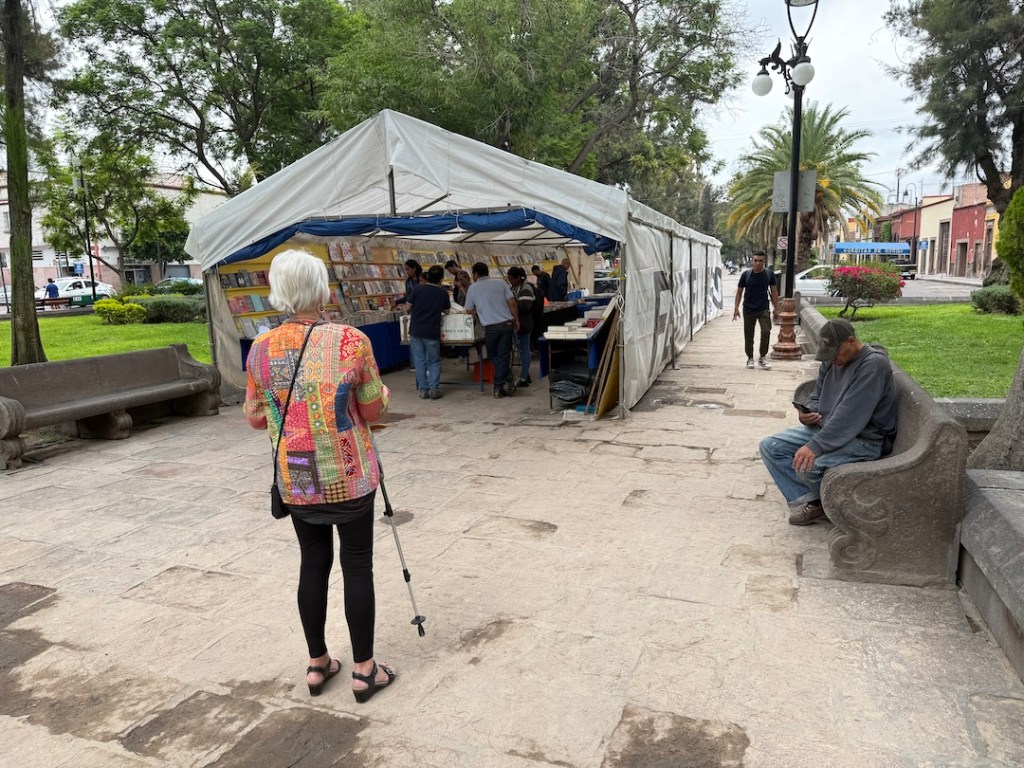
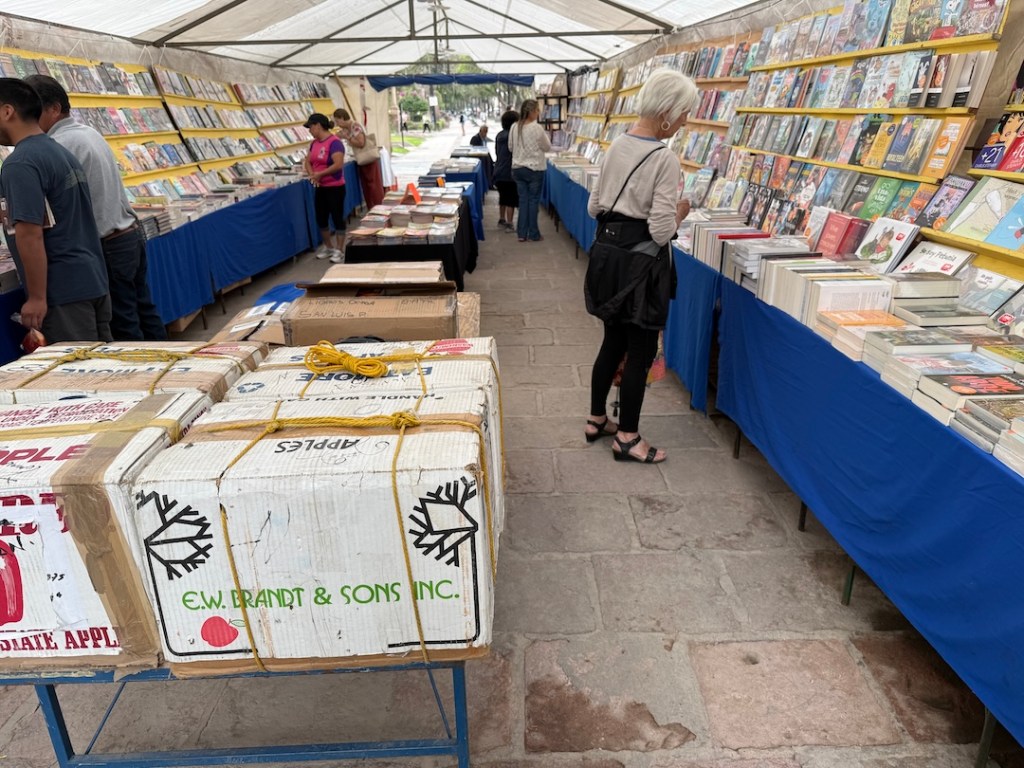
On another day we follow Calle Zaragoza southward to the leafy Jardín Colón and pause at a Feria de Libros. For many Mexicanos books are important, and authors are held in respect. And we enjoy looking through the many volumes available.
Farther along the tree-lined parkway there’s an open-air exhibit of large colorful dance photos that celebrate this beautiful and cultured city. The photos remind us that there’s often a band playing on weekends at the main plaza of many Mexican cities, and we’ve been known to join the dancing. It makes for more good memories.
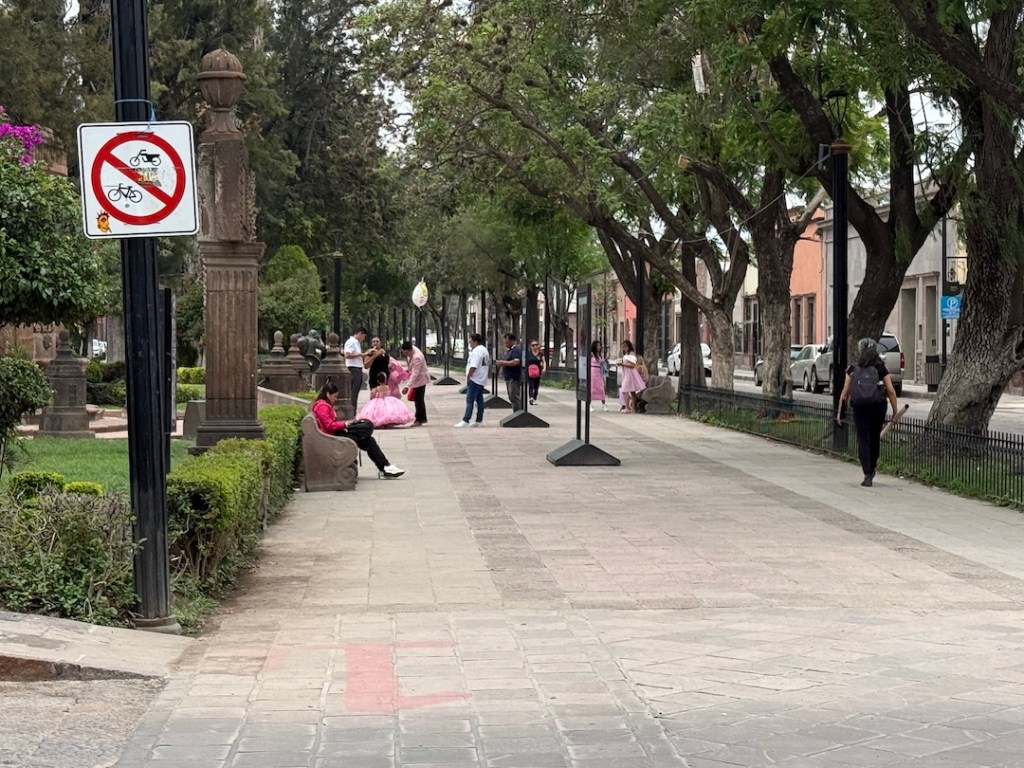
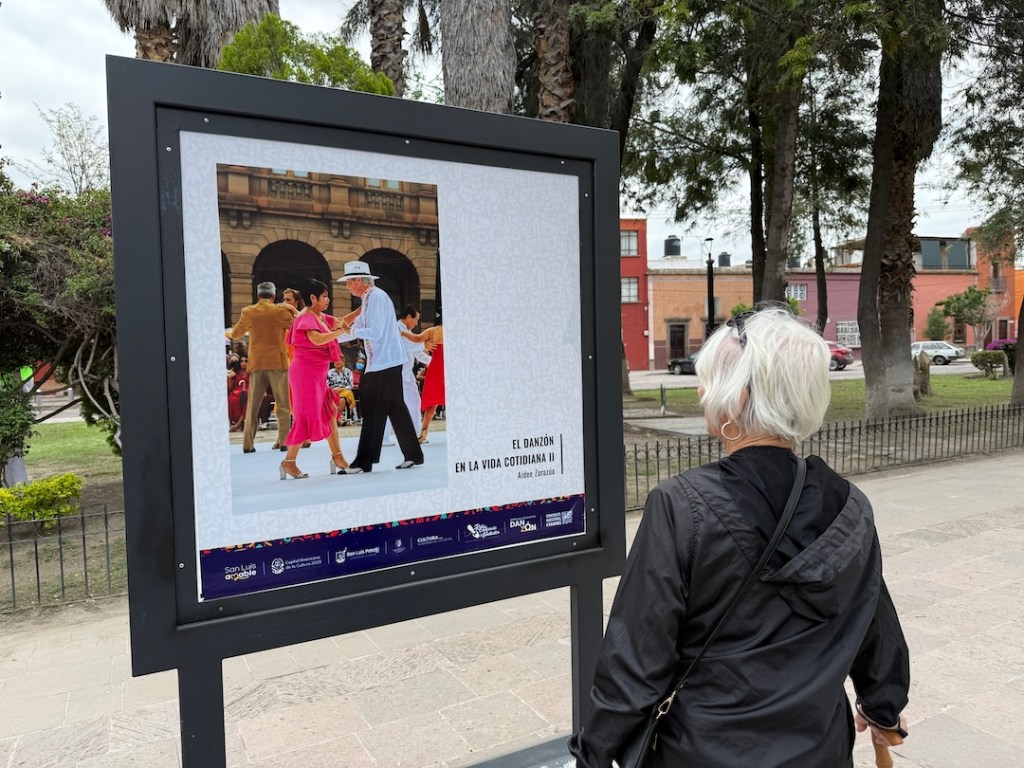
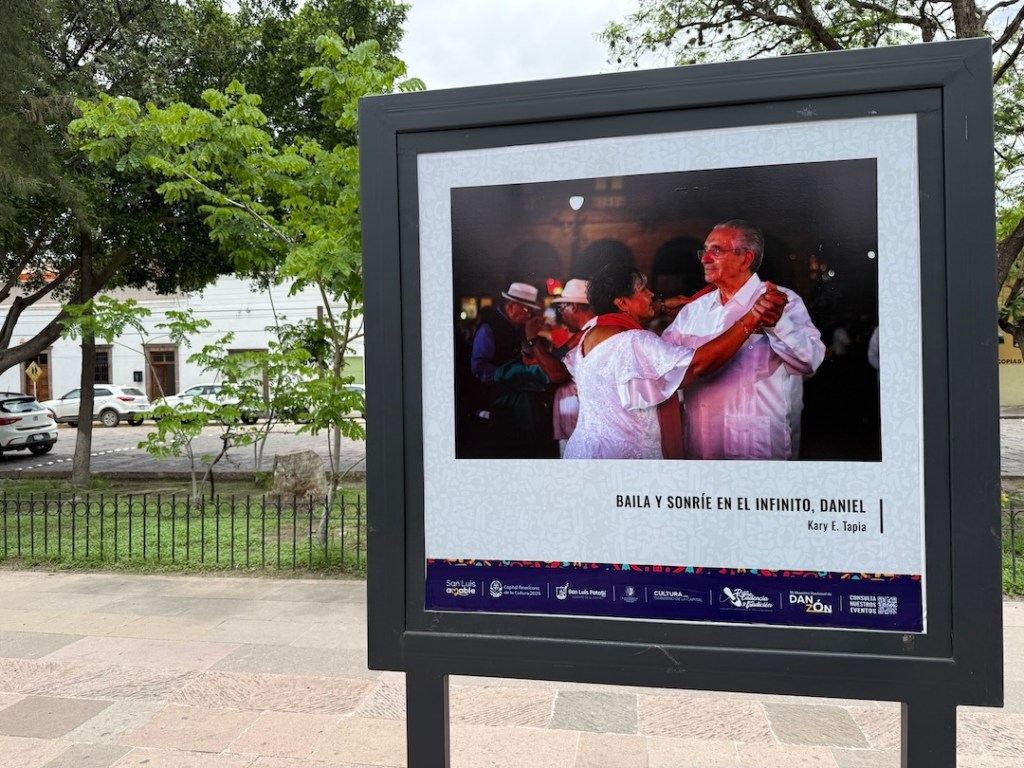
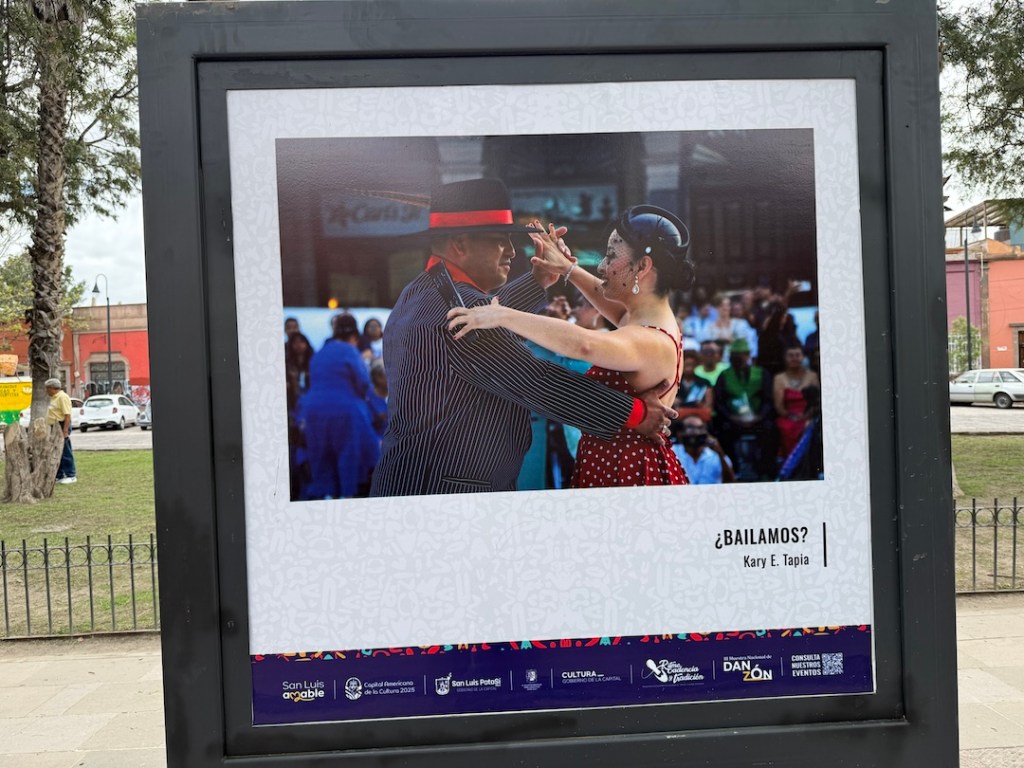
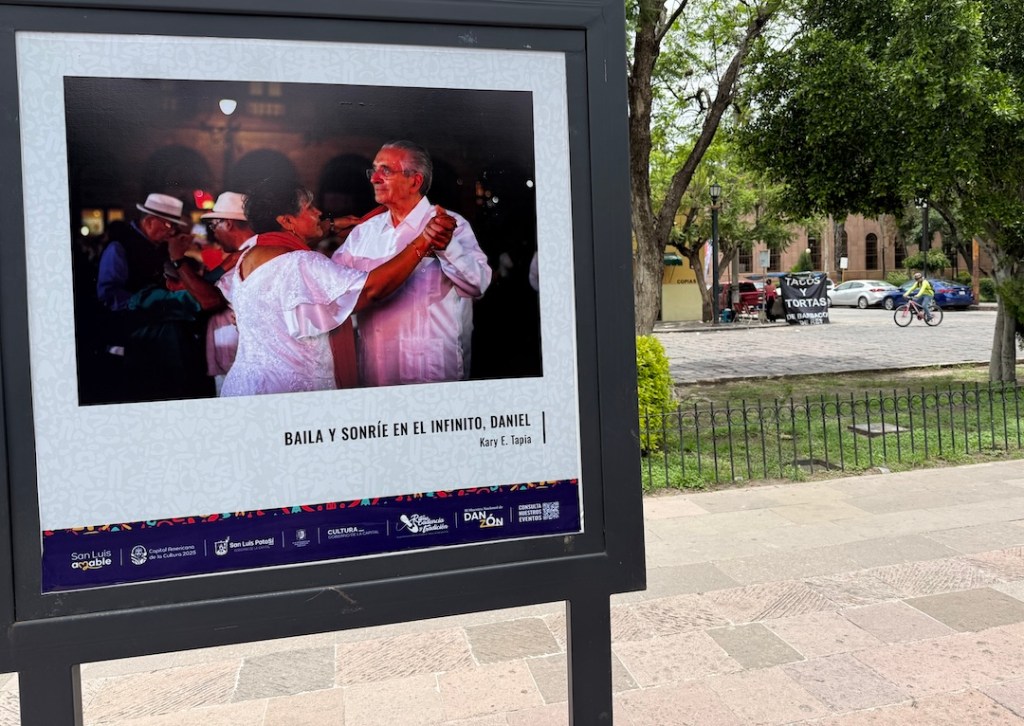
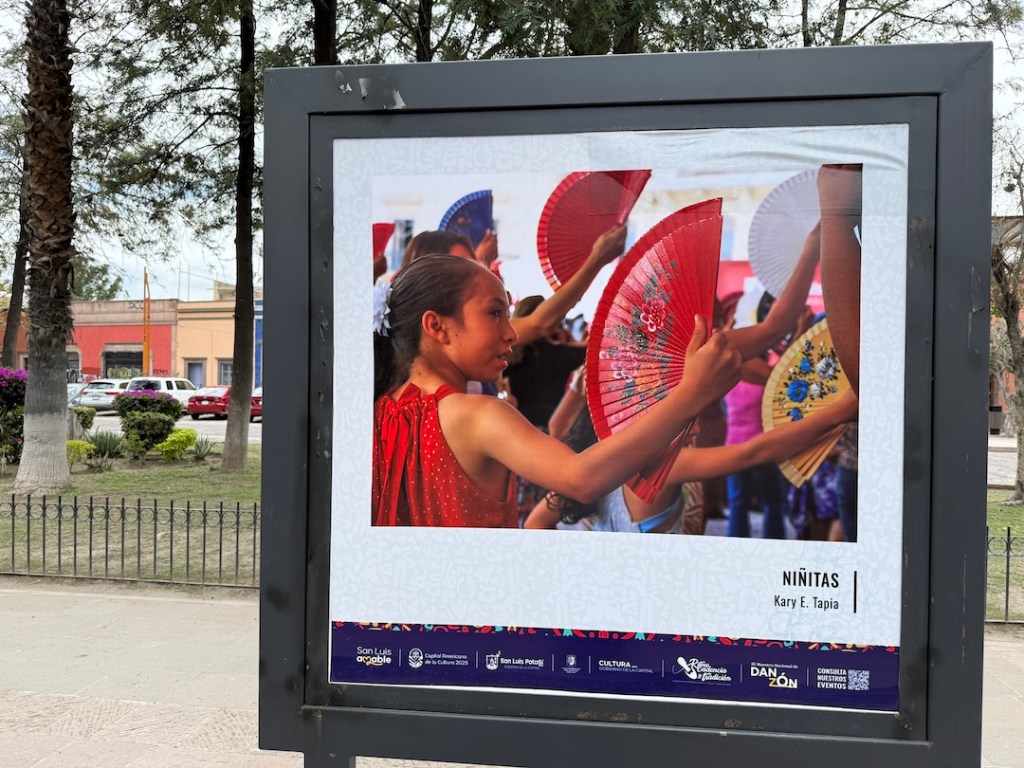
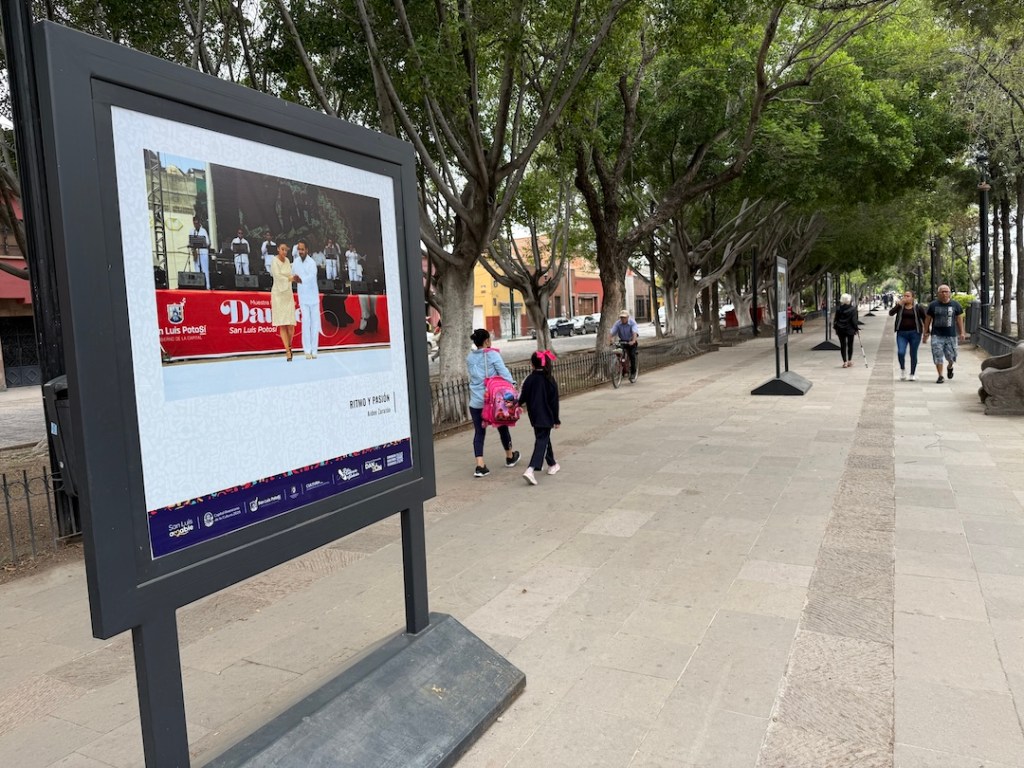
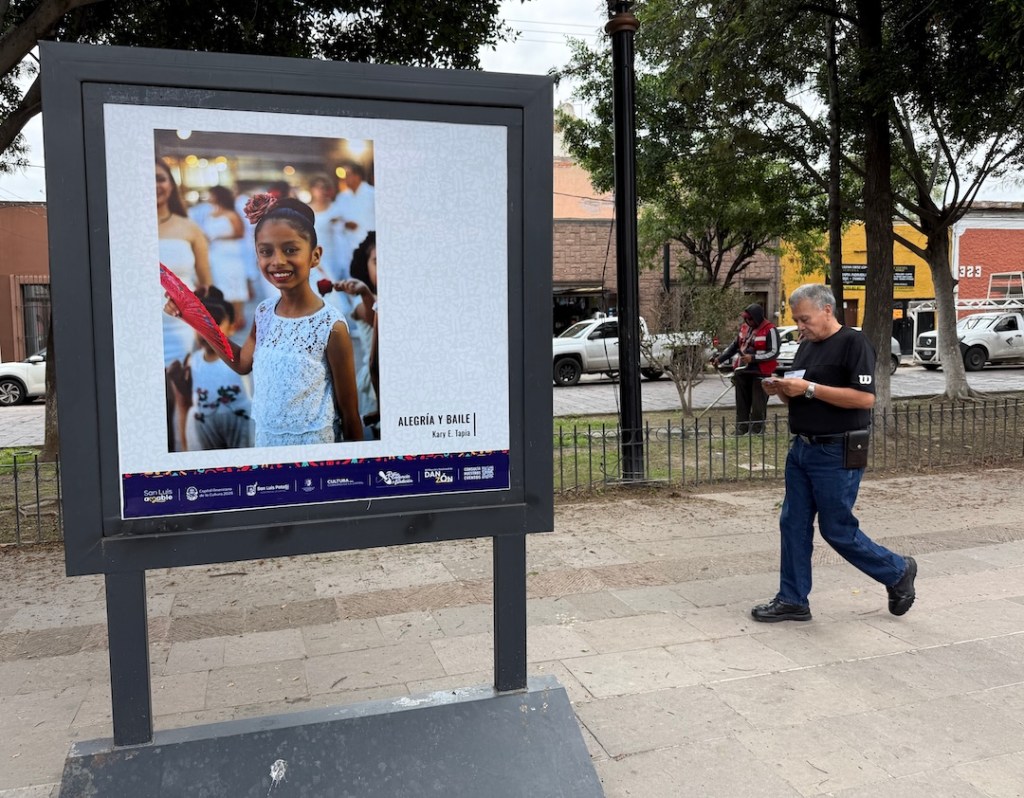
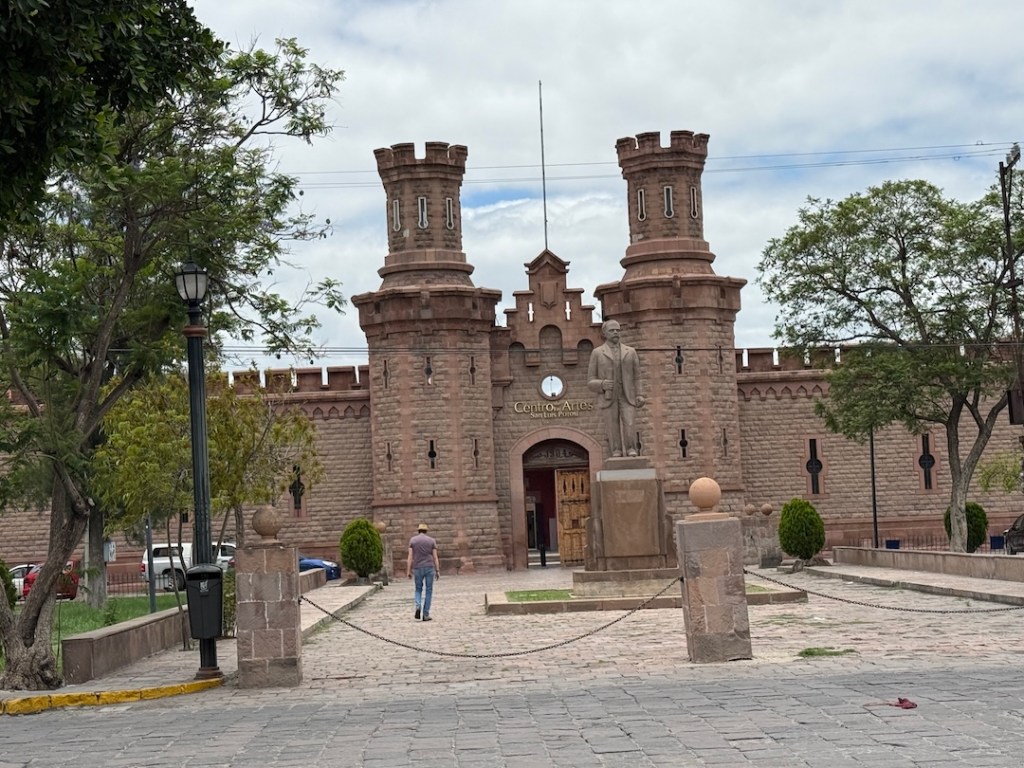
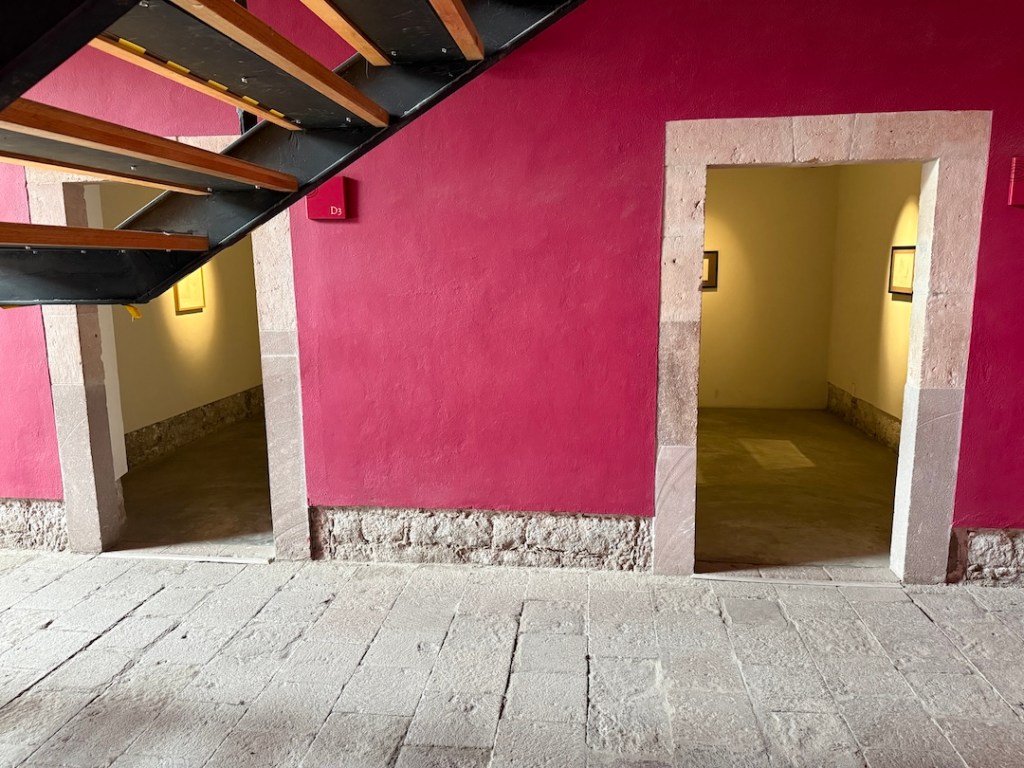
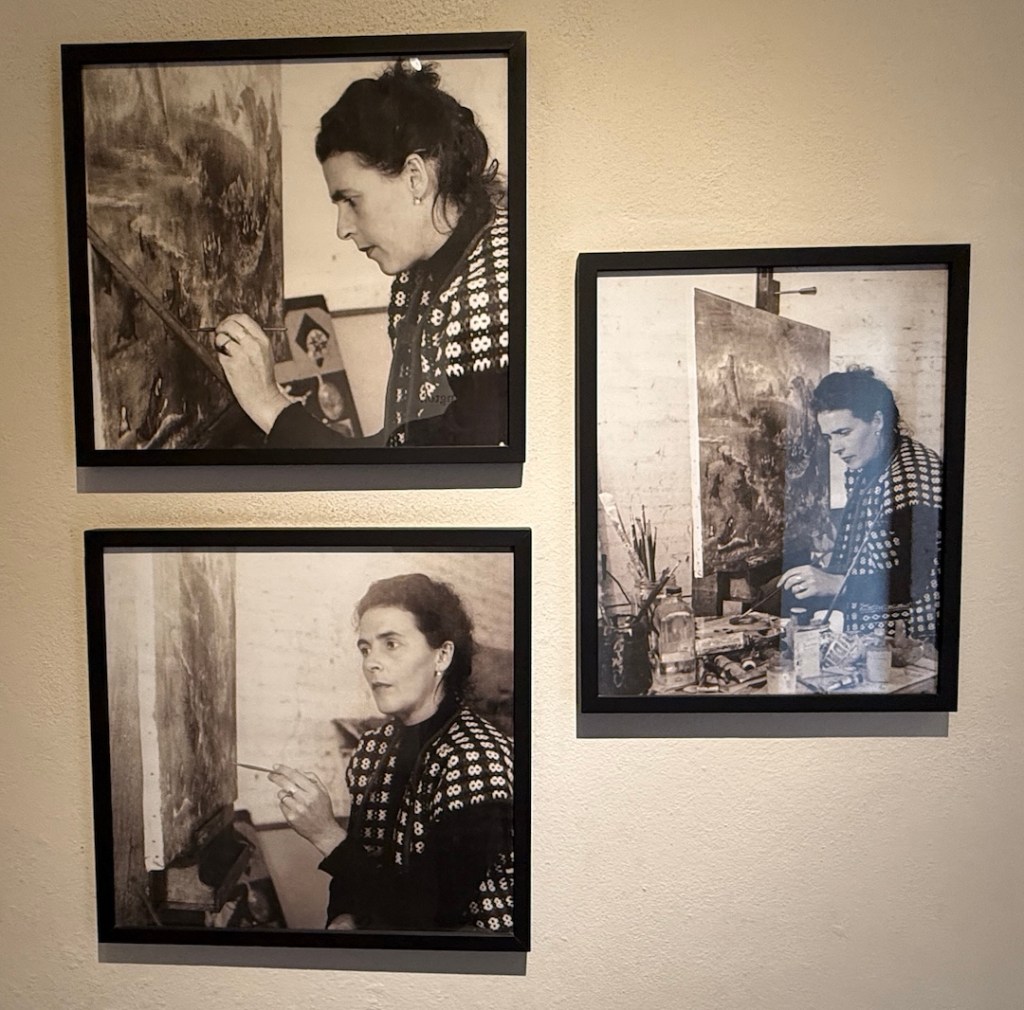
We’re following this tree-shaded walkway to the recently-renovated Centro de las Artes. This imposing former penitentiary is now showcasing a new permanent exhibition of the British-Mexican surrealist artist Leonora Carrington.
Carrington (1917–2011) was born in Lancashire and encountered surrealist art at an early age on a visit to Paris. When she was a debutante later in England she refused to be “sold to the highest bidder” and instead pursued her emerging interests in art. In 1937 she moved in with the artist Max Ernst and became part of the Paris art scene. When the Nazis invaded, she escaped to Spain and then to Mexico, where she lived out the rest of her life and became a friend of the Mexican surrealist, Remedios Varo (1908-1963).
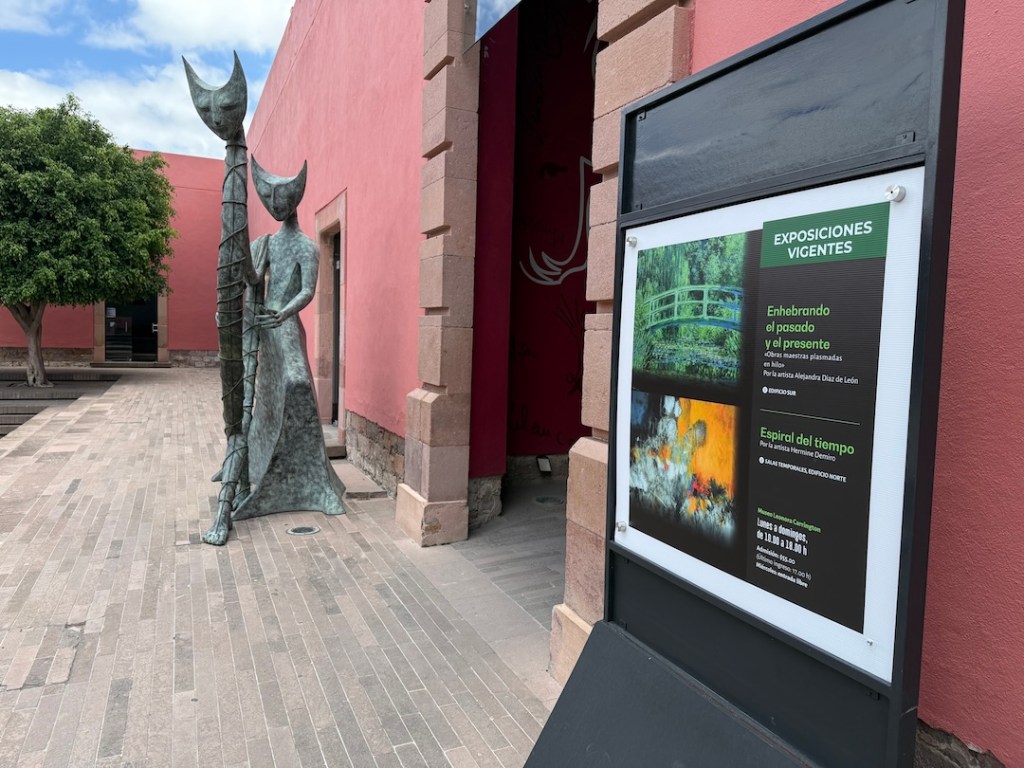
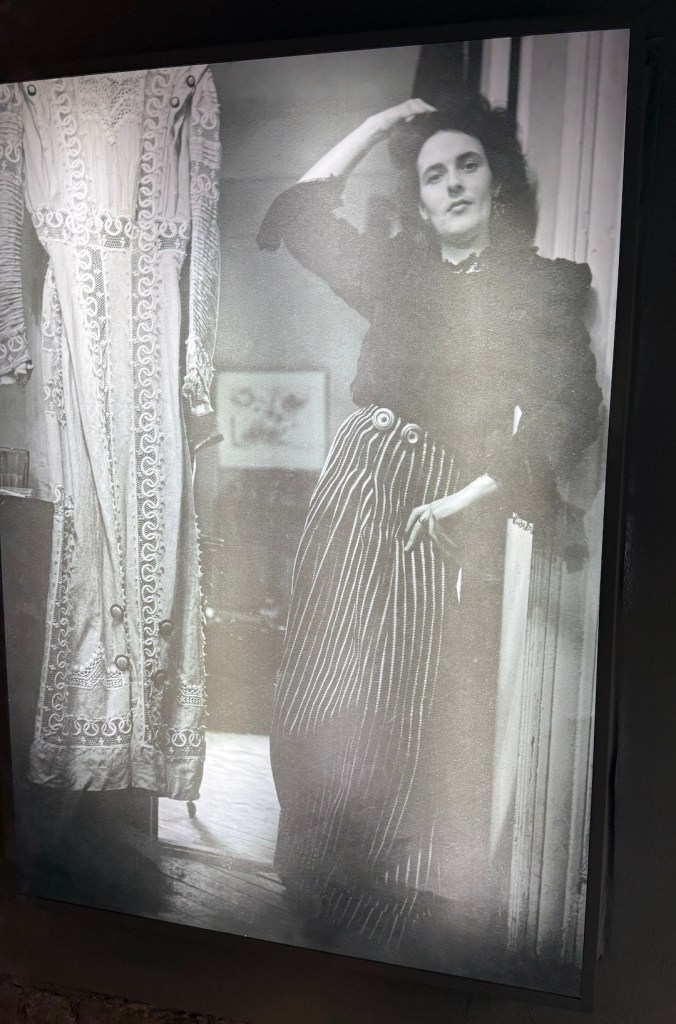
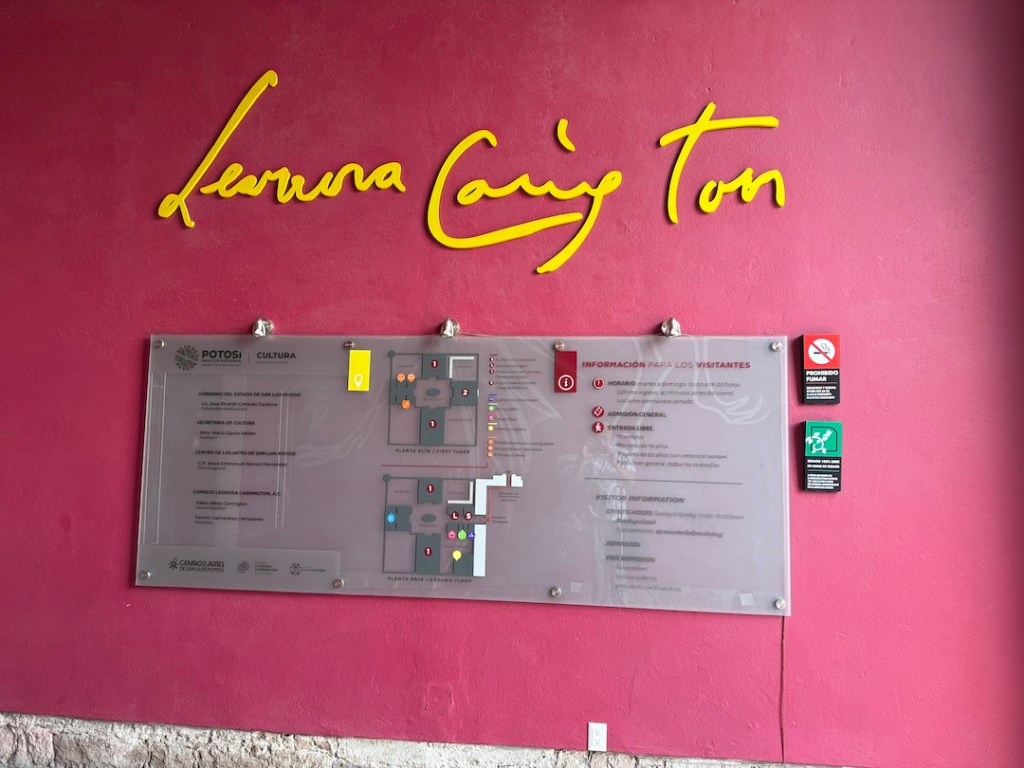
The city of San Luis Potosí has done an admirable job of converting an older museum into a modern facility for displaying Carrington’s life and work with a wide variety of her art. She was a prolific artist who produced a great number of paintings and sculptures, and one of her paintings set a record at Christie’s in 2005 for the highest price paid for a living surrealist painter. She’s an important figure in the world of modern art, and the people of San Luis Potosí are now recognizing her as such.
Her works are at museums around the world, including Mexico City’s Museo de Arte Contemporaneo, where they are displayed with the work of Remedios Varo and Frida Kahlo. Her large bronze sculpture (5 tonnes) entitled “How Doth the Little Crocodile,” based on a poem from Alice’s Adventures in Wonderland, is along the Paseo de la Reforma in the center of Mexico City.
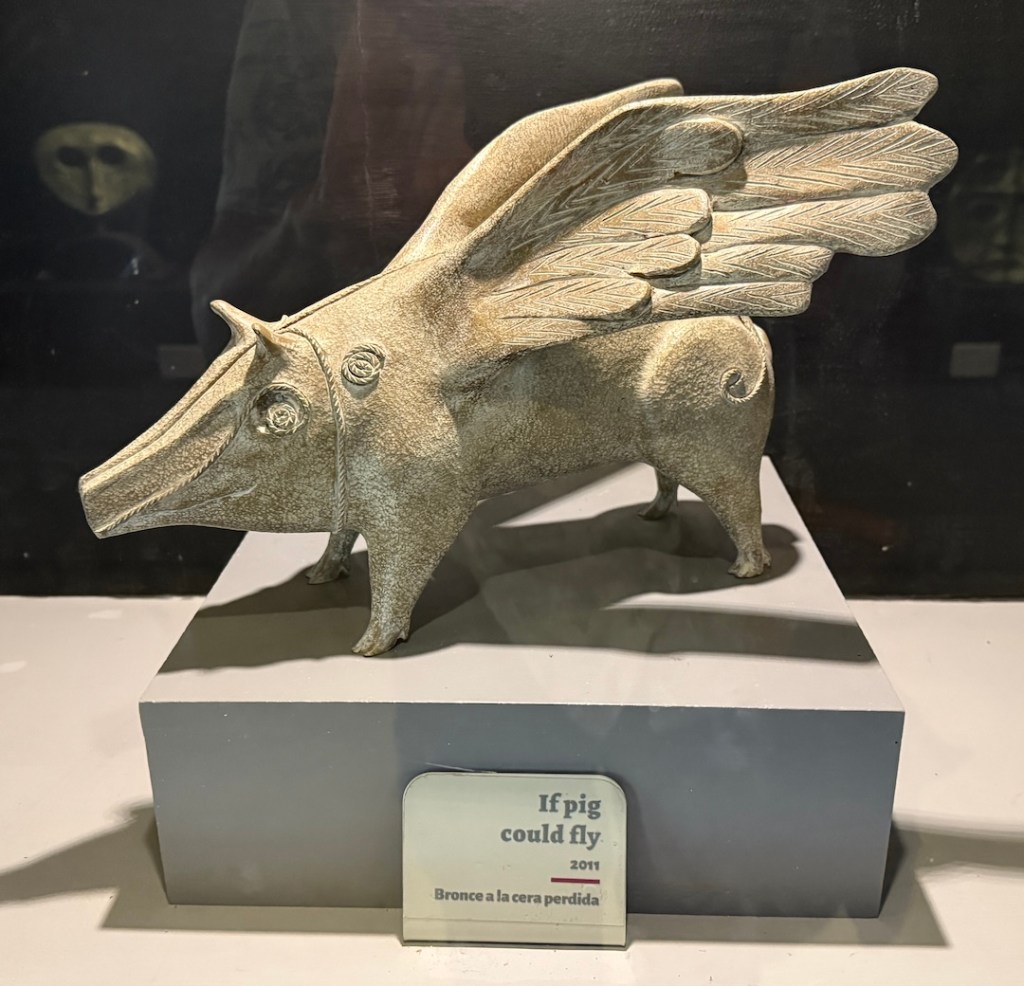
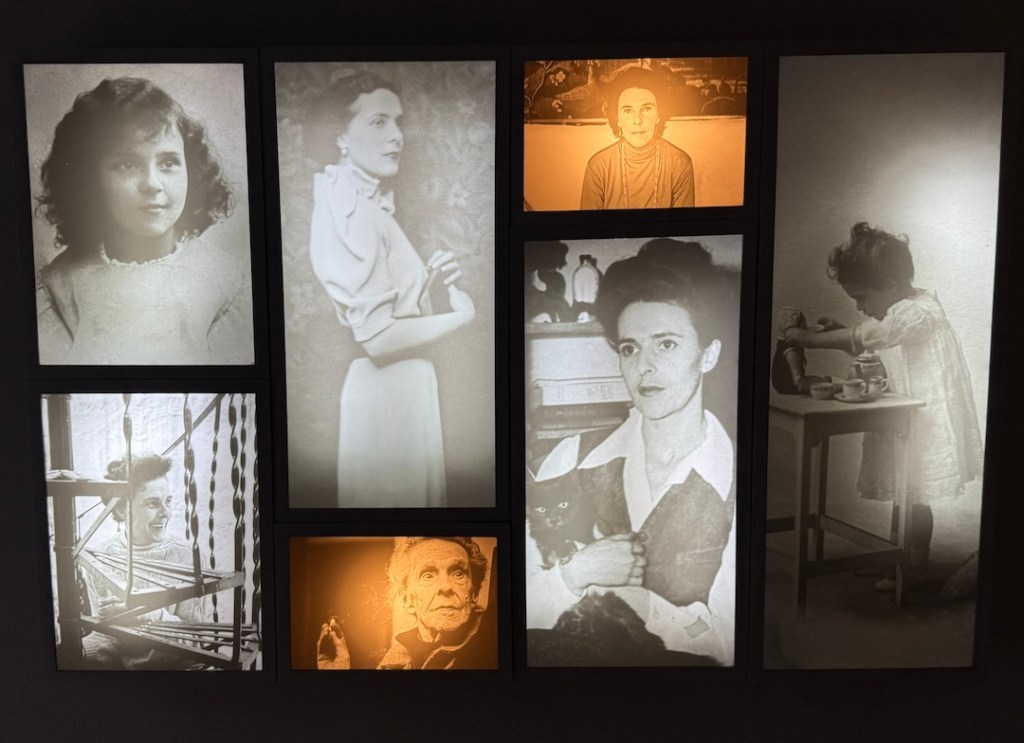
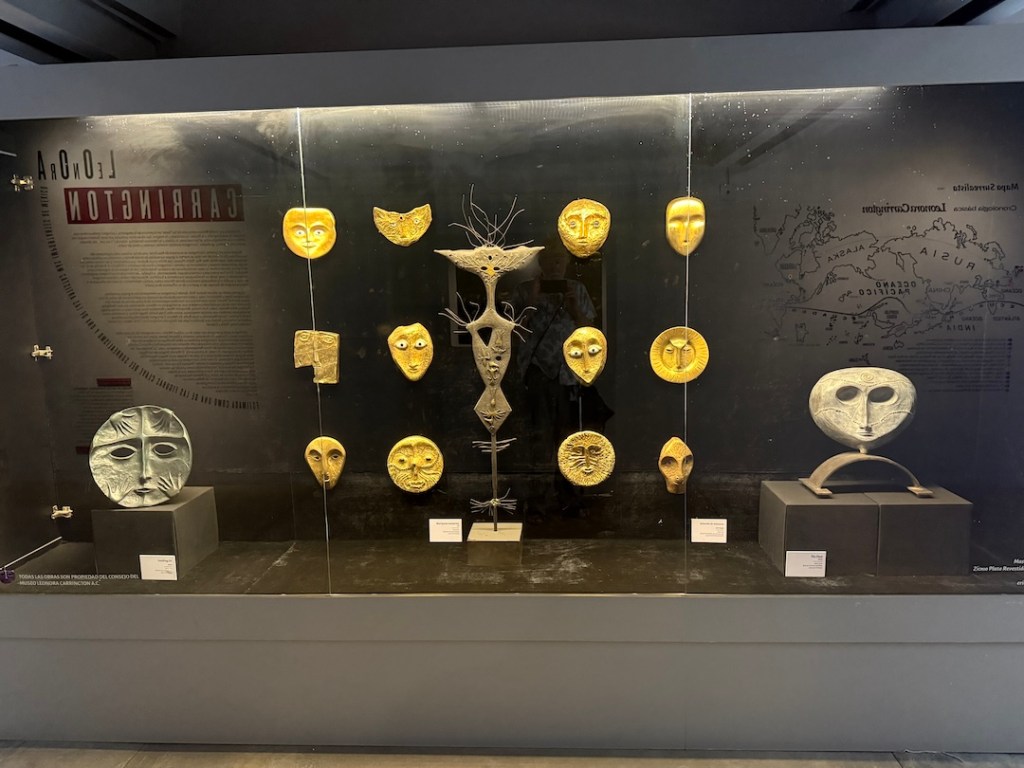
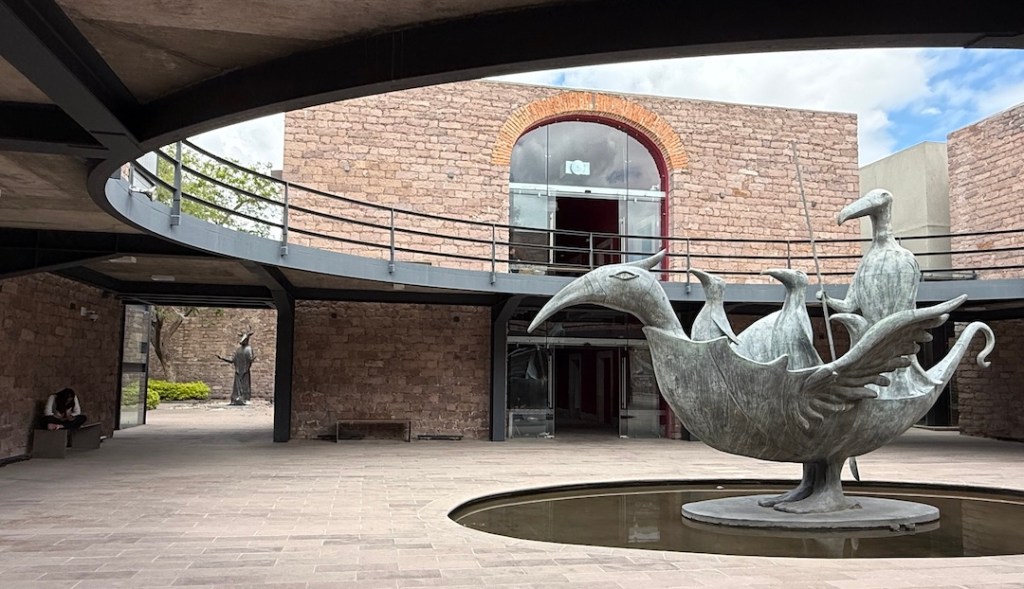
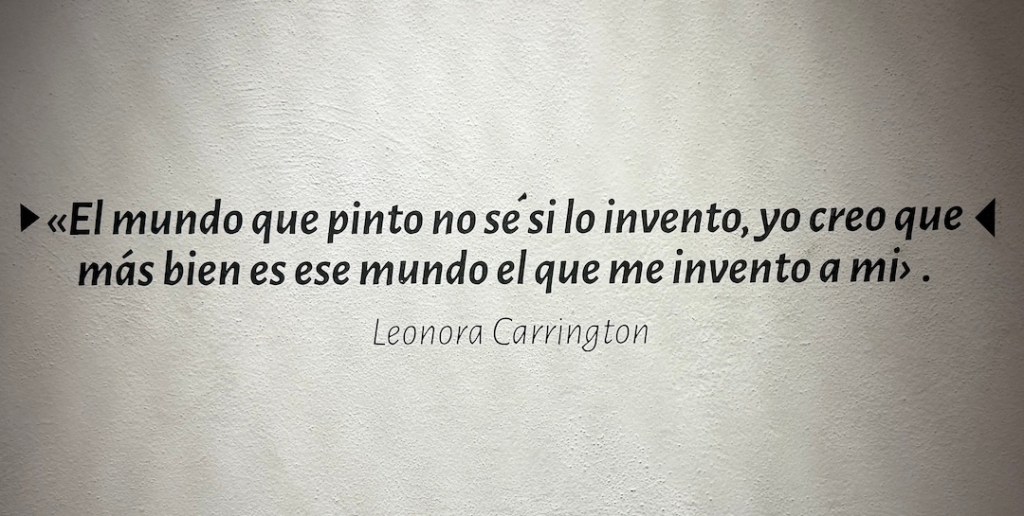
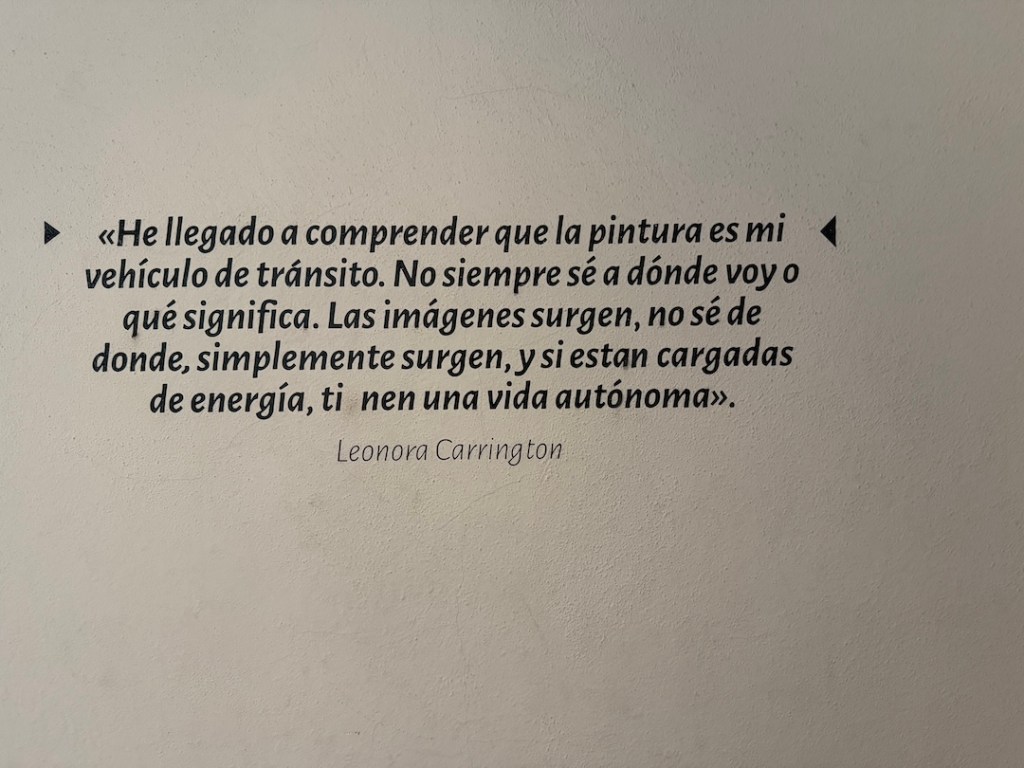
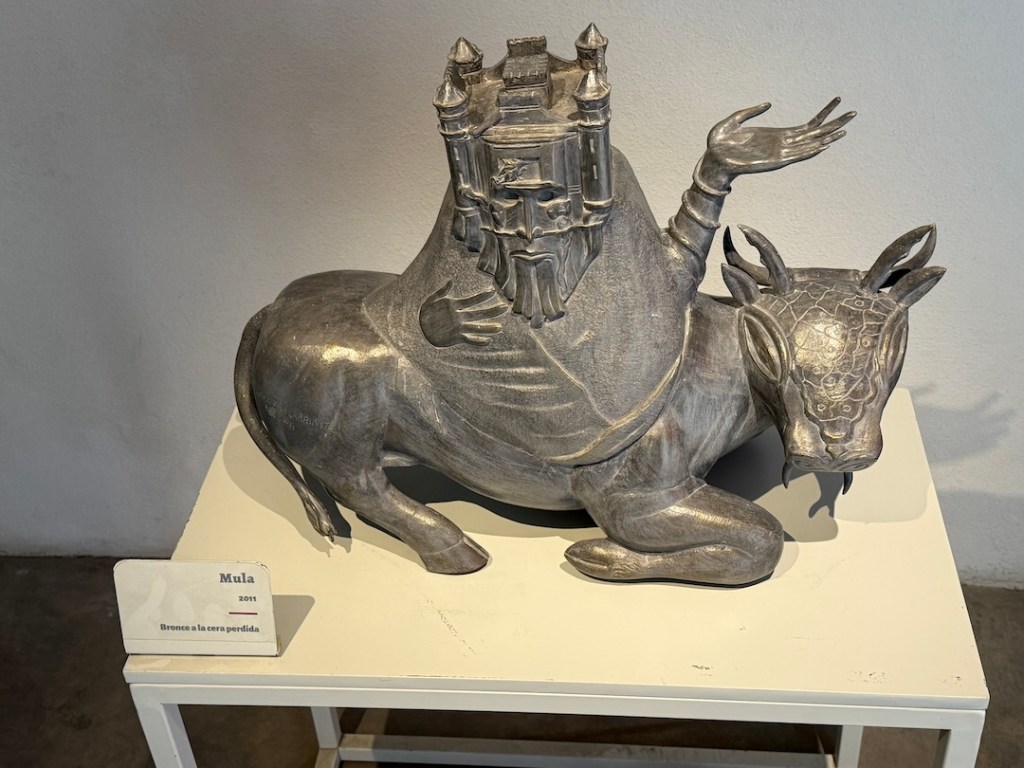
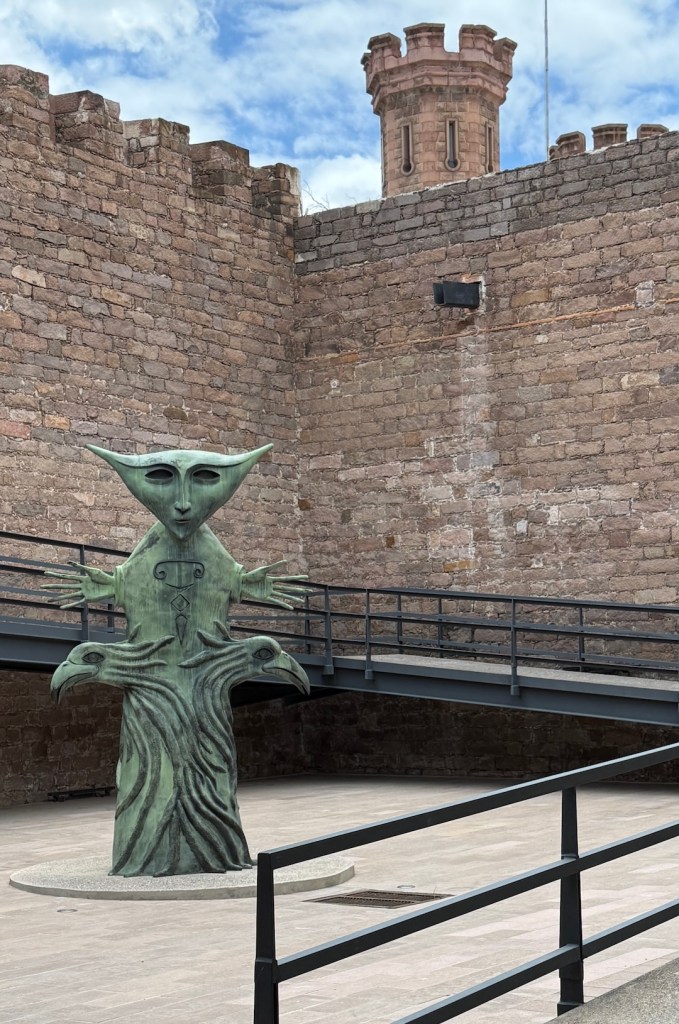
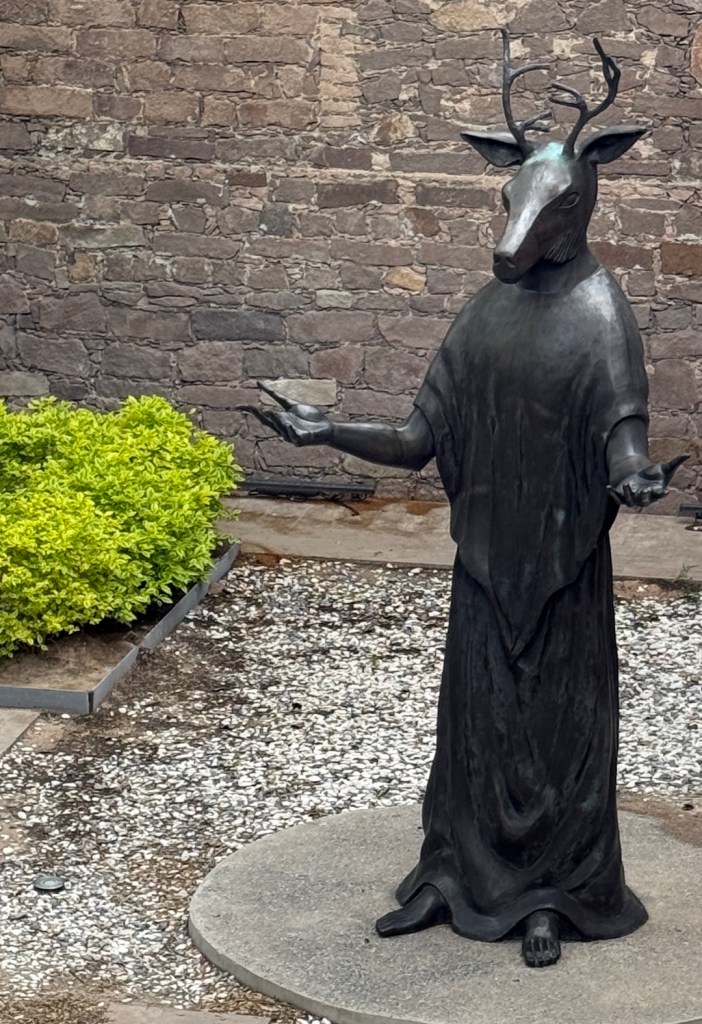
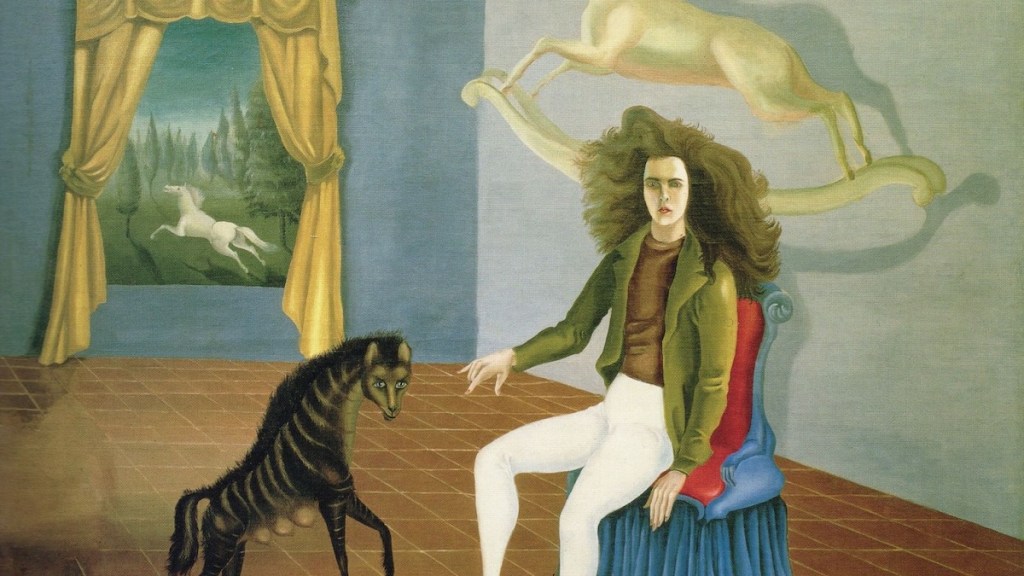
Her enigmatic “Self Portrait (Inn of the Dawn Horse)” from 1937-38 seems to include influences from the works of Frida Kahlo, although Carrington would not arrive in Mexico until 1942. And maybe Frida was influenced by Leonora, or by their common female experience. At any rate, her work is challenging.
We haven’t yet visited the Casa Estudio Leonora Carrington, the home she occupied for 60 years in Mexico City, at Calle Chihuahua 194 in Roma Norte, but we look forward to doing so. It’s an easy walk from the leafy Condesa area where we often stay, and it was slated to become a museum of her works. But for now it’s a ‘documentation center’ under the Universidad Autónomo Metropolitano (UAM).
After a good long afternoon in the Museo, we’re ready for a drink and dinner and time to reflect on Leonora Carrington’s legacy. And the rooftop cafe at the Margarita seemed like a good bet. There’s a sweet statue of a little girl being swept away with her balloons high on a prominent corner of the building that overlooks the city, and that was appealing enough for us to seek an elevator to the roof.
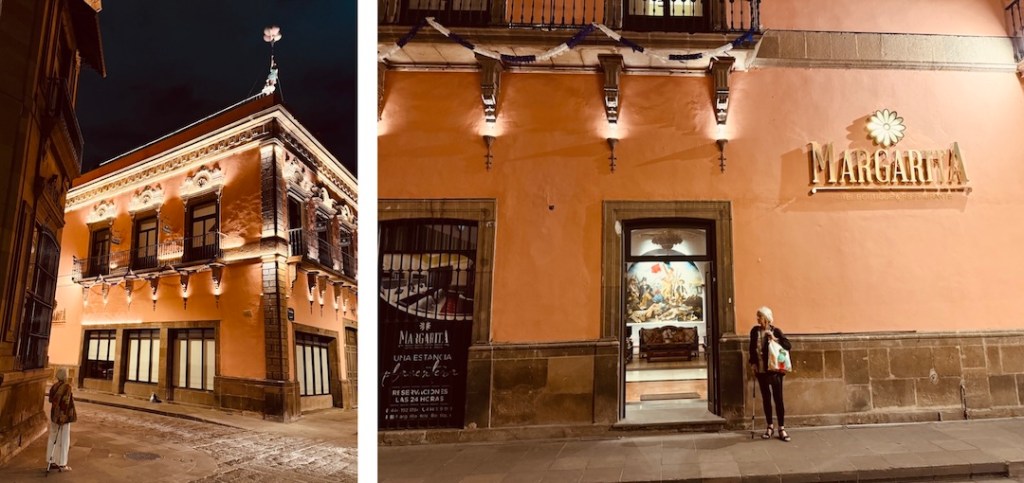
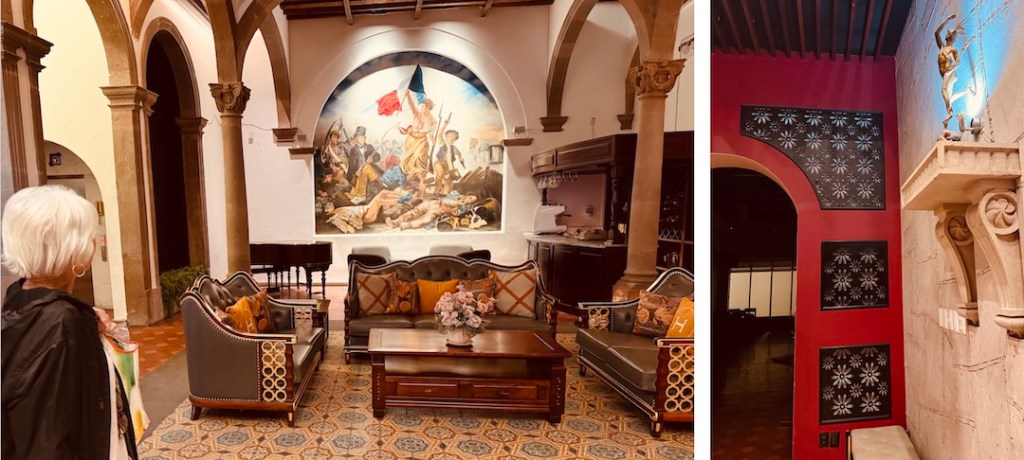
In the opulent lobby there’s a large mural of Delacroix’s “Liberty Leading the People,” commemorating the July Revolution of 1830 that toppled the conservative and unpopular King Charles X. The female image of Liberty, wearing the Phrygian Cap, and waving the French flag, is known as ‘Marianne,’ an icon that has appeared on French stamps and coinage. Her image here seems like an appropriate symbol for the aspirations of a modern-day Mexico that emerged from the ideals of the Revolution.
It was a beautiful evening to be outside and well above the city, and yet we were the only guests at the time. But we were early arrivals on a Saturday night, and most Mexicanos prefer a later dining hour. Just across the rooftops there’s another gorgeous patio, nicely-lit and planted, of a resident who appears also to appreciate some quiet privacy far above the traffic below.
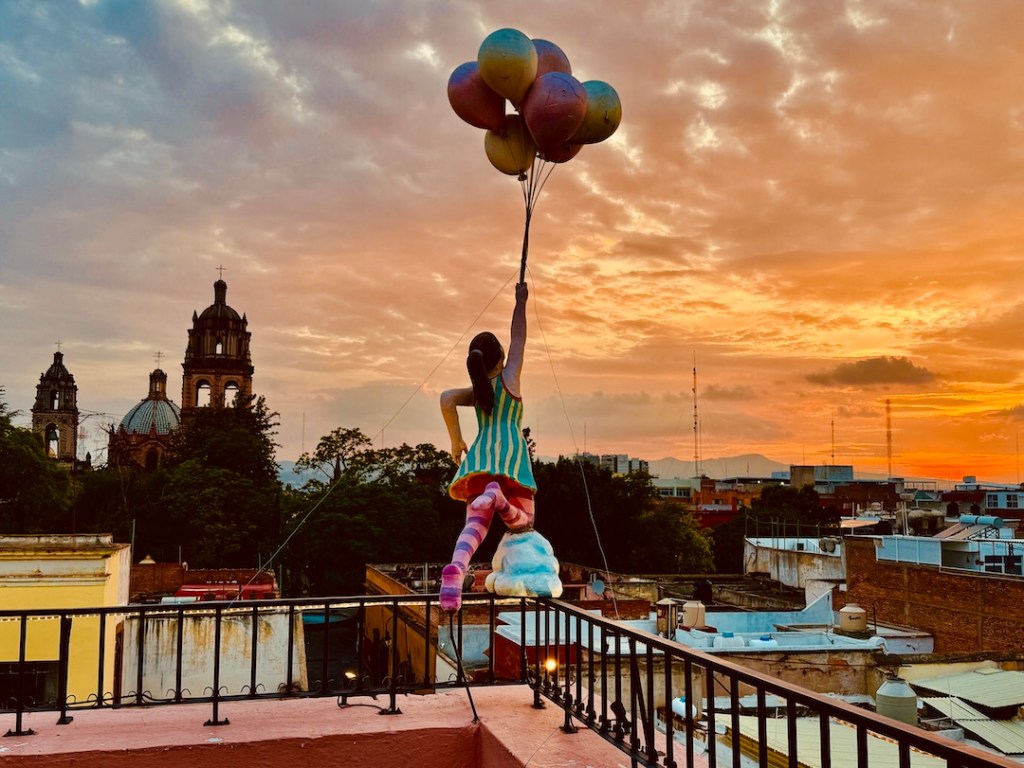
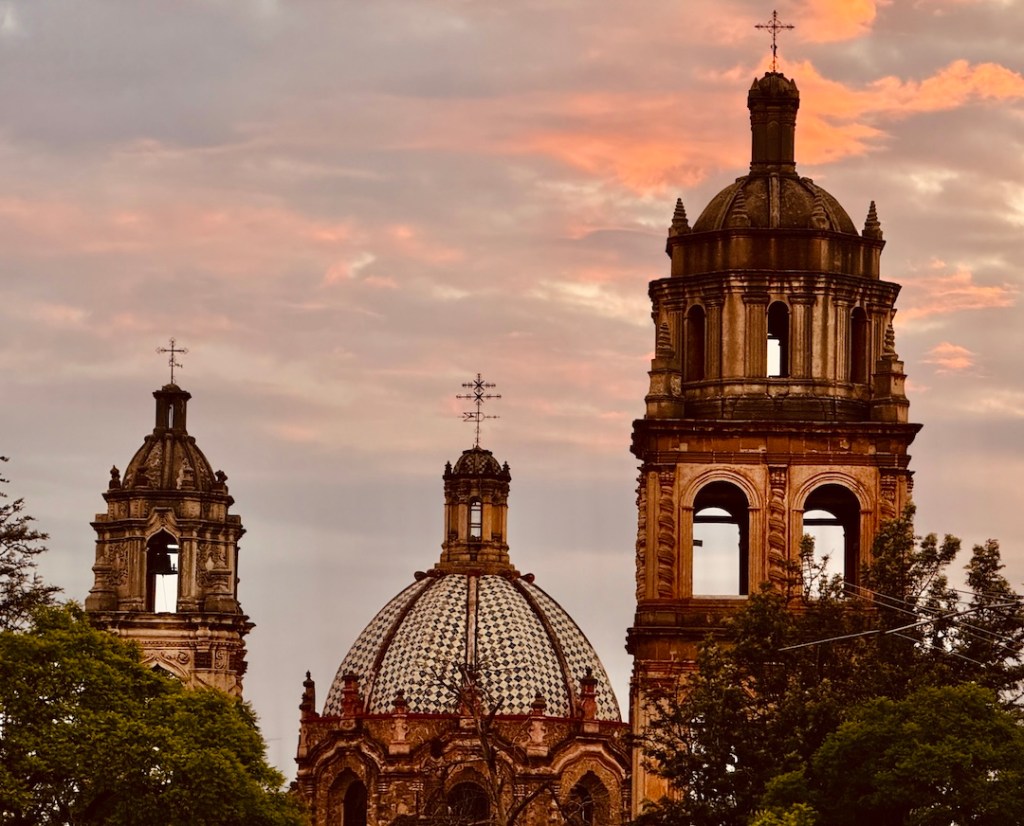
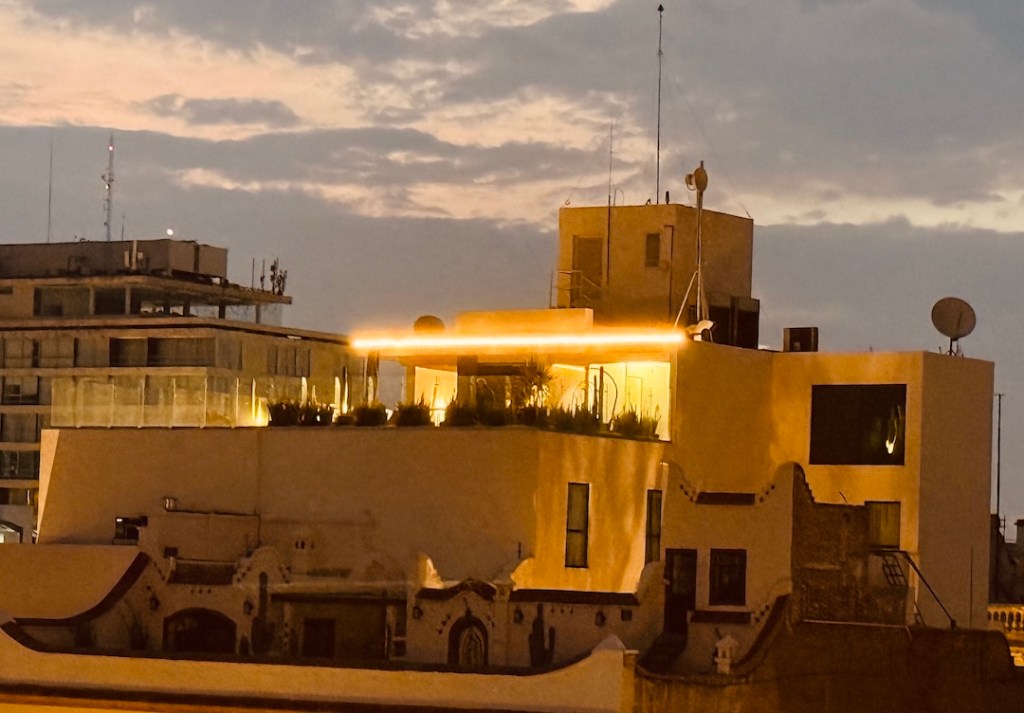
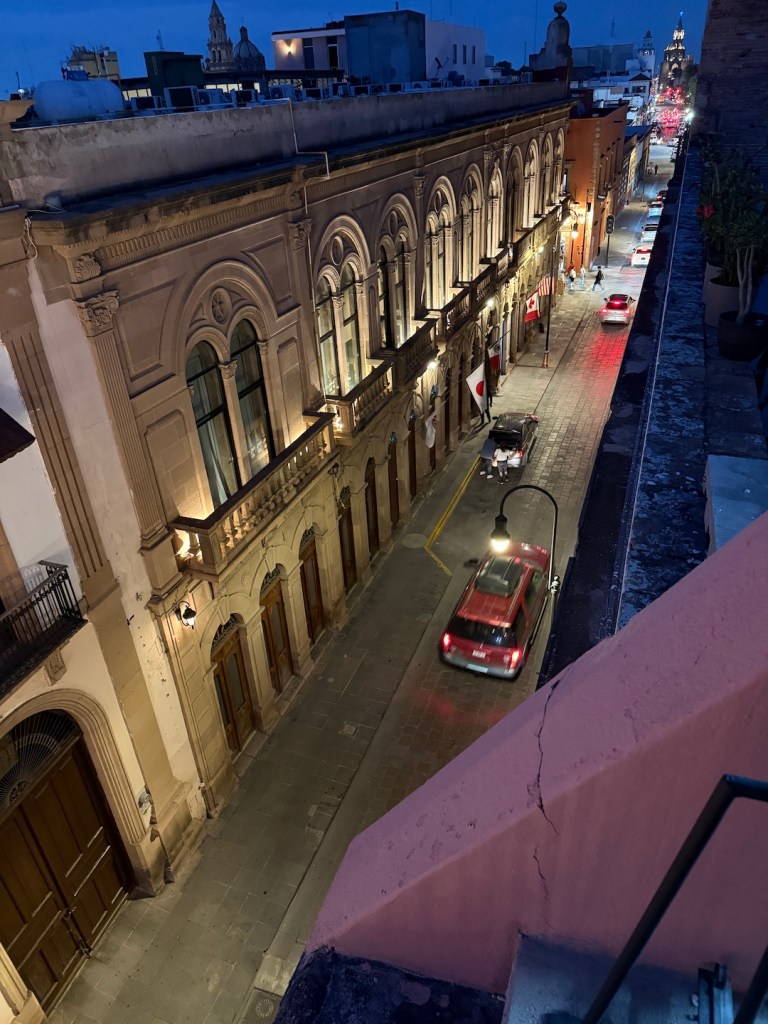
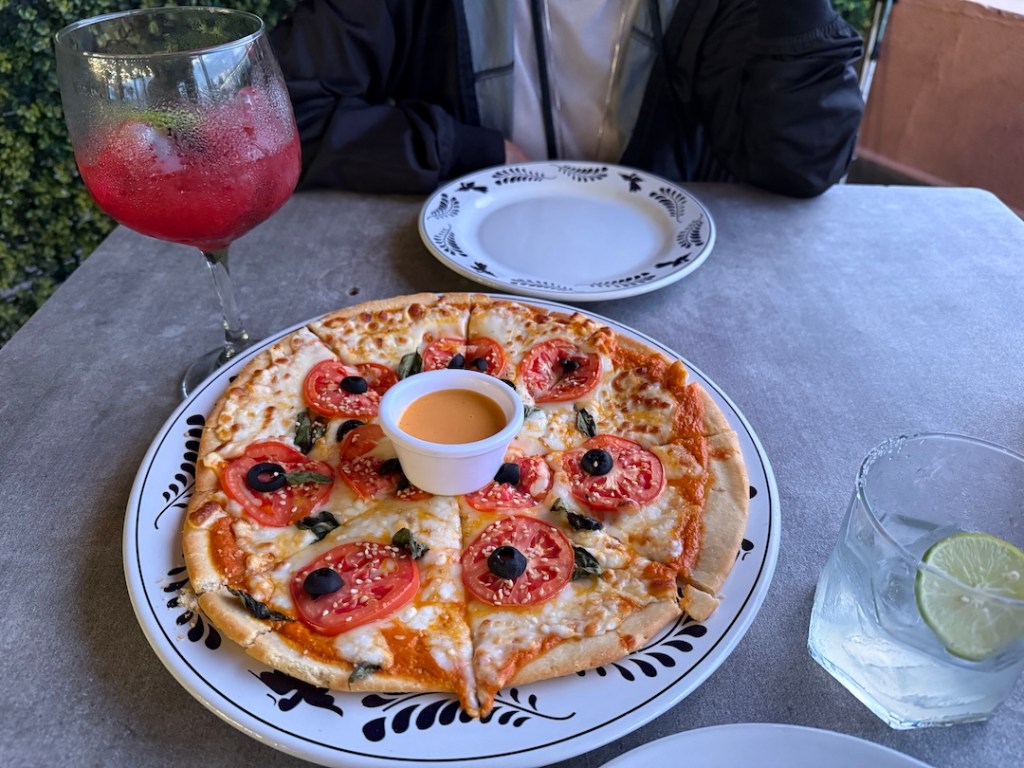
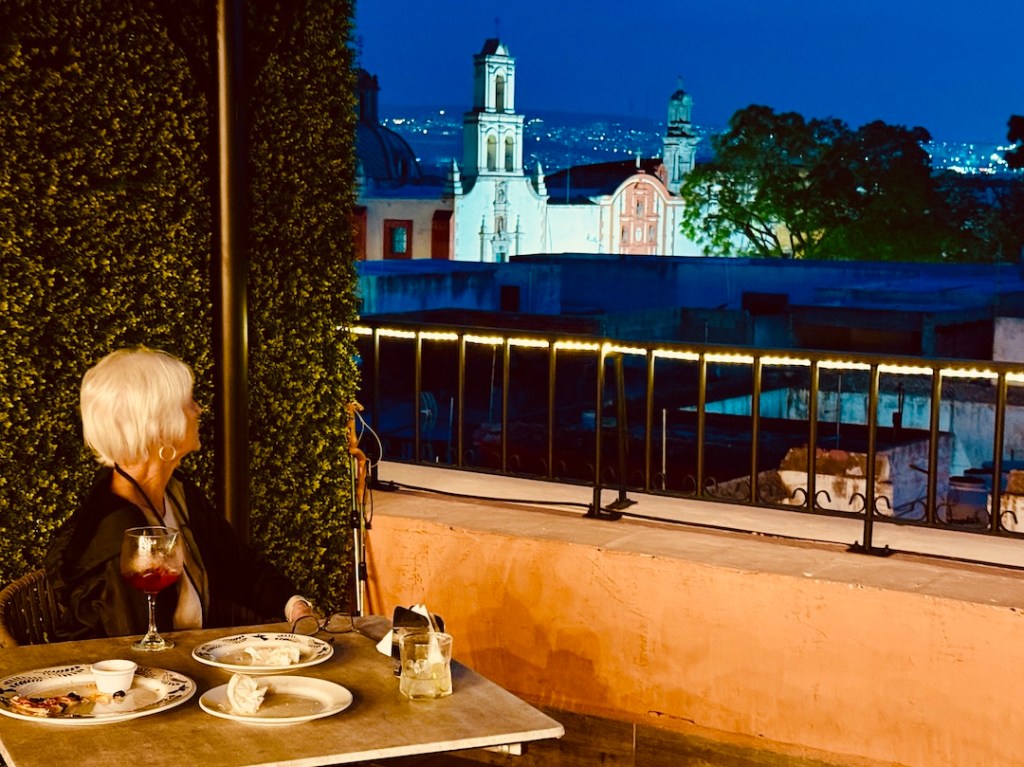
Soon we’re indulged in fine drinks and a delicious pizza, as we enjoy luxurious views over the rooftops of San Luis Potosí. It’s our last evening in town, and we’ll depart in the morning for a jungle village on the eastern side of the protecting Sierra Madre Oriental. We hope the rainy season will not be a hindrance.
A trip to Xilitla. In the rainy season!
We depart from the gracious city of San Luis Potosí and the charming old Hotel Museo Palacio de San Augustín, to head for the remote mountain jungle village of Xilitla. Leonora Carrington spent time in the village, and we hope to visit the local museum that’s devoted to her work. And nearby are the bizarre concrete sculpture gardens of an eccentric Englishman named Edward James that have become an attraction in recent years. It’s not far from San Luis and it was just meant to be. Until it wasn’t.
Our day began with an adventurous bus ride in a light rain, passing large fuel trucks on blind corners through jagged mountain passes. And yes, it was kind of hair-raising – at least for folks with more hair.
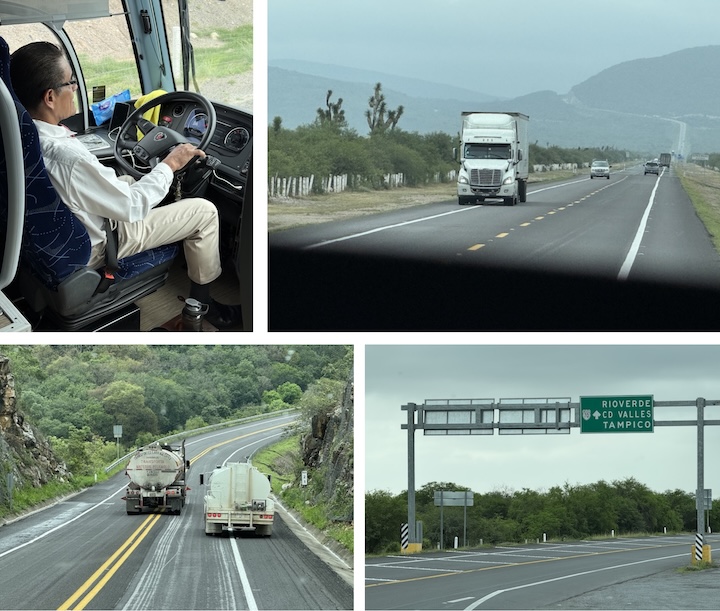
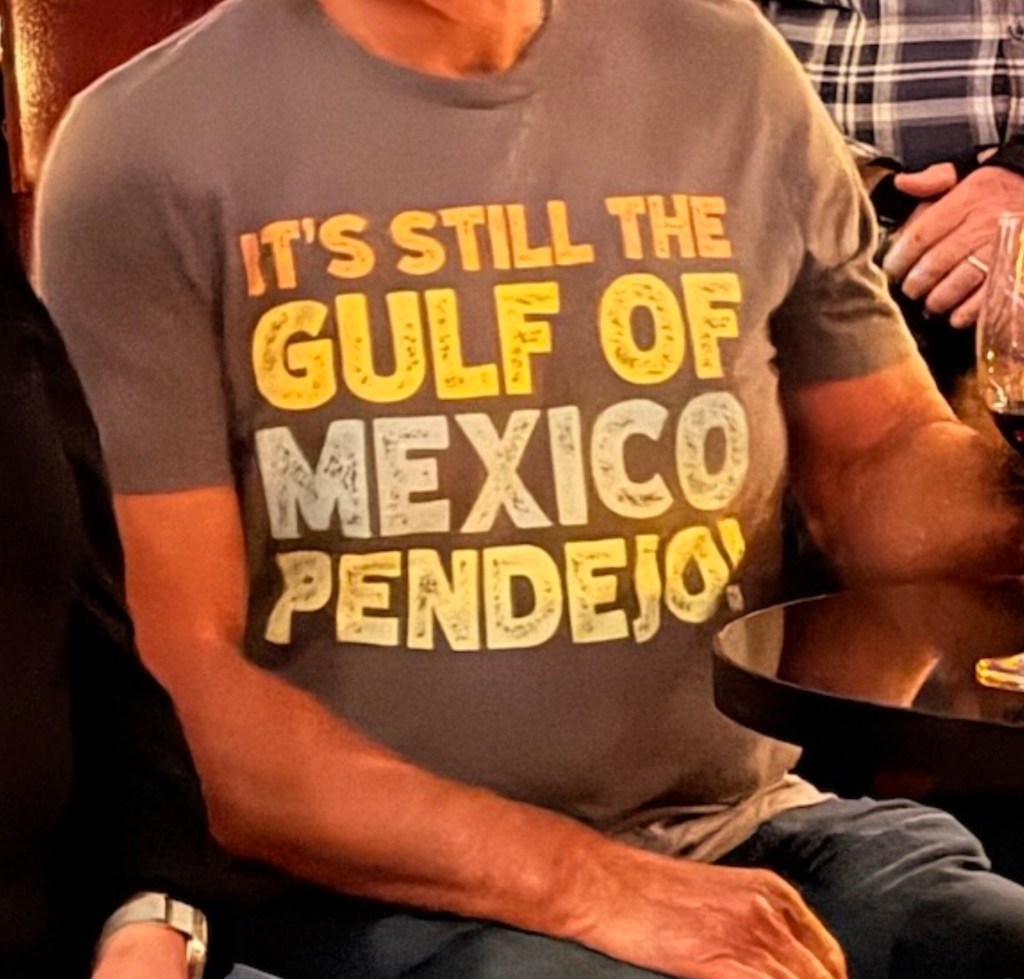
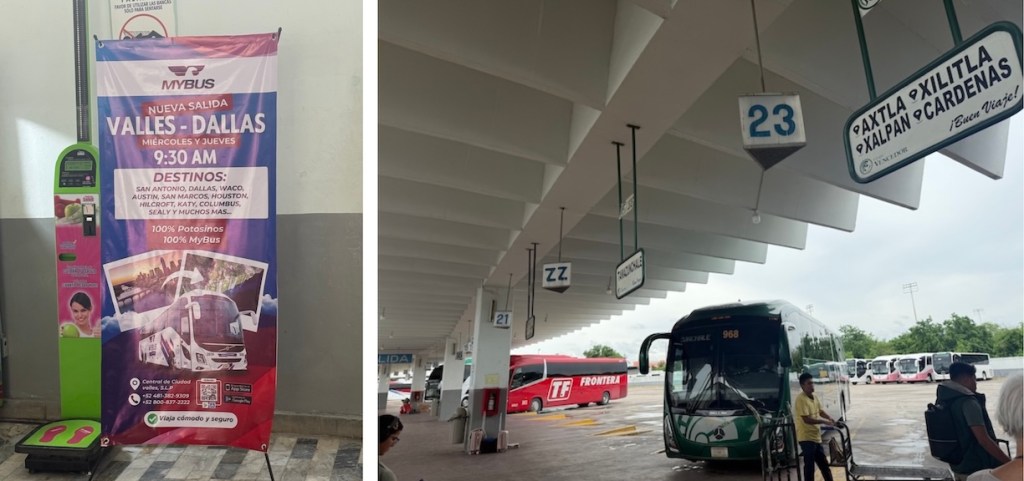
There was a bus change at Ciudad Valles, where anyone who’s seriously north-bound can catch a coach to destinations in Texas. And soon we’re in the heart of misty mountains that face the humid air coming off the warm Gulf of Mexico. The lush green hills, embraced with endless jungle emerging from dense clouds in the increasing rain make an enchanting panorama, as we ascend into the misty heavens and little Xilitla. (And I agree with this guy’s T-shirt that I saw recently in Tucson.) The lush green hills, embraced with endless jungle emerging from dense clouds in the increasing rain make an enchanting panorama, as we ascend into the misty heavens and little Xilitla.
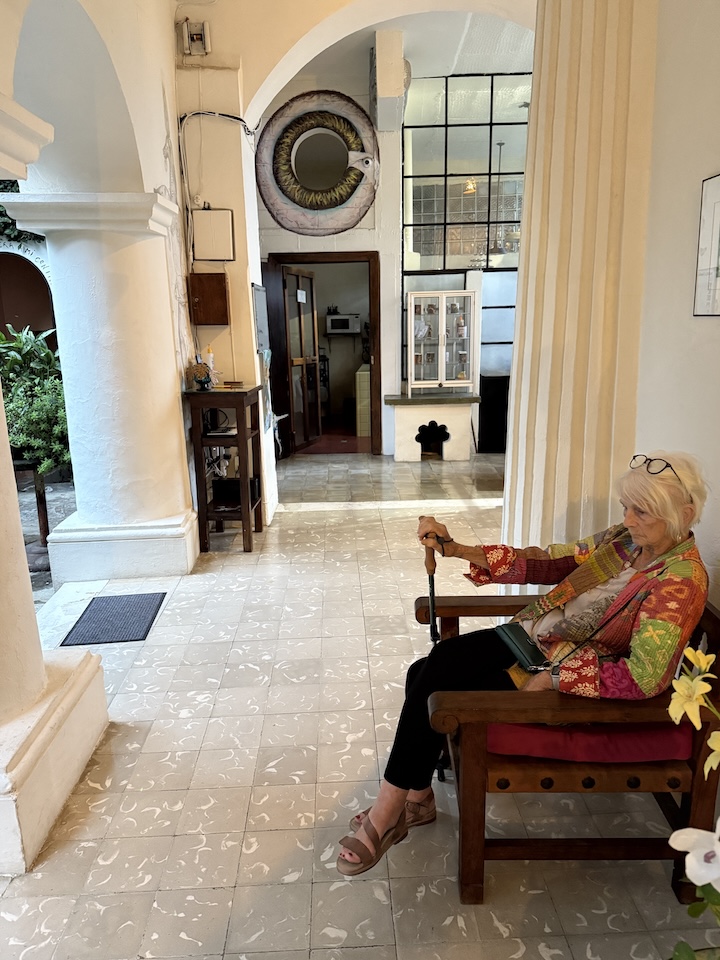
We arrive in the afternoon at the impressive Castillo de Edward James. It’s the former in-town residence of an eccentric Englishman whose artistic ambitions did much to change this little jungle village. This Castillo is where Leonora Carrington and many of Edward’s other good friends would spend their evenings during visits.
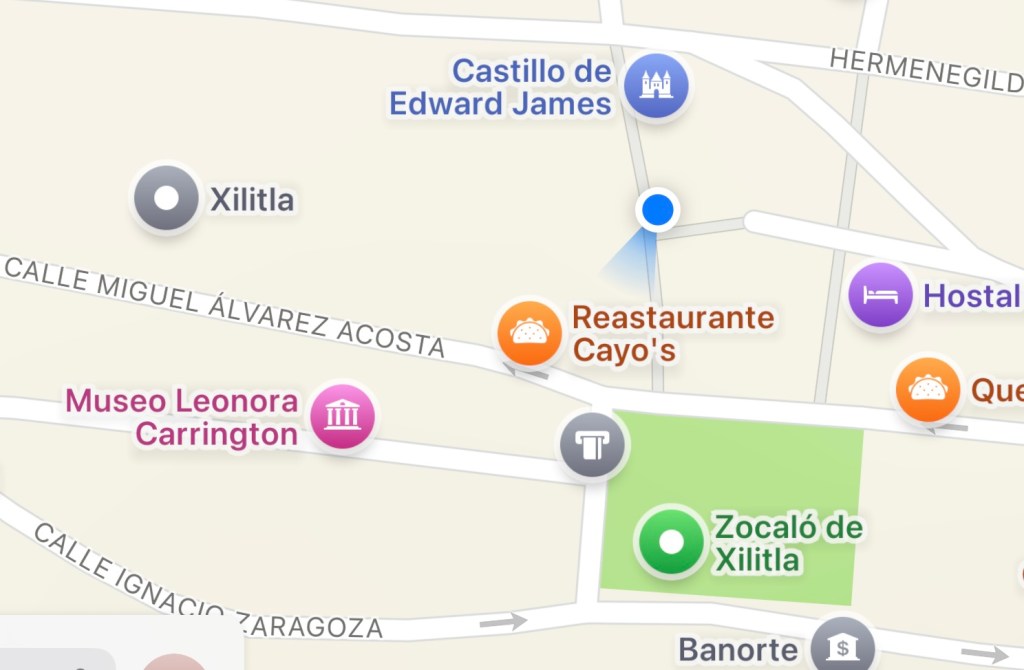
On the map, we’re just off the plaza and maybe an easy block and a half from the Carrington Museum. We’re in a great location, although it was actually a steep climb from the road to the hotel. With another steep climb required to reach the plaza. And did I mention my recent knee replacement?
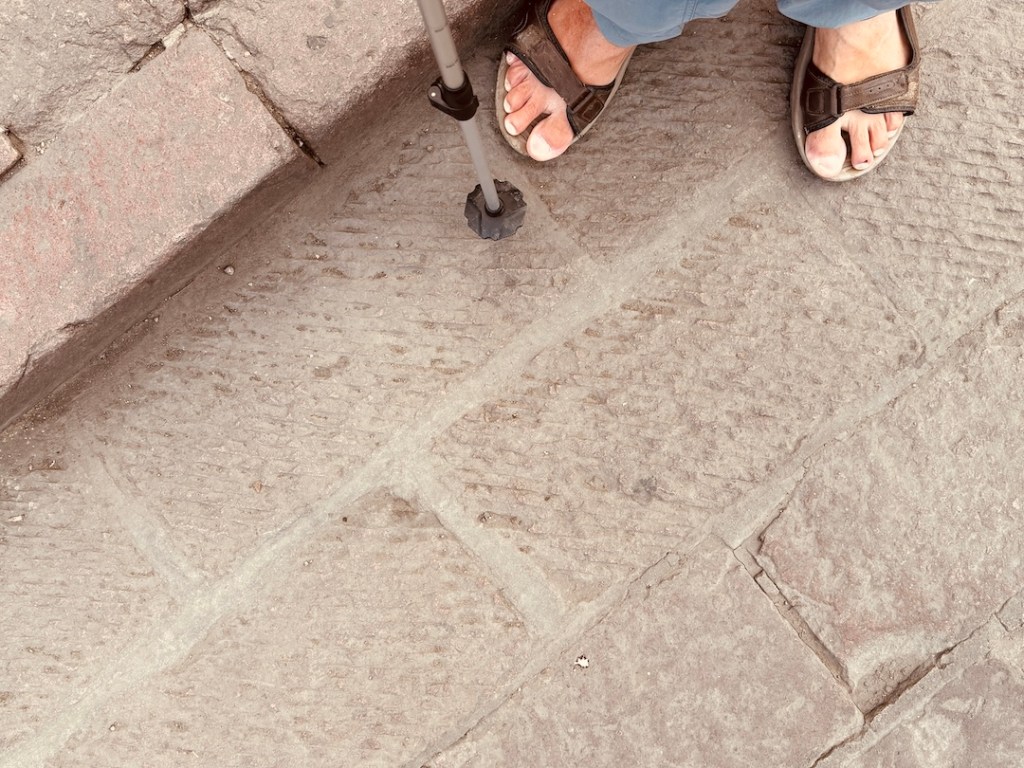
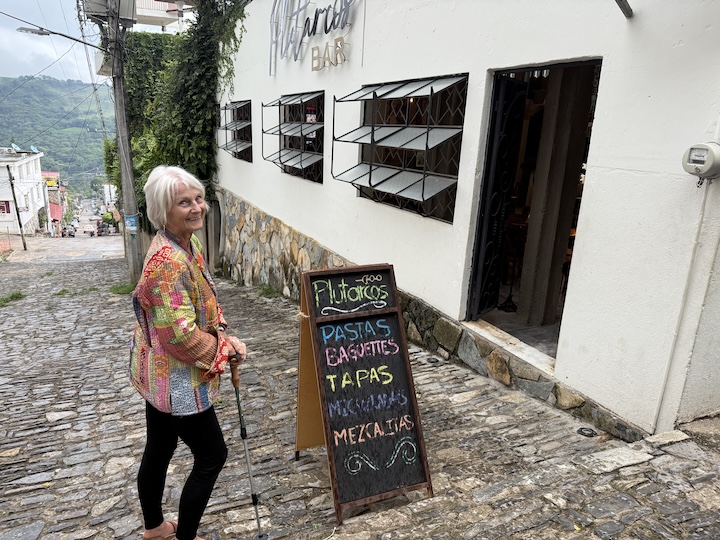
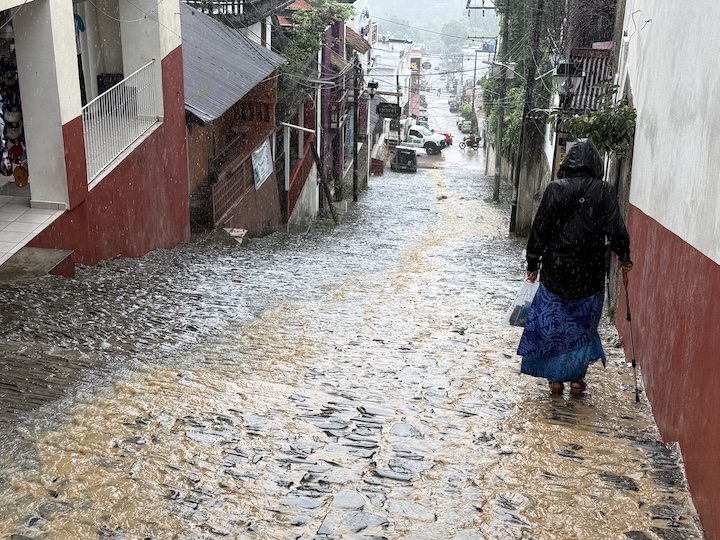
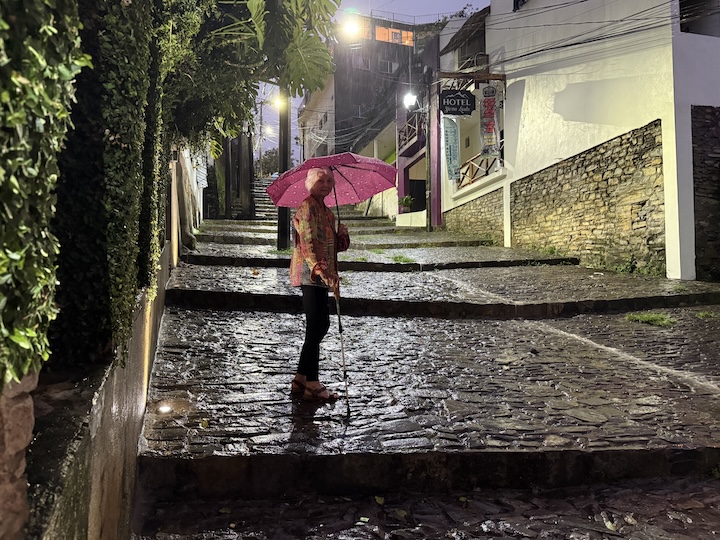
We relax in really nice quarters, and later in the afternoon we step out again onto the steep and rainy and slippery streets in search of dinner. And I realize I may have overestimated my abilities after coming off that knee replacement. I have a sturdy cane in one hand to brace my footholds as I search for handholds along the smooth wet wall beside the steeply sloping street. The paving stones are laid on edge and provide more traction than flat pavers, but it’s a slow process as we make our way carefully uphill to a restaurant that’s just next door.
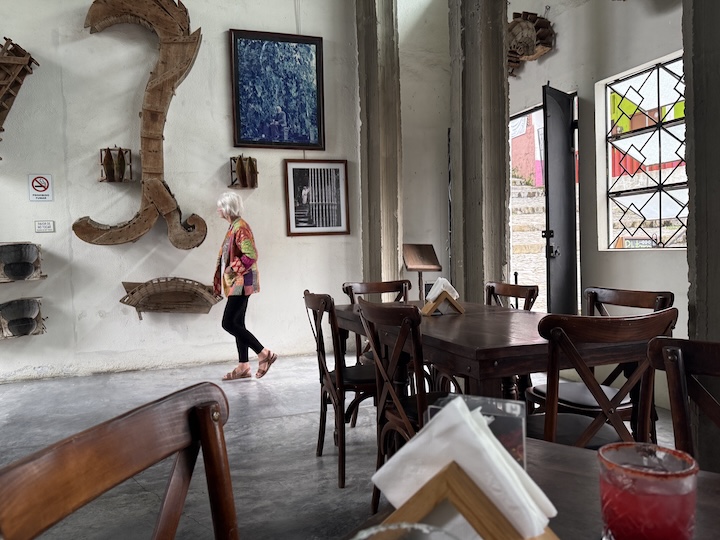
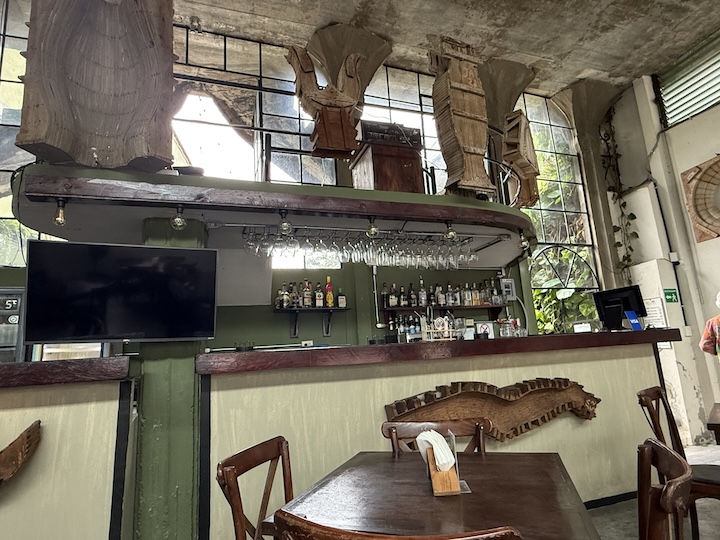
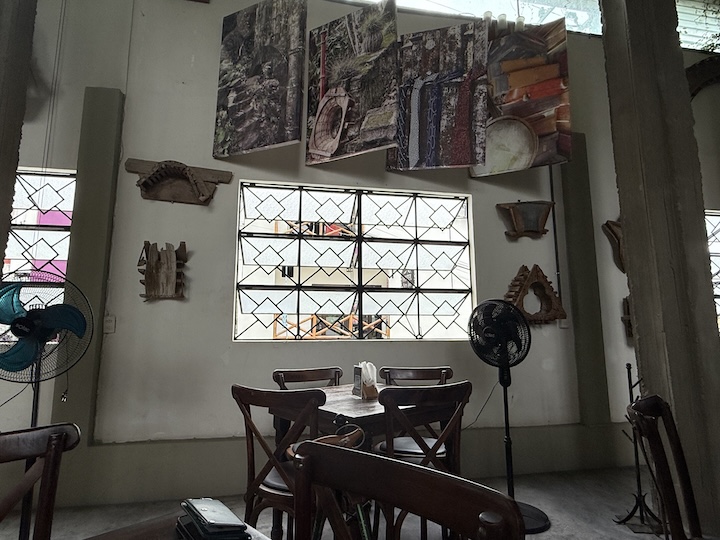
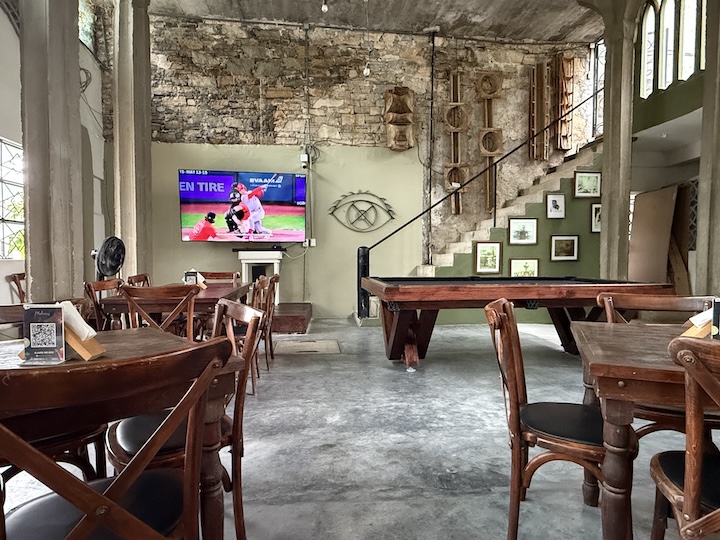
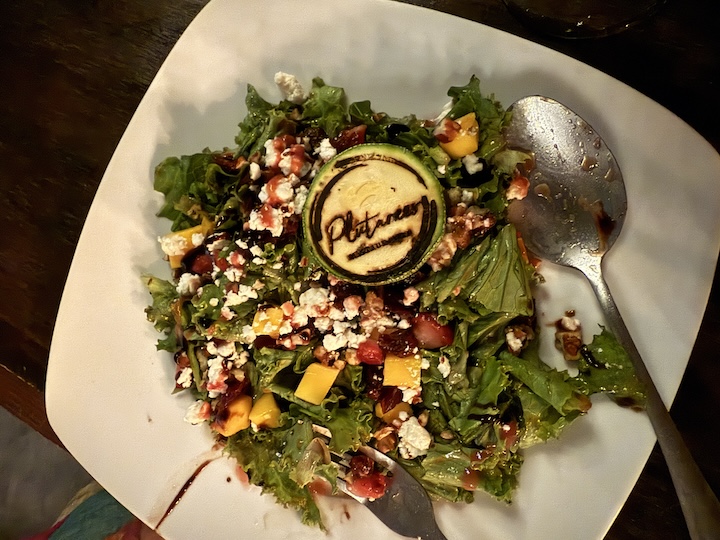
We arrive safely at an artistic dinner spot called Plutarcos, with an eclectic object collection along the walls and some really good food. And there’s baseball on the big screen. We relax over a seriously fine dinner so we can put off making our way back downhill again, on that steep wet street, back to the hotel.

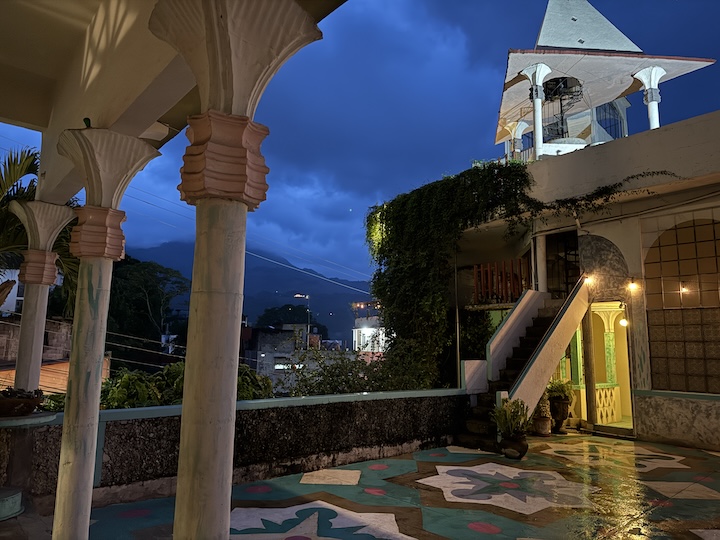
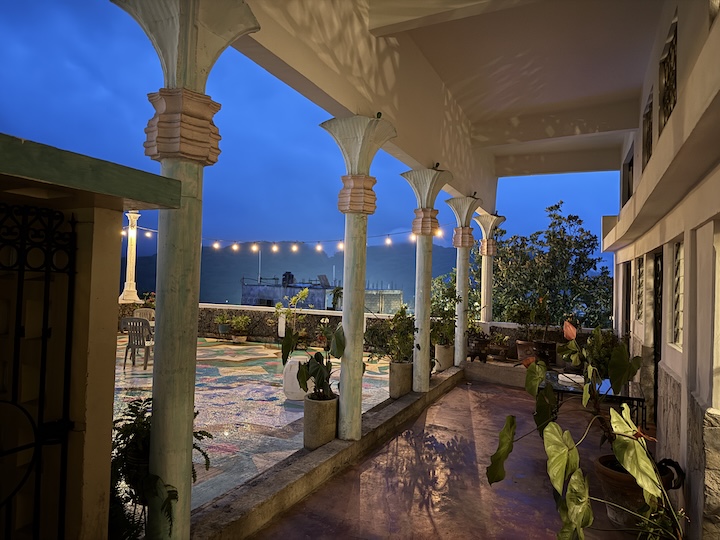
At the Castillo we get a guided tour of the place and enjoy a spectacular nighttime view over the lights of the city, as the evening rain begins to rattle more heavily onto the rooftop. We settle in comfortably for the night and put off thinking about whatever tomorrow will bring. While it’s clear that getting around the steep wet streets of Xilitla with a recent knee operation will be a problem, we’ll face that issue in the morning. Or maybe the problem will just go away, since we’re right here in the land of ‘magical realism.’
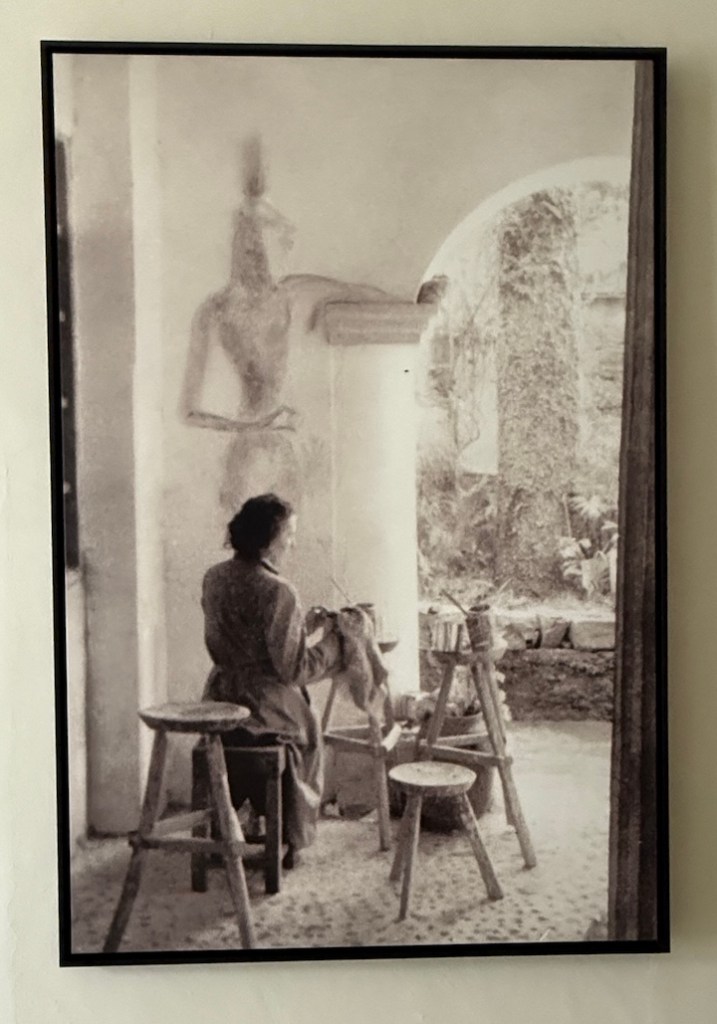
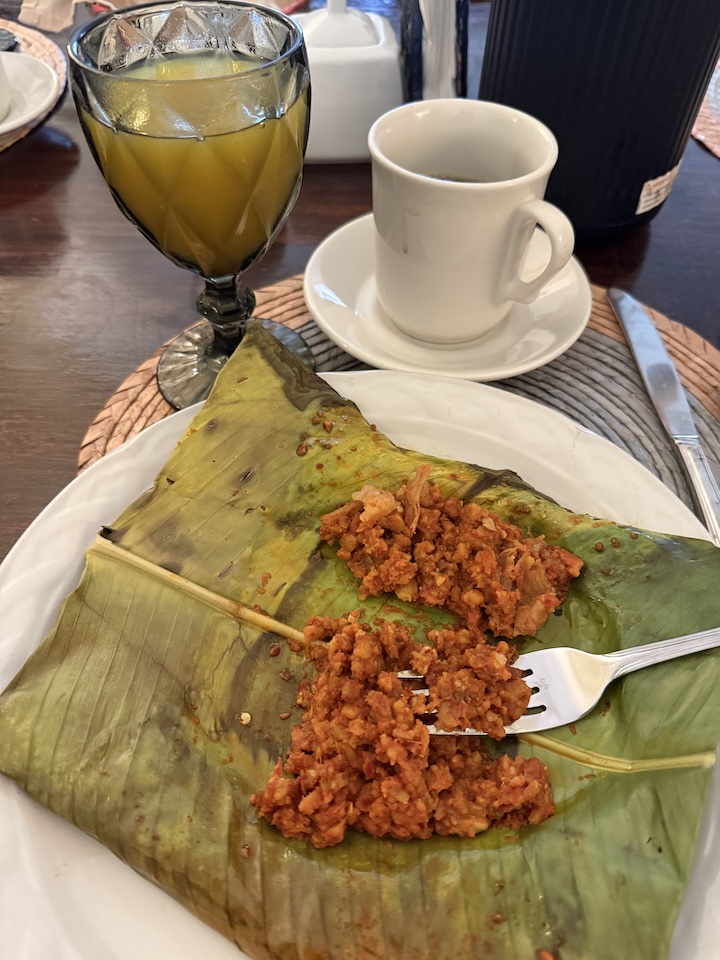
The morning breaks bright and misty, and shortly it becomes rainy again as the hotel staff plies us with a good breakfast of local delicacies. They point out a slightly-faded surrealistic painting on the wall that was drawn by Carrington during one of her stays here long ago. And there’s a photo on the wall, with her working on it.
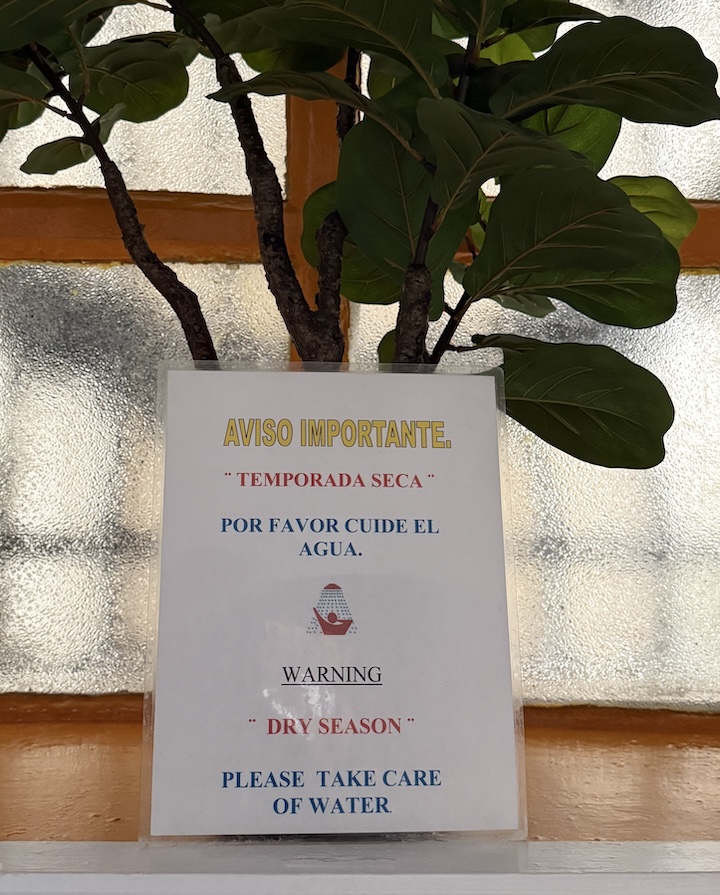
And maybe it’s intended as irony or it’s a leftover from the summer season, but a sign asks us to save water since this is the “Dry Season.”
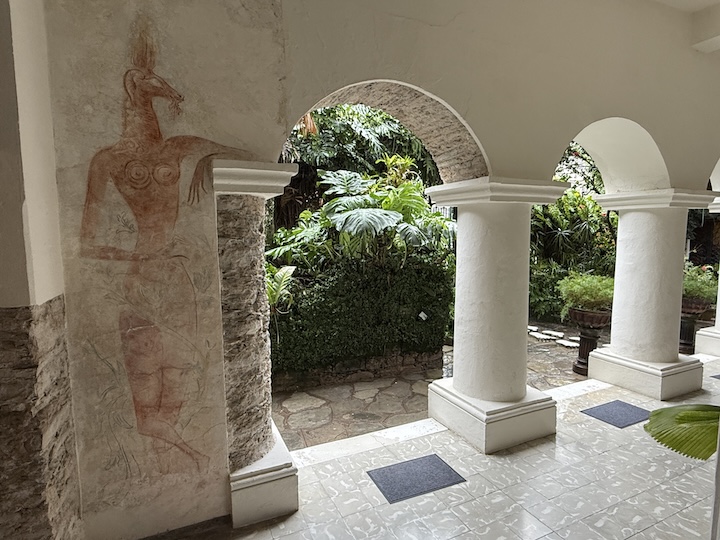
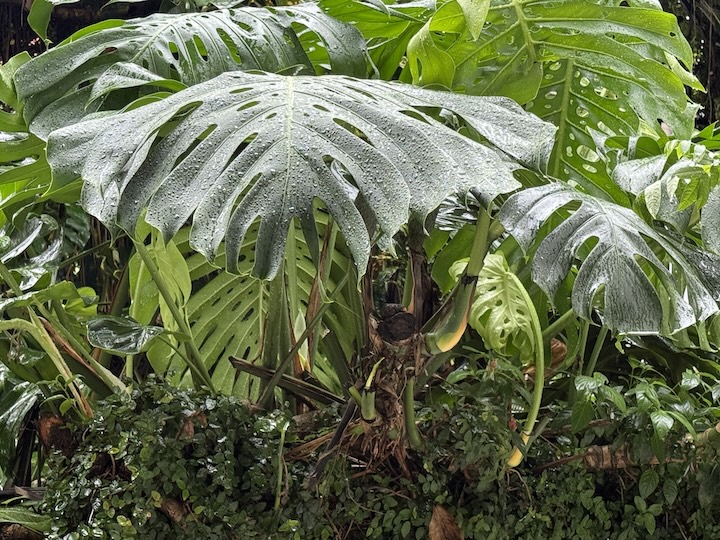
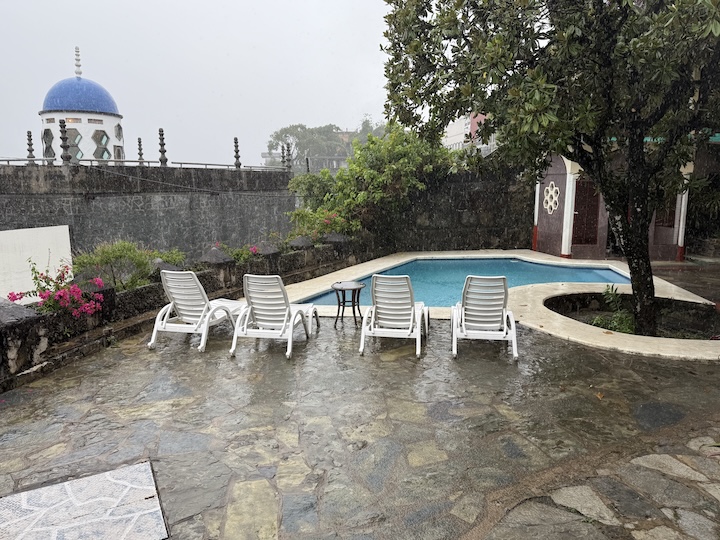
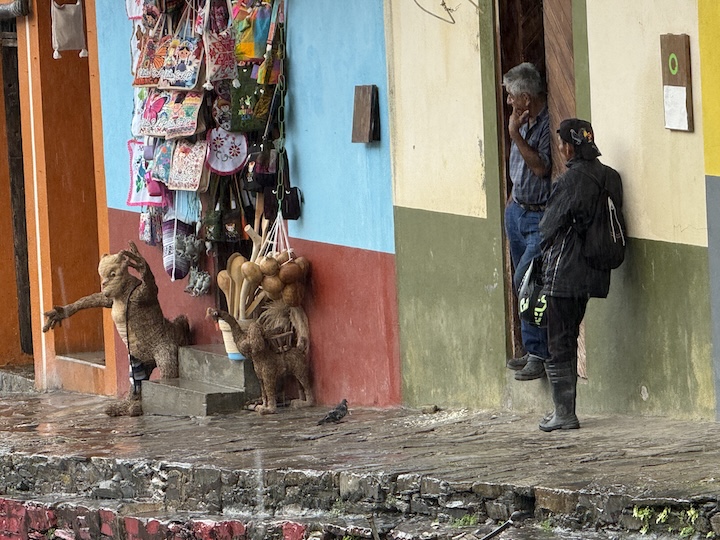
Soon we venture into the rainy morning and back up that steep wet street to the village plaza, where there’s some major roadwork underway. People are standing under overhangs and waiting for the rain to subside – in another month, maybe. A mother helps her young daughter over piles of broken rubble as we make our way carefully along a narrow slippery sidewalk.
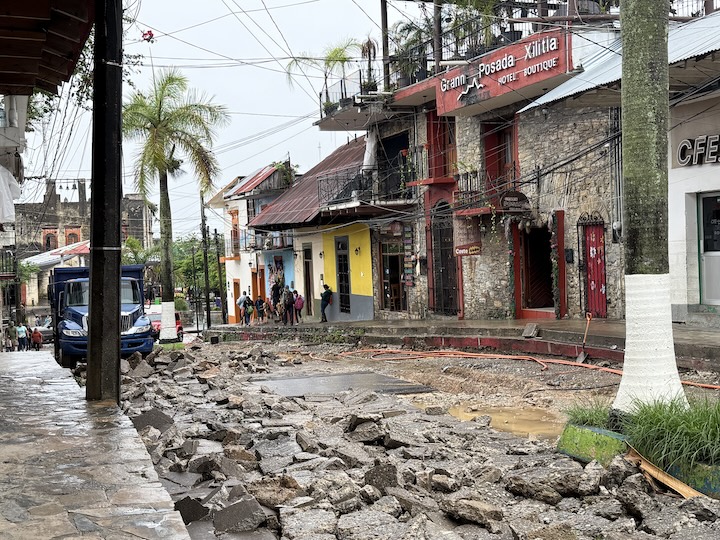
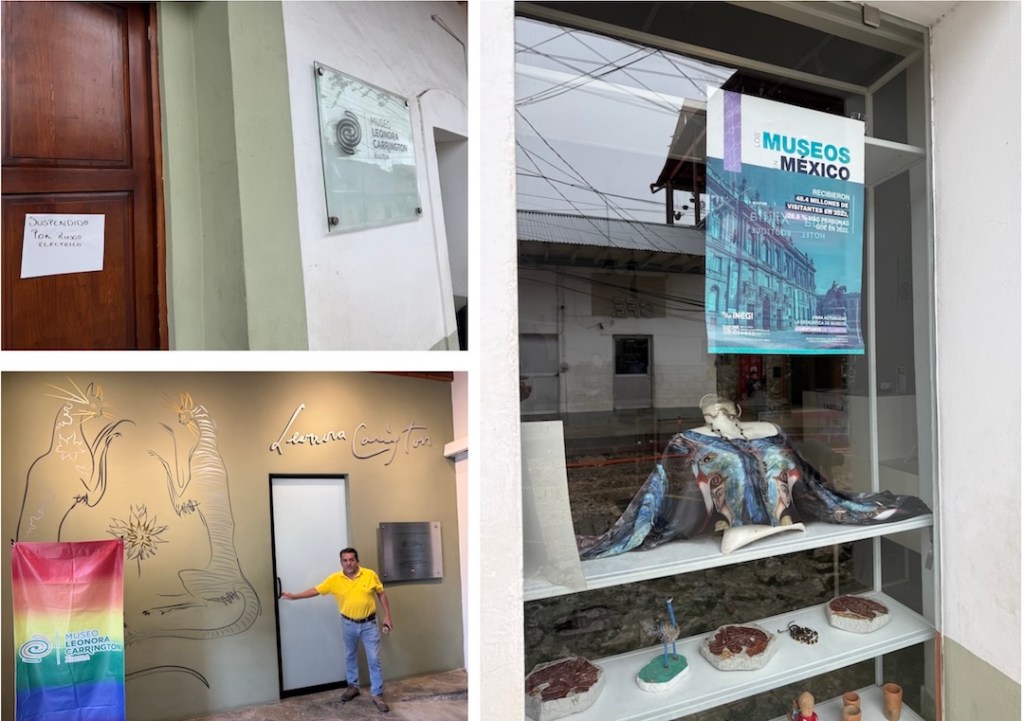
We find the Museo Leonora Carrington, where the sign reads “Suspended for Electrical Risk.” The Museo is dark since the lights are out, and maybe caused by a short, in the rain. A helpful gentleman opens the museum store which is lit by muted daylight from the street window, and Carolyn buys a long beautiful scarf with a colorful Carrington design.
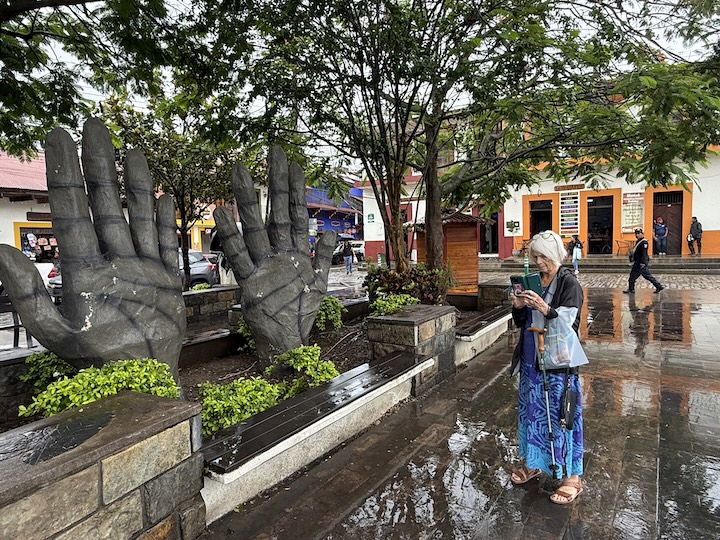
We leave the Museo and head back to the Plaza, which contains some of Carrington’s bizarre outdoor pieces, including an intriguing salamander, and a pair of hands.
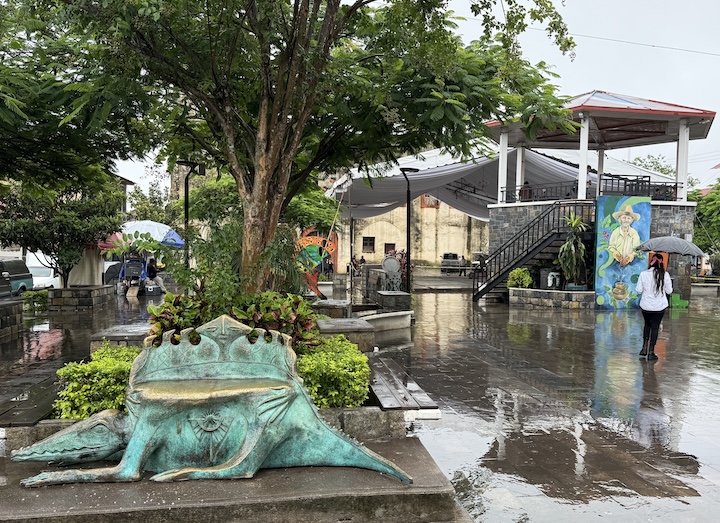
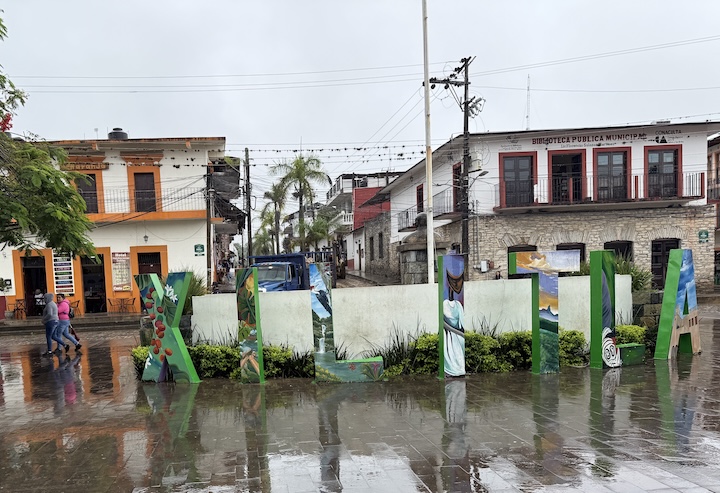
There may be no better way to spend time on a rainy day than finding a cosy coffee shop to enjoy a rich cup of Joe or a hot chocolate, as local people walk past the door that looks out onto the Plaza.
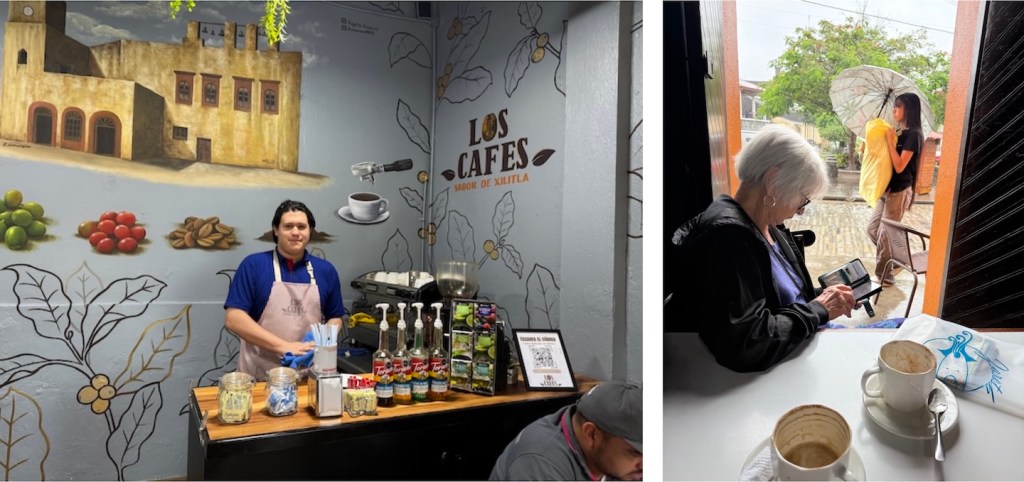
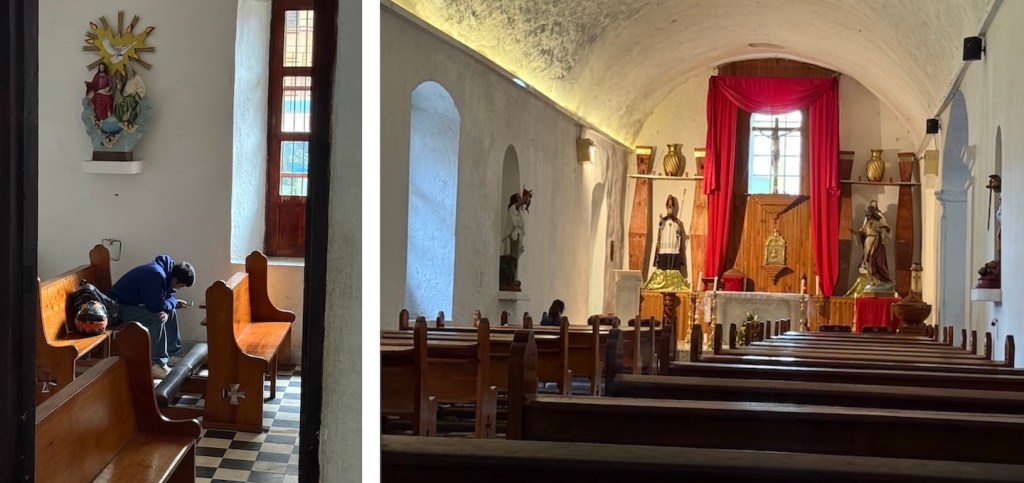
After coffee we cross the rainy Plaza to an ancient church with heavy walls where we find more shelter as the rain increases again. There are several hidden nooks and crannies for wandering, as another wave of rain fills the roof canales and sends showers into the courtyard.
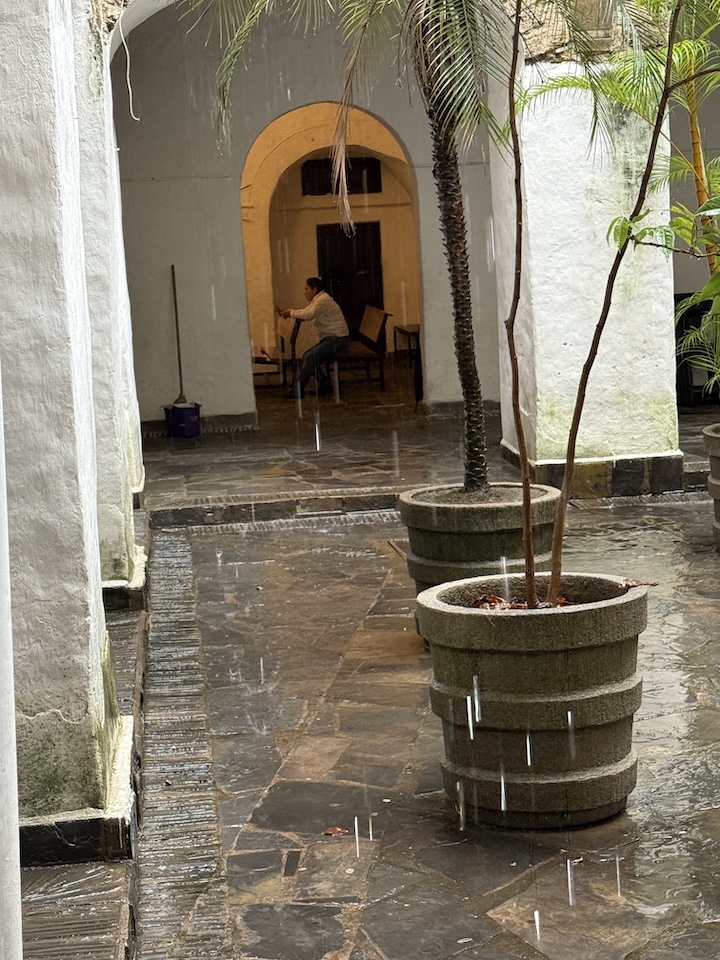
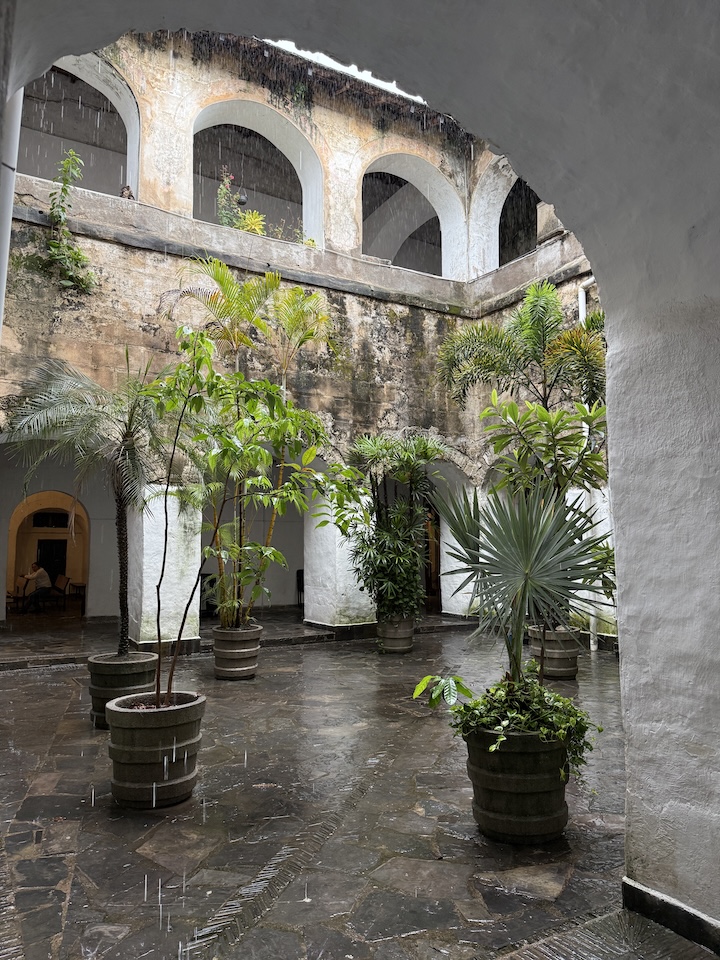
Eventually the rain abates to a drizzle and it’s time to return back down that steep wet street to the Castillo and the shelter of colonnaded walkways. The rain looks dramatic in fine silvery rivulets as it dribbles over the huge leaves of jungle plants.
And later in the evening we’ll venture out again onto that steep wet street, making our careful way back to Plutarco’s for another fine dinner. And we’ll devote some time to discussing our rational options.
We had planned to stay in charming little Xilitla for several more days to fully enjoy the village and do a day trip to those famous crazy concrete sculpture gardens of Edward James. But now we face the fact that the sculpture gardens will mean lots of climbing and stairways. In the rain. On slippery stairs and probably broken stones.
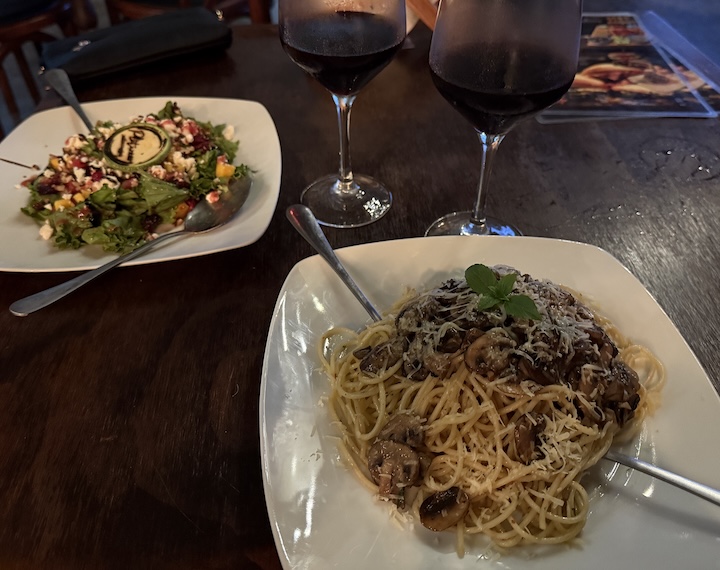
Over glasses of good Mexican wine to clarify our thoughts, and considering my fragile knee (I hate to admit it!), staying here in hilly and wet and slippery Xilitla just doesn’t seem to make sense anymore. It was a bit rainy back in San Luis Potosí, but those streets are flat and easier to deal with.
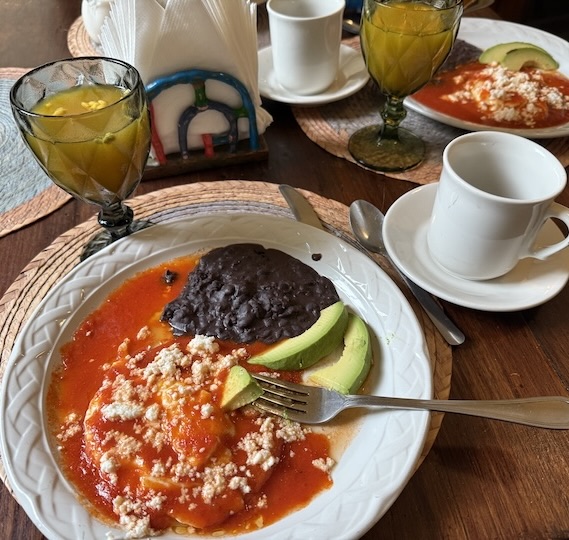
So in the morning we enjoy another fine breakfast under the Castillo’s gorgeous portal. Then we haltingly tell the staff that, um, you see we, um, need to leave town before we have an accident. Instead of leaving after the accident. No there’s nothing wrong with the hotel. This is truly a fine place. But we didn’t really plan well for the rain. And my new knee.
We wrestle our bags, with some help, back down to that winding road below the hotel, to the bus stop. And we wait there in the rain – although it’s not really a long wait before the bus arrives. And then we wait in the rain until the bus driver opens the door. It’s all a process.
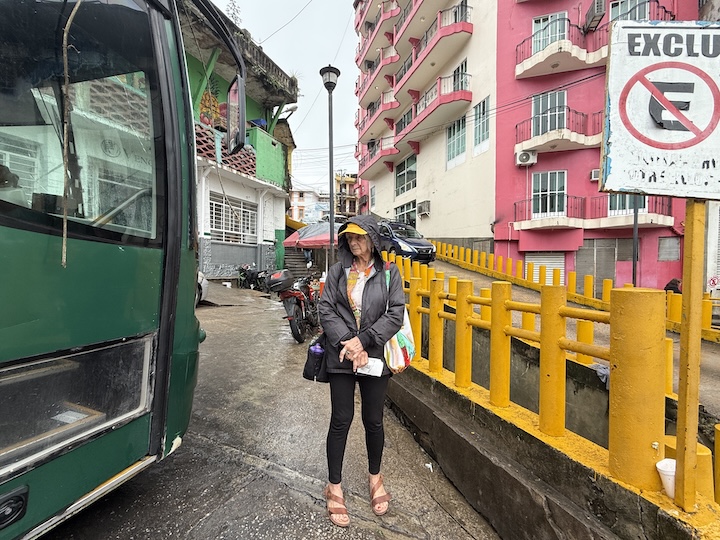
The hill-clinging village of Xilitla passes by our bus windows as we descend a bit too-speedily down the winding roadway to the flatter terrain below. The cloud-wrapped hills, plummeting roadways and walkways, and plant-engulfed graveyards of heavy machinery leave an enduring impression as we make our way onward.
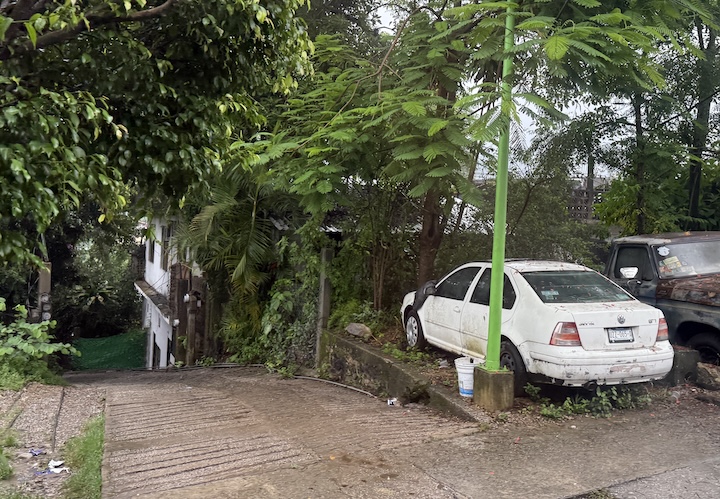
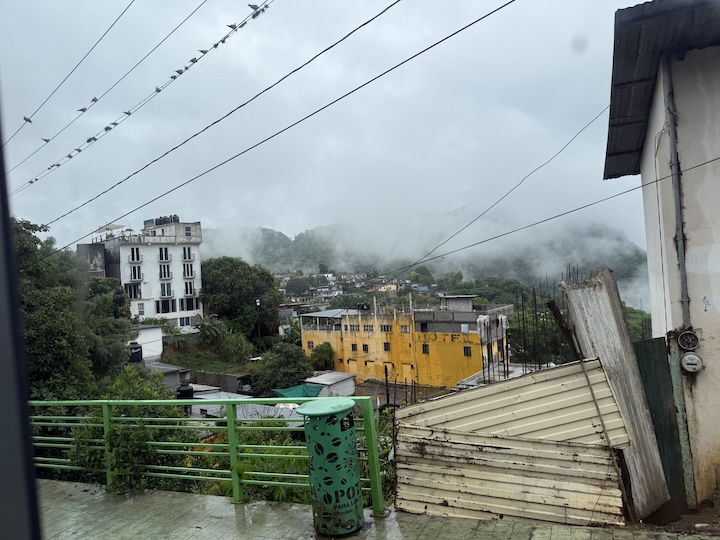
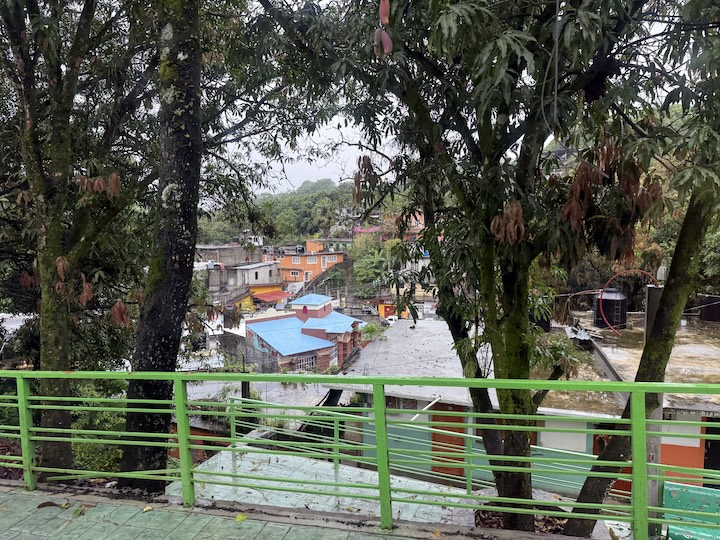
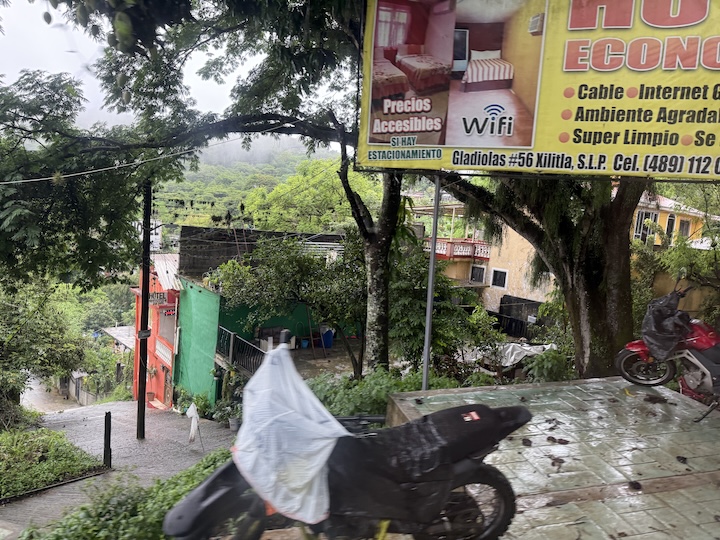
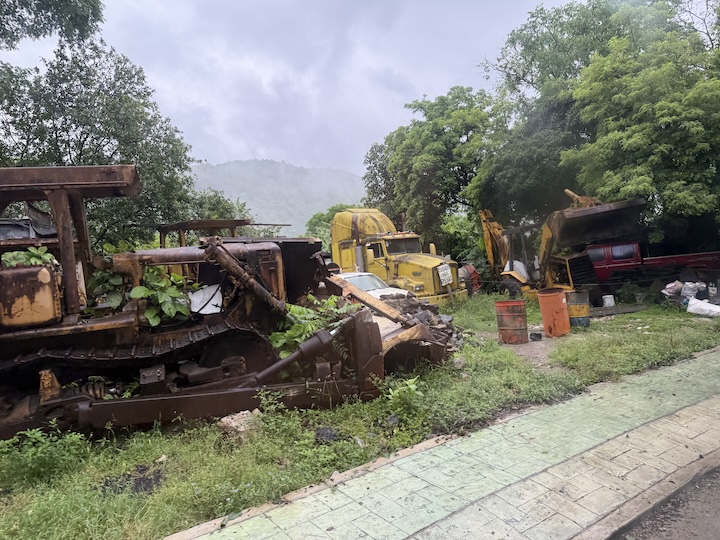
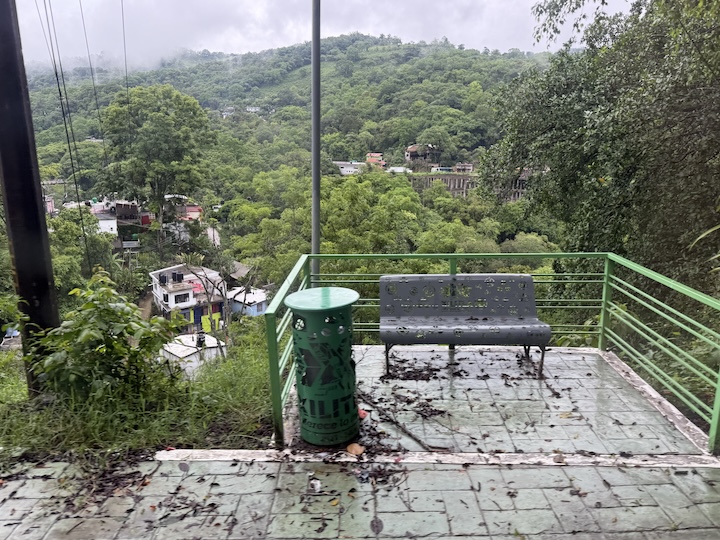
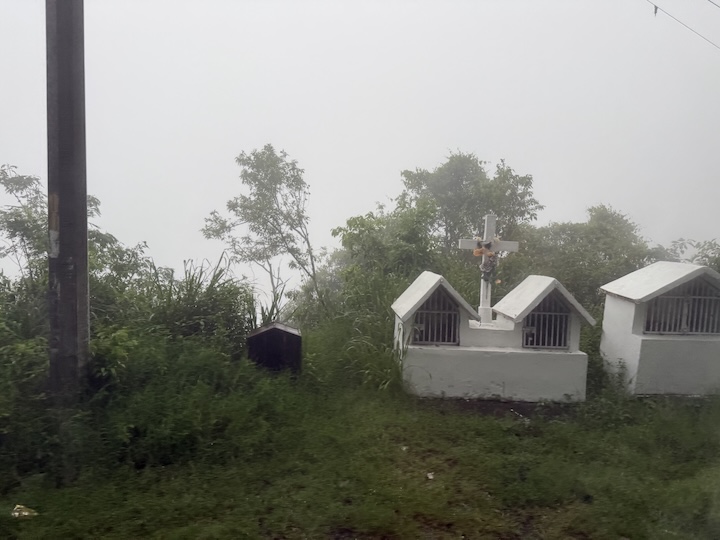

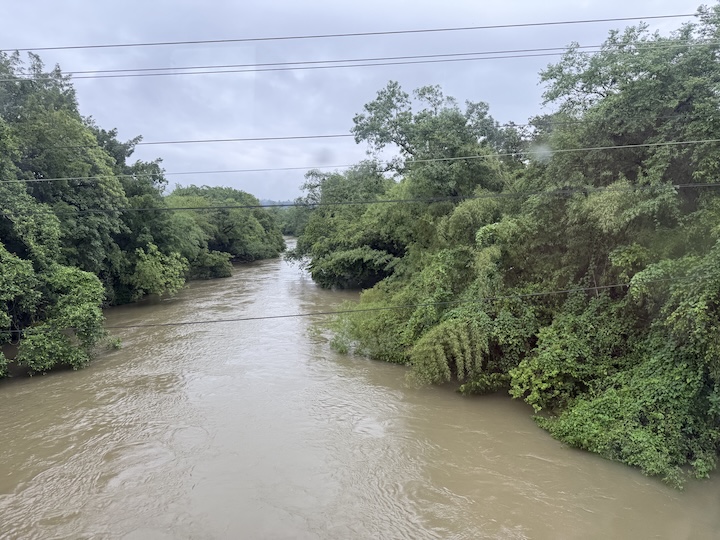
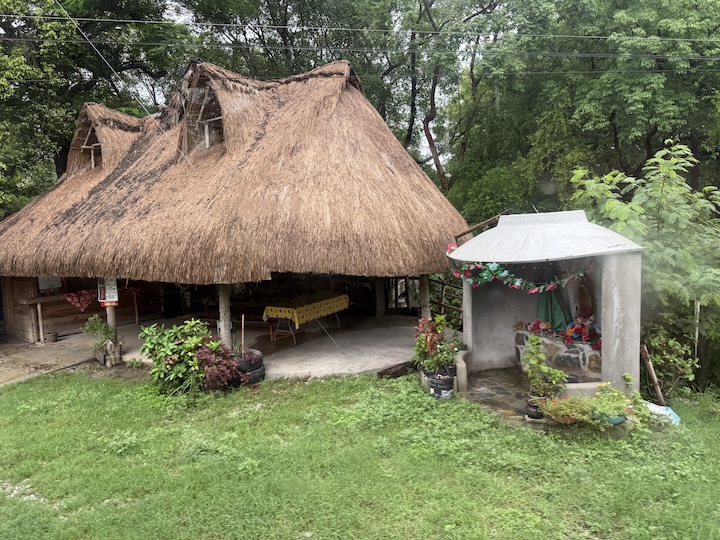
At last we’re in the flatlands, crossing flooded rivers, pausing at makeshift bus stops, and passing the gorgeous green-engulfed lifestyle of these people who live in the jungle as we’re heading back to civilized, and flat, San Luis Potosí, for a few more days.

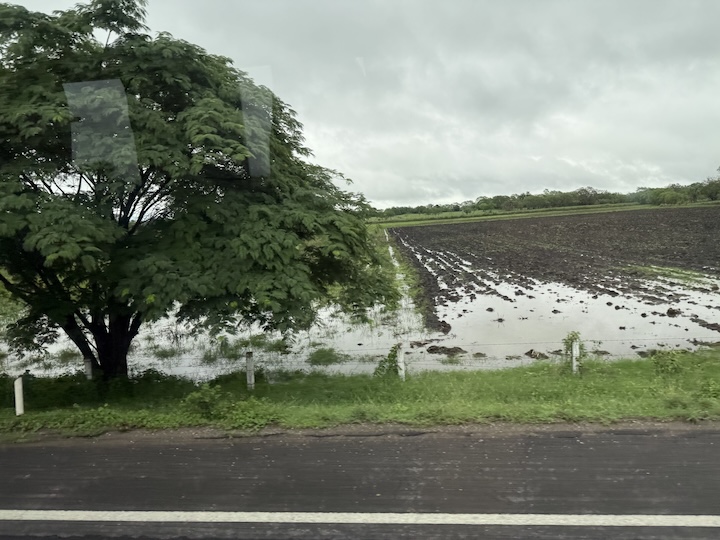
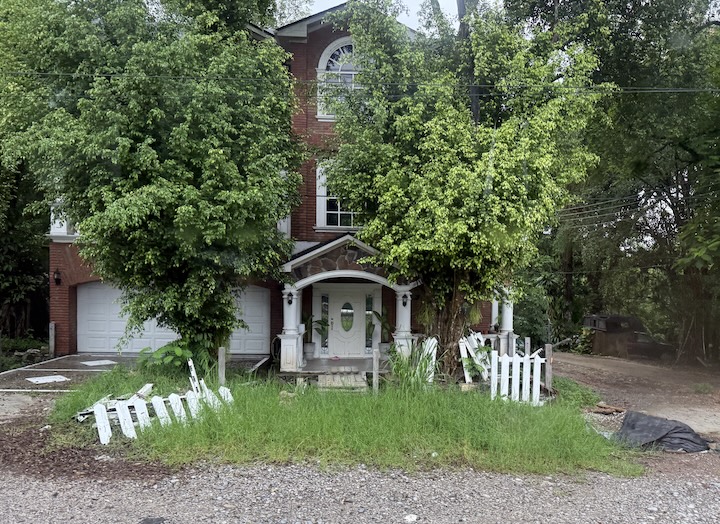
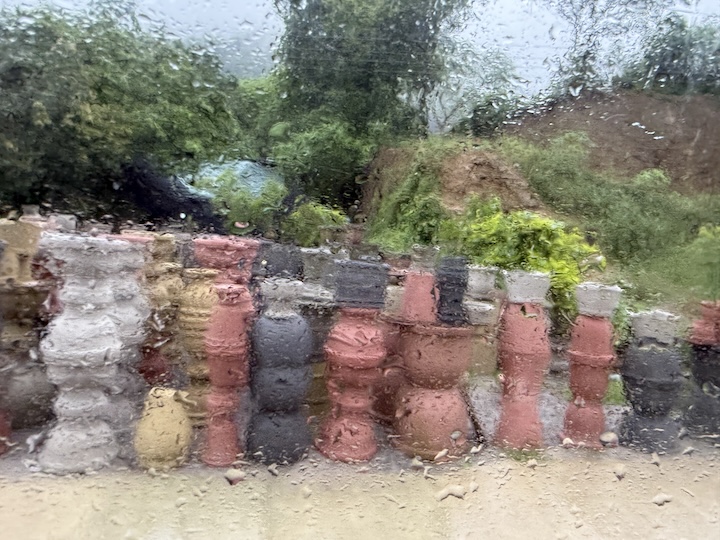
Back to the fine flat streets of San Luis Potosí
We’d have gotten a room at the Palacio again, but they were booked up. So we found good lodging at the nearby Hotel Progreso, dating from 1870.
We were glad to have more time in SLP because there were so many things we still wanted to see and do, like visit the old railway station where I boarded a northbound train to Saltillo 50 years ago. And there are a few other good museums we didn’t see the last time.
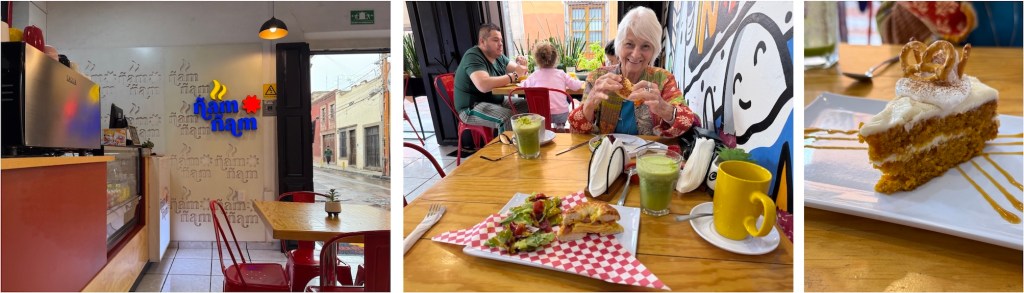
A morning walk on the rainy flat streets of San Luis is a wonderful way to start the day, and we find a nice little coffee shop called ‘ñam ñam.’ Ah yes, the food was that good. And it’s playful, too!
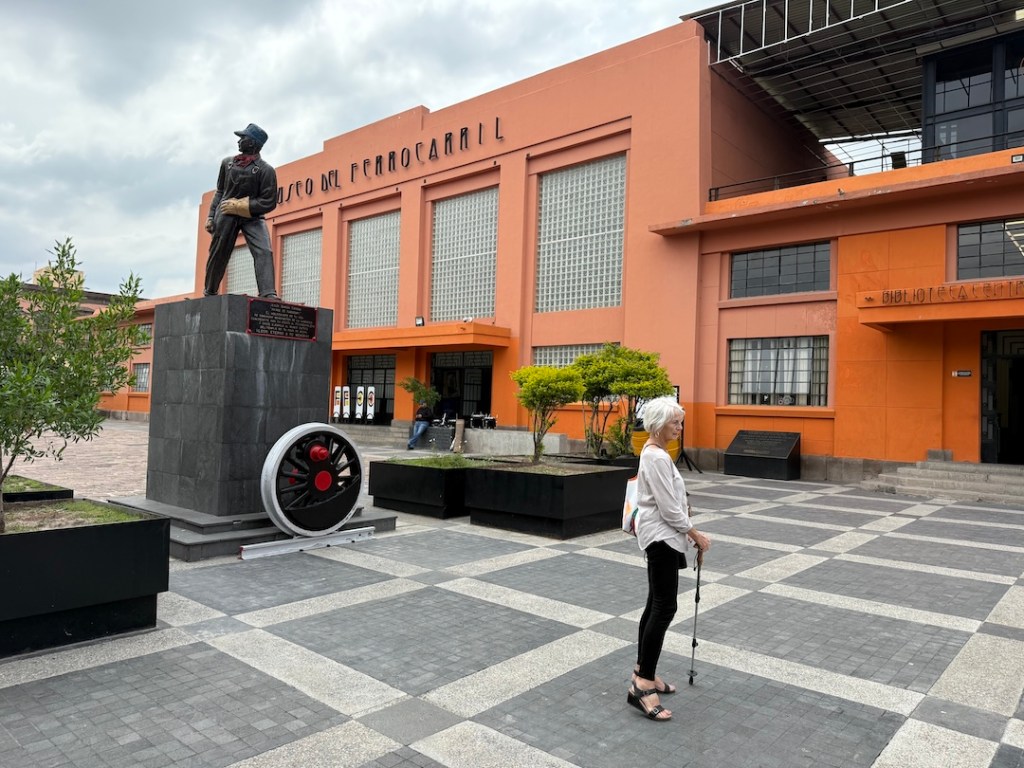
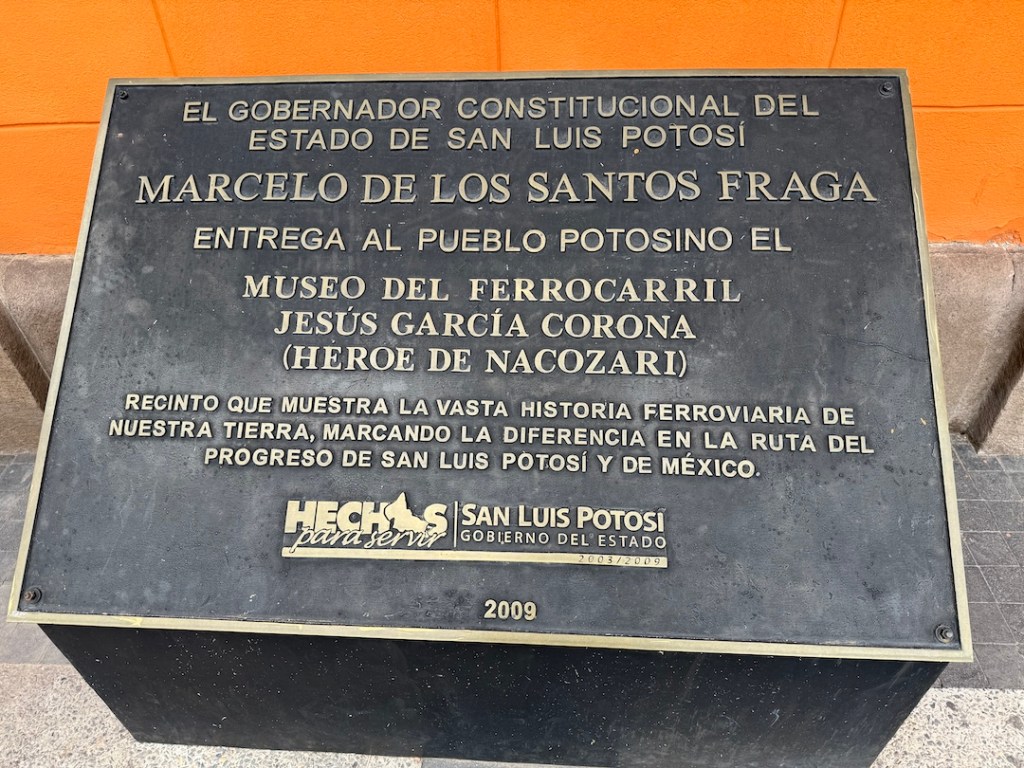
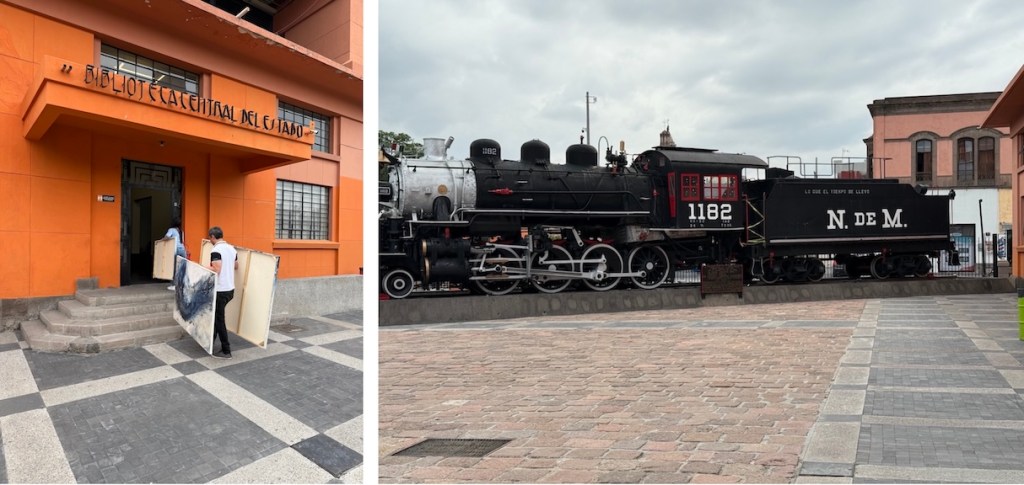
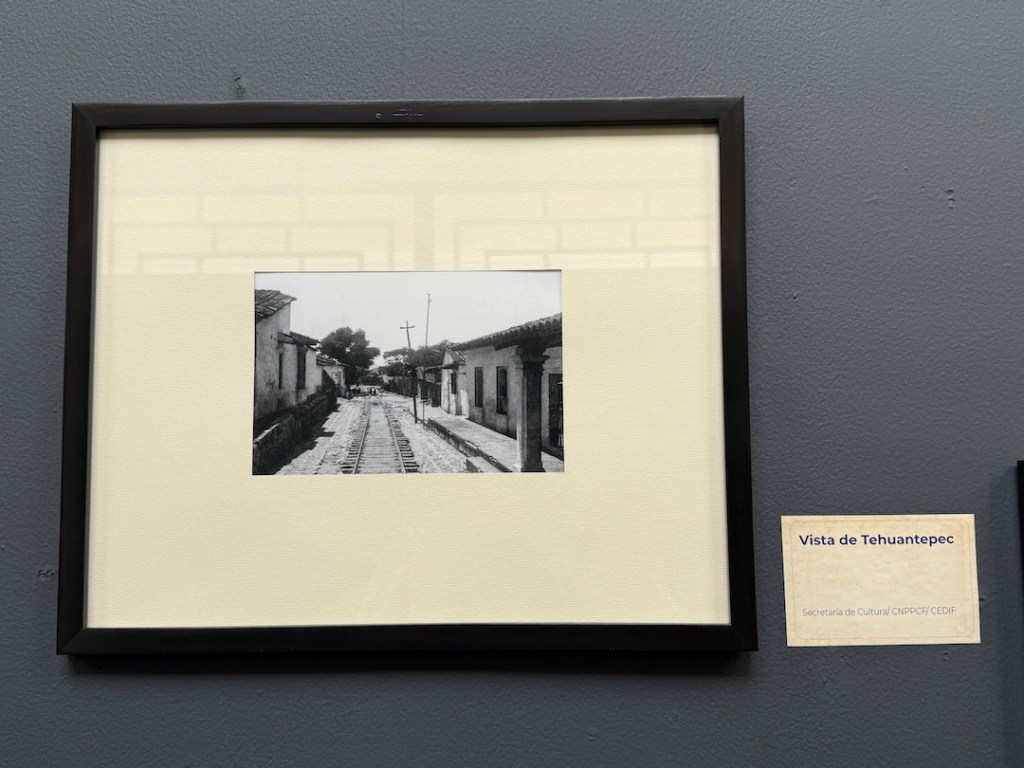
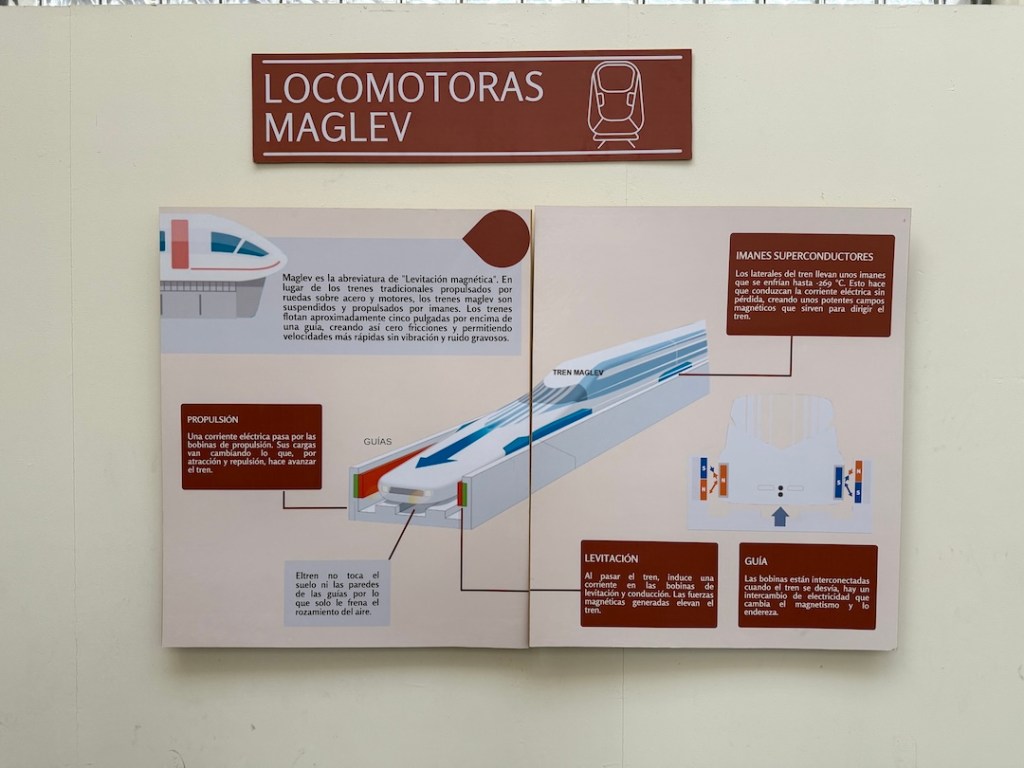
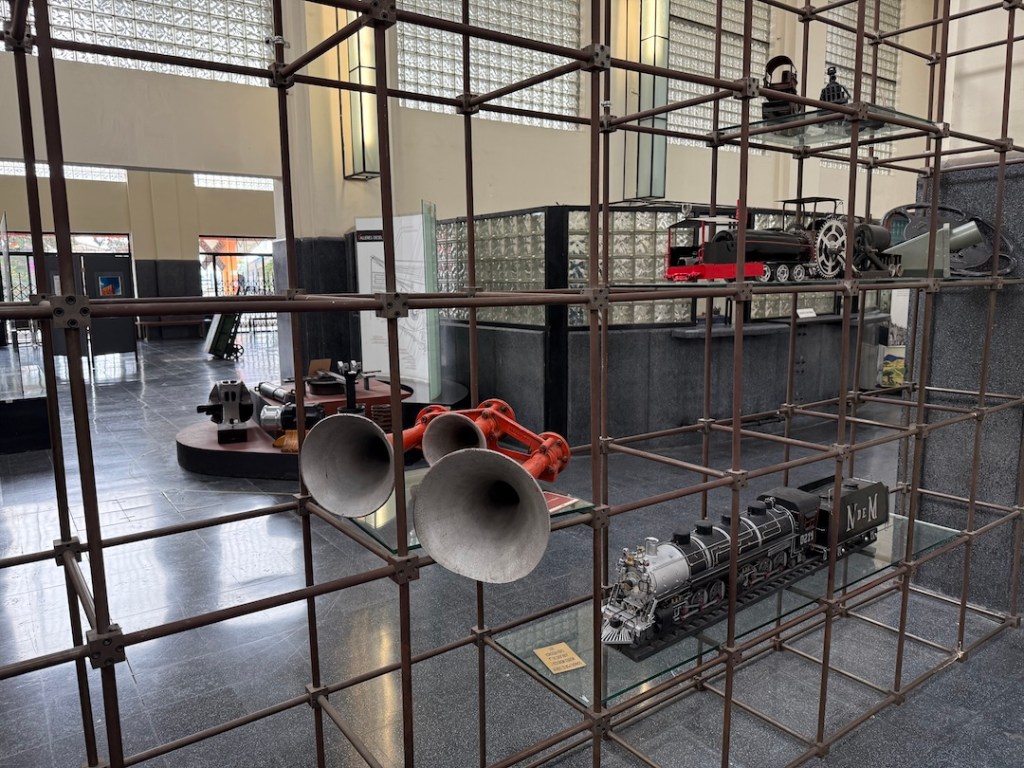
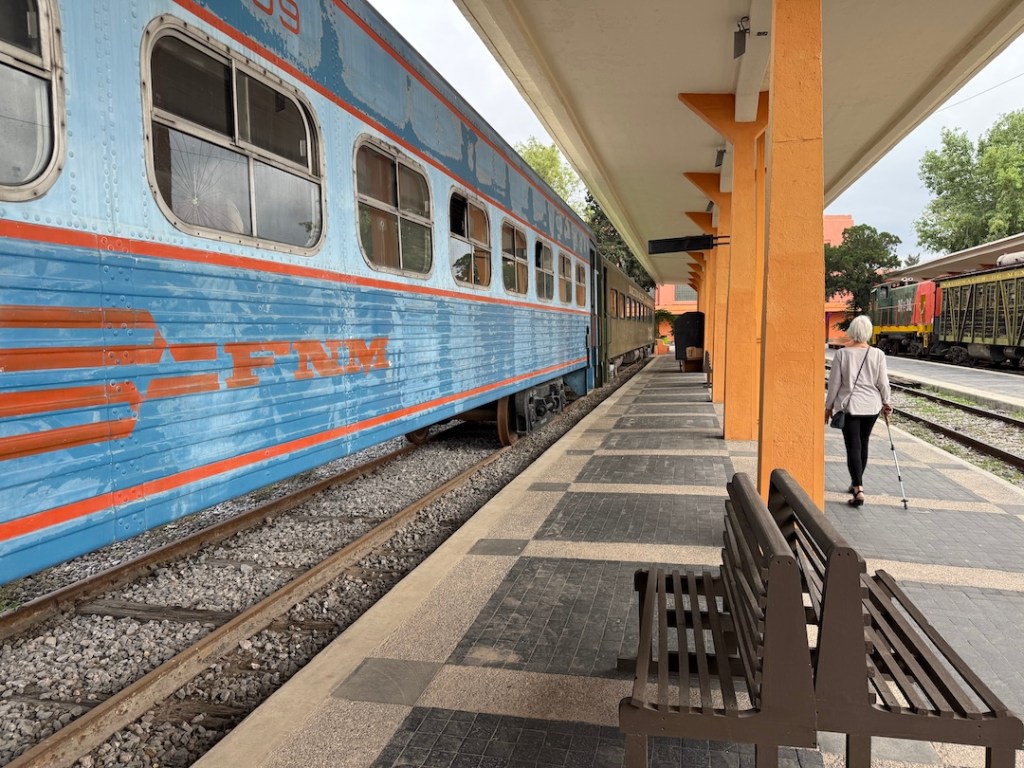
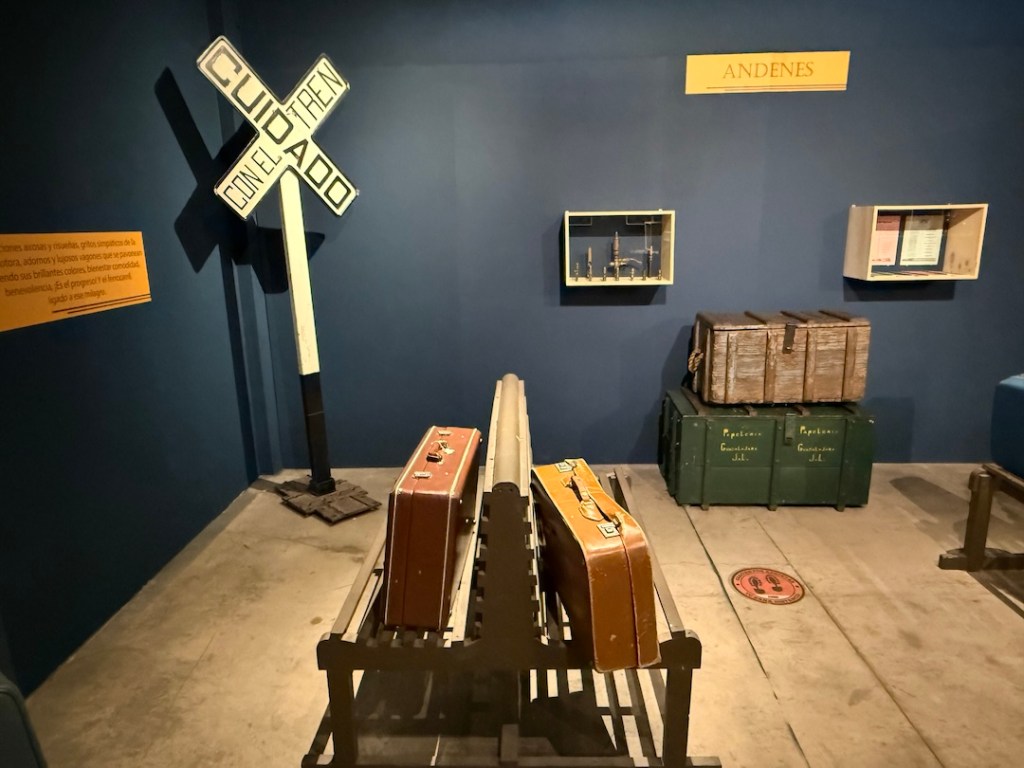
The old train station that I remember from long ago is now the Museo del Ferrocarril. People are bringing in large canvases for a new art show in a section that is now a gallery. And I recall the pattern of the stairway stones that I sat on long ago while I waited for my train to depart.
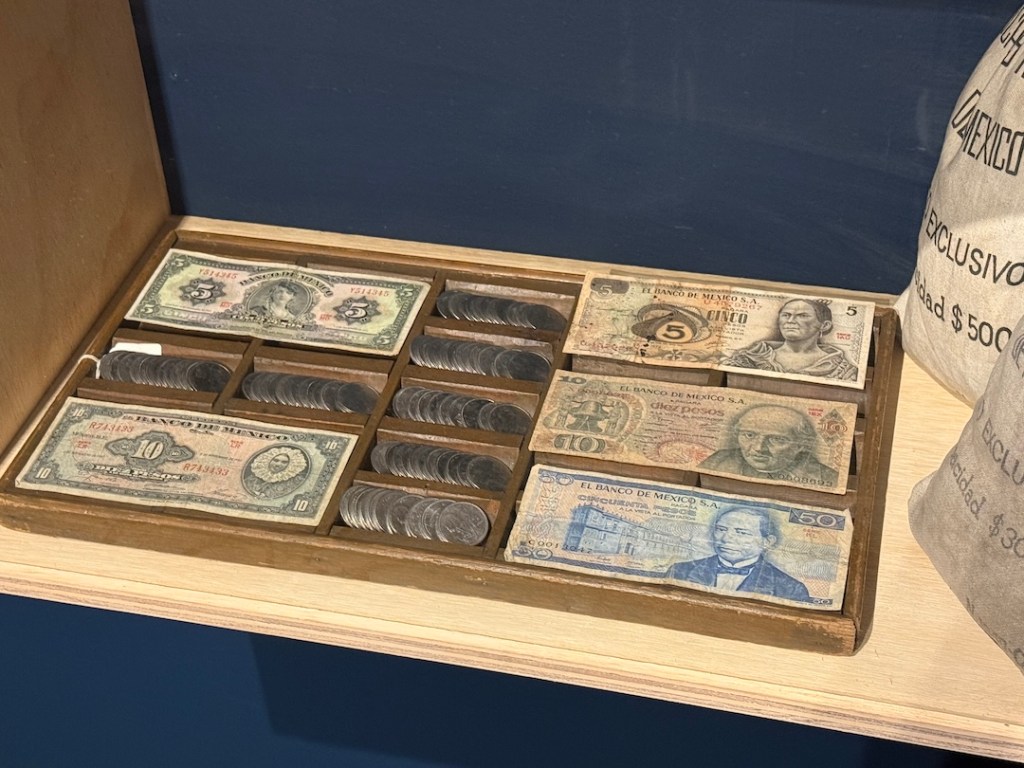
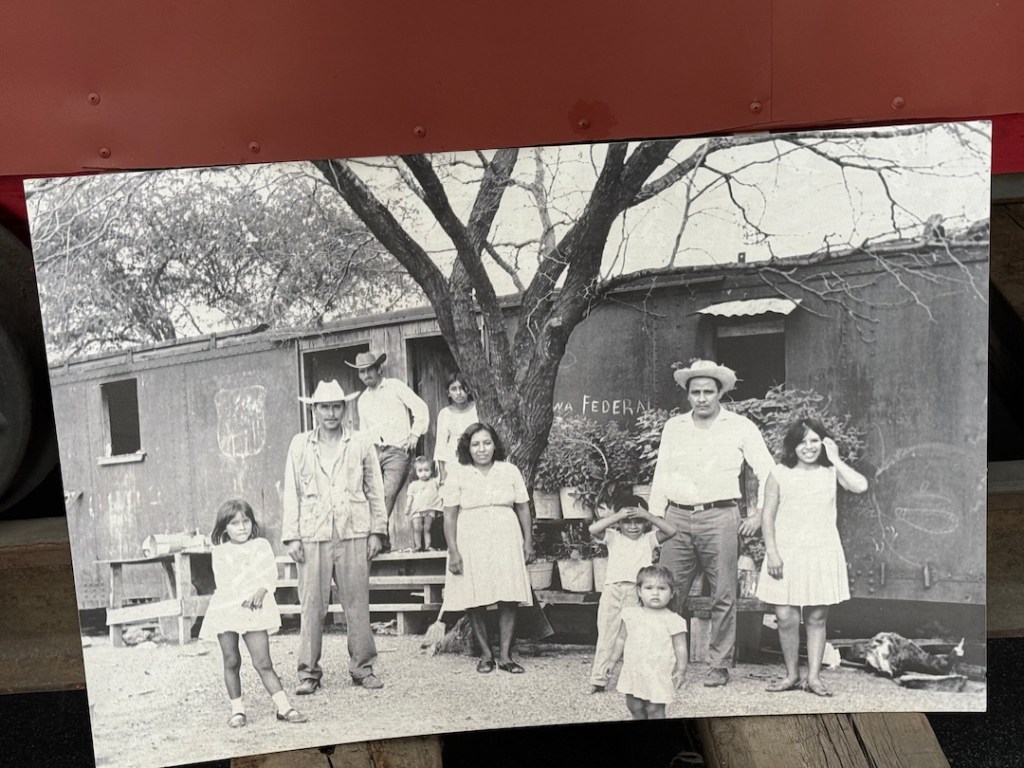
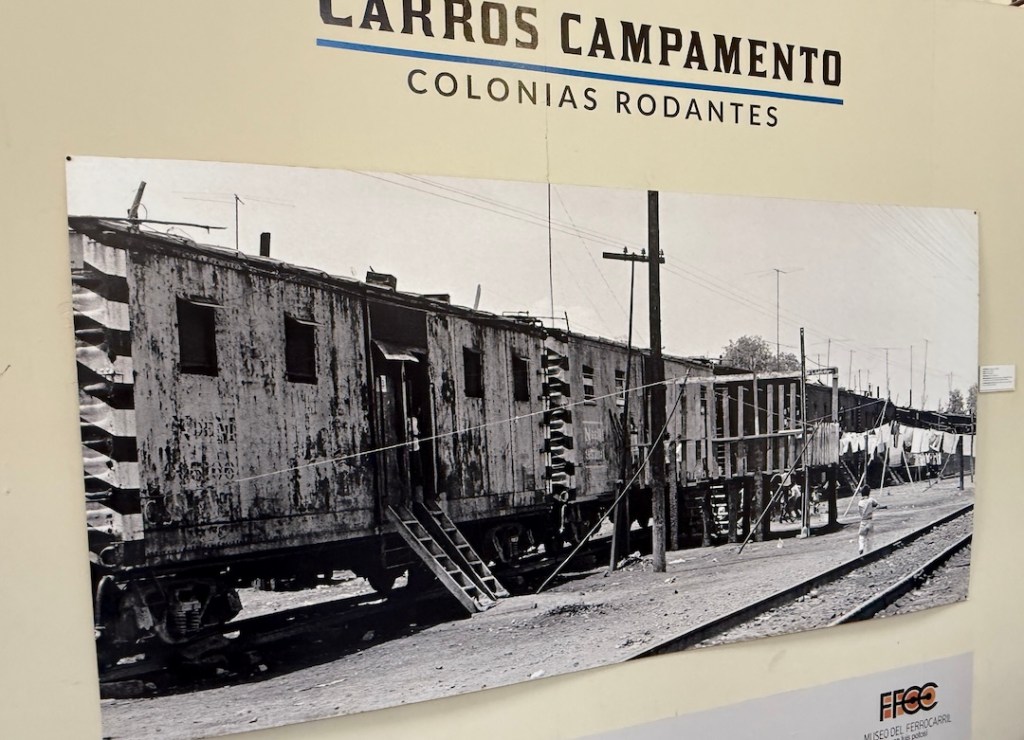
••••••••••••••••••••••••••••••••••••••••••••••••••••••••••••
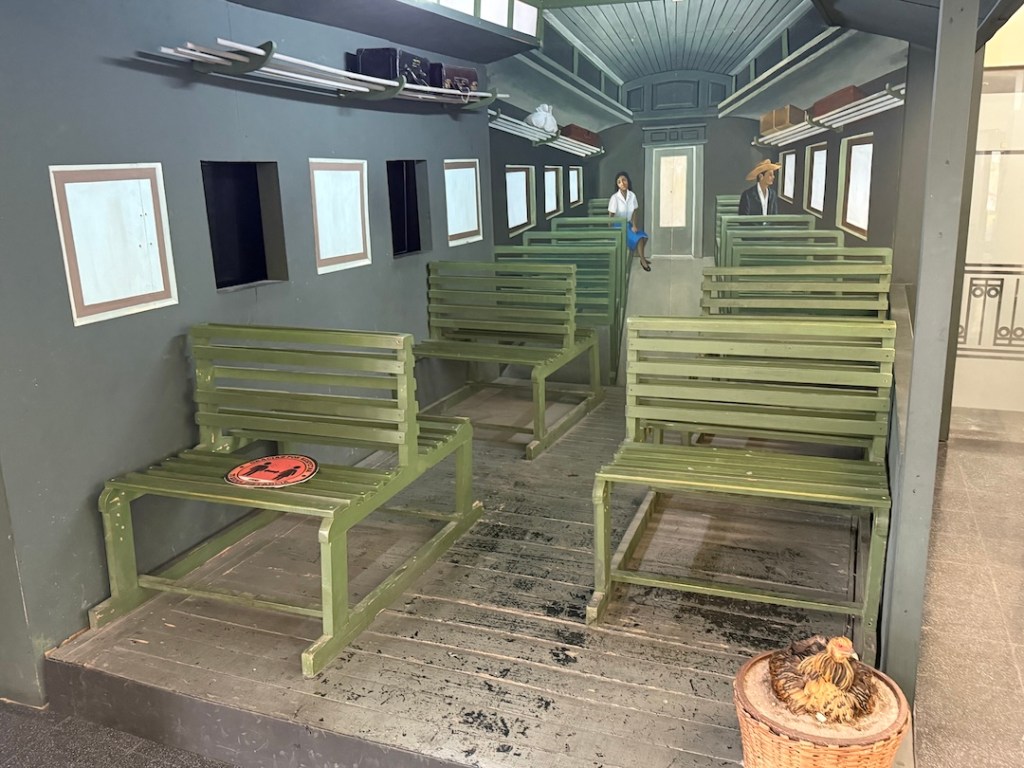
I recall very well that northbound trip from 50 years ago, when we sat on wooden benches while the train chugged through tall dry cactus forests, with occasional stops for departing passengers. I watched them walk away into that forbidding landscape with their worn bags and I wondered just where could they possibly be going? There was no habitation in sight, just tall spiky cactus and Joshua trees.
We were four guys sitting on benches that faced each other, and I was the only Gringo on the train. Then a mischievous fellow seated across from me pulled an enormous bottle of tequila from under his seat and began passing it around. Soon my Mexican compadres were singing folk songs and laughing away the afternoon. After a few swigs, it was my turn to sing something. I had no idea what to sing, but started in with as much of “Home on the Range” as I could remember. My mischievous buddy was laughing and looking over my shoulder, and I turned to see all the other passengers in the car laughing at the tall singing Gringo. So I took another swig and bowed to the audience. It was another great Mexican memory!
I don’t know when the last passenger train left San Luis, but it might have been the one I was on. I still enjoy traveling the rails in whatever country I might find myself these days, and now I’m back in San Luis to revisit some of those youthful happy vibes of my footloose days.
••••••••••••••••••••••••••••••••••••••••••••••••••••••••••••
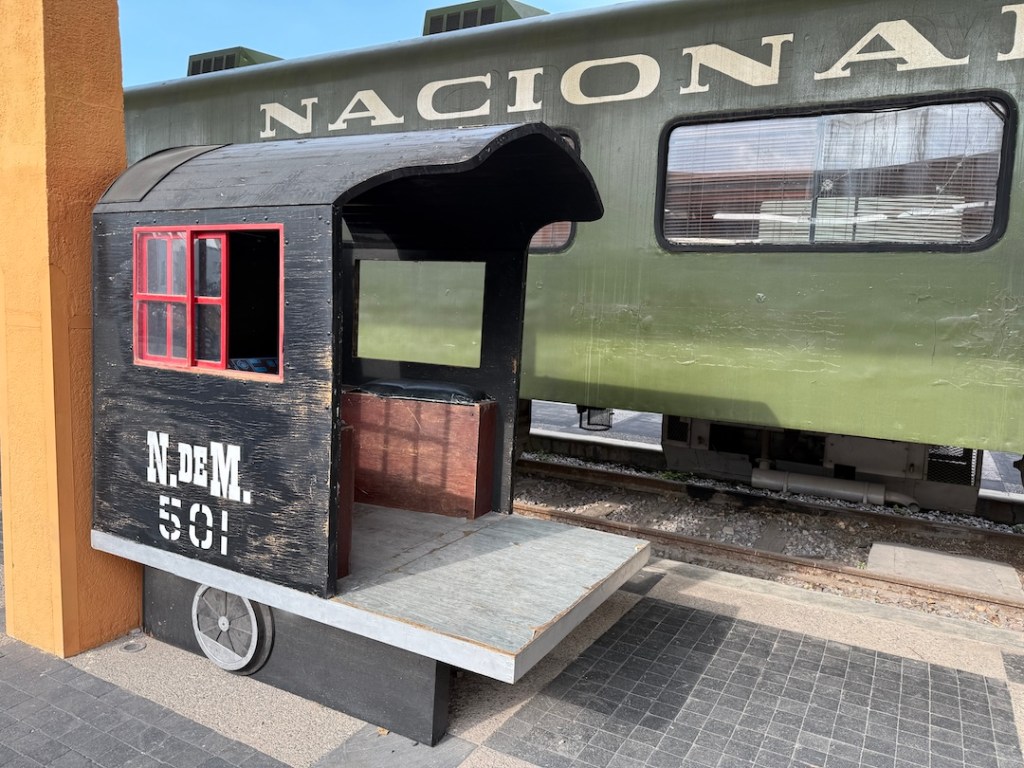
Out back in the old train yard the tracks are still there, although they no longer depart for Monterrey, Mexico City, Tampico, and other exotic destinations. And there’s a train car with the same hard wooden seats that I remember so well. There’s also a little locomotive mockup with the number 501, for the kids to get their pictures taken. It’s a memorial to Jesús Garcia Corona, the Hero of Nacozari, who pulled his burning dynamite train out of the Sonoran mountain town of Nacozari to save the community before the train blew up. He lost his life, and now it’s a famous part of Mexican folklore – and there’s a well-known song about the tragedy called, “Maquina 501.”
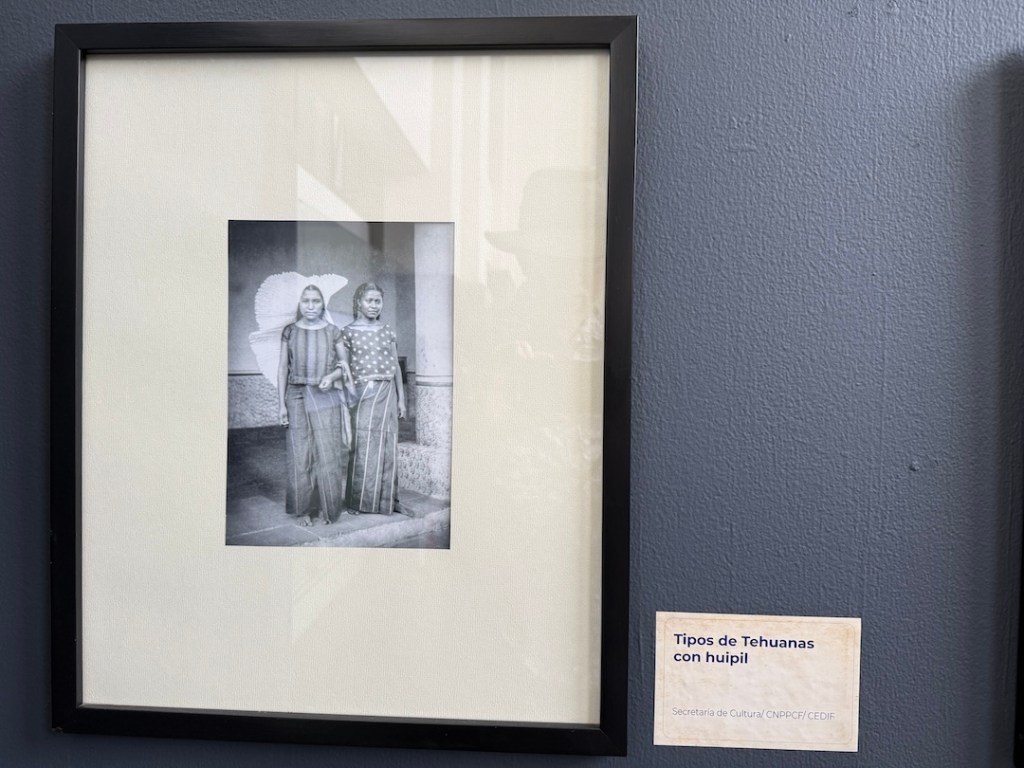
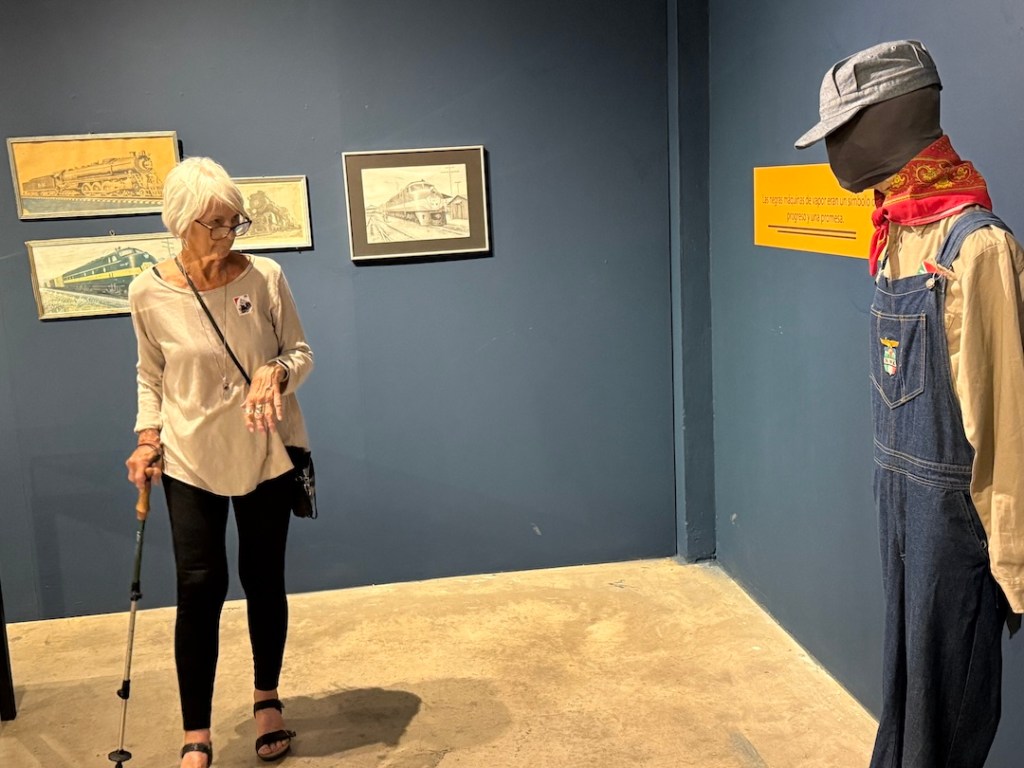
Among the displays inside are pictures of old discarded freight cars that used to stand on the side tracks in train yards around Mexico, providing housing for people after the Revolution. Many of those old freight cars were still on those side tracks when I was last here, and I recall the laundry hanging outside to dry. A lot has changed since then.
In one display there’s a woodcut that honors the ‘Adelitas,’ the women who followed their men during the Revolution, which was the first war to use railroads extensively. The woodcut shows one of the Adelitas tenderly treating a wounded soldier.
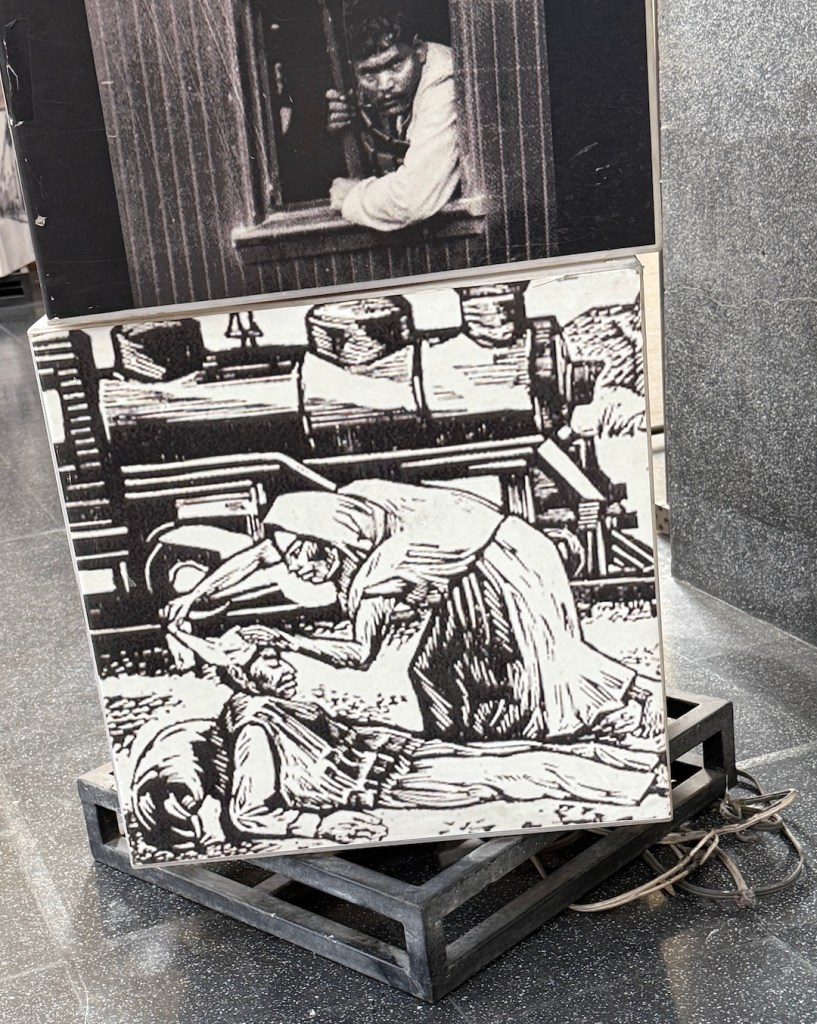
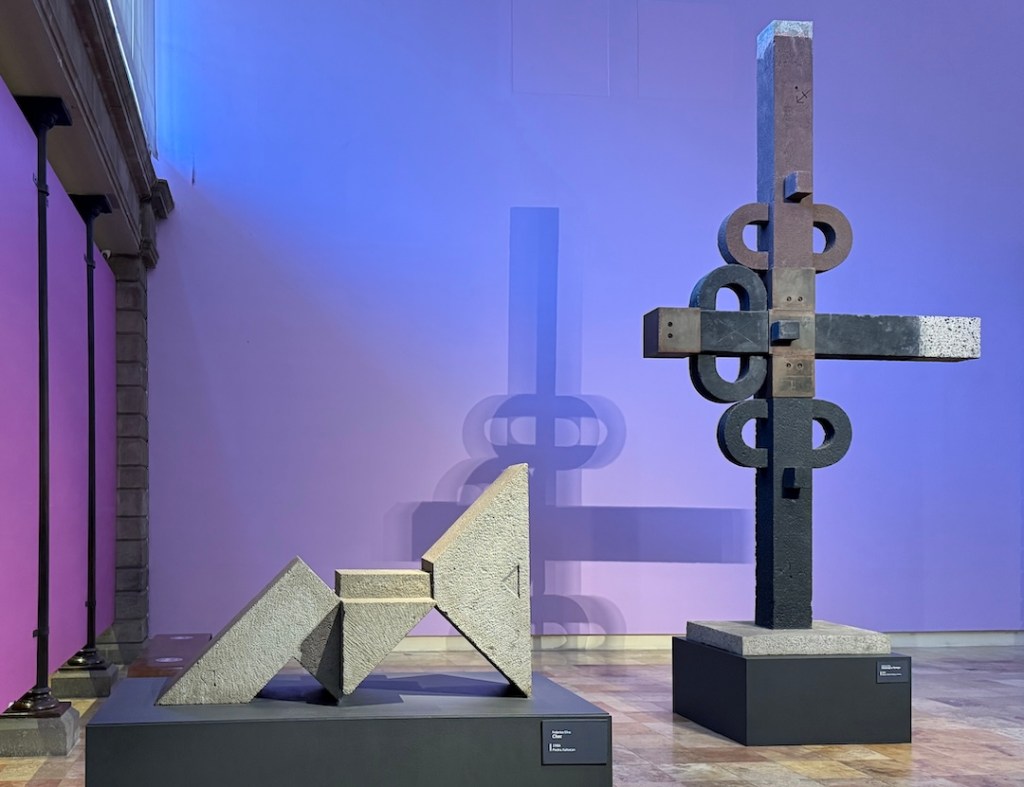
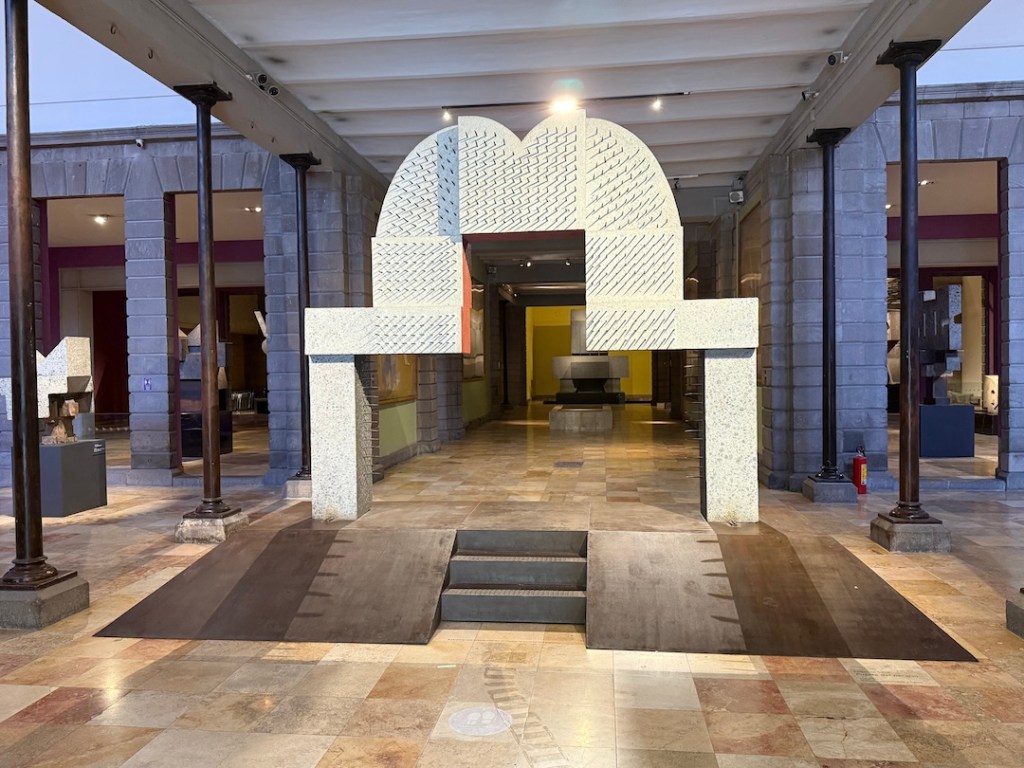
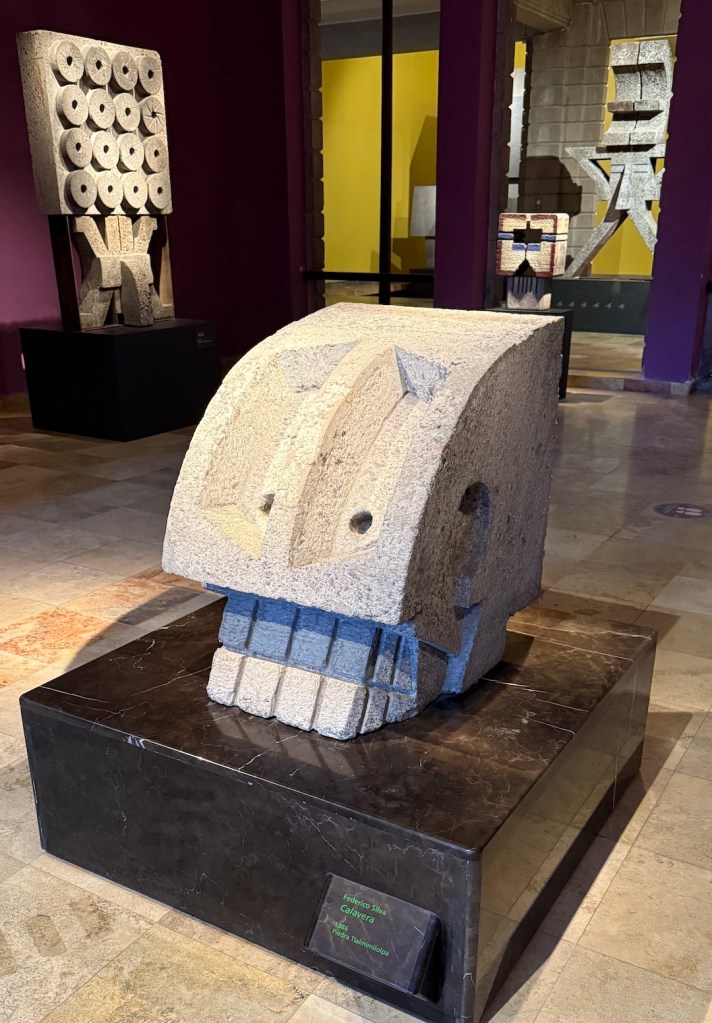
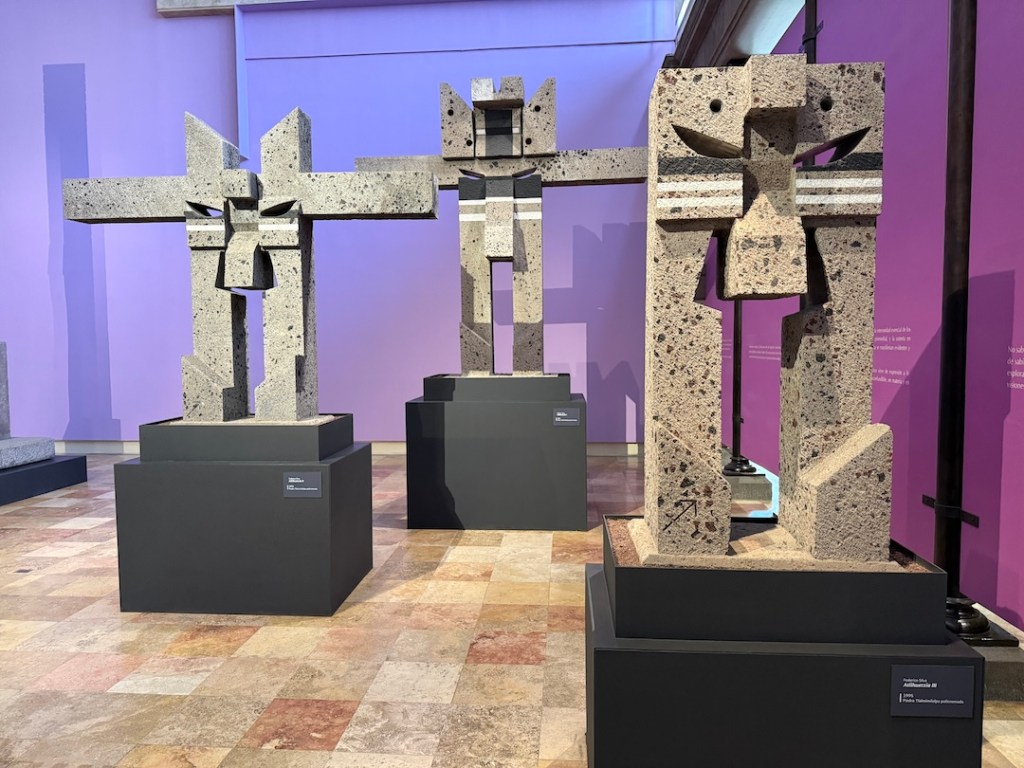
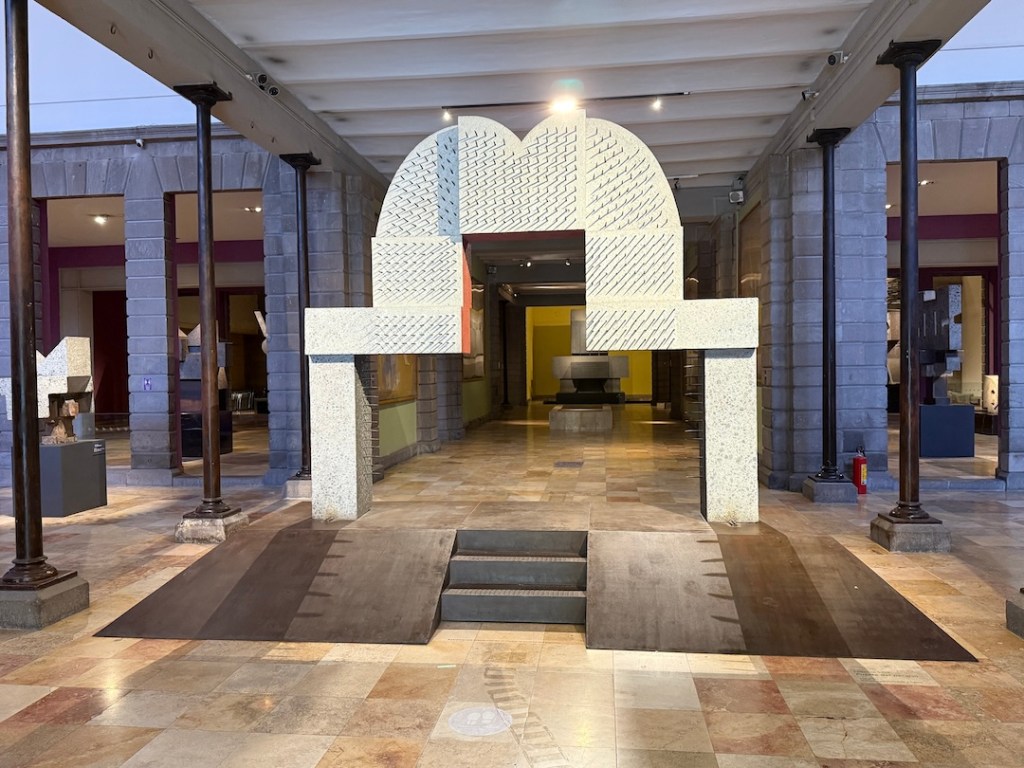
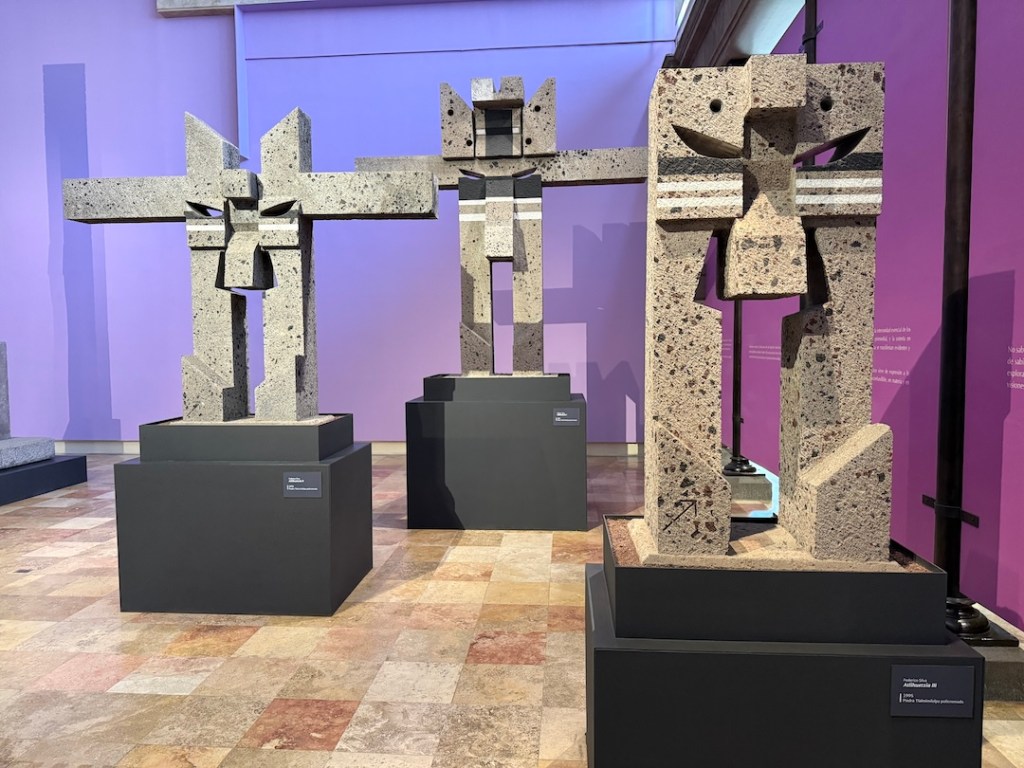
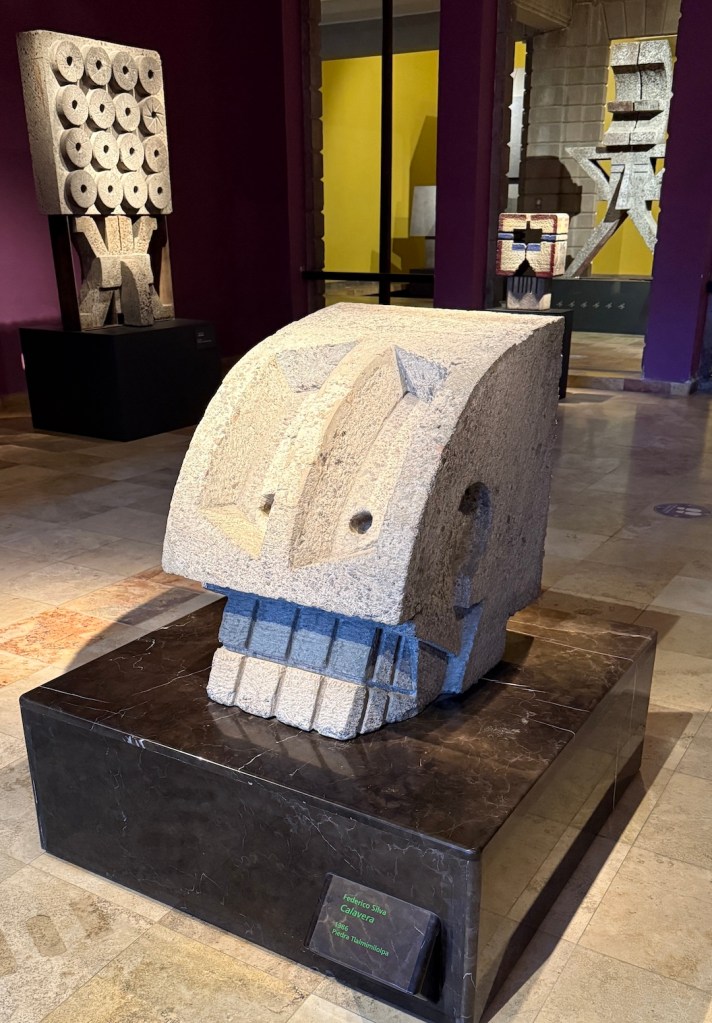
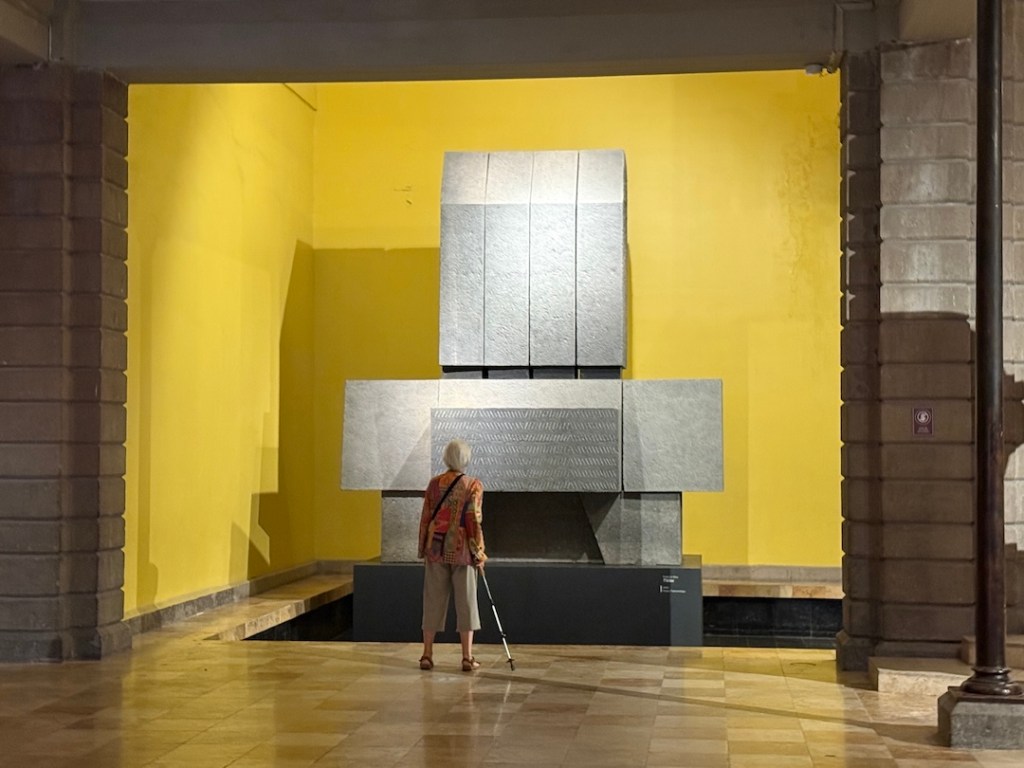
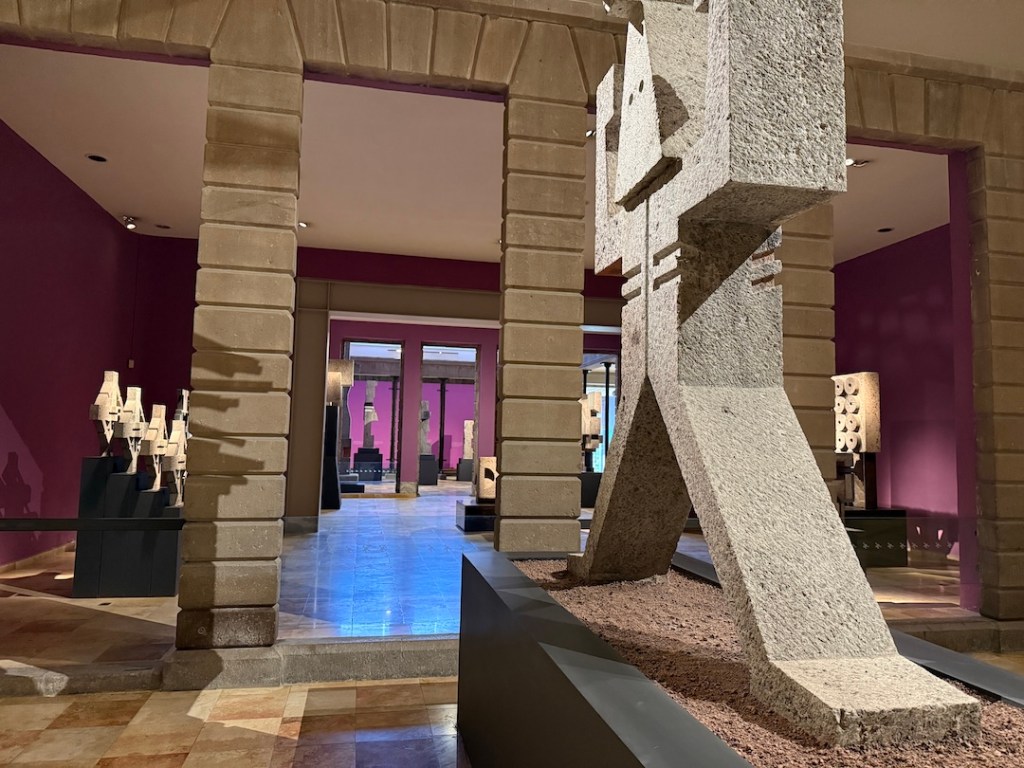
The Museo Federico Silva, with its impressive collection of massive stone sculptures, is another surprise in this often-overlooked city. They celebrate the nation’s history of huge carved pieces of native stone that date back to those colossal carved heads of the Olmecs that predate most other Mexican cultures. Just wandering through this museum gives me a sense of how small we are in relation to the many layers of history that lie beneath our feet.
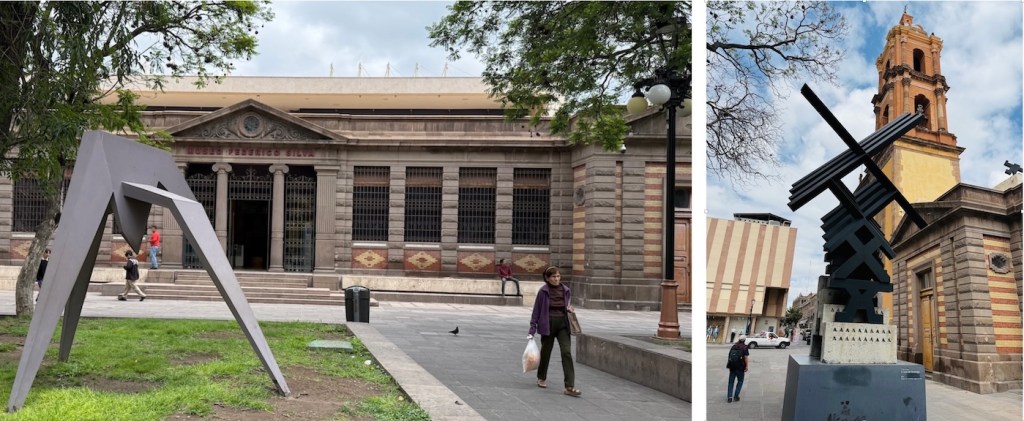
Federico Silva was born in 1923 and died in 2022 at the age of 99. In his mid-20s he became part of the reawakening of Mexican arts when he worked as the assistant of David Alfaro Siqueiros, perhaps the most radical of the triad of great Mexican muralists that included Diego Rivera and José Clemente Orozco. Silva published a magazine called 1935, to commemorate the 1935 Revolution Day battle in the Zócalo of Mexico City between workers organizations and a fascist group funded by industrialists. His subsequent artistic collaborations with the crisp stone-faced graphics of Leopoldo Méndez may have been one inspiration for his later huge stone carvings.
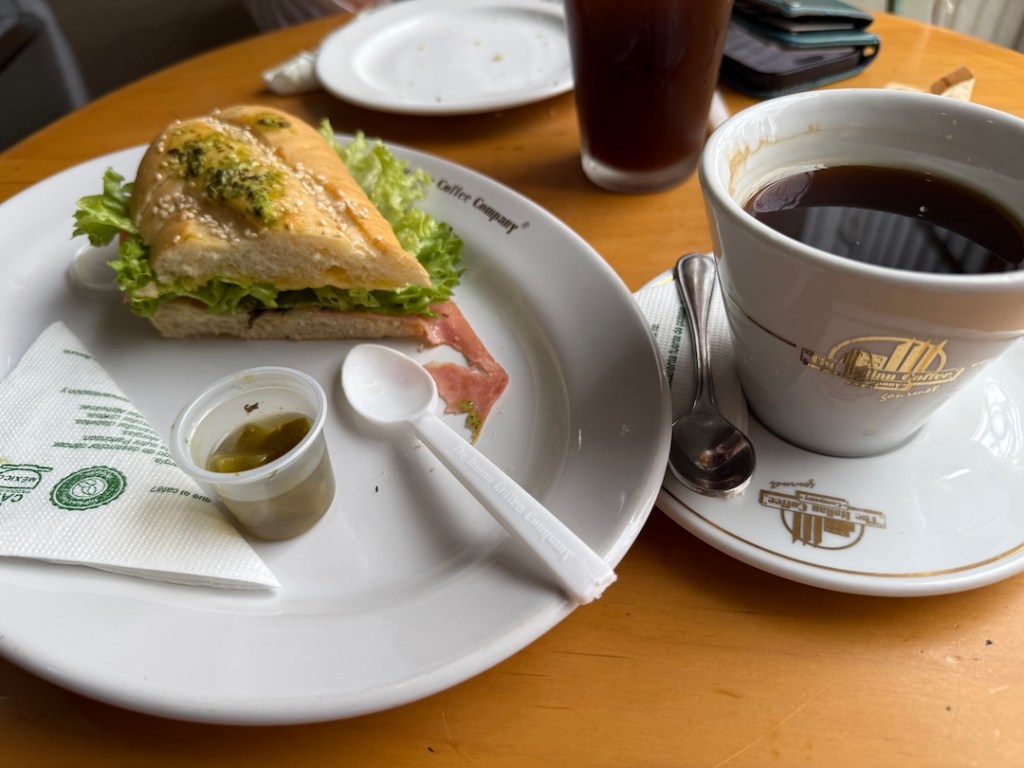
Another morning finds us at the local Italian Coffee Company, and we see them often in our MX travels. We end up with some hearty coffee and split a hearty breakfast sandwich to fortify us for another rewarding day of discovery in this interesting desert city.
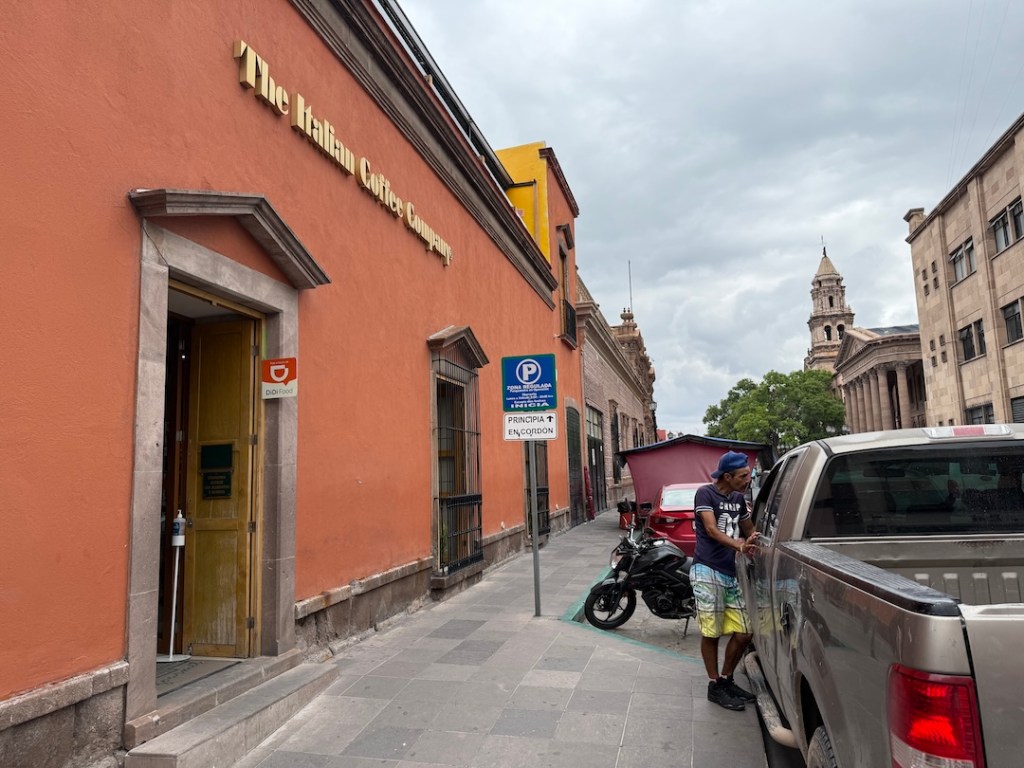
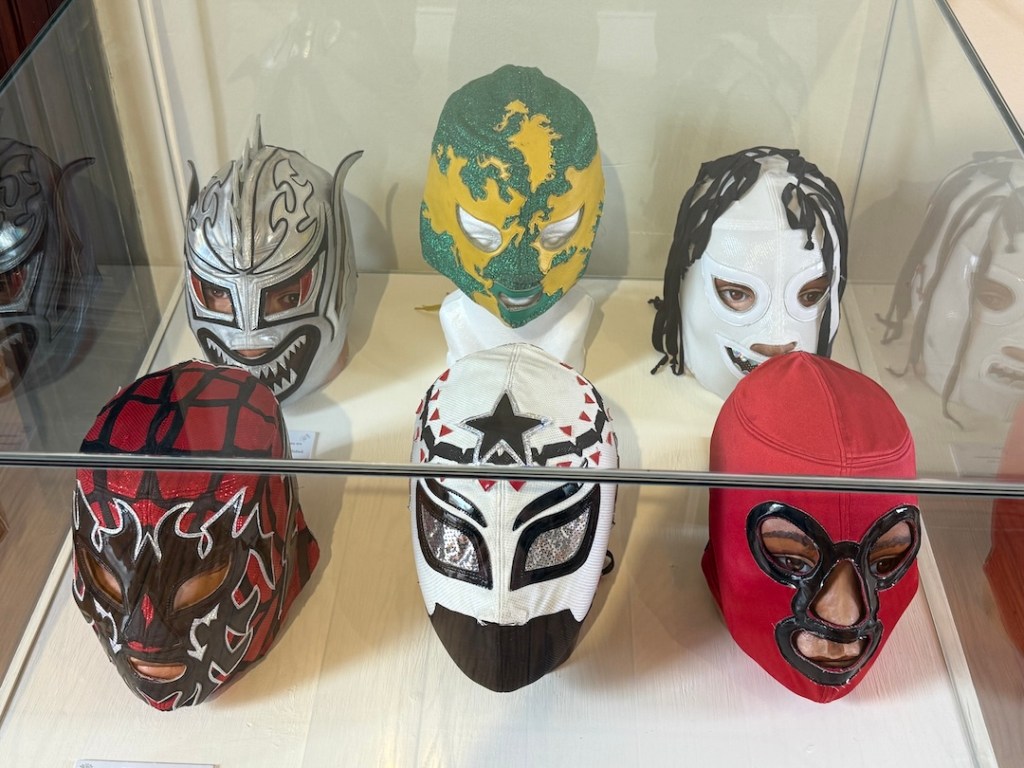
Right nearby is the enticing entryway to the Museo Nacional de la Máscara, with its extensive display of colorful masks that are an essential part of the country’s ceremonies and fiestas. It’s an encounter with the ancient Mexican concept of ‘Dualism,’ day and night, good and evil, that governs our lives.
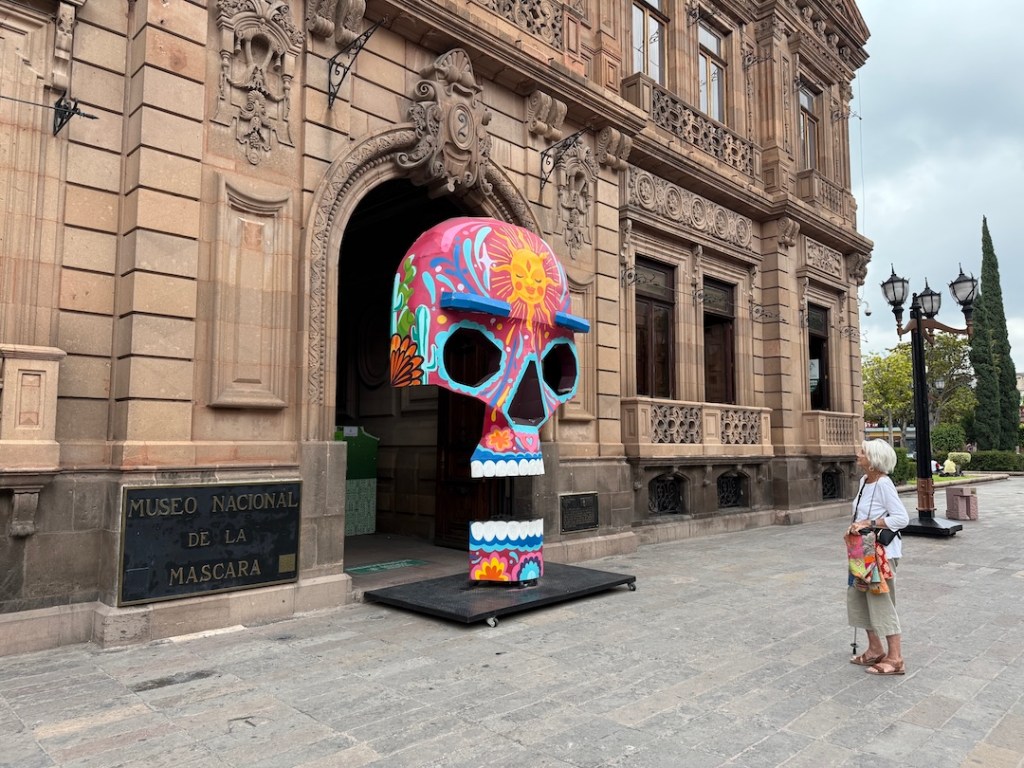
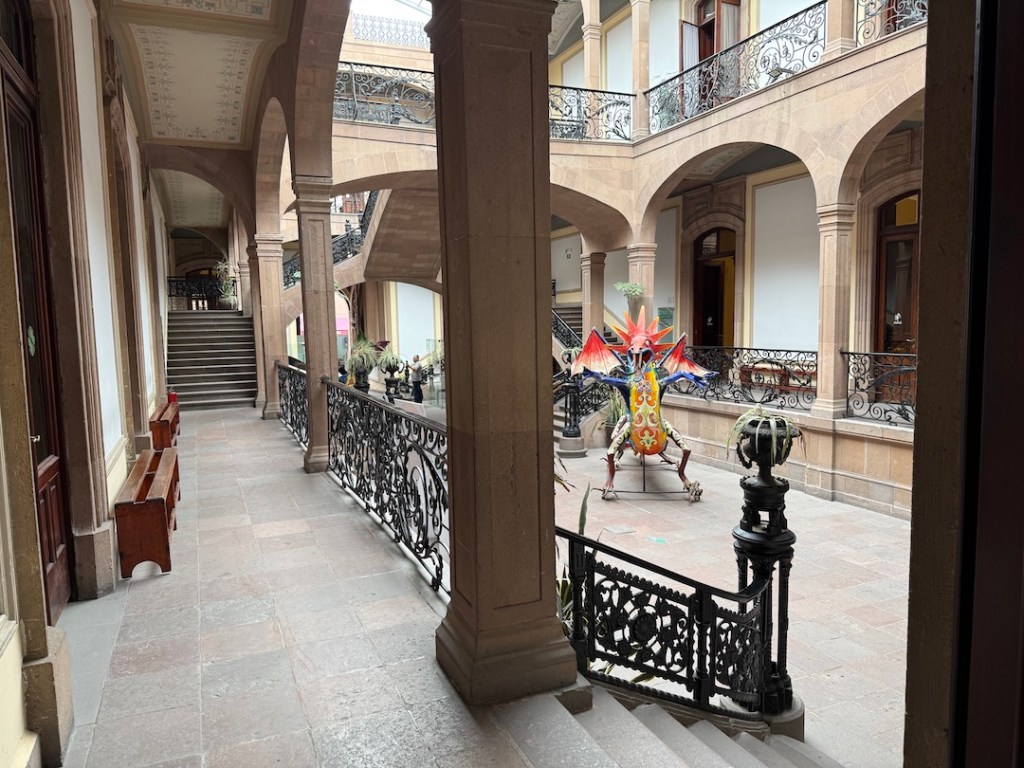
We pass through room after room of fantastical creations, many of them dating back to the deepest roots of pre-hispanic times. Many masks are symbolic of the ancient practices of local native groups, and Aztec caricatures. Some were worn by the city’s most famous actors in their Lucha Libre performances. And some are inspired by the contorted modernism of Pablo Picasso. There’s even a collection of Bulgarian masks in this place! It’s a very old form of art that transcends cultures and remains an evolving practice that allows for personal creativity to interpret our modern world.
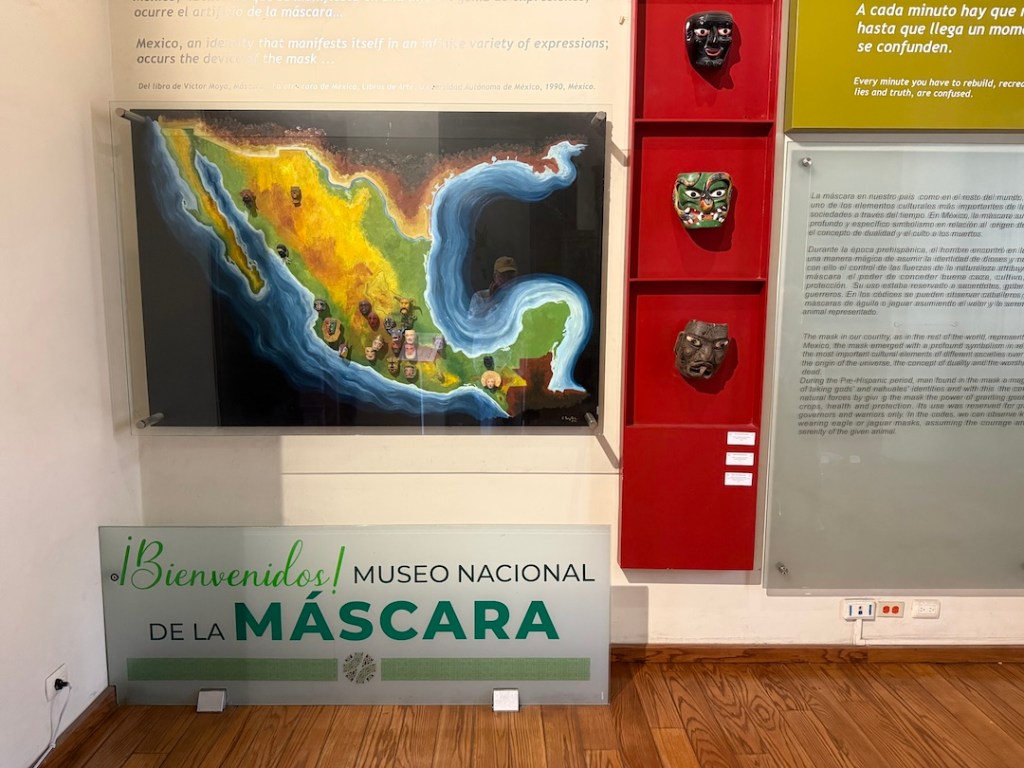
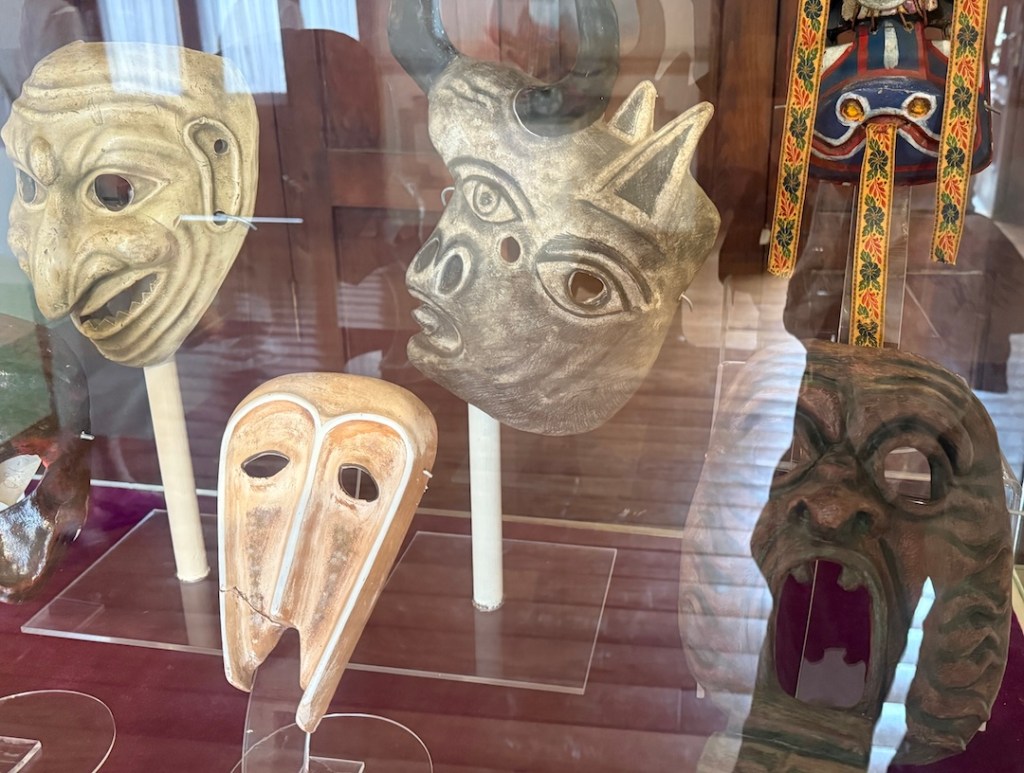
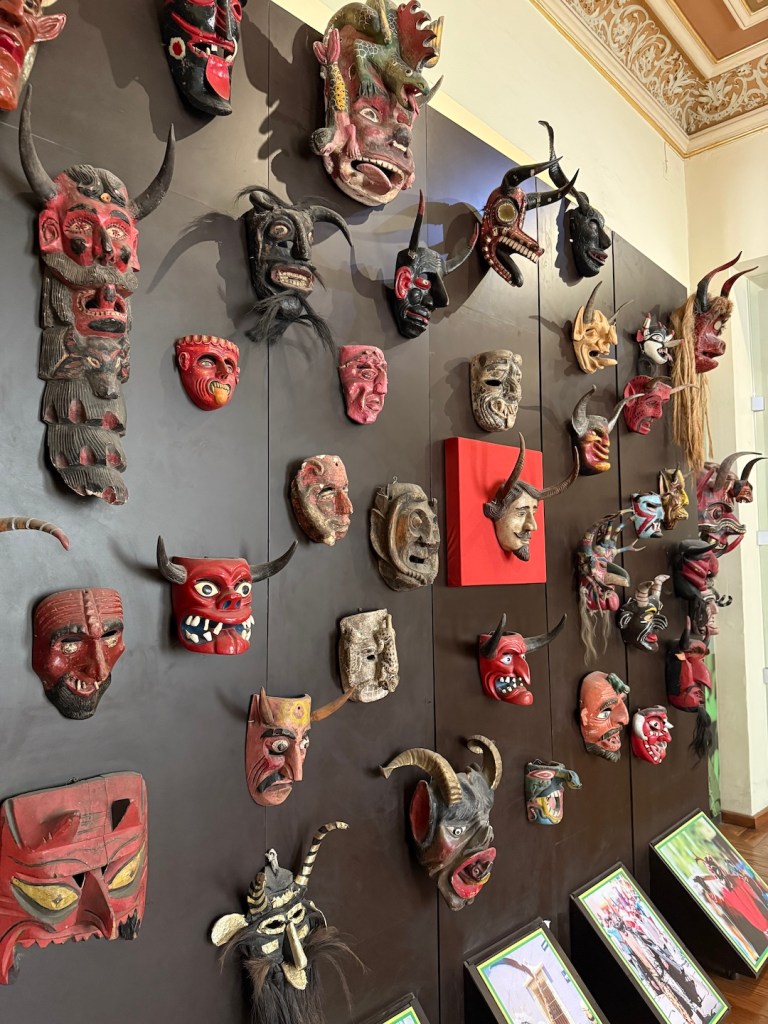
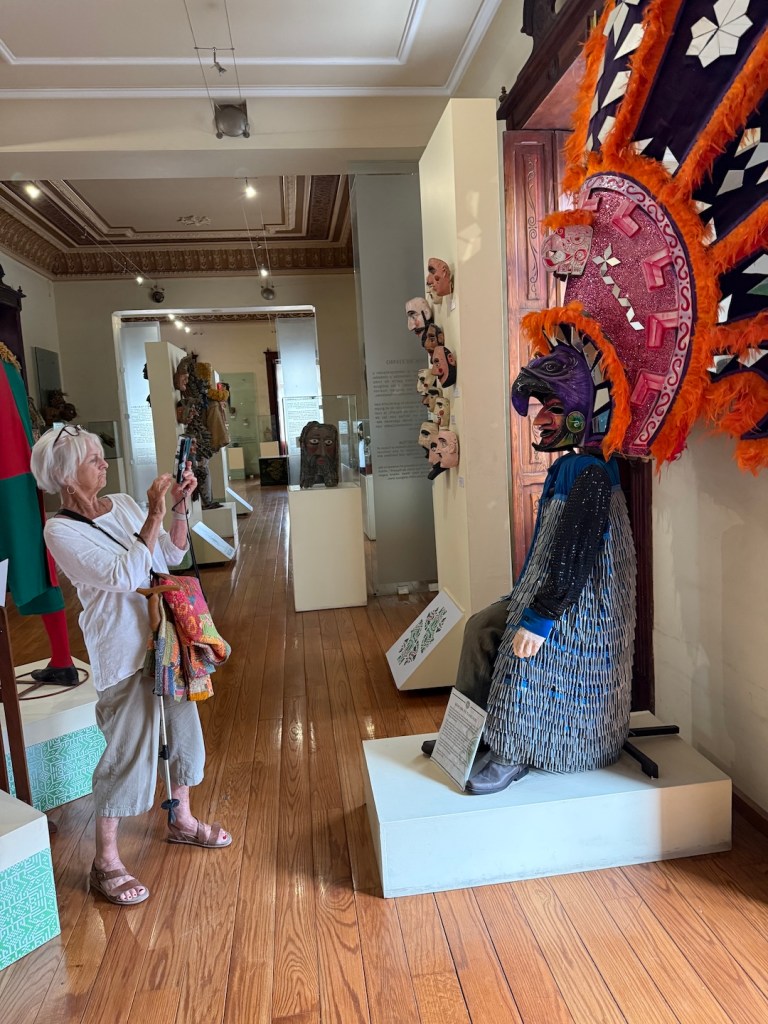
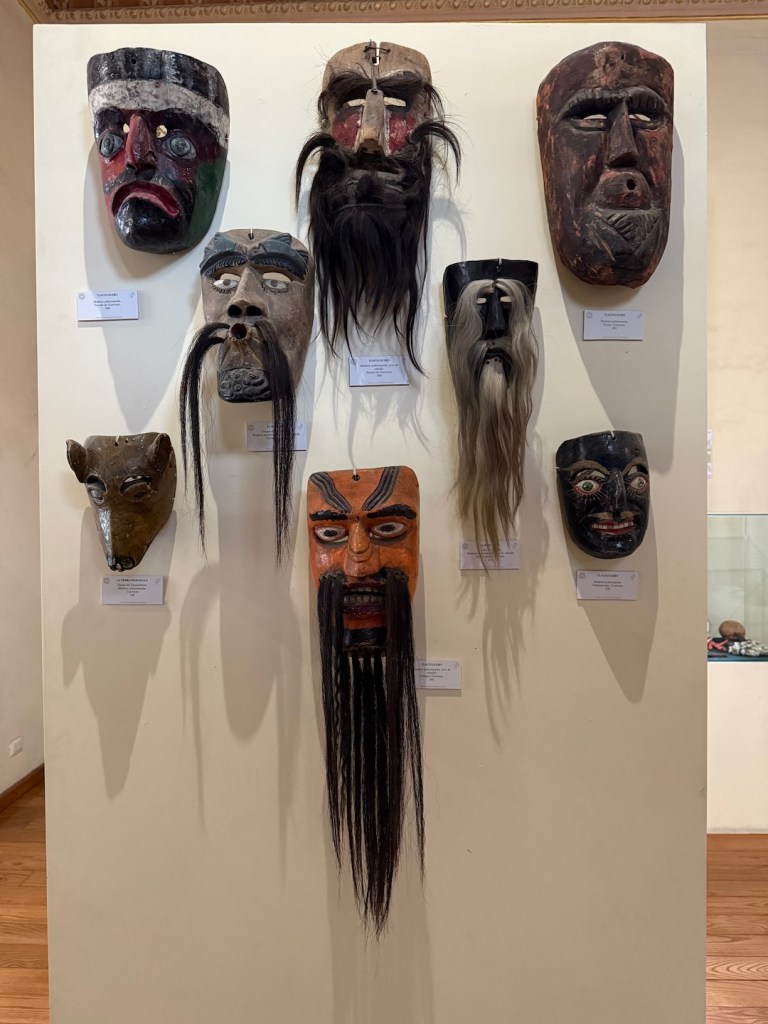
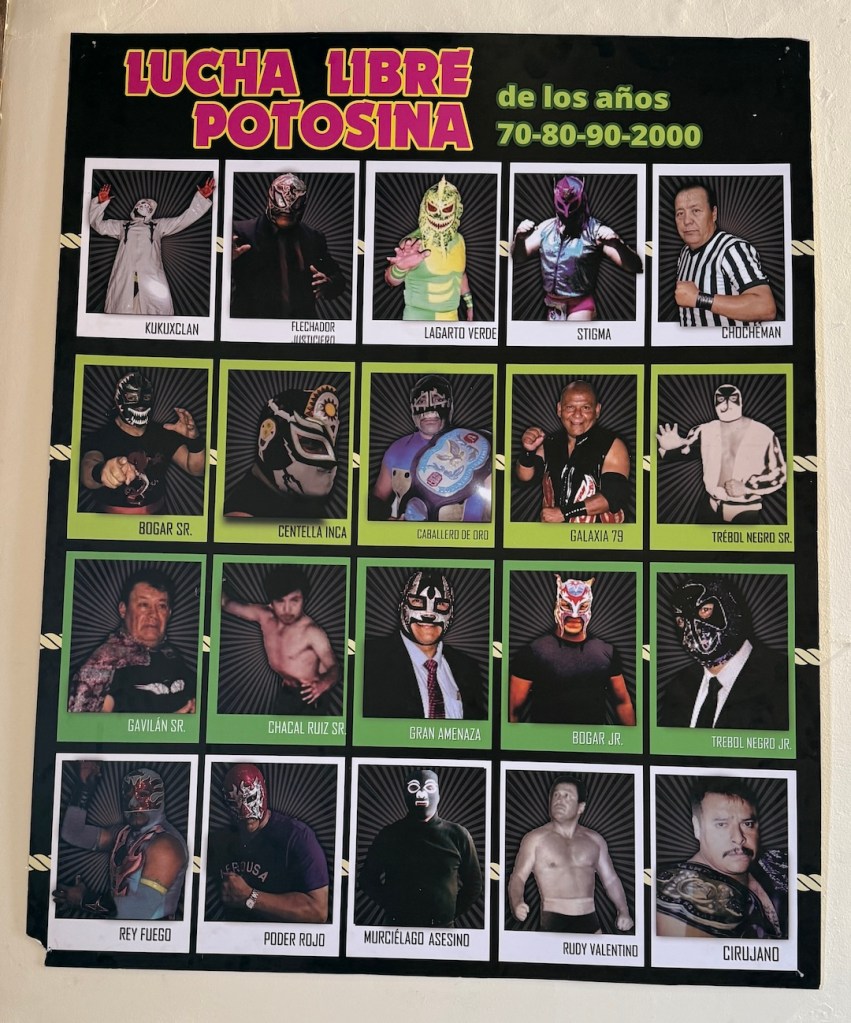
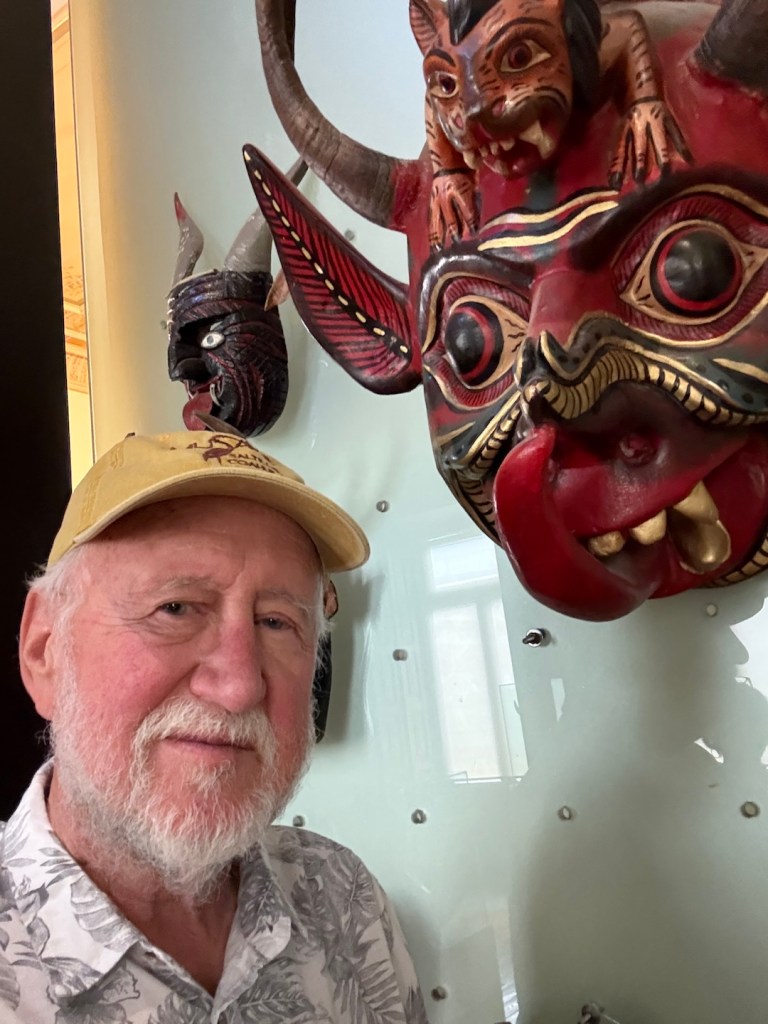
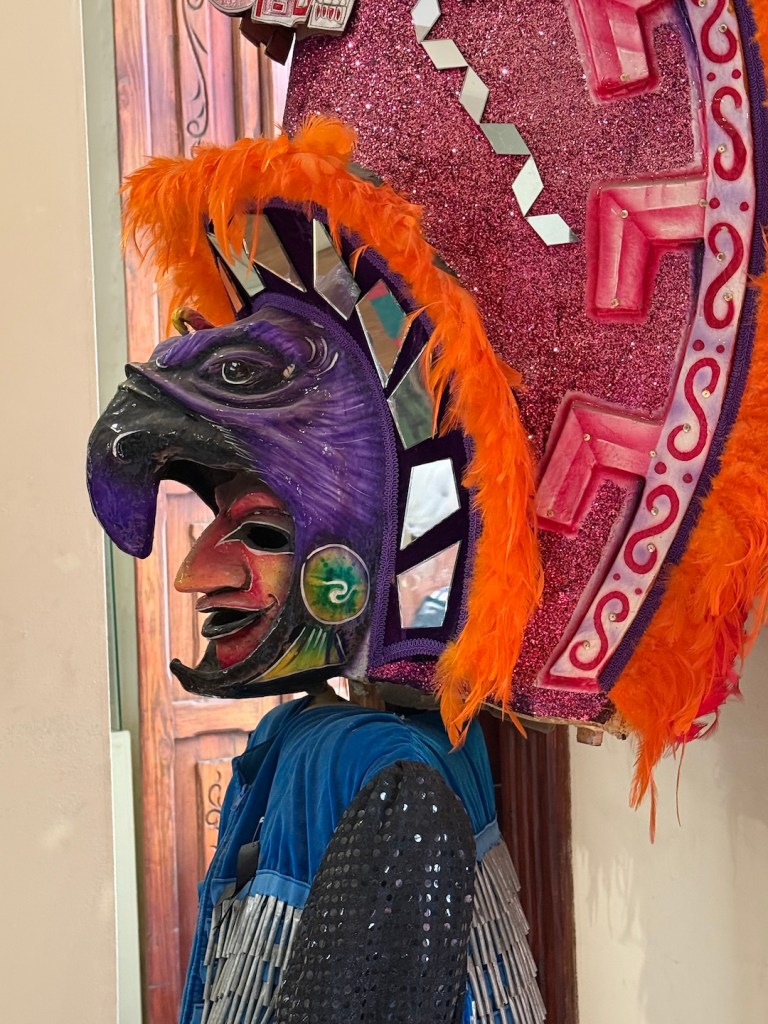
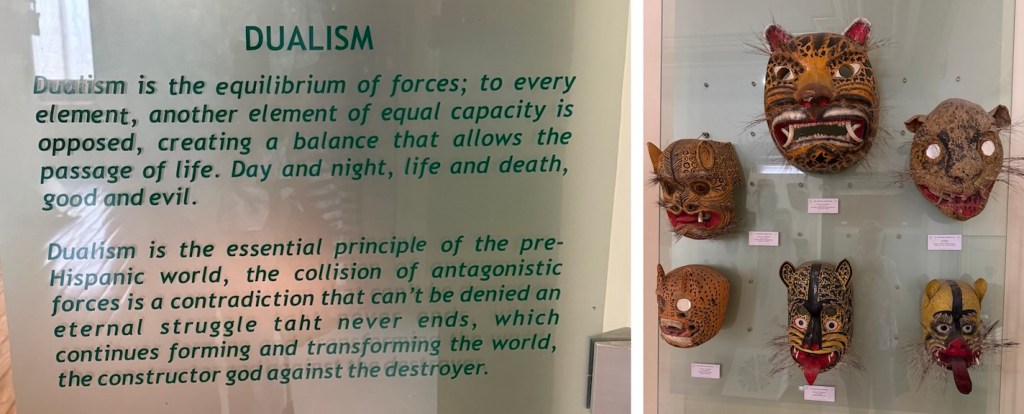
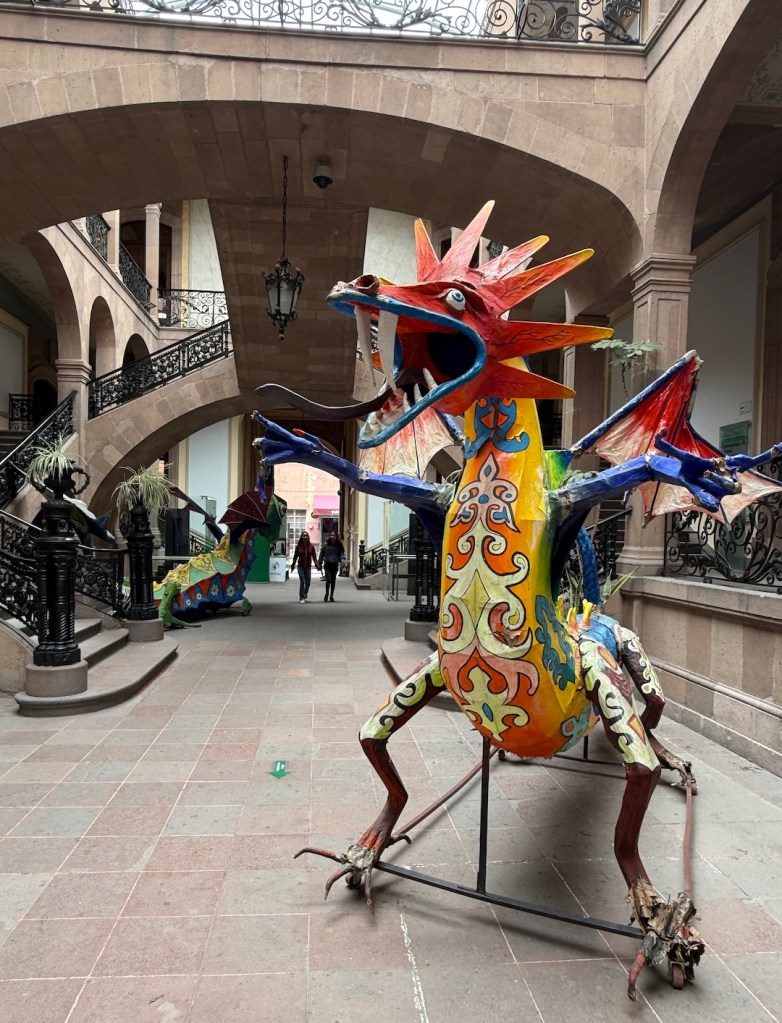
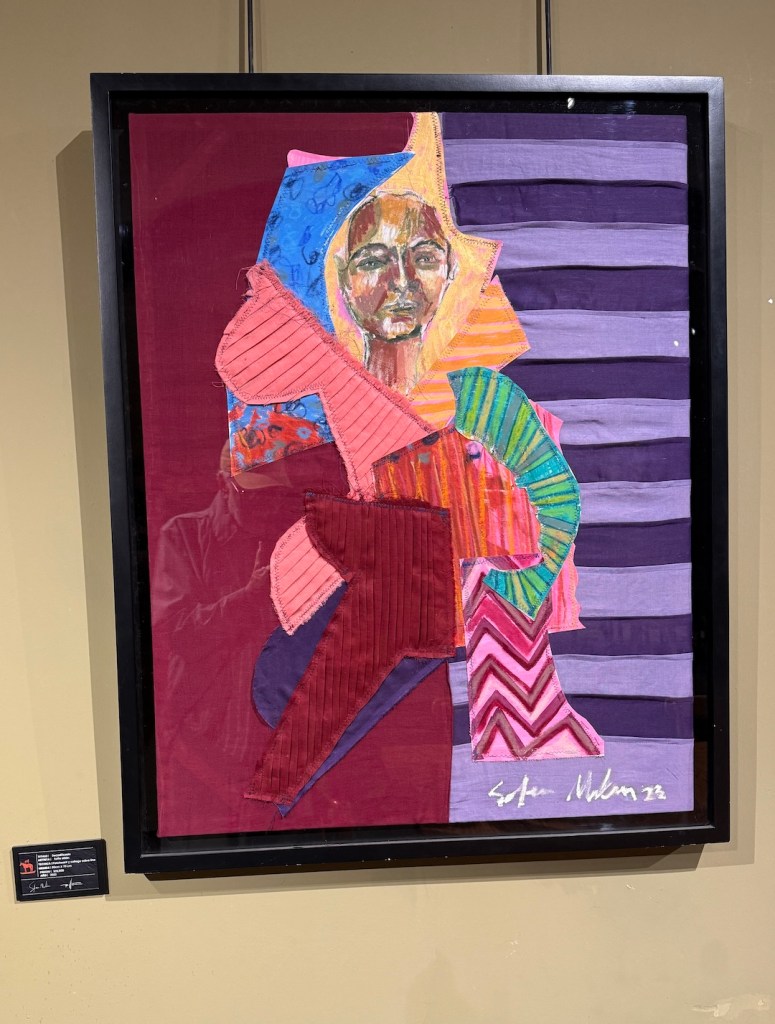
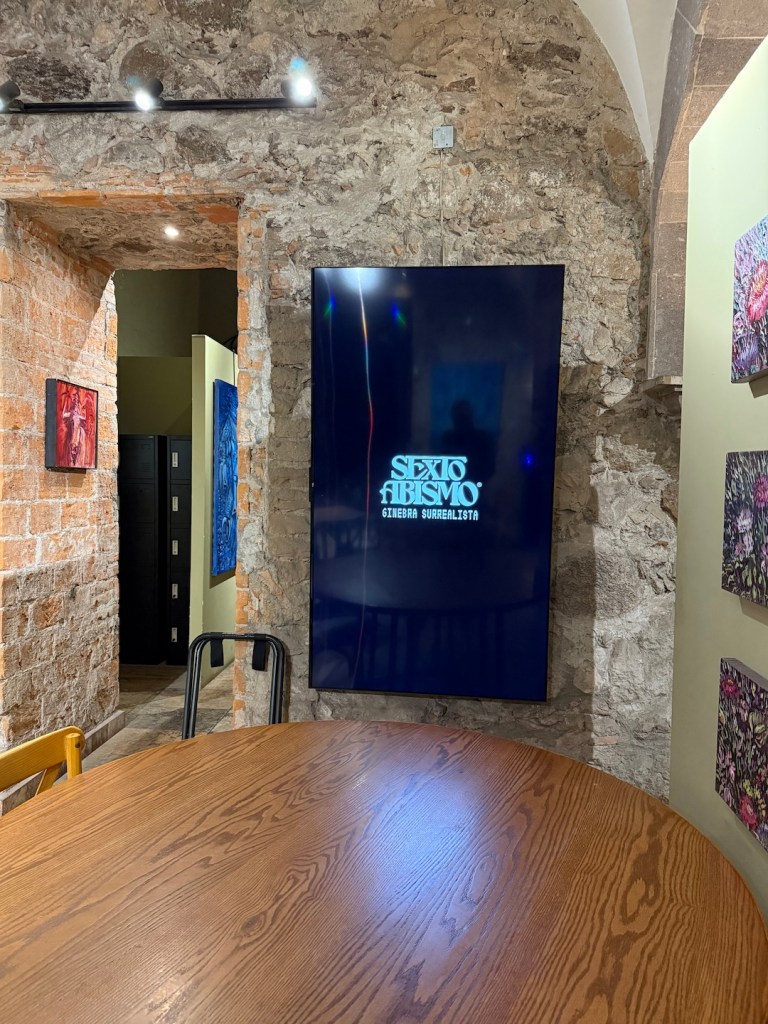
And after all that, we’ll make our way to another intriguing rooftop bistro named Natal Cocina de Origen, while the evening settles over another fine day on the streets of San Luis Potosí. The street-side doorway opens into a dining area, gallery space, and exhibition hall filled with the creative works of fine local artists.
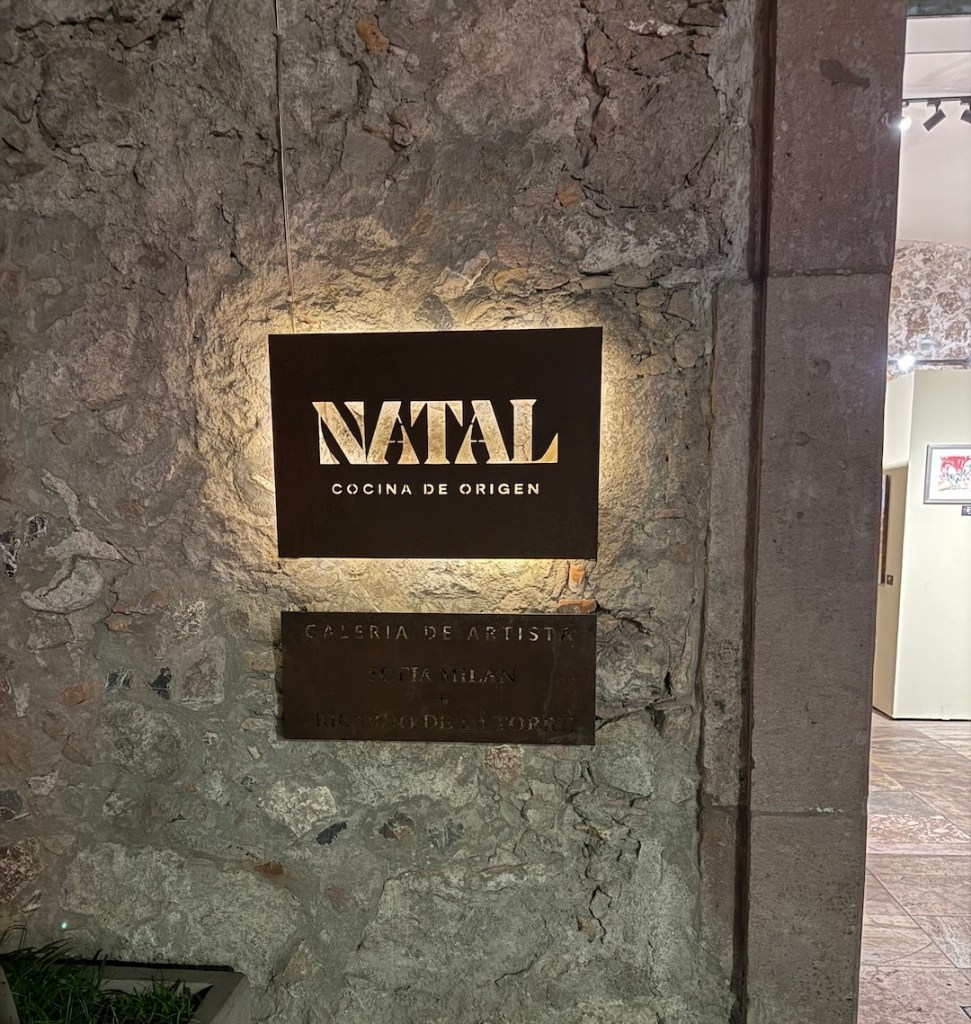
Soon we ascend the art-filled stairway to the rooftop for an excellent dinner with good Mexican wine, overlooking the pretty lighted dome of the Temple of San Francisco de Asis. This is the sort of place that serves elegantly-appointed meals topped with edible flowers.
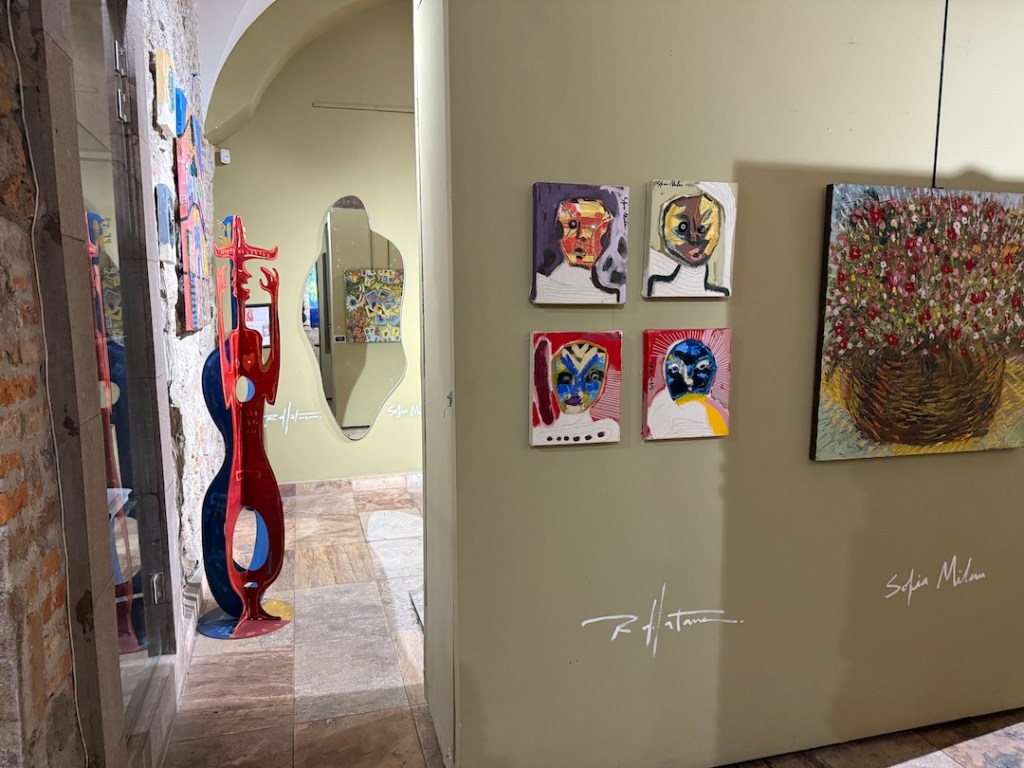
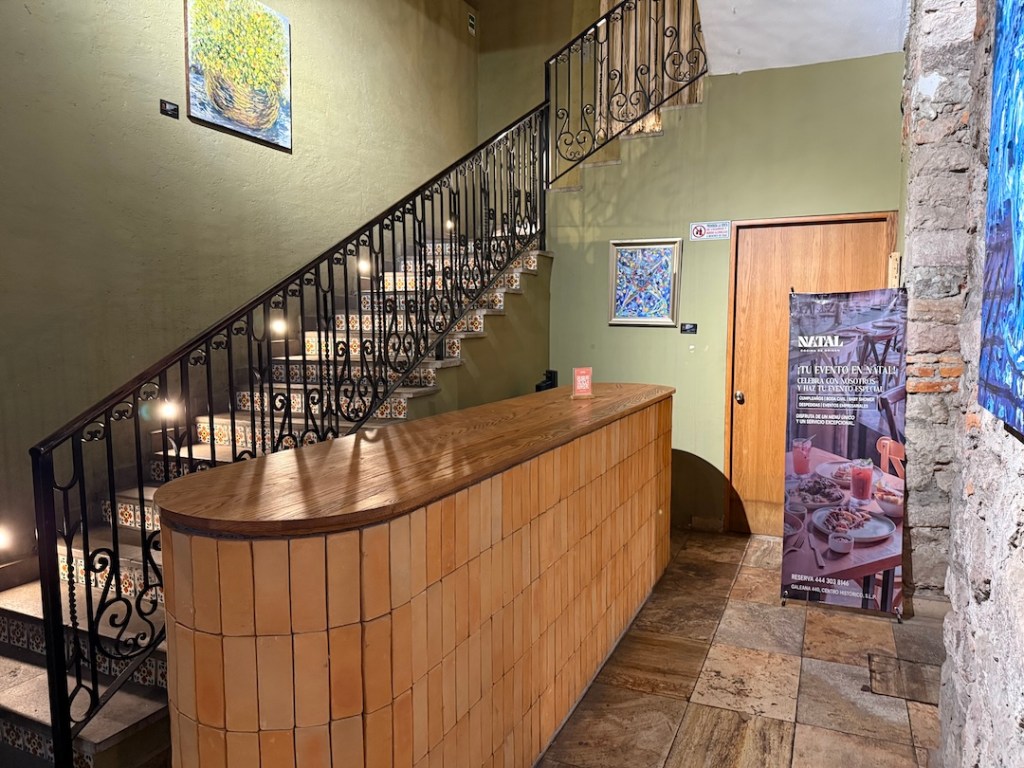
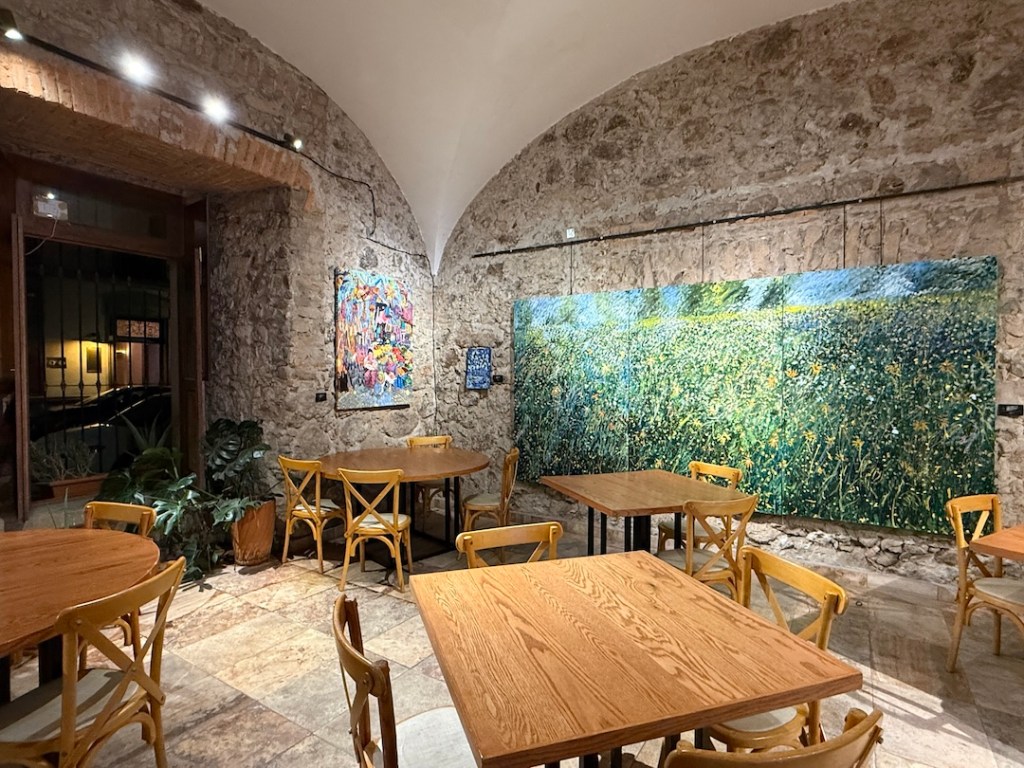
A large bearded fellow in a trench coat and fedora visits our table to see if we’d like to purchase one of his small poetry-filled scrolls. And how can we resist that on such a fine evening?
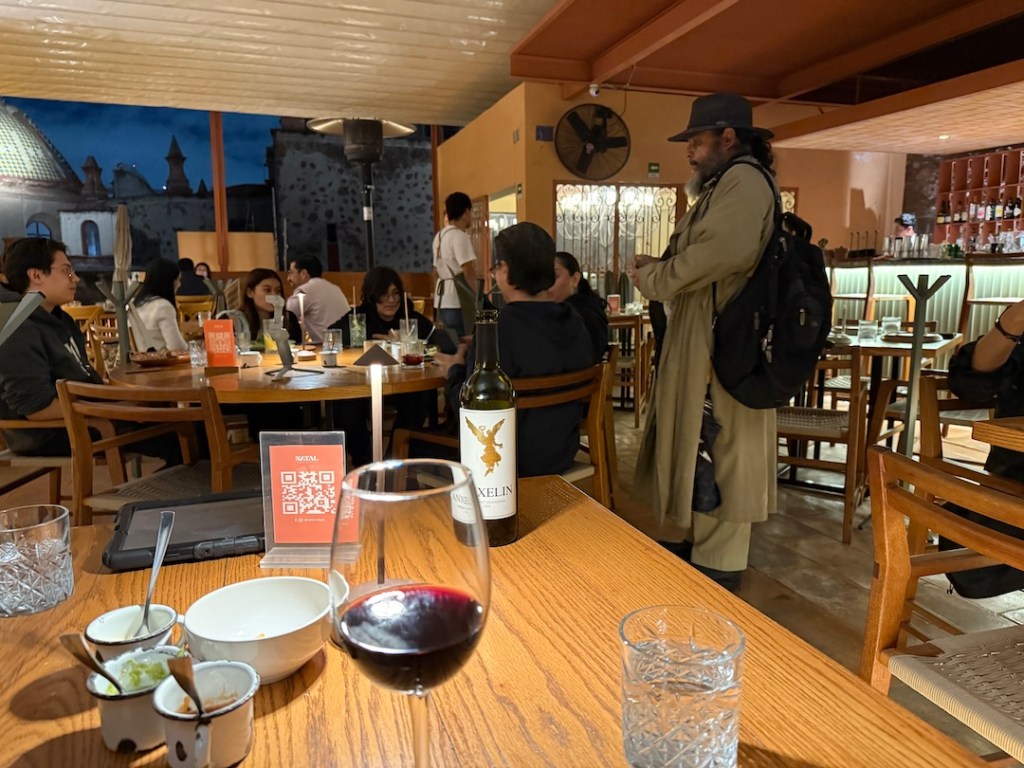
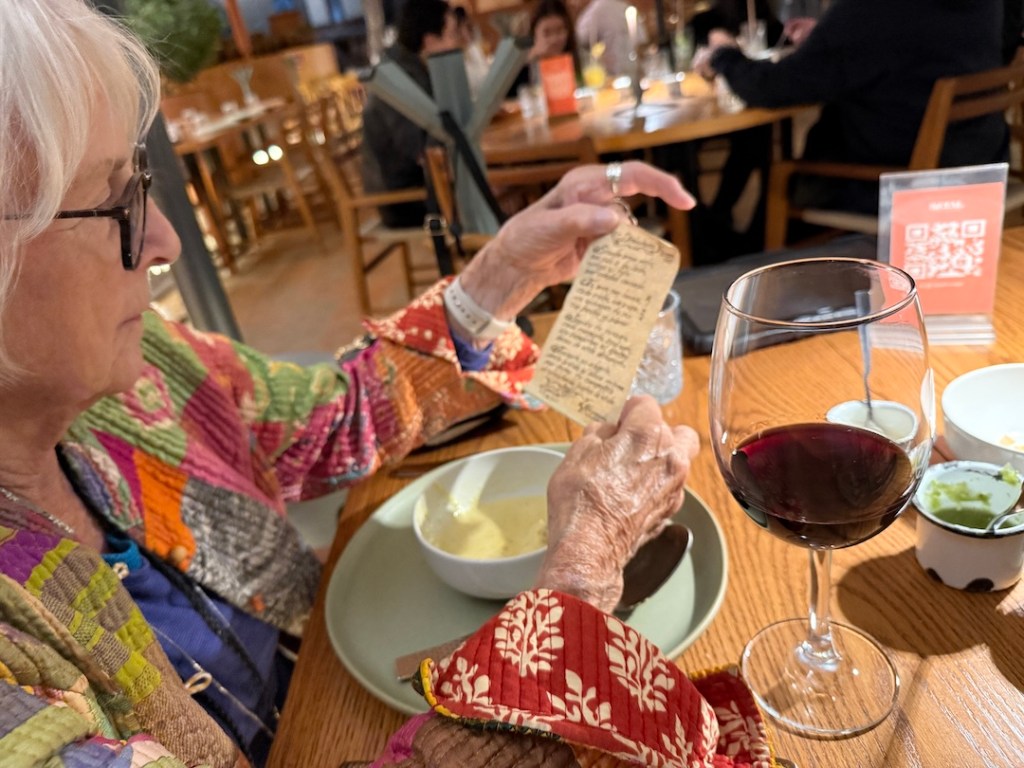
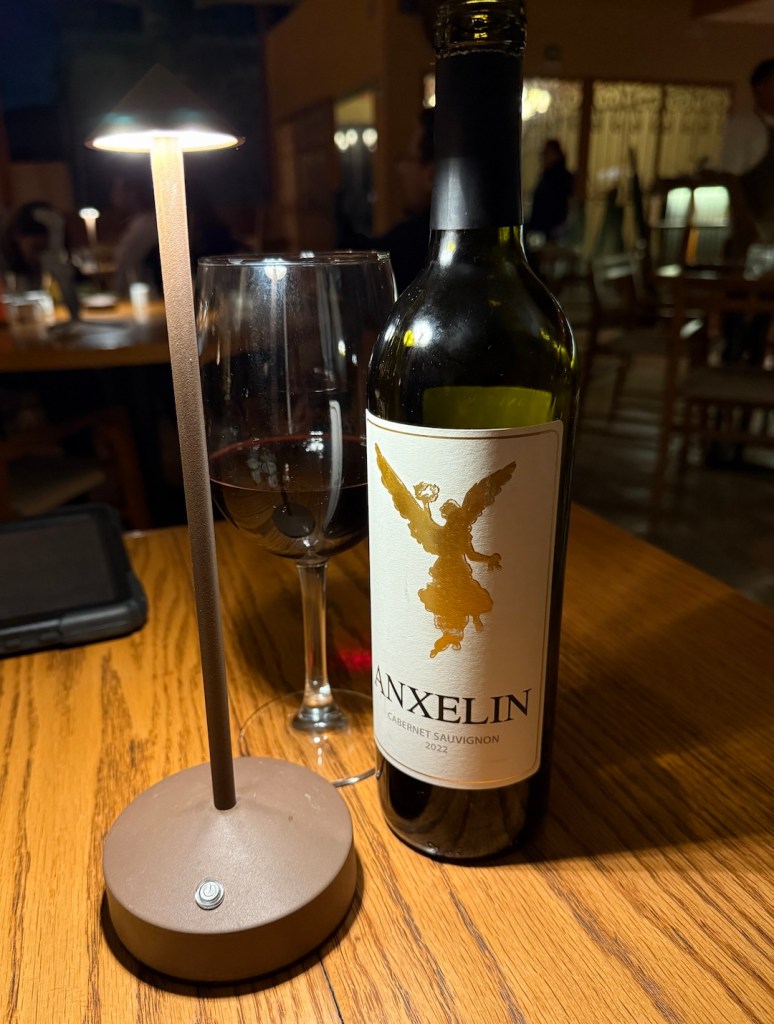
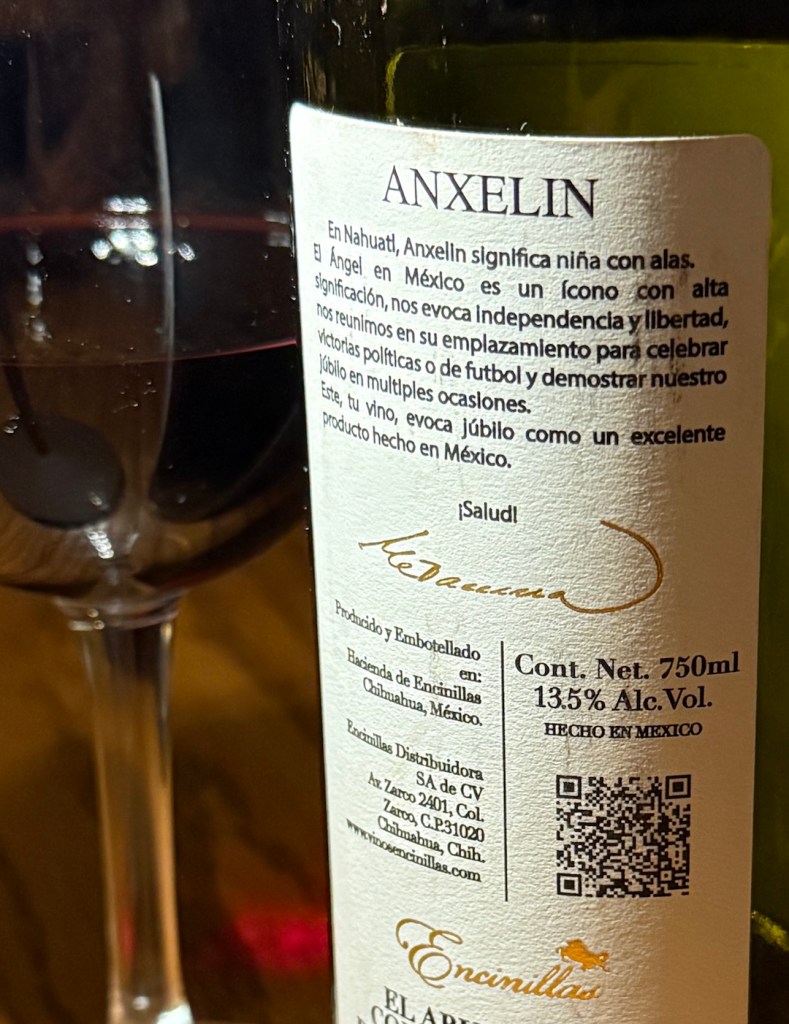
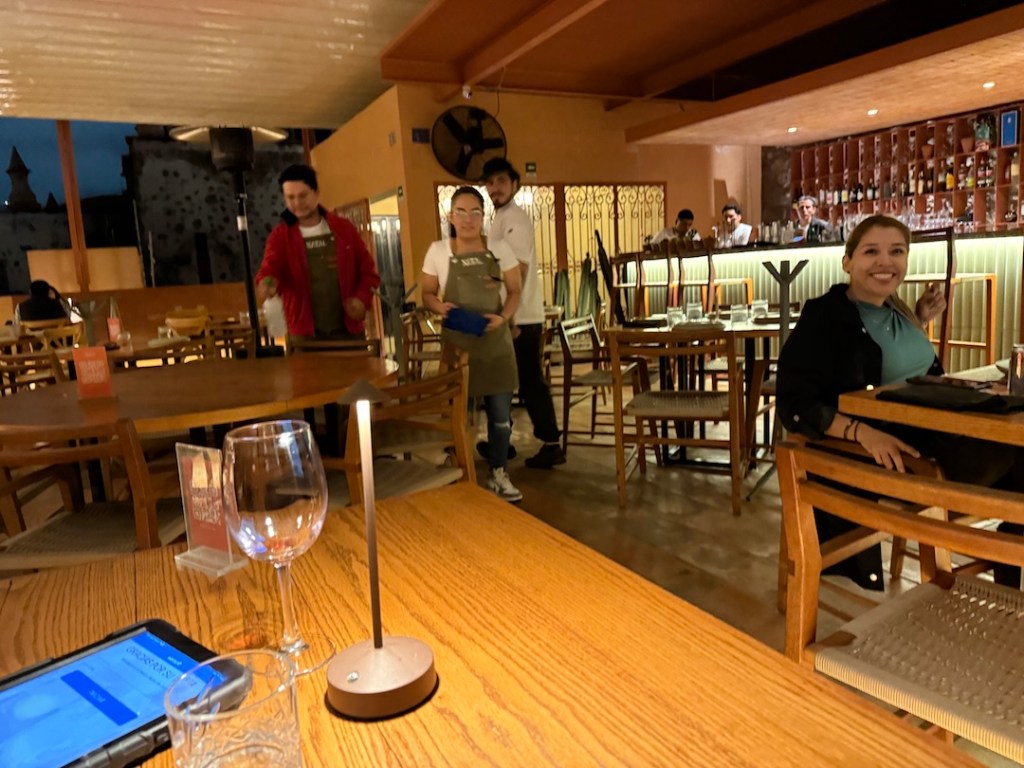
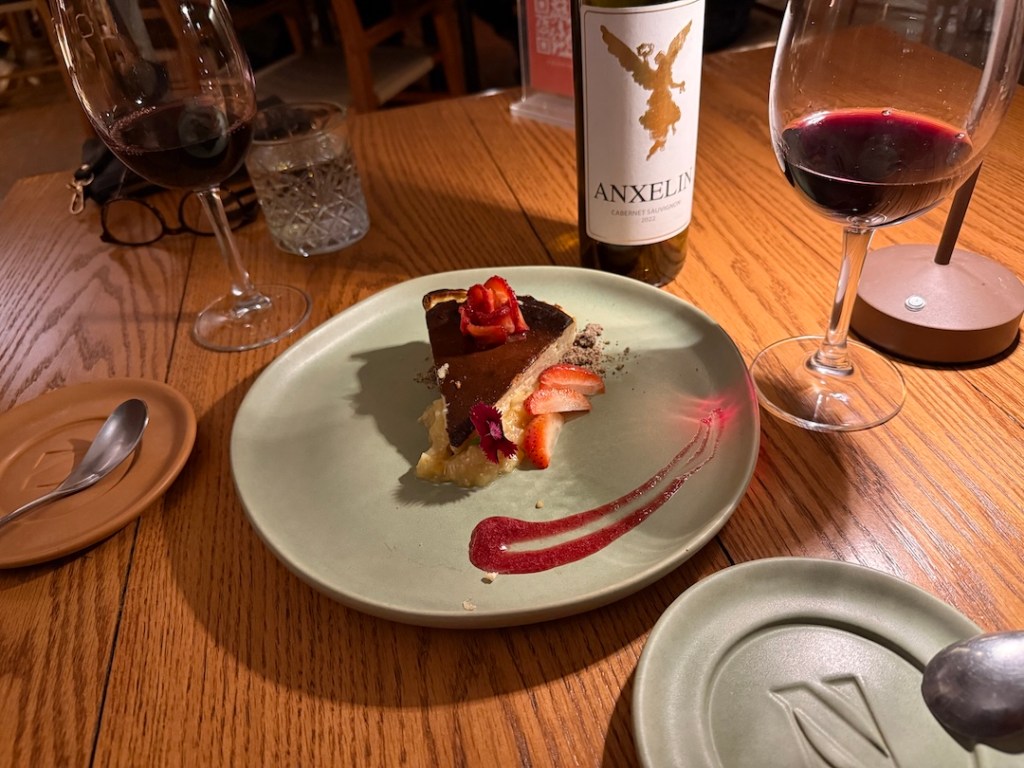
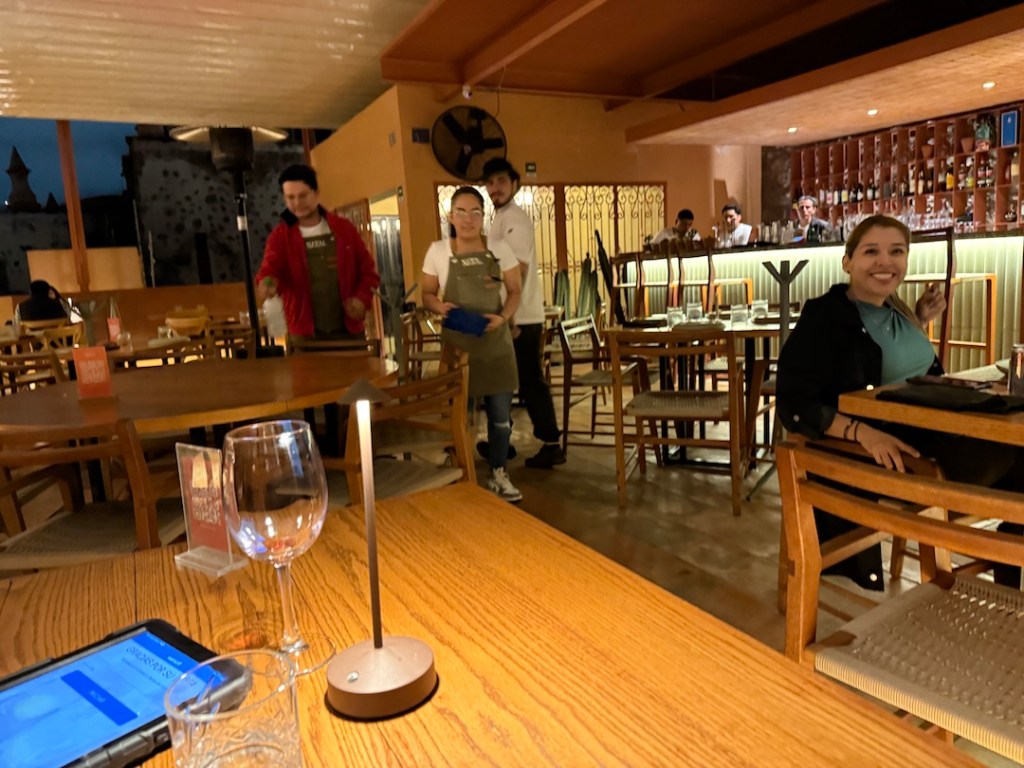
We later look beyond our empty wine glasses to the smiles of fellow diners, amused at the rare sight of two older Gringos hanging out with them at one of the city’s truly wonderful eateries. It’s been another wonderful evening that ends quite well, as we take that artistic stairway back down to street level, then pause to revel for a few more late moments among the city’s many delights before we return to the Hotel Progresso for our last night in the city. We were sorry to spend just a short time in the mountain jungle village of Xilitla, but glad to return to San Luis for a few more days.
We actually have something of a schedule for this trip, and in the morning we leave fine old San Luis Potosí behind us, for now. We’ll be heading next to the twisting alleyways of charming and artistic Guanajuato, where we’ve promised to meet up with an artist friend named Elaine. We hope you’ll join us there on our next Dispatch. — PRW

