October 7 – 11, 2024
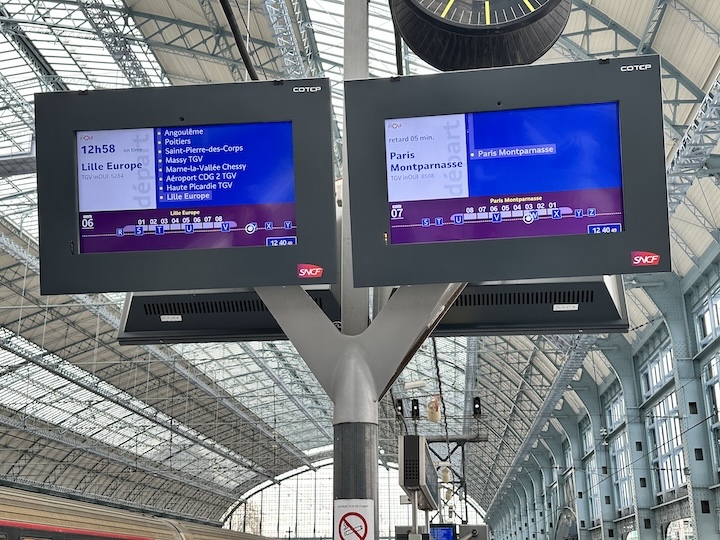
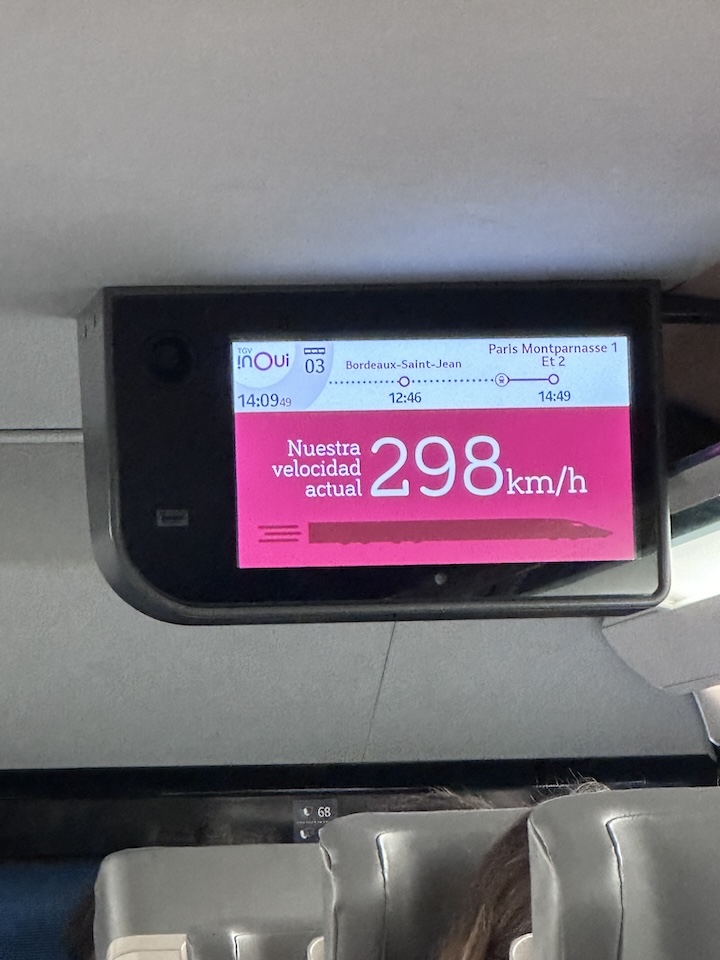
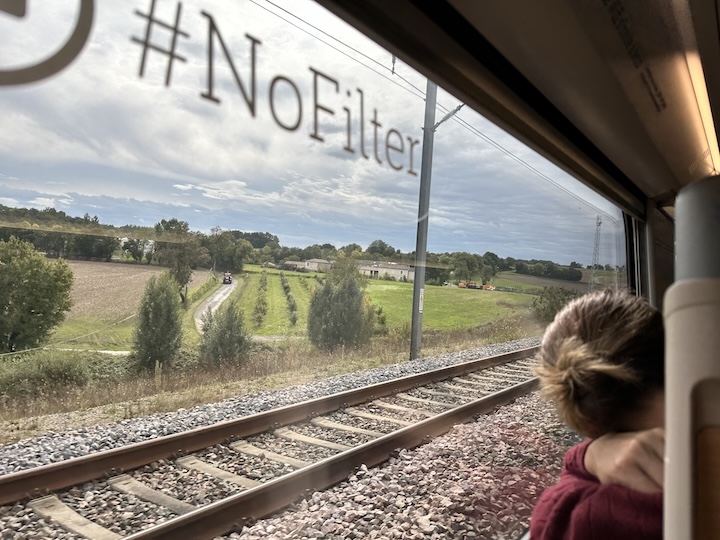
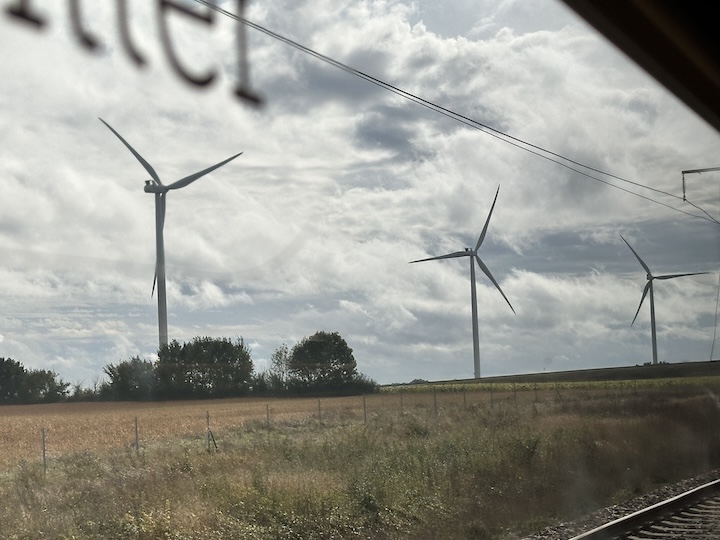
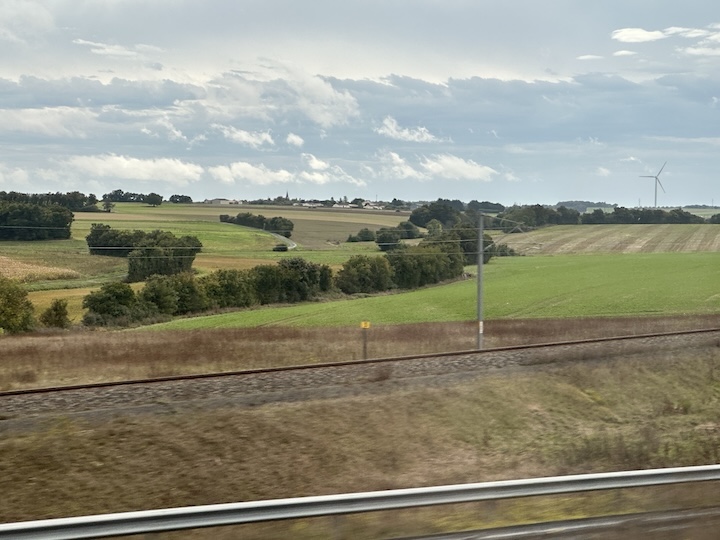
Alas it’s time to leave Bordeaux. One last check of the departure board shows our train heading for the Montparnasse station in Paris is waiting on track number 7 and soon to depart. We stash our bags and find our seats for a fine ride north, with a last look at the fertile lands of southern France just outside our large window. It’s a picturesque ride at 298 km/h (185 mph) on the smooth TGV system, and we can relax instead of driving.
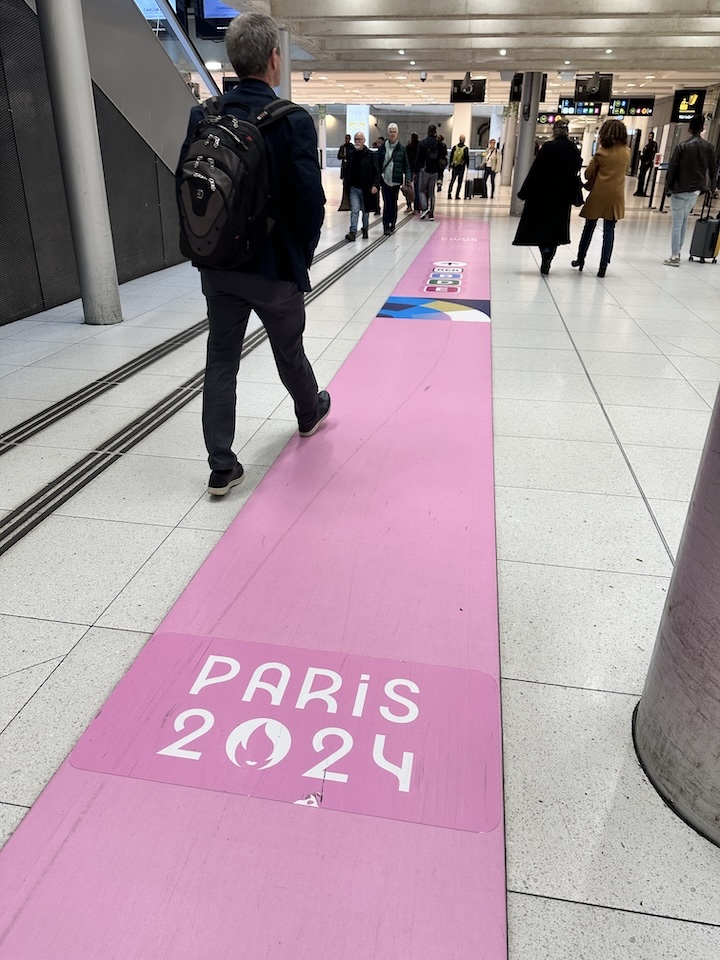
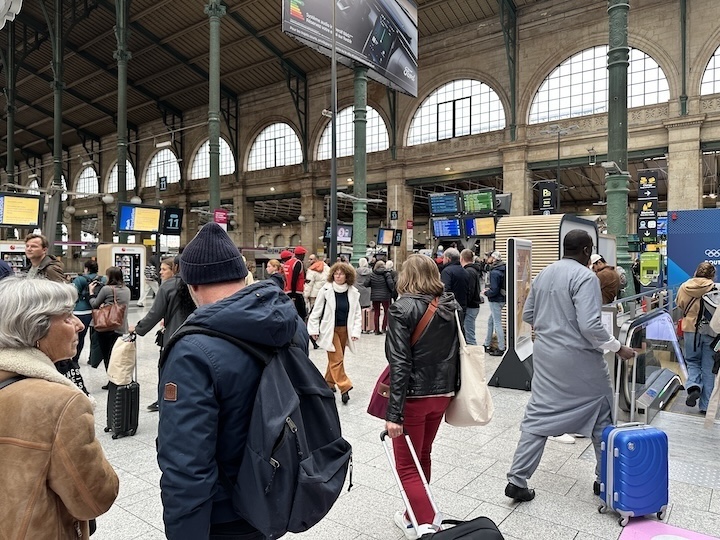
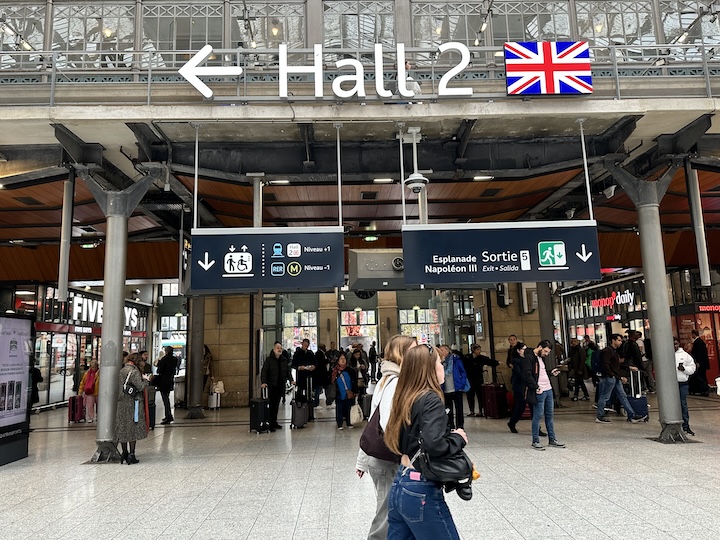
We arrive in Paris, where the pink carpet is out for the 2024 Olympics. And there are large signs in the station for Hall 2, featuring a prominent Union Jack, so Brits can easily find the Eurostar for a quick trip home through the ‘Chunnel,’ that’s buried deep beneath the English Channel. Or ‘La Marche,’ as the French call it.
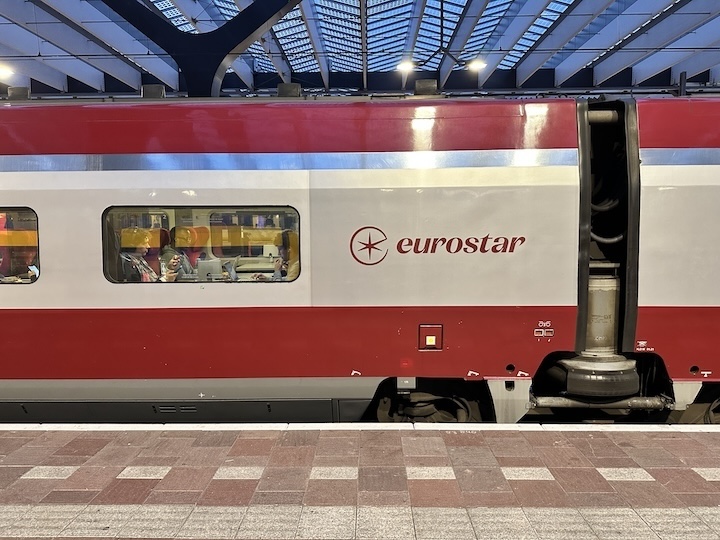
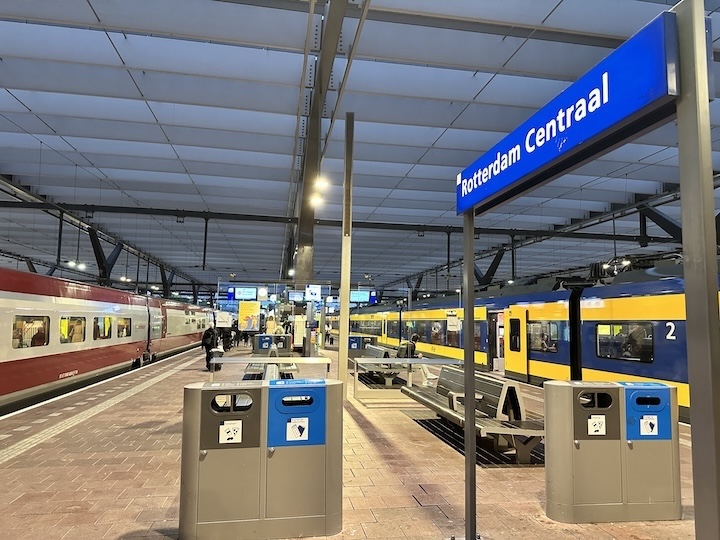
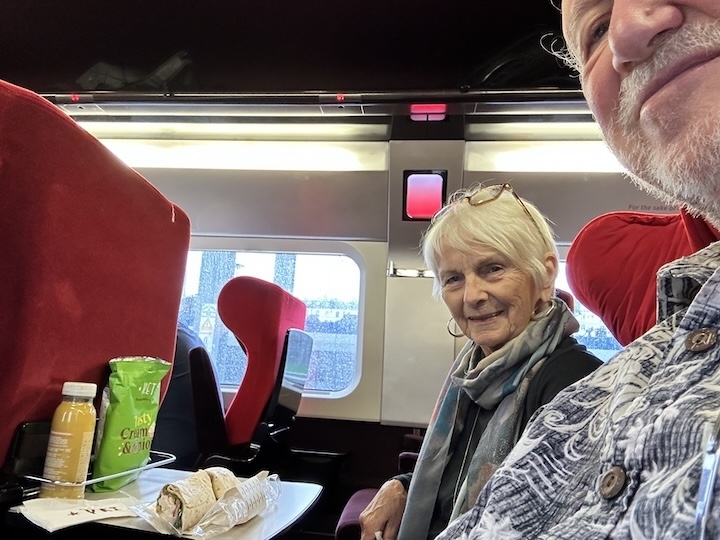
At Brussels our train veers north, for a comfortable ride through the fertile lands of Belgium and the southern Netherlands, to our stop at Rotterdam Centraal. It’s a sweet and easy way to travel, without the cost and hassle of a car.
Carolyn found us good lodgings at the Hotel van Walsum. It’s a cosy place on a quiet street, where we can stash ourselves for a few days on our first visit to this very modern city. And there’s a convenient tram line running on the street outside the front door.
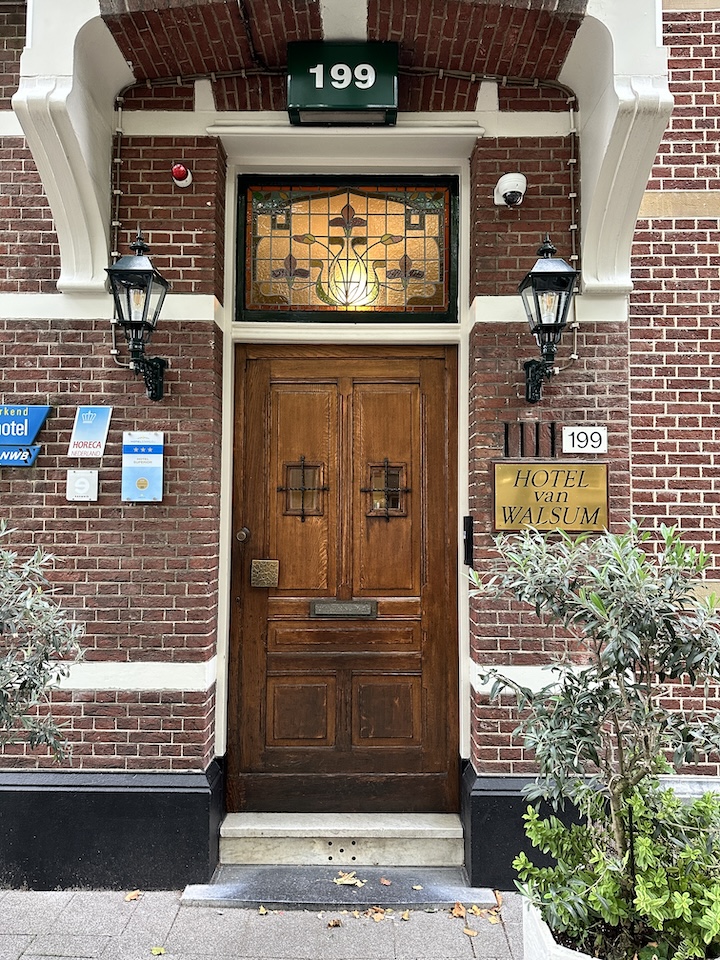
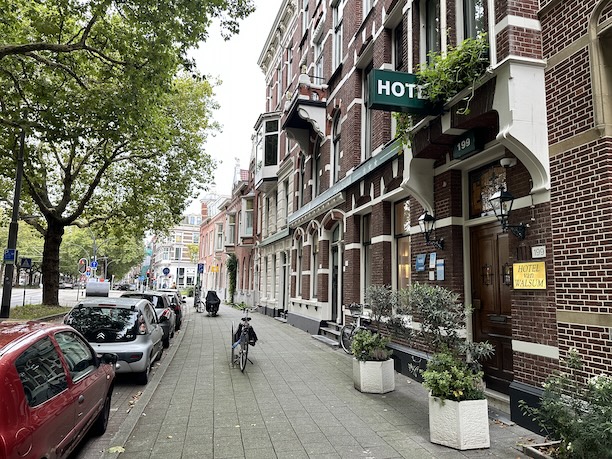
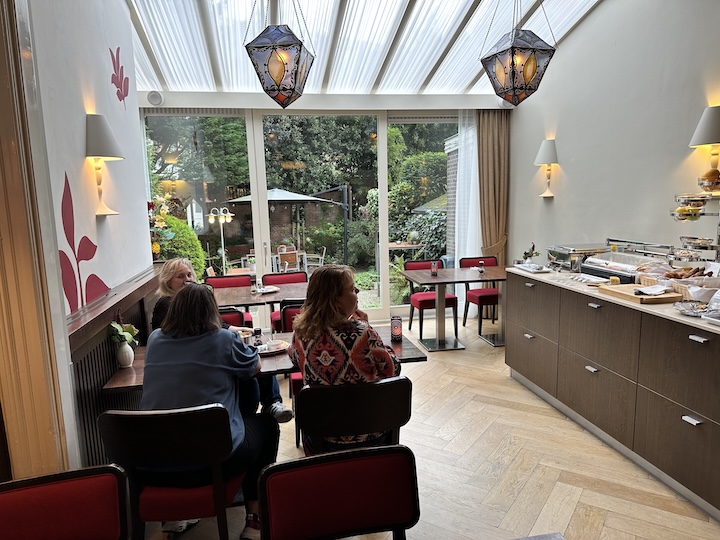
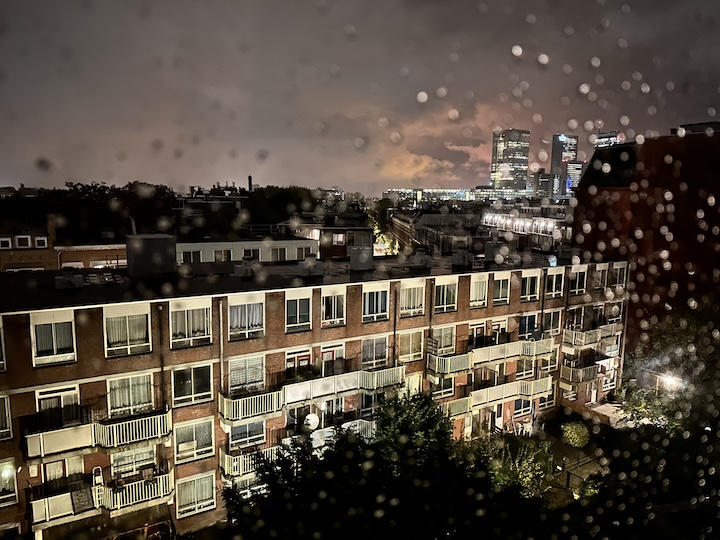
But why are we in Rotterdam?
First of all, our Dutch friend Nathaly, who is an administrator in the Dutch college system, has mentioned Rotterdam as an interesting alternative to famous – and heavily overcrowded – Amsterdam. We’ve enjoyed Amsterdam several times in the past, and it has a number of outstanding sites worth seeing along those many beautiful canals. There are four excellent museums around the large plaza called the Museumplein. It’s also just a pleasure to walk those narrow medieval streets, passing all those charming narrow houses. But it’s time we saw a different part of the country and experienced a few other things.
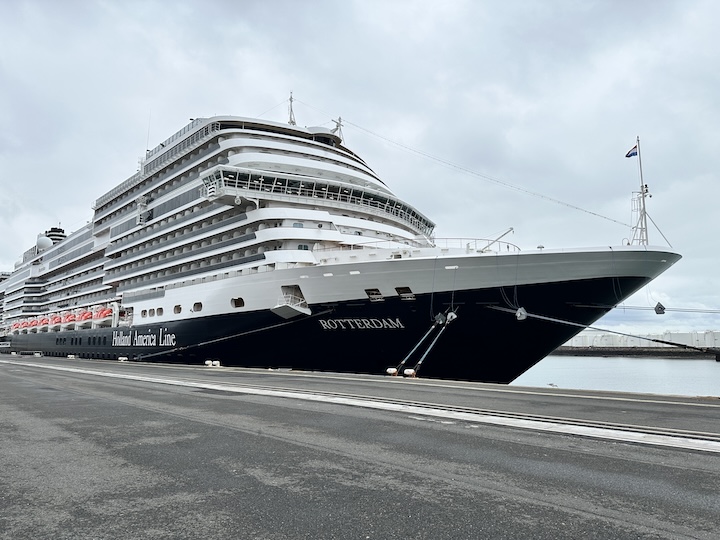
And second of all, there’s a Holland America Lines (HAL) ship named the Rotterdam that will be departing from here for an Atlantic crossing. And we’ll take that option back to the States to unwind after a good long European wander. And get this, the entire trip, 16 nights aboard with full food, lodging, and entertainment costs us less than the mid-summer ‘economy’ flight we took to Europe in the first place. It’s crazy, but that’s the way of the world these days.
It’s actually called a ‘Repositioning’ ship, as numerous cruise lines move dozens of ships from the Mediterranean summer trade to wintertime routes in the warm Caribbean. Apparently there are very few people who actually want to spend a couple of weeks crossing the Atlantic and the cruise lines need to fill all those cabins. So we’re happy to help them buy the fuel they need for the crossing, and they give us a nice discount for our efforts. (Check out Vacationstogo.com for details.)
———————————————————————
It’s also interesting that we’ll end our 2024 Euro trip here in Rotterdam. We’re only an hour from Amsterdam, where we began this ‘Euro-circle’ three months ago on a river cruise up the Rhine to Basel. If you’ve followed our Dispatches, you’ll recall that we traveled onward to Zurich, and then took a train through the Alps to Lago Garda in Northern Italy. Then to Bologna and to Lucca, the birthplace of Puccini. Then we headed to sweet little Dolceacqua at the French border, and onward to historic Montpellier, picturesque Coulioure, and Bordeaux, before finally ‘boxing the compass’ north to Rotterdam. It’s been an educational trip, and all those Dispatches are still available on this site.
—————————————————————————
The modern city of Rotterdam has become quite an impressive architectural event, after its near destruction during the Second World War. And it all began as a tiny settlement around the year 950 along a muddy stream called the Rotte, in the vast delta where the mighty Rhine meets the Meuse river and they both empty into the North Sea. In the 1260s locals built a dam here as a flood control measure, and a canal was built in the 1350s to connect the area to several larger towns, providing port access to England and Germany. Among centuries of enterprise, the port also became part of the lucrative Atlantic Slave Trade, until that practice was abolished in 1814 by the new United Netherlands
Yet the city continued to prosper and grow until its future changed dramatically at the beginning of the Second World War. Hitler expected that an invasion of the Netherlands in 1940 would be easy, but the German Army was initially met with strong resistance. Then the Luftwaffe conducted a massive terrorist bombing of Rotterdam on May 14, 1940, that largely destroyed the entire medieval center of the city. The Germans threatened to do the same to other important cities in the Netherlands, and that’s when the Dutch surrendered to the Third Reich.
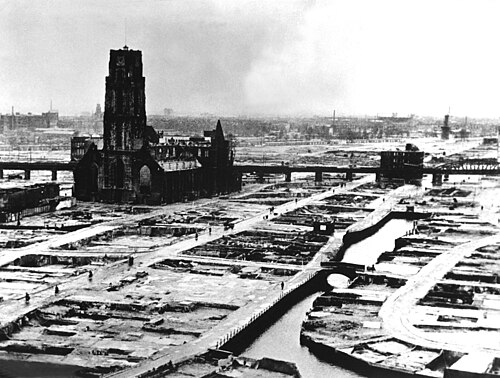
After the war, the ruins of Rotterdam emerged as a blank slate for urban designers, engineers, and architects to create a new city of the future. Today’s dynamic city is the result of 80 years of Dutch ingenuity and post-war rebuilding, and from 1962 to 2004 the sprawling port of Rotterdam was the world’s busiest port by annual cargo tonnage.
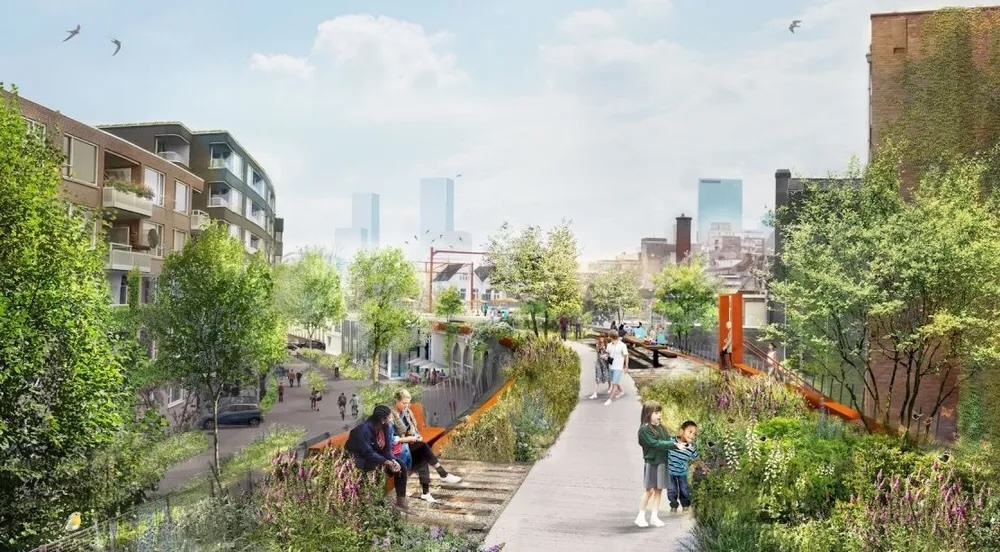
Today it remains the largest seaport in Europe, with one of the world’s most heavily automated cargo handling systems; and the current city administration is working to dramatically reduce the area’s carbon footprint with large renewable energy investments, more efficient housing and transportation, green spaces, and walkways.
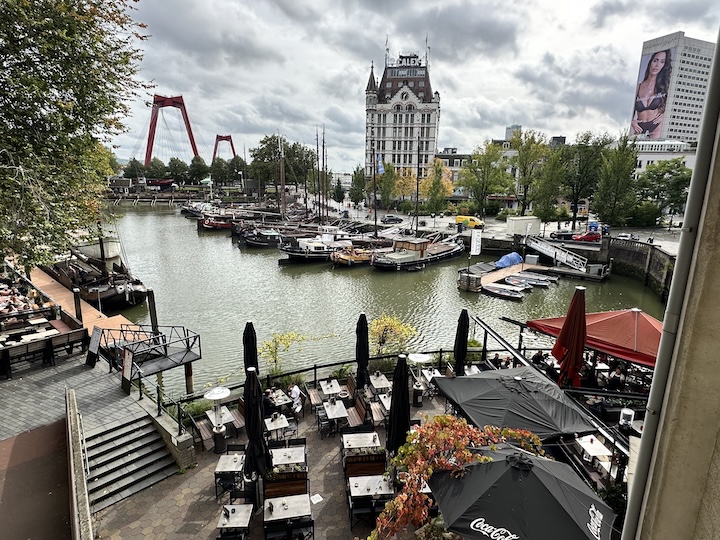
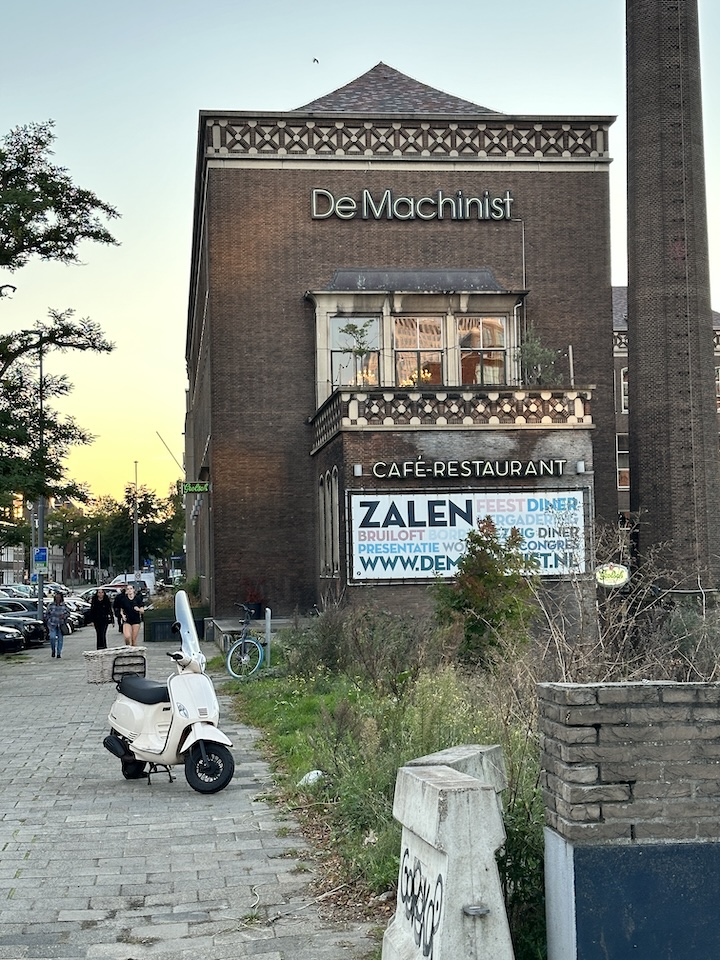
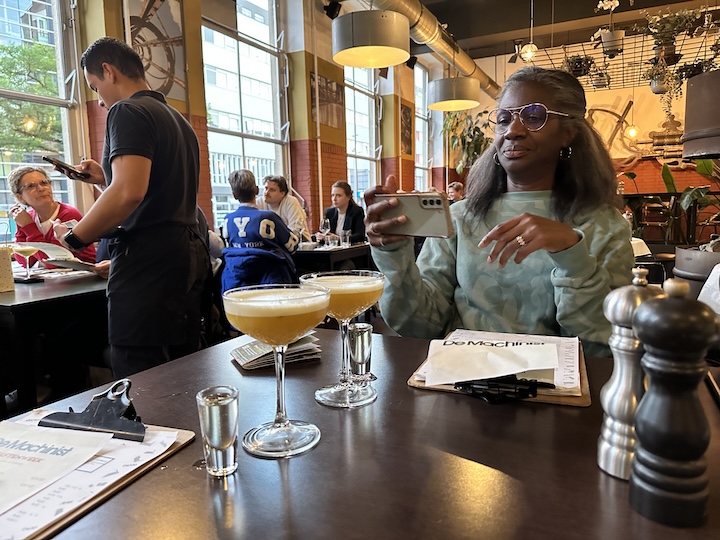
Today there are plenty of nice post-war brick buildings in Rotterdam, many of them influenced by the modernists of the Bauhaus. And there’s a fair amount of boring modernish concrete and glass around as well. But there are some very rad places recently added to the mix, and our friend Nathaly showed us around some of the better ones overlooking the city’s pretty waterways and marinas. And we also happen to be on our way to dinner on a nice evening at De Machinist, an old trade school that is now a very atmospheric dining hall. It was a fine way to end the day.
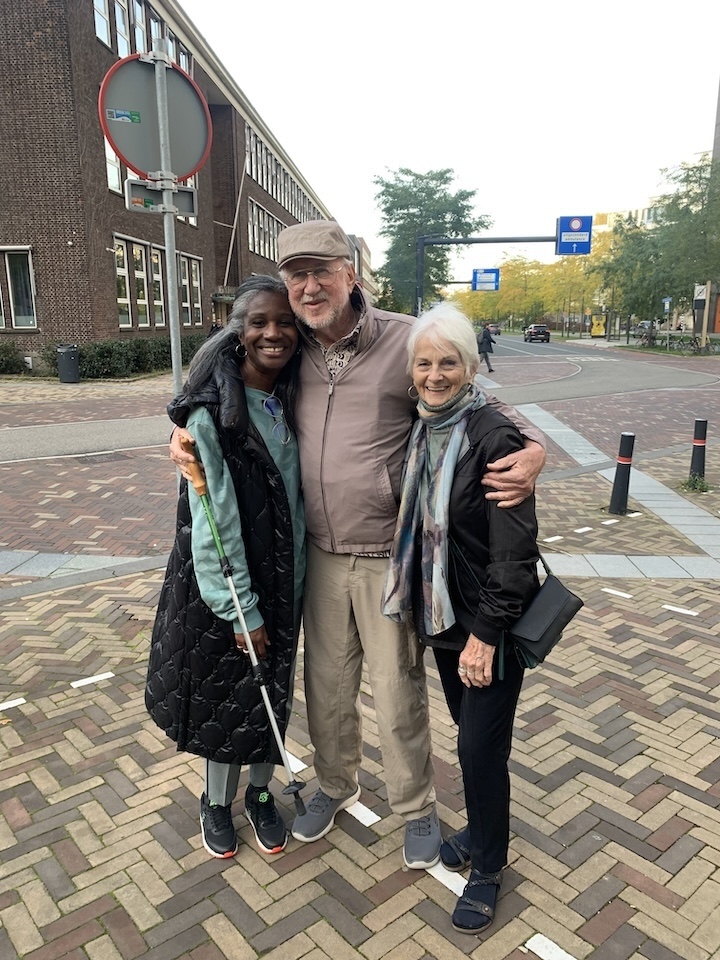
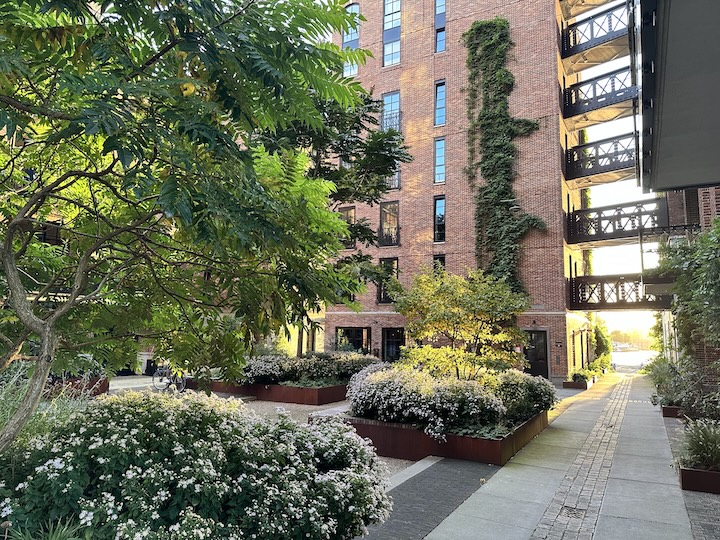
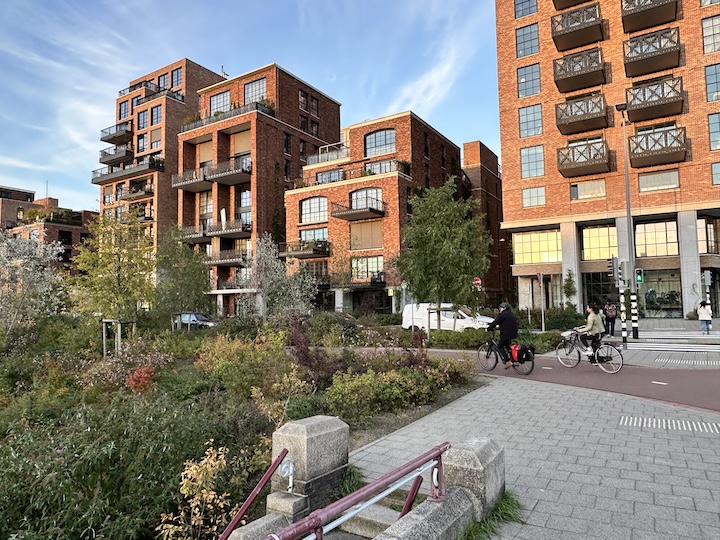
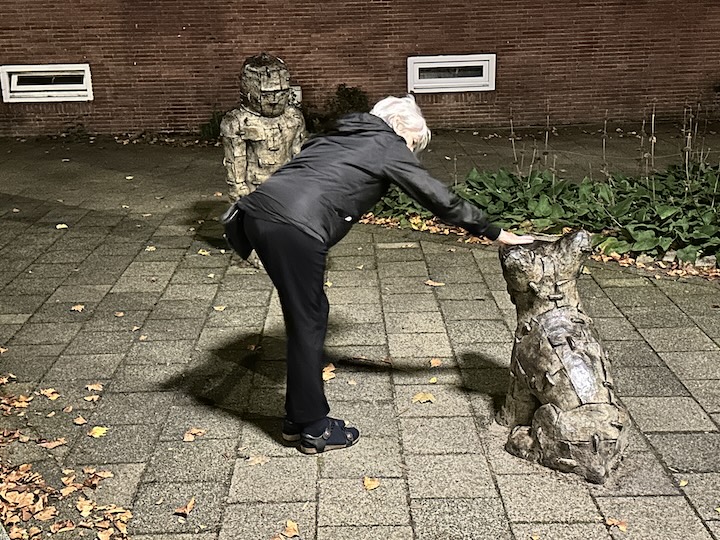
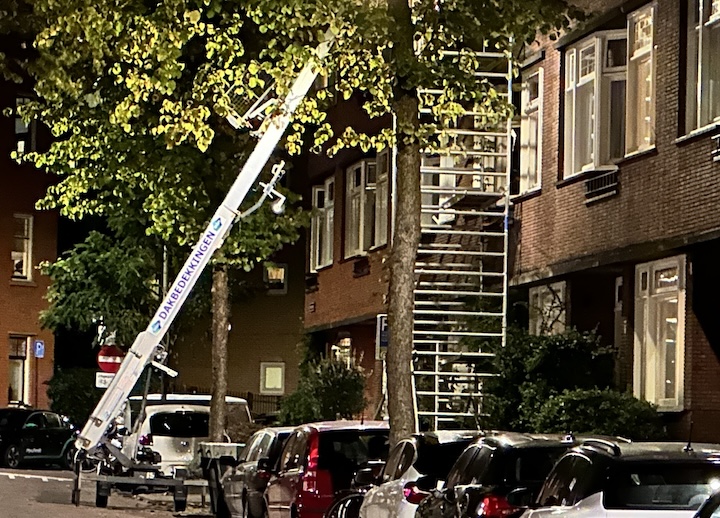
We parted company with Nathaly after dinner and walked back to our hotel through the quiet nighttime streets of Rotterdam. There were interesting encounters along the way, including a dog statue for Carolyn to pet, and watching as someone’s furniture gets hoisted into their new apartment. The elevators and stairs can be too small to accommodate large items, and the windows are usually designed for this kind of delivery.
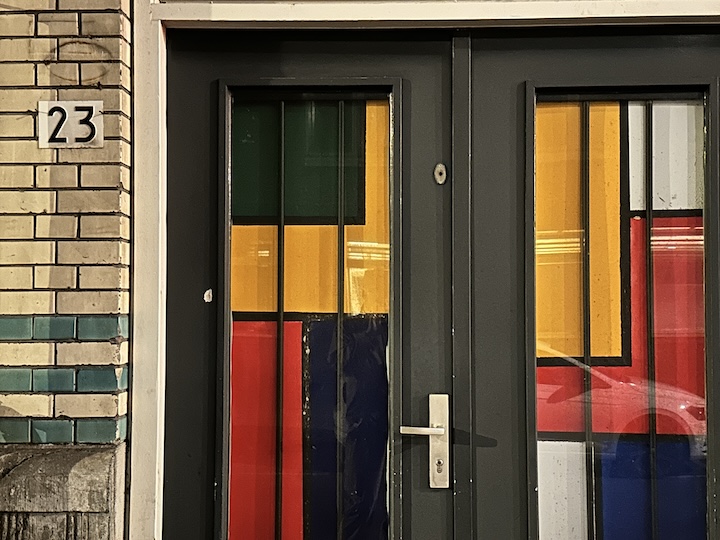
We passed a beautiful Matisse-influenced doorway, and of course there were some of those scandalous neon-lit ‘Santa with an adult toy’ decorations that the city has become known for.
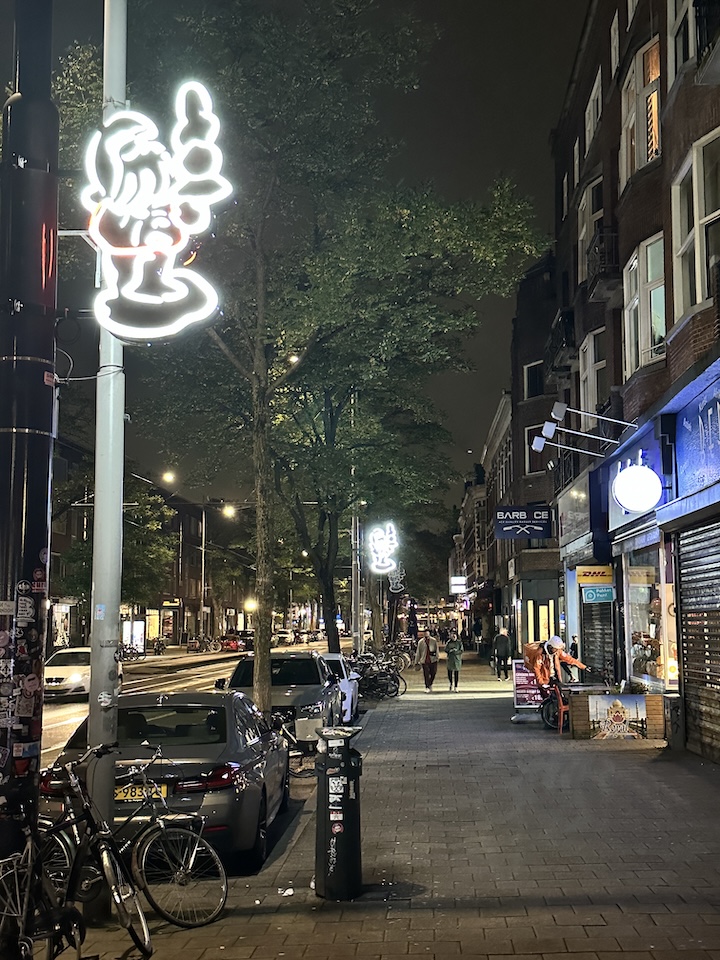
(More info: https://en.wikipedia.org/wiki/Santa_Claus_(sculpture))
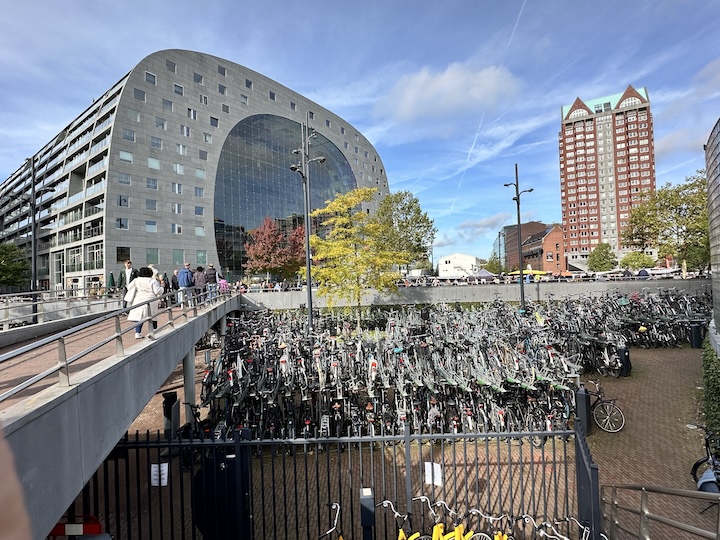
Among the newest and more radical multi-use architectural sites, the imposing Markthal is now one of those ‘must see’ places in Rotterdam. From the outside, this wonderfully oddball place resembles a massive crazy upside down magnet, like the small one I used to play with as a kid. The building has become an attraction in its own right, and we feel compelled to enter the place just to experience the food and whatever else there is inside.
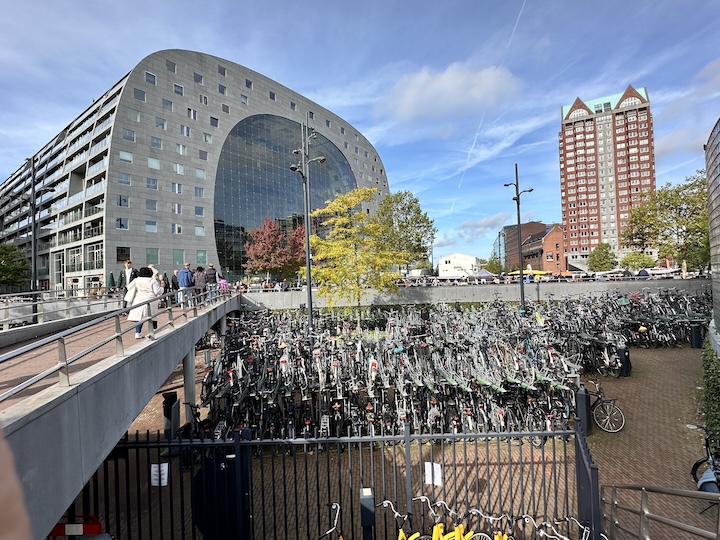
The city was looking to increase overall livability, and add more living space, in the central area around the busy Blaak tram station. Unusual ideas were presented, in typical Rotterdam form, by a variety of daring architectural firms. Among them was the young partnership of MVRDV who proposed a twist on the traditional design of two-parallel-apartment-blocks-with-a-central-space. So they flipped it upside down. And the main architect, Winy Maas, also asked in a 2014 NYT article, “Why don’t we make it almost like a cathedral where you proudly show food?”
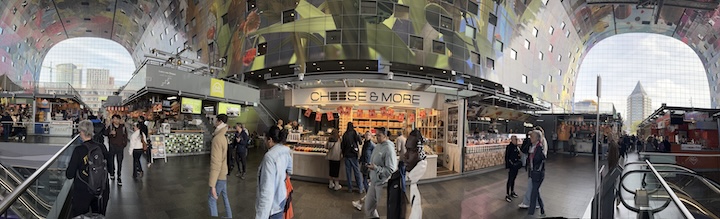
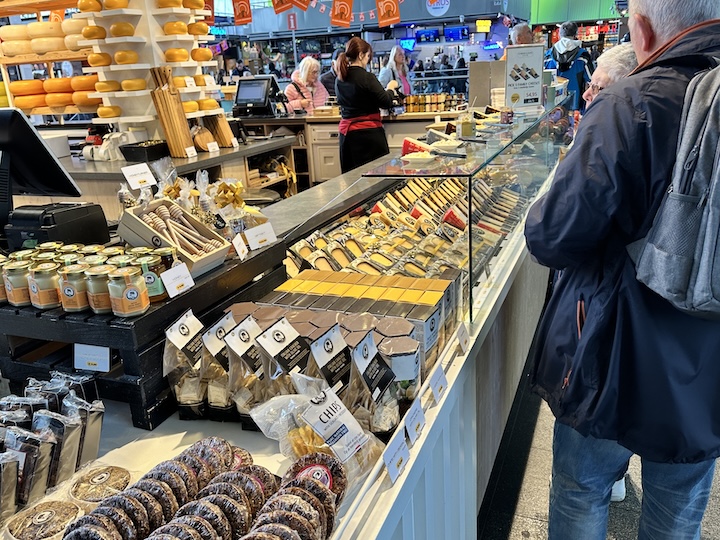
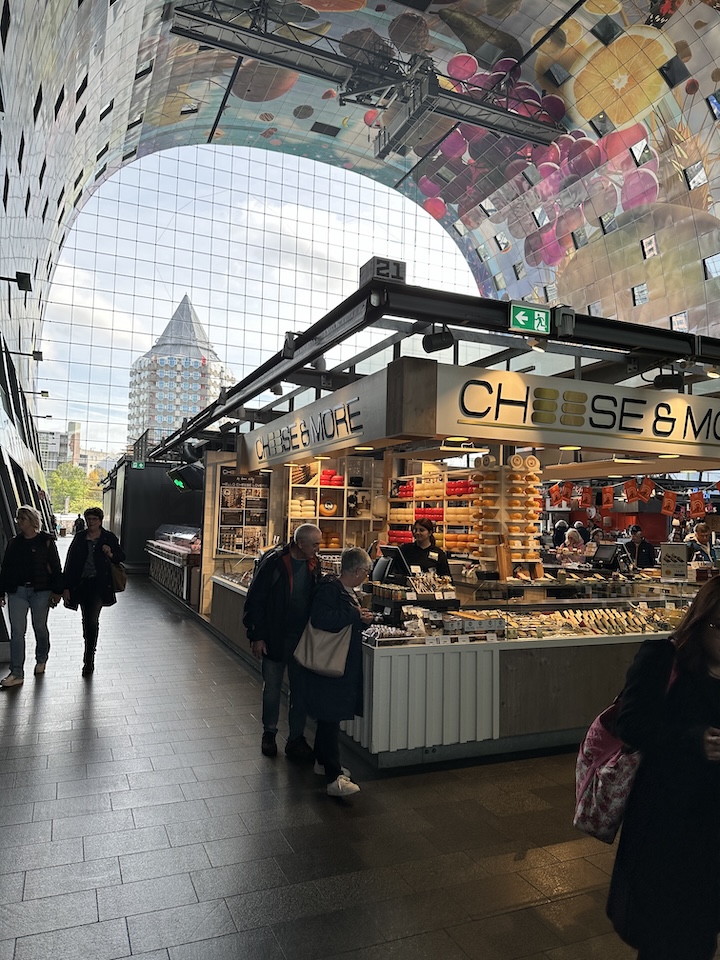
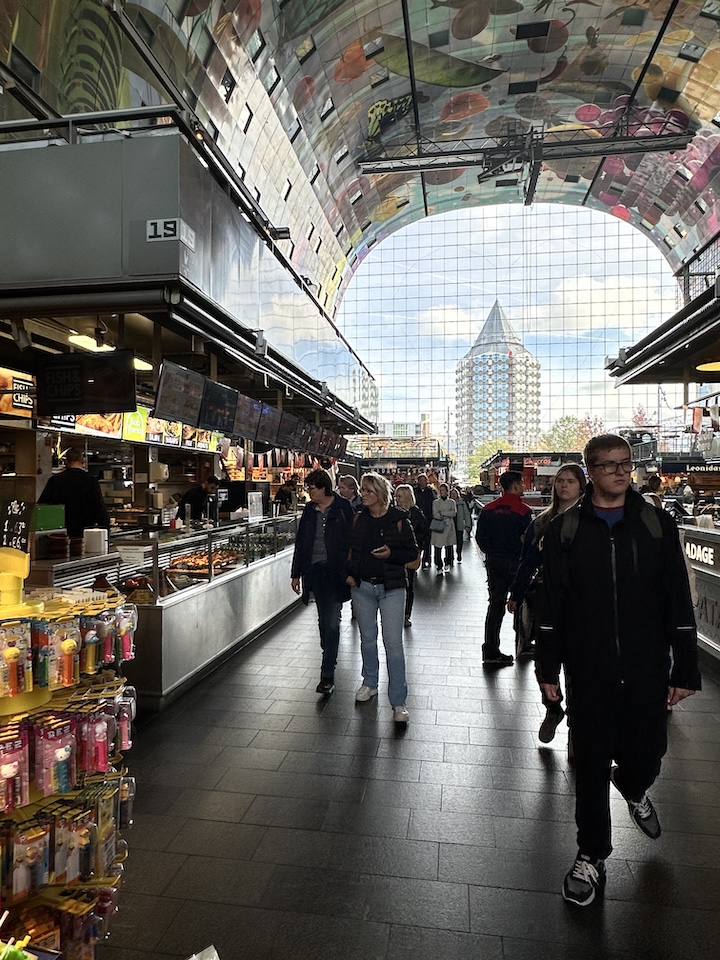
So now we’re wandering through a strange apartment building hovering over an astounding array of the finest food the Netherlands has to offer. At the ground level, which is the size of an NFL football field, there are about 100 food stalls, 20 shops, eight restaurants, a supermarket and escalators to underground parking. At this point we’re really wishing we had rented a local apartment for a month so we could take armloads of this luscious stuff back to enjoy in our own kitchen.
The walls around us are dotted with windows from about half the 228 apartments in this 12-story building, and many of the penthouses in the ceiling have windows in their floors. It might seem a little crazy, but all the amazing food on offer is far more distracting than any peeping residents overhead. Natalie de Vries, the architectural partner responsible for the amusing food-flung ceiling, managed to integrate those windows in the design. In a 2020 interview with Madam Architect magazine she shared her philosophy of running a good office at MVRDV, “We make sure that people here are happy. It’s not about only working hard; we also have some fun.” And that approach seems apparent in the delightful ceiling design of the Markthall.
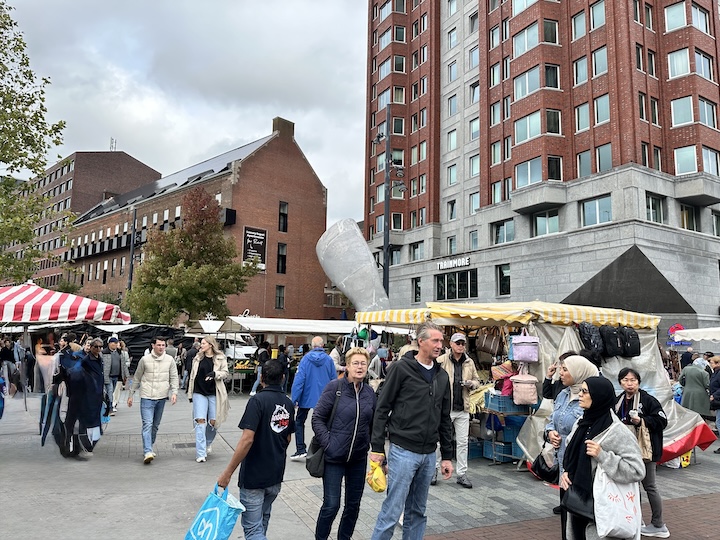
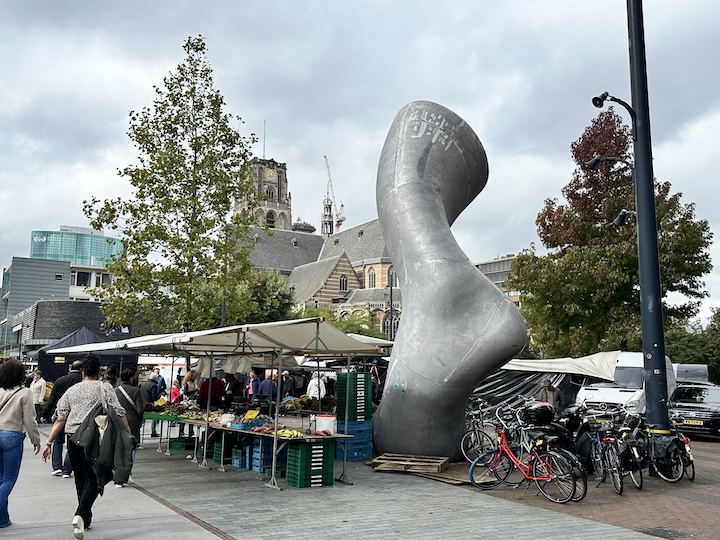
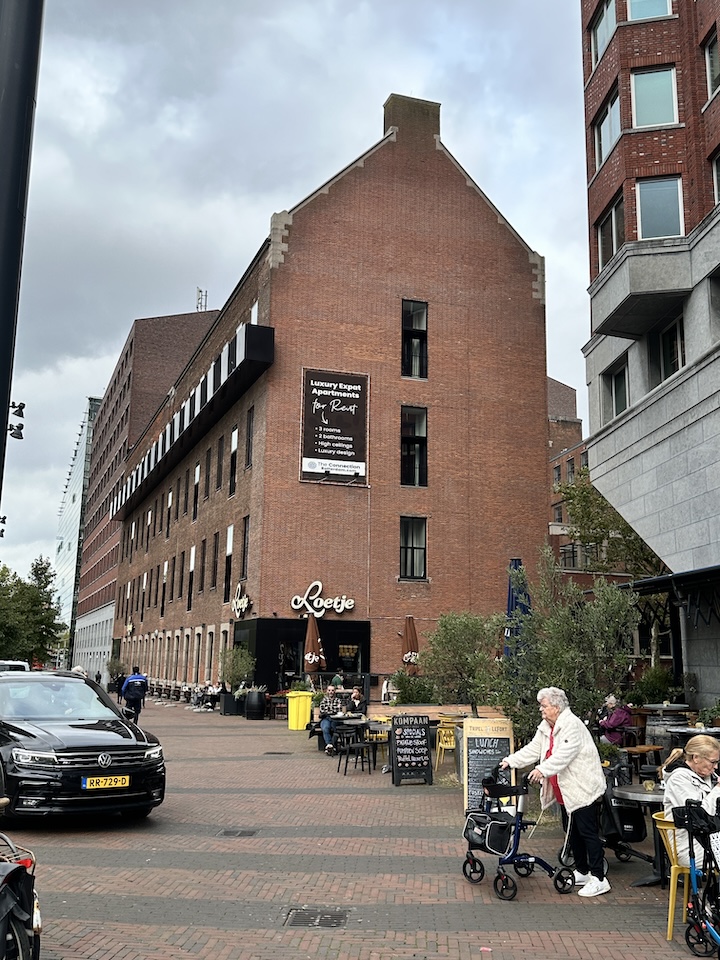
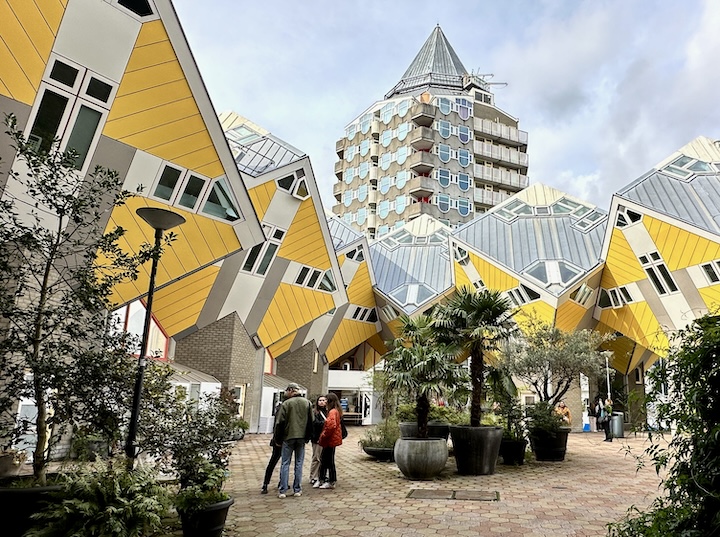
And just across the Blaak plein, a bright yellow mid-air housing development utilizes that leftover space above the streetscape, tram station, and plaza for a different sort of housing adventure. It’s called the Kubuswoningen, or Cube Houses, and the central idea of Piet Blom, the architect, is all about “living as an urban roof.”
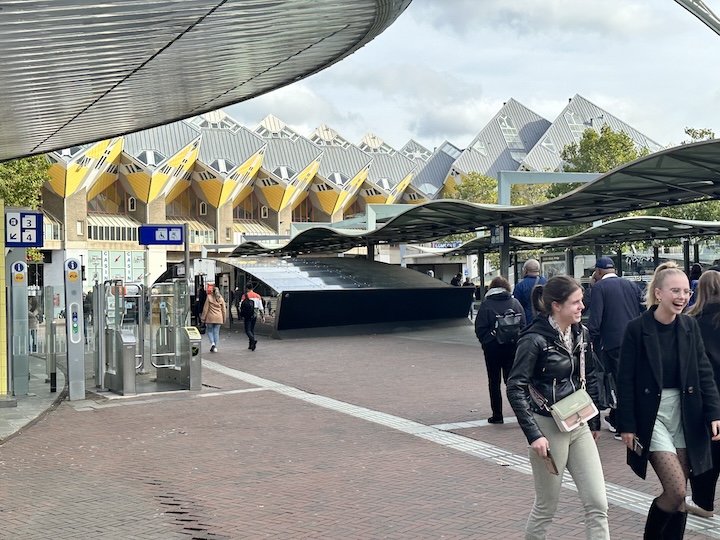
So this part of town got a big shot of postmodernism and a jolt of color to liven things up. And now it’s a fun environment that attracts quite a few people, like butterflies to a flower garden.
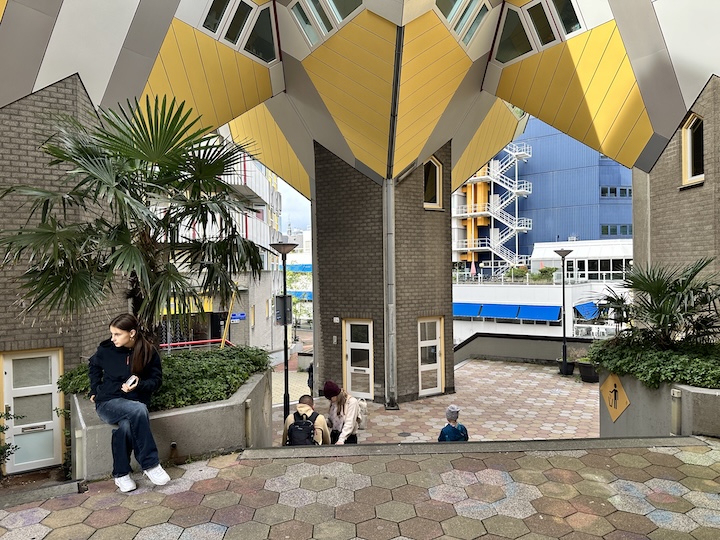
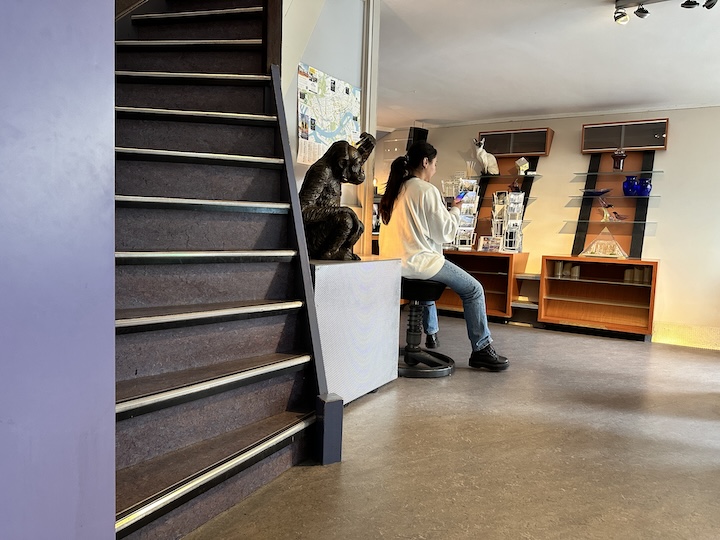
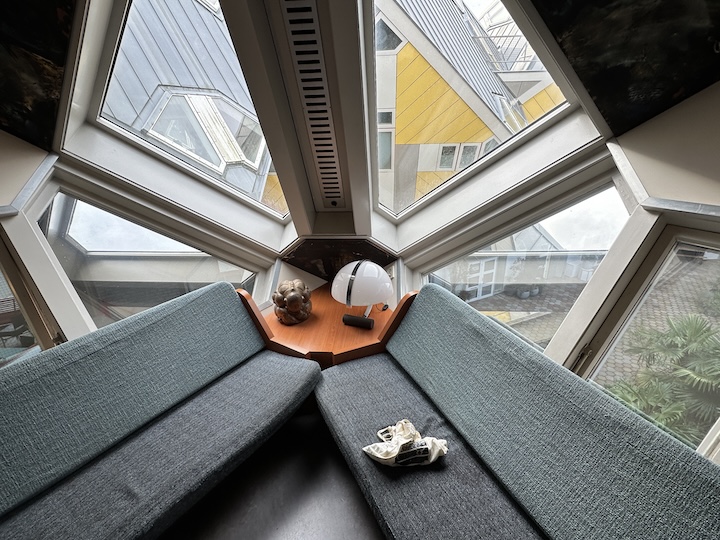
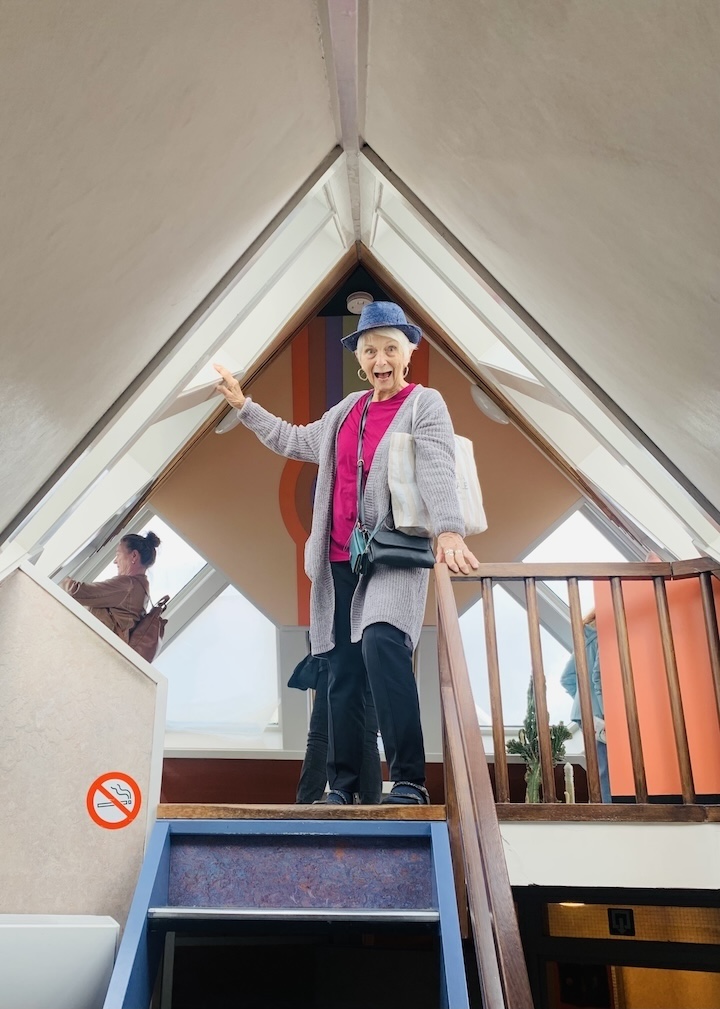
There have been plenty of curious tourists here since the Cube Houses were built, and one of the residents currently makes a living by charging nosy folks like us to drop in, or climb in, and take a look around. And it’s certainly worth the €3 entry fee to attempt to feel how these off-kilter spaces really work.
As far as actually living in one of these crazy ‘fun-houses’, it might take a bit of adjustment. For me, at least. And it would require a more minimalist life than many of us might prefer. I’m not really a legitimate hoarder, but there’s no way I could fit all my books in one of these places. And for a dinner party of more than about two, we’d have to find a nearby restaurant.
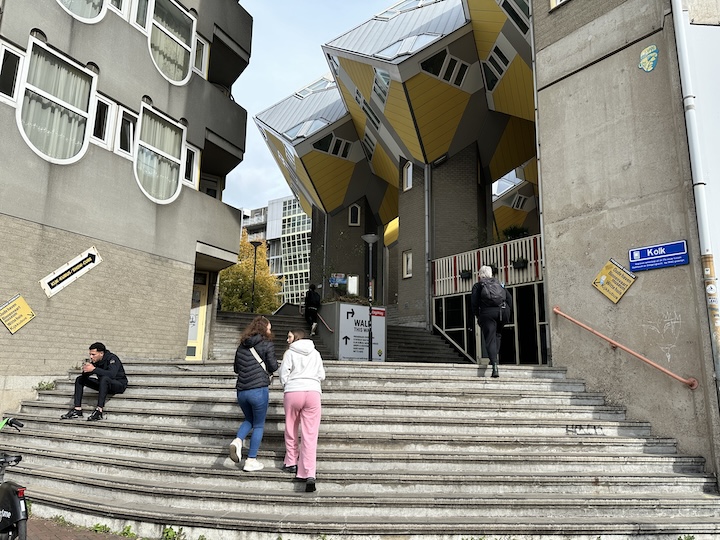
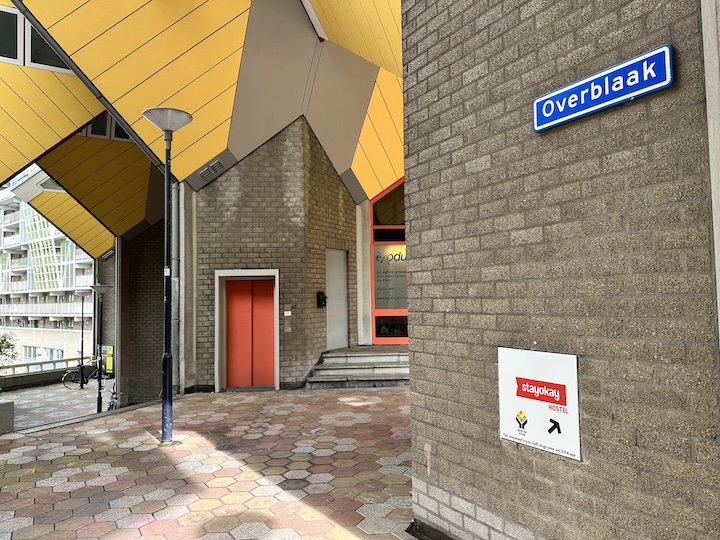
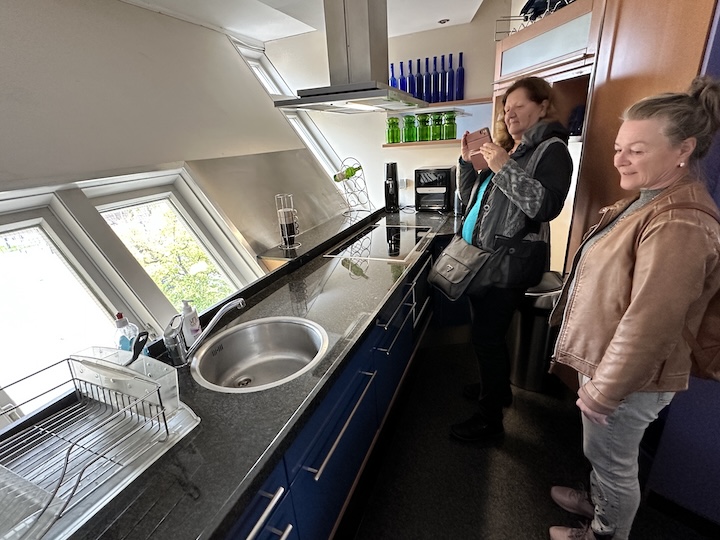
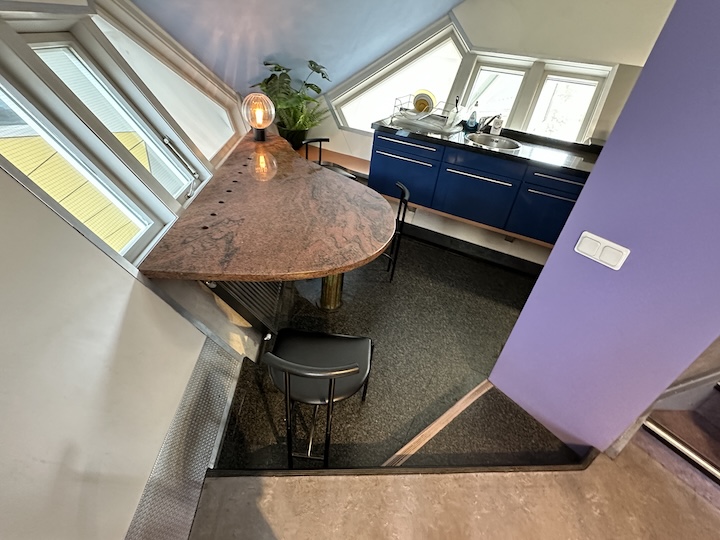
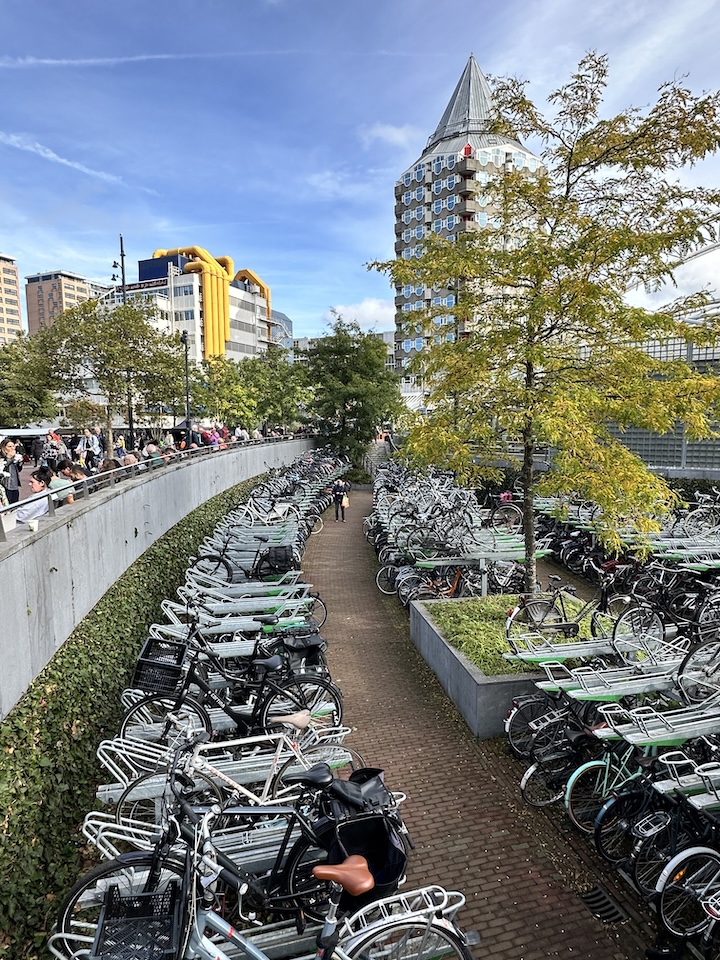
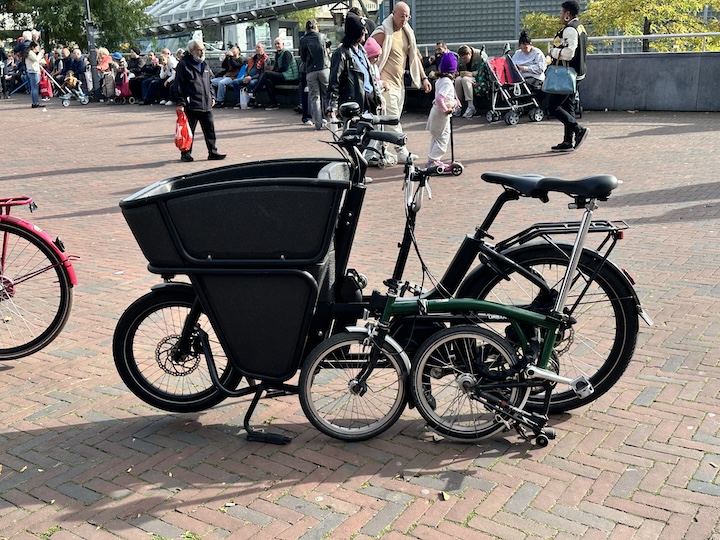
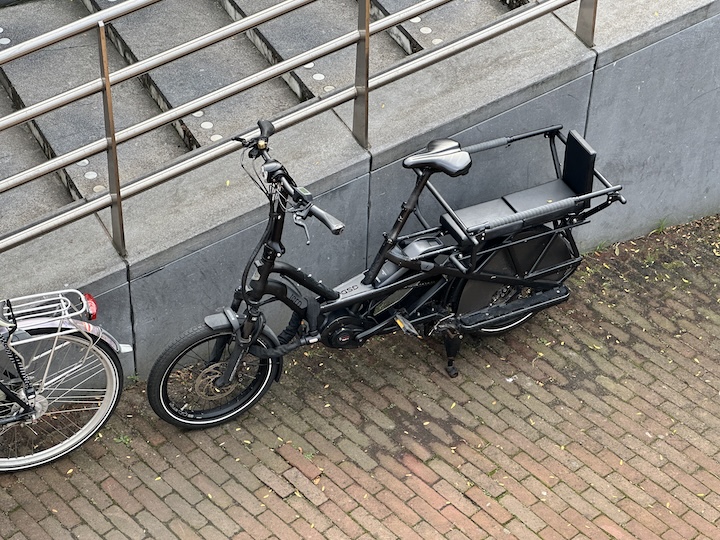
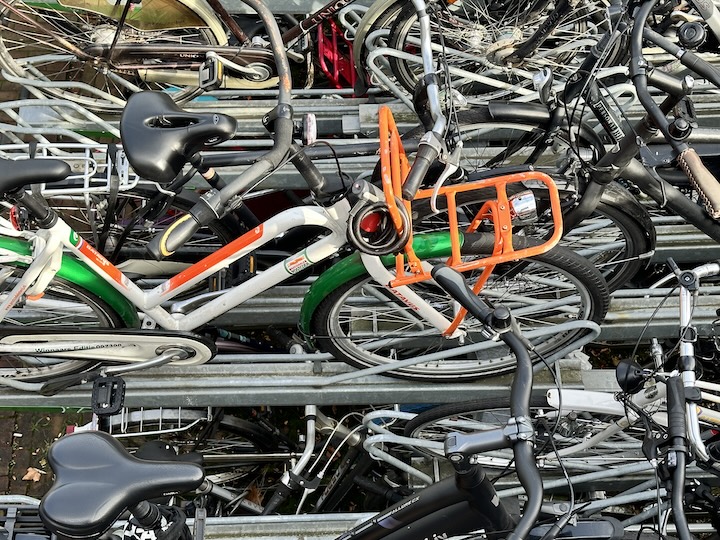
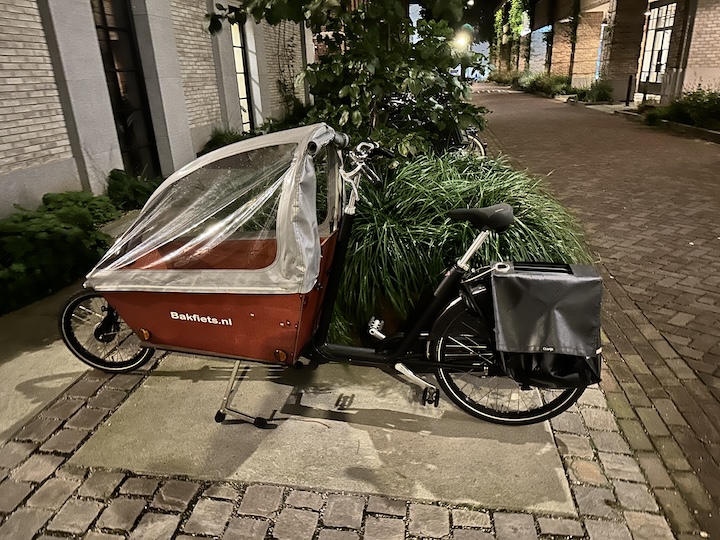
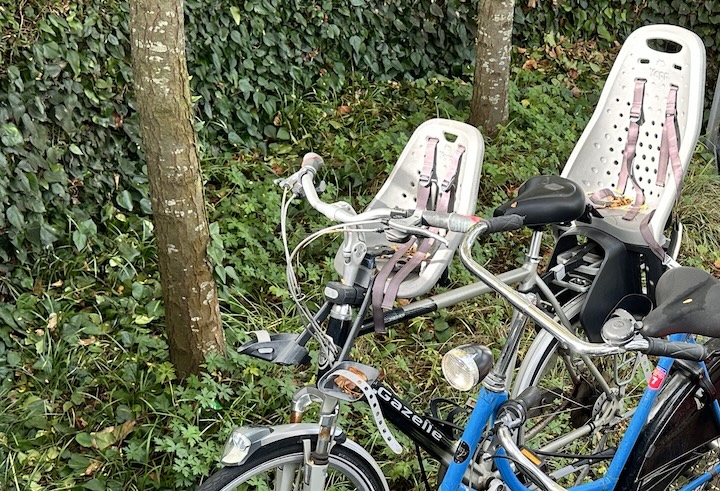
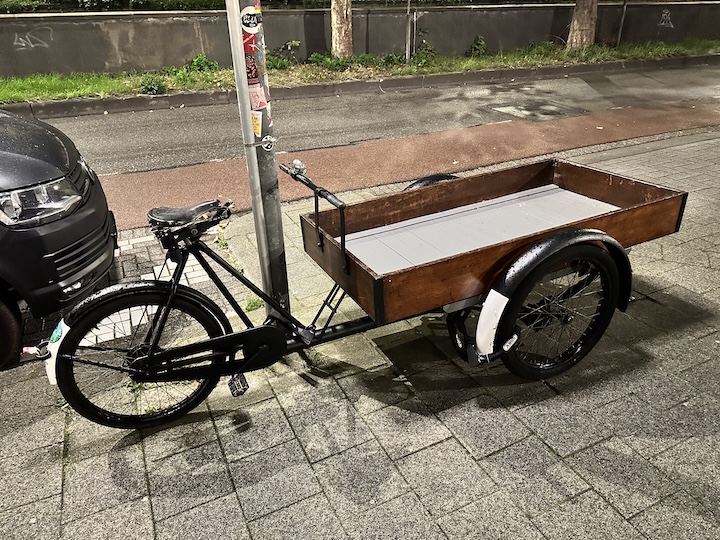
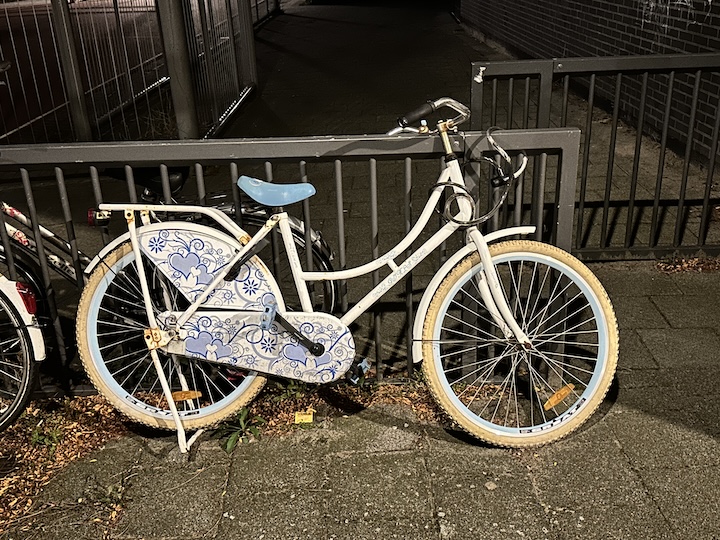
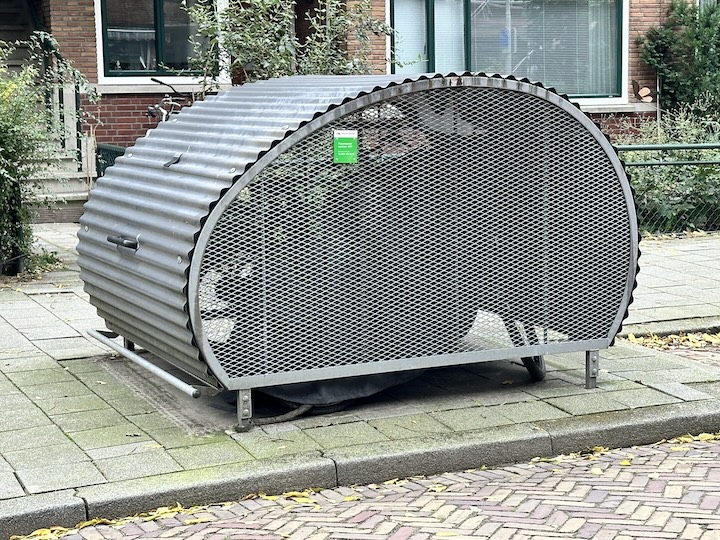
In typical Dutch fashion, there are bicycles everywhere around the Blaak tram station. They’re parked double-decker in the center-well bike park and elsewhere. It’s a very flat country so bikes are easy to use and they’re everywhere, and in every other Dutch town we’ve seen. Bike travel is about the most efficient way to move people around because you can sit down and take the weight off while you peddle along. You can park a lot of bikes in a small space, and they can be adapted for different tasks, like a fleet of small trucks that don’t clog up the city. And you can pack them into a simple bike shed outside your front door. The Dutch are just more technologically advanced than most of the rest of us.
And then there’s the big, round, uber-curious, Depot Boijmans van Beuningen in the Museumpark, which is only a short tram ride – or a brisk walk or bike ride –away from the Cube Houses. Almost every large art museum has way too much art to keep on display, so it’s hidden in storage for later use. But the Boijmans van Beuningen museum, which is currently being rebuilt, took a different approach and built an innovative Depot where that excess art can be viewed, and also studied by the visitors.
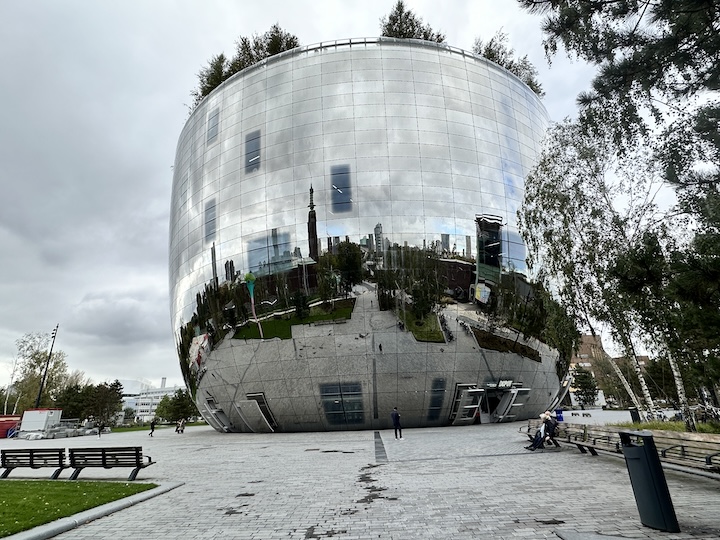
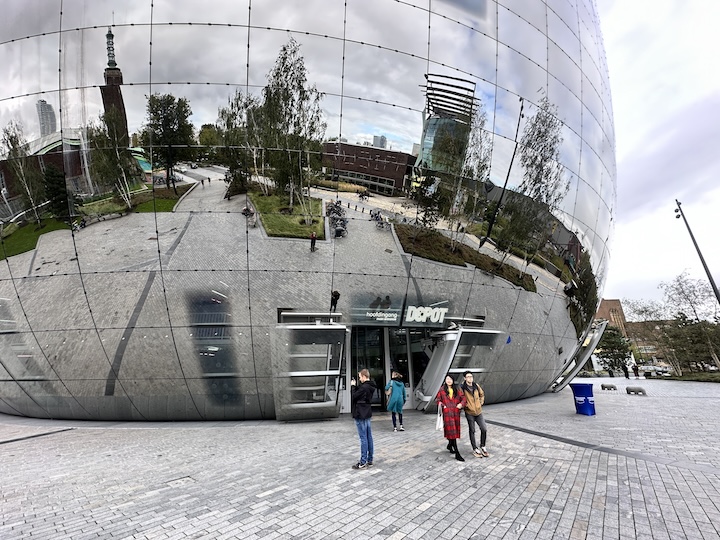
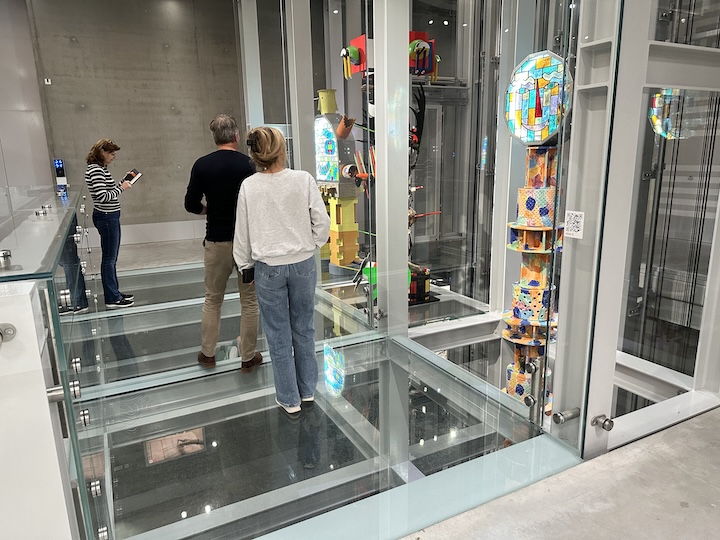
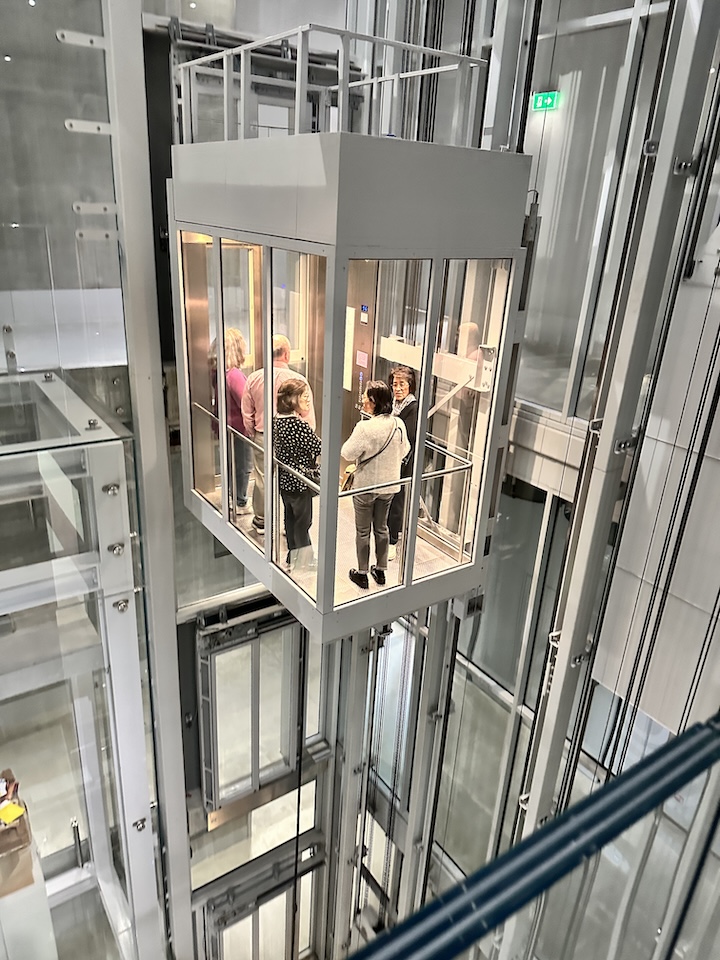
Transparency is the operative word here, and it’s the only such place I’ve been where the works are suspended between two pieces of plastic so I can also look at the back of a painting to see how the artist constructed it, and even added notes as needed. Transparent elevators deliver you to each floor and show some of the art from multiple directions. And the Depot’s team of restorers work in their own transparent facility which helps to demystify some of the magic of that whole arcane process.
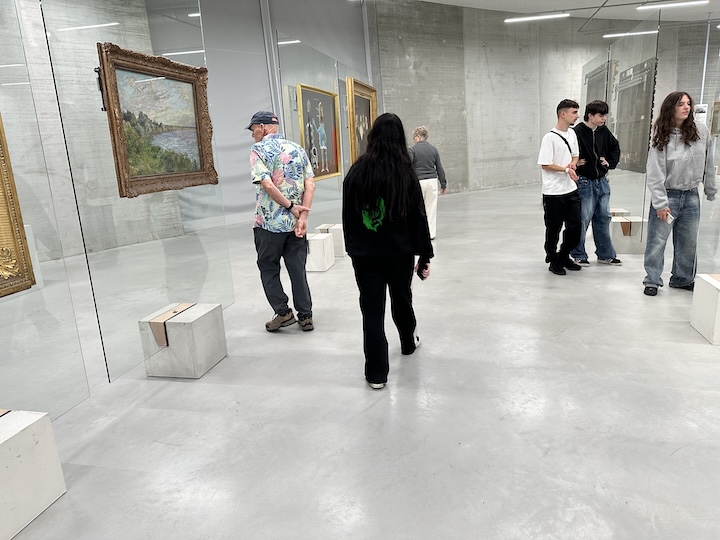

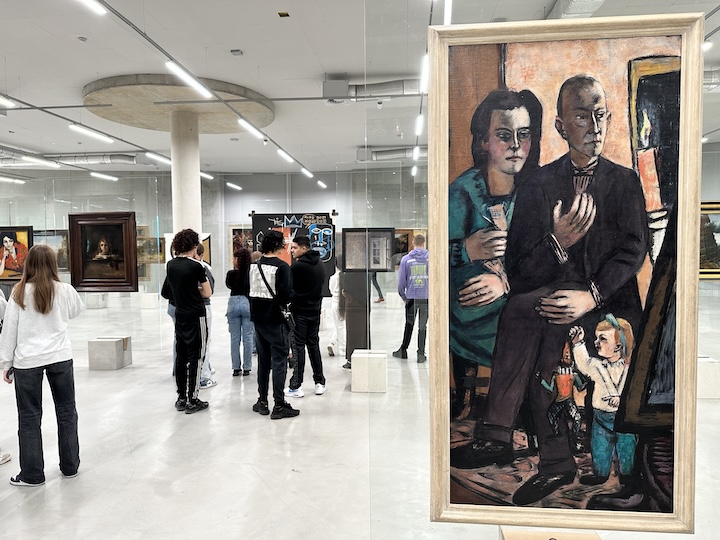
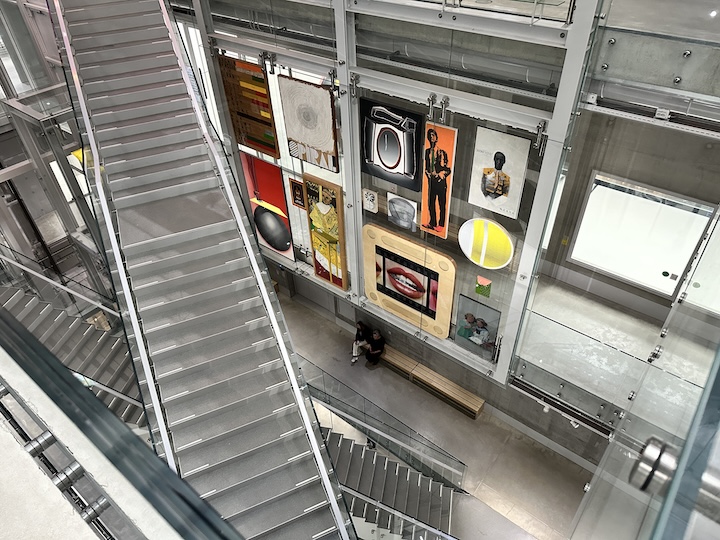
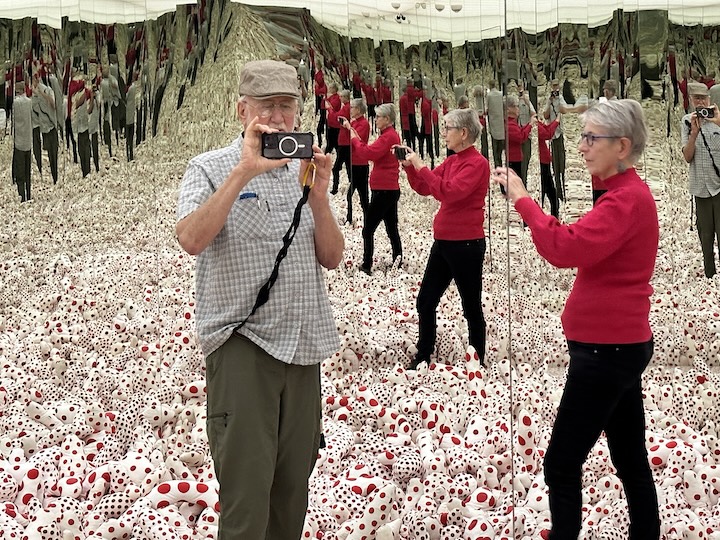
As a special bonus, the Depot currently has one of Yayoi Kusama’s daring mirror fantasy works on display. She is now 96 years old and still as rebellious as in her sometimes-scandalous youth. She’s still producing challenging works for those who enter these mirrored rooms filled with her famous polka dotted multiple art environments. In 1978 she explained that, “Round, soft, colorful, senseless and unknowing. Polka-dots become movement … Polka dots are a way to infinity.”
It’s fun to encounter Yayoi’s work, and I shared this ‘only two at a time’ space with a lady whose red sweater played off quite well against the surrounding field of polka dotted forms.
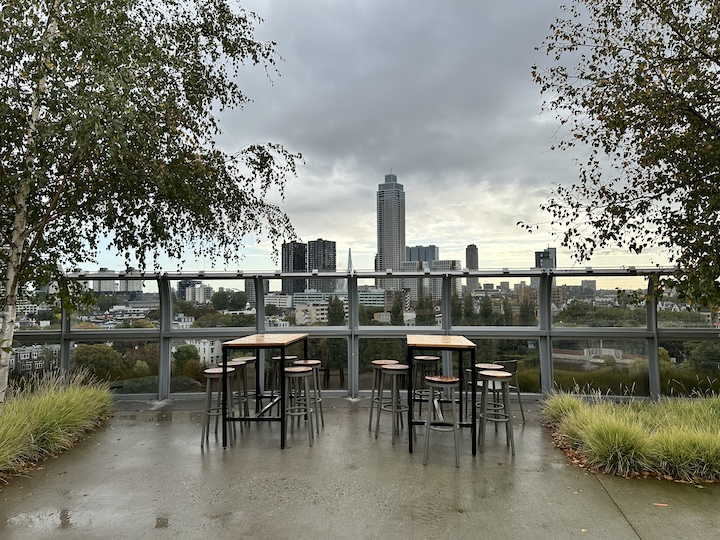
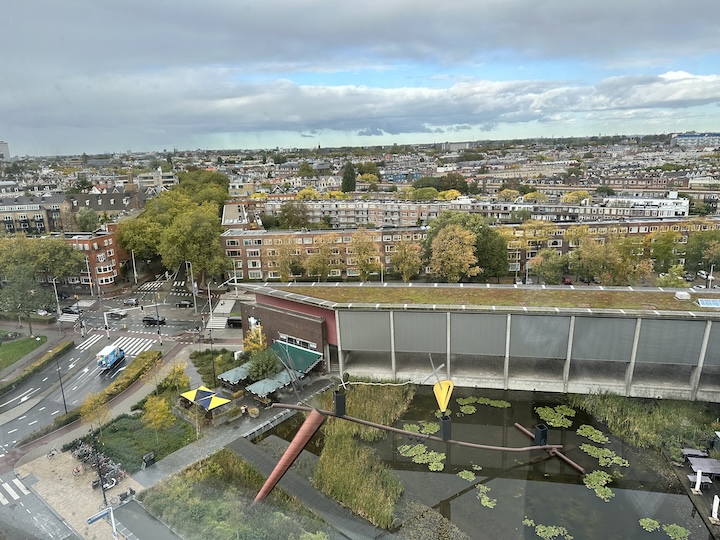
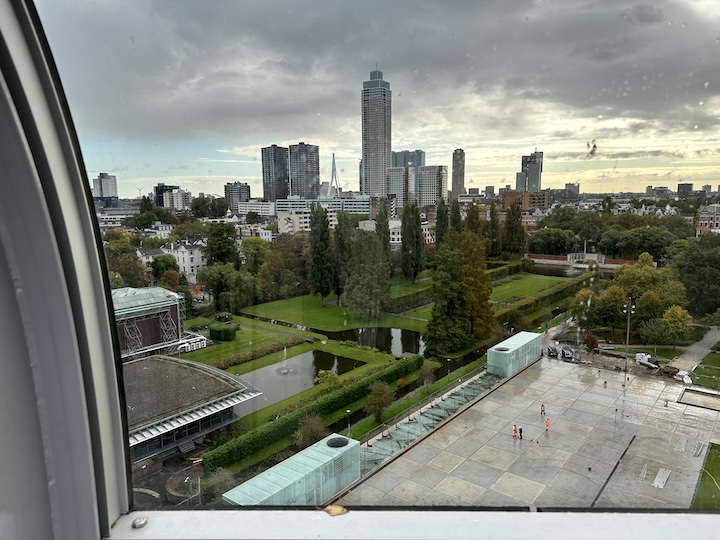
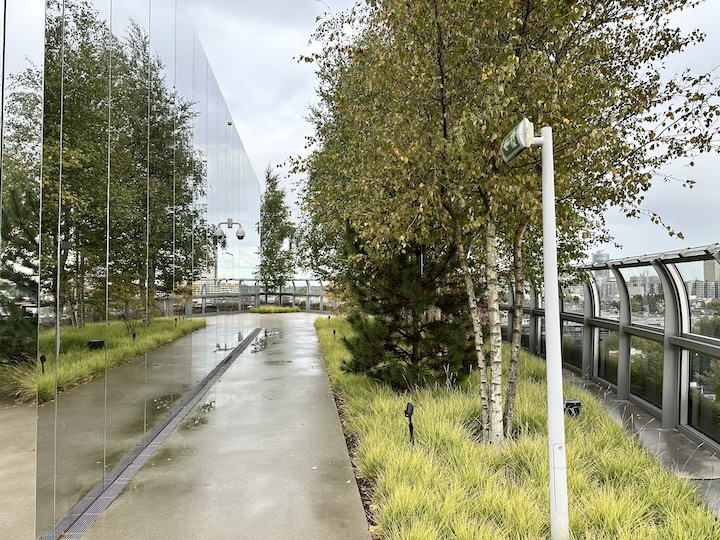
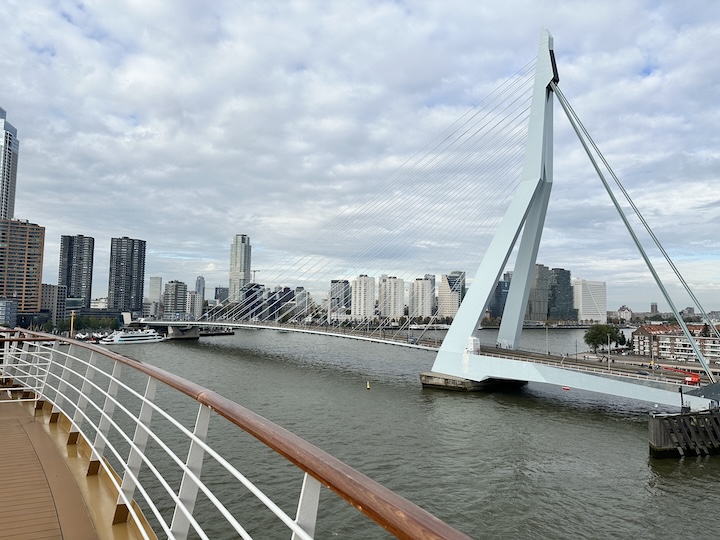
And outside in the roof-forest at the very top, there’s a rewarding grand view across the entire city below. In the distance, the famous Erasmus Bridge, named for the Dutch philosopher who was born here in 1466, emerges among the tallest buildings as an almost Eiffel Tower form.
You can watch a short video of Winy Maas, the Architect, explaining the Depot at https://www.youtube.com/watch?v=ZFecSI_Q0Ss
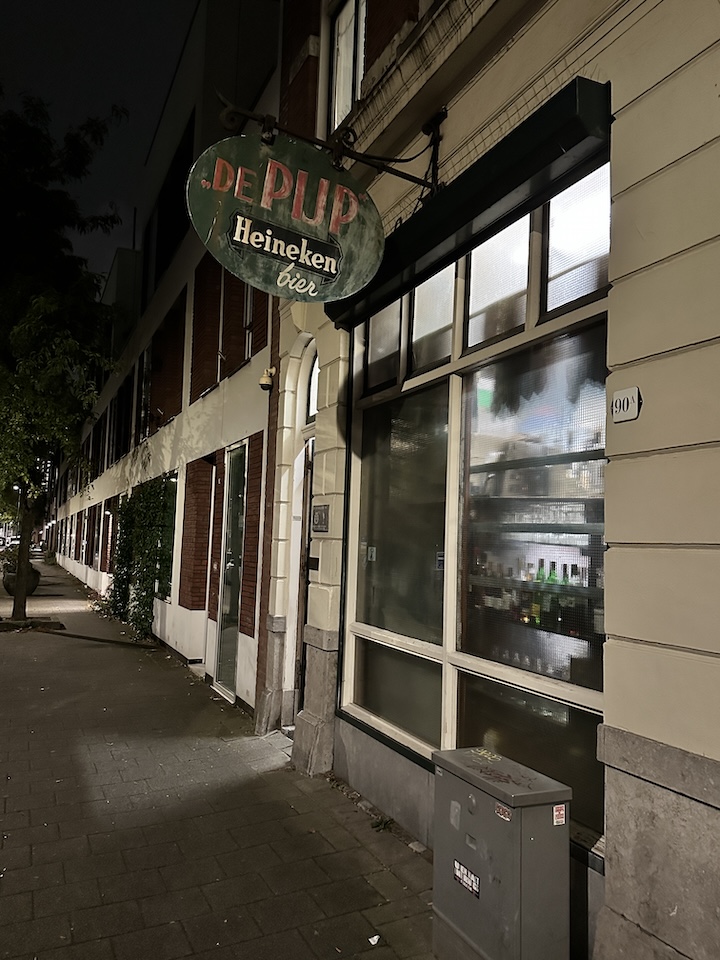
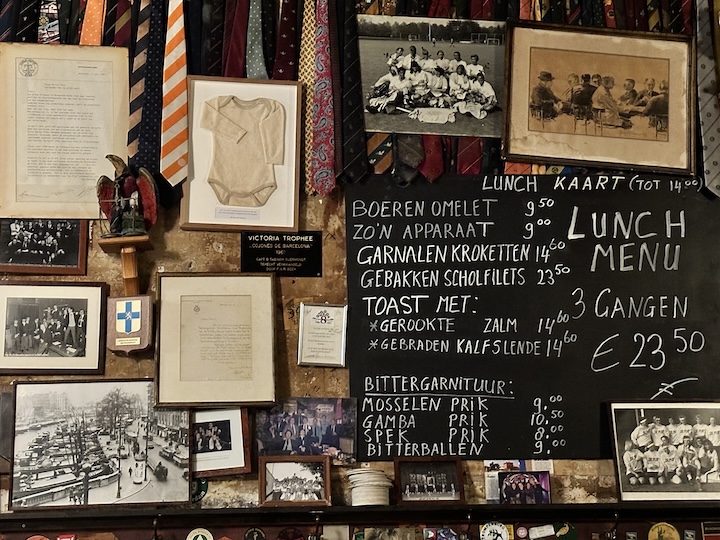
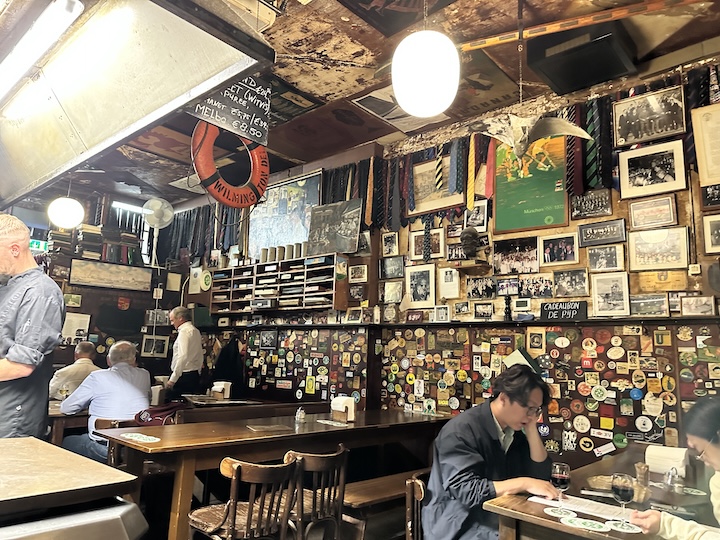
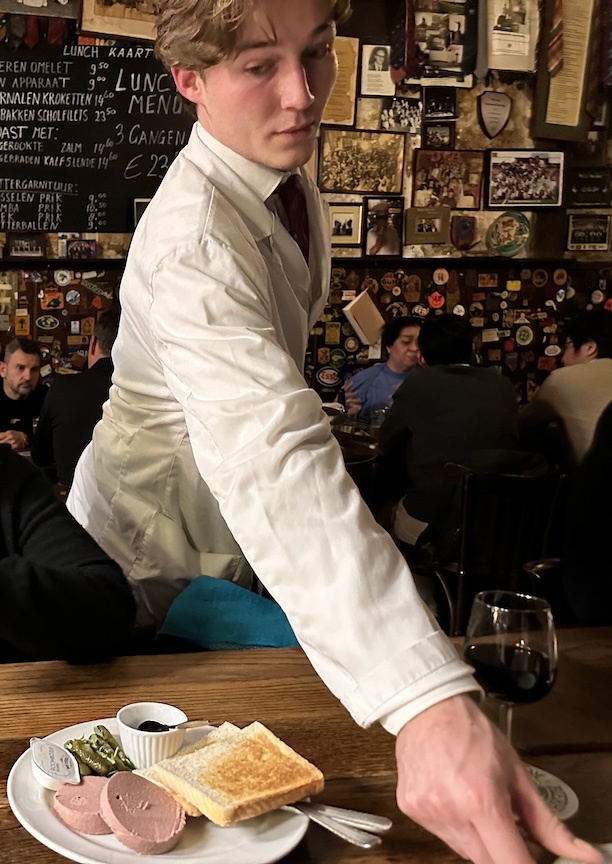
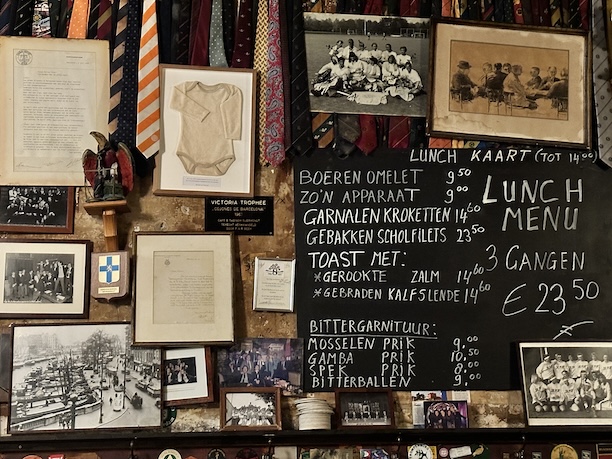
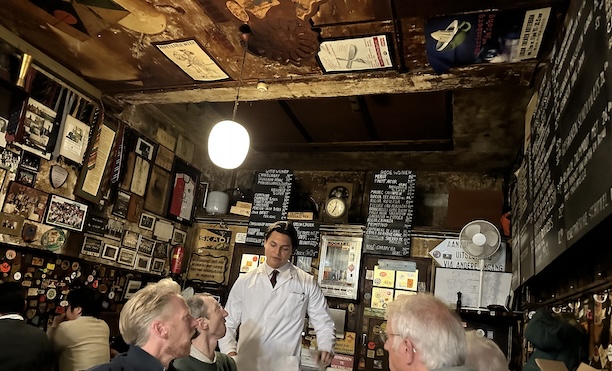
But a few remnants of old Rotterdam still exist, and there’s a memorable eatery called “De Pijp,” that’s hidden down a dark side street. You would probably miss the sign, as we did, if you weren’t actually looking for it. The name means ‘The Pipe’ and it may refer to those long clay pipes we see Dutchmen smoking in old paintings of the Dutch Masters.
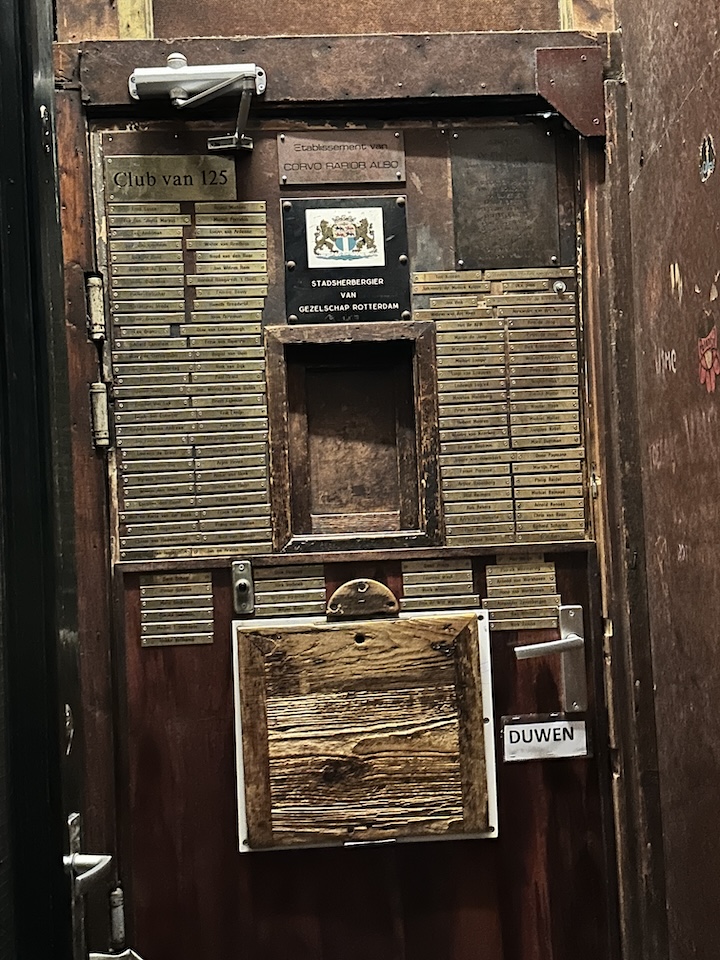
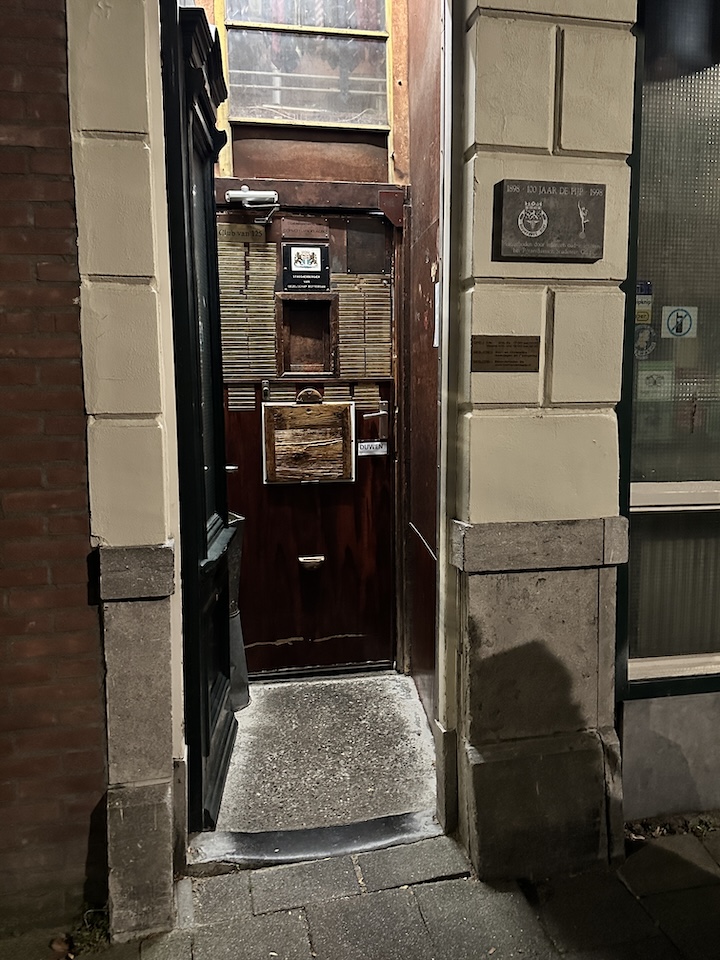
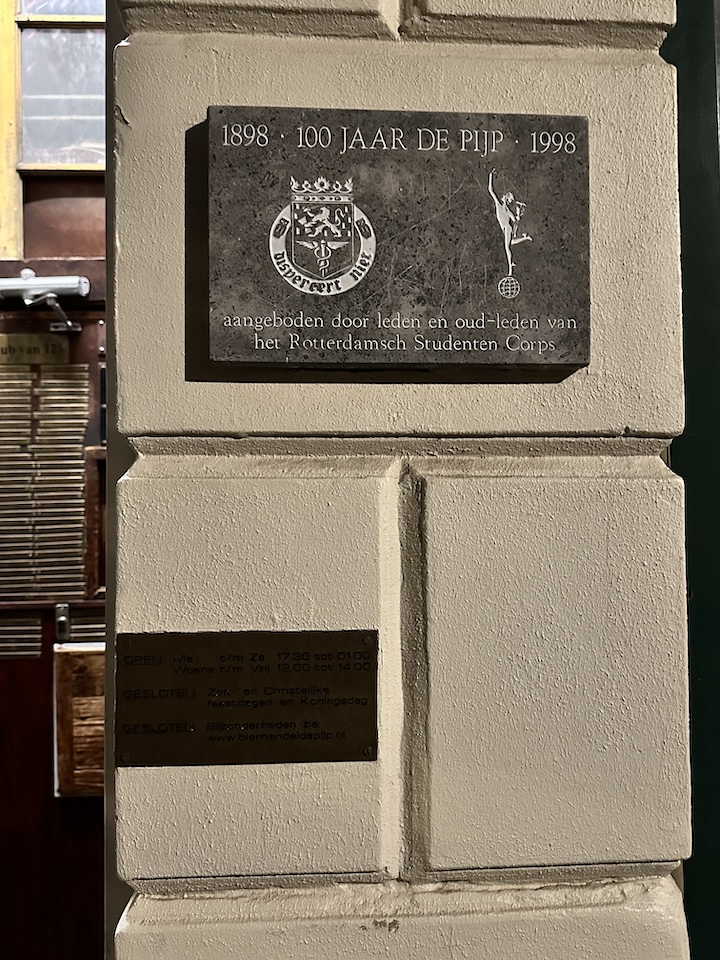
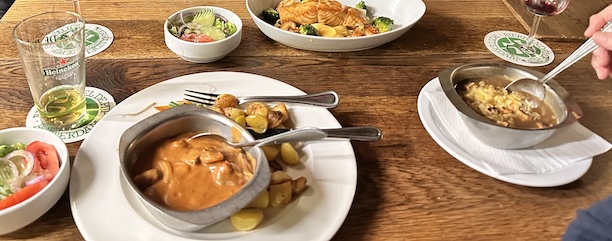
De Pijp celebrated its 100th anniversary back in 1998, and there are metal name plates on the battered front door listing members of the ‘Club van 125.’ There’s no smoking inside these days, and it’s a great place to find some dinner as you watch them fix your order in the kitchen that actually extends into the dining area. It’s almost like a participatory cooking experience at the home of your good friends.
TripAdvisor UK says that De Pijp “…transports you to a richly textured and authentic world, where tradition still has a warm and friendly meaning and the food is absolutely delicious.”

And here’s a fun trip around Rotterdam with Luisito (in Spanish, with English subtitles)
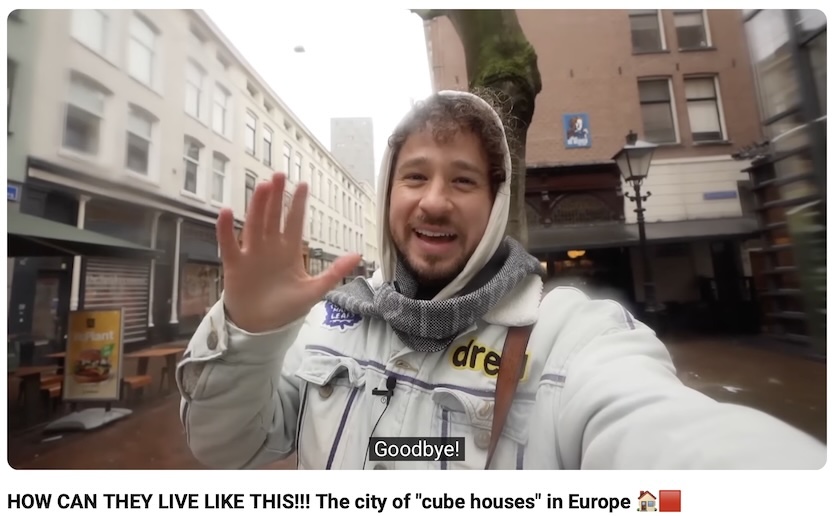
https://www.youtube.com/watch?v=-5Z9puLeNTA
……………………………………………………………………………………………………………….
Den Haag
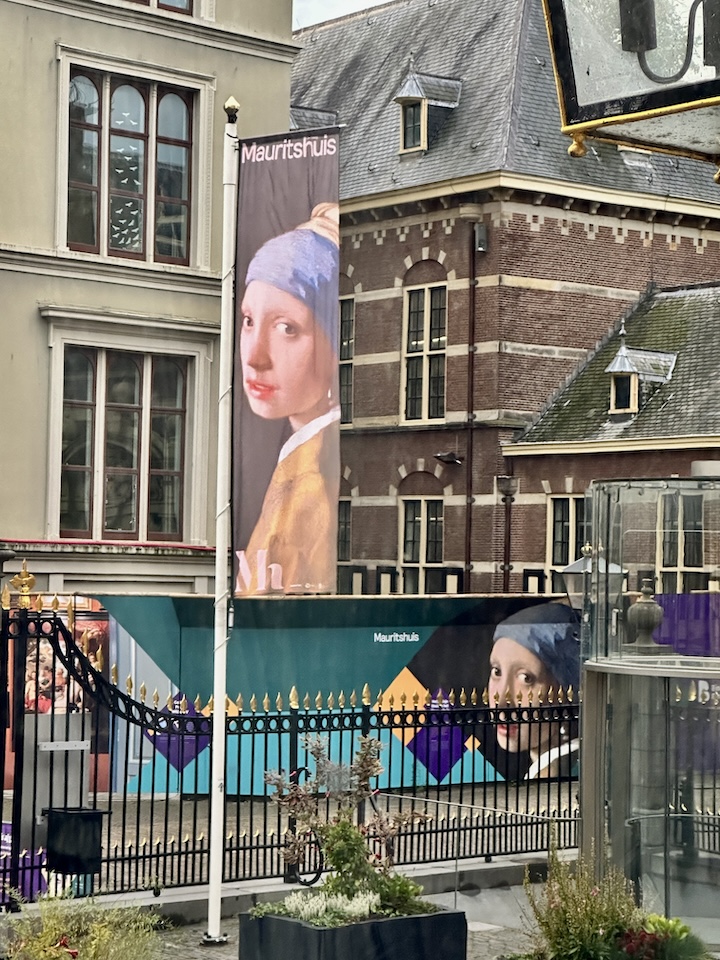
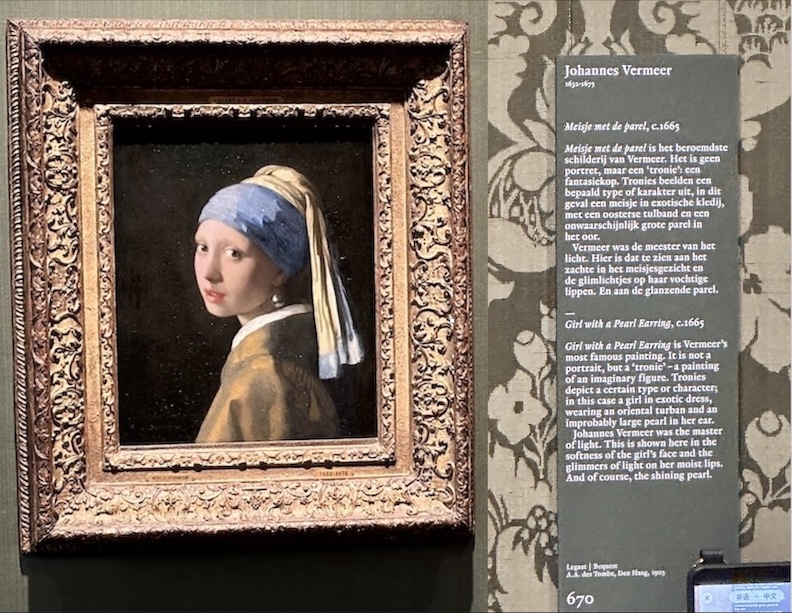
Rotterdam is only a few miles from The Hague, so a visit to the famous Mauritshuis museum was in order. This is the home of Vermeer’s luminous painting of “Girl with a Pearl Earring,” which has become another ‘must see’ ever since Tracy Chevalier’s novel of the same name was published in 1999. The painting is prominently featured outside the Museum and in the lobby, in case we forgot why we came here. And the Mauritshuis itself is nicely connected through its many windows to the bucolic everyday scenes that are just outside.
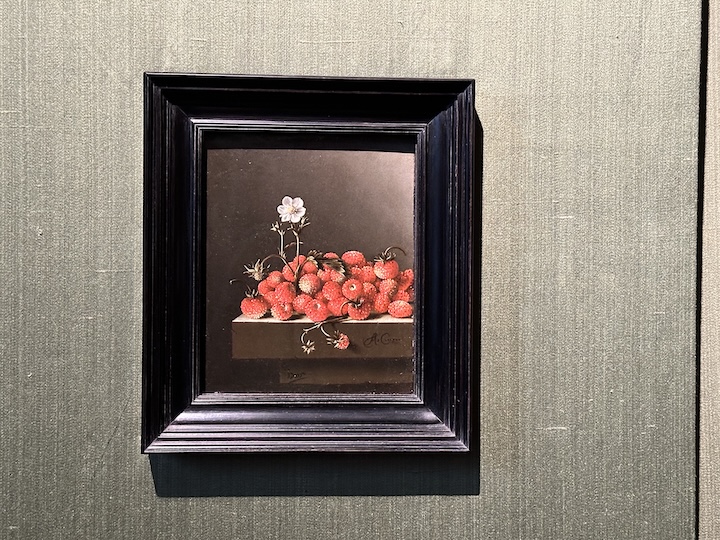
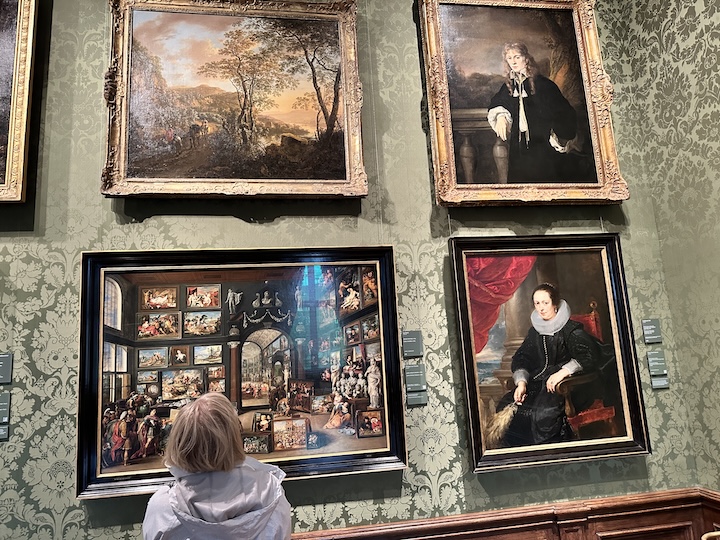
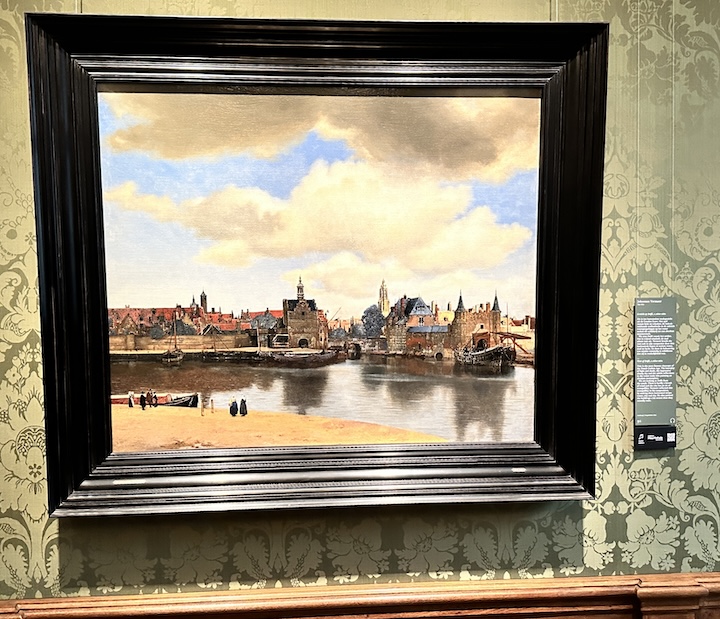
The museum is packed with examples of the finest Dutch art, and is well worth a visit in its own right. The Dutch Golden Age of the 17th century was a period of great prosperity, and the new Dutch Republic’s break with the strictures of the Catholic Church opened a whole new world for their artists to consider. Religious subjects were out and the simple lives of common people became a popular theme, along with portraits, landscapes, sailing ships, brothels, and still lifes.
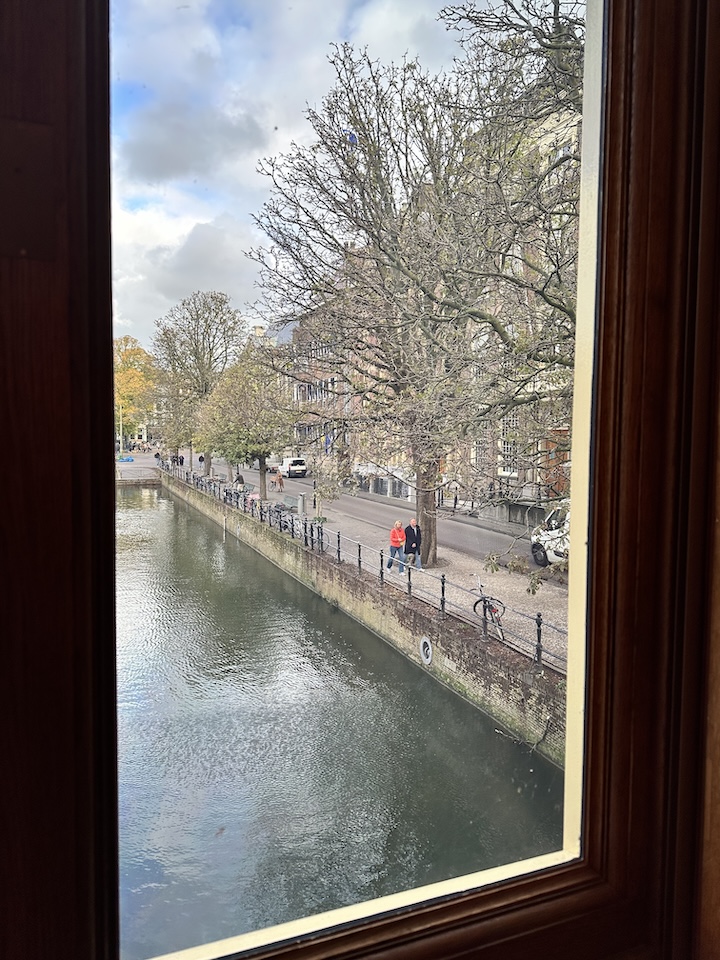
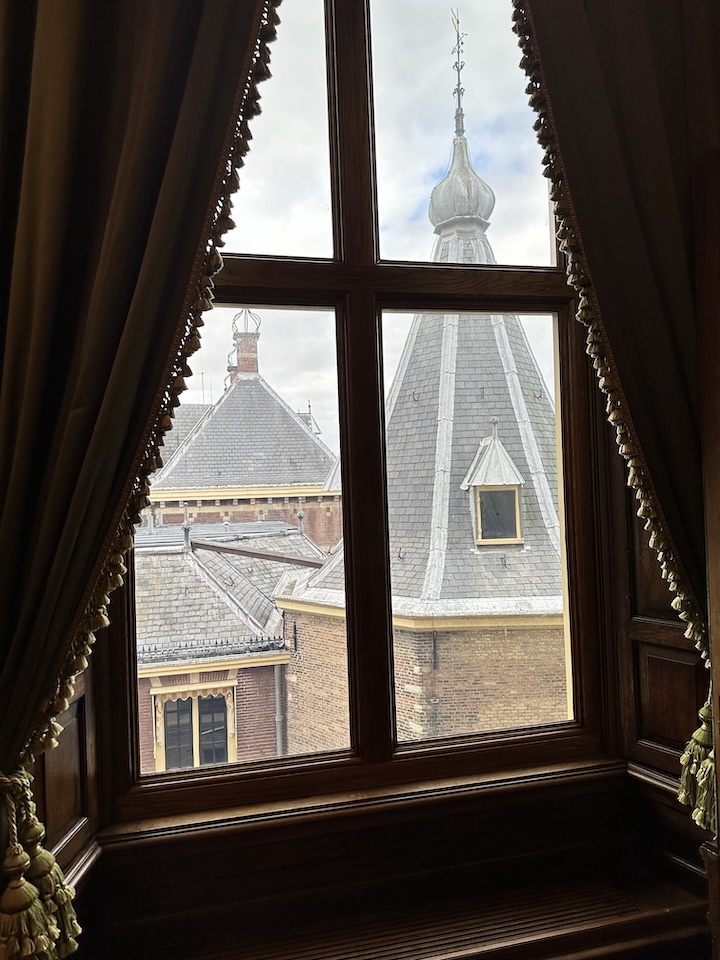
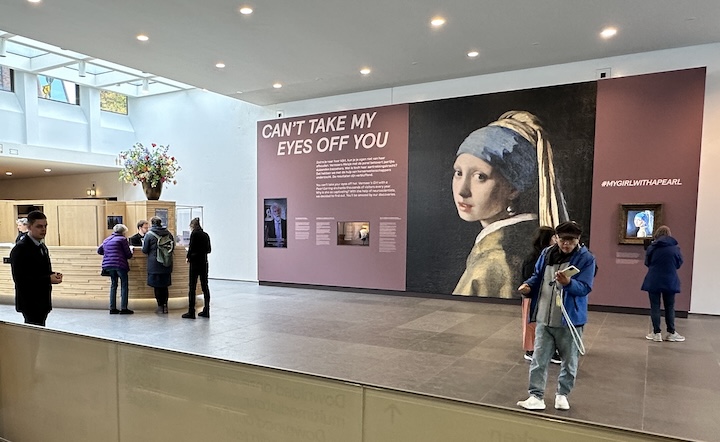
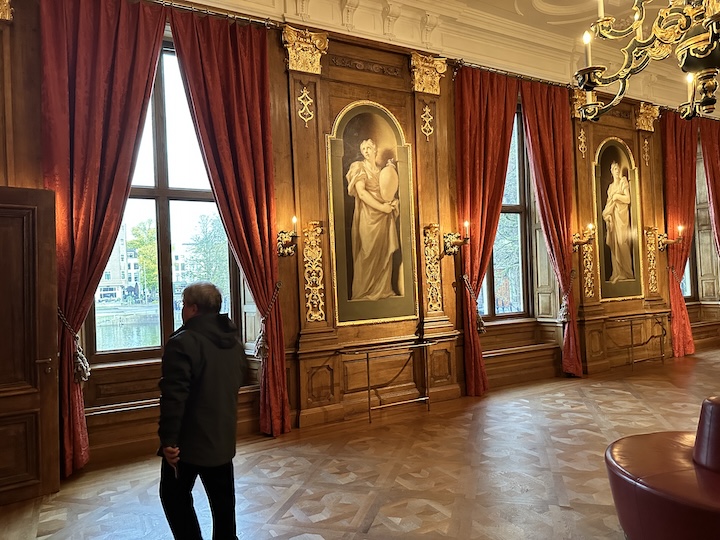
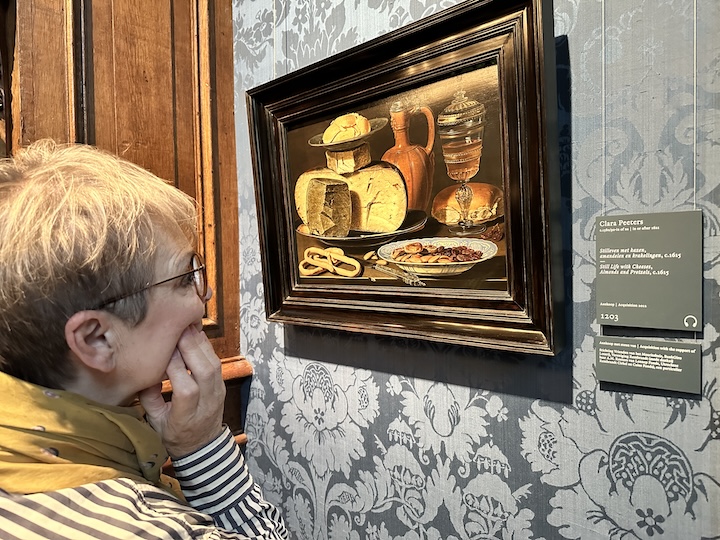
An excellently rendered picture of cheese and wine certainly deserves a closer look.
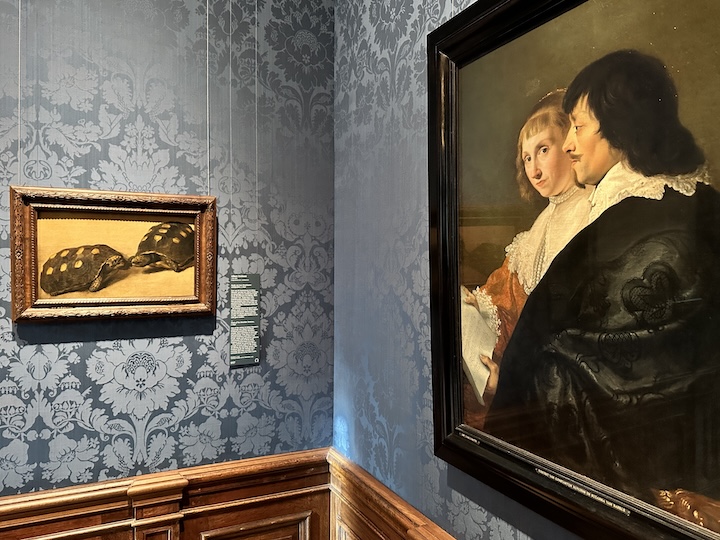
And credit goes to the curator who hung a portrait whose subject appears to be studying a painting of turtles on the side wall, as his wife looks directly into our eyes to study our reaction.
The ability of so many Dutch Masters to capture a landscape with the fleeting daylight that somehow penetrates the nation’s often-cloudy skies still astounds us today. Albert Camus, in his book The Fall (1956), said the clouds over Amsterdam were really huge flocks of birds, and the snow was their feathers floating to the ground. In any case, it’s a fine miracle of nature.
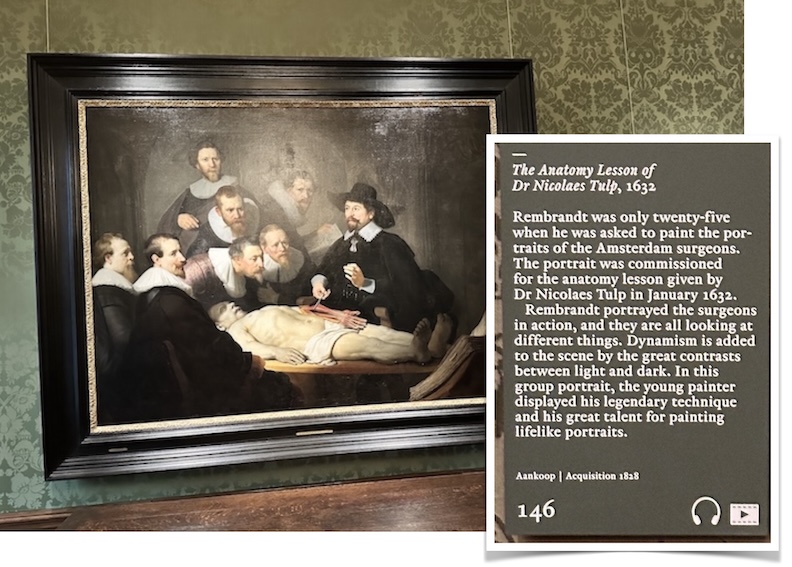
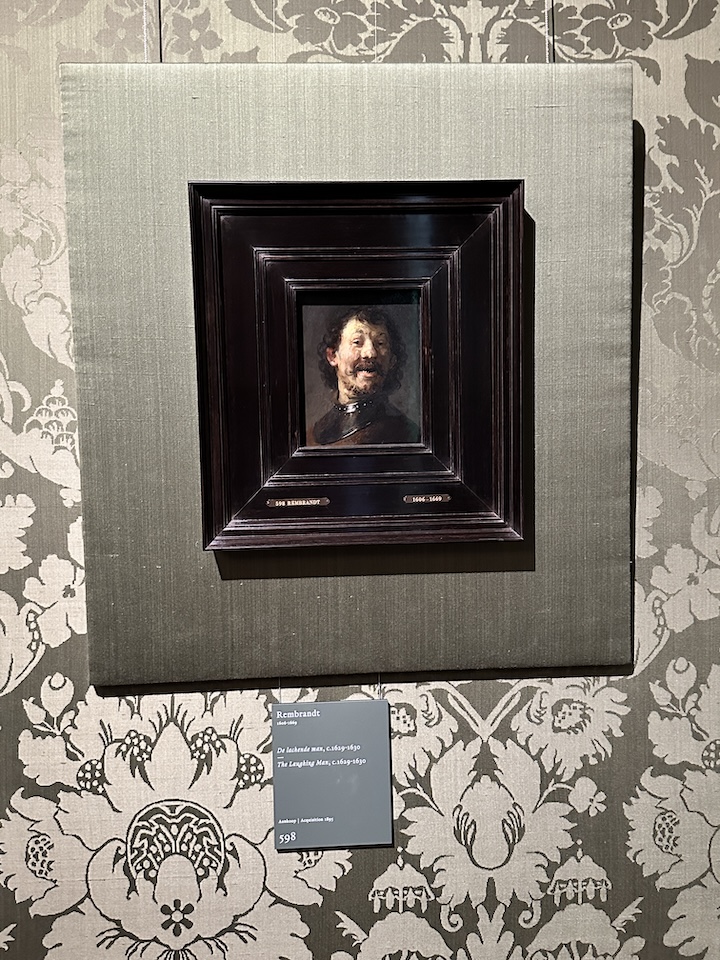
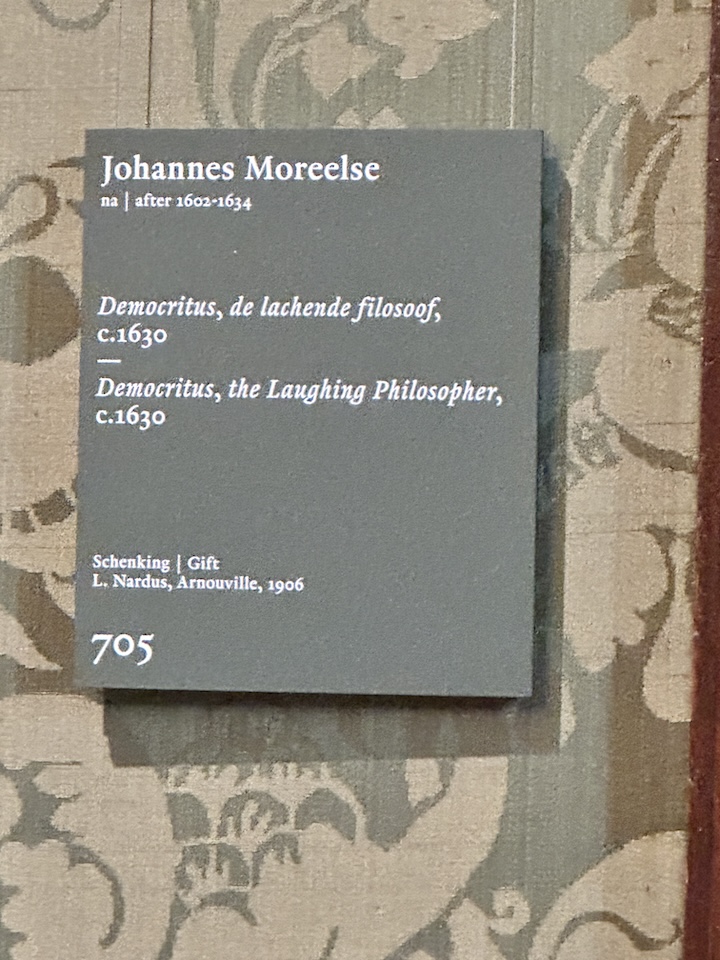
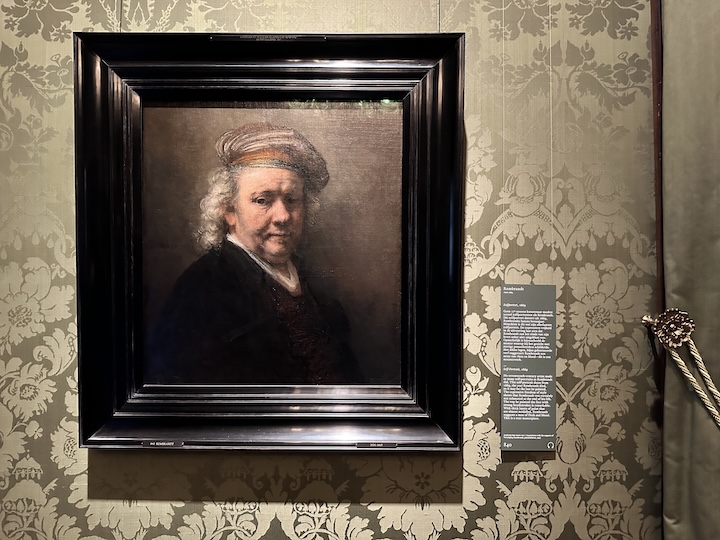
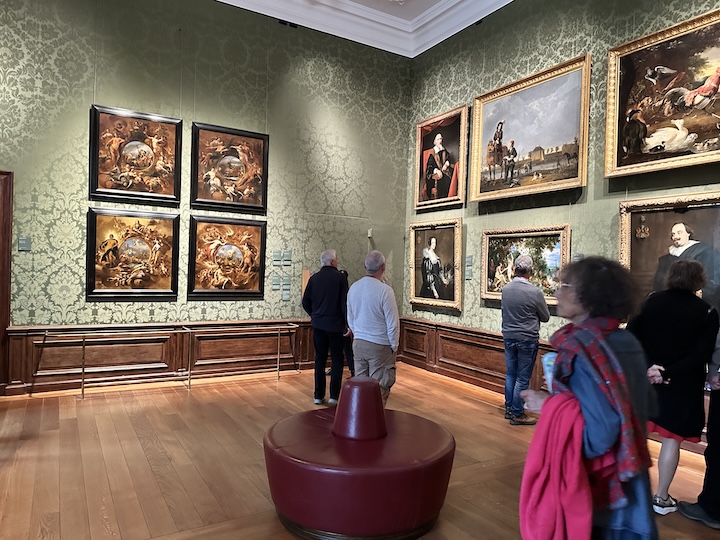
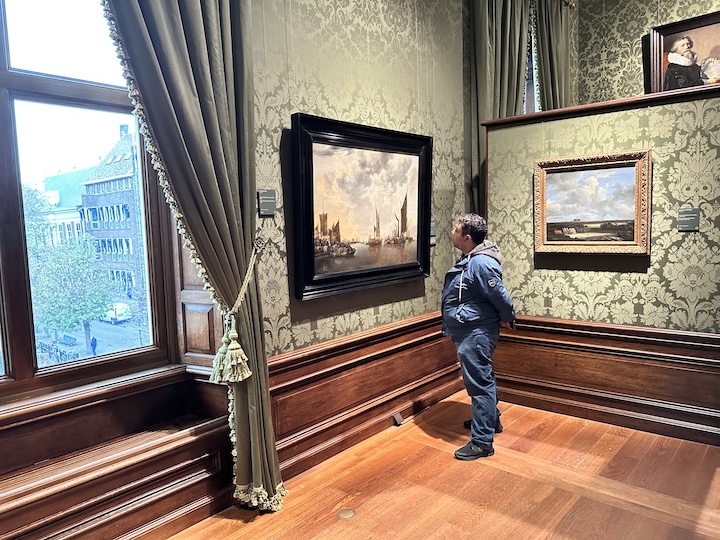
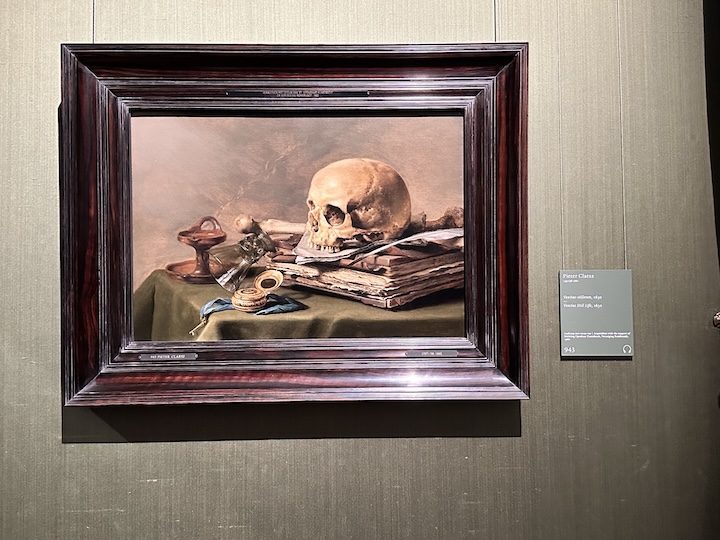
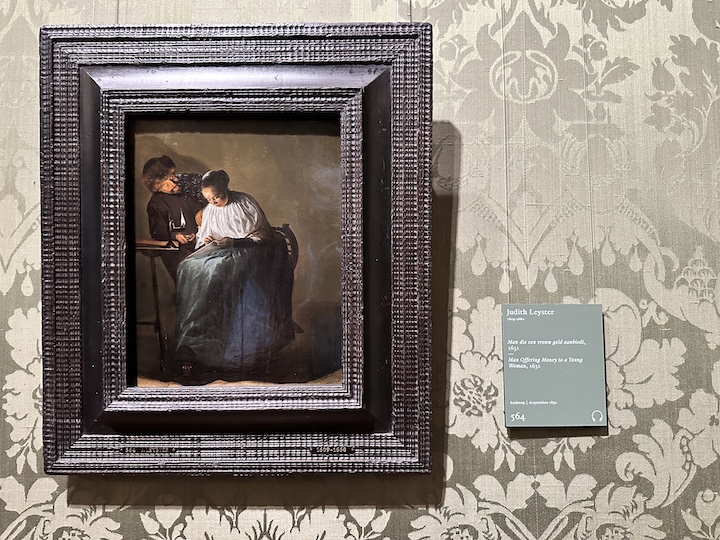
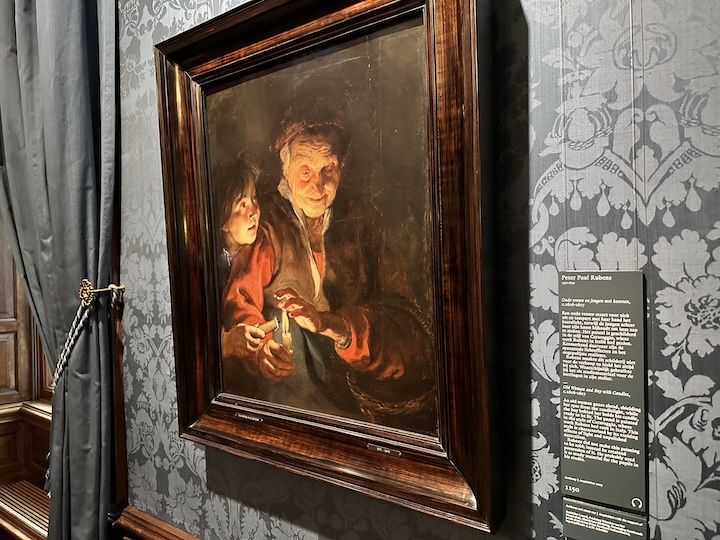
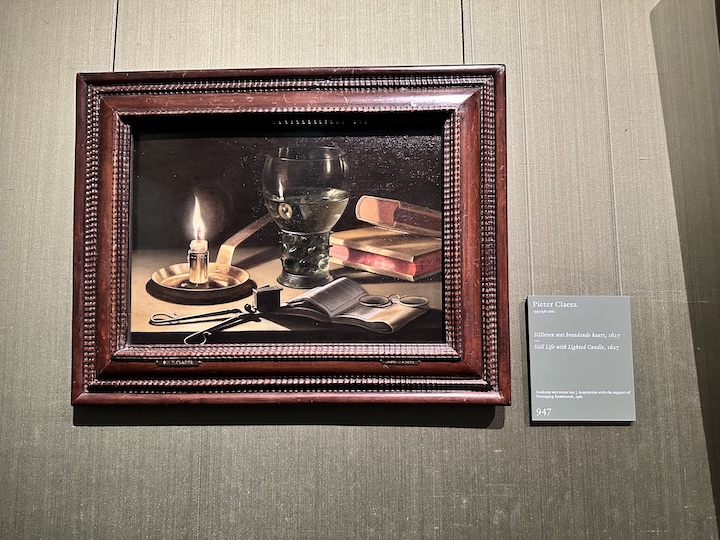
And the way that a soft flickering light that emanates from a simple candle, whether handheld or resting on a tabletop, can be captured by the artist to highlight the subject, is a study in artistic magic.
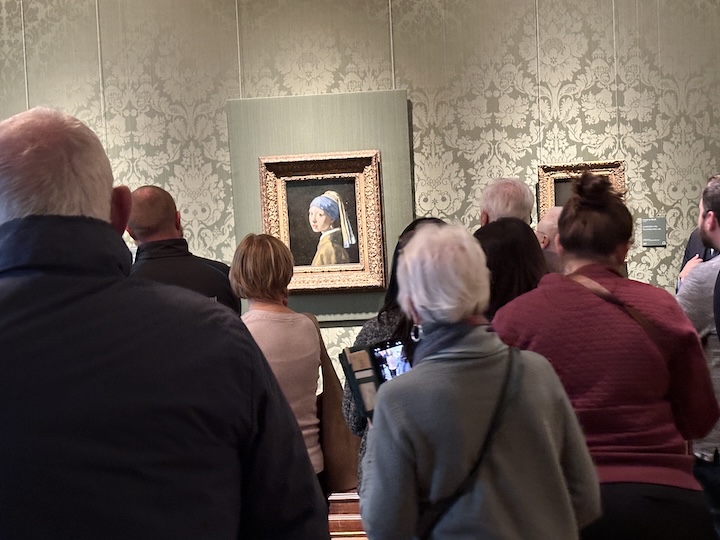
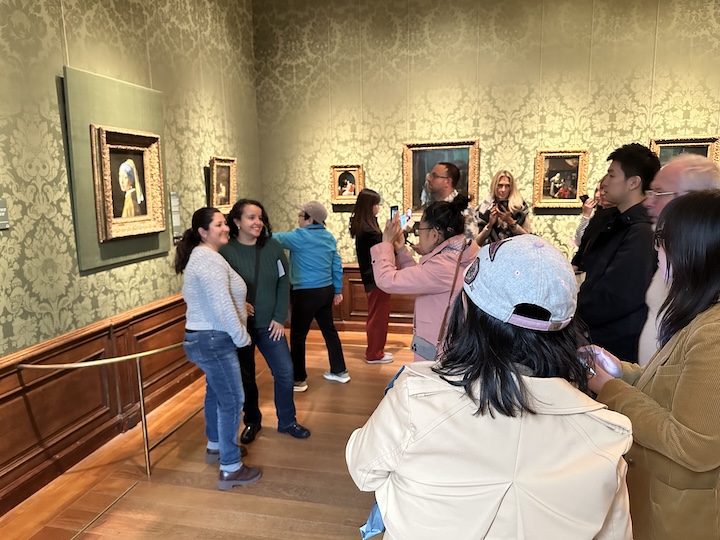
When we finally get to the famous “Girl With a Pearl Earring,” it’s in a modestly-sized room and the painting looks to be around the same size as the Mona Lisa. There’s a crowd, of course, but it’s a smaller crowd than at the Louvre; and everyone patiently takes their turn with this fine piece of work. We make our way forward while trying not to disrupt the selfie takers, and I’m actually quite glad that they’re showing such keen interest in the arts.
……………………………………………………………………………………………………………….
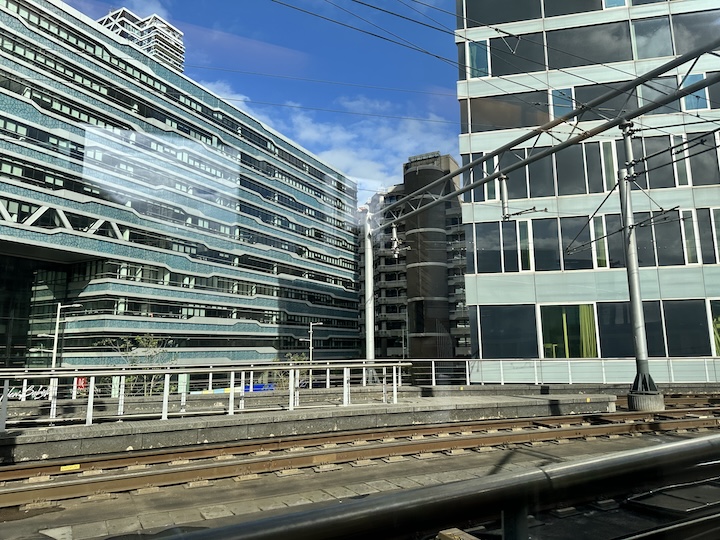
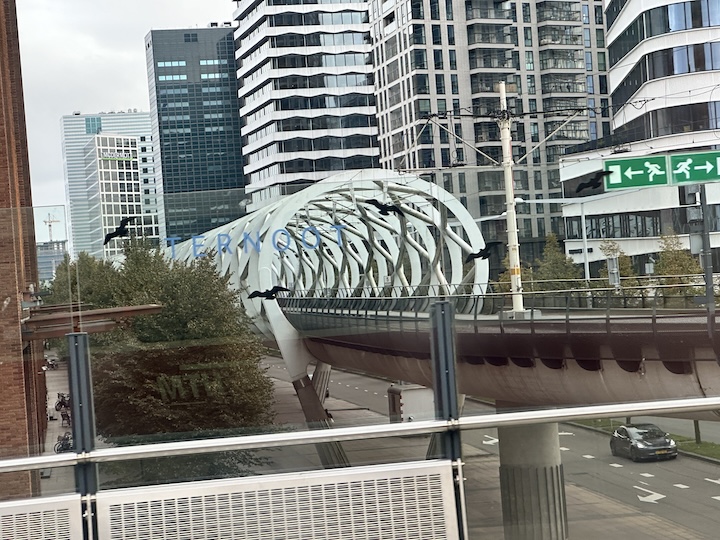
After all that fine art, it’s only a short train ride back to Rotterdam. And we get a closeup look at more of the inventive Dutch modernism that also enriches The Hague.
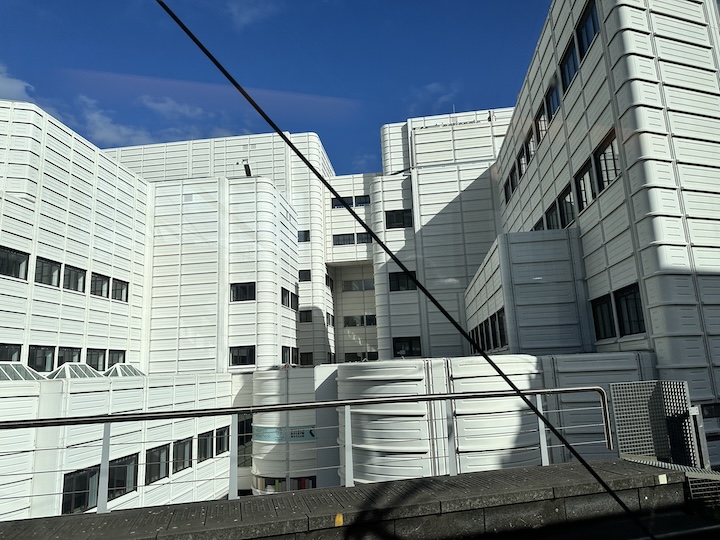
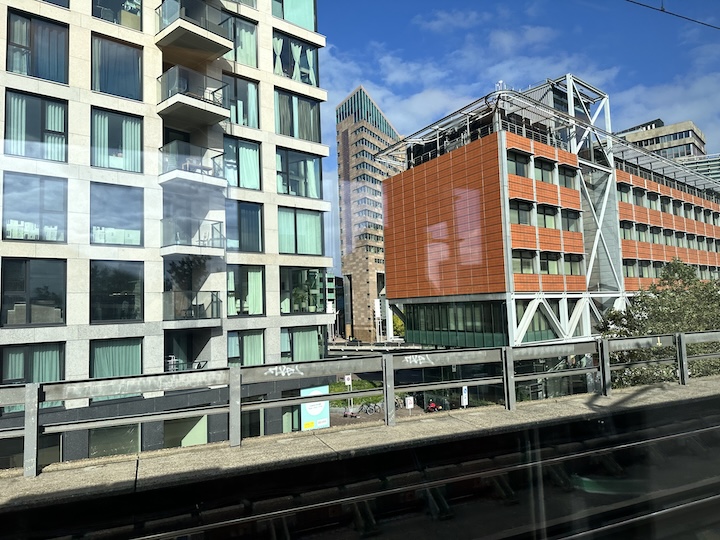
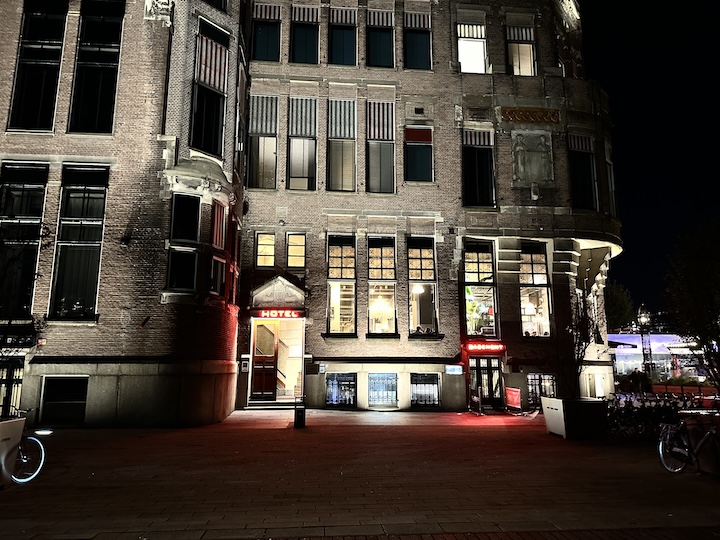
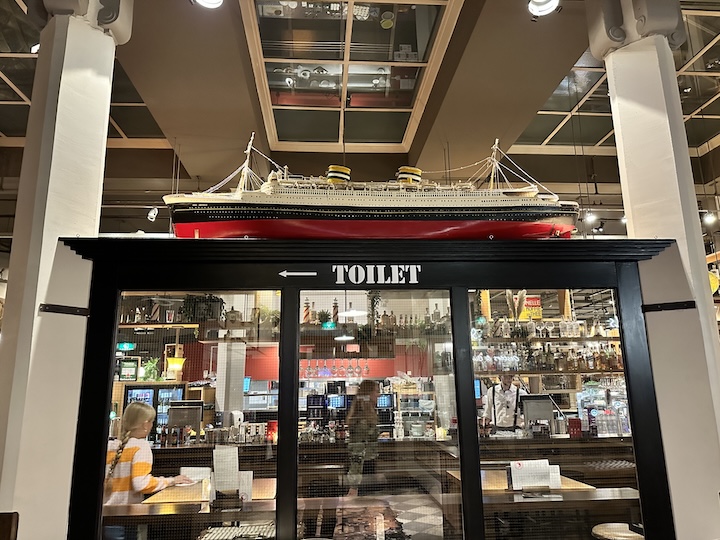
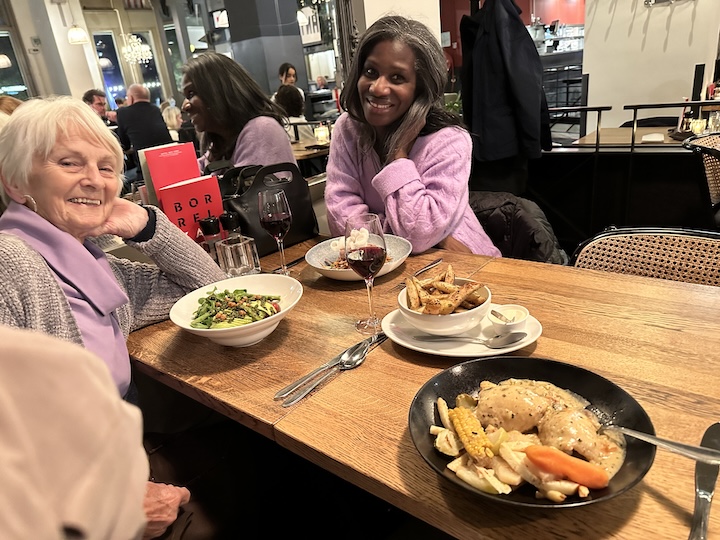
So it’s finally time to depart from Europe after an excellent four months of exploration – on a much more modest budget than Lord Byron availed himself of when he ‘went continental’ long ago. And we’ll end another fine evening with our friend Nathaly at dinner in the old Hotel New York.
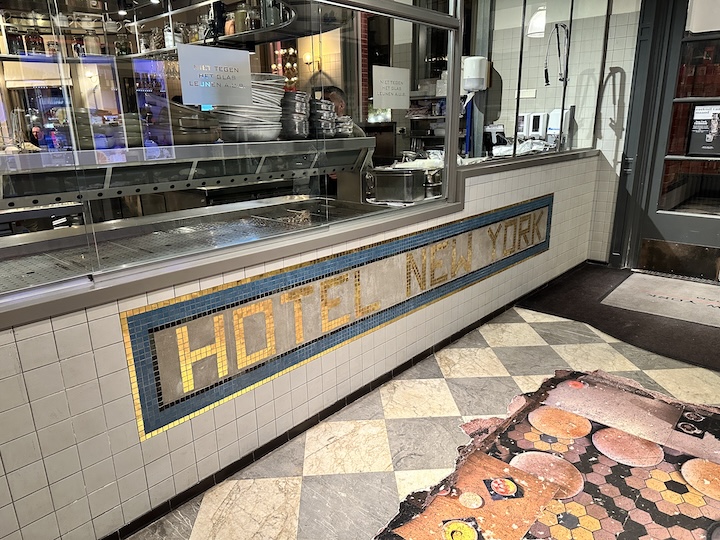
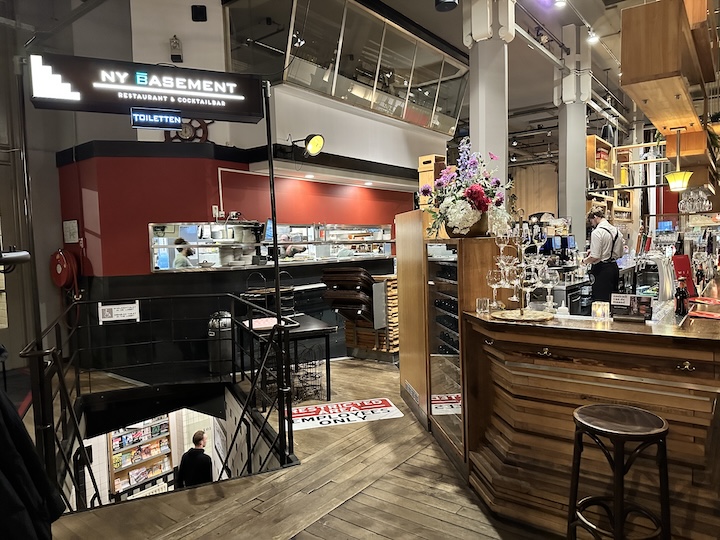
After all these years the staff at this place knows the first question among many patrons concerns where the toilets are located. So they helpfully point the way.
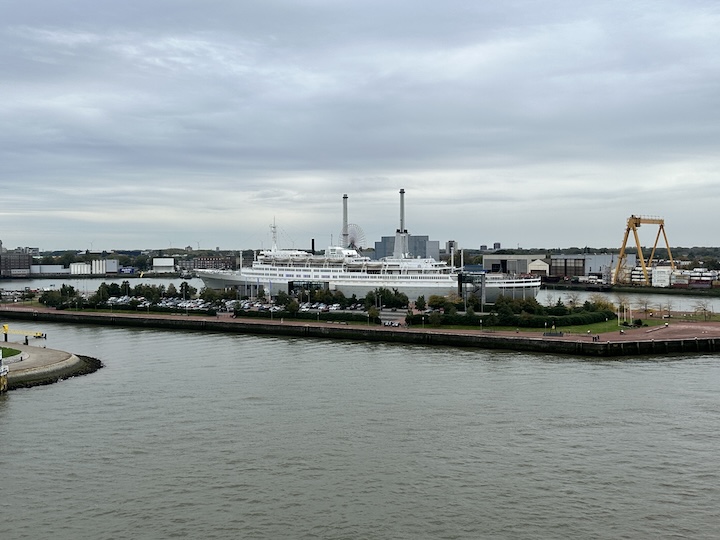
The New York has been a dockside attraction here for many years and we’re glad they found a nice table for us.
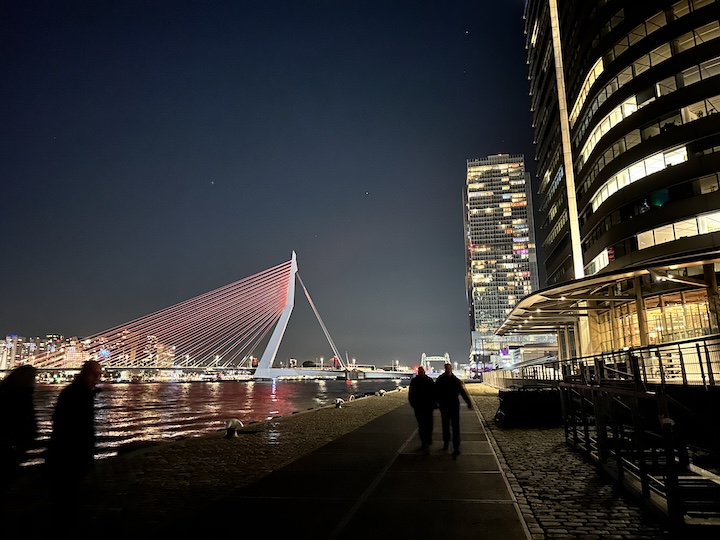
We end the evening later with a nice dockside stroll, and with the beautifully-lit Erasmus Bridge illuminating the evening. It’s hard to imagine a finer way to say goodbye to the very engaging city of Rotterdam.
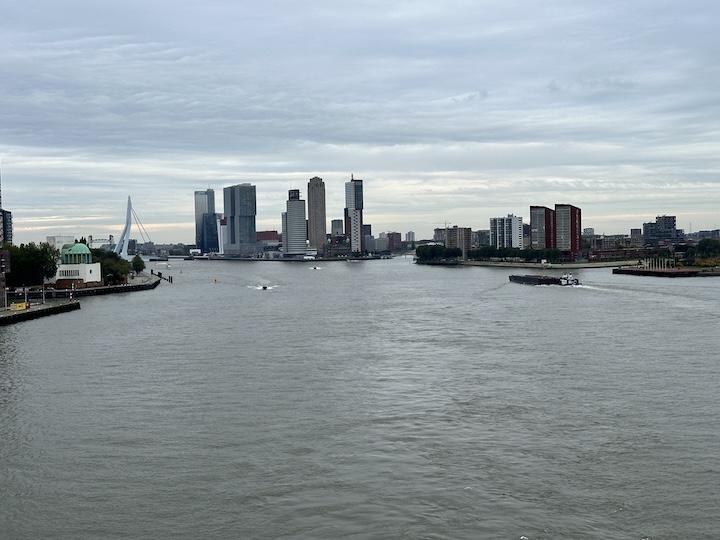
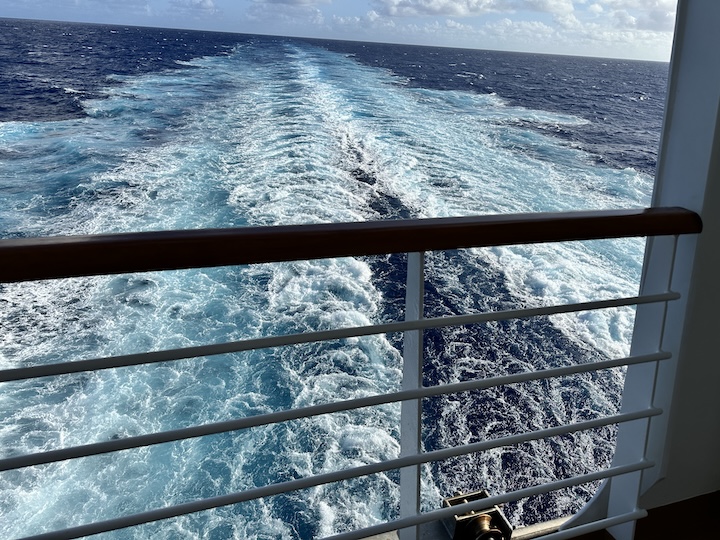
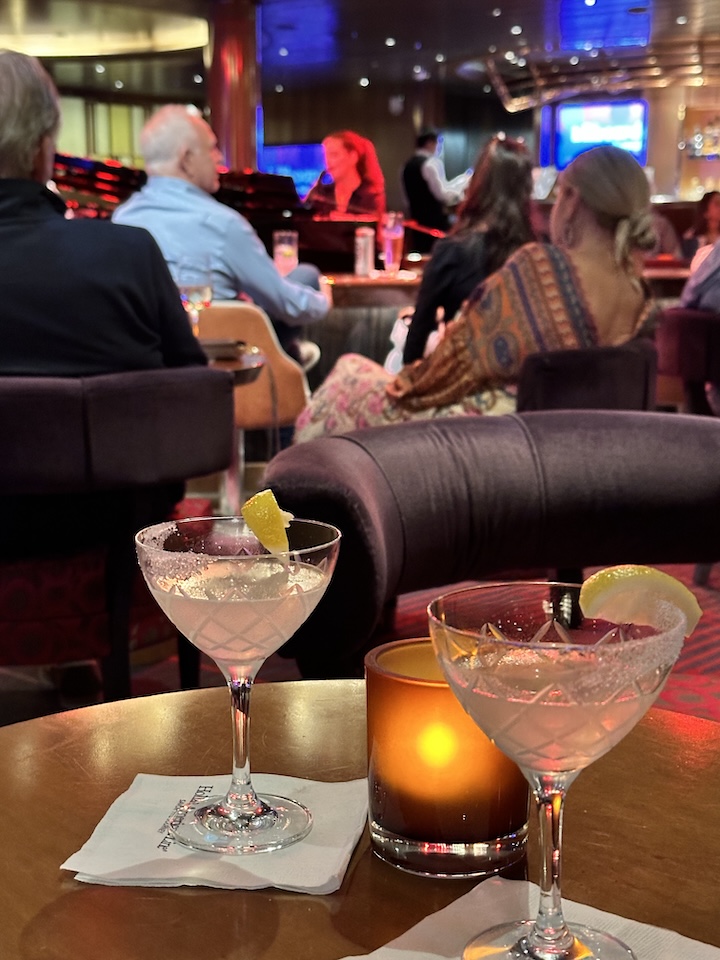
The morning finds us boarding the Holland America Line’s good ship Rotterdam as it departs on a comfortable TransAtlantic trip for the New World. We soon leave the Rotterdam skyline behind, and when the evening arrives we settle in for a bit of piano music and some refreshment. It’s been a good adventure. — PRW


Dear Carolyn and Perry,
Itâs so nice to read your travel stories
And off course especially the one from the Netherlands.
You have to come back soon to come visit the fenix museum, https://www.fenix.nl/nl/
I’m sure you will find that interesting. But maybe I should come to travel around Mexico first and pay you a visit ð
Right now I’m on holidays in Suriname and itâs wonderful. One country I know you will love too.
Hope you both are doing well!
Sending you my love and greetings from Suriname.
Nathaly
LikeLike
What a delightful surprise this city was to walk through by your side! Definitely the cube houses would be a challenge for me, too, just to figure out what is upright! Loved all the photos….was that door a Matisse? Or maybe a Mondrian feeling.
LikeLike
Thanks! We keep moving! TIERRA DE TORTUGAS, SA de CV Avenida Mar de Cortés #2645Bahía de Kino, Sonora, MXCP 83340Tel 662-242-0122
LikeLike
ALWAYS cool to travel along with you!!
LikeLike