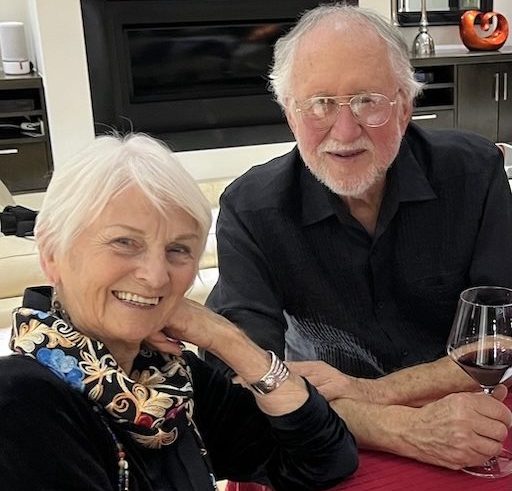
July 27-31, 2018
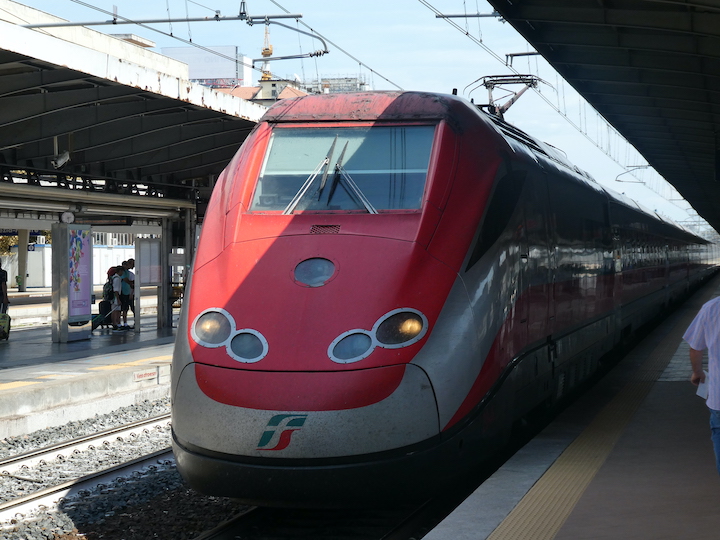
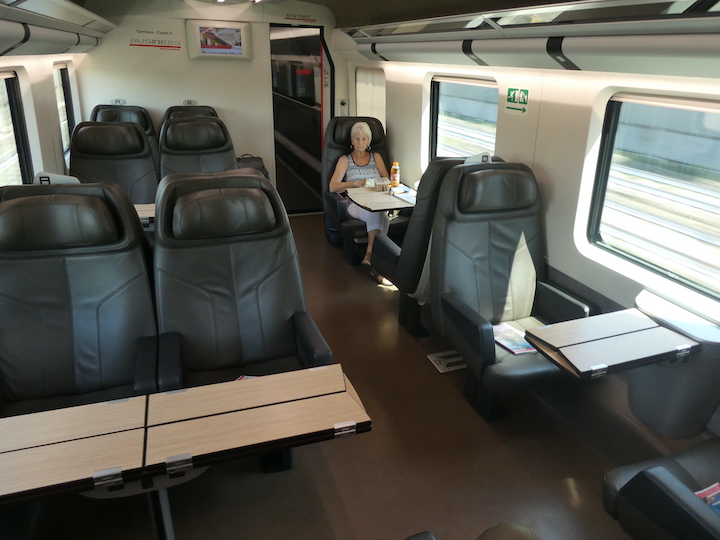
We depart from Trieste for Milano, our final stop during this 2018 season on another fast Trenitalia Frecciarossa. It’s our favorite way to travel. We don’t rent cars in Europe when we can settle into nice seats with a table and large windows, and watch the countryside go by – the farms and the small villages and the vineyards, a flock of sheep by the river. It’s an affordable luxury to travel this way.
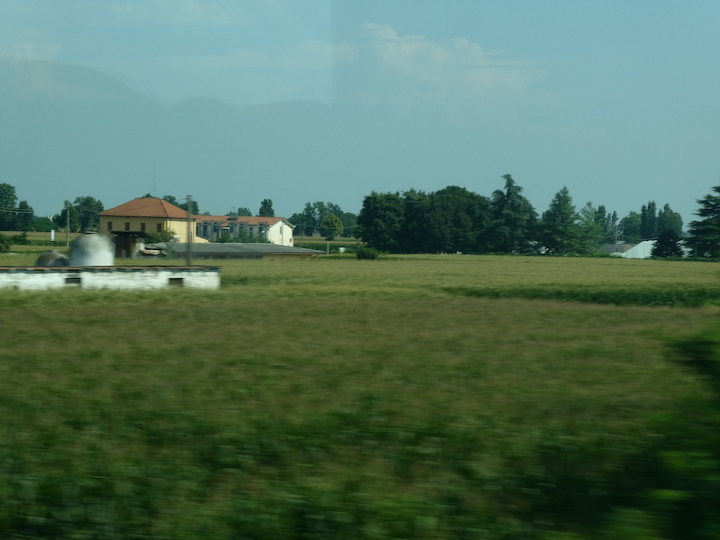
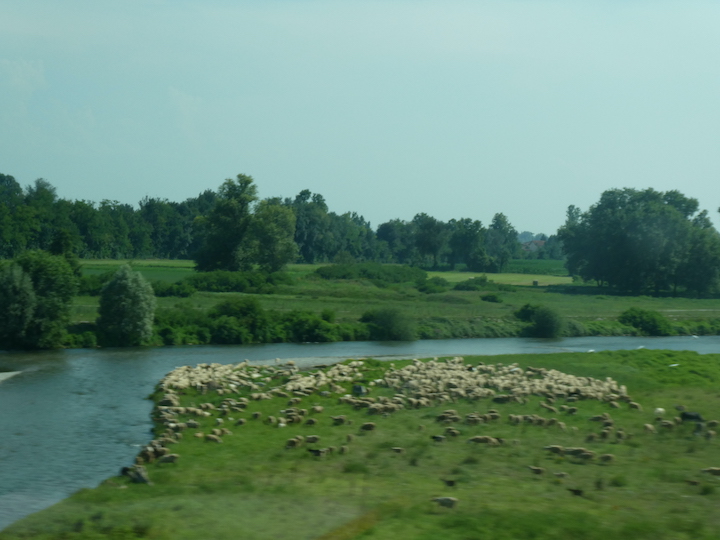
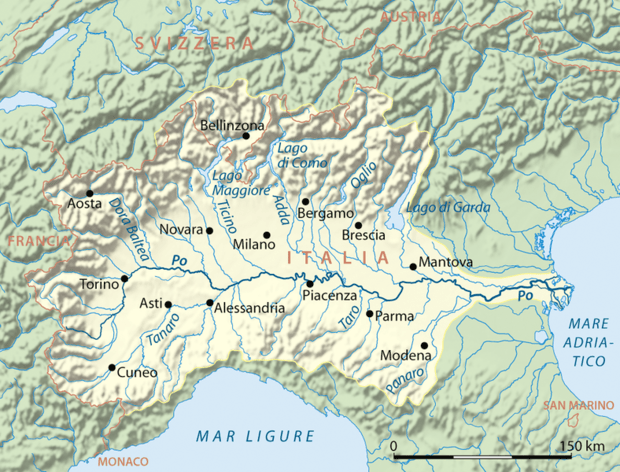
We’re crossing the broad plain of the Po River, the longest river in Italy. It begins in the Alps just inside the French border and then wanders across northern Italy to enter the distant Adriatic Sea, just a little south of Venice. The Lunghin Pass high in Switzerland is actually a ‘triple watershed’ for the Po, Rhine and Danube rivers, some of the most legendary rivers in the world. The Po then crosses the largest unbroken plain in southern Europe, a fertile countryside that produces some of the world’s finest foods. This valley is home to vineyards and broad fields of rice and grains; the area provides 40% of Italy’s milk production, and more than half of the pork. Think of Parma ham and that rich Parmigiana cheese we love to grate onto the finest pastas that they also produce here.
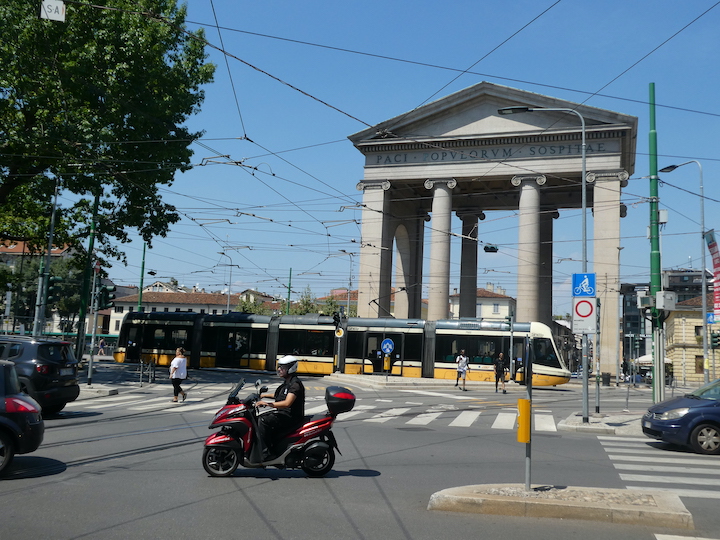
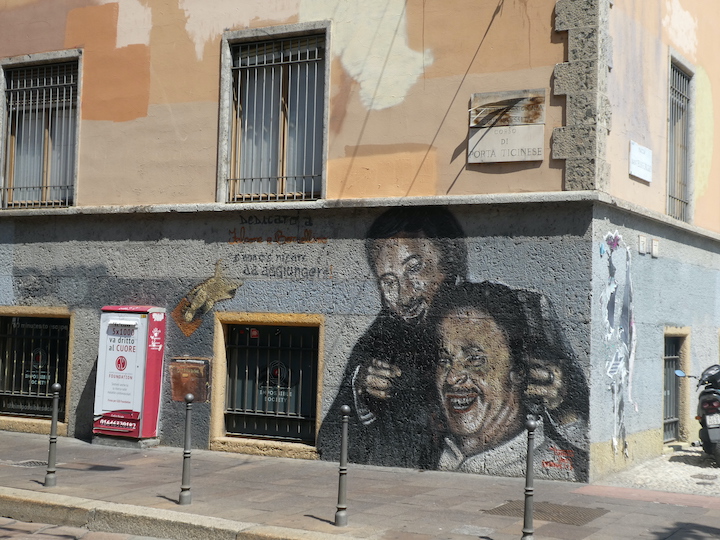
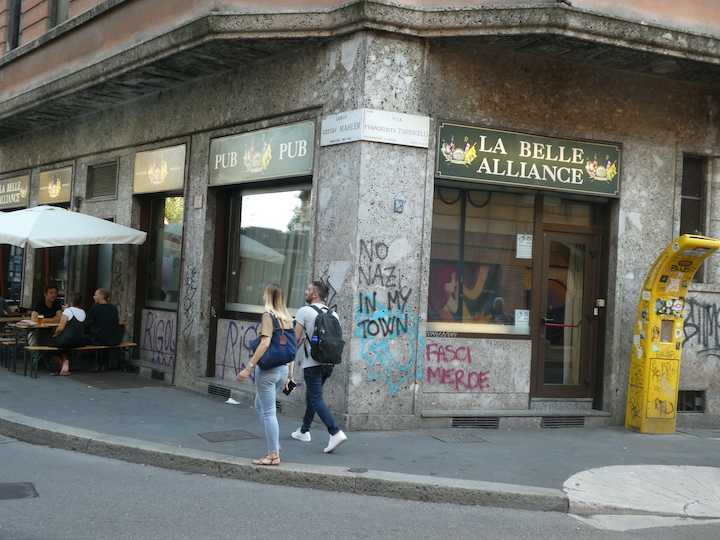
And soon we’re in Milano, the second largest city in Italy (pop: 1.36m), an industrial powerhouse, and an important banking center. Lodgings can be expensive in the gorgeous center city, so we’re renting in a more ‘modest’ part of town, an area where we can actually afford to hang out.

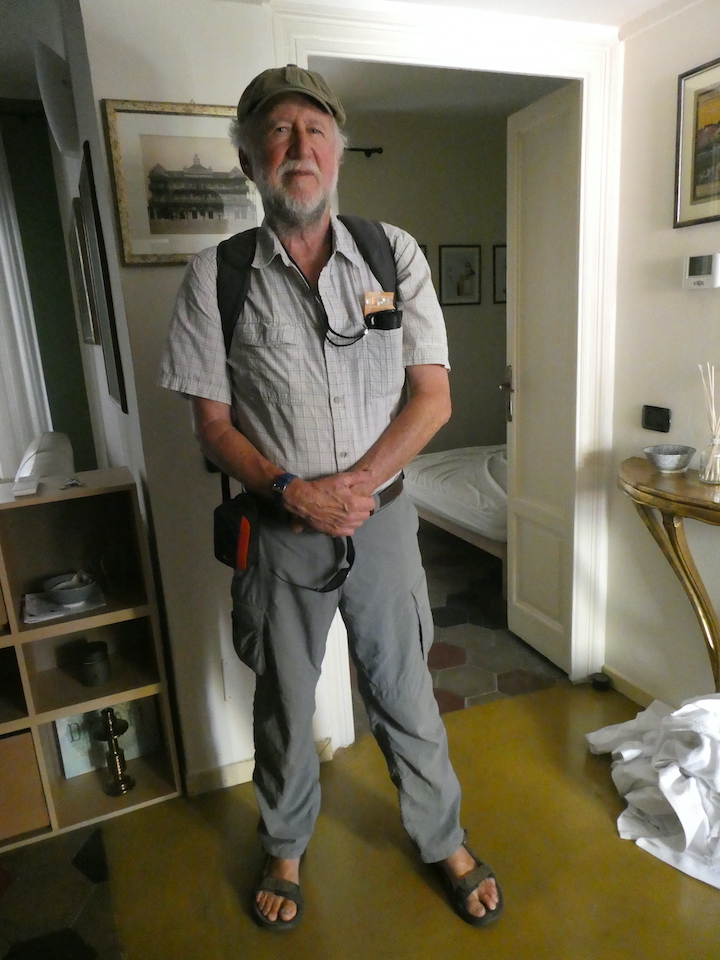
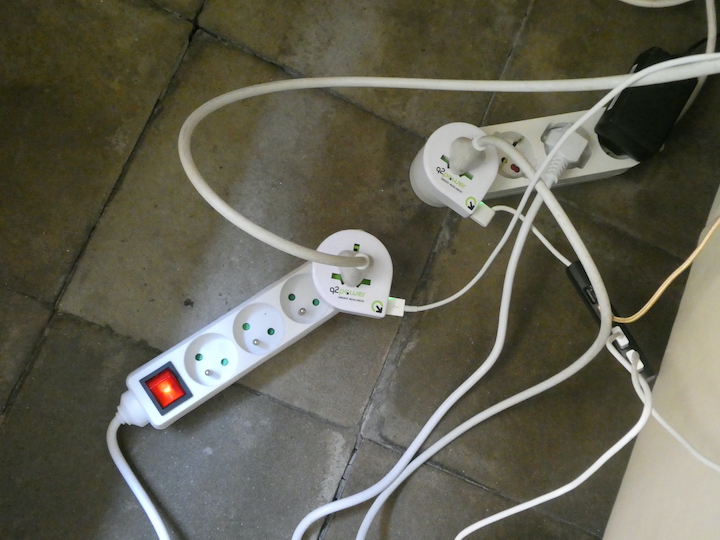
Sometimes the cheaper rentals lack those extra bedside plugs that we all need to recharge our devices so we pack an assortment of cords and adapters, and all is good.

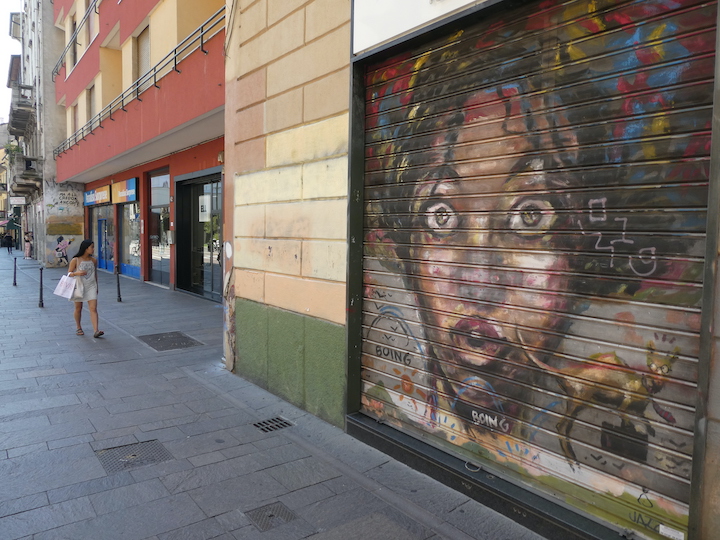
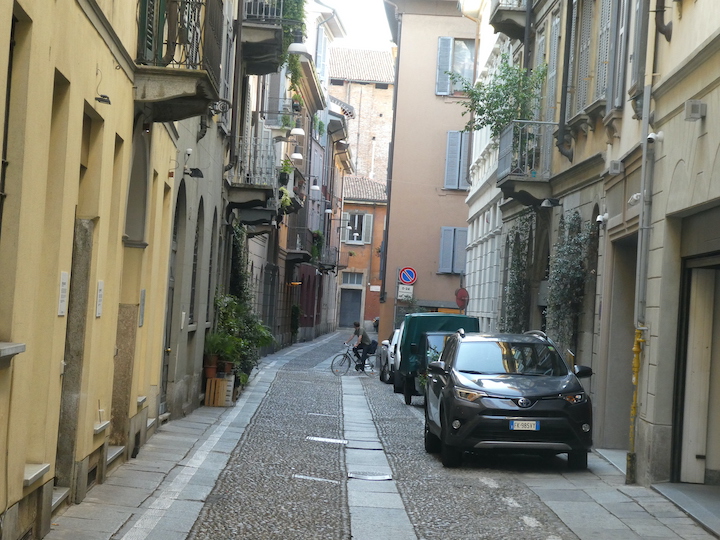
The neighborhood is a bit grungy, but there are parks nearby and sometimes there’s an interesting jumble, a clash, of the very old with the splashy new. But these off-trail places are where you’ll find some of the best food! Local ristorantes need to plate out la nonna’s best recipes because they don’t have a captive tourist base and they have to please I vicini, the neighbors, to stay in business. And we also get the benefit!
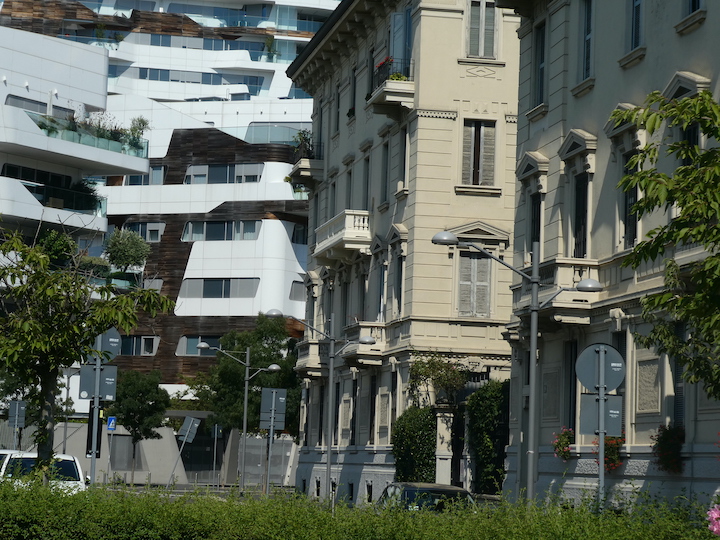
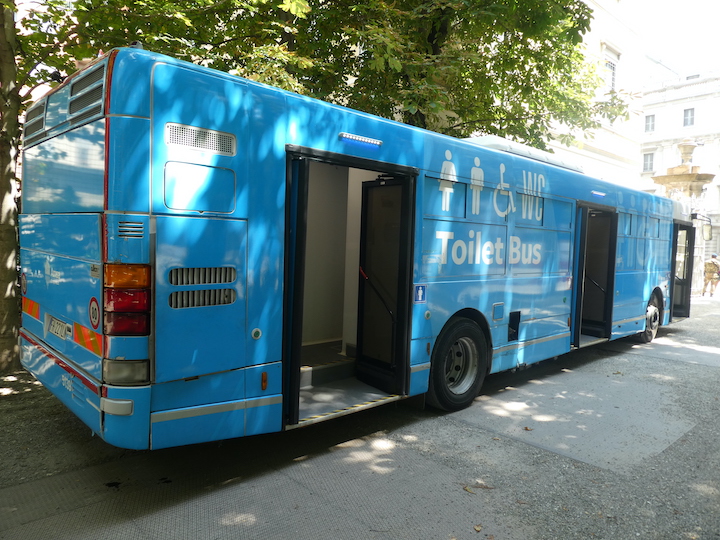
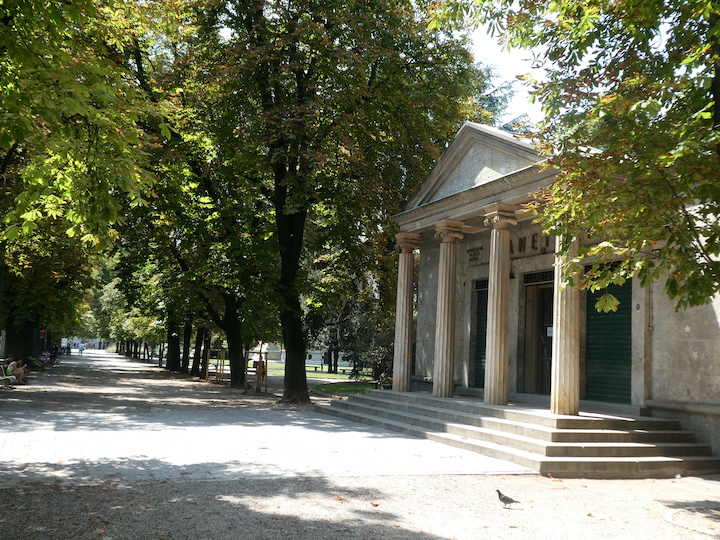
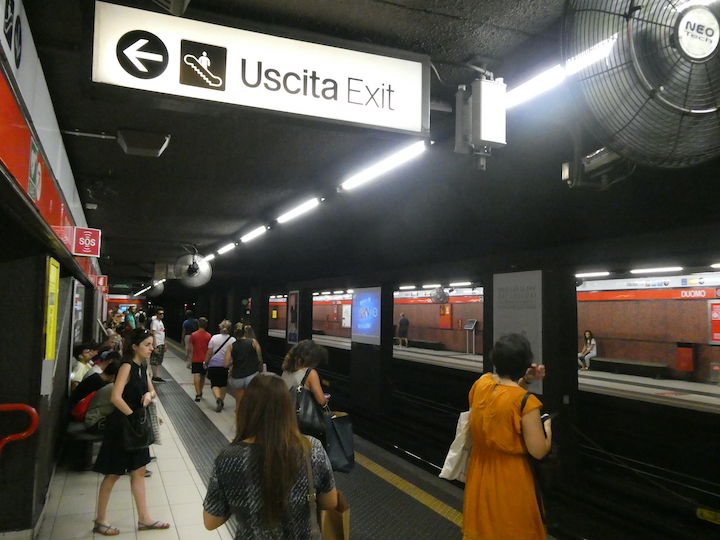
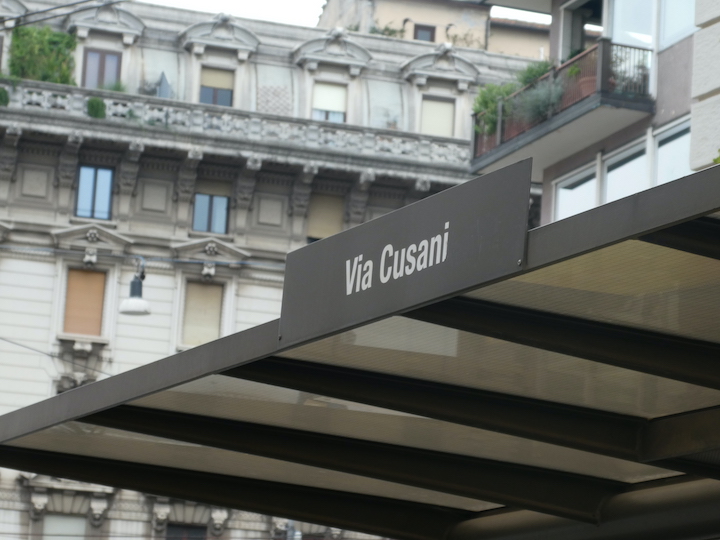
We also have easy access to a tram line that gets us to the center of things quickly and cheaply. All of those affordable amenities allow us to wander around Europe like the local people do. It’s more interesting than grabbing a cab because we have to actually understand where we’re going, and the large tram windows give us a better view of the vast theatre of the city. And there’s usually a little place along the way to grab a cold refresher, or even a pizza, on a hot day.
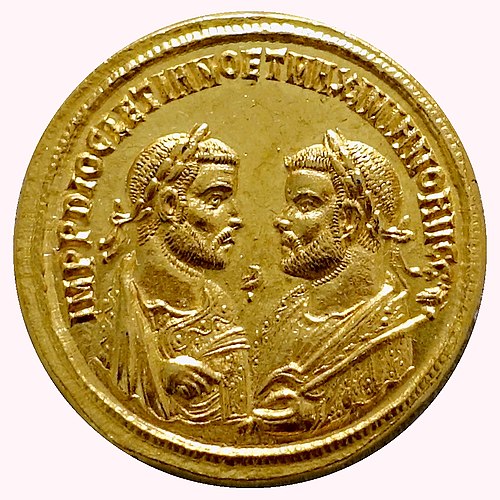
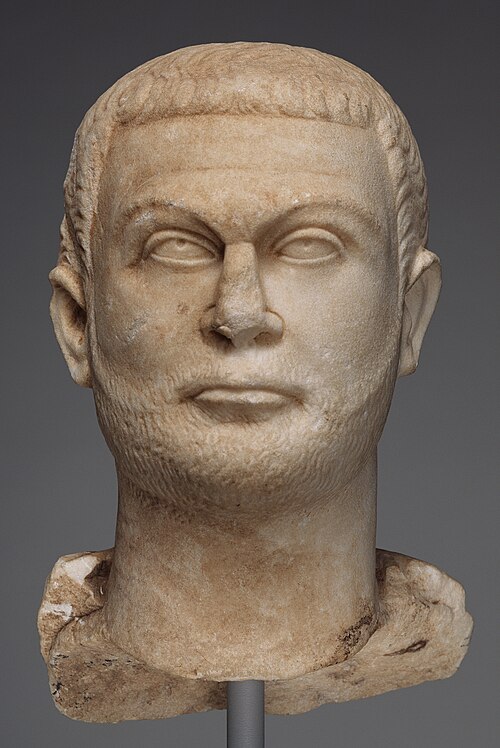
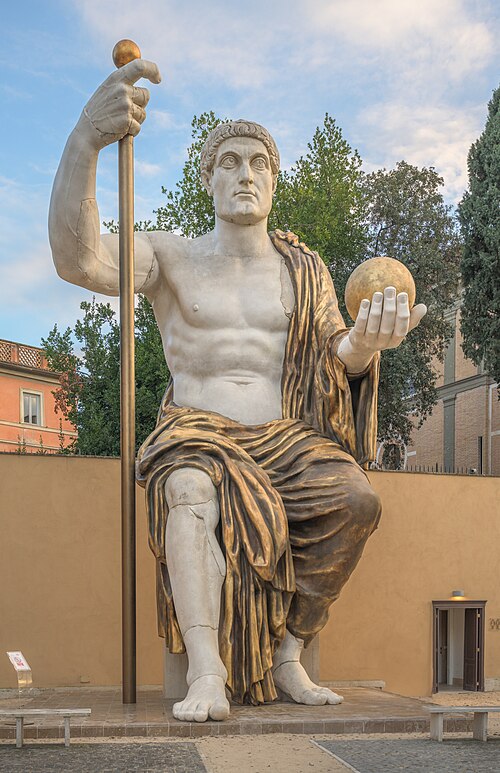
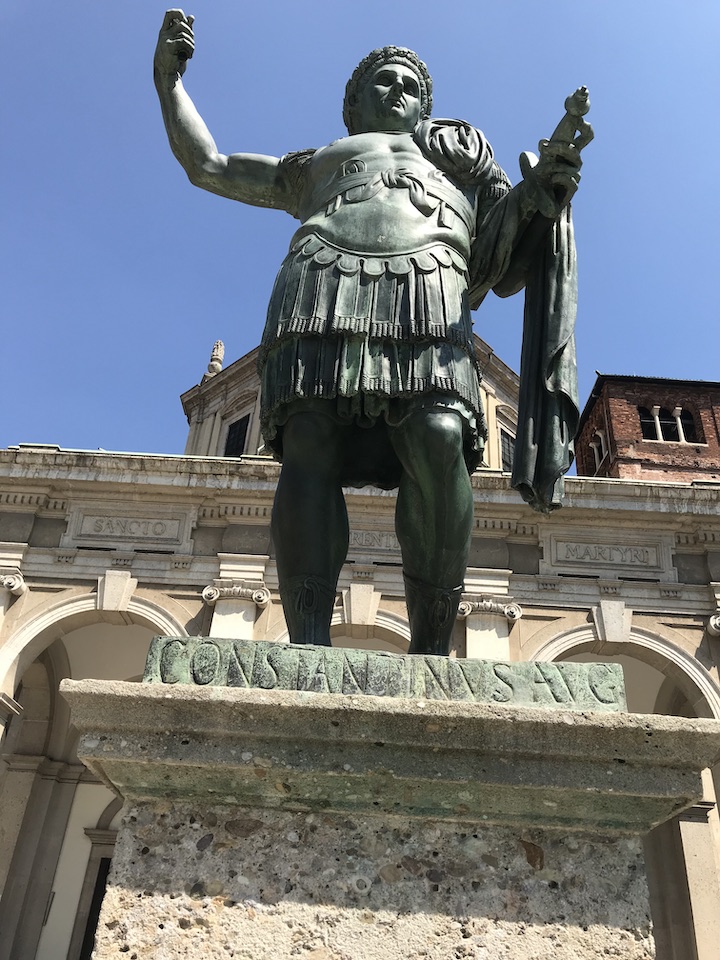
The rich plain of Milan is nestled among three rivers that flow into the larger Po River itself. The area is deep in history, having been settled by Celtic tribes around 590BCE, and conquered by the Romans in 222BCE. And about five centuries later, in 286CE, Diocletian named this growing city the capital of the Western Roman Empire for his co-Emperor Maximianus. This is also where the Emperor Constantine later issued the Edict of Milan in 313CE granting freedom of religion throughout the Empire, effectively kickstarting the rapid rise of the cult of Christianity.
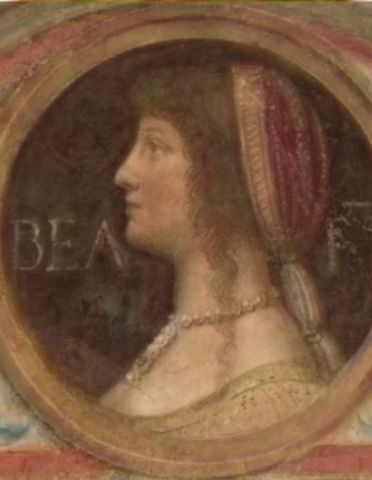
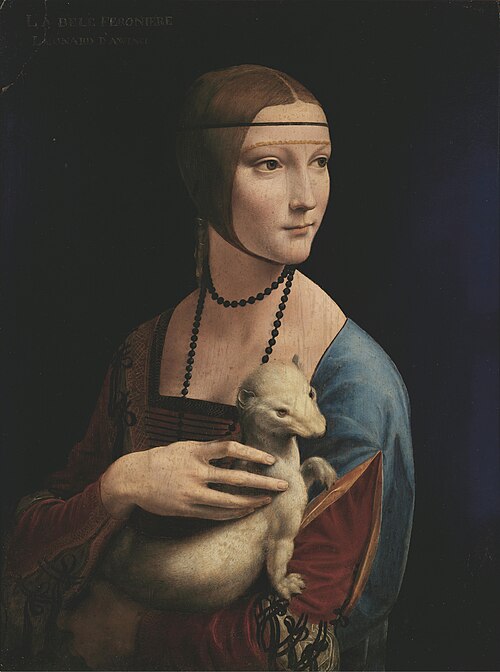
Among many other local luminaries, Beatrice d’Este was one of the more remarkable. She was born in Milan in 1475 and was known early in her short life as a woman of culture, and an important patron of the arts and science. She was a leader in fashion for her time, with 84 dresses in her closet. She was short and dynamic, described by the writer Francesco Muralto as “at a young age, beautiful and of raven colours,”and an active participant in sensitive negotiations with the enemies of Milan.She and her influential husband, Ludovico Sforza, an important patron of Leonardo da Vinci, made Milan one of the greatest capitals of the European Renaissance. And she did all that before she died during the birth of her third child in 1497, at the very early age of 21.
•••••••••••••••••••••••••••••••••••••••••••••••••••••••••••••••••••••••••••••••••••••
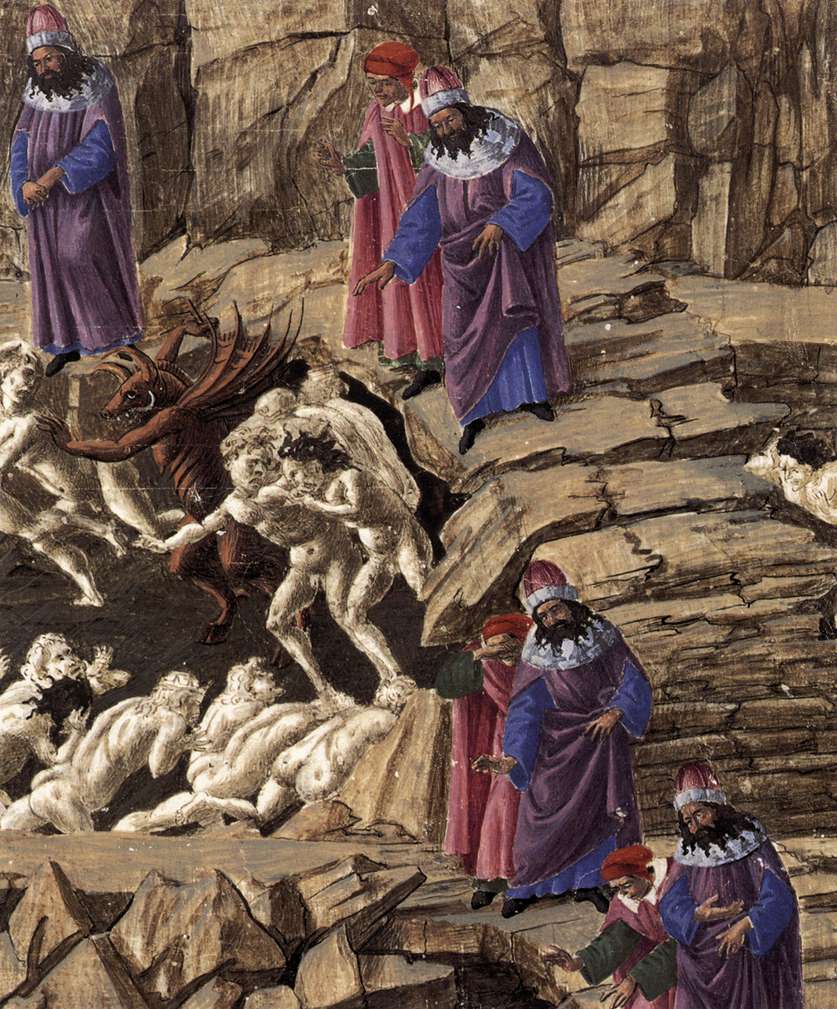
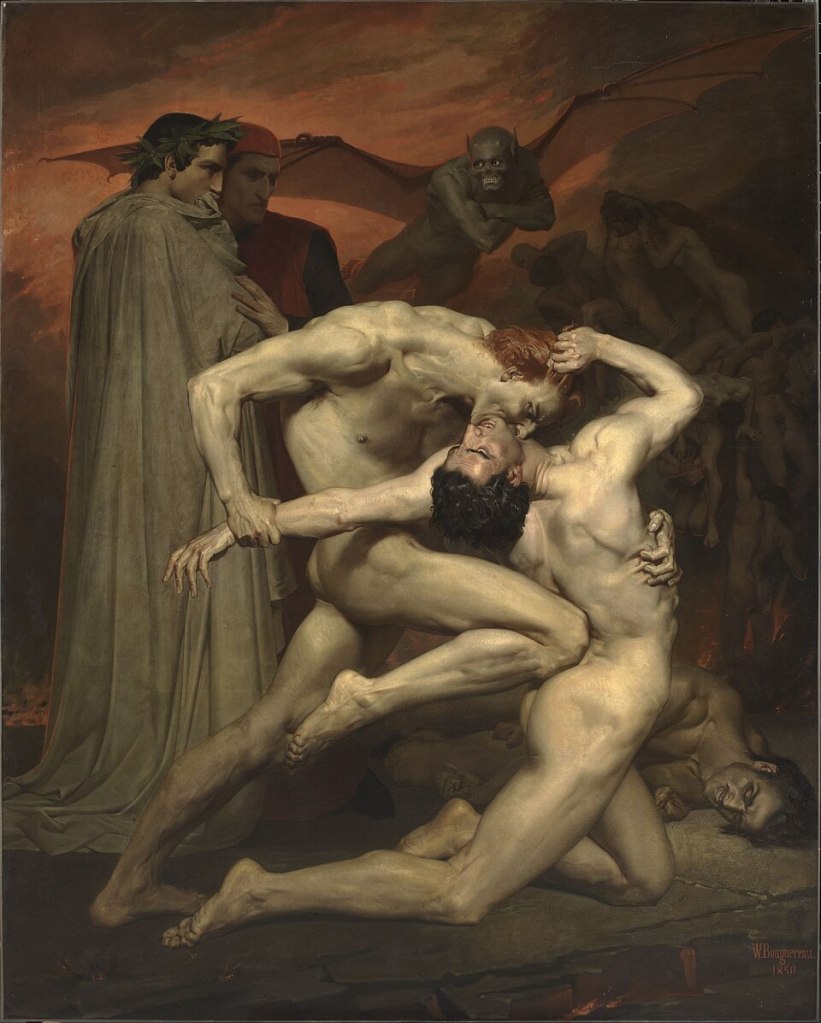
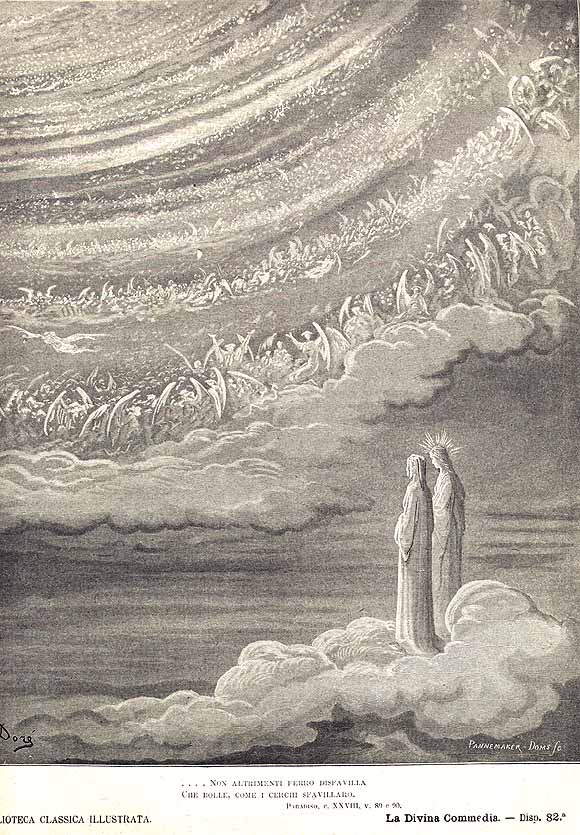
In Dante’s Commedia Divina, published in 1321, the Roman poet Virgil leads Dante into the Inferno with that famous inscription over the door, “Lasciate ogne speranza, voi qu’intrate” (“Abandon all hope, ye who enter here”) They proceed downward past horrible scenes to the ninth circle of hell, to witness figures engaged in eternal combat. Virgil then brings him back toward the light in the Purgatorio, before handing him over to the beneficent Beatrice, who leads him into Paradiso. (T. S. Eliot has said, “Dante and Shakespeare divide the world between them. There is no third.”) Perhaps the lovely and talented Beatrice d’Este was named for the angelic Beatrice, described 150 years earlier by Dante.
•••••••••••••••••••••••••••••••••••••••••••••••••••••••••••••••••••••••••••••••••••••
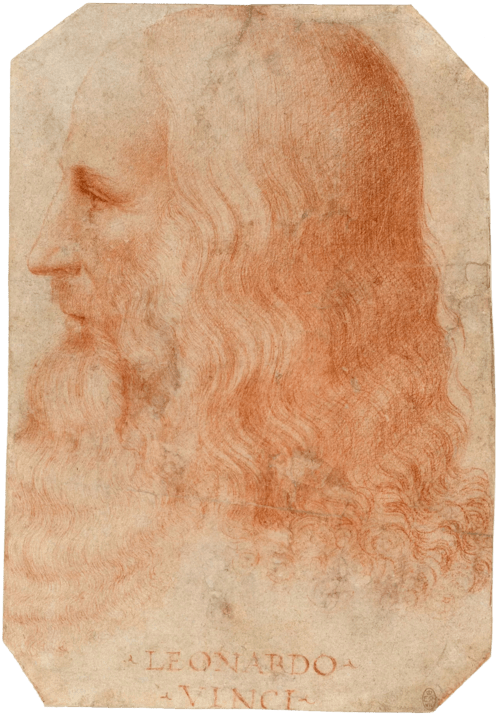
Milan is where Leonardo da Vinci spent over two decades of his life, where he arranged the 1492 wedding celebrations between Beatrice d’Este and Ludovico Sforza, and where he painted “The Last Supper” on the refectory wall of Santa Maria della Grazie, as a commission from the powerful Sforza family. He was also an inventor and architect who re-engineered the city’s system of navigli (canals) to better serve local commerce. Buy in 1516 he was invited by the King of France to continue his work in the royal Chateau d’Ambrose, overlooking the Loire Valley, and he died there in May of 1519 at the age of 67.
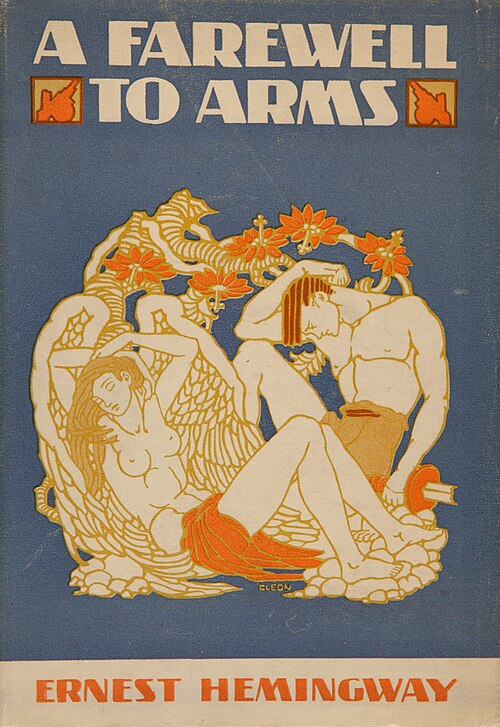
A part of Ernest Hemingway’s breakthrough novel, A Farewell to Arms (1929), takes place in Milan where the protagonist recovers in a hospital bed from wounds received near Gorizia while fighting the invading Austrians during World War I. He falls in love with his nurse, and later in the story they escape the wartime madness by leaving from the village of Stresa on Lago Maggiore in a rowboat to the Swiss border. Some of this mirrors Hemingway’s own recovery at the American hospital in Milan from a wound he received as an ambulance driver in that war.
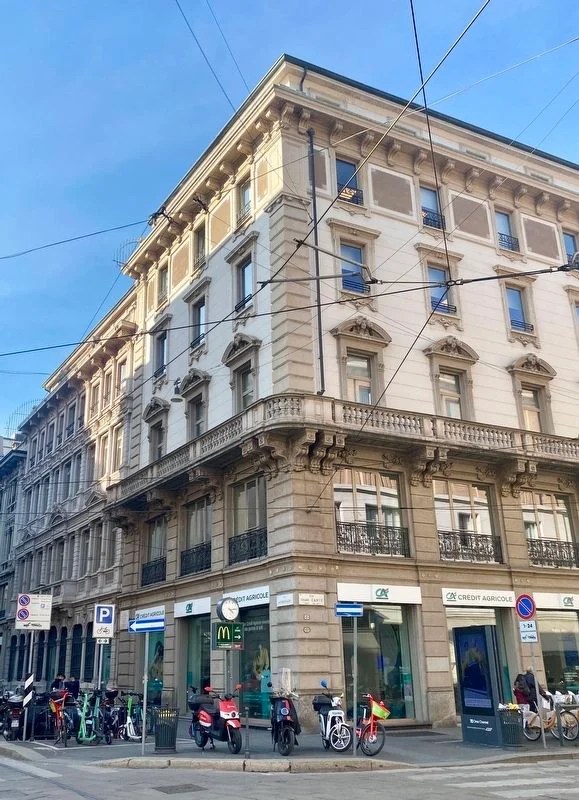
And today there’s a placard on a building about two blocks west of the huge Duomo di Milano, marking the prior location of the American Red Cross hospital where Hemingway recovered from his wounds.
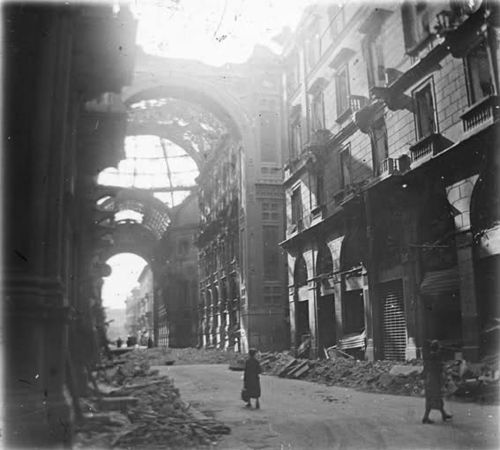
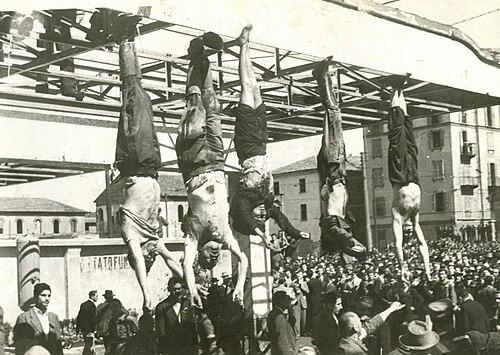
As an important industrial and transport center, Milan was heavily bombed by the Allies during WWII. By 1943, Mussolini’s dreams of a new pan-Mediterranean Roman Empire, by annexing Libya, Egypt, Ethiopia, Albania, and Greece, had crumbled. His gamble that the Germans would quickly triumph in the war was wishful thinking. In April of 1945 he was captured and executed near Lake Como while trying to escape in a German army convoy to the Swiss border. And Milan is where antifascist Italian partisans hung his body, along with that of his lover Clara Petacci and several other accomplices, in the Piazzale Loreto, which had been renamed Piazza Quindici Martiri after the 15 partisans executed there by fascist forces.
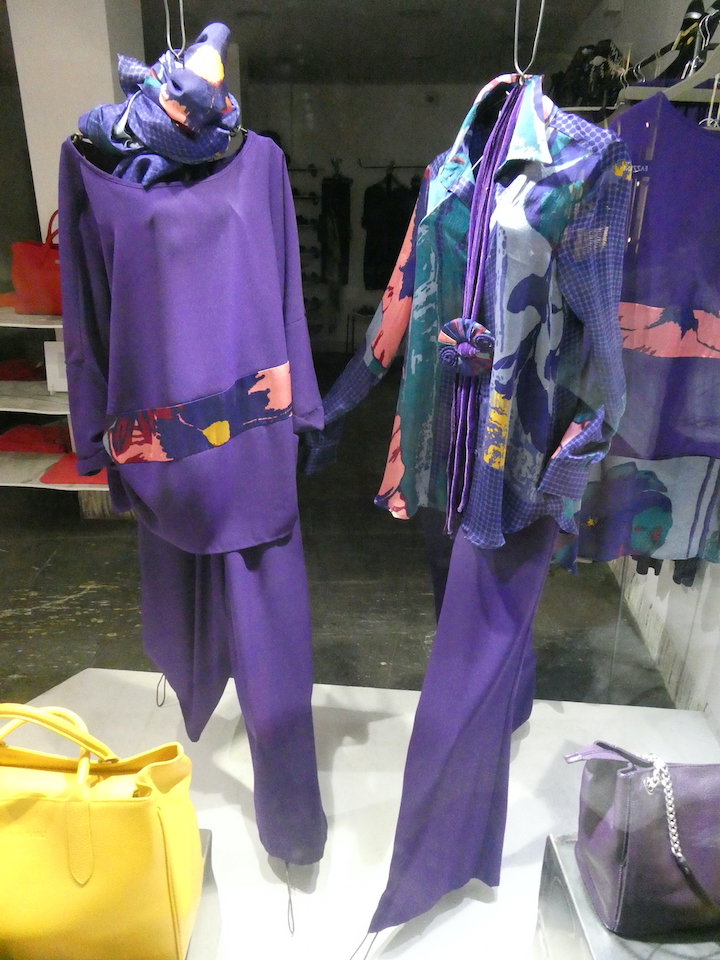
In the post-war years Milan regained its place as an international center of fashion, and Milan Fashion Week is now one of the Big Four, along with New York, London, and Paris. These are spectacular events that take place yearly in February-March and in September-October. (In 2022 Gucci found 68 pairs of twins to showcase their wares!) So we’re lucky to be here in July and miss those crowds. Yet there are plenty of everyday fashionistas on the streets to maintain Milan’s certain allure. And in my well-worn second-hand duds, an array of grays and browns, I’ll remain among the folk who are never pestered for an autograph.
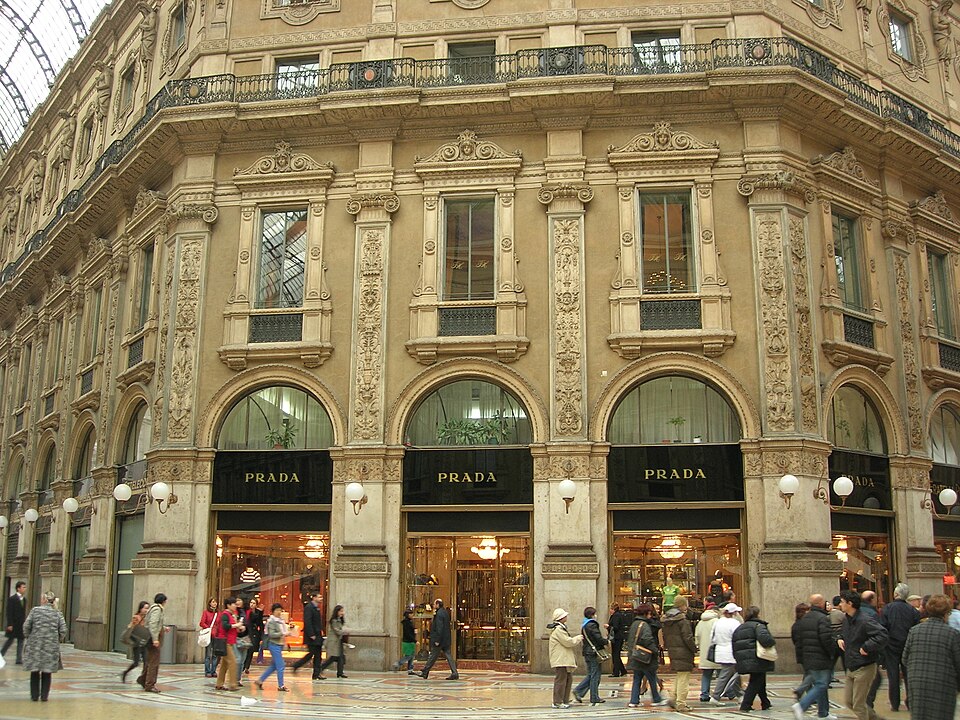
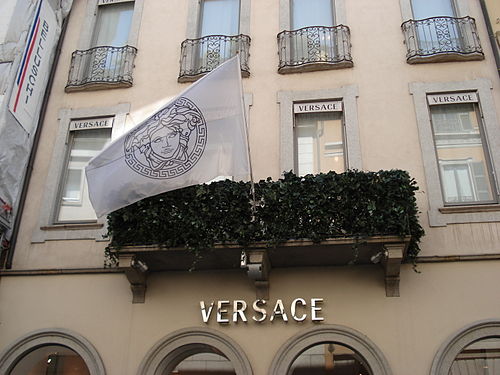
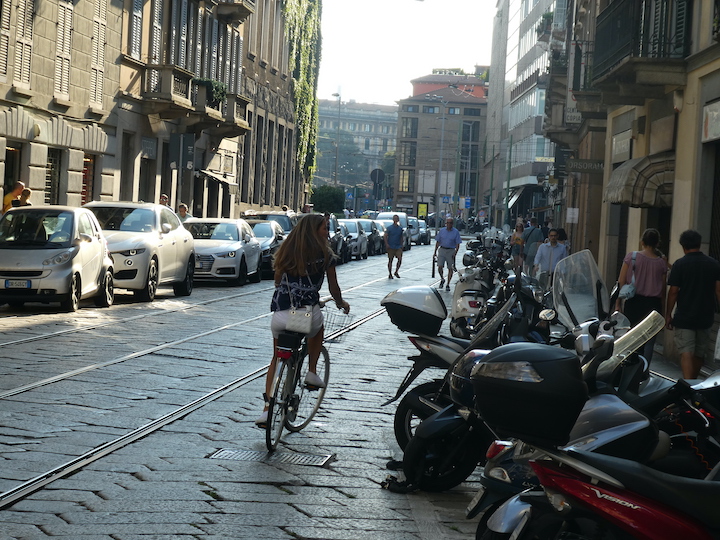
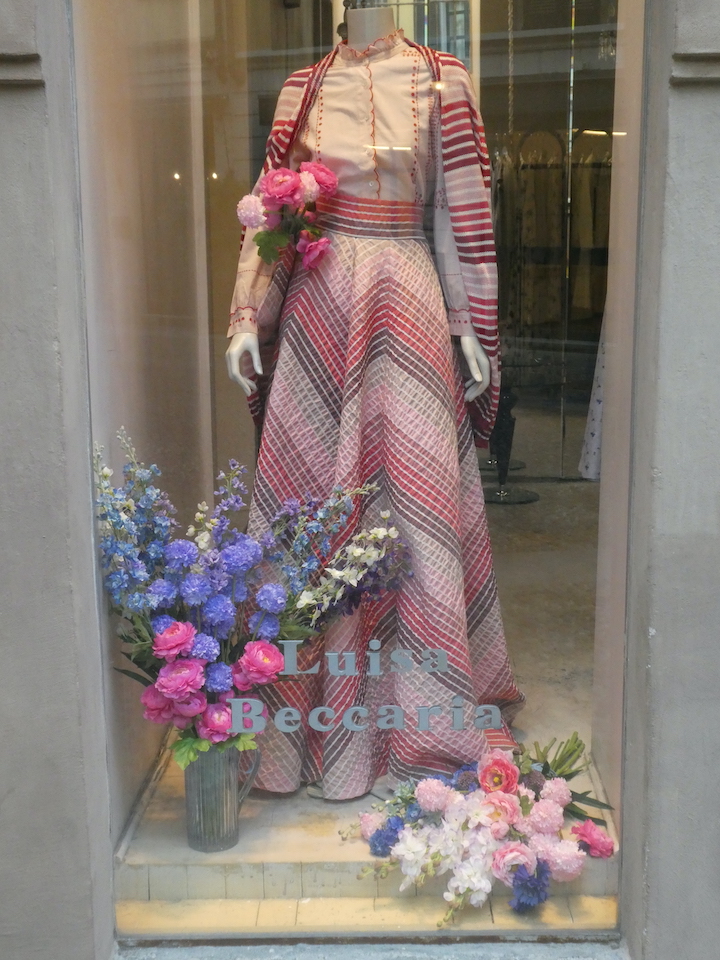
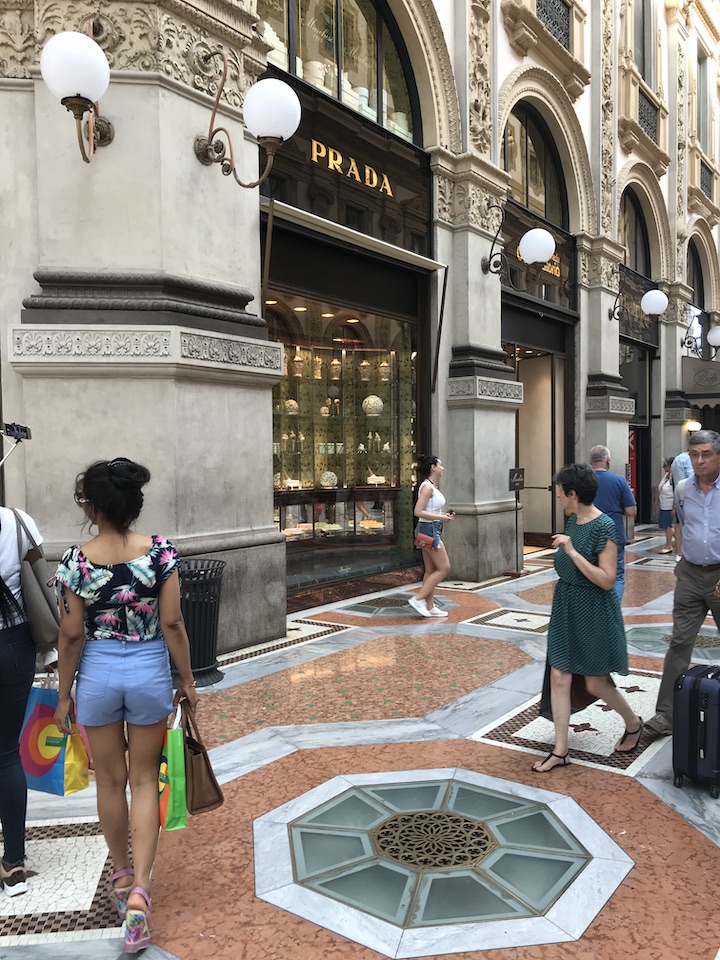
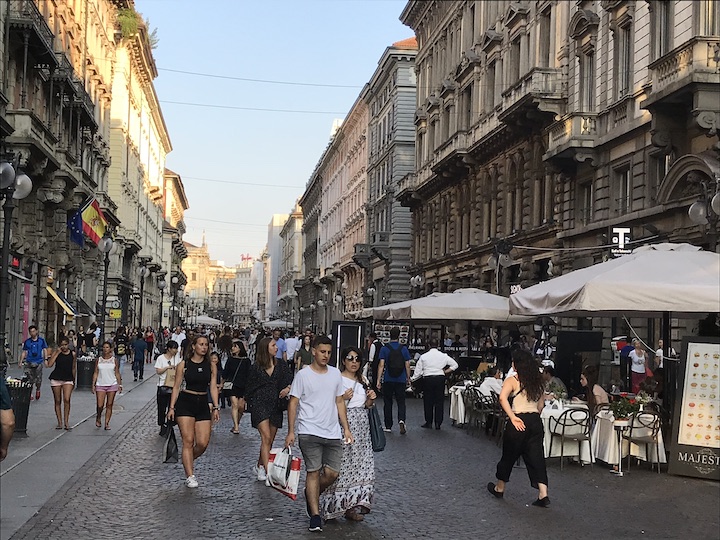
We wander the cobbled streets of the Quadrilatero d’Oro (Golden Square), only about four blocks NE of the Duomo, just to experience some of the head-spinningly gorgeous (and expensive!) designs that Milan is famous for. The names of Armani, Gucci, Versace, Chanel, Prada, and Louis Vuitton are plastered across the store fronts. Even if you can only afford a designer T-shirt or a gorgeous scarf, it will likely remain a cherished memento of your visit to this world famous design center.
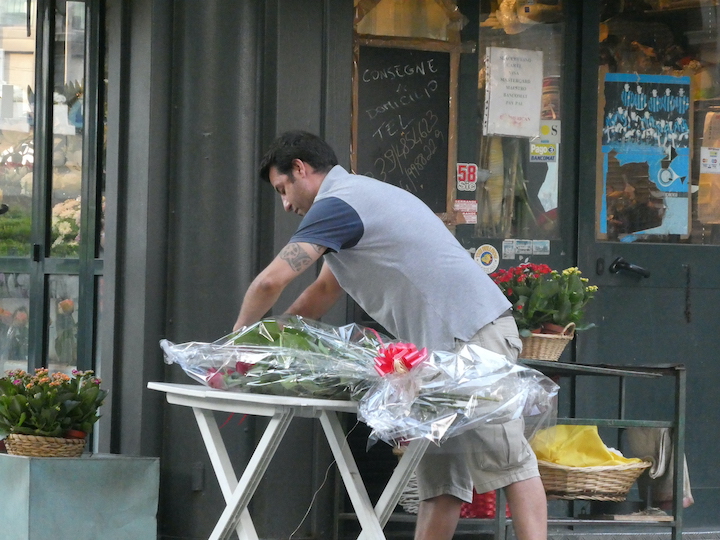
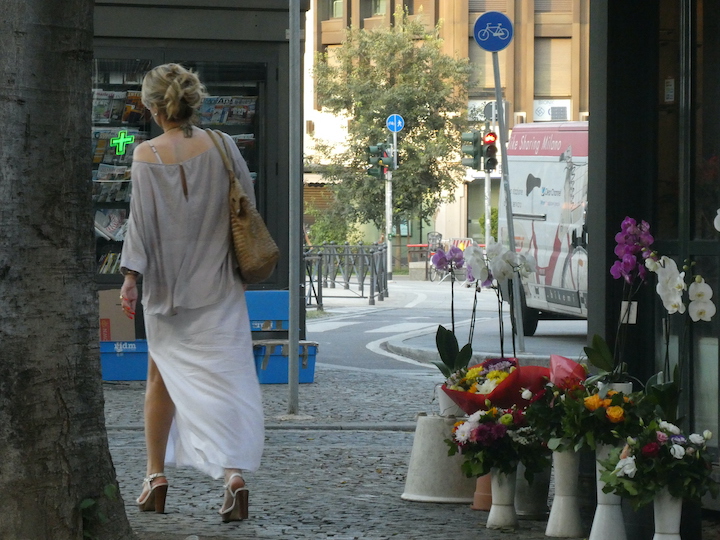
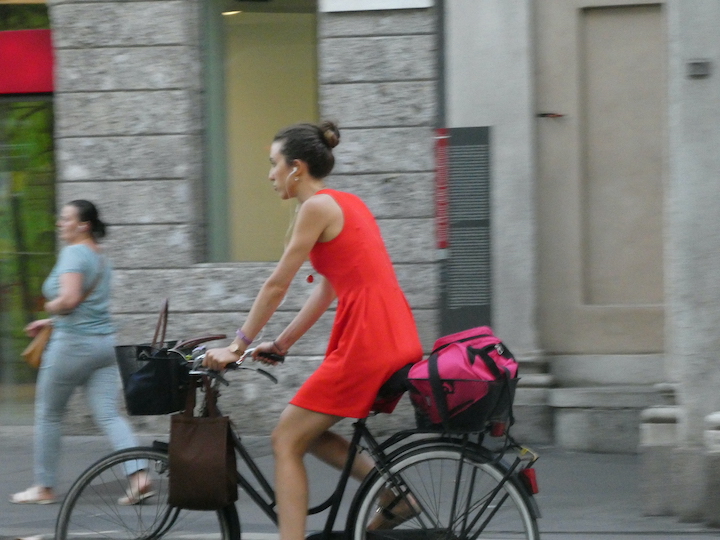
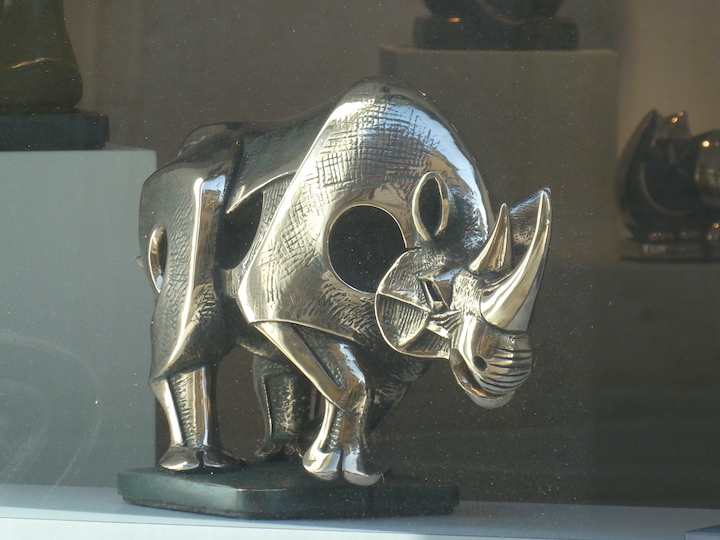
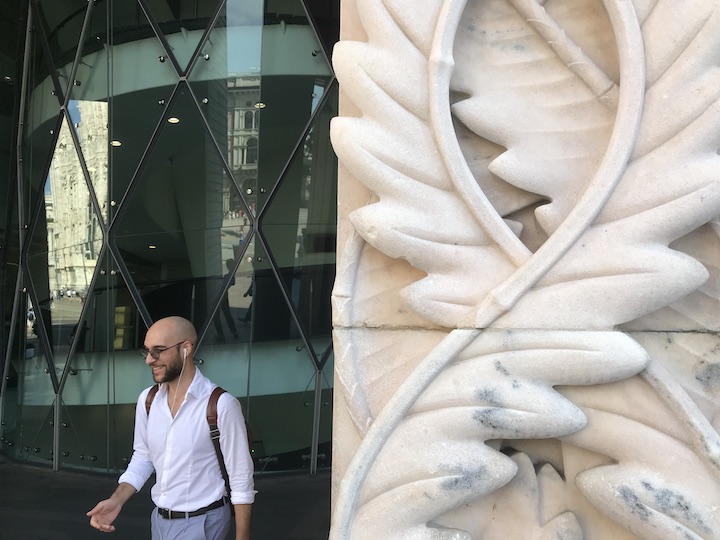

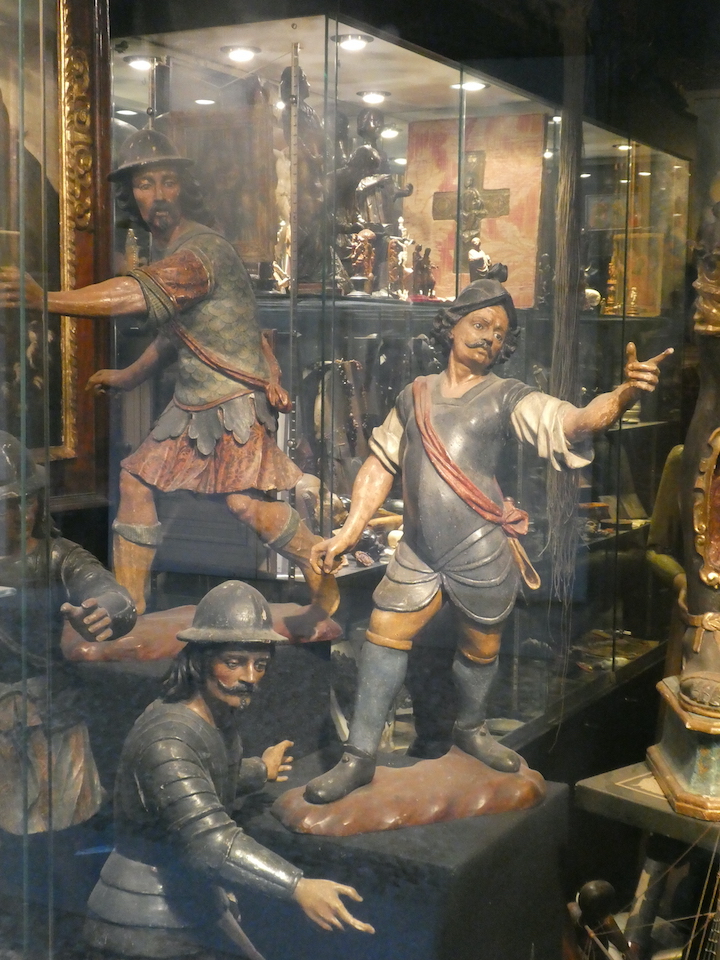
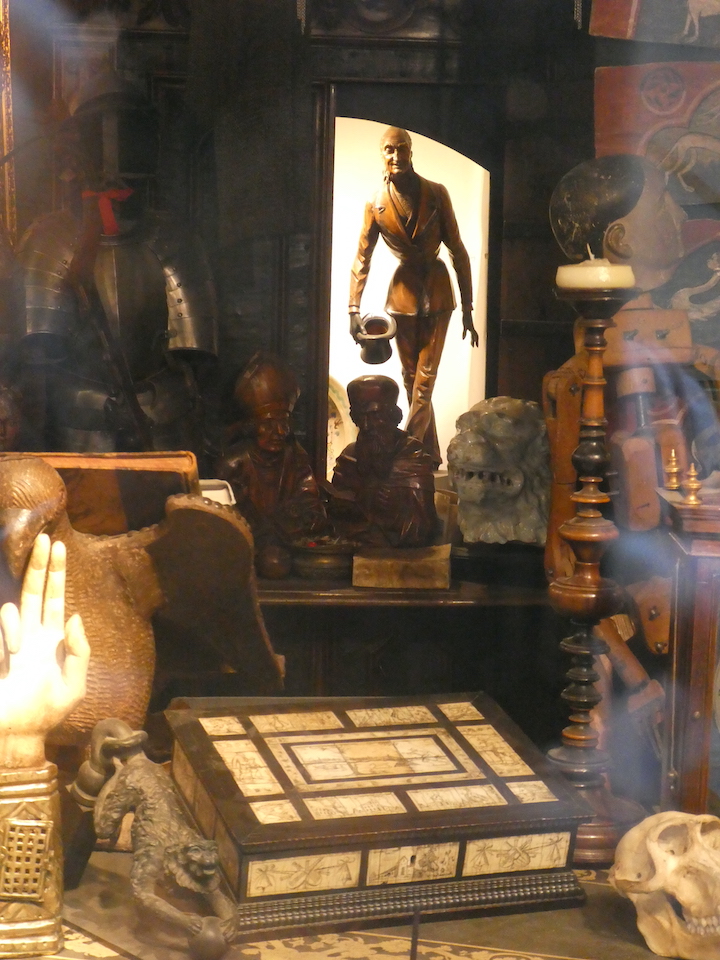
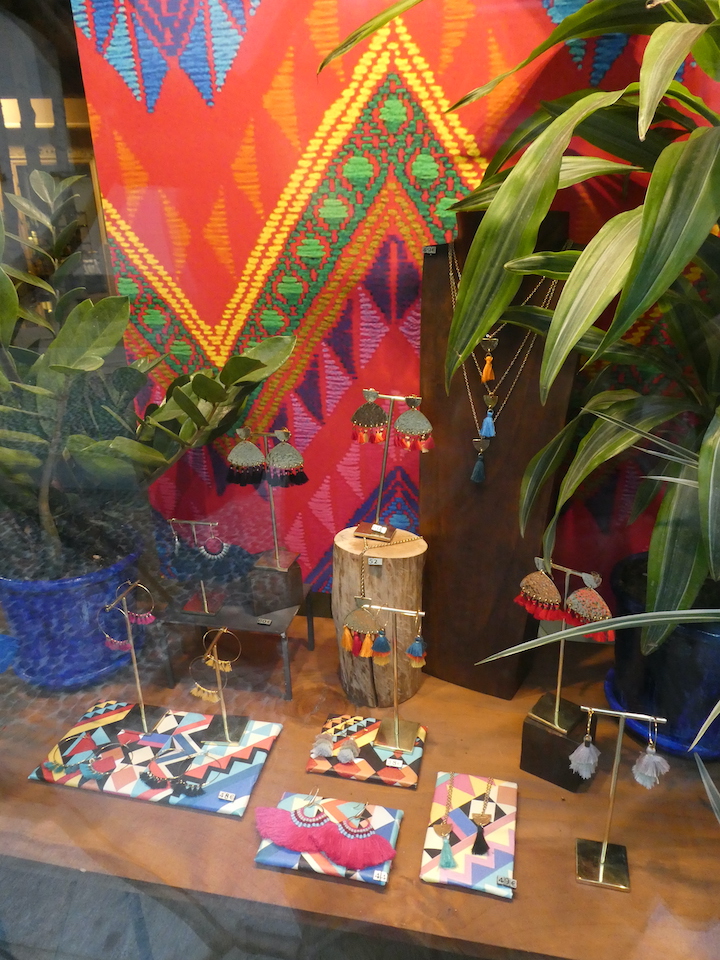
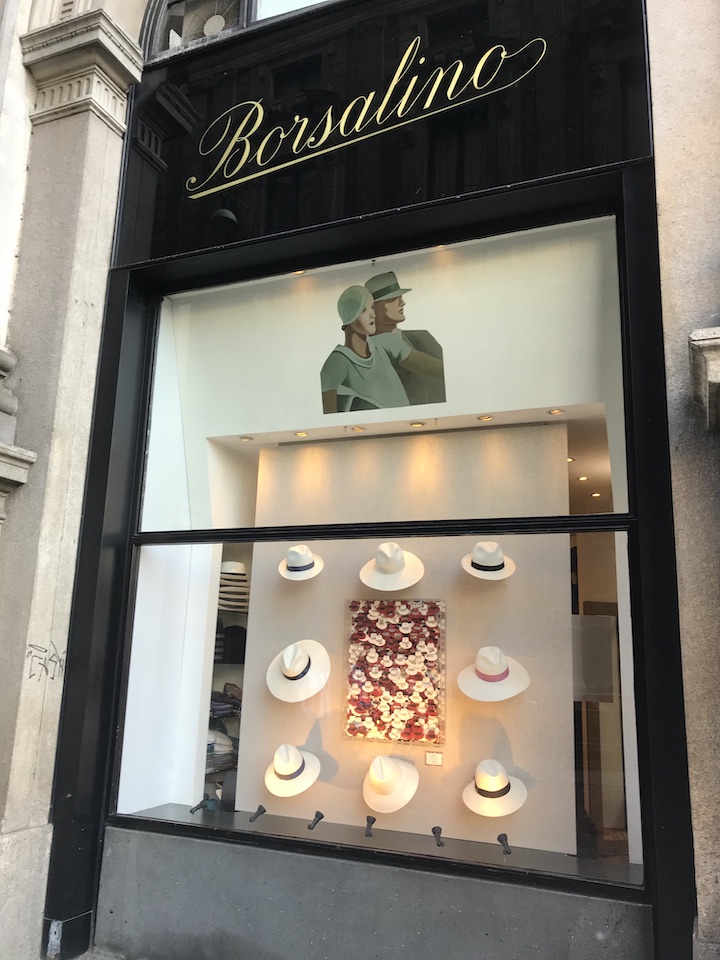
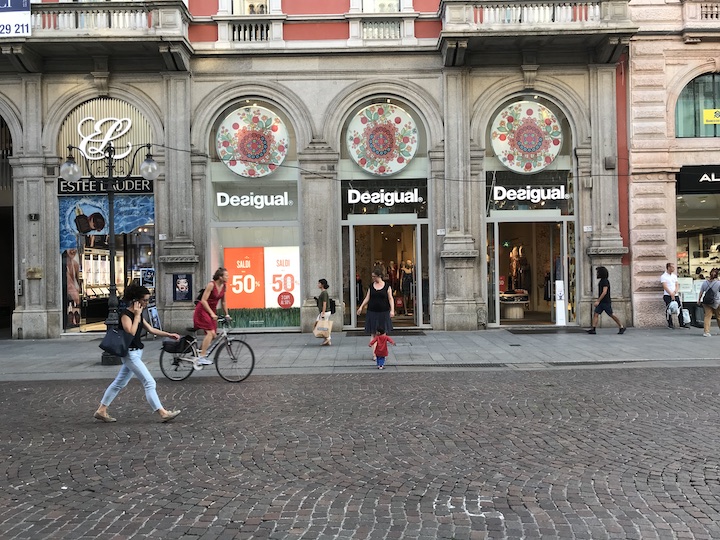
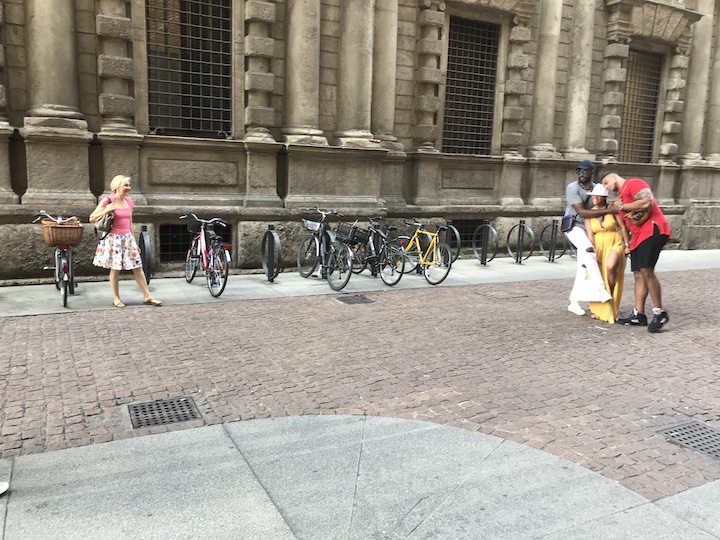
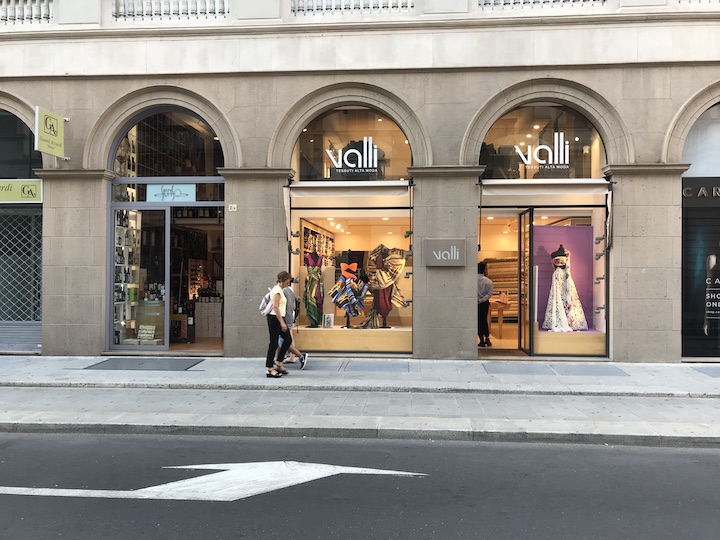
This city has long-been the domain of the world’s gliteratti, where the streets are prowled by A-list stars on the hunt for jewelry in Tiffany Blue; where the stores are designed by Zaha Hadid and others of the world’s ‘star-chitect’ class. Elizabeth Taylor’s husband Richard Burton once said “The only word Liz knows in Italian is Bulgari,”
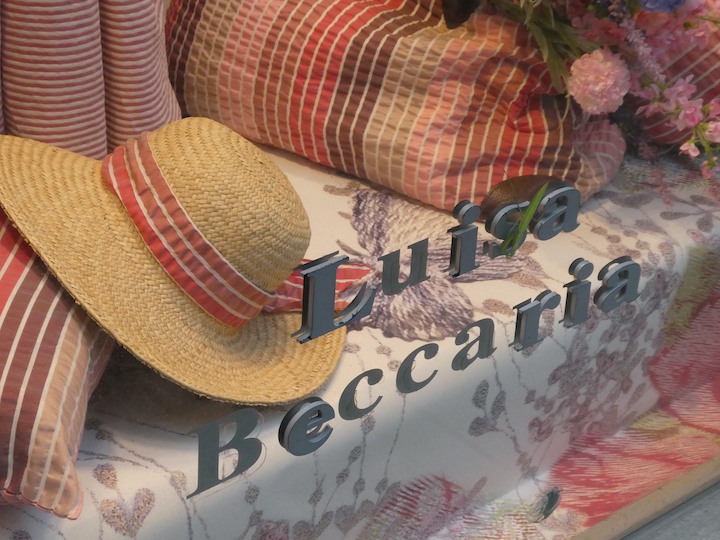
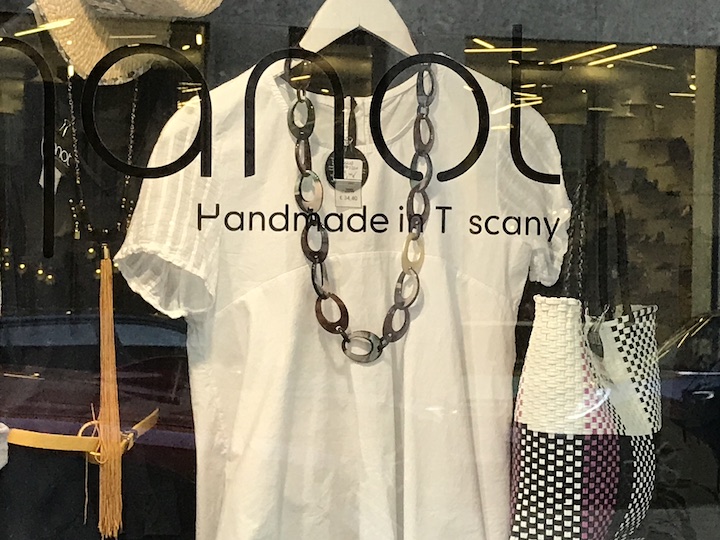
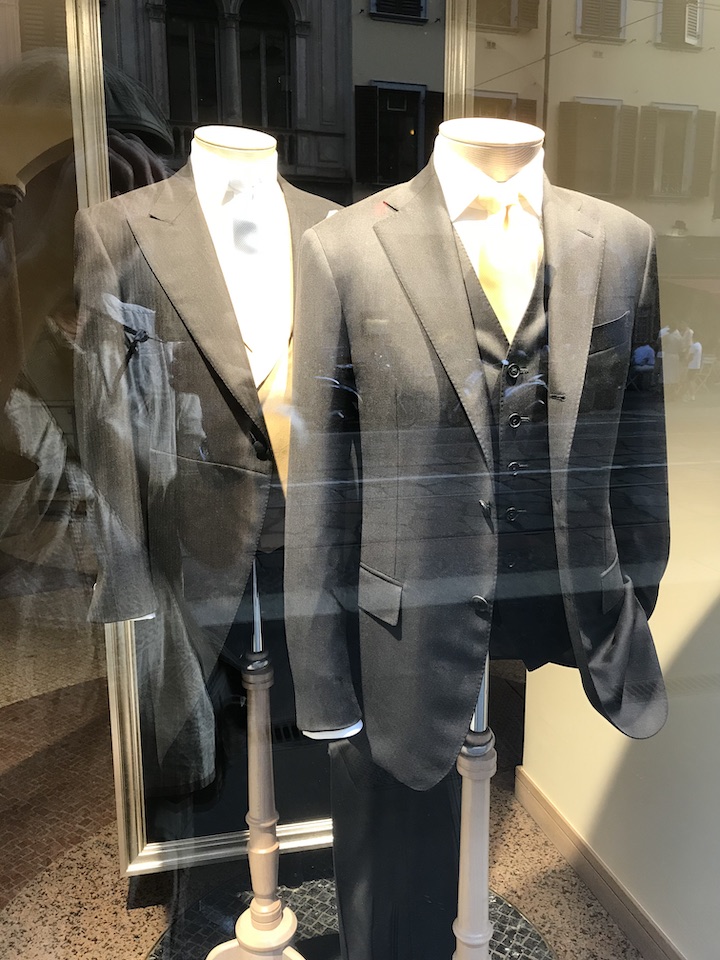
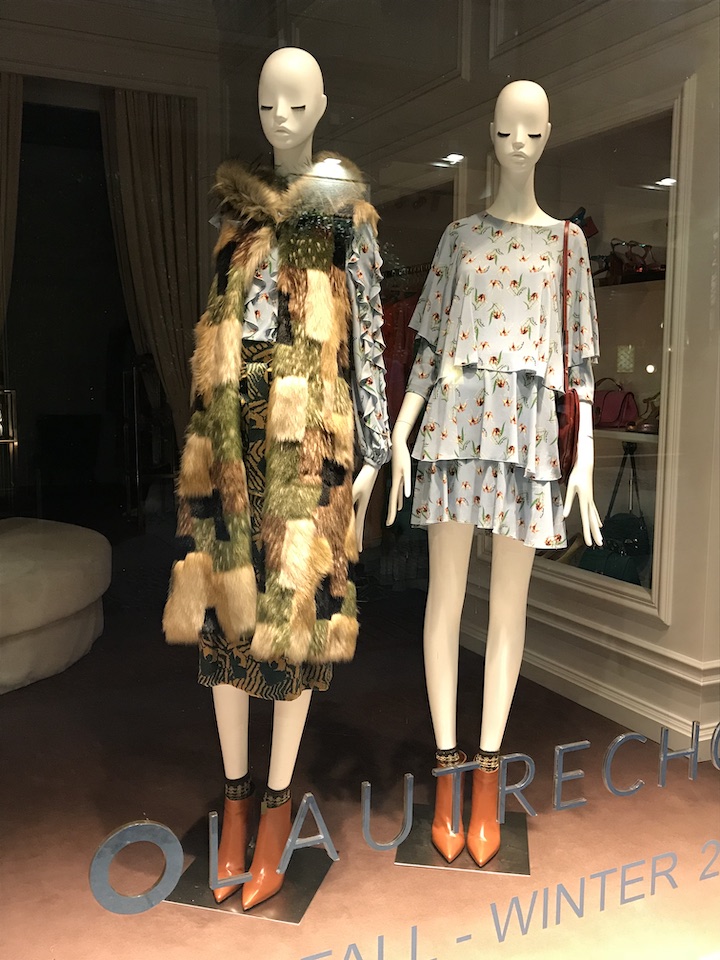
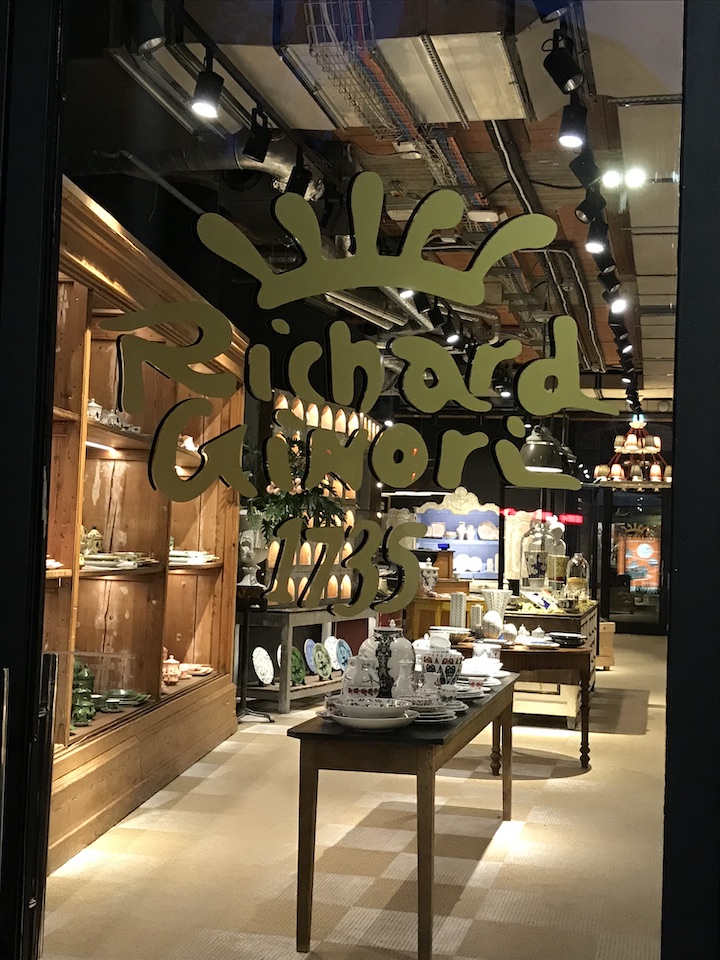
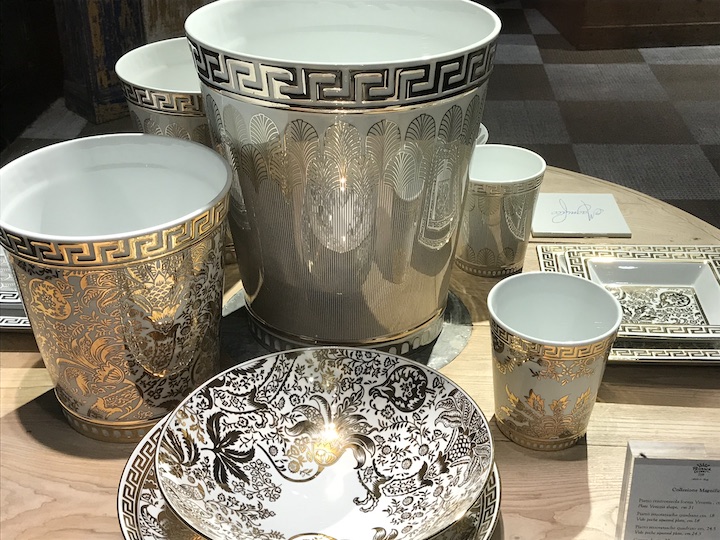
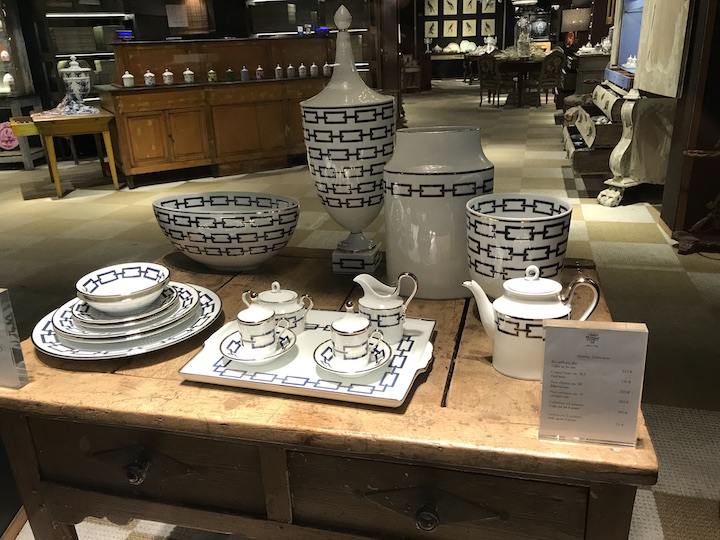
And we’re not overwhelmed by those crowds of seasonal high-trash cruisers. We can appreciate windows-full of the world’s best designs while knowing we’re not really going to lay out heavy cash for any of it.
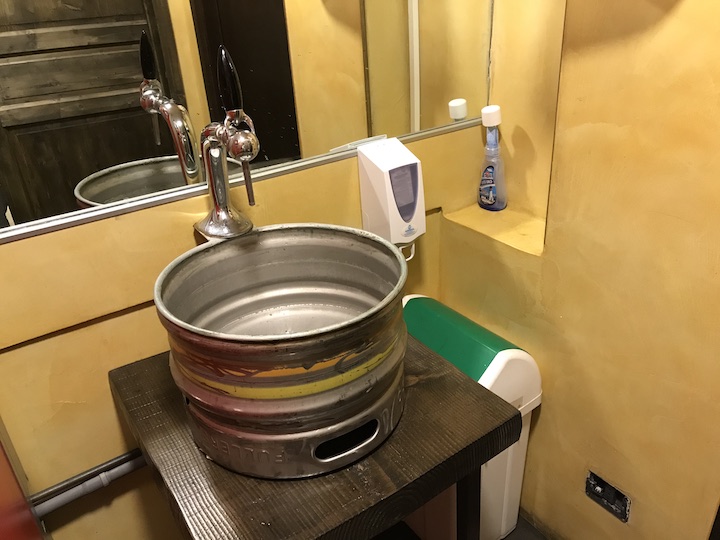
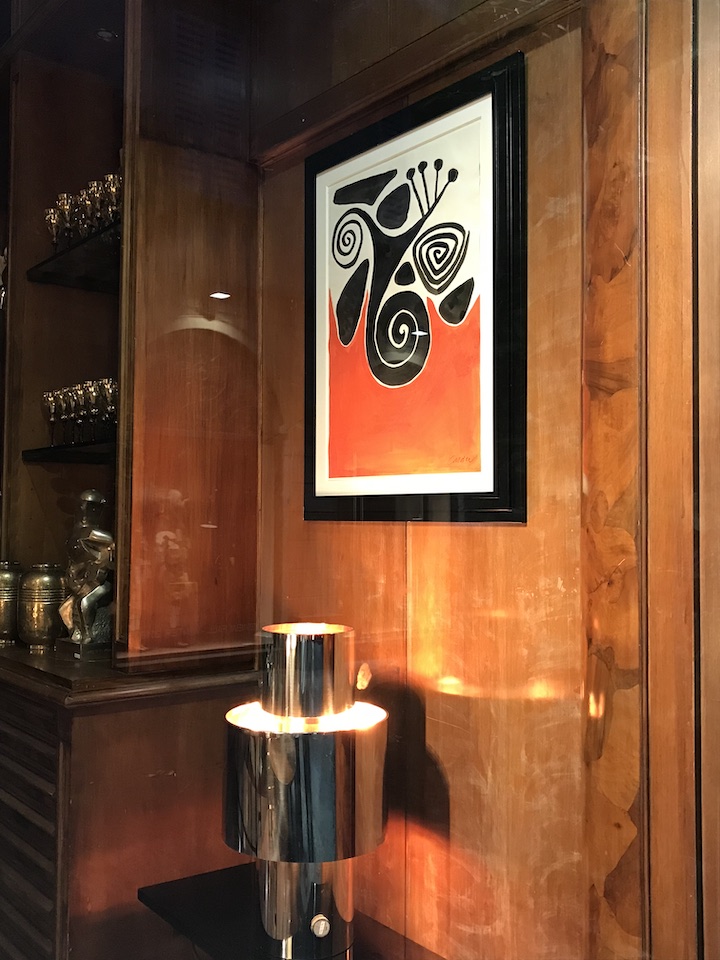
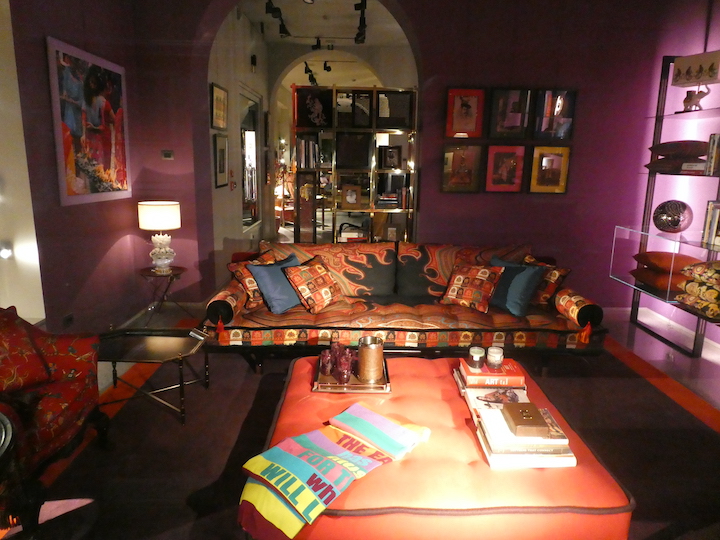
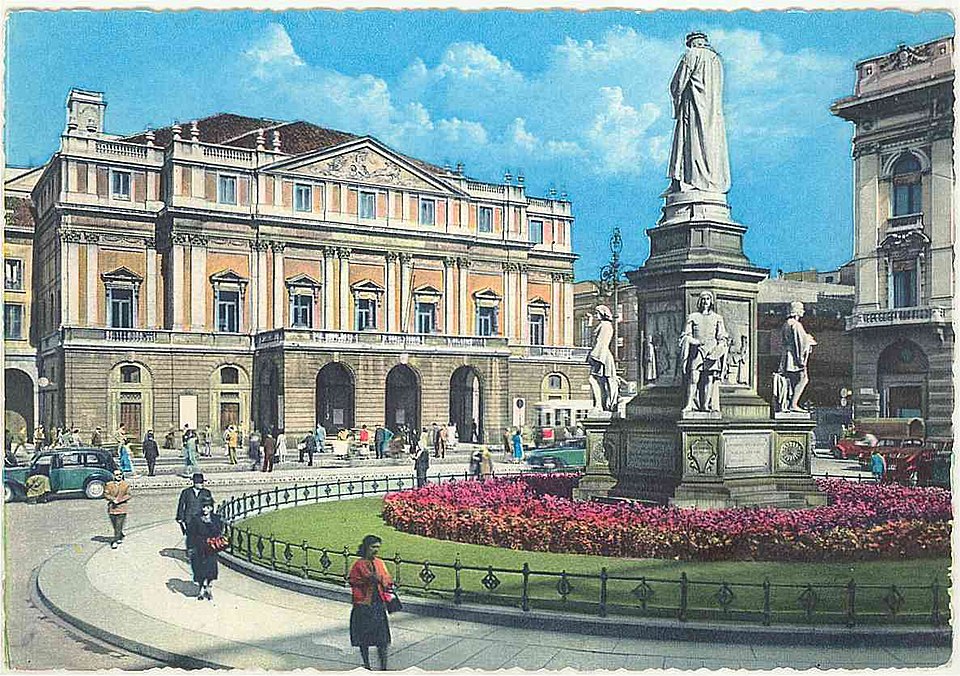
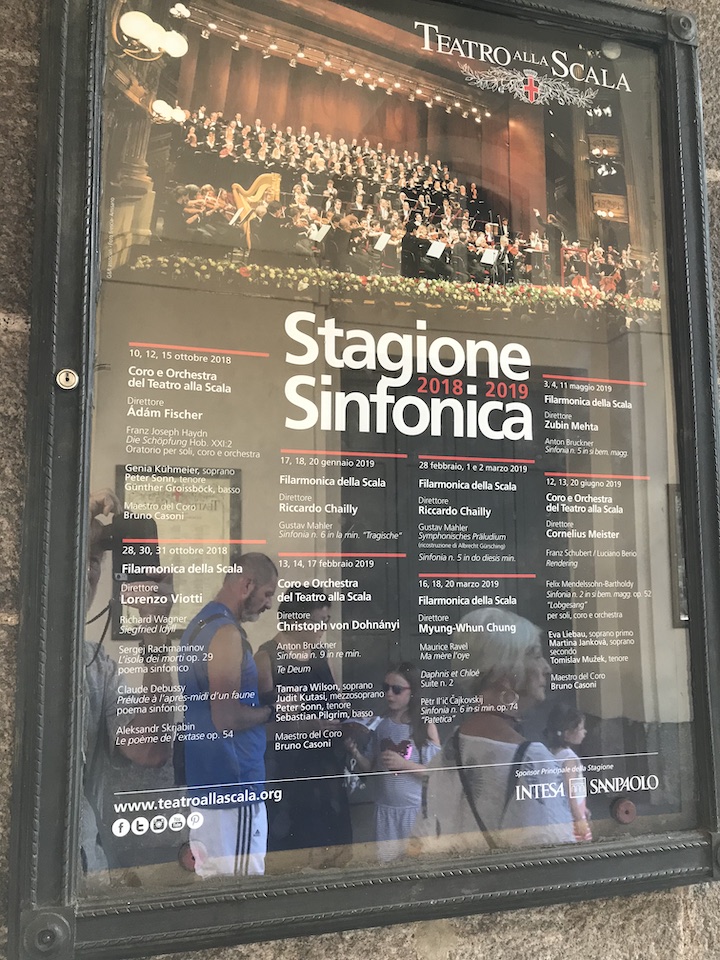
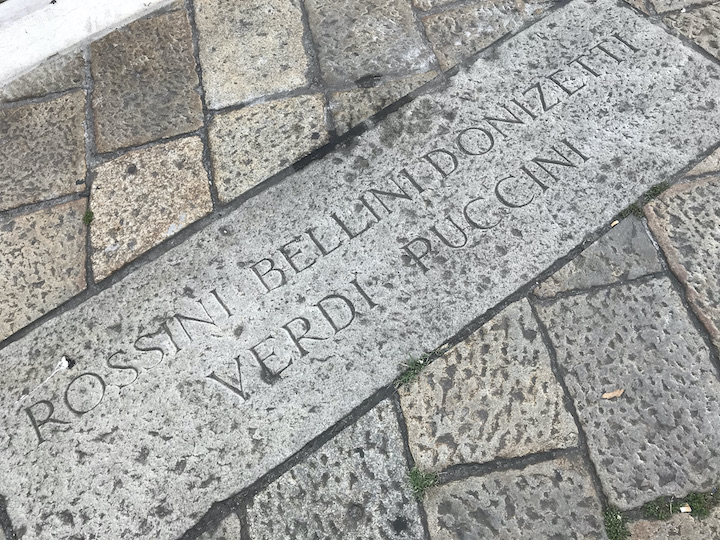
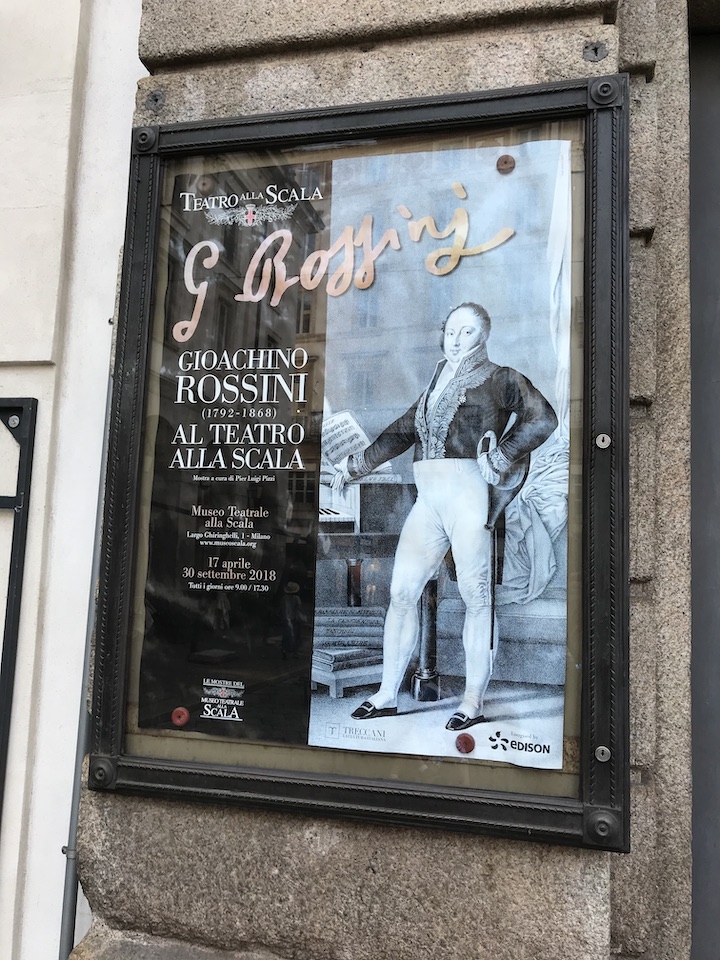
And there’s La Scala, the grand old opera house where many of the world’s great operas have premiered, including works by Salieri, Rossini, Donizetti, Verdi, and Puccini, among others. It’s late summer, and it appears we’ve missed out on this year’s events. But a poster for the upcoming winter-spring season tells us there will be much to offer in the next year.
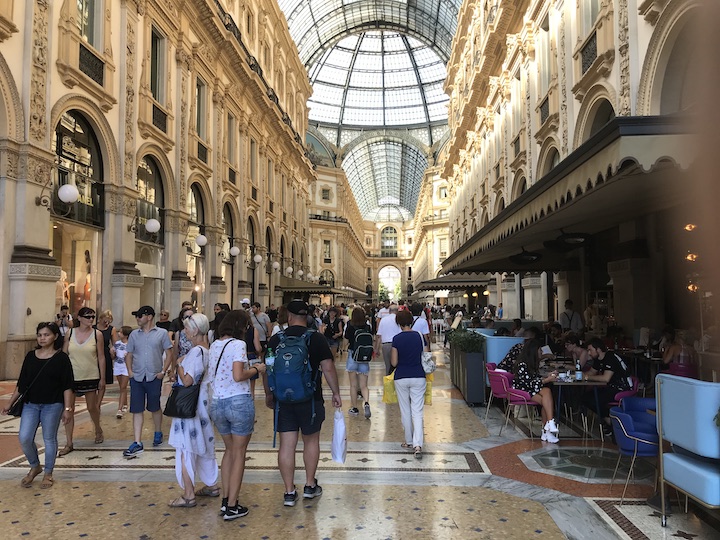
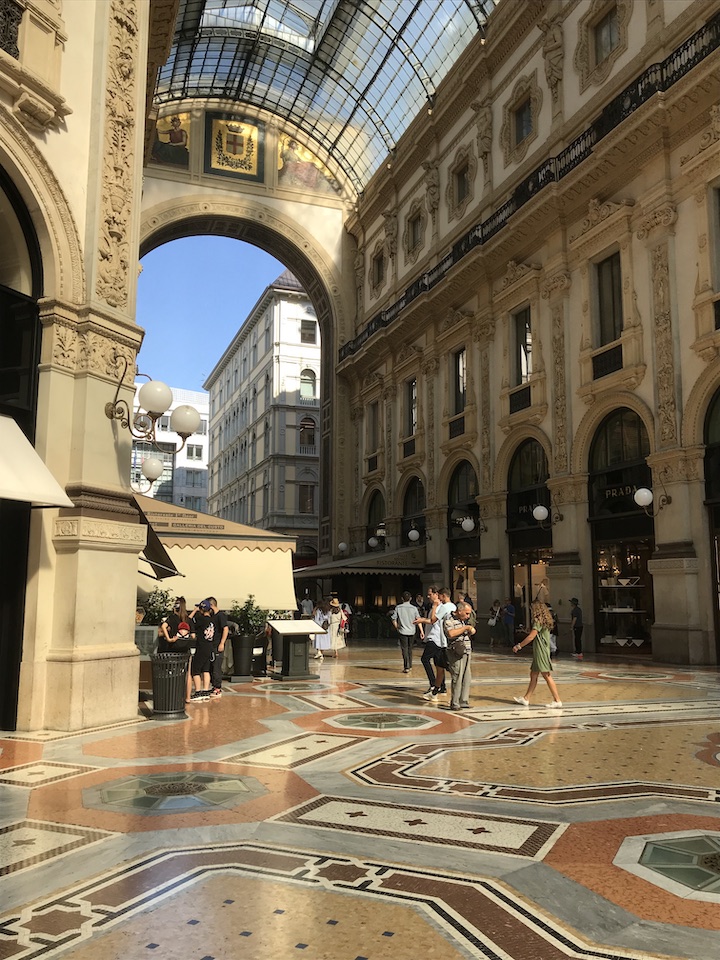
There’s so much to experience in this wealthy city. The towering vaults of the Galeria Vittorio Emanuele II, fabulously rebuilt after WWII, are an eye-opener. There are plenty of ordinary folk like us wandering these halls and the nearby streets to ogle hyper-expensive wares in the windows, and likely also terrified to ask about the prices. And how much would a high-tech security system also set us back to keep that loot from being stolen? A few pictures will do well for me.
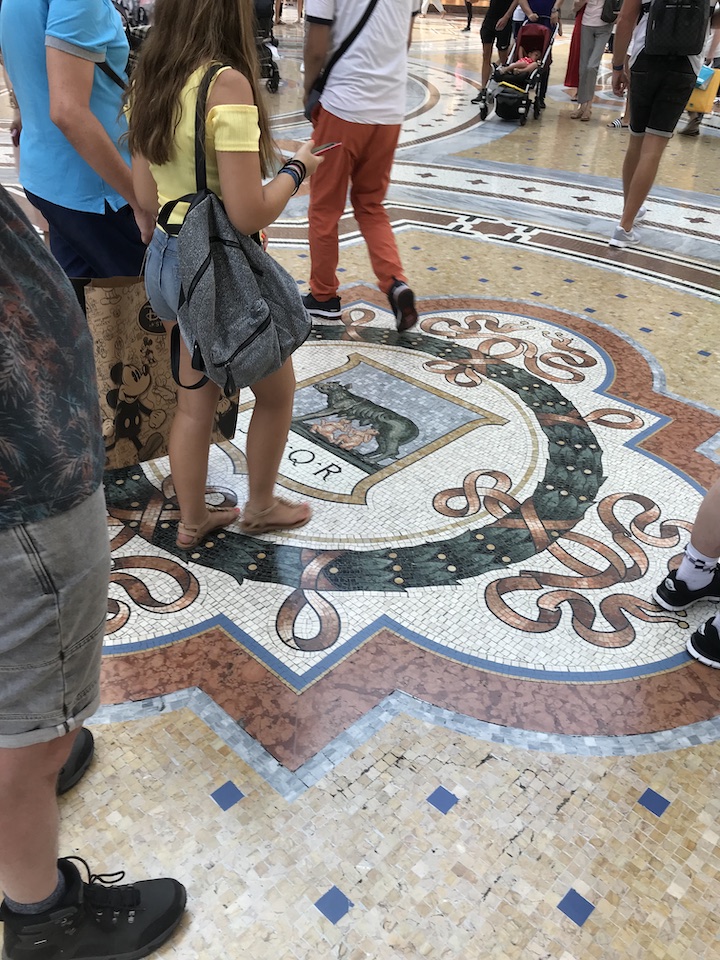
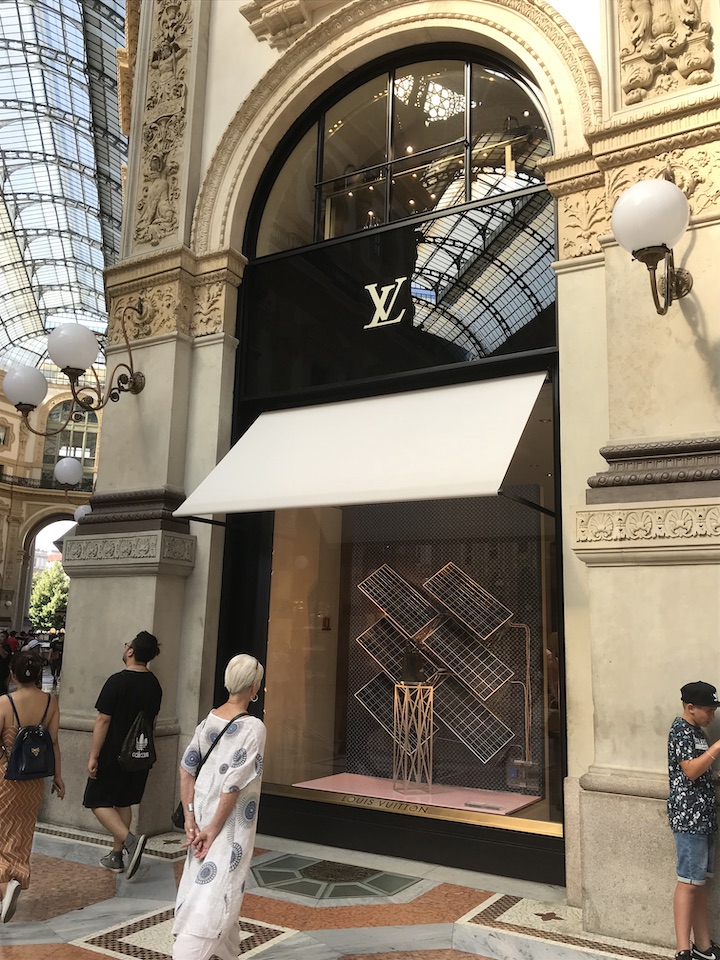
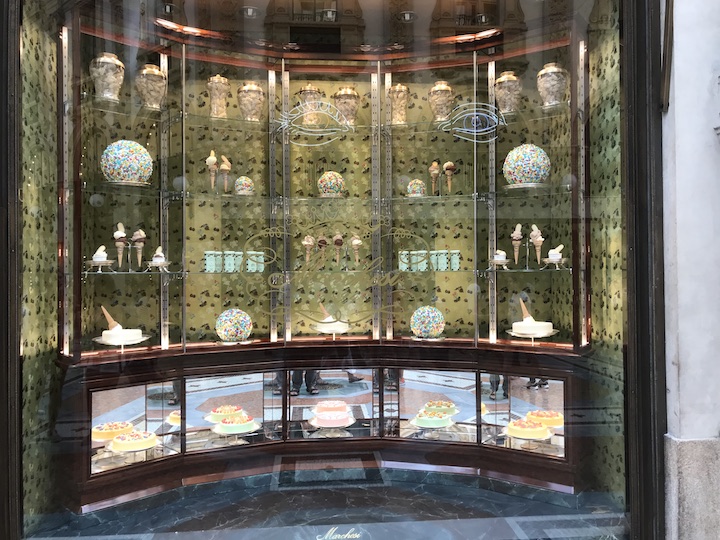
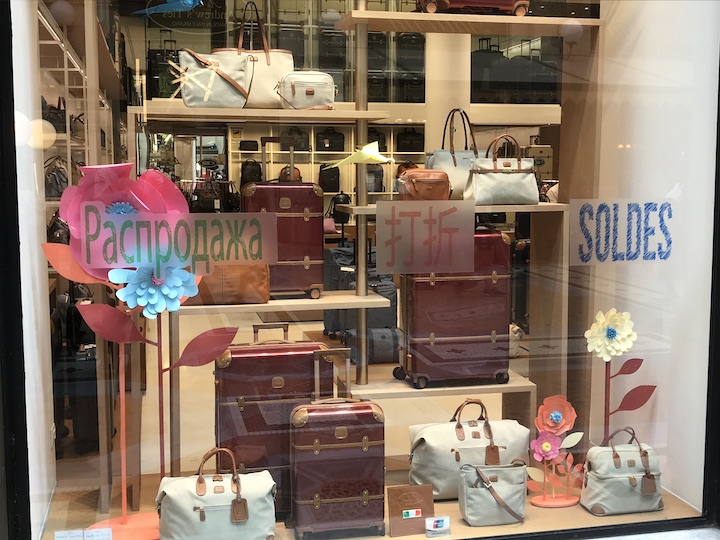
There’s an amazingly long line to enter the Duomo, the city’s famous cathedral, so we decide to avoid the crowds and skip it this time. We’ll save that experience for a future visit, after the summer crowds have left.
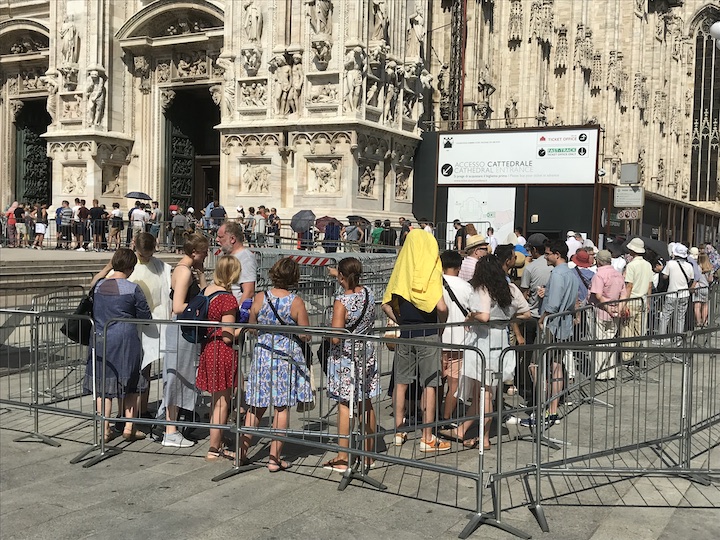
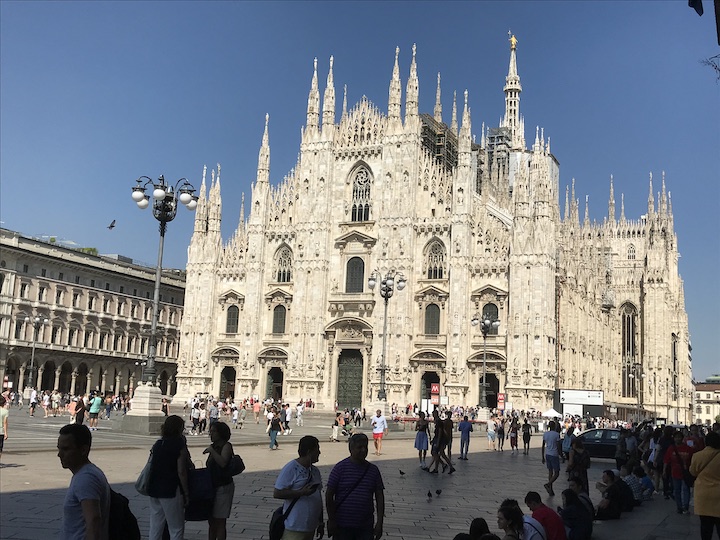
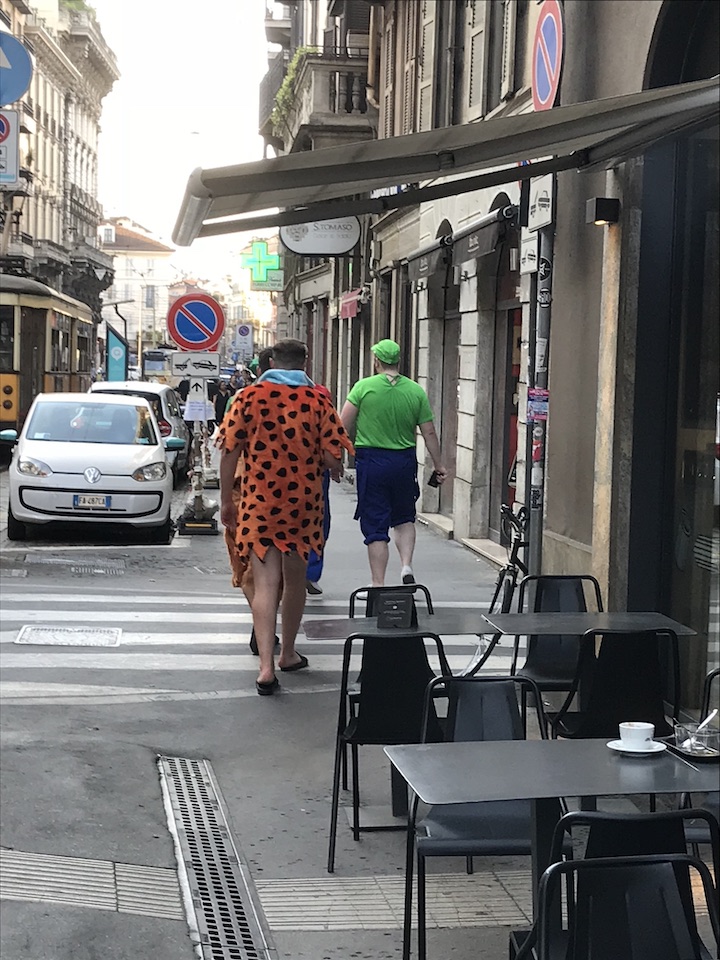
There’s so much else to experience in Milan that standing in a long line can seem pointless. The winding streetscape itself is a fascinating lesson in art, history, commerce, architecture, you name it. And around each corner there’s another surprise.
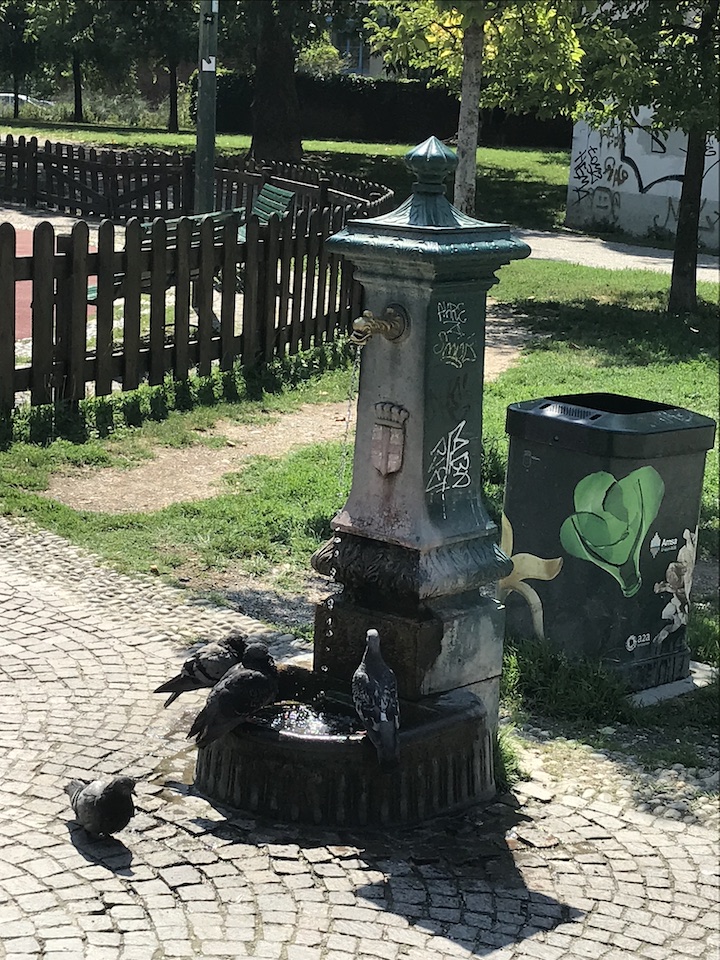
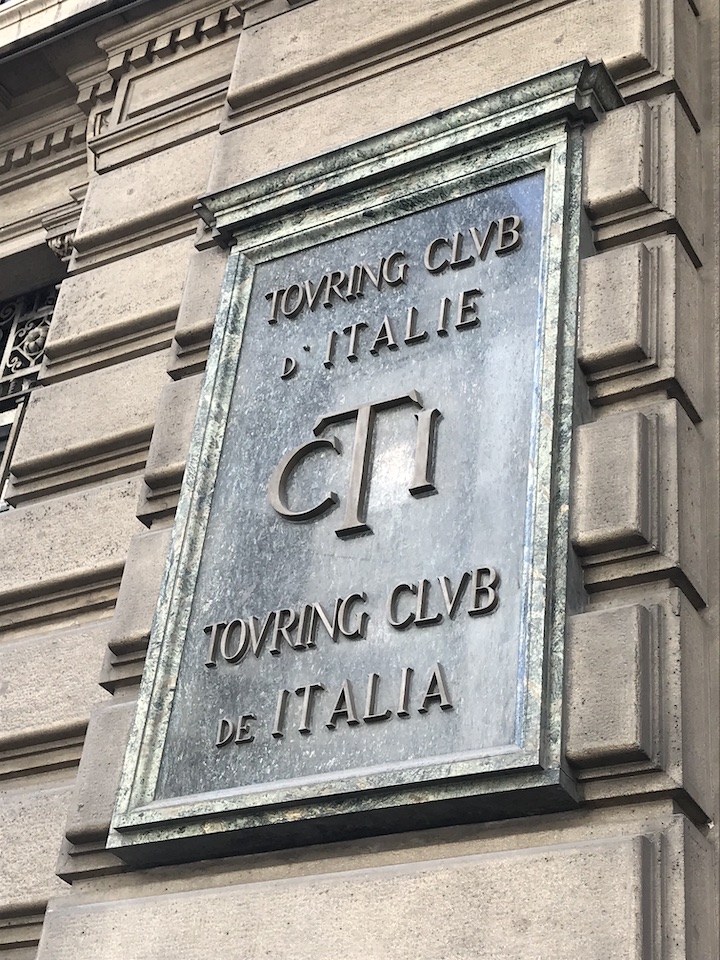
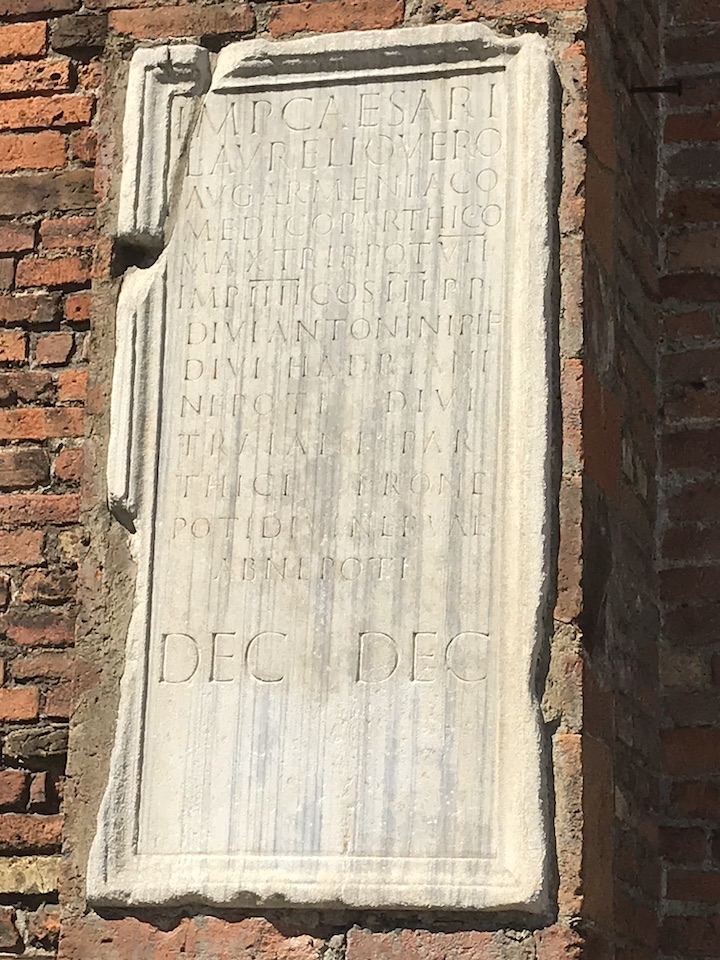
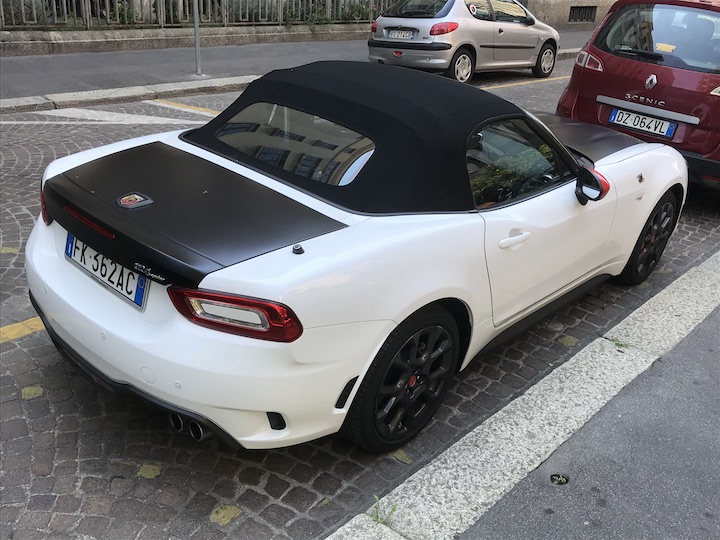
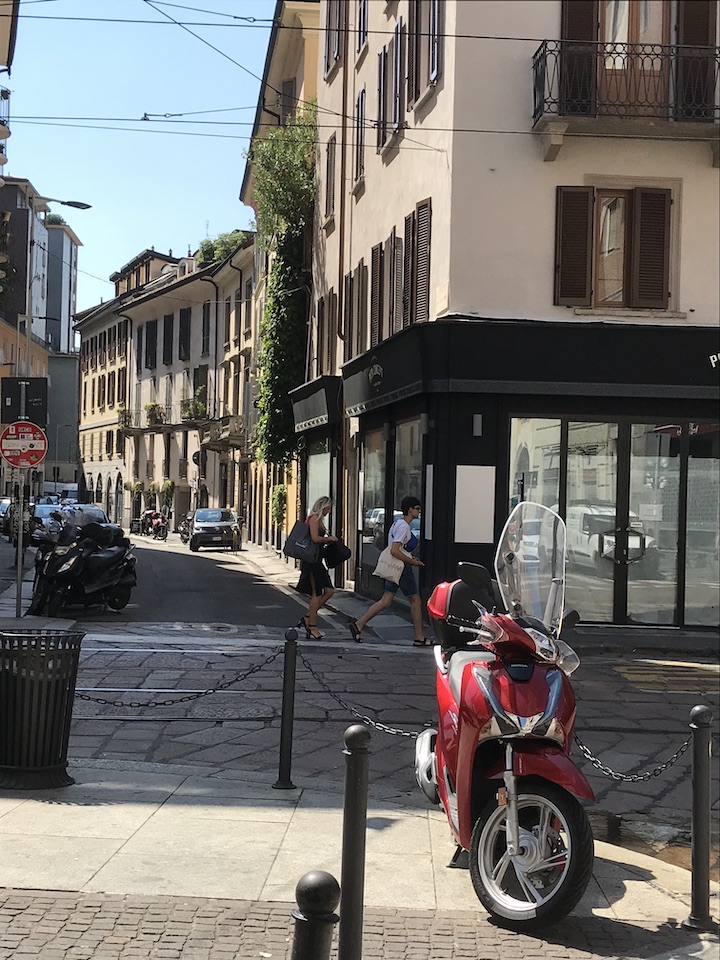
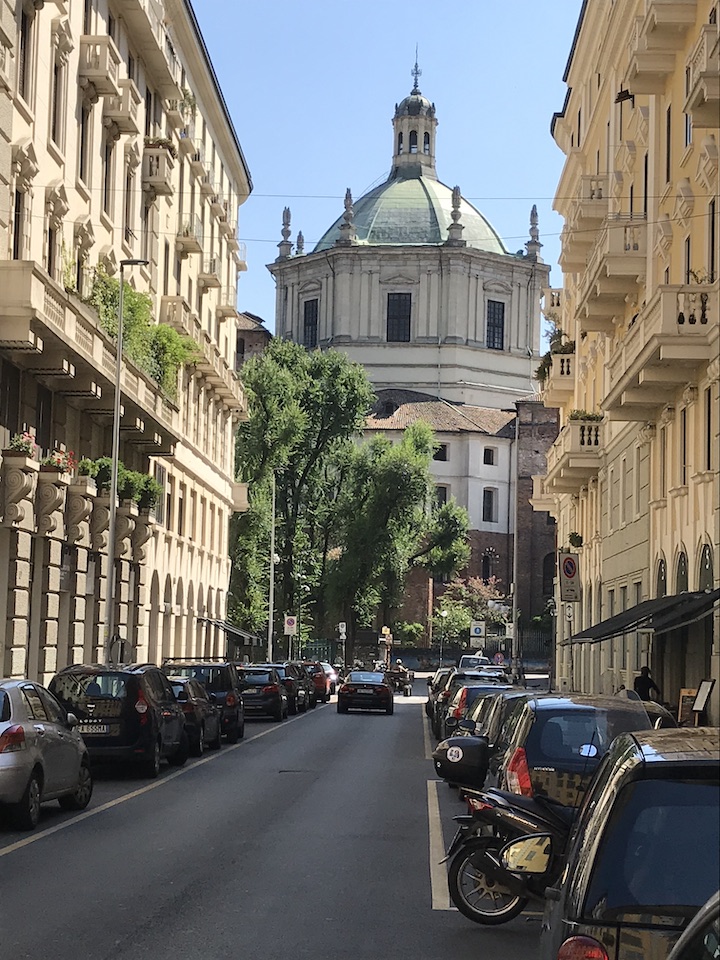
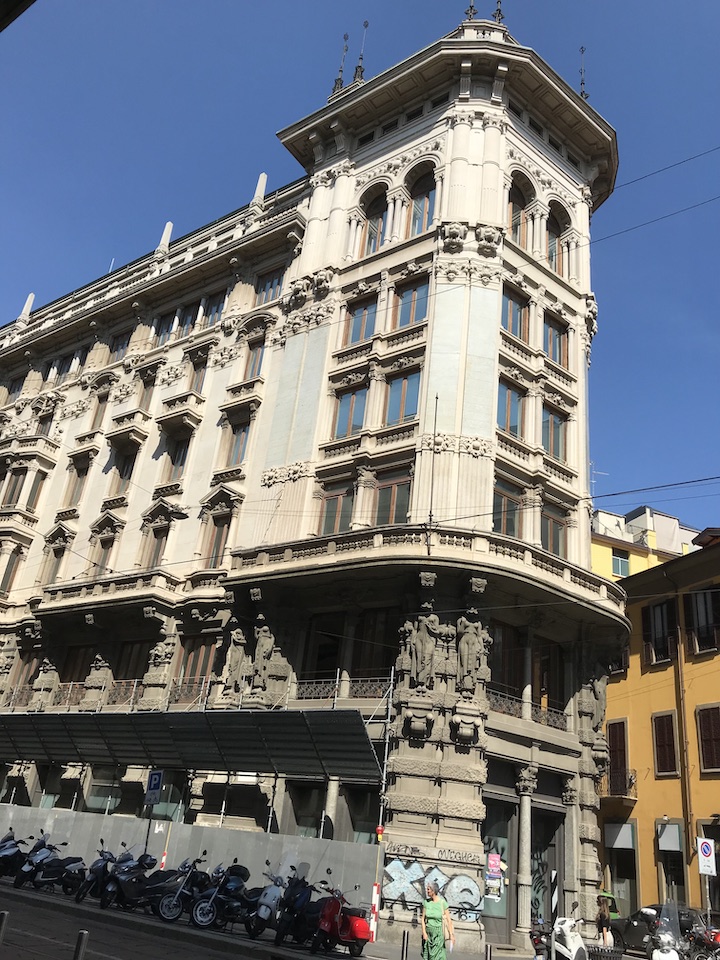
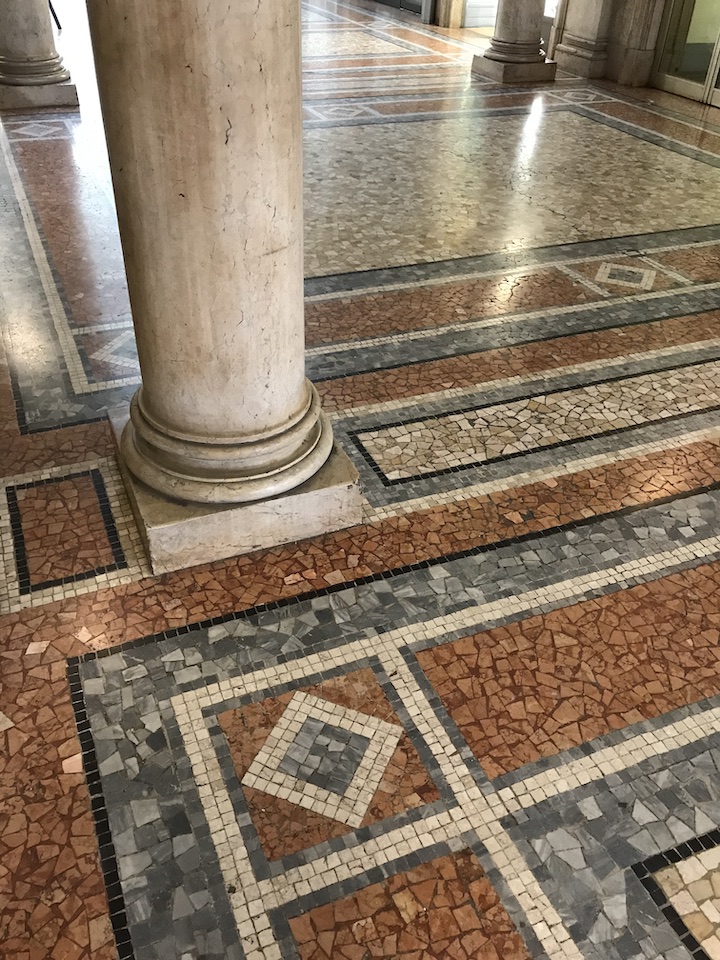
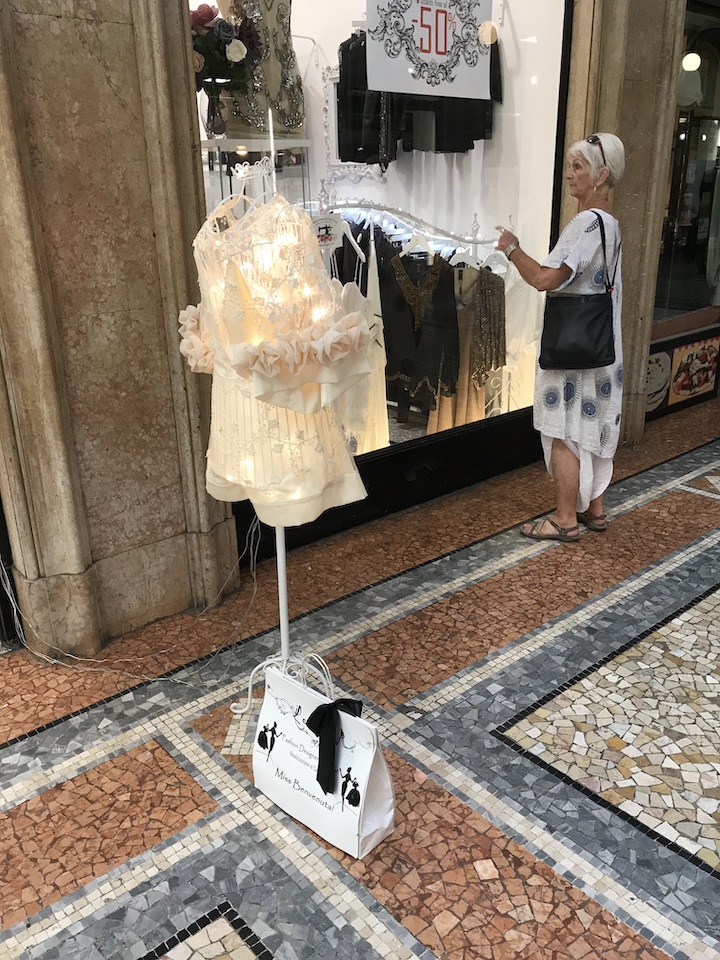
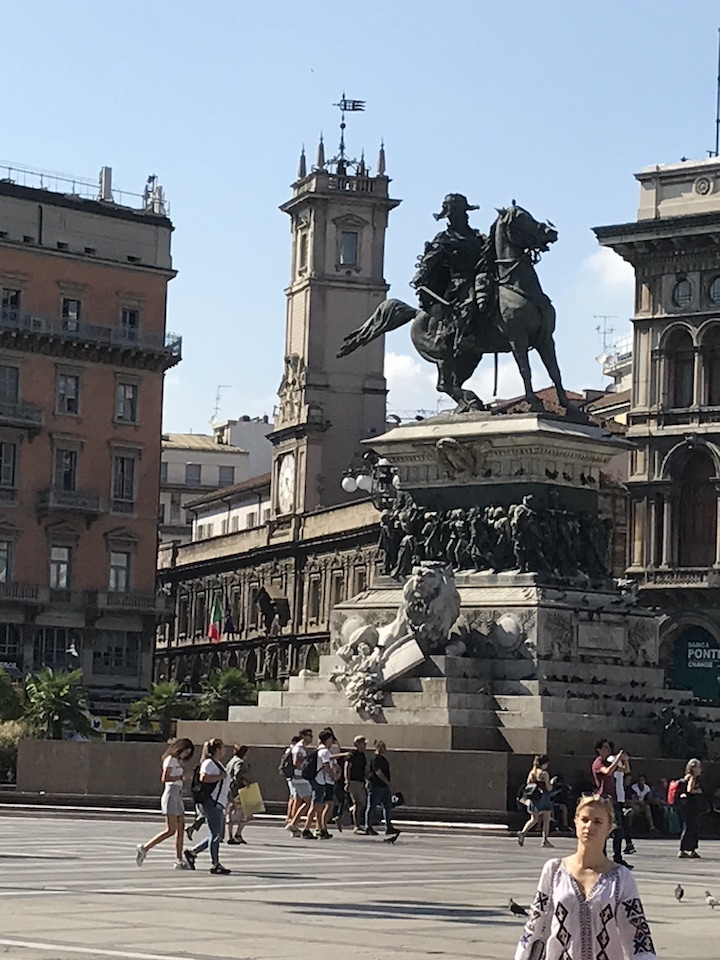
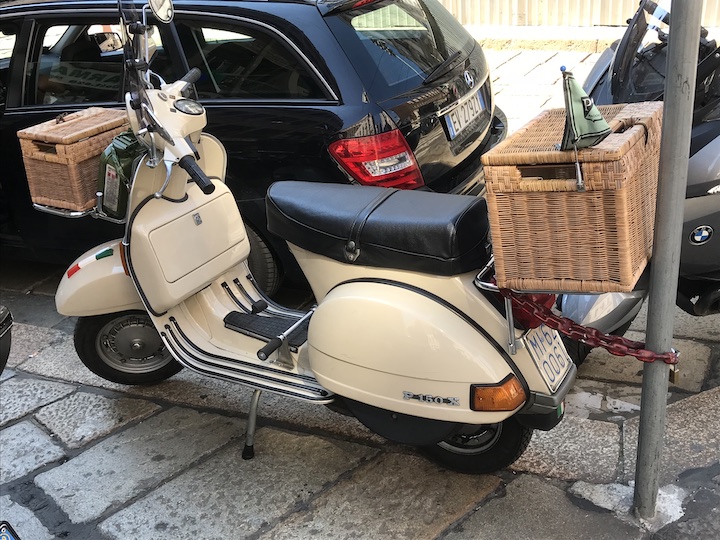
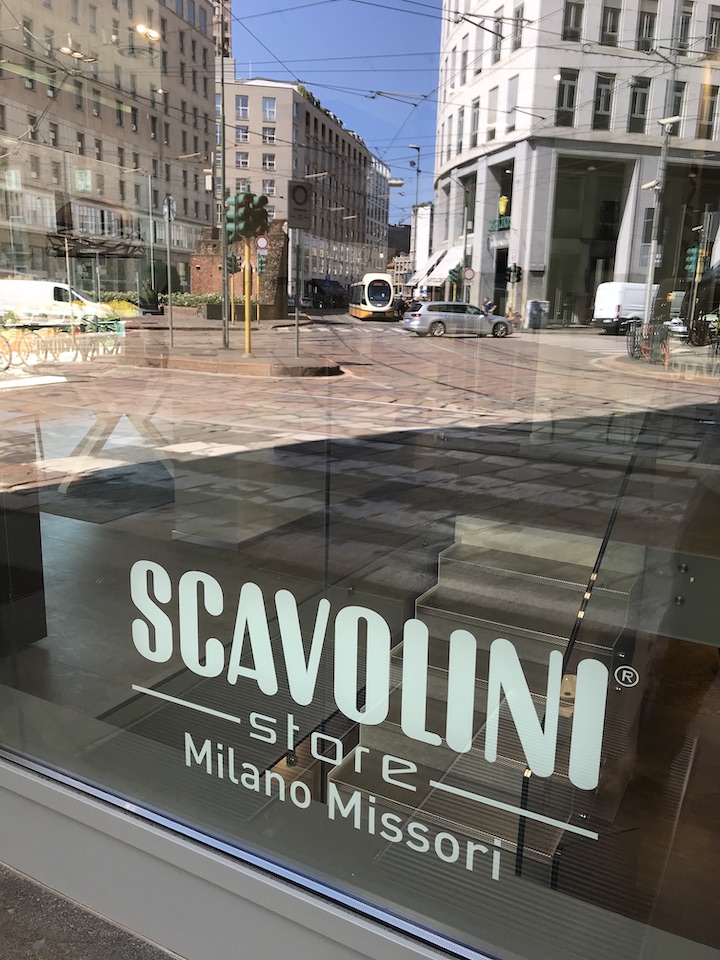
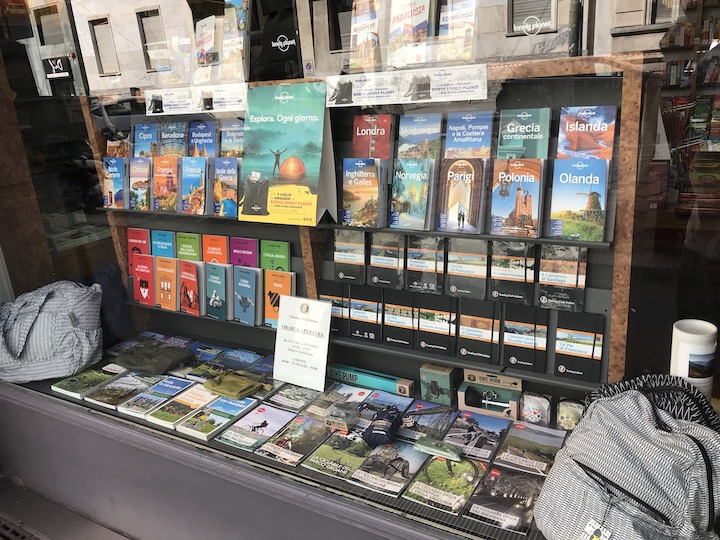
So on a long afternoon of exploration we finally search out someplace quiet to enjoy a bit of grappa, that famous Italian brandy made from pomace, the leftover skins, pulp, seeds and stems from winemaking. It’s called rakija in the Balkans, tsipouro in Greece and marc in France.
The friendly family proprietors of a little back street hole-in-the-wall respond with a happy, “Sure we have grappa!” And soon we’re nicely relaxed at a tiny sidewalk table with a pair of tasty shots – maybe from the family’s own special bottle! – as pedestrians wander past. It’s another momento molto fino that we’ll later recall fondly, of a fine Italian summer day.
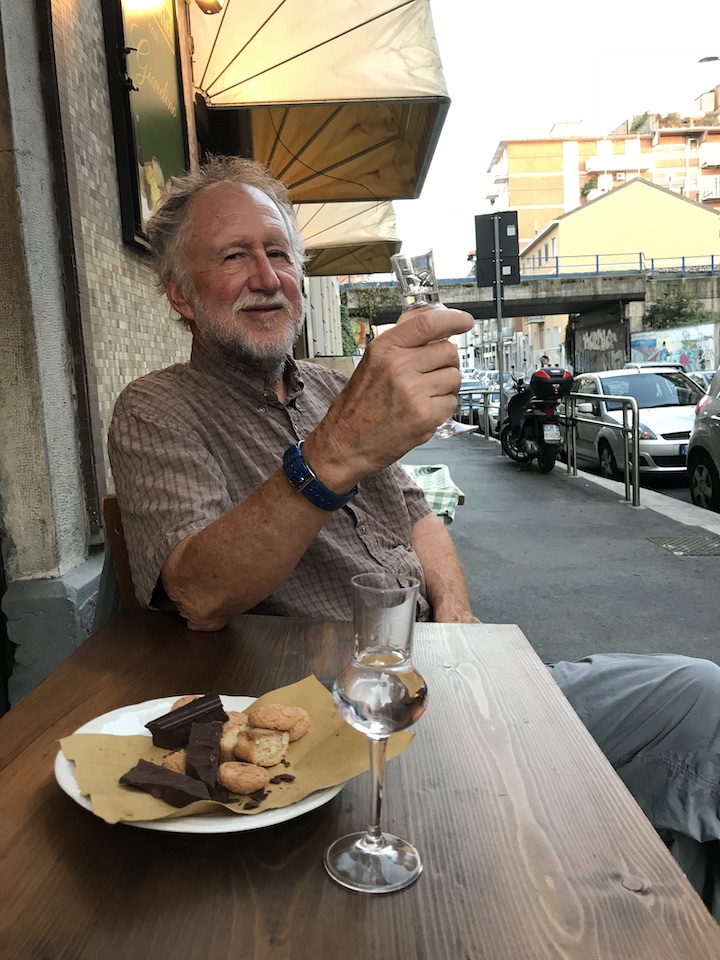
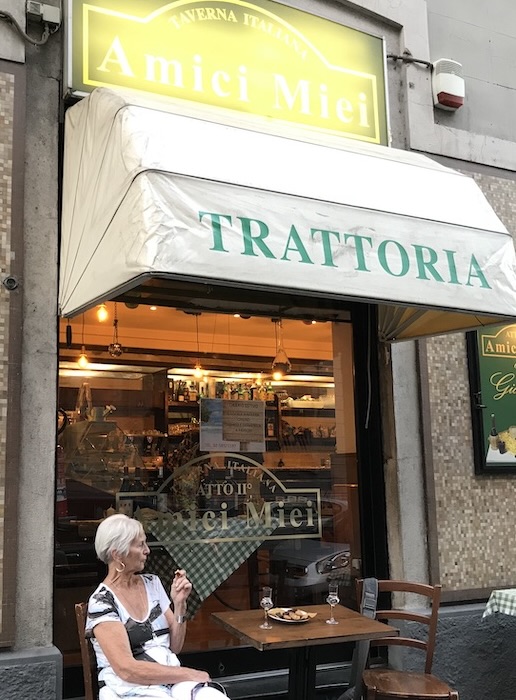
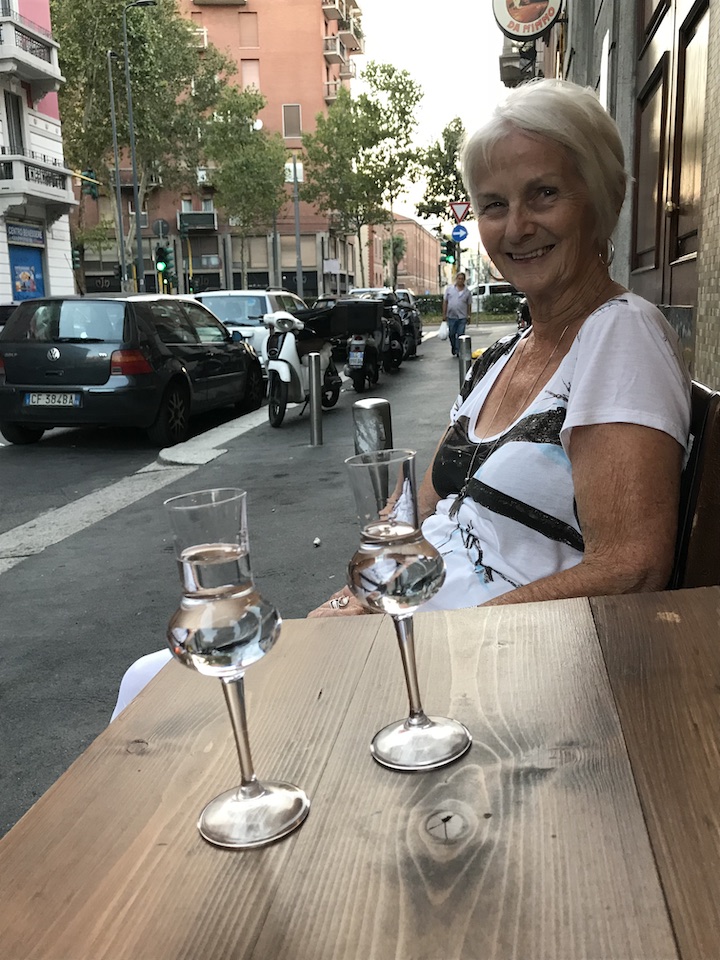
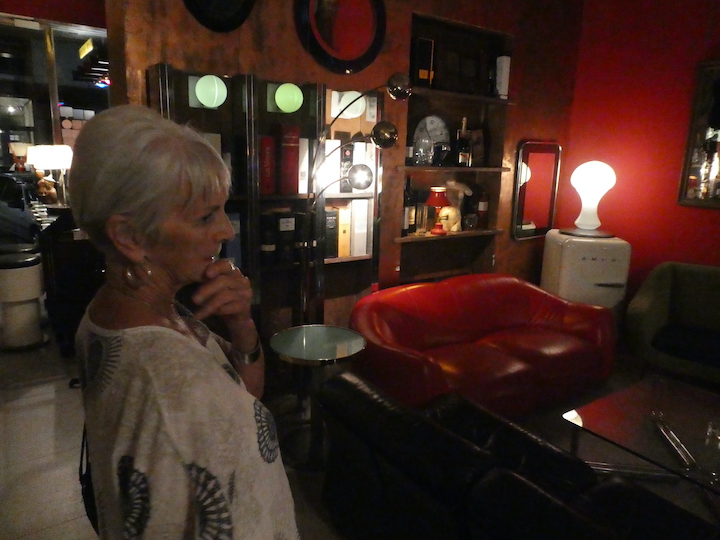
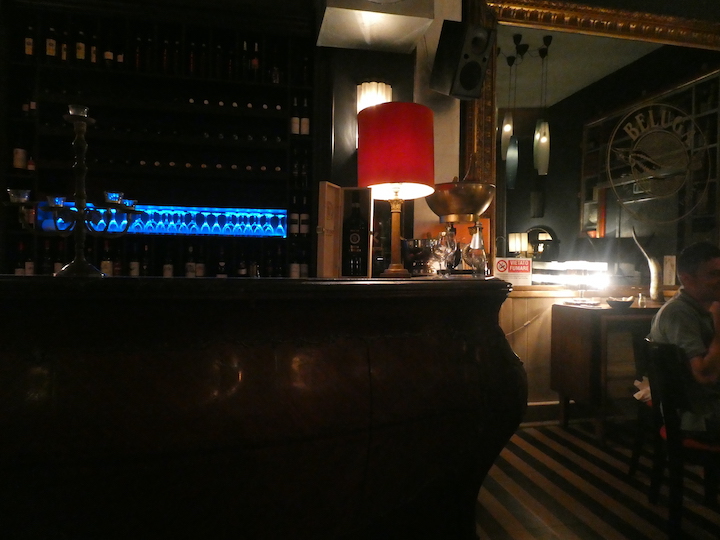
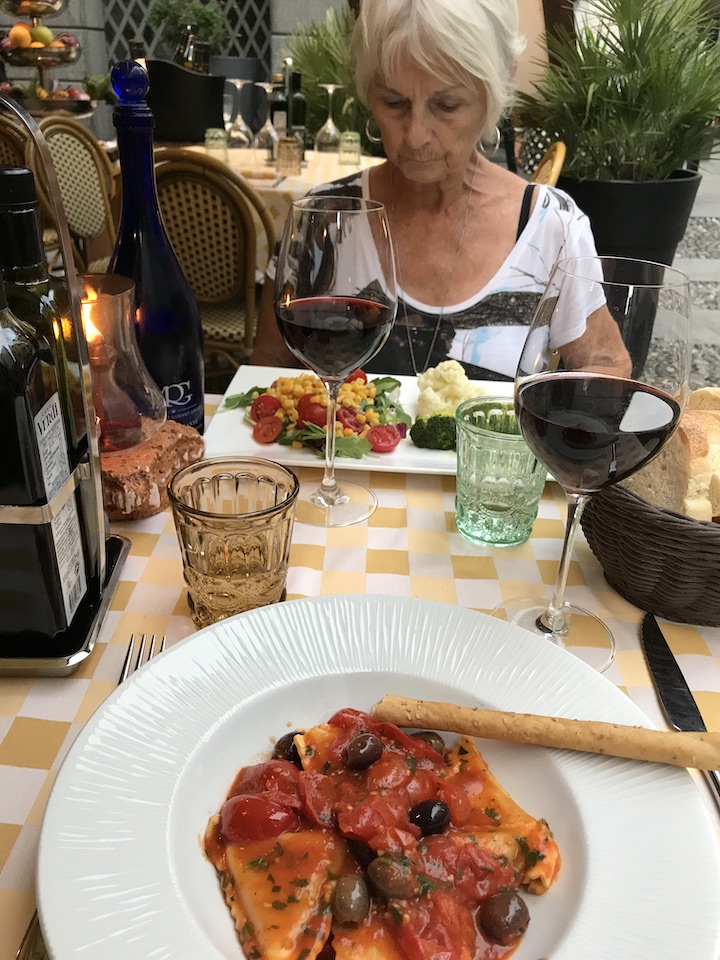
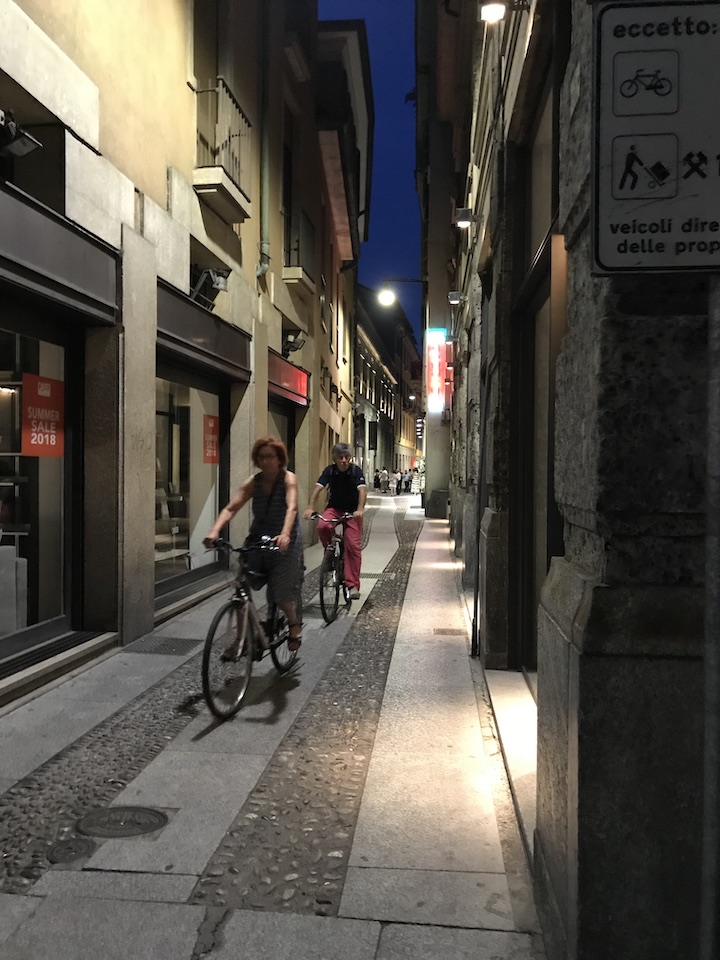
Later that evening we’re poking around some other back streets hoping to find a special place for dinner. The streets and the buildings are dark, and it looks like we’ve taken a very wrong turn. Then Carolyn sees a dim flicker down a side street, and we hope it’s a neighborhood bar or something similar. The street is so dark that we feel our way carefully over the cobbles – and we find a hidden treasure. Inside the door we pass an ornate bar and go deeper into the building until we’re in a secret ristorante that looks like someone’s very large living room, with subdued lighting, and fine tables with overstuffed chairs, and art and heirlooms along the walls.
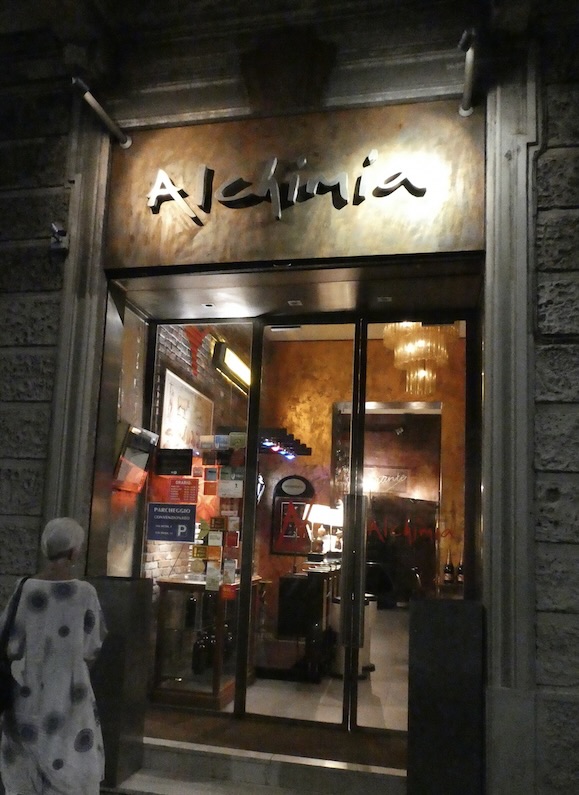
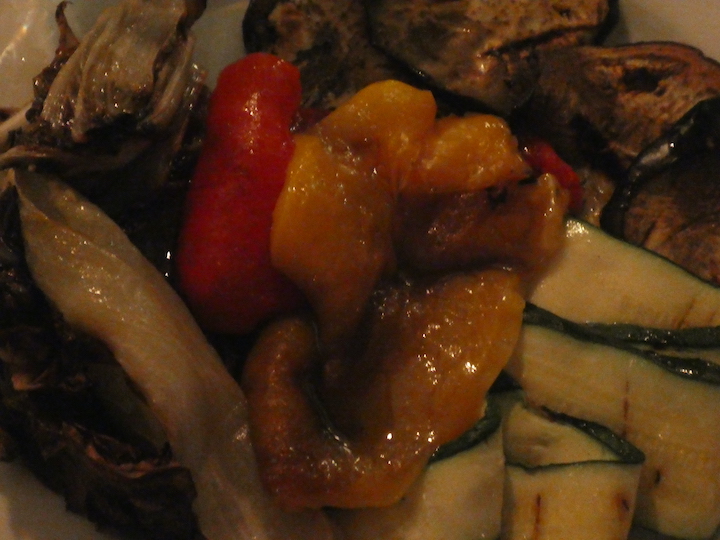
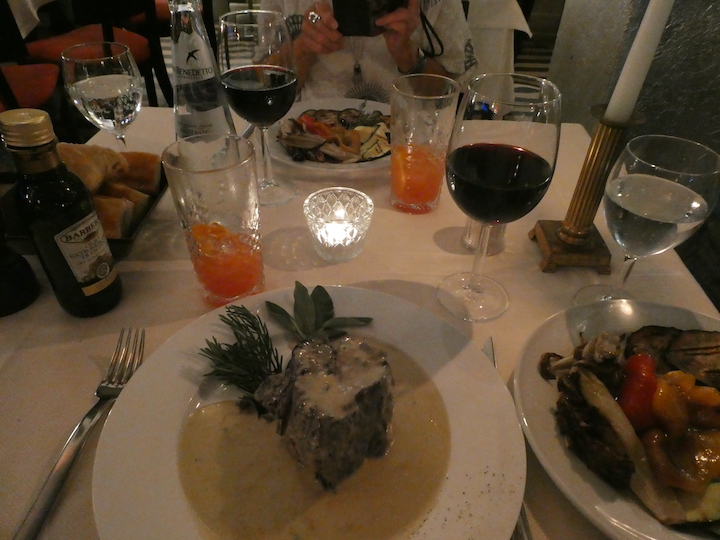
We’re shown to a table and given menus, as a full table in the corner carries on at alto voce, while waving their arms for emphasis. Every Italian friend of ours has said, “any Italian with a broken arm has a speech impediment!” And we’ve just come across one of the more interesting places we’ve ever found in all our travels. It won’t be a quiet dinner, but our table neighbors are having an excellent time of it, and we’re more entertained than bothered. The place is called “Alchimia,” the food and experience were memorable, and it’s worth a special trip to Milano.
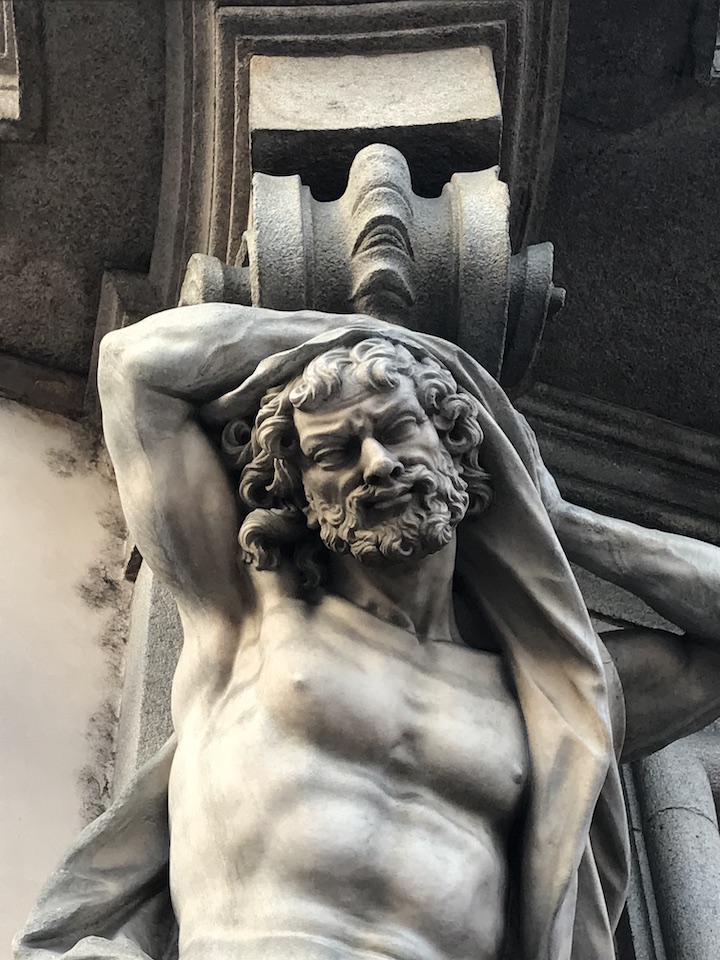
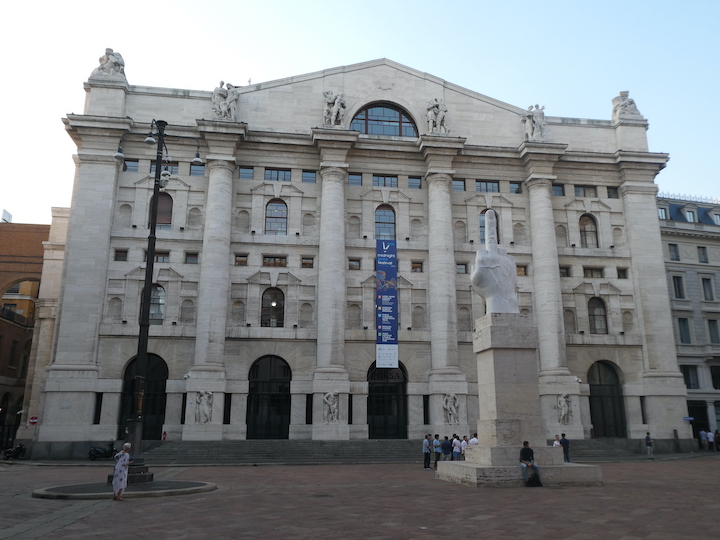
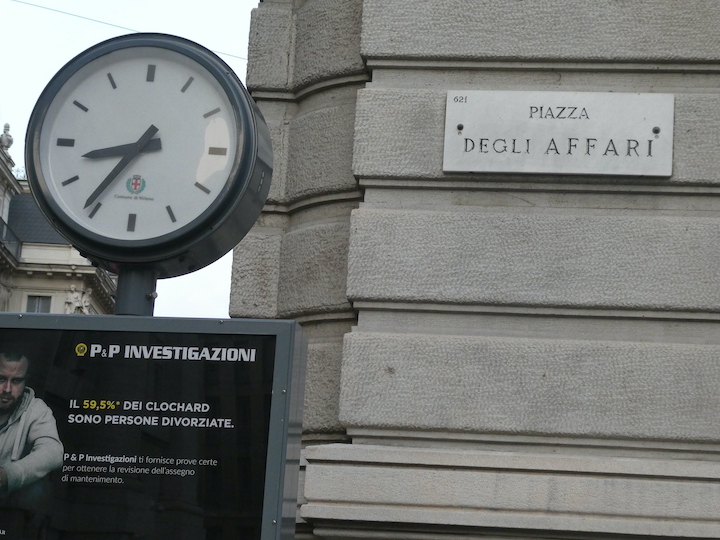
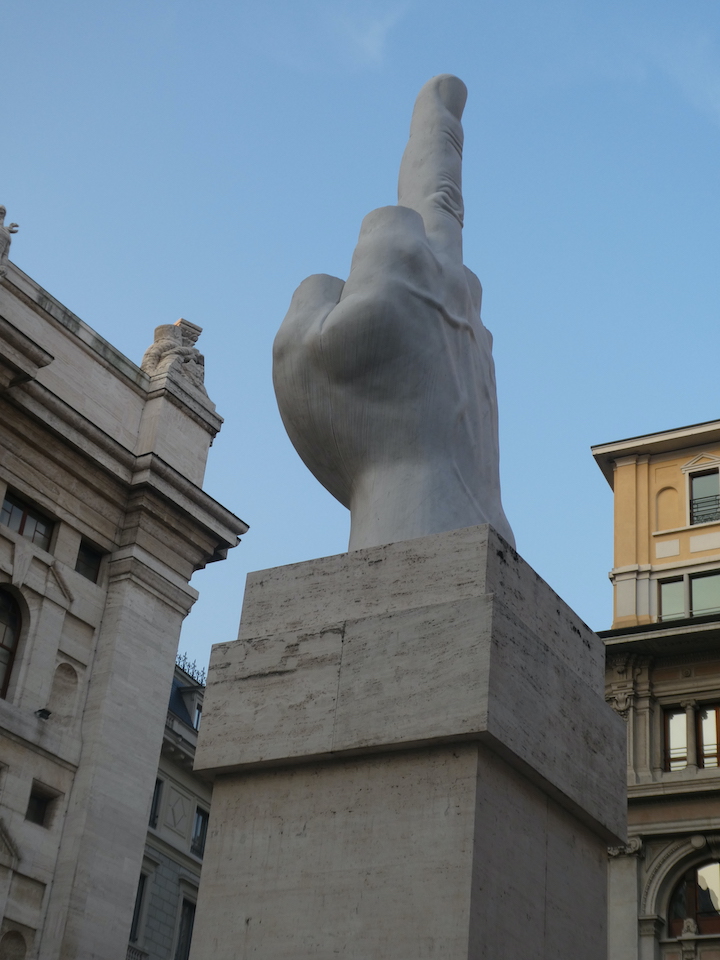
Milan is home to a vast array of sculptures that span the centuries, the conflicts, and the conquerors that have composed its long history. But “Il Dito” (’the Finger,’ 2010) is surely one of the more provocative pieces to be found during our Milanese wanderings. At first glance, and considering its location on the Piazza degli Affari directly in front of the Borsa Italiana (Italian Stock Exchange), it seems to be a protest against the Italian monetary elite. But a closer look reveals that the thumb and three fingers are severed, leaving only that prominent middle finger. The piece is entitled L.O.V.E. (Libertà, Odio, Vendetta, Eternità), and some have also seen it as a crippled form of the full-handed Fascist salute that served the country so ruinously under Mussolini during WWII. And since the artist, Maurizio Cattelan, has never given an explanation for the meaning of the work, we are free to derive our own impressions from this massive piece of fine Carrara marble.

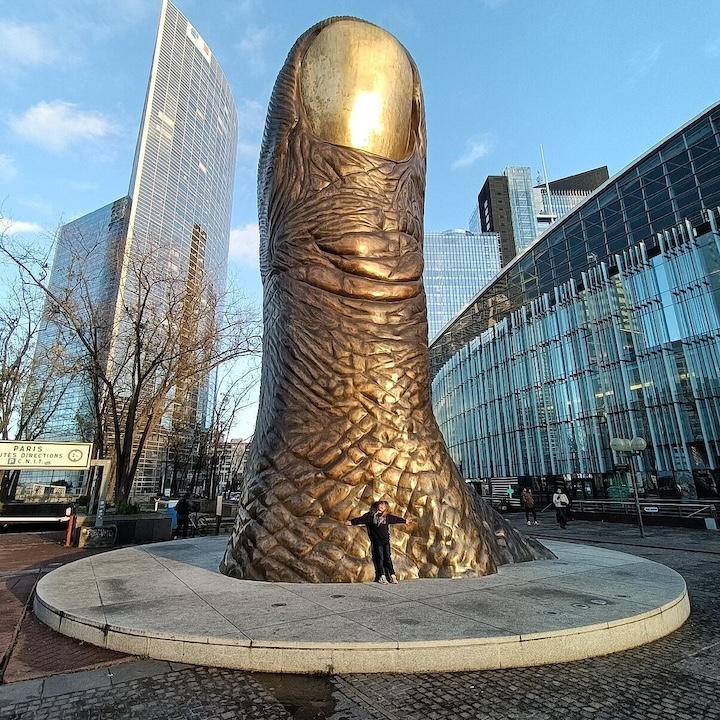
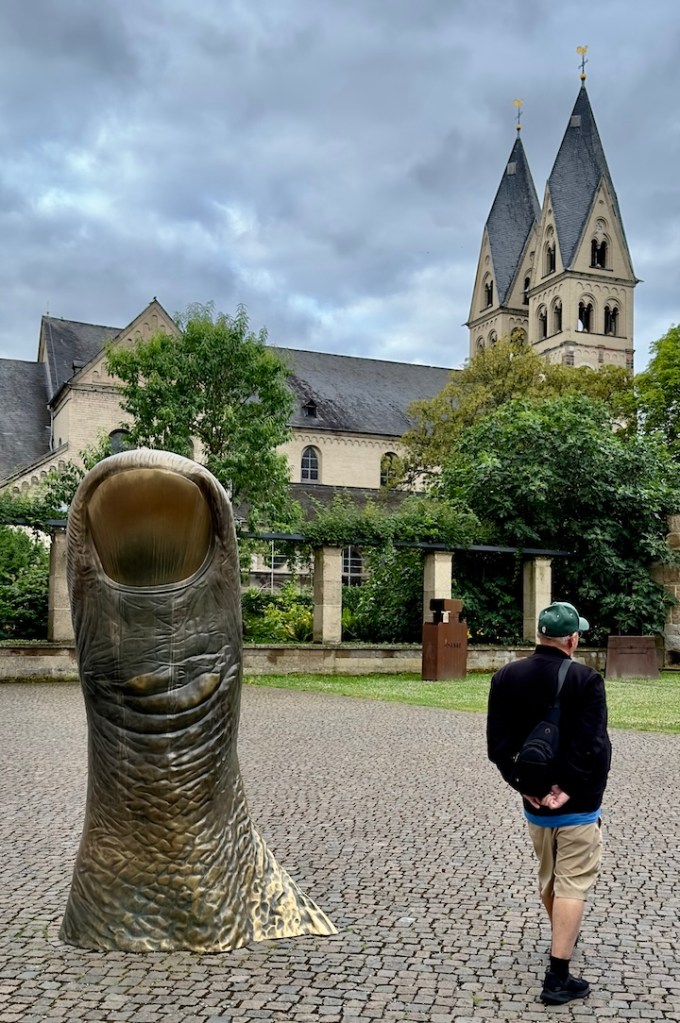
For a different artistic celebration of the marvelous human hand, that some have interpreted as a positive ‘Thumbs Up,’ check out “Le Pouce, (1965)” César Baldacini’s 40-foot tall “Thumb,” in the La Dèfense district of Paris. We’ve also seen a large ‘Thumb’ replica in a traffic circle in Marseilles, and a 6-foot version on the grounds of the Sammlung Ludwig Museum in Koblenz, Germany.
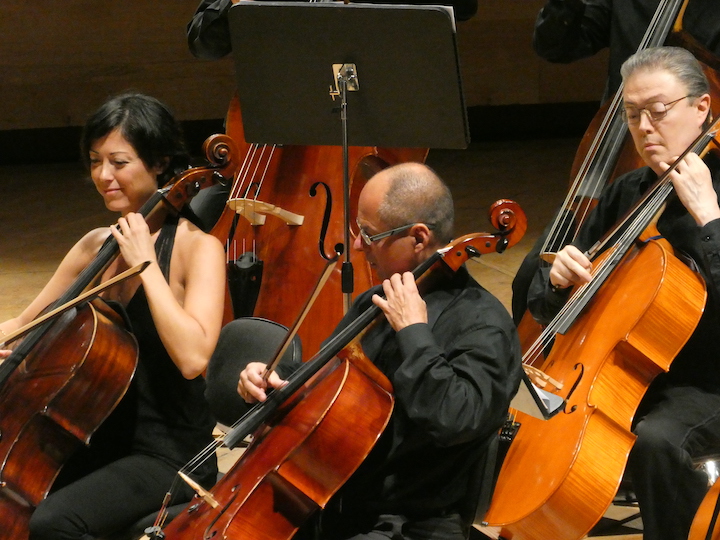
There’s a fine afternoon concert on offer at the Piccolo Teatro, and it’s an excellent way to experience some of the musical artistry the city has to offer during the summertime. It’s a true pleasure to feel the notes that the bow delivers when it rests lightly on the strings, and the wood reverberates. It’s a form of magic that we’ve found inside the thoughtful architecture of an old theatre that needs no electronics to fill the space.
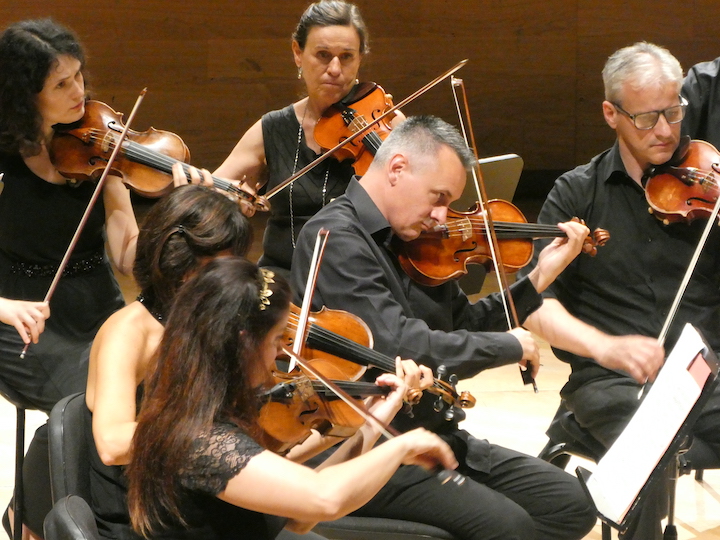
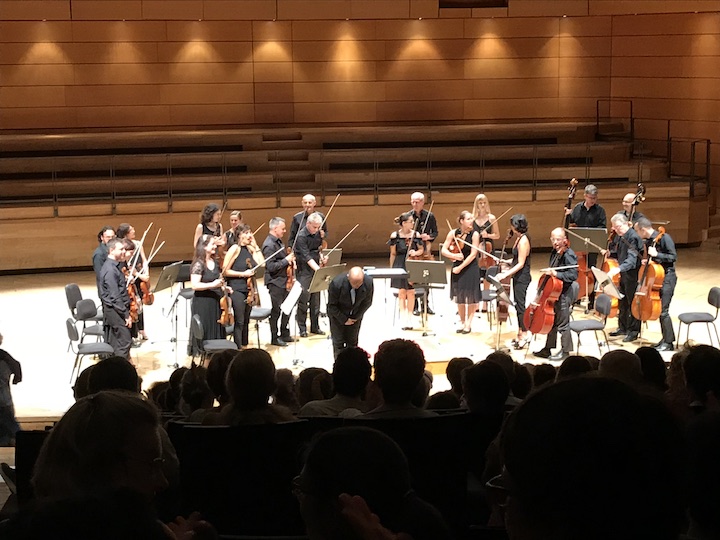
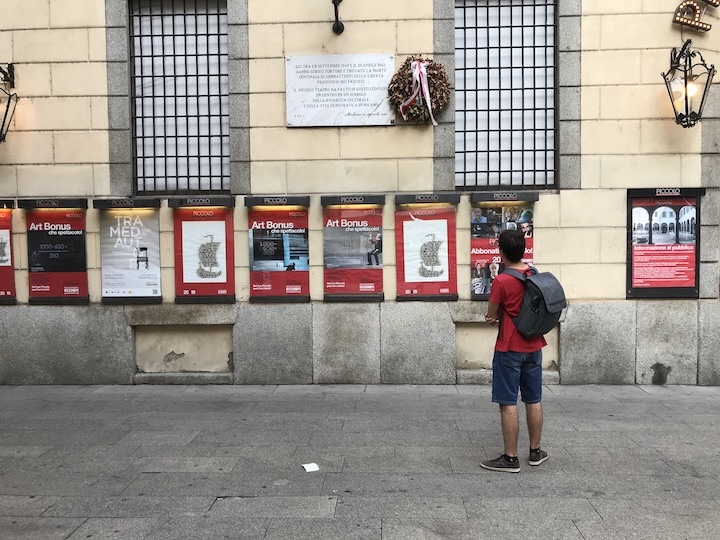
The tragic history of Europe is long, and sombre wall plaques in many European countries mark the locations of various atrocities committed over the ages. This plaque is located on an outside wall of the Piccolo Teatro, and it reads:
“Here between September 8, 1943 and April 25, 1945, hundreds of freedom fighter prisoners of the fascists were tortured and killed.
The Little Theater has made this building a center and a symbol of cultural rebirth and the democratic life of Milan.”
—Milan April 10, 1994
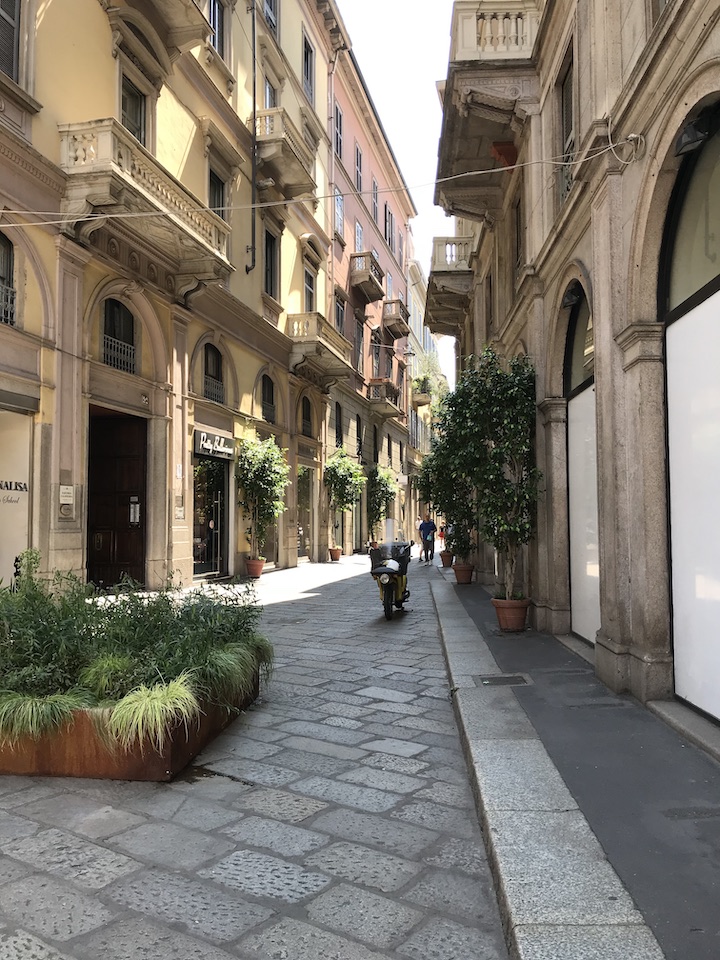
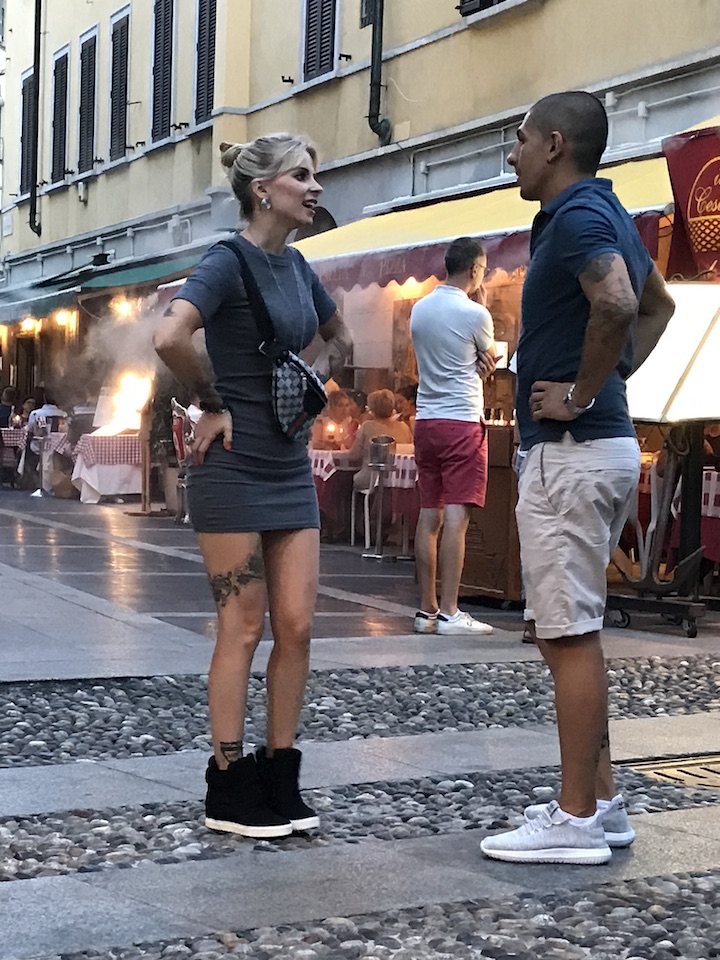
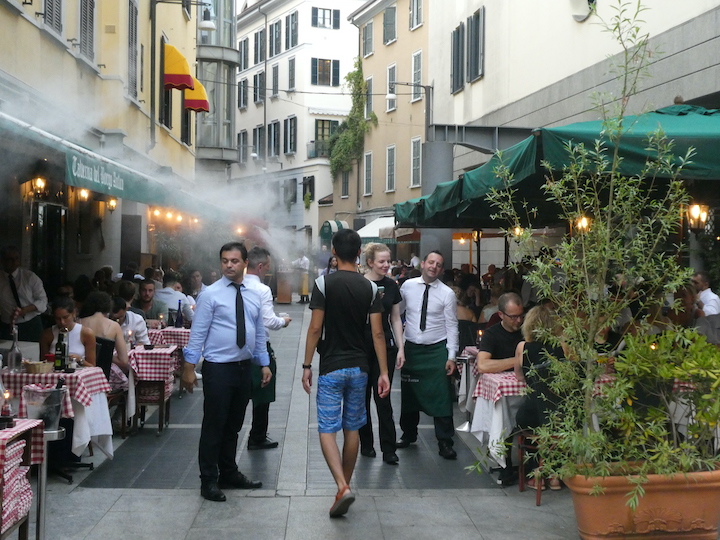
We again reach design overload, and head toward the charming narrow lanes of the Brera district to search out another fine meal to enjoy in the open air as a warm summer evening descends upon us. There are plenty of opportunities like that in Milan.
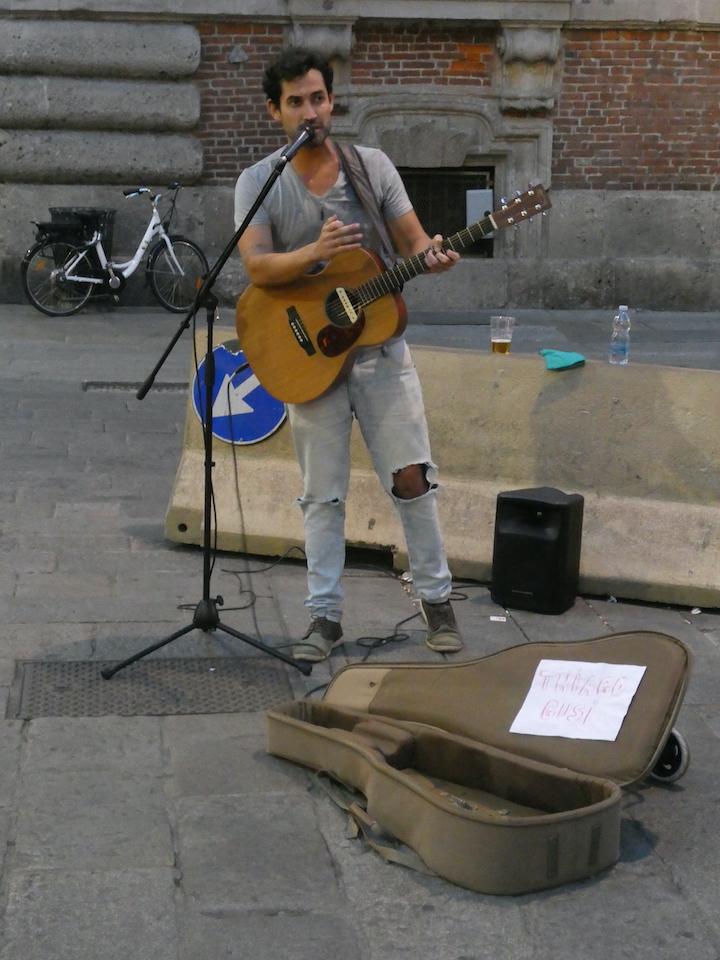
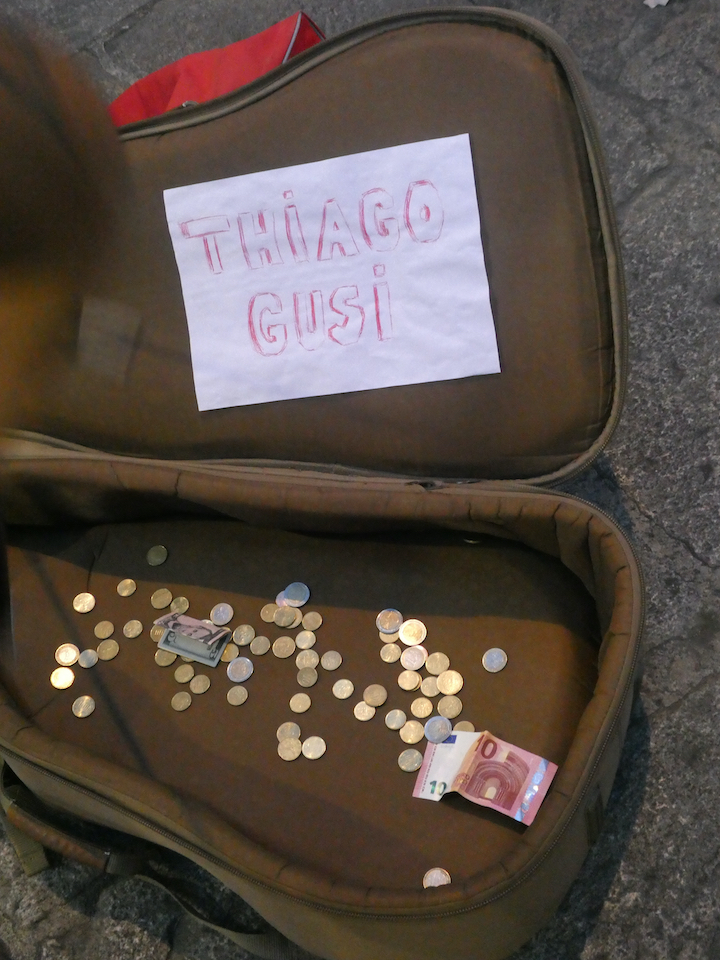
A talented busker is standing at a spot where his music nicely fills the intersection of two narrow streets. Then a guy beside me half-whispers, “Do you know who that is!?” The guy seems pretty excited and says, “That’s Thiago Gusi! Right there on the corner!” I’m duly impressed with the music, although I really don’t know who he is. I later search him out and realize he’s a young star these days in Europe and Las Vegas, and now he’s right there in front of us busking for coins, and having a bit of fun!, on a quiet Milano backstreet corner. It’s the kind of crazy-good thing we stumble across in our travels, and he smiles as I drop a few Euros into his basket. https://www.youtube.com/watch?v=tZZtTtA9Sjg
After yet another fine day, it’s time to head back through the quiet streets of Milano, toward our simple apartment. Our time here has been too short, our excellent 2018 Euro trip has finally come to an end, and we need to finish packing for our departure on a long flight back to the States.
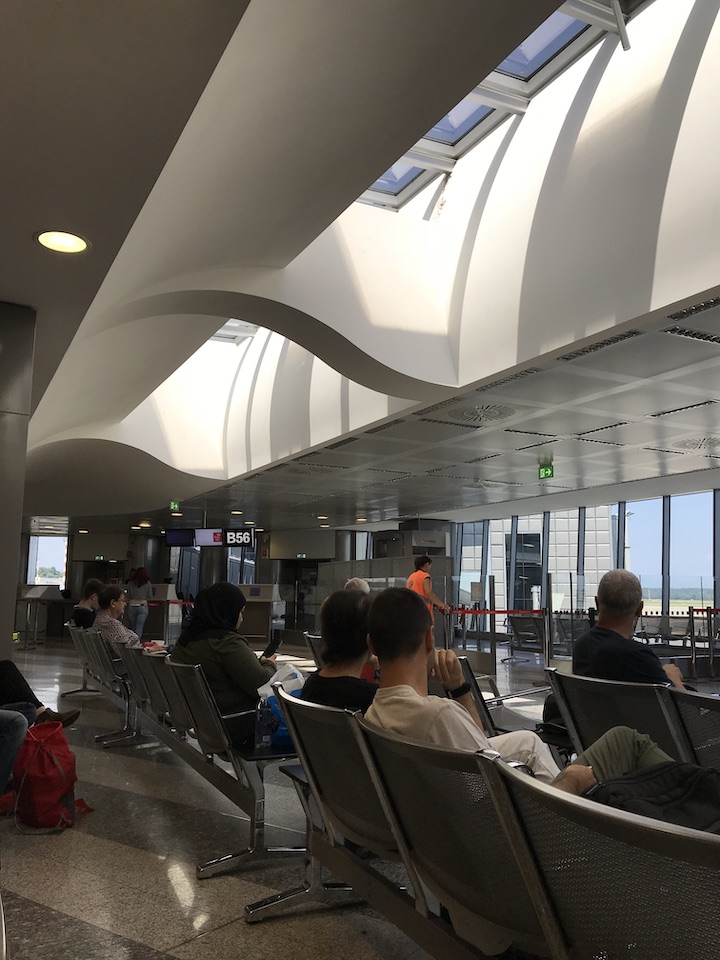
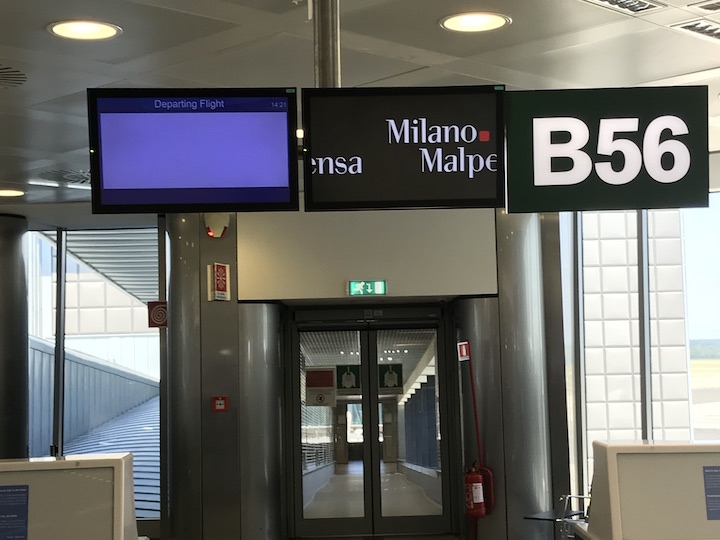
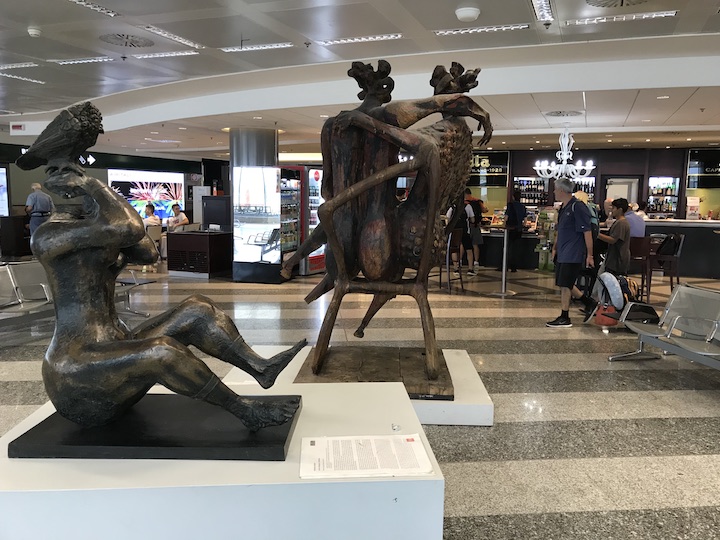
In the morning we catch a cab that’s driven by a lean and interesting young woman who is a marathon runner, and she delivers us to the city’s large Malpensa Airport (MXP) – where we discover that Milan is not finished with us yet! This airport is sixth in Europe for the number of countries served with direct flights – the Departure board is impressive – and around 87 different passenger airlines fly through here. This modernista building is filled with light and sculpture, fine music, and more high-end shopping. And then some kind of celebrity made a flashy ‘entrance’ where we were sitting, with a pro-looking film crew to record it all. We were very impressed, although we have no idea who she was!
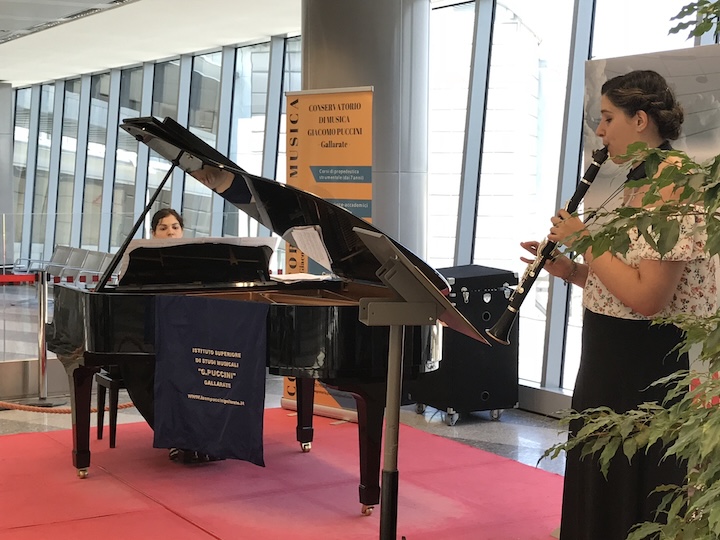
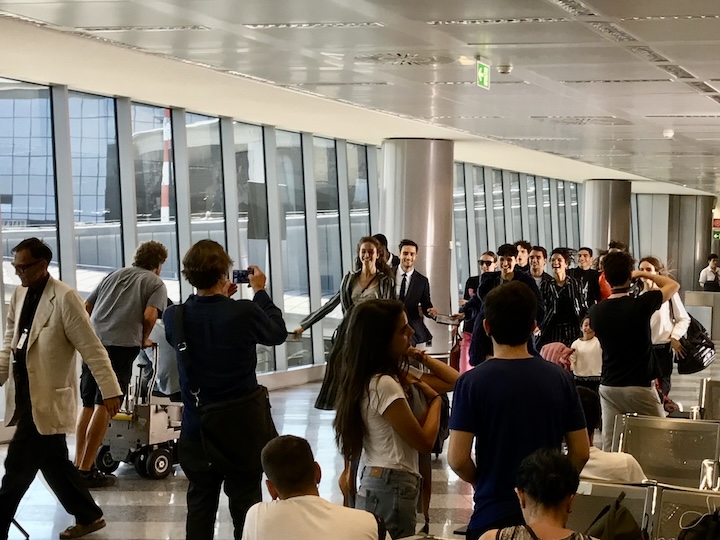
Carolyn managed to get us a good price on an Emirates flight, and it was one of the nicest flights we’ve had so far. We settled into plush seats with ample leg room, as we lifted from the runway and passed high over the multitude of red-tile roofs below. By dinnertime we were somewhere over the broad Atlantic, with an excellent meal and wine, before we slumped in our seats to relax into the night.
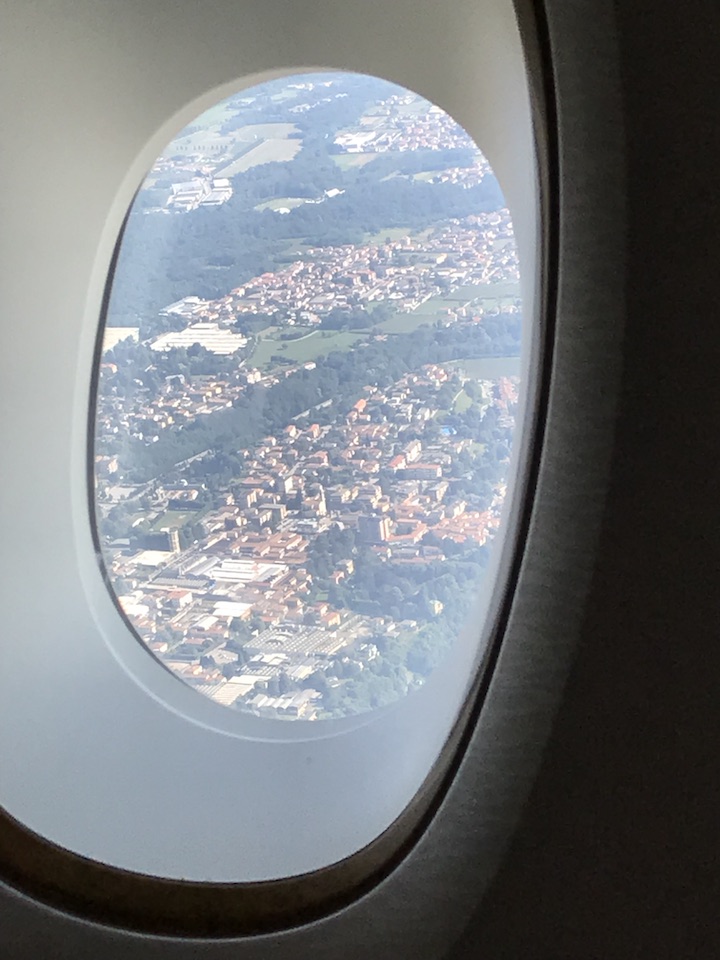
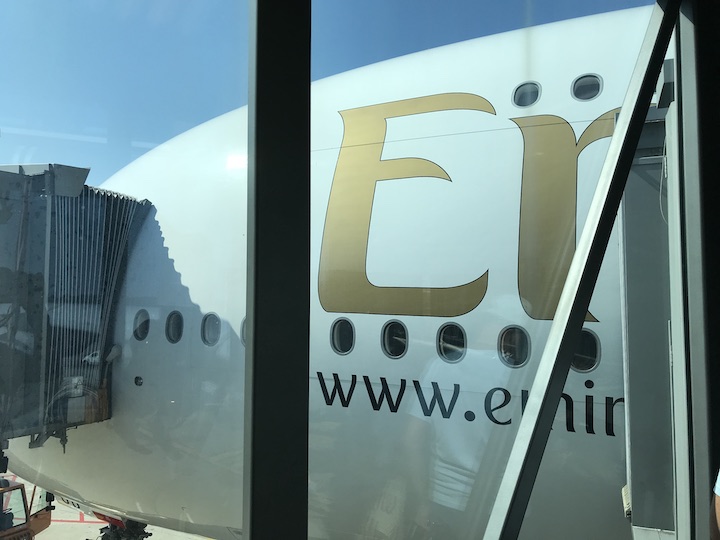
We began this excursion three months earlier in Paris, and then took numerous trains on a long loop through six different countries. And this homeward flight was a fine way to end an amazing summer. — PRW

