
February 19 – March 4, 2026
We’ve had a fine month or so traveling through Mayan lands on the nice new Tren Maya. Now it’s time to leave the Mayab behind, and head north to the dynamic city of Querétaro. It’s been several years since we were last in this historic place, and it’s time we got back to see what’s been happening lately.
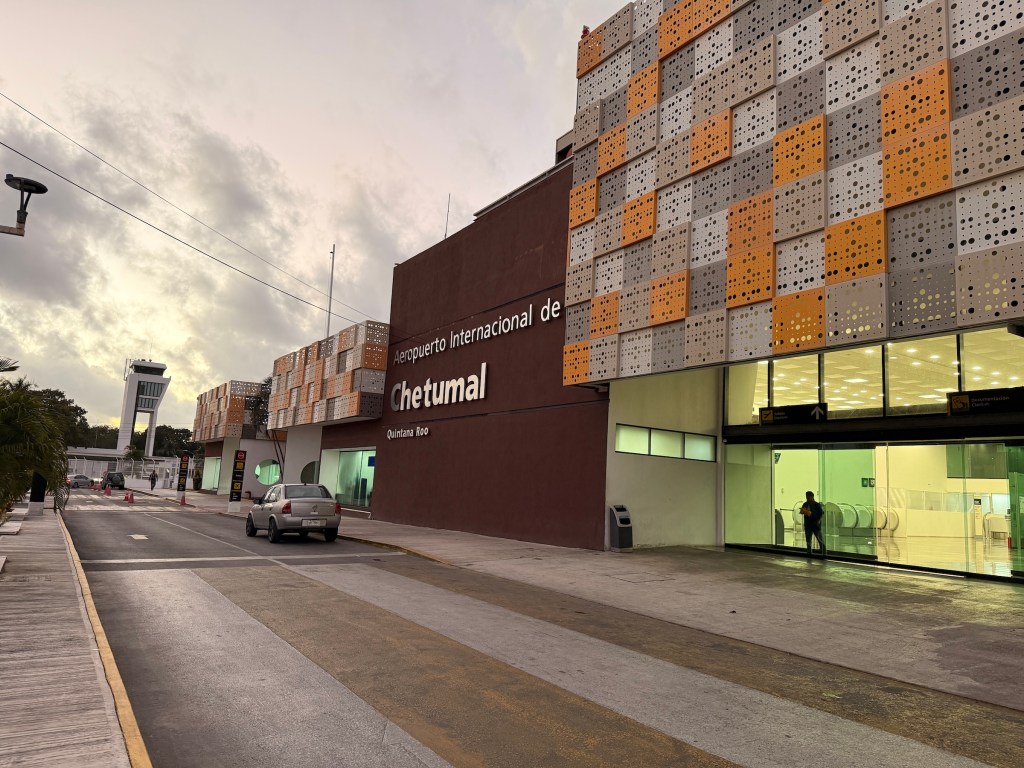
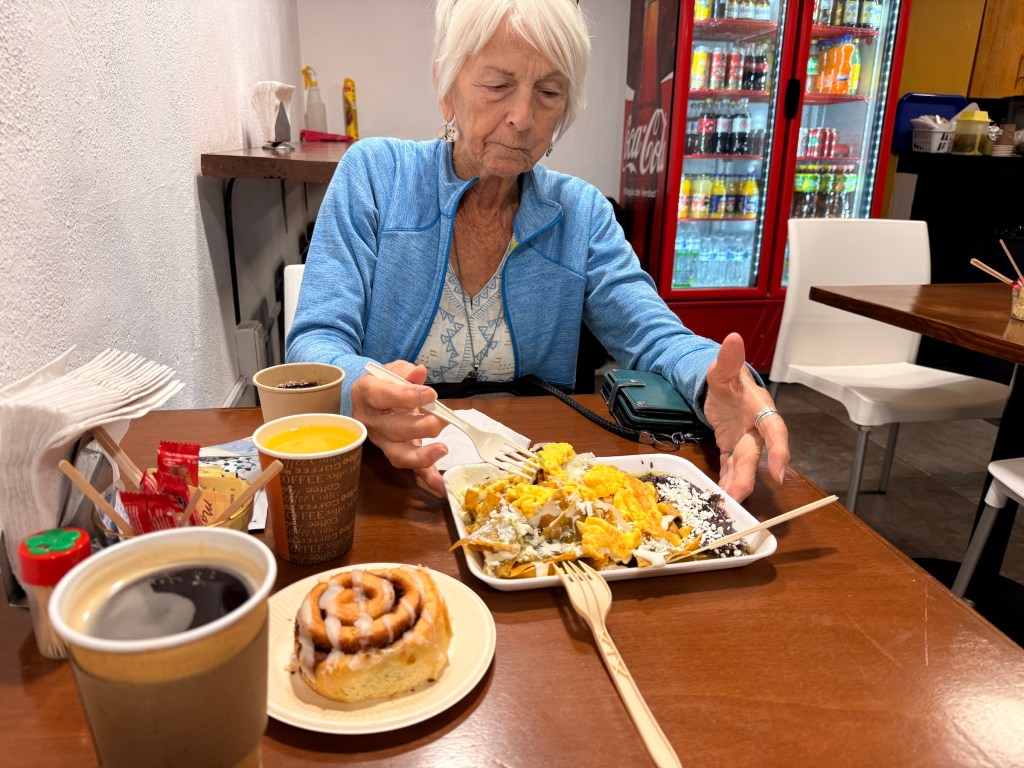
An early morning cab ride takes us from our hotel in Bacalar down pre-dawn jungle roads to the airport at Chetumal. We grab coffee and a plastic-plated brekkie at the snack bar, where gourmet food is not really an option. And we look forward to better choices after finding our next hotel.
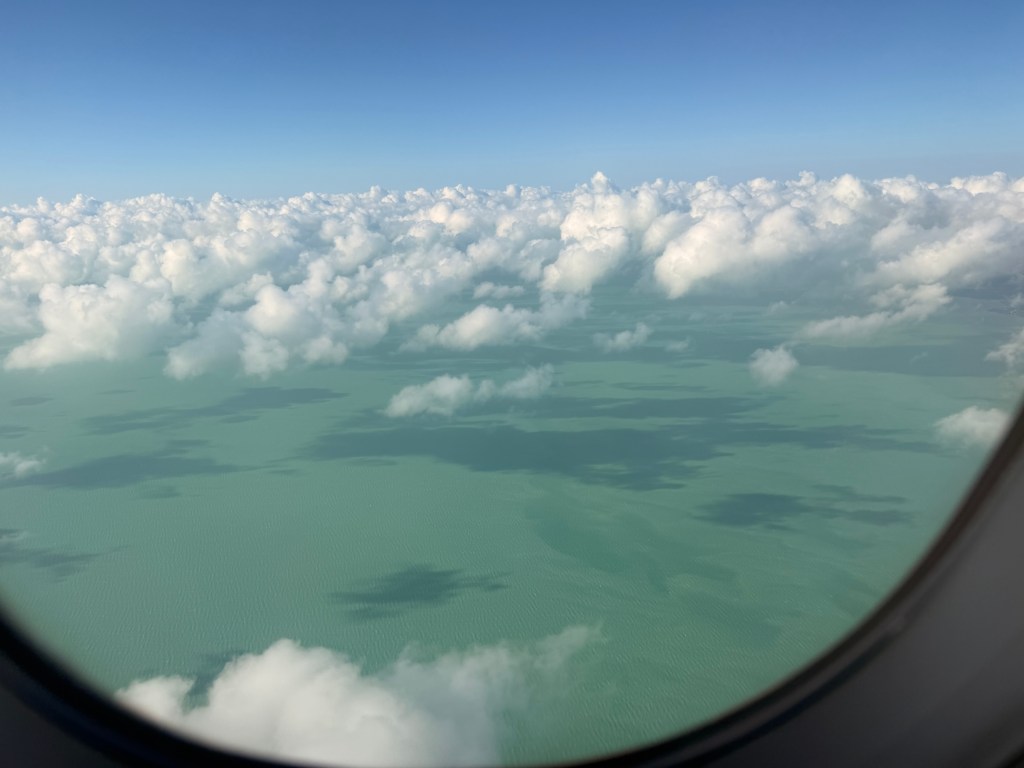
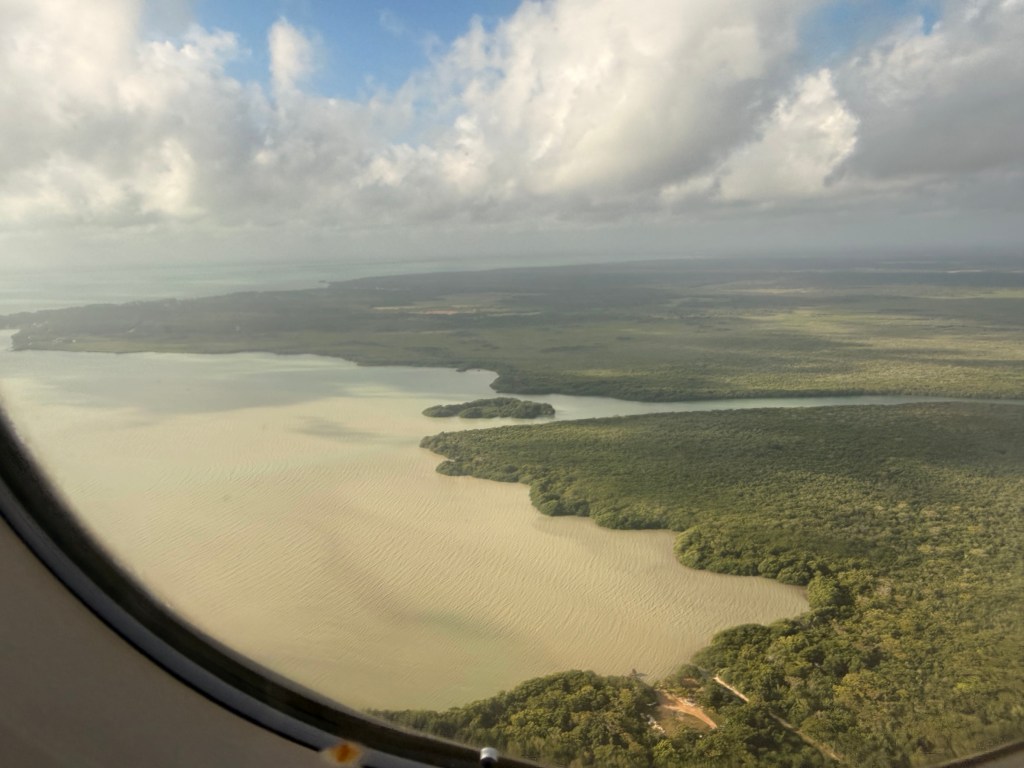
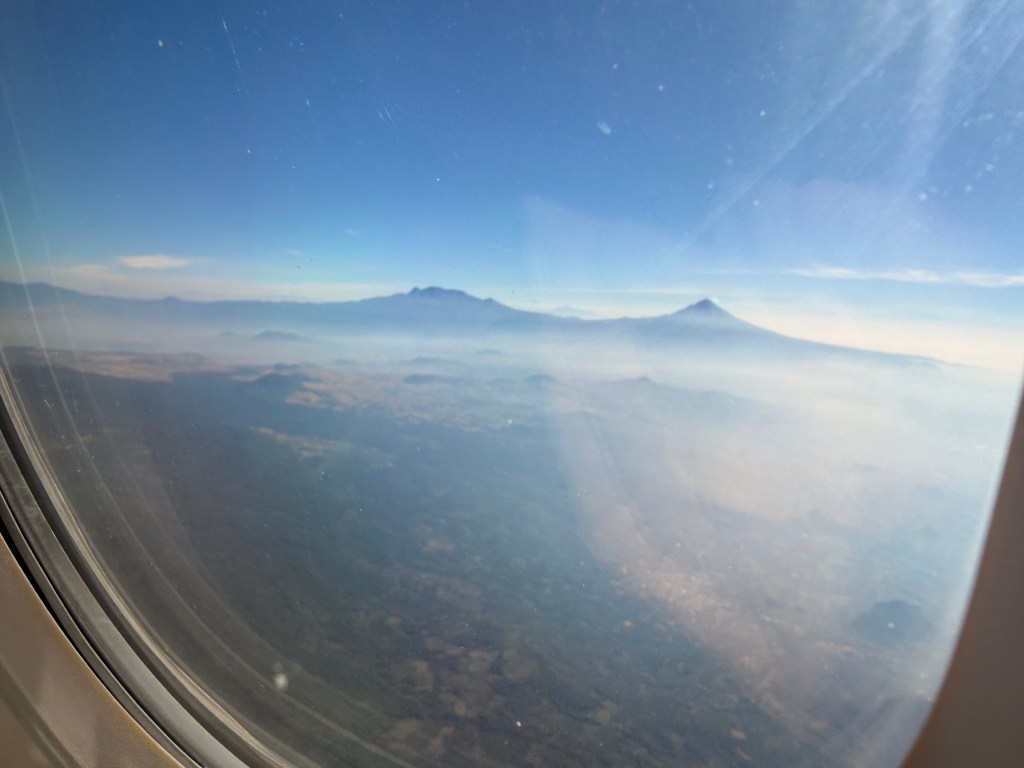
Silver wings lift us high above lush jungle lands and the tranquil Laguna Bacalar, and then out over the cloud-dappled Caribbean, as we leave the Costa Maya behind. And soon Popo and Ixta, the distinctive volcanos of Mexico City, pierce the horizon above the big city emerging from morning smog. There are programs to reduce the smog that settles in the CDMX basin, but it’s a big problem and a slow process. And living in a high mountain basin requires better ideas than many other big cities where they let the smog drift downwind, to become someone else’s problem.
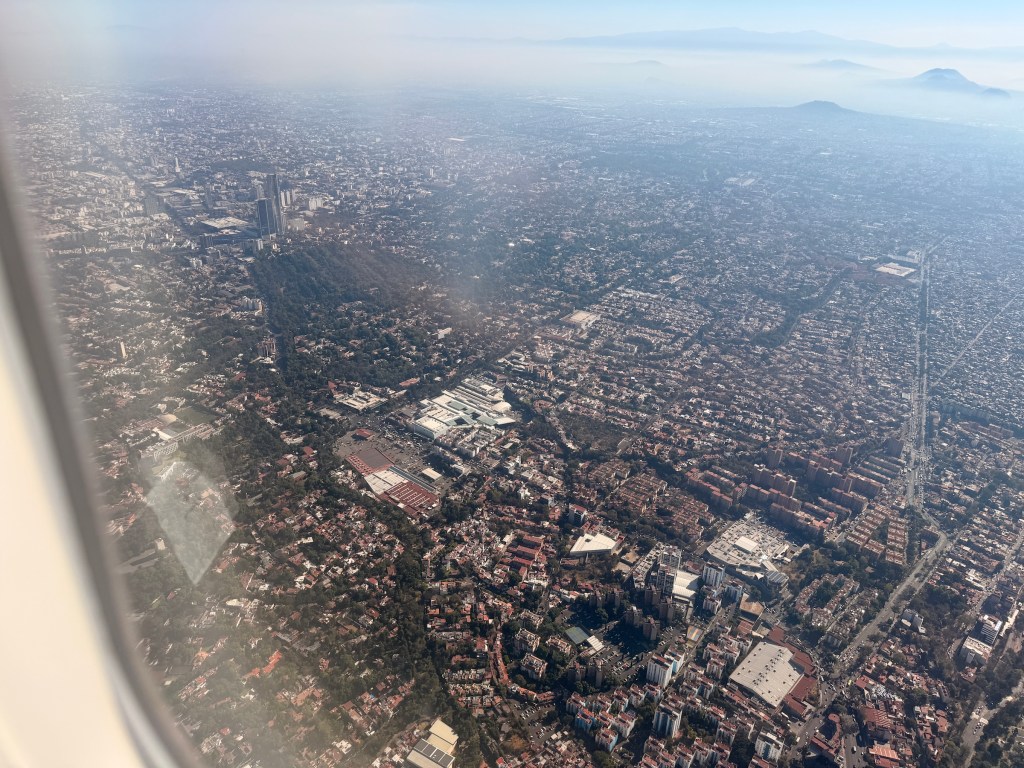
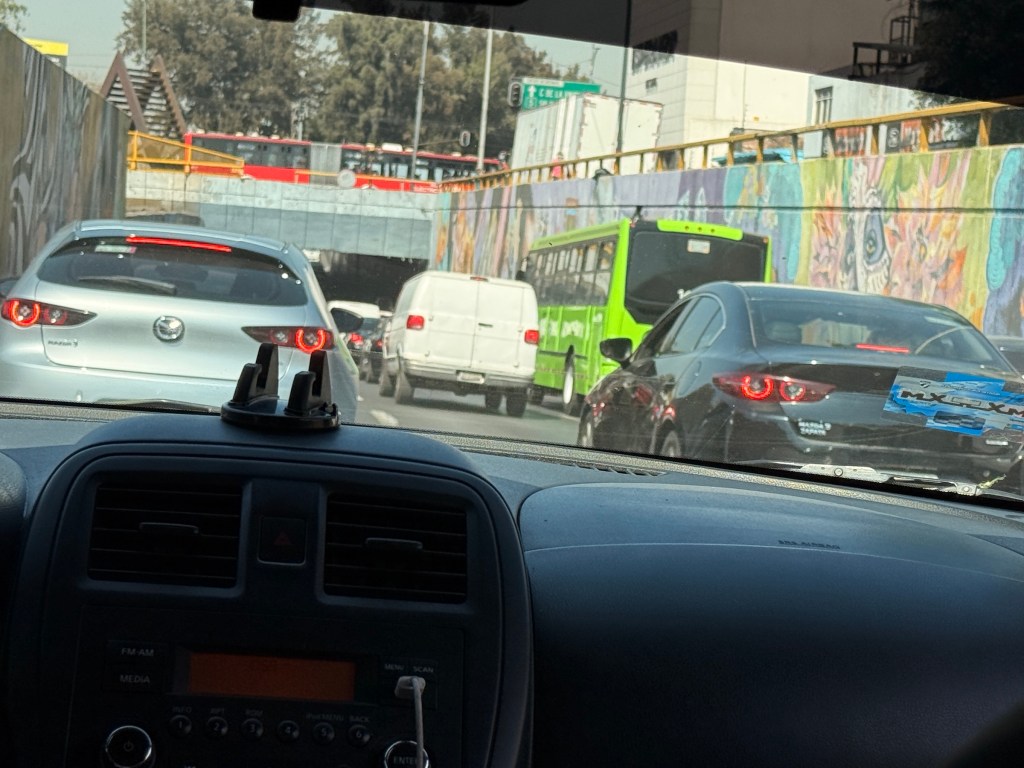
We could take the Metro to the Estación del Norte bus station but it requires a couple of changes, so we hire a ‘Taxi Seguro’ at the airport and plunge into the streets of CDMX. And soon we have tickets on a nice ETN ‘Clase Ejecutivo’ coach for an easy three-hour ride to Querétaro. There are only three seats per row and seats right above the driver with an uninterrupted view of the world ahead, but they were already taken.
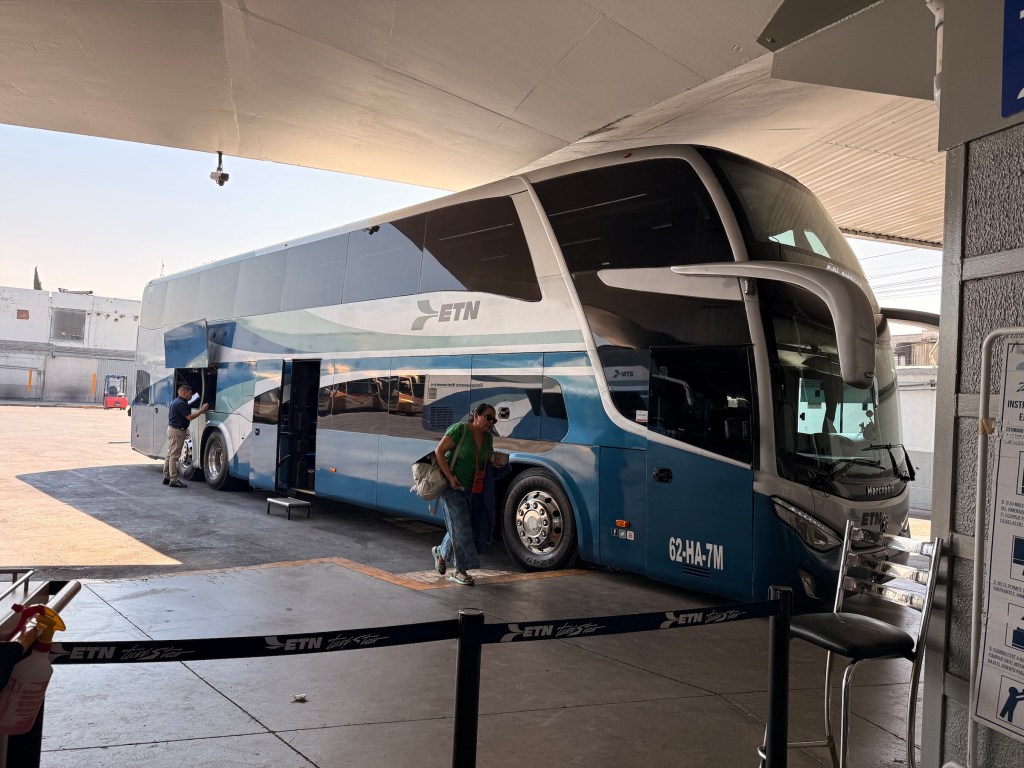
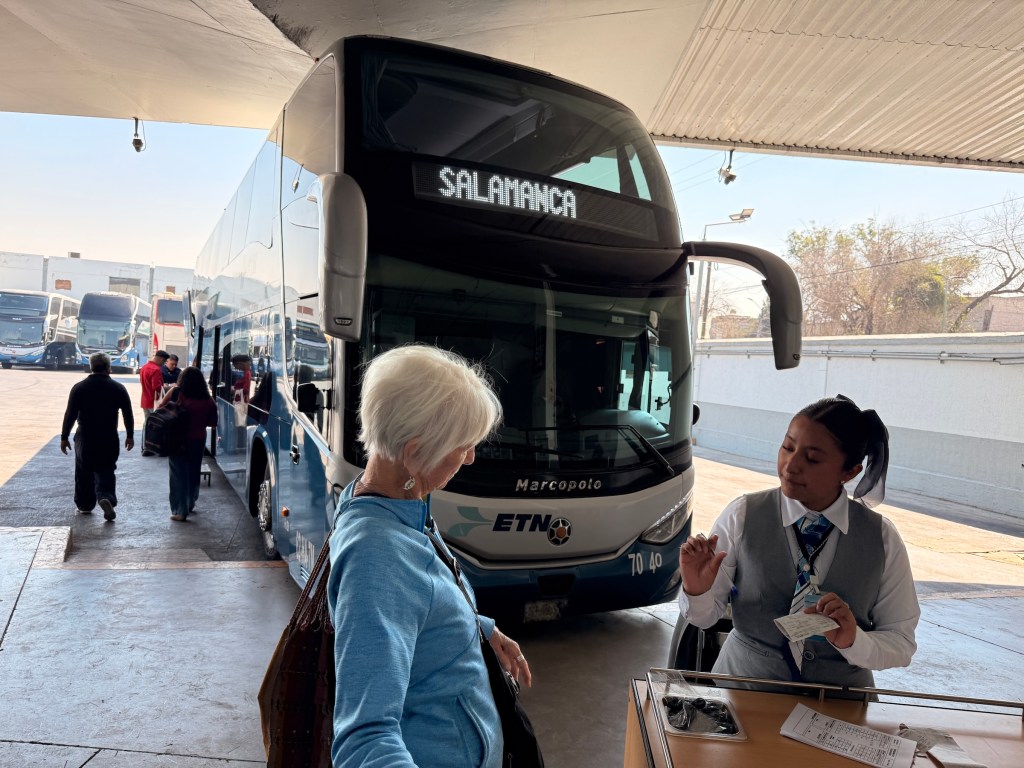
We could have flown to Querétaro, but the bus is much cheaper and roomier, with frequent departures and no long airport waits. We also wanted to see any new developments along the road, and we would have arrived at about the same time anyway.
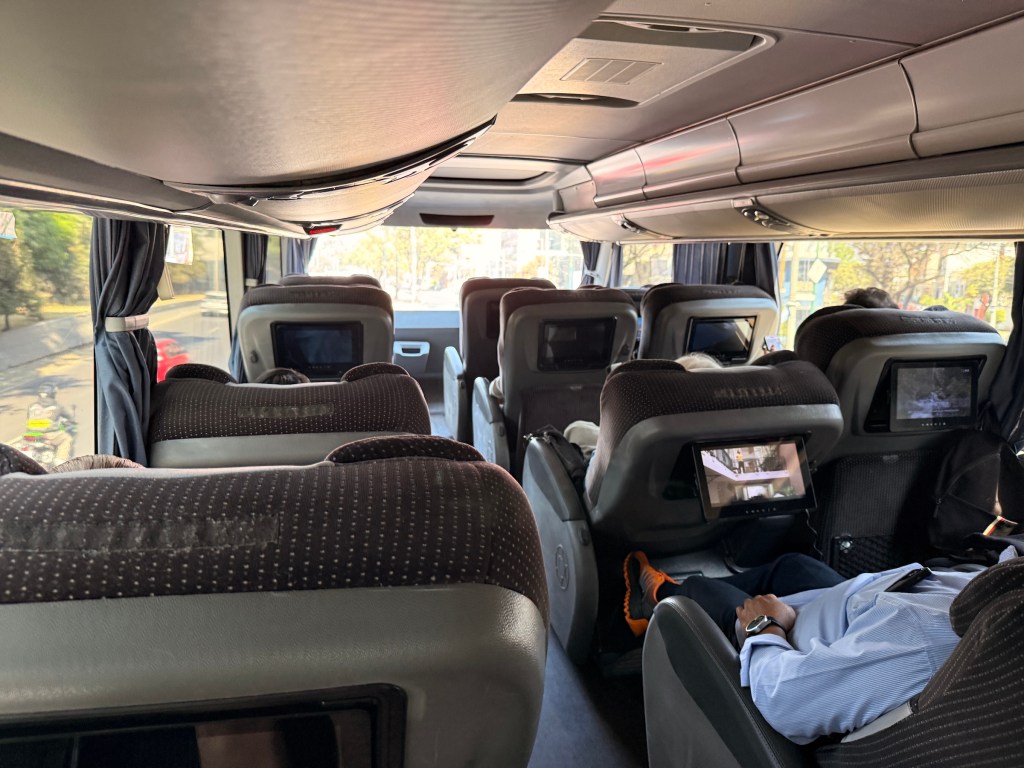
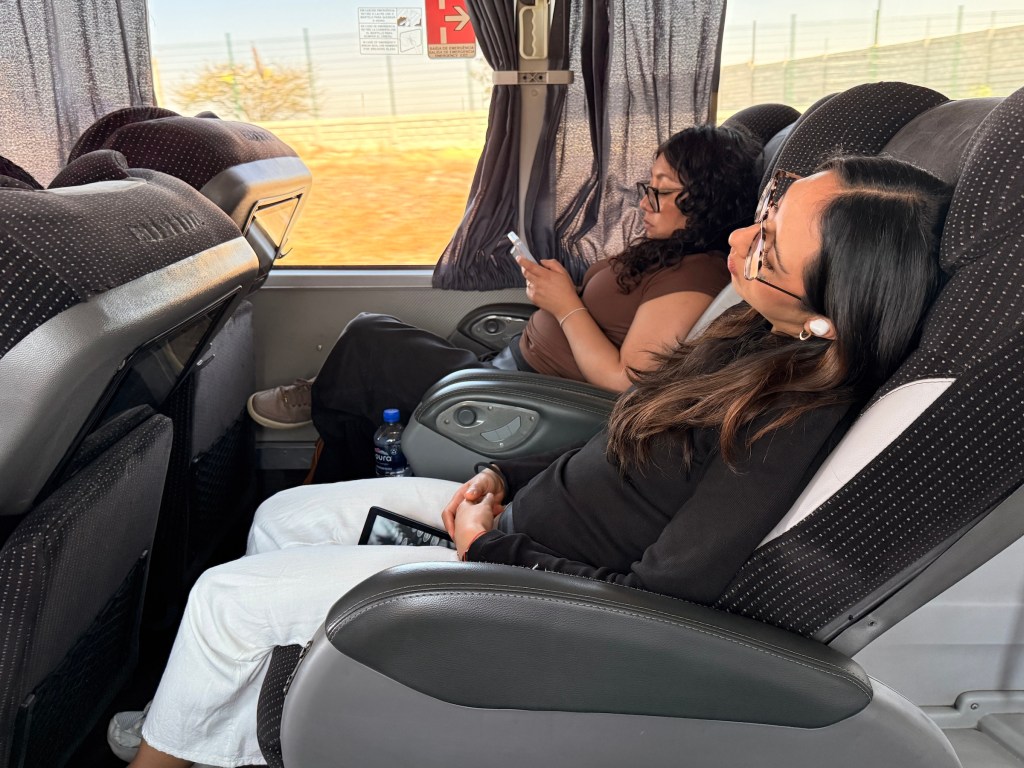
The crowded suburban neighborhoods surrounding CDMX haven’t changed much, and the commuter traffic from the north is jammed up as usual. A billboard lets us know that the city’s suburban train system is 100% powered by wind energy, another part of bigger plans to build a cleaner economy.
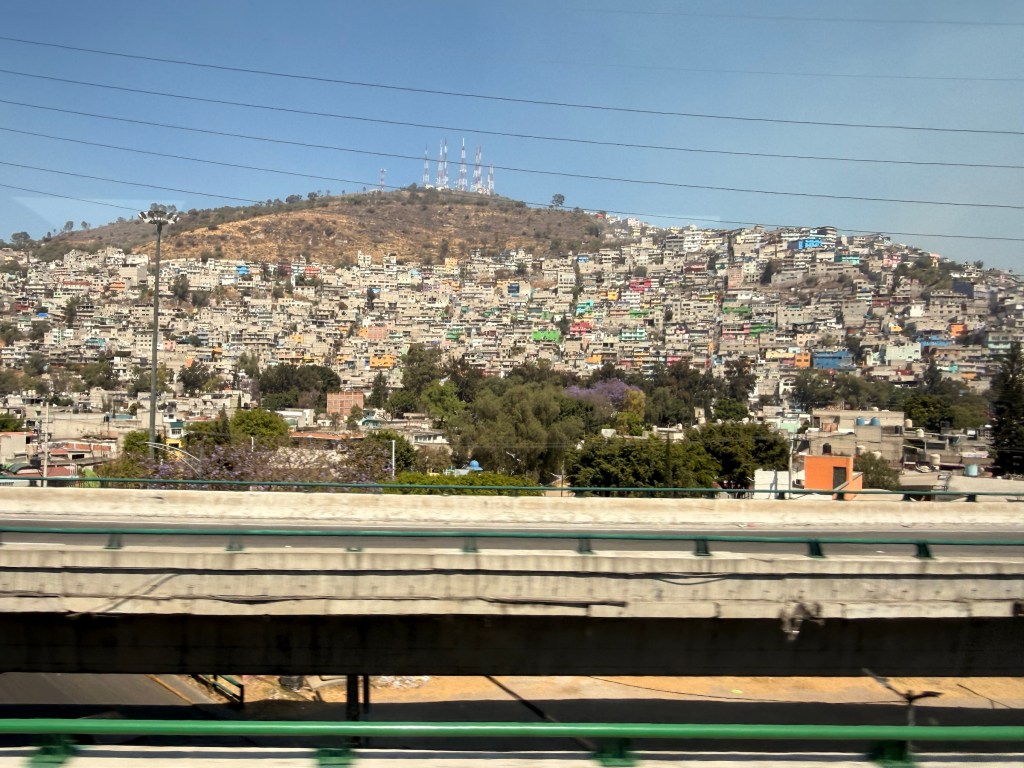
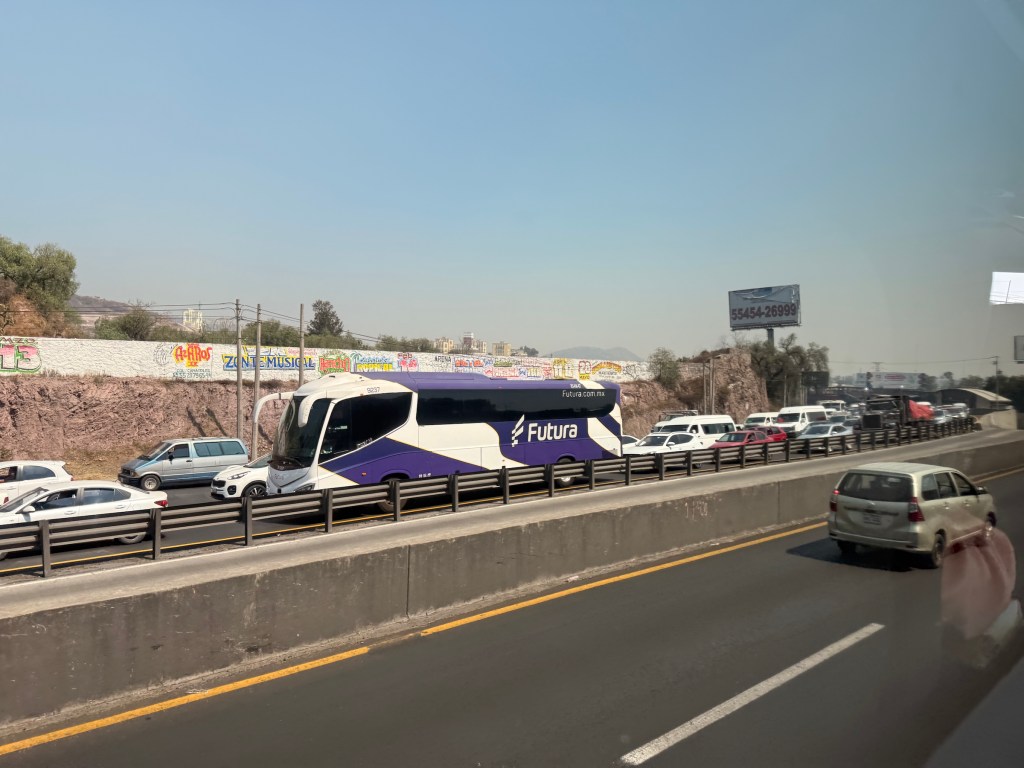
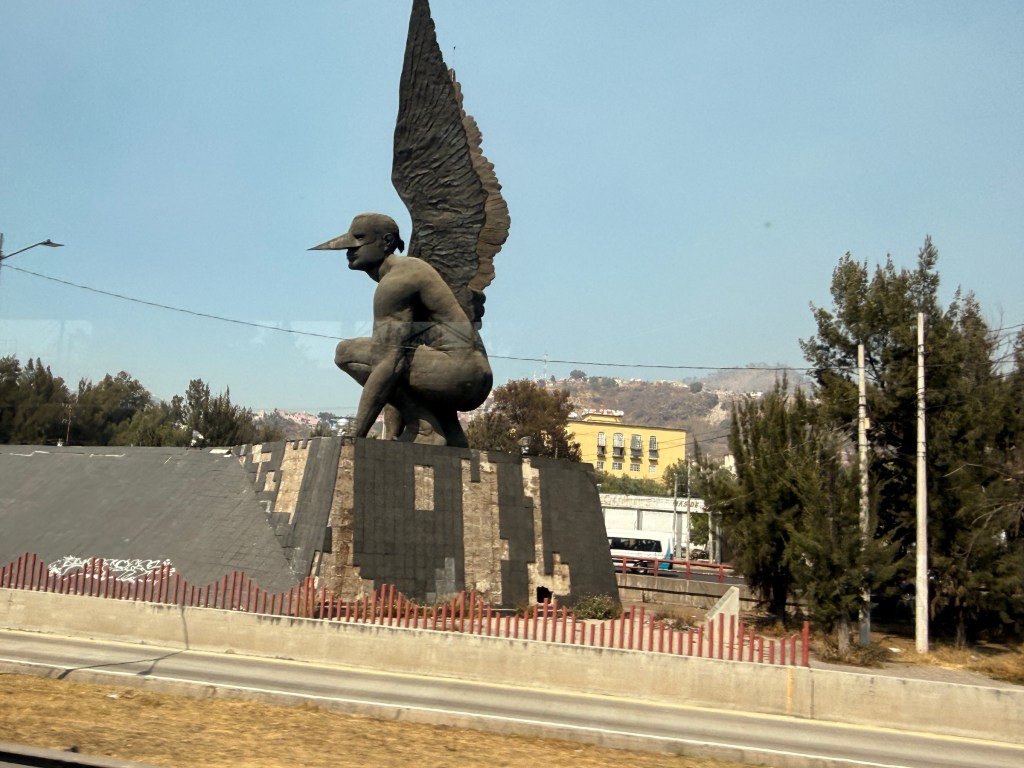

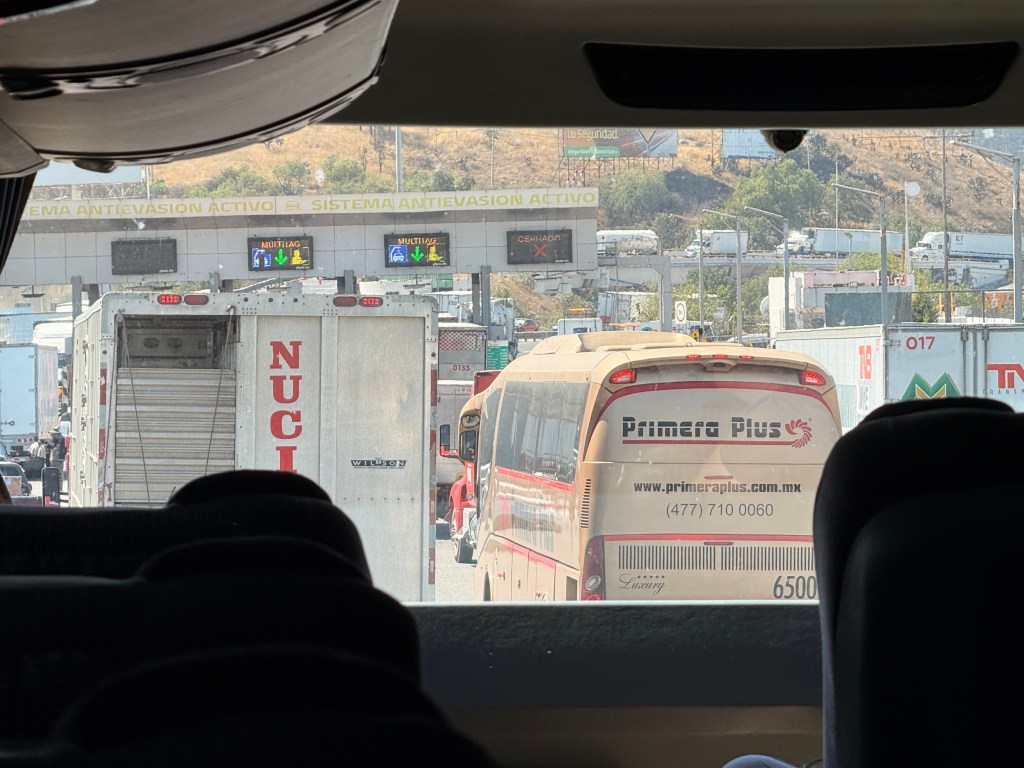
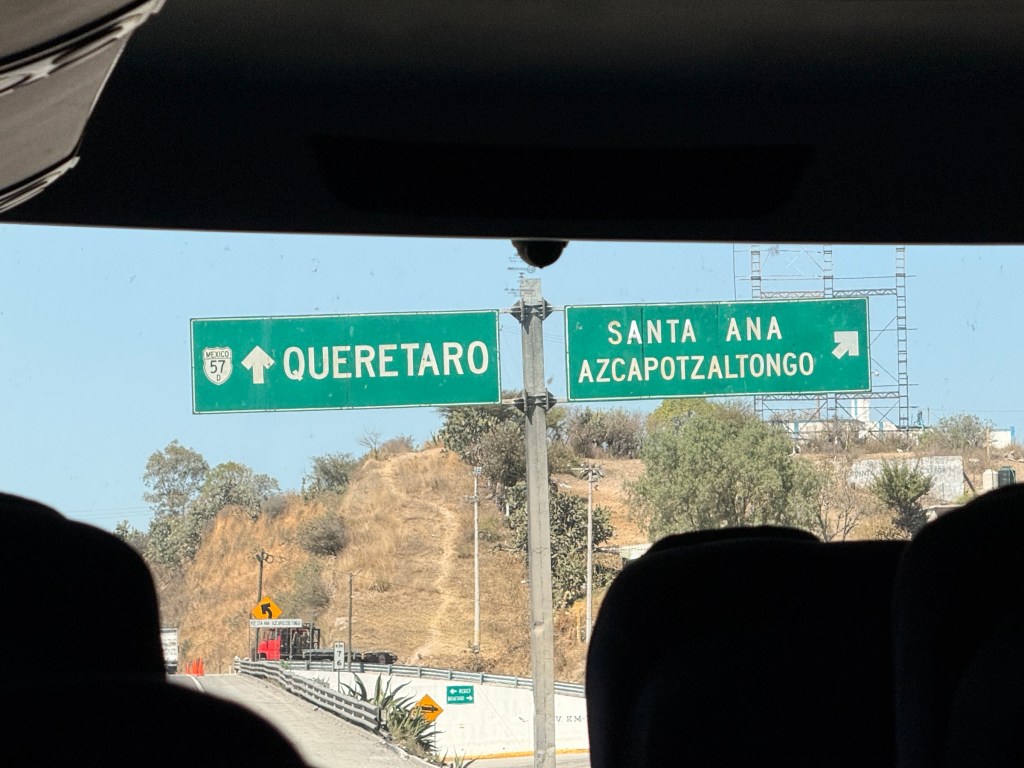
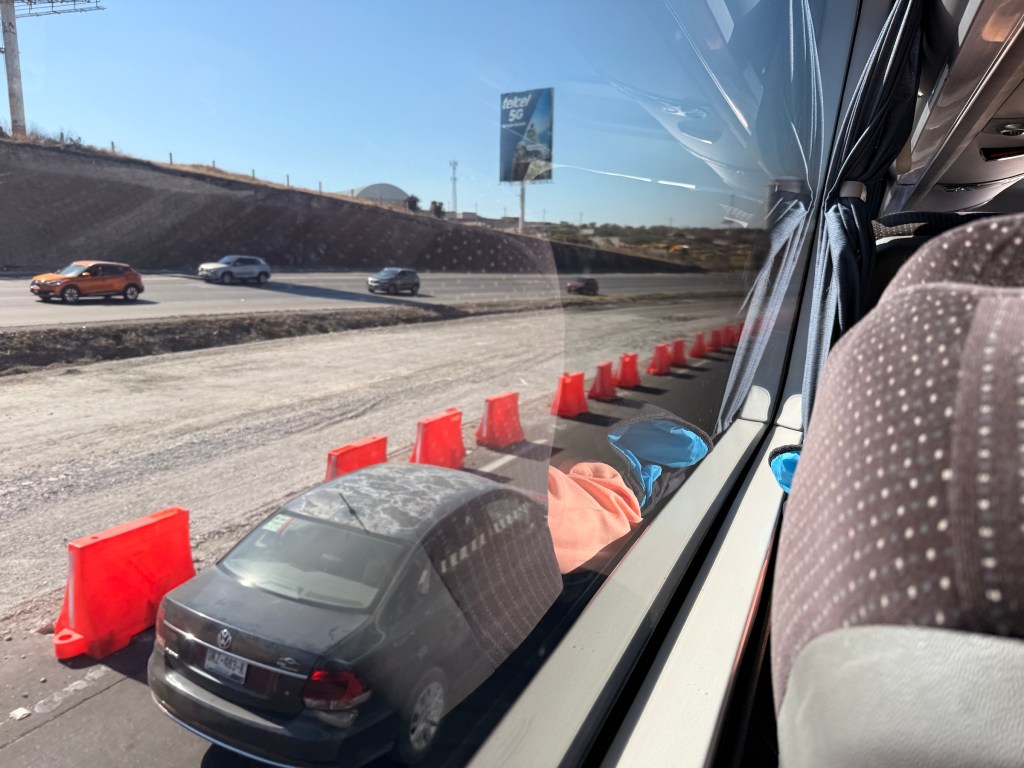
Soon we’re beyond the toll booth and there’s a large project underway that looks like another highway widening. But later we find out it’s part of a new fast train connection from Mexico City directly to Querétaro to ease the daily commuter traffic between these two emerging tech hubs. This entire central area of the country is where much of the commerce is centered, and there are serious efforts underway to connect all these vital hubs of industry.
Current Presidenta Claudia Sheinbaum has a doctorate in energy technologies and did her post-doctoral work at Berkeley. She appears to be the best person at this time to lead Mexico into a bright energy future. Here’s the Mexico Daily Post report on the Querétaro project and the country’s new train network:
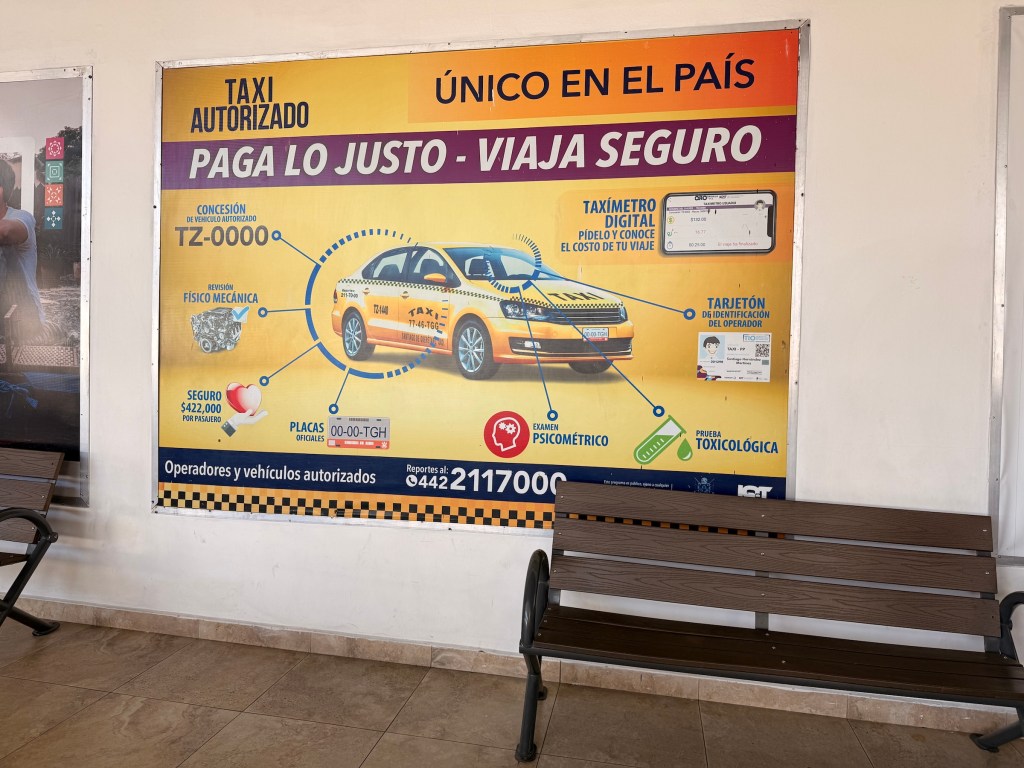
At the clean and modern Querétaro bus station we get a Taxi Autorizado to our hotel in the Zona Historica, and look forward to revisiting this interesting city. Querétaro is still a city of surprises, like it was the last time we happened upon an International Jazz Fest. Yolanda Brown was the big hit, and she now has a couple of food and entertainment places in London called Soul Mama that we’ll try to get to whenever we’re in the UK. And who knows how many other surprises we’ll find this time around!
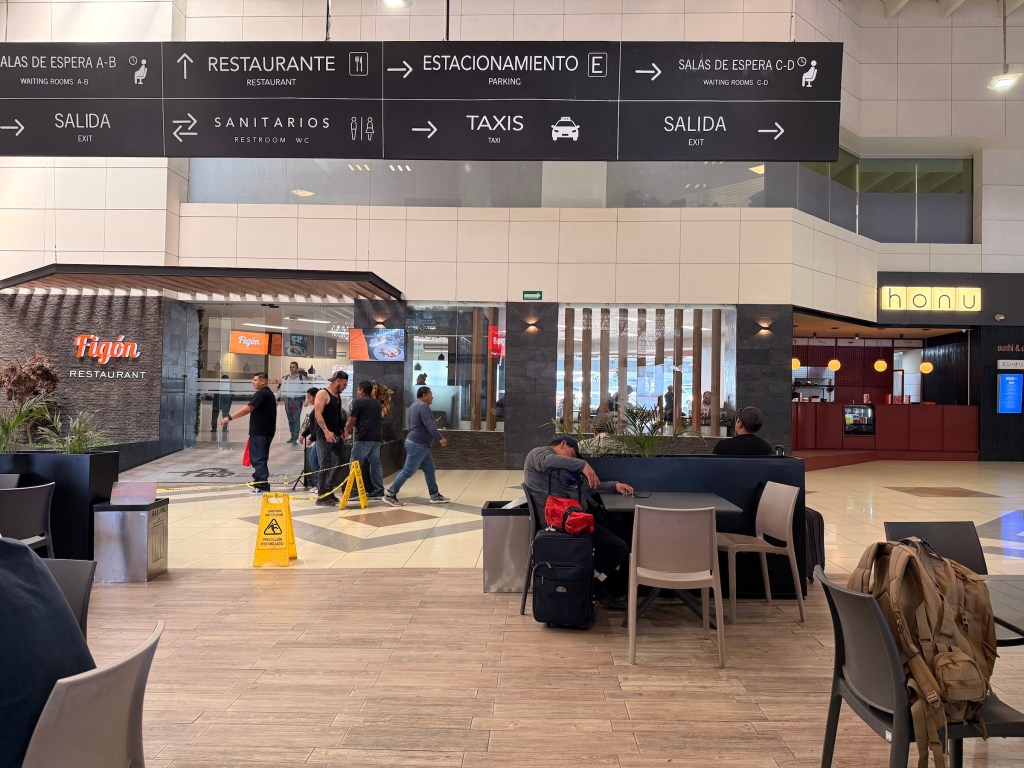
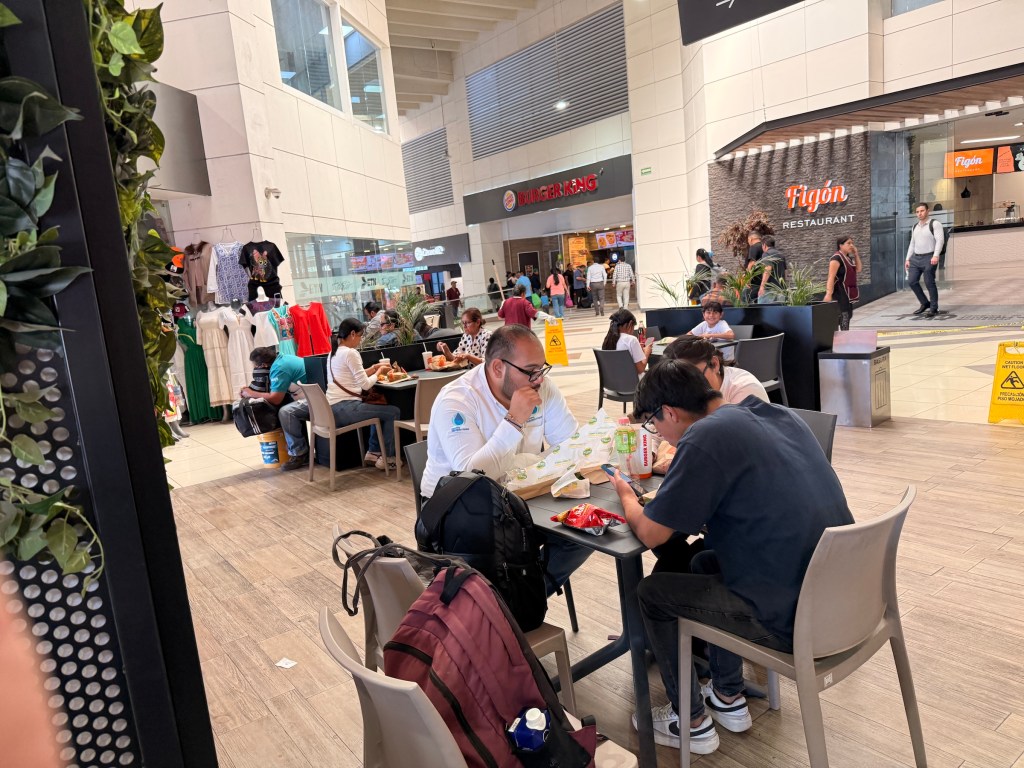
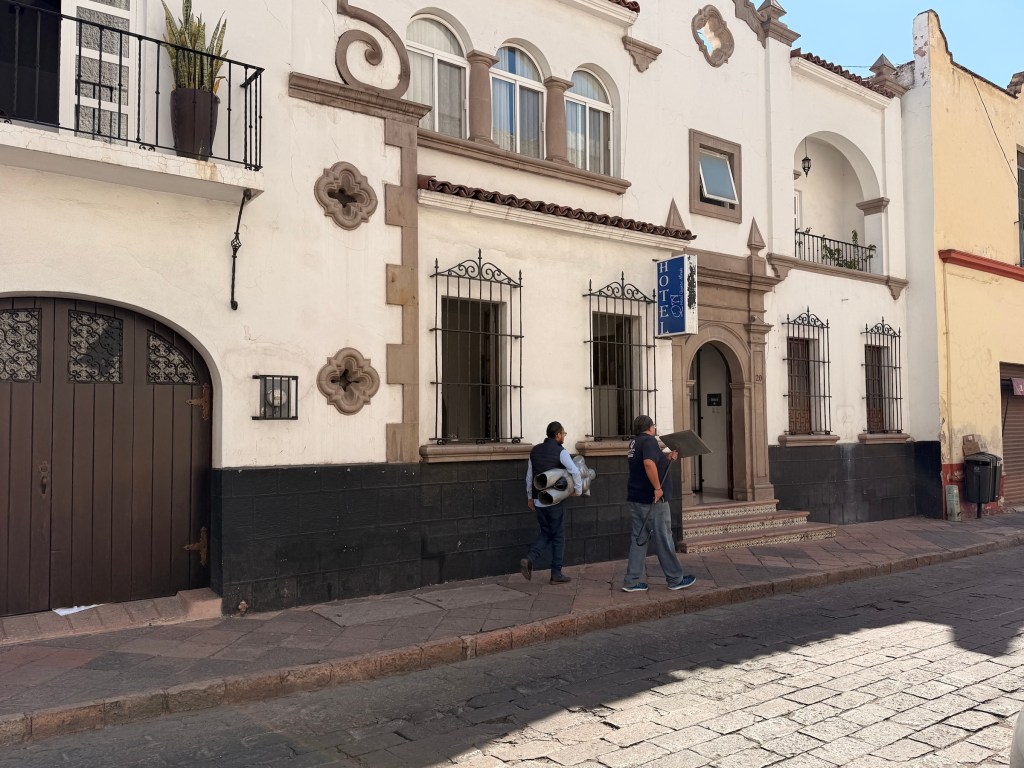
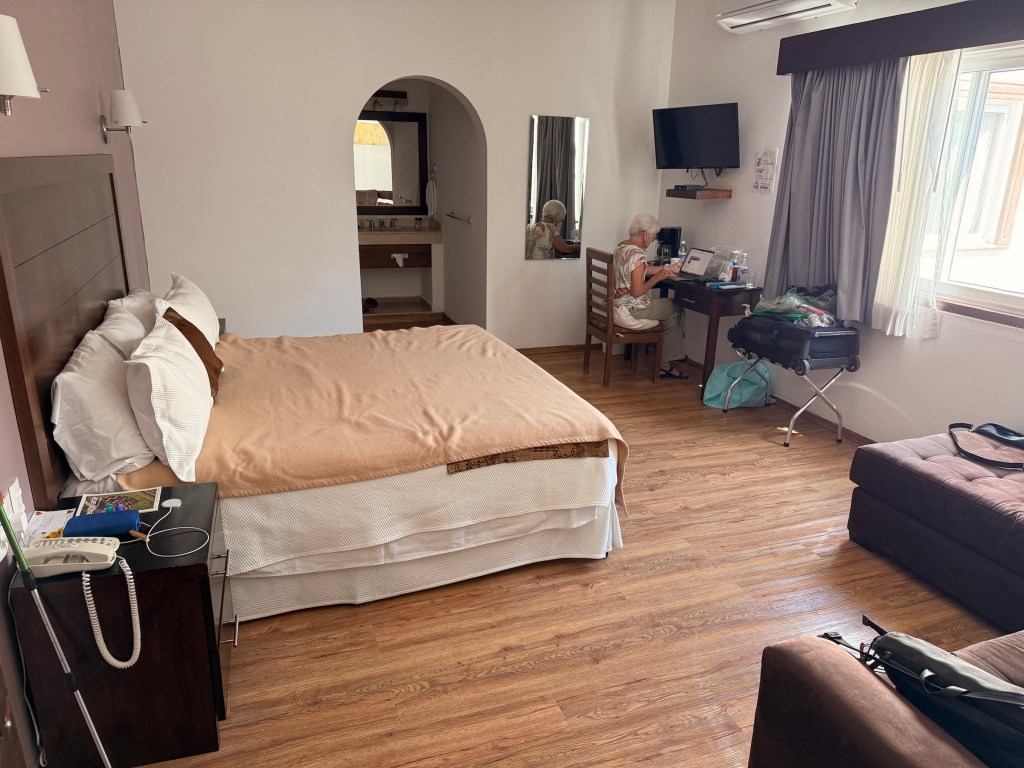
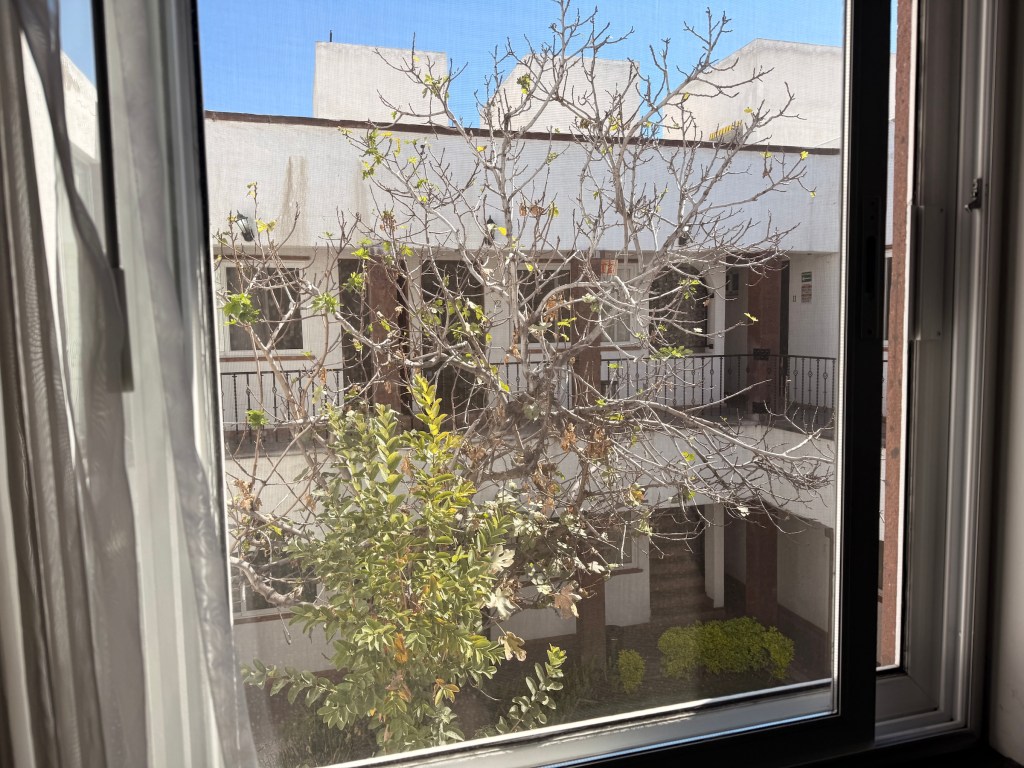
We’re staying at the Hotel Quinta Allende, a well-kept older hotel on a quiet street that’s just a short walk from most everything in the historic area. It’s an excellent location for the kinds of things we like to experience.
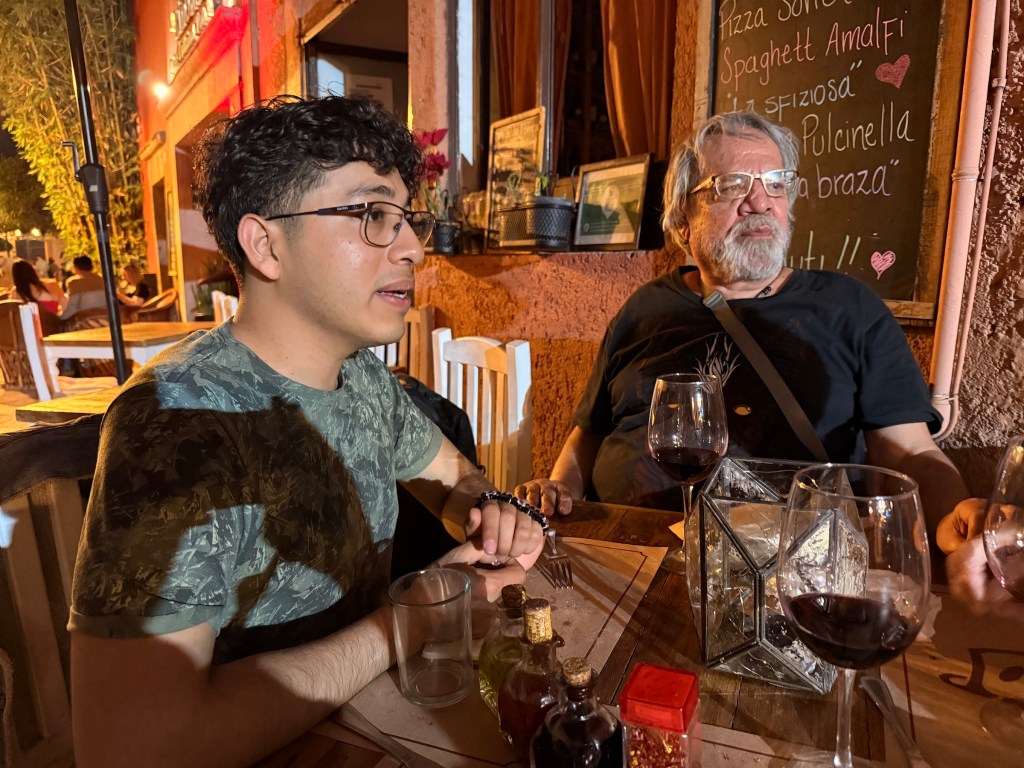
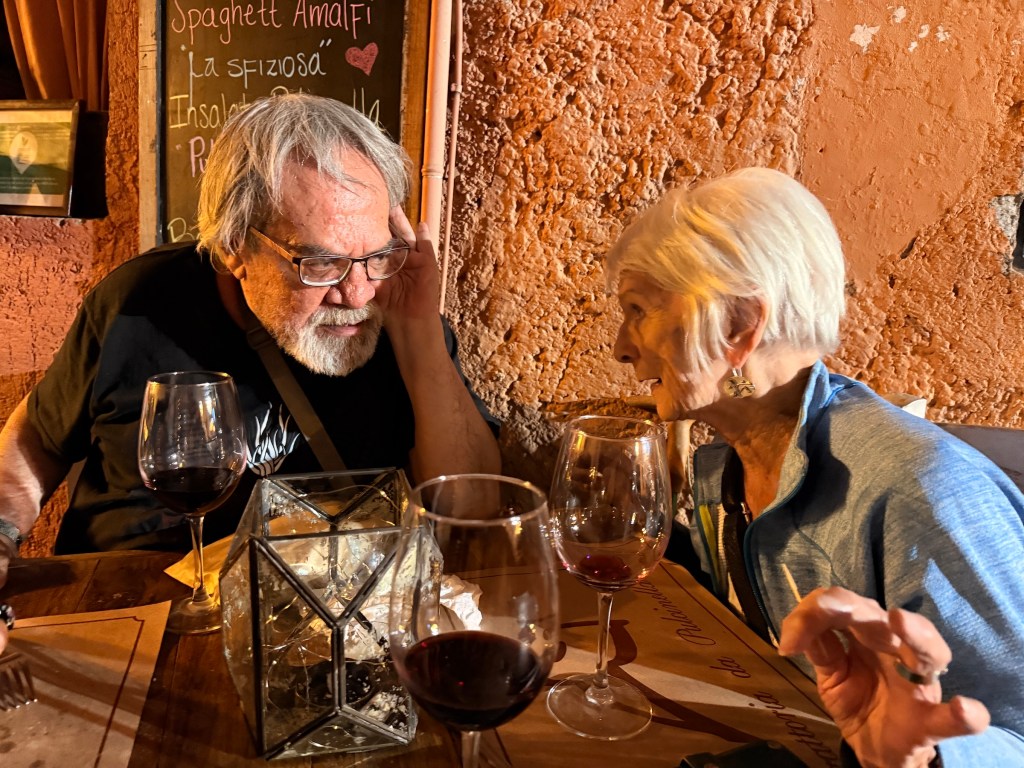
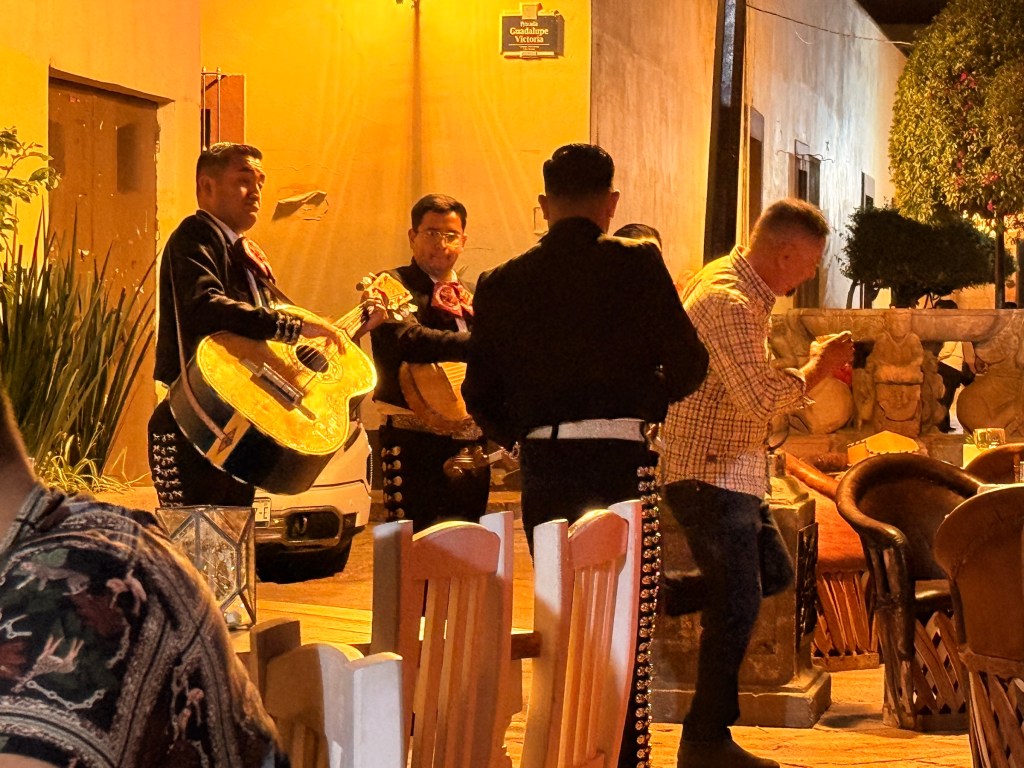
The Cinco de Mayo alley is just across from the hotel, with several interesting eateries. We find a table at Trattoria Da Pulcinella and soon make the acquaintance of an interesting Mexico City journalist named Roberto Ponce – or ‘Beto’ for short. And with him is Dante Garcia, a bright young Architect and talented pianist. There’s a raucous band entertaining a happily drunken dancer, and that makes the conversation difficult. But we manage. Beto is leaving in the morning for CDMX and he tells us we must see the historic ‘Viterbo’ while we’re in town. We’re not sure yet what it is, but we add it to our list.
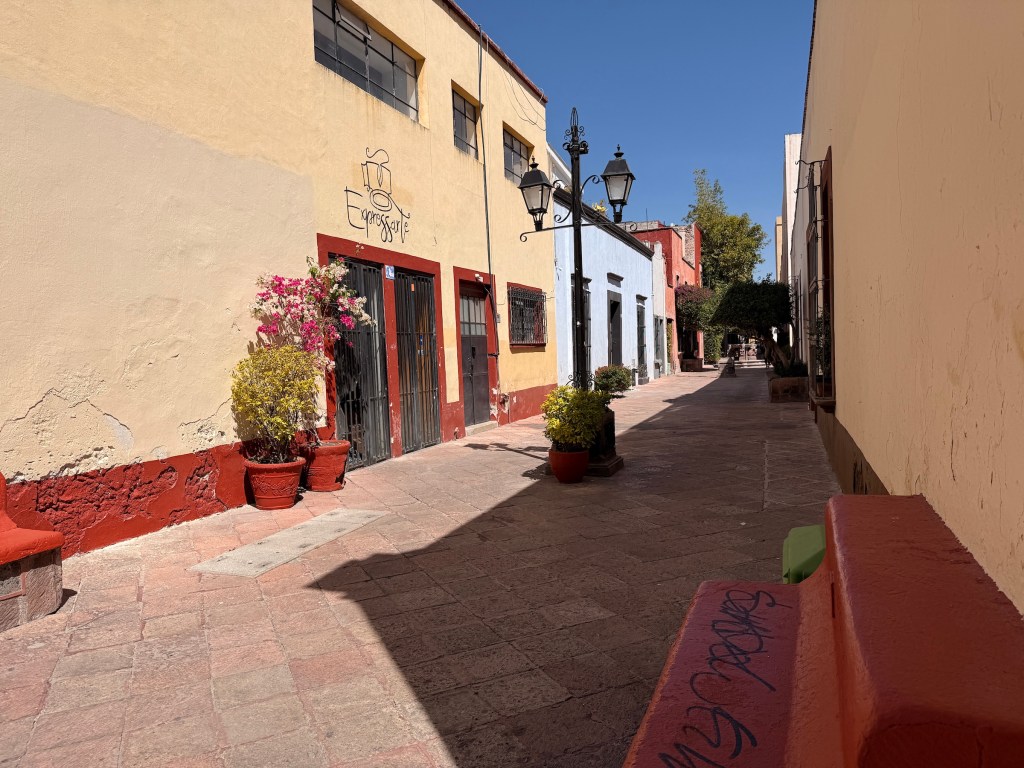
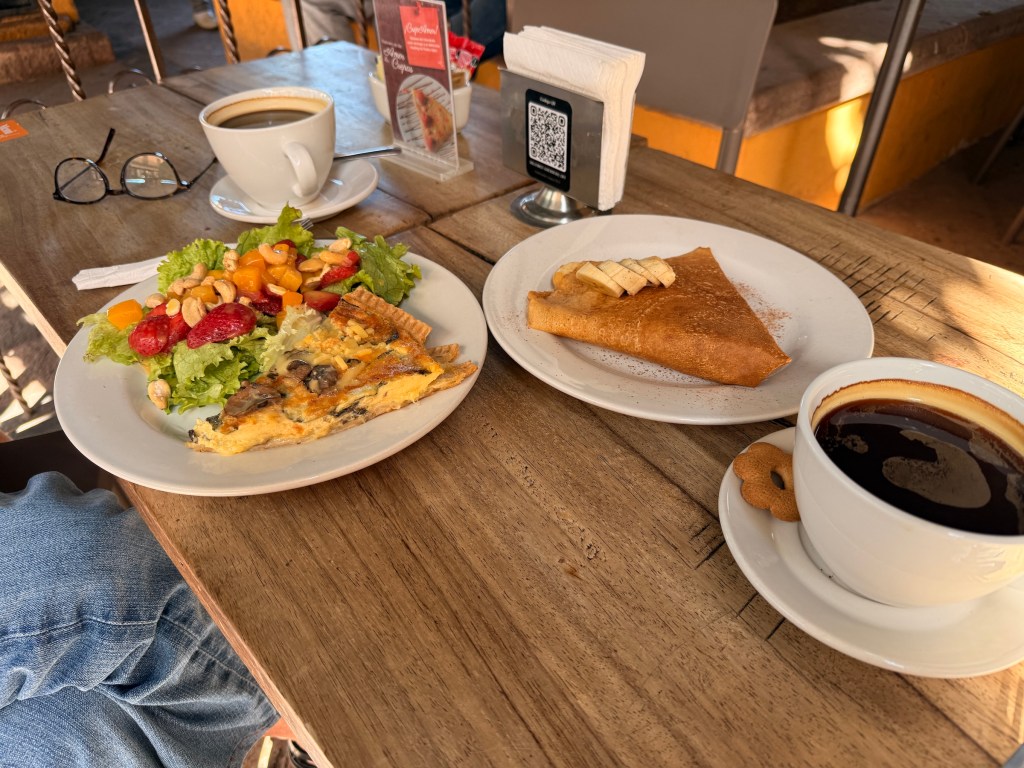
In the morning we walk a block from our hotel to the Jardín Guerrero, where we find a nice little Crepería, some good quiche, and two mugs of rich coffee.
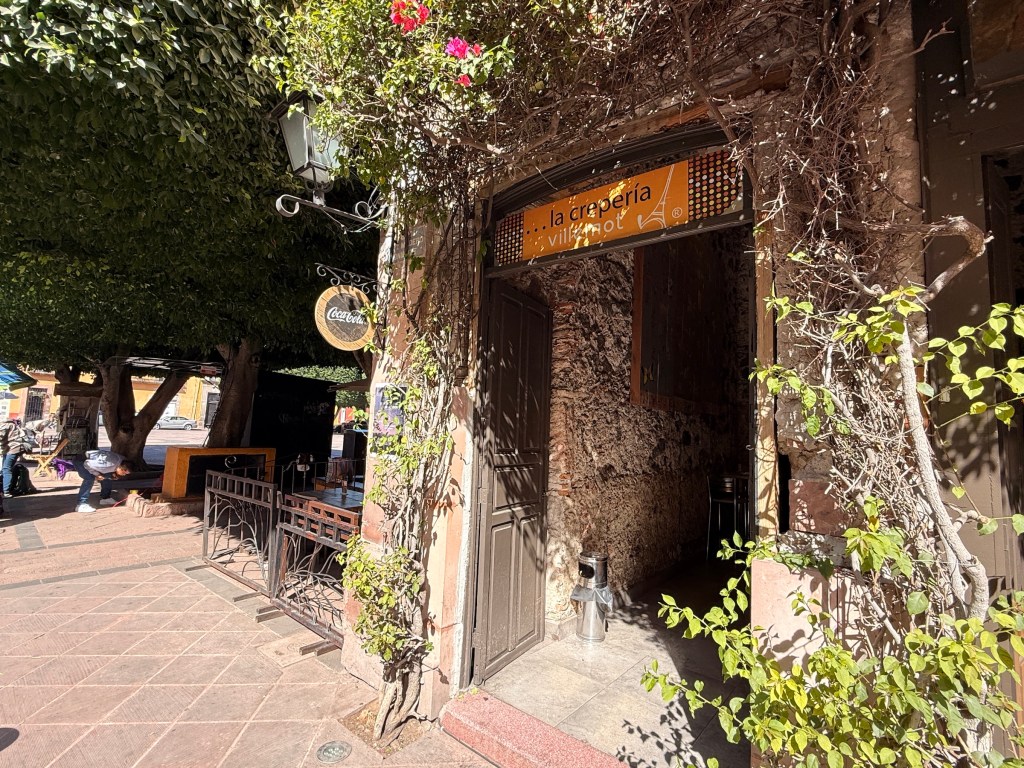
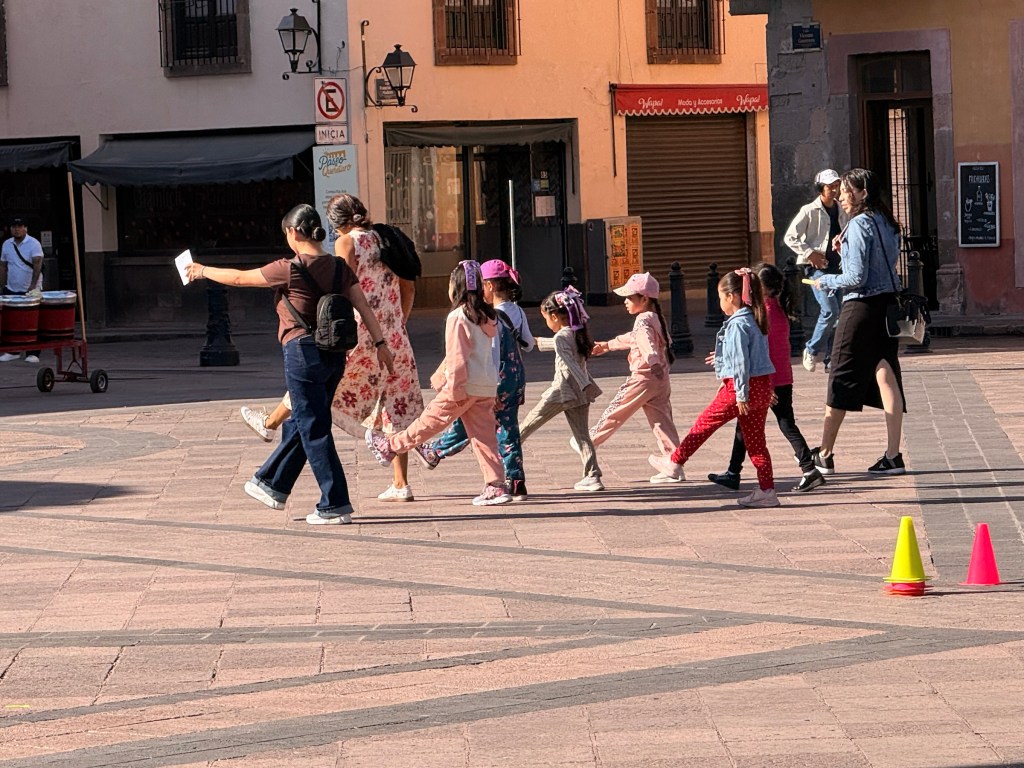
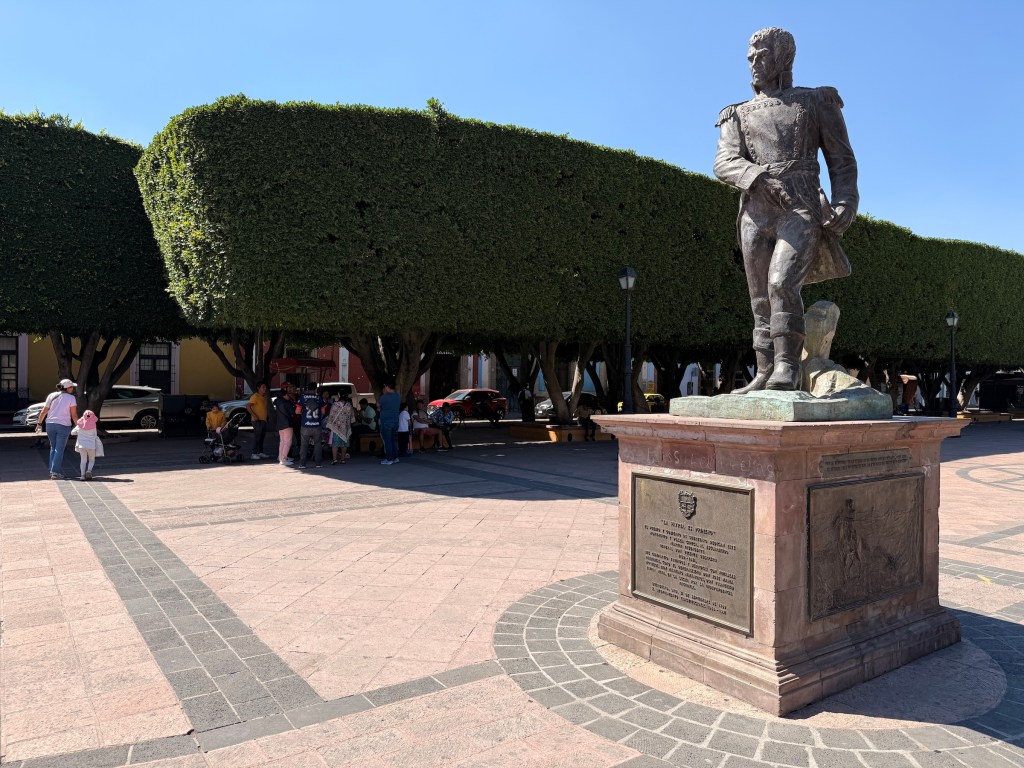
Once properly fortified, we walk beneath the welcoming and dense ‘benjamina’ trees of the nicely-shaded Jardín Guerrero. The richly-tiled dome of the Iglesia de Santa Clara peeks over the trees. And there’s a little-girls marching group practicing their steps on the paving stones. The girls all look so focused and diligent, but Carolyn chuckles when she sees that the instructor on the left is out of step with the entire marching formation!
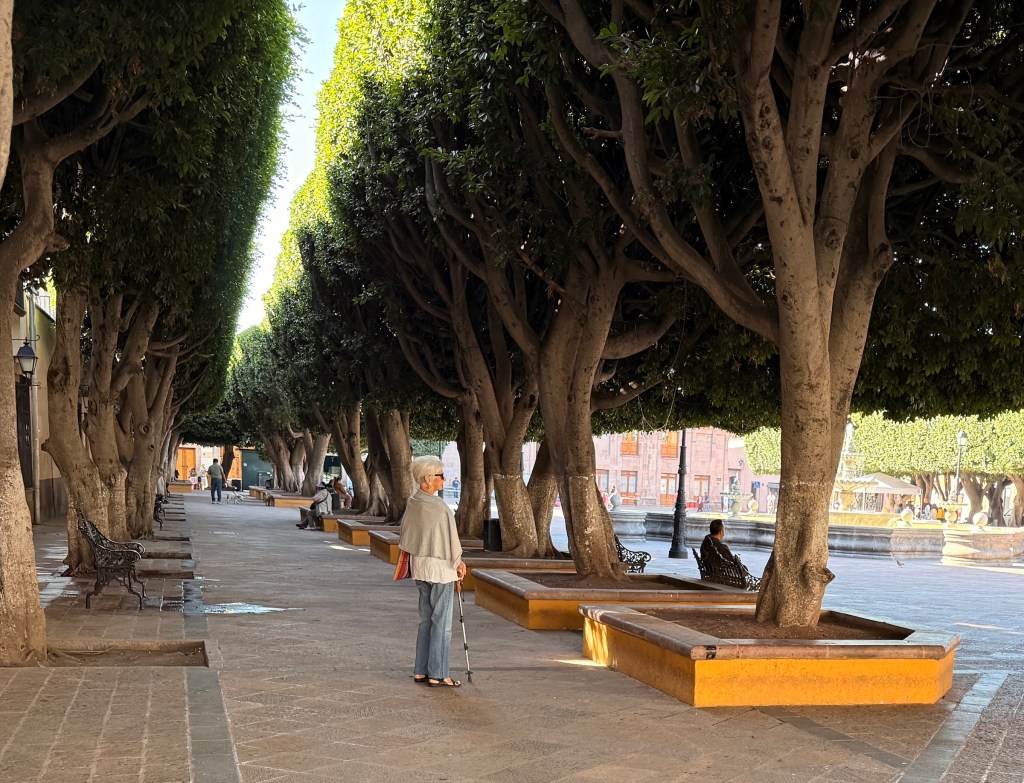
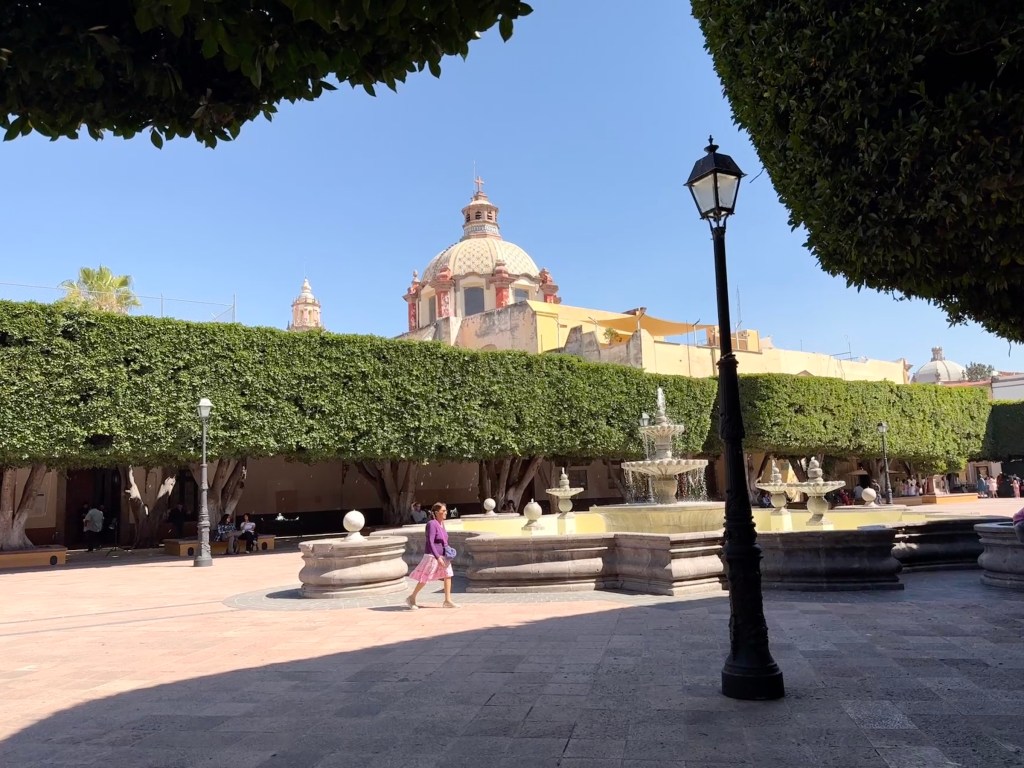
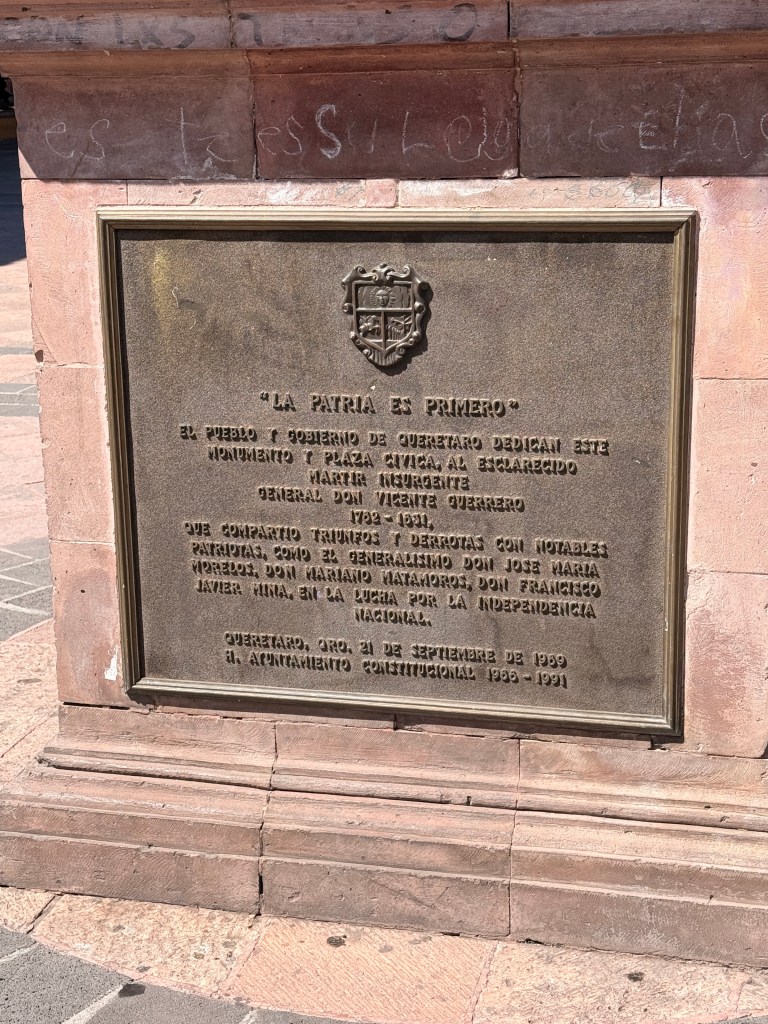
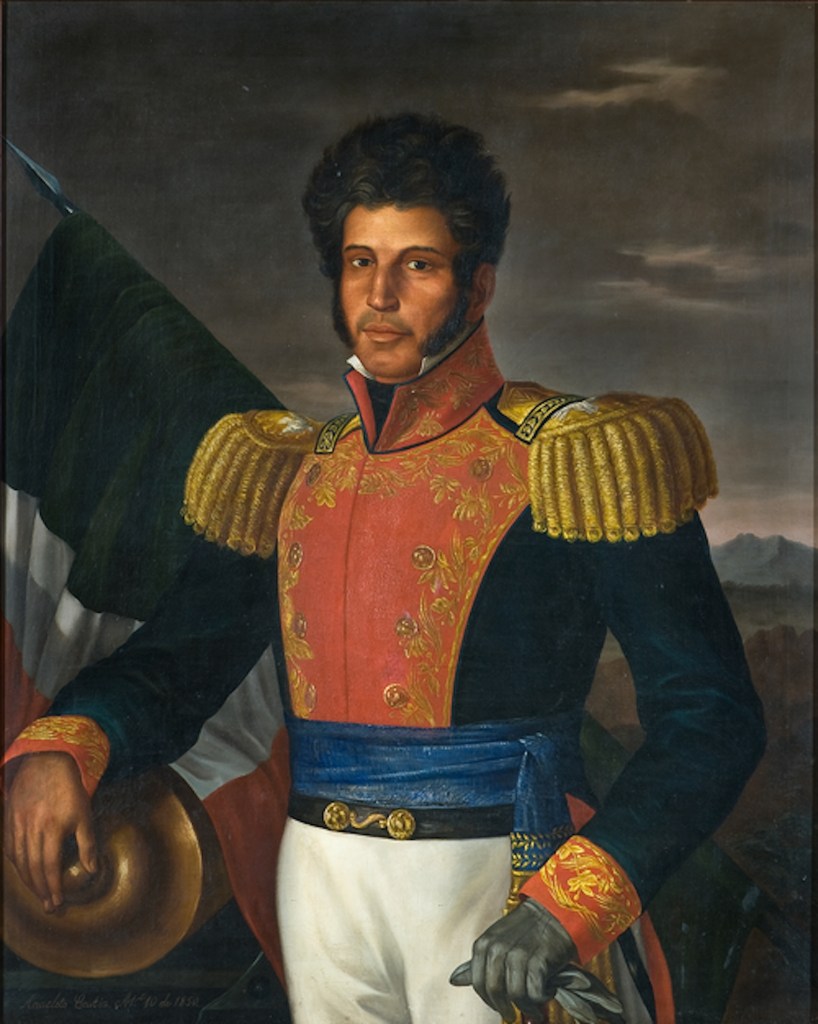
The Jardín Guerrero honors Mexico’s only Black President, and the Mexican state of Guerrero is also named for him. Vicente Guerrero was an important general in the War for Independence from Spain. His abilities with both the Spanish and Nahuatl languages were instrumental in united the indigenous resistance against the Spanish Crown and he became the second President of Mexico. He was also known for abolishing slavery throughout the country in 1829.
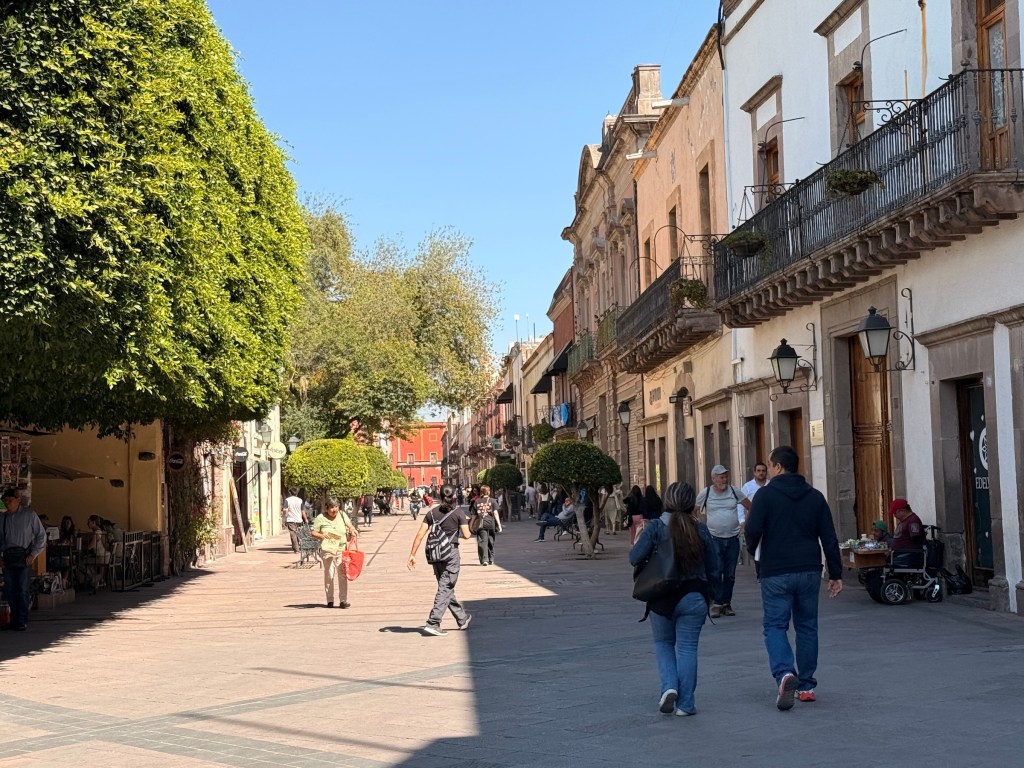
A long walk can be a good way to find the essence of a city, and there’s lots of essence around here in Querétaro.
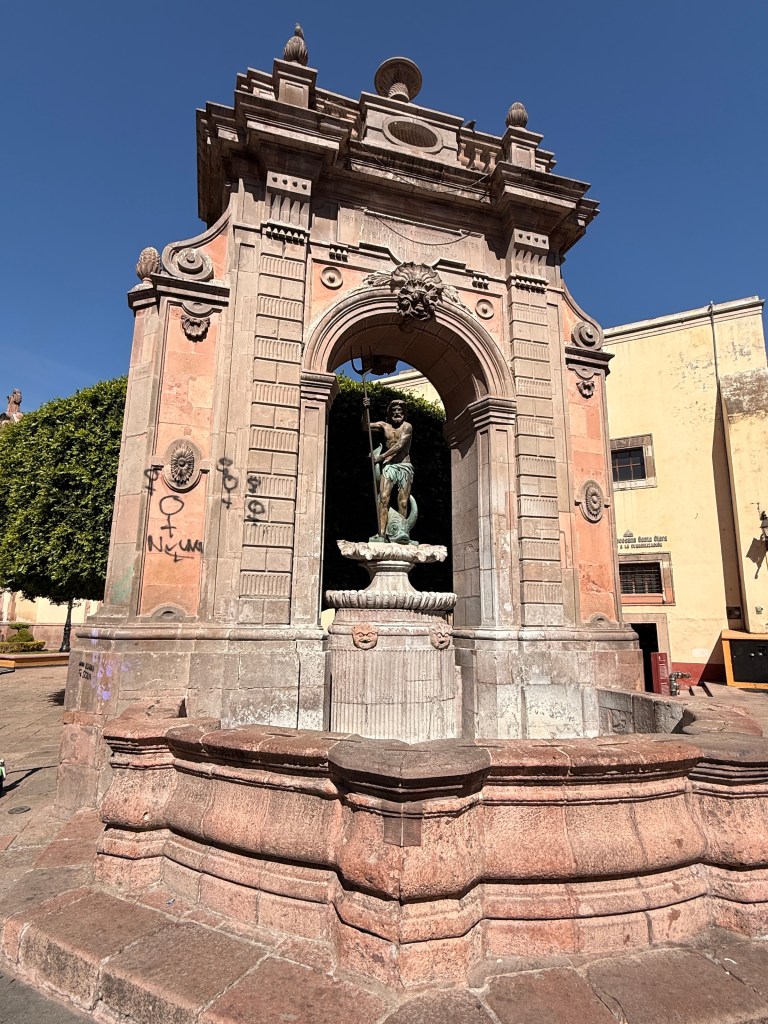
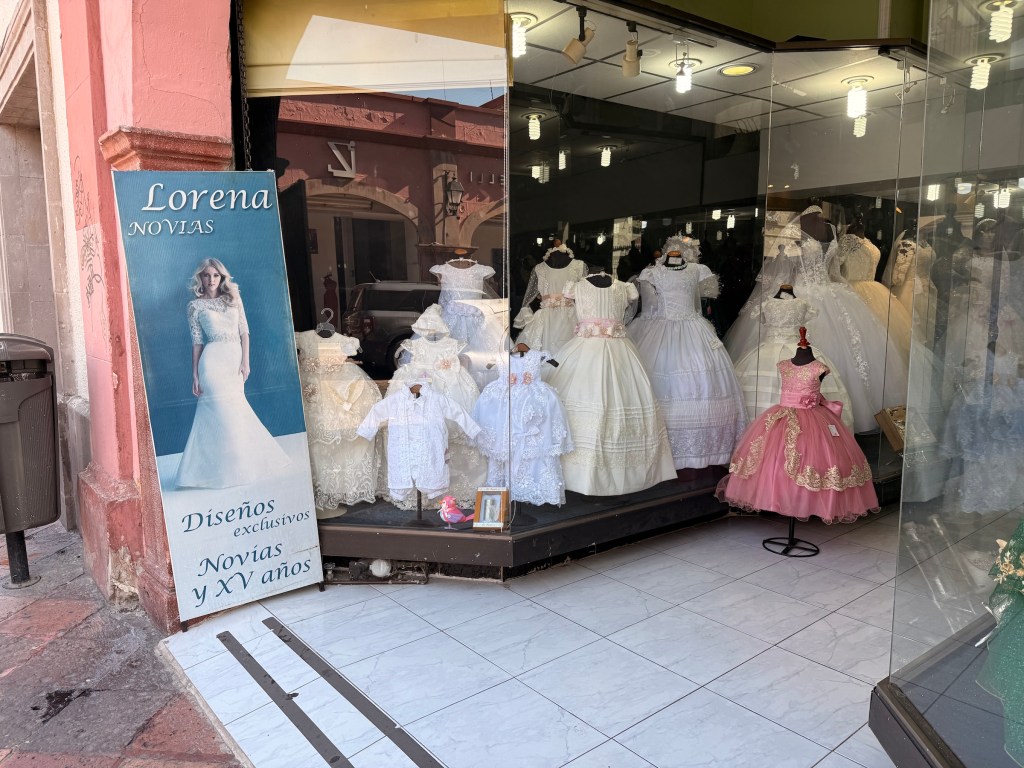
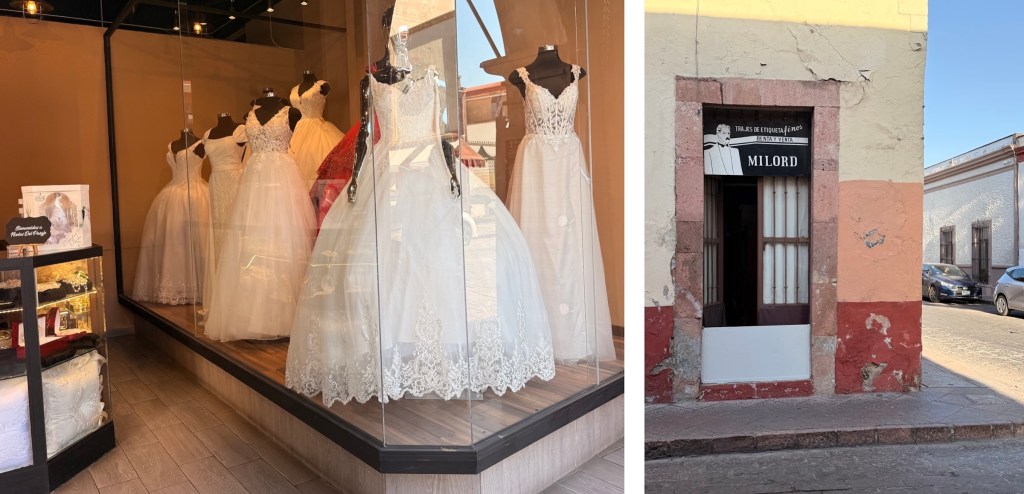
There’s a section of town where young brides can find the wedding dress of their dreams. There are places for the guys to get tuxed-up too. But they’re not as important, and the guys usually look uncomfortable in those stiff costumes.
Evenings are lively in Querétaro, and talented street musicians can be found in the parks and on many corners.
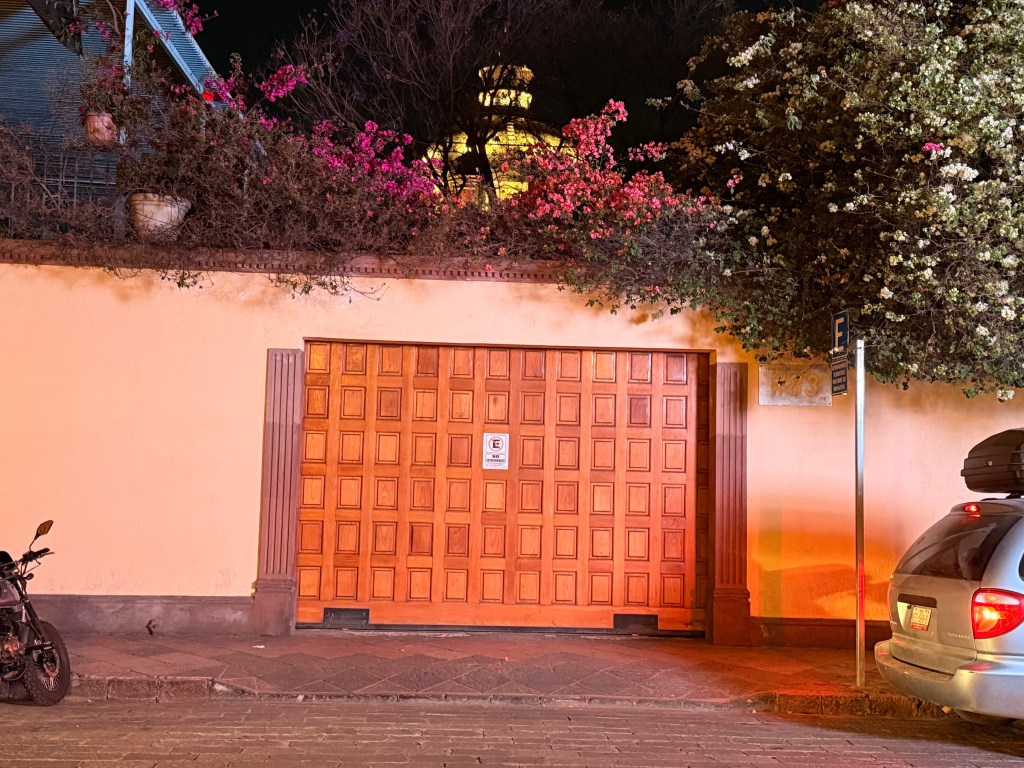
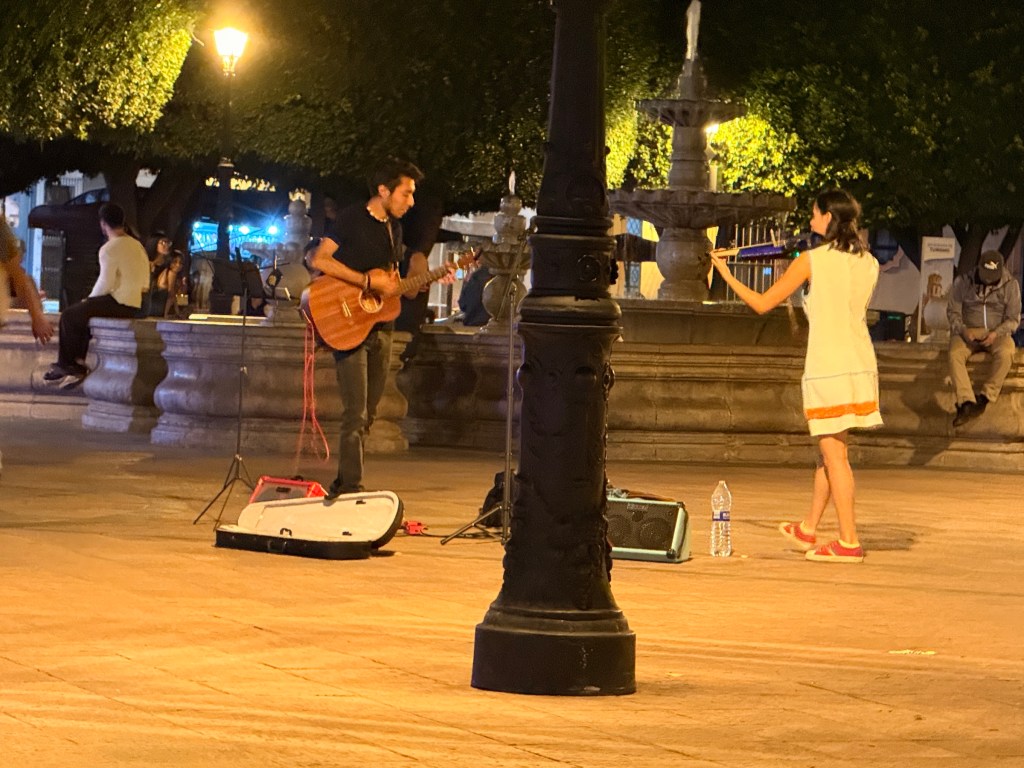
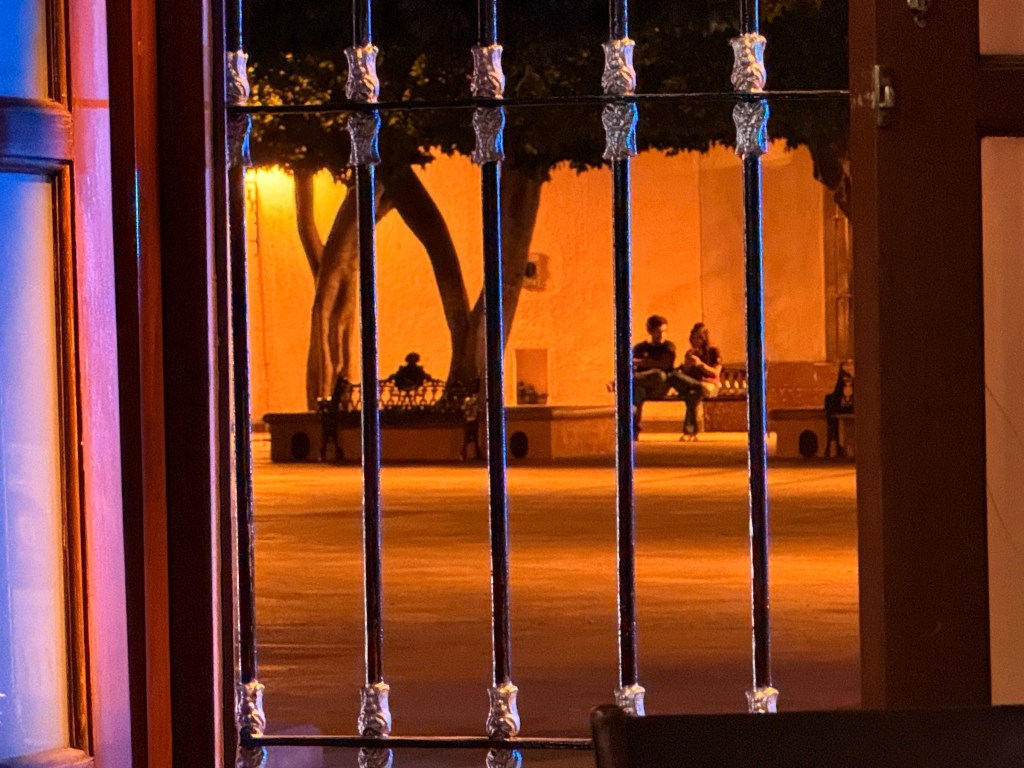
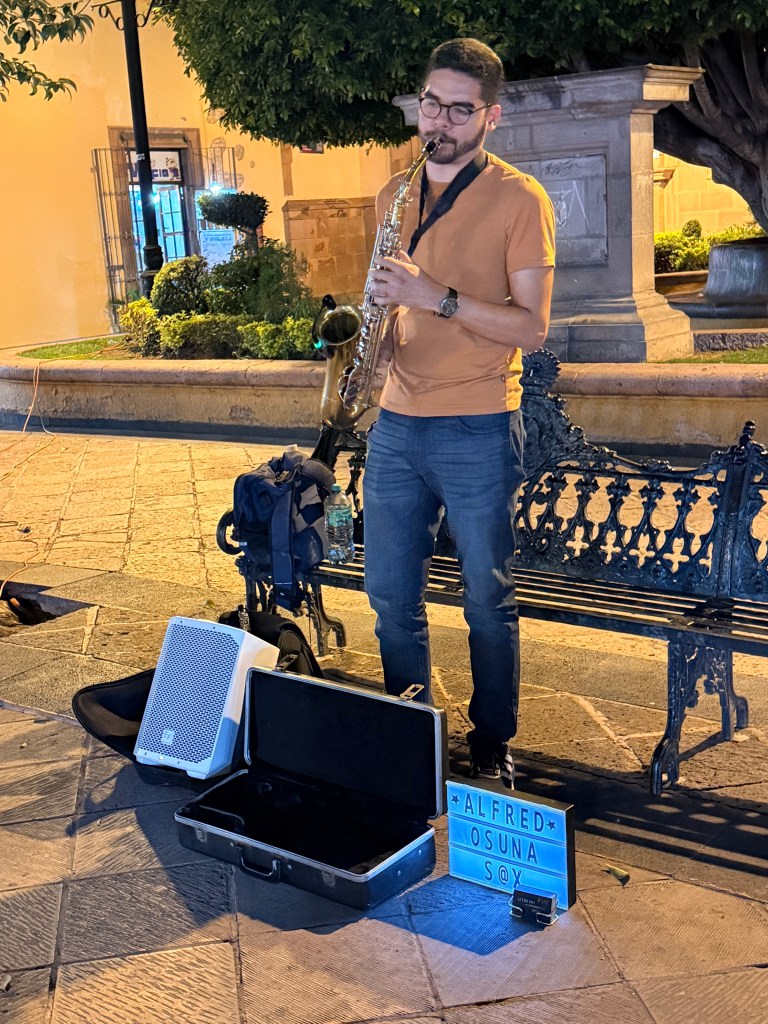
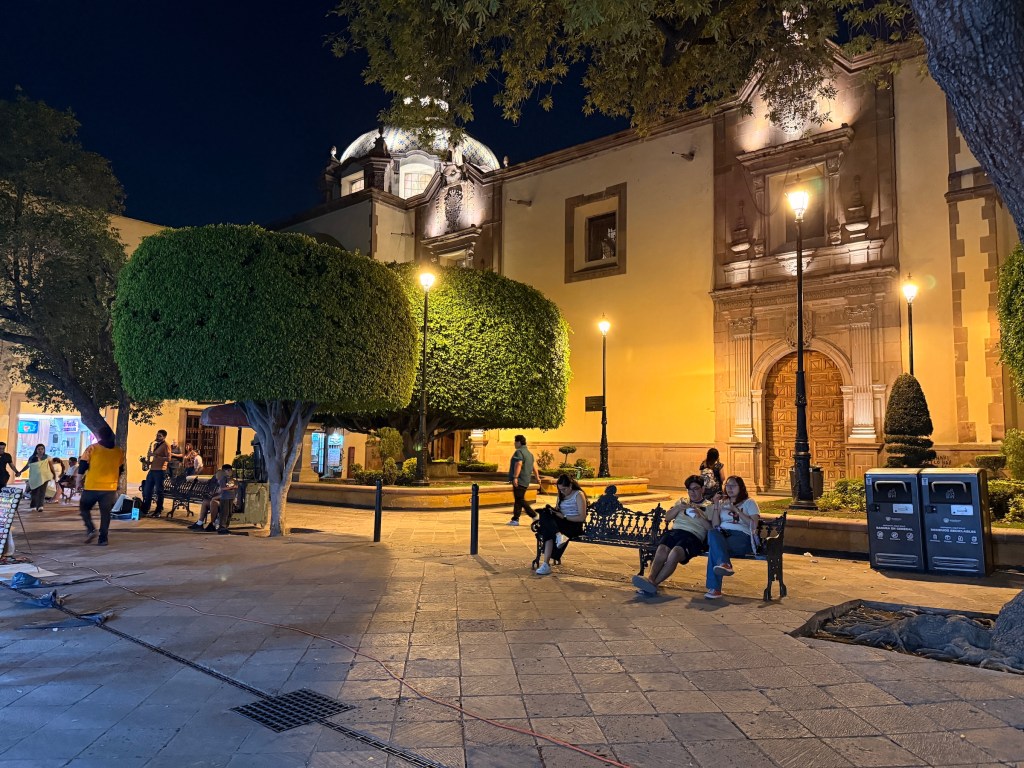
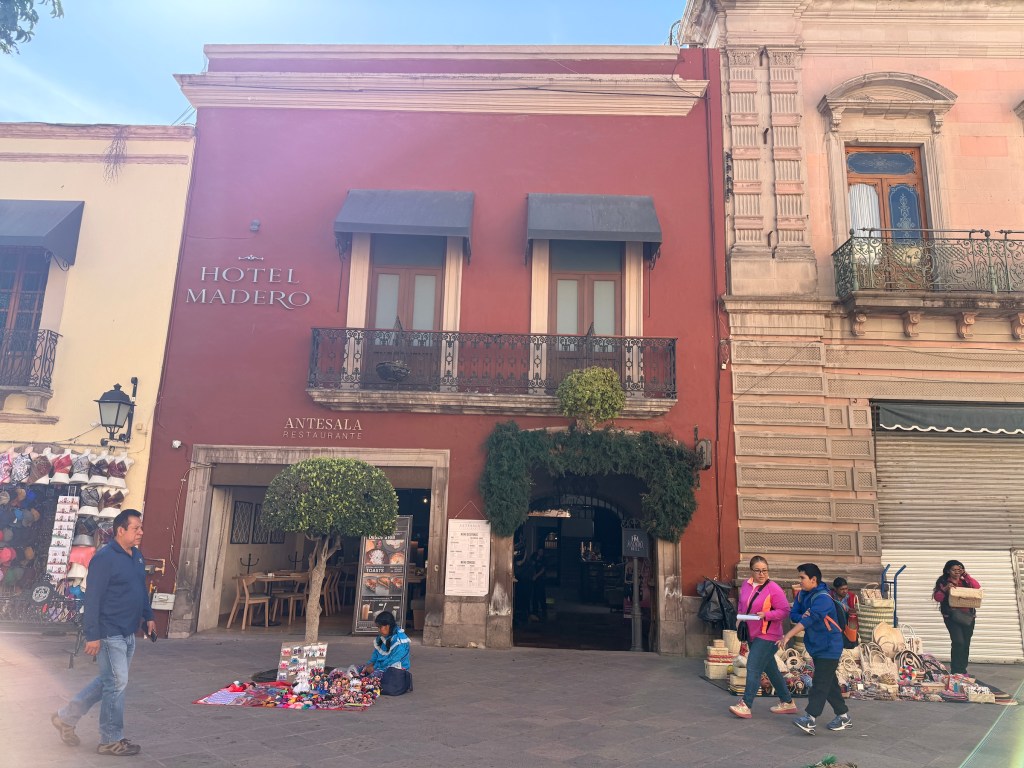
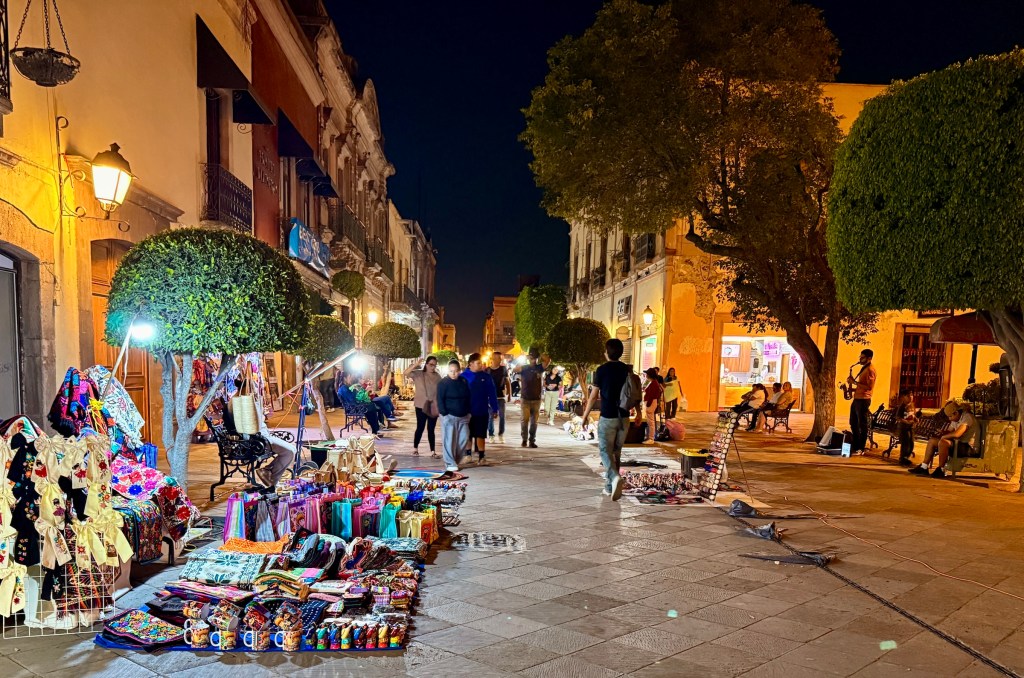
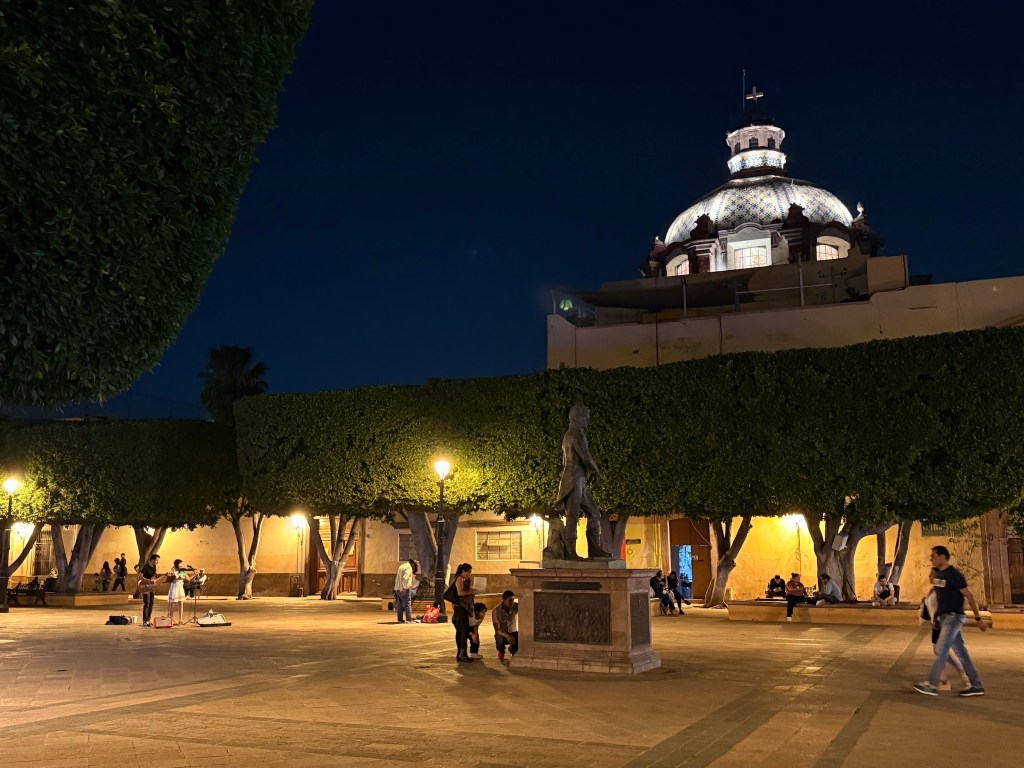
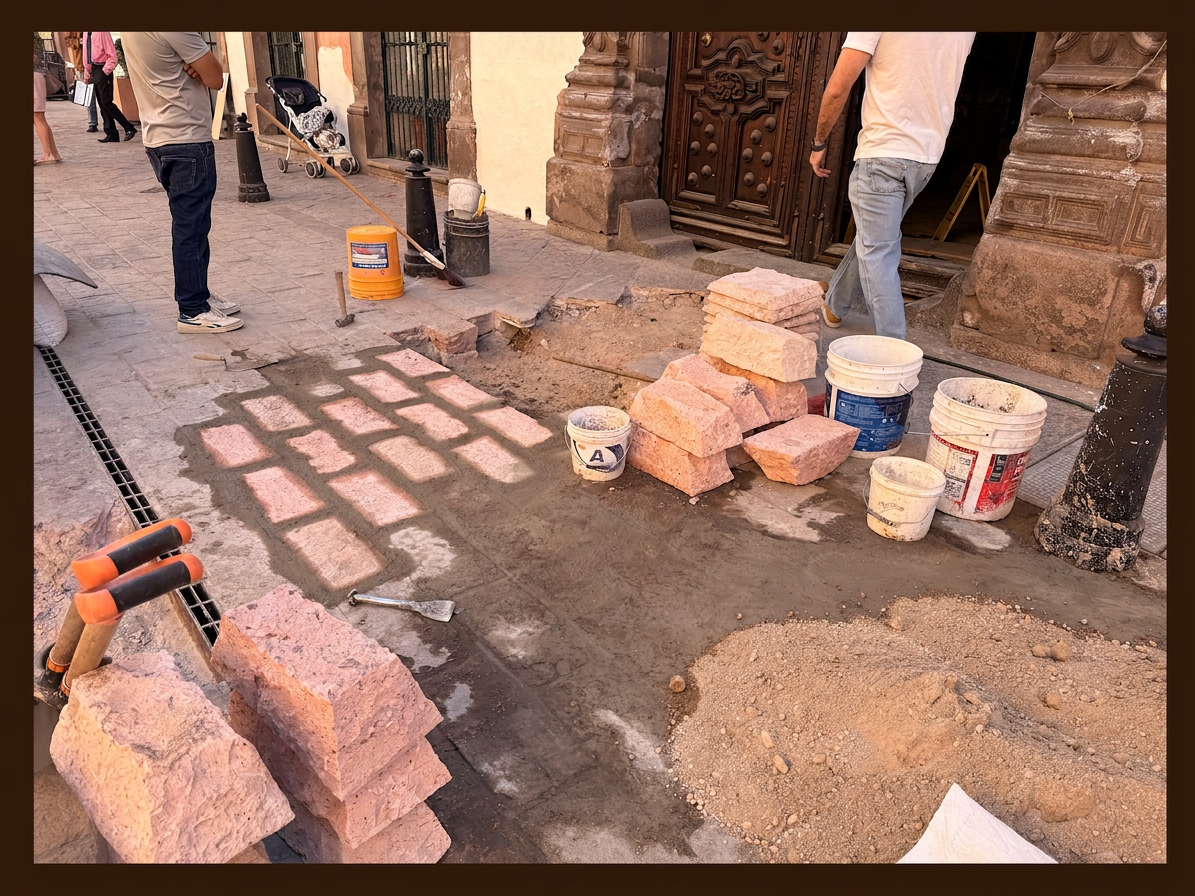
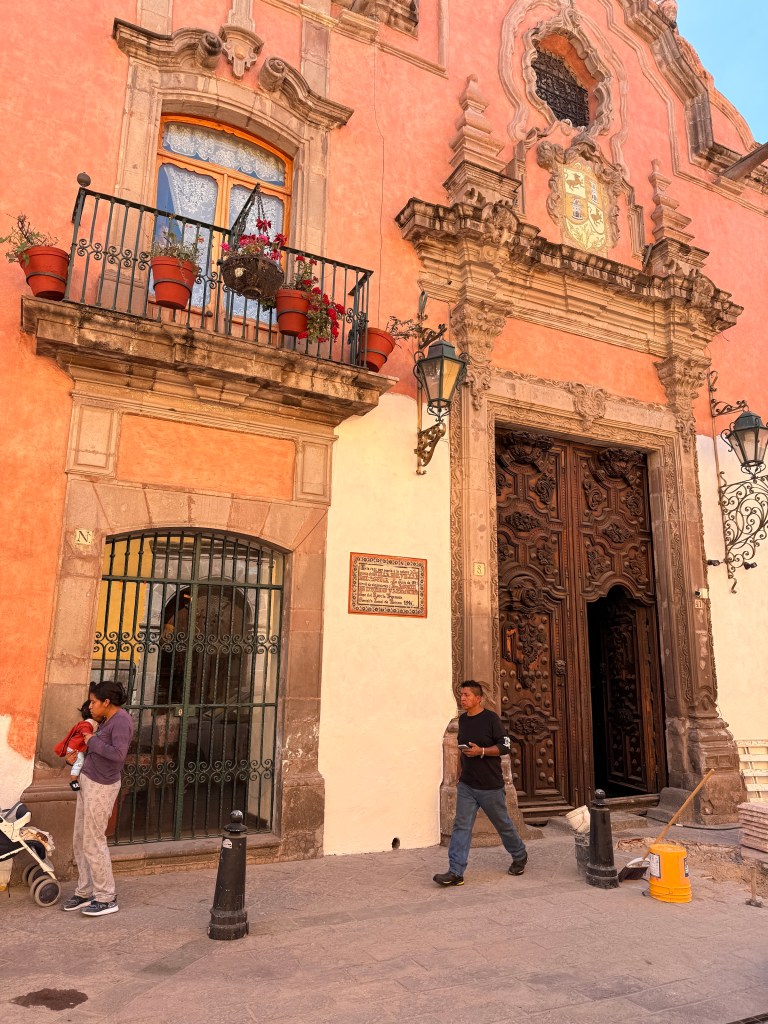
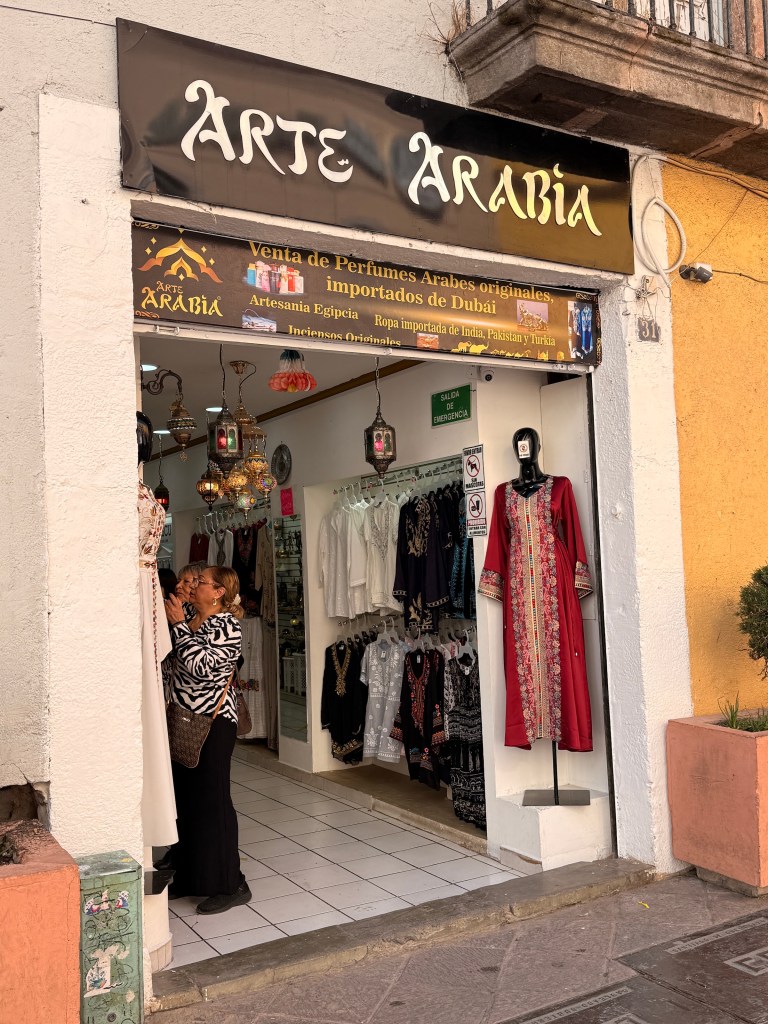
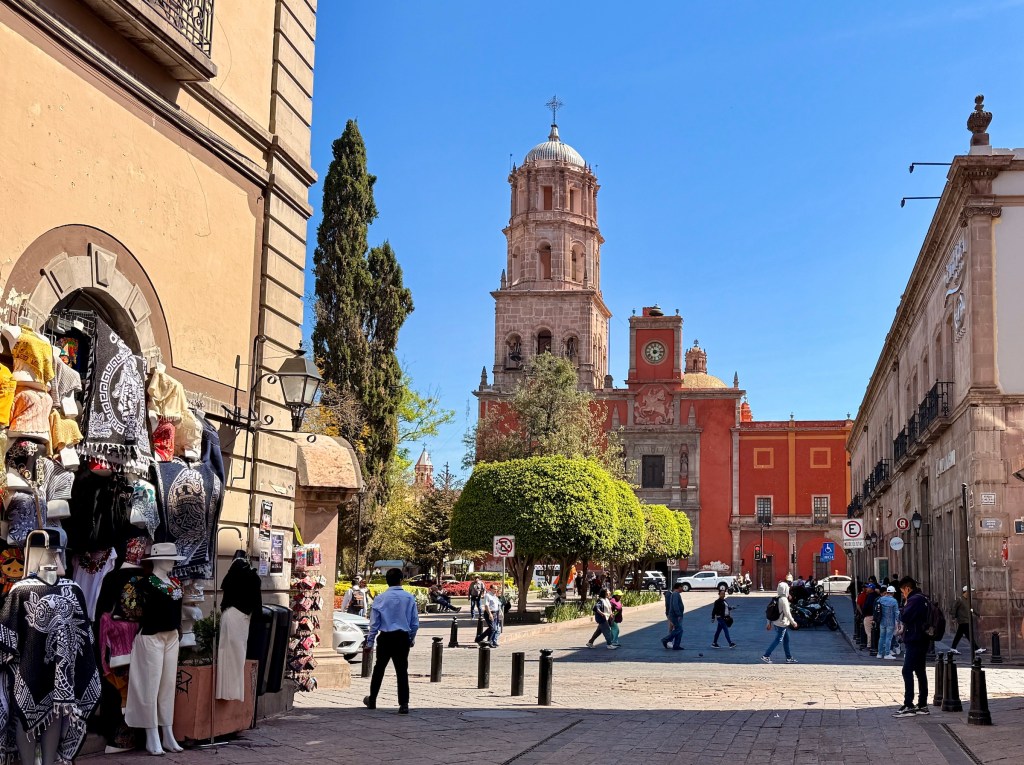
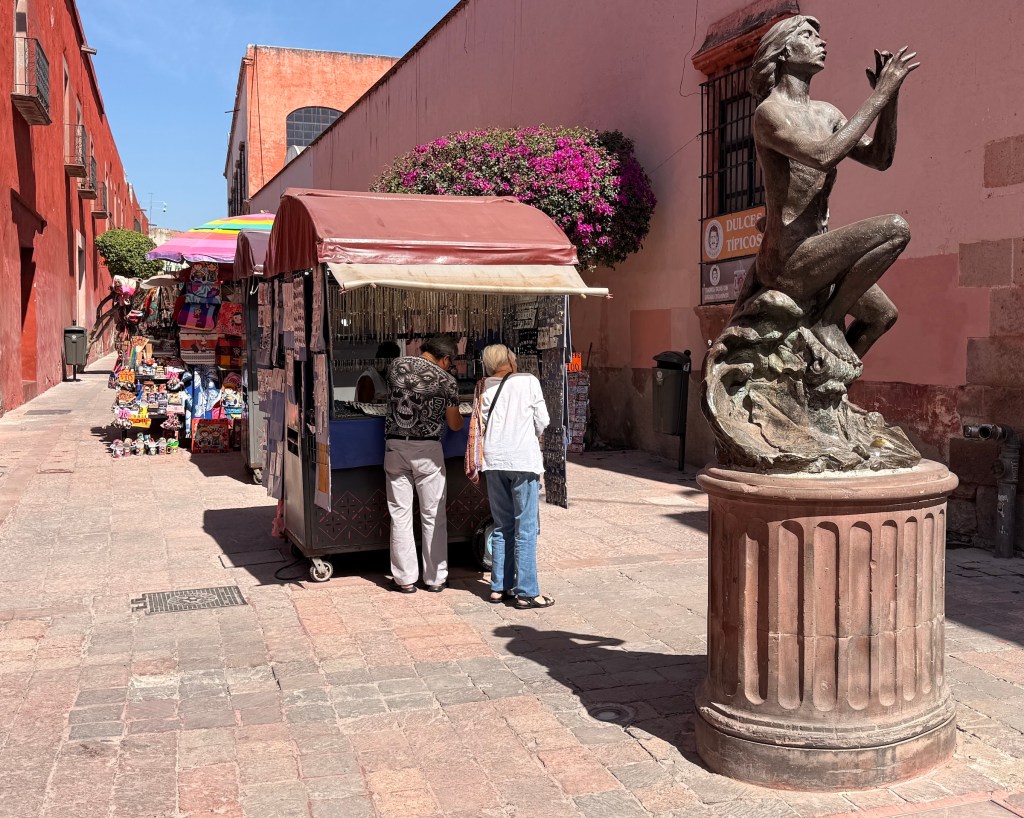
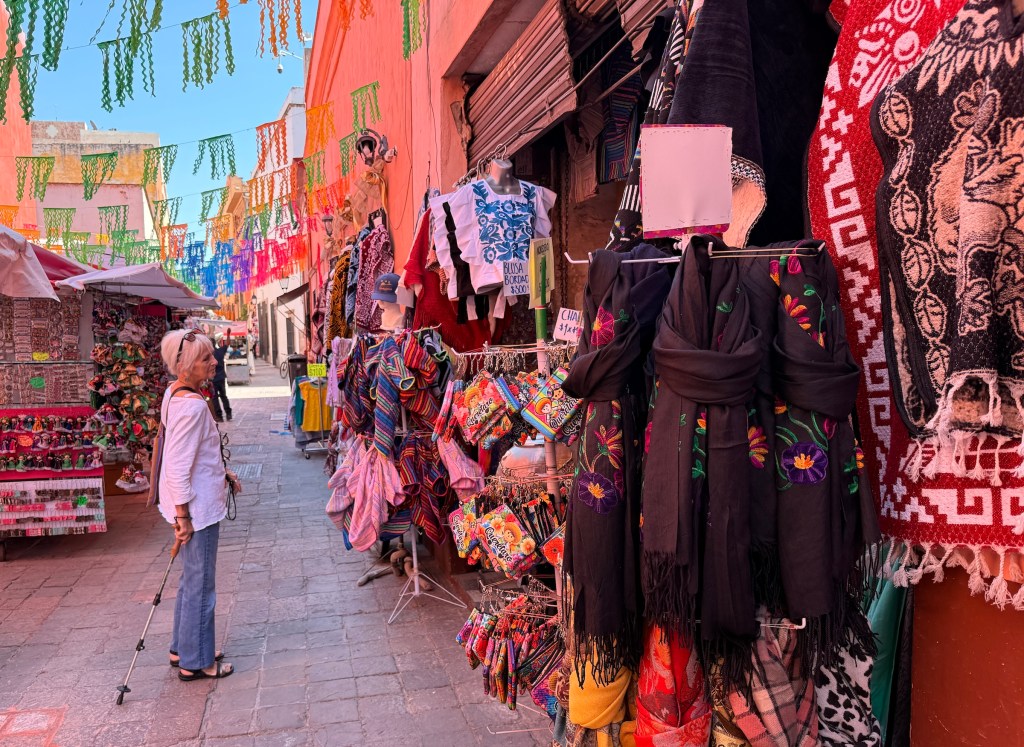
There are workers here who still know how to craft heavy stones into durable paving blocks, and there are any number of colorful sights throughout the broad historic district.

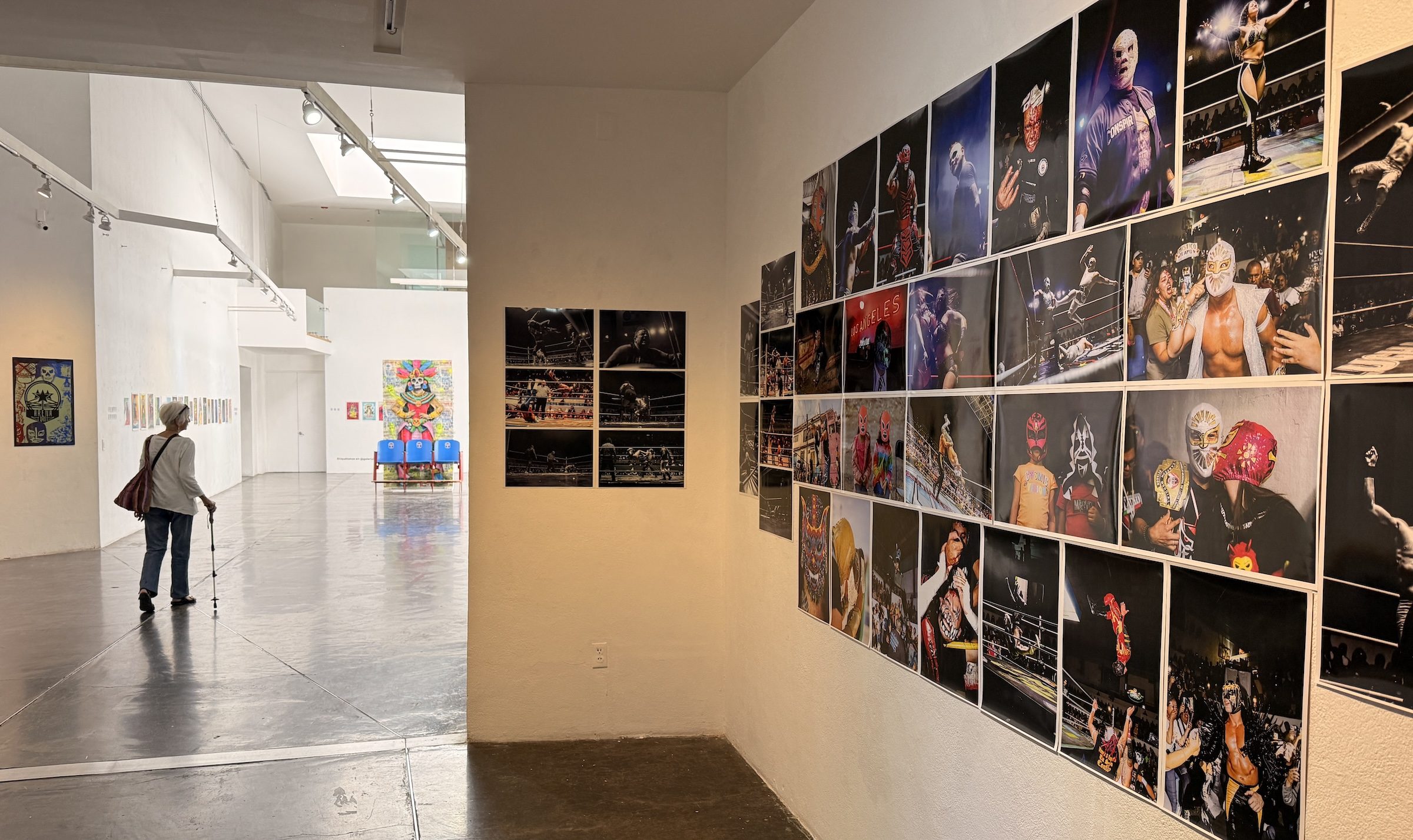
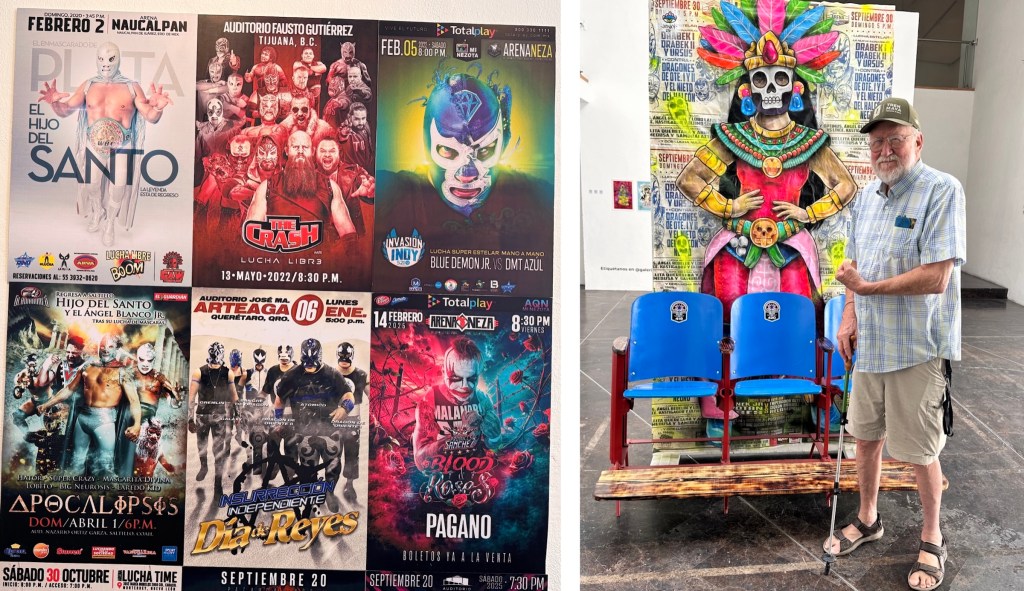
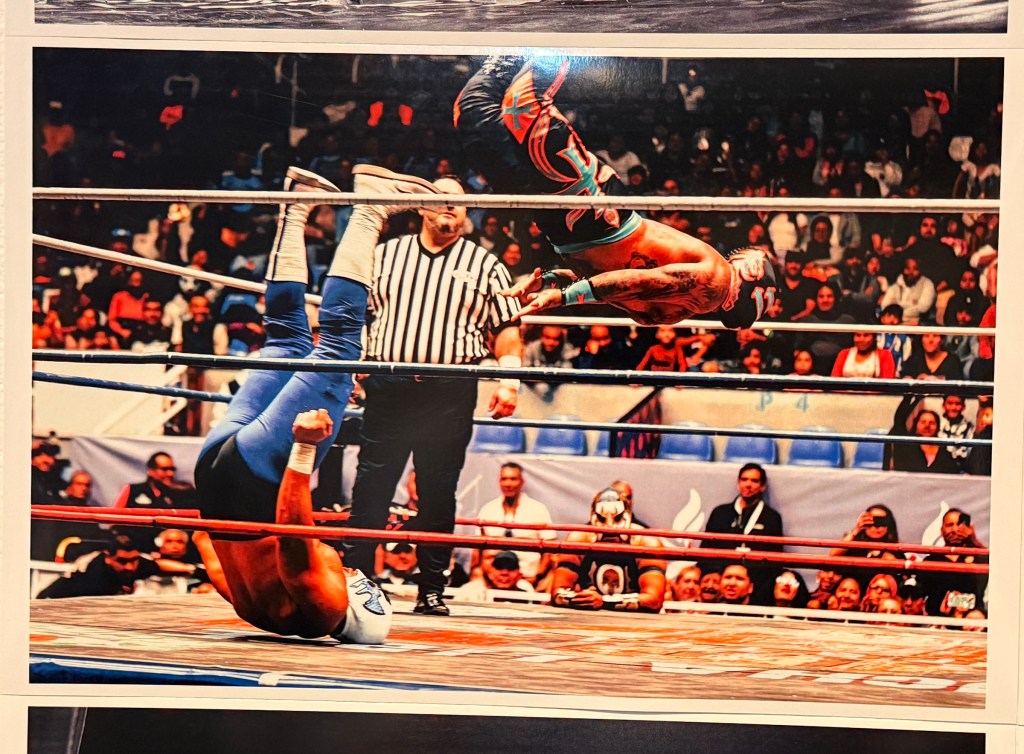
We wander into a display of Lucha Libre photography, with walls of in-your-face masks to amuse and annoy us. It’s all a corny show, ridiculous and over-the-top – and that’s the point. But there’s also some impressive athleticism, captured in a photo of both fighters suspended in mid-air.
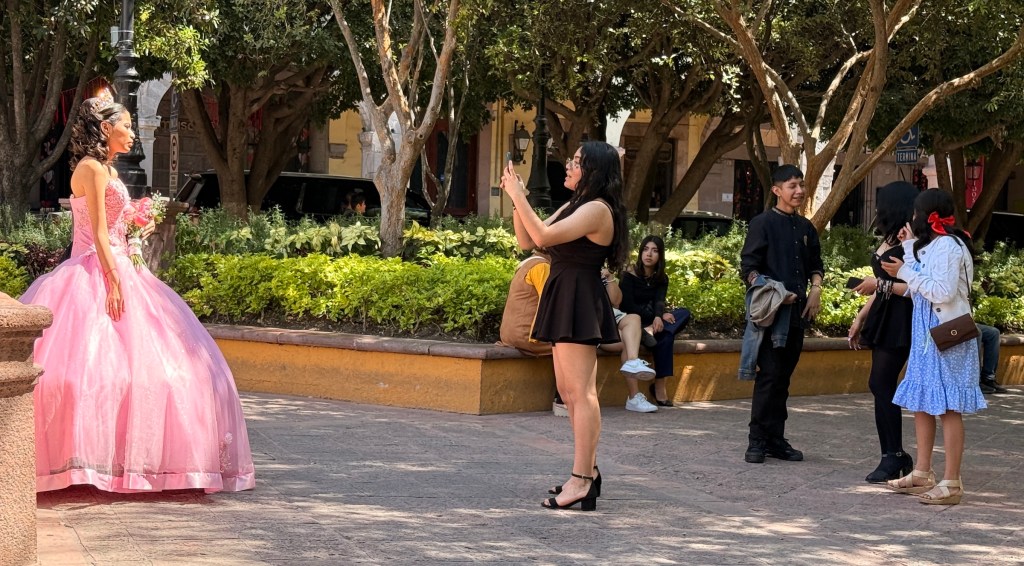
There are several hidden plazas in the center of Querétaro, with passageways to connect them. A fountain with dog sculptures spouting water is a popular hangout for pigeons needing a drink. A young bride arrives to get her last-minute photo directions. And there are beautifully-framed views in almost every direction.
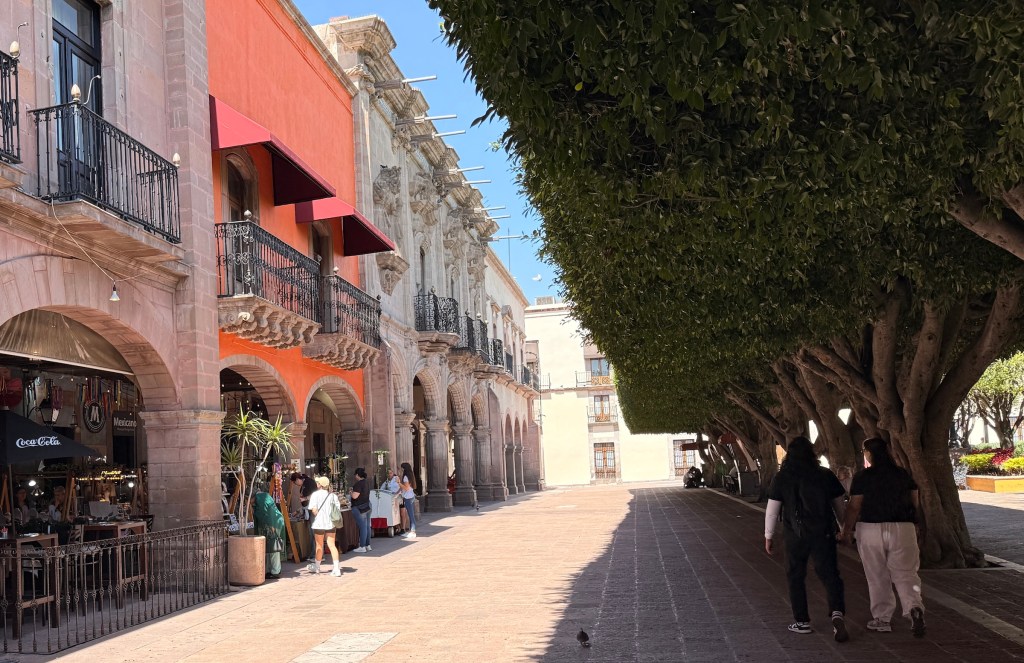
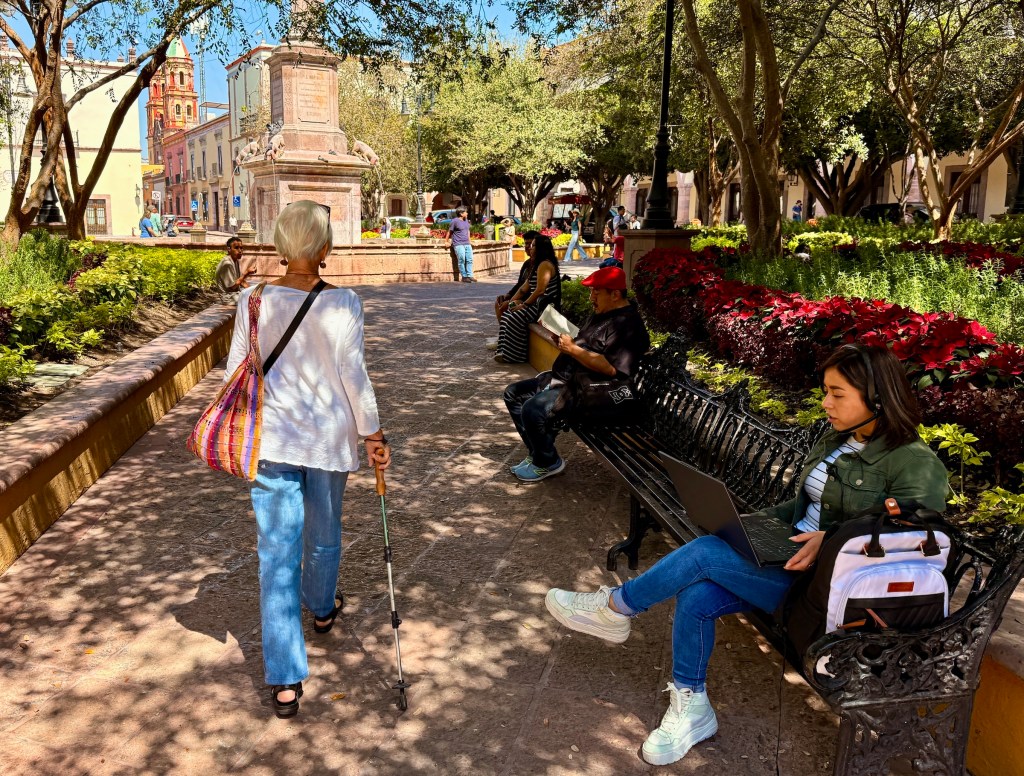
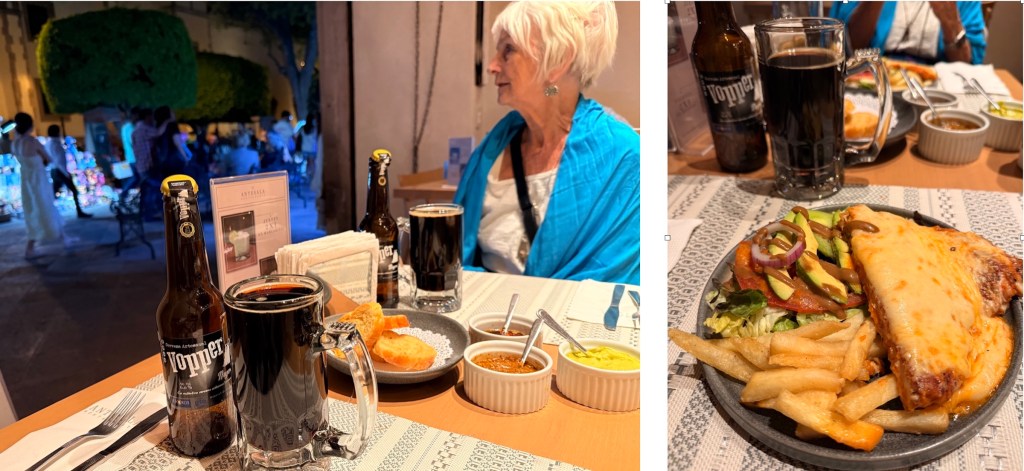
As evening settles upon the city we find a good place to watch the crowds go by and we order a couple of bottles of dark local brew (life’s too short for lite beer!) to go with some big cheesy platters.
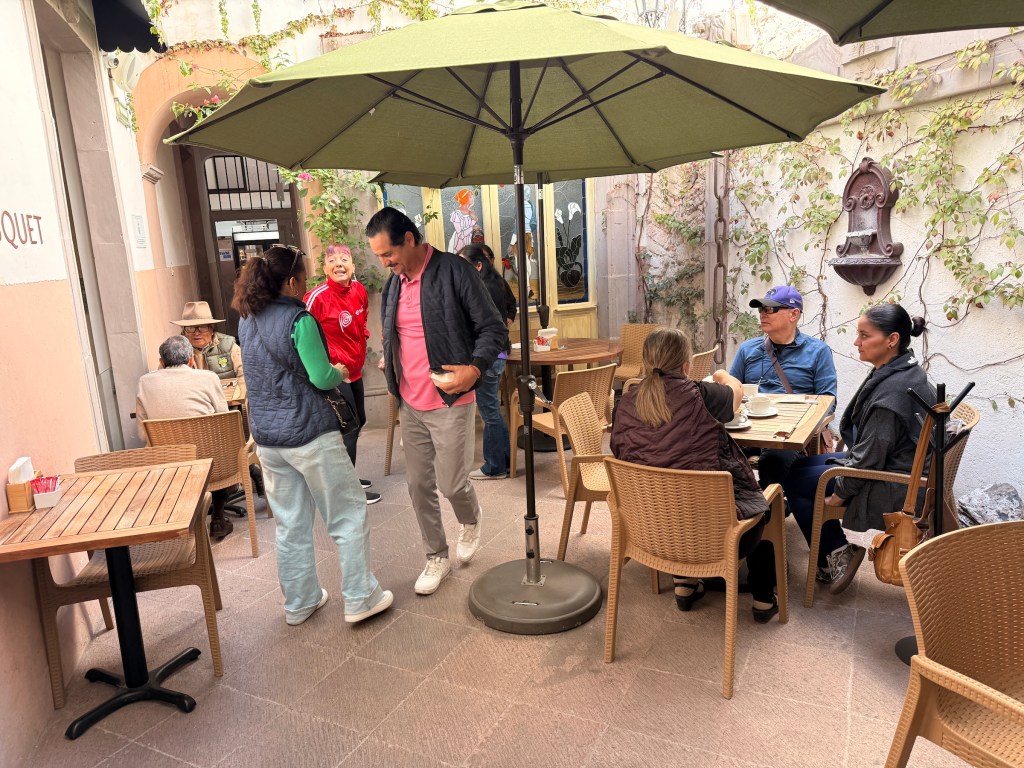
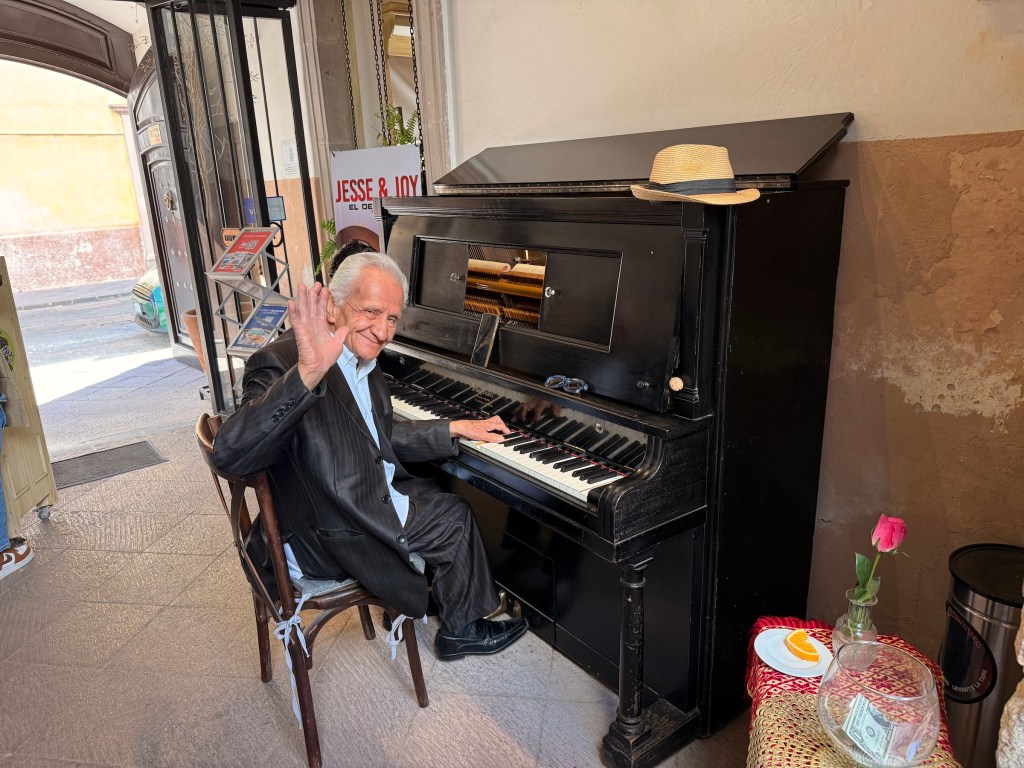
Morning breaks, and the Dolce Bisquet is a fine place to enjoy an elegant breakfast in the courtyard or inside the old stone walls. And there’s a talented pianist in semi-formal attire to serenade us with quiet morning music. It’s the sort of thing you’ll find in this prosperous, sophisticated, and understated city.
Querétaro is different from those quaint jungle cities we left behind in the Yucatán. This is a big desert city in the country’s Central Highlands with an elevation of 1800m (5900ft) and a population near a million and a half. It has a growing economy based on aerospace and tech industries, and it’s a charming mix of the old and the new.
There was a large population in this area during pre-Hispanic Aztec times, and the Spanish town of Querétaro was established in 1531. It’s now one of the largest cities in the Bajío, an agricultural, manufacturing, and transport center for the nation. This is also a strategic location, with special importance in Mexican history.
This is where a group of intellectuals met regularly at the home of Josefa Ortíz de Dominguez, la Corregidora, to plot the country’s independence from Spain. One of the plotters was Father Miguel Hidalgo y Costilla, who escaped a raid by the Spanish authorities and went on to issue his famous ‘Grito,’ the cry for independence, from his church in Dolores.
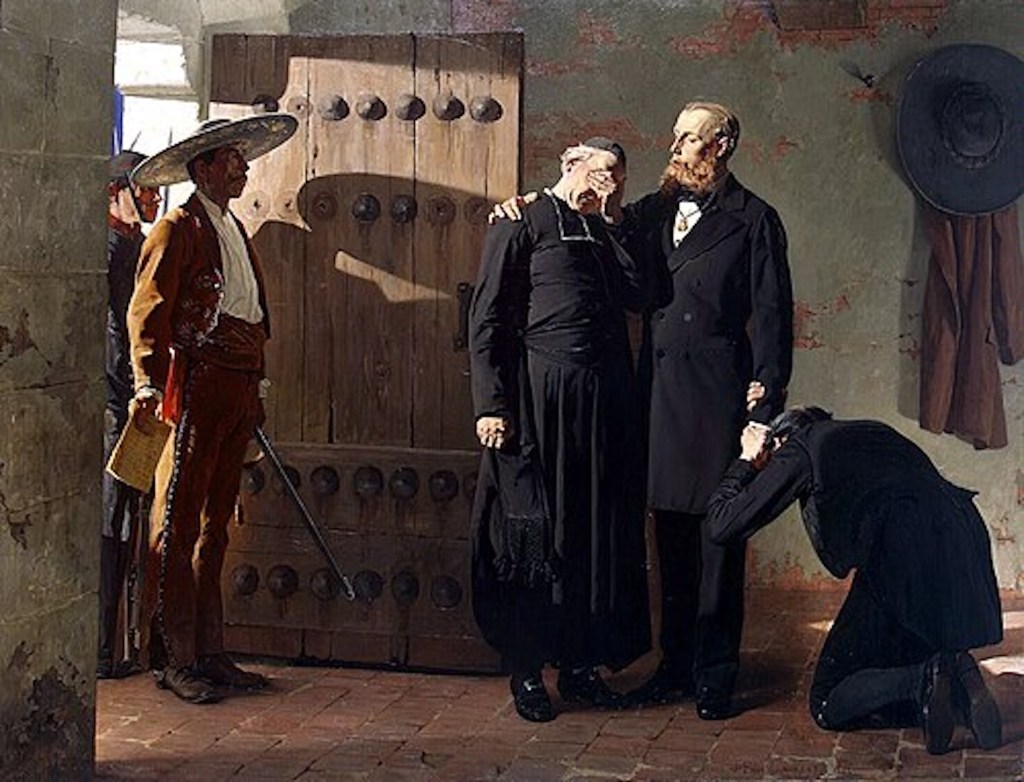
Maximillian, the doomed so-called Emperor of Mexico, was captured here after his cause was abandoned by Napoleon. And he was executed in 1867 on the city’s Cerro de las Campanas along with his two generals, Miguel Miramón and Tomás Mejía.
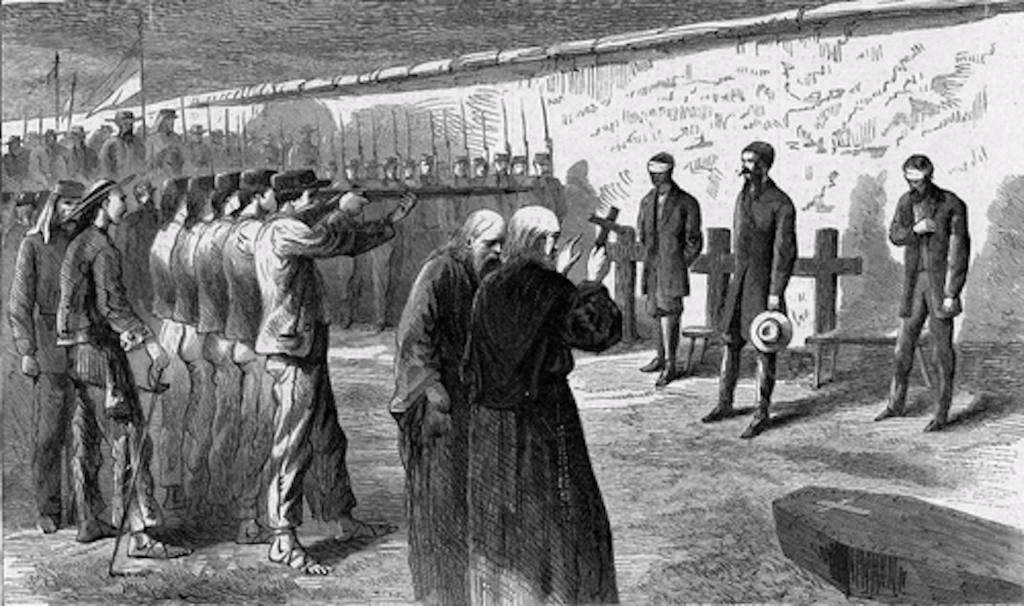
And the current Constitution of Mexico was drafted here in 1917, near the end of the Mexican Revolution.
•••••••••••••••••••••••••••••••••••••••••••••••••••
This rapidly growing economic center currently hosts operations by a long list of international companies, including Kellog’s, Samsung, General Electric, Siemens, Michelin, Proctor & Gamble, Hitachi, and many others.
The giant European aircraft company Airbus is part of Mexico’s growing aeronautics industry. According to a recent report in Mexico Business News (6/18/2026), the European competitor to Boeing has invested US$34.5 million this year in Querétaro to expand their operations by adding production capacity for aircraft doors and helicopter components. Airbus currently has a record backlog for its popular A320 aircraft of approximately 19,000 orders, and logged more than 12,000 deliveries since its launch. It’s expecting to exceed 70% of the global market (currently at 60%) for such long-haul aircraft.
Safran Landing Systems is another important local aerospace company which just expanded its maintenance, repair, and overhaul (MRO) center by 6,000 square meters, increasing capacity to service landing gear systems for the Airbus A330 Enhanced, A330neo, and Boeing 787 . Its facility in Querétaro is one of only three Safran sites worldwide dedicated to supporting landing gear systems for long-haul aircraft.
It’s increasingly clear that this quaint country located ‘somewhere south of the border,’ and that most USA-ers seem to take for granted as Tequila Country – well, it just ain’t your grandpa’s Mexico anymore.
••••••••••••••••••••••••••••••••••••••••••••••••••••
The local Ruta de Vinos is Mexico’s 2nd largest wine-producing area, after Baja California. So we booked a trip to the wineries and the Pueblo Mágico of Tequisquiapan – called ’Tequis’ by the locals, and we pass under the city’s famous old aqueduct on our way out of town.
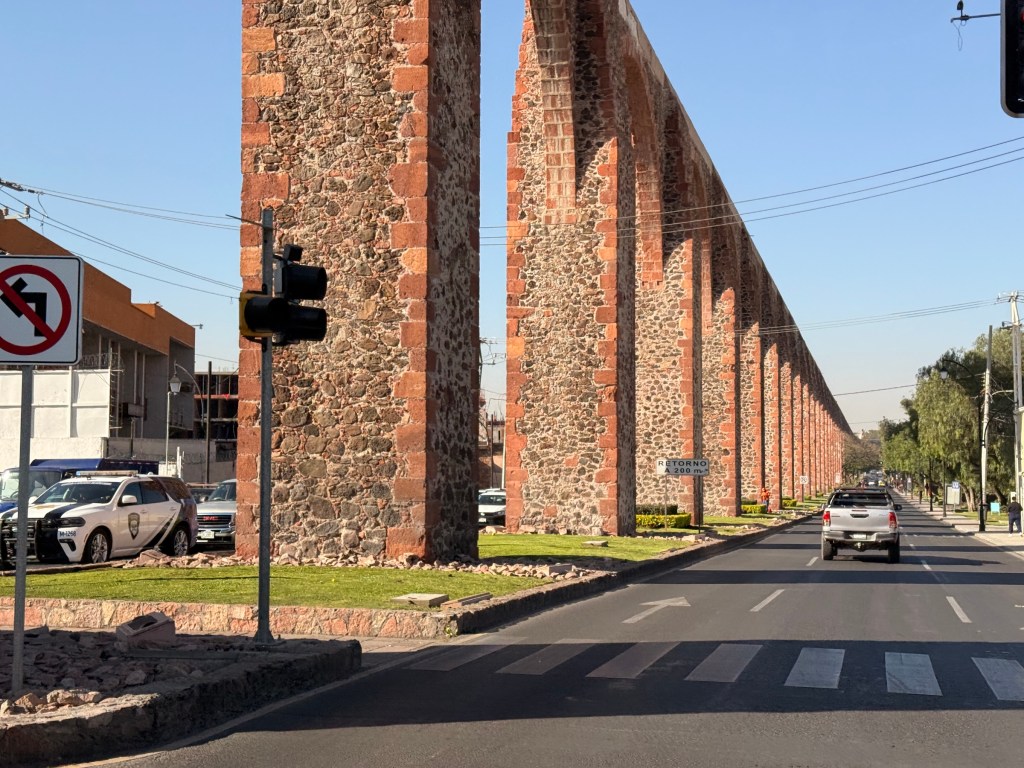
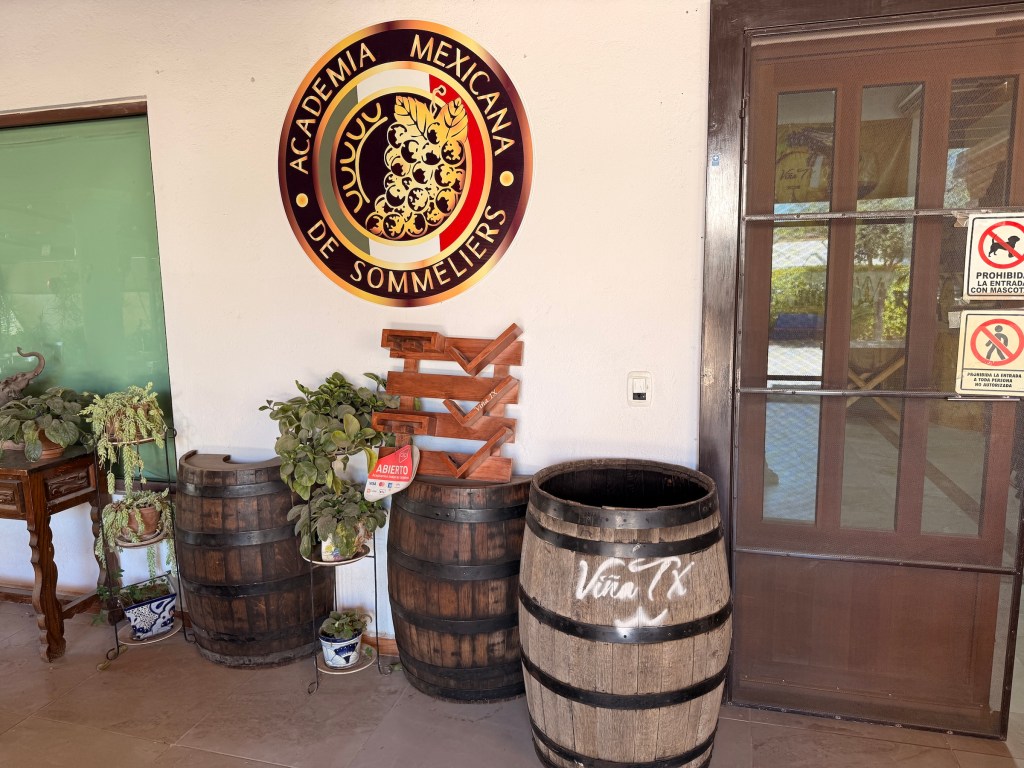
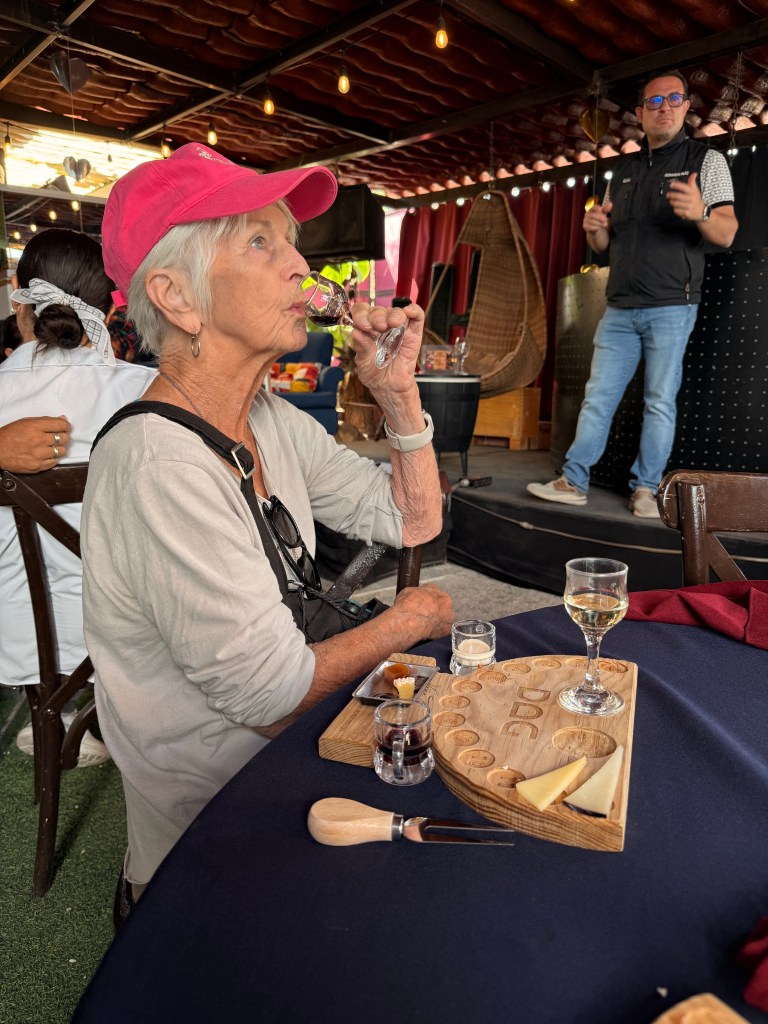
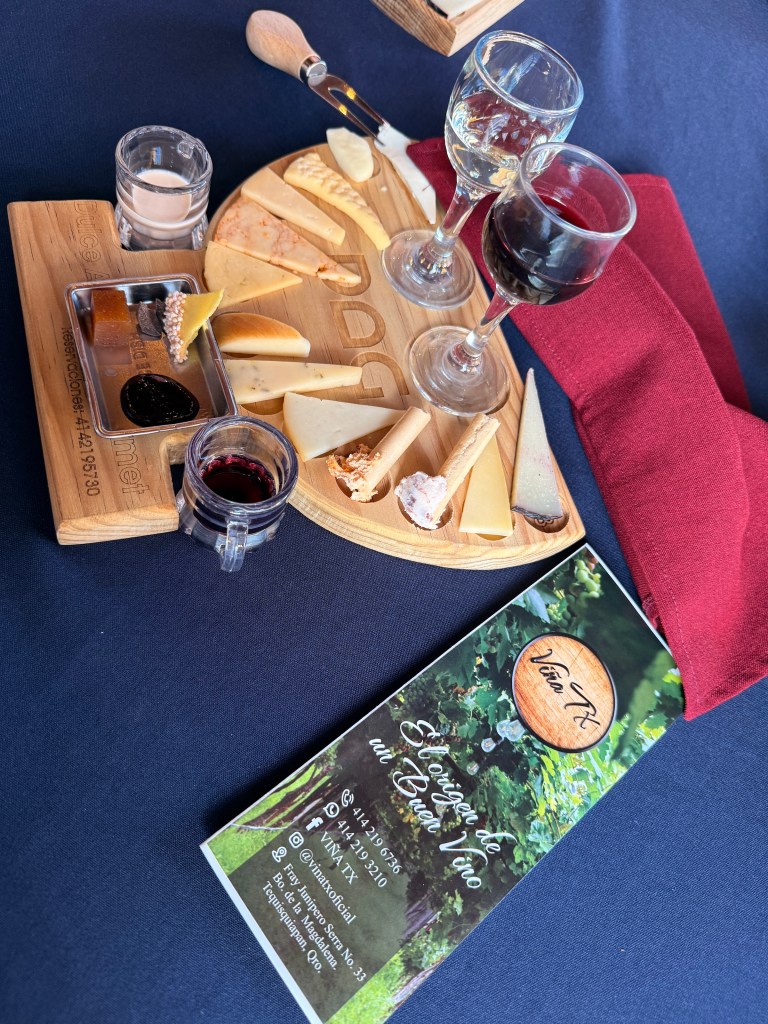
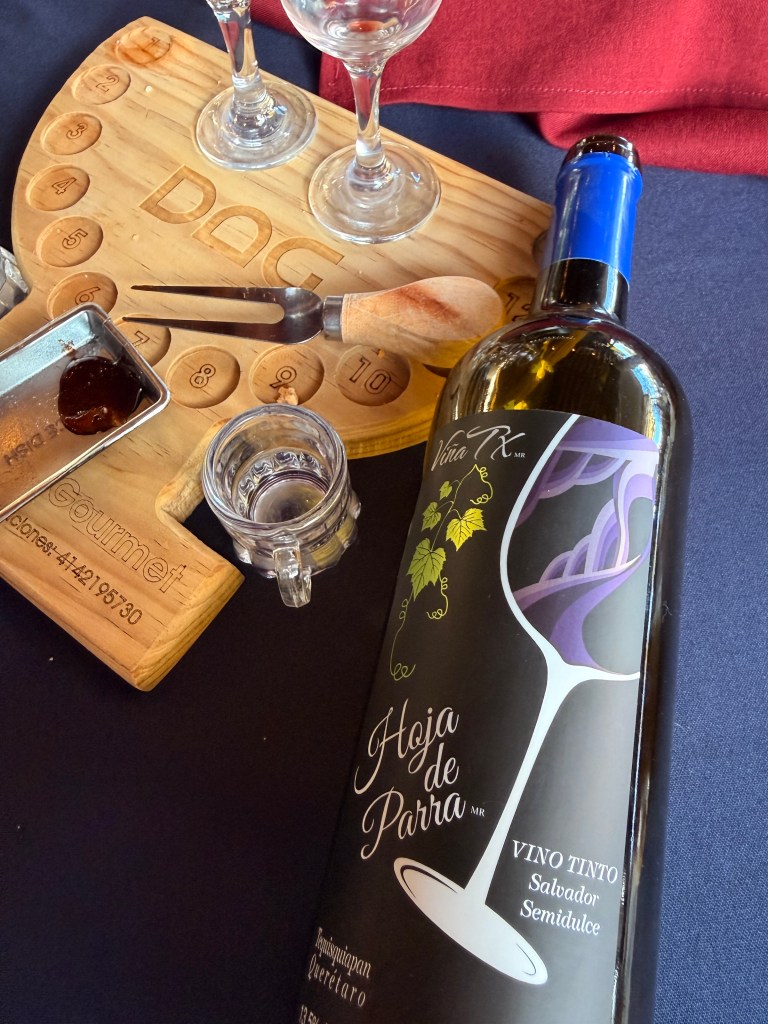
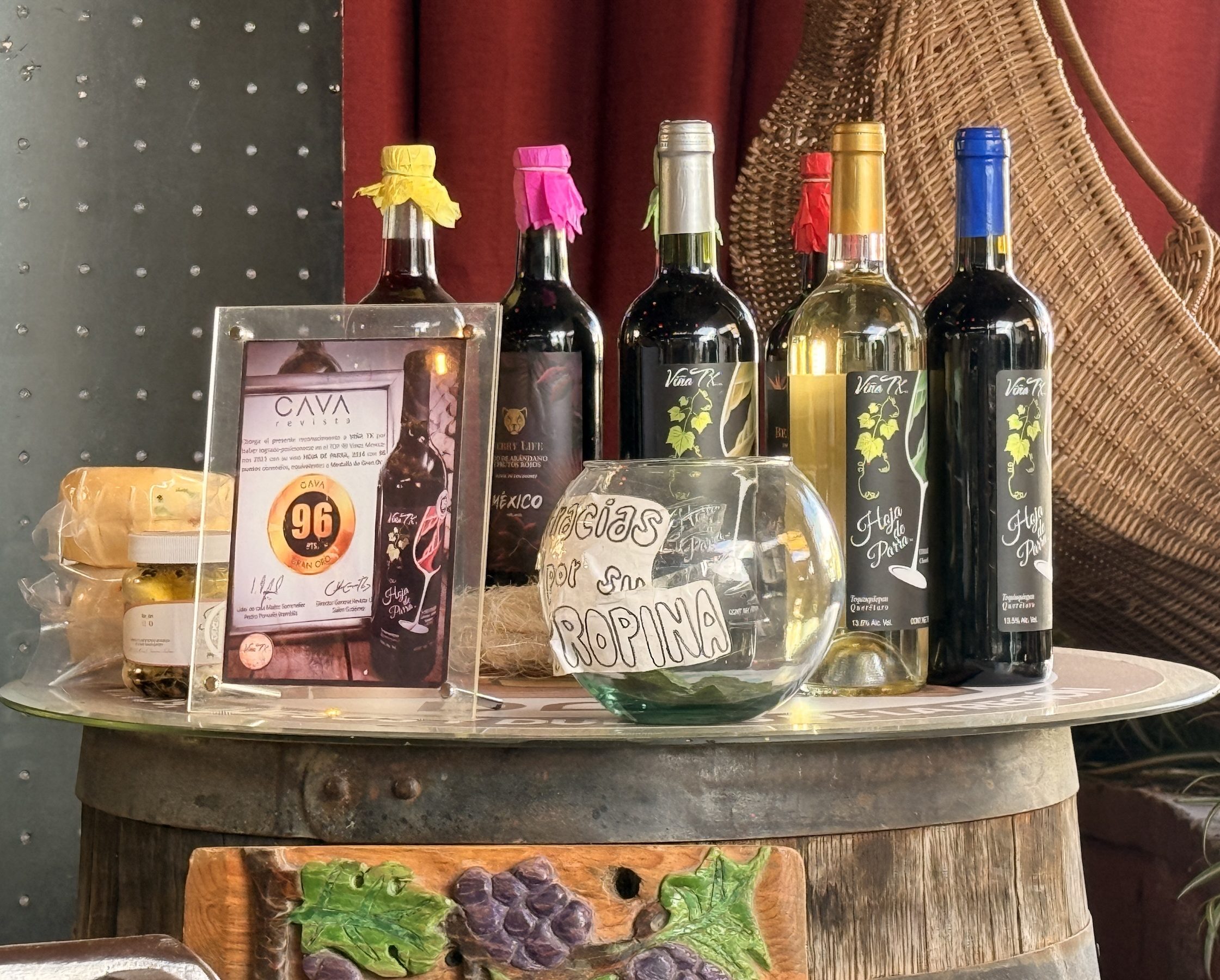
Freixenet, the large Spanish company, has a sizable winery in the area, but this trip takes in a couple of other wineries instead. Our first stop is a small operation named Viña TX (for Tequis). After spending time with an interesting and well-informed vintner in the vineyards we pause to do the wine and cheese pairings, and it’s a very good wine indeed.
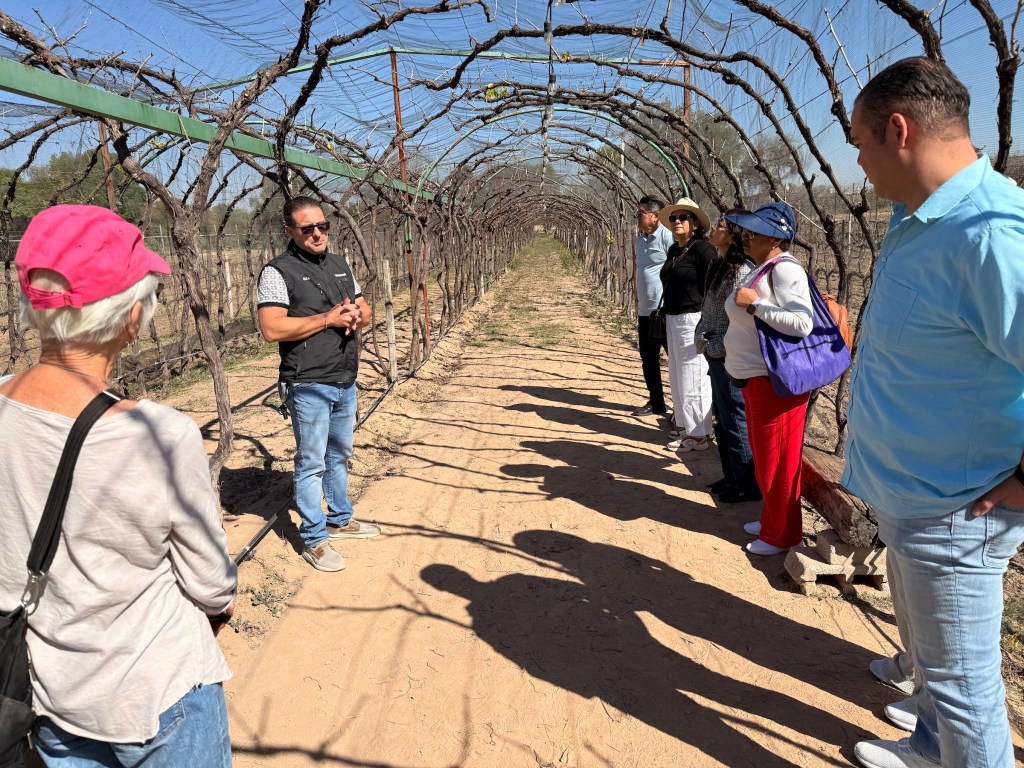
Next up is the Jardín del Arte at the colorful entry to Tequisquiapan. This sweet little town has long been a popular thermal spa among tourists from Querétaro and Mexico City, and has seen its share of celebrities.
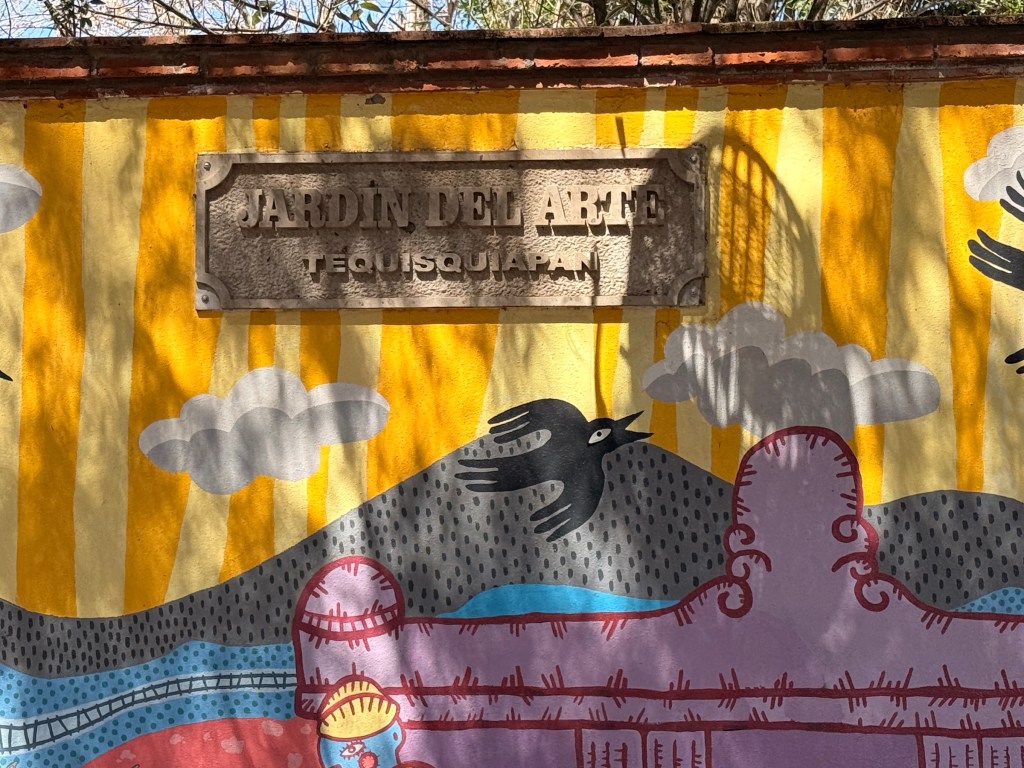
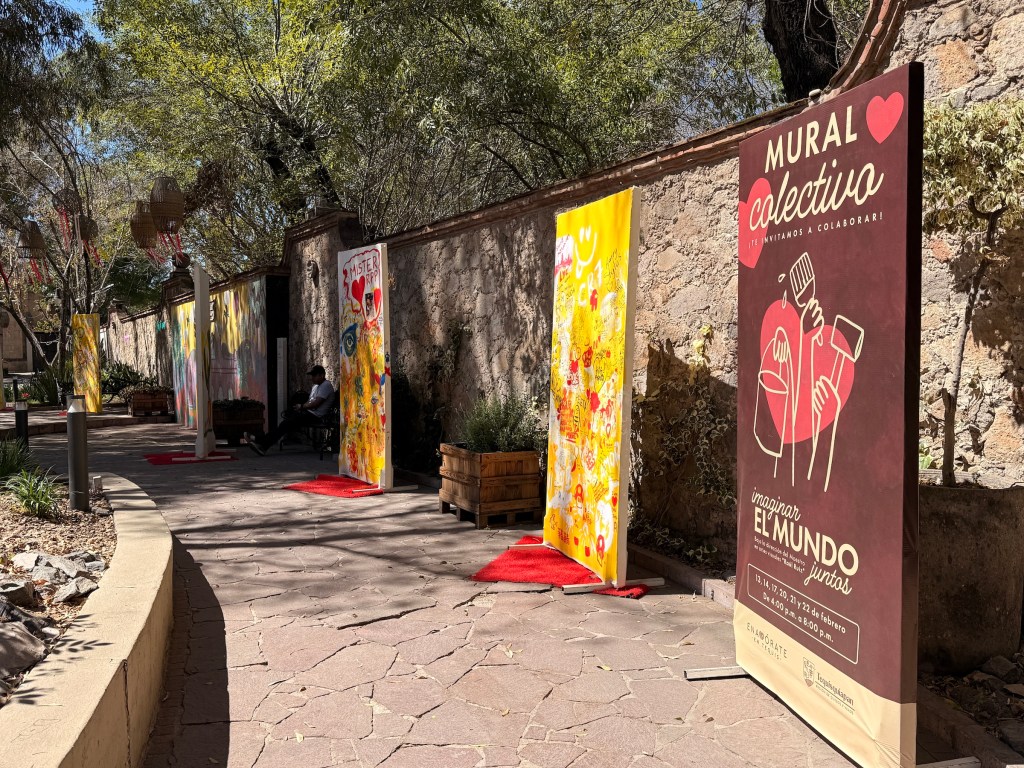
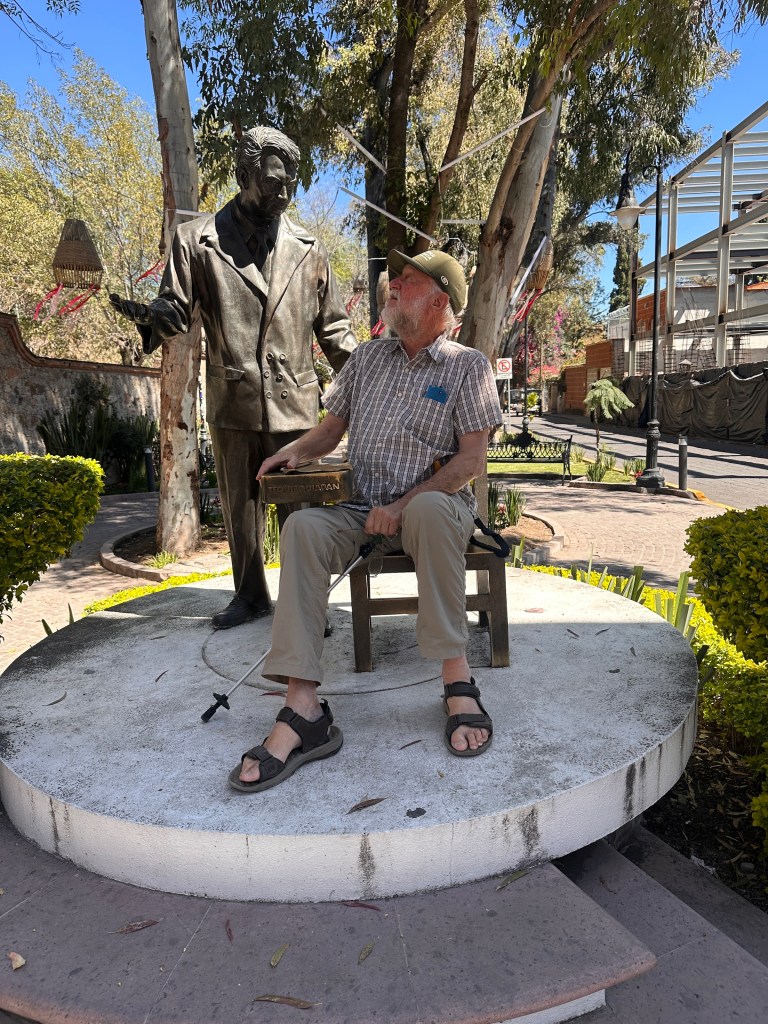
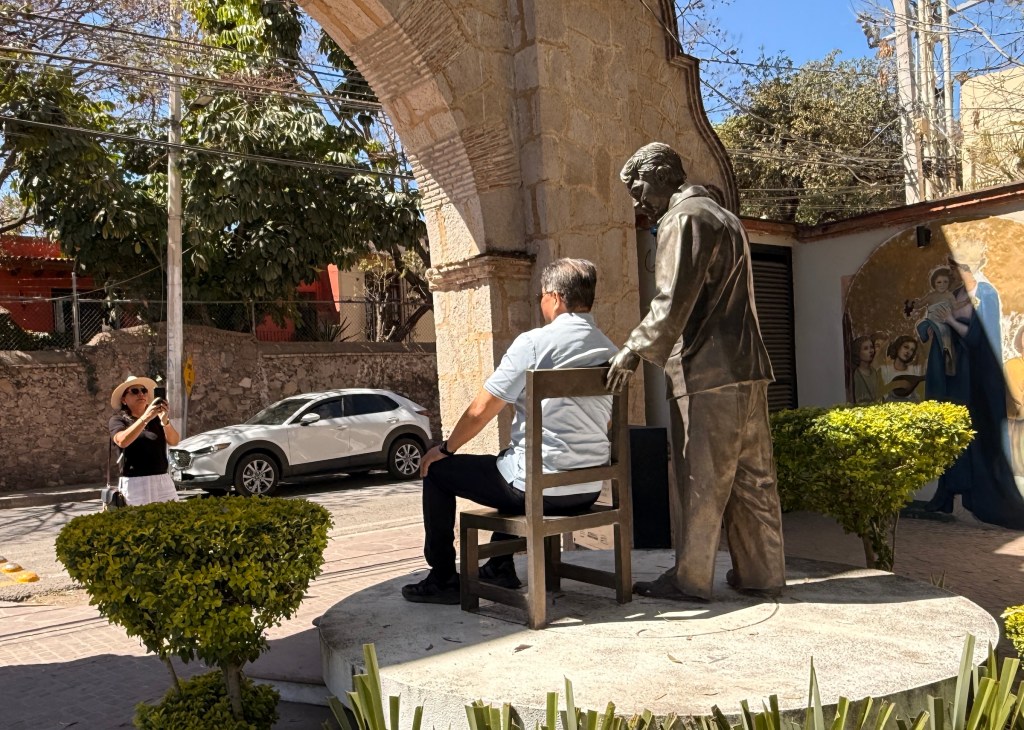
A statue in the Jardín honors one of Mexico’s most beloved actors. Mario Medina was born in Mexico City, was better known as ‘Cantinflas,’ and became famous in the US after co-starring with David Niven in “Around the World in Eighty Days (1956).” He came here in 1971 to make a movie called ‘El Profe’ using these local streets and locales, and the statue commemorates his movie role as a rural school teacher who changes the lives of his students. It’s a popular place for photos, sitting at the student desk with El Profe providing guidance over your shoulder.
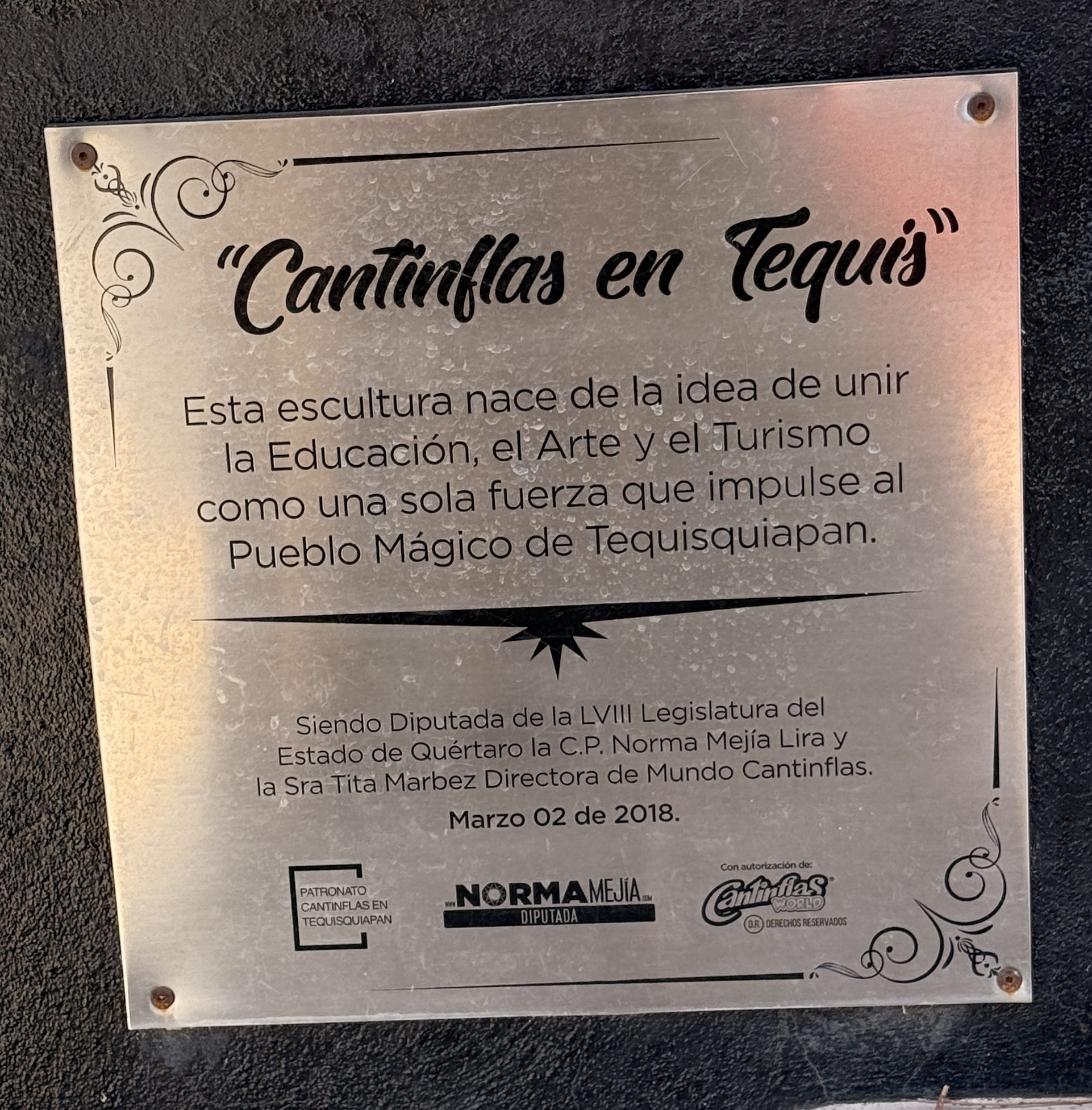
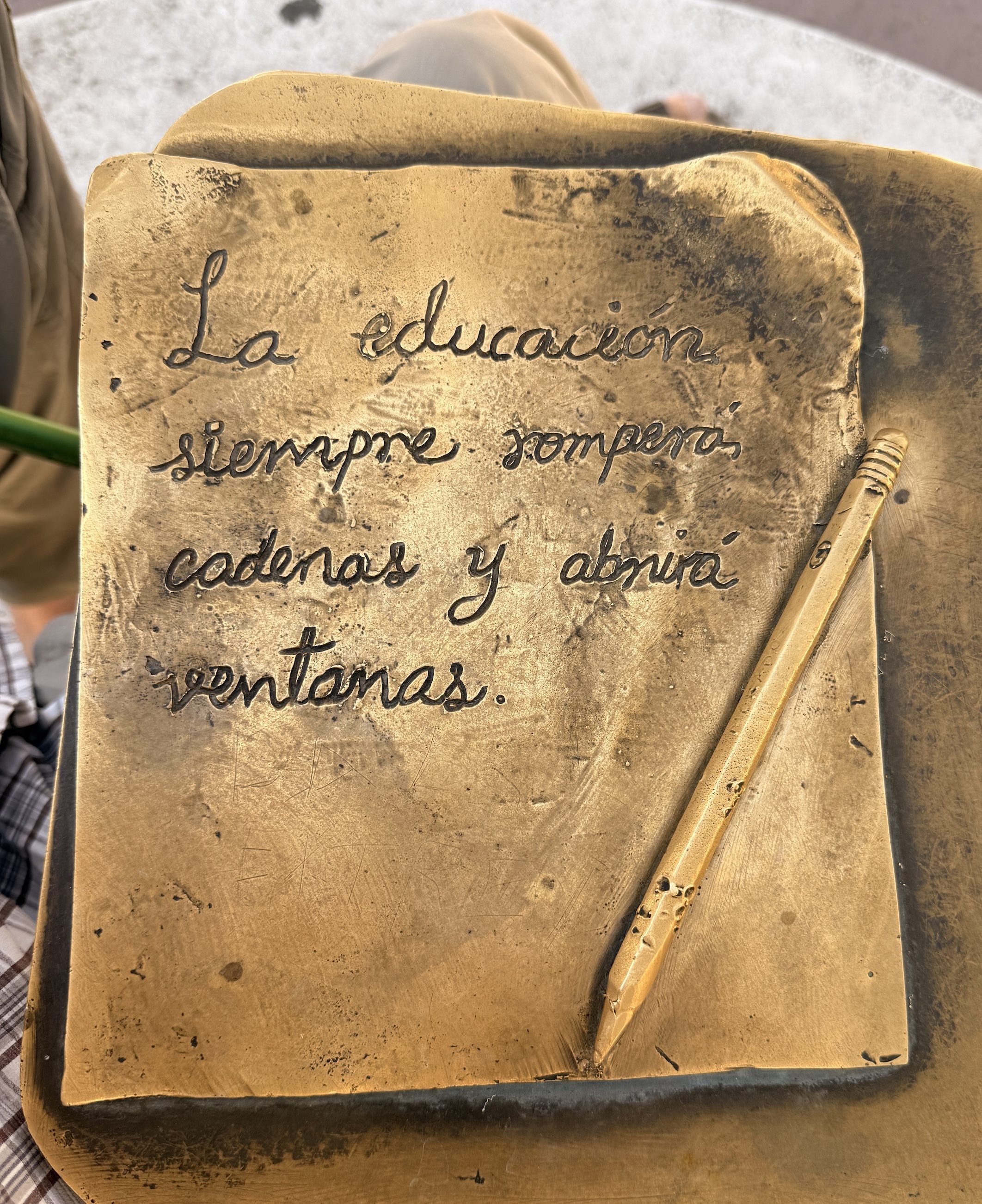
The bronze notebook on the student desk reads “Education always breaks chains and opens windows.” It was an important lesson from the movie.
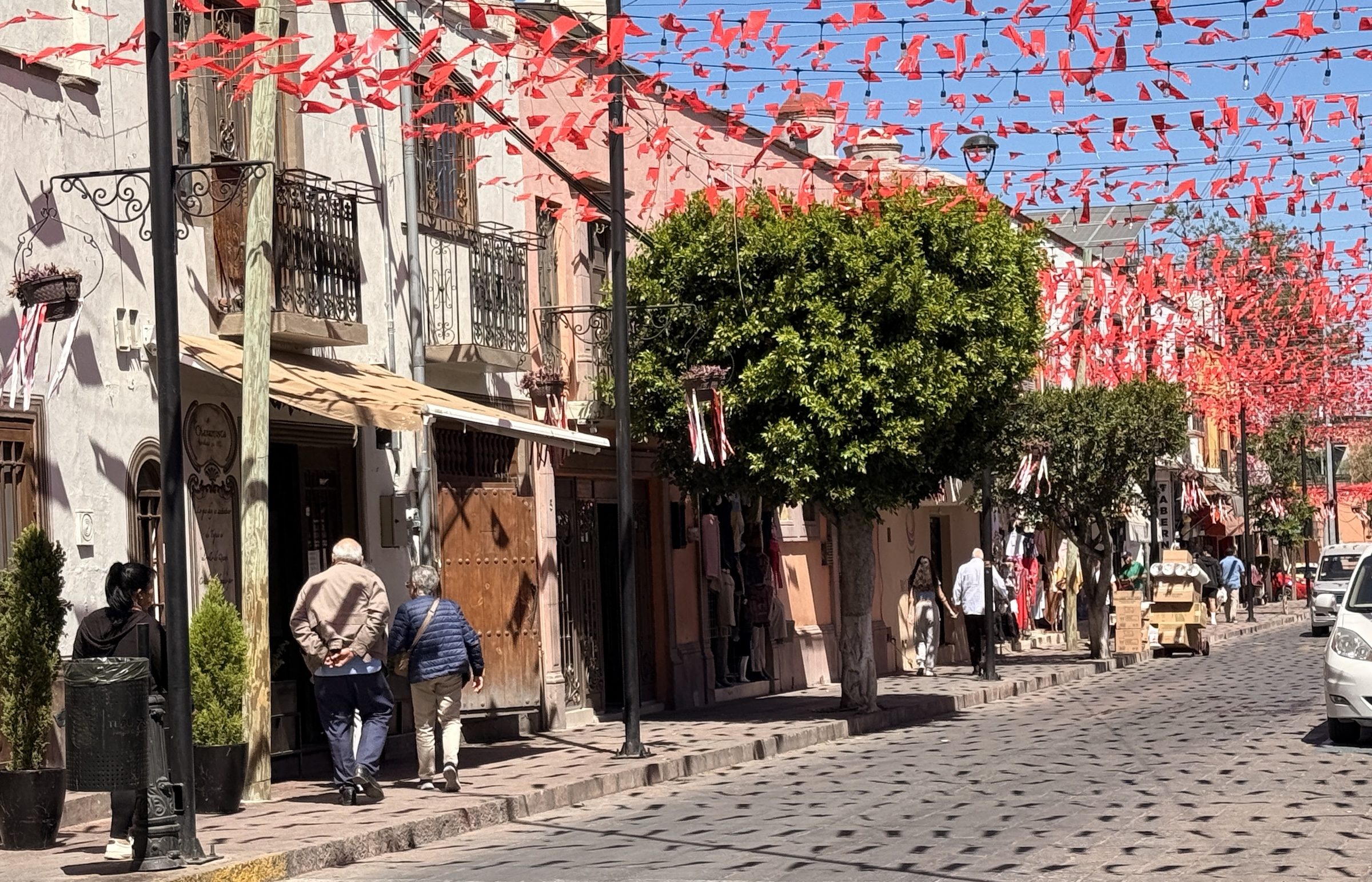
Tequis is a good place for exploration, and you can spend many pleasant hours just wandering these narrow streets.
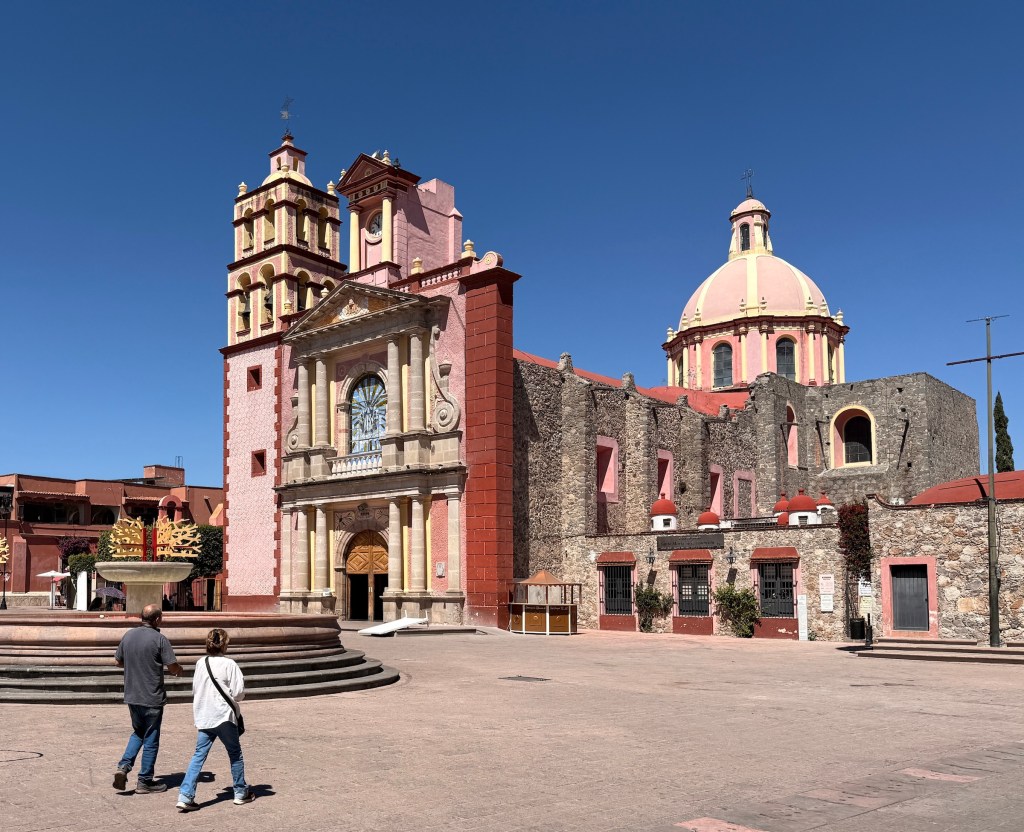
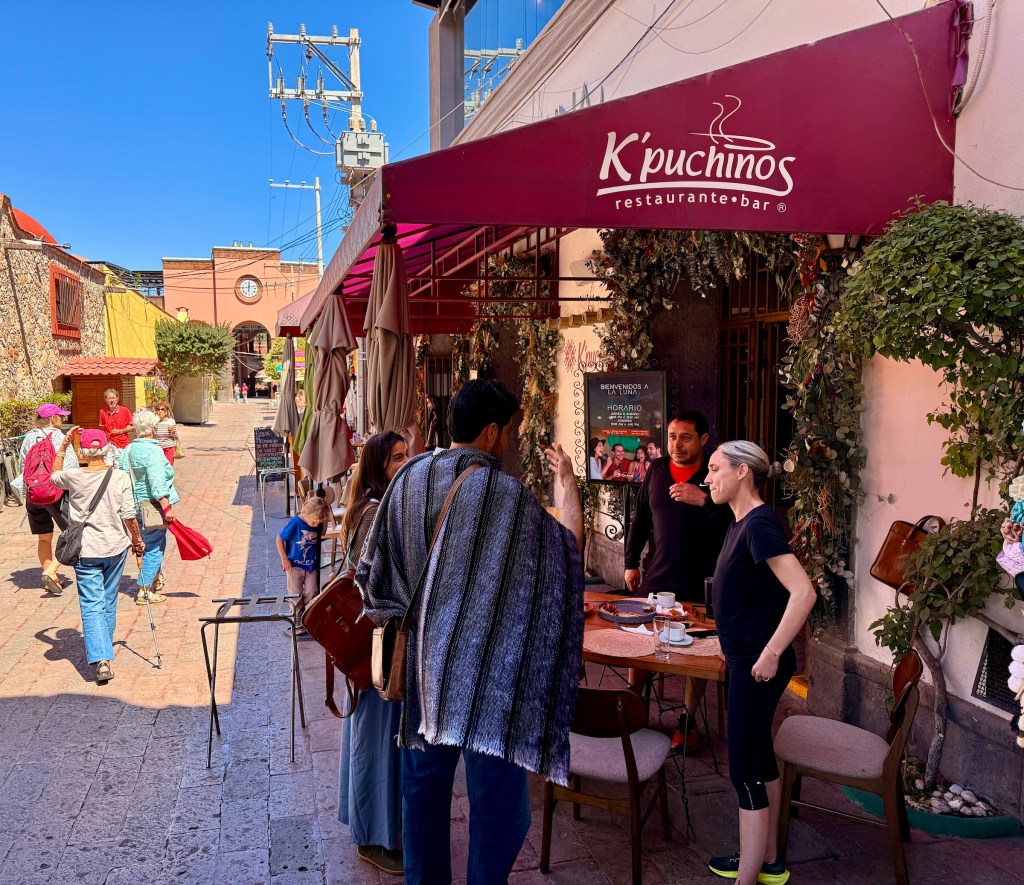
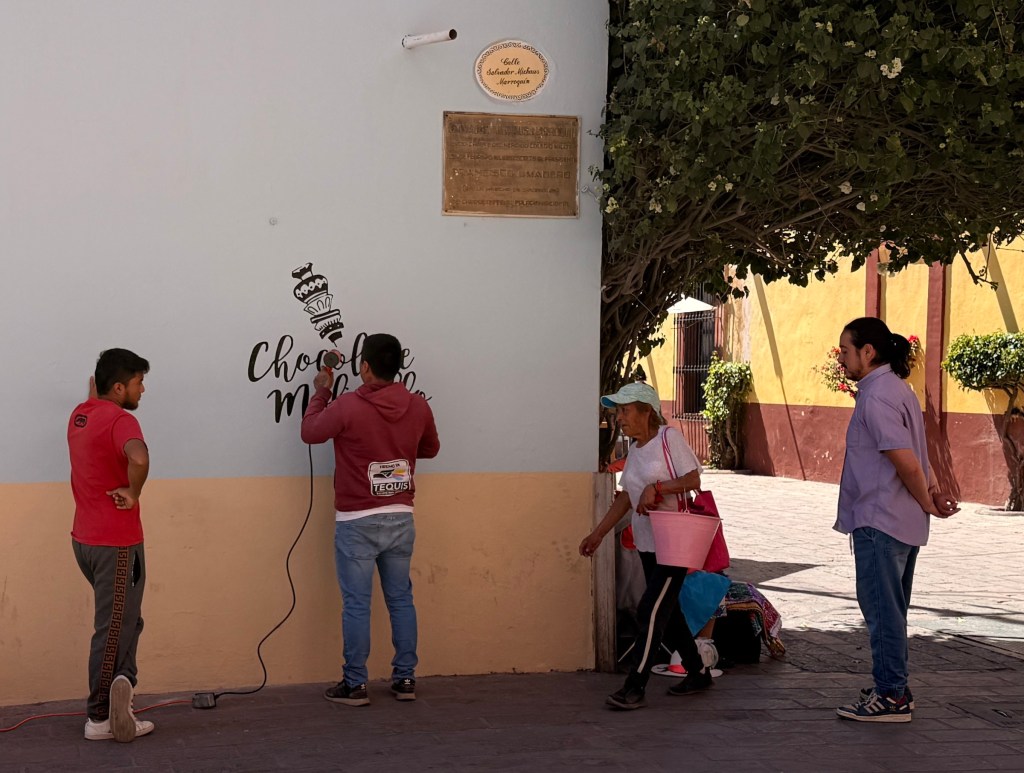
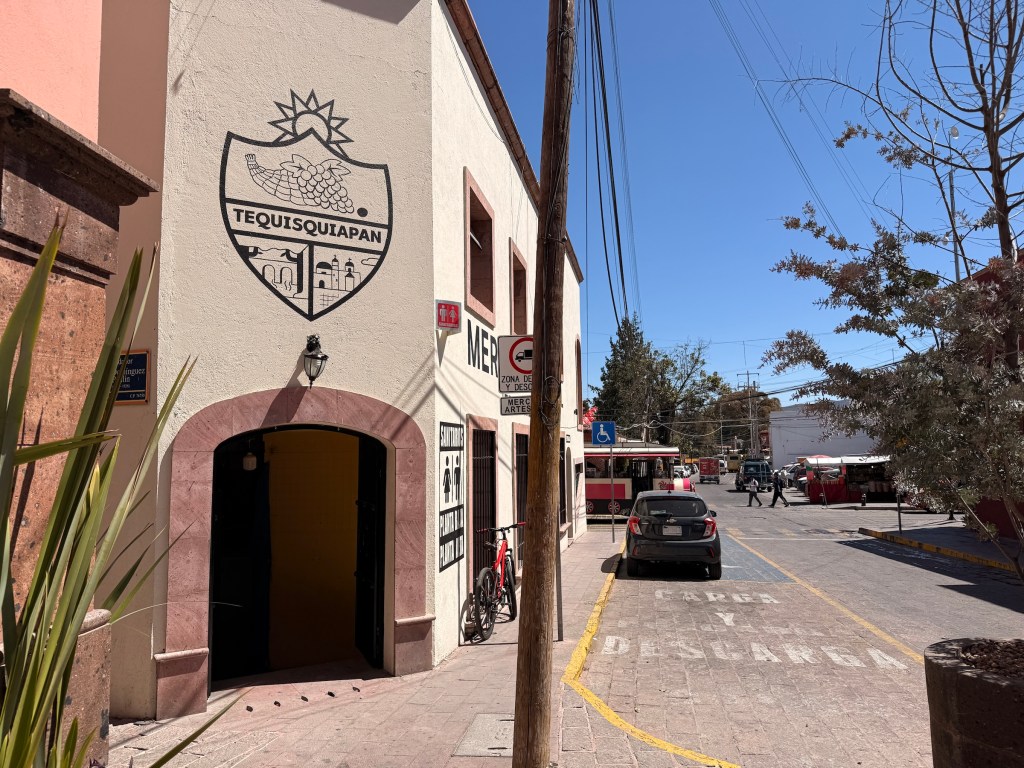
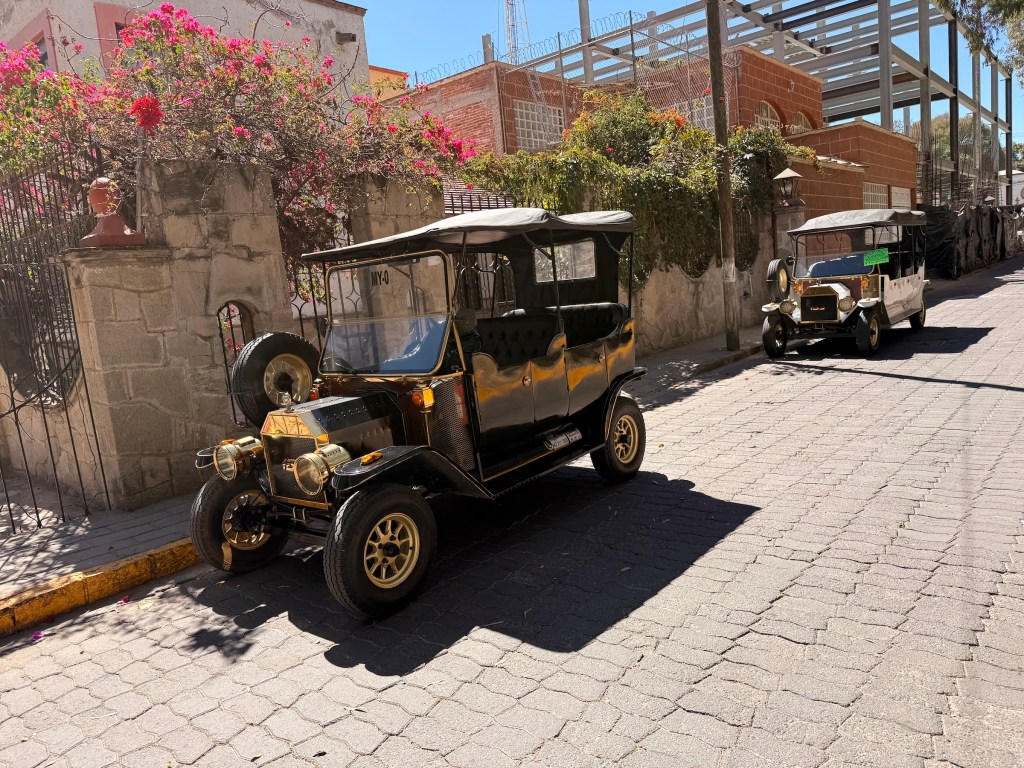
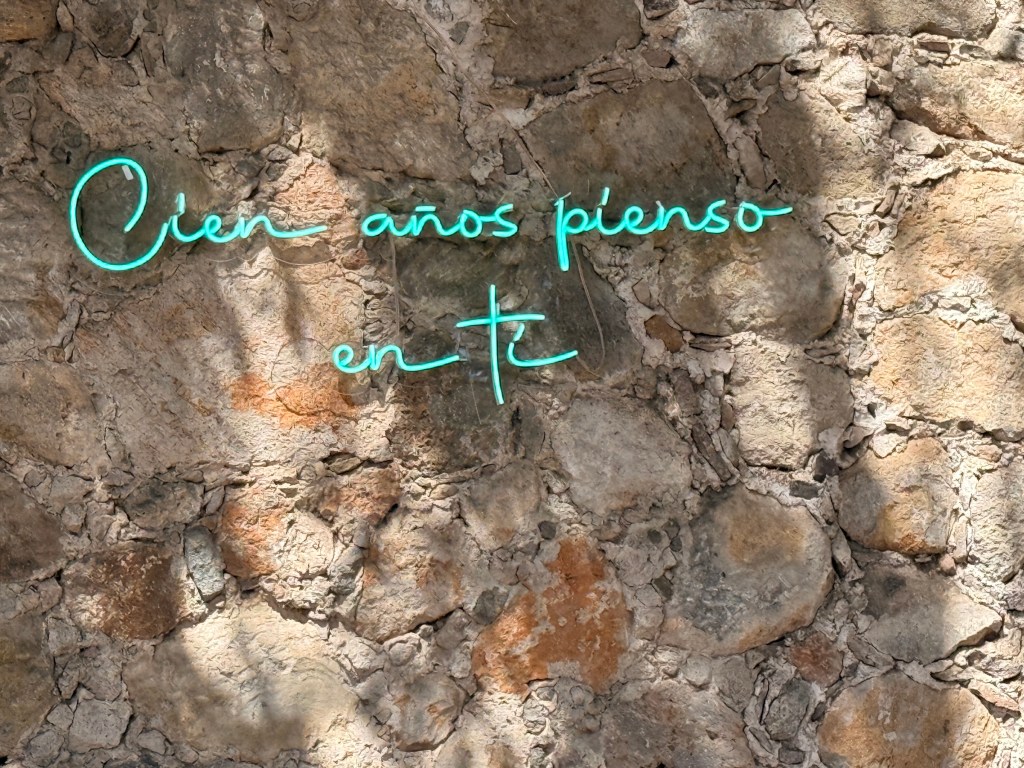
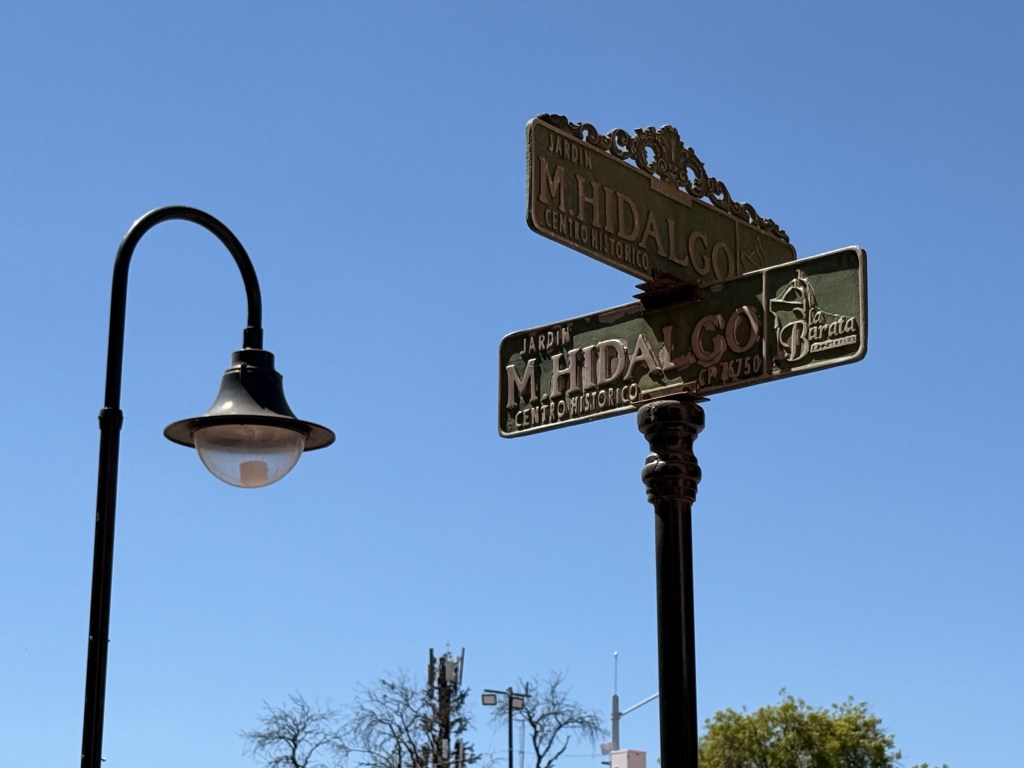
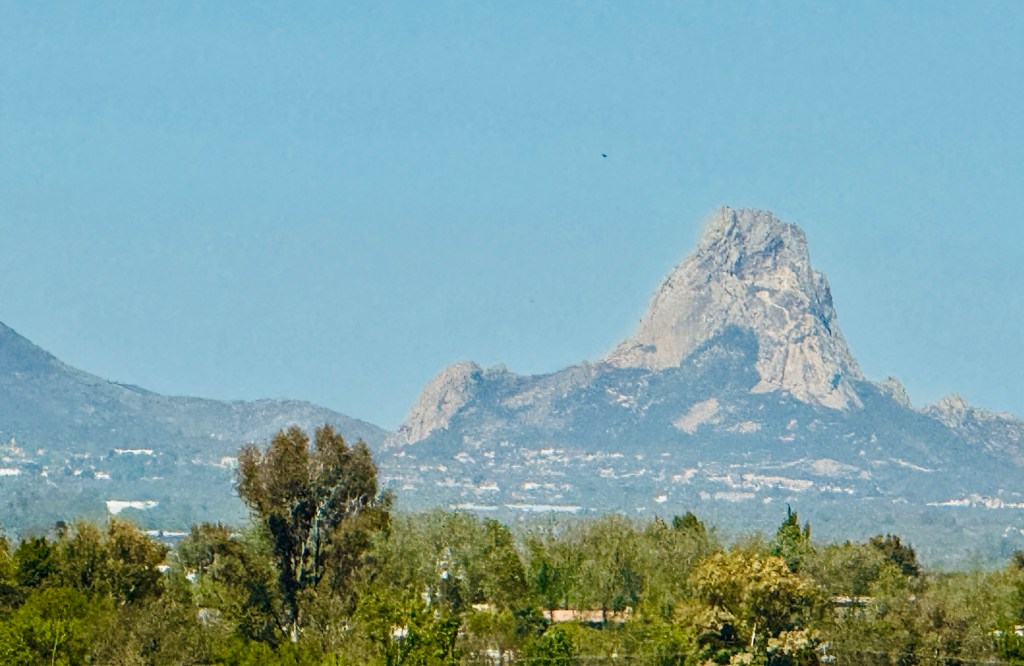
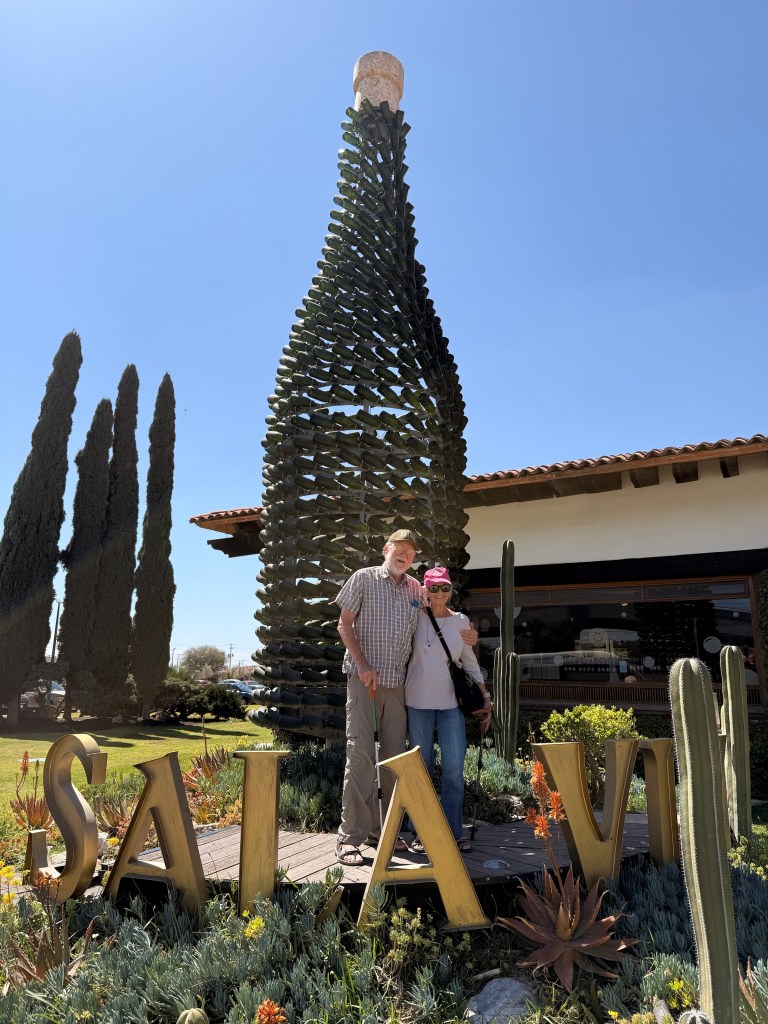
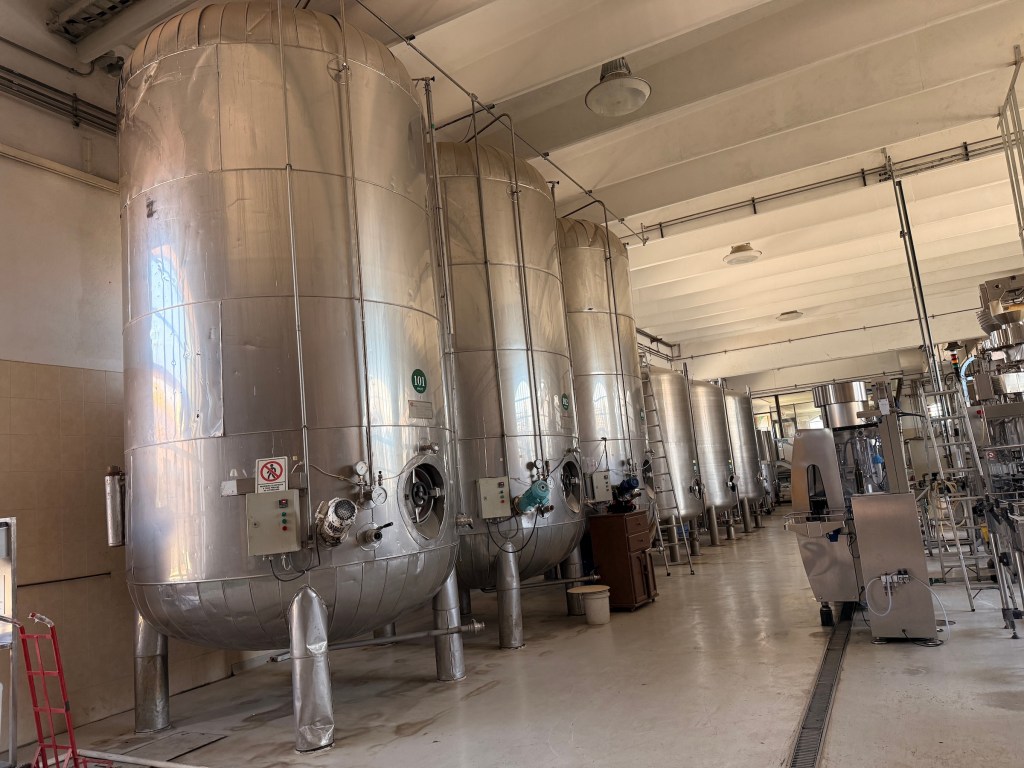
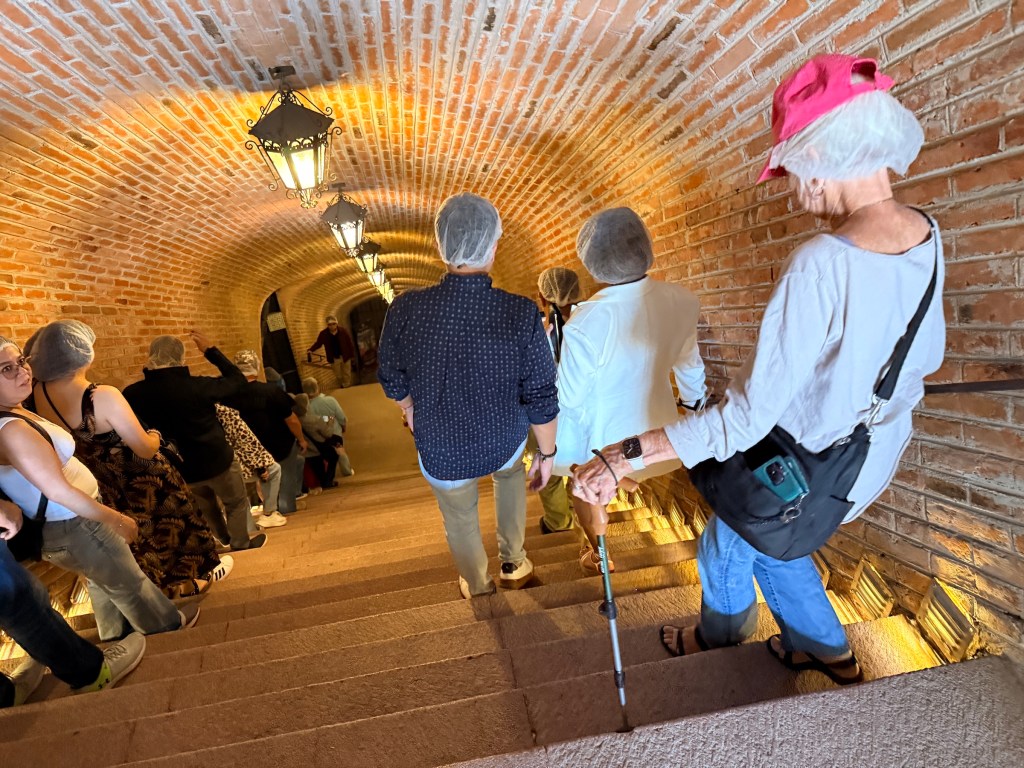
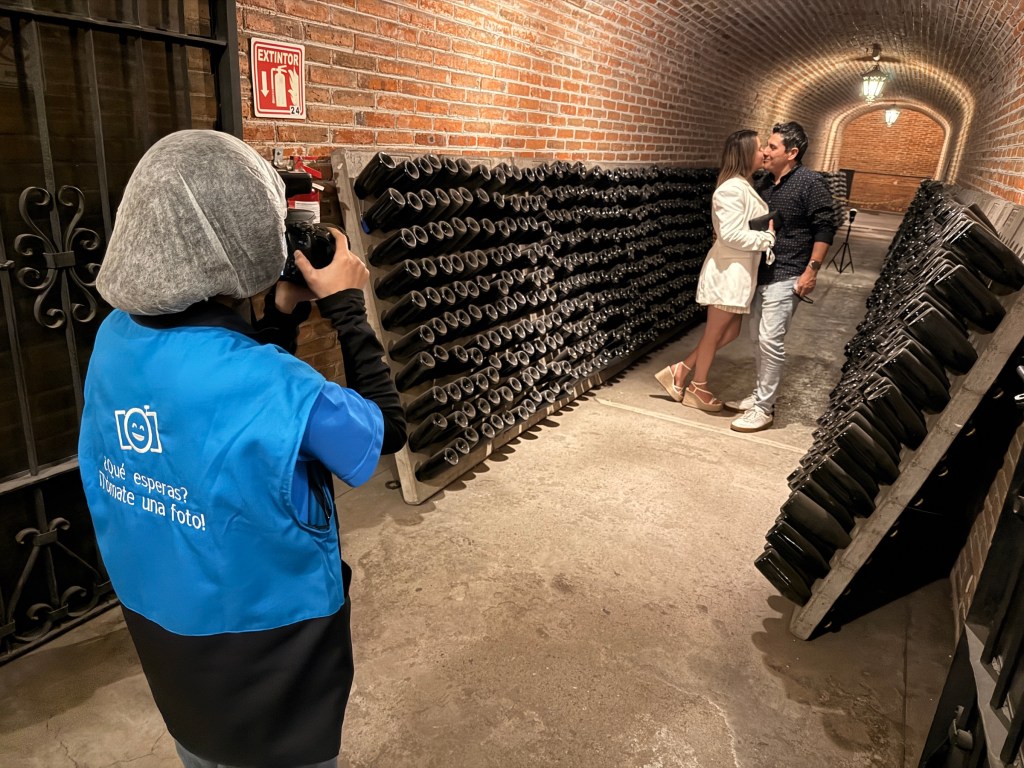
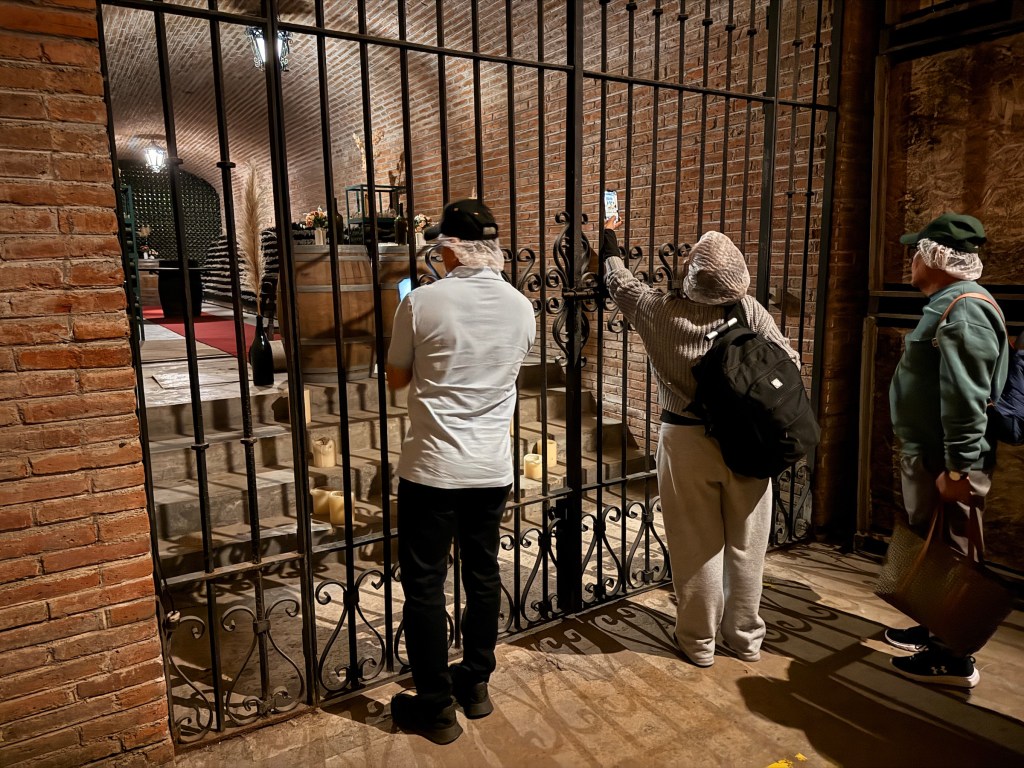
Soon we’re off again toward a giant rock looking in the distance, known as the Peña del Bernal (Bernie’s Rock), and a large winery called Sala Vivé. We start off with some nice balm for Carolyn to rub on her palms to make them smell pretty. Then we’re ushered down into the dungeon, which vintners prefer to call the cellar. And there’s enough liquid ecstasy stored down there to make any serious wine drinker weep with joy.
A young couple gets their kiss-picture taken. And others get pics of the forbidden area where the winery keeps the really good stuff under lock and key, before we emerge again into the daylight.
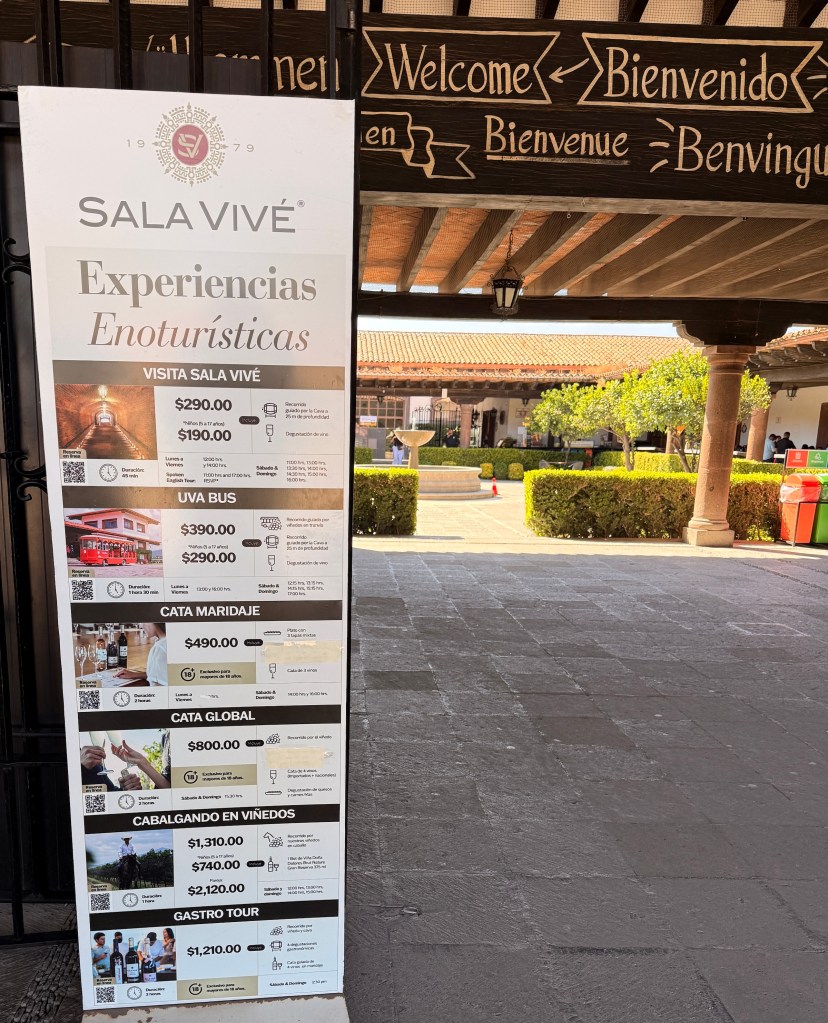
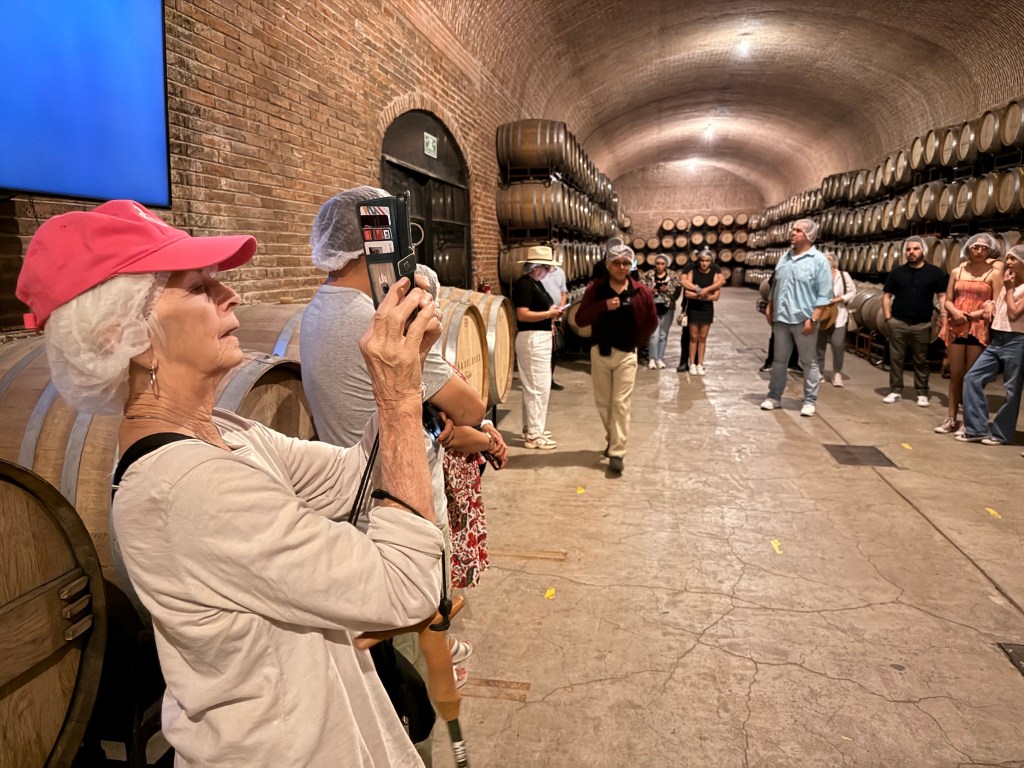
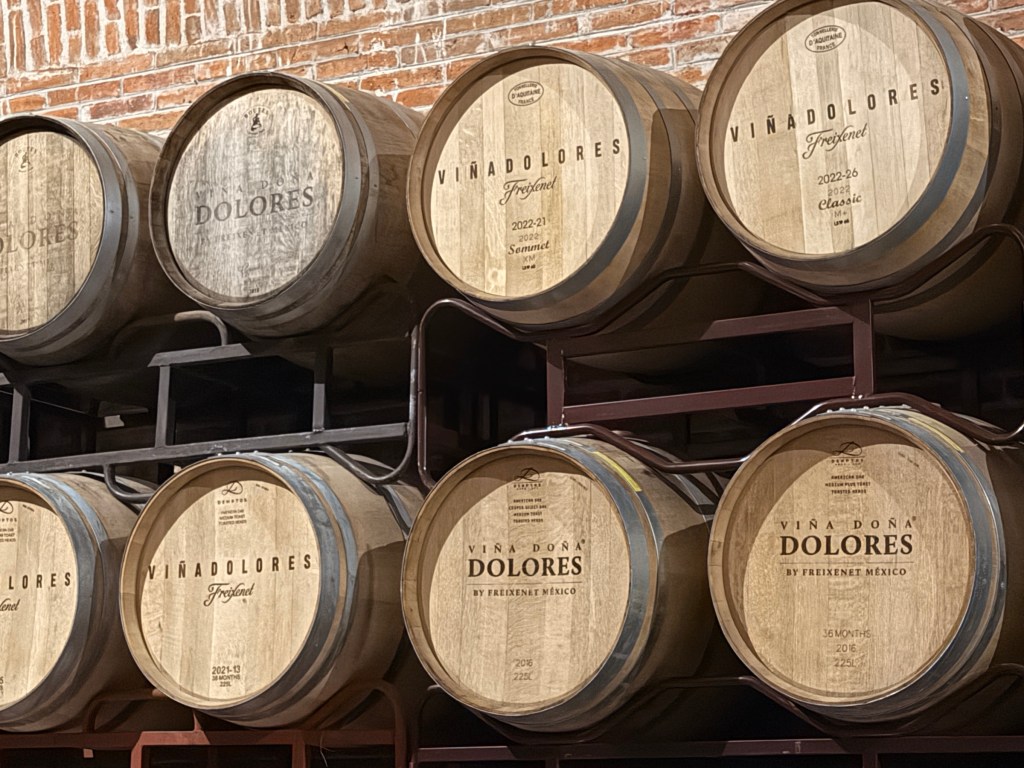
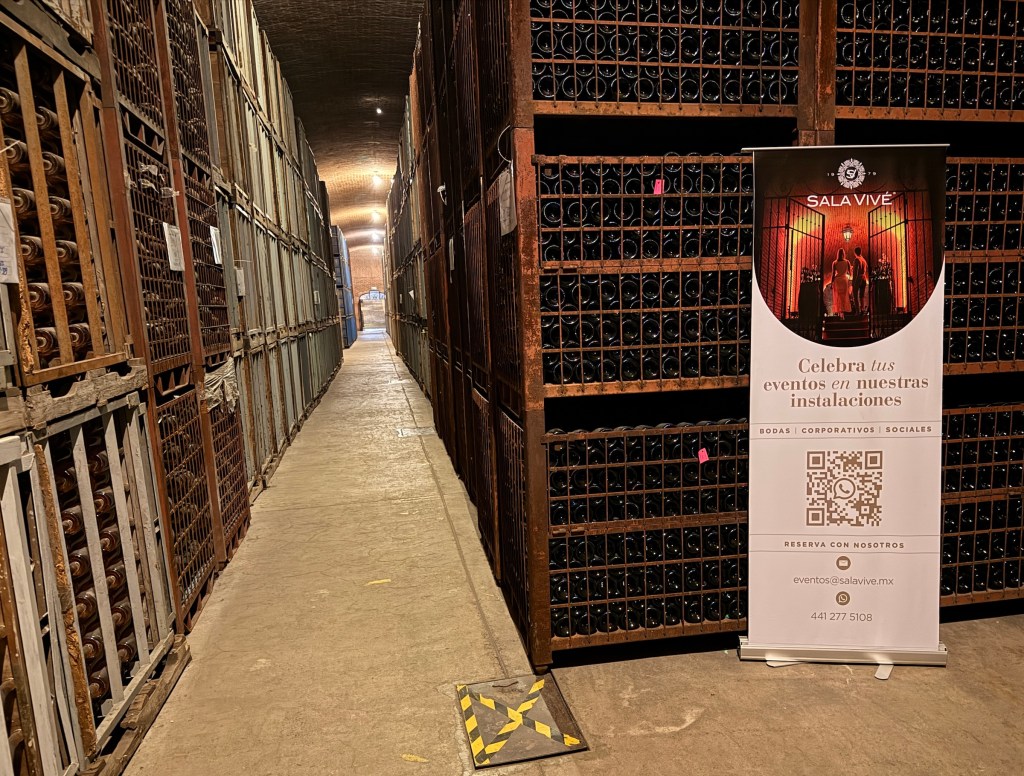
A young lad seems somewhat overwhelmed by the whole spectacle, while the adults relax with a tipple at the edge of a garden courtyard.
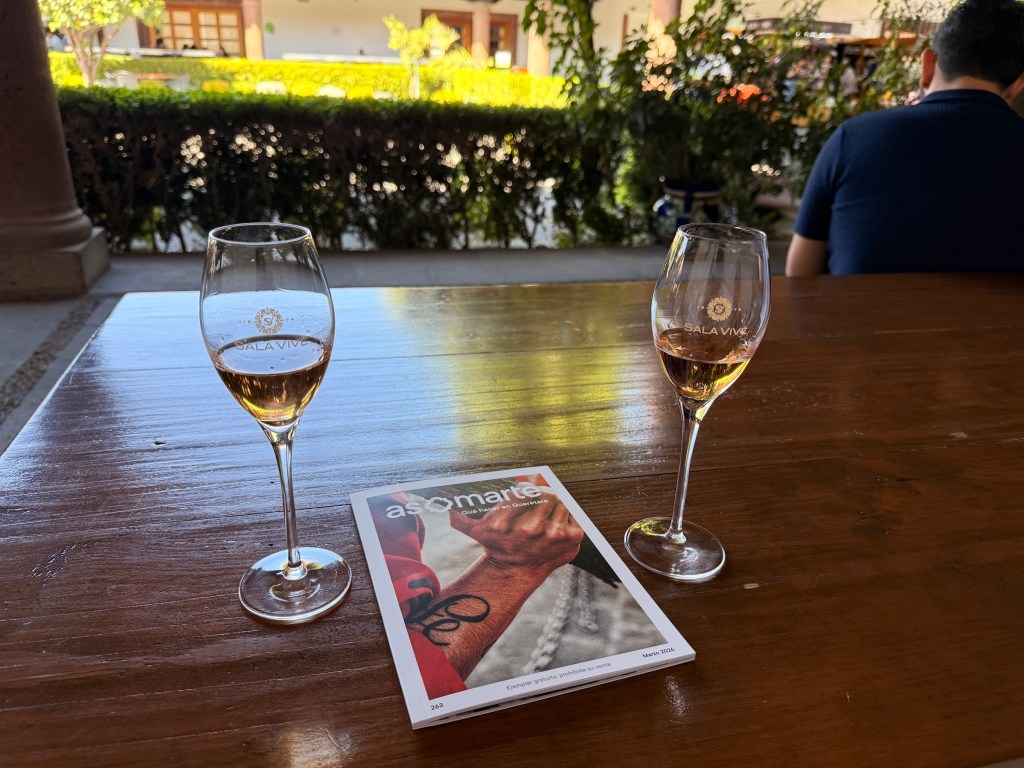

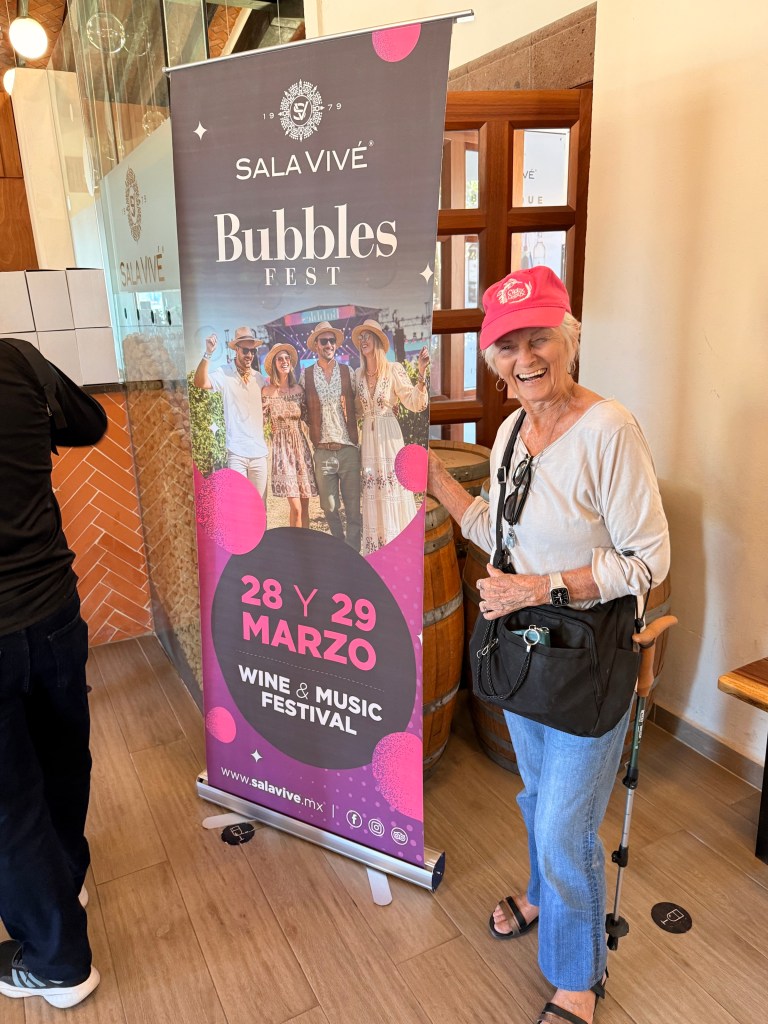
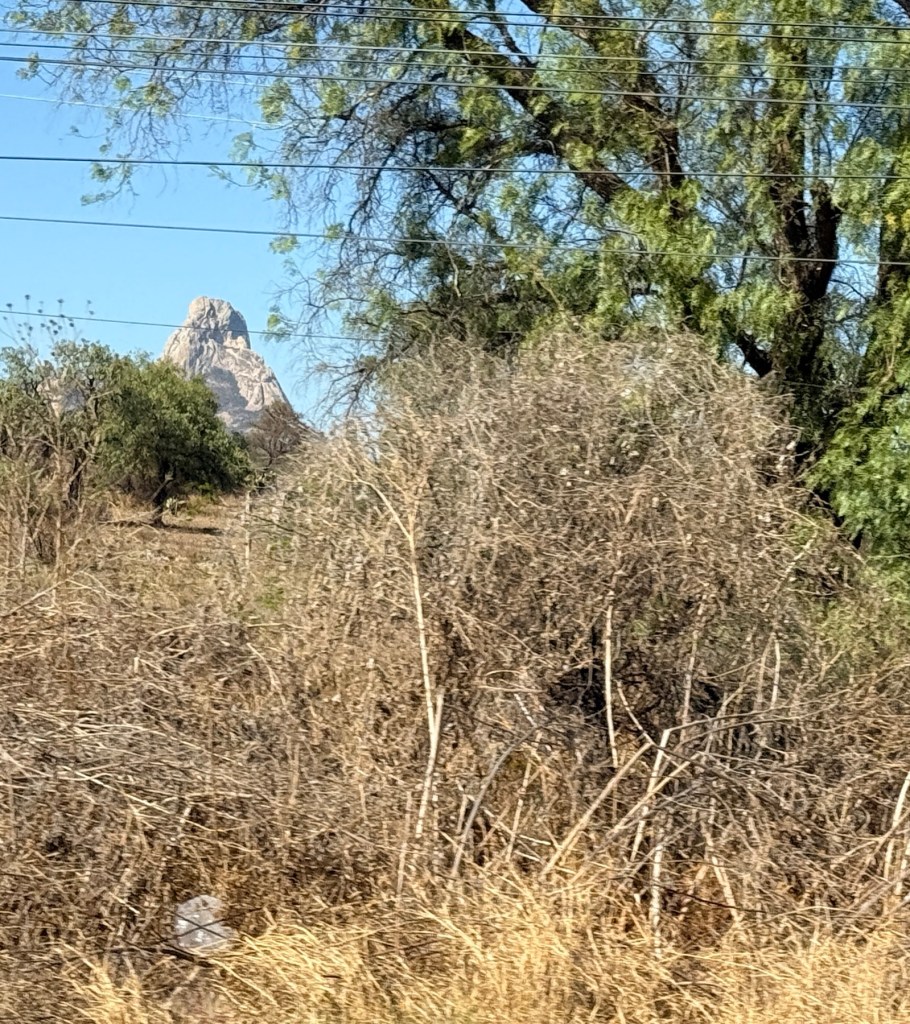
It’s been a good day as we bid farewell to Tequis and the Ruta de Vinos, with the Peña del Bernal hidden by roadside trees, brush, and power lines. The sun is setting on our way back to Querétaro, and I get a fleeting glance at that recently-expanded AeroBus facility by the airport. Mexico is truly becoming a major player these days in the international economy.
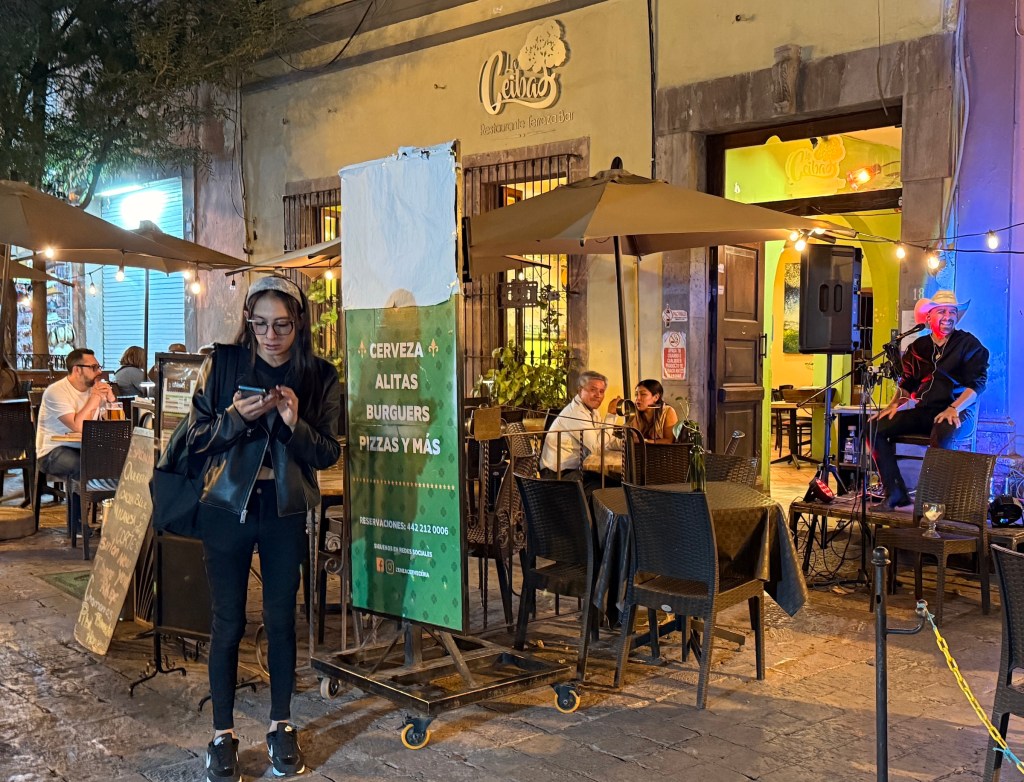
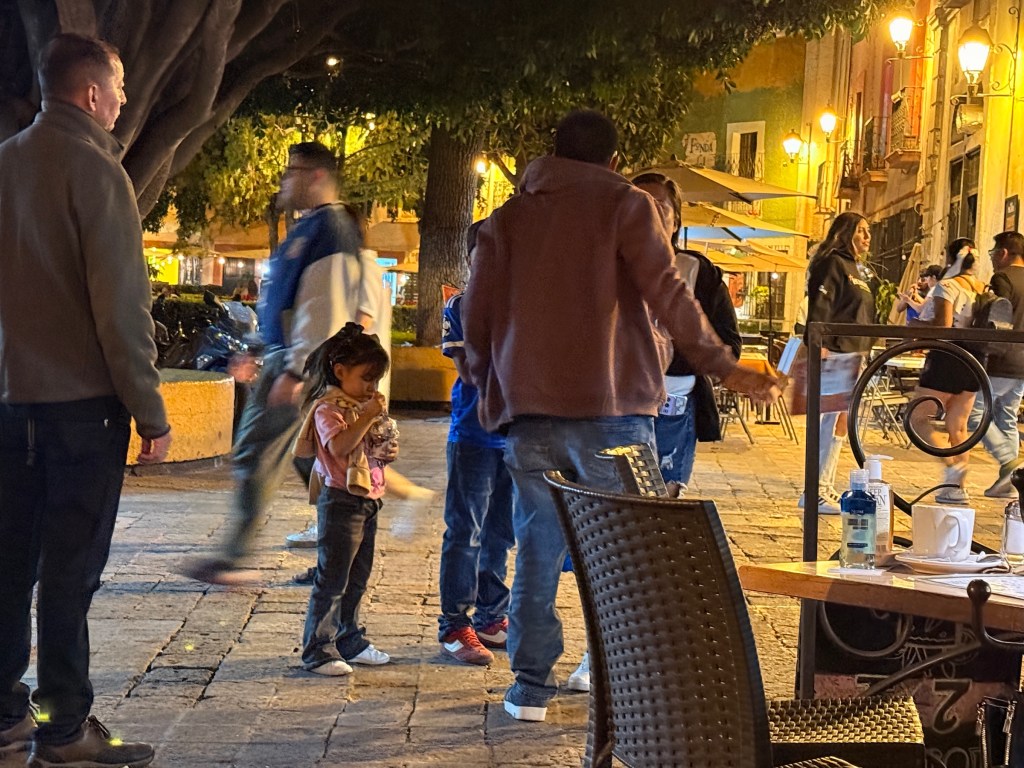
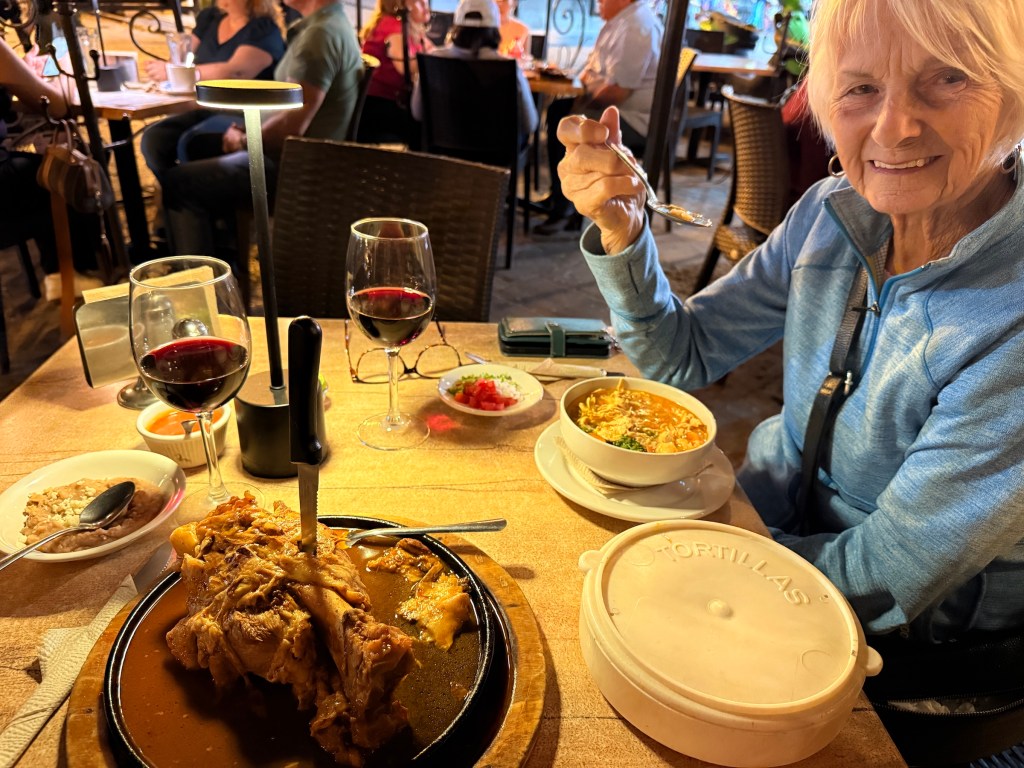
Back in the big city we settle under large trees to enjoy the music and watch the people go by, as we dig into some fine comestibles. Along with a nice wine, of course.
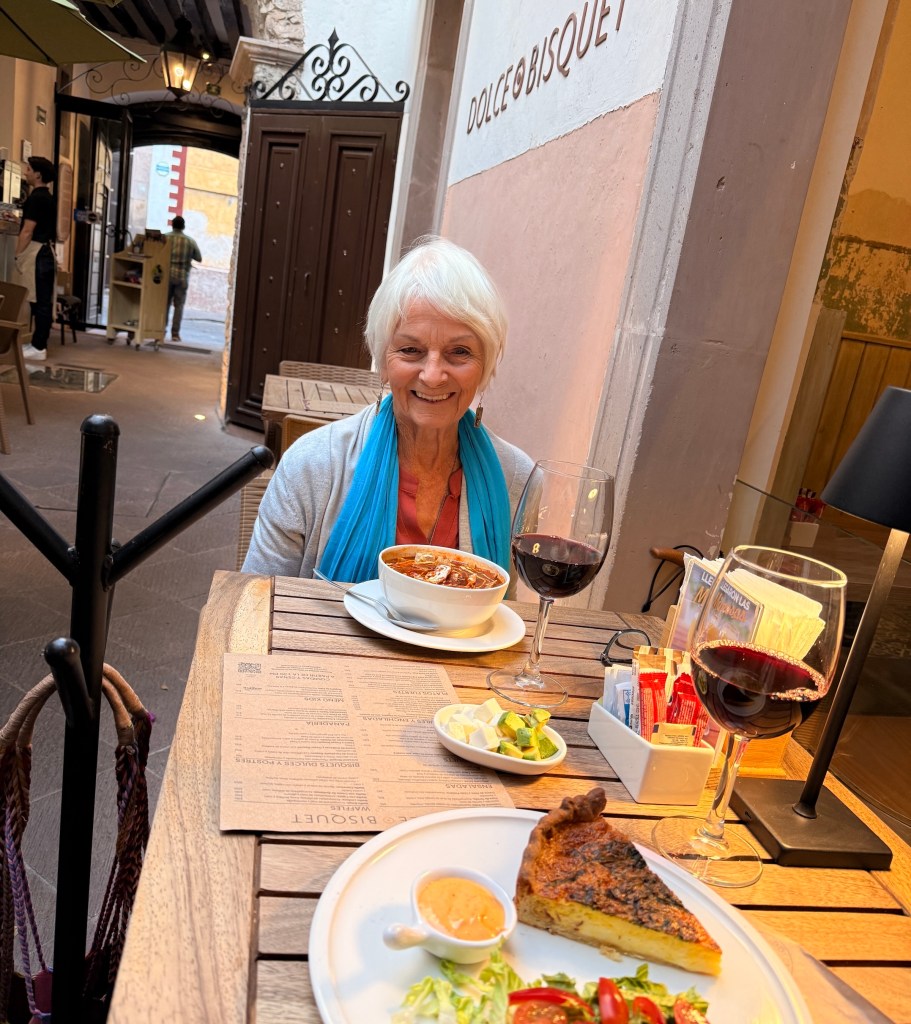
On another evening we have tickets to an evening fiesta of traditional dance being held at the city’s shiny new concert hall, and so we get an early dinner at Dolce Bisquet, across the street from our hotel. A local Uber delivers us to the hall – and we were not ready for this impressive place on a hill overlooking the city below! It’s huge and bright, and shares that imposing site with the State Government building.
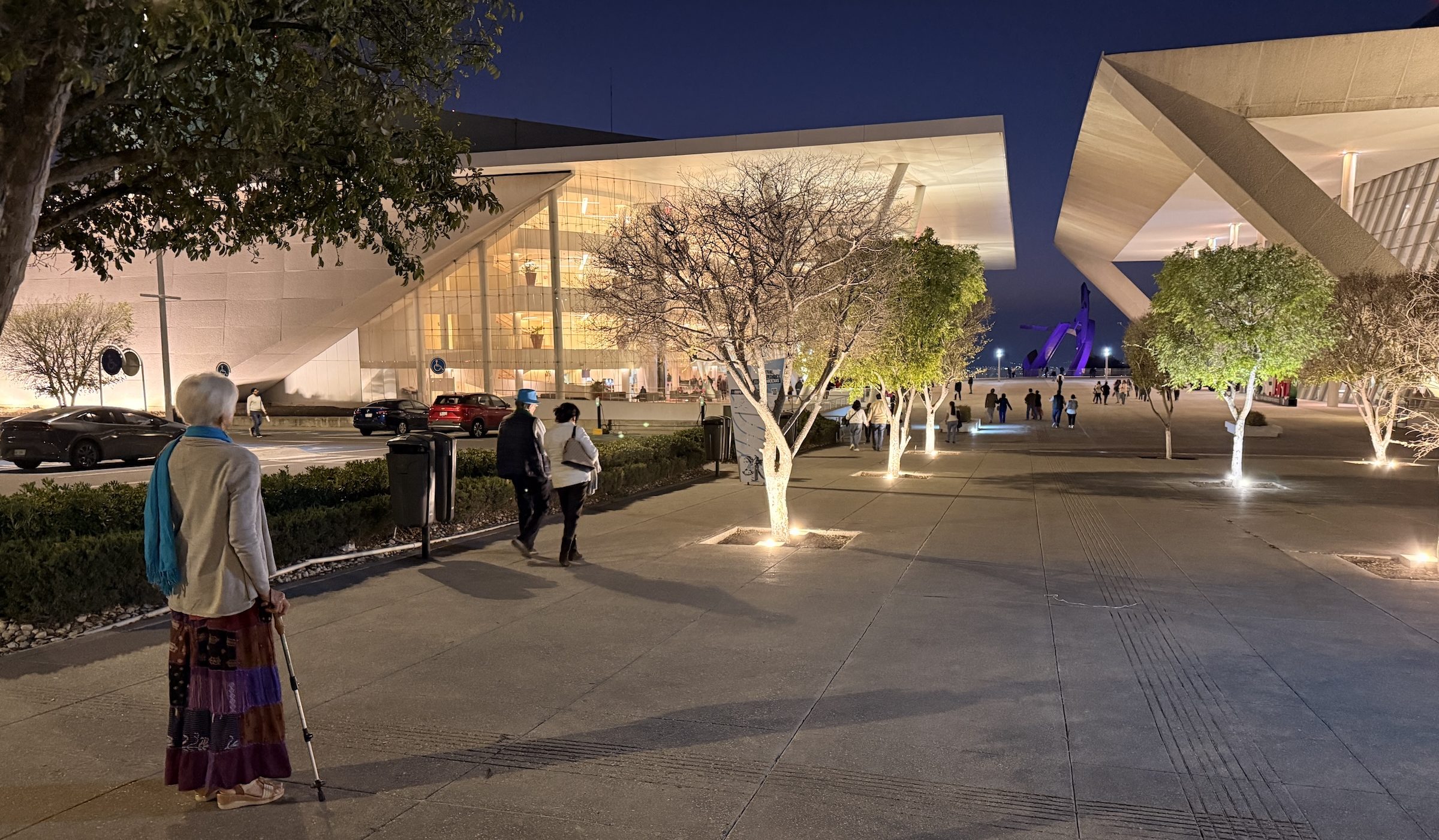
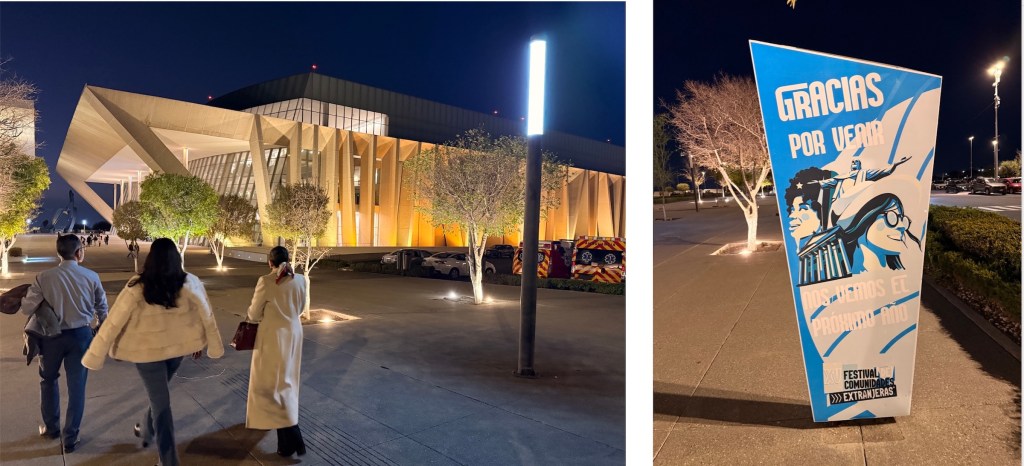
It feels like we’re attending an elegant evening gala at the Kennedy Center – before that important US institution was recently so badly mistreated.
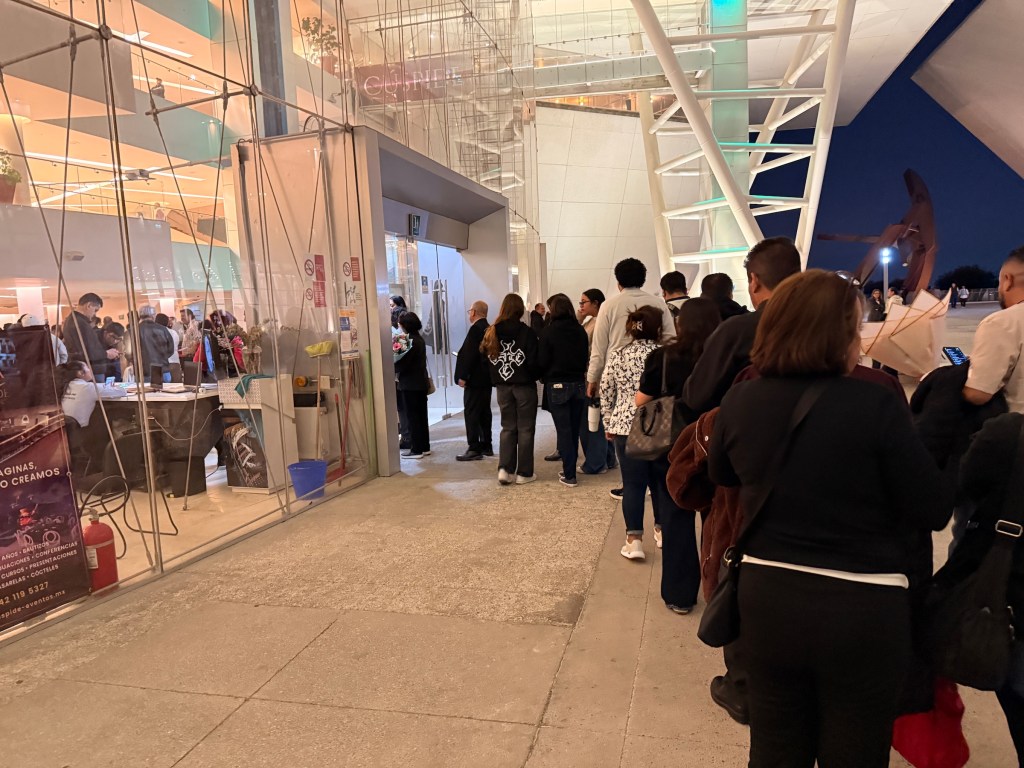
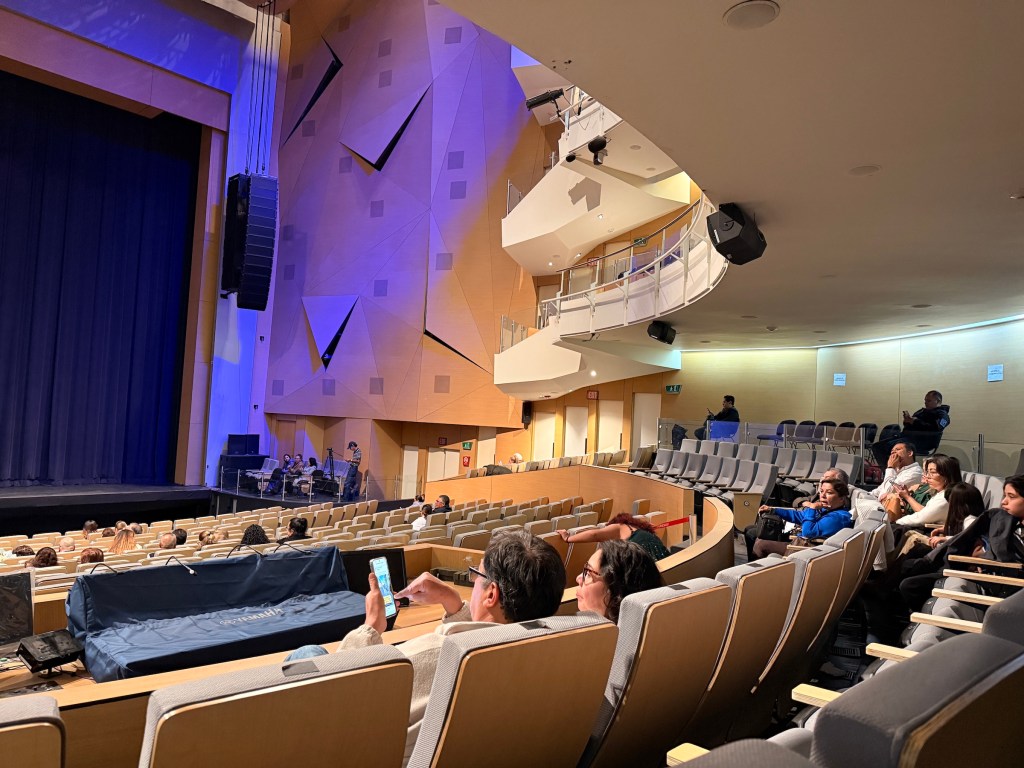
The local orchestra and dance company put on a full dress extravaganza that gets our toes tapping as they capture the color and rhythm of the Mexican nation.
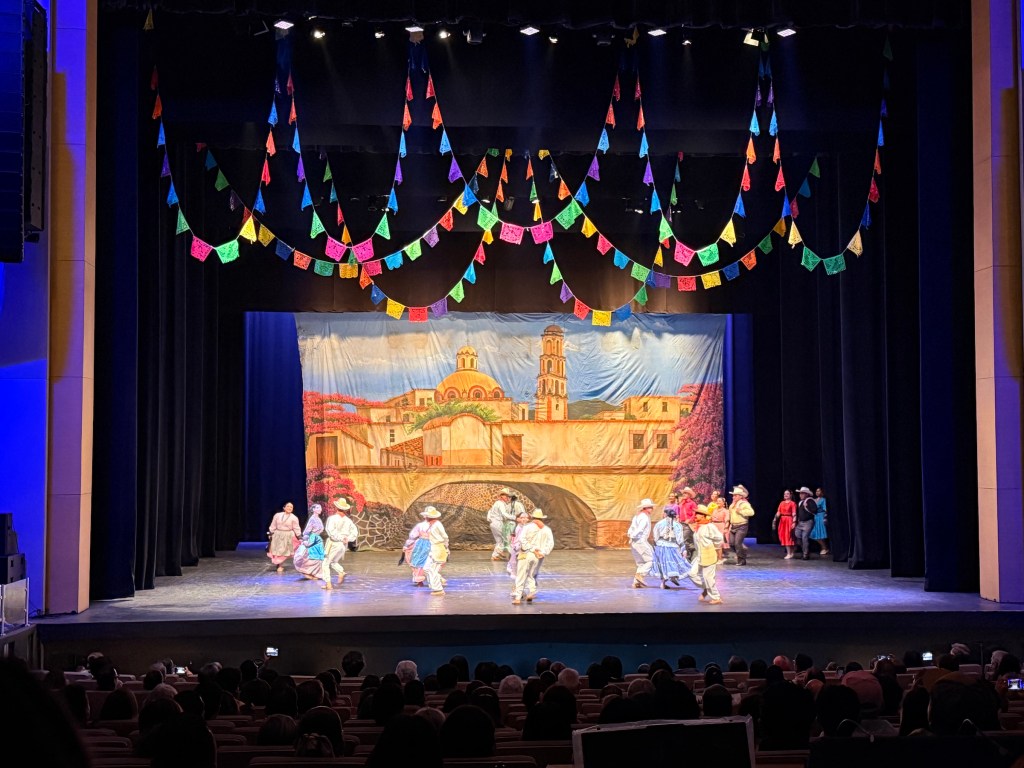
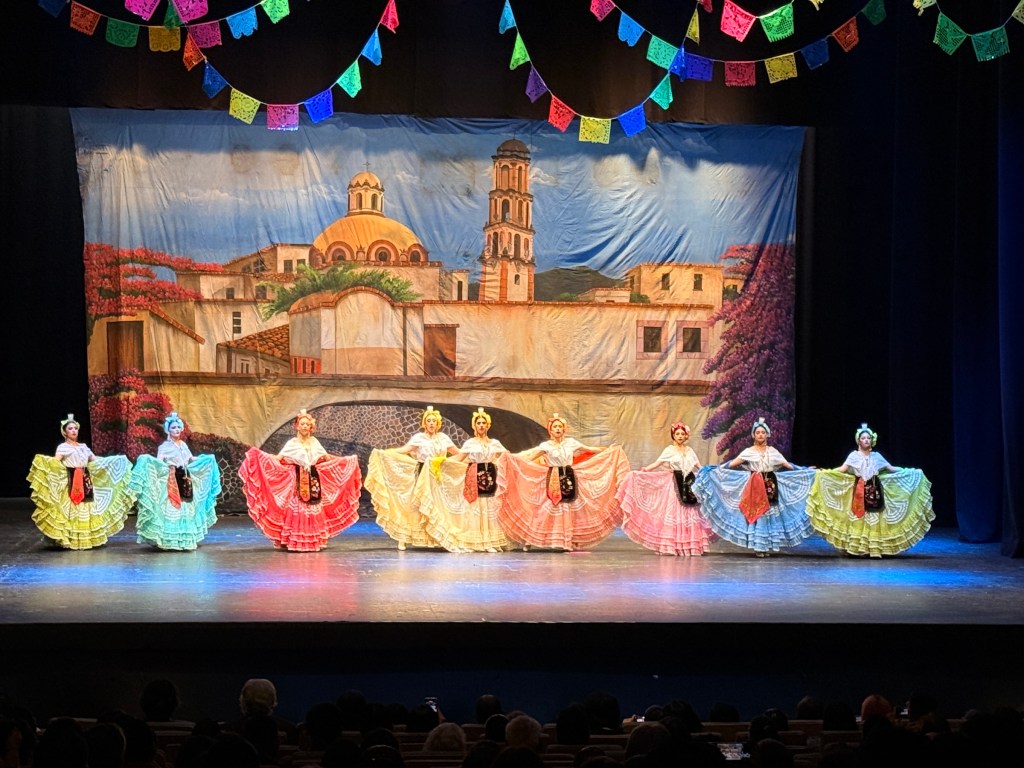
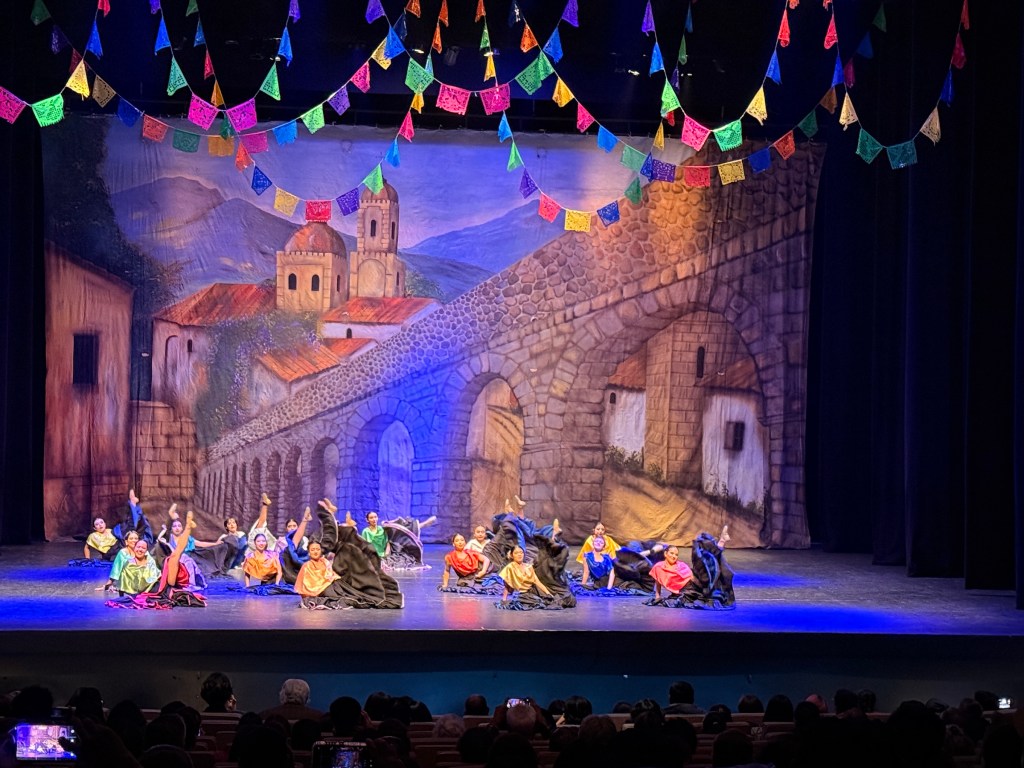
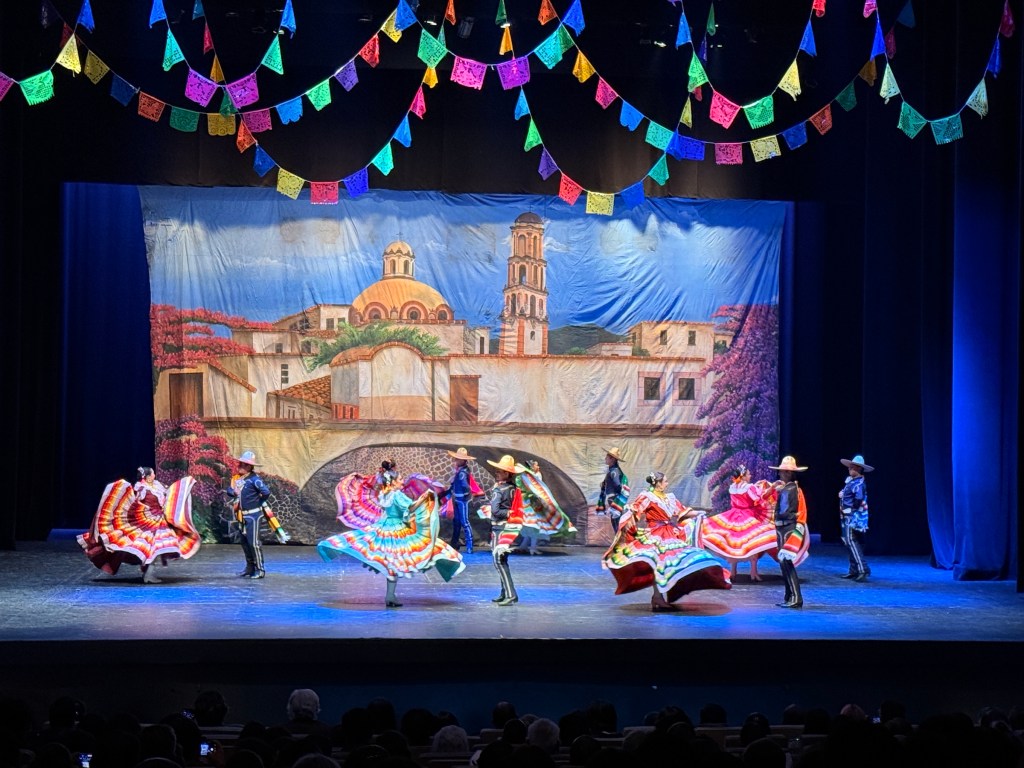
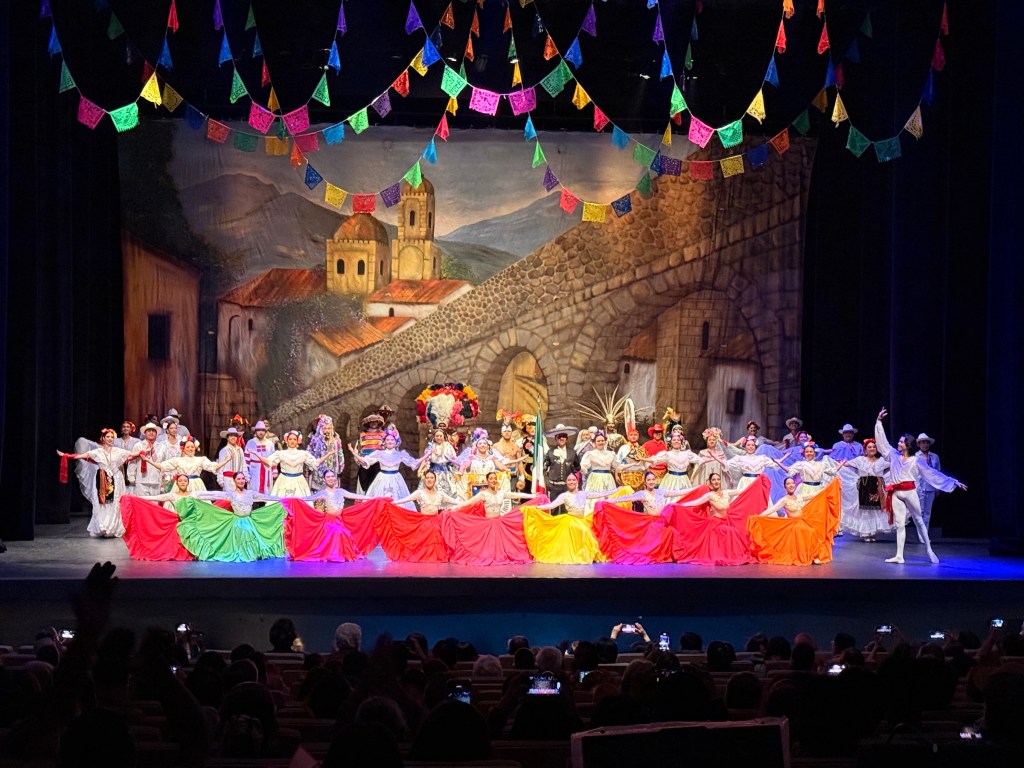
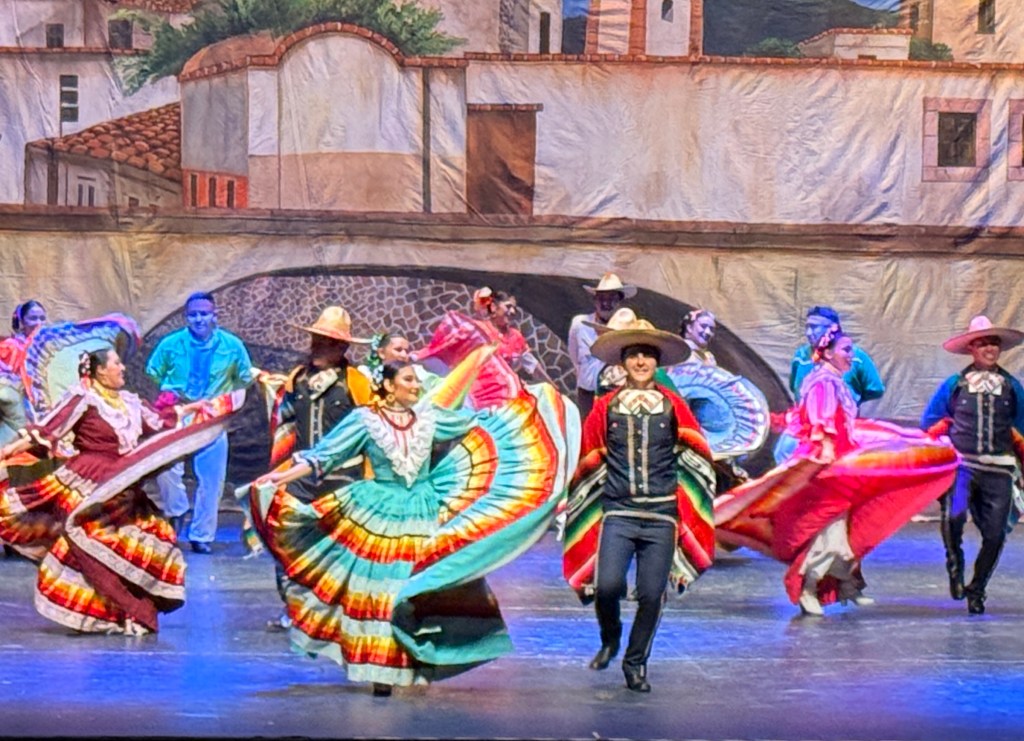
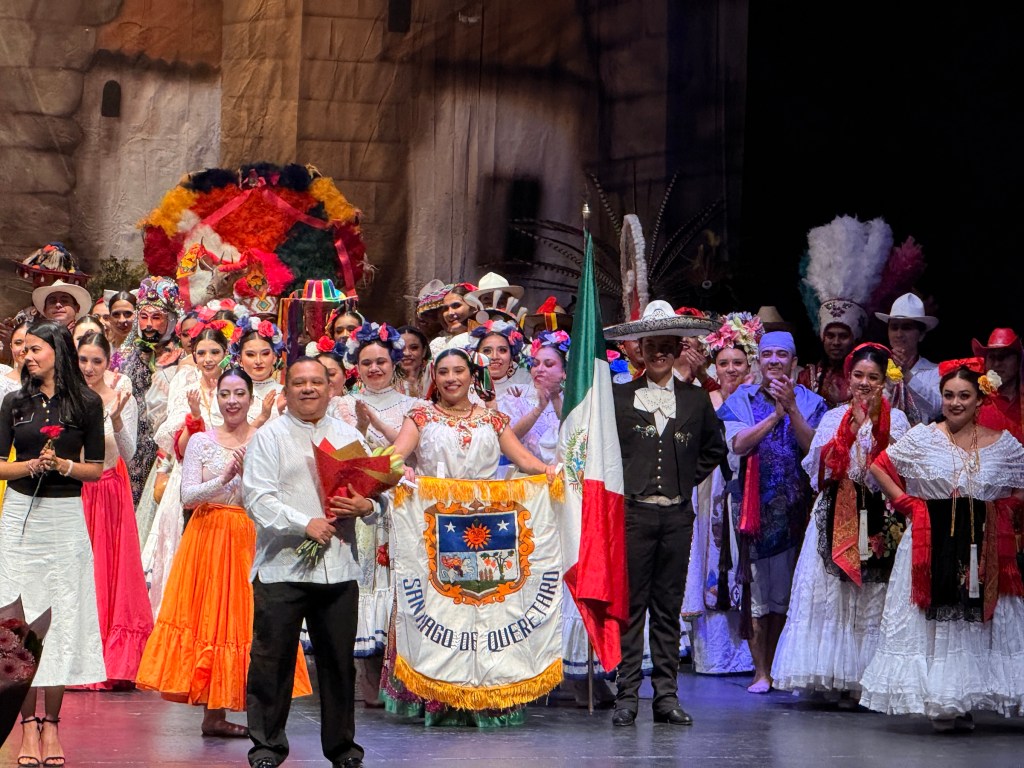
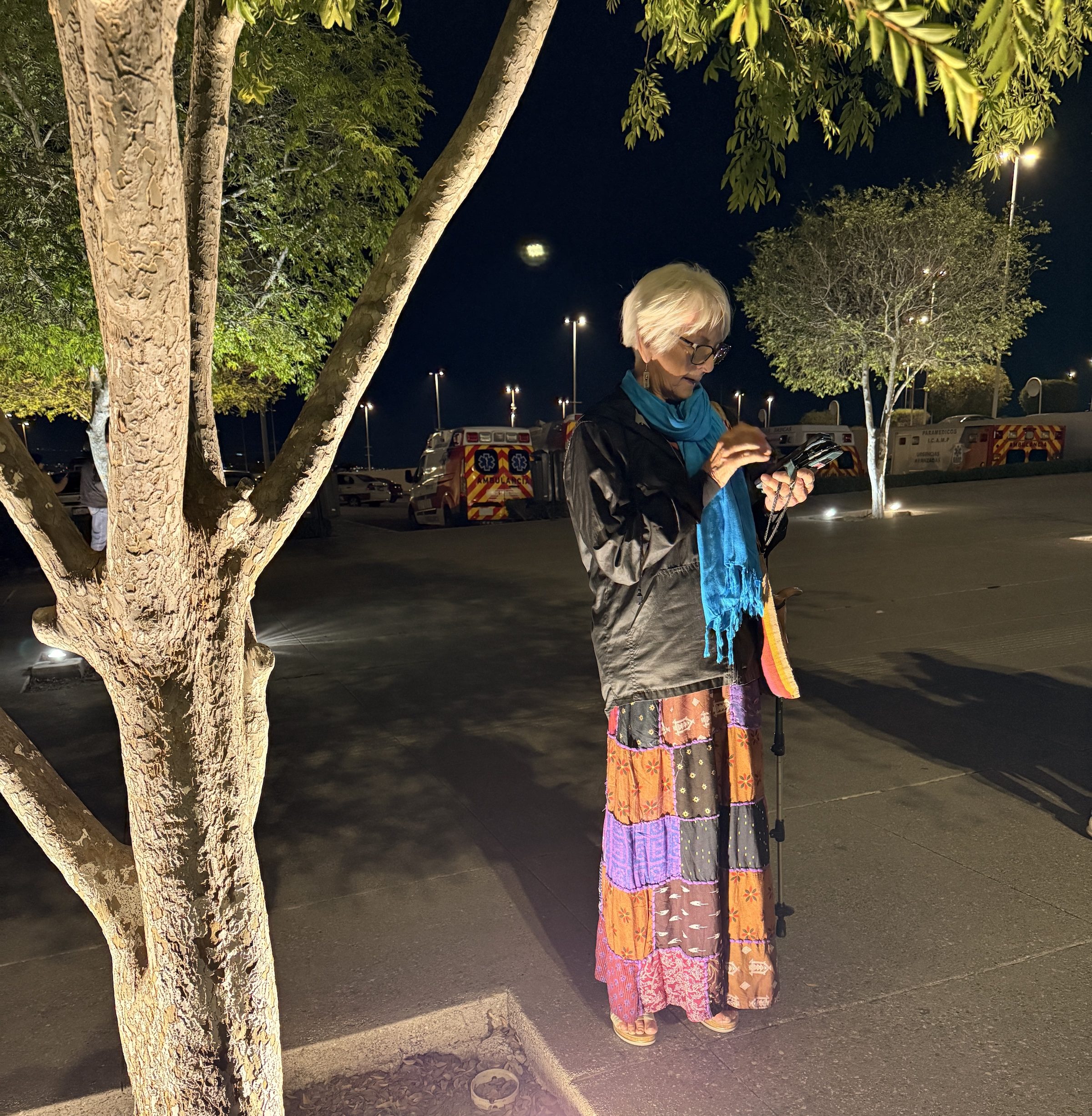
We have time to reflect afterward while waiting for a ride. The setting was a fine surprise, and it was a really wonderful evening.
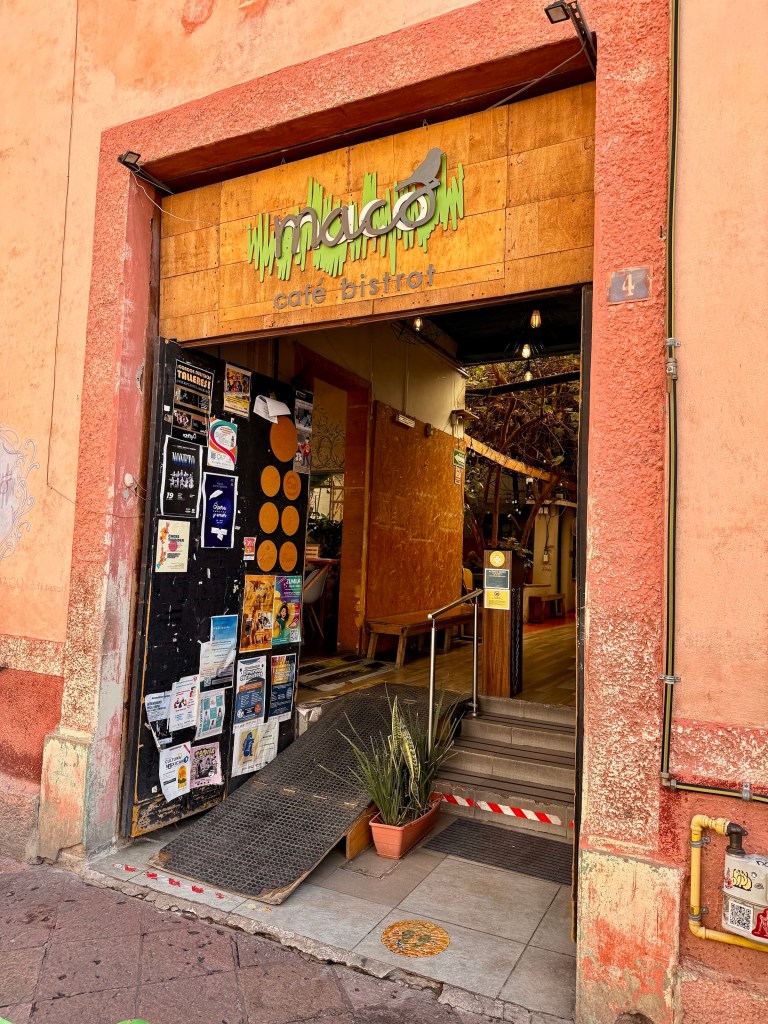
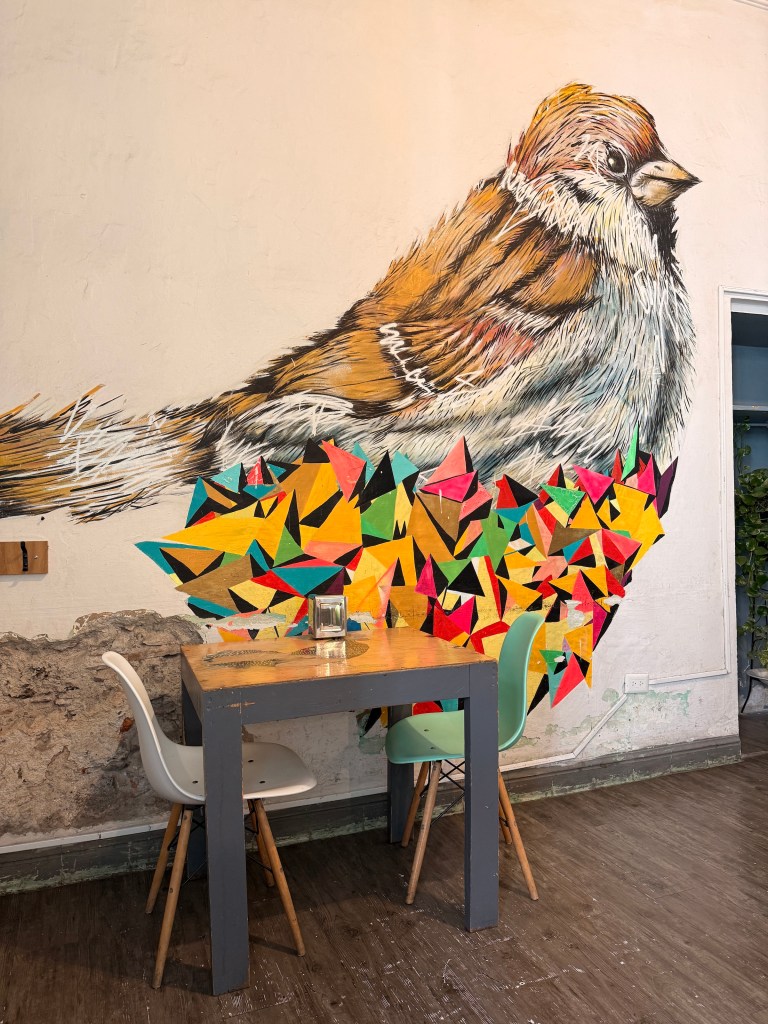
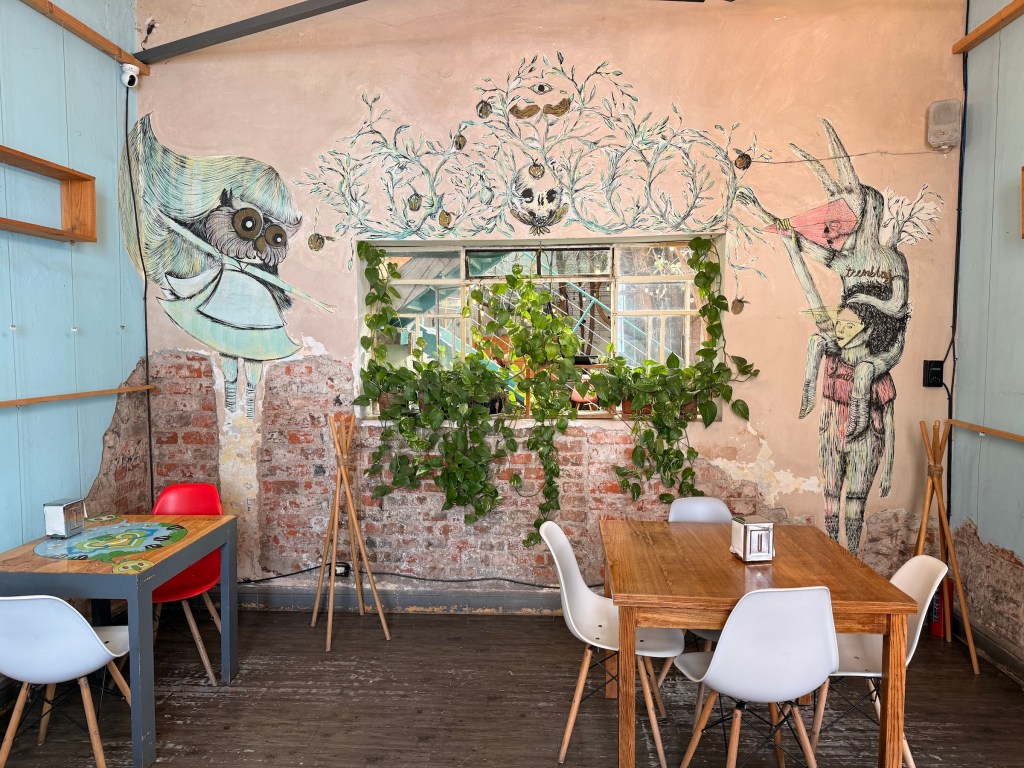
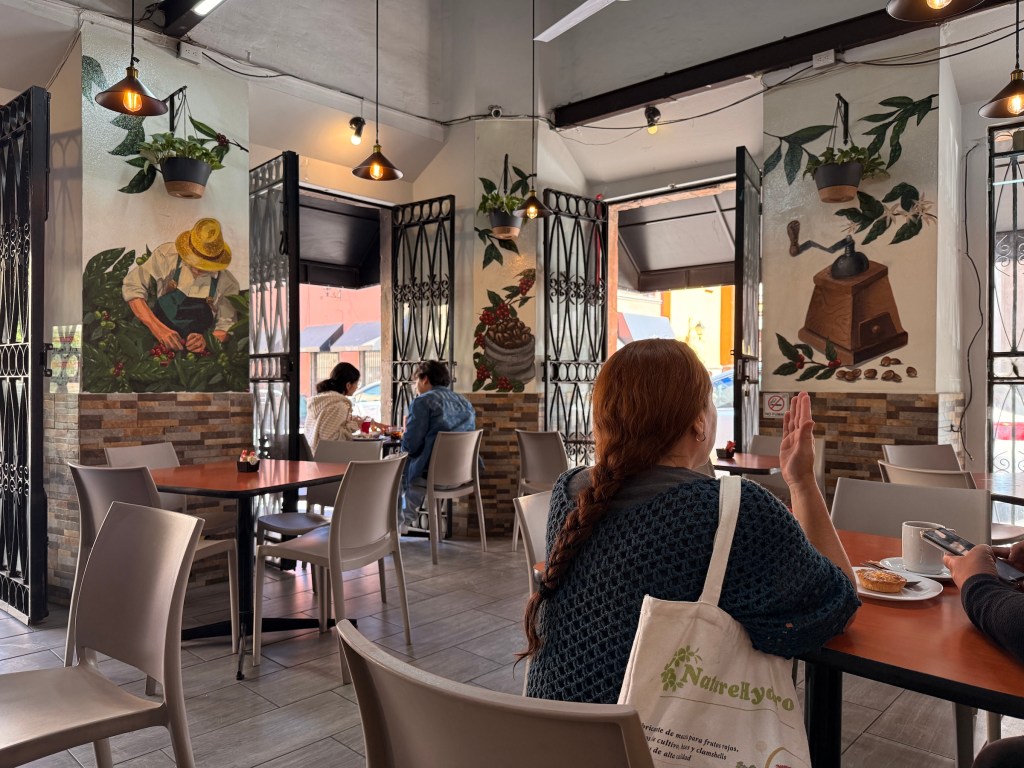
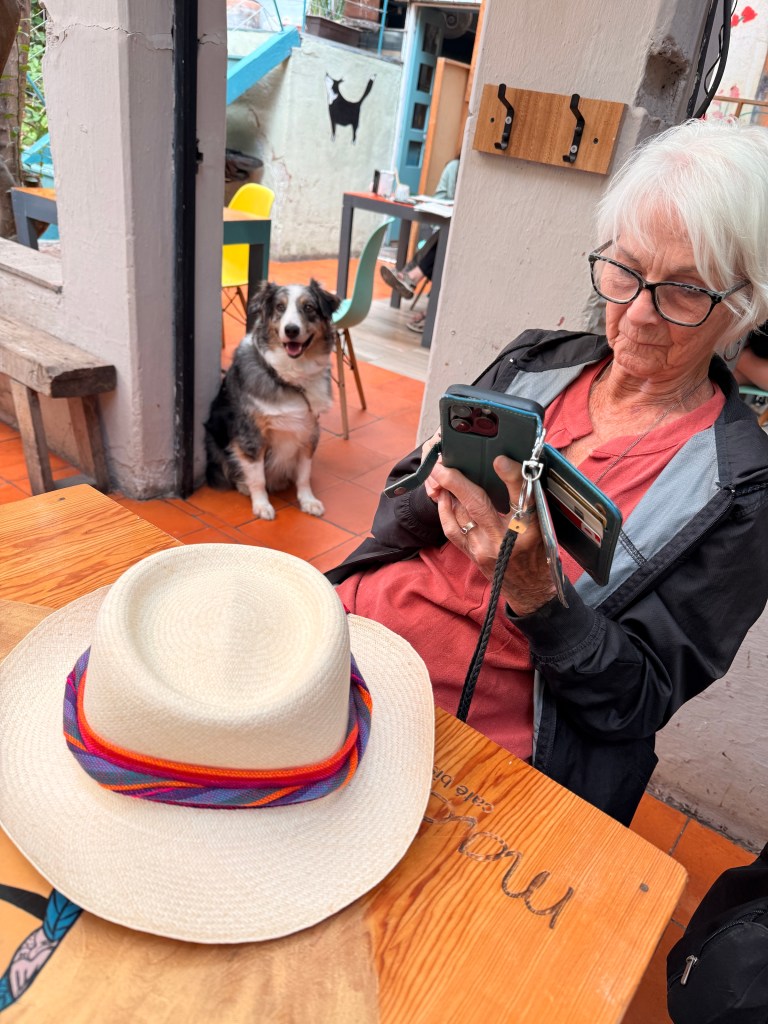
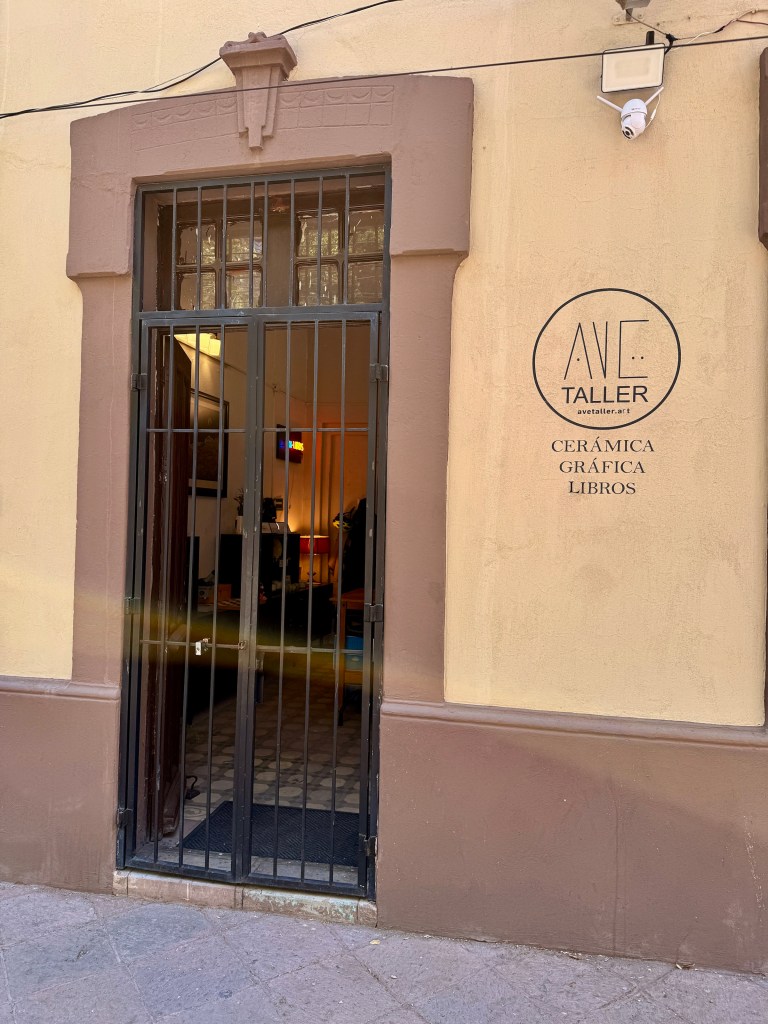
The many interesting little coffee shops here can’t compare to the sheer number of those in Mexico City, but Querétaro’s historic center has more than a few good Bohemian hangouts. There’s a quiet and artistic place named Maco on a back street near our hotel, where the entryway is hung with posters of the kinds of events that we look for when we travel.
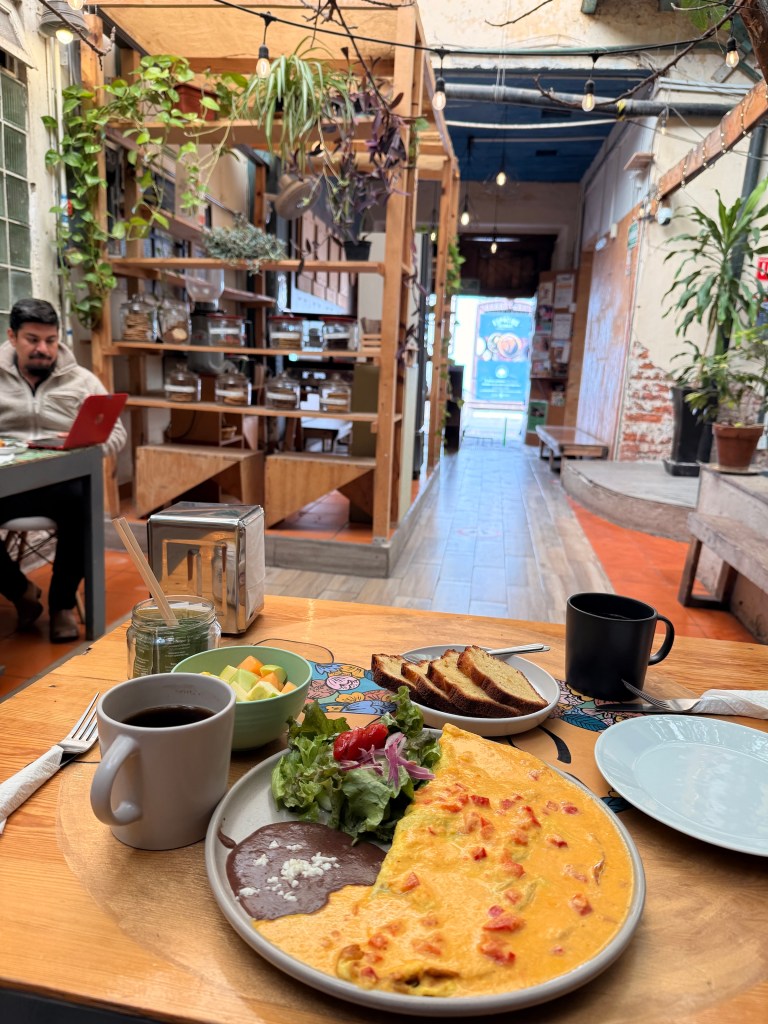
MaNé is another good morning stop with delicious food and rich coffee if you want to be closer to the busy center of things.
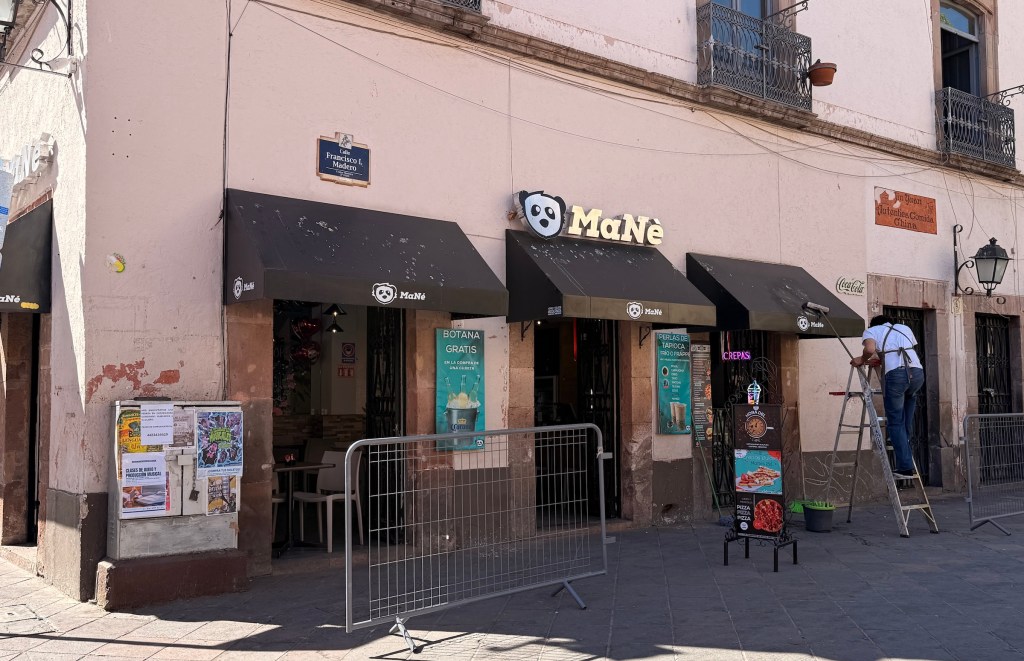
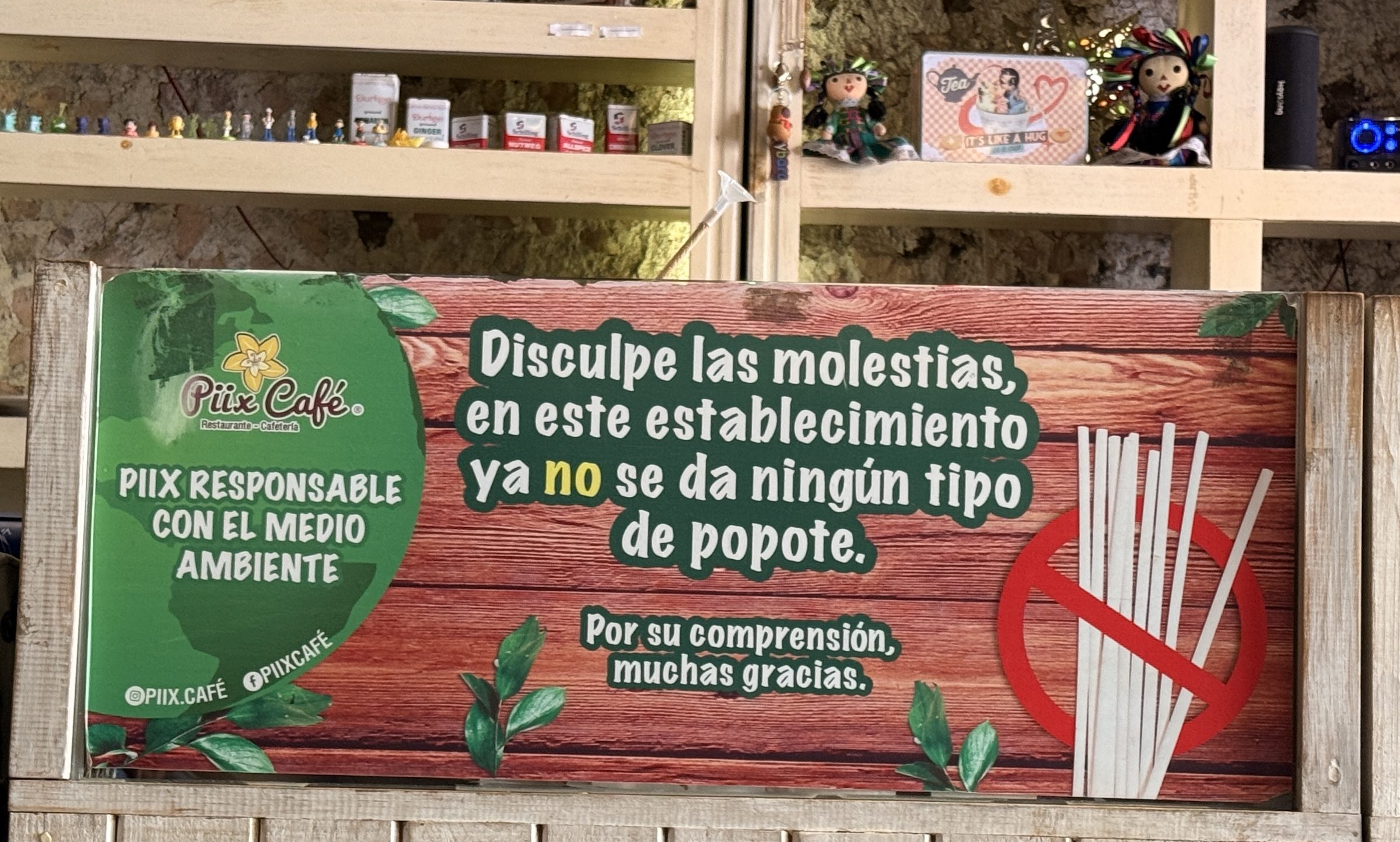
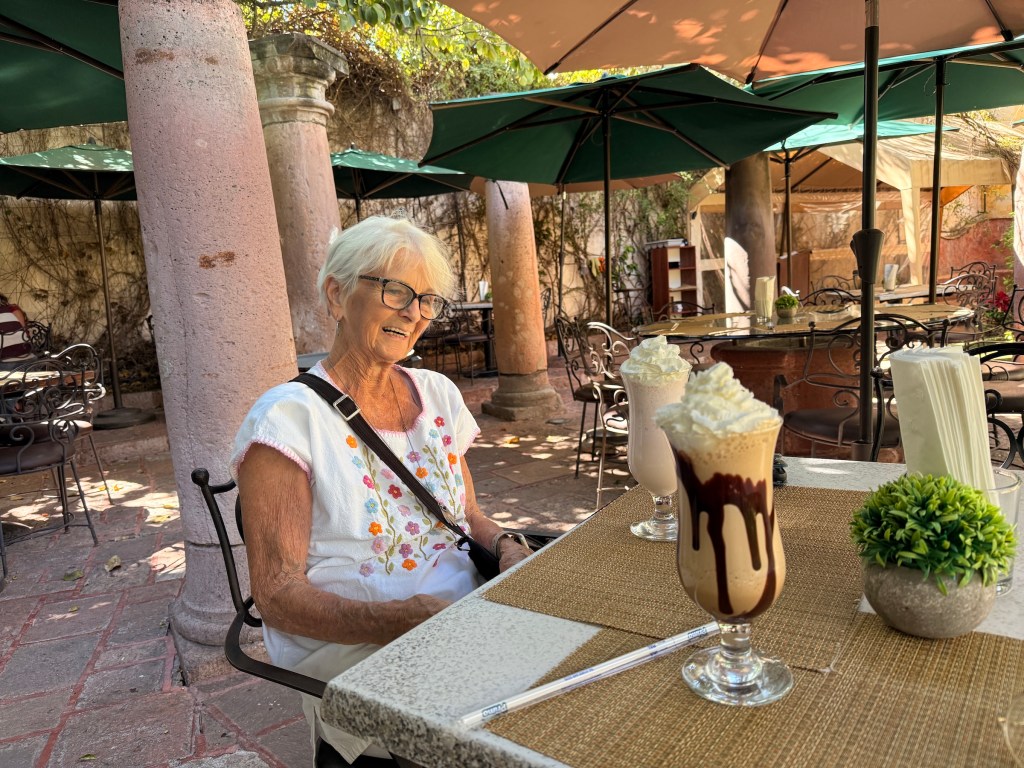
Environmentally conscious locations like Piix Café don’t give out popotes (straws) because they pollute the world. In fact, the first place I ever saw a ’No Popotes’ sign was also in Mexico, in Frida Kahlo’s home of Coyoacán, more than a decade ago.
The Museo del Calendario is highly recommended by our friend Roberto, although it wasn’t something we had considered. And it’s a fine surprise that shows the complexity and the importance of keeping track of dates. It’s good to know when the crops should be planted, when the rains can be expected, and a lot of other things that many of us are privileged enough not to think about anymore. Most of us don’t need to consider where our food comes from these days, but it wasn’t that way for our grandparents.
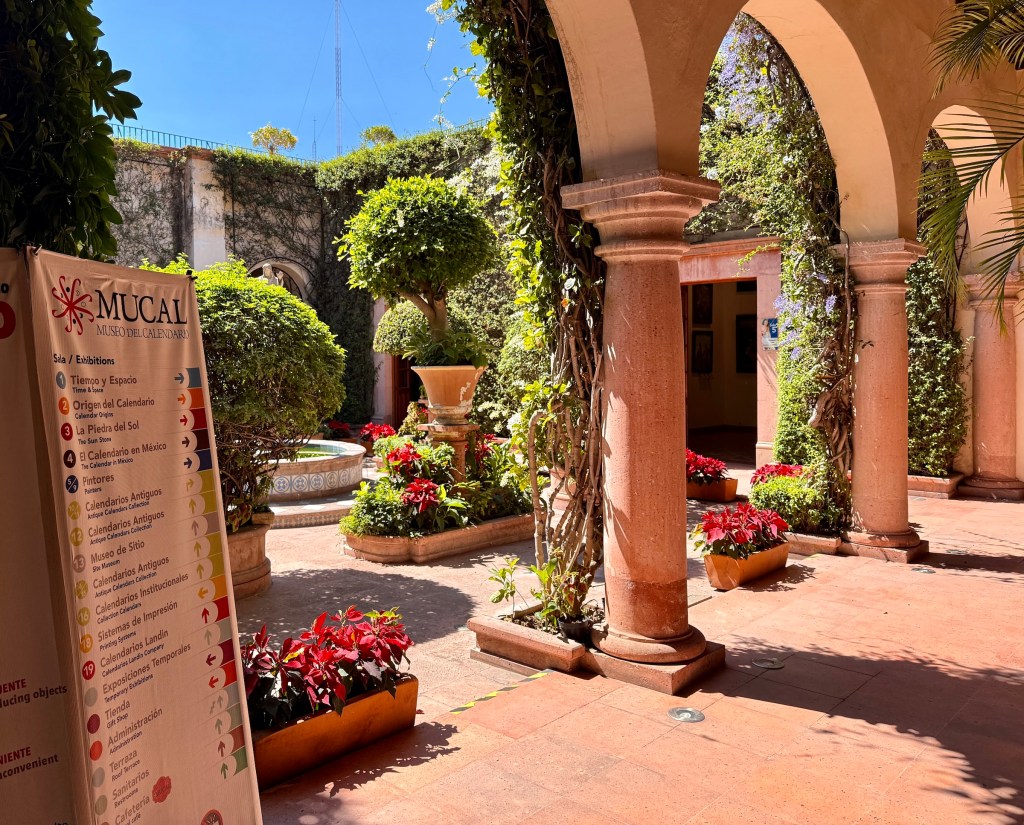
The ancient Chinese, Hindu, Maya, Mexica, and Celtic civilizations worked out a variety of calendars to suit their needs. And just hoped they calculated correctly. But the old Roman ‘Julian’ calendar was famous for a flaw that accumulated over the years until farmers were supposed to plant in the winter. Then somebody finally tossed in an extra day now and then to straighten it all out.
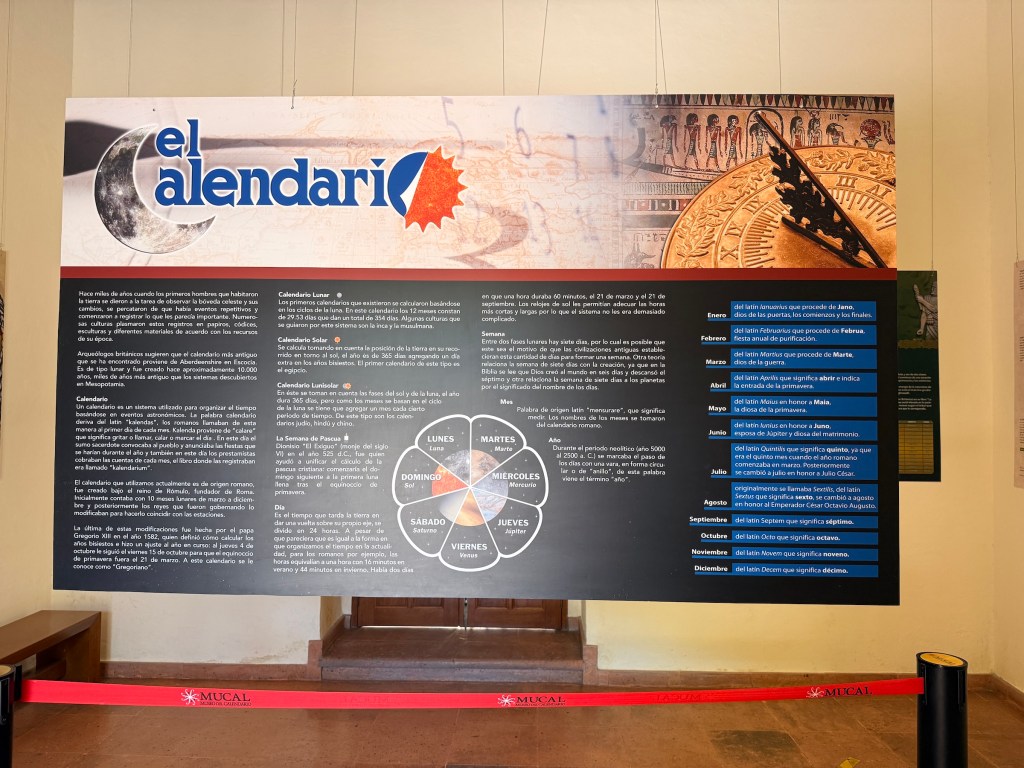
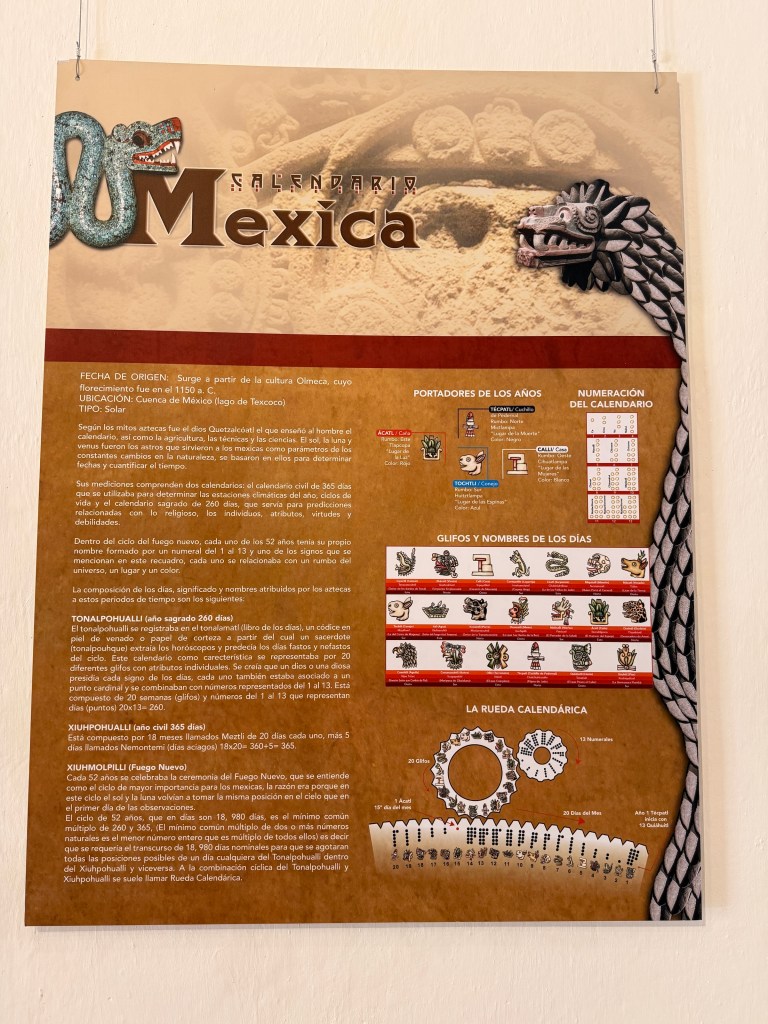
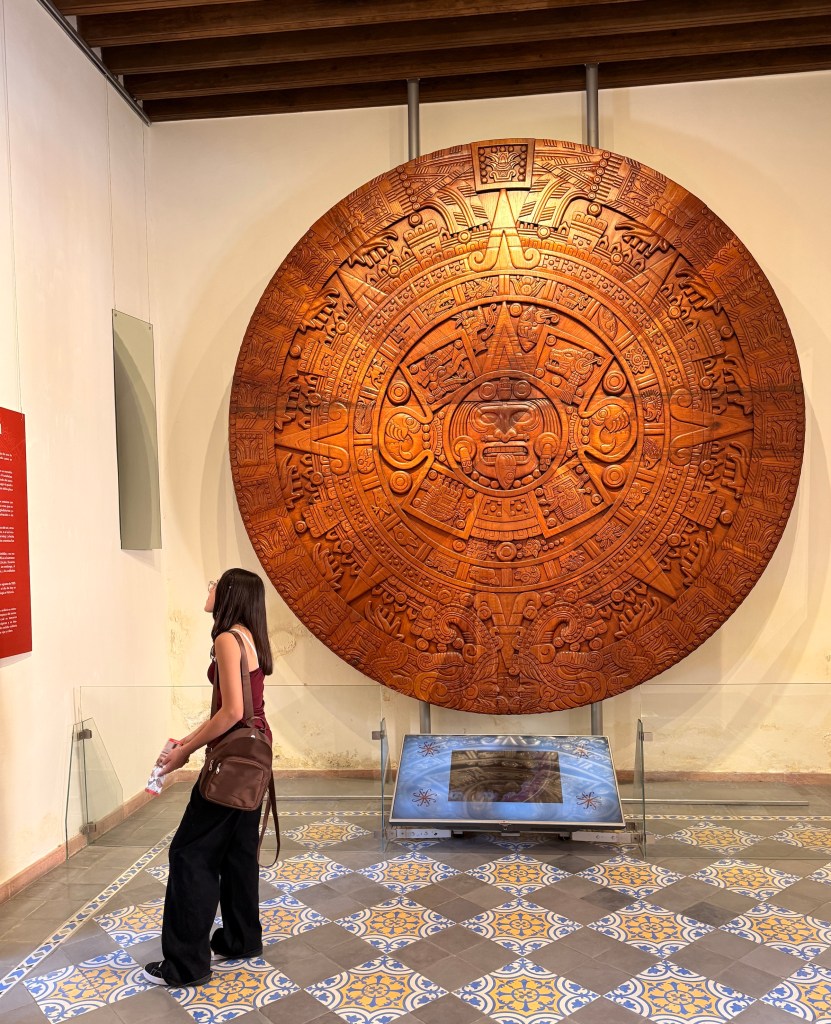
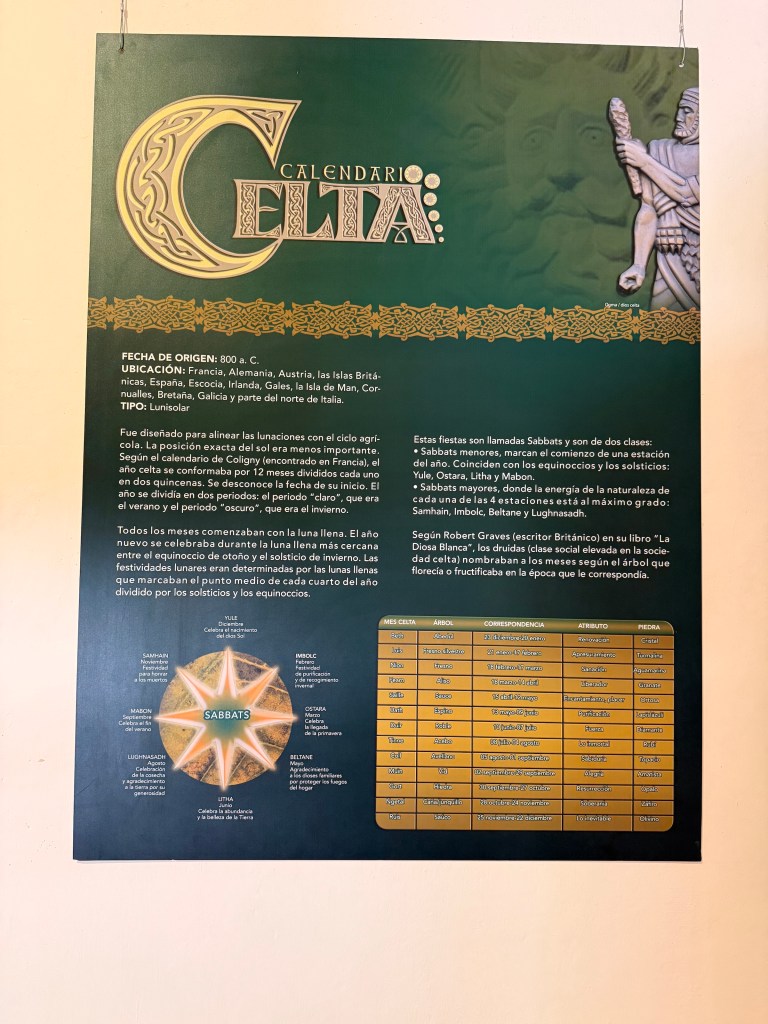
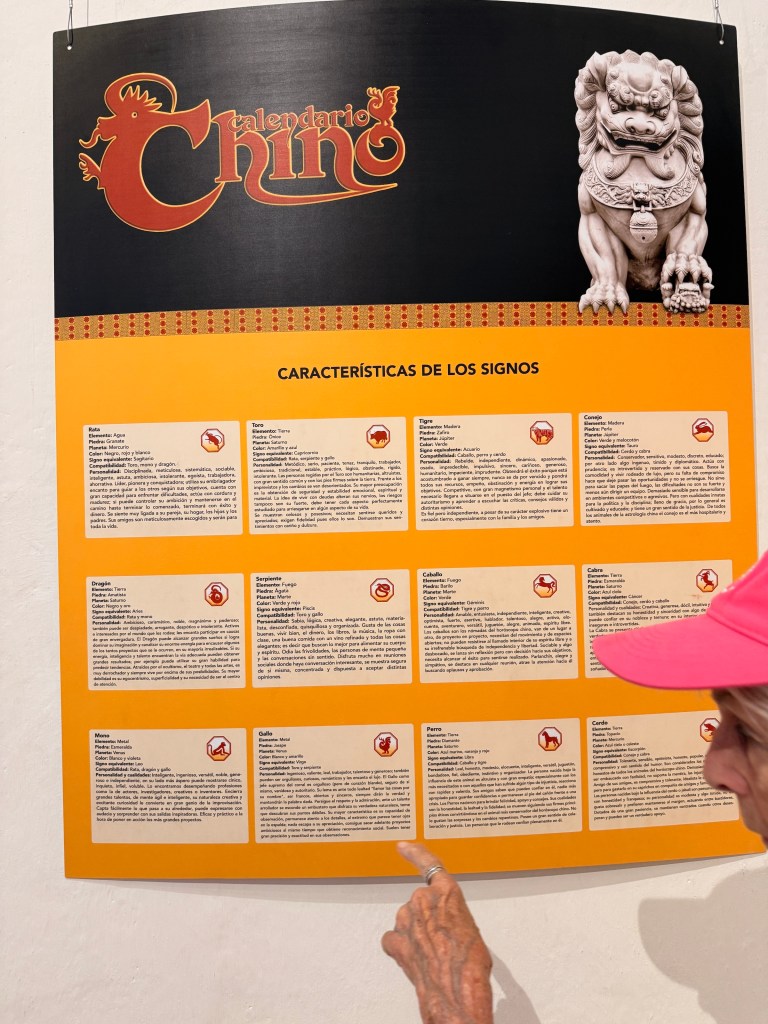
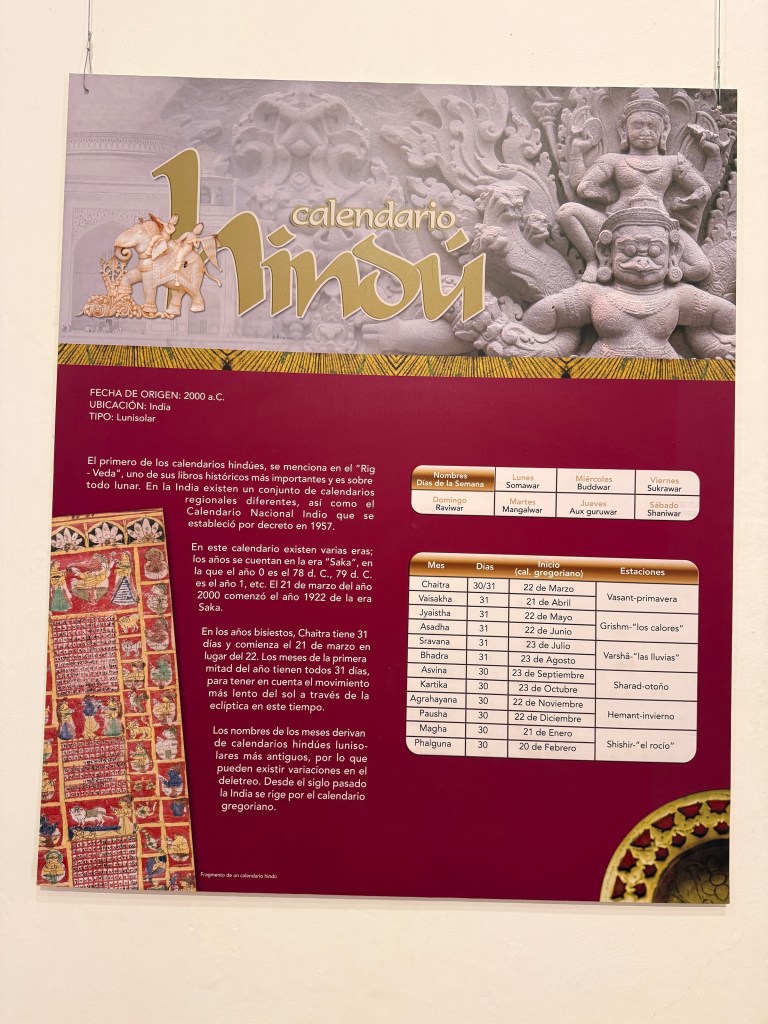
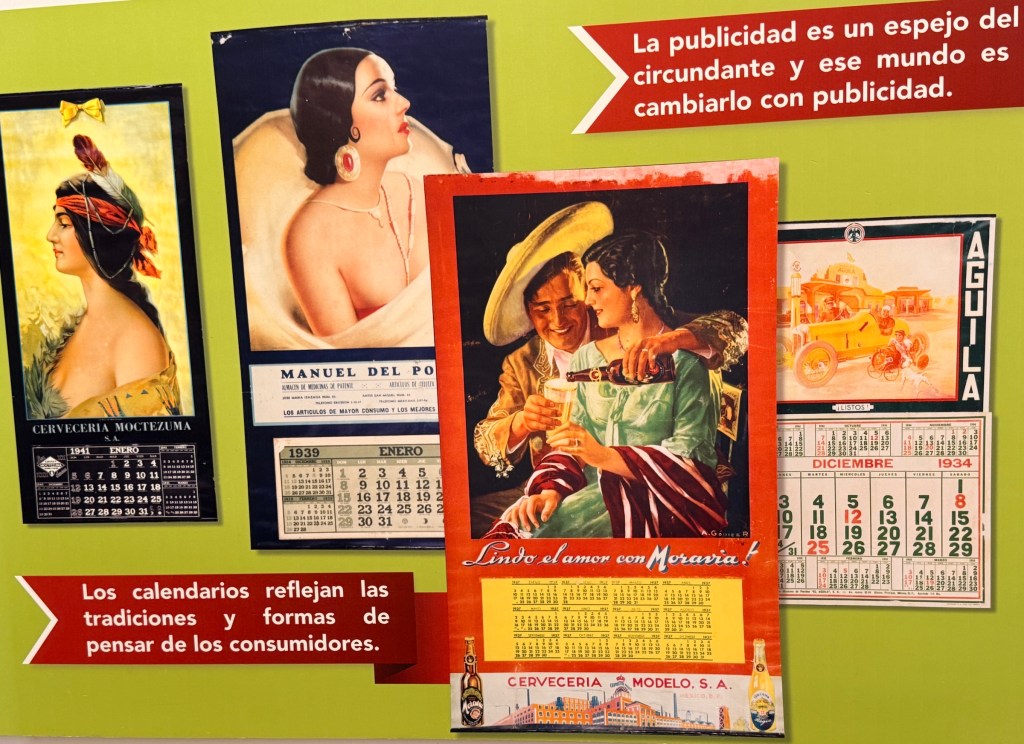
And where would we be without all of the amazing calendar art that most of us had hanging on the wall years ago?
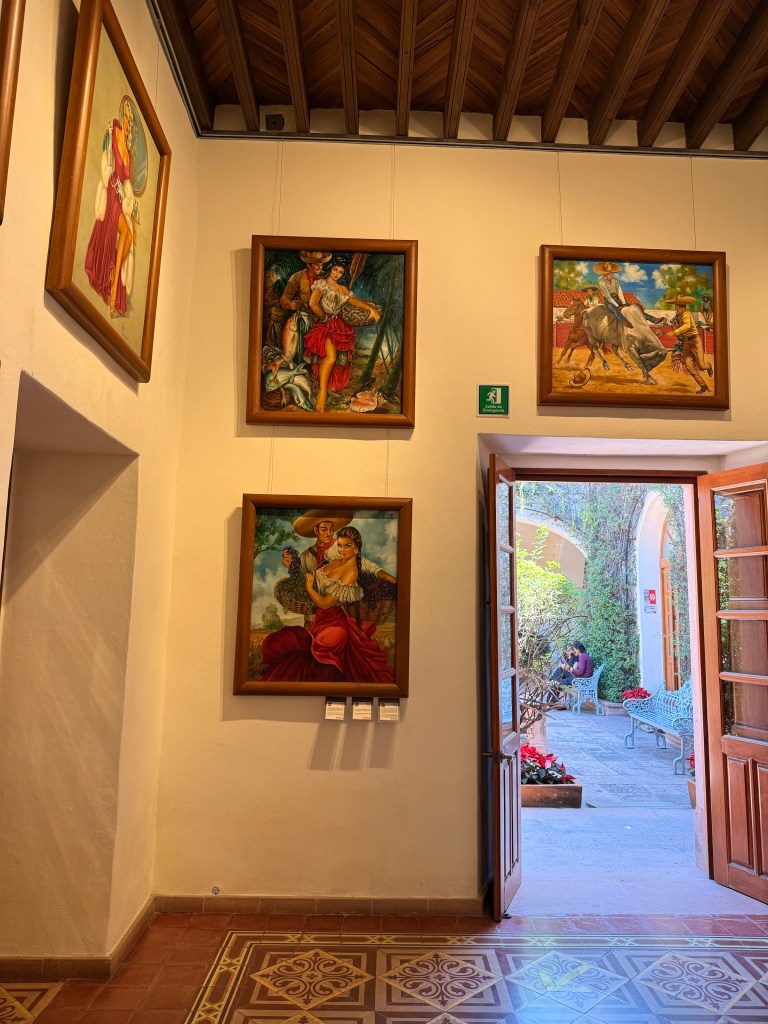
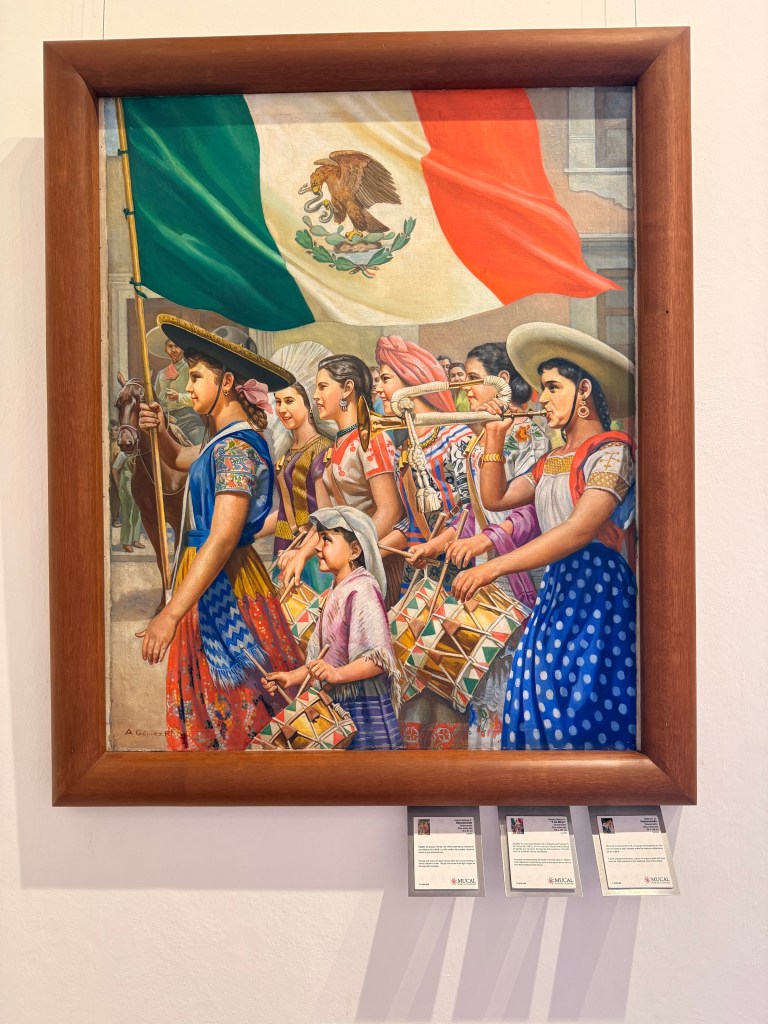
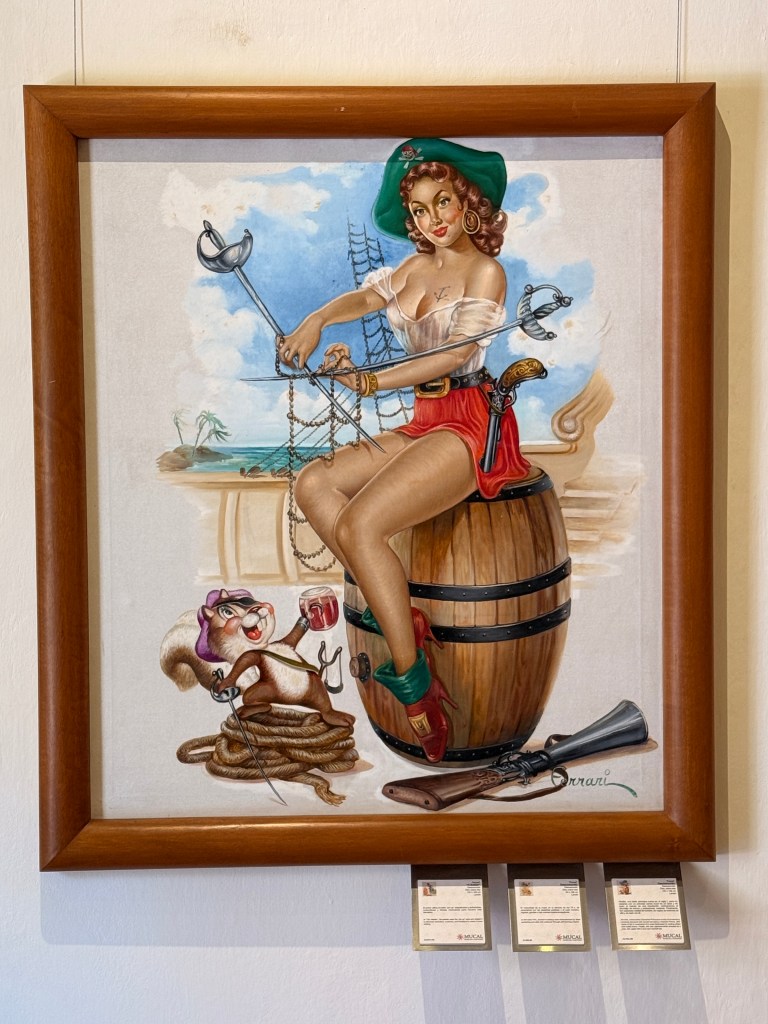
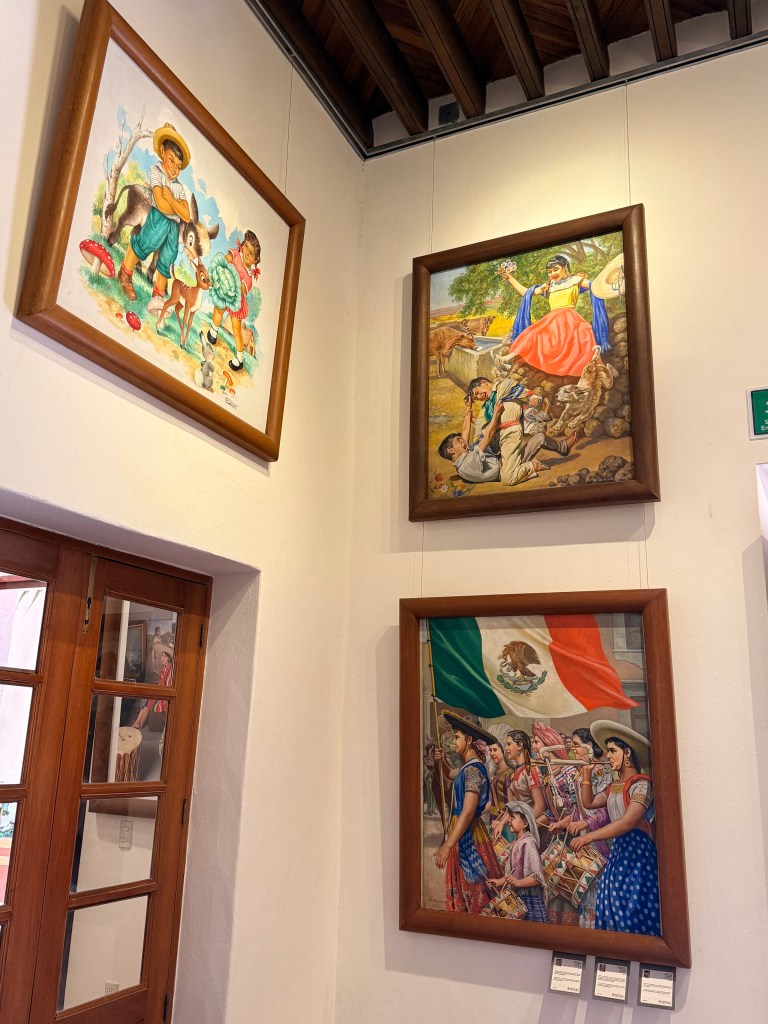
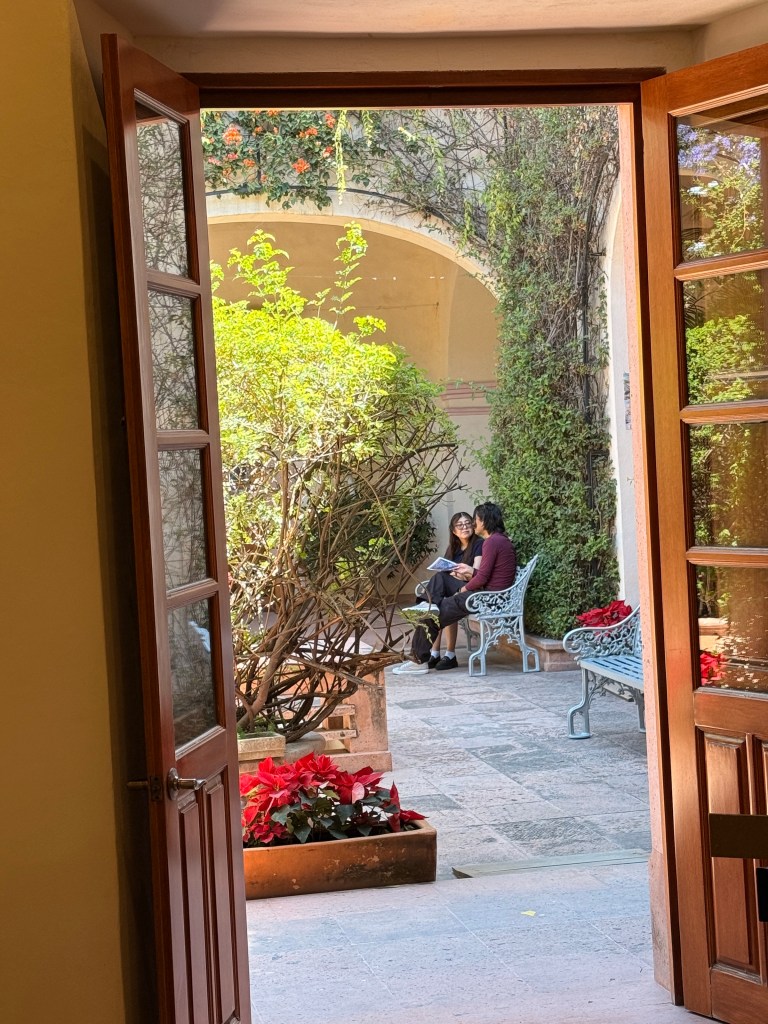
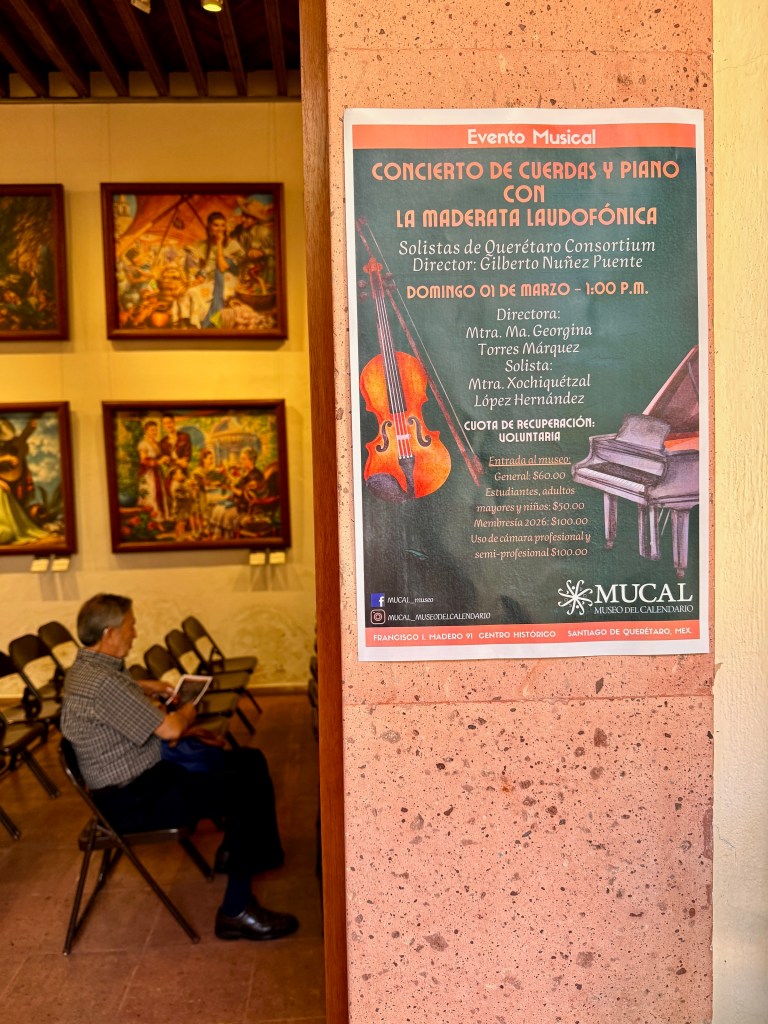
But there was another surprise in store for us at the Mucal, when we noticed a number of musical instruments accumulating in one of the rooms. And that’s when we saw a poster that mentioned a Sunday afternoon concert that was about to begin.
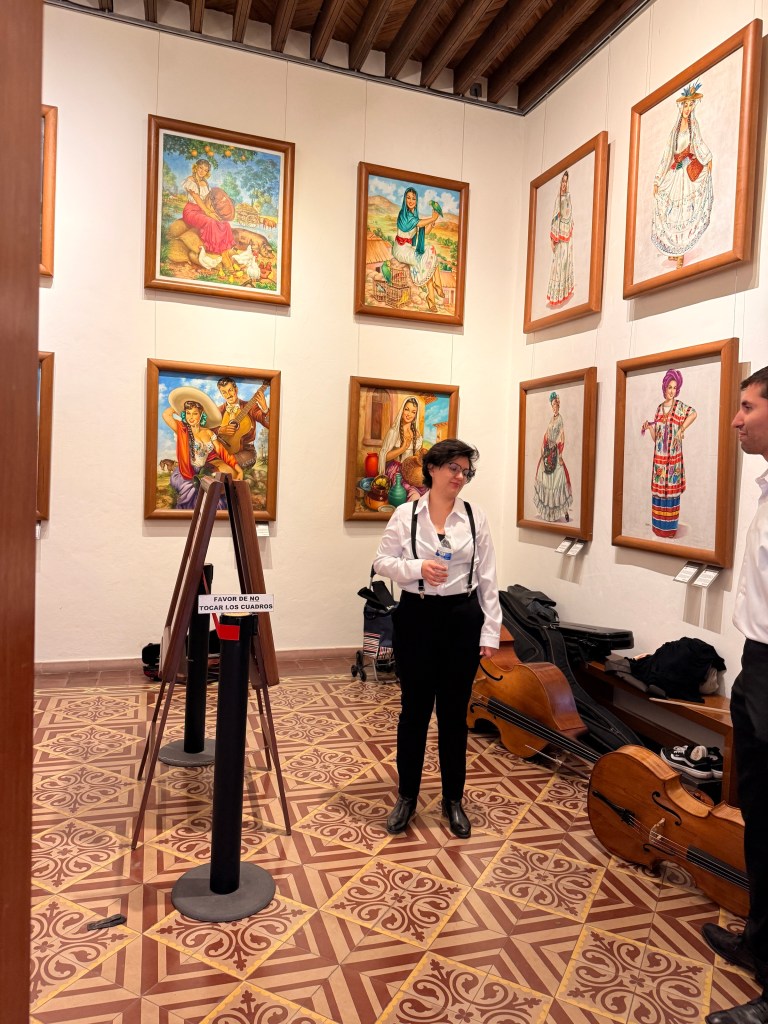
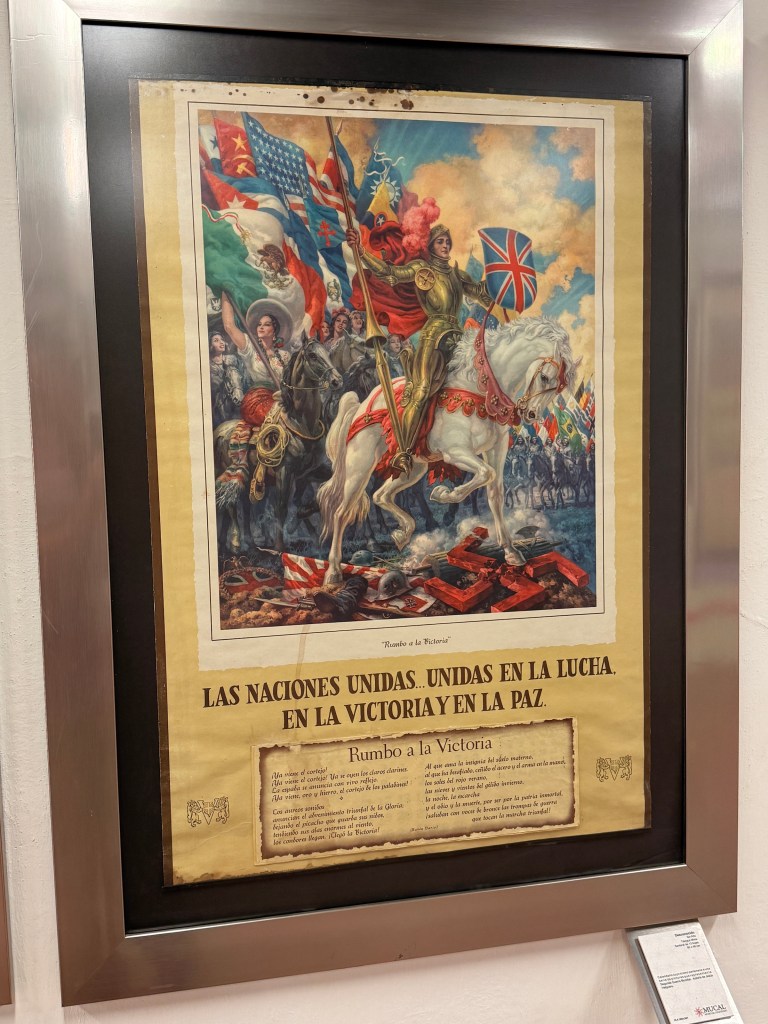
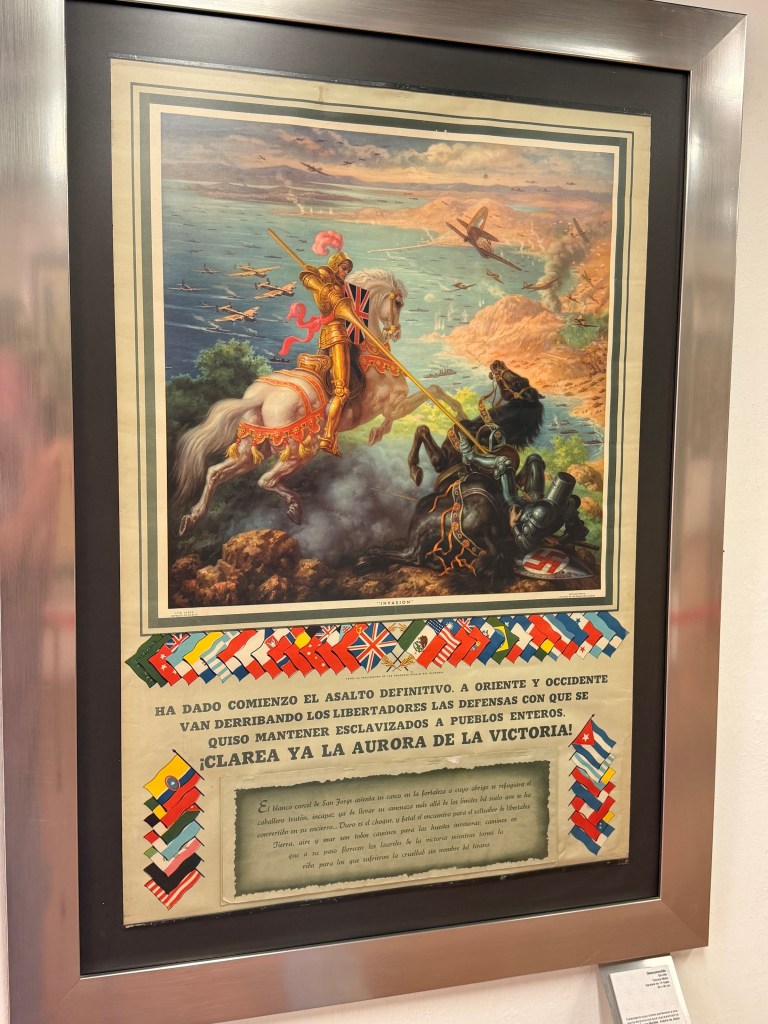
We actually had a few more minutes to wait and we spent that time checking out more of the art, that included propaganda posters produced during WWII showing the noble Allies riding together to defeat the evil Nazis. It’s amazing how much we easily forget about our past, or maybe never knew in the first place.
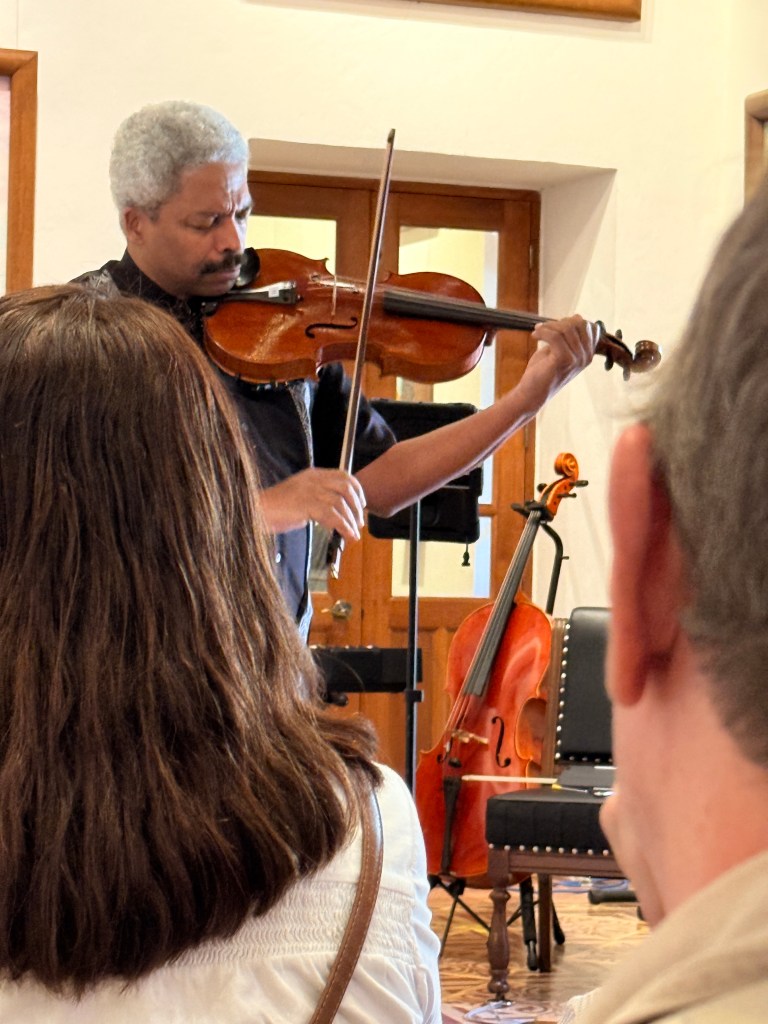
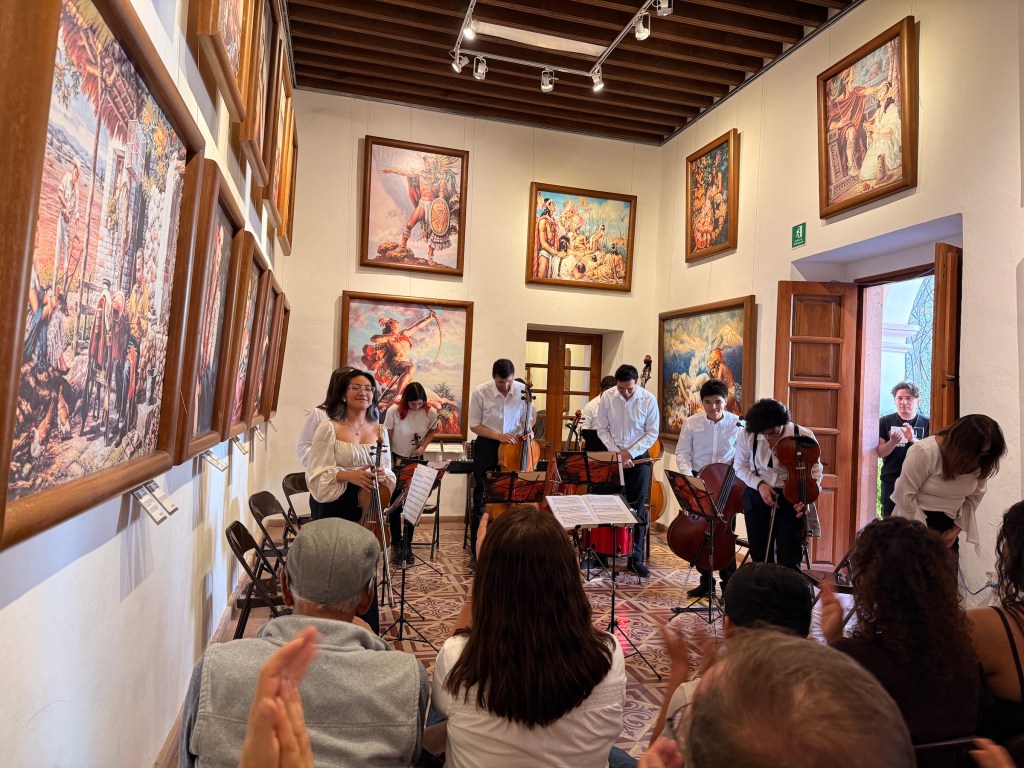
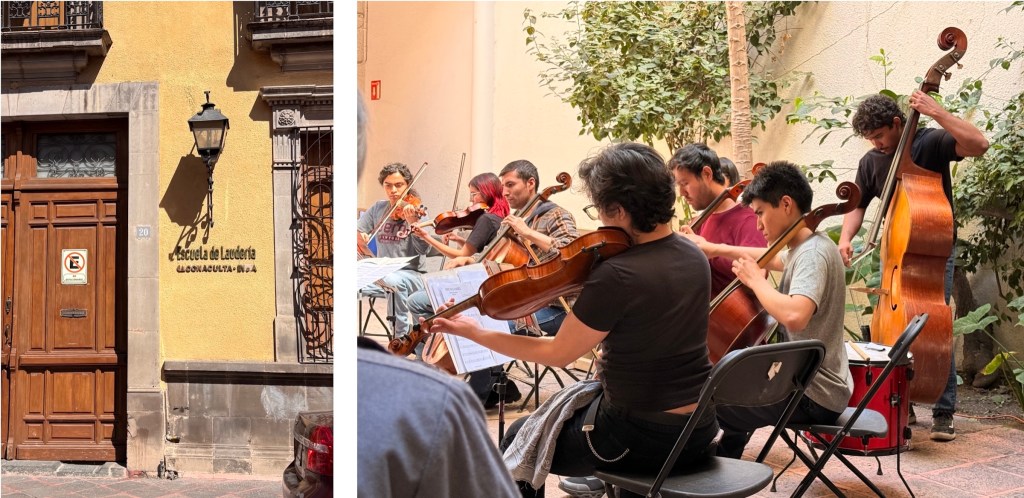
The concert was introduced by the Director of La Maderata Laudofónica (roughly, The Lute Players Woodshop), where the students make their own instruments. And we relaxed to an afternoon of fine music played among walls of art glorifying the heroic myths of Mexican history.
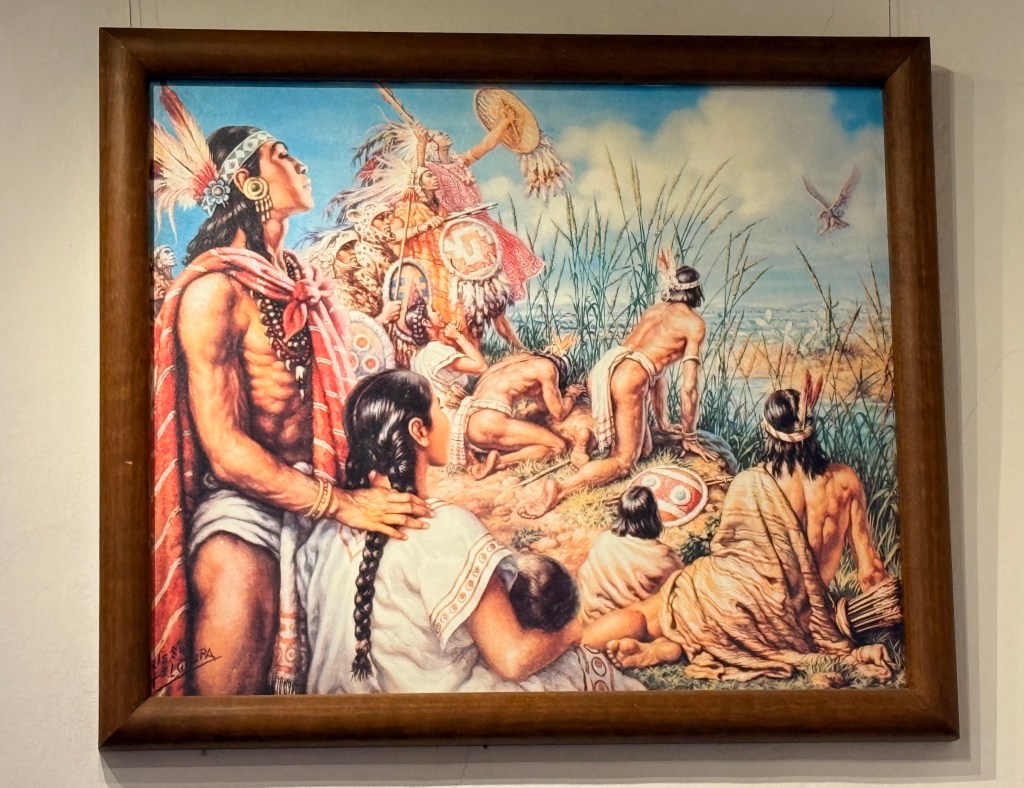
I was especially interested in a painting of the founding myth of the wandering Aztecs, when they spotted an eagle holding a snake and landing on a cactus in broad Lake Texcoco. It was the sign they were looking for and that’s where they built Tenochtitlán, their capital city. It would become the largest city in the Americas at the time, and even rivaling those of Europe.
https://tenochtitlan.thomaskole.nl/index.html
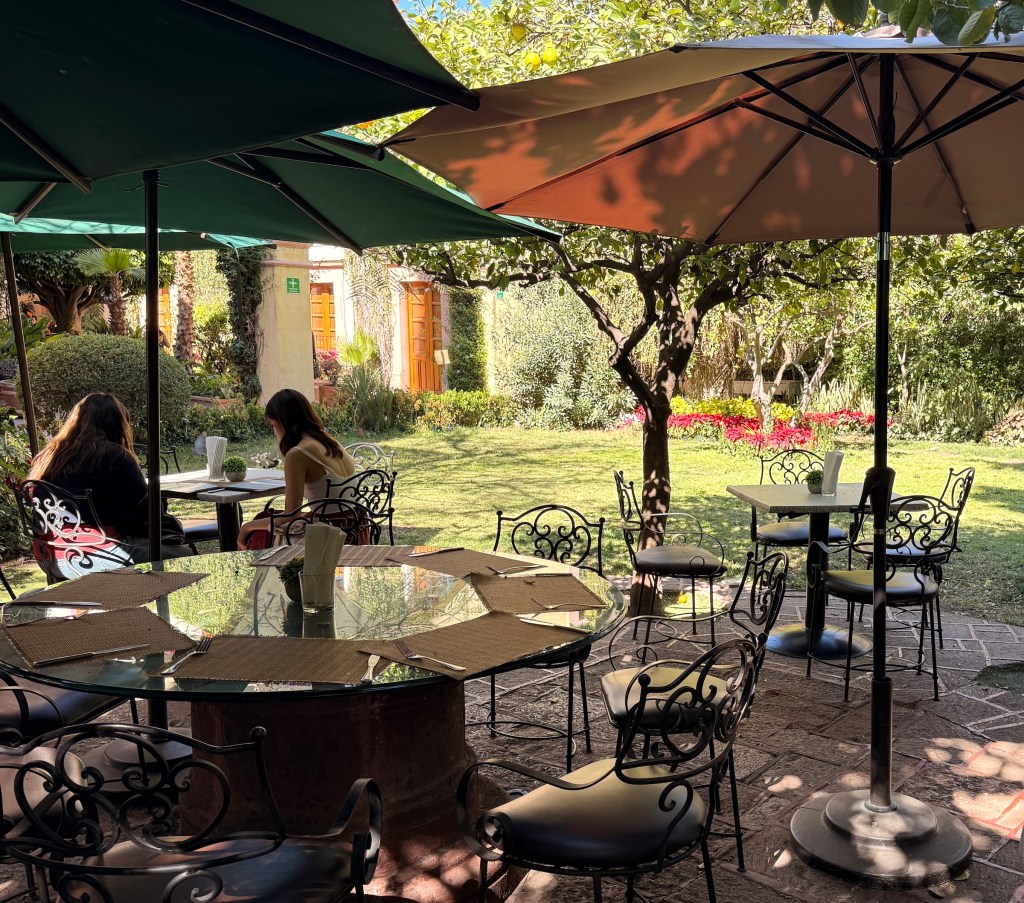
The Museo also has good food and cold drinks available in a verdant courtyard setting, and we enjoyed their fare after the concert. Some of the nicest eateries we ever find are in the world’s museums.
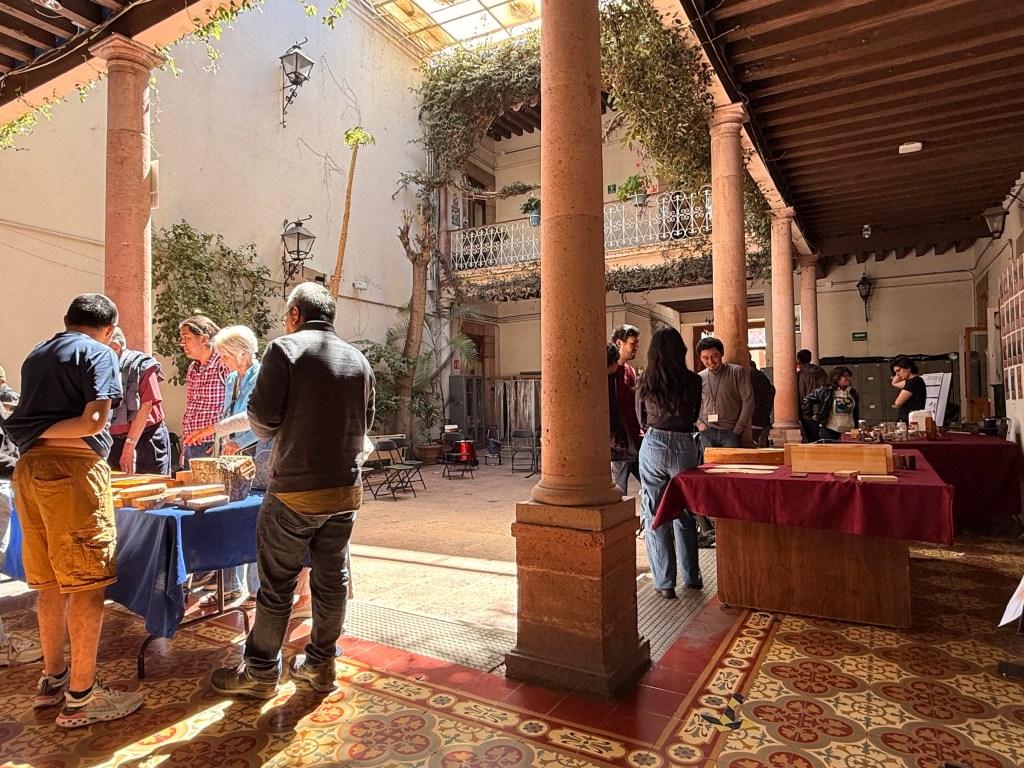
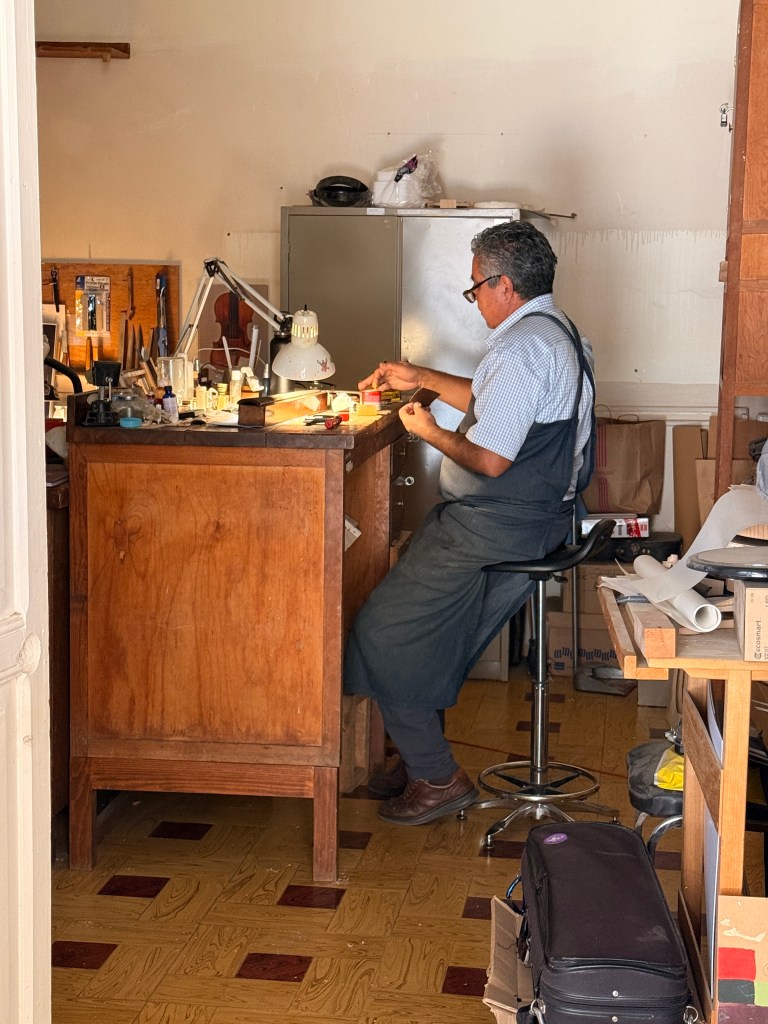
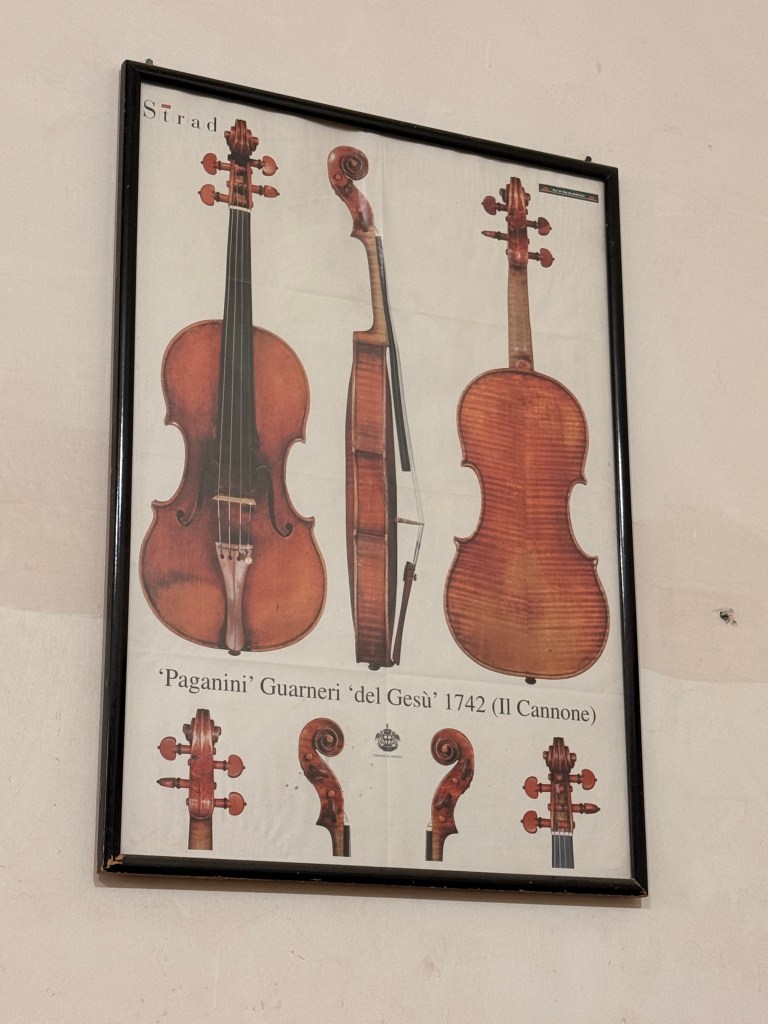
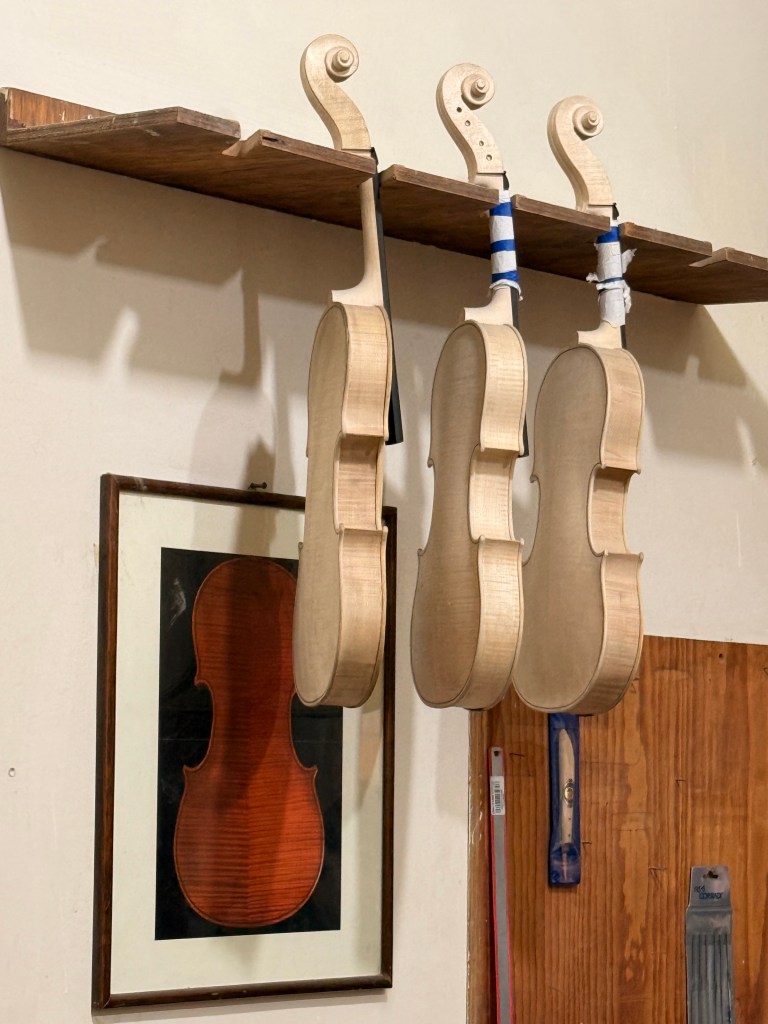
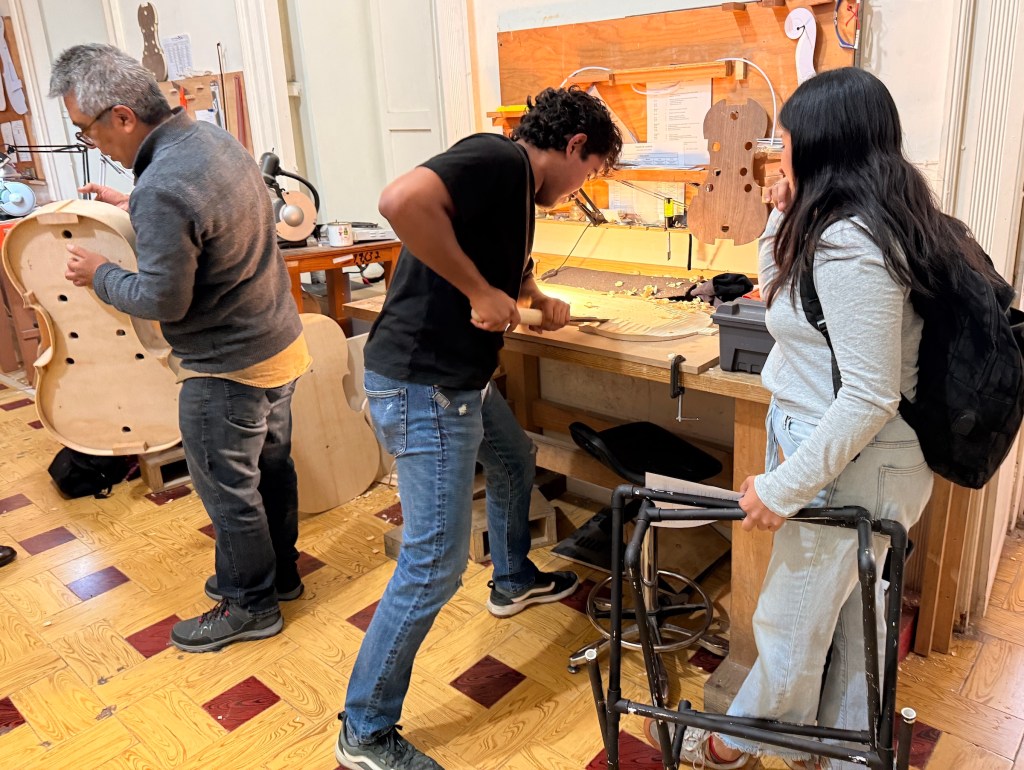
The Maderata held an Open House the next week at the Escuela de Lauderia (the ‘Luthier School’), and we arrived to more fully experience just where those mysterious and magical sounds that are coaxed from the wood are actually crafted. And the event began with another concert on instruments the students had built.
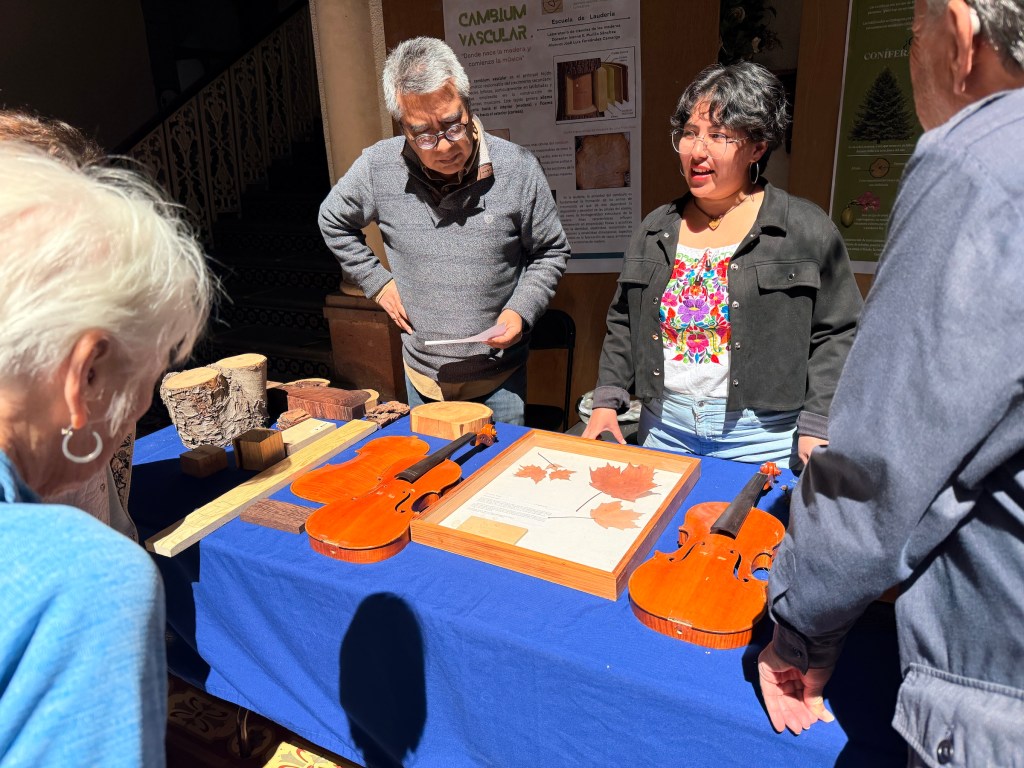
We got an in-depth look at the ancient process of building these delicate and magical pieces, that start from rough old logs. The students walked us through the process and happily answered our many questions. I wanted to own one of these well-crafted instruments just as a piece of sculpture, but it would have been wasted in my inept fingers. Best to leave them for the more-deserving.
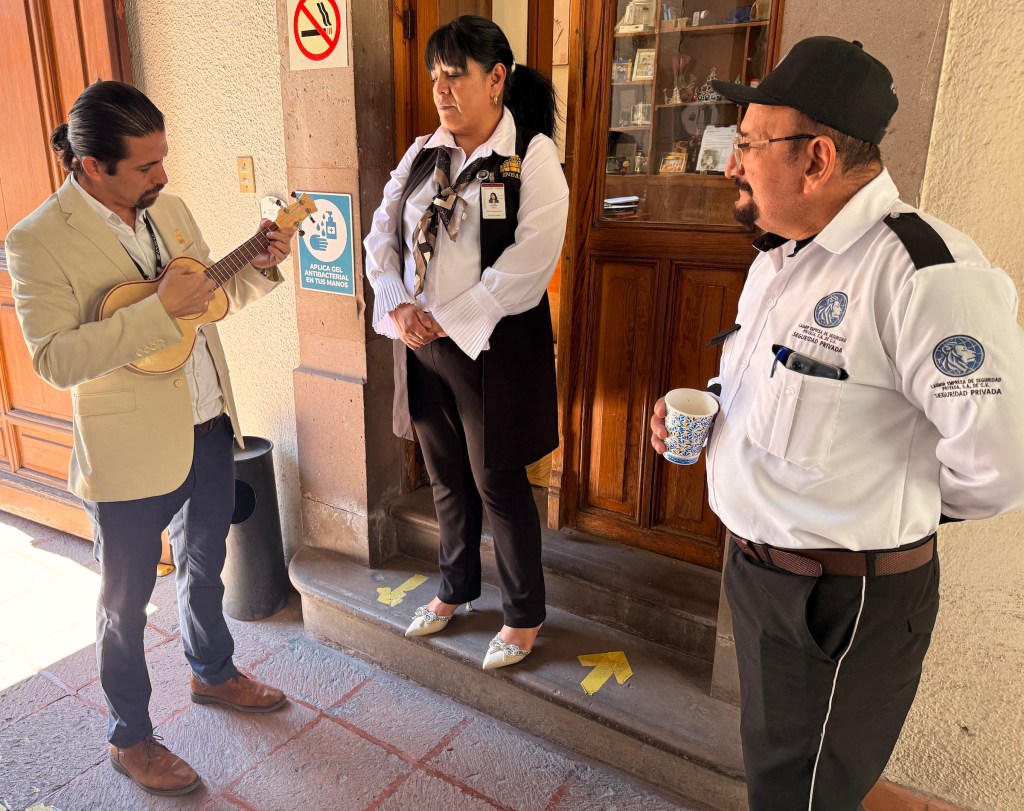
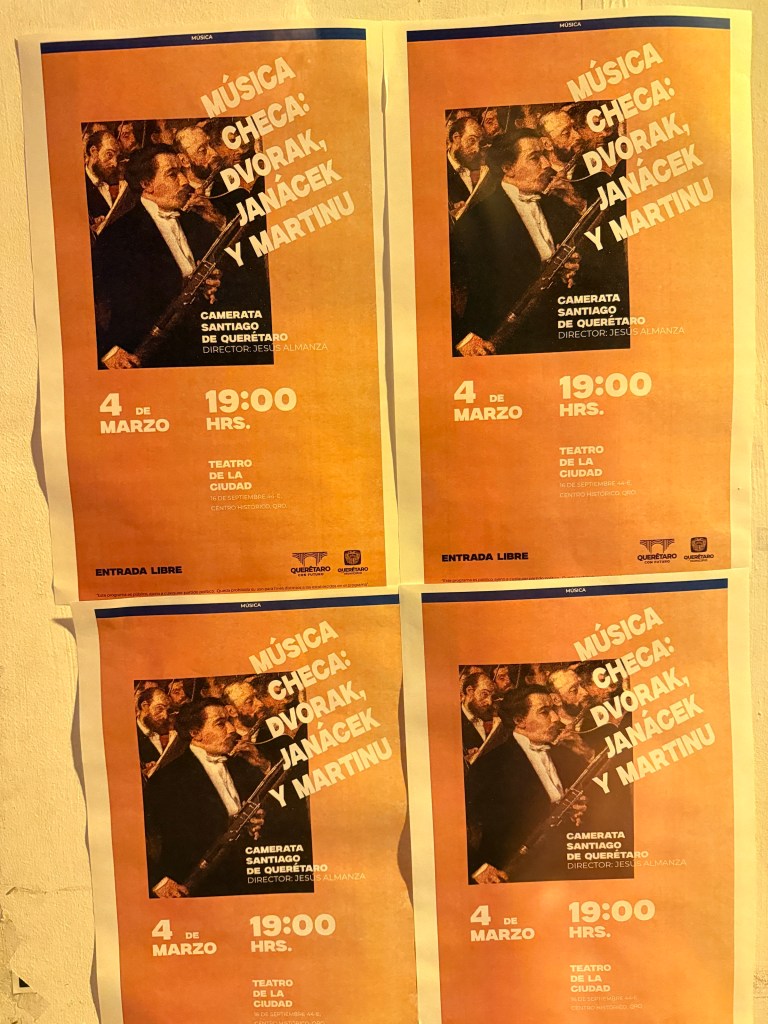
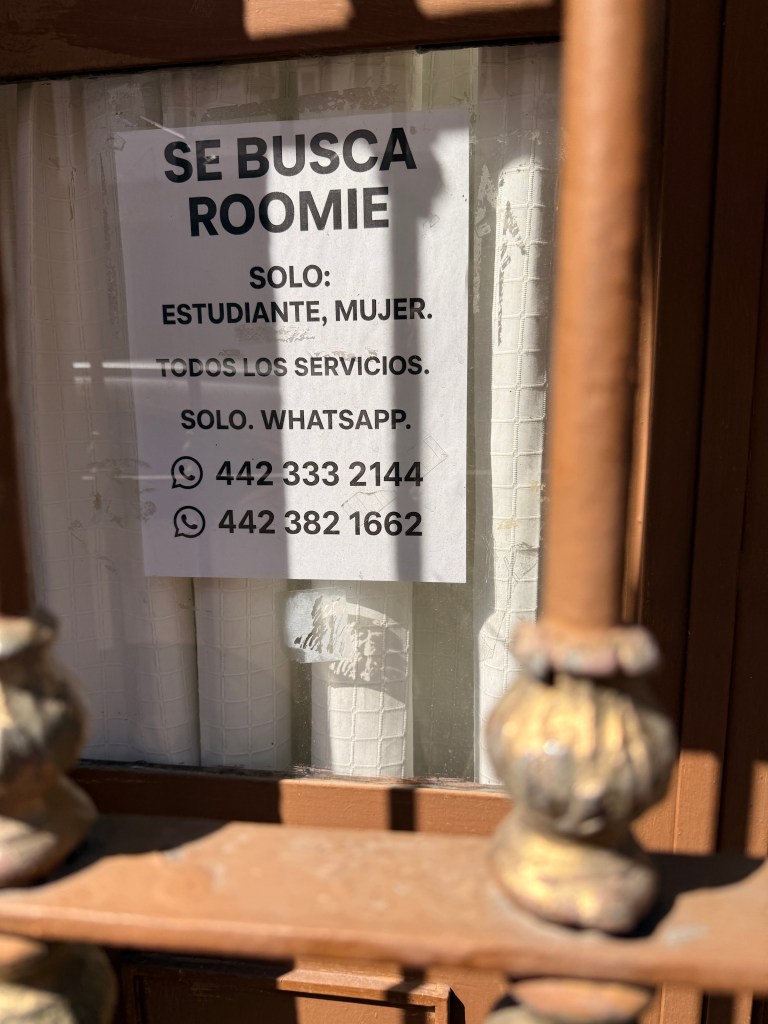
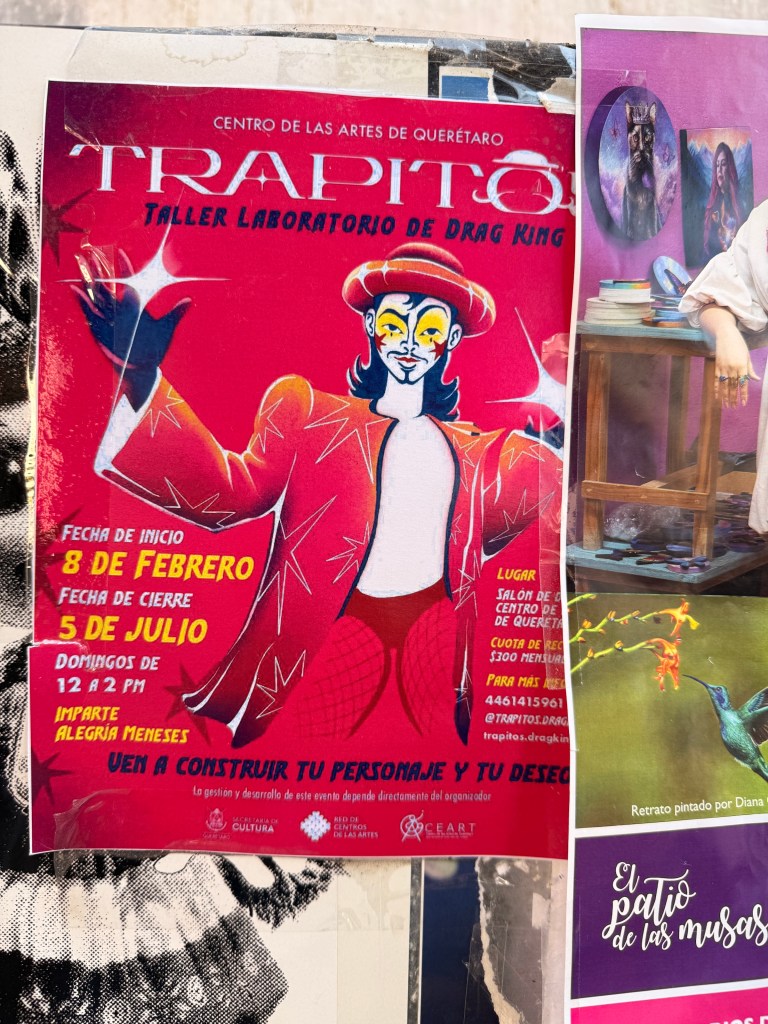
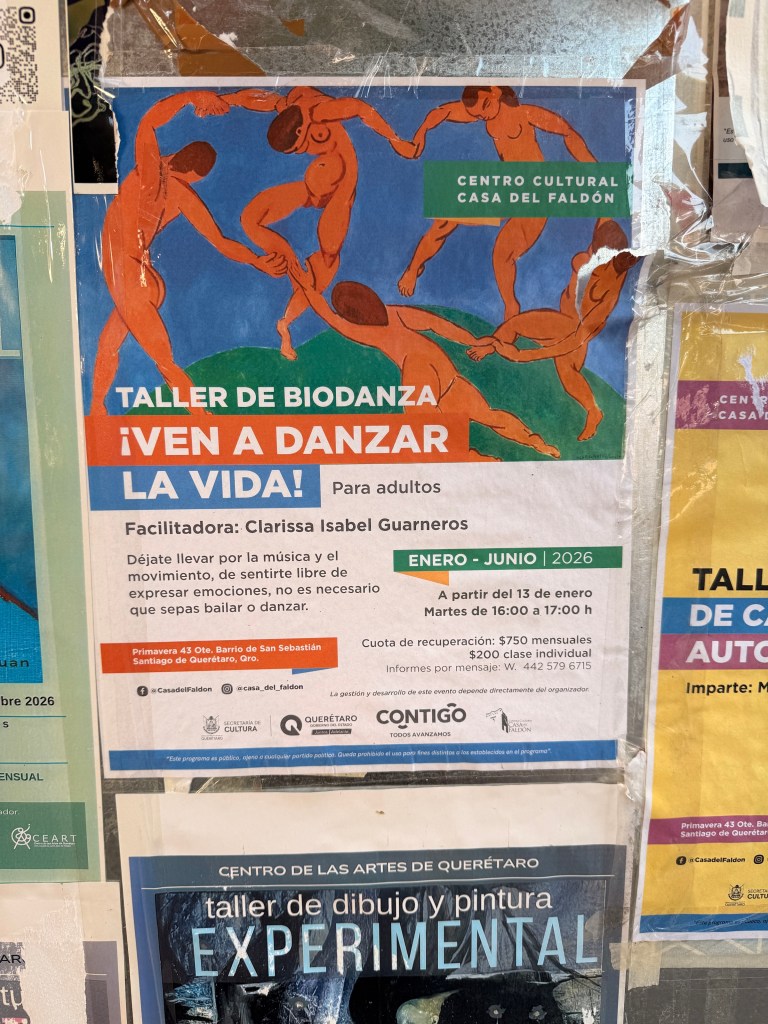
This is a sophisticated city, and it’s common to find posters on the walls of Querétaro advertising classical concerts, classes in modern dance, and in making your own challenging costumery. There’s certainly enough going on around here to keep most students of the arts very busy, when they’re not looking for a roommate to share the rent.
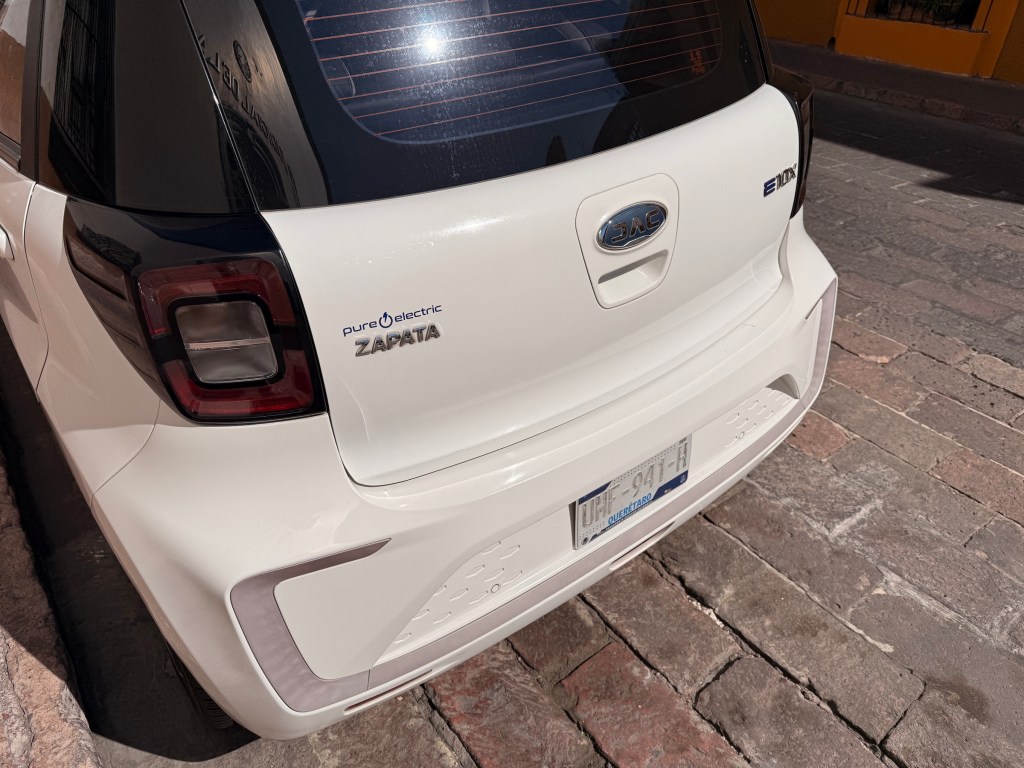
Attractive and reliable Chinese cars are becoming common throughout Mexico these days, and I recall a recent statement made by a Chinese spokesperson. She said that China wasn’t even selling them yet in Northern Mexico, and I had to laugh because it was a predictable message to allay the fears of US residents who know so little about their southern neighbor. The following week we were in Hermosillo, which by any metric is a large city in northern Mexico, and I took photos of five different Chinese car dealerships, including Changan, JAC, Chery, GWM (Great Wall Motors) and BYD (Build Your Dreams) – which recently passed Tesla as the world’s largest seller of electric vehicles. Car buyers in the US are currently in a protected-market self-delusion fog, and will likely be shocked very soon when the Chinese floodgates open.

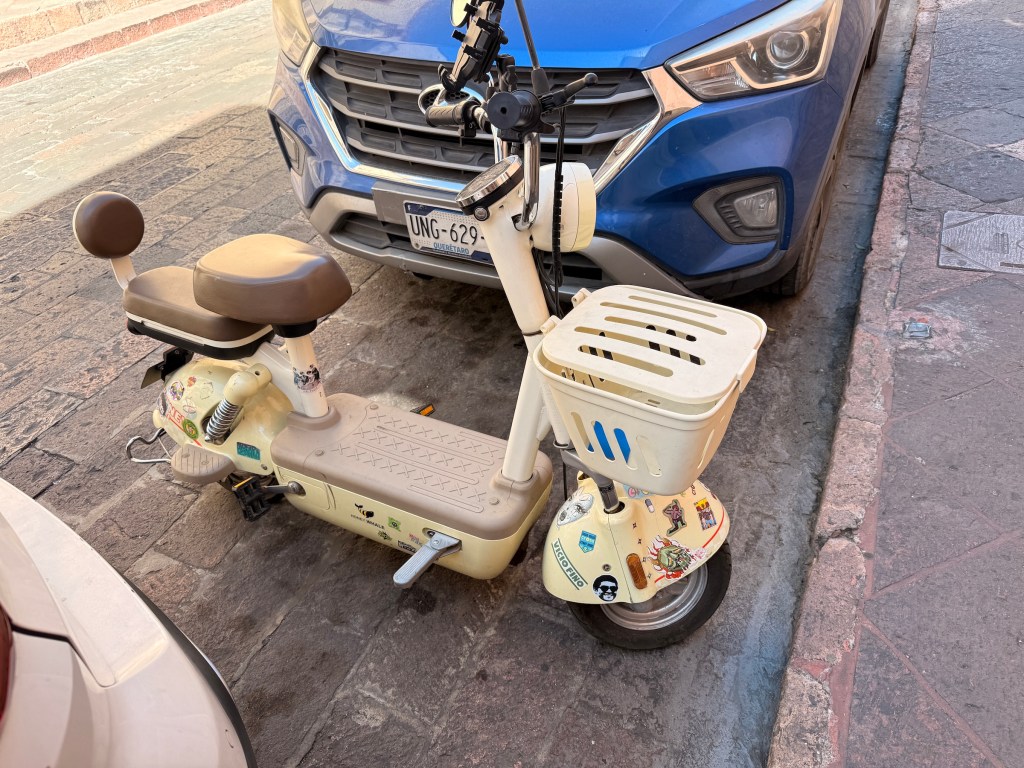
And there are also some cute little scooters on these streets.
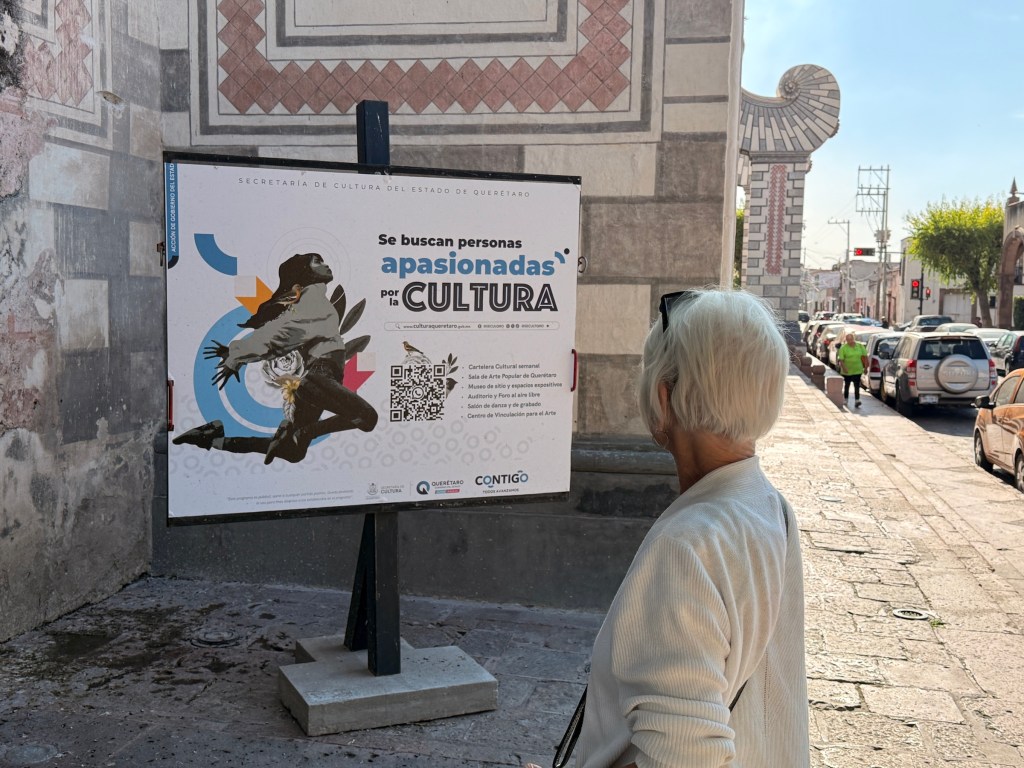
Querétaro has some impressive churches, including the Templo de Santa Rosa de Viterbo, as mentioned by our friend Beto. Its elegantly painted exterior is a huge presence just across the street from the dancing fountains in the Plaza Mariano De Las Casas. Carolyn also finds a poster there from the Querétaro Secretariat of Culture seeking people who are ‘passionate’ about the region’s arts and culture. And there are plenty of opportunities to get involved.
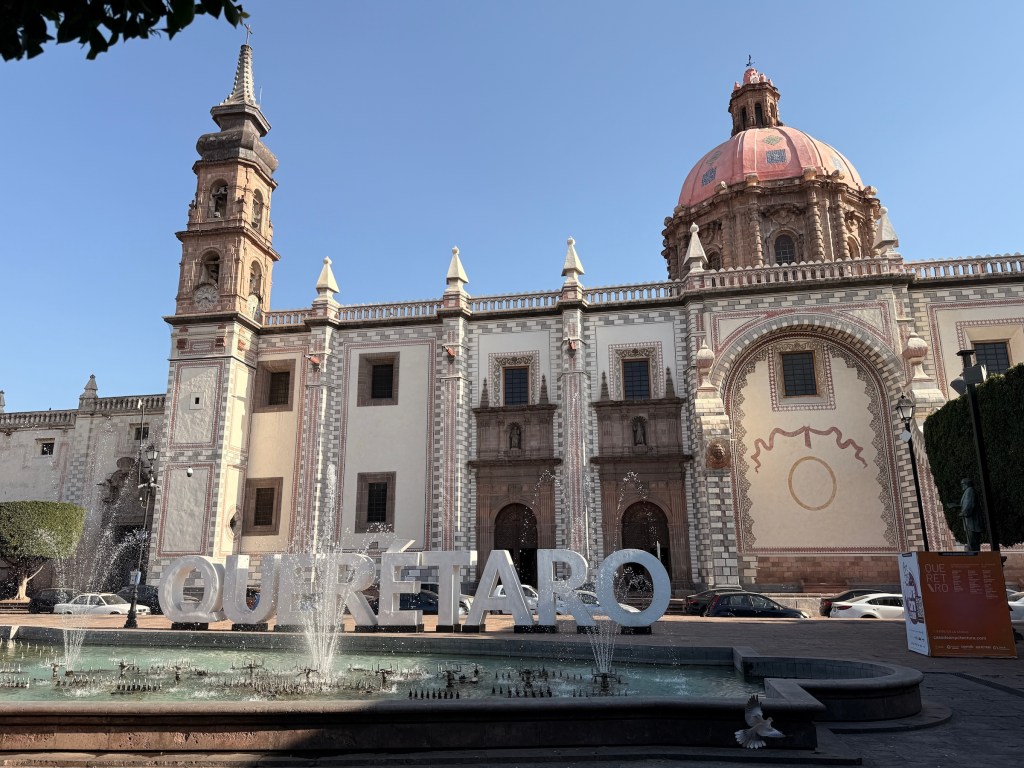
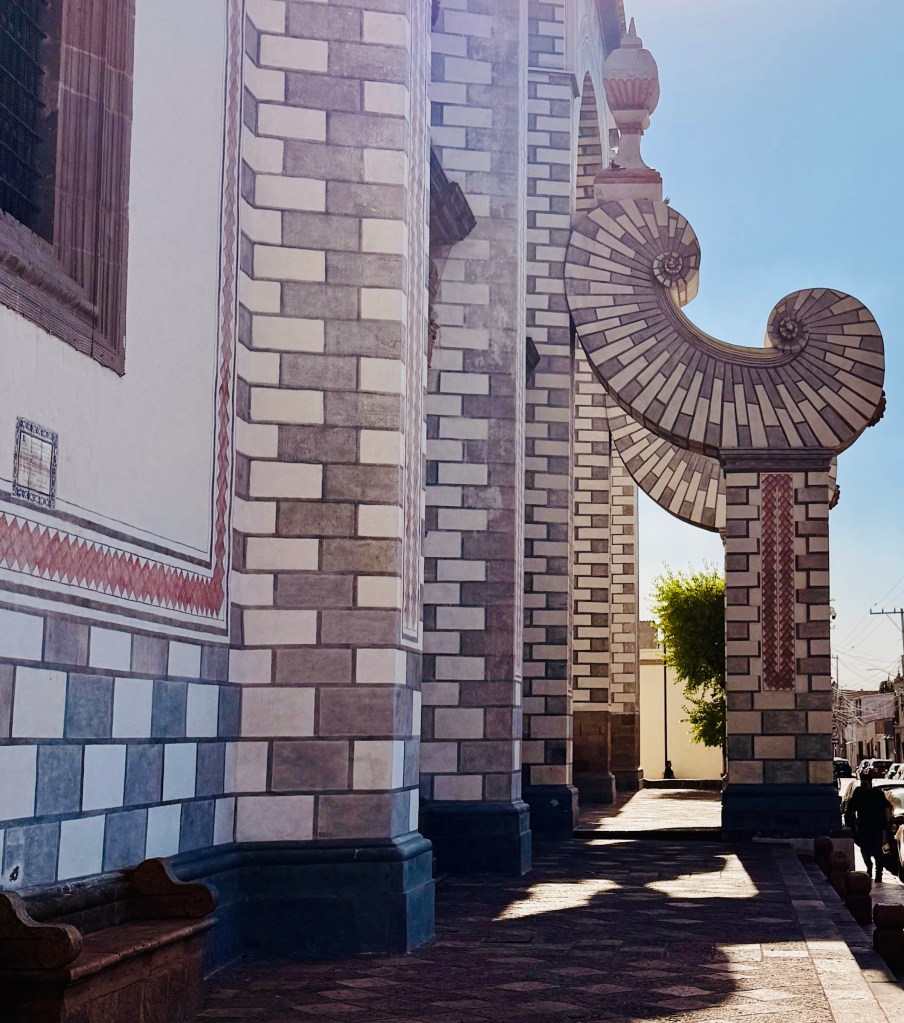
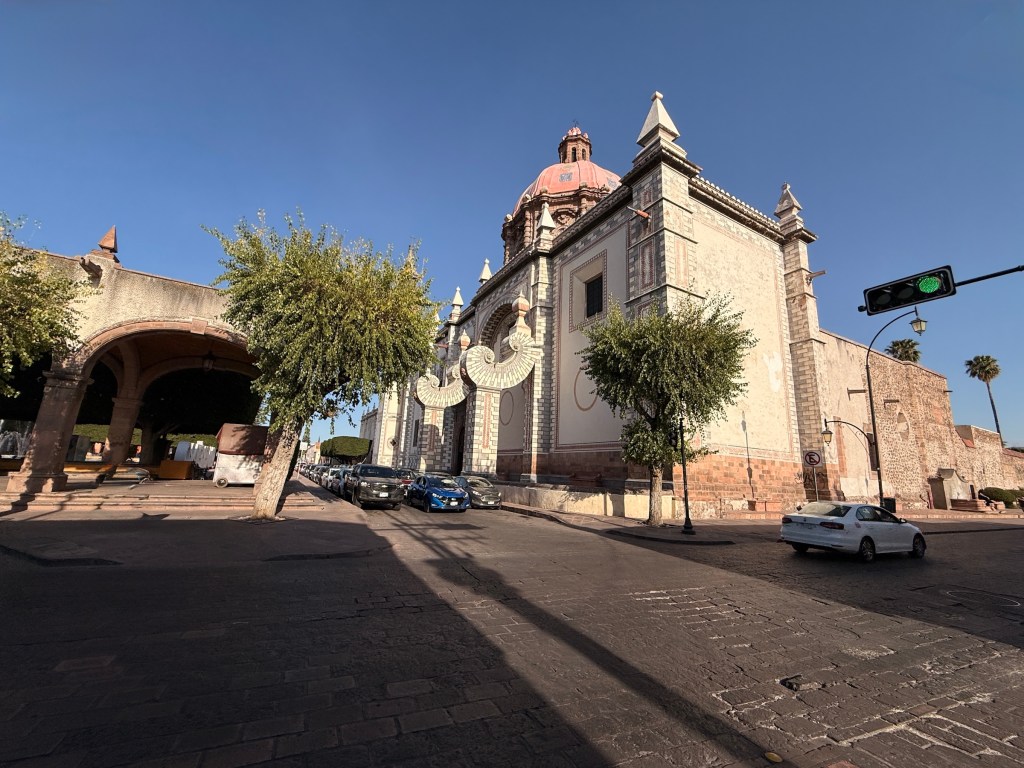
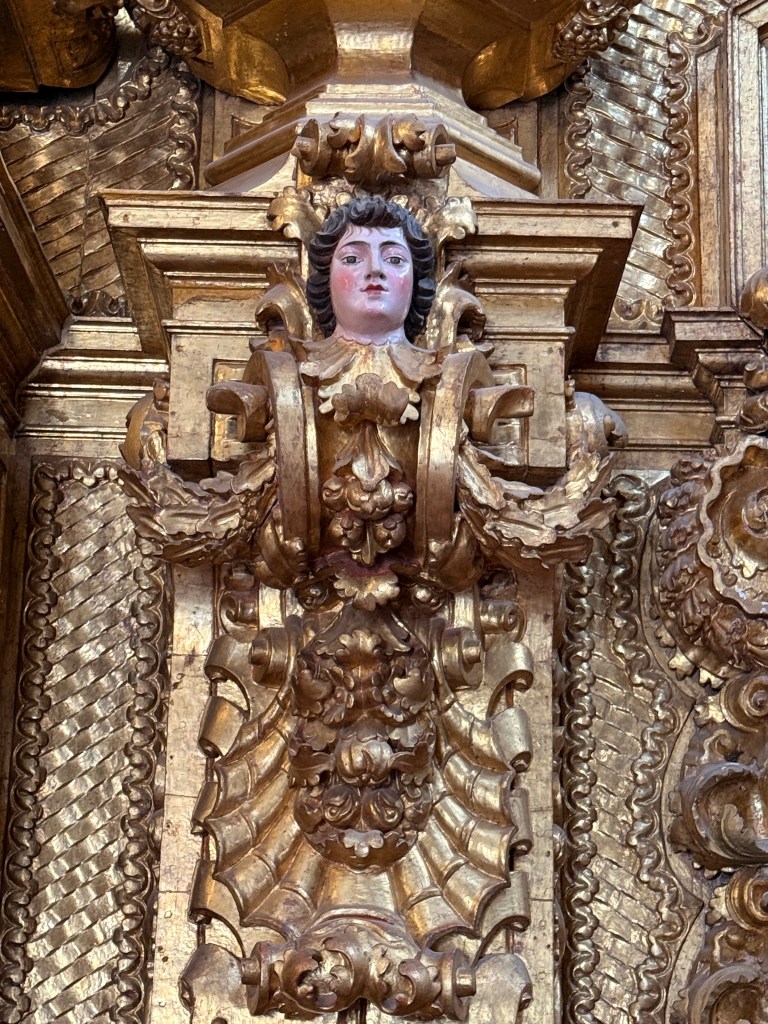
The gilded interior of the Templo is worth seeing as it is one of the best local examples of Mexican baroque architecture. Such fine craftsmanship is hard to imagine these days in a world where mass-produced plastic products seem to dominate our lives, and mountains of throw-away fast fashion grow larger every day in third-world countries, such as that growing pile in northern Chile’s Atacama Desert.
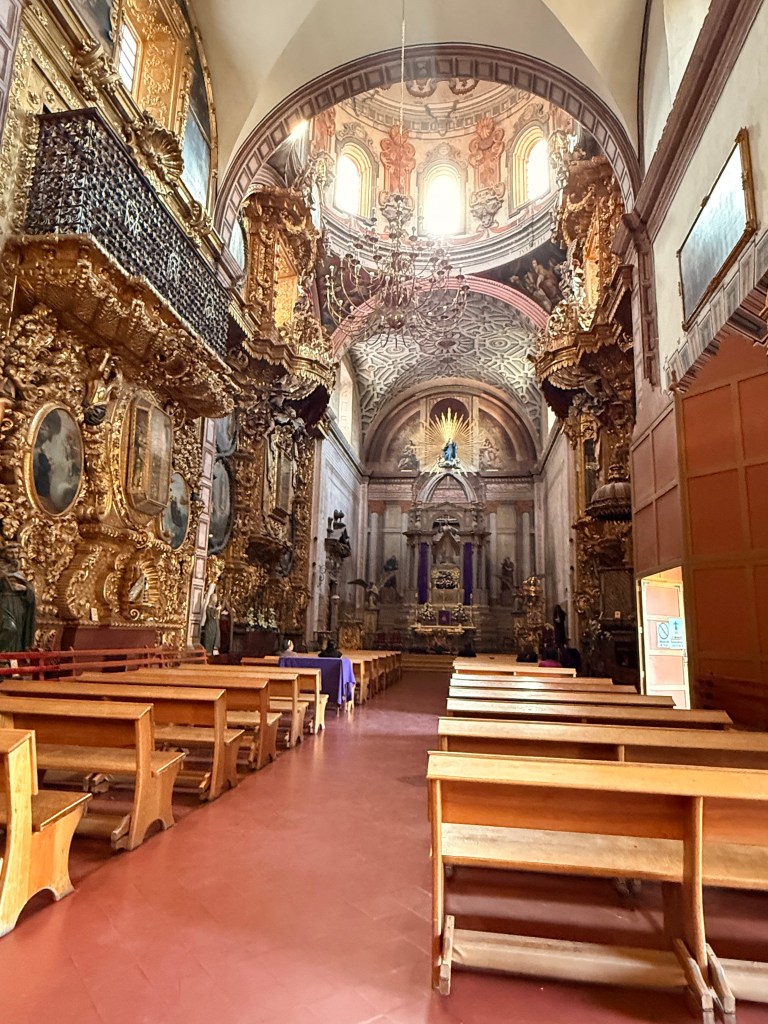
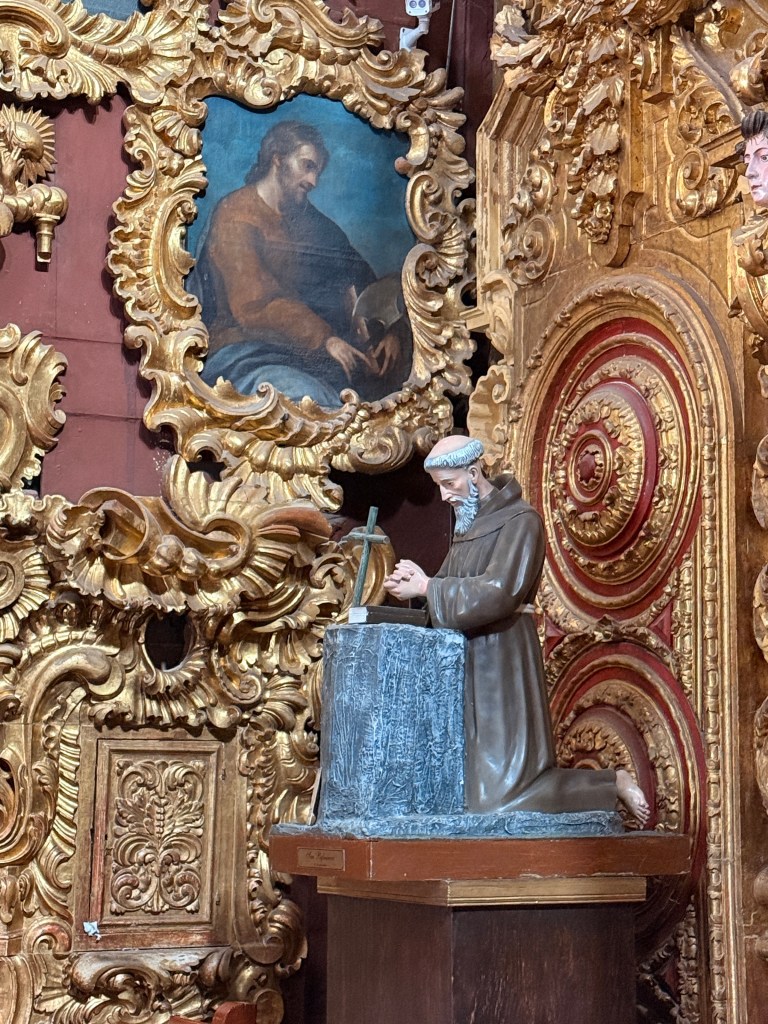
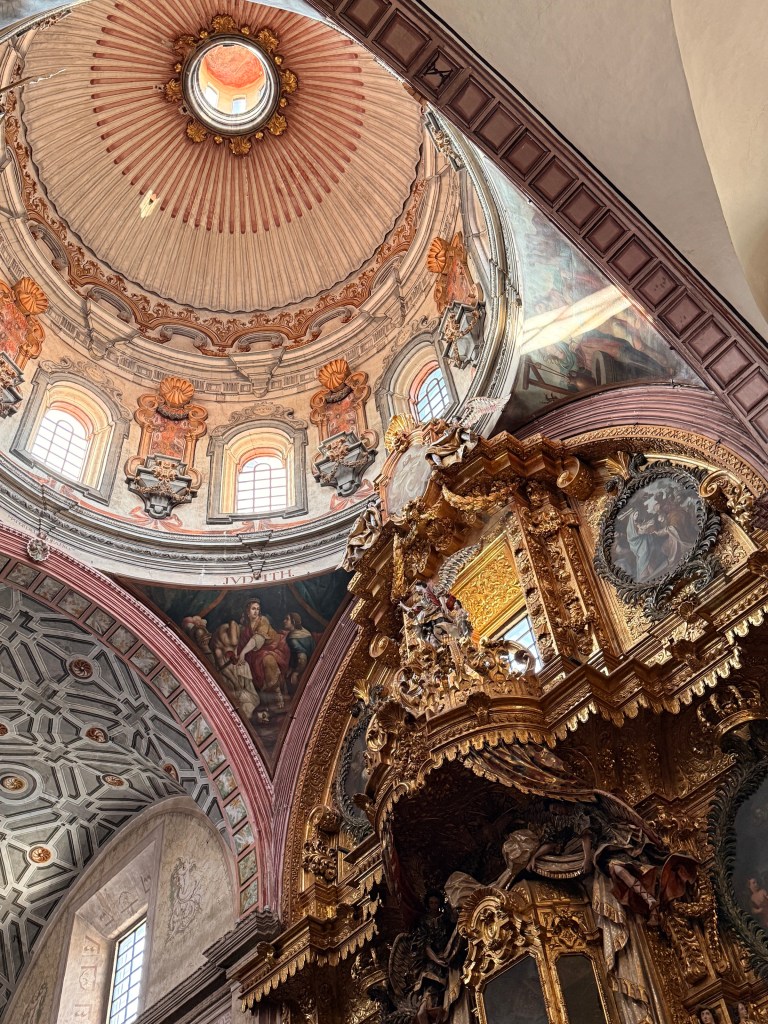
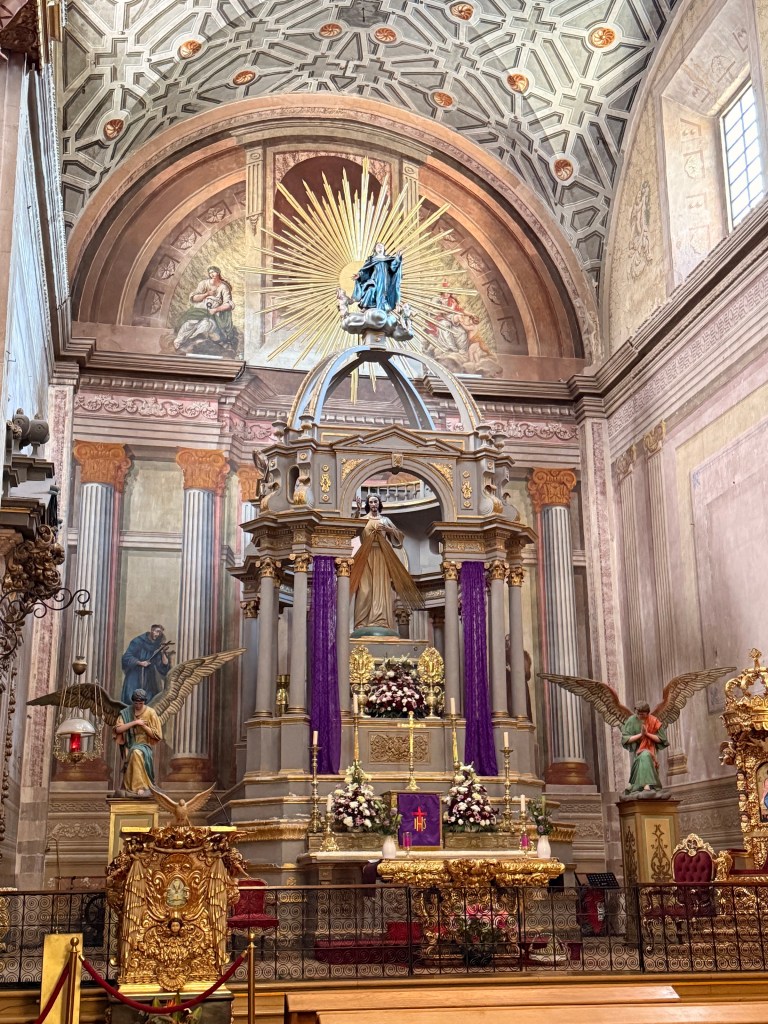
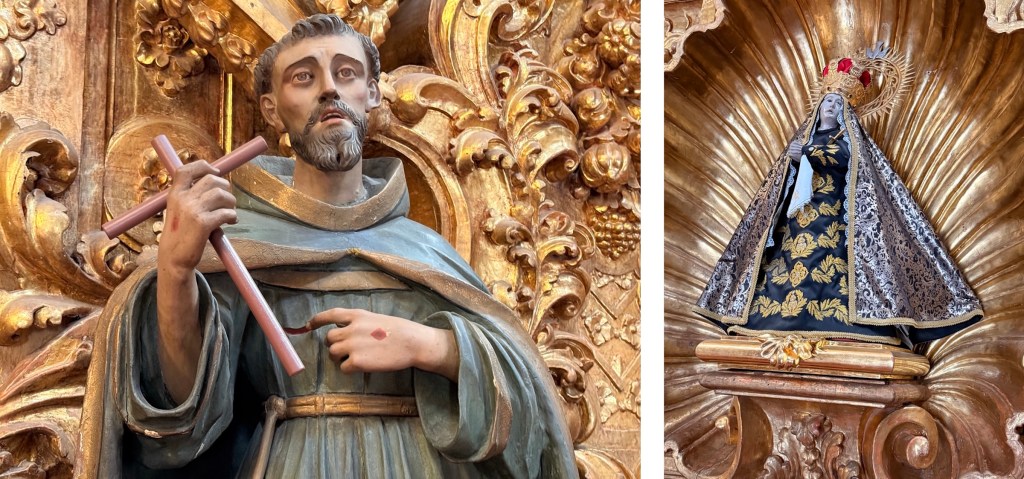
And in case you’re interested, the church was signing up people for a visit to Rome and the Holy Land for August and September. With a ‘Director Espiritual’ included.
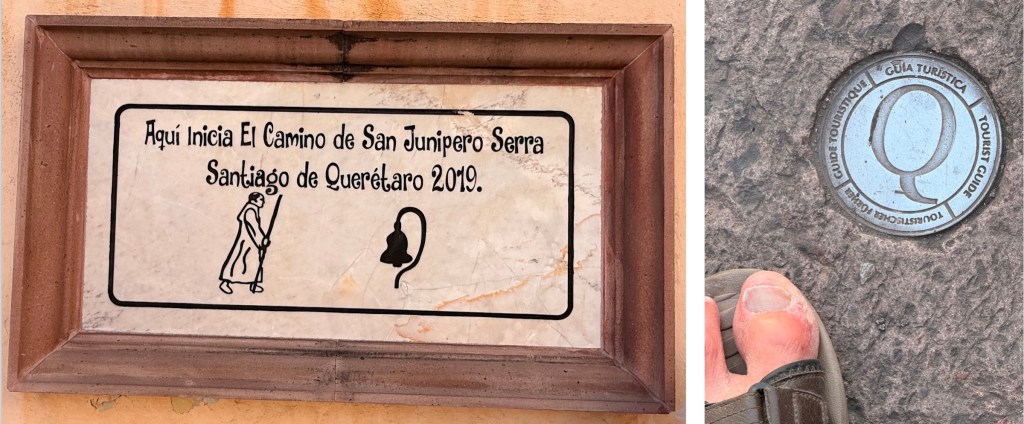
If the price for a trip to the Holy Land is an issue you can start your own pilgrimage right here, following the ‘Camino’ of Father Junípero Serra. Tradition says this is where he began his trek north to establish eight of the 21 Spanish Missions in California. Father Serra was born in the town of Petra on the Mediterranean island of Majorca, and as a devout Franciscan he did a fair bit of walking to ever reach Querétaro. It’s said that he even refused the offer of a horse when he arrived in Vera Cruz on his long climb into the mountains to Mexico City. And his trek from right here was more circuitous than they say, as it involved a number of side trips and detours. Nevertheless, his route is clearly marked by medallions in the pavement stones of central Querétaro – those that haven’t been dug out by souvenir hunters.
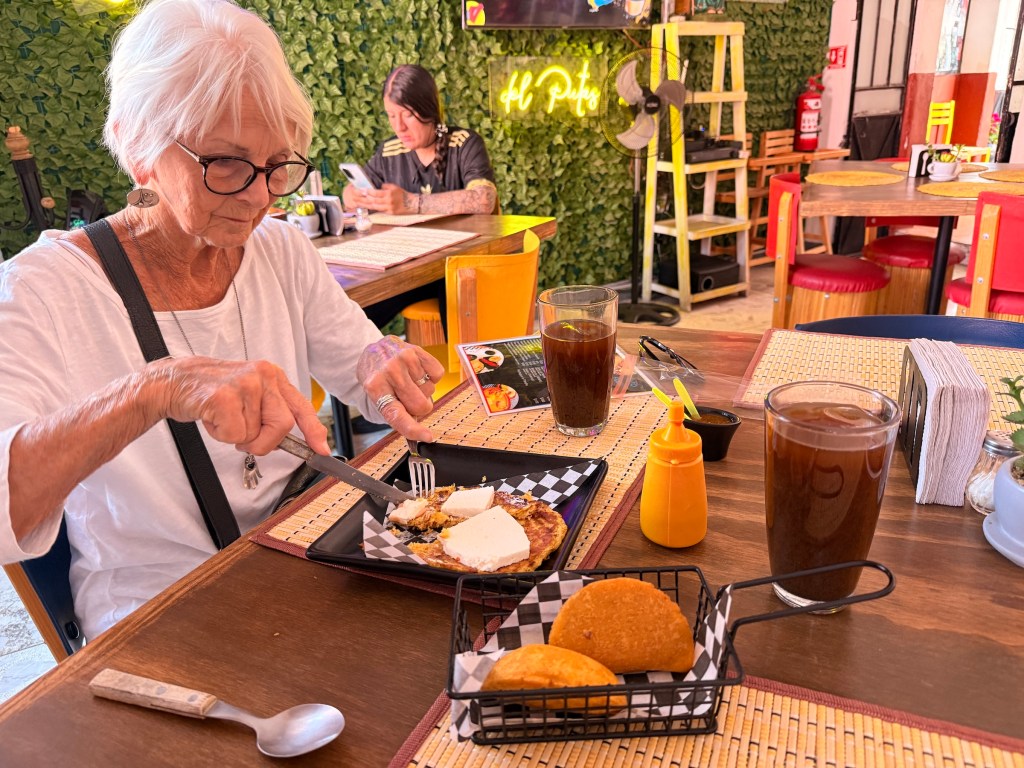
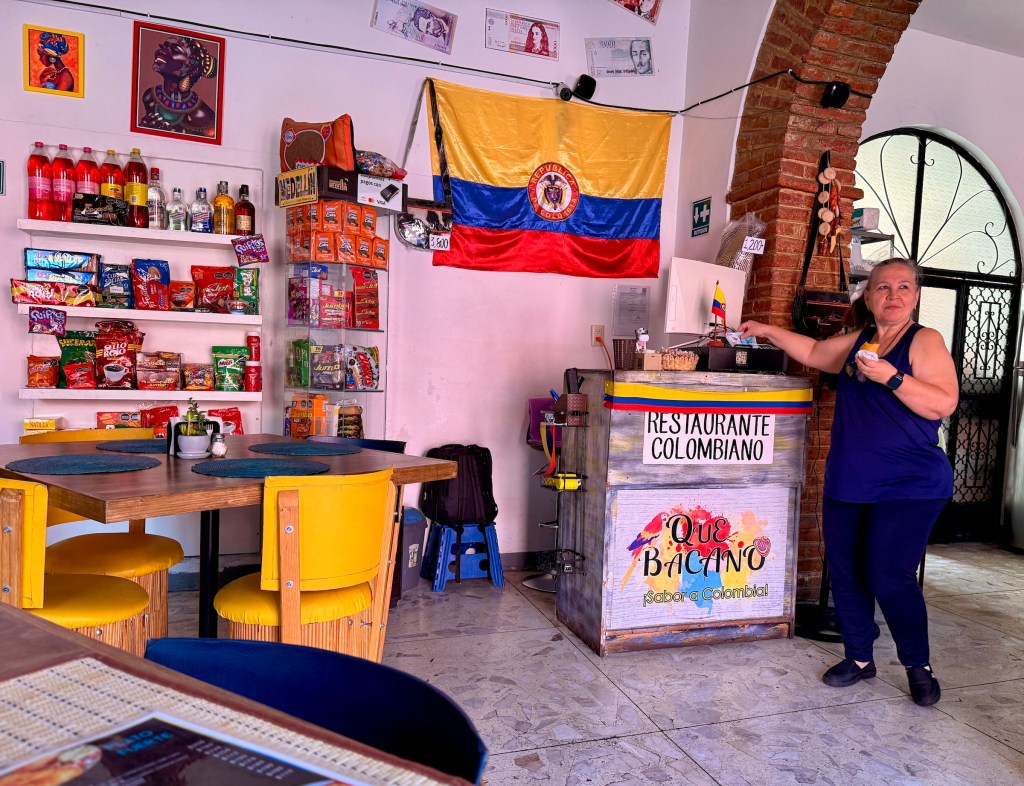
We took a nice long walk through back streets to get to the old railroad station. We passed one of the city’s ubiquitous ‘Uno y Uno’ (‘One at a Time’) signs along the way, and we stopped at a good little Colombian restaurant. The lady was fun to talk to, and the food was delicious. She refused to take Colombian pesos, but we didn’t actually have any with us. So all was good.
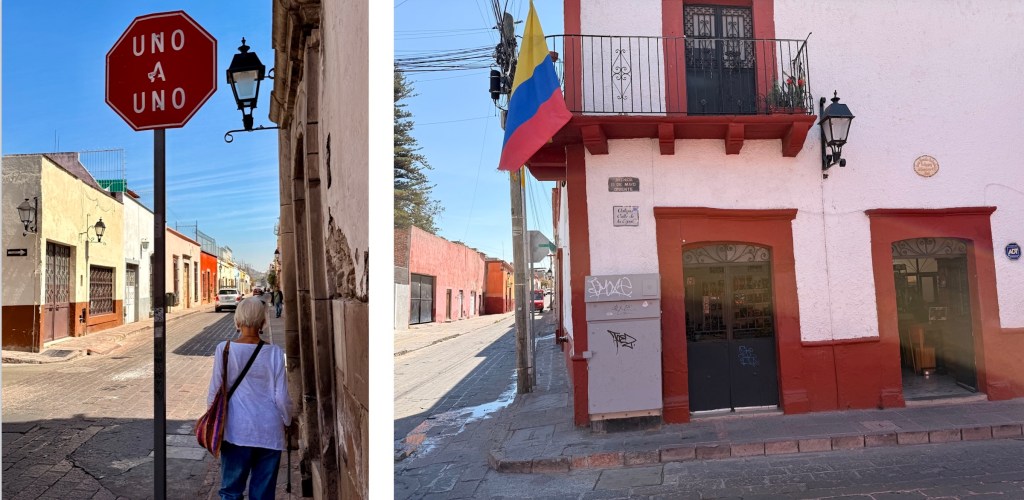
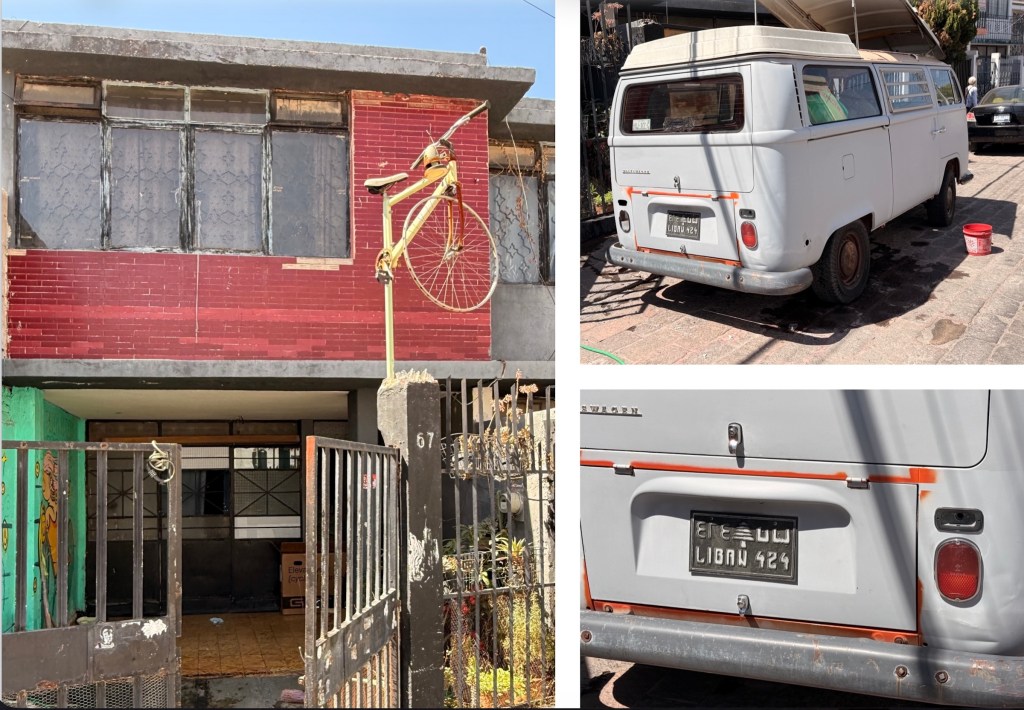
After lunch we passed an old VW Bus with Libyan (?!) plates, and some kind of bicycle-parts sculpture in front of a house. Art takes all forms.
Soon we reached the shady riverwalk with a bike path, which was a nice surprise. And a tall jacaranda tree was filled with purple blossoms. It was a pretty scene, except that the water was badly polluted. It was apparently intended to be a showpiece for the city, but the needed maintenance hasn’t been taken care of.
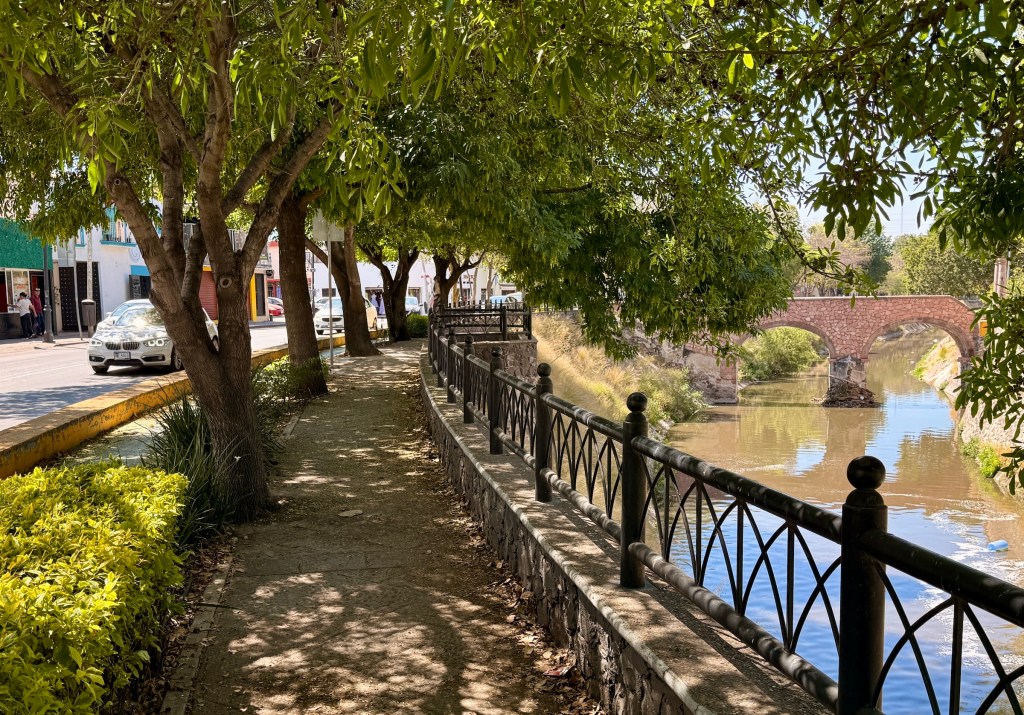
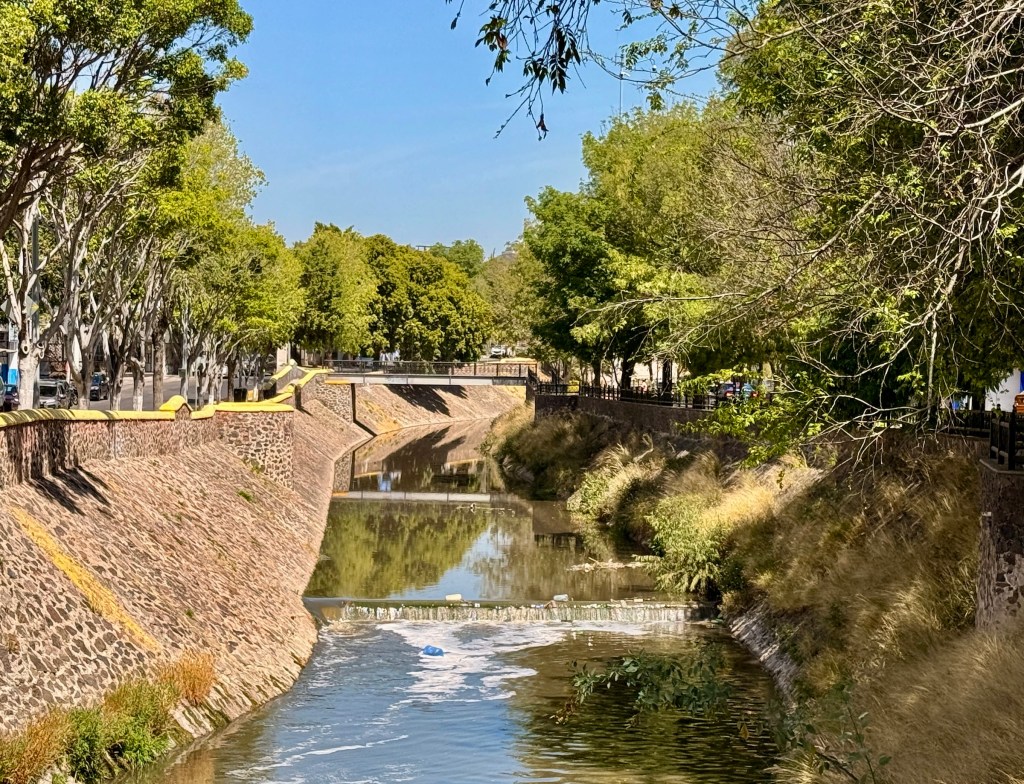
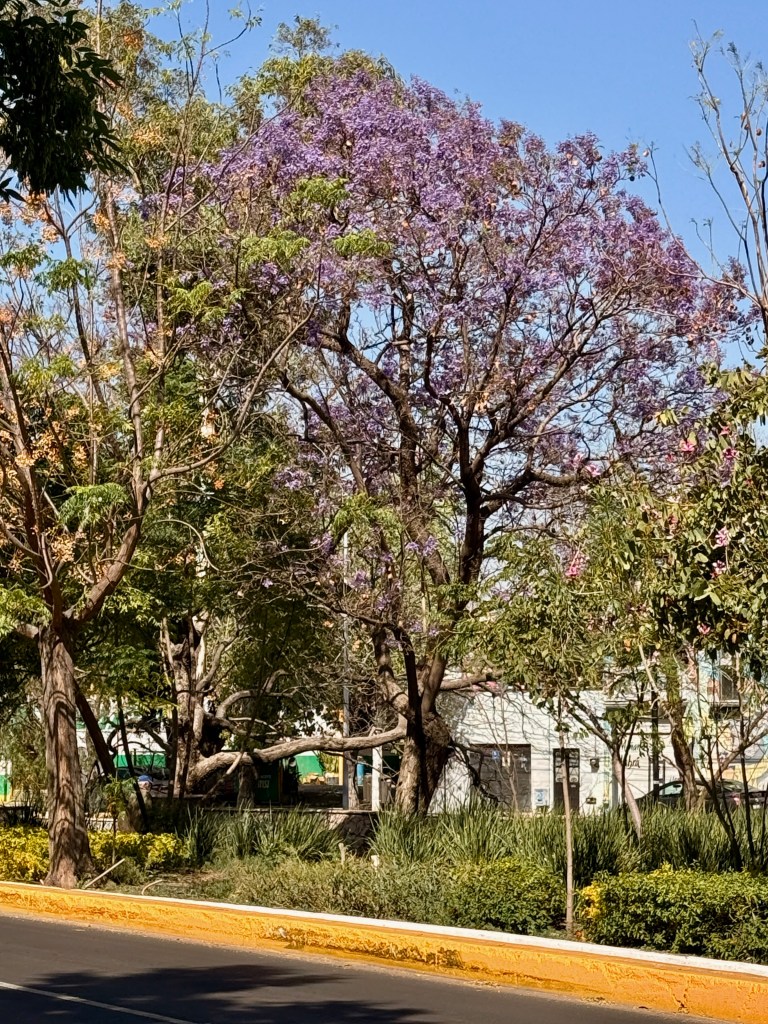
The riverwalk area is an artsy place with interesting things to see, and we hope it becomes more of an arts hub for the city. Hosting evening arts crawls along a cleaned-up waterway has been a successful formula in many other cities.
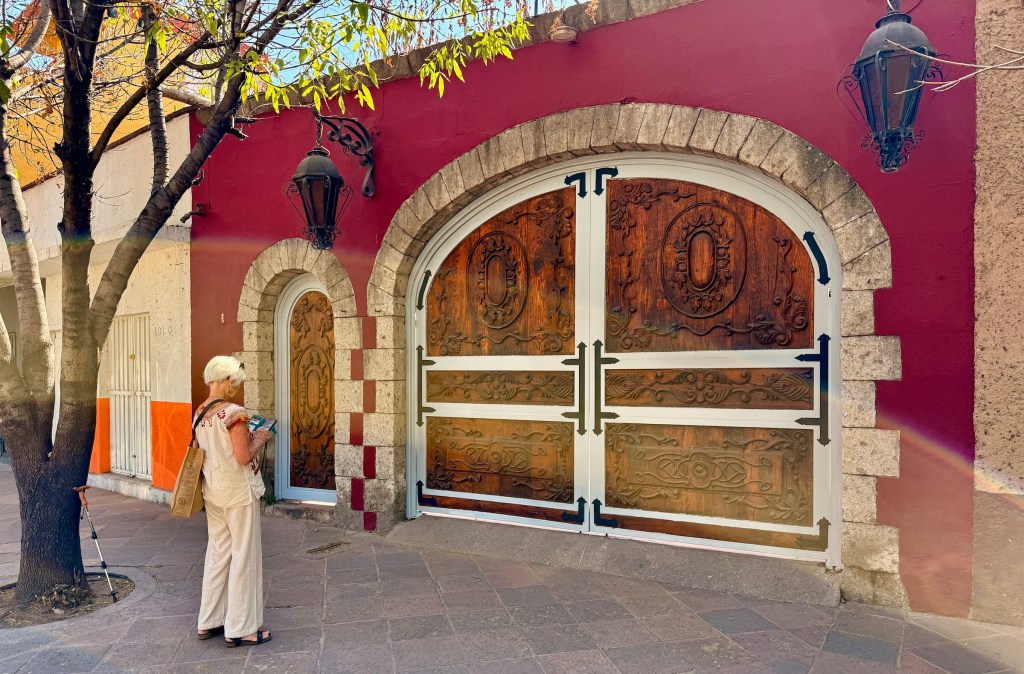
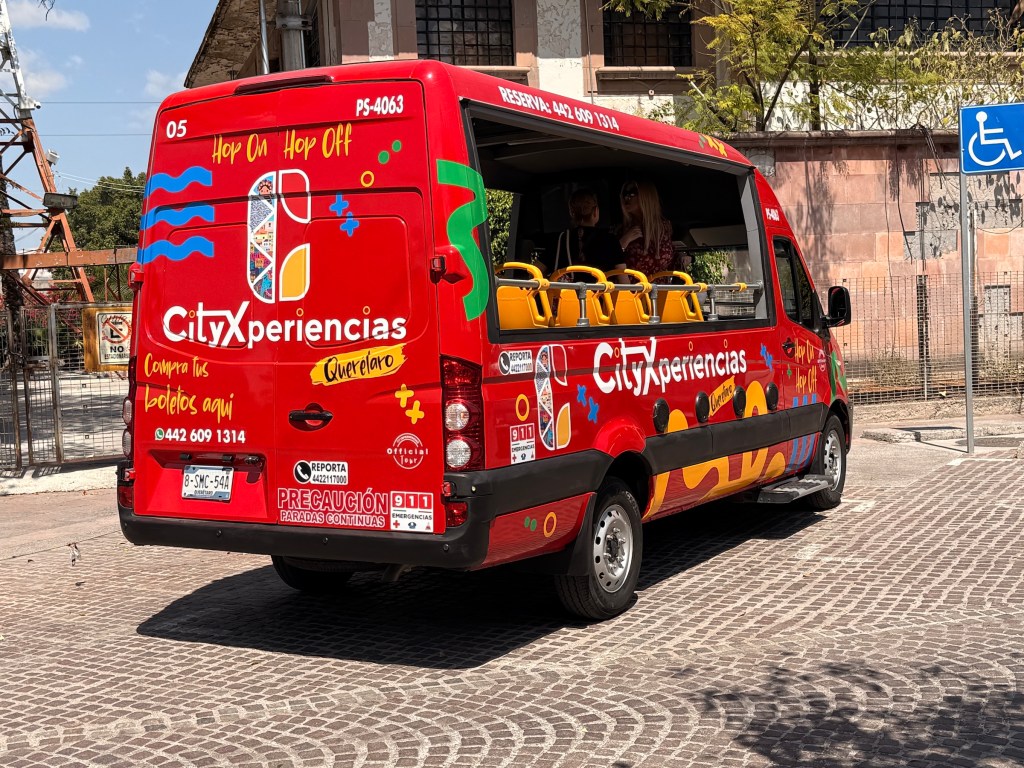
Querétaro has turned its beautiful and historic train station into a small museum, and there are local cars and CityX buses that will be glad to get you here.
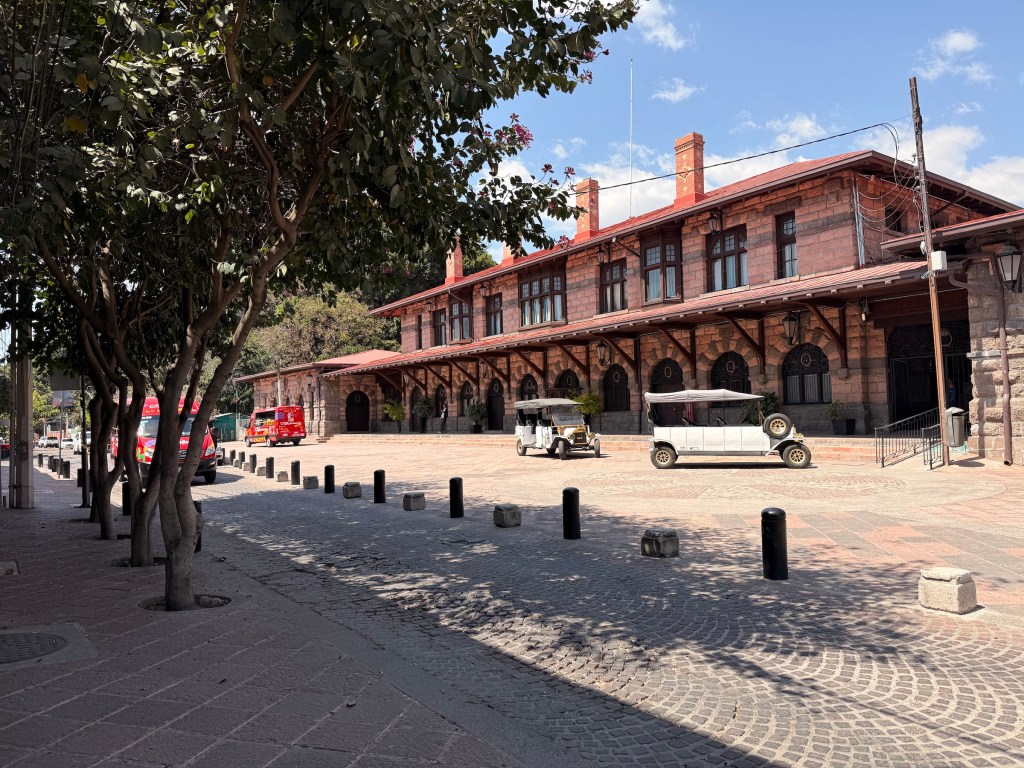
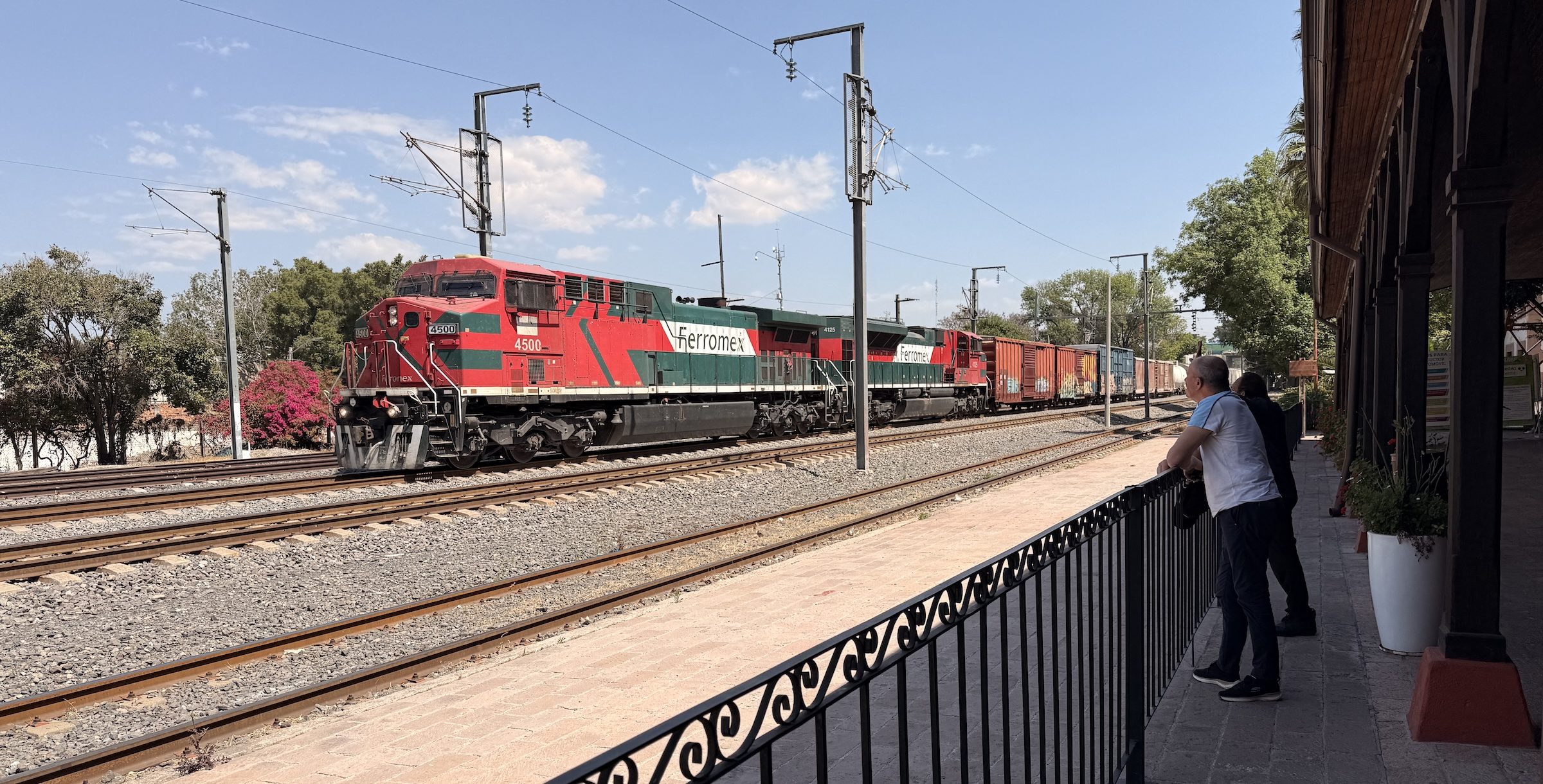
If you like trains, as we do, it’s an enjoyable experience to sit under the broad roof over the veranda and watch those long freight trains go by. A lot of freight traffic passes through here, and we can hear it faintly from our hotel room in the night. And there’s likely to be a lot more traffic coming through soon as that new fast train commuter link from Mexico City is finished up.
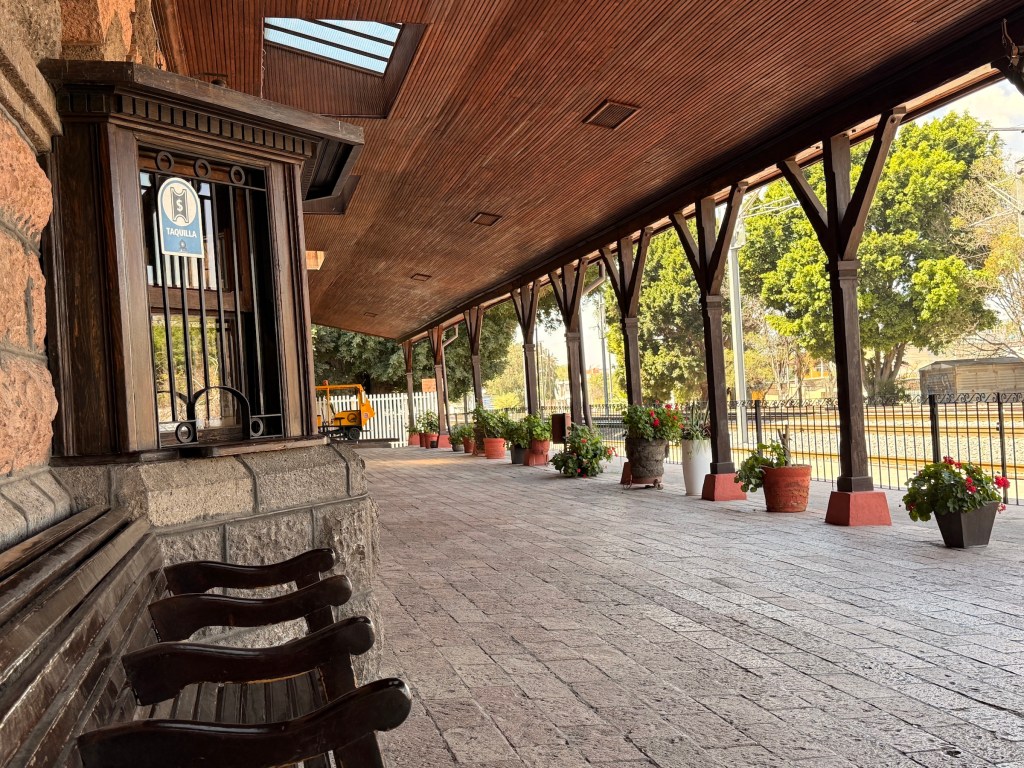
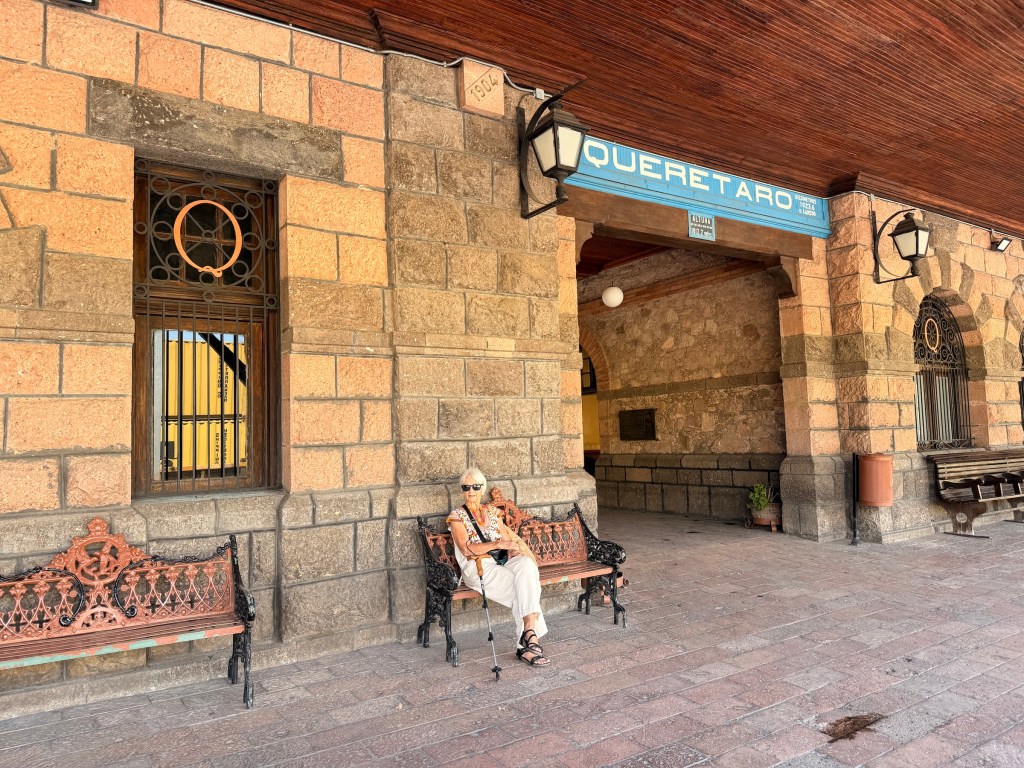
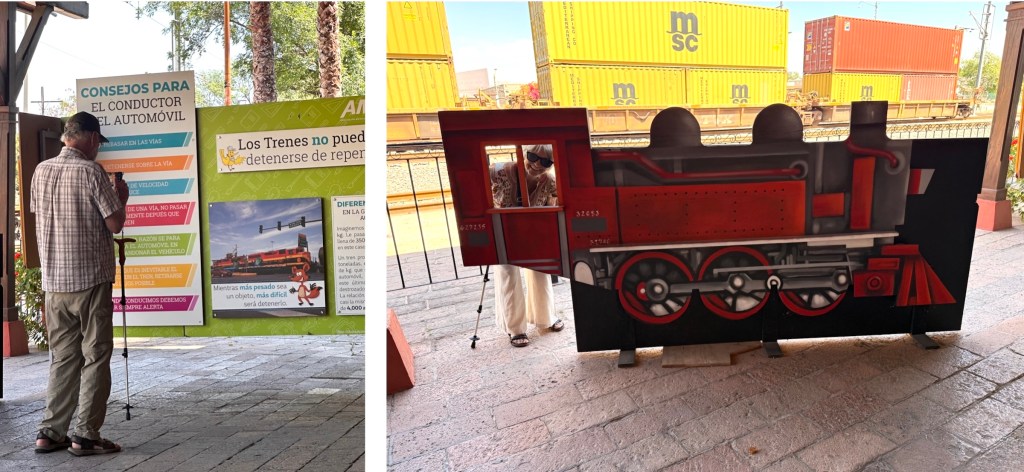
There are other fence-leaners here to watch trains passing between the commercial hubs in central Mexico. And from this pivot point there are three main routes to the US border, including the eastern route through Saltillo and Monterrey, the central route through Chihuahua and Ciudad Juarez, and the western route from Guadalajara through Hermosillo to Nogales. So there are plenty of opportunities for passenger lines to return to Mexico.
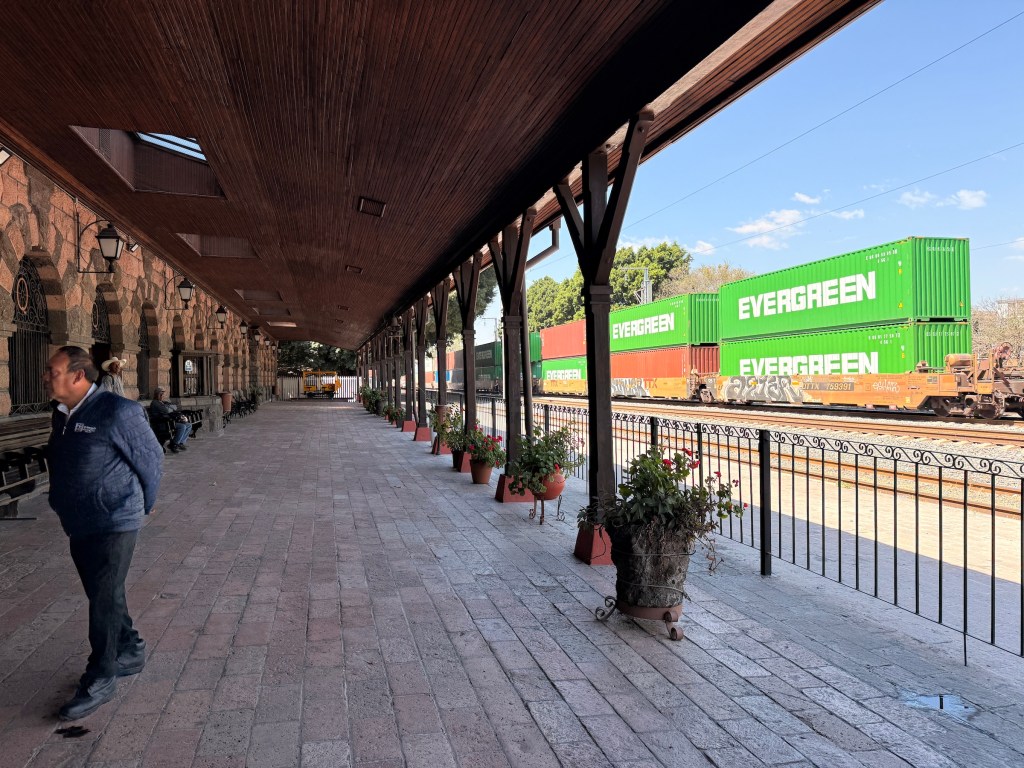
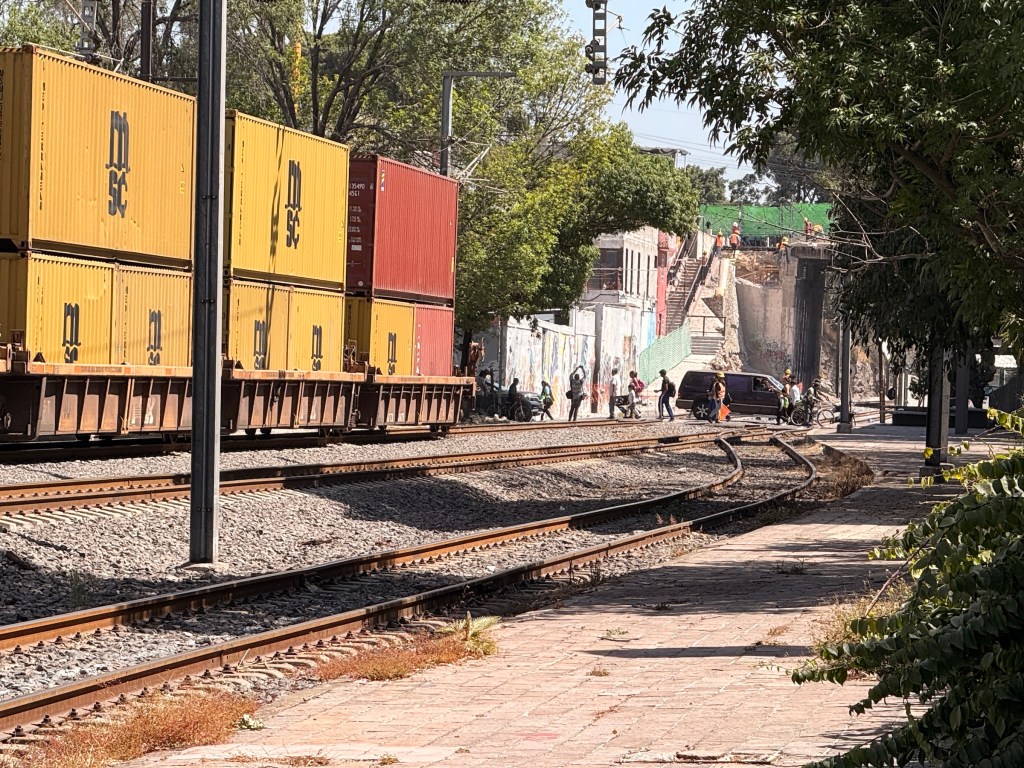
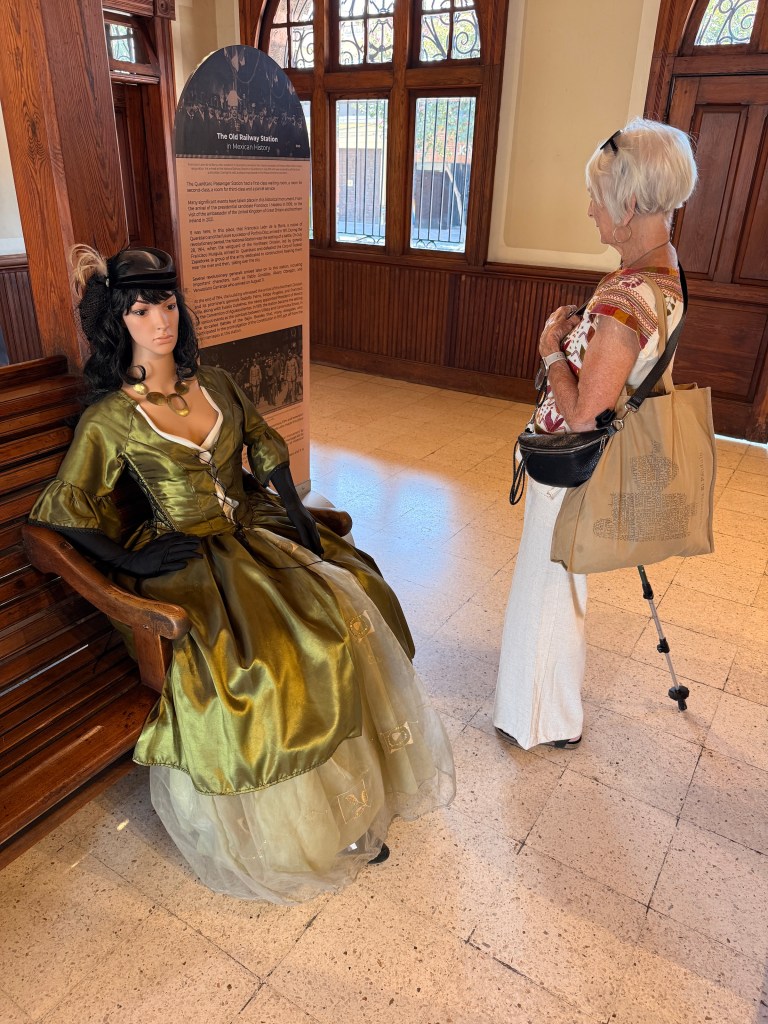
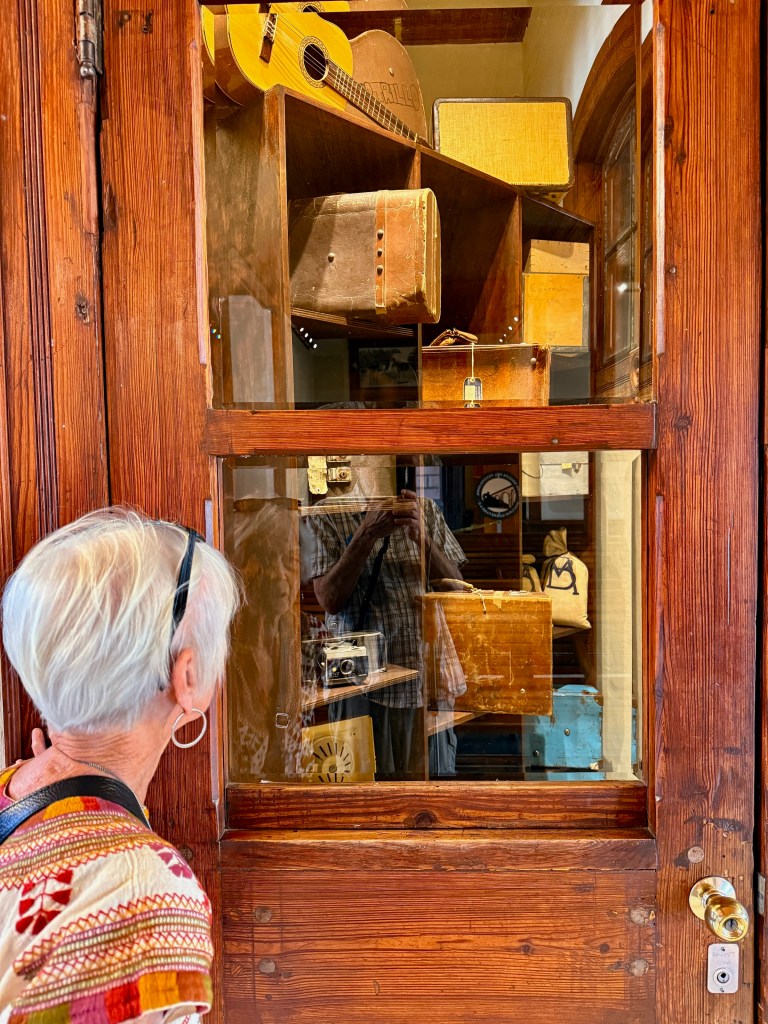
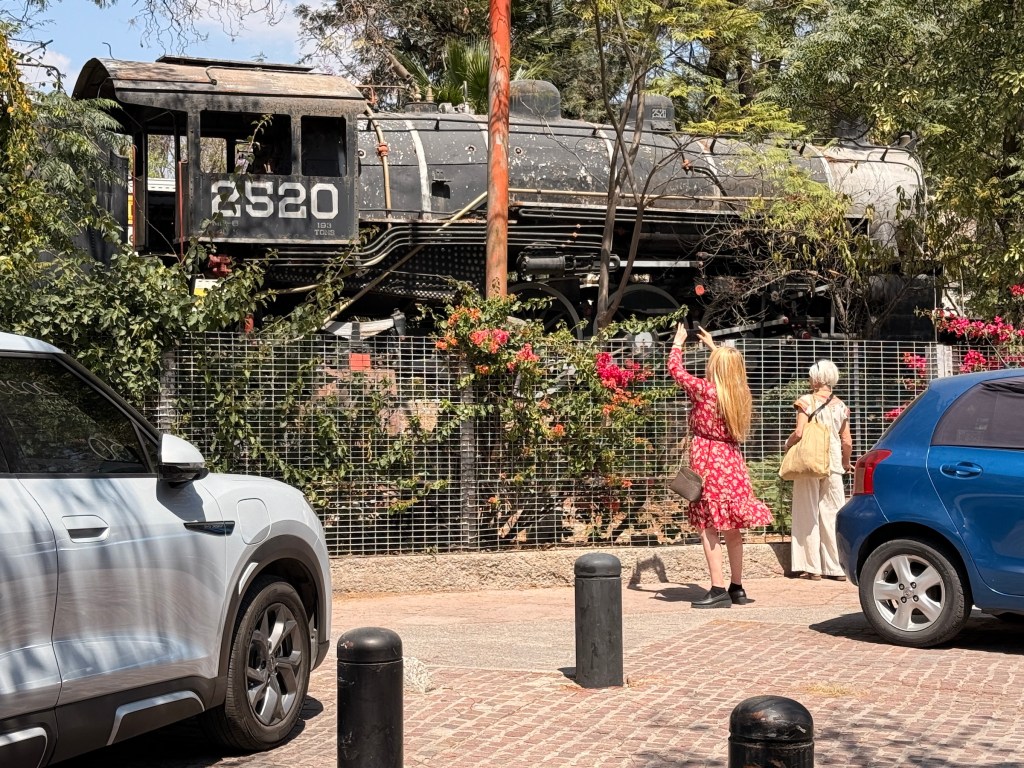
The museum itself is simple and nicely done to look like it may have during Mexico’s golden age of rail travel. And there’s a huge old-timer engine resting out on a side track that’s worth a few pics if you’re fascinated by these grand old machines.
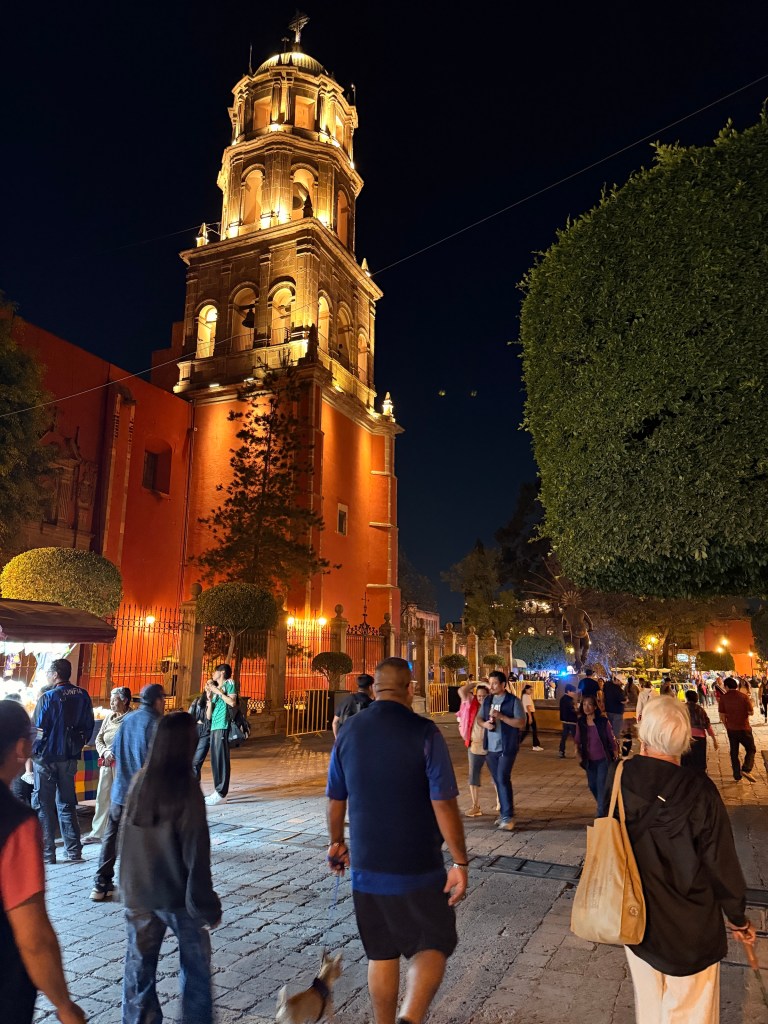
We return to the center of things on a fine Saturday night. It’s our last night in Querétaro, and we’ll simply enjoy whatever the evening has to offer. There are lots of local folks here to enjoy it with, around the city’s various plazas. And many of them are families with children out to enjoy an old Mexican tradition together.
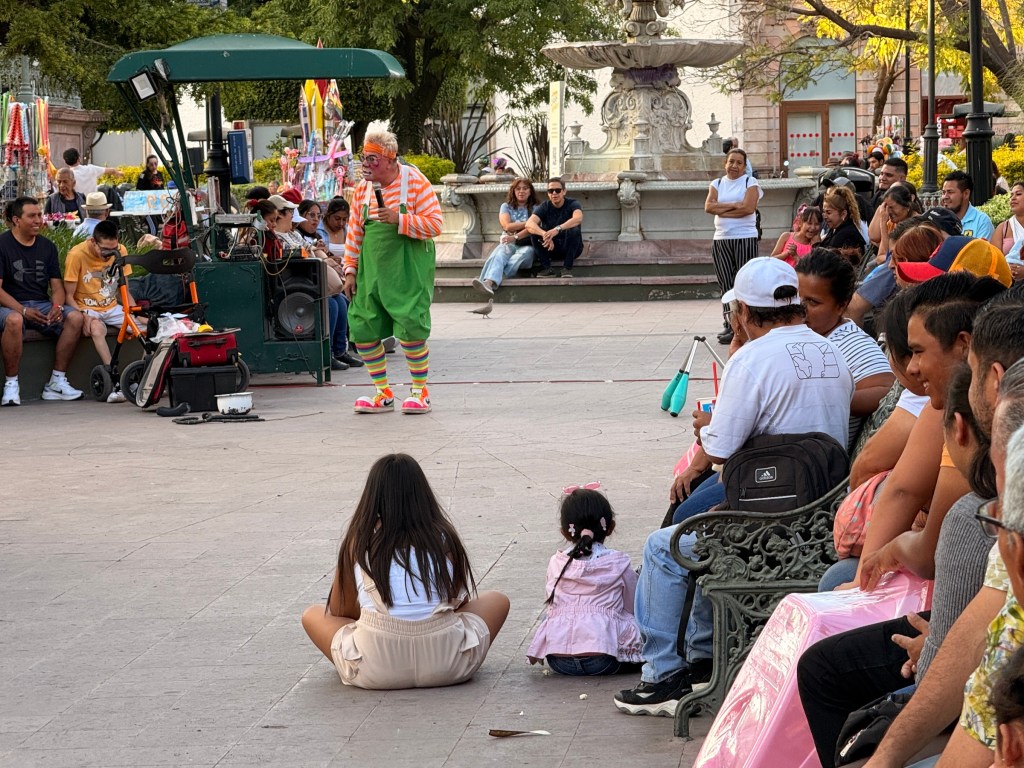
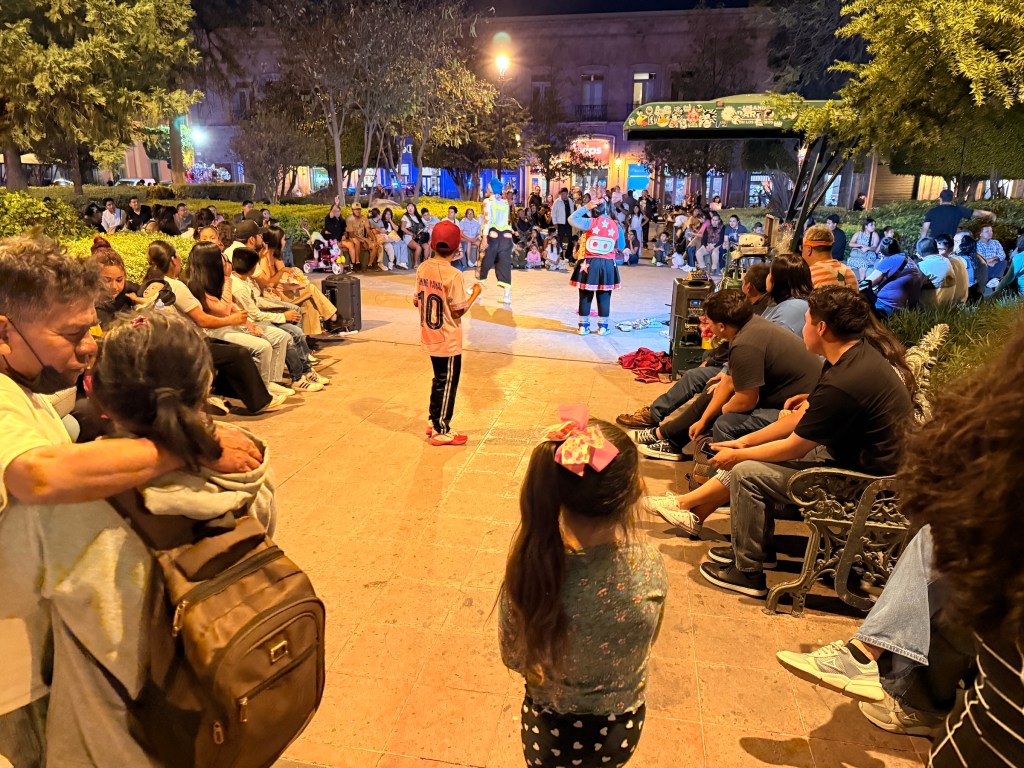
Street payasos (clowns) are a popular feature on Mexican plazas, and the kids are waiting for the show to begin. You can also end up in the act very quickly, so I hid behind a row of people.
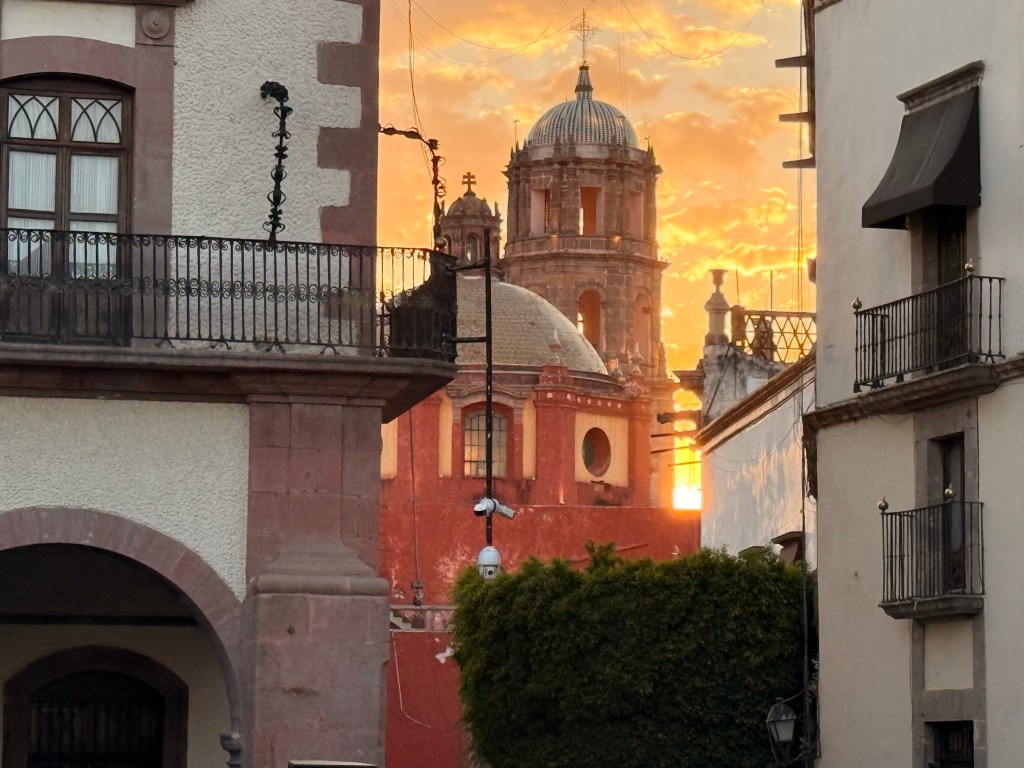
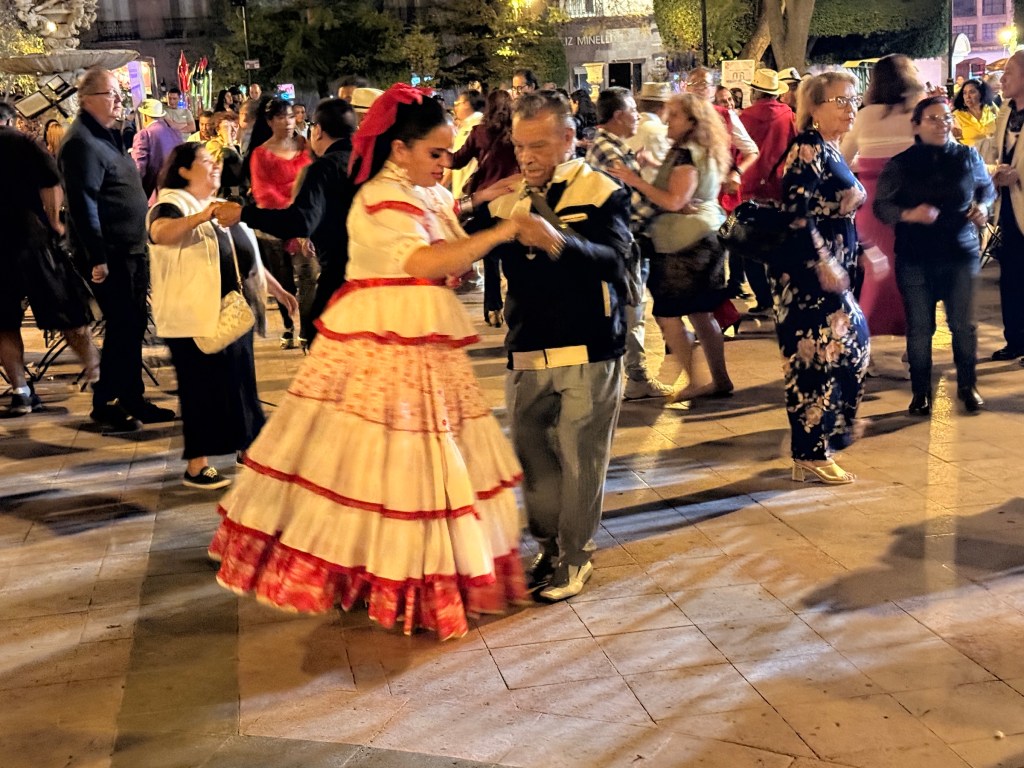
There’s a good traditional band playing at the Plaza de Armas and everyone is dancing, as the sun sets behind the Templo de San Francisco.
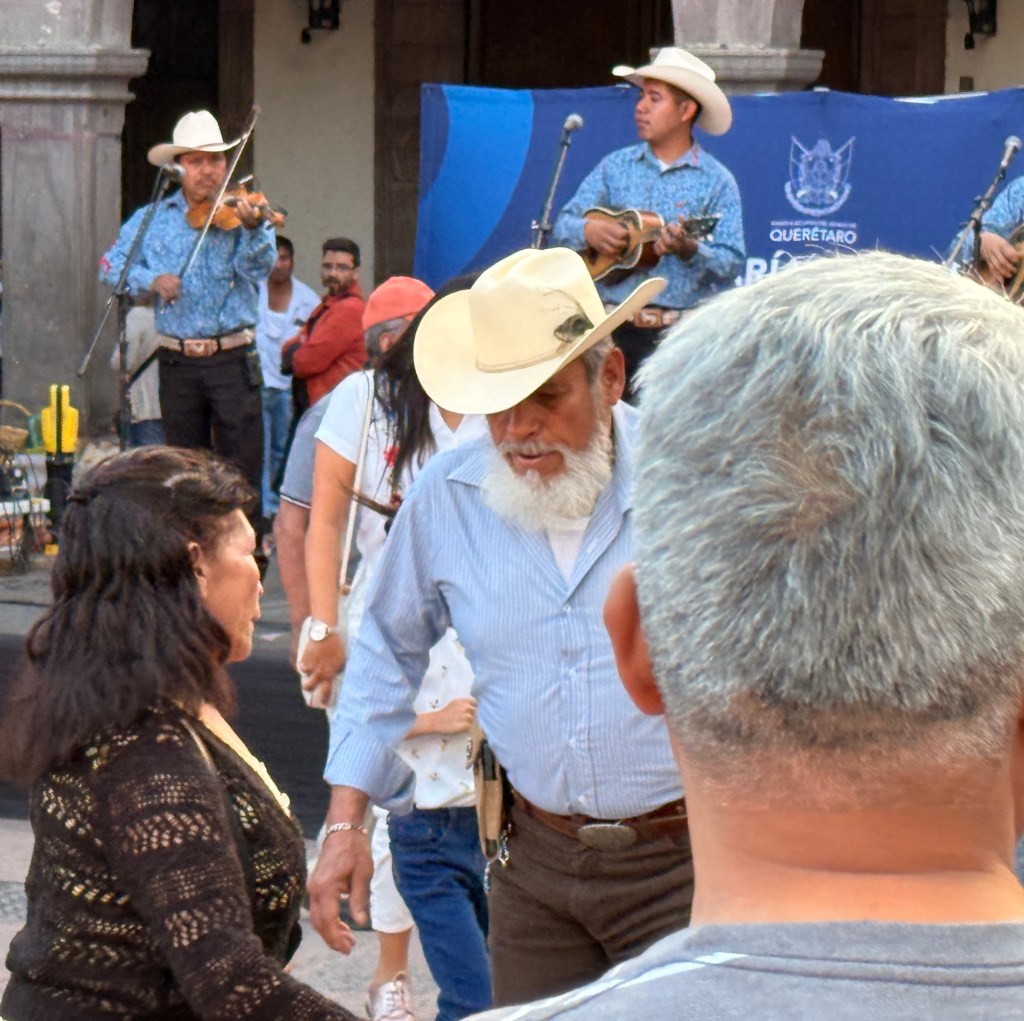
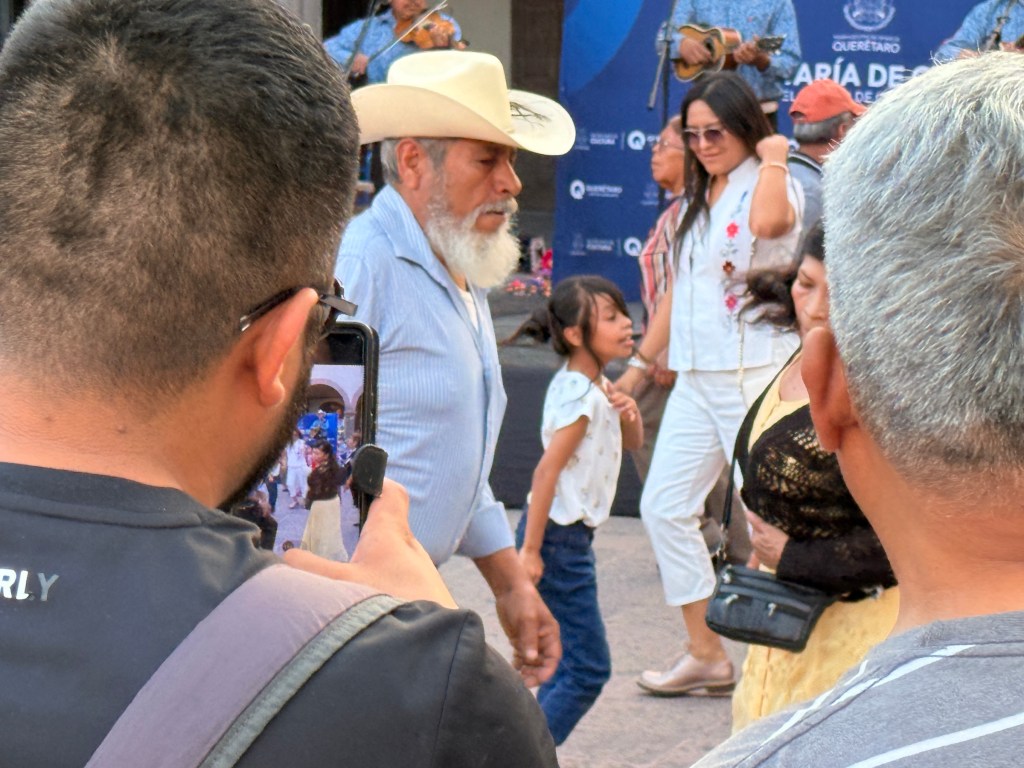
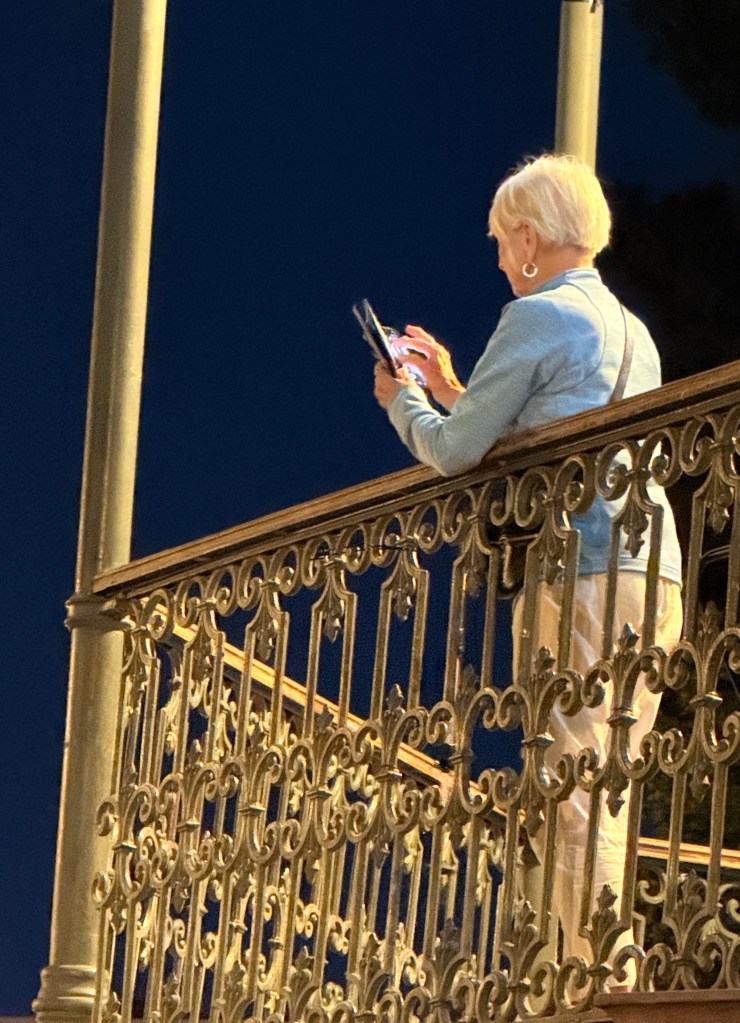
We head onward to the Jardín Zenea where there’s another payaso performing. People are out in their finery and there’s more dancing, and Carolyn finds a good perch on the bandstand for some photos. I find a sad wilted flower that someone dropped on the pavement, and I present it to her as a memento of the evening. What a guy, huh?
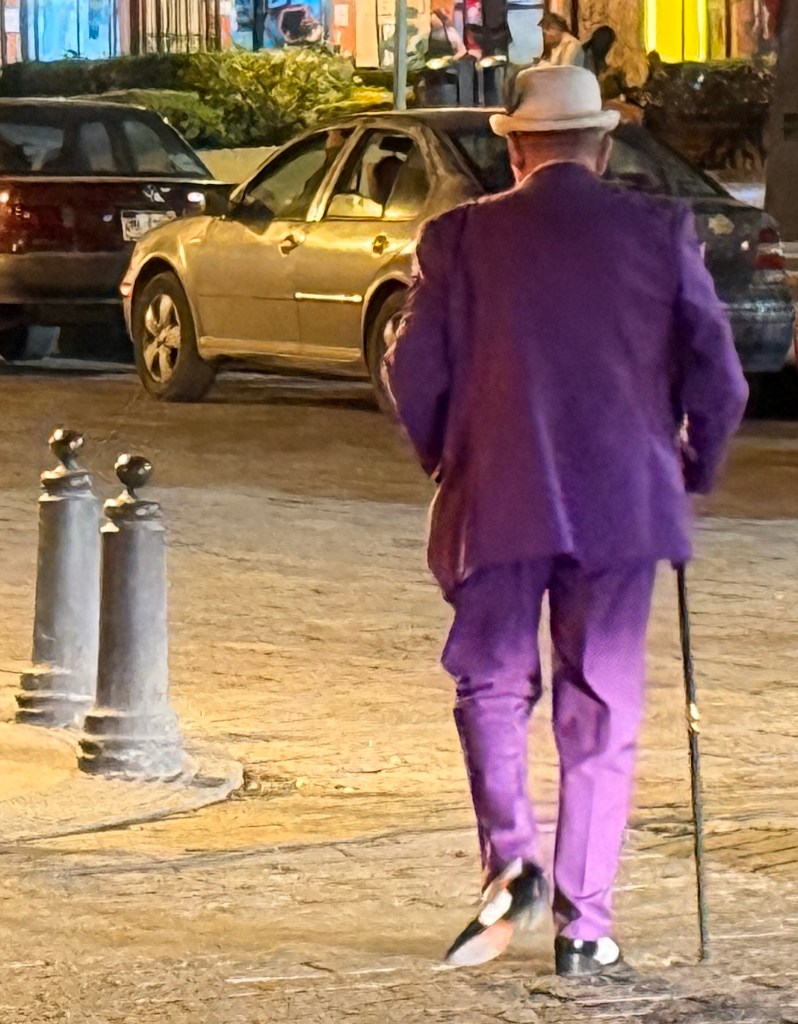
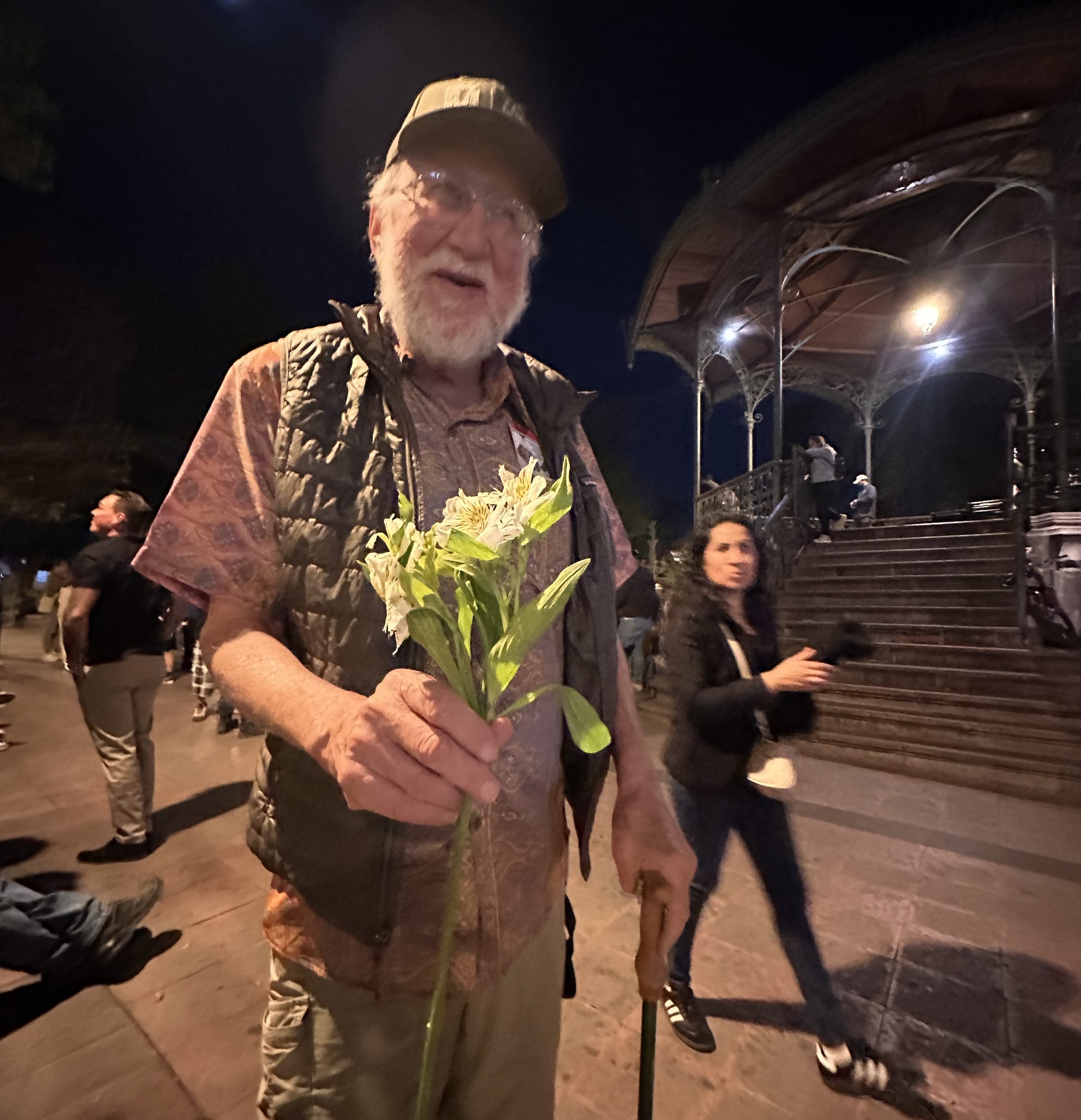
We make our way toward the hotel and pass a ‘poet’ who is selling his poems for whatever you’ll pay. It’s a wonderful evening and it’s a sweet idea that’s easily worth 50 pesos to me.
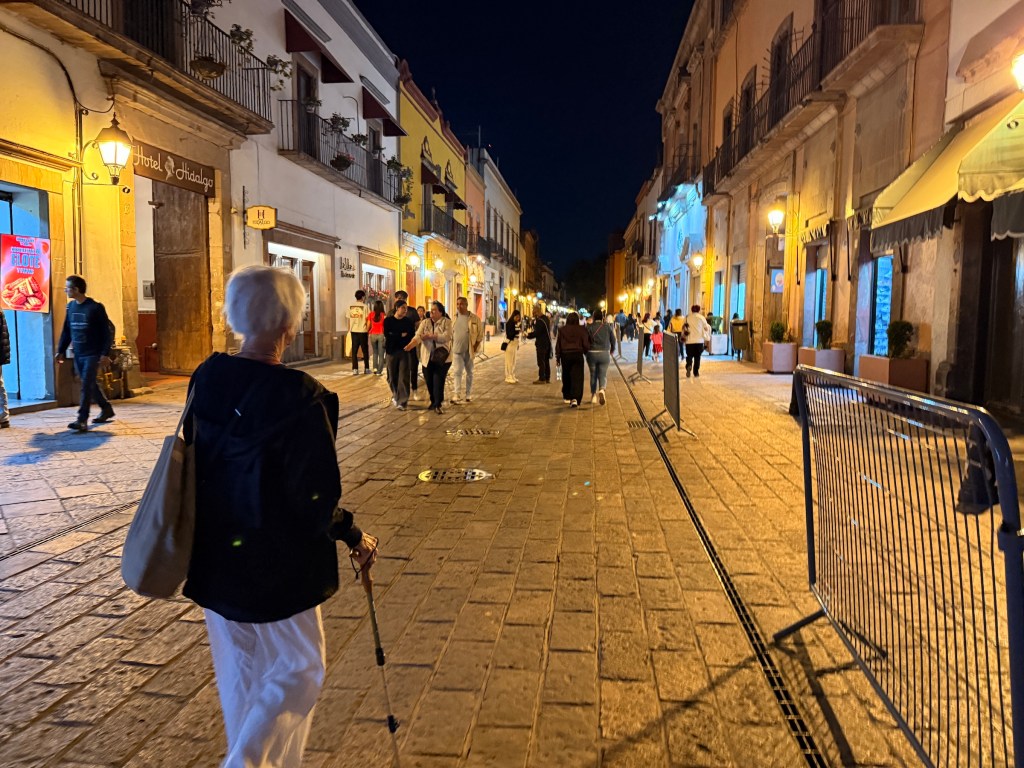
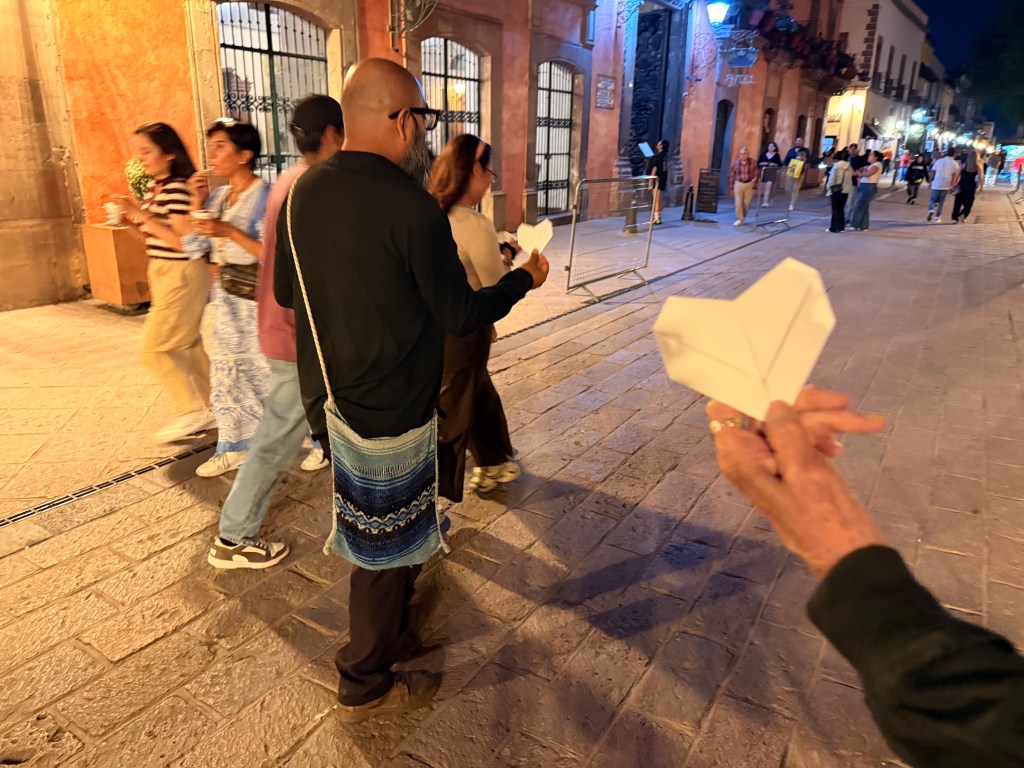
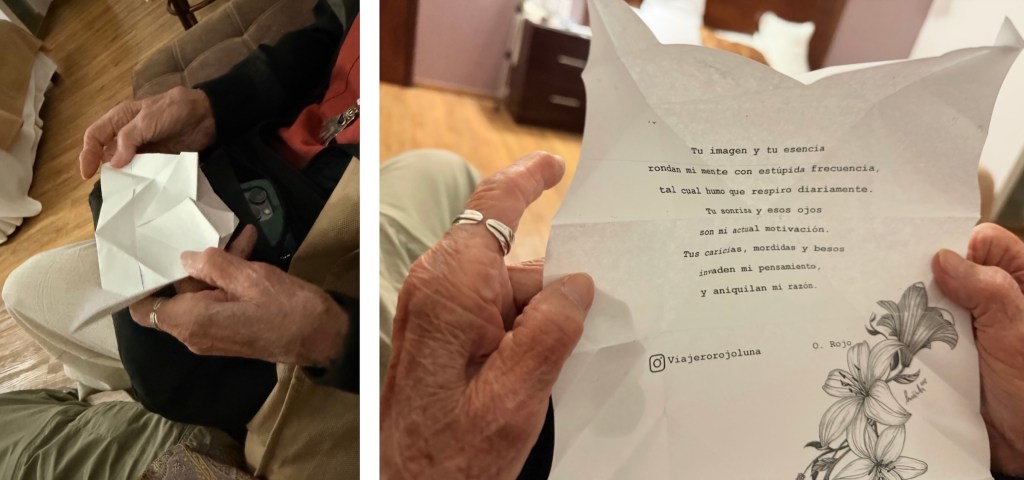
Carolyn carefully unfolds the poem, and it reads:
Your image and your essence
surround my brain with stupid frequency,
such smoke that I breath daily.
Your smile and those eyes
are my motivation today.
Your caresses, bites and kisses
invade my thinking,
annihilate my reasoning.
—O. Rojo
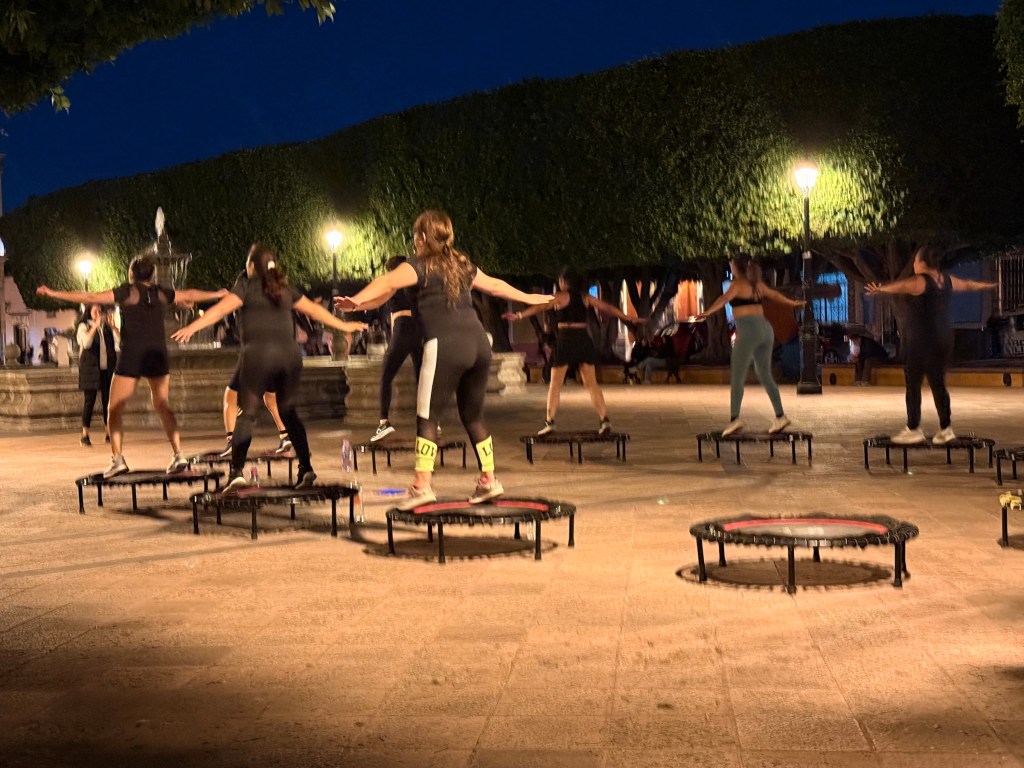
We stash the poem as a keepsake and cut through the Jardín Guerrero to watch a group of energetic gals bouncing their way to fitness, I guess. And on a Saturday night!
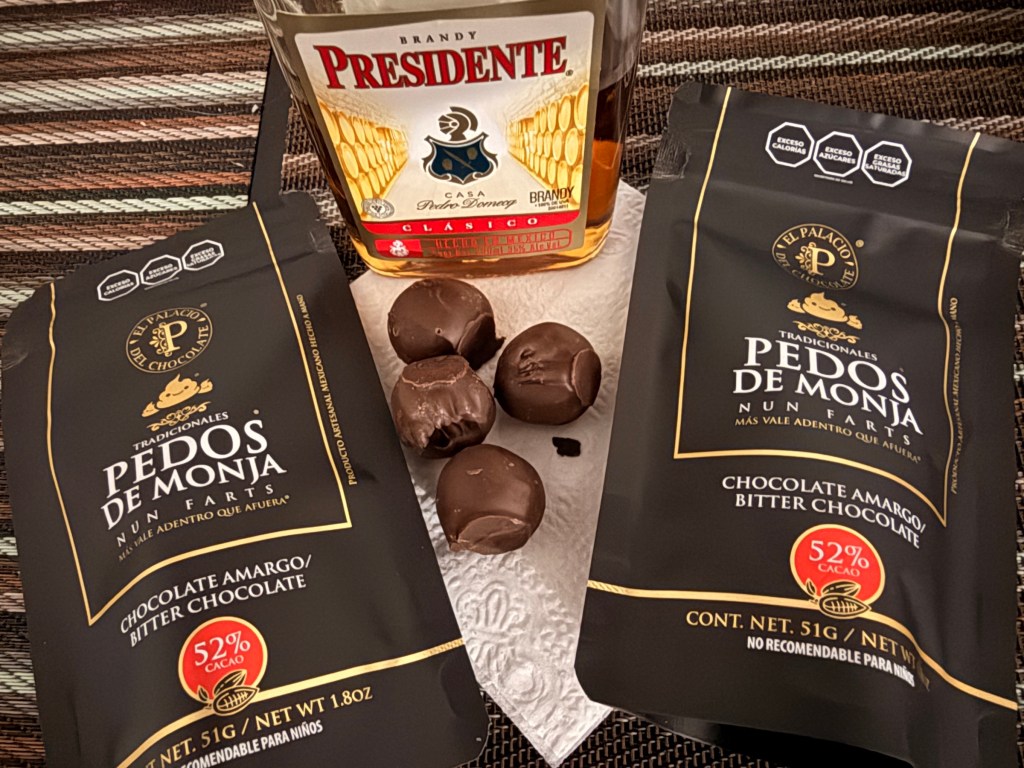
We make it back to our hotel and relax a bit to enjoy some of the….um…, chocolates that we bought earlier in the evening. Along with a tot of some good Mexican brandy.
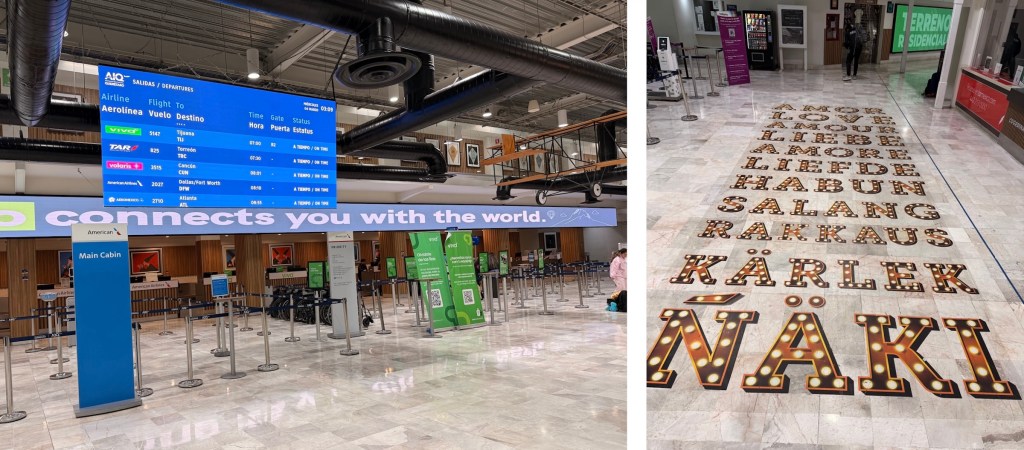
Our return to Querétaro has been a fine experience, and we’ve encountered many things we hadn’t expected. But it’s time to depart, and the city’s airport is easy and efficient.
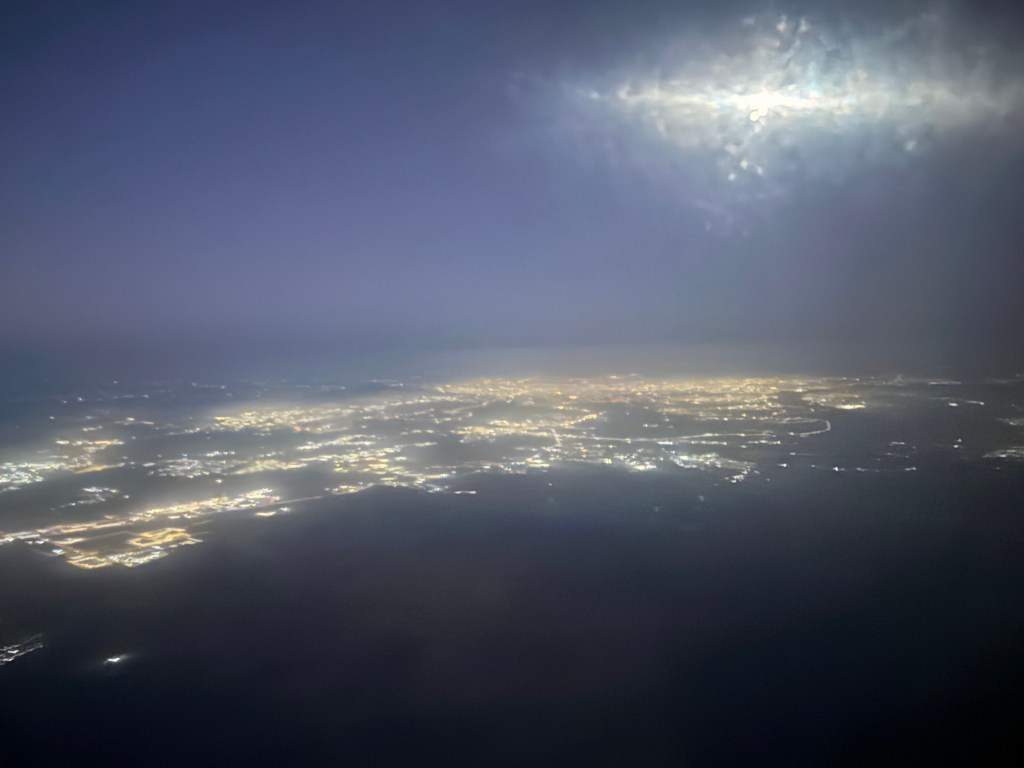
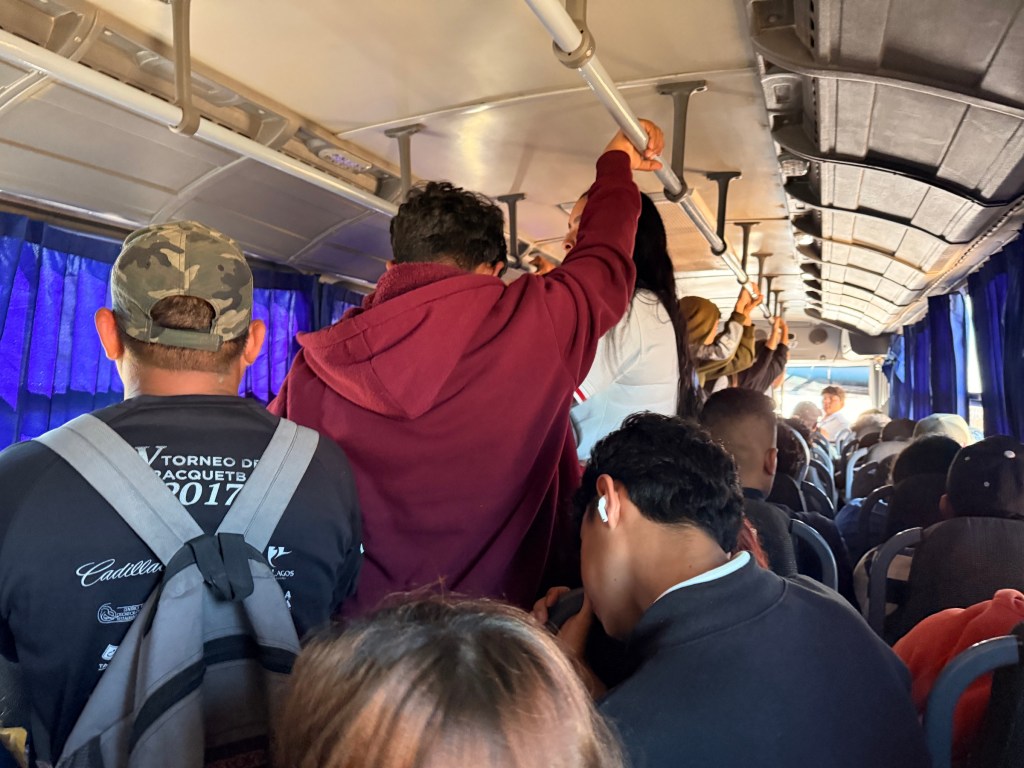
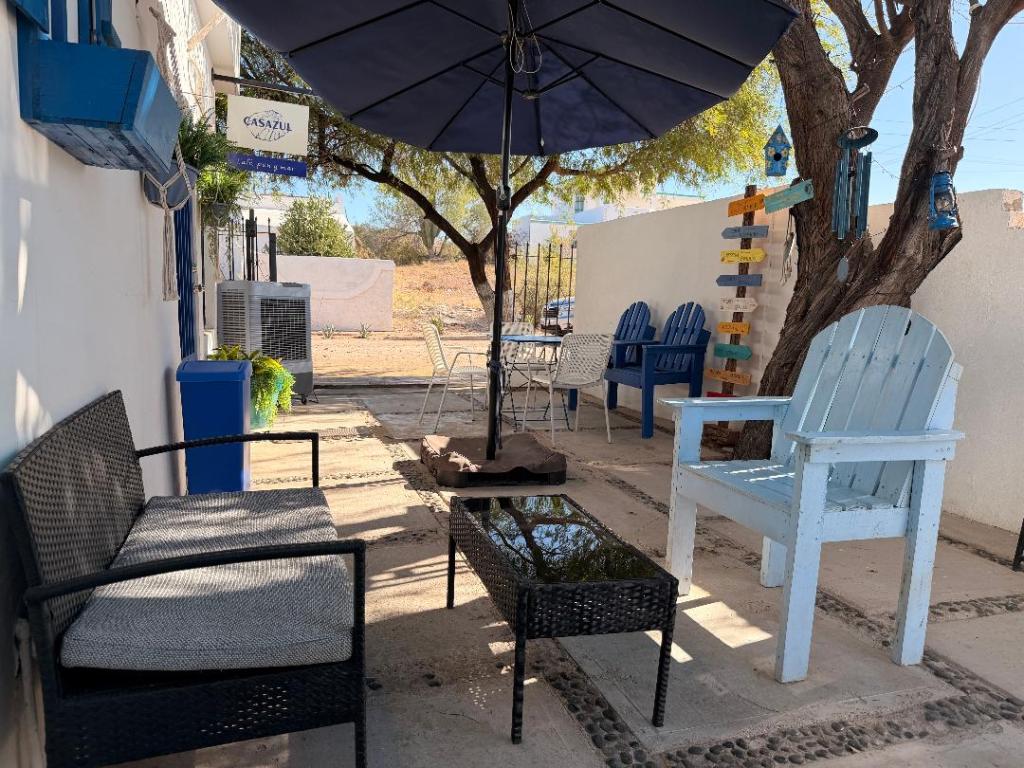
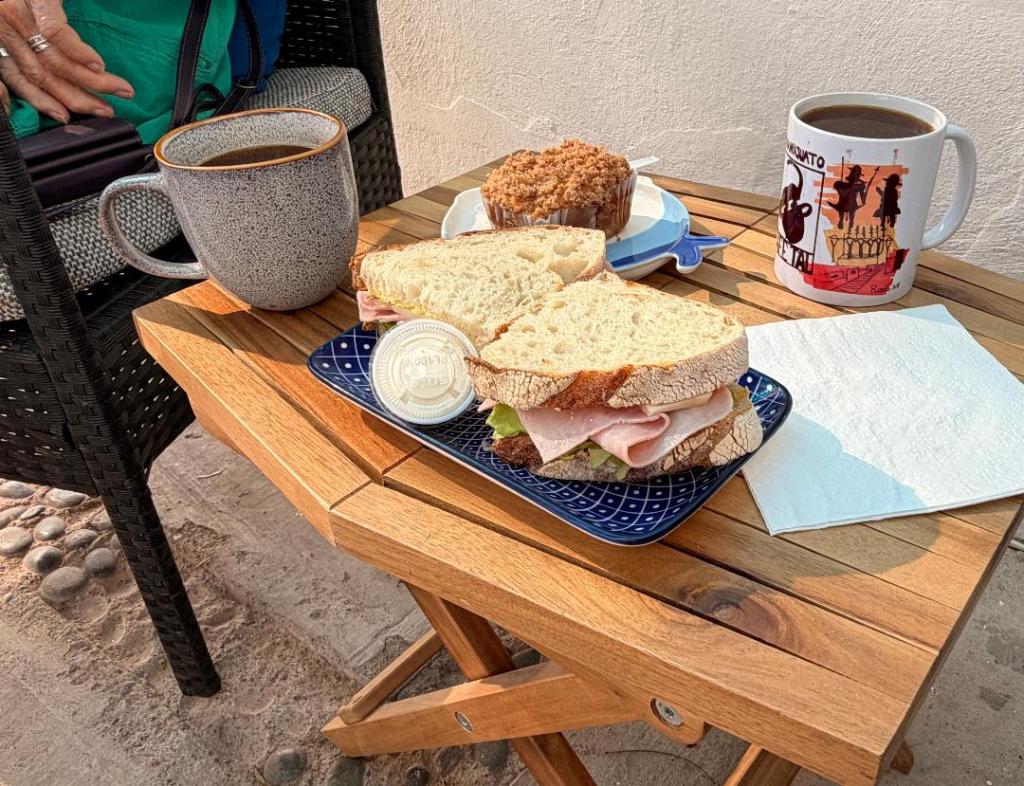
Soon we’re back in Hermosillo, where we board a familiar crowded Costa bus for Kino. And the very next morning we’re enjoying some rich coffee and a fine breakfast in the shade of mesquite trees, at one of our favorite coffee shops. At charming little Casa Azul right in Kino Bay. — PRW


It was so nice to read this! I clearly remember driving past the viduct. My friend and I wanted to stop, but we had reservations in Xilitla and needed to keep driving. We took a different route home, so we never had the chance to go back and check out this wonderful city.
Emilie
LikeLike