Sept 26-30, 2024
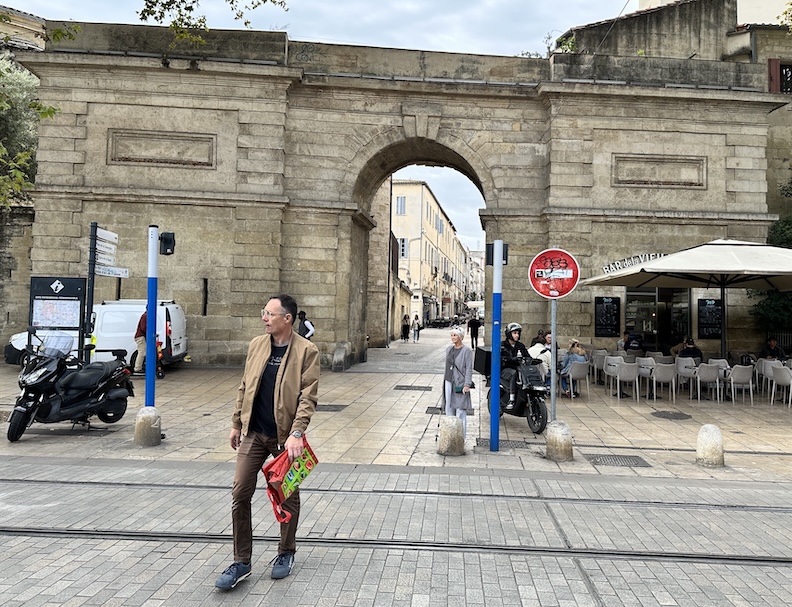
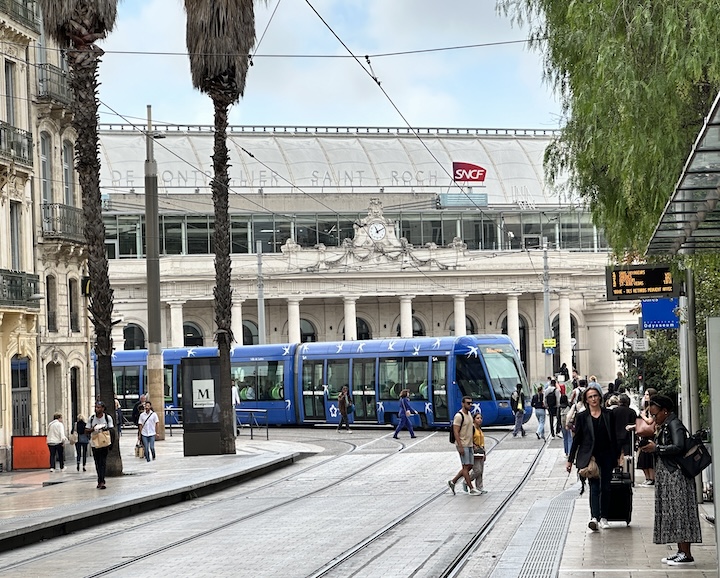
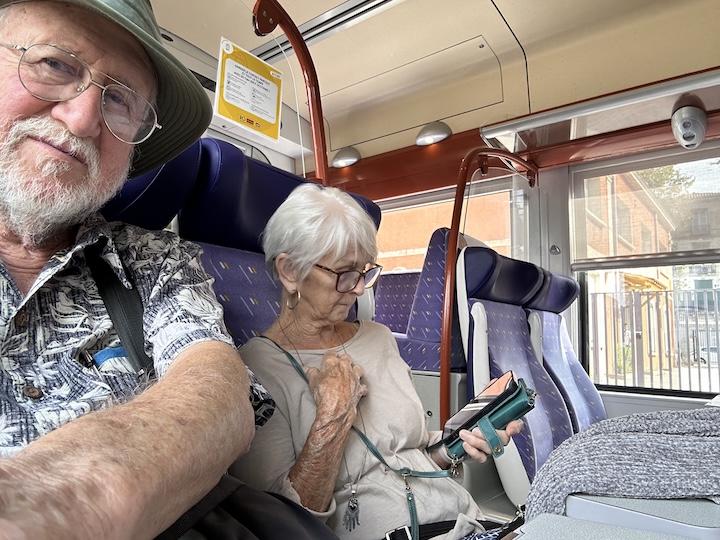
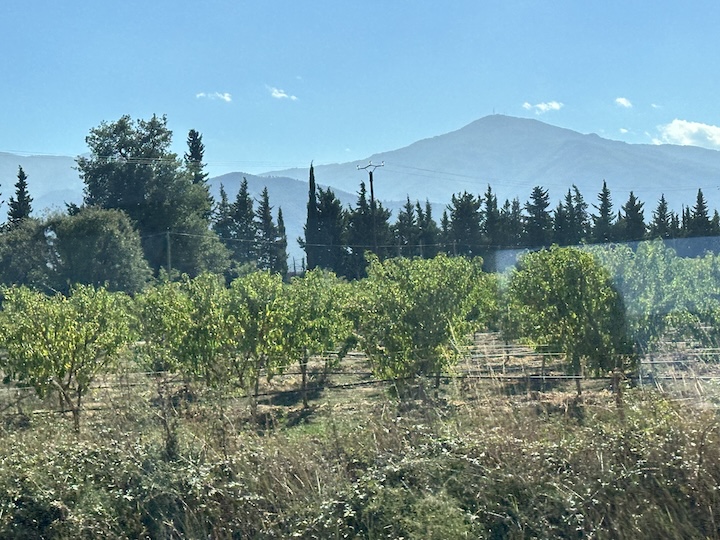
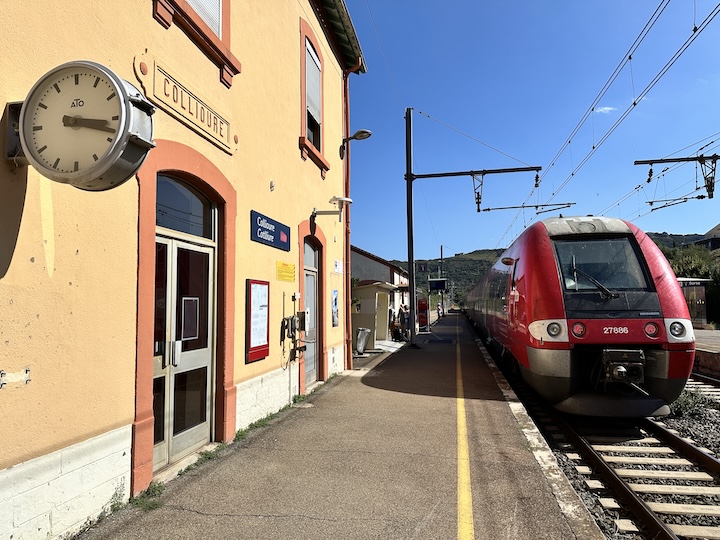
The narrow lanes, fine art, good food and student energy of Montpellier have kept us well entranced, and yet the time has come for us to depart. We’ll grab a last cup of strong coffee just inside the old stone city gate before we emerge onto the street and toss our bags on a tram to the train station. Then we’ll continue down the Med coast past an abundance of wetlands and vineyards to Collioure, a small port city in the shadow of the Pyrenees, just a little north of the Spanish border.
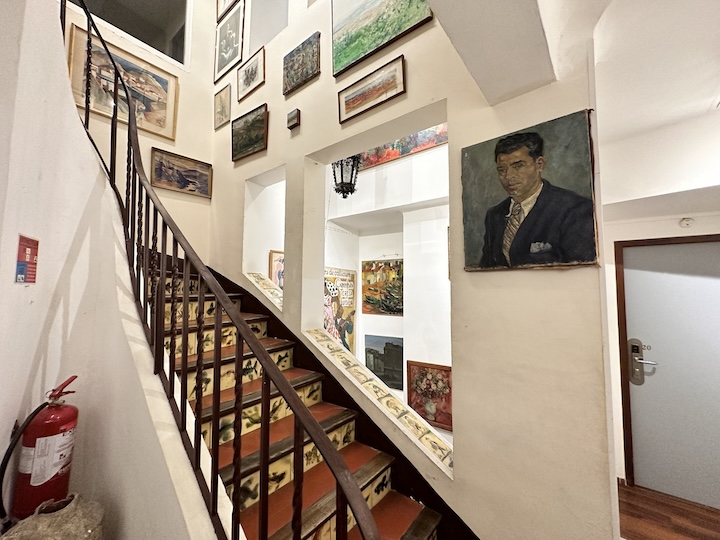
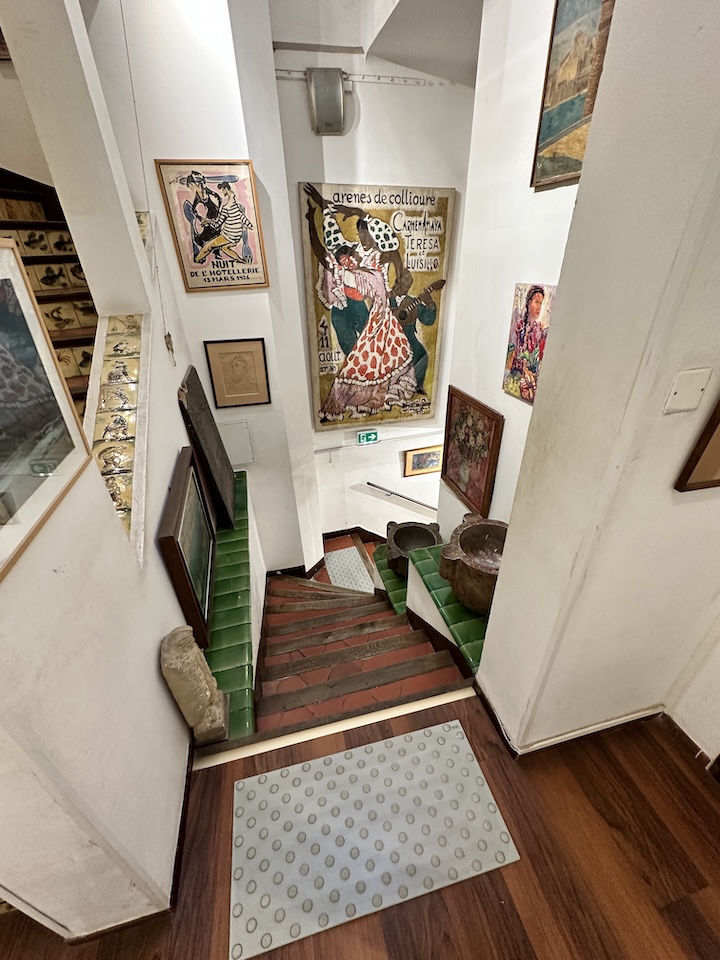
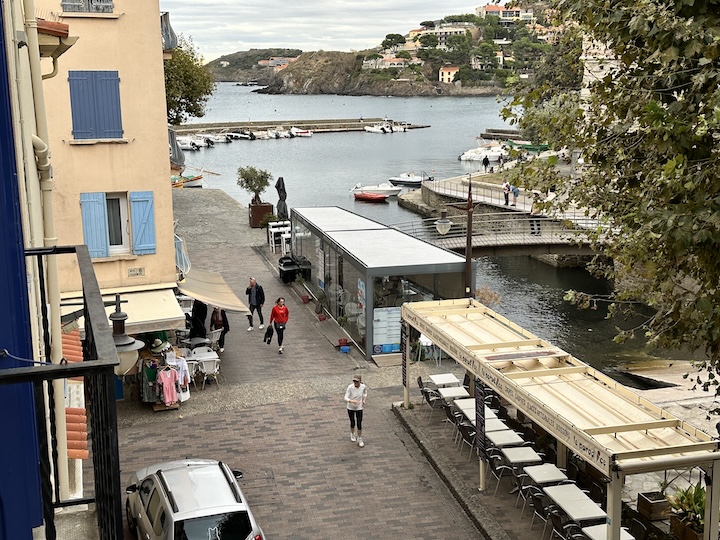
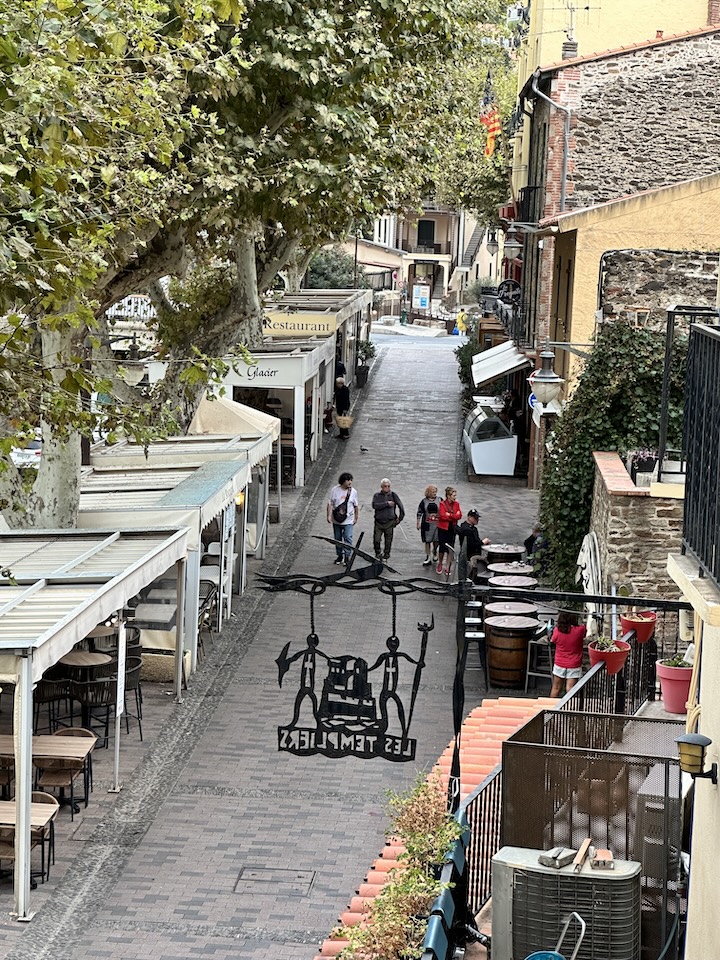
This seaside village once had a harbor full of small fishing boats that enchanted such young ‘fauvist’ artists as Braque, Derain, Picasso and Matisse. And they painted those sturdy hulls, waving masts, and wind-caught sails in the wildest of colors. These days, reproductions of works by Matisse and Derain are found in the village at the locations where they were painted – along with a few frames to view what the artists were seeing.
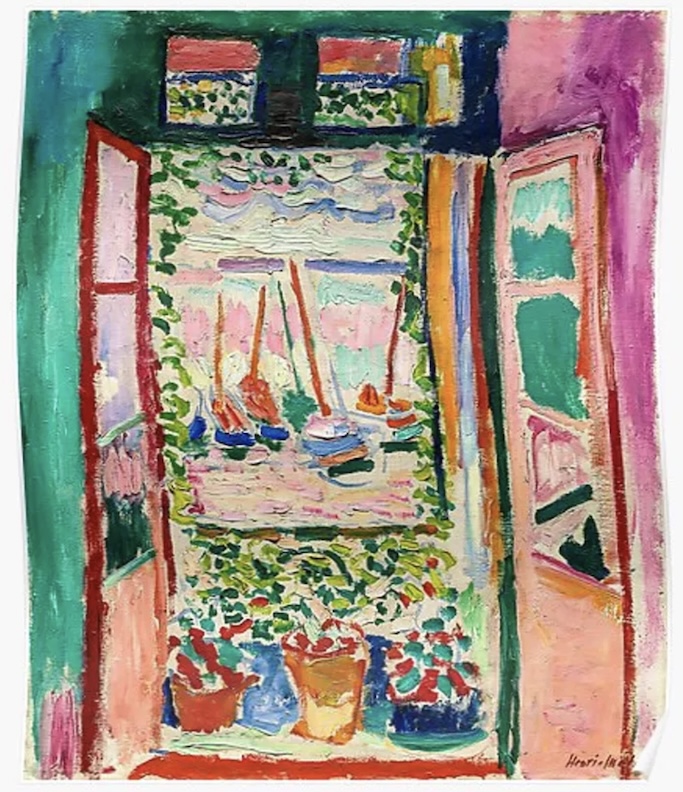
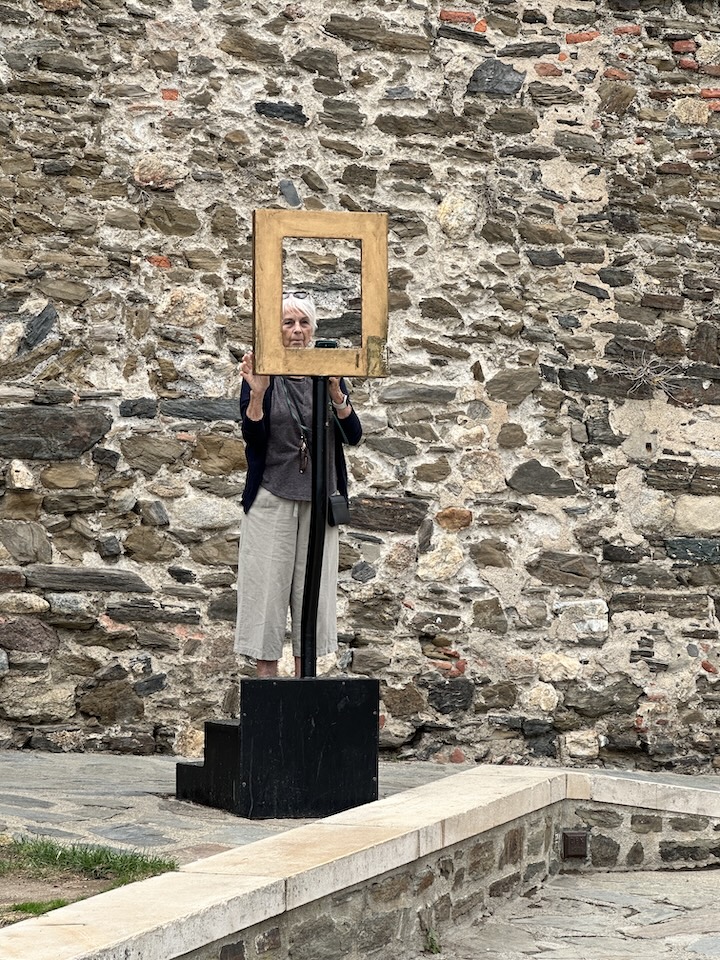
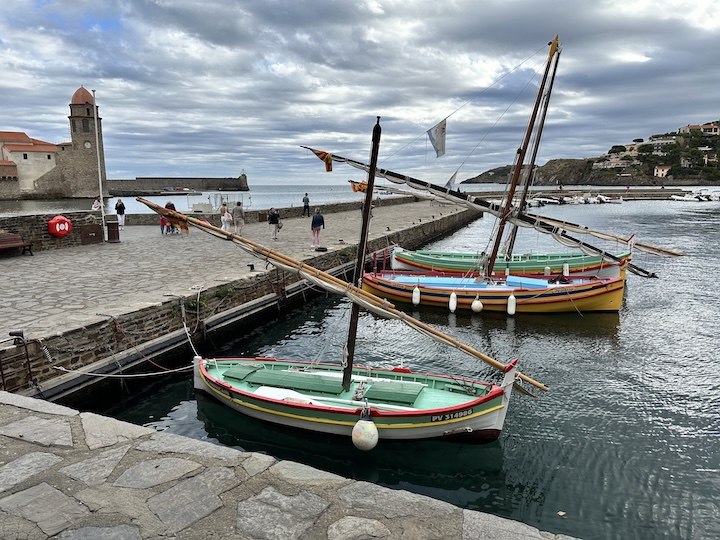
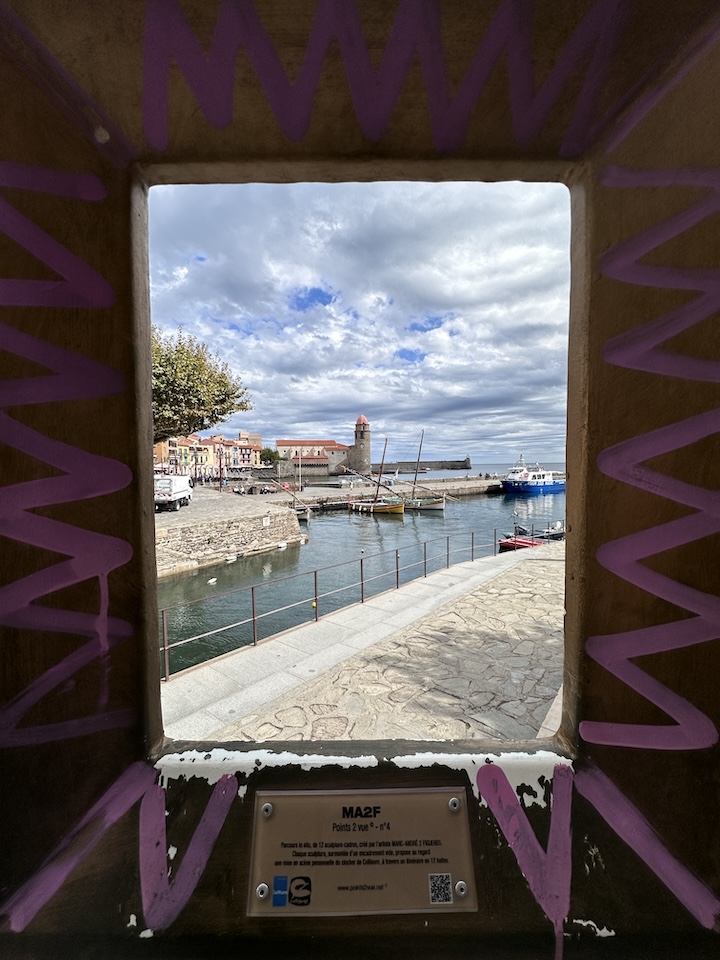
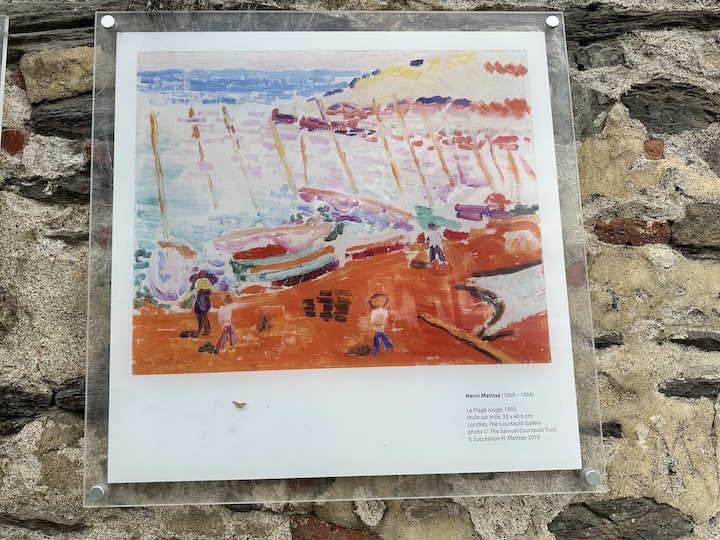
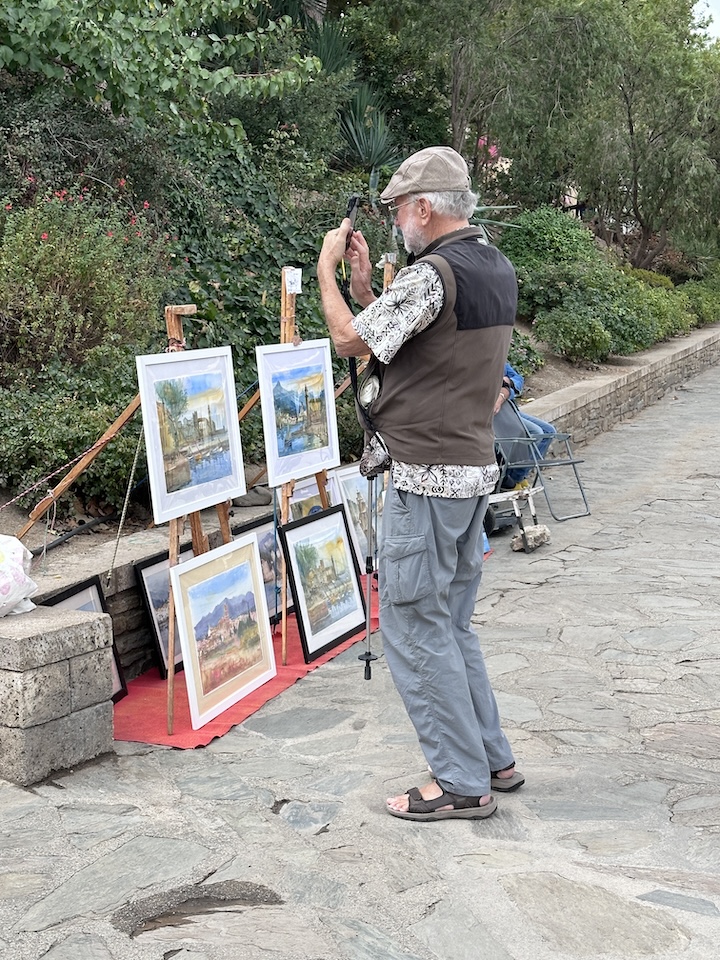
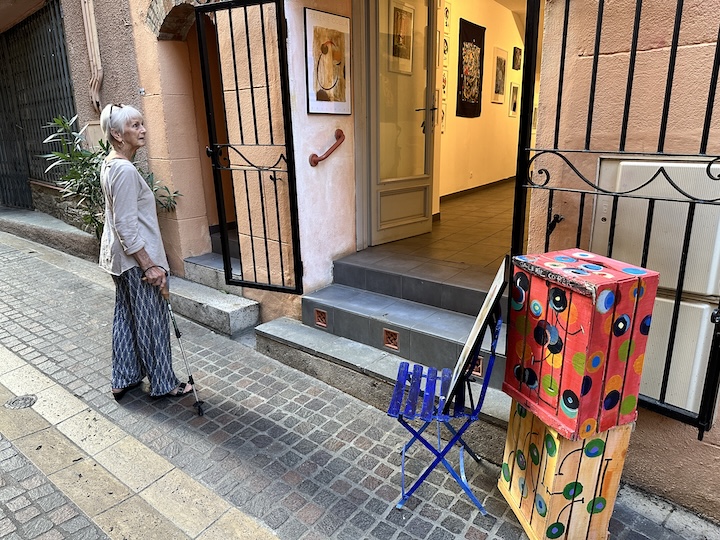
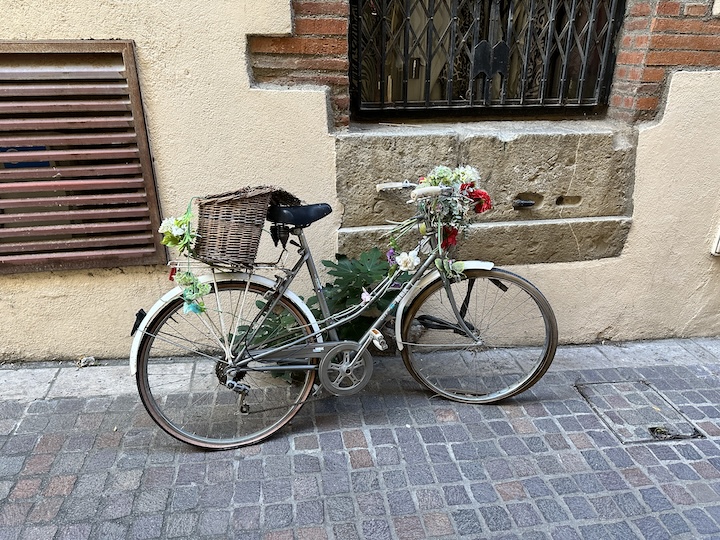
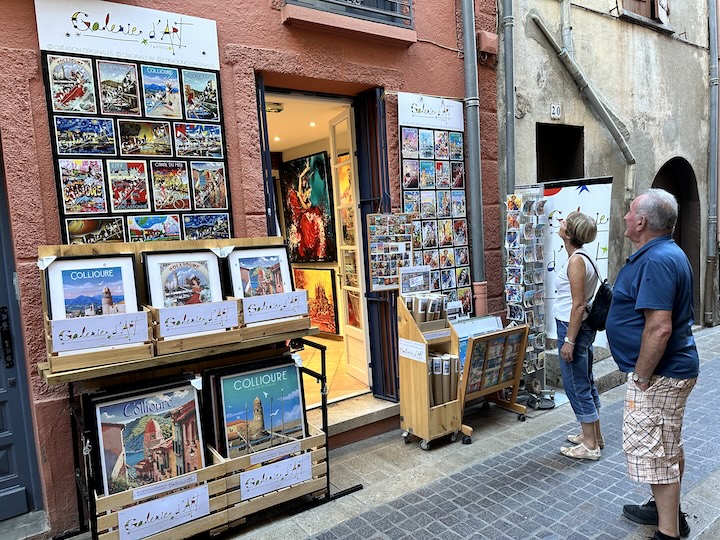
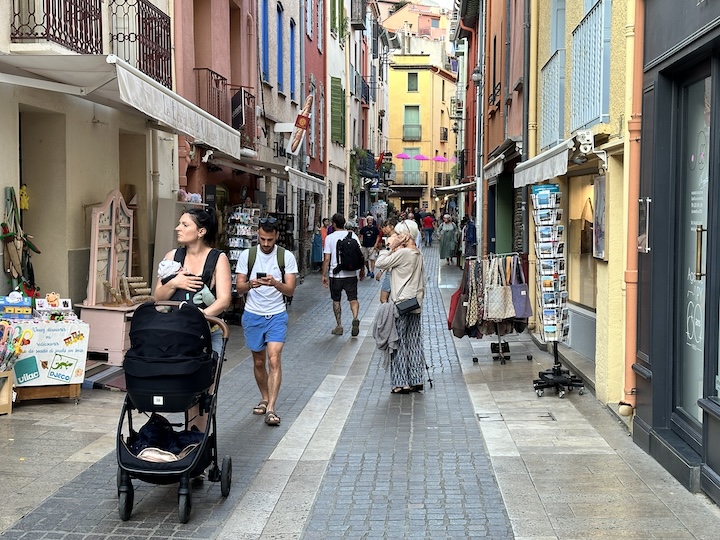
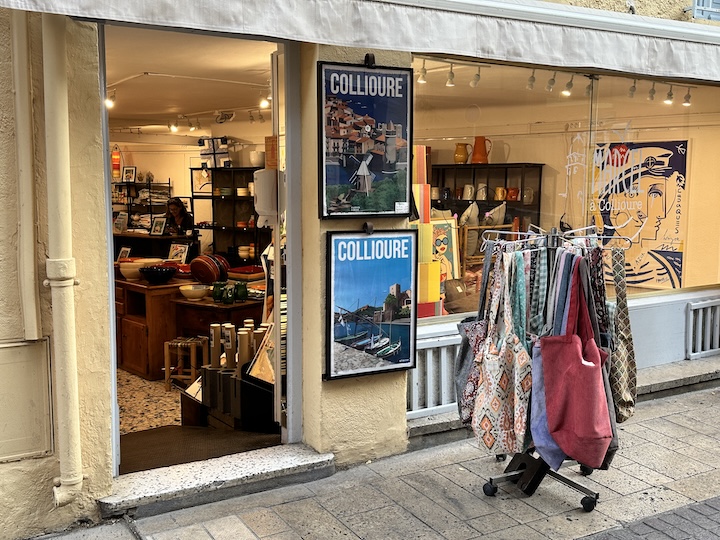
The colorful galleries, walkways, and eateries of today are a visual treat, although they’re certainly far different than the old rough fishing port of yore, the one where poor artists once arrived to escape the Parisian winters and capture the honest simplicity of these hardworking local people. It’s clear that we’re about a century late if we had really wanted to experience the same purity – and the probable poverty – that those now-famous artists ‘enjoyed’ in their day. And I seem to recall that most of them moved on to nicer digs once they became successful enough to do so. If poverty equals purity, I believe few of us today would follow Tolstoy’s example and gladly accept the bargain. Yet it’s easy to understand the sheer beauty here that brought so many young artists to these streets.
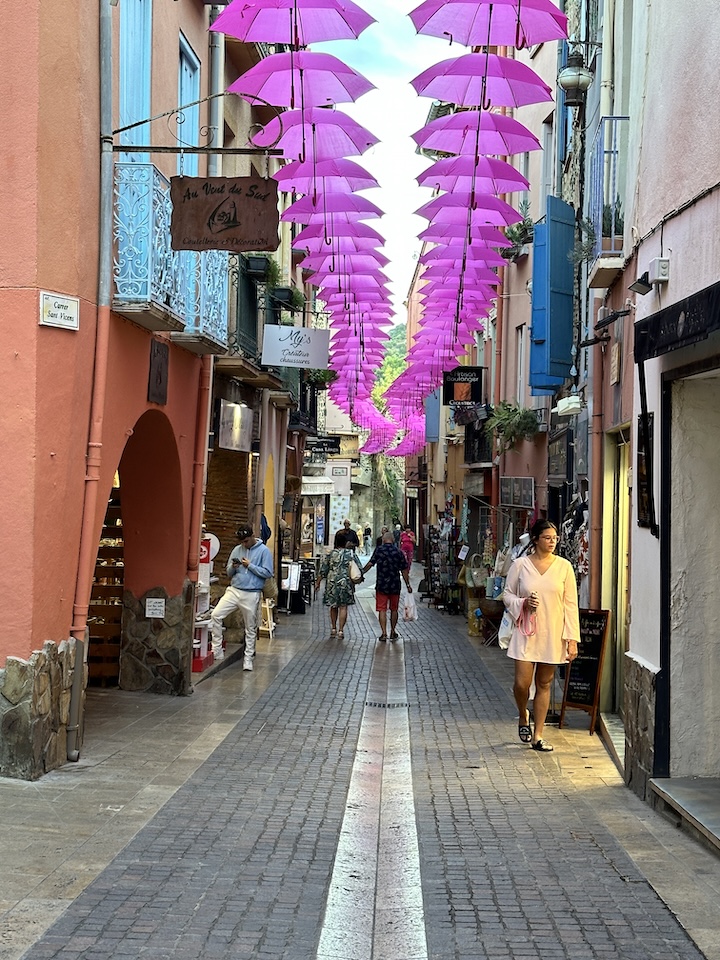
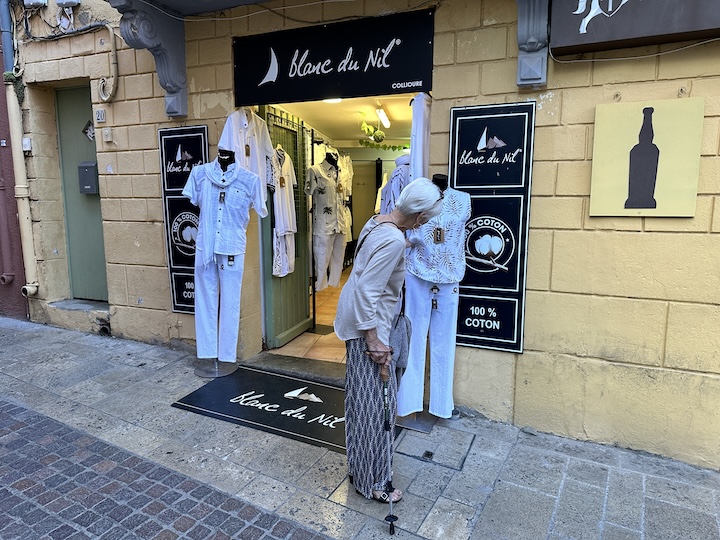
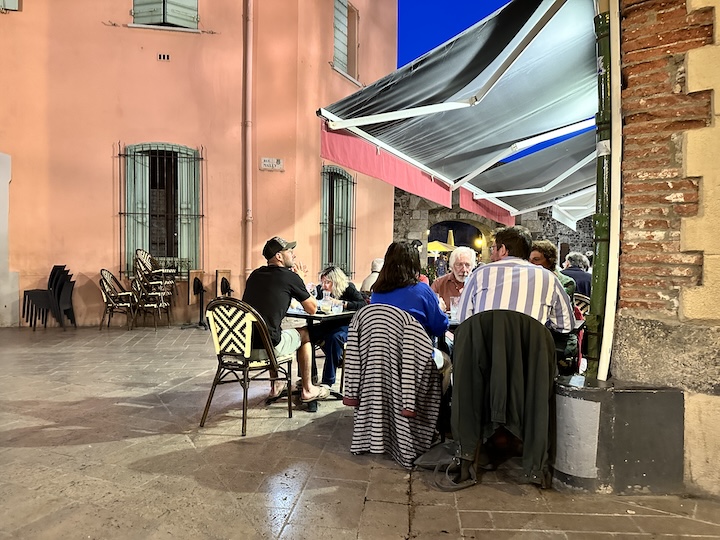
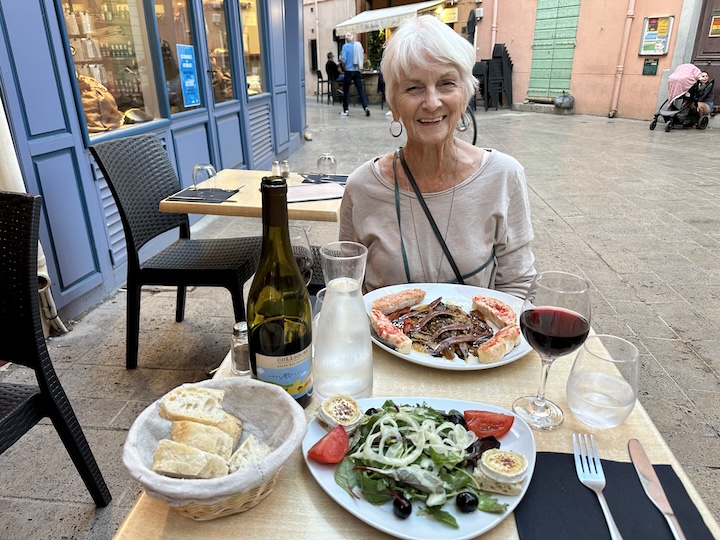
We’ll top off our first day here with a fine dinner under a cloudless sky. And then follow that with a romantic nighttime walk by the harbor, with ample time to further consider the ageless question regarding the virtues of poverty. Before we retire to a comfortable bed.
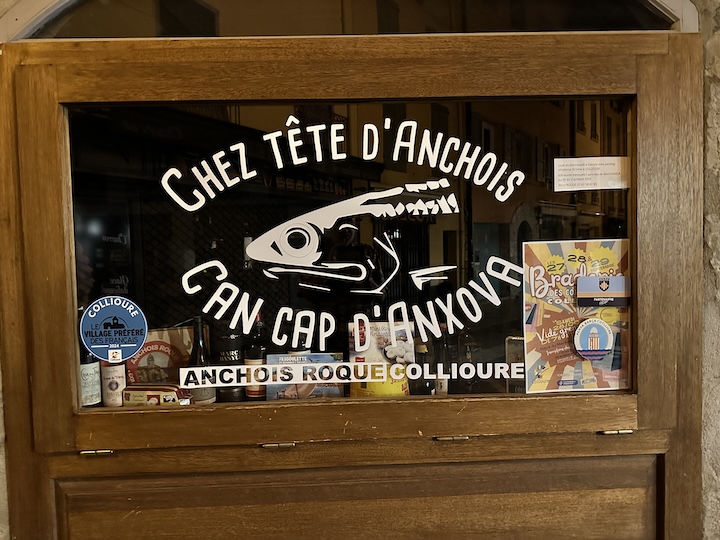
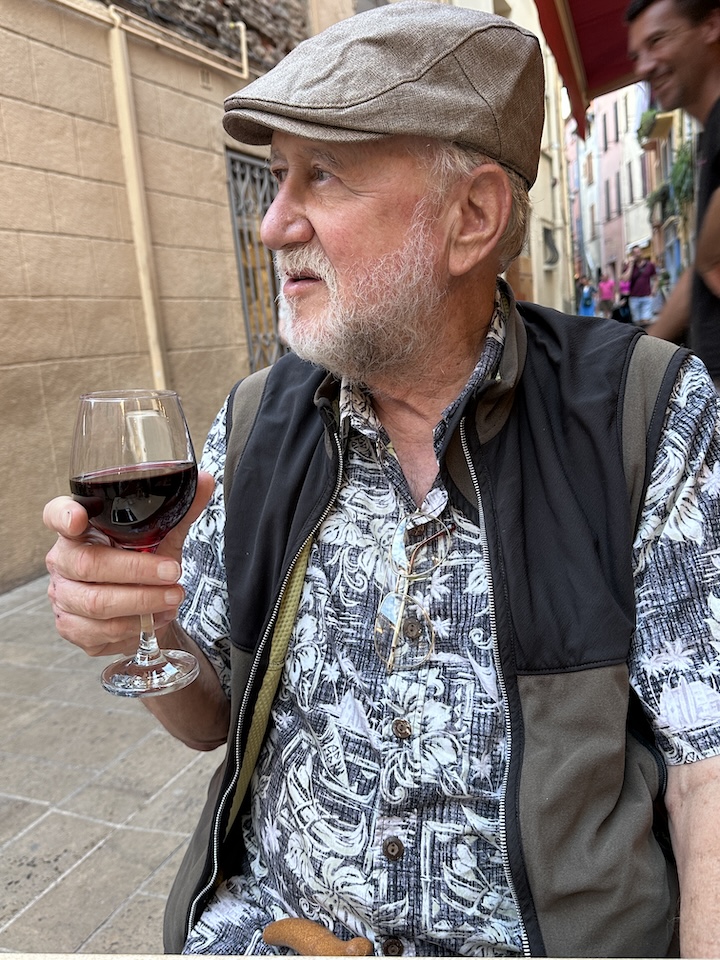
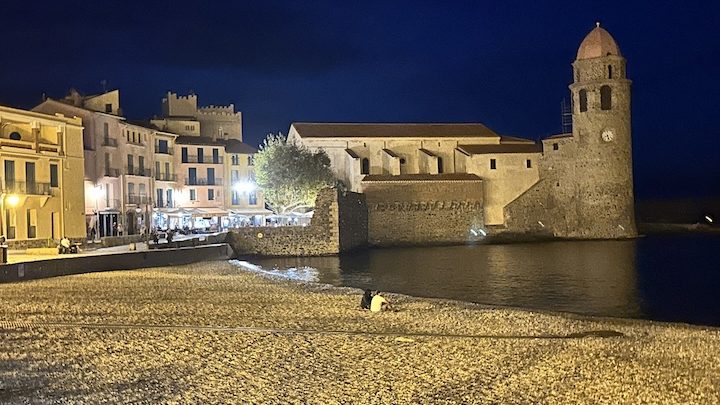
A harbor-side morning walk introduces us to the town’s well-protected strategic harbor, under the watchful gaze of an old hilltop fort. This is a place that changed hands many times before the kings of France and Spain signed the 1659 Treaty of the Pyrenees that set their national boundaries along the ridge-tops of those tall mountains. But while the Treaty solved one problem for the kings, it created another, by dividing the Pyrenees-centered Catalans and Basques between the two countries – resulting in centuries of rebellion and further discontent.
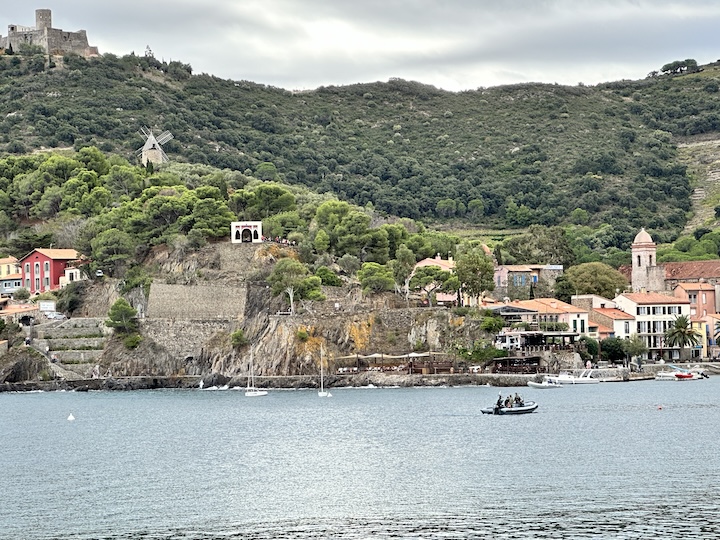
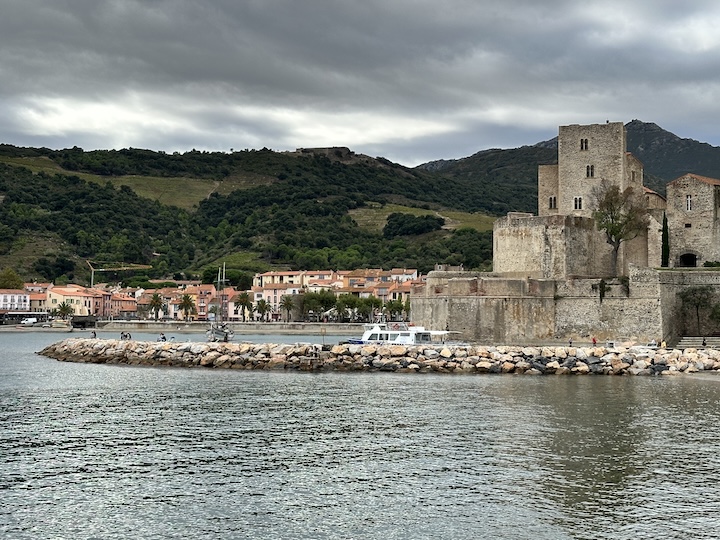
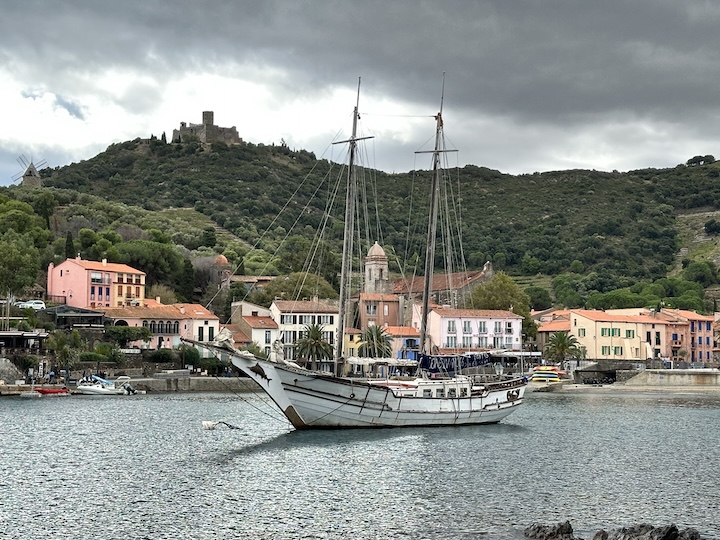
These days, the streets and alleys of Collioure remain a tranquil place to pause over a rich cup of hot coffee and a delicious brioche at a quaint Catalan cafe.
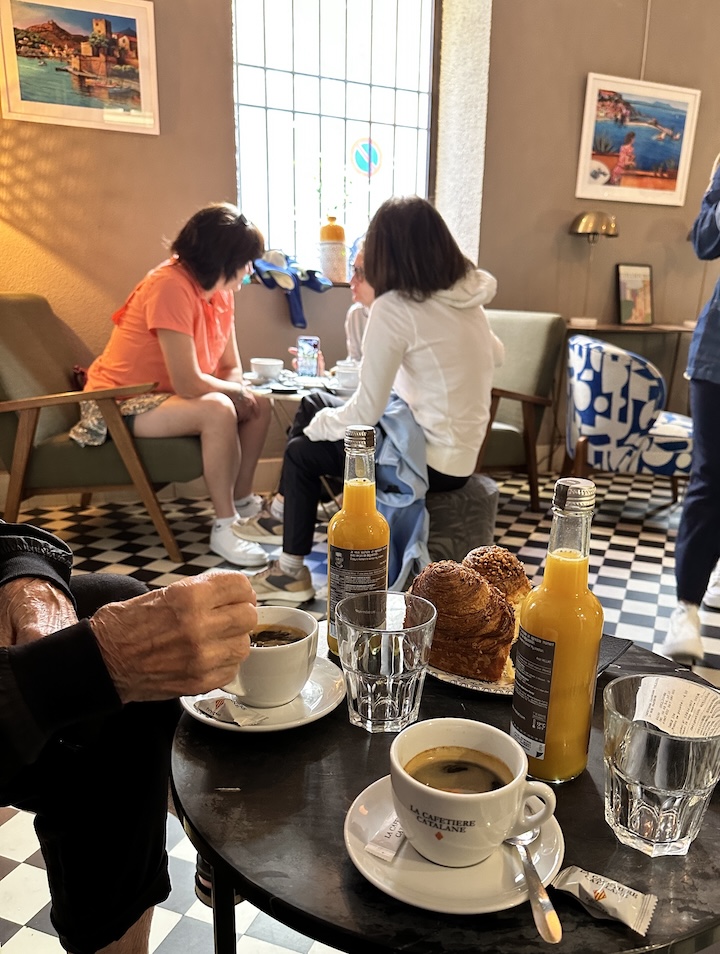
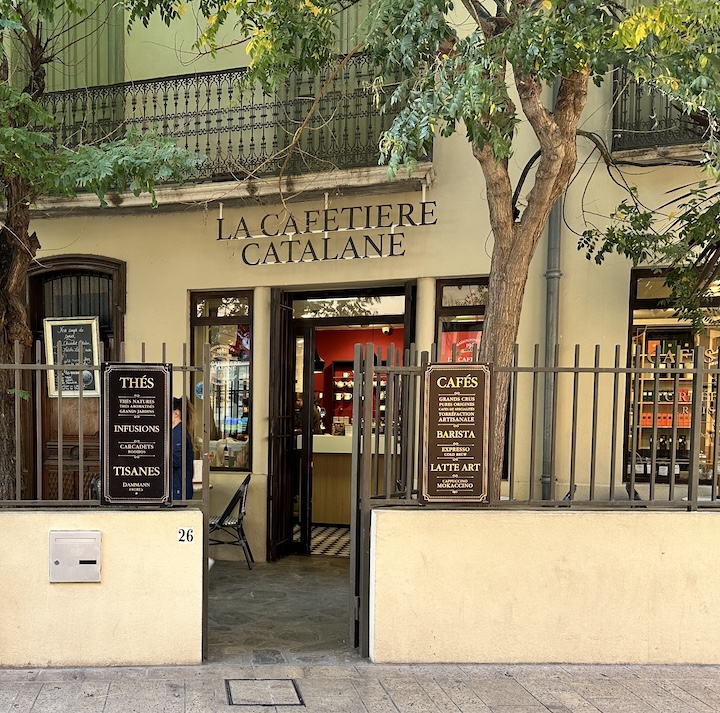
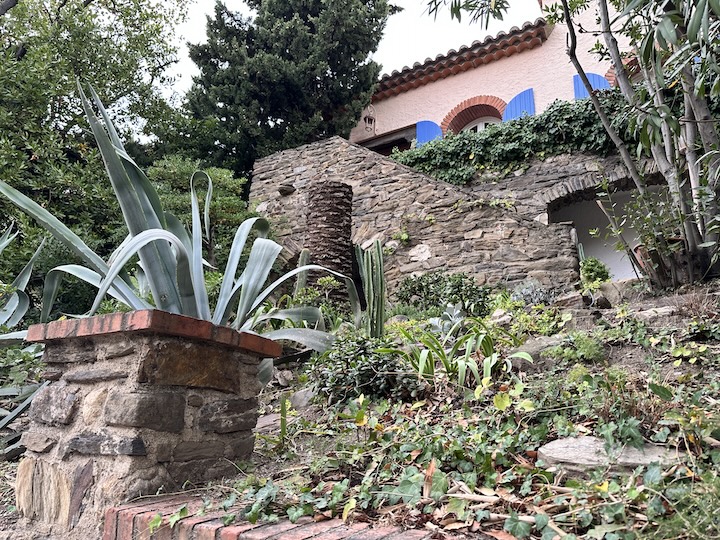
After a morning bite we’ll explore more of this intriguing place that abounds in gorgeous and highly paintable views. One intriguing alleyway leads to another, taking us well into the afternoon. And after a good long day of exploration we’re ready for another hearty dinner of local fare.
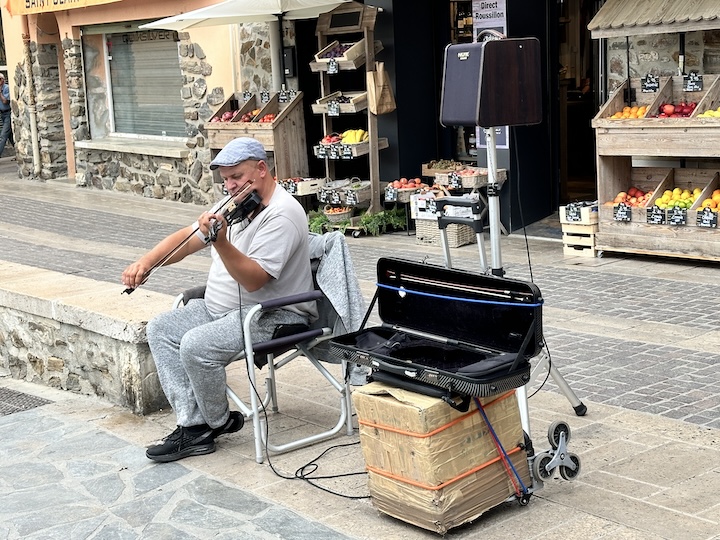
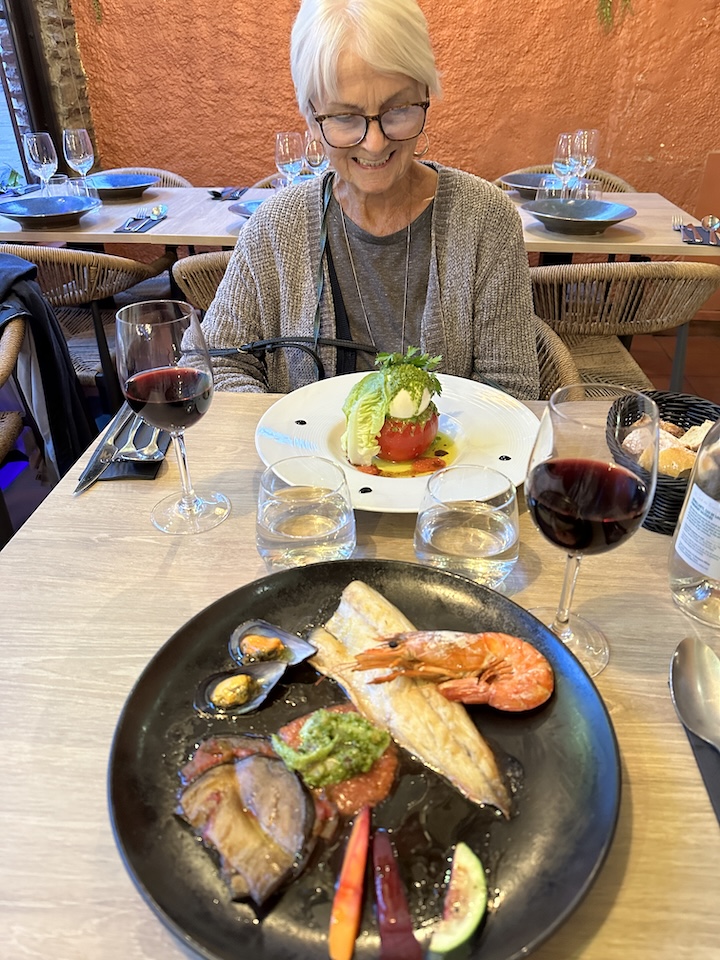
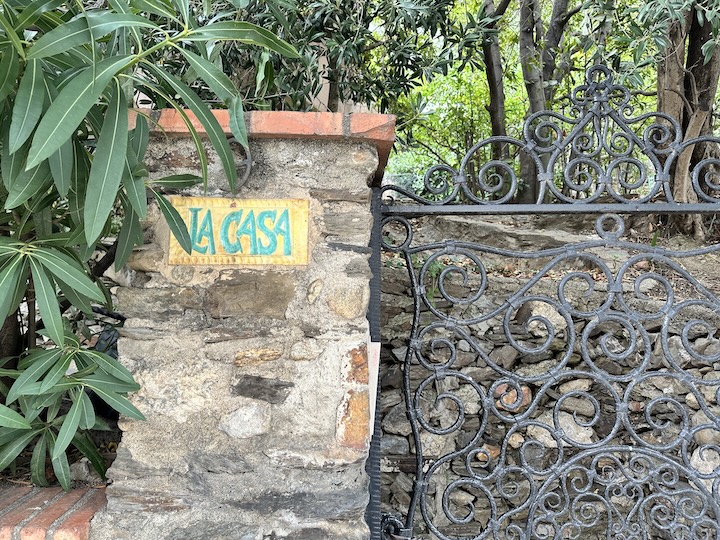
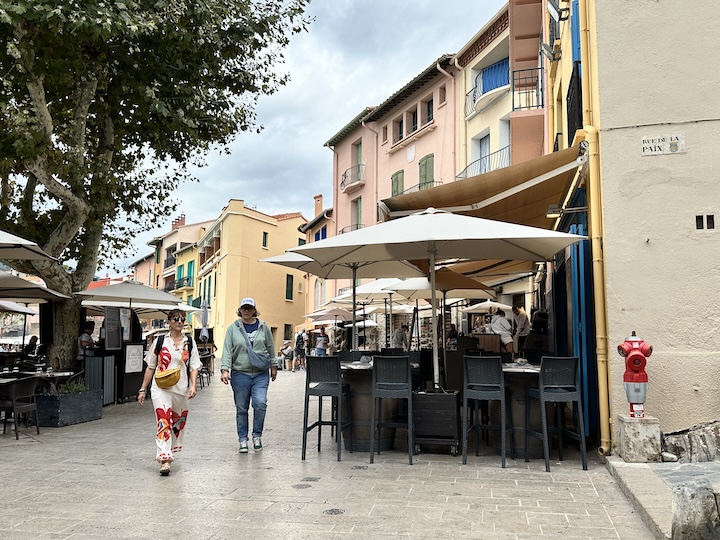
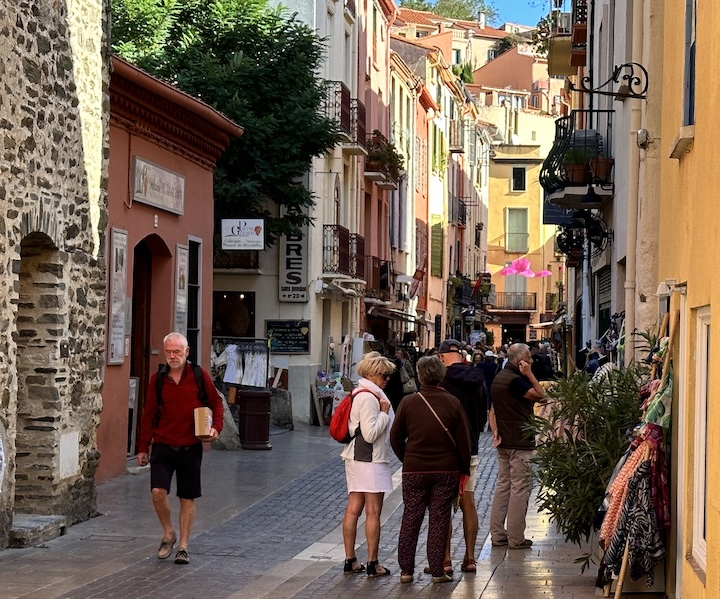
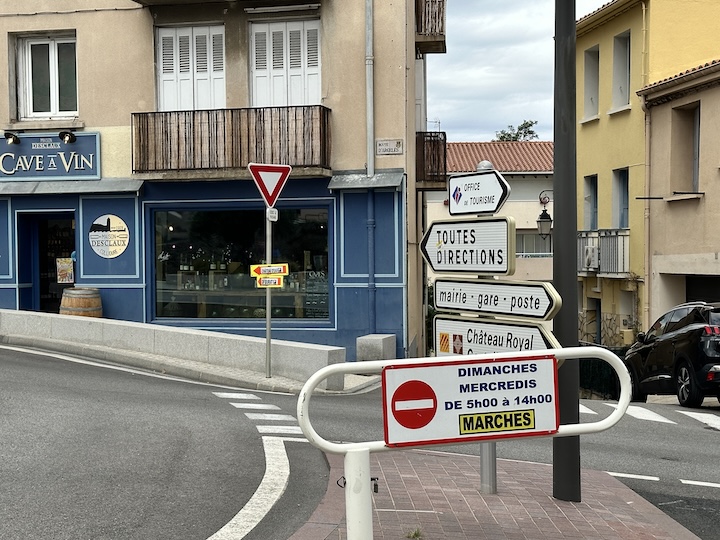
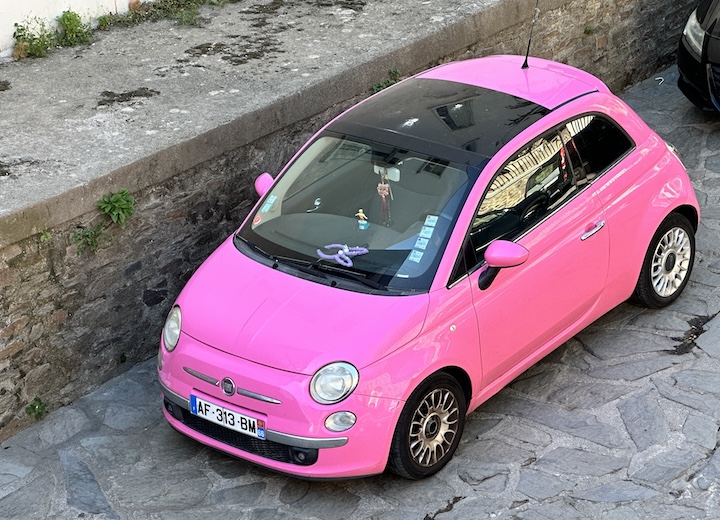
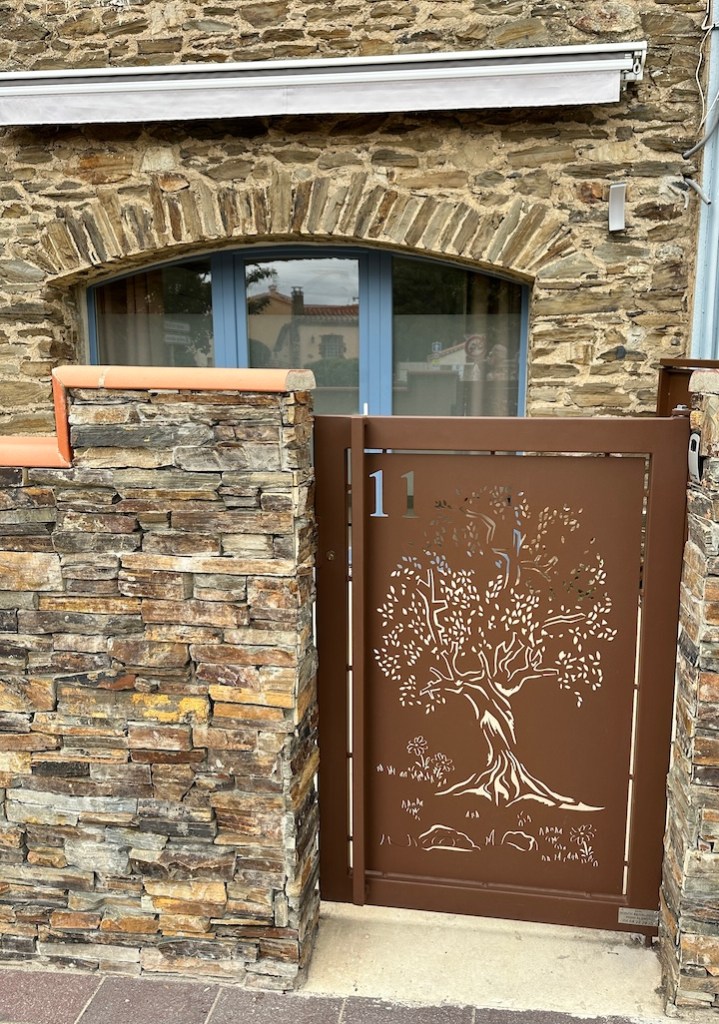
Another day finds us at Le Marché Traditionnel, the bi-weekly open-air market under tall spreading plane trees in the Place Gén. Leclerc. There were plenty of interesting things on view, if we weren’t still tossing our bags onto trains and concerned about the extra weight. But if we decided to relocate to gorgeous Collioure, there were temptations that could easily find a place on our walls and shelves.
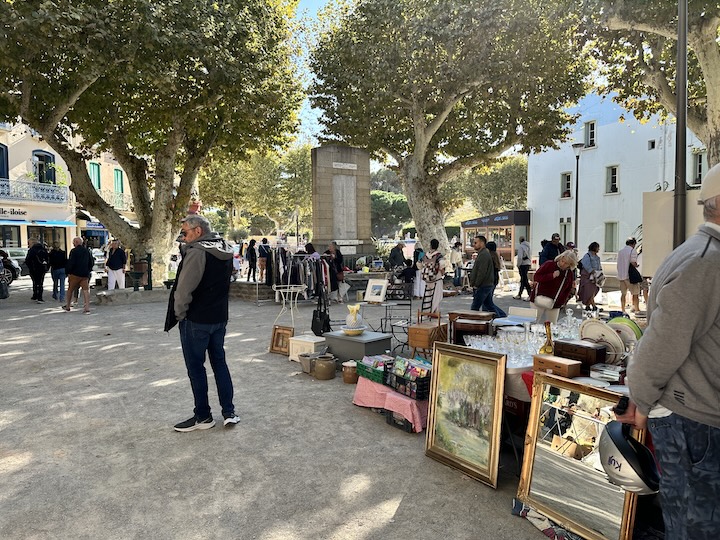
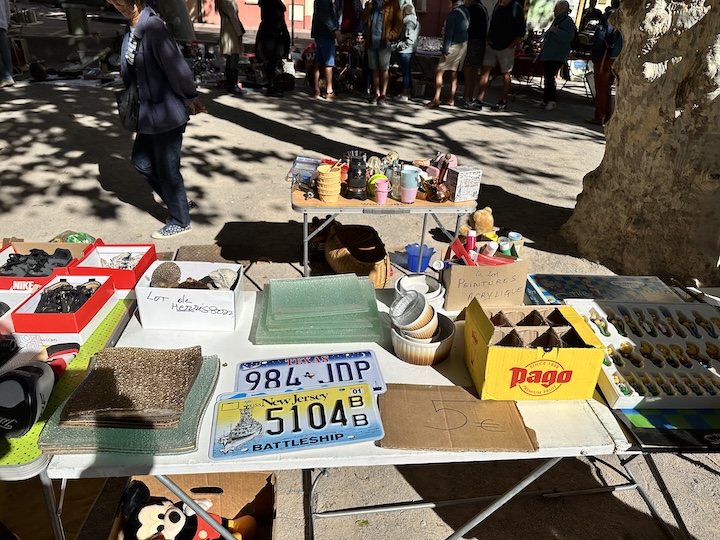
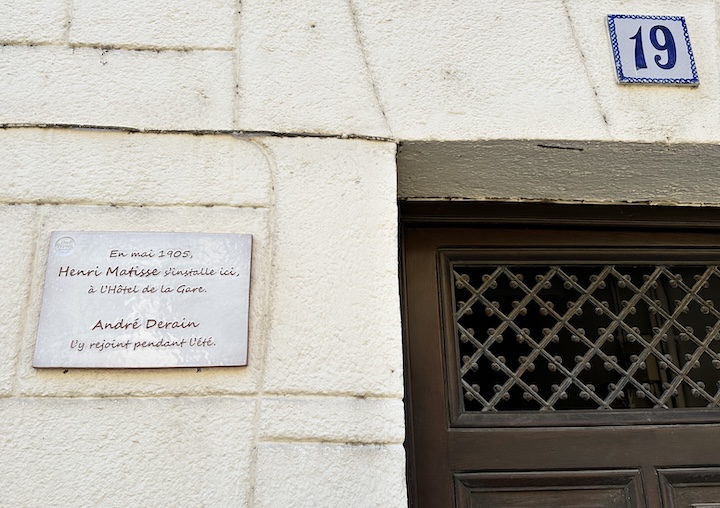
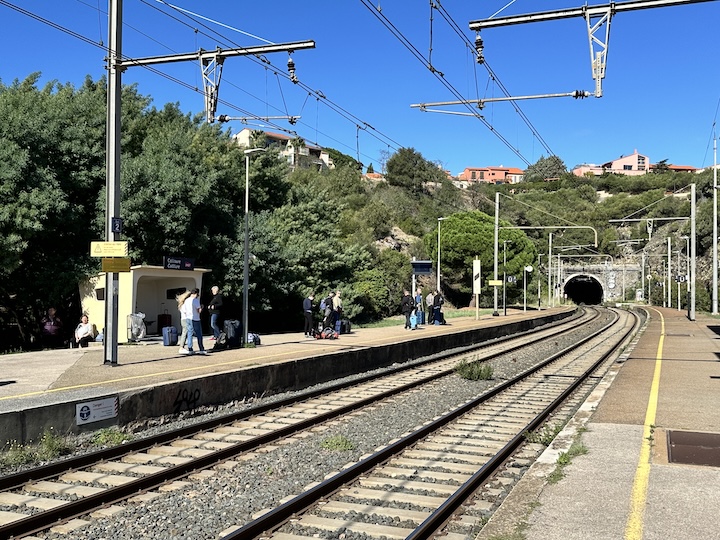
This is also the day when we need to buy train tickets onward to our next destination, as we’ll be departing again in just a few more days. A placard on a building we pass along the uphill walk to the station notes that Matisse and Derain both lived in that particular house in 1905.
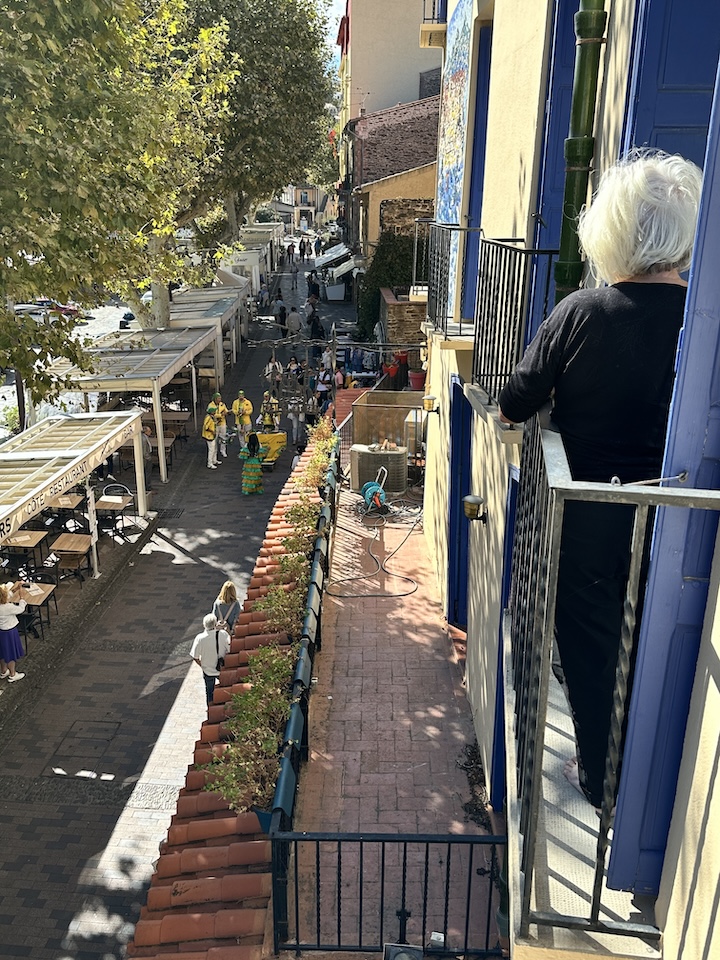
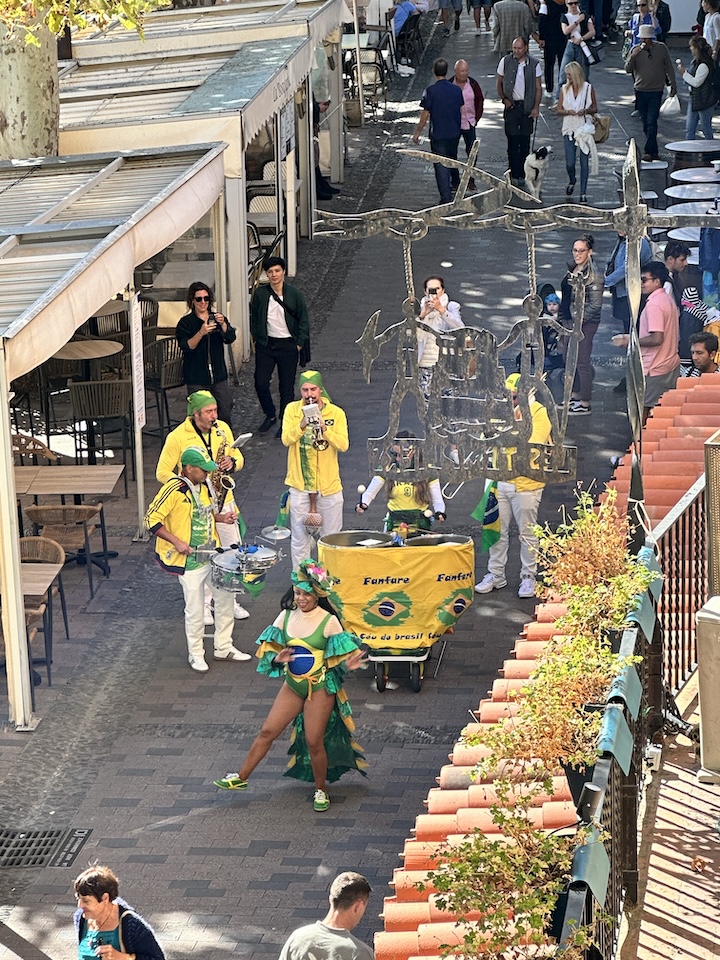
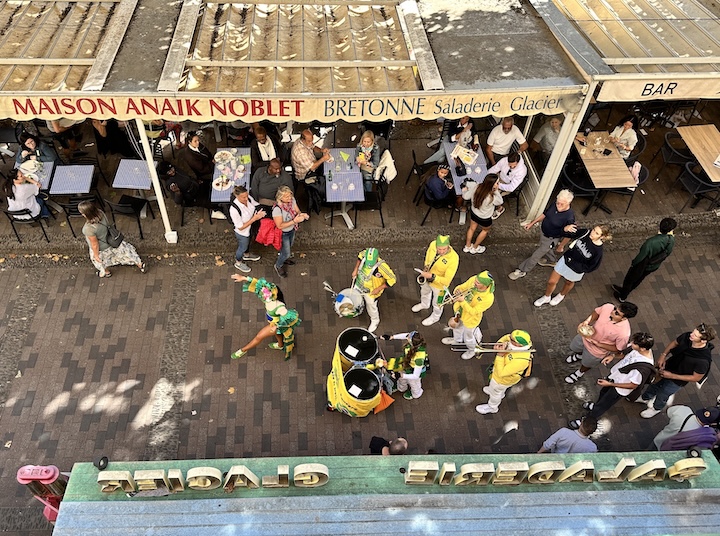
And just about the time we get back to our room for an afternoon nap, there’s a Brazilian band, steel drums and all, marching and strutting down the street below. The nap can wait.
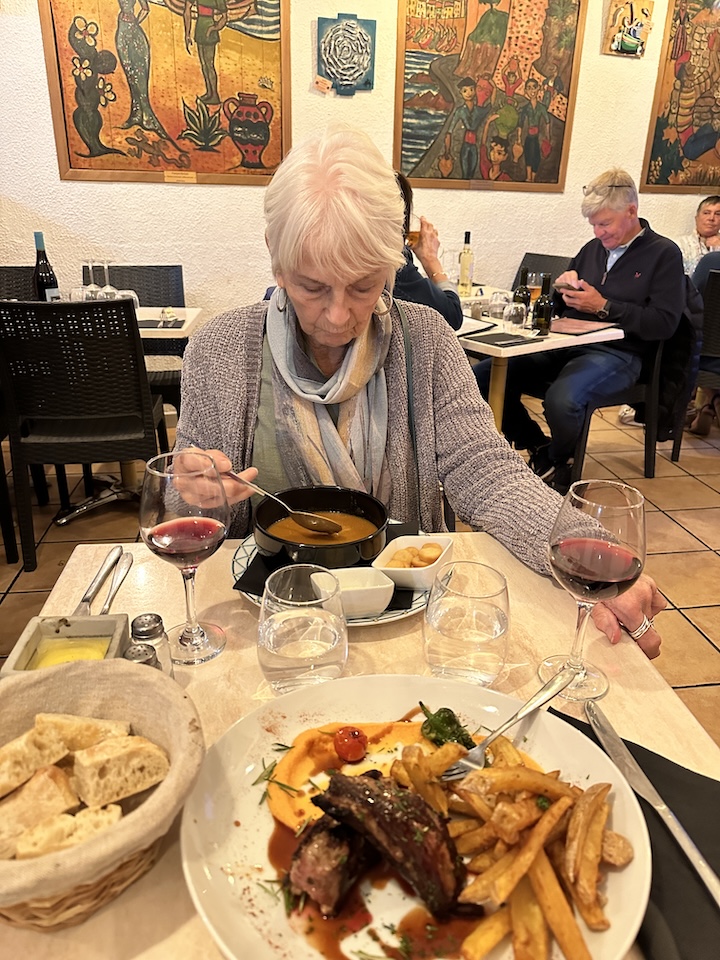
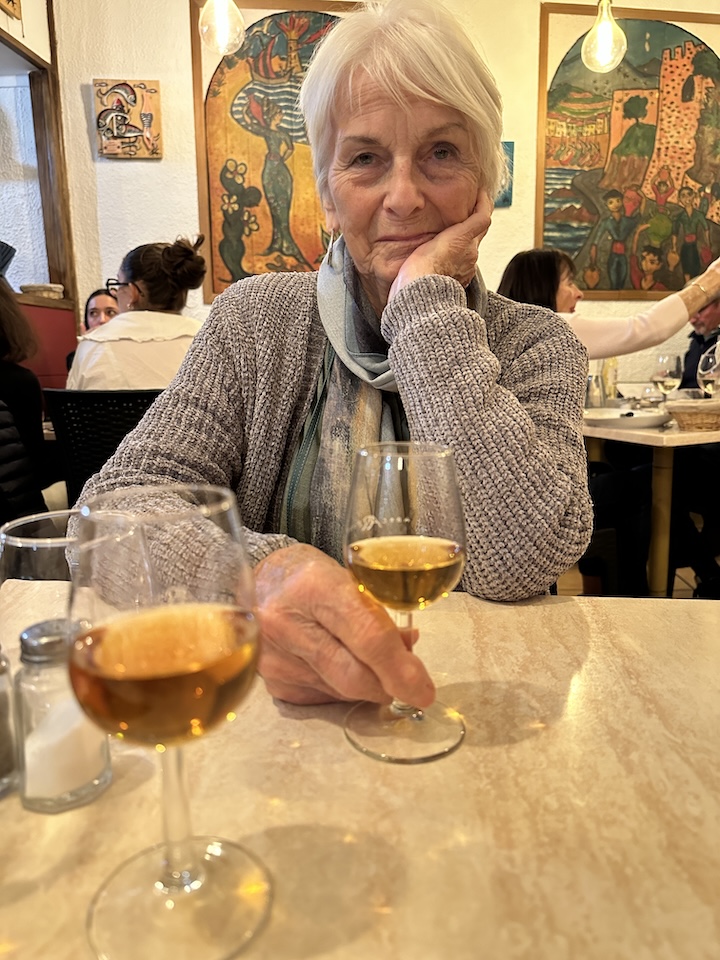
We’re hungry yet again after our nap and the day’s exercise and we embark on a quest for more of the fine food on offer in this little port town. And we follow that up with a pair of amber cognacs to relax into another gentle night in this peaceful village.
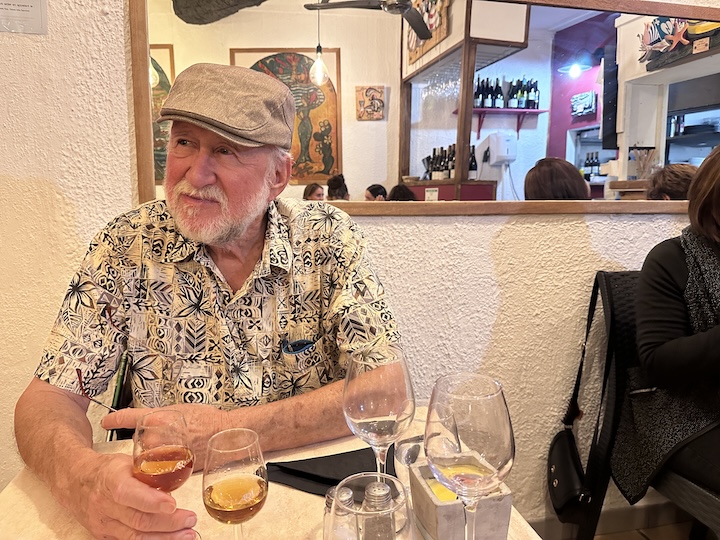
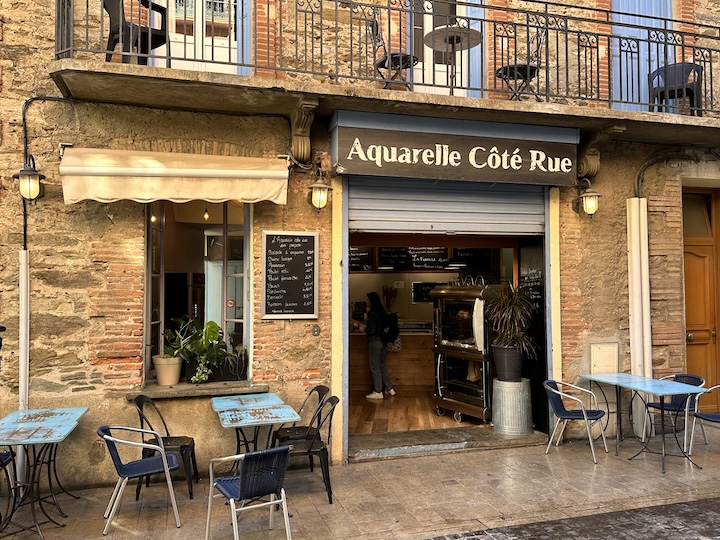
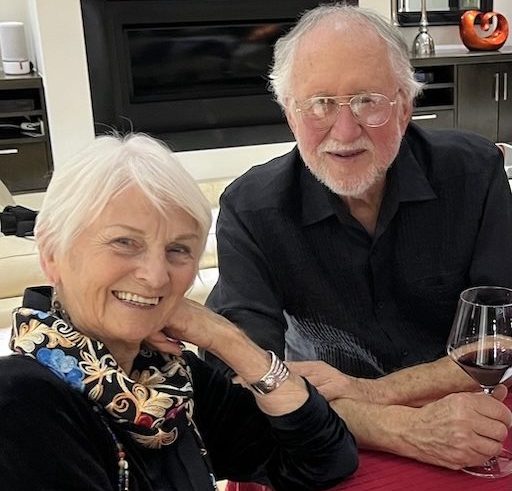
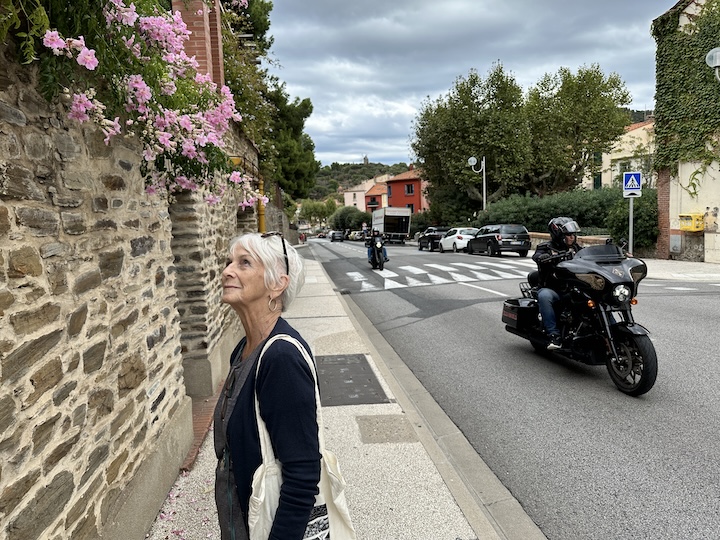
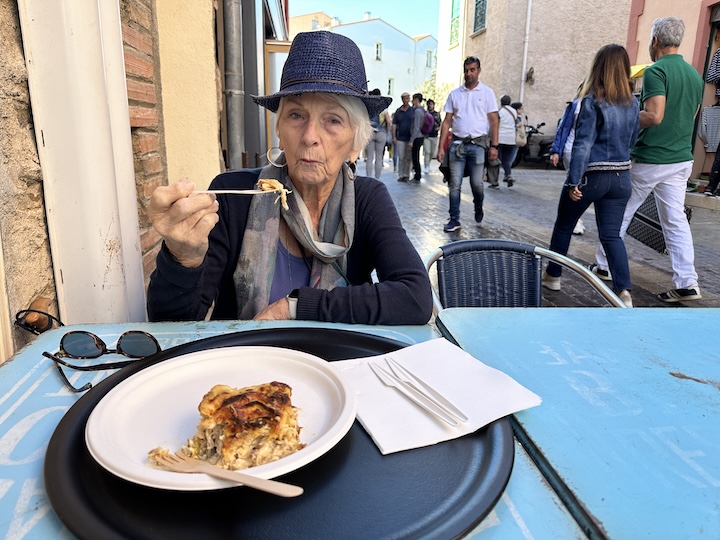
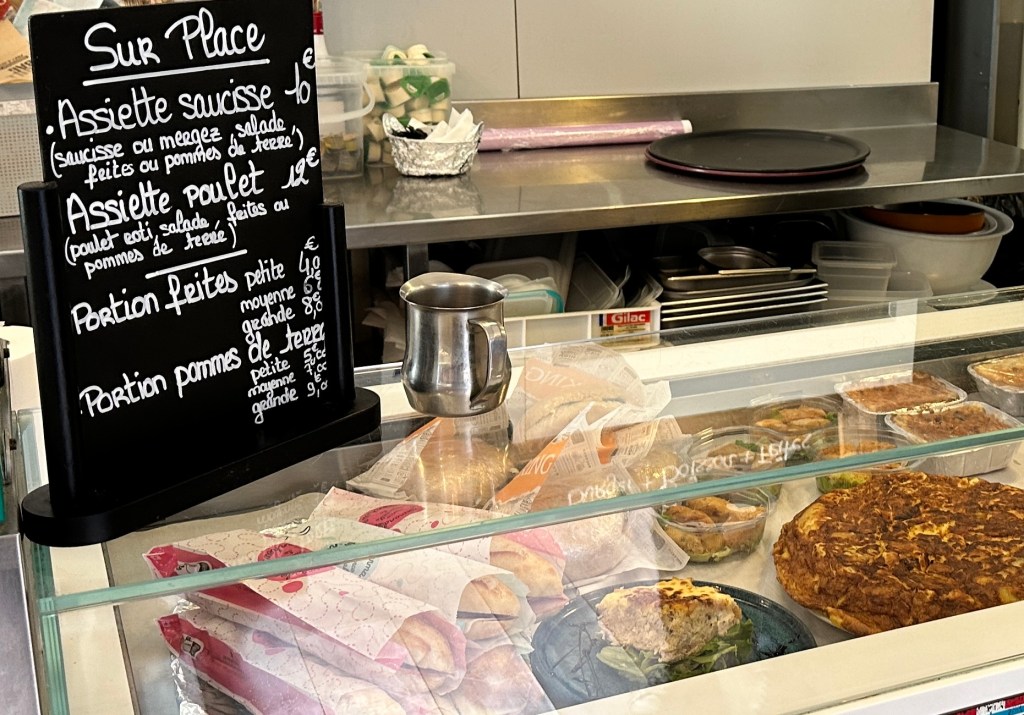
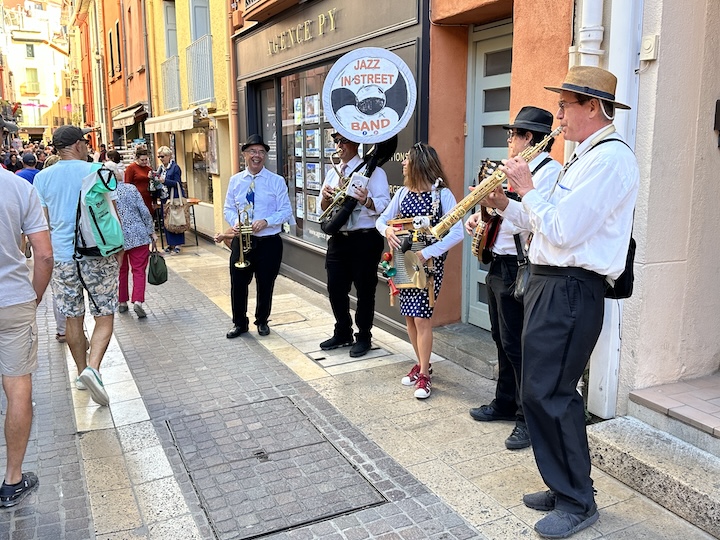
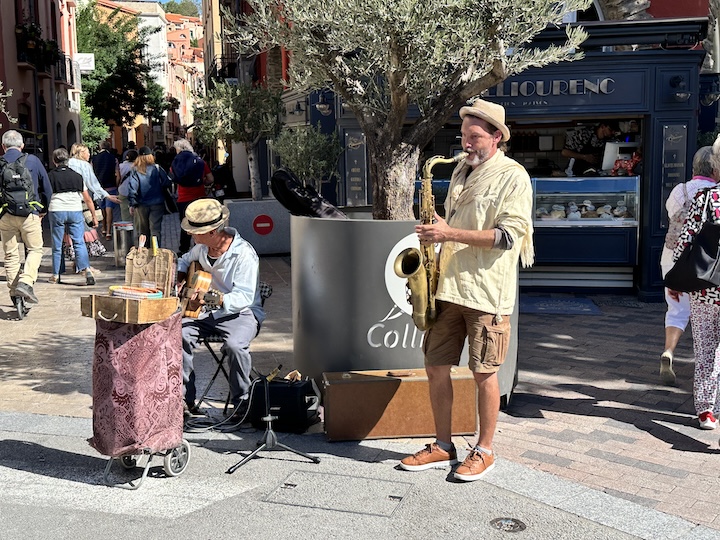
A good breakfast is easy to find among the quaint streets of Collioure, and we settle into a tasty morning egg casserole. Meanwhile, a street band is playing some good jazz just down the block. The galleries are opening their doors, and Carolyn managed to find a cute blue hat to go with her dramatic silver locks. Silver and blue make a very good combo.
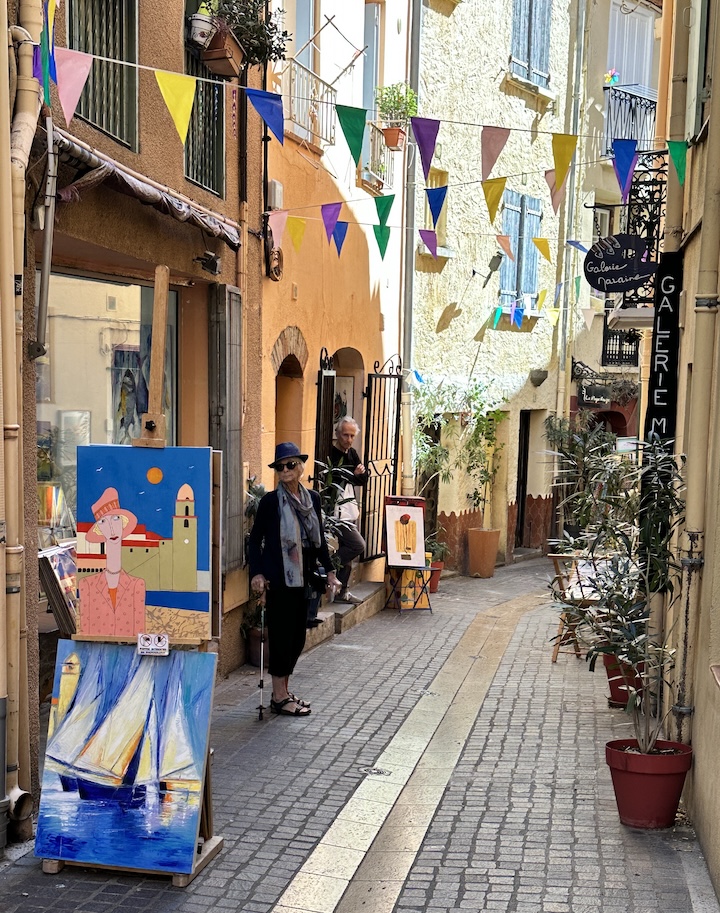
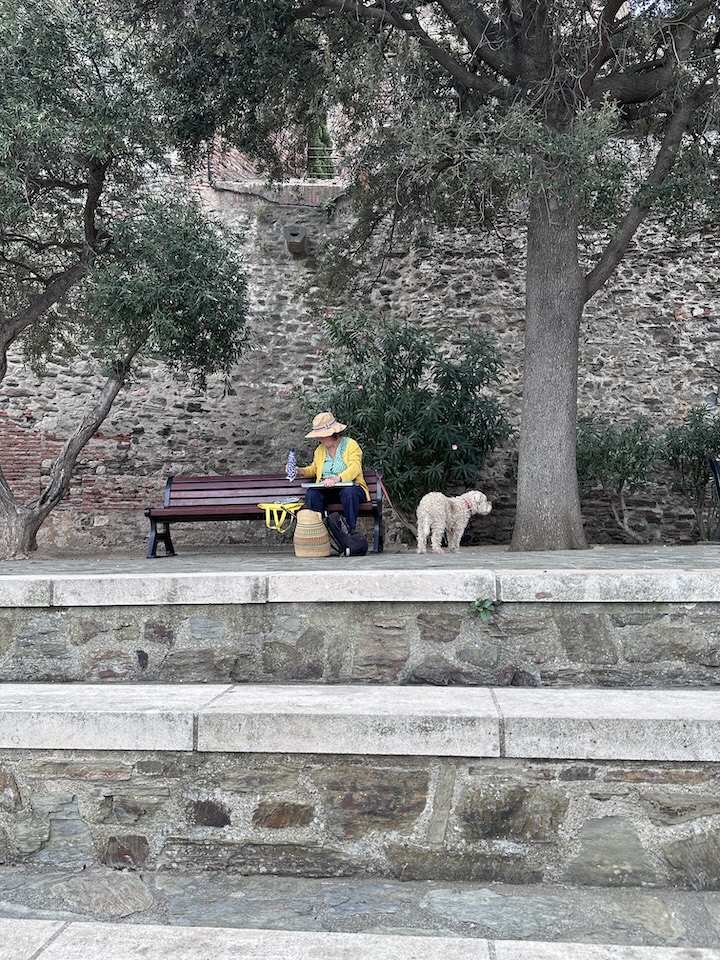
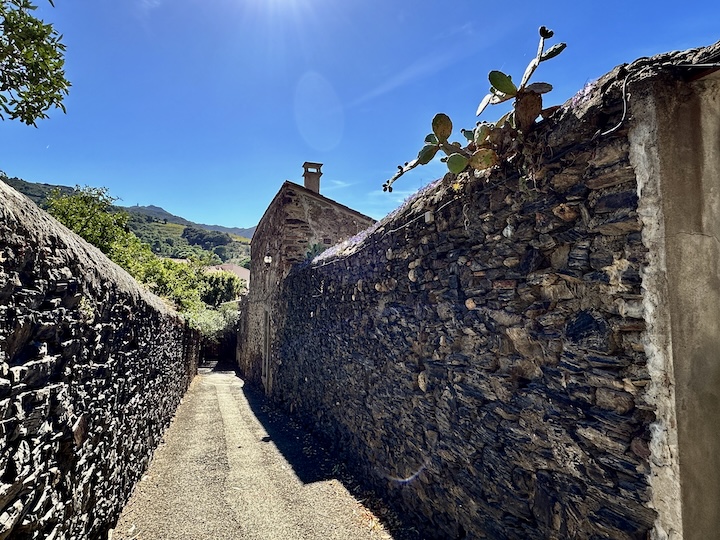
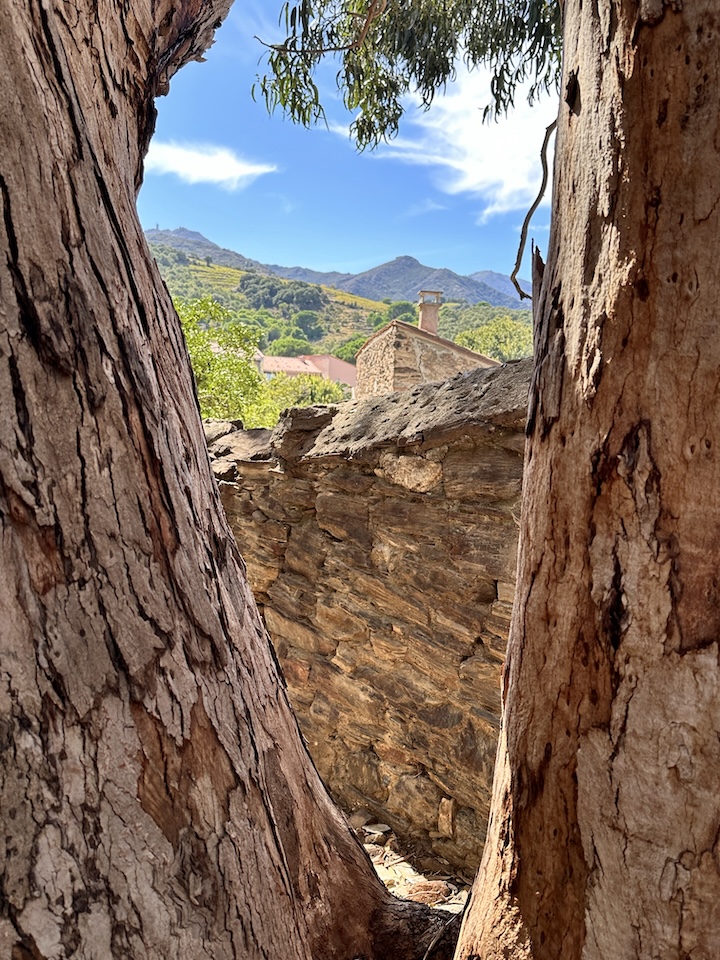
This is the day we’ll wander off to find the Musee d’Art Moderne de Collioure. It’s up a stone walled back alley that leads to more precious views over the countryside. We’re just a bit early, and it’s a fine place to relax for awhile on rocky steps under the old olive trees. We count ourselves lucky once again.
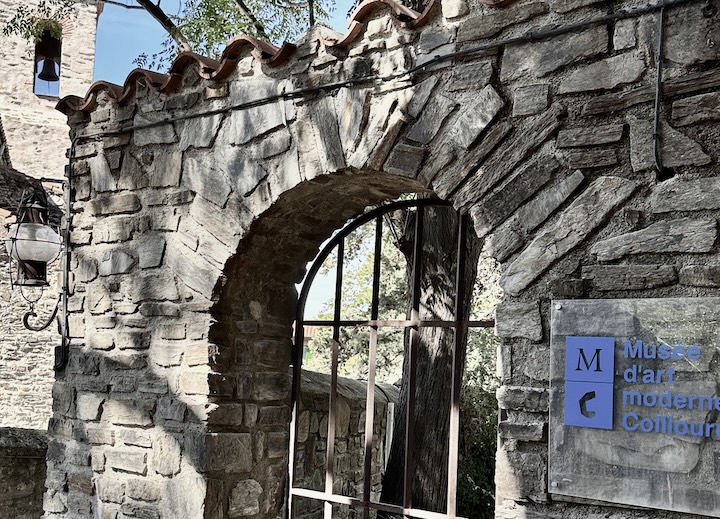
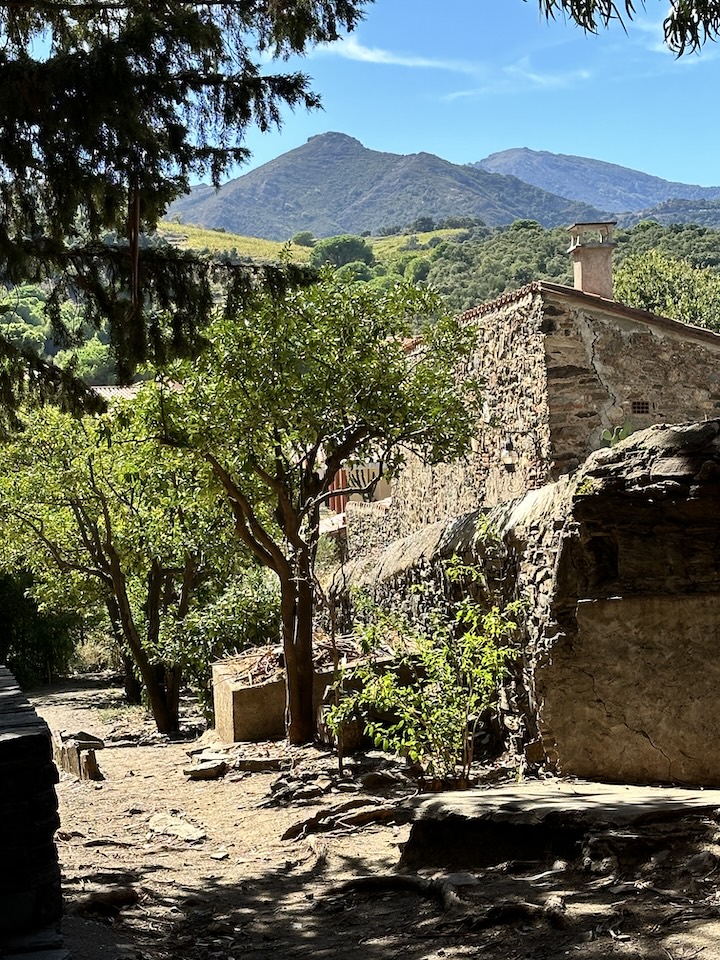
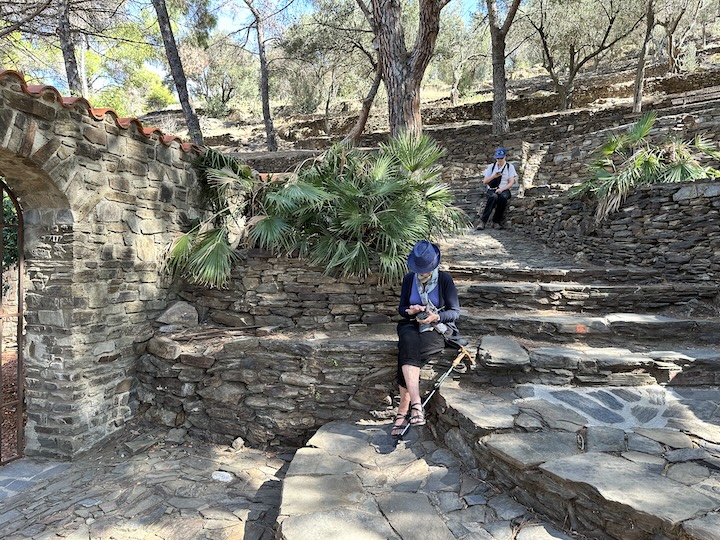
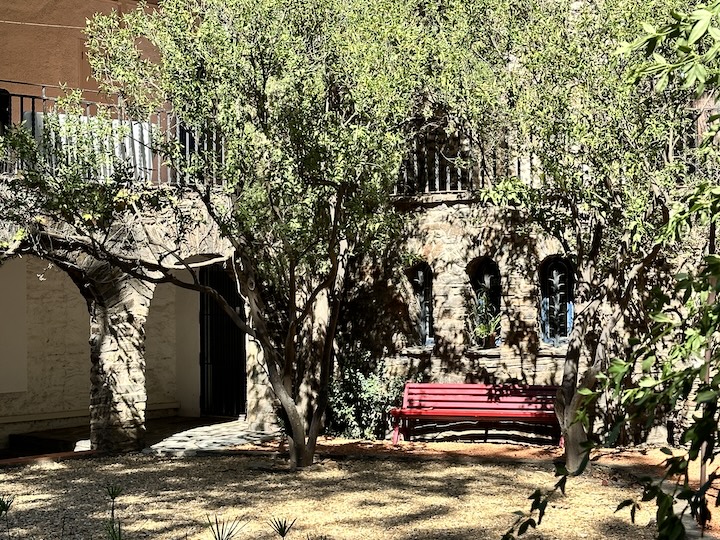
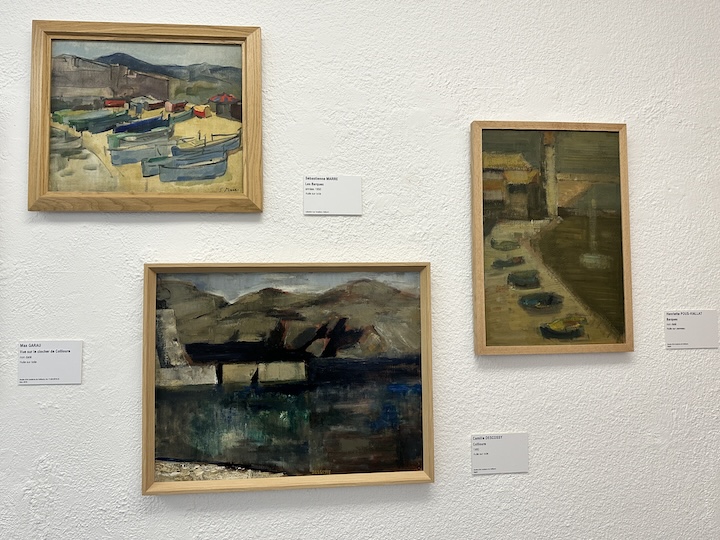
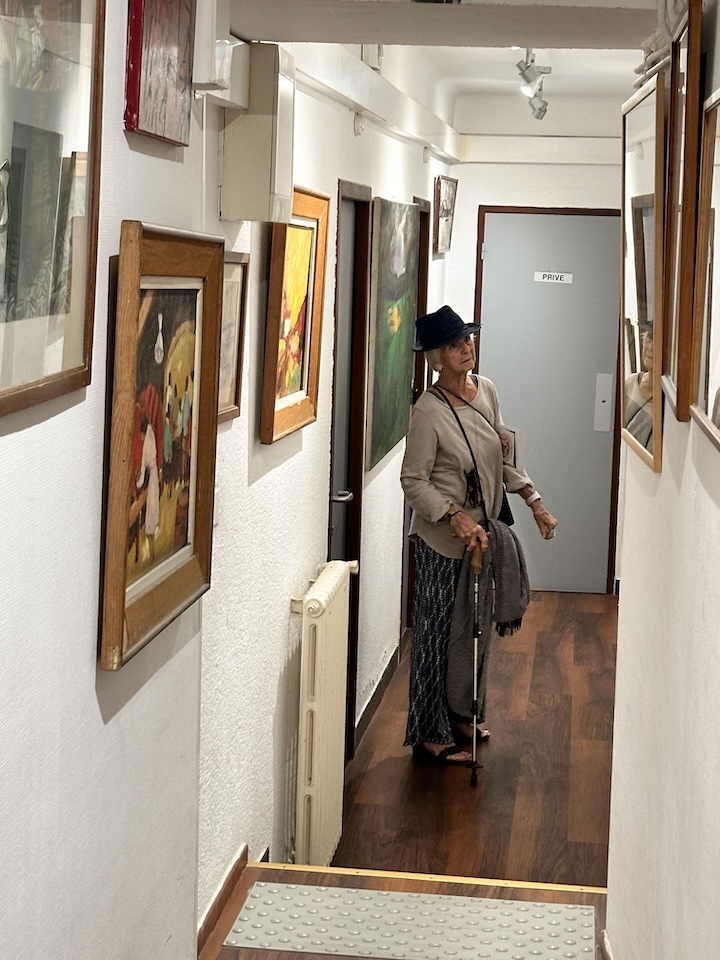
While we find no works in the Musee by Matisse or Derain, or other members of their famous cohort, there are many good examples of contemporary artists reflecting local subjects. And there’s a continuing posted narrative to explain the various artistic phases the village has experienced over the years. Sailing, and fishing, and bullfights are well represented here, and the museum is worth a visit.
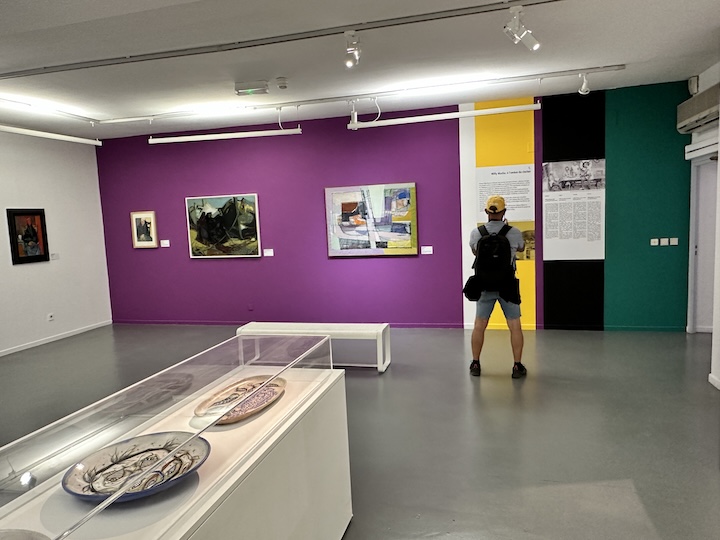
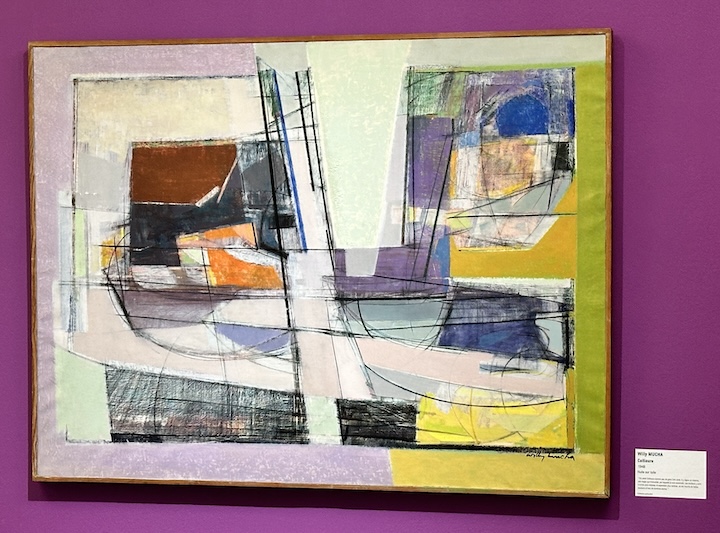
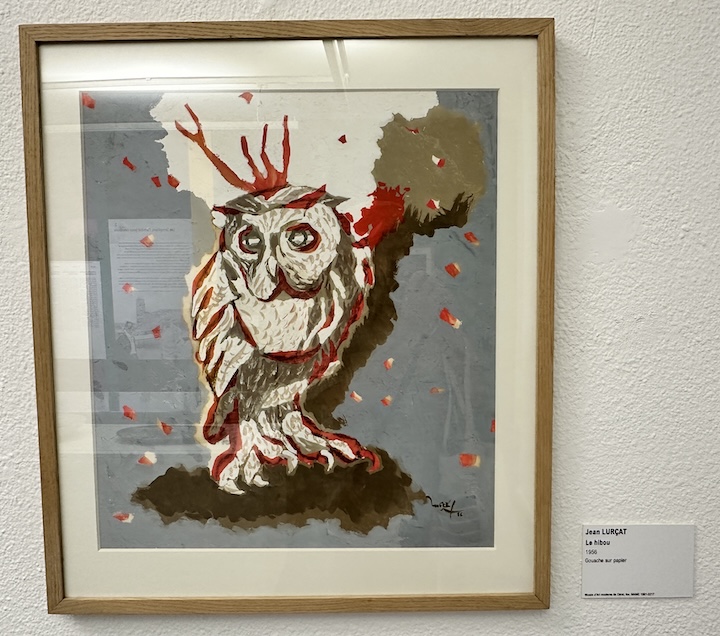
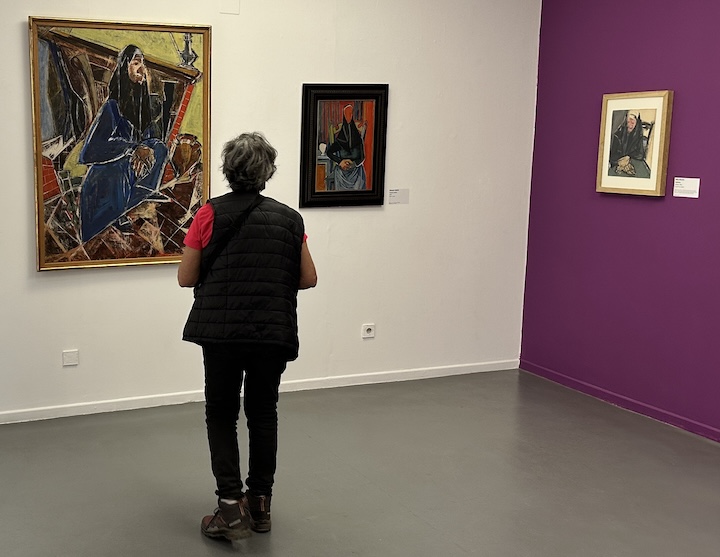
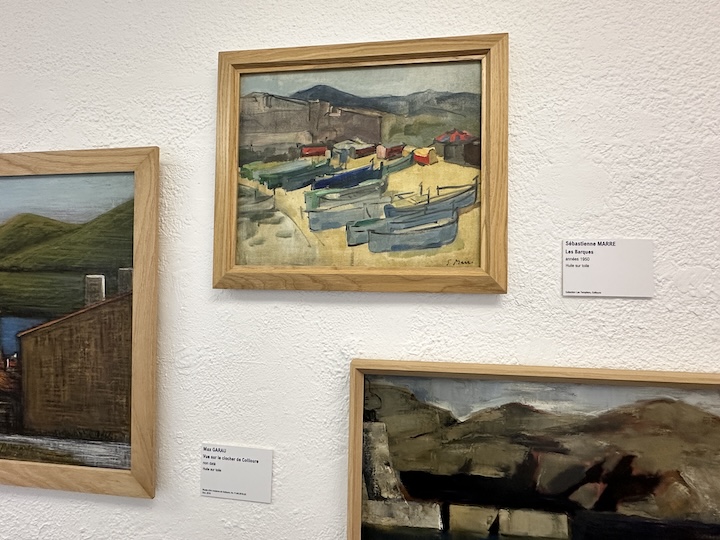
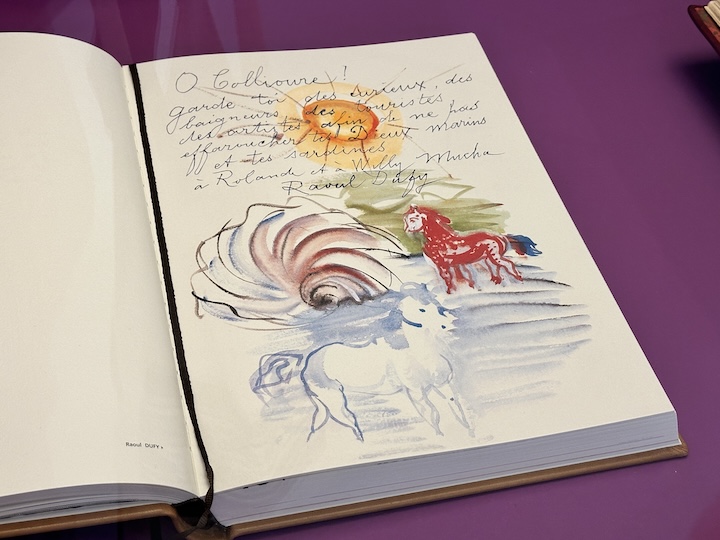
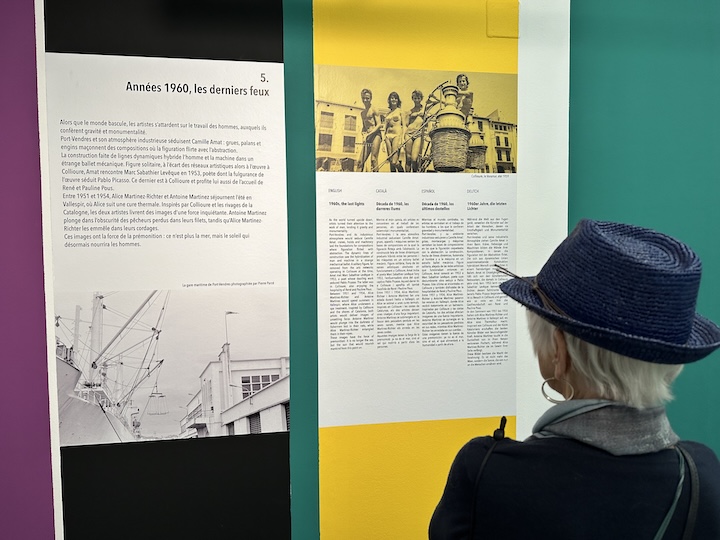
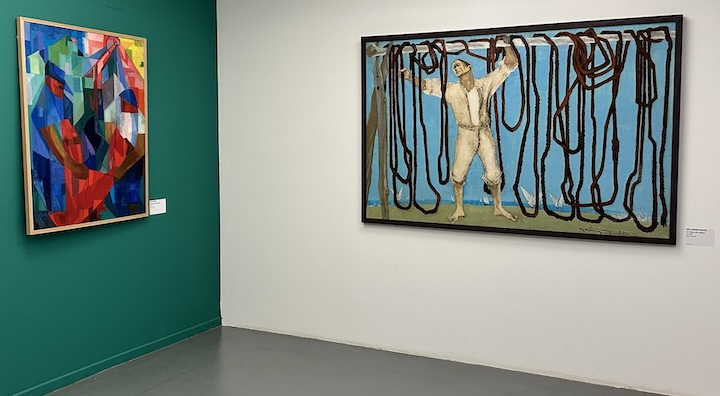
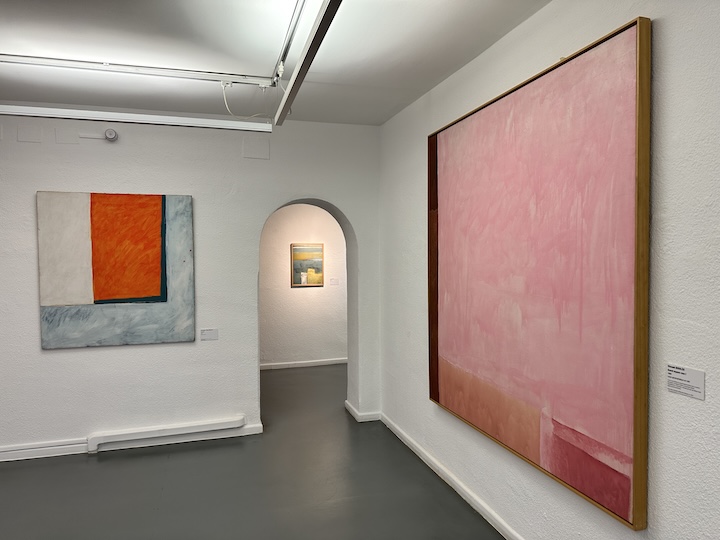
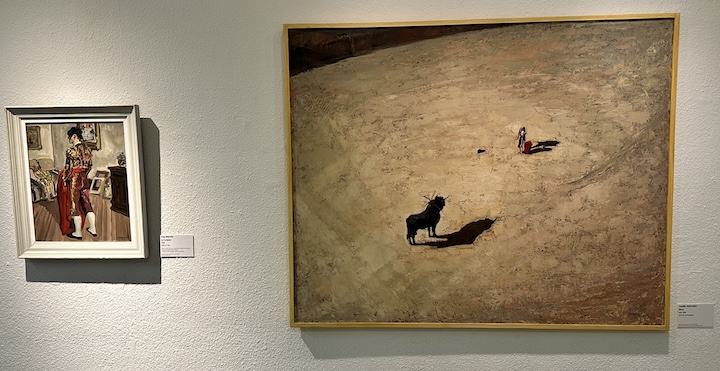
I was especially taken by the vast emptiness of one painting showing only a bull and a toreador alone in the ring. The work, by Camille Descossy and titled “Ahora (1958),” amply shows that final moment, when all the crowd noise dims and the distractions vanish as the bull and the toreador concentrate solely upon each other. It is indeed a tense and lonely moment where nothing else matters, and “Now” is the time.
I actually prefer the less violent form of ‘bullfighting’ that we wrote about in 2016 during a fine month in Beaucaire on the banks of the Rhône, where two teams of agile young men try to steal the ribbon that’s attached between the bull’s horns. It’s a dangerous game of tag-team, and a crowd-pleasing performance where no blood is shed if those young men are lucky enough to escape injury – although one of those agile lads might end up in your lap while leaping the barrier – with the bull close behind! And the bull eventually leaves the ring frustrated but unhurt.
See the post “Beaucaire 2″ near the middle of this archived dispatch PDF: 45. Summer 2016 – Paris. Beaucaire 1 & 2. August 2016
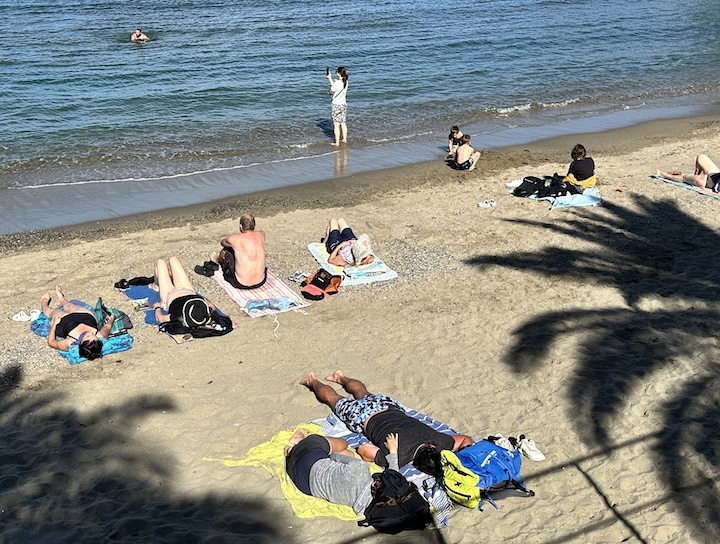
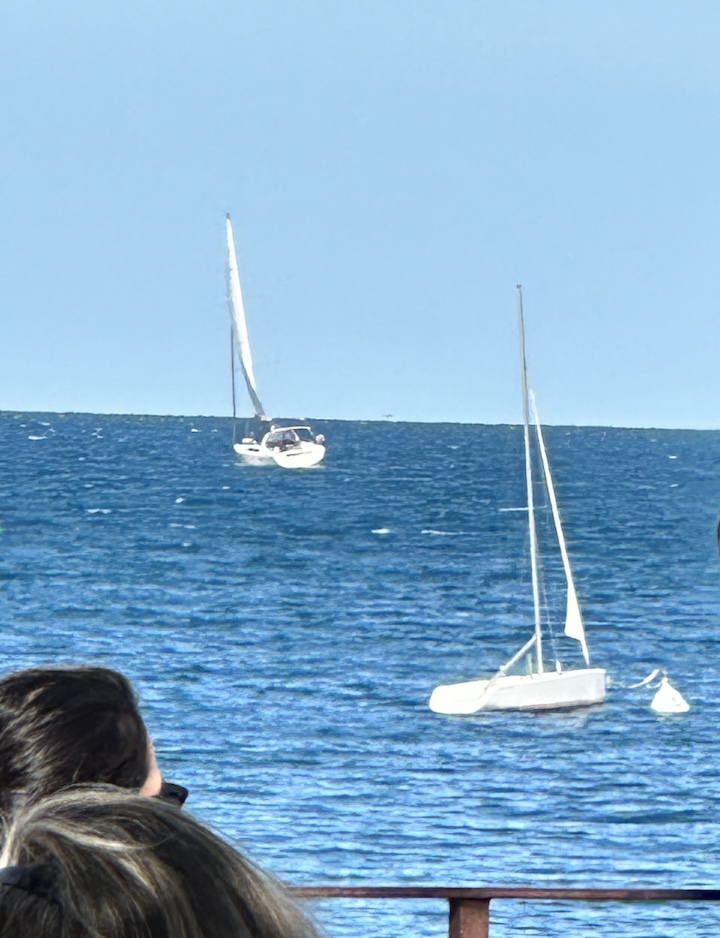
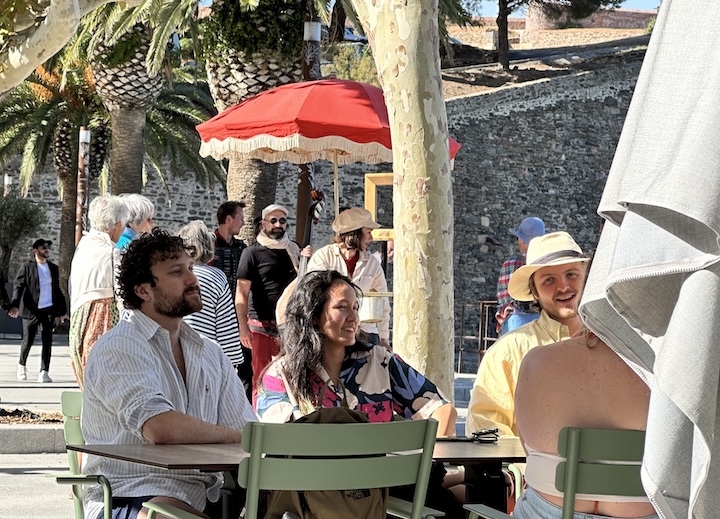
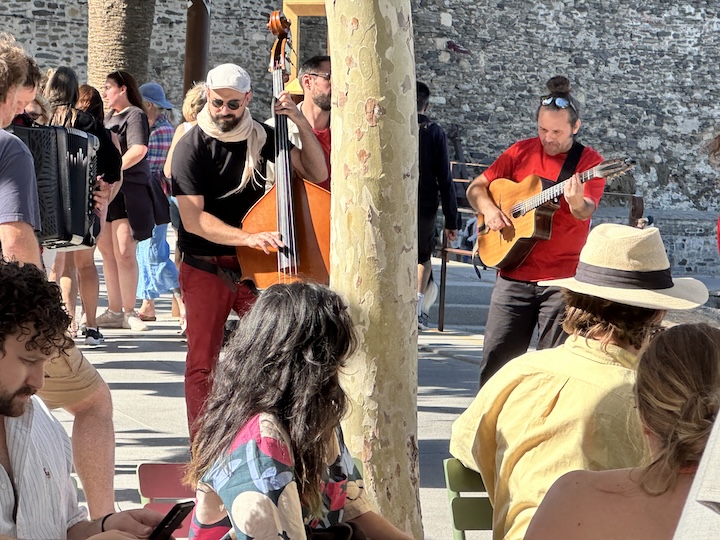
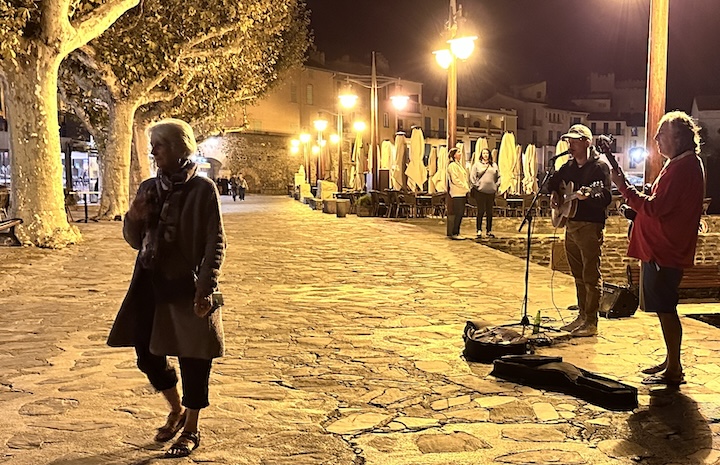
We emerge from the Musee into a warm and sunny day, and there are plenty of people taking advantage of the beach. We settle into a couple of refreshing drinks and watch as one of the anchored yachts hauls up her mainsail and jib and tacks away to some distant destination. It brings back fond memories of our own sailing days and the spray of salt water over the gun’lls. Soon another street band arrives to play a few tunes and we toss some Euros into the basket.
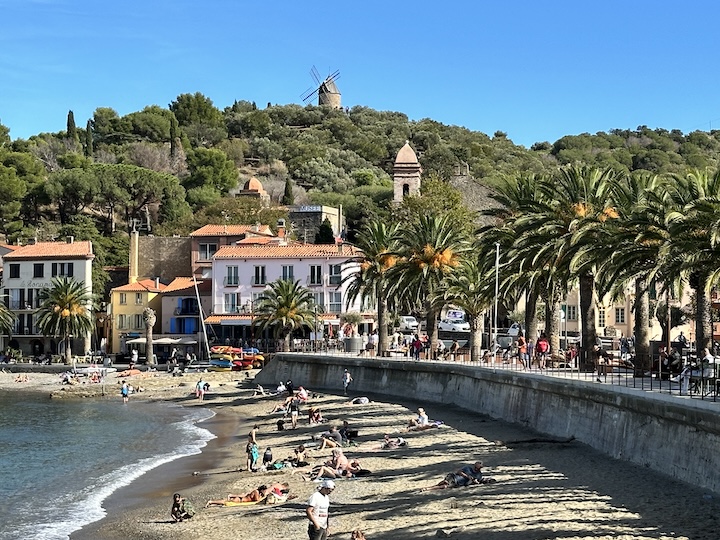
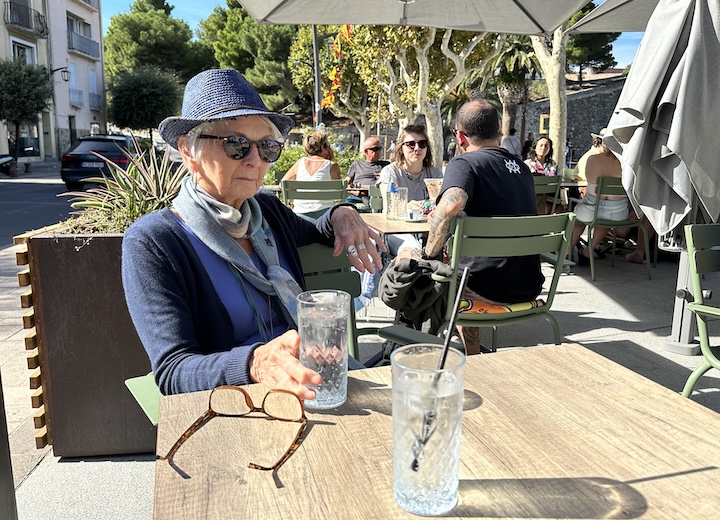
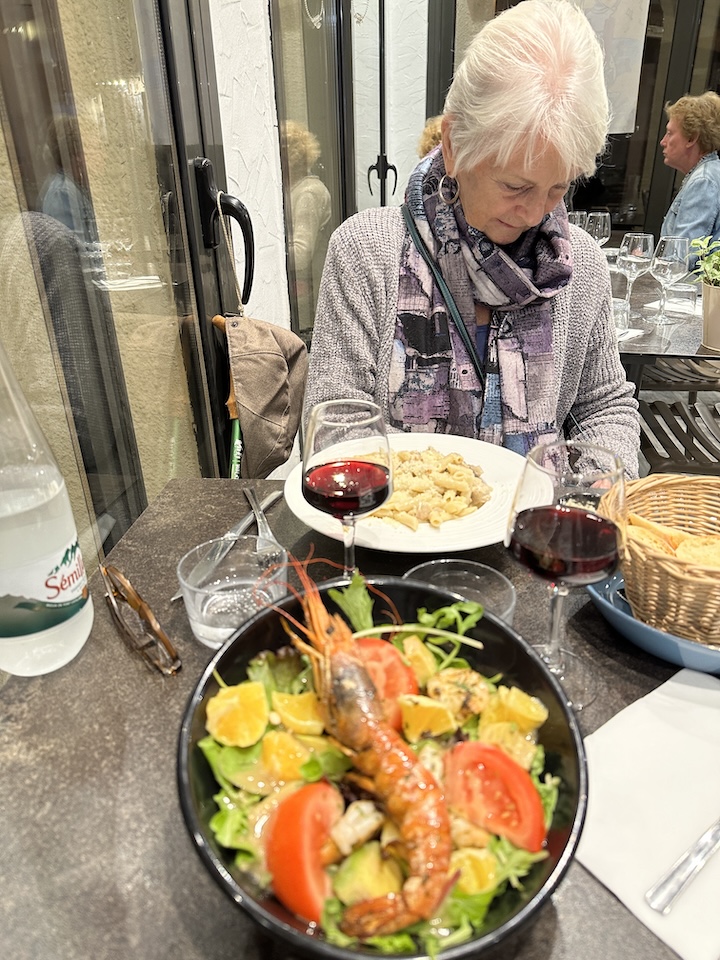
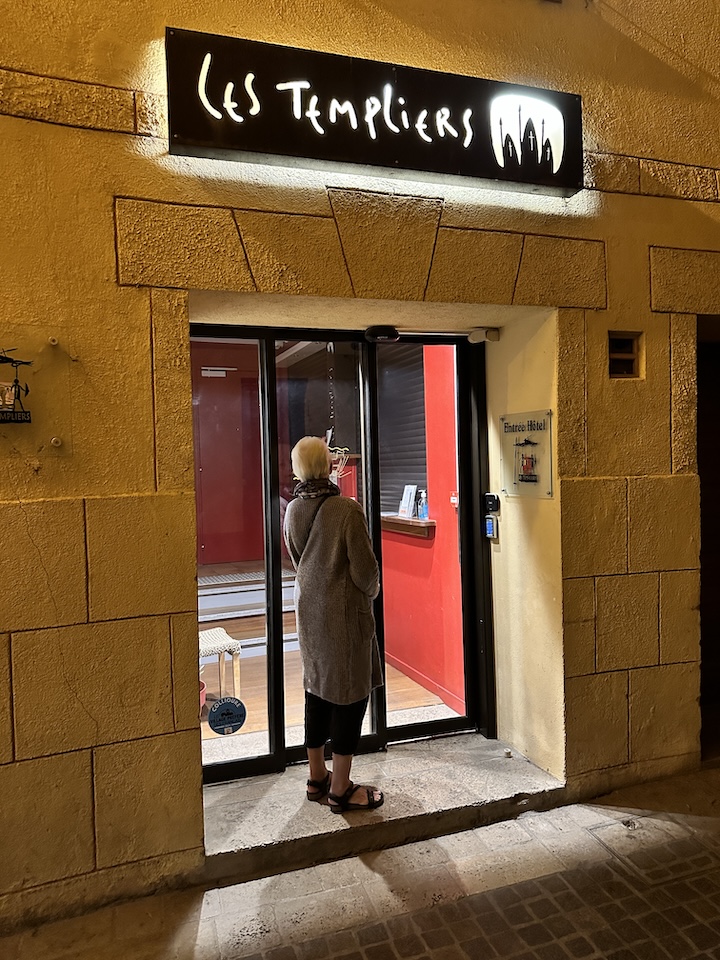
Eventually evening descends again upon the harbor and we find another good regional platter to share, with more good local wine. And then we find our way back down dim alleyways to Les Templiers for another restful night.
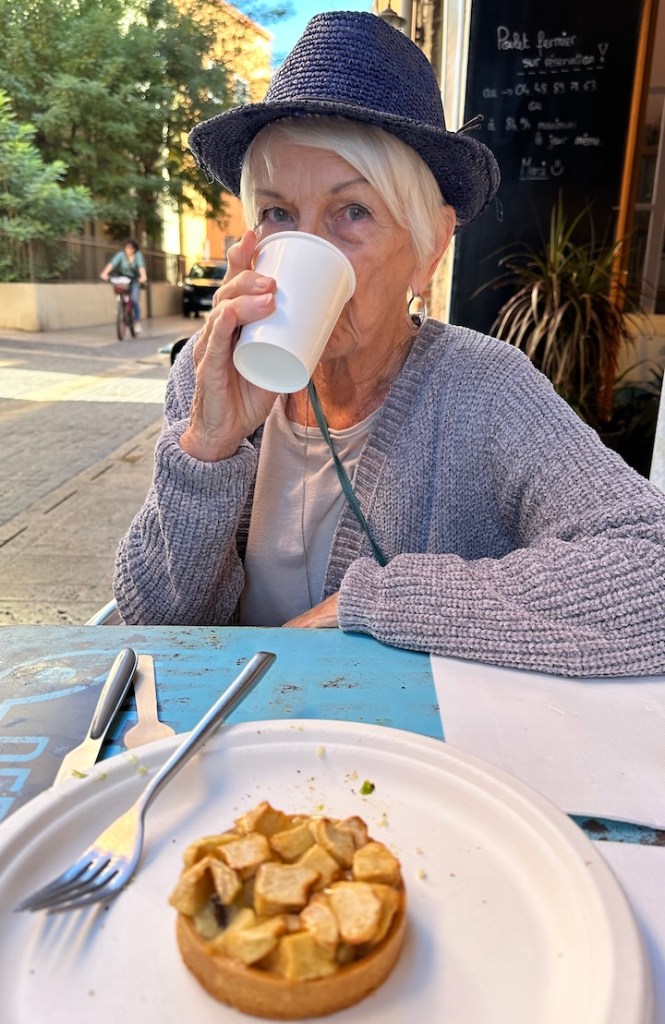
Morning again finds us in need of good coffee, with a good quiche. And an apple tart. And then we’re ready to board the local tourist ‘train’ that takes us to the hilltop castle on our scenic way to nearby Port Vendres. There are some far more ambitious folks than us who seem to have huffed their way to the top on bicycles. And there are others hiking the coastal trail. But those of us on the train seem to be happily sedentary.
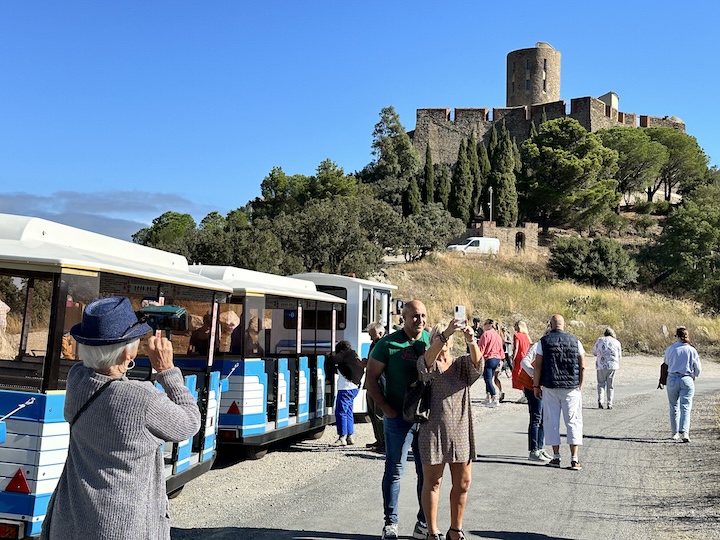
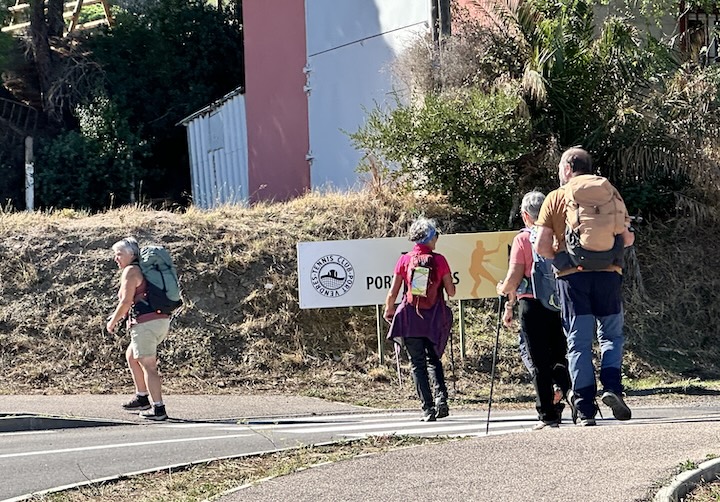
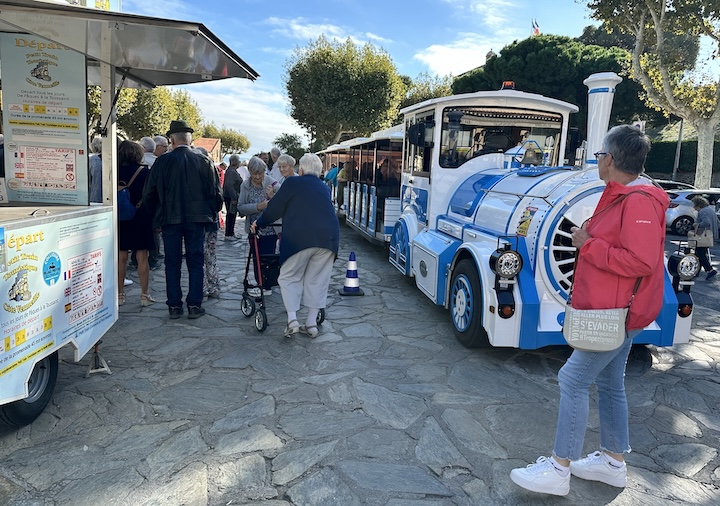
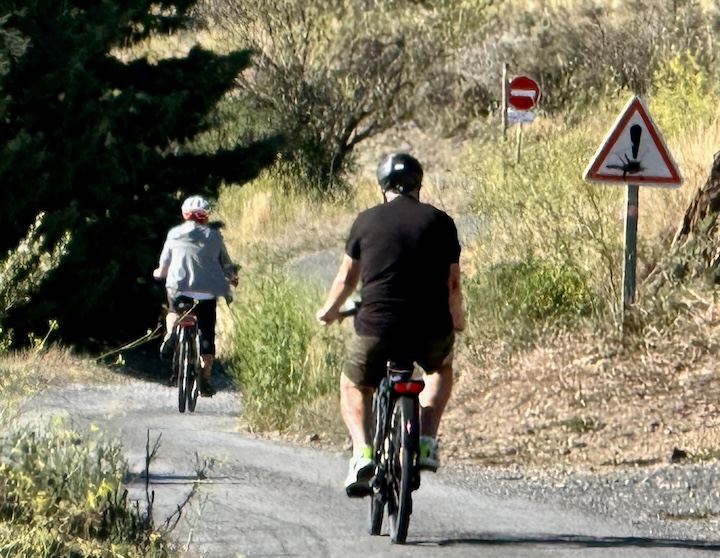
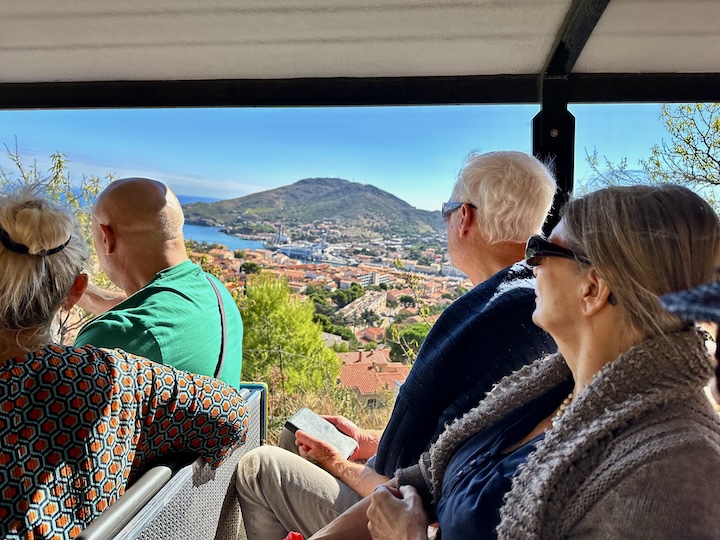
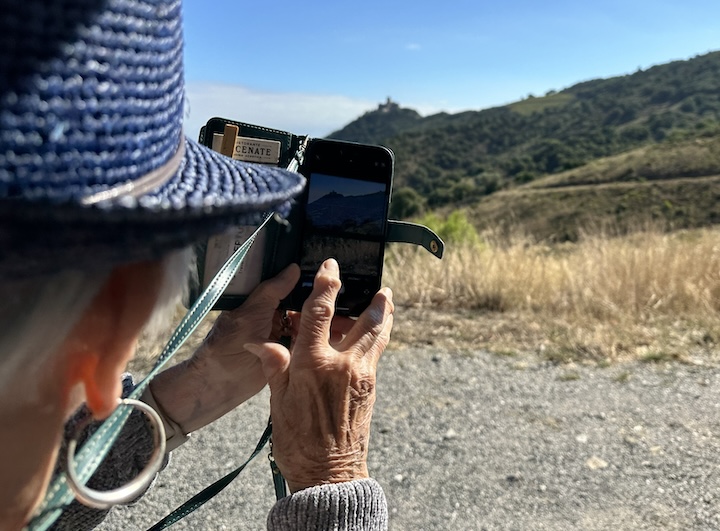
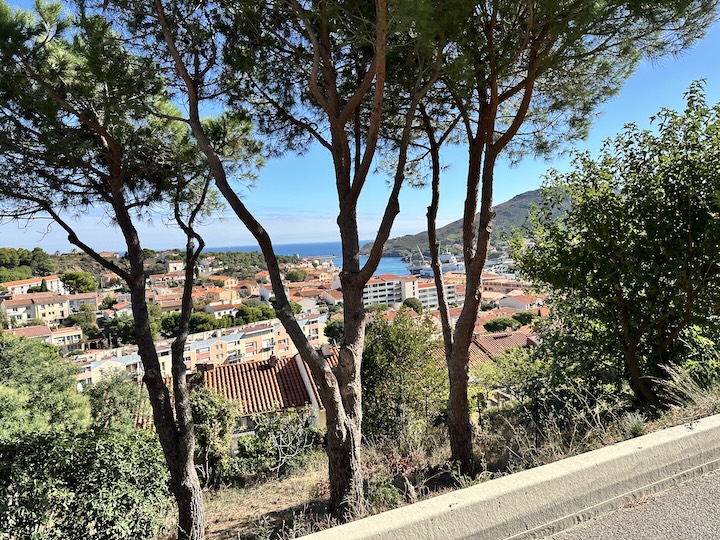
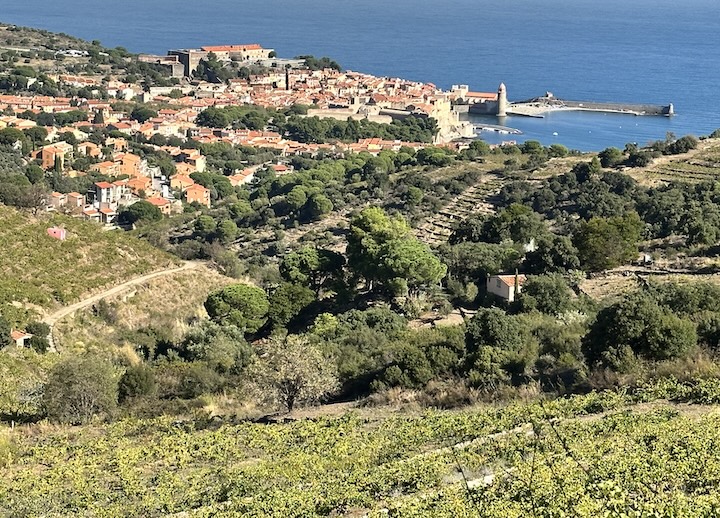
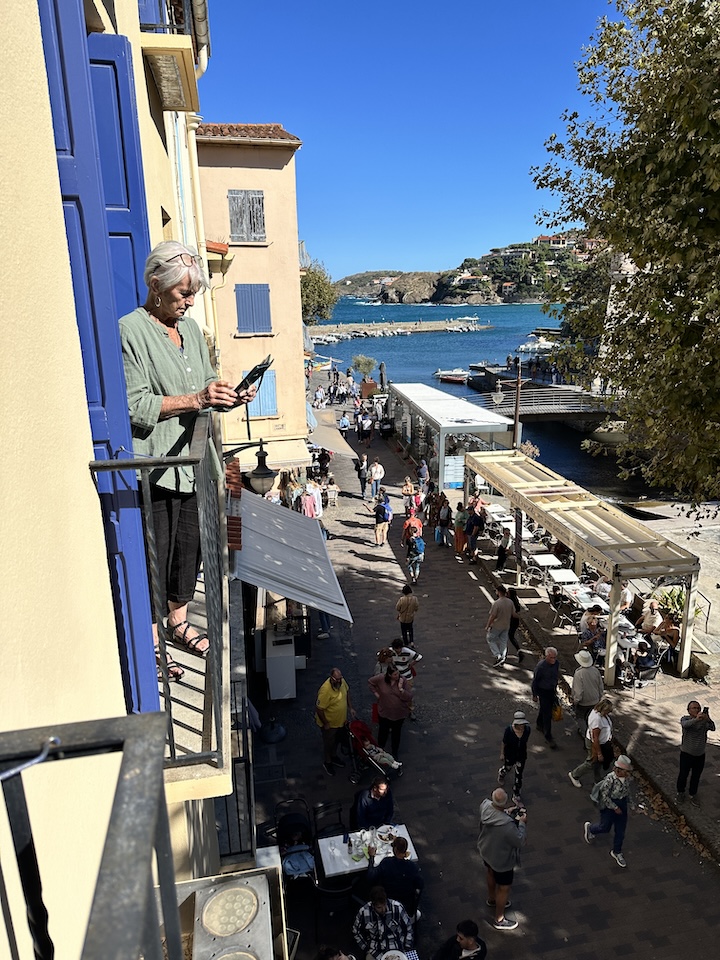
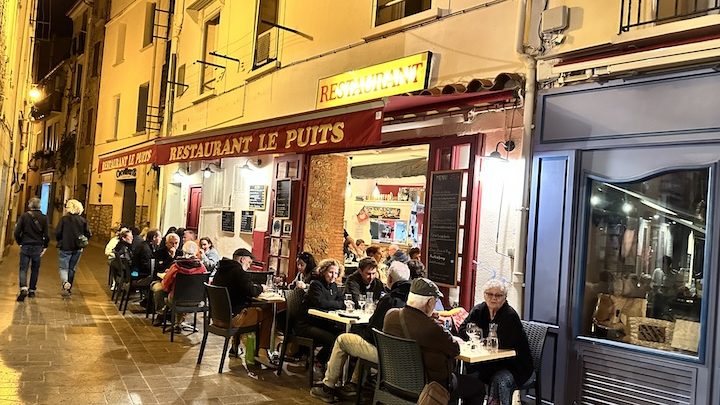
The train drops us off back in Collioure, where other musicians are awaiting. And more Euros are expected. We’ll be leaving in the morning so we make our way up through art-festooned hallways to our room for a last fond gaze from our balcony, and an afternoon nap. And later we emerge for a final good dinner in the narrow alleys of Collioure. It’s been a fine visit for us to this very sweet Mediterranean village.
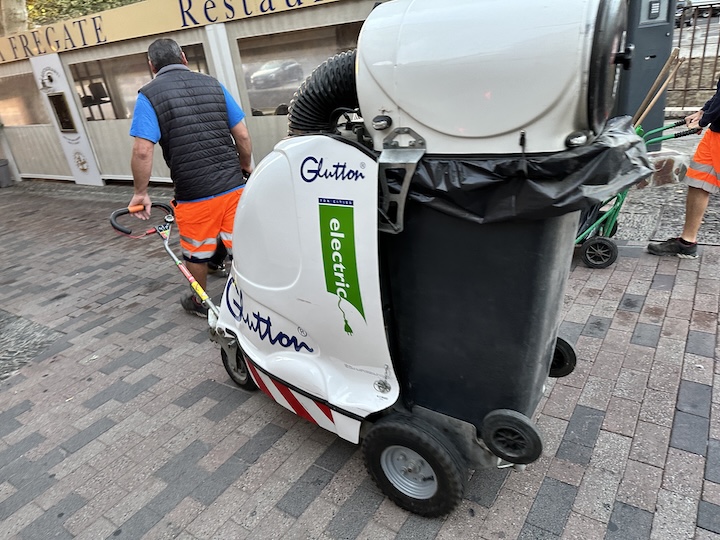
The morning finds us out semi-early, along with the cleanup crew, and waiting for a taxi up to the little train station. We plan to get a bit of breakfast in the larger train station at Perpignan, and then take a morning train to our next stop, in Bordeaux.
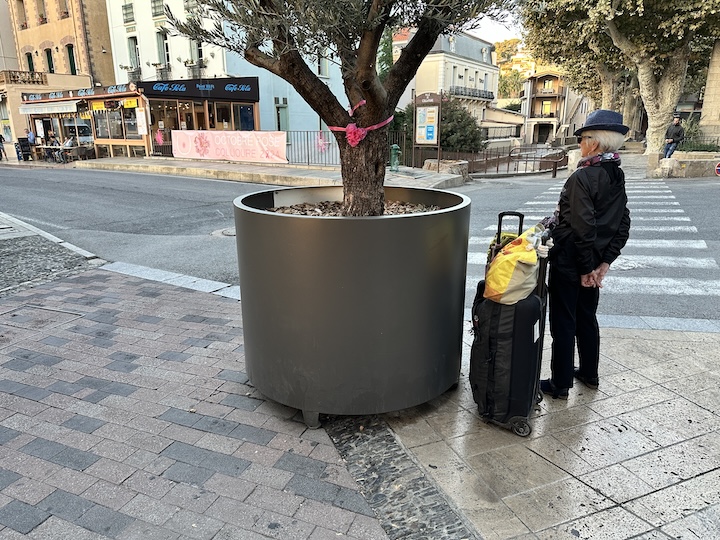
But there’s a hitch in the plans. As we’re waiting by the strangely-silent tracks, a notice keeps flashing on the schedule board. I attempt to decipher it with my abysmal French, as it seems to say – and I dearly hope I’m wrong – that there’s a strike or something and our train will not arrive at all today. A few other folks arrive and then wander off. We are soon joined by a very nice young Frenchman, who is planning to visit his new wife in Barcelona, and he confirms my inept translation.
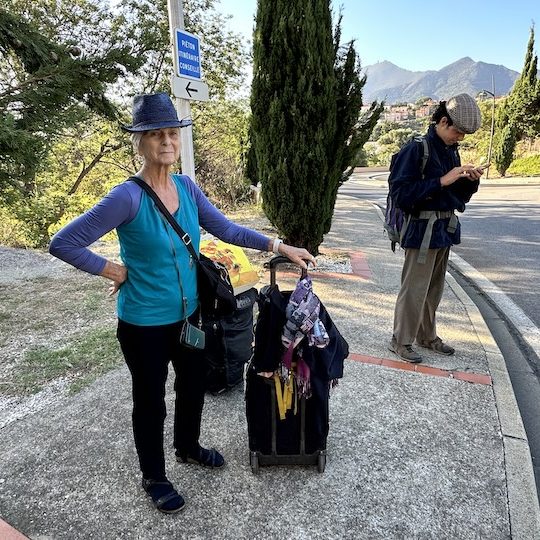
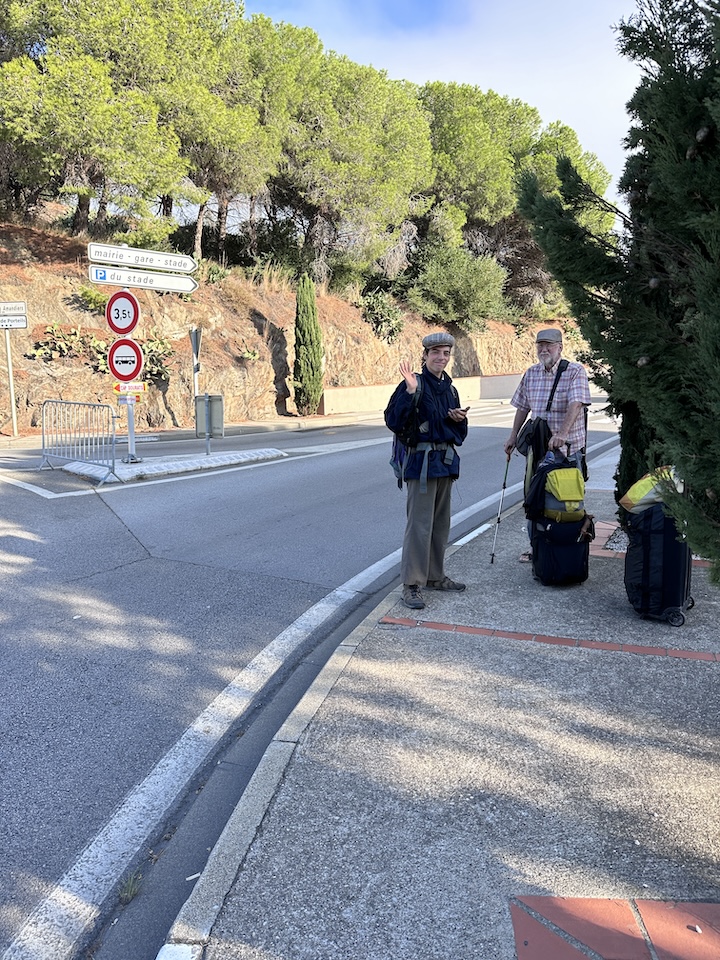
There’s only one thing to do. We follow him up a steep side street to the highway that runs over the hills in hopes of catching a local bus to the train station in Perpignan. We both like to think we’re still fairly young(ish), but after a glance at the two at us huffing our heavy bags, our new young friend grabs the handles of both bags and hauls them up to the highway for us. And we almost have to run to keep up with him.
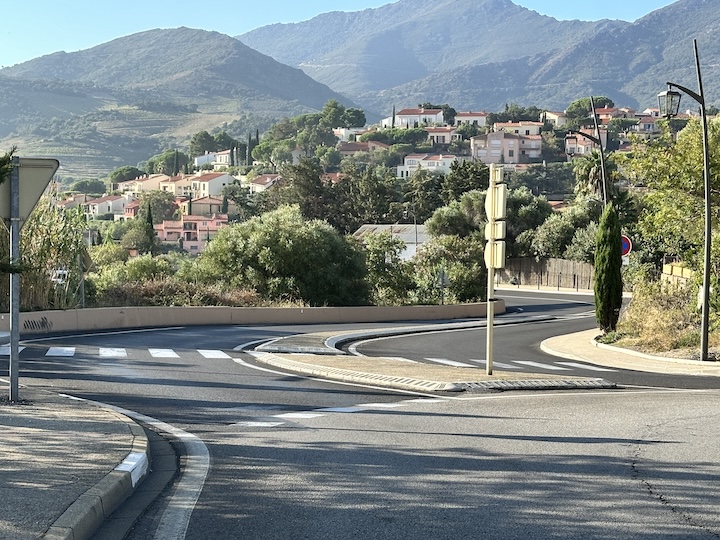
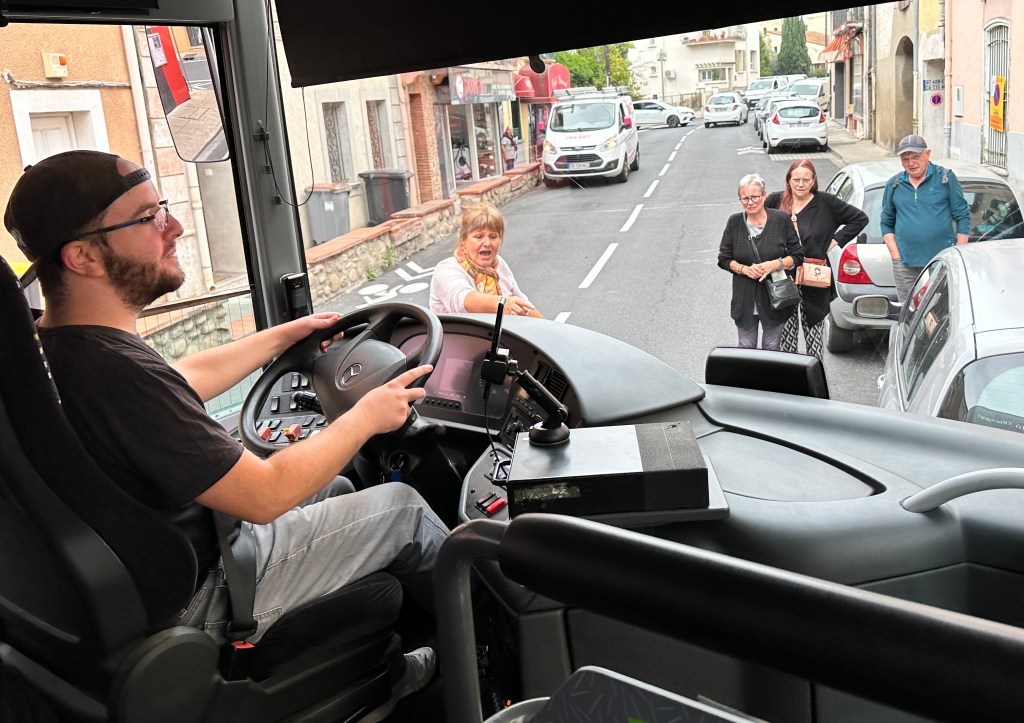
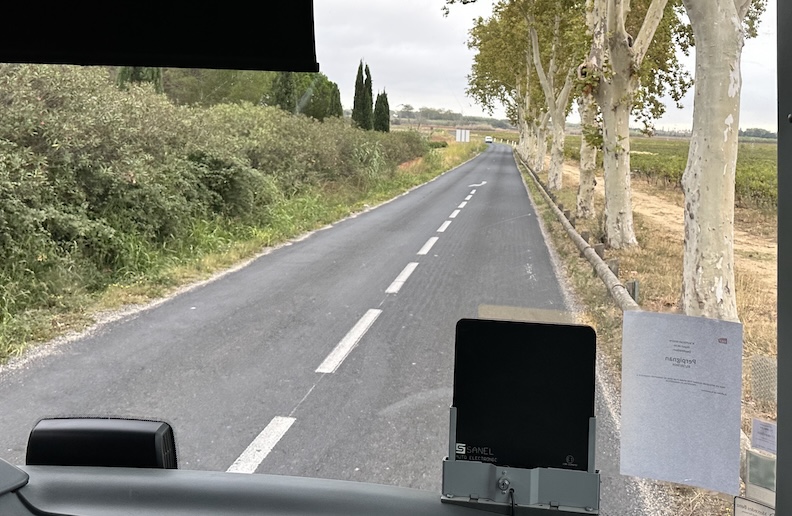
And then we wait for a ride, as local traffic passes us by. After a while a bus appears and the driver explains he’s there to pick up train passengers stranded at the stations and get them to Perpignan. If we’d just waited at the station he would have picked us up there. So we’ve gotten some very good morning exercise and now we’re getting a scenic view of rural France, as the driver takes us down tree-lined lanes and negotiates his way – with help from the locals – through the tight corners of several villages.
Soon enough we’ve arrived at Perpignan. We have bought our tickets for Bordeaux, and we’re gobbling our way through some good pastries. All is indeed fine once again, in our own tight little corner of the world. We’ll be boarding the next train and we’ll see you soon in our next Dispatch, on the Atlantic side of France in the city of Bordeaux.
— PRW
 Wilkes/Kinsman dispatches
Hi guys!
Lucky you!
I live in France but I’ve never been to Collioure
LikeLike
Go! It’s such a sweet place!
LikeLike